
24 Charming Ranch House Landscaping Ideas to Try Now
Ranch homes are low, wide, and friendly, and that shape is a gift for landscaping. The long roofline gives you a natural stage for layered plants, curving paths, and cozy outdoor spots. The trick is working with the house’s horizontal lines instead of fighting them.
Whether you’re refreshing a tired front yard or planning a full makeover, these ranch house landscaping ideas will boost your curb appeal without feeling fussy. Start with the ideas that match your budget and climate, then build from there.
Before You Plant: Sun, Soil, Climate Zone, and Frontage on a Ranch House
Ranch homes reward homework, because their long, low facades expose every planting mistake. Start with sun exposure. Watch the front yard for a day and note which foundation beds bake in afternoon sun and which sit in house shade — a Hydrangea Hedge thrives with morning sun and afternoon shade in warm regions but sulks in all-day heat, while Ornamental Grasses and the Succulent and Gravel Garden want the sunniest stretches.
Next, check soil and drainage. Dig one hole where beds are planned, fill it with water, and see how fast it drains. Slow drainage points you toward the Dry Creek Bed idea and raised beds rather than in-ground plantings that rot. A soil test from a local extension office tells you whether to amend before planting.
Know your USDA climate zone before buying anything with a label promise. Evergreen Screens, climbing vines, and meadow plantings all succeed or fail on zone fit, and water-wise succulent gardens only overwinter outdoors in mild, dry climates — elsewhere they belong in containers that move inside.
Finally, respect the frontage. A wide ranch facade needs wide, layered beds and plants repeated in groups along its length. One of everything, dotted in a row, looks spotty against a 60-foot frontage; five of the same grass or shrub, repeated, reads as designed.
1. Build Wide, Layered Foundation Beds
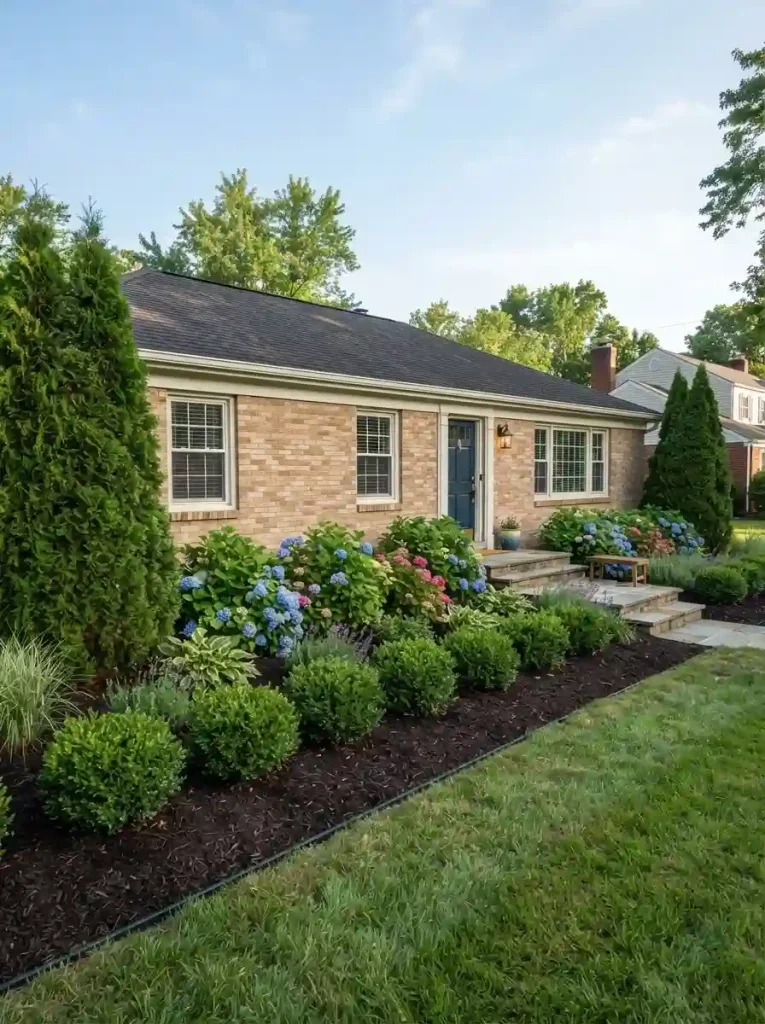
A long house needs a generous planting bed to anchor it. Aim for beds at least 5 to 6 feet deep, with low shrubs in front, medium shrubs in the middle, and a few taller plants near corners. This softens the hard line where the walls meet the ground. Repeat a few plants along the length so the whole design feels connected.
2. Add a Curved Walkway to the Front Door
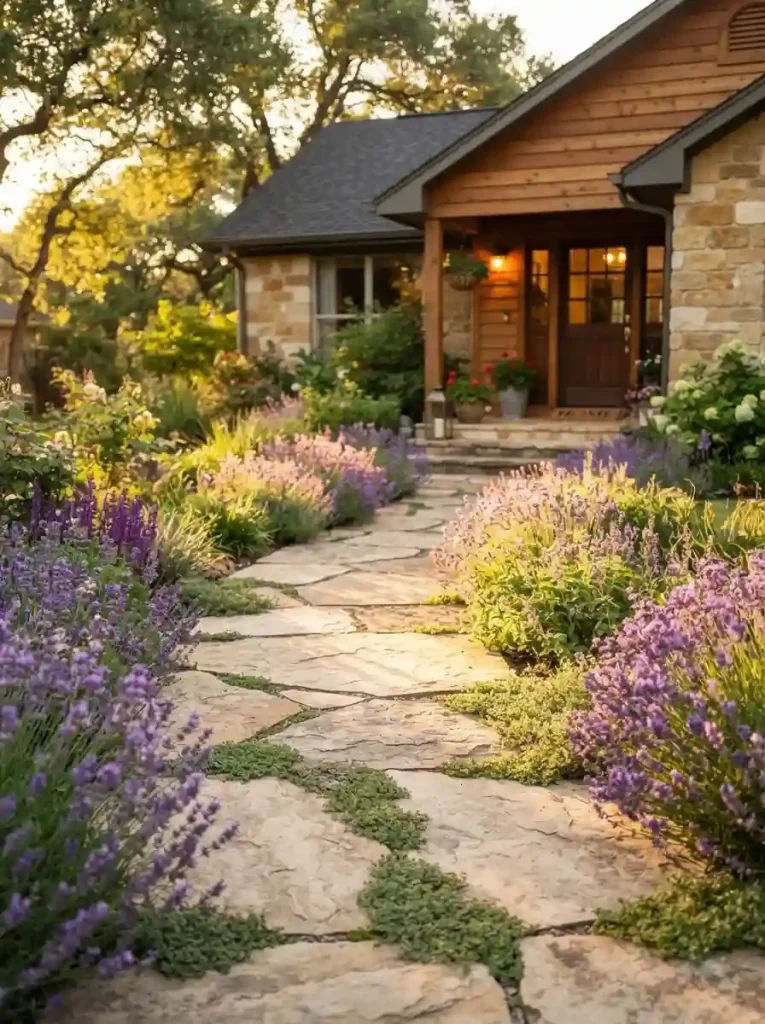
Many ranch homes have a straight, boring path from driveway to door. A gentle curve slows the eye and makes the yard feel bigger. Use flagstone, pavers, or stamped concrete, and widen the path to 4 feet so two people can walk side by side. Plant soft edging along both sides to finish the look.
3. Soften the Lines with Ornamental Grasses
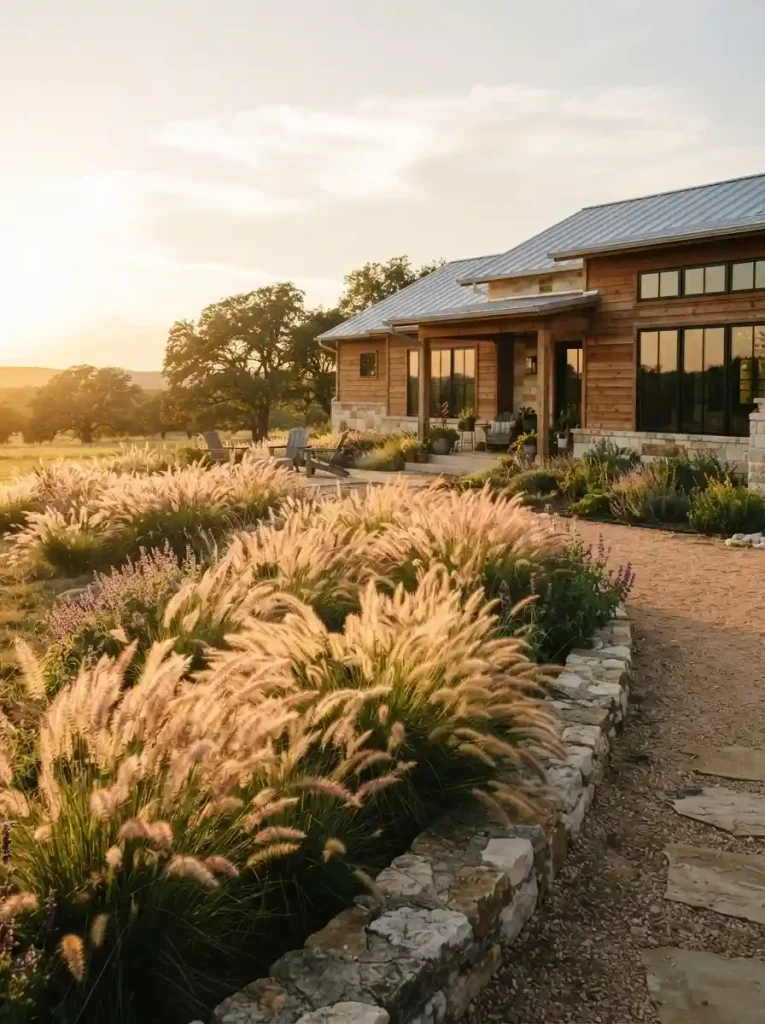
Grasses add movement, and movement is exactly what a calm, horizontal house needs. Feather reed grass, little bluestem, and fountain grass all sway in the breeze and catch the light. Plant them in drifts of three or five rather than single clumps. They also need very little care, which makes them a favorite for busy homeowners.
4. Use Boulders for Natural Weight
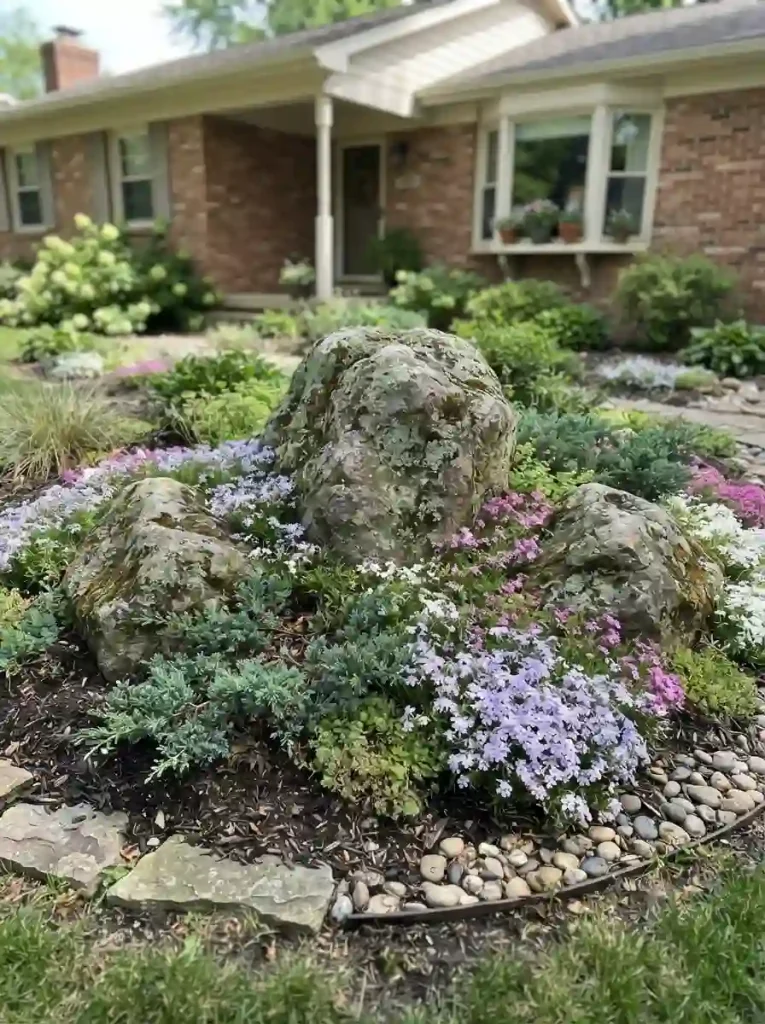
Large rocks give a low house some visual heft. Set two or three boulders in odd-numbered groups and bury about a third of each so they look like they’ve always been there. Tuck creeping plants and small shrubs around their bases. Choose a stone color that echoes your chimney or foundation for a cohesive finish.
5. Flank the Entry with Statement Planters
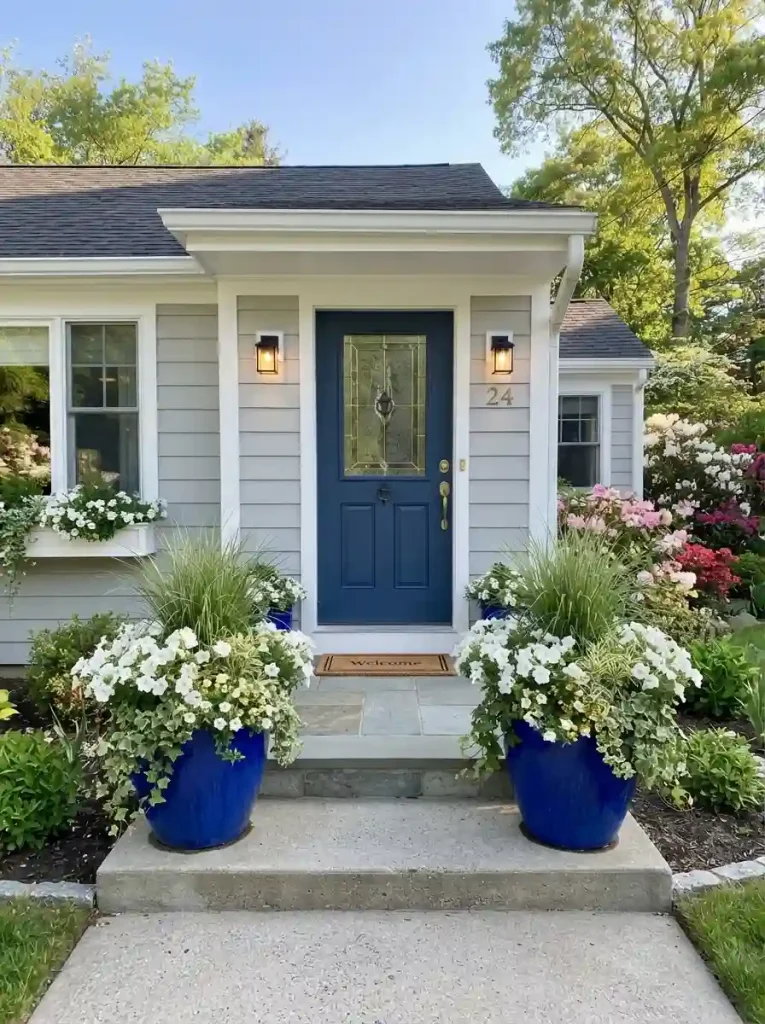
If your entry feels plain, big containers fix it fast. Pick a matching pair in a bold color or a weathered terracotta finish, and fill them with a tall centerpiece, a mid-height bloomer, and a trailing plant. Swap the seasonal plants each spring and fall. Planters are also a renter-friendly way to boost your curb appeal.
6. Plant a Colorful Hydrangea Hedge
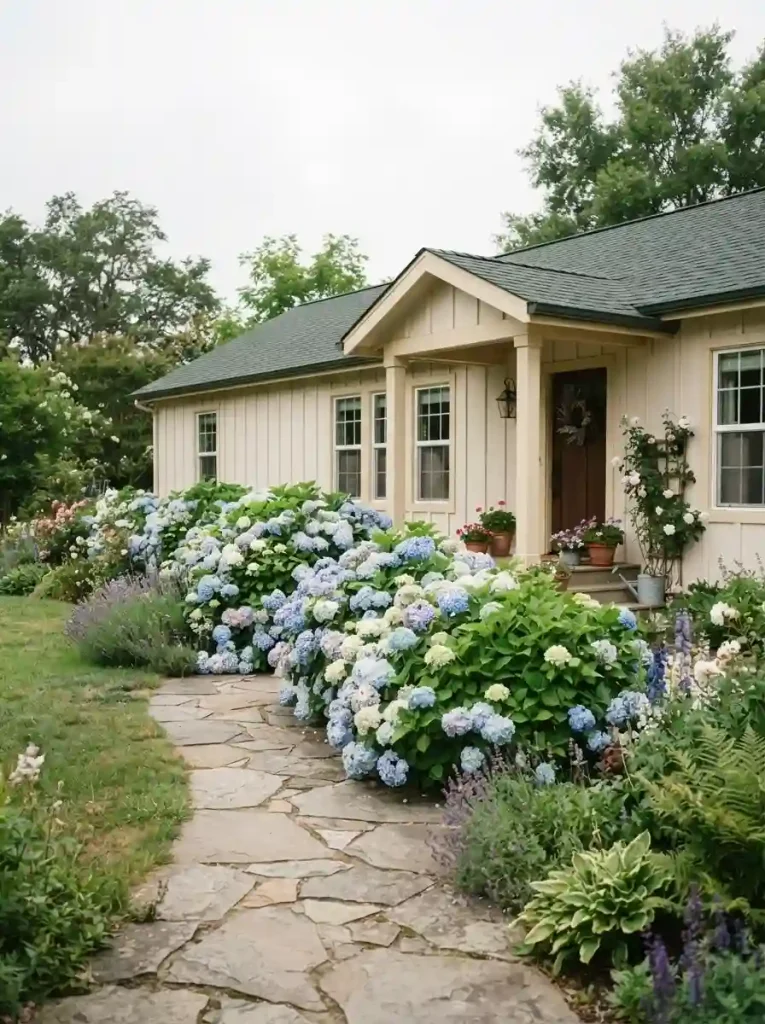
Hydrangeas bring big, cloud-like blooms that look beautiful against low rooflines. Line them along the front facade or beside the porch for a lush summer display. Choose a variety suited to your zone, such as oakleaf in colder regions. Water deeply in dry spells, and they’ll reward you for months.
7. Create a Dry Creek Bed for Drainage
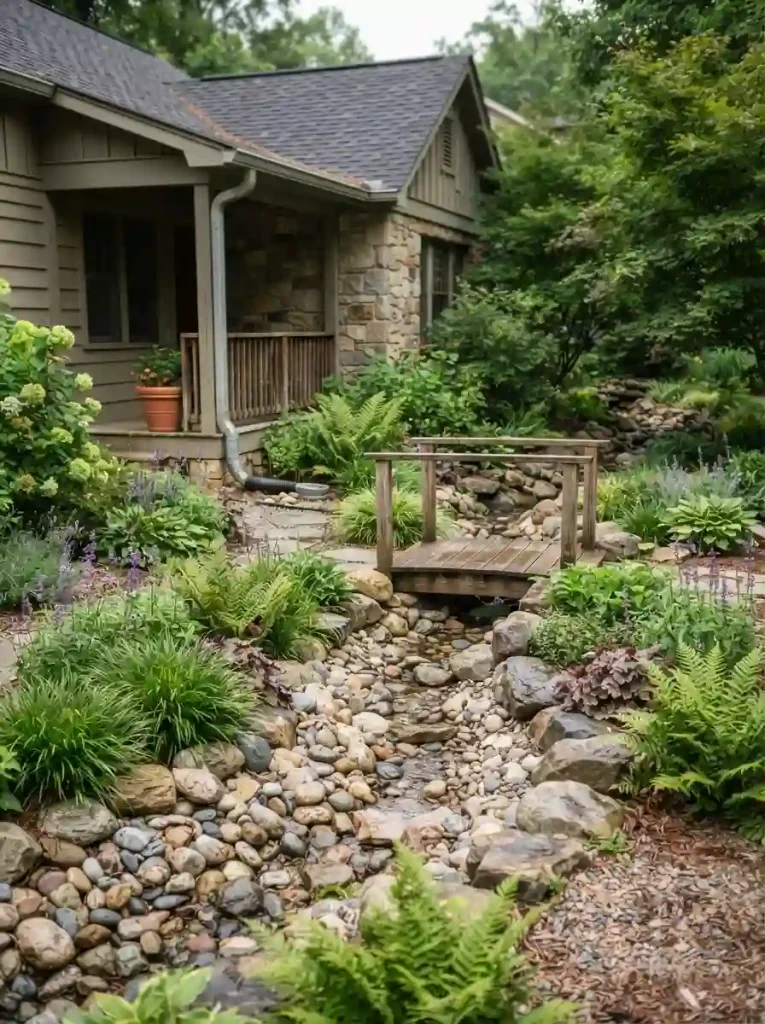
A dry creek bed is both pretty and practical. Lay river stones in a winding channel beneath a downspout or along a slope, then plant sedges and ferns along the banks. It guides rainwater away from the foundation while adding a handcrafted focal point. Mix stone sizes so it looks like a real stream.
8. Light the Facade at Night
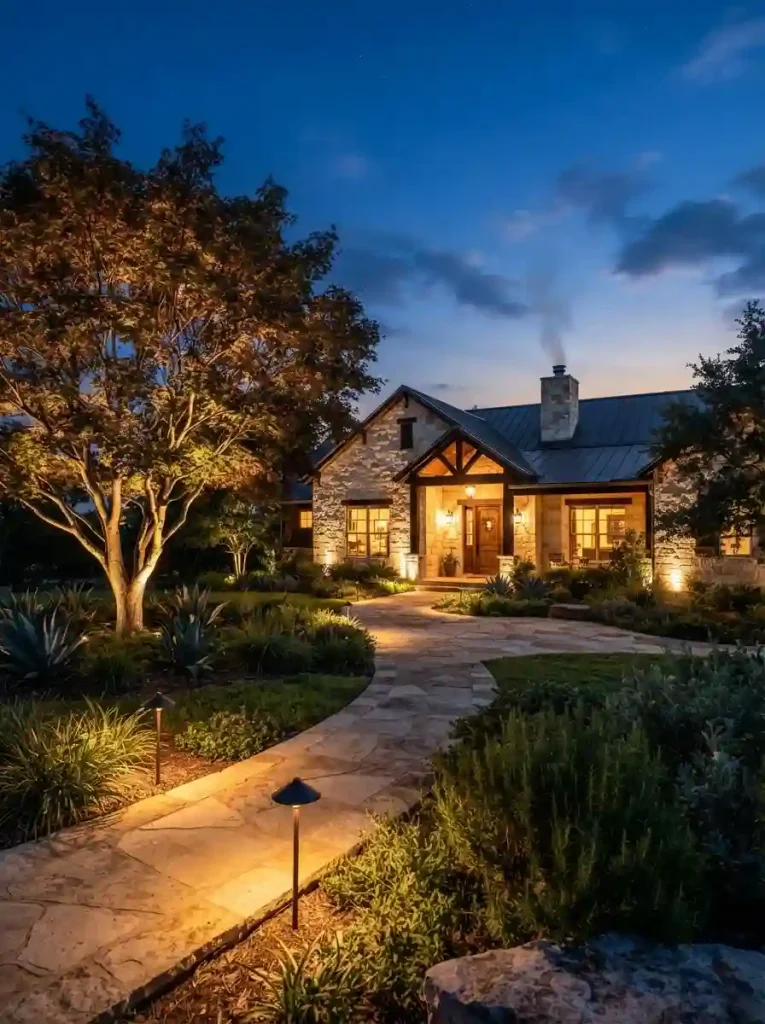
Good lighting makes a ranch house look polished after dark. Place small uplights to graze the brick or siding, add path lights along the walkway, and aim a soft spotlight at a favorite tree. Choose warm white bulbs for a welcoming glow. Solar options work well if you can’t run wiring.
9. Dress Up Windows with Flower Boxes
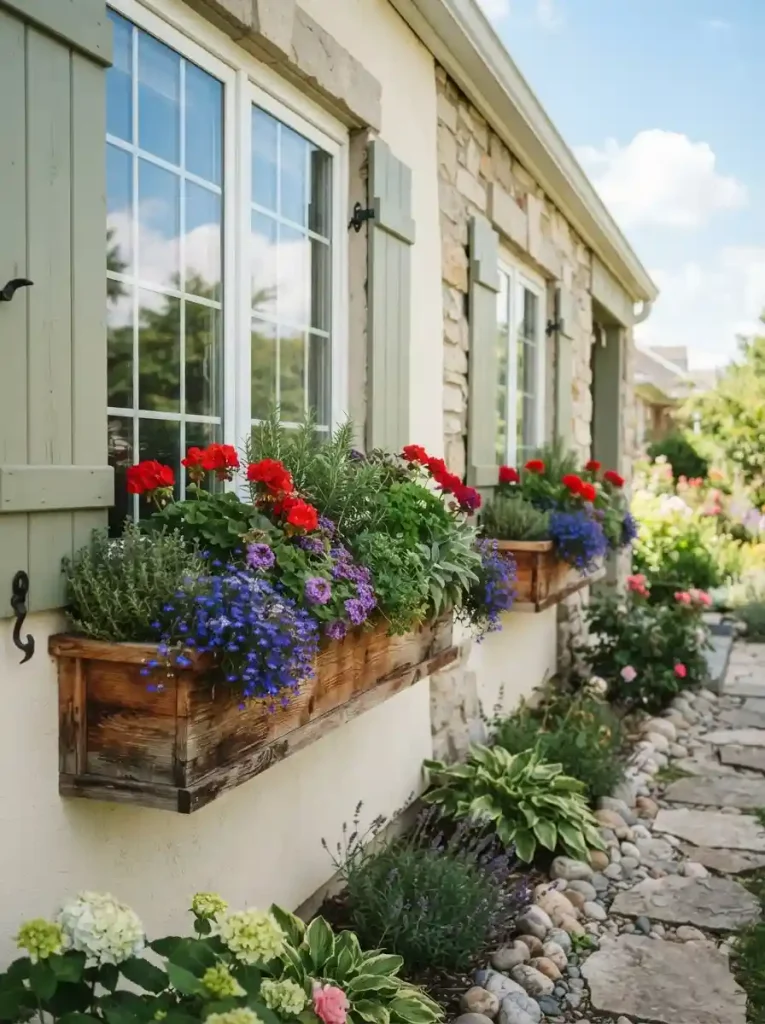
Ranch homes often have wide, simple windows, and flower boxes add instant character. Mount sturdy boxes beneath the front windows and fill them with geraniums, trailing lobelia, and herbs. Match the box color to your shutters or door. Remember to check that they drain well so the siding stays dry.
10. Frame the Entry with a Low Stone Wall
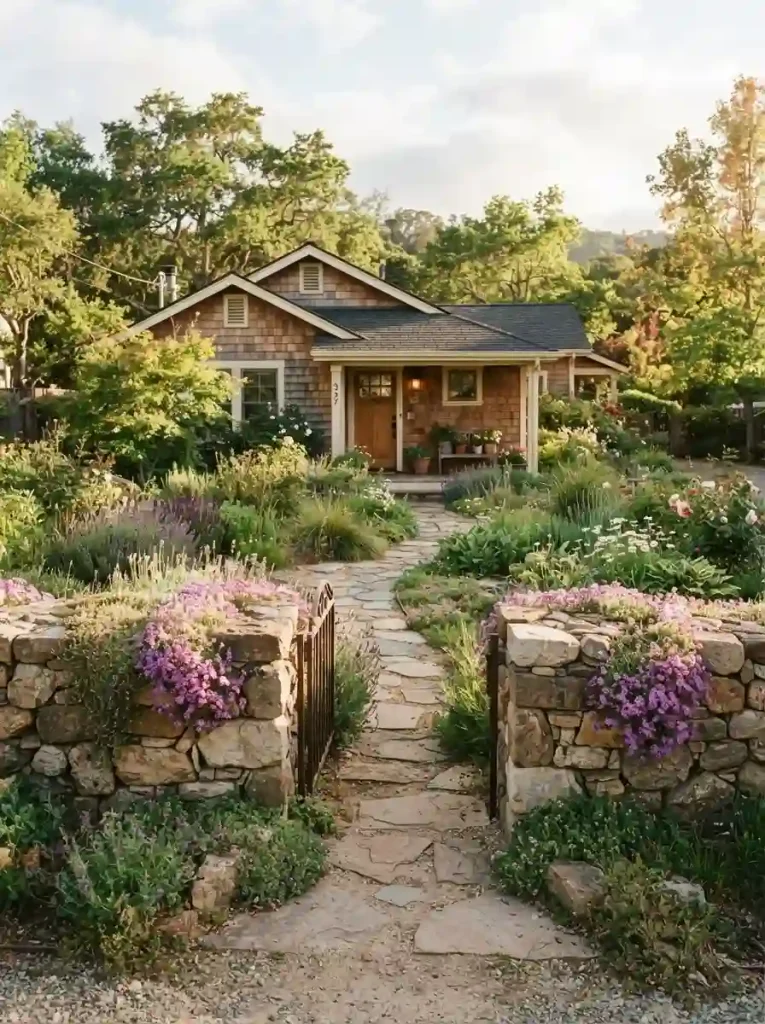
A knee-high stone wall creates a gentle boundary without blocking the view of your home. It also gives you a planting ledge and a spot to sit. Dry-stacked fieldstone suits a rustic look, while cut limestone feels cleaner and more modern. Leave a clear opening that lines up with your walkway.
11. Grow a Pollinator-Friendly Garden
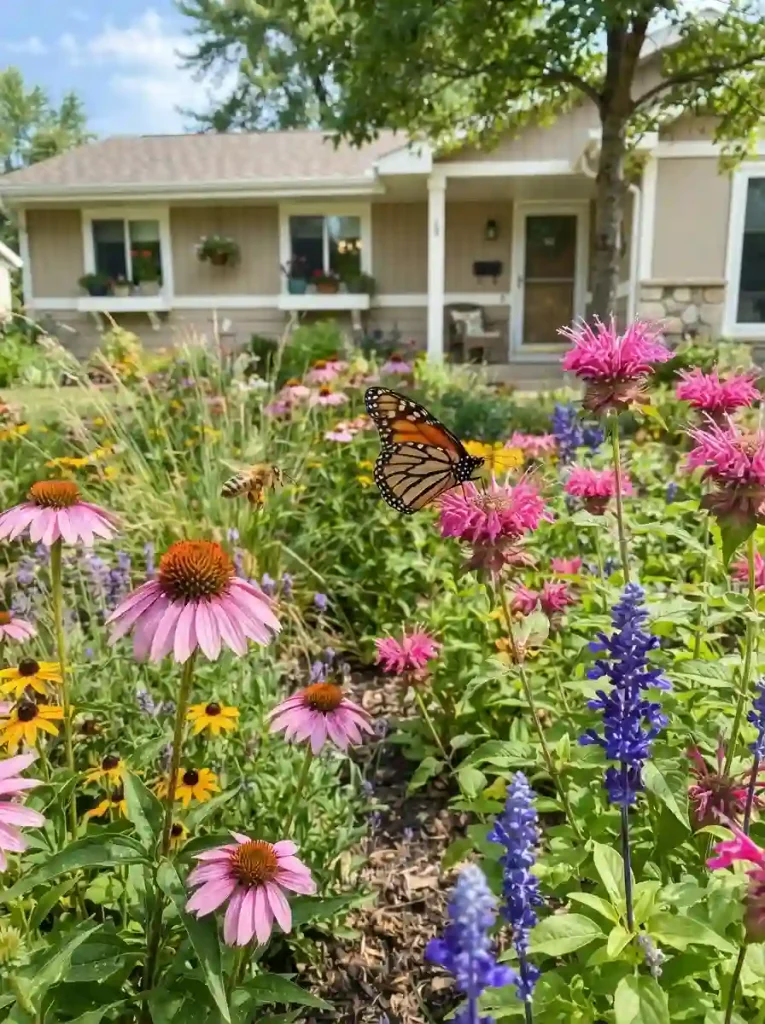
Bees and butterflies love a yard full of nectar plants, and you’ll love watching them. Mix coneflower, bee balm, salvia, and milkweed for blooms from early summer to fall. Plant in sunny spots and skip harsh pesticides. A small shallow dish of water and a few flat stones make a handy rest stop.
12. Create a Lawn Island with a Specimen Tree
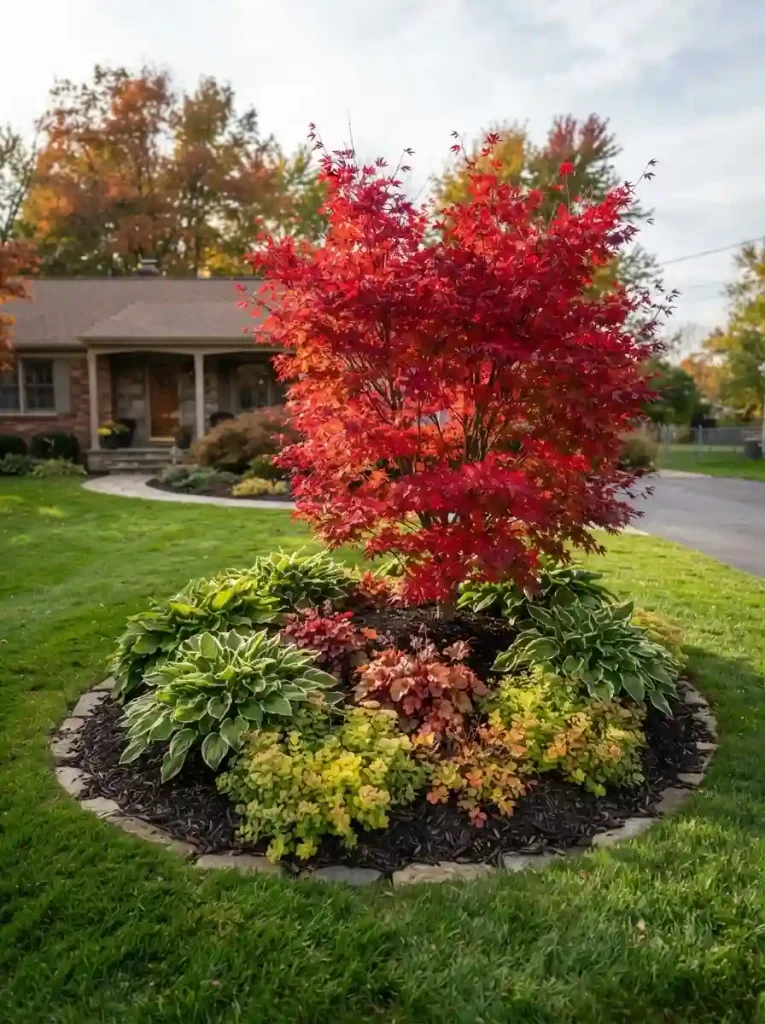
Instead of a flat, empty lawn, carve out a rounded bed in the grass and center it on one eye-catching tree. A Japanese maple, dogwood, or crabapple adds height without overpowering the roofline. Ring the base with mulch and low perennials. The island creates depth, so your house looks nestled into the landscape rather than just sitting there.
13. Gather Around a Backyard Fire Pit
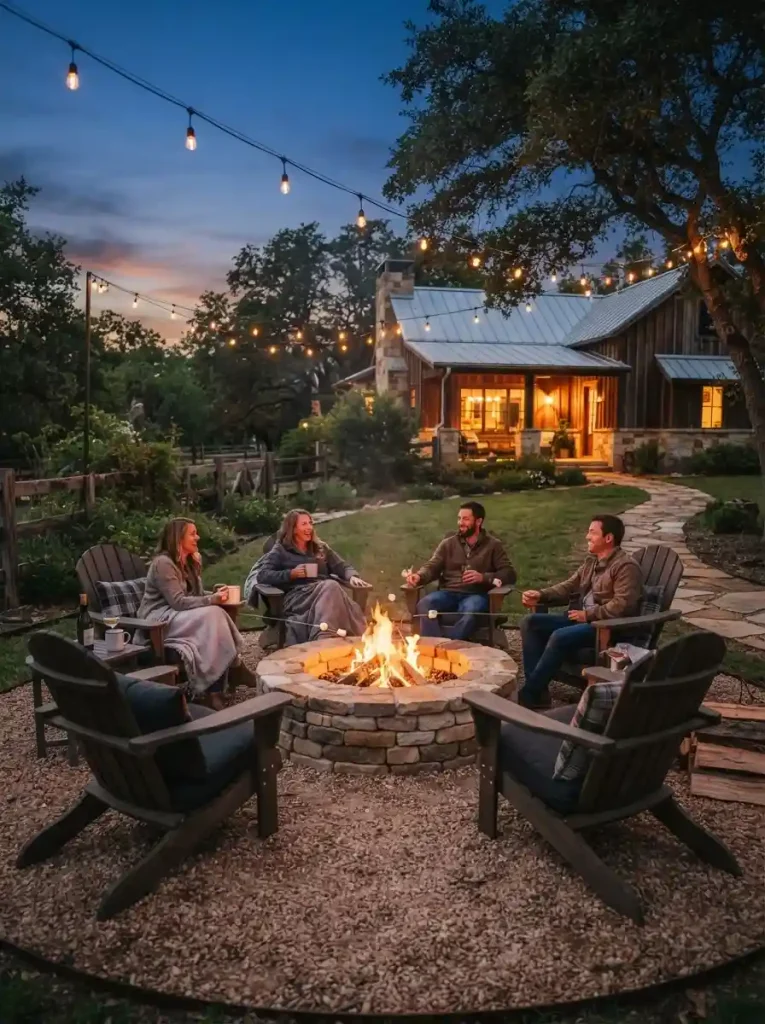
A fire pit turns a plain yard into the place everyone wants to be. Set it on a level base of pavers or compacted gravel, about 10 to 12 feet from the house. Surround it with sturdy chairs and a few low shrubs for shelter. Check local rules before you light it.
14. Add Raised Garden Beds
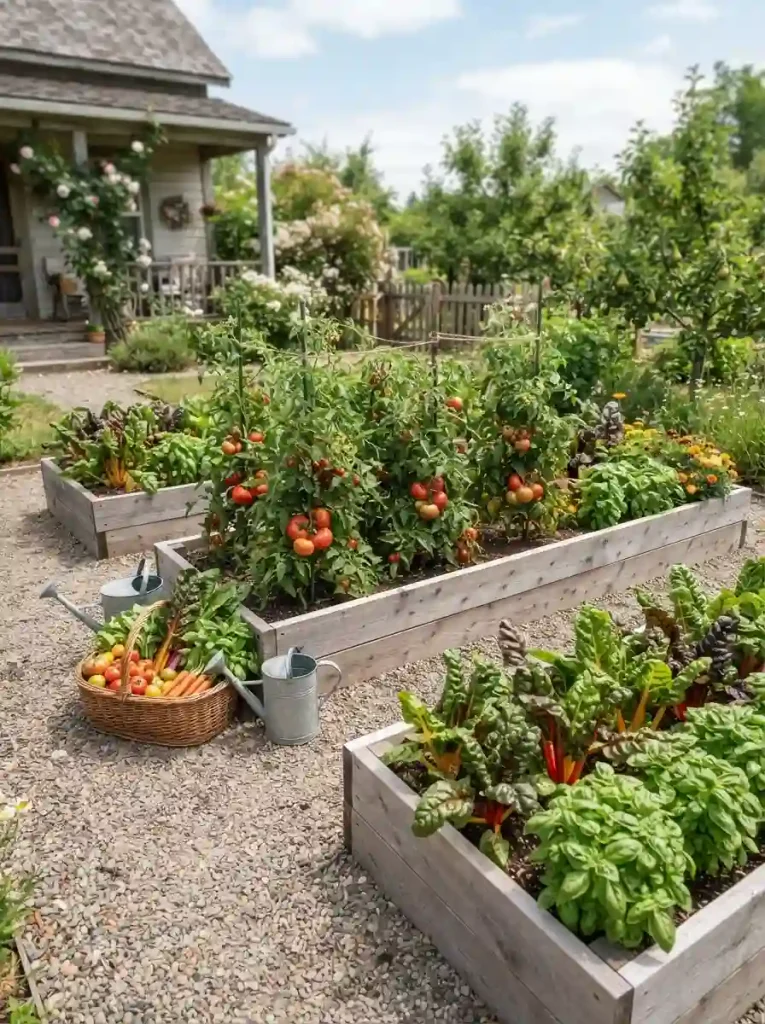
Raised beds keep a garden neat and easy to reach, which suits a ranch house’s relaxed style. Build them 3 to 4 feet wide so you never step on the soil. Cedar lasts longest, and corrugated metal gives a modern edge. Fill them with tomatoes, peppers, and herbs for a yard that feeds you.
15. Go Water-Wise with a Succulent and Gravel Garden
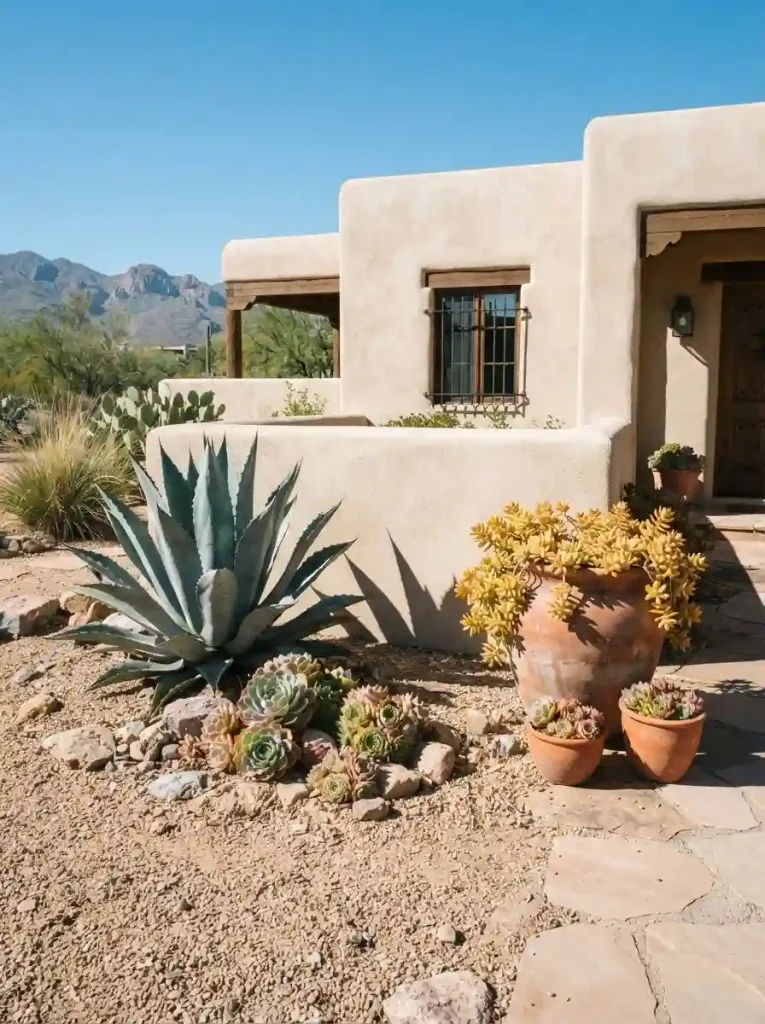
In dry climates, a low-water design saves time and money. Combine agave, sedum, and yucca with decomposed granite and a few sculptural rocks. Space plants generously so each one shows off its shape. Once established, this bed needs very little attention.
16. Train Climbing Vines on a Trellis
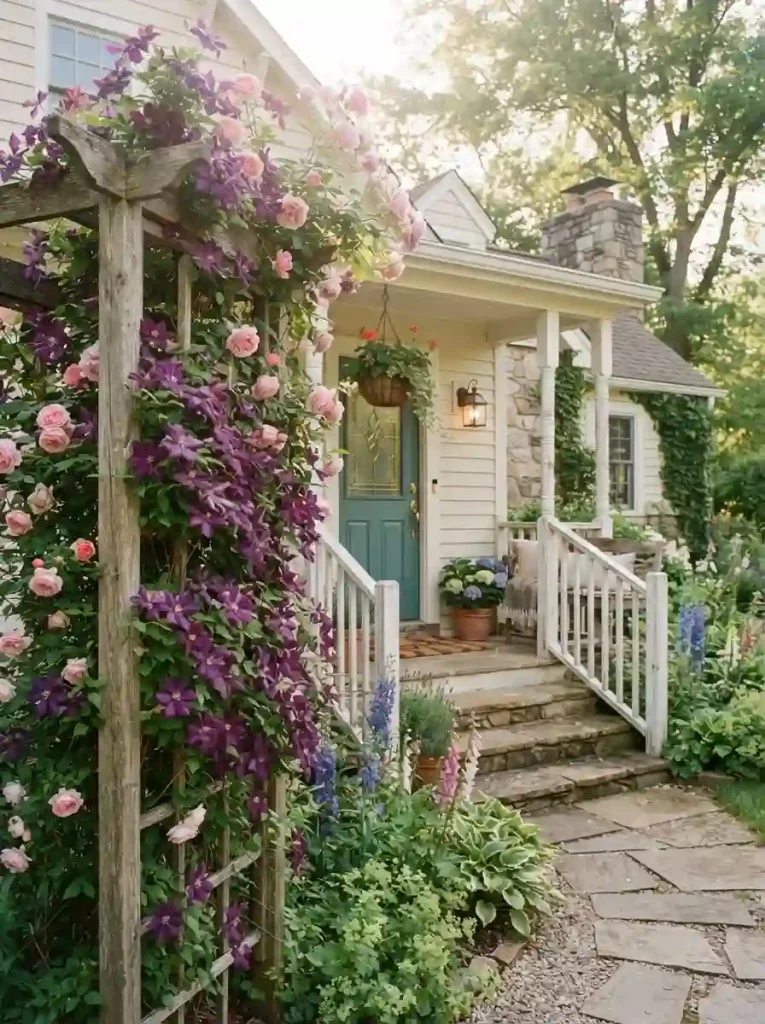
Vertical color adds height to a house that’s naturally low. Fix a sturdy trellis beside the porch or garage and plant clematis, climbing roses, or sweet peas. Tie young stems gently until they grab on. The vines draw the eye upward and break up wide, plain walls.
17. Sow a Wildflower Meadow Strip
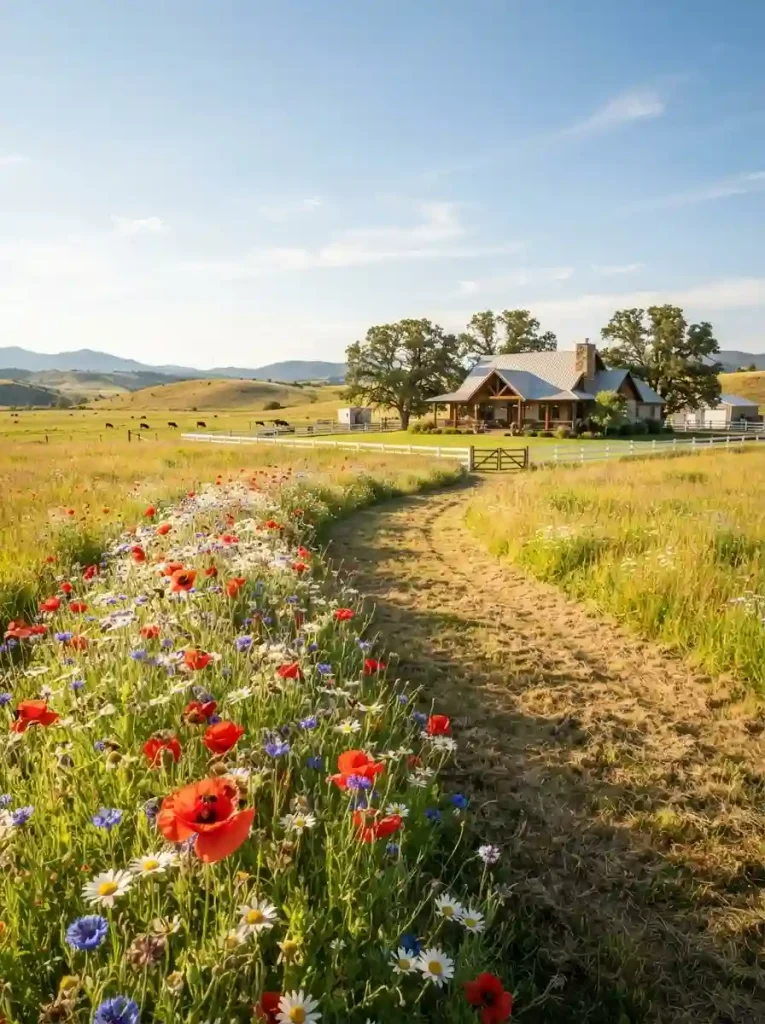
Replace a stretch of thirsty lawn with a meadow strip. Sow a regional wildflower mix in early spring or fall, and mow the area once a year. You’ll get poppies, cosmos, and daisies with almost no upkeep. Mow a neat edge along the path so it looks intentional.
18. Build a Pergola-Covered Patio
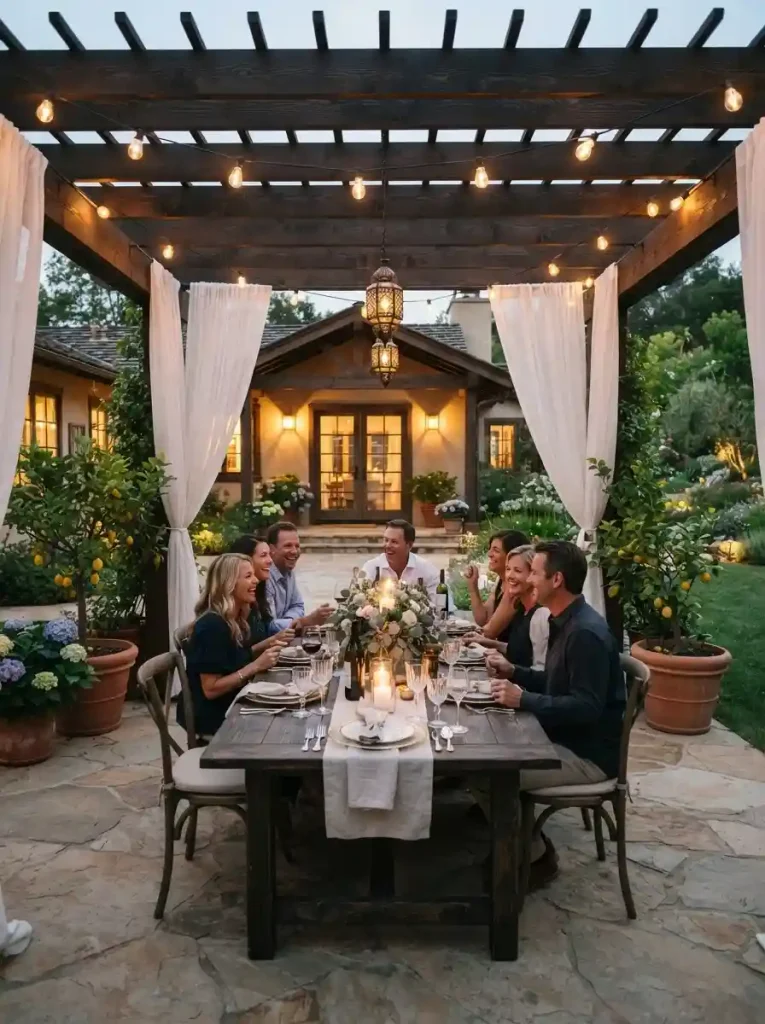
A pergola gives your outdoor living space a defined “room” and a bit of shade. Attach it to the back of the house or build it freestanding, and leave the top open for filtered light. Add outdoor curtains, a dining set, and a few potted plants. Grapevines or wisteria overhead make it feel even more special.
19. Add a Small Water Feature
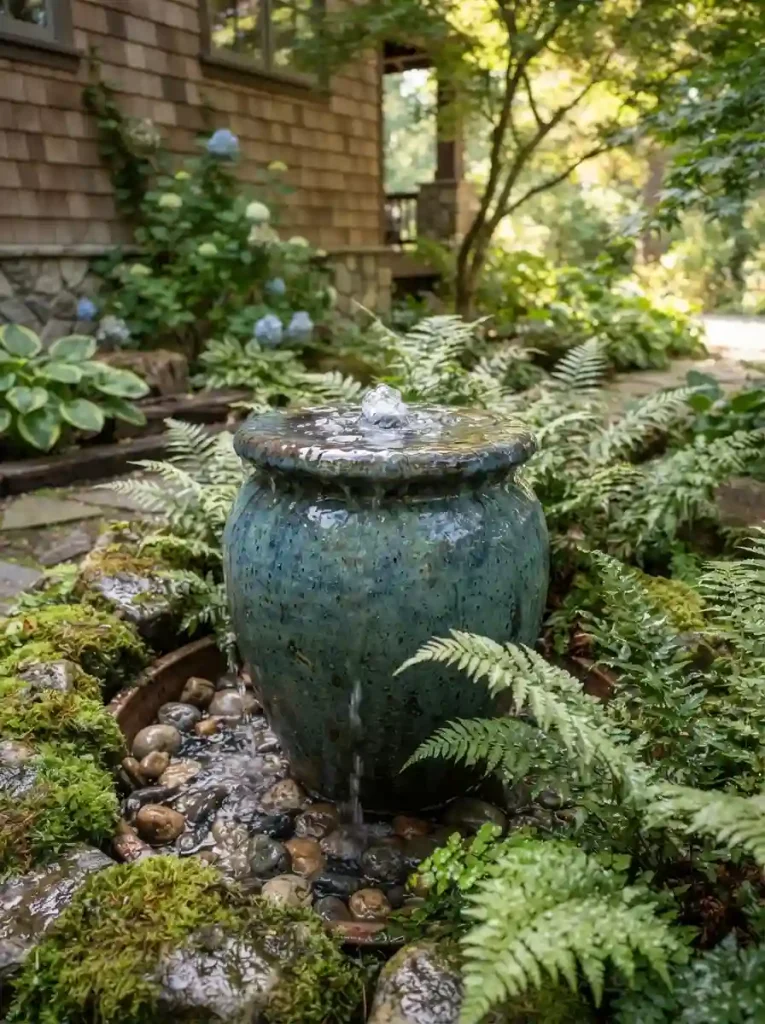
The sound of trickling water is instantly calming. A bubbling urn or tiered fountain fits even tight spaces, and a solar pump keeps it simple. Place it where you can hear it from the patio or a window. Surround it with ferns and moss-friendly shade plants for a natural look.
20. Edge the Driveway with Plants and Stone
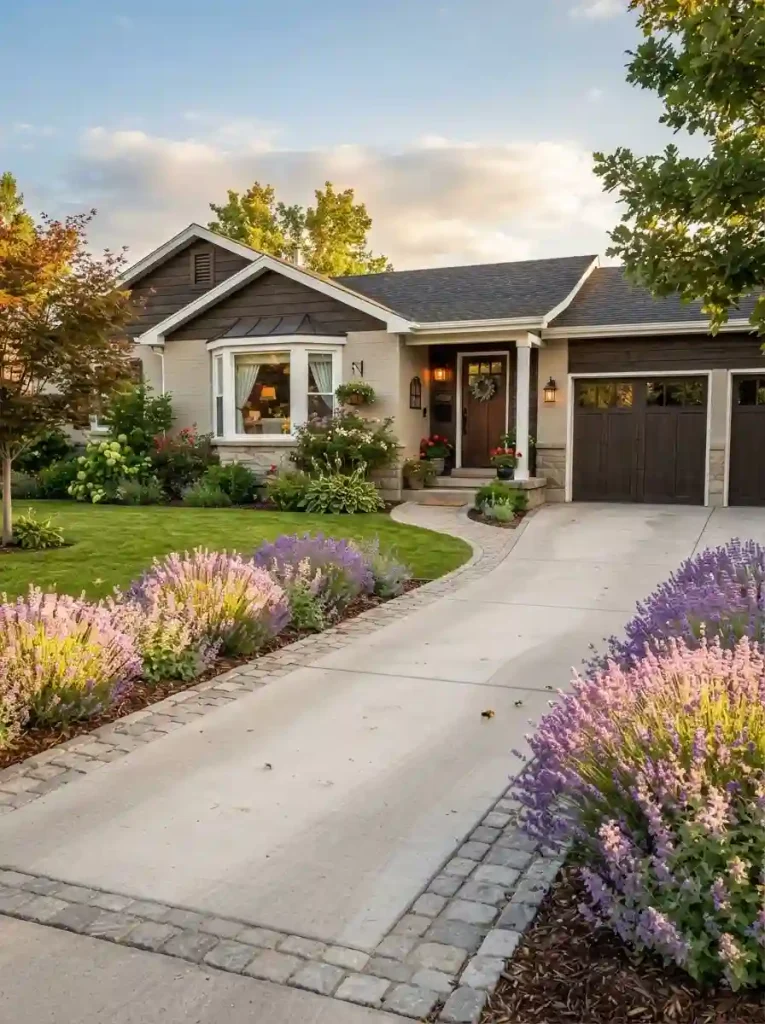
The driveway is often the biggest feature of a ranch front yard, so soften it. Line the edge with lavender, catmint, or low-growing juniper, and add a strip of cobblestone for definition. Keep plants back about a foot so car doors can open freely. This quick fix makes a big difference.
21. Create Privacy with an Evergreen Screen
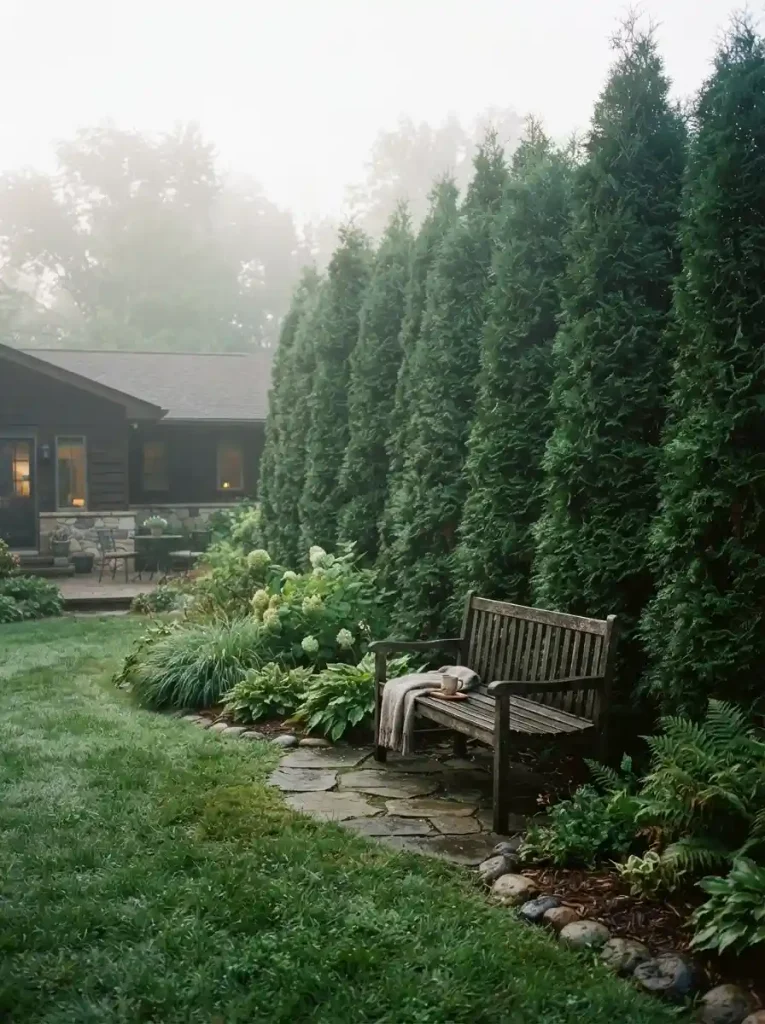
If neighbors are close, a living screen gives you peace. Plant arborvitae, holly, or upright yews along the property line, spaced according to their mature width. Stagger two rows for a fuller look. Leave a little breathing room from the house so the roots and branches have space.
22. Line the Side Yard with Stepping Stones
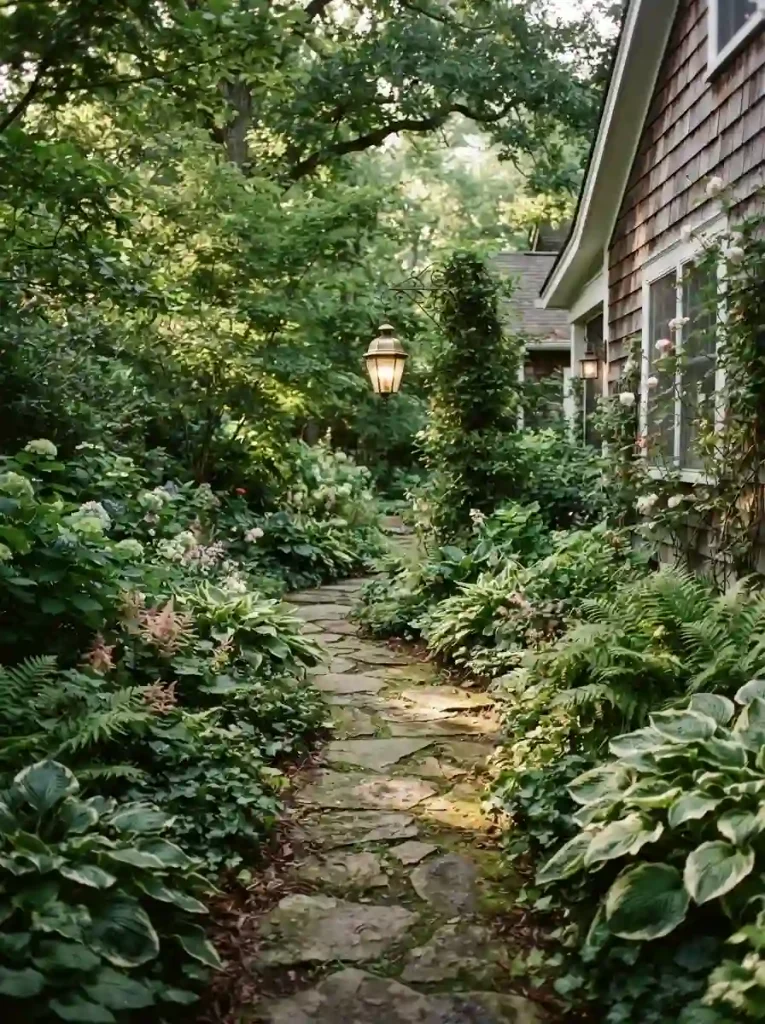
Side yards are often forgotten, yet they can be charming. Set irregular stepping stones in a winding line and plant moss, hosta, and dwarf ferns between them. Add a small bench or a hanging lantern at the end. It becomes a tucked-away shortcut to the backyard.
23. Make a Cozy Porch Seating Nook
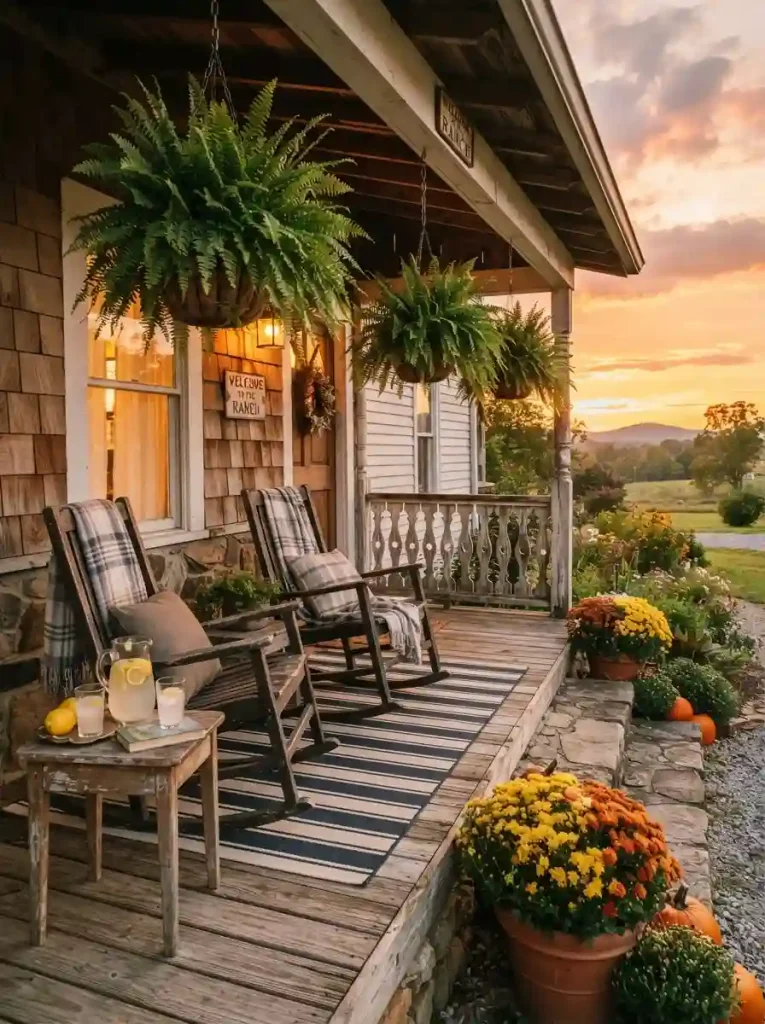
A ranch house porch is a perfect spot for slowing down. Add two rocking chairs, a small side table, and an outdoor rug to define the space. Hang ferns from the beams and tuck pots of seasonal flowers near the steps. Even a narrow porch can feel like a retreat.
24. Finish with a Mailbox Garden
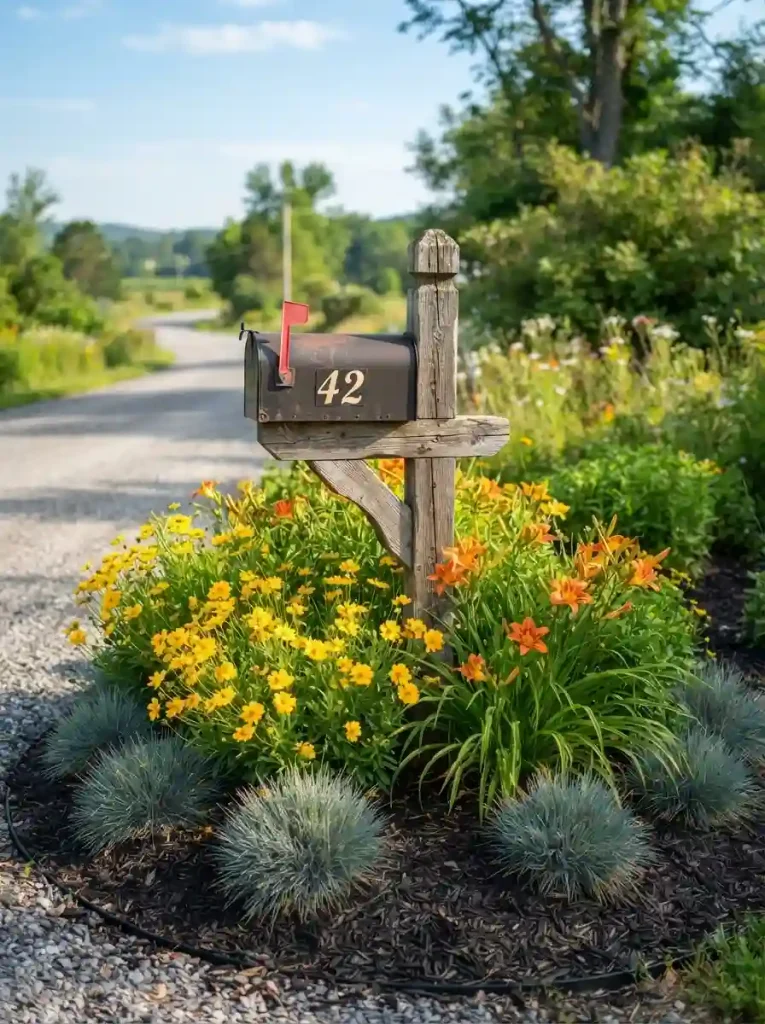
Don’t overlook the first thing visitors see. Build a small bed around the mailbox using daylilies, coreopsis, and a few low grasses that handle sun and road heat. Choose a sturdy post, and keep plants short so the mail carrier has easy access. It’s a small touch that makes the whole property feel cared for.
Ranch House Landscaping: Install Order and a Simple Seasonal Care Calendar
Install in this order so later work never tramples finished work:
- Hardscape first — the Curved Walkway, Low Stone Wall, Pergola-Covered Patio, and Fire Pit area.
- Drainage next — grade the soil and build the Dry Creek Bed before beds are planted.
- Prepare beds: edge them, improve the soil, and set out the Lawn Island shape.
- Plant the bones — the Specimen Tree and Evergreen Screen go in before anything smaller.
- Add shrubs and structure plants, including the Hydrangea Hedge and Statement Planters.
- Finish with perennials, grasses, flower boxes, and the Wildflower Meadow Strip, then mulch everything.
- Install facade and walkway lighting last, testing it after dark to aim fixtures properly.
Seasonal care calendar: Spring — prune winter damage, cut back ornamental grasses before new growth, divide crowded perennials, and refresh mulch. Summer — water new plantings deeply during dry spells and deadhead repeat bloomers. Fall — plant trees and shrubs while soil is still warm, and sow wildflower seed in regions where fall sowing is recommended. Winter — leave grasses and seed heads standing for structure, and use the quiet season to plan bed edits.
Common mistakes to avoid: planting shrubs against the foundation without checking their mature width, so they swallow windows within five years; edging the Driveway with plants that flop into the parking path; placing a water feature where leaves constantly fall into it; and lighting the facade with fixtures aimed at the sky instead of the house.
Practical tip: photograph the front yard monthly from the street — the view neighbors get — to spot gaps in the layers early. It also shows whether new plants are filling in evenly or leaving one end of the house looking bare.
Frequently Asked Questions
What plants work best in ranch house foundation beds?
Layered combinations work better than any single plant. Use evergreen shrubs as the year-round backbone against the wall, mid-height flowering shrubs such as hydrangeas in front of them where climate allows, and ornamental grasses or perennials at the front edge for movement and seasonal color. Repeating plants in groups of three or five along the ranch home’s facade keeps the bed looking unified instead of patchy, and choosing plants by mature size prevents the overgrown look within a few years.
How wide should foundation beds be for a ranch home?
Wider than most people first plan. Because ranch facades are long and low, shallow one- or two-foot beds look pinched and leave no room for layering. Beds five to eight feet deep on the frontage fit an evergreen back row, a middle layer, and a front edge, while keeping shrubs far enough from the siding for air flow and access. Where the yard is small, four feet with two layers looks more designed than a bed planted at random.
Can you grow a succulent and gravel garden in a cold climate?
Only with adjustments. Most succulents used in water-wise gardens are damaged by freezes and winter soil, so in cold USDA zones they survive as container plants that move to a sheltered or indoor spot for winter, or as annual displays replanted each spring. A gravel garden works in cold regions if it is planted with hardy grasses, sedums rated for the zone, and boulders for structure — the look stays, but the plant list has to match the climate honestly.
How do you improve a plain ranch house facade on a small budget?
Start with the cheapest high-visibility changes: a Mailbox Garden, Flower Boxes on the windows, and Statement Planters flanking the entry instantly give the facade focal points. Next, sharpen what already exists — clean bed edges, fresh mulch, and a walkway edge make old plantings look intentional. Then add plants in stages, beginning with the foundation bed corners and the area beside the front door, where the eye lands first, rather than spreading a budget thinly across the frontage.
Final Thoughts
Great ranch house landscaping comes down to a few simple habits. Lean into the home’s wide, low shape, layer your plants for depth, and add a few personal touches that suit how you live. You don’t need to tackle all 24 ideas at once.
Start with one or two that fit your budget, such as a curved path or a pair of planters, and build from there. Over a season or two, your yard will grow into a space that looks beautiful and feels like home.