
21 Small Flower Bed Ideas Packed With Big Color Impact
A small garden doesn’t need a lot of space to look beautiful. With the right flowers, color combinations, and planting arrangements, even a narrow strip beside your house or a tiny corner of your yard can become a standout feature. The secret is to choose plants that work well together and arrange them in a way that makes every bloom count.
Small flower beds are also easier to refresh with the seasons. You can experiment with bright annuals, delicate perennials, colorful foliage, and different flower heights without redesigning your entire yard. Whether you have a compact front garden, a tiny patio, or an unused patch of lawn, these small flower bed ideas will help you create a colorful display that feels thoughtfully designed.
1. Create a Rainbow Flower Bed

A rainbow flower bed brings several colors together in a clear, organized pattern. Instead of mixing every flower randomly, plant small groups in curved bands of red, orange, yellow, pink, purple, and blue. This arrangement works especially well in a shallow crescent-shaped bed beside a lawn or walkway. Choose flowers with similar sunlight and watering needs, and leave enough space for them to grow without covering neighboring plants.
Planning tip: Follow the curve of the bed with each color band, and keep the bands broad enough to remain visible as the flowers mature.
2. Design a Pink and White Flower Bed
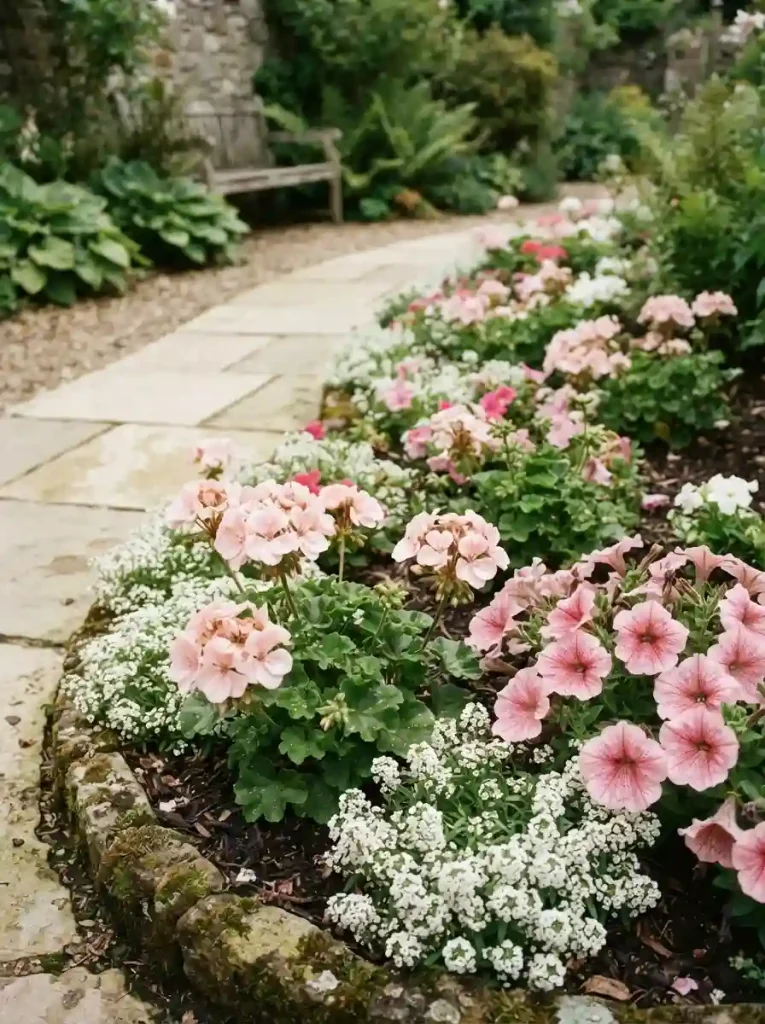
For a softer look, combine pink blooms with white flowers and fresh green foliage. Pale pink petunias, white alyssum, and compact pink geraniums can create a layered display without making a small space feel crowded. Place the white flowers toward the front to brighten the edges, then use deeper pink blooms toward the back for contrast.
Why this combination works
- White flowers reflect light and help the bed look brighter.
- Different shades of pink add depth without introducing too many colors.
- Low-growing flowers soften the border and connect the planting to the surrounding lawn or path.
3. Turn a Sunny Corner Into a Yellow Flower Garden

A sunny corner can become a cheerful focal point with yellow and golden flowers. Try compact marigolds, coreopsis, or dwarf sunflowers where conditions suit them. Keep taller varieties at the back and shorter plants along the front edge so the blooms remain visible. Repeating the same yellow flower in small clusters can make the bed look intentional rather than busy.
Before you plant
Check how many hours of direct sunlight the corner receives. Many yellow-flowering plants need several hours of sun to bloom well, so match the varieties to the conditions in your yard.
4. Plant a Purple and Blue Flower Bed

Purple and blue flowers create a cooler color palette that feels calm while still adding strong visual interest. Combine compact blue salvia with purple verbena or other locally suitable varieties. A few silver-leaved plants can break up the color and make the blue tones stand out.
| Position | Planting role | Design purpose |
| Back | Upright blue flowers | Add height and structure |
| Middle | Rounded purple blooms | Create a fuller center |
| Front | Low flowers or silver foliage | Soften the bed’s edge |
Keep the plant heights graduated so the arrangement has depth even when viewed from nearby.
5. Make a Cottage-Style Mini Flower Garden

A cottage-style flower bed looks naturally abundant, with flowers of different shapes and heights growing together. In a small area, keep the palette limited while varying the flower forms. Try combining daisies, compact snapdragons, pink cosmos, and low edging flowers. Arrange the plants in loose groups rather than straight rows for a relaxed, informal appearance.
A simple styling approach
- Choose two or three main flower colors.
- Mix upright blooms with rounded flowers and low-growing edging plants.
- Leave small gaps between young plants so they have room to grow.
6. Build a Pollinator-Friendly Flower Patch
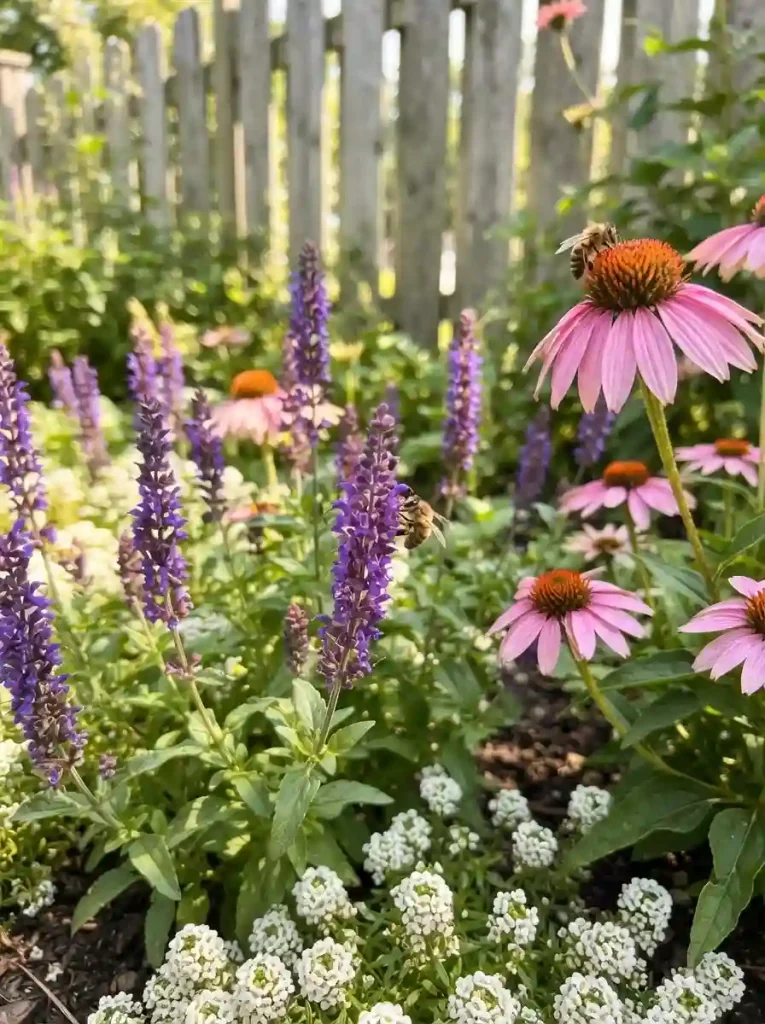
A tiny flower bed can support bees and butterflies when it includes nectar-rich flowers that bloom at different times. Choose suitable plants such as compact salvia, coneflowers, and sweet alyssum, depending on your climate and available sunlight. Grouping several plants of the same variety together can make the patch easier for pollinators to find while giving the garden a more organized look.
Pollinator-friendly checklist
- Choose flowers with different bloom periods.
- Include several plants that attract local pollinators.
- Avoid spraying pesticides directly on flowering plants.
- Consider a shallow, safe water source nearby if practical.
7. Use a Sunset Color Palette

Bring the warmth of sunset into your garden with coral, orange, peach, and deep red flowers. This palette looks especially attractive beside a patio or brick wall, where warm shades complement earthy materials. Place the darkest red blooms near the center or back, then surround them with lighter peach and coral flowers to create a gentle transition.
Try this formula: deep red focal flowers + coral middle layer + peach or orange edging.
This approach creates a coordinated look without requiring a large collection of different plants.
8. Build a Layered Flower Bed With Three Heights

When space is limited, vertical variation helps a flower bed look fuller without needing more ground area. Arrange the plants in three levels: taller flowers at the back, medium-sized blooms in the center, and low-growing plants along the front. This layout is ideal for narrow beds against fences, walls, or the side of a house.
| Layer | Possible choices | What it adds |
| Back row | Upright snapdragons or suitable salvia | Height and vertical interest |
| Middle row | Compact geraniums | Color and fullness |
| Front row | Low-growing alyssum | A soft, finished edge |
Choose varieties that suit your local climate and check their mature heights before planting.
9. Brighten the Front Entrance With Colorful Blooms
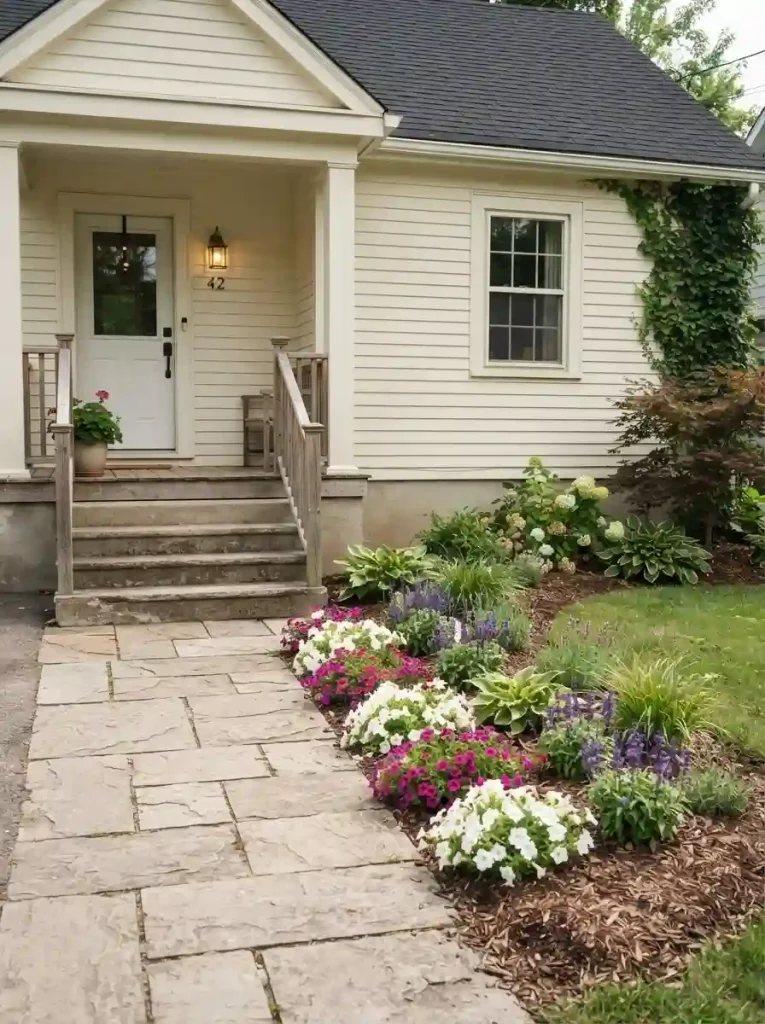
A colorful flower bed near the front door can make a home feel welcoming before visitors even step inside. Use a simple planting shape that follows the walkway or frames one side of the entrance. Choose two or three main flower colors and repeat them in small groups rather than planting every available variety. Leave enough room around steps and paths so the flowers enhance the entrance without blocking movement.
Color combination to try
- White flowers to brighten the border.
- Magenta or pink blooms for a strong focal color.
- Purple flowers to add depth near the back.
10. Grow a Compact Cut-Flower Bed

A small flower bed can be both decorative and useful if you choose blooms that can be cut for indoor arrangements. Compact zinnias, dwarf cosmos, and suitable varieties of snapdragons can provide colorful stems through their flowering season. Leave a little room between plants for harvesting, and place flowers with longer stems where they will be easy to reach.
| Flower type | What it adds |
| Compact zinnias | Bright colors and sturdy stems |
| Dwarf cosmos | An airy, delicate appearance |
| Snapdragons | Upright flowers and height |
| Sweet alyssum | Low-growing flowers along the edge |
Check the mature size of each variety before planting so the bed does not become overcrowded.
11. Create a Bold Red and White Flower Bed
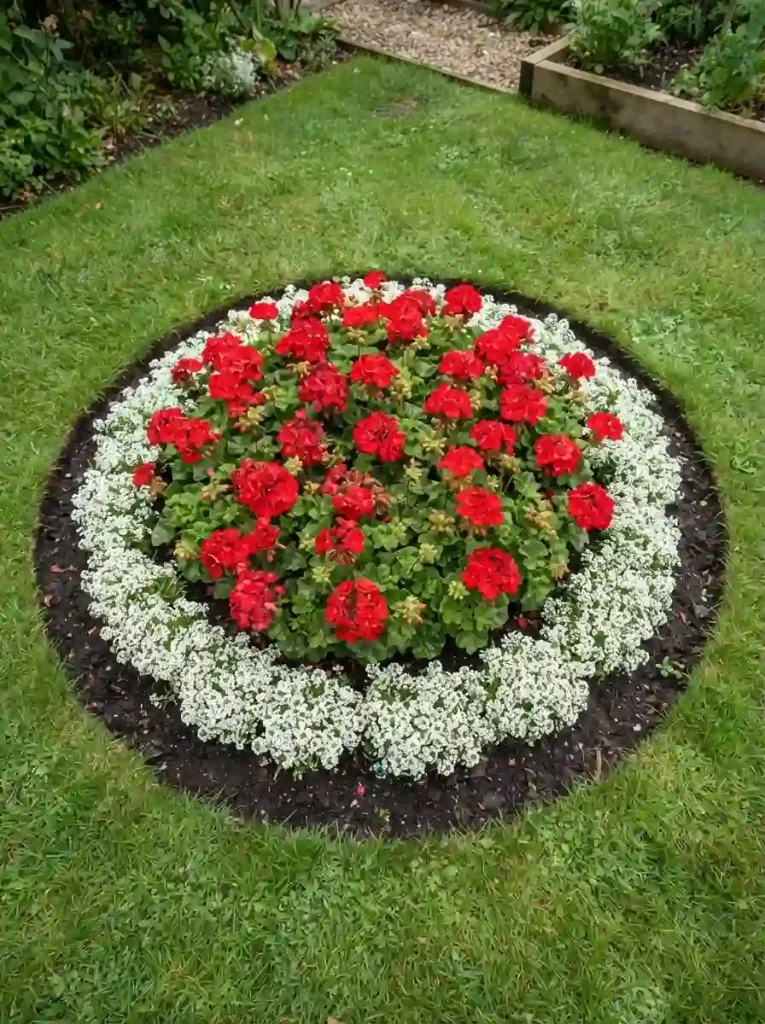
Red and white flowers create a crisp, high-contrast design that stands out even in a compact garden. For a neat appearance, plant red flowers in a central cluster and surround them with white blooms, or reverse the arrangement to suit the shape of your bed. This simple color scheme works well beside a green lawn, a pale wall, or a dark garden fence.
Two layout options
| Option | Arrangement | Visual effect |
| Red center | A bold cluster of red blooms surrounded by a white floral border | Strong focal point |
| White center | White flowers in the middle, with red blooms framing the outer corners | Balanced contrast |
12. Turn an Old Wheelbarrow Into a Flower Bed

An old wheelbarrow can become a portable flower bed for a patio, garden corner, or small lawn. Fill it with quality potting mix, ensure it has drainage holes, and combine trailing flowers with upright blooms for a fuller appearance.
How to style it
- Choose a wheelbarrow with a stable base and good drainage.
- Plant taller flowers toward the back.
- Add colorful compact flowers through the center.
- Finish with trailing plants along the edges.
Select plants according to the sunlight available where you plan to display the wheelbarrow.
13. Make a Flower Bed Around a Decorative Birdbath
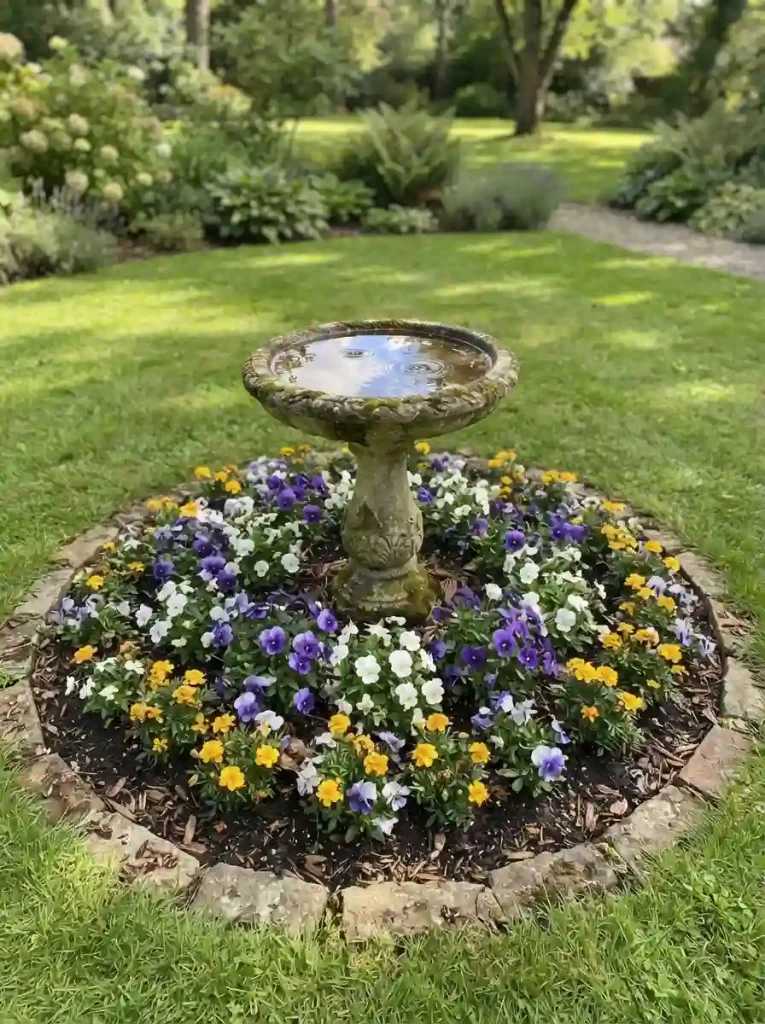
A small birdbath can give a flower bed a focal point without taking up much planting space. Place it slightly off-center and arrange flowers around its base, leaving enough open ground for the feature to remain visible. Low-growing flowers near the front and medium-height plants toward the back will help frame the birdbath instead of hiding it.
Key design rule: Keep the birdbath visible from the main viewing angle. Avoid placing tall plants directly in front of the basin.
14. Make a Curved Flower Border Along the Lawn

A gently curving flower bed can make a small garden feel more spacious and less rigid than a straight-edged planting strip. Mark the outline with a garden hose before digging, then plant compact flowers in repeated groups along the curve. Keep the border relatively narrow so the design remains easy to maintain.
Before and after
| Before | After |
| A straight, plain lawn edge with little visual interest. | A flowing flower border that adds color and leads the eye through the garden. |
| Many unrelated plants scattered along the edge. | Repeated groups of two or three flower varieties for a coordinated look. |
15. Add Height With a Mini Flower Bed and Trellis

When a garden has little ground space, a small trellis can draw the eye upward. Place it at the back of a compact bed and grow a suitable climbing flower, such as a compact sweet pea variety where the climate and season allow. Fill the lower level with shorter flowers to keep the arrangement colorful from top to bottom.
Check these details first
- Anchor the trellis firmly.
- Make sure the climbing plant receives suitable sunlight.
- Choose a variety that fits the trellis size and local growing season.
16. Create a Seasonal Spring Flower Bed

Spring is a good time to refresh a small flower bed with cheerful seasonal colors. Depending on your climate, you can combine tulips, daffodils, hyacinths, or pansies to create a display that changes as different plants bloom. Choose varieties with compatible growing requirements, and plan bulb placement before planting so the colors appear balanced.
| Stage | What to plan for |
| Early season | Early bloomers bring the first color to the bed. |
| Mid-season | Additional flowers fill spaces as the first blooms fade. |
| Later season | Longer-lasting seasonal plants help maintain the display. |
In warmer climates, choose spring-flowering plants suited to local temperatures rather than varieties that need a cold winter.
17. Use a Checkerboard Planting Pattern

A checkerboard design adds a geometric touch to a small flower bed. Alternate compact groups of two contrasting flower colors rather than mixing every plant together. This works best in a square or rectangular bed where the pattern can be seen clearly from above.
Example planting pattern
| Block 1 | Block 2 | Block 3 | Block 4 |
| Pink flowers | White flowers | Pink flowers | White flowers |
| White flowers | Pink flowers | White flowers | Pink flowers |
Use compact varieties that stay relatively uniform in height, and leave enough room for the flowers to fill out naturally.
18. Give a Tiny Flower Bed a Tropical Look

You don’t need a large tropical garden to enjoy bold foliage and vibrant colors. In a warm climate, combine colorful flowers with plants that have broad leaves or strong architectural shapes. Compact varieties of coleus, suitable begonias, and other heat-tolerant plants can add texture and color where their growing requirements match the site.
Choose plants by their role
| Role | What to look for |
| Focal plant | Bold leaves or a strong flower color |
| Supporting plants | Smaller blooms in complementary shades |
| Front edge | Low-growing plants that soften the outline |
Protect shade-loving plants from harsh direct sun, and choose heat-tolerant varieties if the bed receives intense afternoon sunlight.
19. Plant a Fragrant Flower Bed Beside a Seating Area
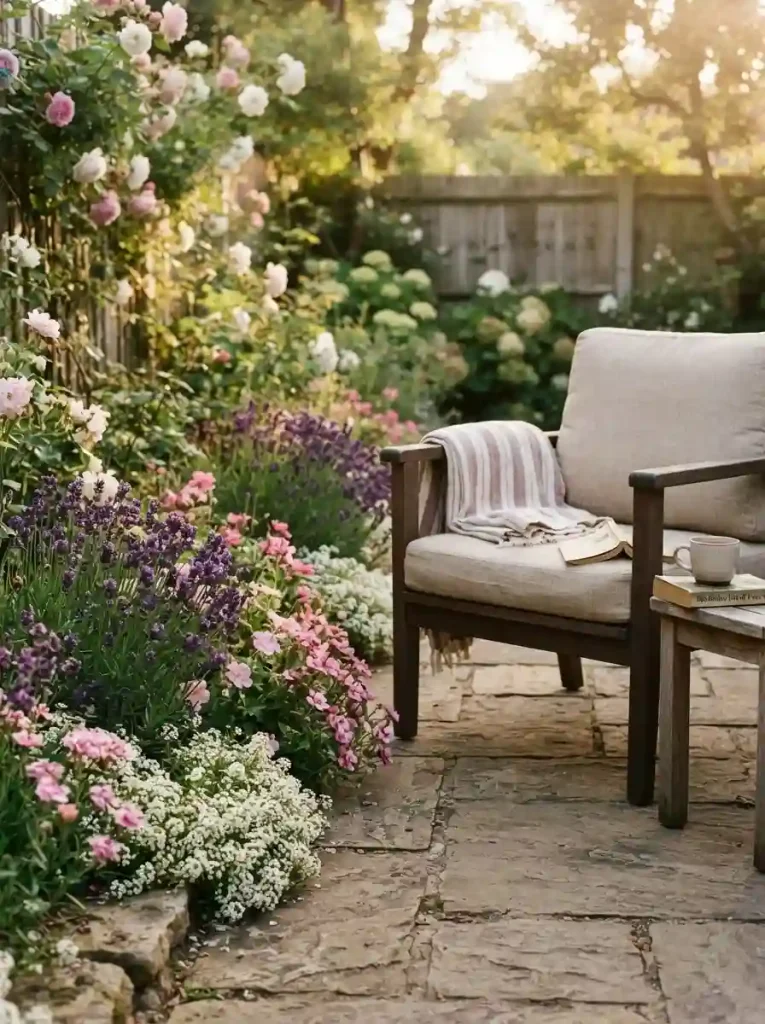
A flower bed can appeal to more than just the eyes. Planting fragrant flowers near a bench, patio chair, or outdoor dining spot allows you to enjoy their scent while relaxing outside. Depending on the climate, options may include sweet alyssum, lavender, or suitable fragrant herbs and flowering plants.
Design tip: Place fragrant plants close enough to enjoy without crowding the seating area. Leave room for airflow, pruning, and easy access.
20. Transform a Narrow Side Yard Into a Colorful Flower Strip
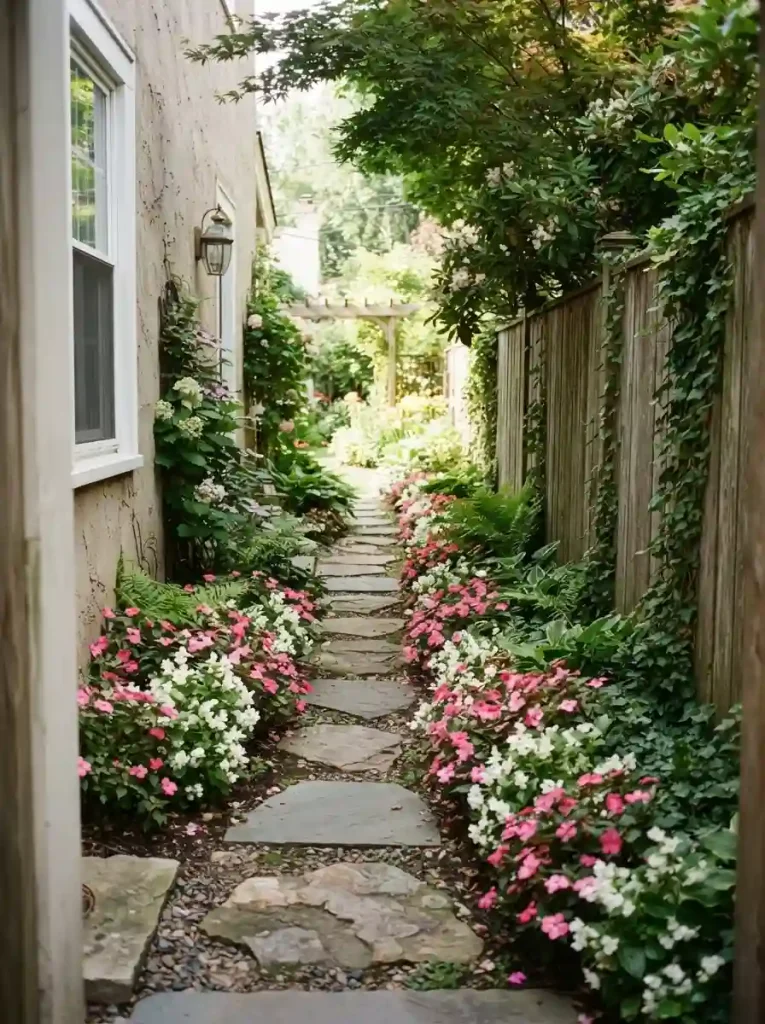
A narrow side yard can become an attractive feature instead of an overlooked passage. Keep the flower bed shallow enough to preserve a clear walking route, and use repeating groups of compact plants to make the space feel organized. Taller plants should sit against the fence or wall, while lower flowers stay along the path.
Small-space planning checklist
- Measure the path before deciding how wide the bed can be.
- Select plants based on the amount of sun the side yard receives.
- Use repeating colors to create continuity.
- Choose varieties that will not quickly spill into the walkway.
- Leave access for watering and maintenance.
21. Create a Miniature Flower Garden Around a Tree

The space around a small ornamental tree can become a colorful garden feature when planted carefully. Use shade-tolerant flowers if the tree creates deep shade, or sun-loving plants if the area receives plenty of direct light. Keep the planting away from the trunk and avoid piling soil against the bark. Shallow-rooted plants are generally a better choice than digging deeply around established tree roots.
A balanced design
- Keep a clear, unplanted area around the trunk.
- Arrange flowers in small groups rather than a dense ring.
- Use plants suited to the light conditions beneath the tree.
- Avoid cutting major roots or changing the soil level significantly.
Final Tips for Small Flower Beds
- Choose plants for your conditions: Match flowers to sunlight, soil, climate, and watering needs.
- Limit the color palette: Two or three main colors often look more coordinated than too many competing shades.
- Use mature plant sizes: Check plant labels so the bed does not become overcrowded.
- Add height thoughtfully: Mix low, medium, and taller plants where space allows.
- Keep maintenance practical: Leave access for watering, pruning, and removing faded blooms.
A small flower bed can make a big difference when its colors, shapes, and plant heights work together. Start with one design that suits your available space, then adjust the flowers to match your local growing conditions.