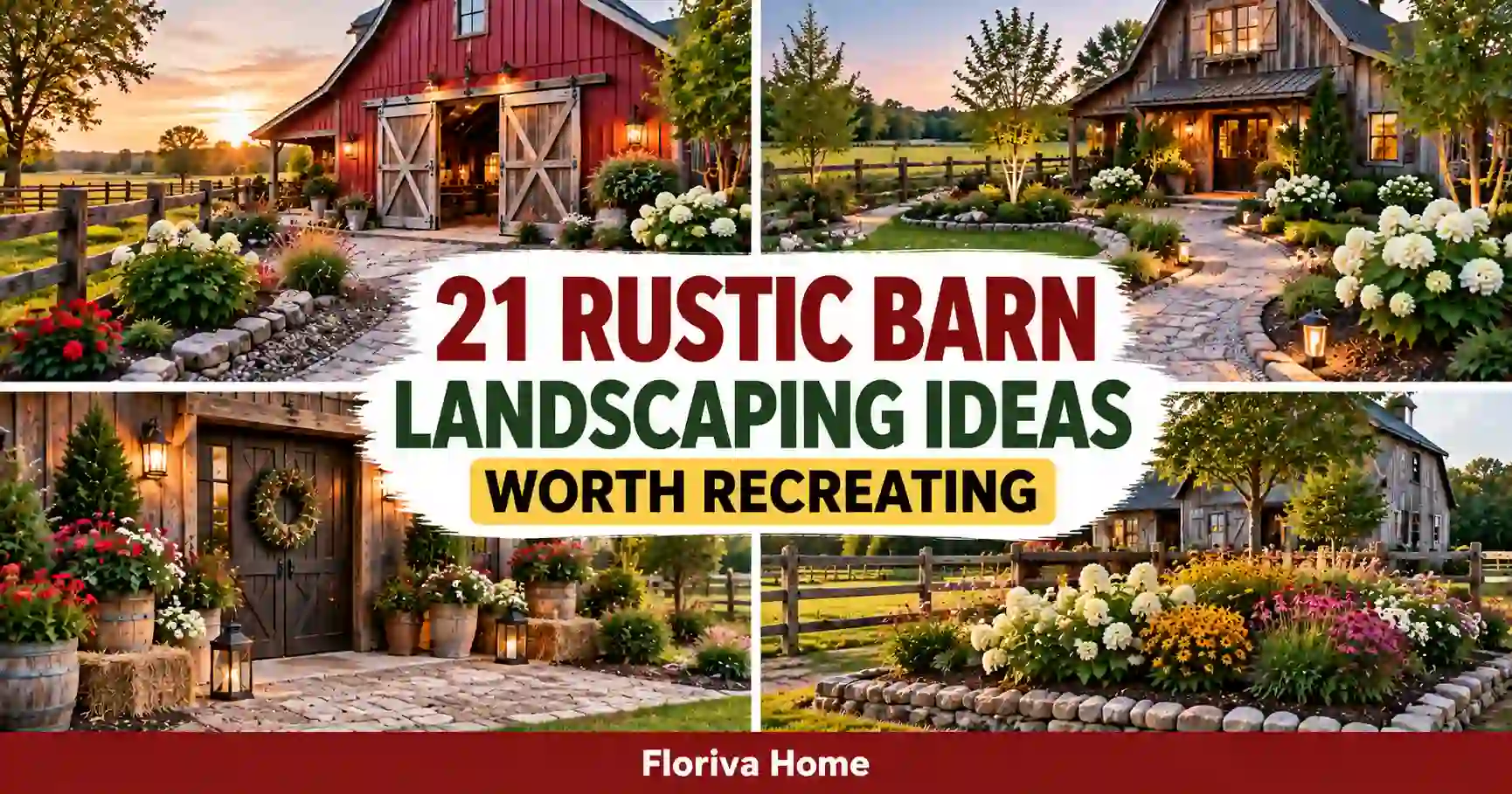
21 Rustic Barn Landscaping Ideas Worth Recreating
If your barn feels a little plain around the edges, thoughtful landscaping can completely change the atmosphere. Rustic barn landscaping works best when it combines natural materials, relaxed planting, and practical outdoor spaces that feel connected to the building.
From gravel paths and wildflower borders to cozy seating corners and vintage-inspired details, these ideas can make your barn surroundings feel warmer and more inviting. You don’t need to transform everything at once, either. Start with one area that needs the most attention, then build around it.
Whether you have an old wooden barn, a modern farmhouse-style structure, or a small country outbuilding, these rustic barn landscaping ideas can help you create a landscape that feels natural, useful, and full of character.
Let’s get started!
1. Create a Gravel Path Leading to the Barn
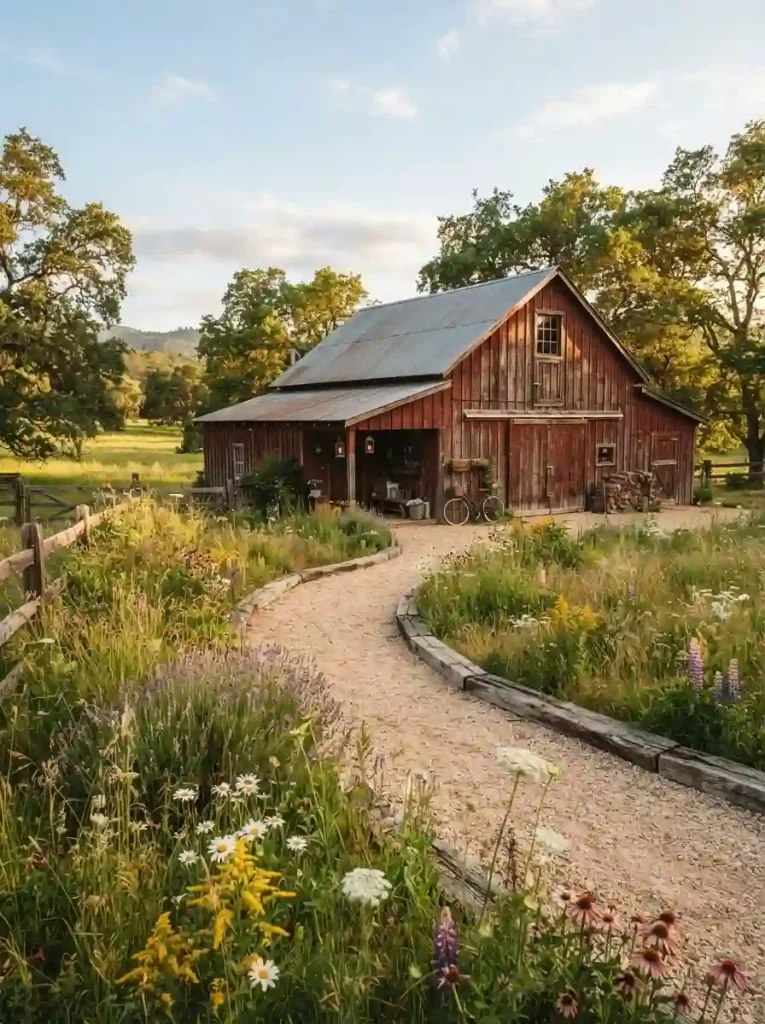
A gravel walkway is one of the easiest ways to give a barn landscape a finished look without making it feel overly polished. Choose natural gravel in warm gray, tan, or earthy brown tones that complement the barn’s siding and surrounding soil.
Instead of making the path perfectly straight, allow it to curve gently toward the entrance. This creates a more relaxed country feel and makes the approach to the barn more interesting.
You can define the edges with reclaimed timber, fieldstone, or low-growing plants. If the barn receives a lot of foot traffic, use compacted gravel with a firm base so the path remains comfortable to walk on.
A gravel path is also practical because it drains quickly after rain and can be refreshed without replacing an entire hardscape.
Expert Tip:
Choose gravel that complements the barn instead of creating a sharp color contrast. A simple palette of stone, wood, and greenery usually creates the most convincing rustic appearance.
2. Frame the Barn With Native Flower Beds
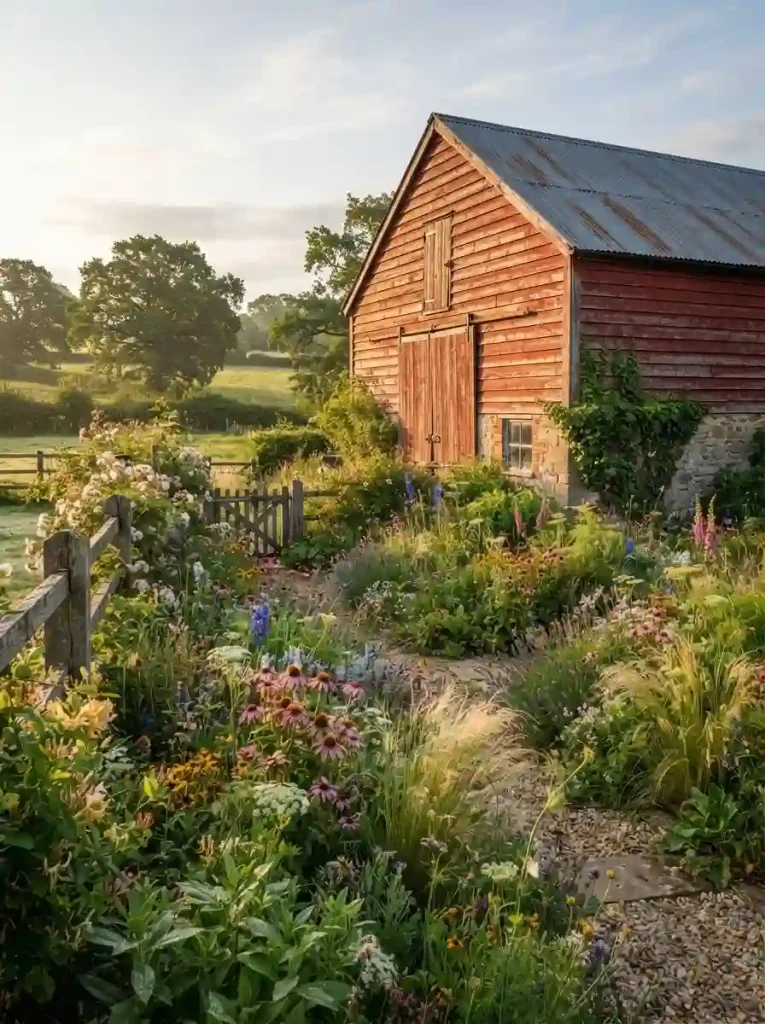
Flower beds can soften the strong lines of a barn while adding seasonal color around the structure. Instead of filling the space with many unrelated plants, choose a small collection of flowers that naturally suit your local growing conditions.
Place taller plants farther from the walkway and shorter flowers closer to the front edge. This creates layers without hiding the barn itself.
Native flowers, grasses, and hardy perennials are especially useful because they generally require less fuss once established. Mix different textures rather than relying only on colorful blooms.
For an authentic country look, keep the planting slightly informal. A few plants spilling naturally toward the path can look much more charming than a perfectly symmetrical border.
Expert Tip:
Repeat a few plant varieties throughout the bed. Repetition creates visual unity and keeps a large collection of flowers from looking random.
3. Add a Rustic Timber Fence Around the Property
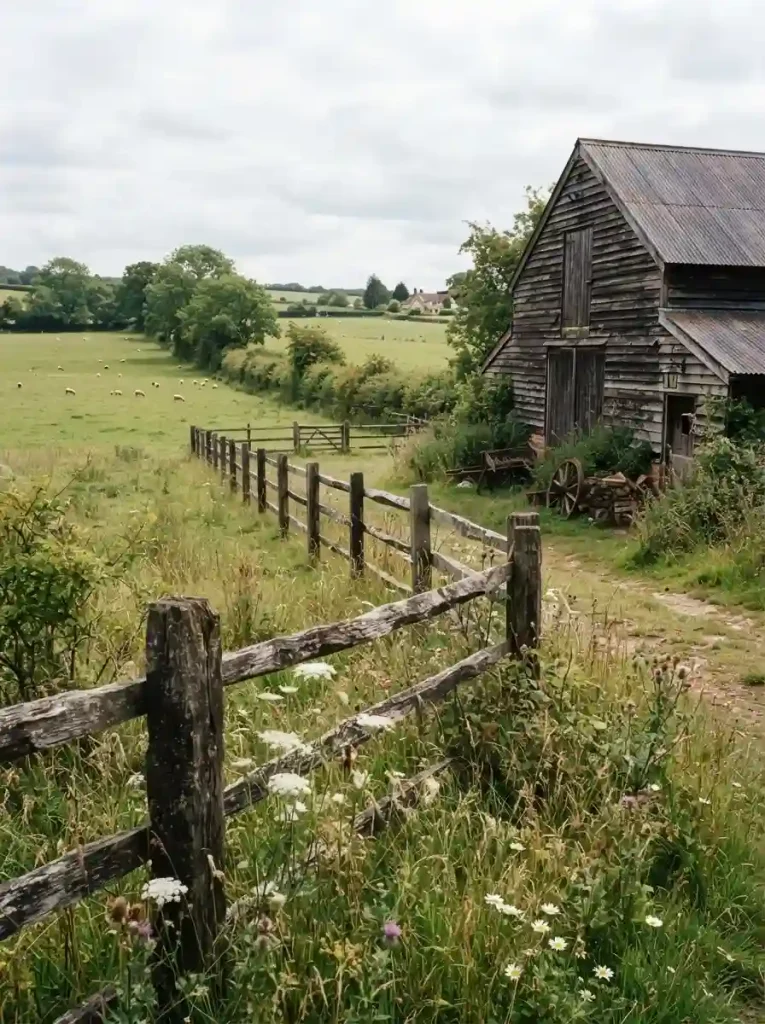
A timber fence can make the barn landscape feel established while also creating useful boundaries. Reclaimed boards, rough posts, or split-rail fencing work particularly well around traditional barns.
You can use the fence to define a garden, separate a driveway from planting areas, or create a small enclosure for outdoor seating. It doesn’t need to be tall or perfectly finished.
Let the wood weather naturally if you like a softer, aged appearance. For a more traditional farmhouse style, use simple horizontal or split-rail construction and avoid overly decorative details.
Adding plants near the fence helps it blend into the landscape. Climbing roses, grasses, shrubs, or wildflowers can gradually soften the hard edges.
Expert Tip:
Leave enough space between the fence and large plants for maintenance. This makes trimming, mowing, and repairing the fence much easier later.
4. Plant Ornamental Grasses for a Natural Country Look
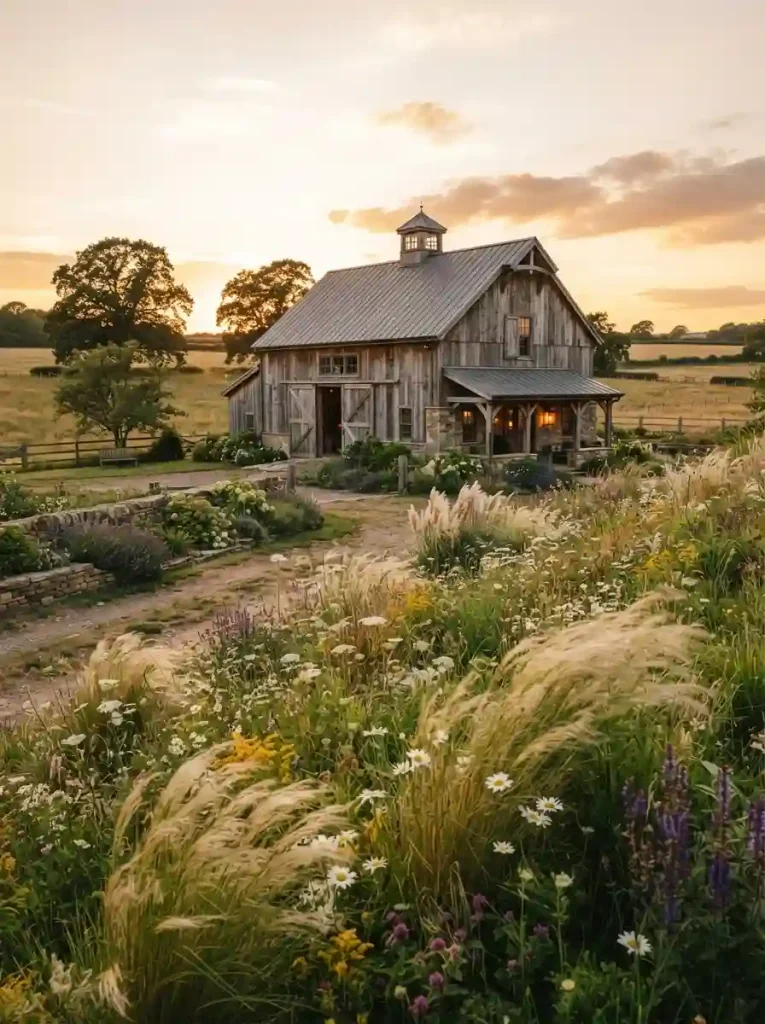
Ornamental grasses are excellent for creating movement around a barn. Their tall stems sway in the breeze and add texture without making the landscape feel too formal.
Plant them in groups near corners, along pathways, or beside fences. Different heights can create a layered appearance, while repeated clumps give the property a more intentional design.
Grasses can also help fill awkward areas where traditional flower beds may require too much maintenance. Choose varieties that suit your climate, soil, and available sunlight.
For an especially rustic effect, combine grasses with weathered stone, gravel, old timber, or simple flowering perennials.
Expert Tip:
Check the mature size before planting. Some ornamental grasses spread wider than expected and can quickly cover pathways or crowd smaller plants.
5. Build a Small Stone Seating Area
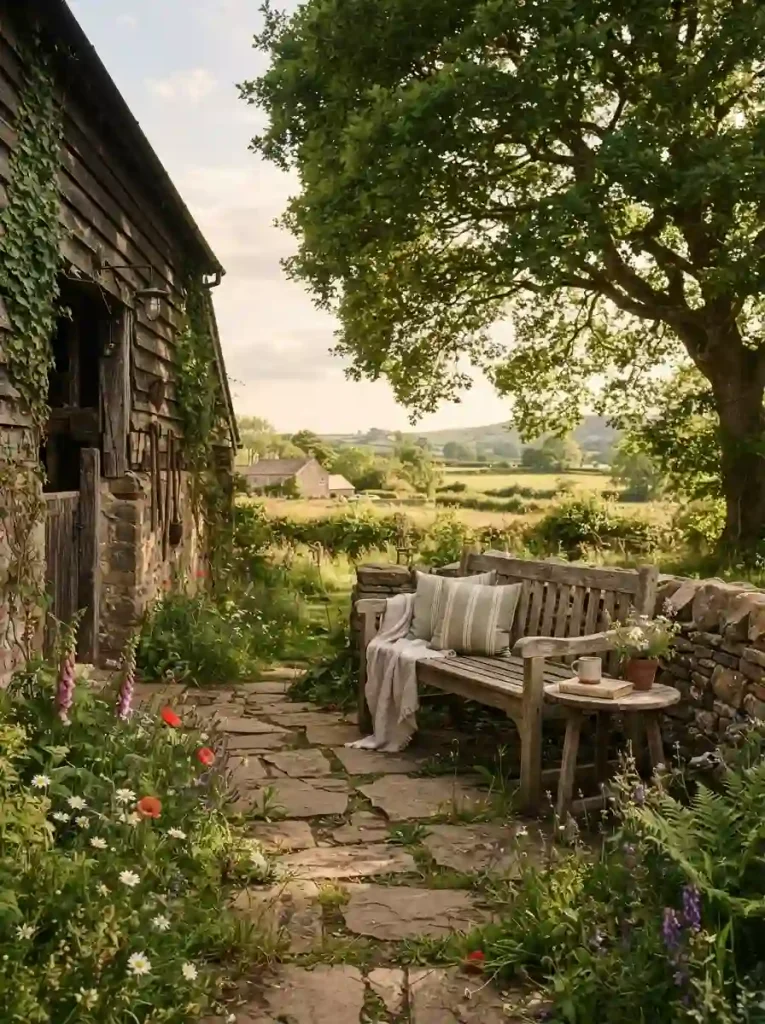
A simple seating area can turn the space beside your barn into a place where you actually want to spend time. Use natural flagstone, compacted gravel, or large flat stones to create the base.
Add a wooden bench, Adirondack-style chairs, or a small rustic table. The goal isn’t to create a polished outdoor room but a comfortable corner that feels connected to the surrounding landscape.
Position the seating where you can enjoy the best view of the property. A nearby tree can provide shade, while tall grasses or shrubs can create a little privacy.
Keep the materials simple and repeat textures already found around the barn for a cohesive result.
Expert Tip:
Choose furniture that can handle outdoor conditions. Rustic doesn’t have to mean uncomfortable, so add durable cushions or a weather-resistant throw for everyday use.
6. Use Reclaimed Wooden Planters Near the Barn Door
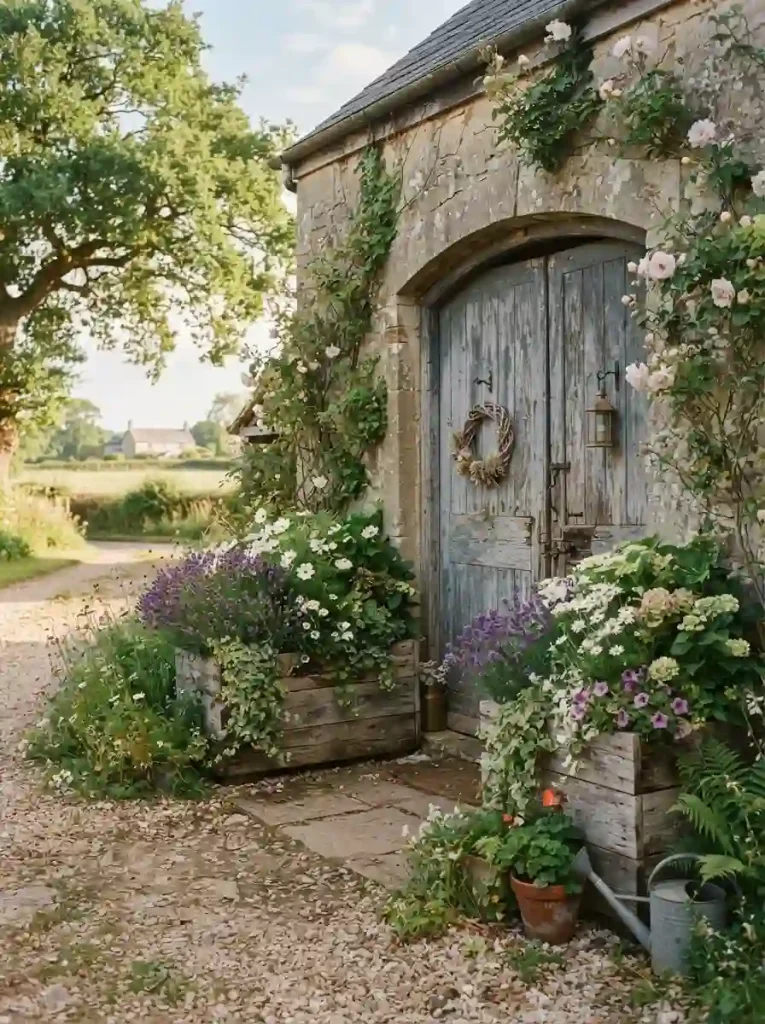
Reclaimed wood can add instant character to a barn landscape. Turn old boards, crates, barrels, or simple timber boxes into planters and place them near the entrance.
Fill them with herbs, seasonal flowers, trailing plants, or compact shrubs. Different planter heights can create a layered display without requiring a permanent garden bed.
Keep the arrangement slightly asymmetrical for a relaxed country appearance. You can also place a pair of similar planters on either side of the door if you prefer a more balanced entrance.
Make sure reclaimed wood is structurally sound and suitable for outdoor use before turning it into a planter.
Expert Tip:
Add drainage holes to wooden planters and raise them slightly from the ground. This helps prevent water from collecting underneath and extends the life of the wood.
7. Create a Wildflower Meadow Along the Barn
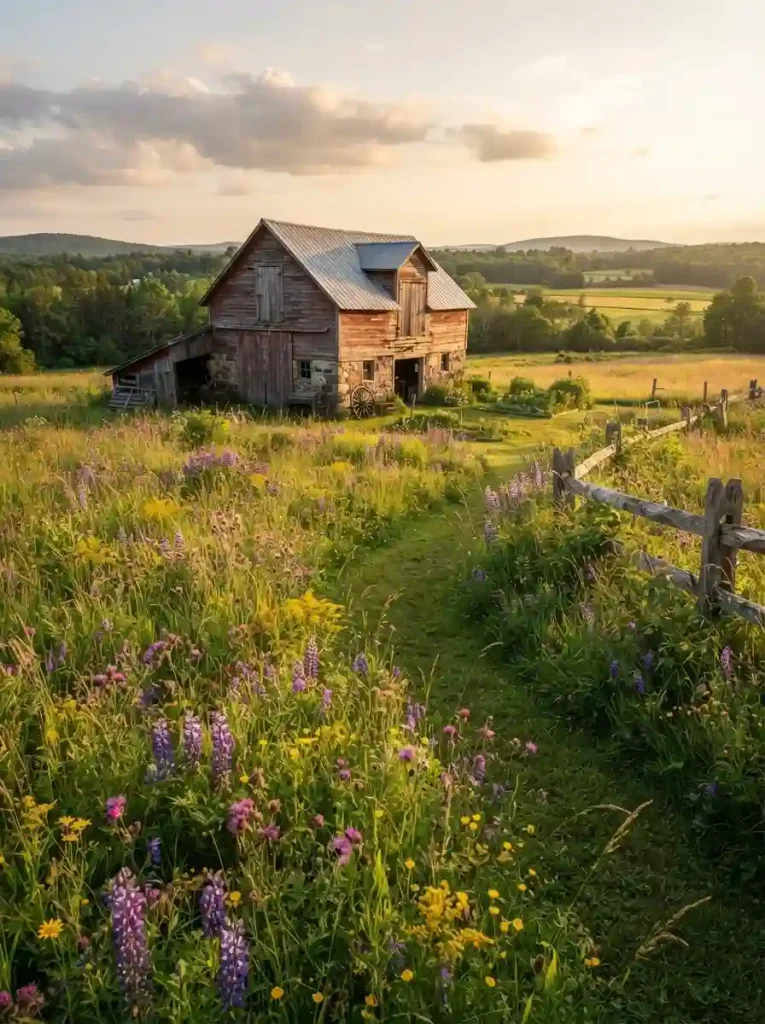
A small wildflower meadow can make a barn feel beautifully connected to the surrounding countryside. Instead of maintaining a perfectly trimmed lawn everywhere, leave one section intentionally natural.
Choose a suitable seed mix for your region and prepare the soil before planting. A mixture of flowers and grasses can provide changing color and texture throughout the growing season.
Keep the meadow away from heavily used entrances and paths. You can mow a narrow strip around it to create a clear boundary and make the planting look intentional rather than neglected.
This approach is particularly useful for larger properties where maintaining every inch as lawn would require considerable time.
Expert Tip:
Don’t judge a wildflower meadow too quickly. Many mixes develop gradually, and some plants may need an entire growing season before the area looks full.
8. Add Large Natural Stones Around the Barn
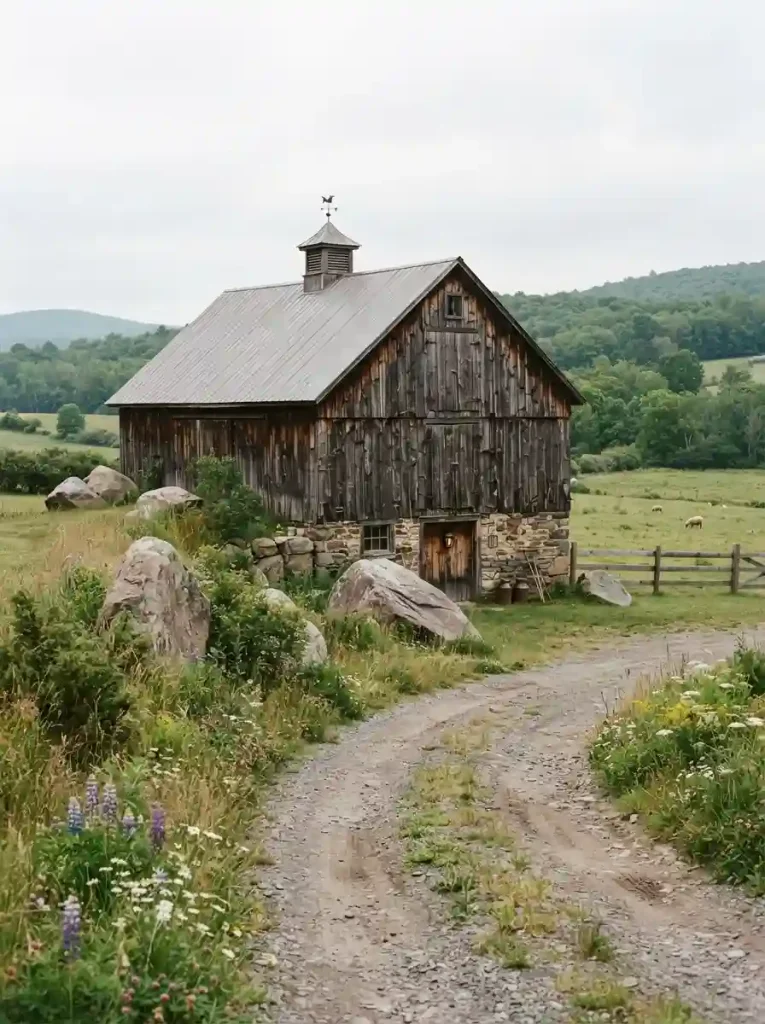
Large stones can give a barn landscape a grounded, established appearance. Use a few substantial rocks rather than scattering dozens of small decorative stones everywhere.
Place them near corners, planting beds, pathways, or transitions between the lawn and barn. Their irregular shapes work especially well with weathered wood and informal planting.
You can partially bury the bottom of each stone so it appears naturally embedded in the landscape. Combining large rocks with grasses and low plants creates a soft contrast between hard and living materials.
Natural stone also requires very little maintenance once positioned correctly.
Expert Tip:
Place the largest stones first and view them from several angles. A rock that looks perfect from the driveway may feel awkward when seen from the barn entrance.
9. Design a Rustic Garden With Raised Wooden Beds
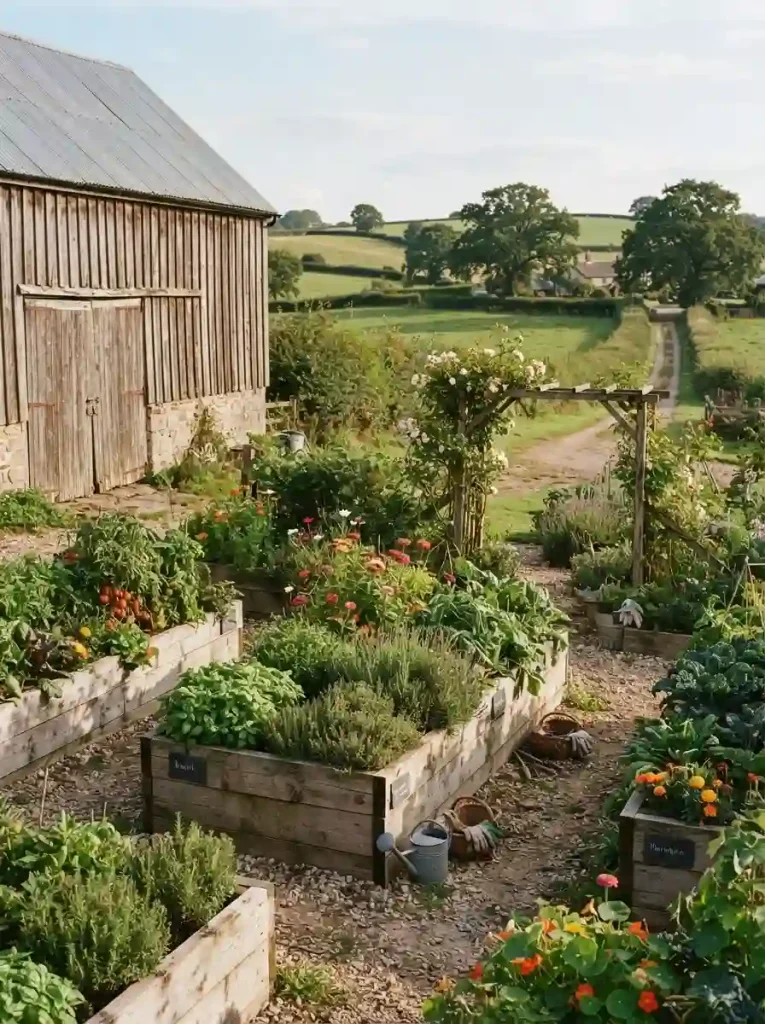
Raised garden beds can make the area around a barn both attractive and useful. Build simple rectangular beds from untreated or appropriately weather-resistant timber and position them where they receive enough sunlight.
Use the beds for vegetables, herbs, flowers, or a combination of all three. Mixing edible plants with ornamental flowers can create a garden that feels productive without looking overly formal.
Leave comfortable paths between the beds so you can water, weed, and harvest without stepping into the soil. Gravel or wood chips make practical walkway materials.
A raised garden also gives you more control over soil quality and drainage.
Expert Tip:
Keep raised beds narrow enough that you can reach the center comfortably from either side. Easy access makes a beautiful garden much easier to maintain.
10. Hang Vintage Lanterns Around the Barn
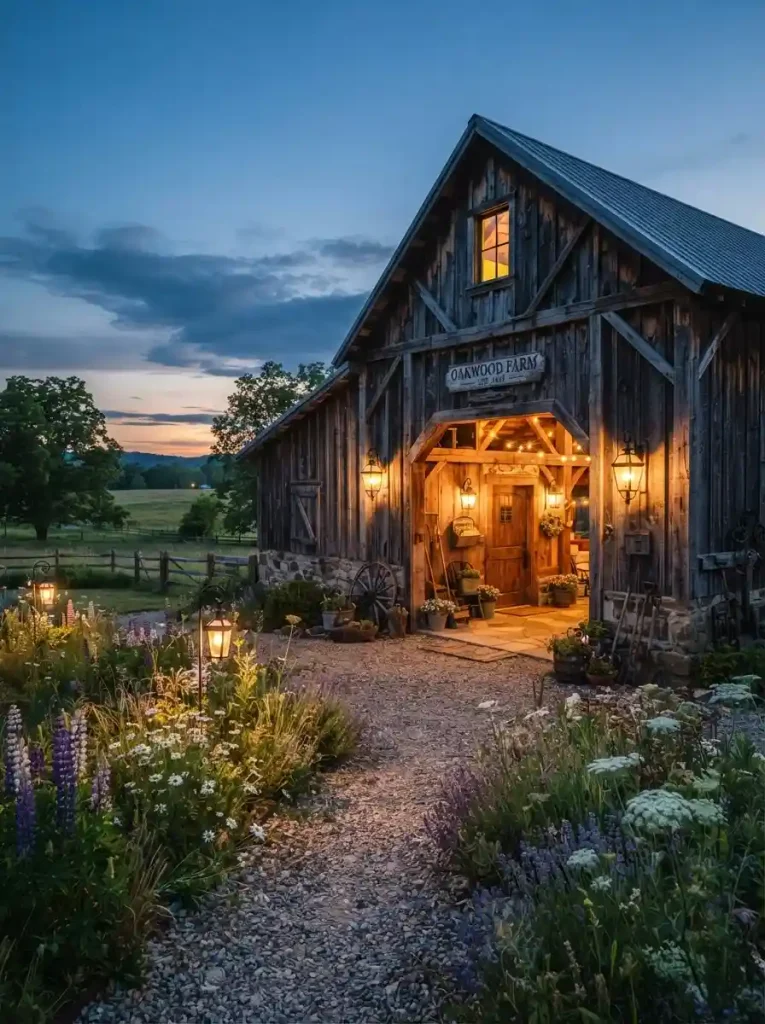
Outdoor lighting can completely change how a barn landscape feels after sunset. Vintage-style lanterns are particularly effective because they complement aged wood and other rustic materials.
Hang lanterns near the entrance, along a covered porch, or beside an outdoor seating area. Warm-toned lighting creates a softer atmosphere than bright white illumination.
For convenience, modern outdoor fixtures can give you the vintage appearance without requiring traditional fuel or complicated maintenance. Choose weather-rated fixtures designed for exterior use.
Avoid placing too many lights together. A few carefully positioned lanterns can create a more natural and welcoming effect.
Expert Tip:
Use lighting to highlight useful areas first, such as entrances and paths. Decorative lights can then be added around seating or garden features.
11. Create a Cozy Barnside Fire Pit
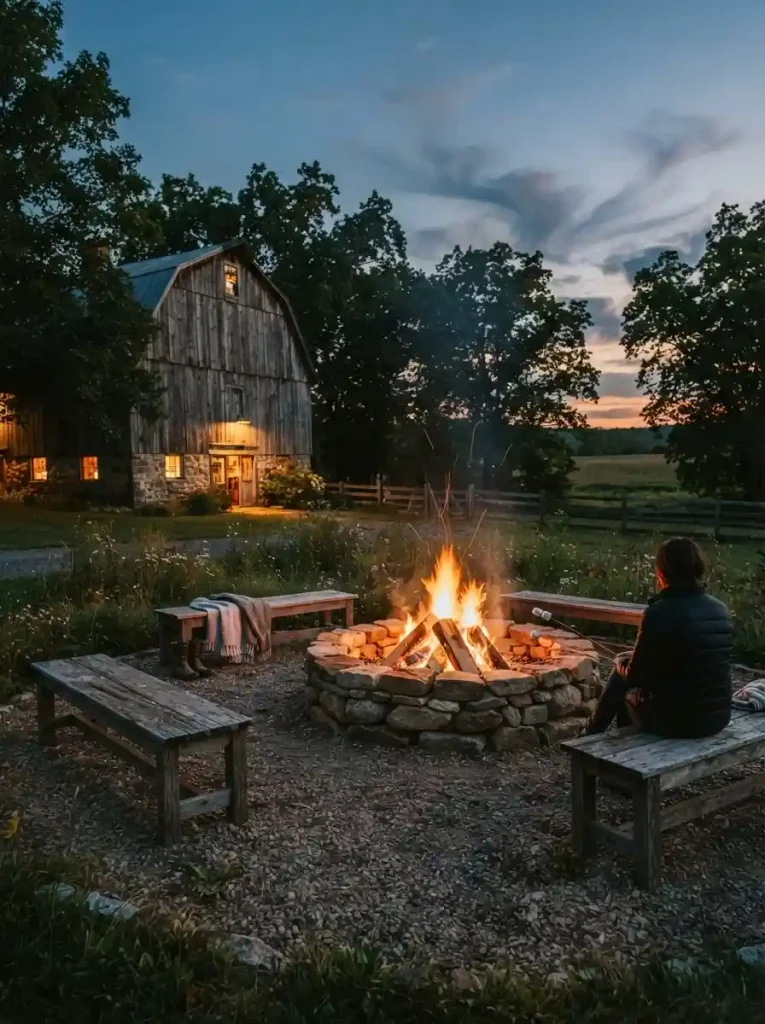
A fire pit can turn the area beside a barn into a welcoming gathering spot during cooler evenings. Build the surrounding surface from gravel, natural stone, or another non-combustible material suitable for outdoor use.
Arrange sturdy seating around the fire pit while leaving enough room for people to move comfortably. Wooden benches can reinforce the rustic theme, while simple metal chairs provide a lighter appearance.
Keep the fire area safely separated from the barn, dry vegetation, low branches, and other combustible materials. Check local fire regulations before installation.
With a few nearby lanterns and blankets, the space can become one of the most inviting areas on the property.
Expert Tip:
Safety should determine the location before aesthetics. Choose a clear area with stable ground and keep the fire pit well away from the barn and other flammable structures.
12. Line the Barn With a Low Stone Border
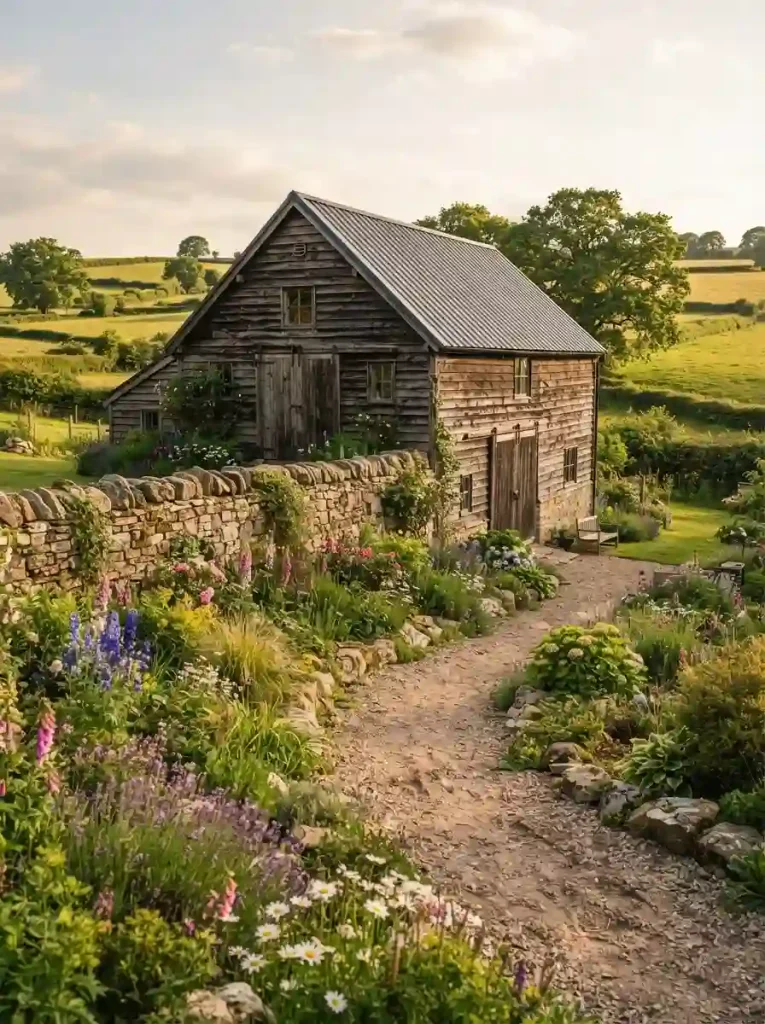
A low stone border is an easy way to separate the barn from surrounding grass, garden beds, or gravel. It gives the landscape a defined edge while still keeping the relaxed character of a country property.
Choose irregular fieldstone or locally available natural rock rather than perfectly uniform landscaping blocks. Arrange the stones in a slightly uneven line for a more authentic appearance.
You can fill the space behind the border with ornamental grasses, flowering perennials, or low evergreen plants. The combination of stone and greenery works especially well against weathered barn siding.
This idea is also useful around areas where grass tends to creep toward the building or become difficult to mow neatly.
Expert Tip:
Use stones that visually connect with other materials already found on your property. Repeating the same stone throughout different areas creates a naturally coordinated landscape.
13. Add a Rustic Pergola Beside the Barn
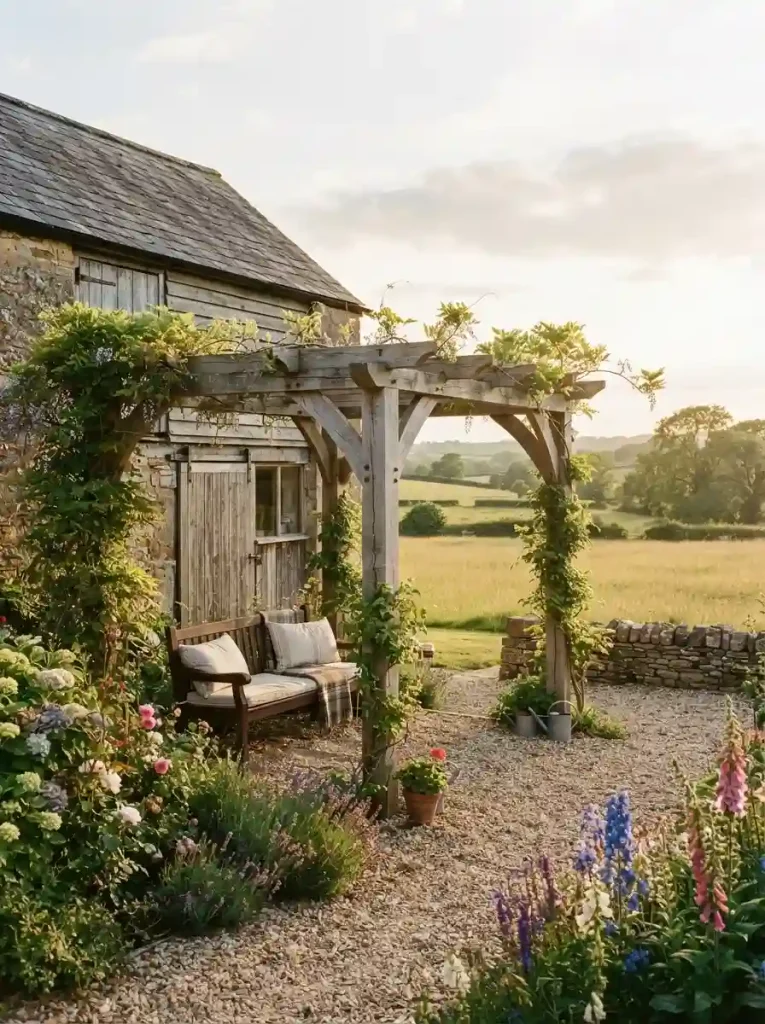
A small wooden pergola can create a beautiful transition between the barn and outdoor living space. Use rough timber or naturally weathered wood to maintain the rustic character.
Place the pergola beside an entrance, patio, or seating area. Climbing plants can eventually cover portions of the structure, creating shade and a softer appearance.
Wisteria, climbing roses, grapevines, or other suitable climbers can add seasonal interest. Make sure the plant you choose is appropriate for your climate and has enough support as it grows.
A pergola doesn’t need to be elaborate. A simple timber frame can provide enough architectural interest to transform an otherwise empty section beside the barn.
Expert Tip:
Think about the mature size of climbing plants before installing the pergola. Strong-growing vines may require substantial structural support and regular pruning.
14. Surround the Barn With Lavender
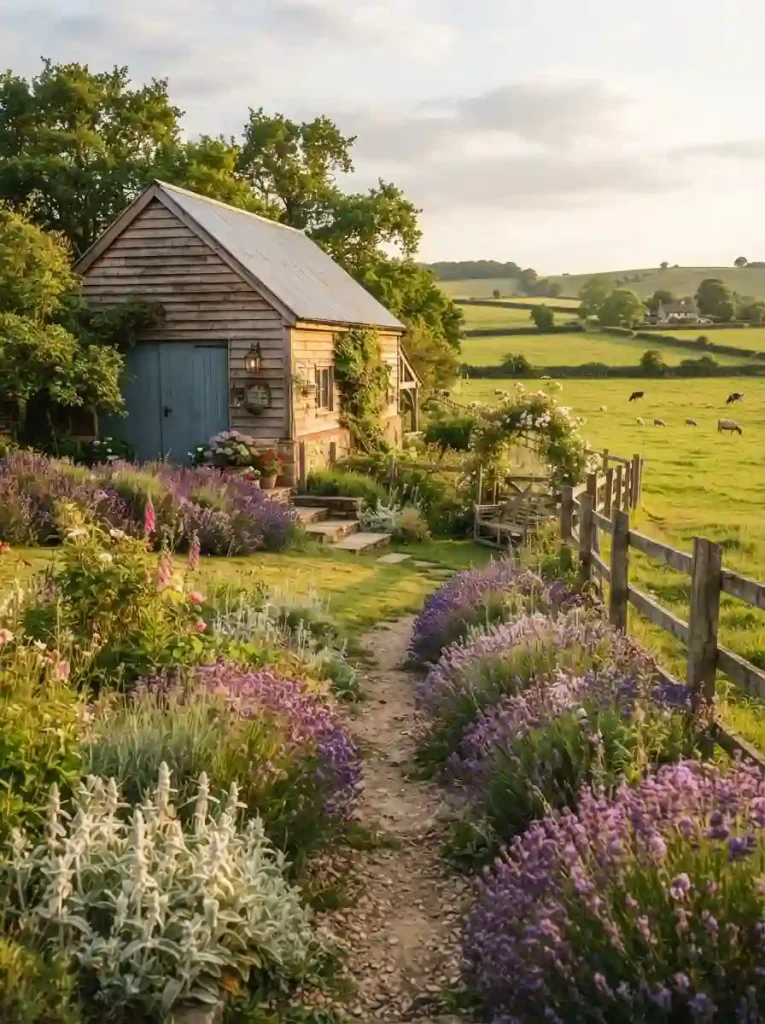
Lavender brings color, fragrance, and a soft cottage-garden feeling to a rustic barn setting. Its silvery foliage also contrasts beautifully with dark, red, or naturally weathered timber.
Plant lavender along pathways, beside fences, or around sunny sections of the barn. Grouping several plants together usually creates a stronger visual effect than scattering individual plants throughout the property.
Lavender prefers well-drained soil and plenty of sunlight, so avoid planting it in areas that remain consistently wet.
Its compact growth also makes it useful along paths where taller plants could become inconvenient.
Expert Tip:
Good drainage is essential for lavender. If your soil stays wet, improve drainage before planting or consider raised beds and containers.
15. Use a Wooden Wagon as a Garden Feature
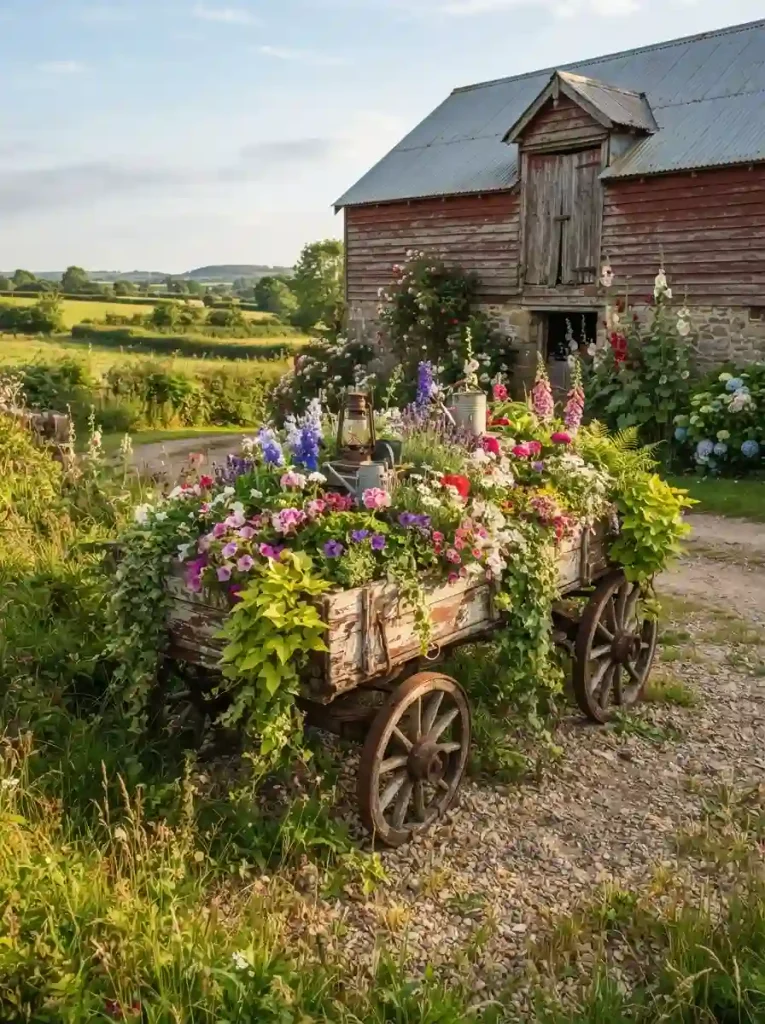
An old wooden wagon can become an eye-catching focal point in a rustic barn landscape. Instead of leaving it empty, use the wagon as an oversized planter filled with flowers and trailing greenery.
Place it near the barn entrance, driveway, or garden area where it can be easily seen. Seasonal plants can be changed throughout the year to keep the display fresh.
If you don’t have access to an authentic wagon, a reproduction garden cart can create a similar effect.
Keep the surrounding landscaping simple so the wagon remains the main feature rather than competing with too many decorations.
Expert Tip:
Drill drainage openings into the bottom of a decorative wagon before adding soil. Excess moisture can quickly damage old wood and harm plant roots.
16. Create a Simple Gravel Driveway
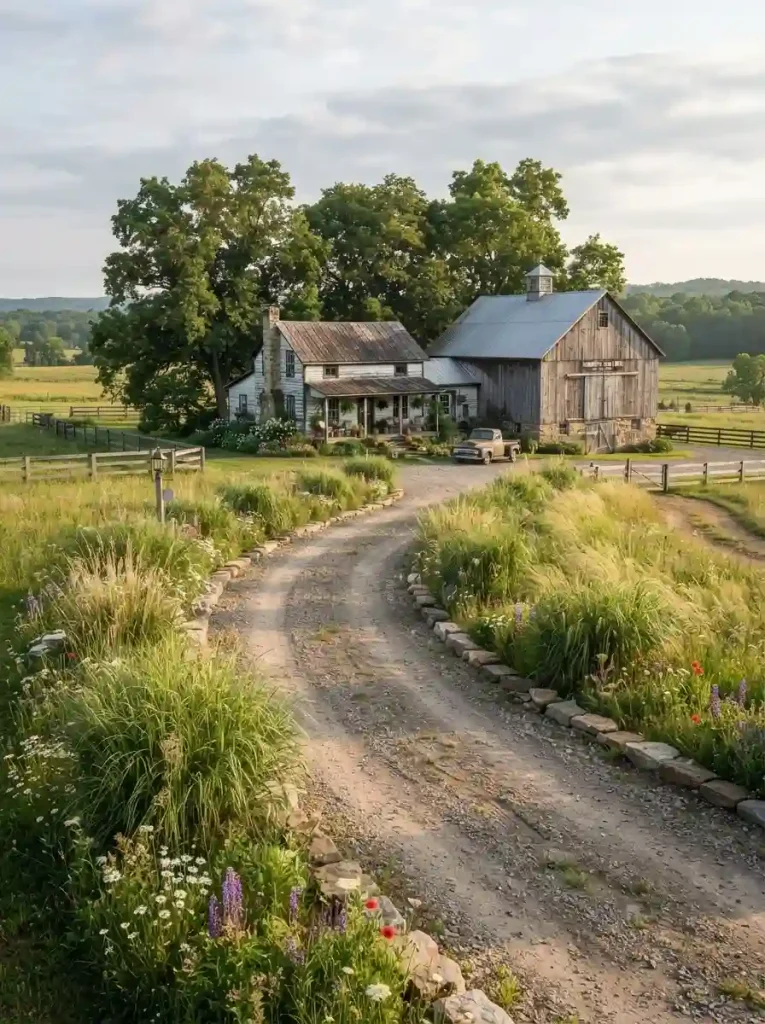
A gravel driveway can reinforce the rustic character of a barn while providing a practical surface for vehicles. Choose a durable aggregate that suits the property and local conditions.
Instead of surrounding the entire driveway with decorative plants, create simple borders using grasses, shrubs, or natural stone. This keeps the entrance attractive without making it difficult to maintain.
A gently curved driveway can feel particularly welcoming on larger properties. For smaller spaces, a straightforward layout may be more practical.
Regularly raking the gravel and filling low spots can keep the driveway looking tidy throughout the year.
Expert Tip:
A proper gravel base matters more than decorative details. Good preparation helps reduce ruts, puddles, and shifting gravel after heavy rain or repeated vehicle use.
17. Add Evergreen Shrubs for Year-Round Structure
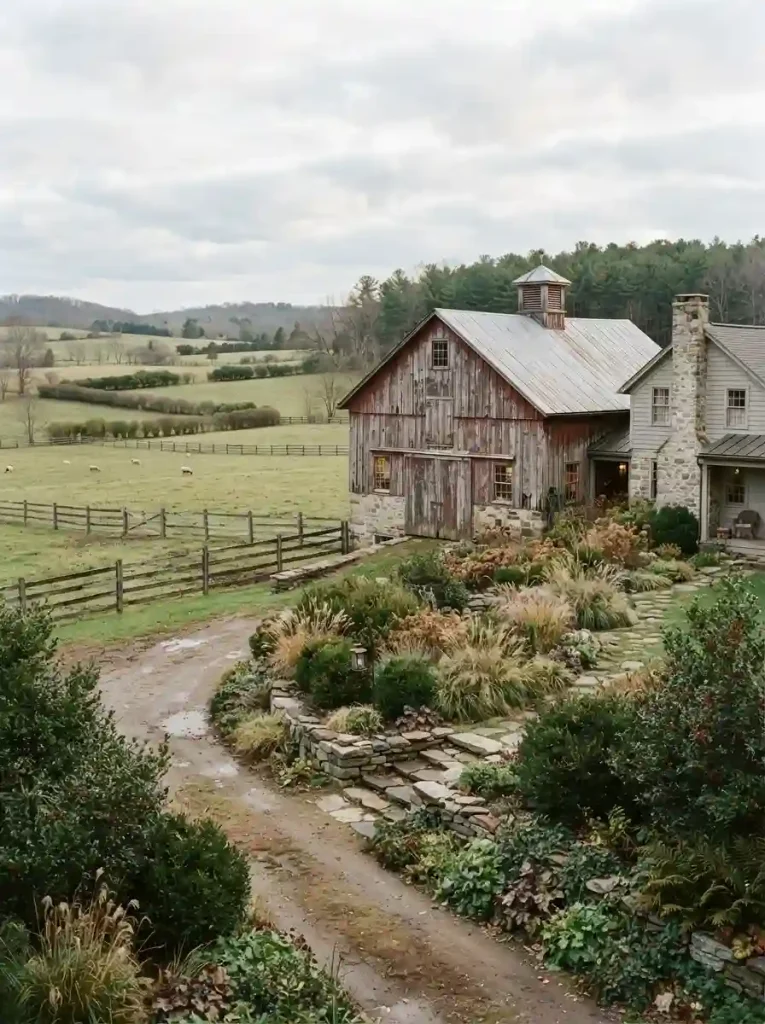
Barn landscapes can lose much of their visual interest during colder months. Evergreen shrubs help solve this problem by providing dependable structure throughout the year.
Place compact evergreens near corners, along paths, or beside larger planting areas. Their consistent foliage creates a backdrop for seasonal flowers and grasses.
Avoid covering too much of the barn with shrubs. Leaving sections of the building visible allows its architecture and weathered materials to remain part of the landscape.
Choose plants based on your climate, available sunlight, mature size, and soil conditions.
Expert Tip:
Look at the mature width of every shrub before planting. Small nursery plants can eventually become much larger than expected.
18. Make a Rustic Covered Porch
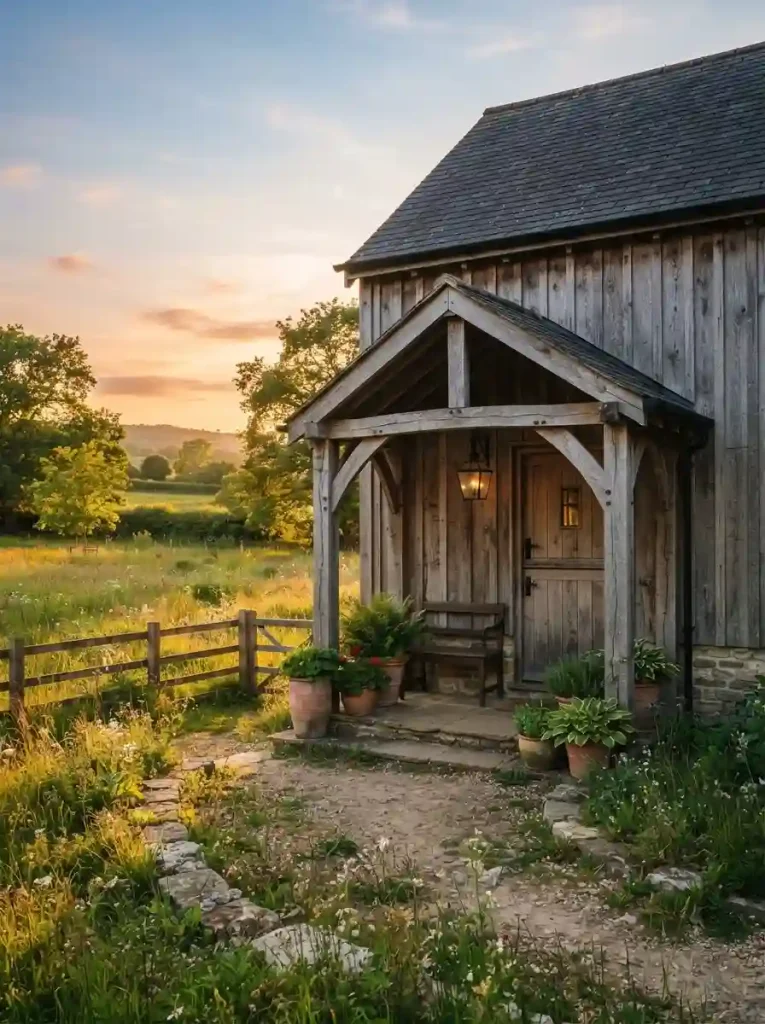
If your barn has enough structural space, a covered porch can create a charming outdoor transition area. Even a small porch with simple timber details can dramatically improve the entrance.
Add a wooden bench, a couple of durable chairs, potted plants, or a small outdoor table. Keep the decoration restrained so the natural materials remain the focus.
A porch is particularly useful near a barn that functions as a workshop, guest space, entertaining area, or garden building.
Use weather-resistant materials and make sure any structural changes are properly planned before construction.
Expert Tip:
Treat the porch as an extension of the landscape. Repeat materials and plants from nearby areas so the new structure feels like it belongs there.
19. Plant a Small Fruit Tree Grove
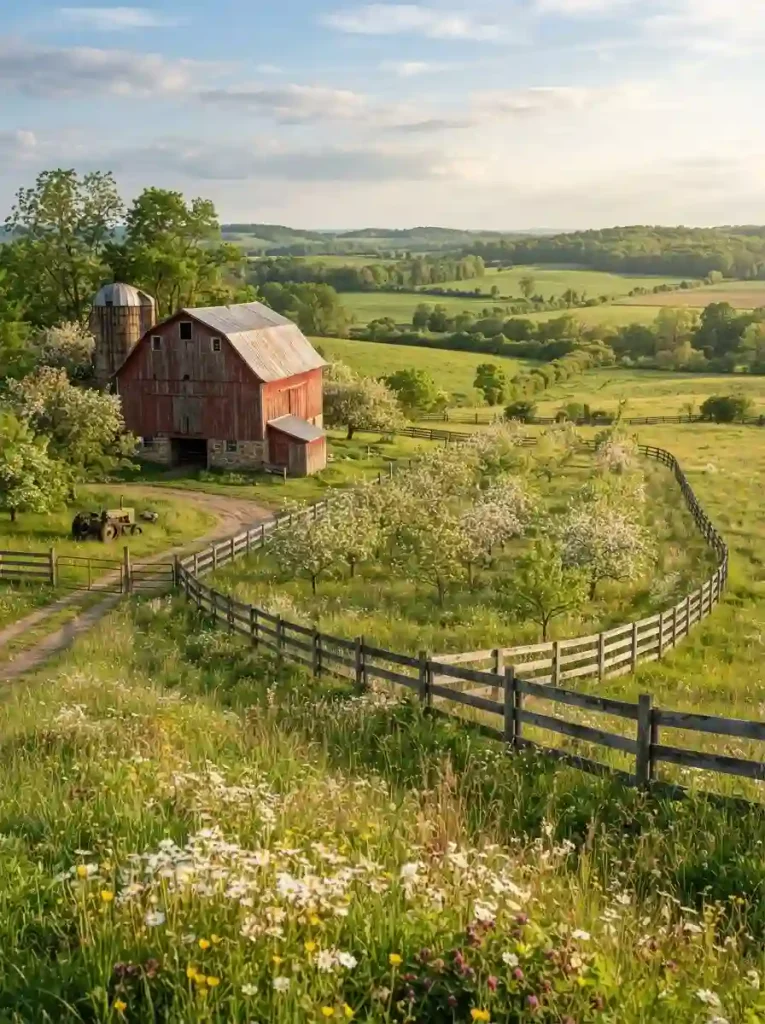
Fruit trees can add beauty and usefulness to a barn property at the same time. A small grouping of apple, pear, plum, or other locally suitable trees can create a charming orchard effect.
Plant the trees with enough room for their mature canopy and root systems. Keep them far enough from the barn and pathways to prevent future maintenance problems.
Underplanting the trees with low grasses or suitable flowers can create a relaxed meadow-like appearance.
Spring blossoms, summer foliage, and autumn fruit can give the landscape changing visual interest throughout the year.
Expert Tip:
Check pollination requirements before buying several fruit trees. Some varieties produce better crops when compatible varieties are planted nearby.
20. Add a Small Water Feature
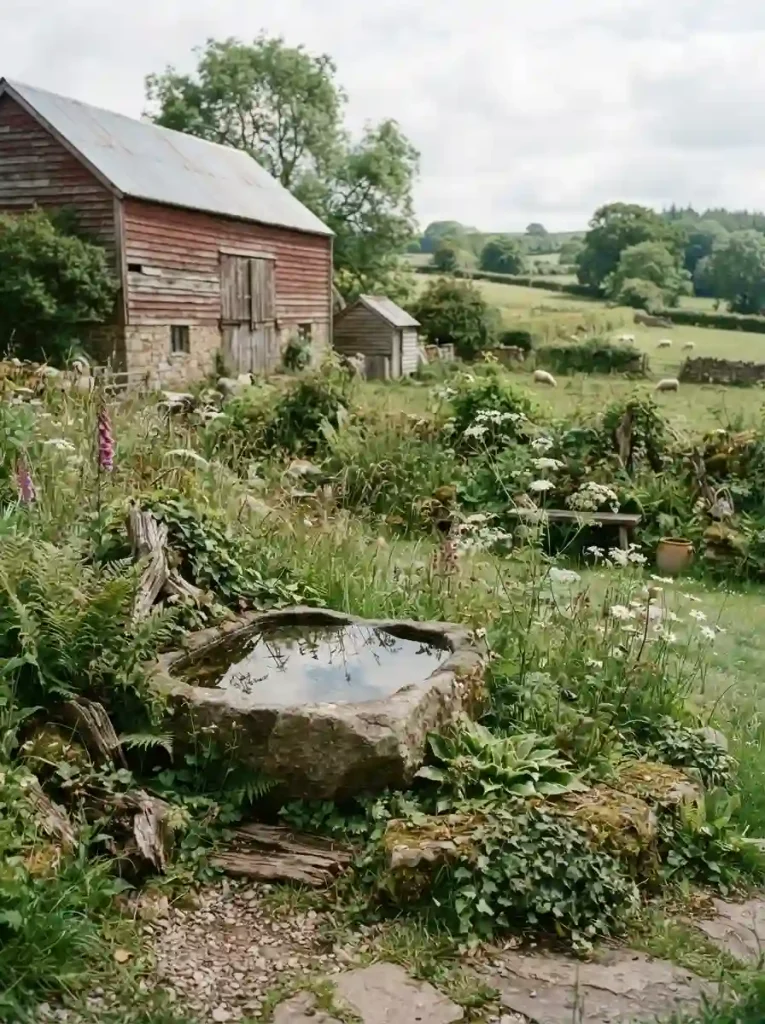
A modest water feature can introduce another layer of texture and sound to a barn landscape. Consider a small stone basin, simple pond, or rustic trough-style feature.
Position it where it can be seen from the barn entrance or outdoor seating area. Surround it with grasses, moisture-loving plants, and natural stones to help it blend into the landscape.
The water feature doesn’t need to be elaborate. A simple design often feels more appropriate beside a rustic structure than an ornate fountain.
Always consider maintenance, drainage, safety, and local wildlife when choosing the size and location.
Expert Tip:
Keep the water feature proportionate to the property. A small, thoughtfully placed feature usually feels more natural than an oversized installation competing with the barn.
21. Combine Several Rustic Elements Into One Landscape
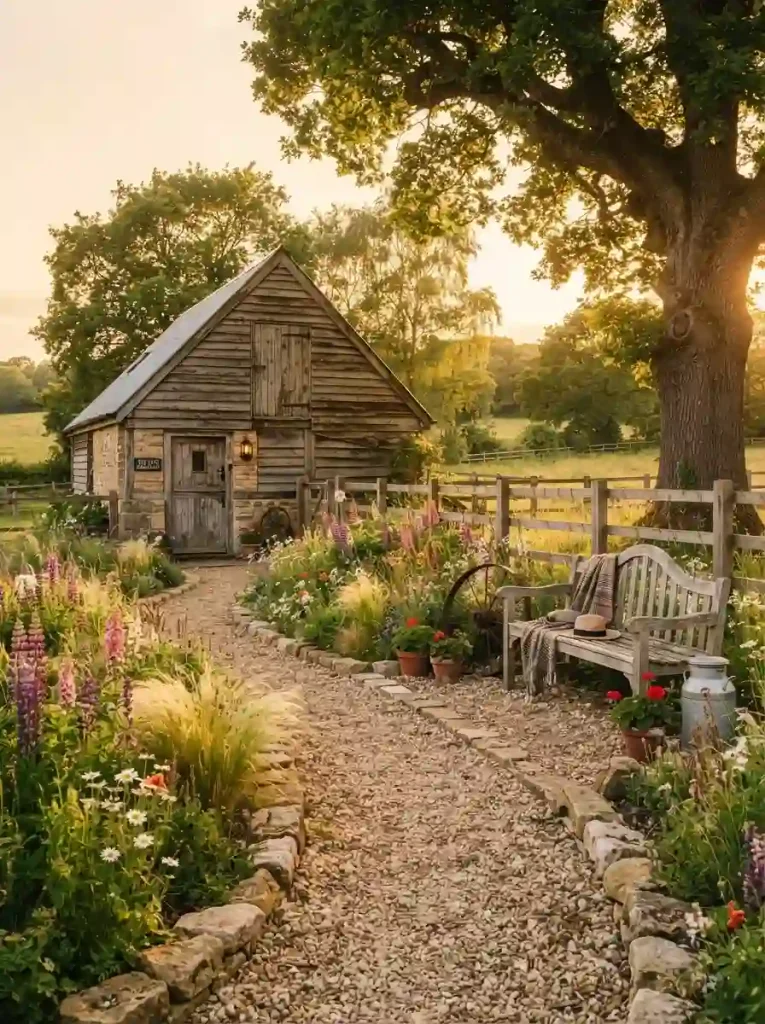
The most successful rustic barn landscapes rarely depend on one feature alone. Instead, they combine a few complementary elements such as gravel, natural stone, timber, grasses, flowers, and comfortable outdoor spaces.
You might pair a gravel path with native flower beds, add a timber fence around the garden, and finish the area with a small seating corner. The individual features should feel connected rather than randomly placed.
Start with the barn itself and identify its strongest materials and colors. Then repeat those characteristics throughout the landscape.
For example, weathered wood can appear in fences and furniture, while natural stone can be repeated around pathways and planting beds. This creates consistency without making the property look overly designed.
The goal is to create a landscape that feels as though it naturally developed around the barn rather than being added all at once.
Expert Tip:
Don’t try to add every rustic feature at once. Choose two or three elements that suit your property, then build outward gradually as the landscape develops.
Final Thoughts
Rustic barn landscaping is all about creating a comfortable connection between the building and its surroundings. Natural materials, relaxed planting, practical paths, and simple outdoor spaces can make even an ordinary barn feel much more inviting.
You also don’t need a huge budget or a complete landscape renovation to get started. A gravel path, a few native plants, reclaimed wood, or a small seating area can make a noticeable difference.
The best approach is to work with what you already have. Let the barn’s existing character guide your choices, use materials that complement the setting, and choose plants that can thrive in your local conditions.
With a little planning, your barn can become more than a useful structure—it can become the focal point of a beautiful, welcoming countryside landscape.
Frequently Asked Questions
What plants look best around a rustic barn?
Native wildflowers, ornamental grasses, lavender, hardy shrubs, and seasonal flowering plants can all work beautifully around a rustic barn. Choose plants based on your local climate, soil, sunlight, and available space.
How can I landscape a barn on a budget?
Start with inexpensive natural materials such as gravel, reclaimed timber, existing stones, and hardy plants. You can also complete the landscape gradually instead of trying to renovate the entire area at once.
What materials work best for rustic barn landscaping?
Natural stone, weathered timber, gravel, reclaimed wood, and simple metal details generally complement rustic barns well. Choosing materials that already appear elsewhere on the property can make the landscape feel more cohesive.
How do I make a barn landscape look less formal?
Use irregular planting arrangements, native plants, natural stone, informal pathways, weathered materials, and varied plant heights. Avoid excessive symmetry and overly manicured borders if you want a relaxed country appearance.
How can I make the area around an old barn more inviting?
Focus on the entrance first. A defined pathway, seasonal planters, warm lighting, flowers, and a comfortable bench can quickly make an old barn feel more welcoming without changing its original character.