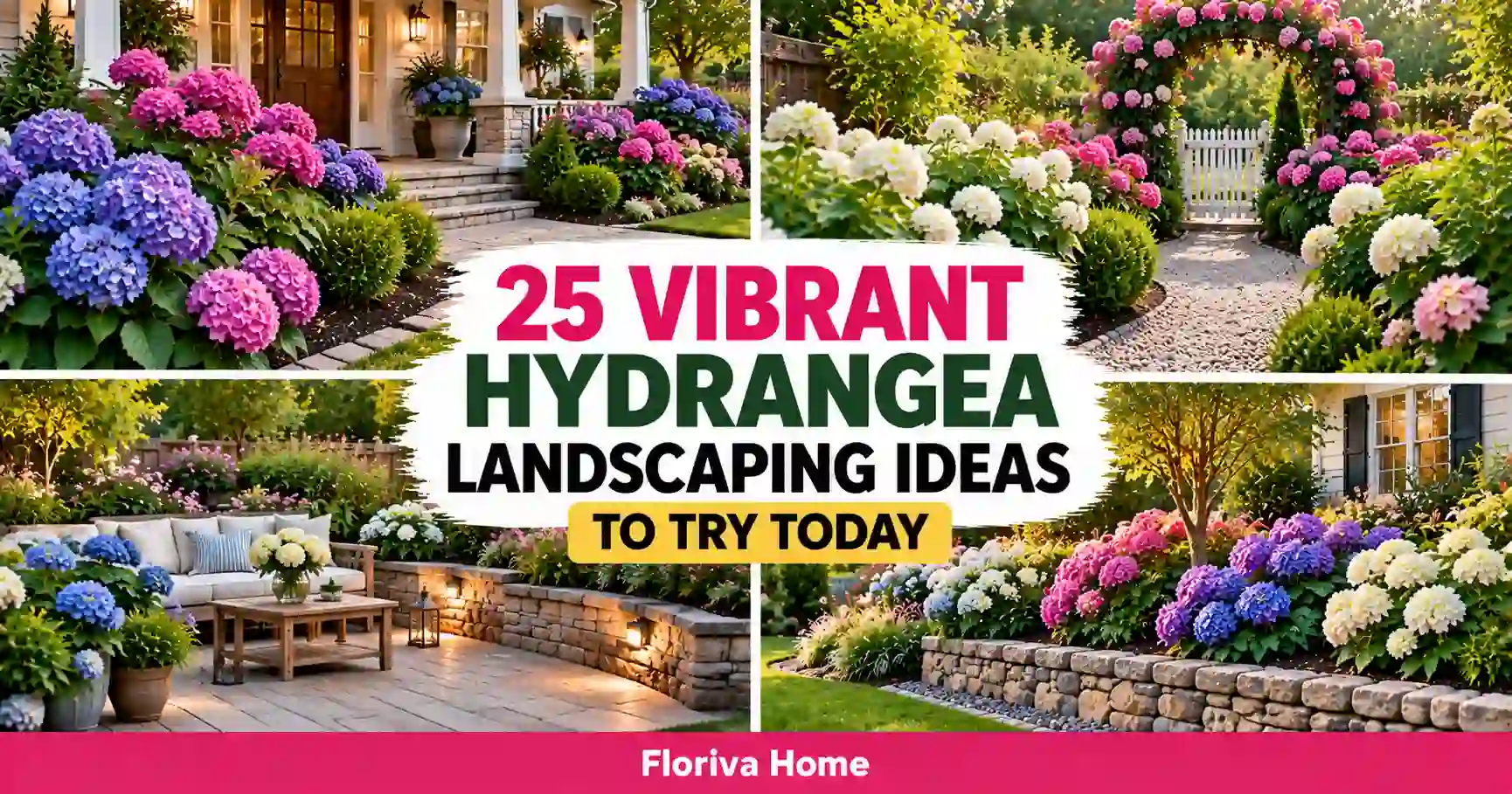
25 Vibrant Hydrangea Landscaping Ideas to Try Today
Inside: 25 hydrangea landscaping ideas for porches, paths, hedges, pots, and shady corners, plus planting tips to help every bloom thrive.
Few shrubs pack as much personality into a yard as hydrangeas. They bloom for months, fill space generously, and suit everything from cottage gardens to clean modern layouts.
The hard part is deciding where to put them. This list covers 25 ideas, from simple borders to statement planters. Whether you have an acre or a tiny balcony, you’ll find a layout that fits.
How to Choose Hydrangeas by Light, Space, and Bloom Season
Start with light, because it decides which hydrangea types will thrive. Morning sun with afternoon shade suits bigleaf hydrangeas, the classic blue and pink mopheads used in the cottage border and the foundation planting. Full sun suits panicle hydrangeas, which handle heat and hold their cone-shaped blooms upright, making them the right pick for driveway edges and the pool or deck framing. Deep shade suits oakleaf hydrangeas and climbing hydrangeas, which flower with less light and tolerate the tricky corner under trees.
Next, match the plant to the space. A narrow walkway or balcony needs compact types from the patio pots and balcony ideas, while a privacy hedge or slope planting needs full-size shrubs spaced to grow together into one mass. For season-long interest, mix types: bigleaf and smooth hydrangeas bloom in early summer, panicles carry color into fall, and oakleaf varieties add peeling bark and red autumn foliage after the flowers fade. One type alone gives a short show; a planned mix stretches it across months. Also consider mature size before planting, since a shrub that outgrows its spot needs constant cutting back.
1. Flank Your Front Steps With Matching Shrubs
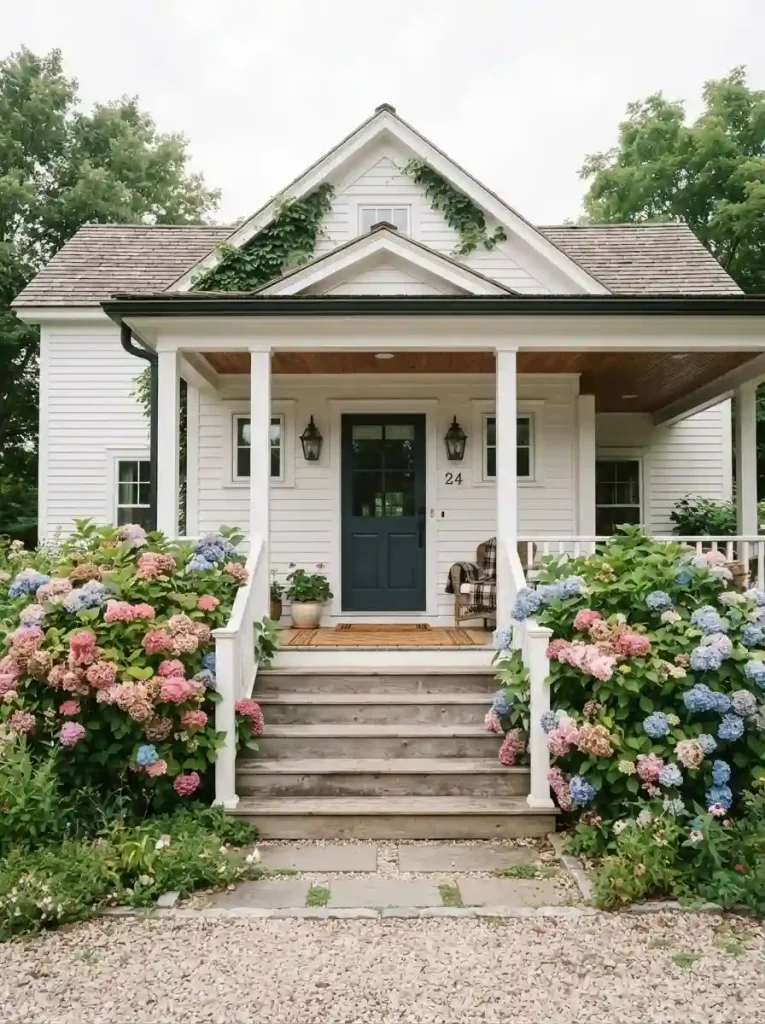
Two identical hydrangeas on either side of the entry make a home feel welcoming at once. Symmetry reads as calm and polished, even in a modest yard.
Choose compact varieties so the shrubs won’t swallow the steps in a few seasons. Leave about two feet between each plant and the stairs for airflow and easy walking.
2. Line a Curving Walkway
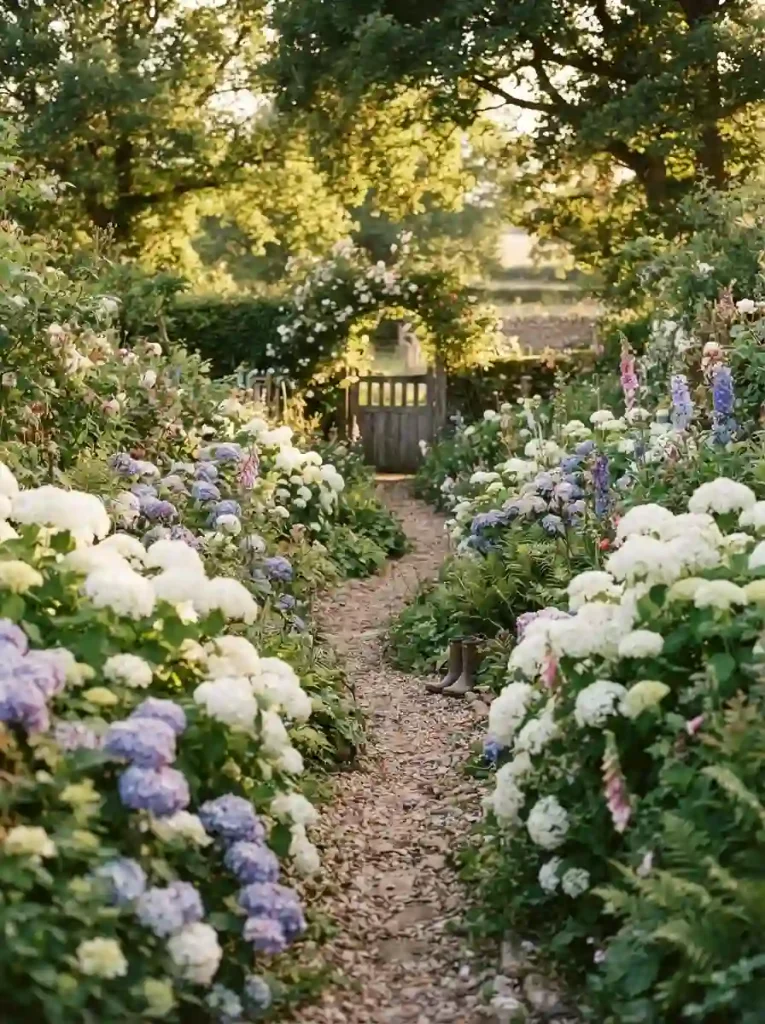
A path edged with hydrangeas draws visitors forward and gives the garden a gentle rhythm. Curves work better than straight lines because the blooms appear gradually as you walk.
Plant in a loose, slightly staggered row rather than a rigid one. Let the branches arch toward the path for a soft, overflowing look.
3. Grow a Living Privacy Hedge
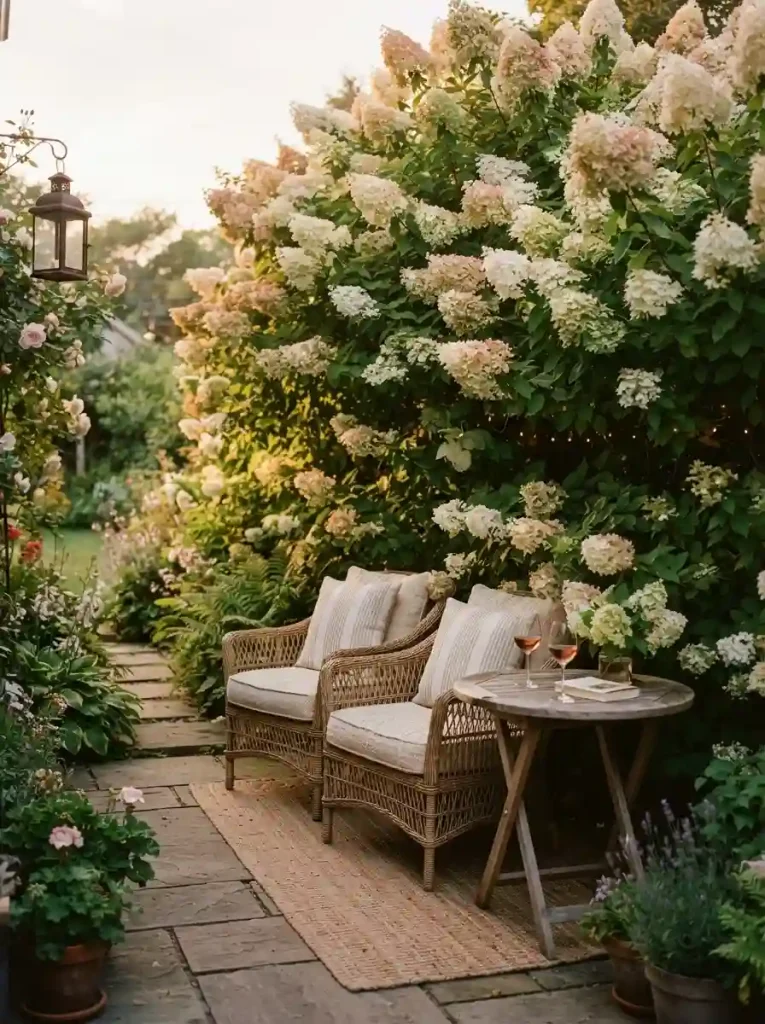
Hydrangeas can screen a patio or property line without the stiff look of a fence. Panicle types are good for this because they grow tall, tolerate more sun, and bloom reliably on new wood.
Space them according to their mature width, not the nursery pot size. Pair the row with a few evergreens if you want some cover in winter, since hydrangeas drop their leaves.
4. Fill Oversized Pots on the Patio
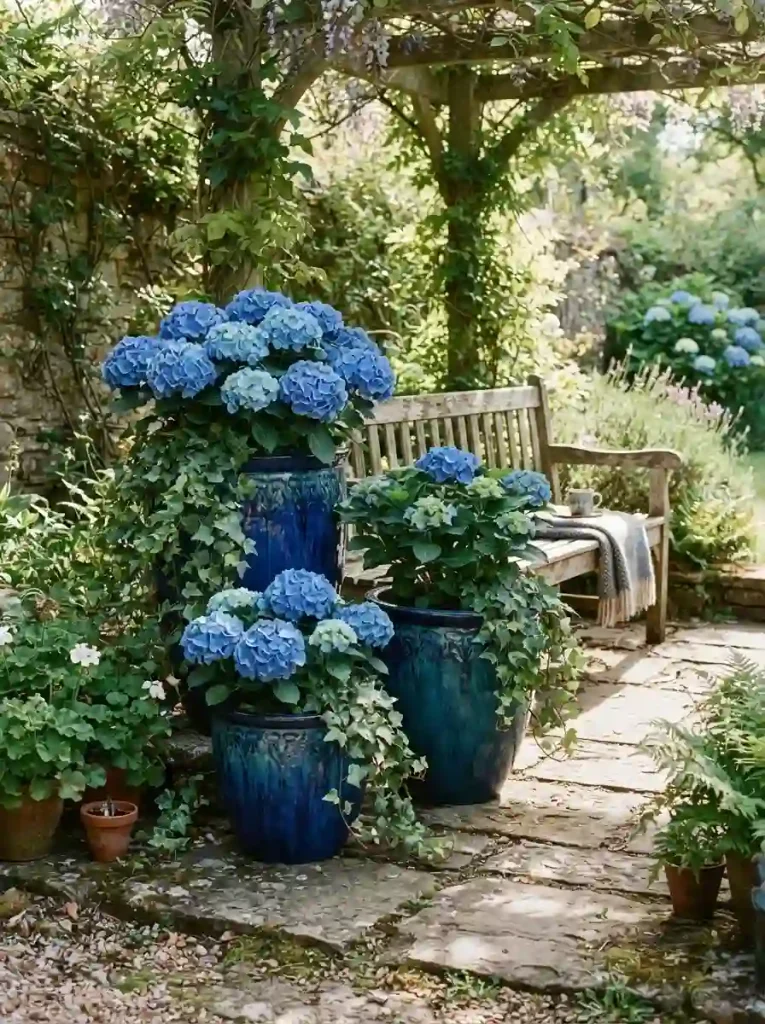
Containers let you place hydrangeas exactly where you want color, even on concrete. Big pots matter most here, because small ones dry out fast and stress the plant.
Pick a pot at least 18 inches wide with drainage holes. Group two or three at different heights for an arrangement that looks planned.
5. Make a Hydrangea Tree the Entryway Star
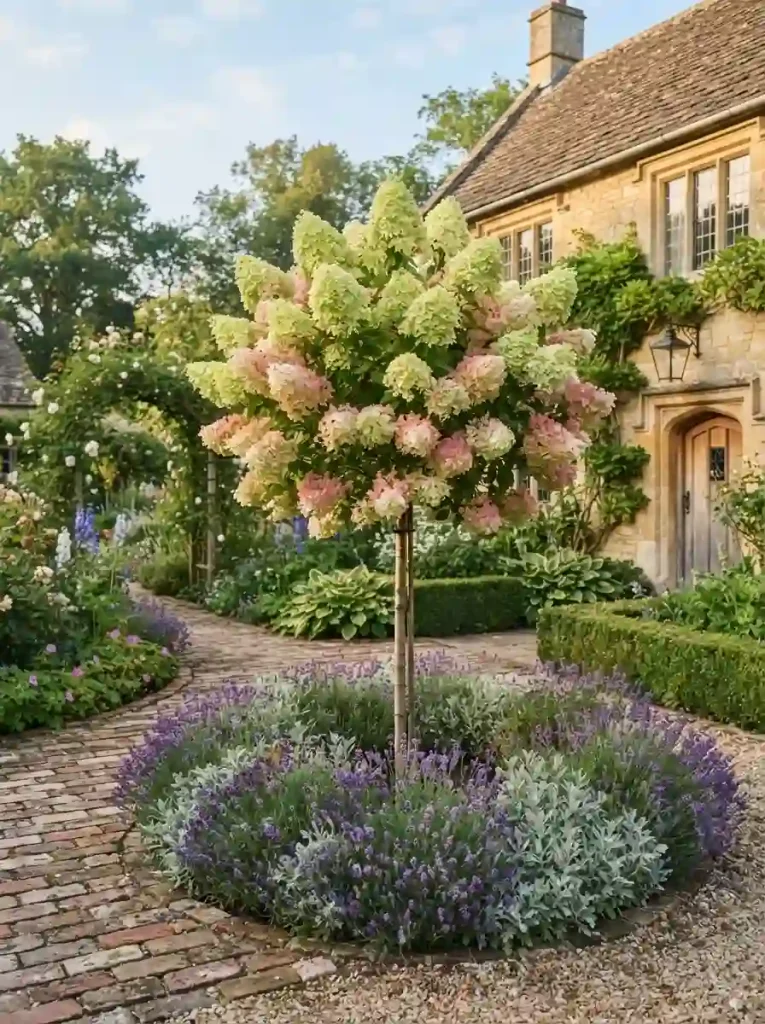
A standard-form hydrangea, trained on a single trunk, brings height without needing much ground space. It looks like a lollipop of blooms and instantly becomes a focal point.
Place one near the front door or at the center of a small bed. Underplant it with low perennials so the base doesn’t look bare.
6. Build a Romantic Cottage Border
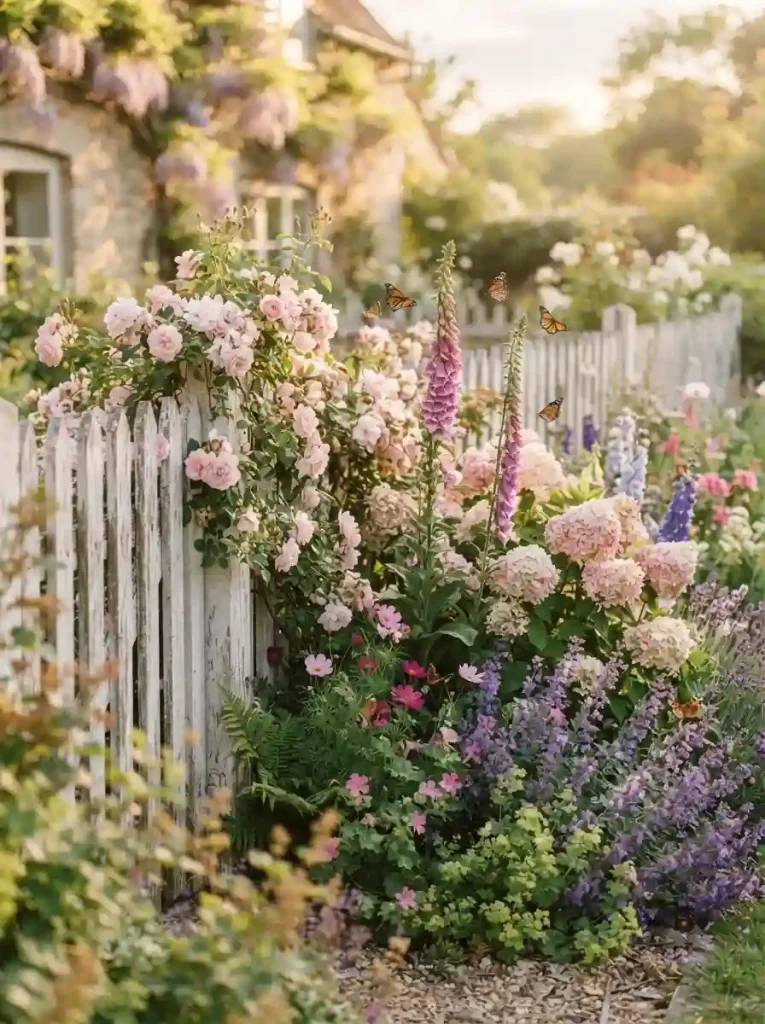
Hydrangeas blend beautifully with roses, foxglove, and catmint. The mix of shapes (round, spiky, frothy) gives you a garden that looks effortless and lived-in.
Let plants overlap at the edges. A slightly wild look is the goal, so don’t trim everything into neat lines.
7. Bring Color to a Shady Corner Under Trees
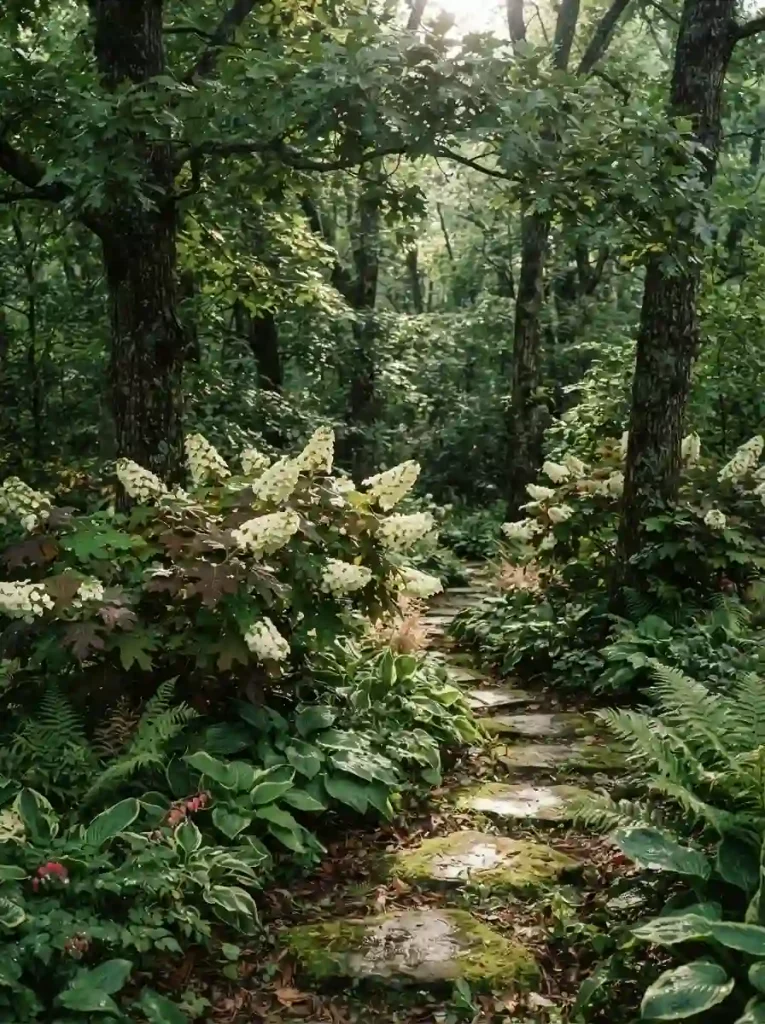
Many yards have a dim spot where little grows. Oakleaf and smooth hydrangeas are good answers, because they handle dappled shade and still flower well.
Enrich the soil with compost first, since tree roots compete for nutrients. Water deeply during dry spells until the shrub is established.
8. Create an All-White Moonlight Garden
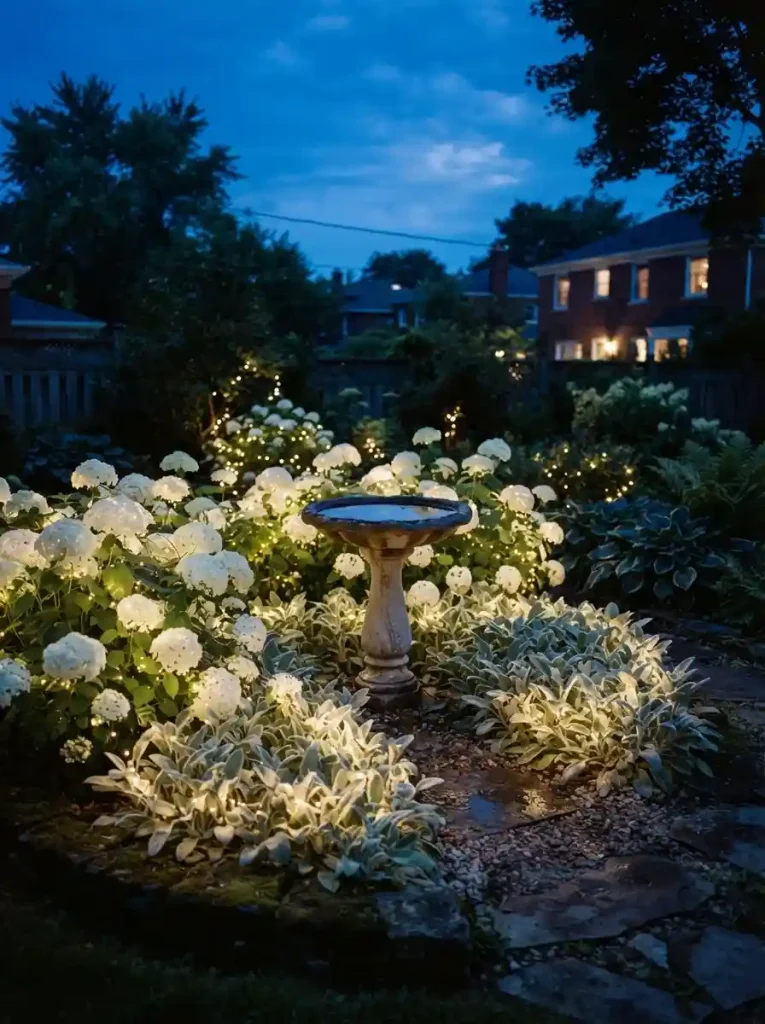
A single-color bed feels calm and sophisticated. White hydrangeas almost glow at dusk, which makes this idea great for yards you enjoy in the evening.
Add silver-leaved plants such as lamb’s ear, and a few solar lights. The mix of texture and soft light makes the whole space feel designed.
9. Soften a Foundation With Boxwood and Blooms
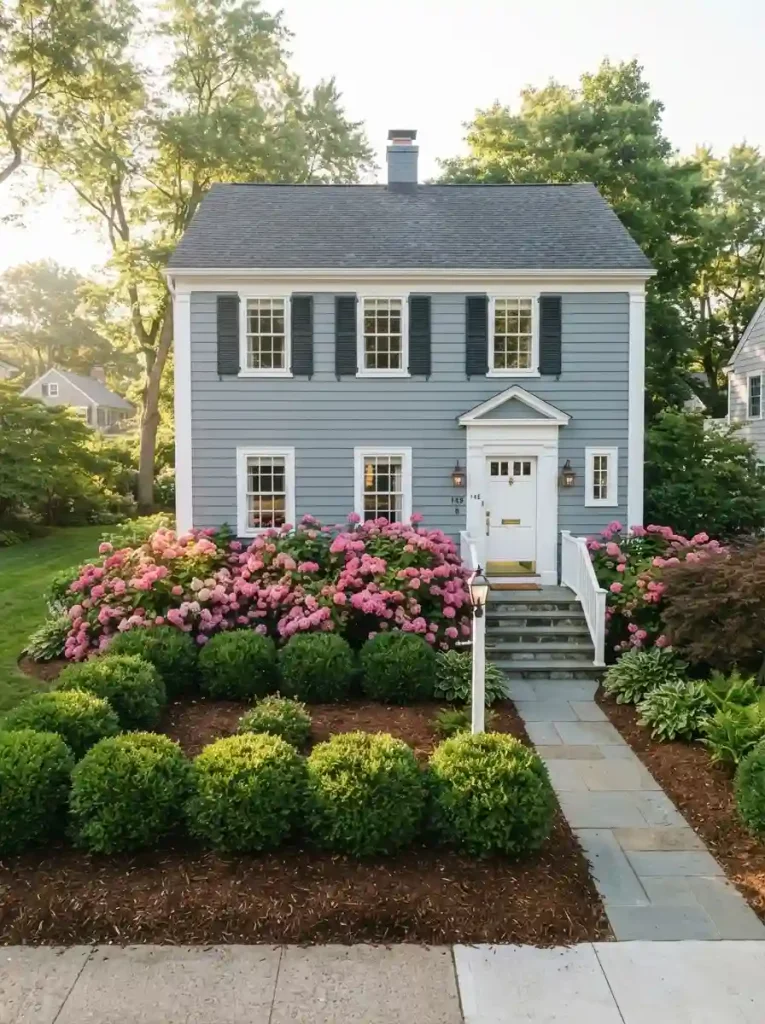
Straight house walls can look stark. Hydrangeas planted in front of clipped boxwood add softness while the evergreens keep the structure in winter.
Plant the hydrangeas two to three feet from the wall so they have room and the siding stays dry. Choose a color that complements your exterior paint.
10. Pair a Fence With a Climbing Hydrangea
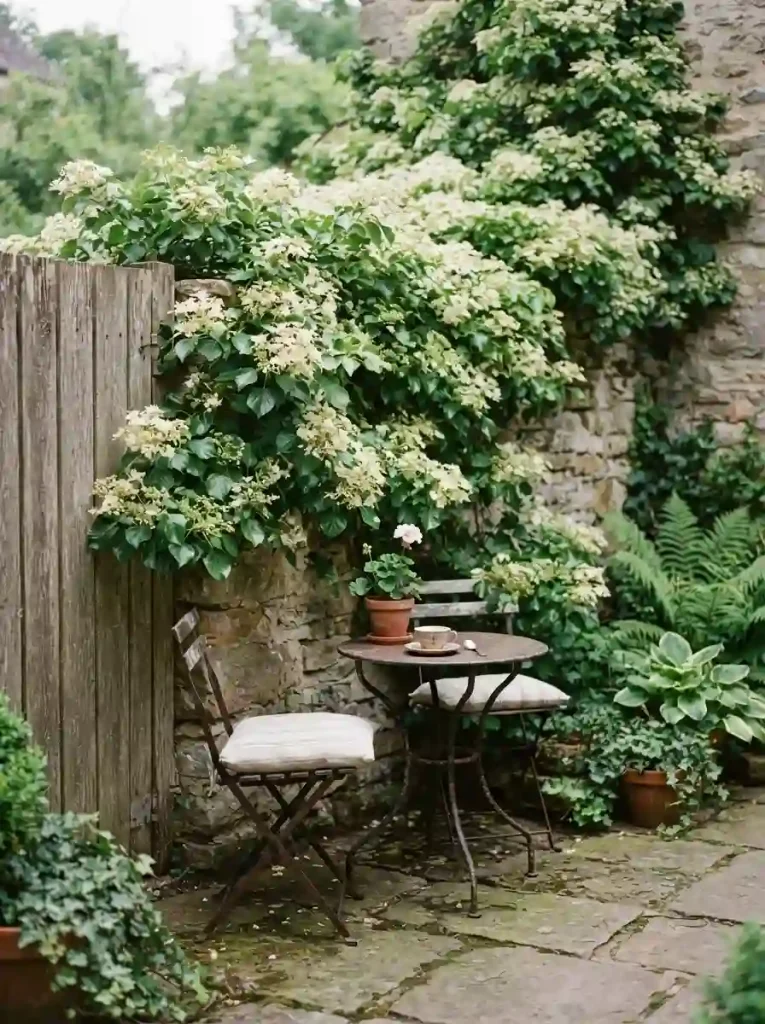
If ground space is tight, grow upward. Climbing hydrangeas cling to walls, fences, and sturdy trellises with their own rootlets, topped with lacy white blooms.
Be patient: they’re slow to settle in. Once established, they’re long-lived and need very little attention.
11. Stabilize a Slope With Mass Planting
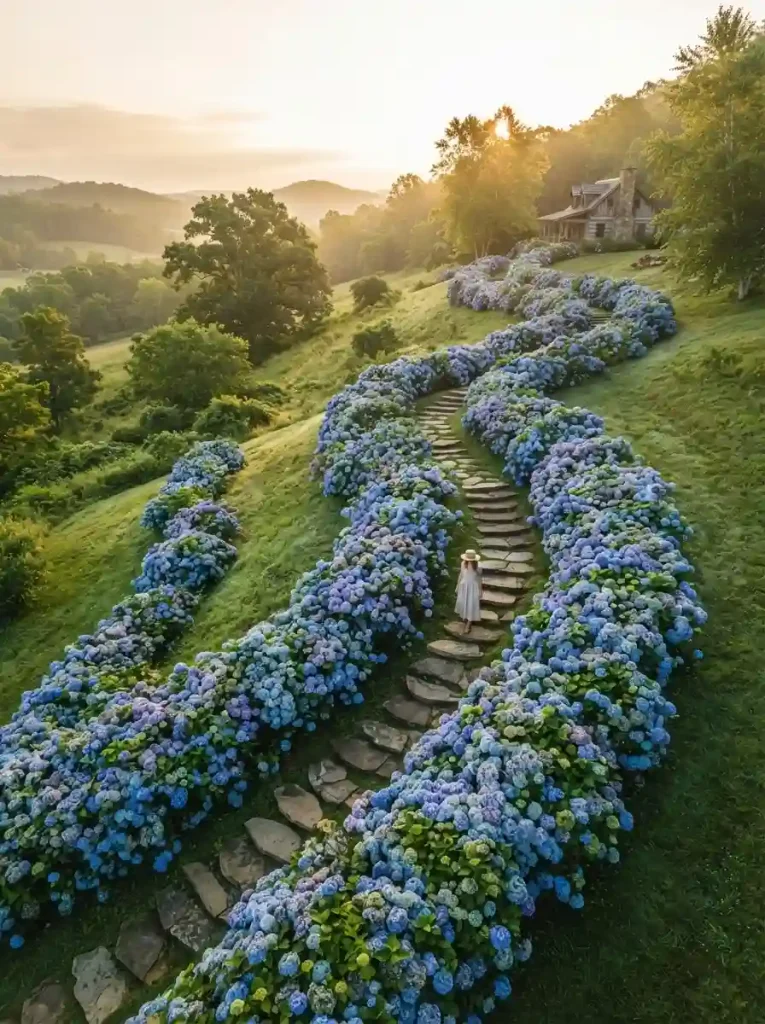
Slopes are hard to mow and prone to erosion. A sweep of hydrangeas gives roots that hold soil while turning the problem area into a feature.
Plant in staggered drifts, and add mulch to hold moisture. Pick one or two varieties rather than many, so the hillside feels cohesive.
12. Wrap a Pergola or Gazebo With Blooms
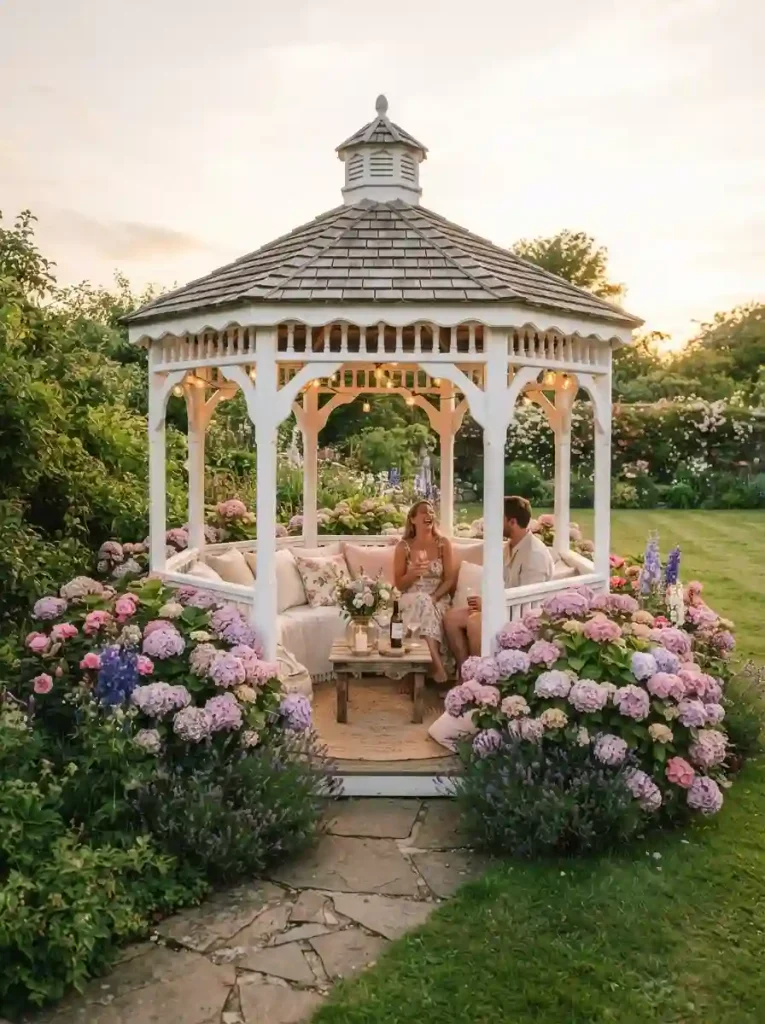
Garden structures often look bare at ground level. Hydrangeas planted around the base act like a flowing skirt, connecting the structure to the rest of the garden.
Keep the plants at least a couple of feet back from posts so air can circulate. Choose shades that echo cushions or accents inside the seating area.
13. Soften Modern Lines With Ornamental Grasses
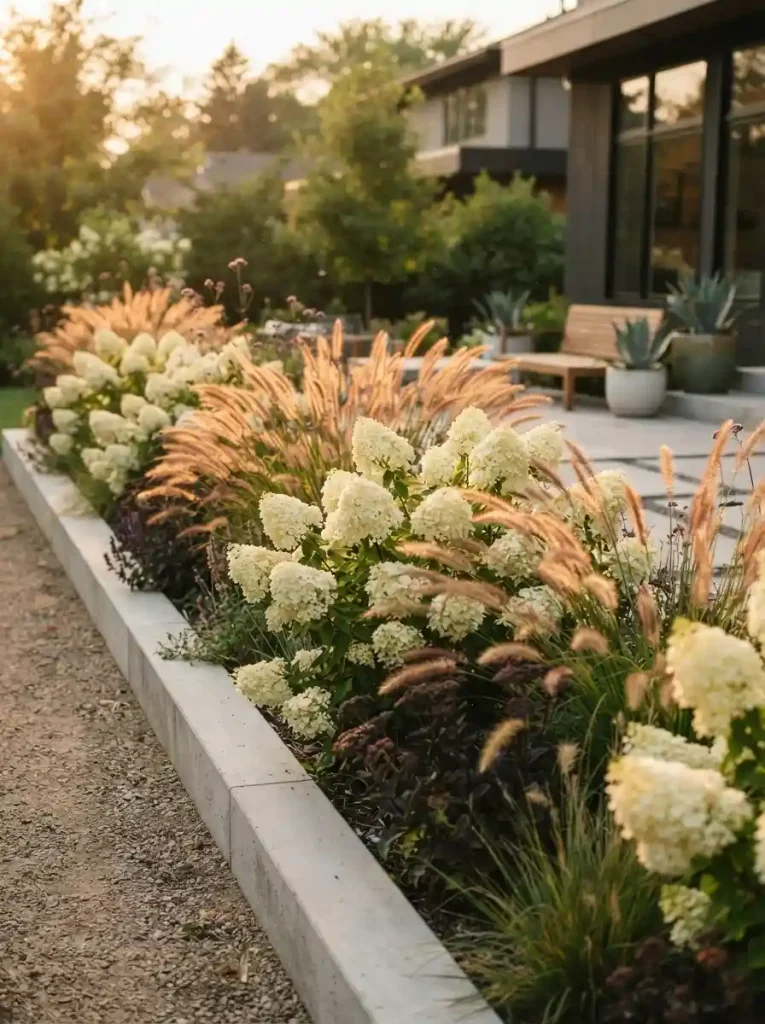
Hydrangeas and grasses make an easy pair. The feathery grass blades sway in the breeze and contrast with the heavy, rounded flowers.
Choose a medium-height grass like feather reed or fountain grass. Place it slightly behind or between shrubs, so it reads as movement rather than competition.
14. Underplant With Hostas and Heuchera
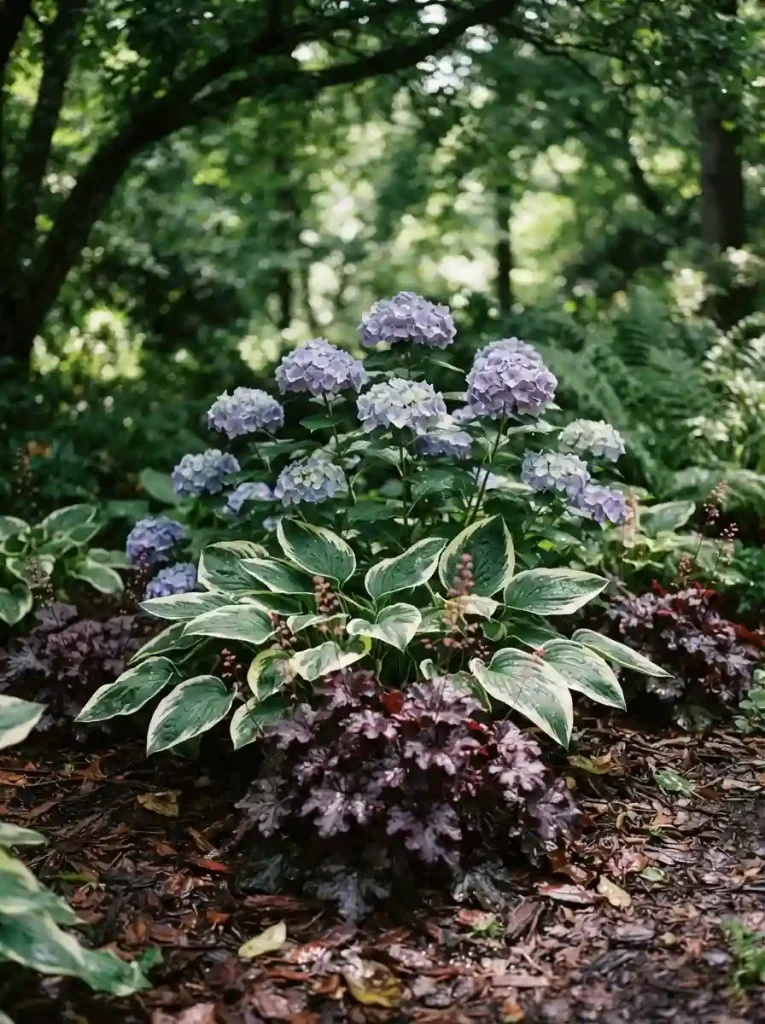
Bare soil under a hydrangea is a missed chance. Hostas and coral bells thrive in the same partial shade and cover the ground with leaves in different shapes and colors.
Try a blue-green hosta and a burgundy heuchera for contrast. The foliage keeps the bed attractive even before the shrubs bloom.
15. Spill Blooms From Galvanized Buckets
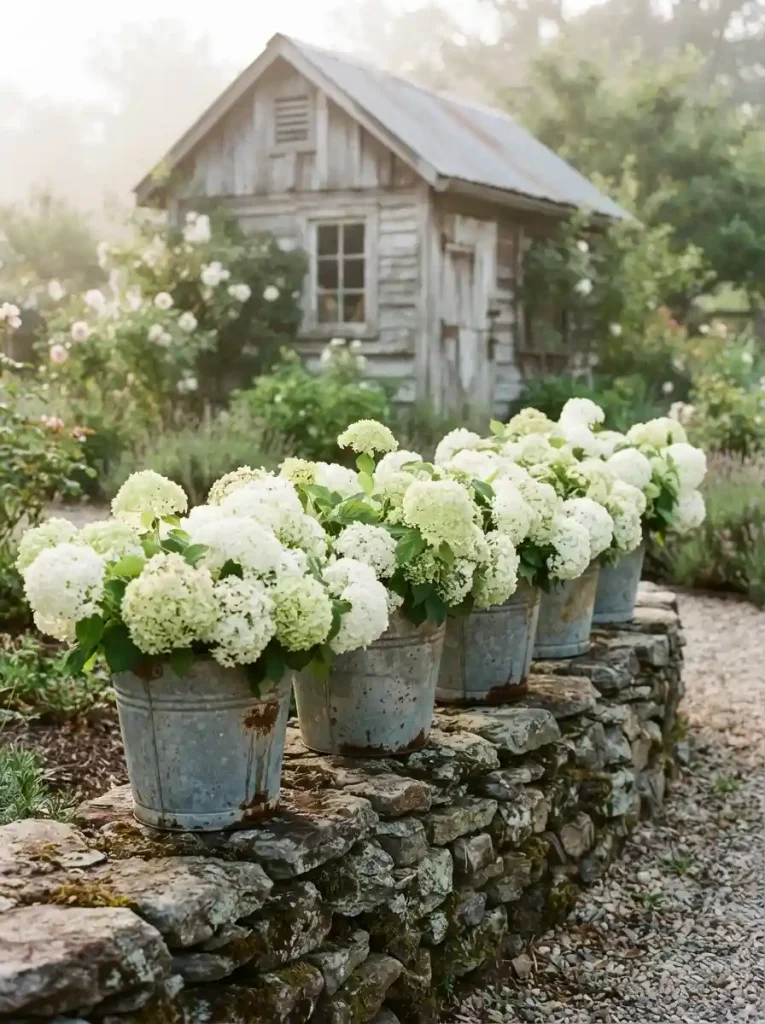
Vintage-style containers give hydrangeas a relaxed, farmhouse feel. Set them along a low wall, on porch steps, or beside a garden shed.
Drill drainage holes first, because metal buckets hold water and roots hate soggy feet. Use a light potting mix and check moisture often in summer.
16. Frame a Pool or Deck With Color
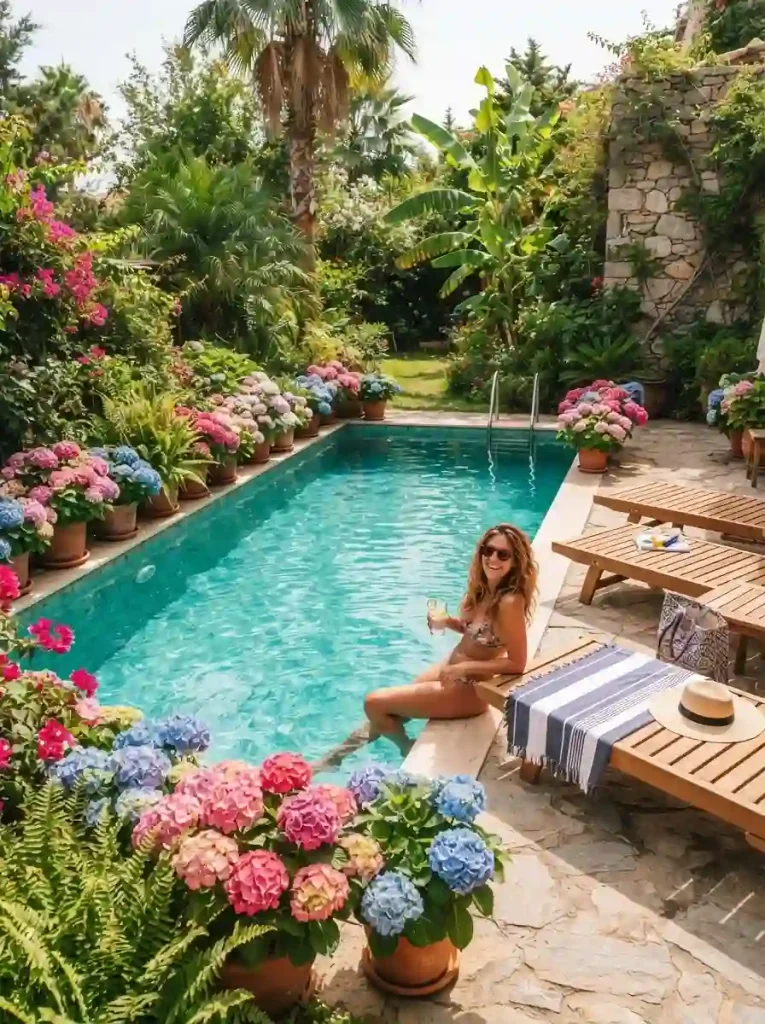
Hydrangeas add a lush, resort-like feel around outdoor living spaces. Their broad leaves also hide equipment and soften hard edges like decking and pavers.
Keep them a few feet from the water to avoid splashing and chemicals. Large pots work well when beds aren’t an option.
17. Mix Varieties for Season-Long Interest
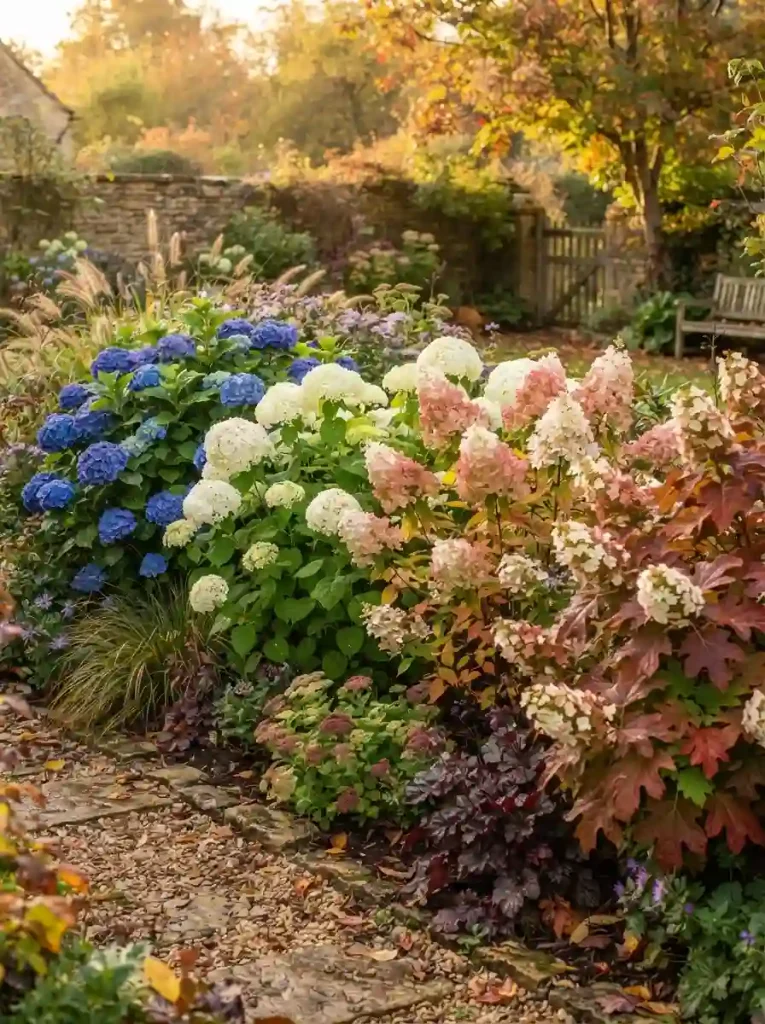
Different hydrangeas bloom at slightly different times. Combining bigleaf, smooth, panicle, and oakleaf types keeps color going from early summer into fall.
Many flower heads also fade to antique shades of rose, green, or tan as the season goes on, which gives you a second act without any extra work.
18. Edge a Driveway for Instant Curb Appeal
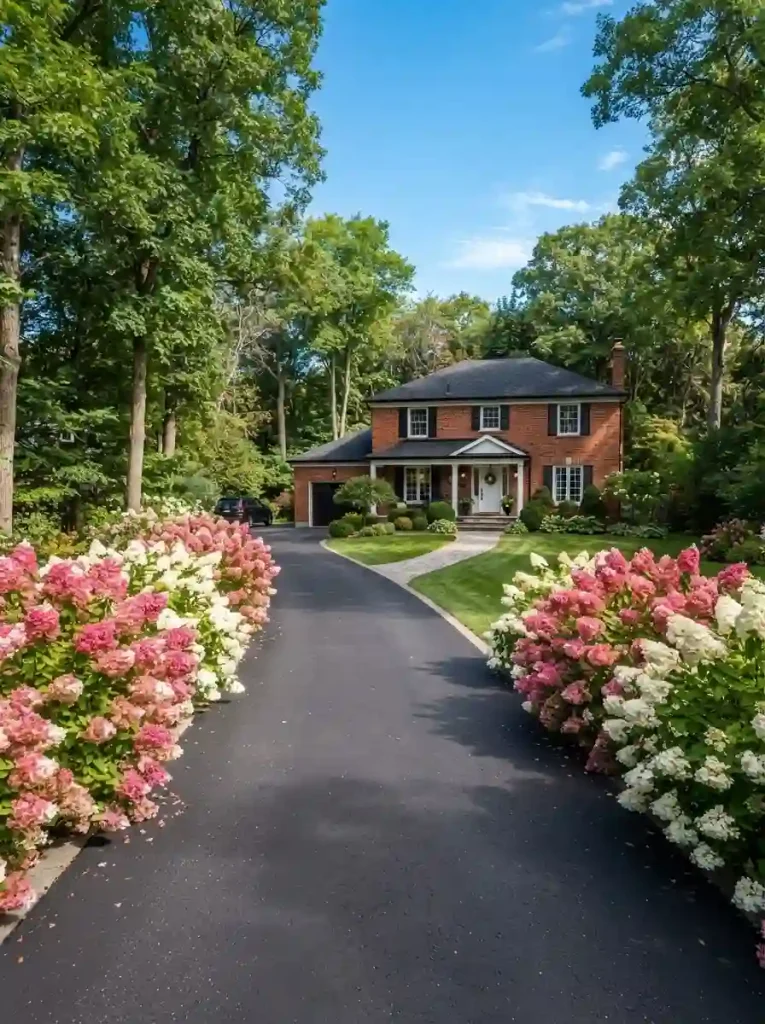
A plain driveway turns into an entrance when it’s lined with flowering shrubs. The blooms draw the eye along the approach to the house.
Choose tough, sun-tolerant panicle types, because heat radiates off pavement. Leave a foot or two of clearance so cars and snow shovels don’t damage branches.
19. Anchor the Lawn With an Island Bed
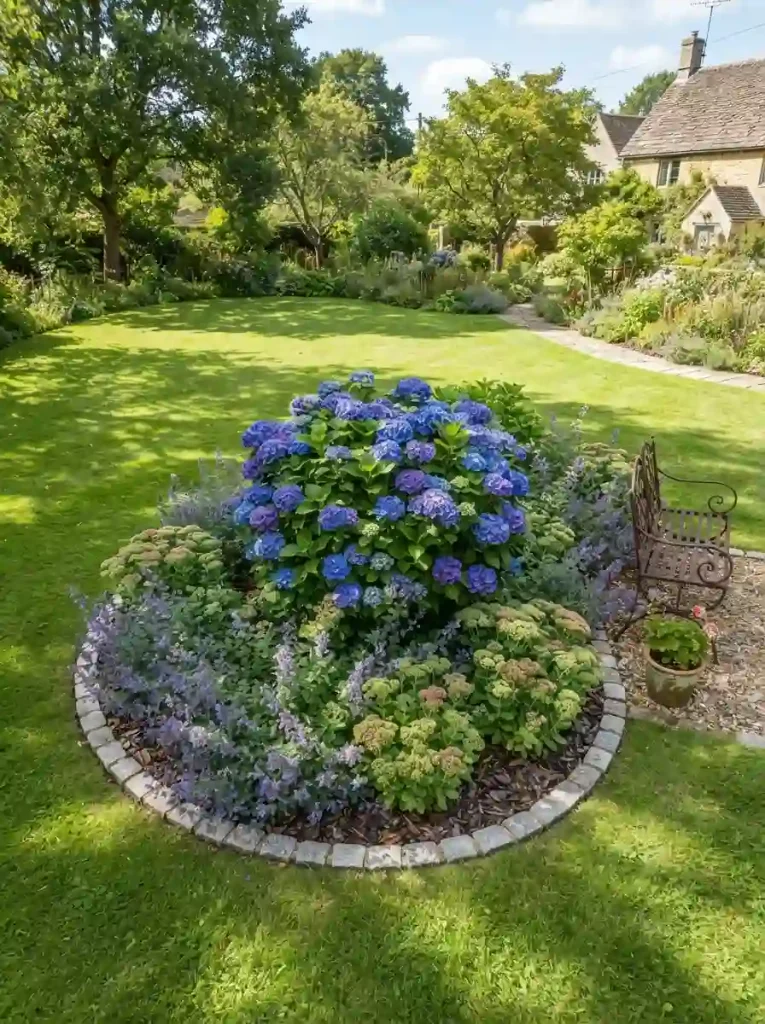
A round or kidney-shaped bed in the middle of the grass makes a natural focal point. Placing hydrangeas in the center gives it height and bold color.
Layer shorter plants such as sedum or catmint around the outside. Edge the bed with metal or stone for a crisp, finished line.
20. Pair With Gravel for a Low-Fuss Modern Garden
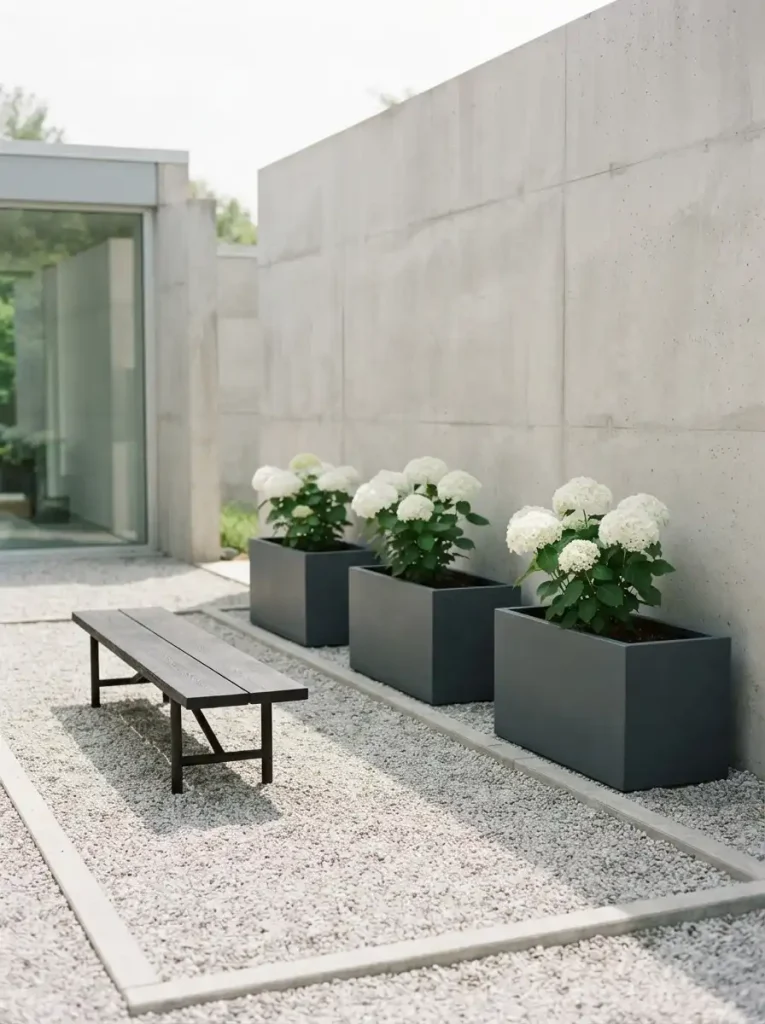
Clean gravel and a few well-placed hydrangeas create a contemporary look that feels both modern and warm. The mulch-free surface also keeps the area tidy.
Water at the base through drip lines, since gravel drains quickly. Stick to white or green blooms for a minimalist palette.
21. Plant Beside a Pond or Water Feature
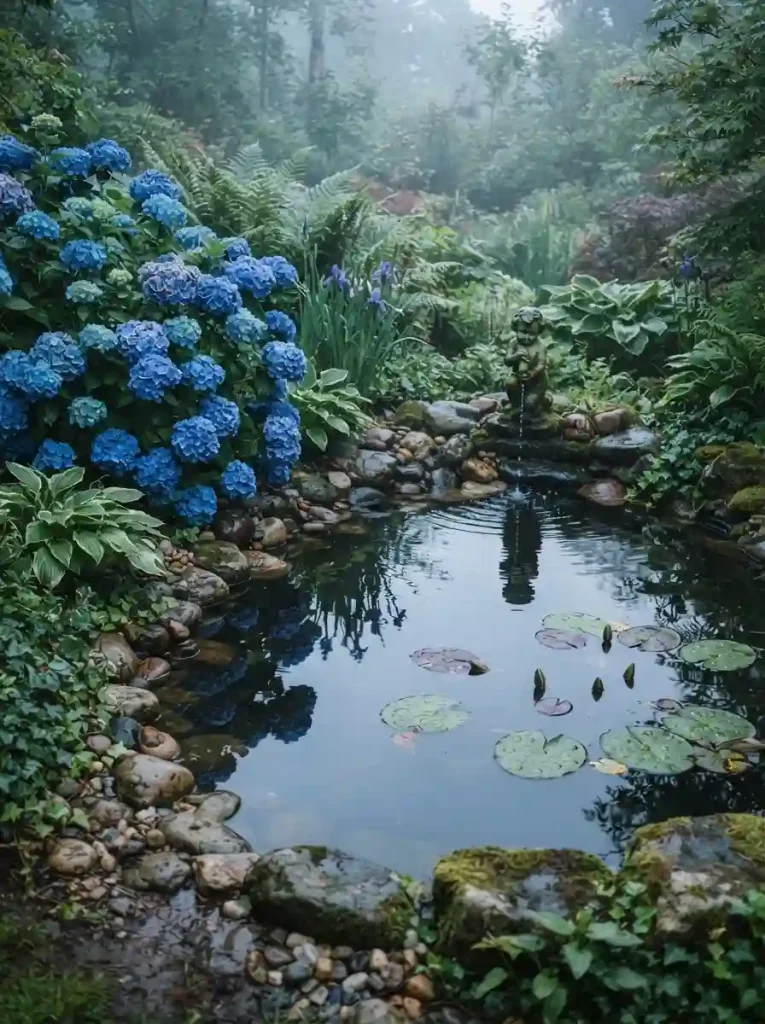
Water and hydrangeas share a lush, romantic quality. The reflection doubles the impact of the blooms, and the damp air suits their love of moisture.
Choose a site with good drainage nearby, since constantly saturated soil isn’t ideal. A bubbling fountain adds gentle background sound.
22. Grow Compact Types on a Balcony
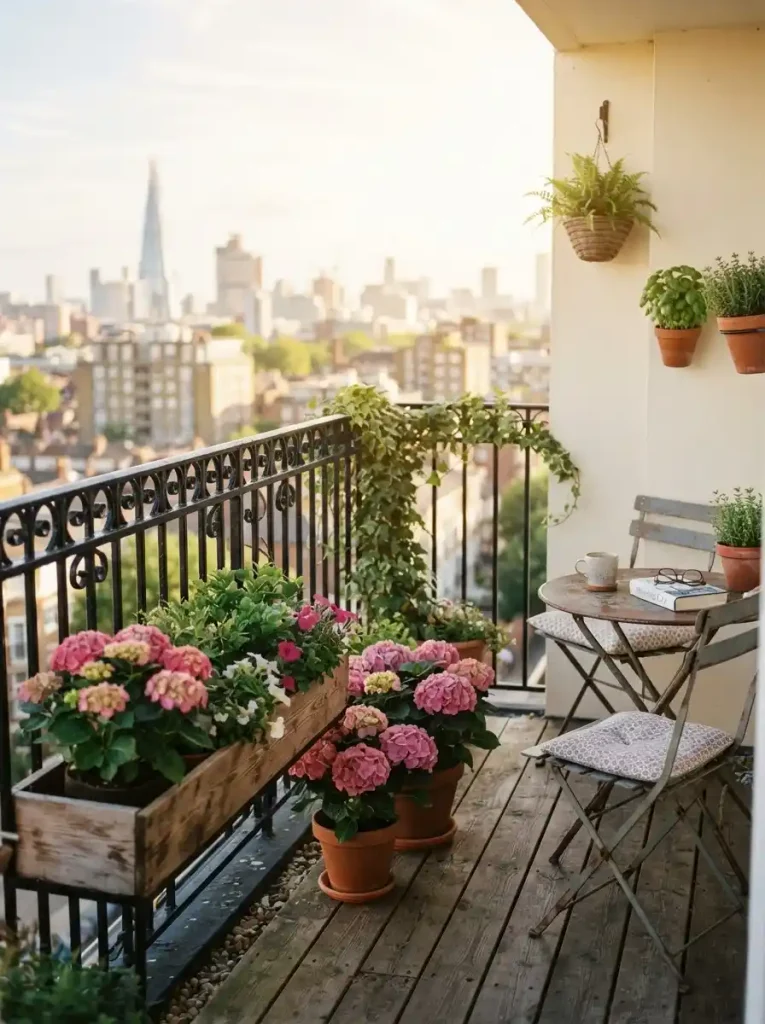
You don’t need a yard to enjoy hydrangeas. Dwarf and compact varieties adapt well to railing planters and big balcony pots.
Position them where they get morning sun and afternoon shade. Water more often than you would in the ground, and feed lightly during the growing season.
23. Use Hydrangeas as a Backdrop for Smaller Perennials
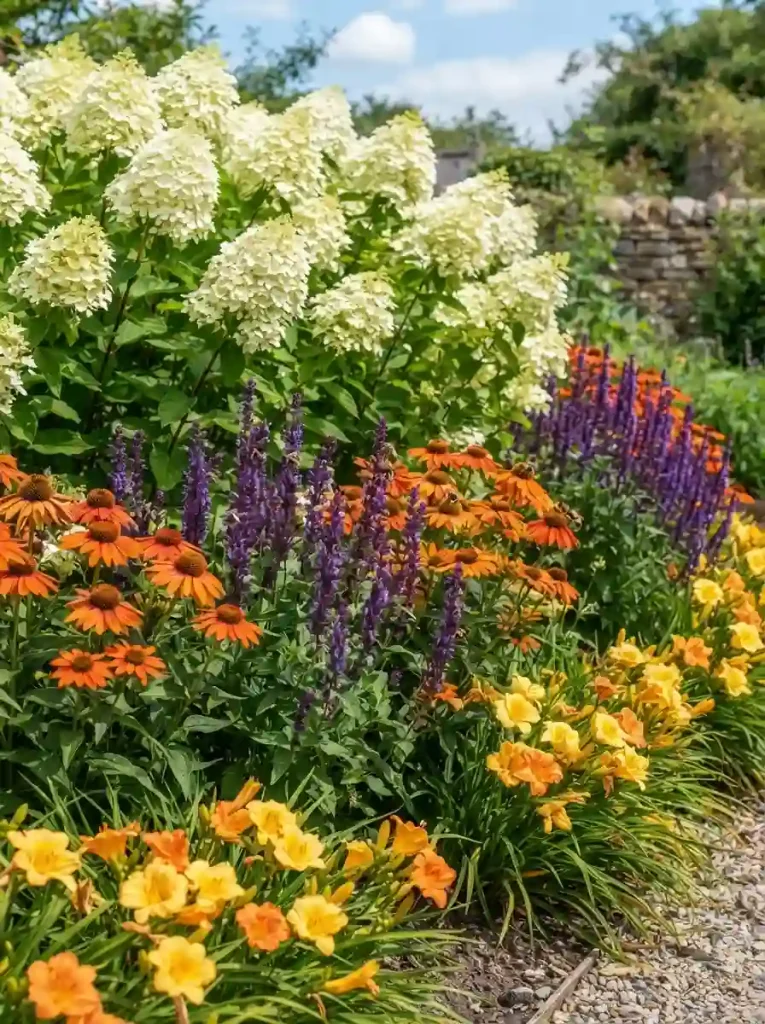
Their size makes hydrangeas a natural background plant. Put them at the back of a bed and let coneflowers, salvia, or daylilies bloom in front.
Pick partners that flower at a similar time but differ in shape, like spiky salvia against round hydrangea heads. The contrast keeps the bed lively.
24. Plant a Cutting Garden for Bouquets and Dried Flowers
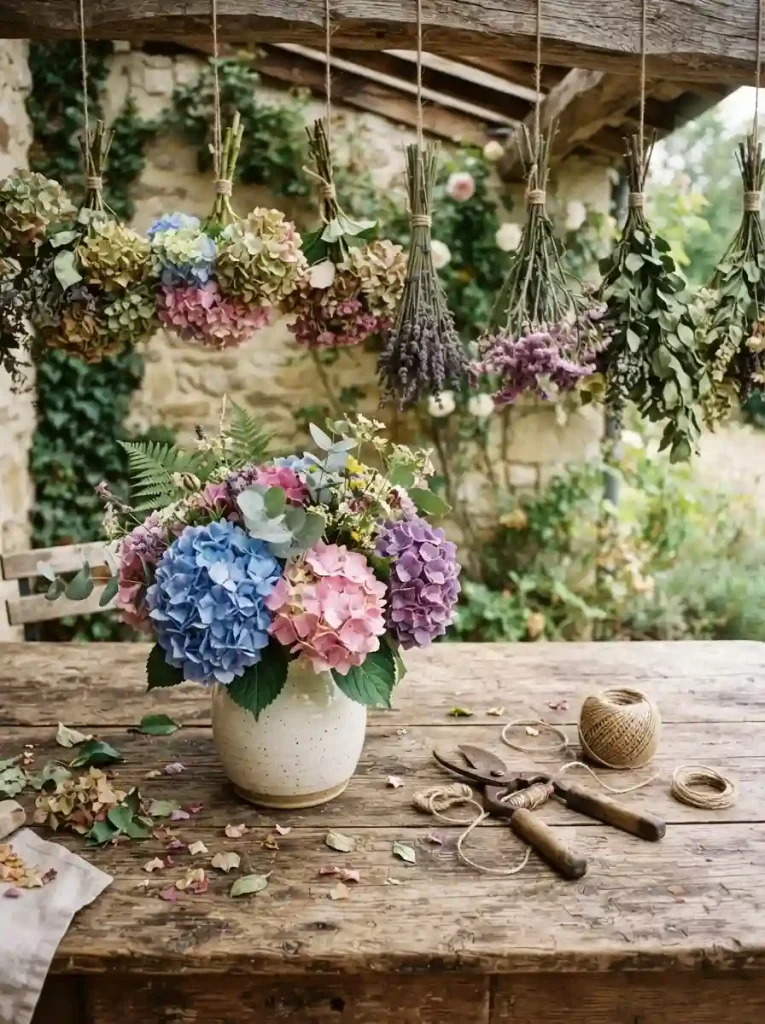
Hydrangeas are generous with blooms, so you can cut them for the house without hurting the display. They also dry beautifully for wreaths and winter arrangements.
Cut in the morning once the flowers feel slightly papery for drying. Hang the stems upside down in a dark, airy spot for a couple of weeks.
25. Create a Coastal-Inspired Garden
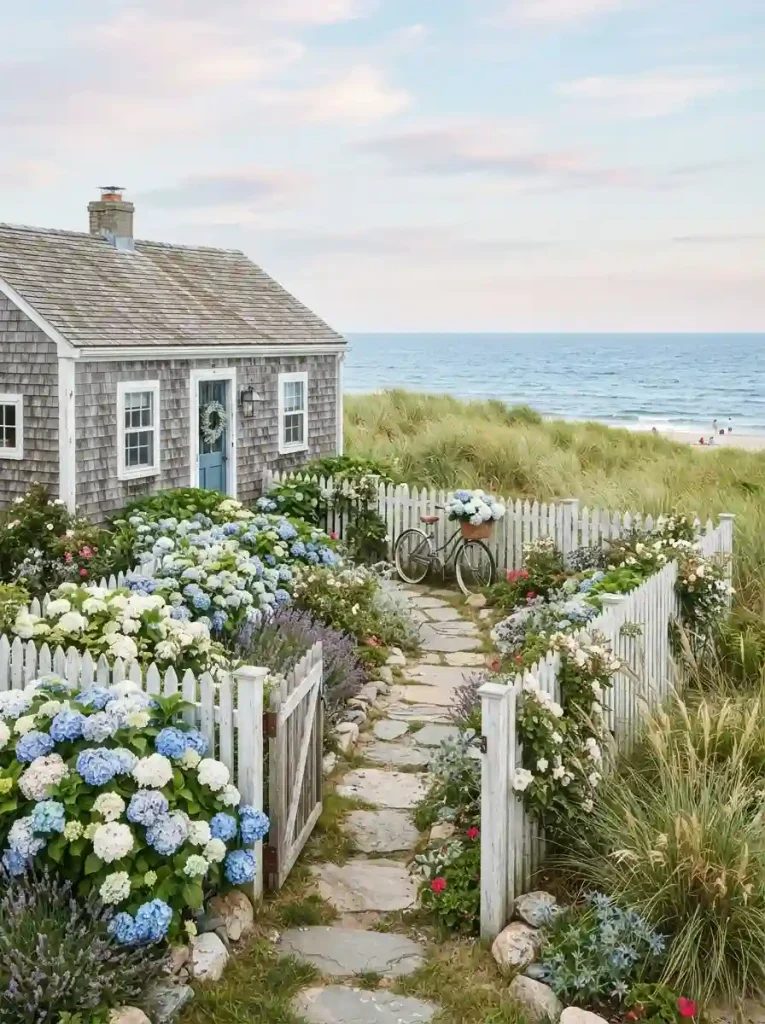
Bigleaf hydrangeas are a classic seaside plant. Their blue and white tones echo sky and surf, and many do well in breezy conditions with some shelter.
Combine them with beach grasses, shingle siding, and weathered wood. Add mulch to protect roots from wind and drying out.
Planting and Caring for Hydrangeas in Order: Steps, Mistakes, and Seasonal Care
Plant in this order for the strongest start. First, dig a hole twice as wide as the pot but no deeper, and mix compost into the backfill rather than filling the hole with pure potting mix, which dries out differently from surrounding soil. Second, set the shrub at the same depth it grew in its pot — planting too deep is a common cause of weak growth. Third, water deeply right after planting, then spread two to three inches of mulch around the base, keeping it a few inches from the stems. Fourth, prune only according to type: old-wood bloomers like bigleaf and oakleaf are trimmed just after flowering, while new-wood types like panicle and smooth hydrangeas are pruned in late winter.
Common mistakes include pruning an old-wood hydrangea in spring, which removes the buds that would have bloomed; giving bigleaf types harsh afternoon sun, which scorches leaves; watering shallowly every day instead of deeply a few times a week, which keeps roots near the surface; fertilizing late in summer, which pushes tender growth that winter kills; and crowding shrubs so air cannot circulate. Seasonal care is straightforward: water deeply through dry spells, deadhead spent blooms if you prefer a tidier look, and protect tender buds in cold climates with a loose mulch mound or burlap screen in late fall. In spring, remove winter protection gradually and check for new buds before cutting anything back. Feed once in early spring with compost or a balanced slow-release fertilizer, and skip feeding after midsummer so new growth hardens before frost. For blue blooms, soil amendments take a full season to shift color, so judge results the following year, not the same summer.
Quick Care Tips for Healthy Hydrangeas
Whichever idea you choose, a few basics make the difference between a so-so shrub and a showstopper:
- Light: Most prefer morning sun and afternoon shade. Panicle types handle more sun.
- Water: Give them about an inch a week, more in heat. Water deeply at the base.
- Mulch: Spread two to three inches around the plant, keeping it off the stems.
- Pruning: Panicle and smooth types bloom on new growth, so prune in late winter. Bigleaf types often bloom on old wood, so prune lightly right after flowering.
- Planting time: Spring or early fall is best, so roots can settle before extreme weather.
Frequently Asked Questions
How do I make hydrangeas bloom blue?
This applies to bigleaf types. They produce blue flowers in acidic soil, roughly pH 5.5 or lower. A soil test tells you where you stand, and garden-center soil acidifiers can help shift it gradually. White varieties won’t change color.
Can hydrangeas grow in full sun?
Some can. Panicle hydrangeas handle sun best, especially with consistent water. Bigleaf and oakleaf types prefer afternoon shade in hot climates.
How far apart should I plant them?
Check the plant tag for mature width and space them accordingly. For a hedge, plant slightly closer. For individual specimens, give them the full width.
Why isn’t my hydrangea blooming?
Common causes are pruning at the wrong time, too much shade, or winter damage to buds on old-wood types. Adjusting pruning and light often fixes it.
When should I prune hydrangeas, and does it depend on the type?
Yes, timing depends entirely on whether the variety blooms on old or new wood. Bigleaf, oakleaf, and climbing hydrangeas bloom on last year’s wood, so prune them right after summer flowering, removing only dead stems and spent blooms. Panicle and smooth hydrangeas bloom on new growth, so they are pruned in late winter or early spring before growth starts. If unsure of the type, skip pruning for a season and watch when buds form rather than guessing.
How often should I water hydrangeas in summer heat?
Hydrangeas need deep, infrequent watering rather than daily sprinkles. In hot weather, soak the root zone once or twice a week so water reaches six to eight inches down; if the top two inches feel dry, it is time to water. Container plants dry faster and may need water every day or two. Wilting leaves in afternoon heat often recover by evening, but wilting that persists into morning means the plant genuinely needs water.
How do I protect hydrangeas in winter?
Cold damage usually hits flower buds, not the whole plant, so protection focuses on the stems. After the first hard frost, mound mulch or shredded leaves around the base, and in colder regions wrap tender bigleaf varieties loosely in burlap, leaving the top open. Avoid plastic covers, which trap moisture and encourage rot. Remove protection gradually in spring after hard freezes pass, and wait to cut back any stems that look dead until new growth shows what survived.
Can hydrangeas grow well in pots, and what do they need?
Yes, compact varieties do well in large containers, as the patio pots and balcony ideas show. Choose a pot at least 18 inches wide with drainage holes, since hydrangeas hate standing water but drink heavily. Use moisture-holding potting mix with compost, water when the top inch feels dry, and feed lightly in spring with balanced slow-release fertilizer. In winter, move pots against a sheltered wall or into an unheated garage, since container roots freeze harder than roots in the ground.
Final Thoughts
Hydrangeas are flexible, forgiving, and endlessly photogenic. Start with the idea that suits your space, whether that’s a pair of shrubs by the door or a single pot on a balcony. Then add more over time.
Pick one or two of these ideas this week and see how your outdoor space changes. Save your favorites so you can come back when you’re ready to plant.