

15 Serene Lake Landscaping Ideas for Waterfront Yards
There is something calming about a yard that opens toward the water. Thoughtful lake landscaping can make a waterfront property feel more inviting, connected to nature, and comfortable through every season. From native planting and natural stone to cozy seating and softly lit paths, the right choices can frame the view without competing with it.
Lake landscaping ideas are designed to inspire updates, whether your style leans rustic, modern, cozy, or elegant. Explore these serene waterfront ideas and find a look that feels naturally yours.
What are the best plants for lakefront landscaping?
Native grasses, sedges, flowering perennials, shrubs, and other plants suited to your local climate can work well in lakefront landscaping. Choose varieties based on your yard’s sunlight, soil, moisture, and mature size. Native plants can also help create a natural transition between the waterfront yard and surrounding landscape.
1. Let Native Plants Frame the Shore
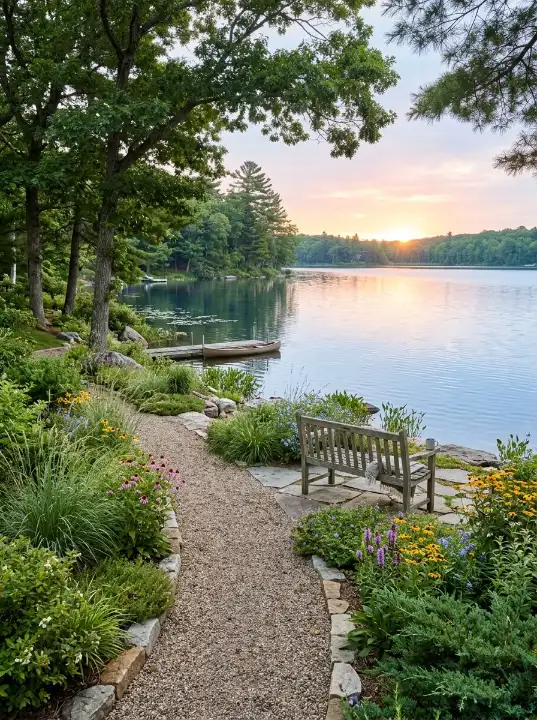
Native planting creates a relaxed transition between your yard and the lake, using varied heights and textures instead of a formal border. Grasses and low flowering plants soften the shoreline while preserving an open view, making the waterfront feel naturally connected to the landscape.
Choose plants suited to your local growing conditions and soil, then group them in loose drifts for an established look. A simple gravel path can lead toward the water, while weathered wood chairs nearby create an inviting place to pause and enjoy the view.
2. Build a Natural Stone Landing
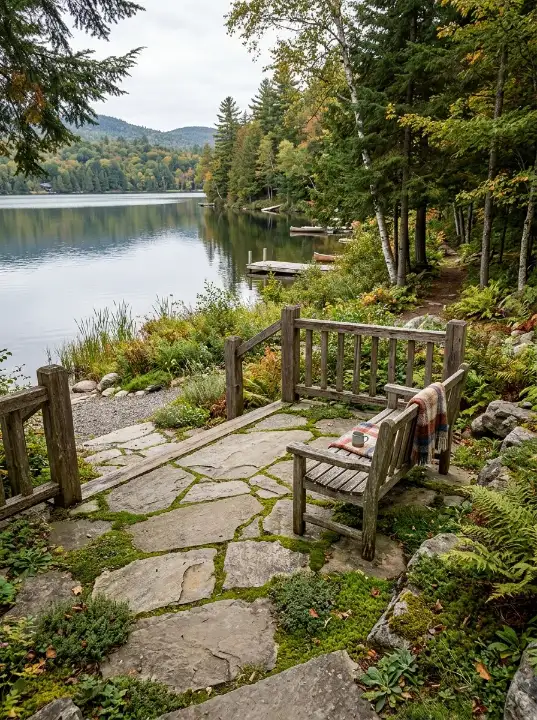
Natural stone gives a waterfront yard a substantial, timeless character without competing with the scenery. Use irregular slabs to create a small landing or sitting area, allowing the varied edges and earthy colors to echo nearby rocks and reinforce the natural shoreline setting.
Choose durable stone appropriate for outdoor use and arrange it with comfortable spacing underfoot. Keep planting low around the edges so the lake remains visible. A wooden bench or two simple chairs can turn the stone landing into a practical lake-view garden comfortably.
3. Add a Winding Waterfront Path
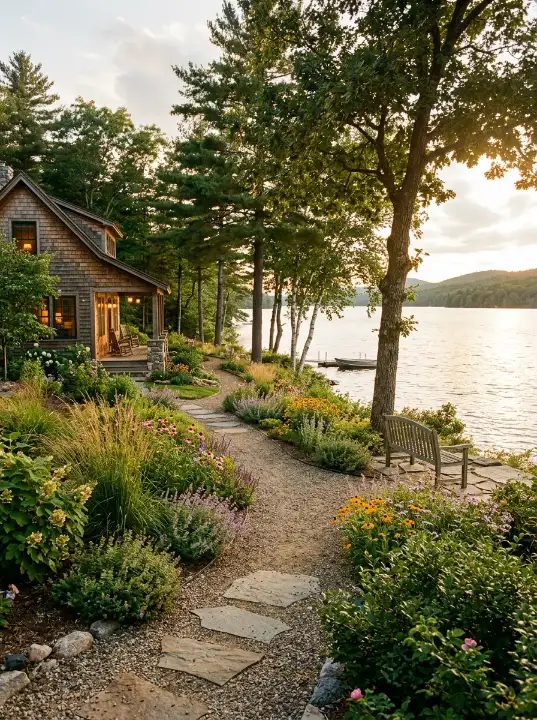
A curved path makes the journey toward the shoreline feel intentional rather than simply functional. Gravel keeps the look casual, while stepping stones add rhythm and help define the route. Planting along both sides can create a soft corridor without hiding the lake.
Keep the path comfortably wide and choose a surface that suits drainage and local conditions. Place taller plants farther from the walking edge, then use low groundcovers near the route. Finish with a bench or compact seating spot where the view opens.
4. Create a Cozy Lake-View Seating Nook
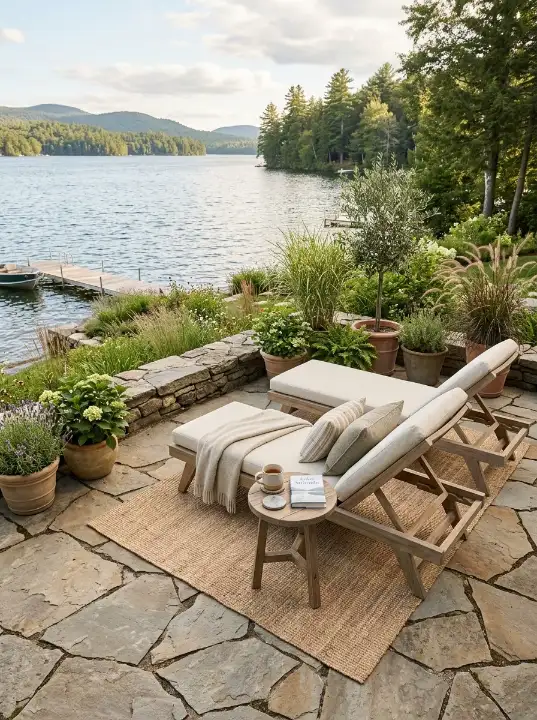
A dedicated seating nook can make even a modest waterfront yard feel like a private retreat. Position chairs toward the lake rather than the house, and keep surrounding landscaping low enough to preserve the horizon. Natural materials help the space blend comfortably with its setting.
Use outdoor-rated cushions and furniture suited to your climate, especially where moisture and wind are concerns. A small table keeps drinks or books close at hand. Add containers with suitable plants near the terrace edges, but avoid crowding the lake-facing view nearby.
5. Soften the Yard With Ornamental Grasses
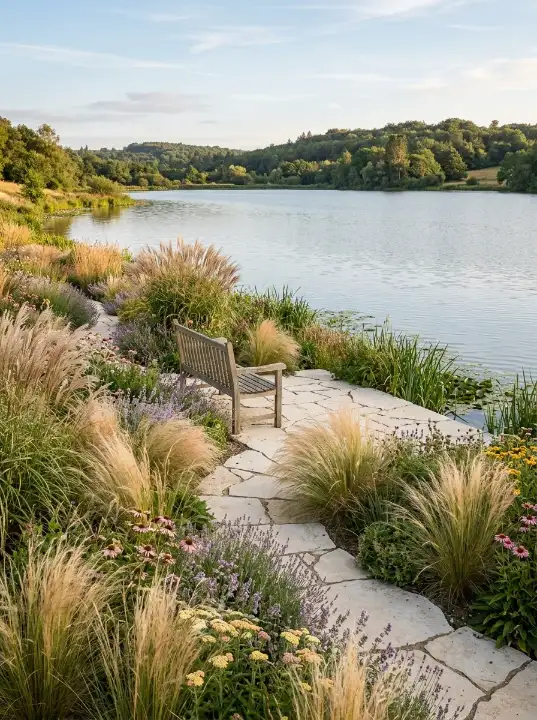
Ornamental grasses bring motion to a waterfront landscape as their blades respond to passing breezes. Plant them in generous clusters to create a natural rhythm along the yard, then leave open pockets between groups so the lake remains the main visual feature.
Select grass varieties appropriate for your region and available moisture, then consider their mature size before planting. Place taller clumps behind lower flowers or groundcovers. Trim and divide them according to their growing habits, keeping the shoreline planting neat without making it overly formal.
6. Border the Yard With a Wildflower Meadow
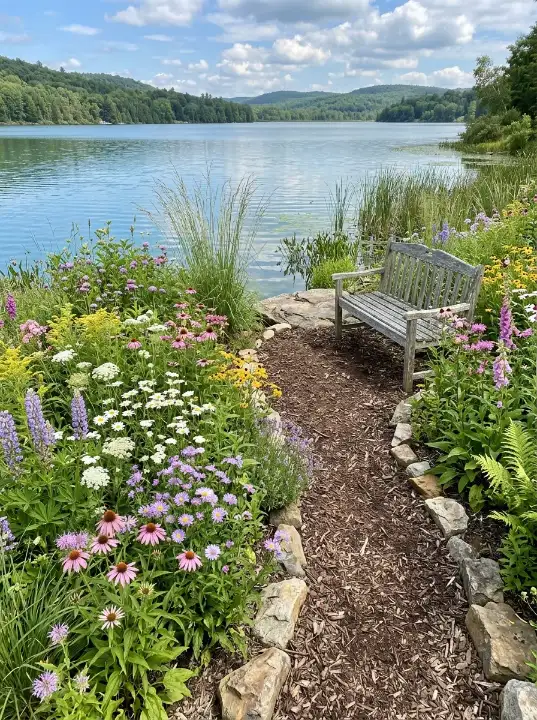
A wildflower border gives a waterfront yard an easygoing, countryside character. Instead of arranging every plant in straight rows, combine varied heights and bloom shapes in broad pockets. The relaxed planting can soften fences, lawn edges, or transitions between the house and shoreline.
Choose regionally suitable flowers and grasses, and prepare the planting area according to their preferred soil and light. Leave clear access through the border with a narrow path or stepping stones. A simple bench can provide a quiet destination while keeping maintenance practical.
7. Give the Dock a Rustic Green Entrance
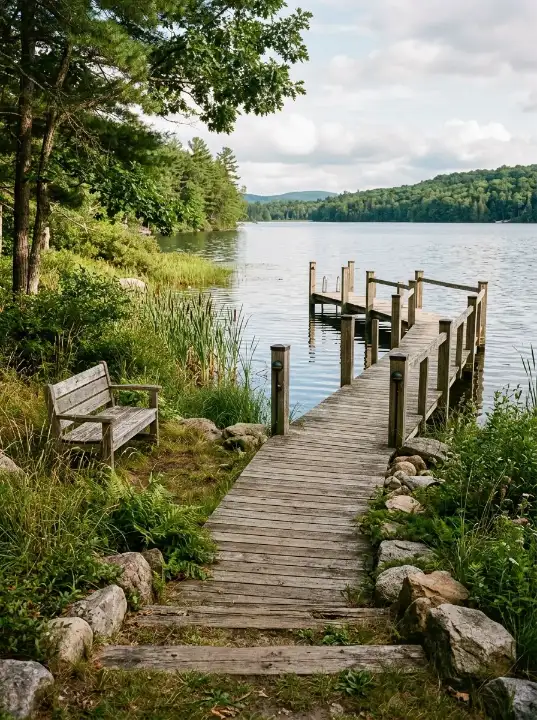
Thoughtful planting around a dock can make the transition from yard to water feel more welcoming. Keep the approach open and uncluttered, using low plants and natural materials to frame the structure. Weathered timber complements the lake beautifully and adds relaxed character.
Avoid crowding access points with plants or furniture, especially where people carry gear toward the dock. Use durable surfaces around high-traffic areas and place taller vegetation farther away. A bench positioned beside, rather than across, the route can add comfort without blocking movement.
8. Design a Clean Modern Lake Yard
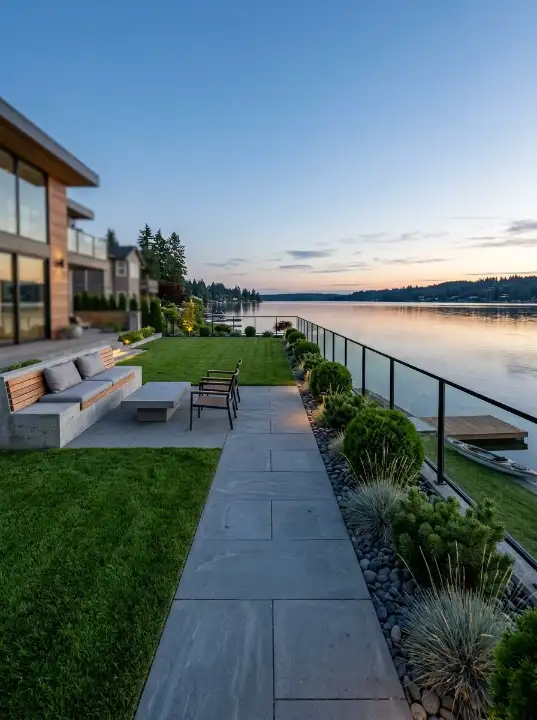
Modern landscaping can feel striking beside a lake when its geometry is balanced by the softness of nature. Use broad paving and simple planting shapes to organize the yard, while leaving generous open space toward the water for a calm, uncluttered outlook.
Choose a limited material palette and repeat it across paths, seating, and edging for visual consistency. Keep shrubs neatly proportioned rather than overly dense. If the yard slopes toward the lake, plan transitions carefully so the hardscape remains comfortable and practical seasonally.
9. Create a Woodland Retreat Beside the Lake
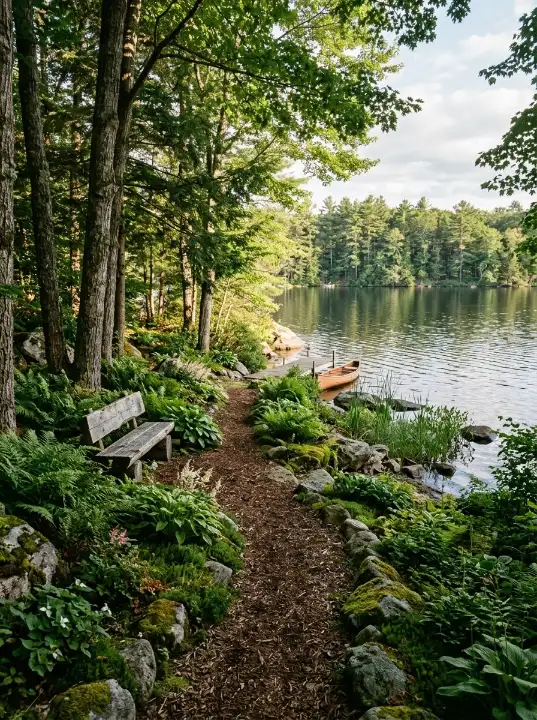
Woodland landscaping works beautifully where mature trees already shape the waterfront setting. Layer ferns, groundcovers, and shade-tolerant plants beneath the canopy, using stones and timber to reinforce the forest-like character while keeping the lake visible through carefully placed openings and natural gaps between trunks.
Work with existing trees rather than removing them simply to create a cleaner view. Keep paths comfortable and avoid disturbing major roots when possible. Choose plants suited to the available light and moisture, then let natural textures carry the design without excessive decoration.
10. Gather Around a Waterfront Fire Pit
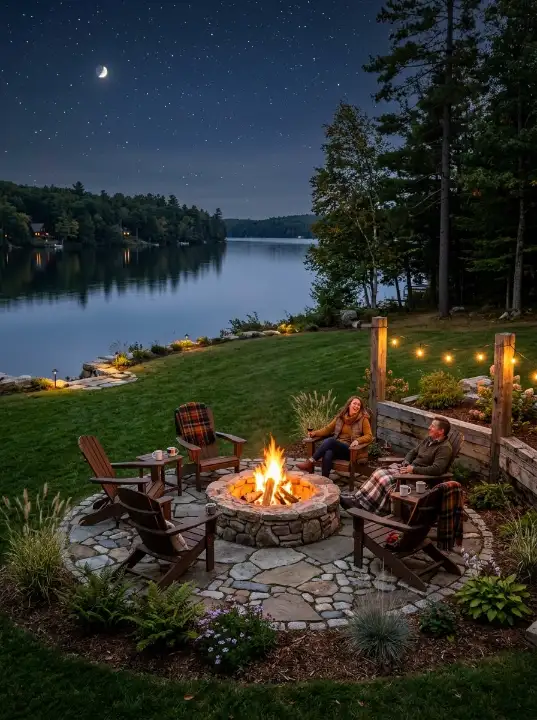
A fire pit can turn a waterfront yard into a natural gathering place after sunset. A circular stone setting establishes the focal point, while comfortable chairs face both the flames and lake. Keep surrounding landscaping relaxed so the area feels open rather than crowded.
Position the fire feature according to local safety rules and manufacturer guidance, with suitable clearance from structures and vegetation. Choose durable seating that handles outdoor conditions, and use gravel or another appropriate surface beneath the gathering area to create a practical, defined zone.
11. Create Privacy With Soft Planting Layers
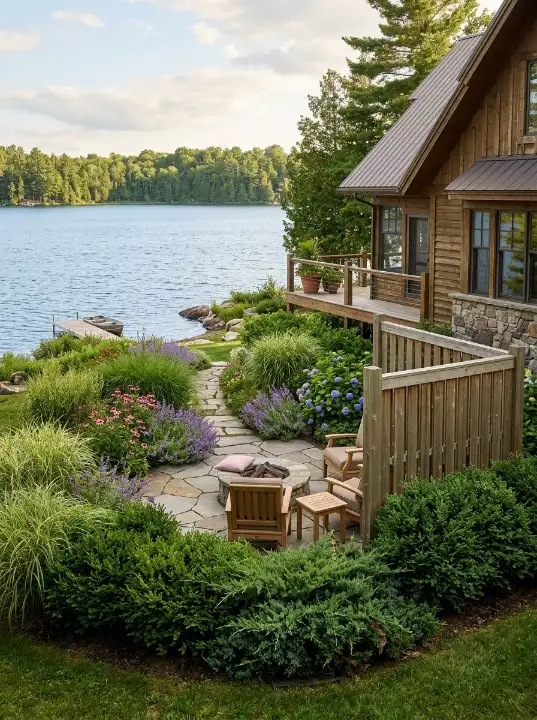
Privacy planting does not have to form a solid wall. Combine shrubs, grasses, and flowering plants at different heights to soften sightlines while preserving glimpses of the lake. The result feels sheltered without losing the spacious quality that makes waterfront living special.
Place taller plants where privacy is most needed, then step the planting down toward seating areas and paths. Select species suited to your climate, mature dimensions, and site conditions. A simple screen can provide structure while greenery supplies a softer transition around it.
12. Build a Layered Lakeside Flower Bed
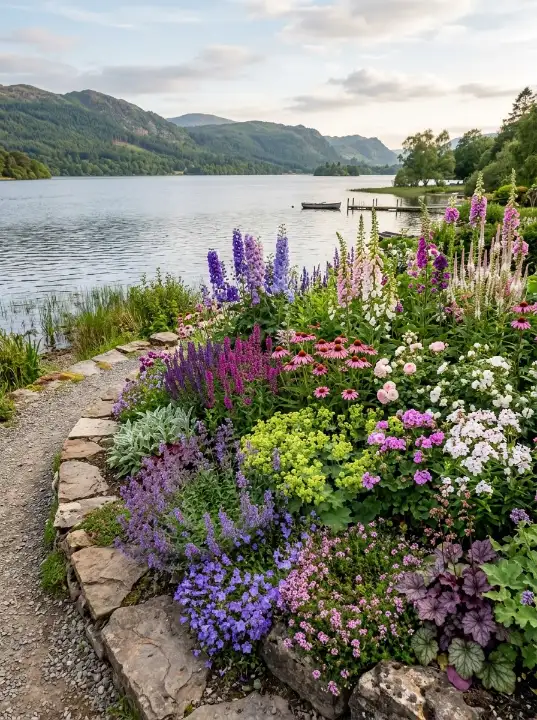
Layered flower beds add color without making a waterfront yard feel overly formal. Arrange plants by mature height, placing taller varieties behind shorter ones so every layer remains visible. Repeating colors and textures can make the planting feel cohesive against the lake.
Check each plant’s mature size before spacing the bed, and group varieties with similar light and moisture preferences. Use natural stone sparingly along the edge to define the planting. Leave enough room for maintenance and avoid letting dense growth block important lake views.
13. Let the Shoreline Flow Naturally
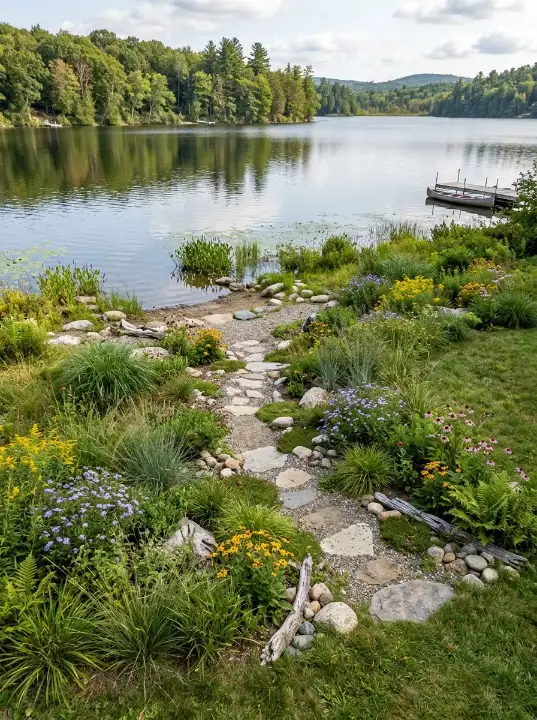
A natural shoreline transition can make the waterfront feel less engineered and more connected to its surroundings. Instead of a hard boundary, blend lawn, low plants, grasses, and stones gradually toward the water, creating visual continuity across the entire yard and a softer, welcoming edge.
Consider local shoreline conditions before changing the edge, especially where erosion, drainage, or water levels are concerned. Use appropriate native or site-suitable plants, and avoid placing materials where they could interfere with water movement. Keep access points clearly defined for practical use.
14. Plan for Rain With a Lush Garden
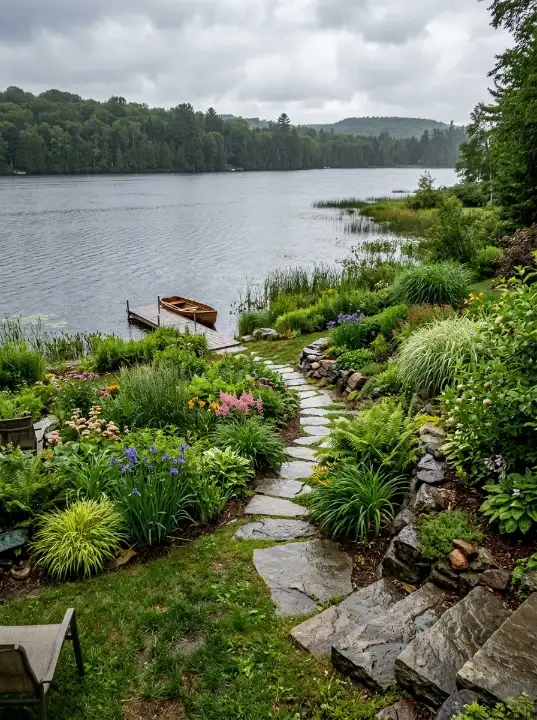
Rain-friendly landscaping can combine practical water management with attractive planting. A shallow garden planted with suitable moisture-tolerant species can add texture to a low area while creating a graceful transition between the main yard and waterfront. It also gives rainwater a more intentional place to settle.
Observe where rain naturally collects before deciding where to plant. Use site-appropriate species that tolerate the area’s moisture patterns, and keep pathways stable around wetter zones. Professional advice may be useful where drainage or shoreline conditions are complex, especially on sloping properties.
15. Light the Waterfront for Serene Evenings
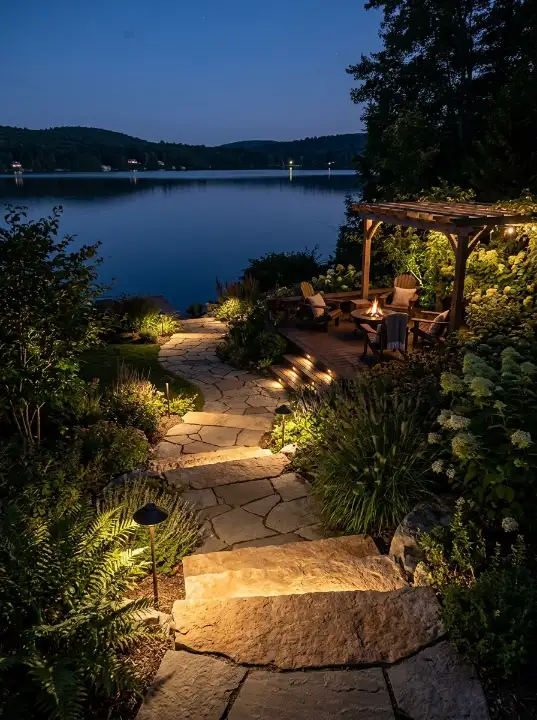
Thoughtful lighting can extend the enjoyment of a lake-view garden after sunset without overpowering the scenery. Low fixtures along paths and steps provide gentle guidance, while subtle illumination around seating creates a warm destination overlooking the water. The effect feels inviting without becoming visually busy.
Use outdoor-rated fixtures and position them to reduce glare toward the lake or neighboring properties. Warm, downward lighting keeps the atmosphere relaxed. Put lights where they serve a purpose first, then use a few carefully placed accents to highlight paths, planting, or steps.
Conclusion
Lake landscaping is most beautiful when it works with the character of the waterfront rather than trying to overpower it. Whether you prefer native planting, natural stone, cozy seating, layered flowers, or gentle lighting, small thoughtful choices can transform a waterfront yard into a place you genuinely enjoy.
Consider your shoreline, views, climate, and everyday needs before choosing a design. Then let nature guide the details. With the right balance, your lakefront property can become a peaceful outdoor escape worth saving, sharing, and recreating again.