
21 Gorgeous Front Driveway Landscaping Ideas to Steal
Inside: Simple, practical ways to turn a plain driveway into the best-looking part of your front yard.
Your driveway is the first thing people see when they pull up, and it often takes up more of your front yard than anything else. The good news is that you don’t need to rip anything out to improve it. Plants, edging, and a few smart structures can make the whole entrance feel planned and welcoming.
These ideas work for short driveways, long ones, sloped ones, and everything in between. Whether you want color, privacy, or better drainage, you’ll find something to steal. Pick two or three to start, and build from there.
1. Anchor the entrance with a curved shrub bay
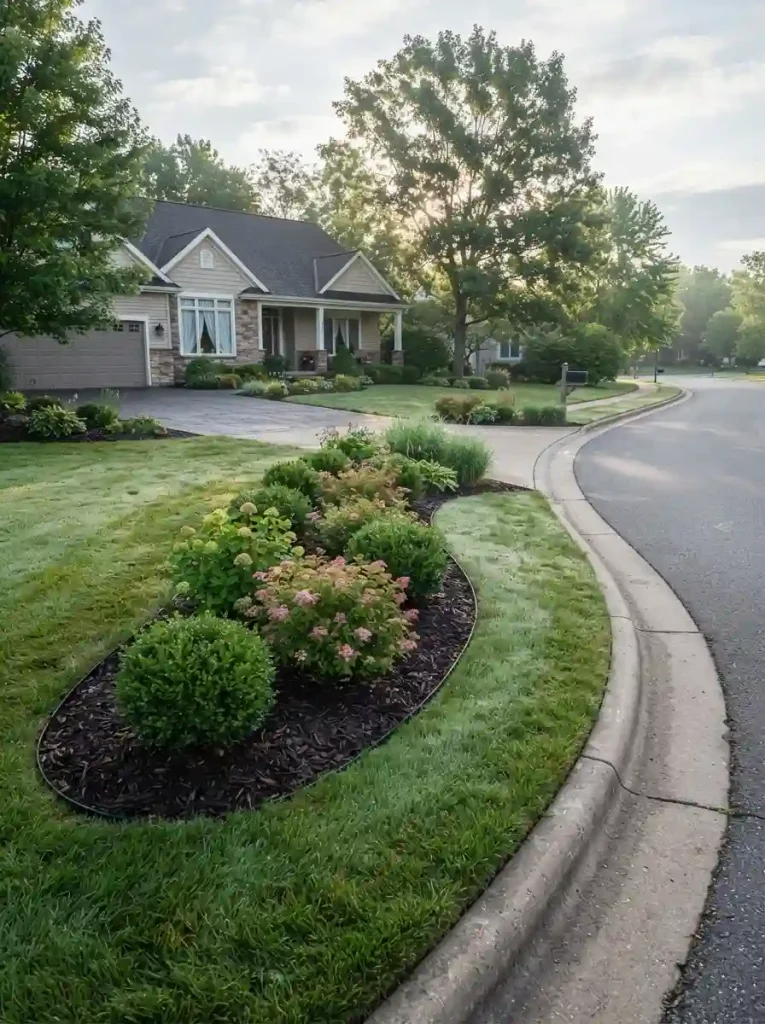
Where your driveway meets the street, plant a crescent-shaped bed instead of a straight strip. Curves look softer and feel more natural next to hard pavement. Layer taller shrubs like spirea at the back, then dwarf hydrangea, with low boxwood along the front edge.
Finish the bed with 2 to 3 inches of dark mulch to make the greens stand out and keep weeds down. Leave a clear sightline at the street so drivers can see oncoming traffic.
Pro Tip:
Keep plants at the corner under about 30 inches tall so they never block your view when backing out.
2. Turn the strip beside the street into a perennial ribbon
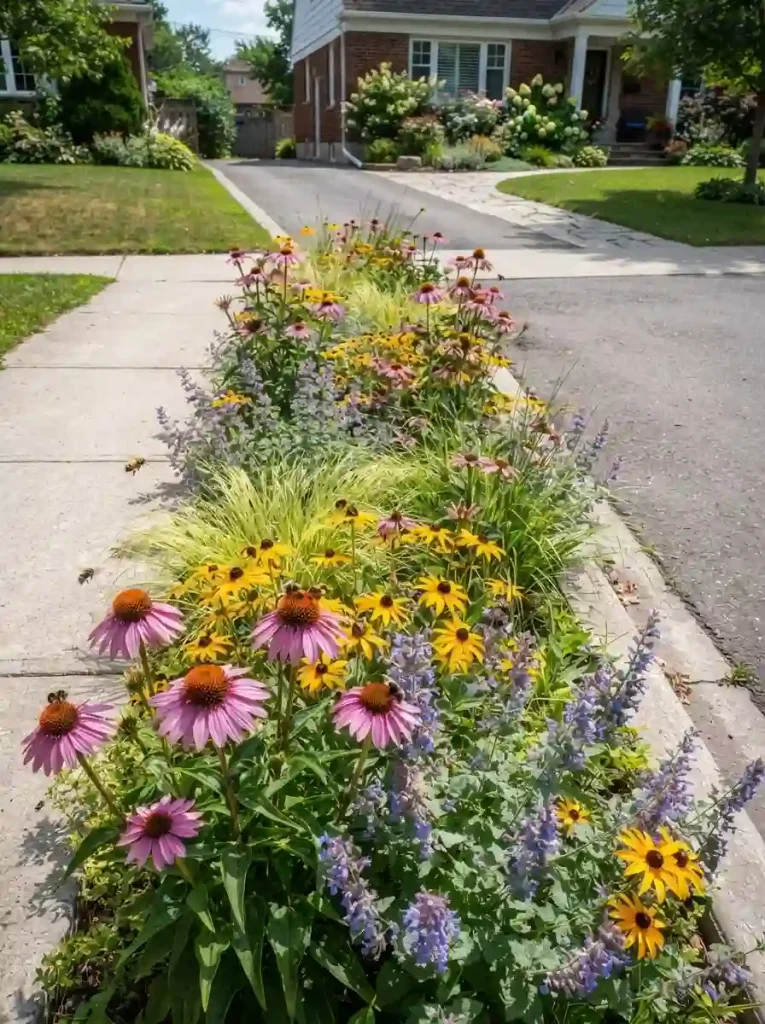
That narrow patch between the sidewalk and the curb is usually grass that’s hard to mow and easy to ignore. Replace it with tough perennials like purple coneflower, catmint, black-eyed Susan, and feathery sedges. They handle heat, foot traffic, and road splash better than most lawns.
Bees and butterflies will find it quickly. Once the plants fill in, the strip needs far less work than turf.
Pro Tip:
Check your local rules first. Some cities and HOAs limit plant height or species in this strip.
3. Dress the garage wall with climbing vines
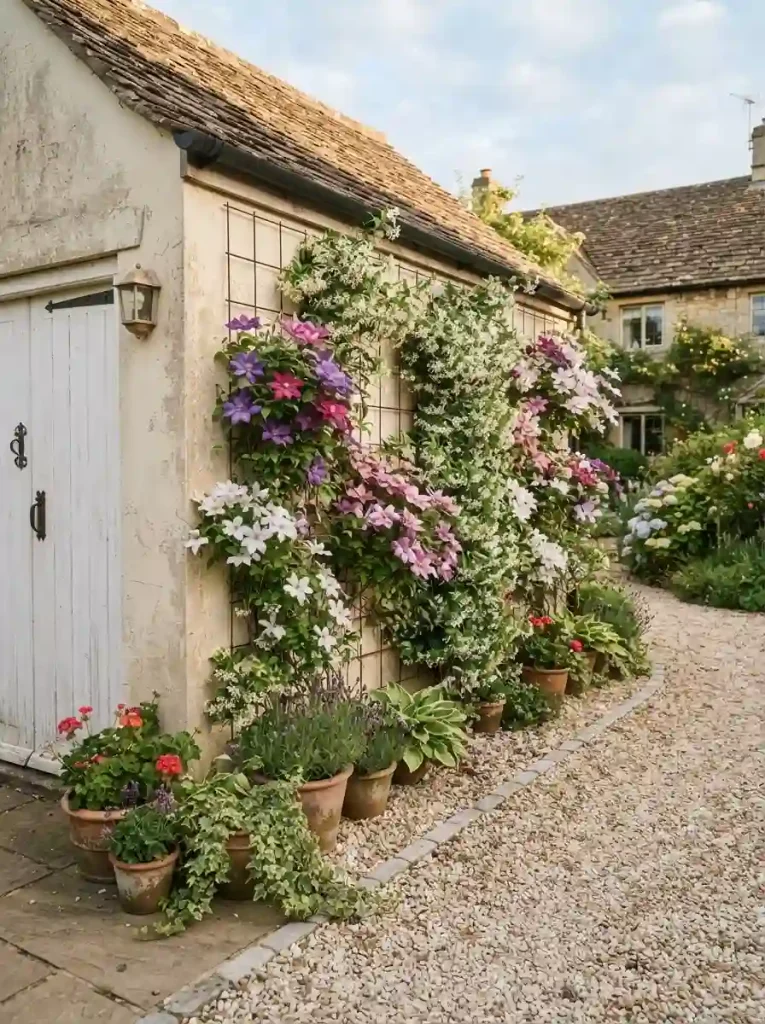
A blank garage wall can dominate the whole front of your house. Mount a wire trellis grid a few inches off the surface and train clematis, climbing jasmine, or a compact climbing rose across it. Add a couple of terracotta pots at the base so the greenery feels grounded.
Within a season or two, the wall becomes a soft green backdrop that makes the driveway feel more like a garden.
Pro Tip:
Use standoff brackets so air can circulate behind the vines. Skip aggressive clingers like English ivy, which can damage siding and mortar.
4. Build a layered evergreen screen along the property line
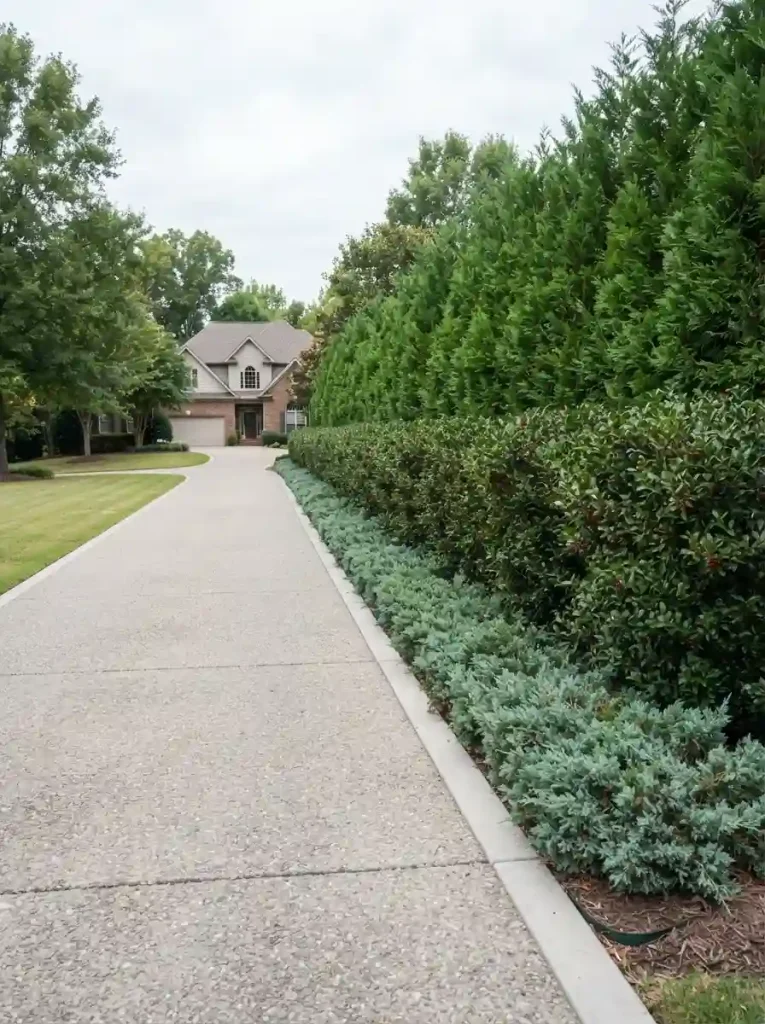
If your driveway runs close to a neighbor’s house, a layered planting adds privacy without looking like a wall. Put tall evergreens like arborvitae in the back, mid-height holly in the middle, and low juniper along the front. Staggering the plants looks fuller and more natural than a single flat row.
It also muffles car noise and stays green all winter, so the driveway looks tidy in every season.
Pro Tip:
Space arborvitae about 3 to 4 feet apart, and water deeply every week during the first year.
5. Add a dry creek bed to guide runoff
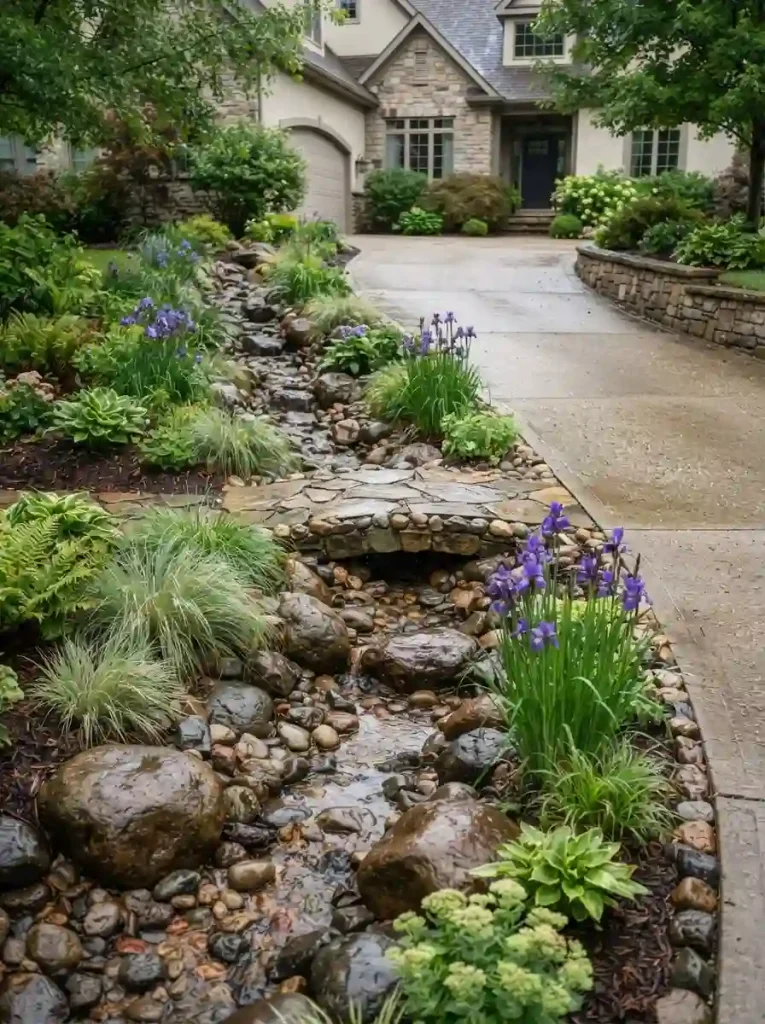
If rainwater pours off your driveway and pools in the yard, a dry creek bed solves the problem and looks beautiful doing it. Dig a gently curving channel beside the pavement and line it with landscape fabric. Fill it with smooth river rock, and set a few larger boulders along the edges.
Plant ornamental grasses and irises on the banks so it looks like a real stream, even when it’s dry.
Pro Tip:
Aim for a slight downward slope so water moves away from your garage and foundation, not toward them.
6. Frame the garage doors with columnar evergreens
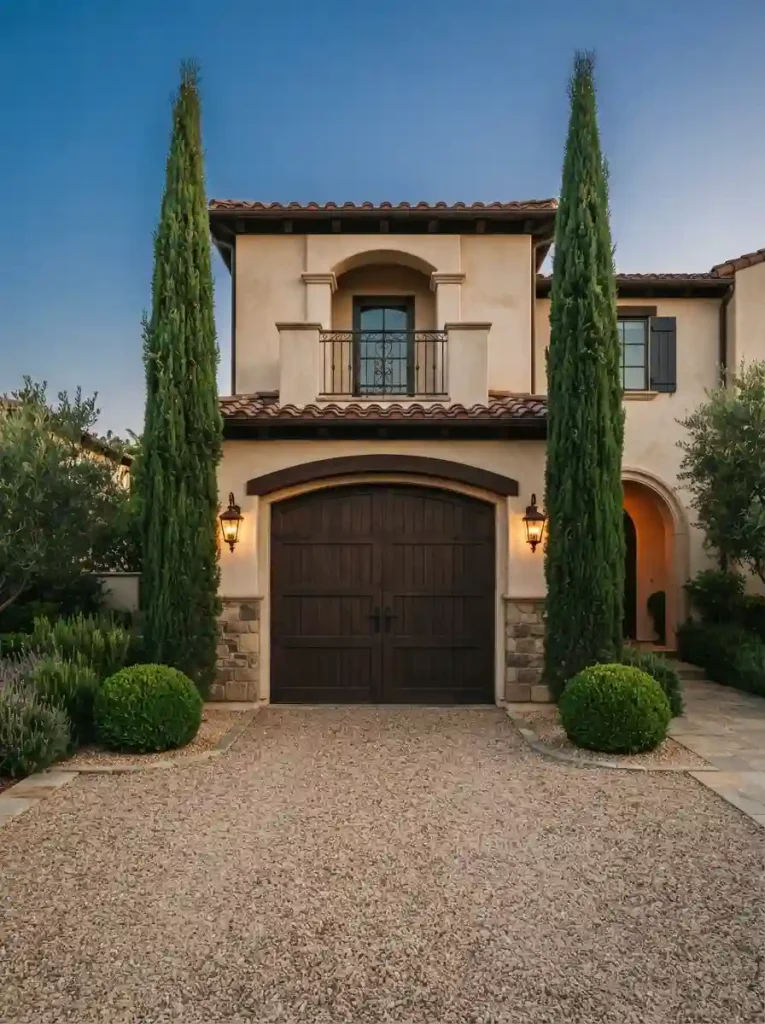
A matching pair of tall, slender evergreens on either side of the garage adds height and a formal, polished feel. Italian cypress works well in warmer climates. In colder zones, try ‘Skyrocket’ juniper or ‘Emerald Green’ arborvitae. Circle their bases with low boxwood or a ring of gravel.
The vertical lines draw the eye upward and make the garage look more intentional.
Pro Tip:
Plant them a few feet out from the wall so mature branches never scrape the siding or block the door.
7. Plant a rain garden at the low point
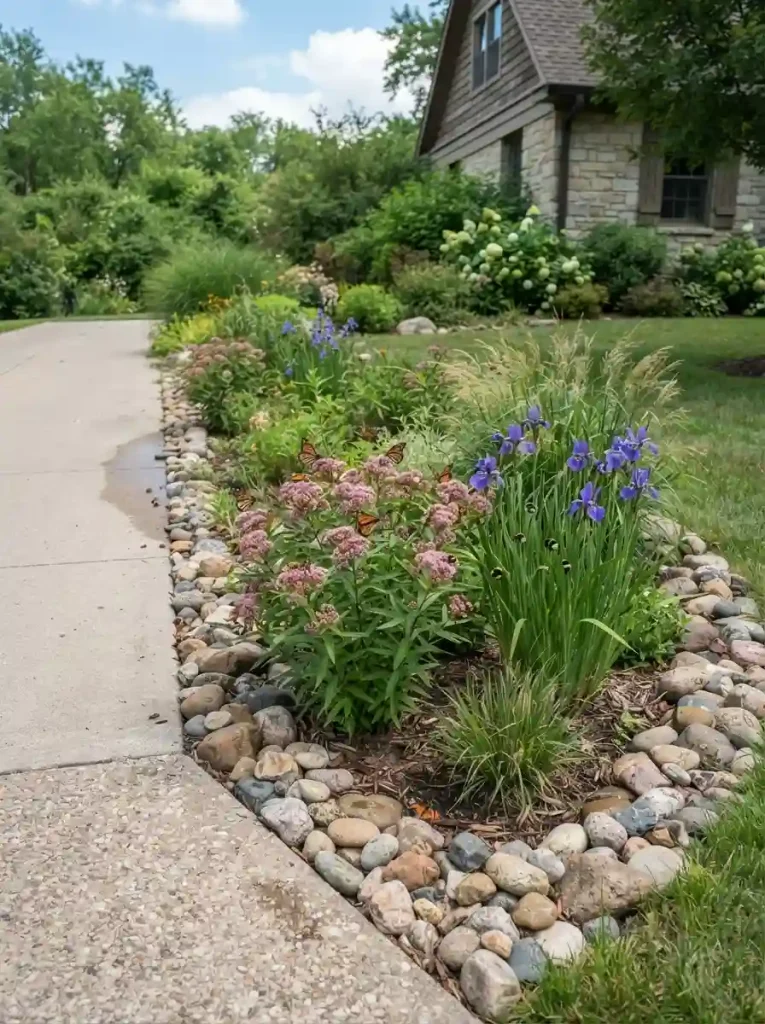
A rain garden is a shallow, planted dip that soaks up runoff instead of letting it flood the pavement. Build it at the lowest corner of your driveway, and fill it with moisture-loving natives like swamp milkweed, blue flag iris, and switchgrass. Edge it with river stone to keep the shape crisp.
It cuts puddles, feeds pollinators, and gives you a lush, leafy corner by midsummer.
Pro Tip:
Keep it at least 10 feet from your foundation, and mix compost into the soil so water drains within about 24 to 48 hours.
8. Tuck herbs and edibles into raised beds beside the garage
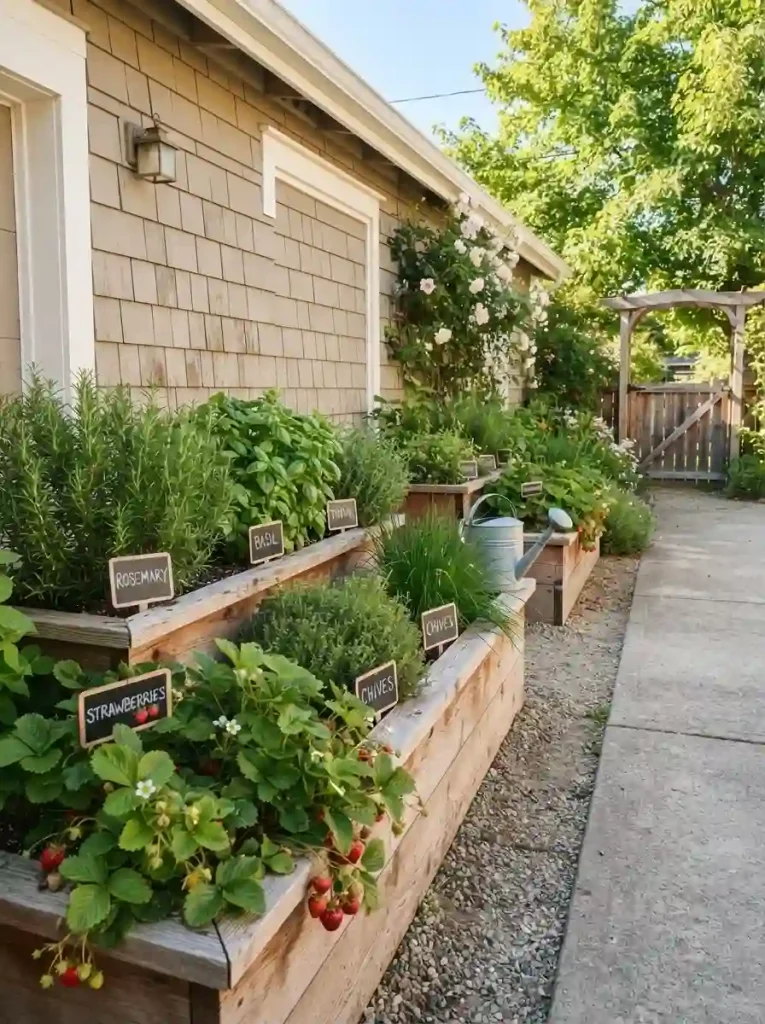
The sunny strip along a garage side wall is often wasted space. Set a few cedar raised beds there and grow rosemary, thyme, basil, chives, and strawberries. They look pretty, smell wonderful when you walk by, and put dinner ingredients steps from your car.
Small chalkboard markers add a homey touch.
Pro Tip:
Leave a couple of feet between the beds and the pavement, and rinse everything well. Driveways can carry road salt and runoff.
9. Terrace a sloped driveway edge with planted tiers
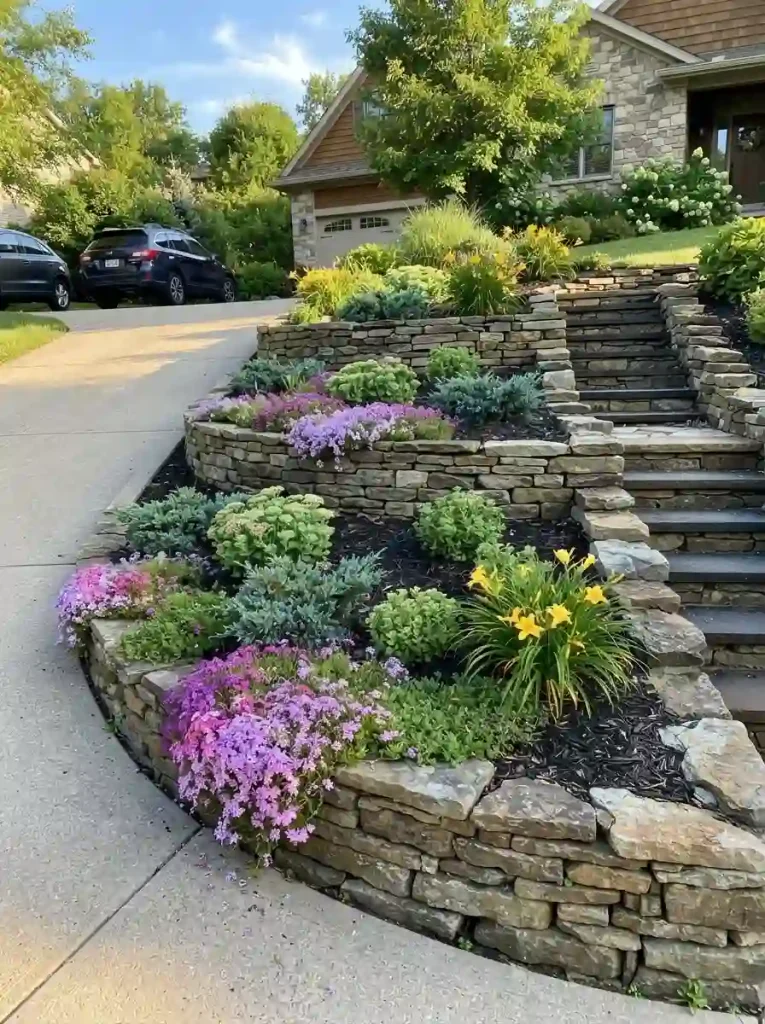
A steep bank beside the driveway can look messy and wash out in heavy rain. Break it into two or three low retaining tiers using stacked stone or timber. Fill each level with creeping phlox, dwarf juniper, sedum, and daylilies to hold the soil and add color.
The steps between levels also make the slope easier to maintain.
Pro Tip:
Walls over about 3 to 4 feet usually need engineering or a permit, so check local rules before you build.
10. Create a cottage corner where the driveway bends
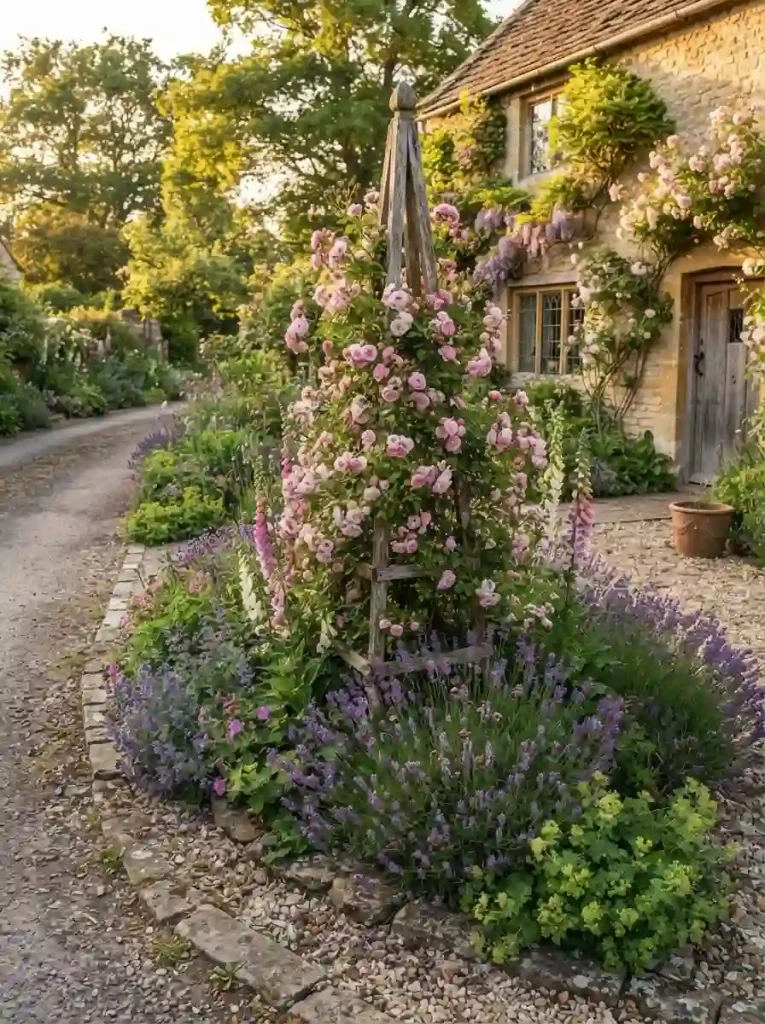
A bend in the driveway is the perfect spot for a little romance. Set a rustic wooden obelisk in the bed and train a pink climbing rose up it. Surround the base with lavender, foxglove, and catmint, and let them spill gently toward the pavement edge.
The slightly wild look softens hard lines and gives visitors something lovely to notice as they arrive.
Pro Tip:
Choose a repeat-blooming rose, and deadhead the spent flowers to keep the color coming into fall.
11. Plant fragrant shrubs where you step out of the car
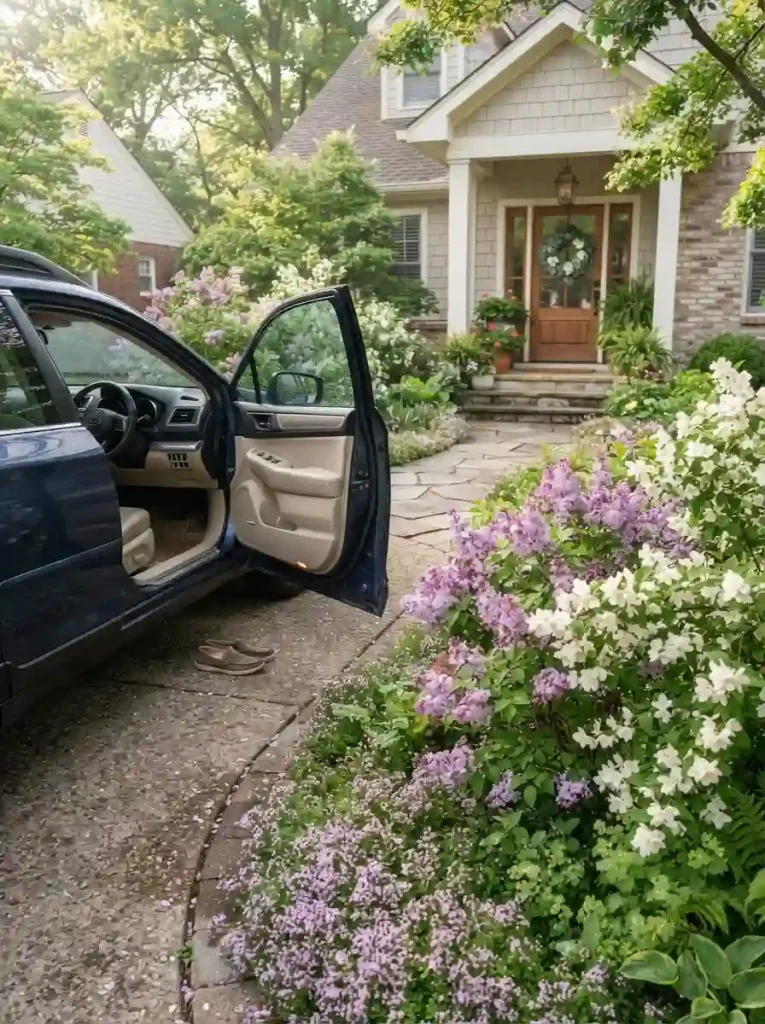
Think about the spot where your feet land when you open the car door. Put fragrant shrubs there, such as dwarf lilac, mock orange, or gardenia in warm climates. Every arrival then comes with a little burst of scent.
Keep the plants a couple of feet back from the pavement so doors can swing open freely. Underplant with low thyme or creeping rosemary for a second layer of aroma.
Pro Tip:
Choose varieties that bloom in different months so something is always fragrant from spring through fall.
12. Add an arched arbor where the walkway meets the driveway
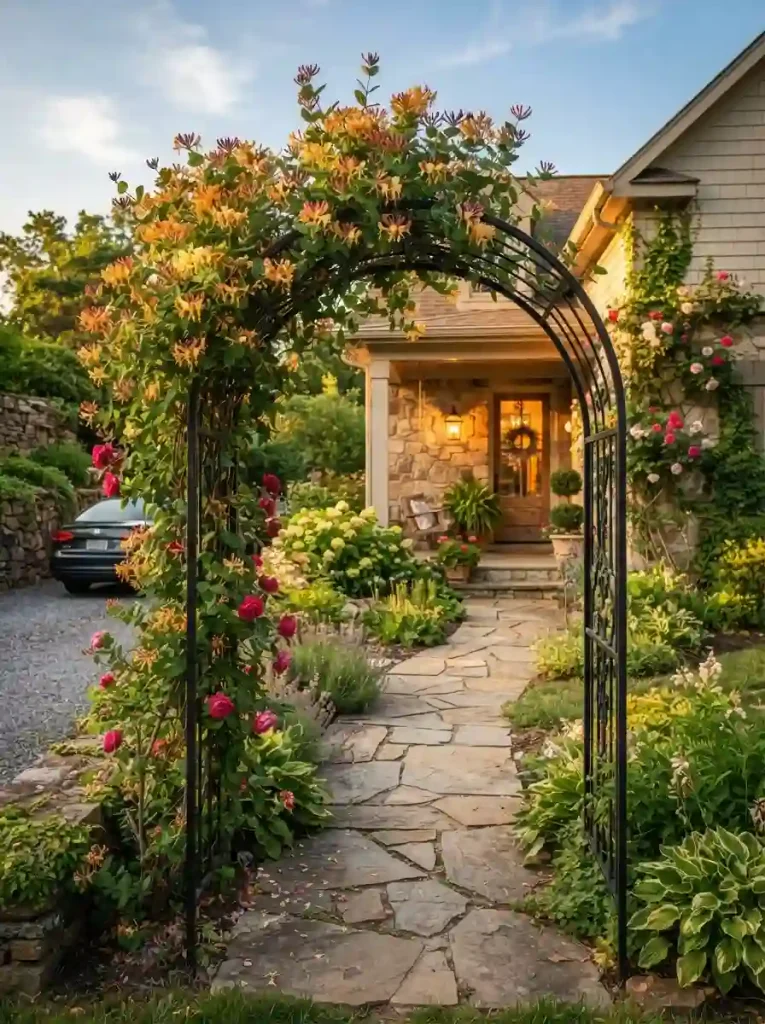
The point where your driveway hands off to the front walk is a natural spot for a small arbor. A simple arch in cedar or black metal tells guests exactly where to go. Train a climbing rose or honeysuckle over the top, and the spot becomes a real focal point.
It also adds height to a flat front yard without taking up much ground.
Pro Tip:
Set the posts in concrete at least 18 inches deep, since a vine-covered arch catches a lot of wind.
13. Build a low-water succulent and agave bed
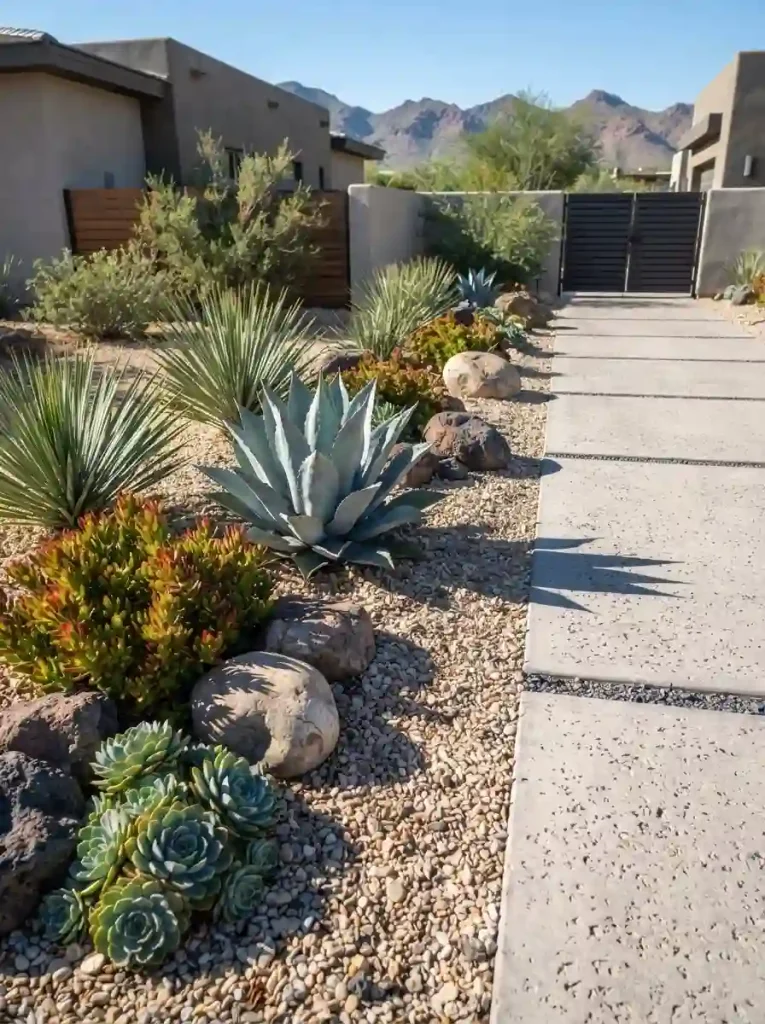
If you live somewhere hot and dry, or you just hate watering, a gravel bed of agave, yucca, and sedum makes a bold statement. The sculptural shapes look striking against smooth pavement. Mix in a few red or blue-toned plants for contrast.
Mulch with fine gravel, which keeps the roots dry and the bed tidy. After the first season, these beds mostly look after themselves.
Pro Tip:
Mound the soil slightly and mix in coarse sand so water drains quickly. Soggy roots are the main thing that kills these plants.
14. Fill the foundation with a wave of hydrangeas
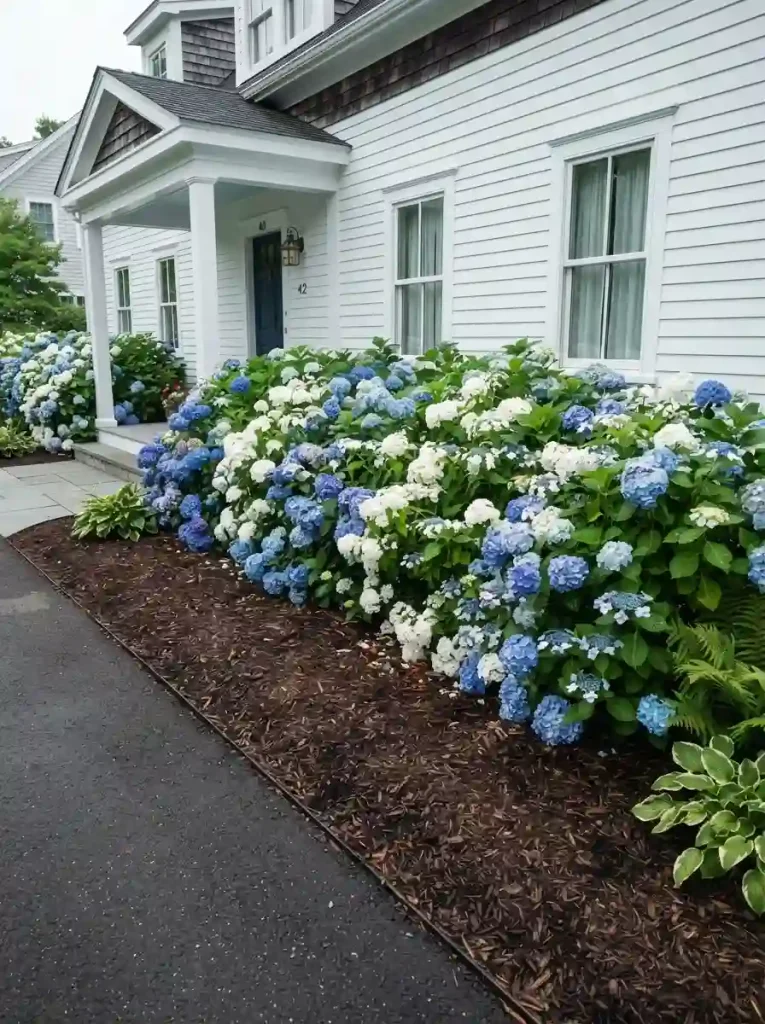
The bed along the front of your house is what you see most clearly as you pull in. Plant a generous drift of hydrangeas there, using three or five of the same variety rather than a mix. Repetition looks calm and designed.
Panicle hydrangeas handle sun and cold well, while bigleaf types prefer morning sun and afternoon shade. Either way, the big blooms read clearly from the driveway.
Pro Tip:
Leave 3 to 4 feet between plants. They look small at first but fill in faster than you’d expect.
15. Grow a berry hedgerow for birds
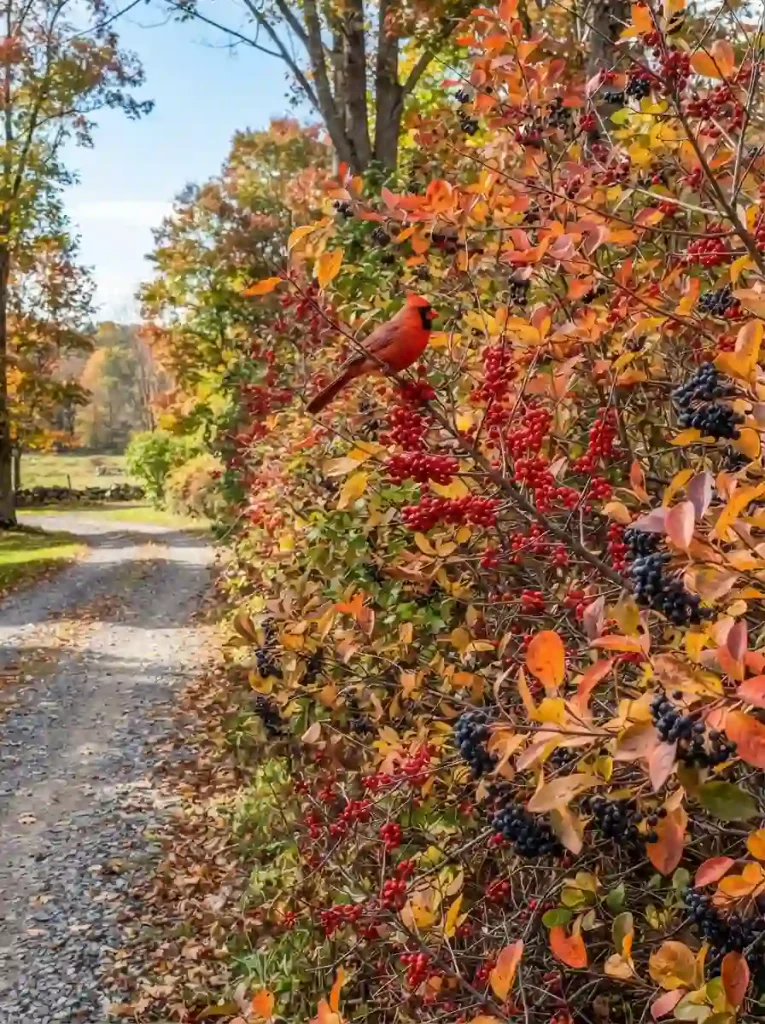
Instead of a clipped hedge, plant a loose row of shrubs that feed wildlife, like serviceberry, viburnum, and winterberry holly. You get spring flowers, summer fruit, and fall color, plus a steady stream of songbirds.
Because the shape is relaxed, it needs far less trimming than a formal hedge. It’s a good fit for the long edge of a driveway where a wall of plants would feel heavy.
Pro Tip:
Winterberry holly needs both a male and a female plant nearby to produce berries, so plant them as a pair.
16. Uplight a specimen tree for evening drama
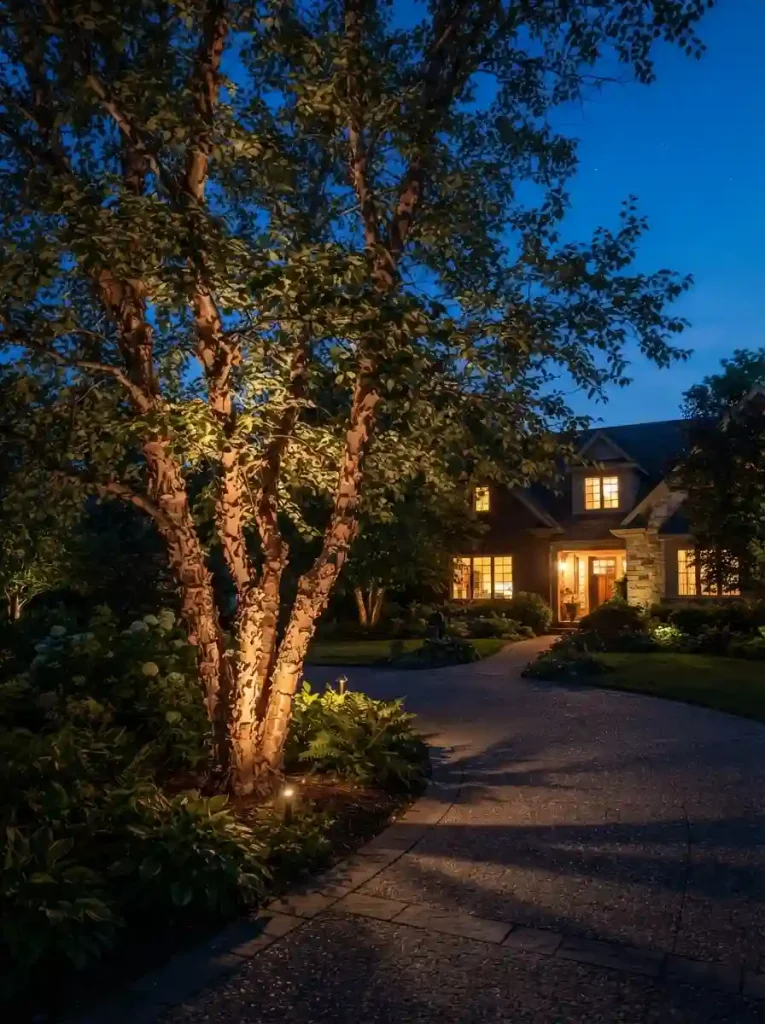
One well-lit tree can change how your whole property feels after dark. Choose a tree with good bark or a graceful shape, like a river birch or Japanese maple. Then hide a small uplight at its base, angled up into the branches.
The glow draws the eye toward your home and makes the driveway feel safer and more inviting at night.
Pro Tip:
Use warm white bulbs and aim the light up through the canopy, not straight at the trunk, for a soft look instead of a harsh glare.
17. Carve out a cutting garden along the driveway side
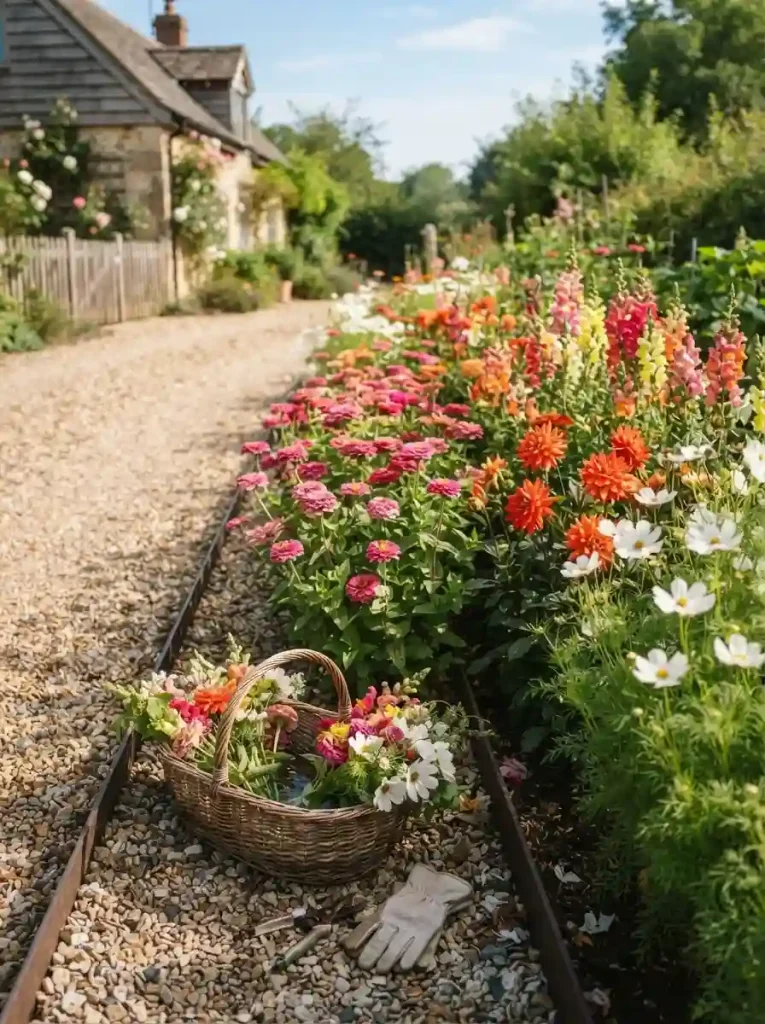
A sunny strip beside the driveway is a great place for flowers you actually plan to pick. Zinnias, dahlias, snapdragons, and cosmos bloom for months and look cheerful from the street. Plant them in tidy rows or blocks so the bed still looks planned.
Cutting the flowers encourages more blooms, so the bed stays full while you fill vases for the house.
Pro Tip:
Stake or net taller varieties early. Strong summer storms can flatten them overnight.
18. Mark the entrance with lantern-topped pillars
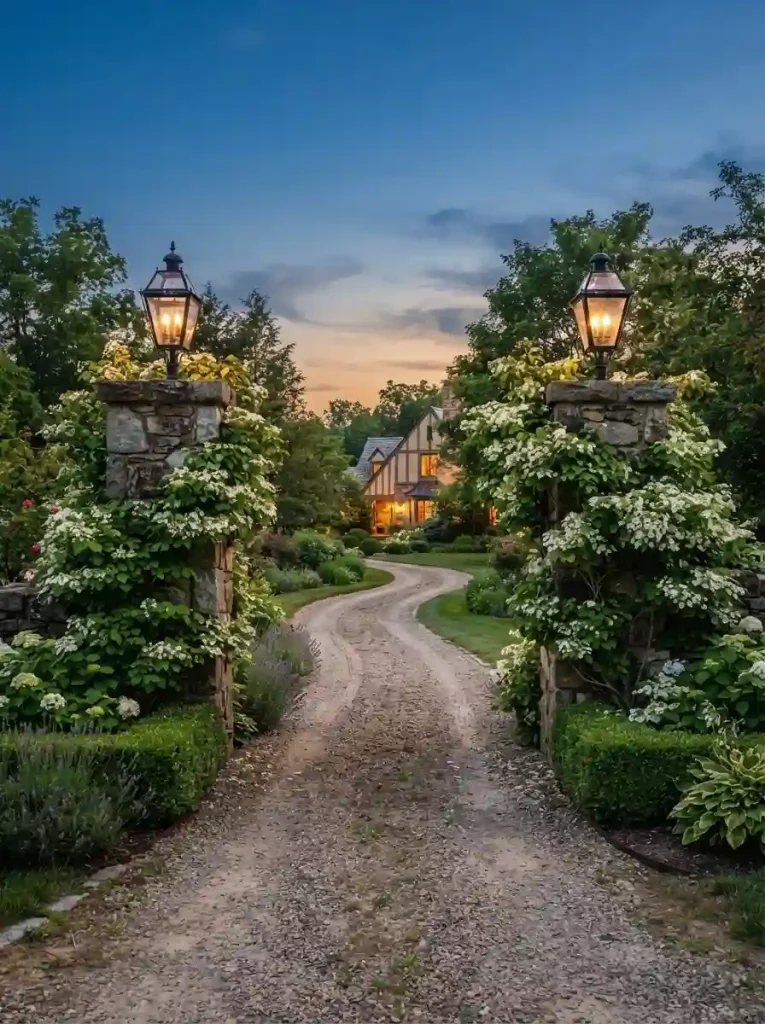
If your driveway has a clear entrance, a pair of stone or brick pillars gives it real presence. Top each one with a small lantern, and let climbing hydrangea soften the sides. Add low shrubs at the base to tie them into the rest of the yard.
Even a modest pair of pillars makes the drive feel like a proper arrival.
Pro Tip:
Match the pillar material to your home’s brick or stone so they look like part of the original design.
19. Create a raked-gravel corner with a calm, Japanese-inspired feel
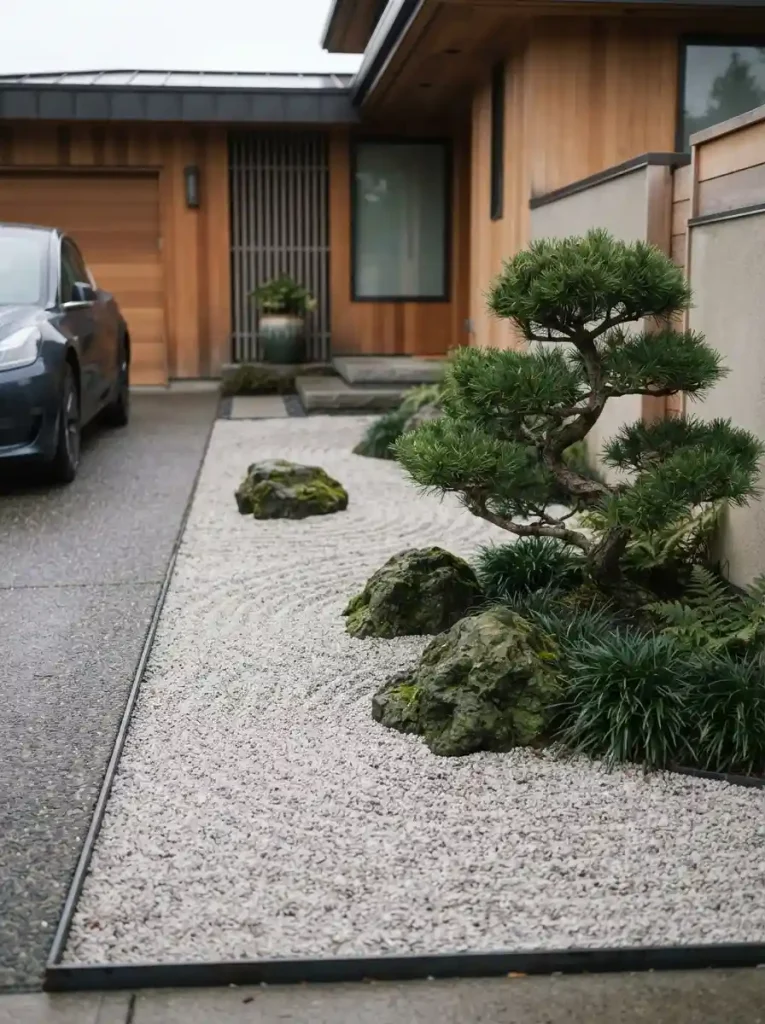
Not every driveway garden needs to be full of flowers. A small bed of raked gravel with three or four carefully placed rocks and a single dwarf pine feels peaceful and modern. Add a clump of mondo grass or moss near the stones for softness.
This style is almost maintenance-free, and it looks great next to clean-lined homes.
Pro Tip:
Odd numbers of rocks look more natural, and a metal or stone edge keeps the gravel from drifting onto the driveway.
20. Rotate seasonal color in one showcase bed
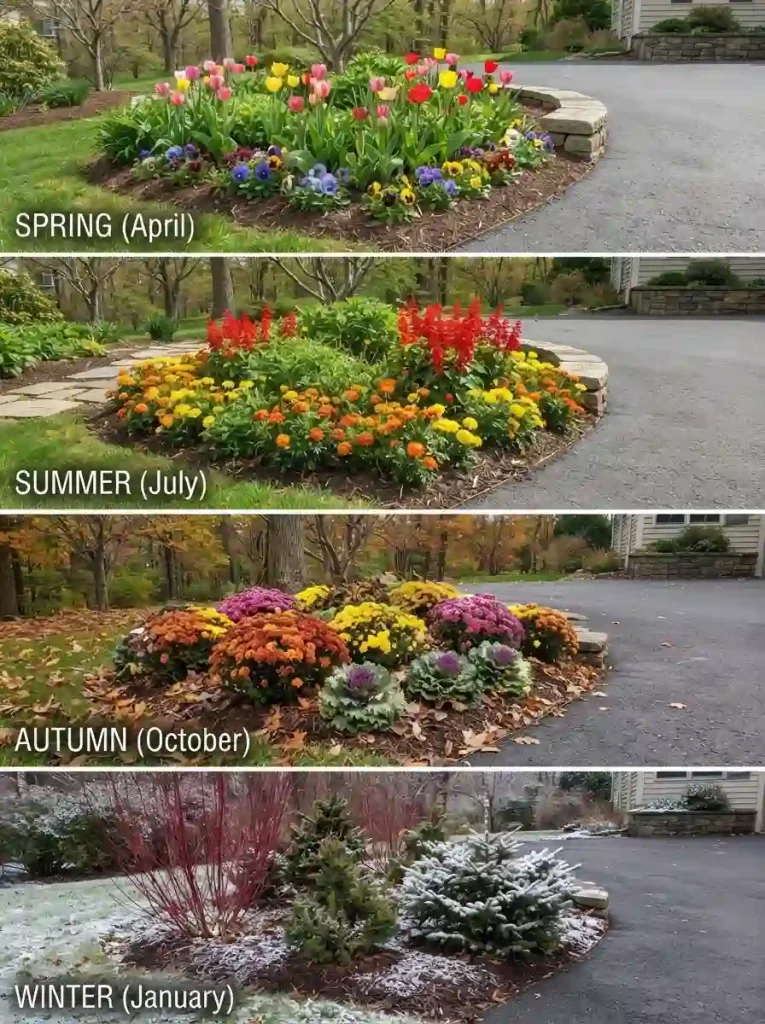
If you love a fresh look, dedicate one bed near the driveway to rotating color. Plant tulips and pansies in spring, then swap in marigolds and salvia for summer, and mums with ornamental kale for fall. In winter, add evergreen boughs and red-twig dogwood stems.
Because it’s one small bed, the work stays manageable, and the yard always feels current.
Pro Tip:
Plant spring bulbs in fall, then tuck summer annuals over them once the bulb foliage fades, so the bed never sits empty.
21. Frame your house number with plants
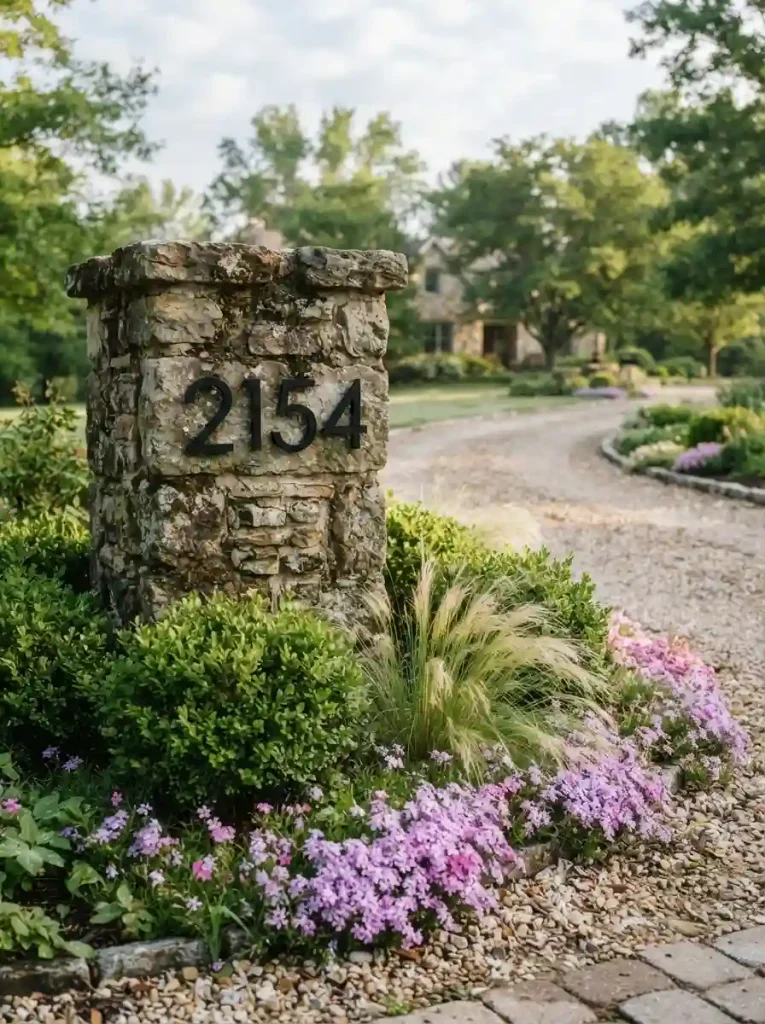
Finish the project with a detail guests and delivery drivers will actually notice. Mount a good-looking house number on a stone post, a painted board, or a boulder near the driveway entrance. Then plant a small, tidy cluster around it, such as dwarf boxwood, creeping phlox, and ornamental grass.
It’s practical, it adds personality, and it’s one of the cheapest upgrades on this list.
Pro Tip:
Choose numbers with strong contrast against the background, and keep the plants low so the digits stay readable from the street.
Final Thoughts
You don’t have to do everything on this list. Start with one change that solves a real problem, like drainage, privacy, or a bare wall, and add a pretty detail or two. Small steps build up fast, and your driveway can go from forgettable to the part of your yard people notice first.