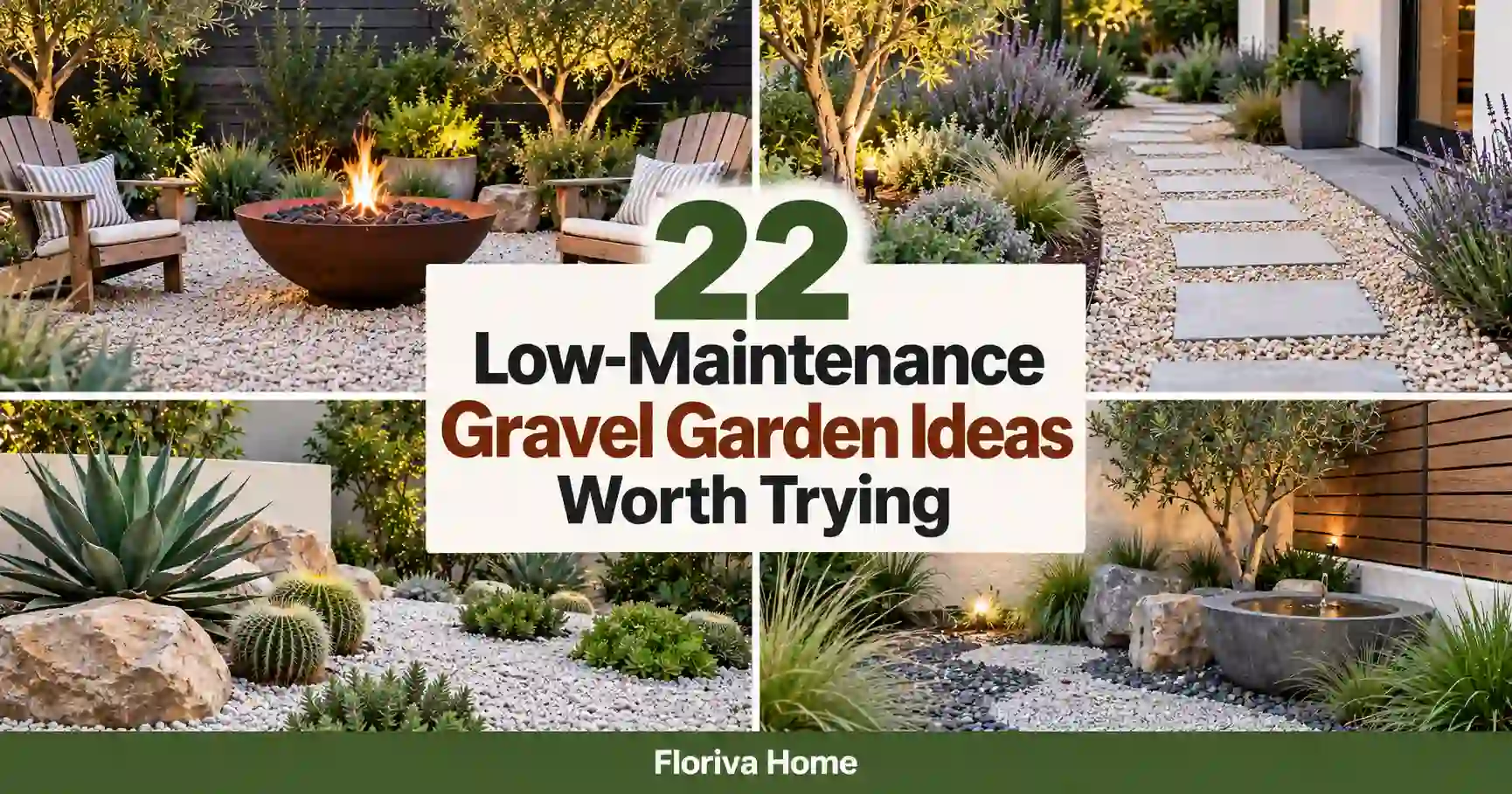
22 Low-Maintenance Gravel Garden Ideas Worth Trying
Want a beautiful garden without spending every weekend pulling weeds, mowing grass, or constantly watering plants? Gravel can make that possible. It creates a clean foundation while giving drought-tolerant plants, architectural greenery, and simple garden features room to stand out. From tiny courtyard corners to spacious front yards, these low-maintenance gravel garden ideas can help you create an outdoor space that looks intentional without demanding endless upkeep. Whether you prefer a modern, rustic, Mediterranean, or natural style, there’s an idea here worth trying.
1. Gravel Garden With Sculptural Succulents
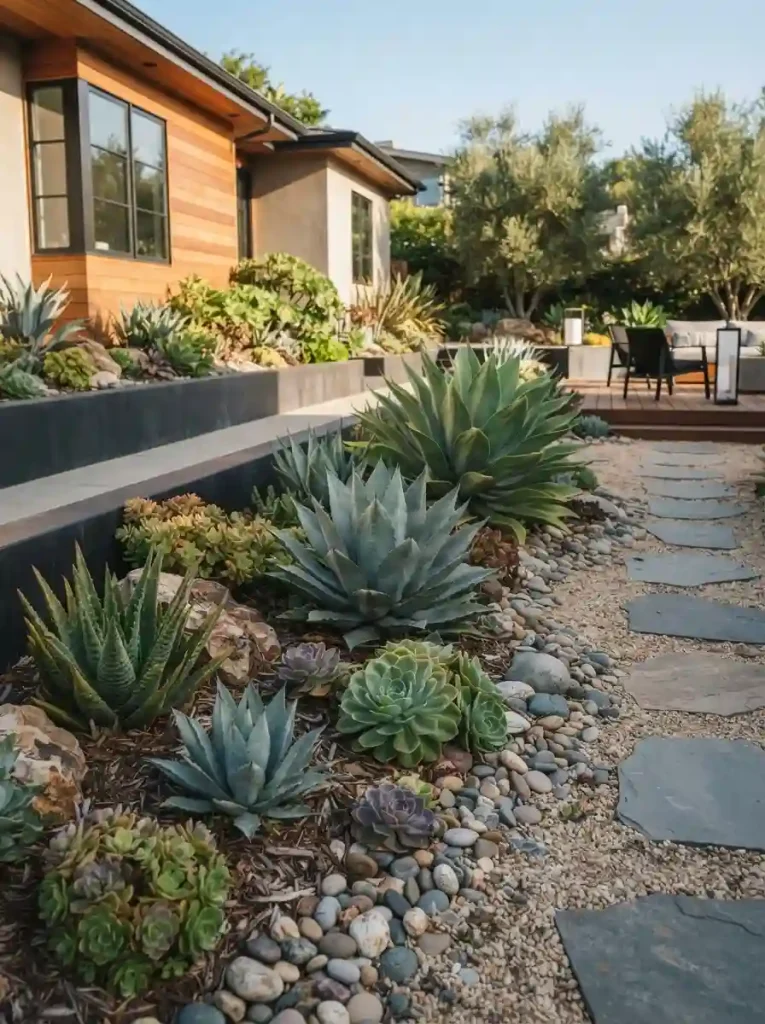
Succulents and gravel are a natural combination for an easy-care garden. The stones provide a tidy ground cover while sculptural plants such as agave, echeveria, aloe, and sedum create strong shapes and interesting textures.
Try grouping plants in clusters instead of spreading them evenly across the entire space. A few larger specimens can act as focal points, while smaller succulents fill the gaps around them.
Choose gravel in a shade that contrasts gently with the plants. Pale stone can make blue-green foliage stand out, while darker gravel creates a more dramatic contemporary appearance.
2. Curved Gravel Garden Path
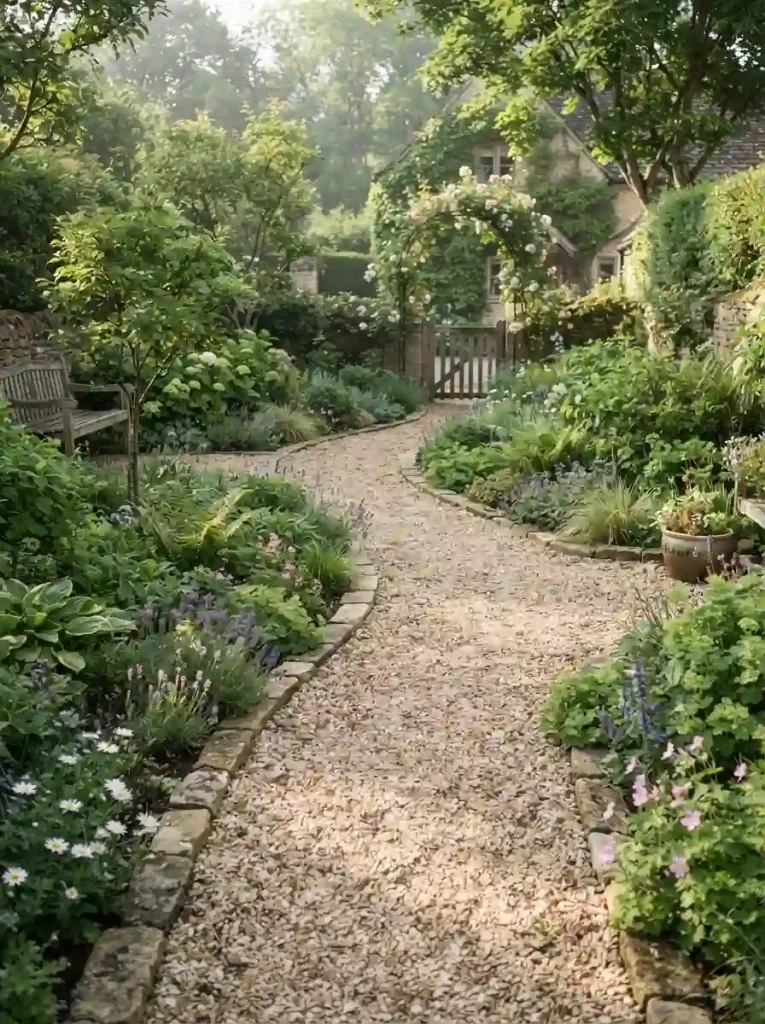
A curved gravel path can make even a small garden feel more interesting. Instead of creating a straight route from one point to another, gentle bends encourage the eye to explore the space.
Use edging along both sides to keep the gravel contained and maintain a crisp outline. Steel, brick, stone, or weather-resistant timber can all work depending on your garden style.
For extra character, plant low-growing ground covers beside the path. Their softer shapes will contrast beautifully with the loose texture of the gravel.
3. Gravel Courtyard With Potted Plants
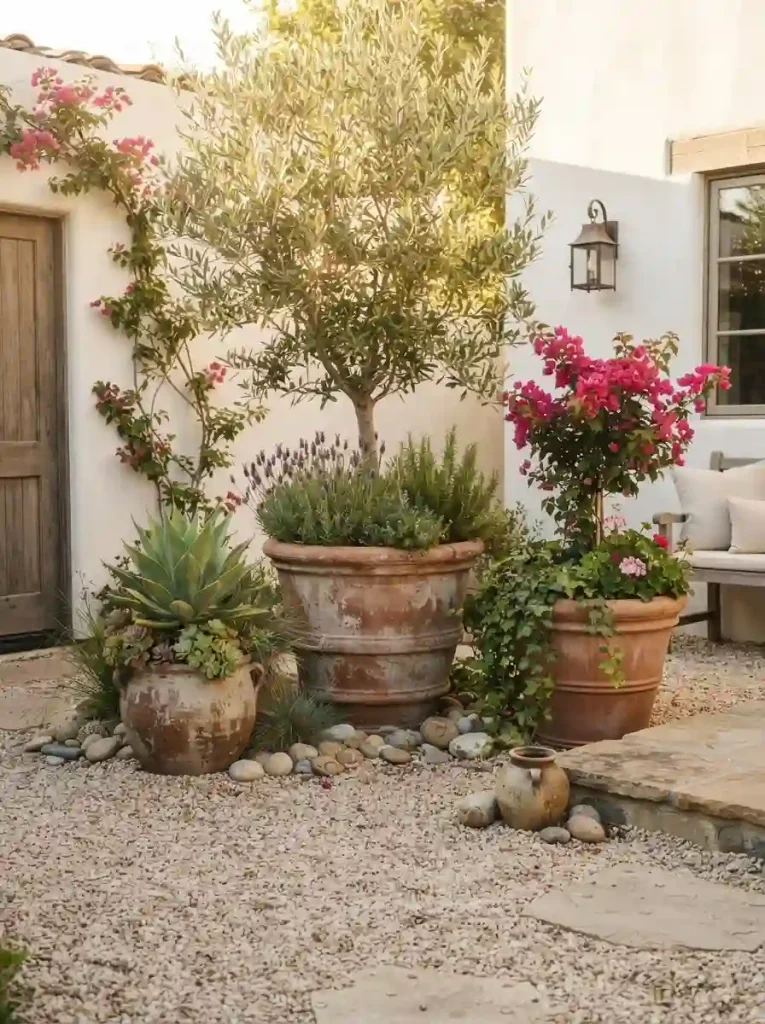
If you have a small courtyard, gravel can create a simple surface that makes the space feel larger and easier to maintain. Add a few carefully selected containers rather than filling every corner with plants.
Large ceramic pots, terracotta containers, or concrete planters can become decorative focal points. Choose plants with different heights to create visual layers without creating a cluttered appearance.
This approach is especially useful when your existing soil is poor or when you want the flexibility to rearrange your garden throughout the year.
4. Gravel Garden With Ornamental Grasses
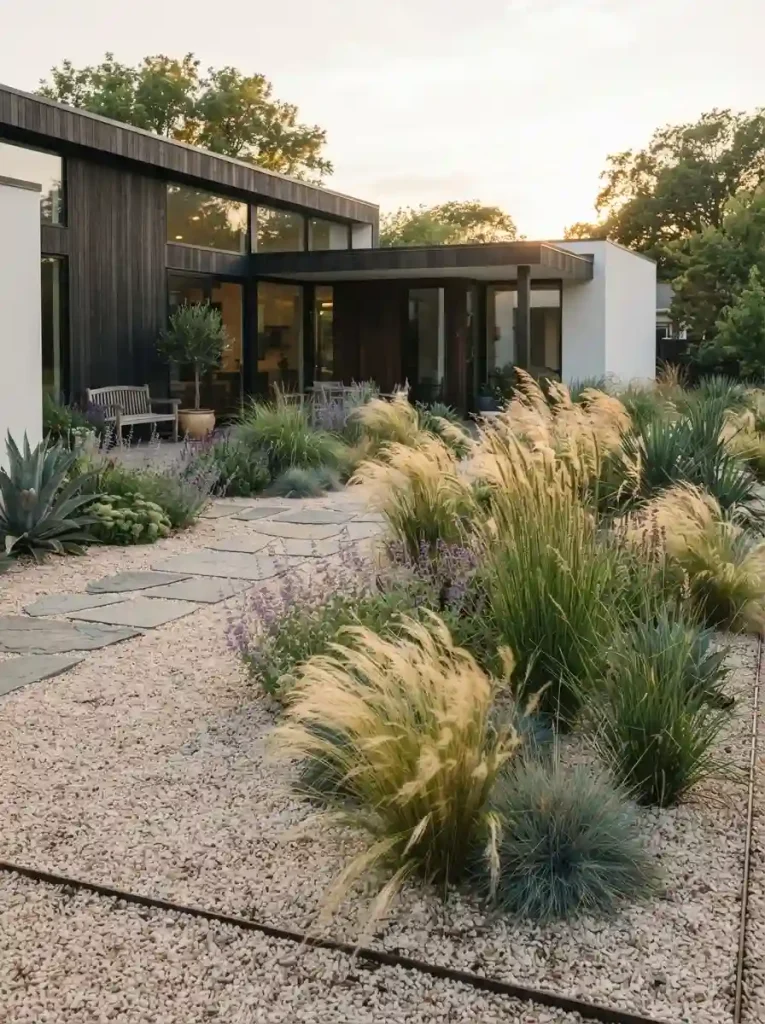
Ornamental grasses bring movement to a gravel garden without requiring the constant attention associated with traditional flower beds. Their fine leaves sway naturally in the breeze and add height without making the space feel heavy.
Plant several varieties together in loose groups for a more natural appearance. Leave enough space between clumps so the gravel remains visible and becomes part of the overall design.
This idea works particularly well around contemporary homes because the soft grasses balance hard architectural lines.
5. Gravel Garden Around a Small Tree
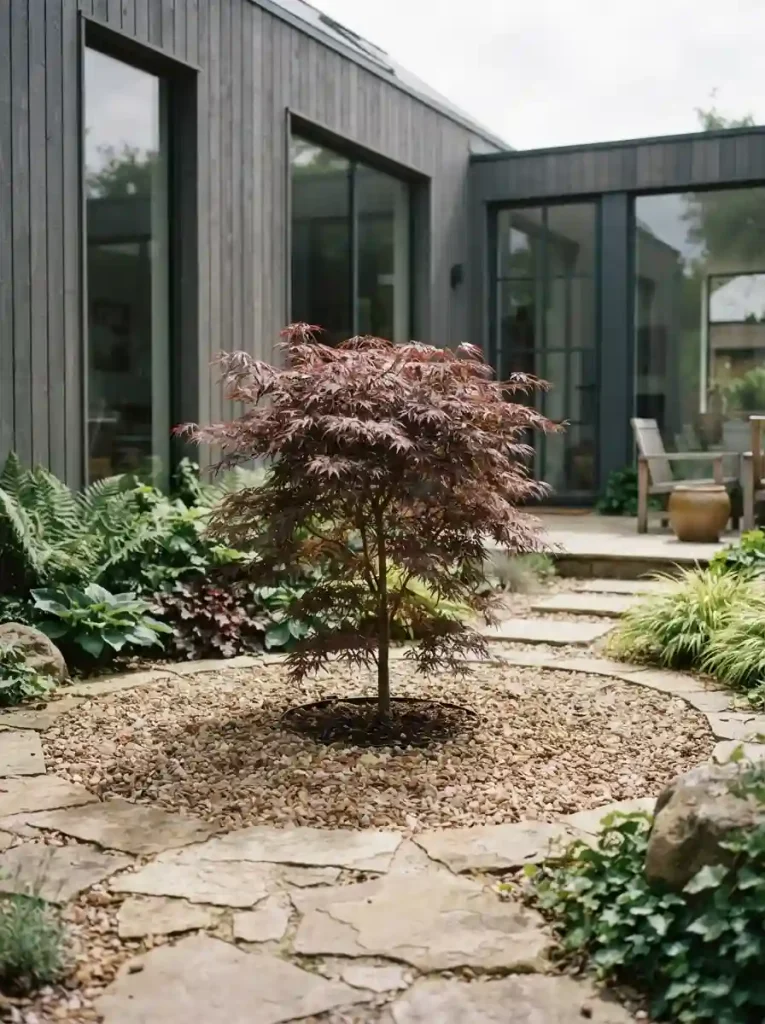
A mature or newly planted tree can become the centerpiece of a gravel garden. Instead of surrounding its trunk with a large lawn area, use gravel to create a clean, defined planting zone.
Leave an appropriate open area around the trunk and avoid piling gravel directly against the bark. Add a few shade-tolerant plants around the outer edge if the tree creates enough filtered light.
The result is simple, structured, and especially useful for gardens where mowing around trees is inconvenient.
6. Mediterranean-Style Gravel Garden
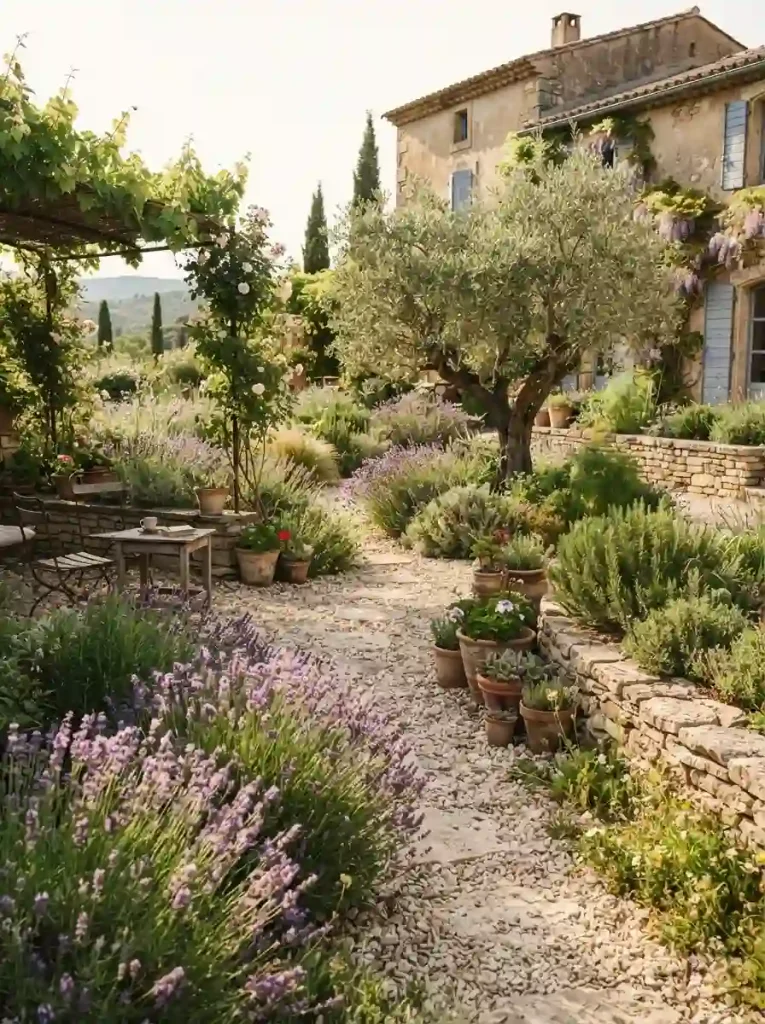
For a warm, relaxed atmosphere, combine gravel with plants commonly associated with Mediterranean landscapes. Lavender, rosemary, thyme, olive trees, and other drought-tolerant choices can create a sun-loving garden with plenty of character.
Use several shades of stone to keep the ground visually interesting without introducing too many decorative elements. Terracotta pots can add warmth while wooden or stone accents help complete the look.
This style is especially attractive when the garden receives plenty of sunlight and has well-draining soil.
7. Black Gravel With Green Foliage
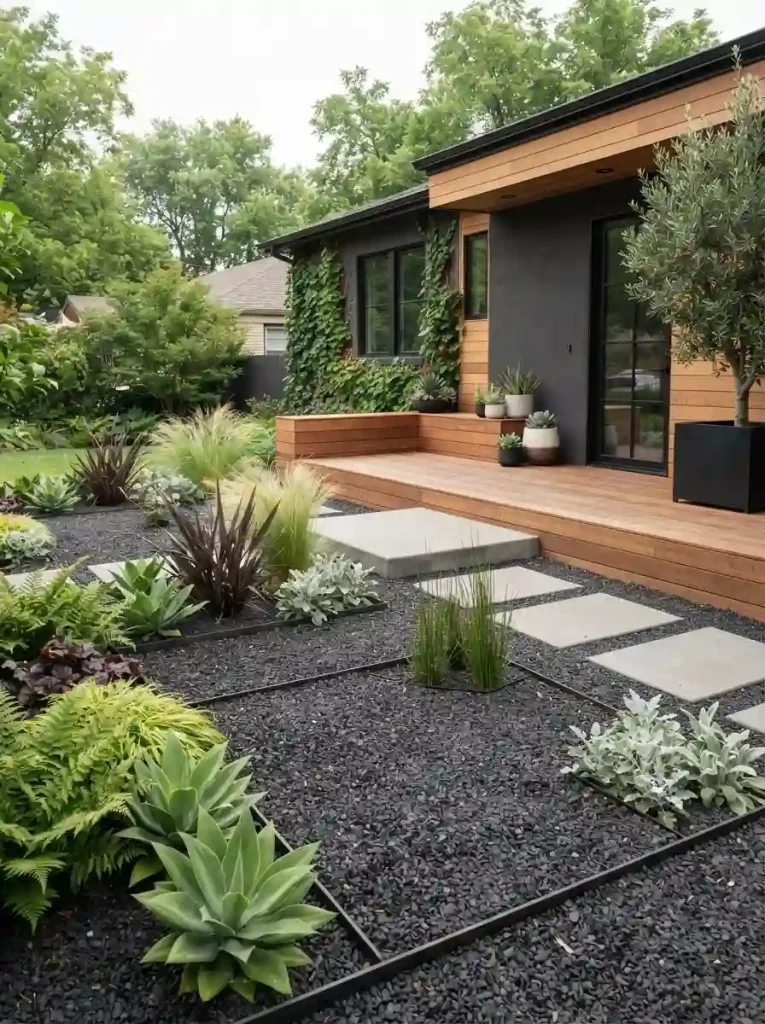
Dark gravel can create a striking background for plants with bright green or silvery foliage. The strong contrast gives the garden a modern appearance while keeping the planting scheme relatively simple.
Try combining broad-leaf plants with finer textures so the space does not look visually flat. A few architectural plants can provide height while lower greenery fills the surrounding areas.
Keep the color palette restrained for the cleanest effect. Green, silver, charcoal, and natural wood work particularly well together.
8. Gravel Garden With Stepping Stones
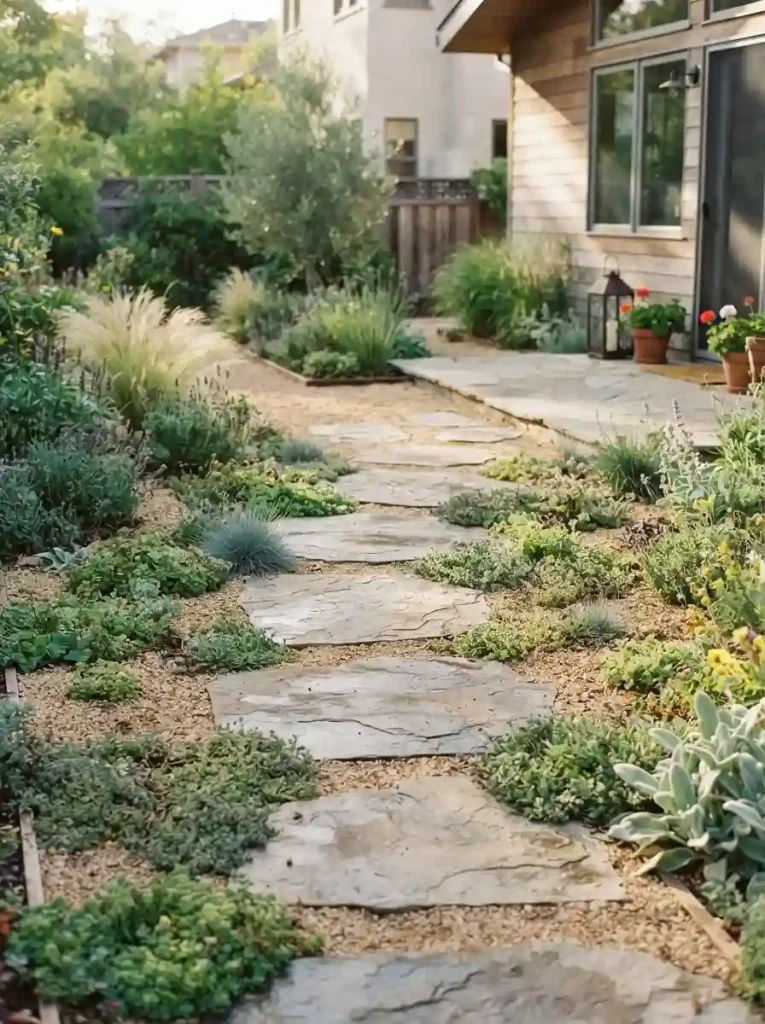
Stepping stones can transform a basic gravel surface into a practical garden walkway. Arrange large flat stones with comfortable spacing so the route feels natural and easy to follow.
The stones do not have to form a perfectly straight line. Slightly irregular positioning can make the garden look more relaxed and organic.
Surround the path with compact plants that stay low enough to preserve visibility. This keeps the walkway functional while allowing the gravel to remain the dominant ground-cover material.
9. Gravel Garden With Raised Planters
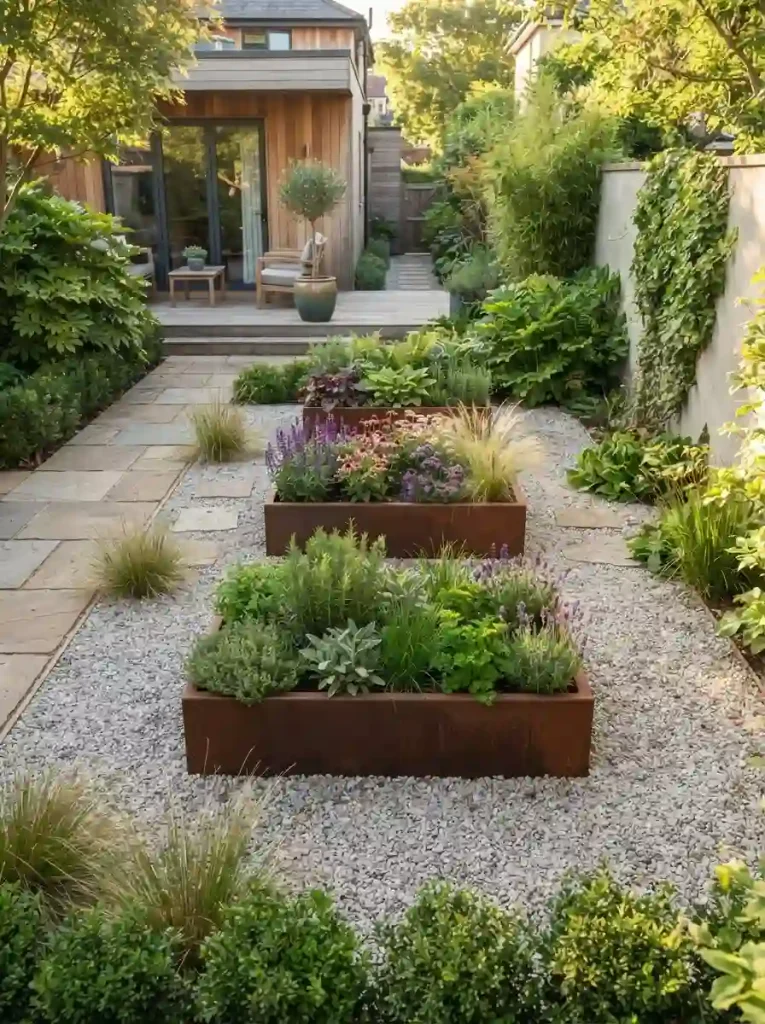
Raised planters are a practical way to introduce height and structure into a gravel garden. They can also make planting easier when the existing ground is difficult to work with.
Use simple rectangular or square planters for a modern garden, or choose weathered timber and stone for a more rustic appearance. Fill them with drought-tolerant flowers, herbs, or compact shrubs.
Keeping the surrounding ground covered with gravel means fewer exposed soil areas where weeds can easily take hold.
10. Desert-Inspired Gravel Garden
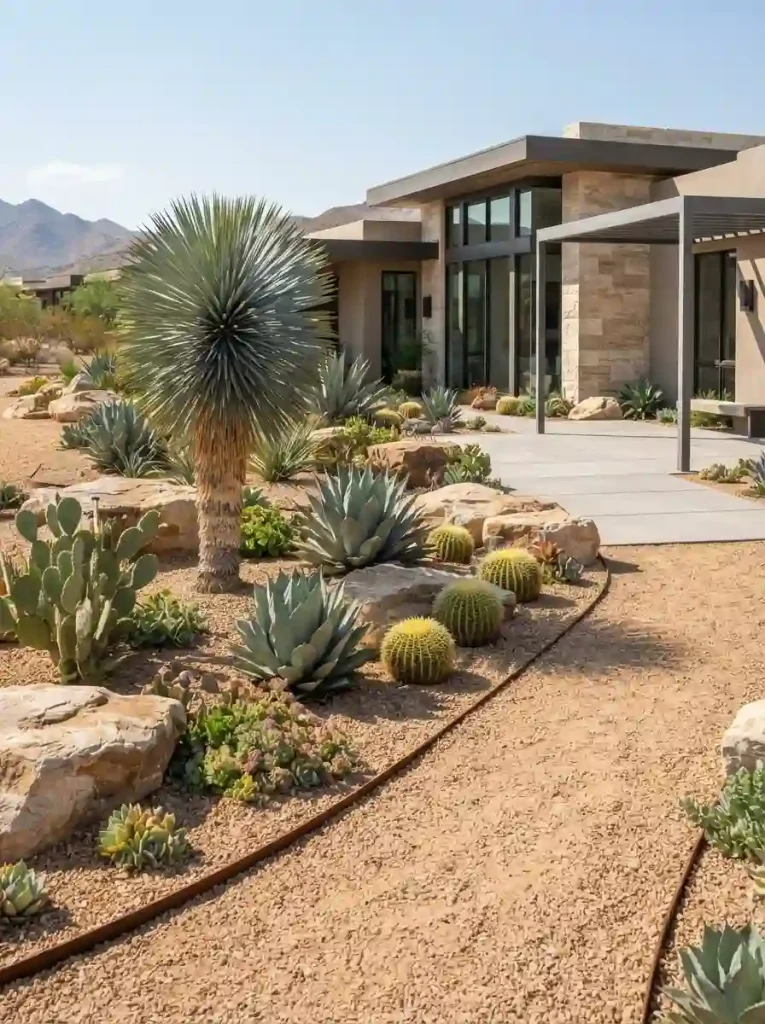
A desert-inspired garden can be both dramatic and remarkably simple to maintain when the plants are chosen carefully. Use gravel as the dominant surface and add drought-tolerant plants with distinctive shapes.
Cacti, yucca, agave, aloe, and hardy succulents can create a strong visual identity without requiring dense planting. Add a few larger rocks to break up the surface and create natural-looking focal points.
Choose plants according to your local climate rather than copying a desert palette blindly. Cold or wet regions may require different alternatives.
11. Small Gravel Garden Under a Bench
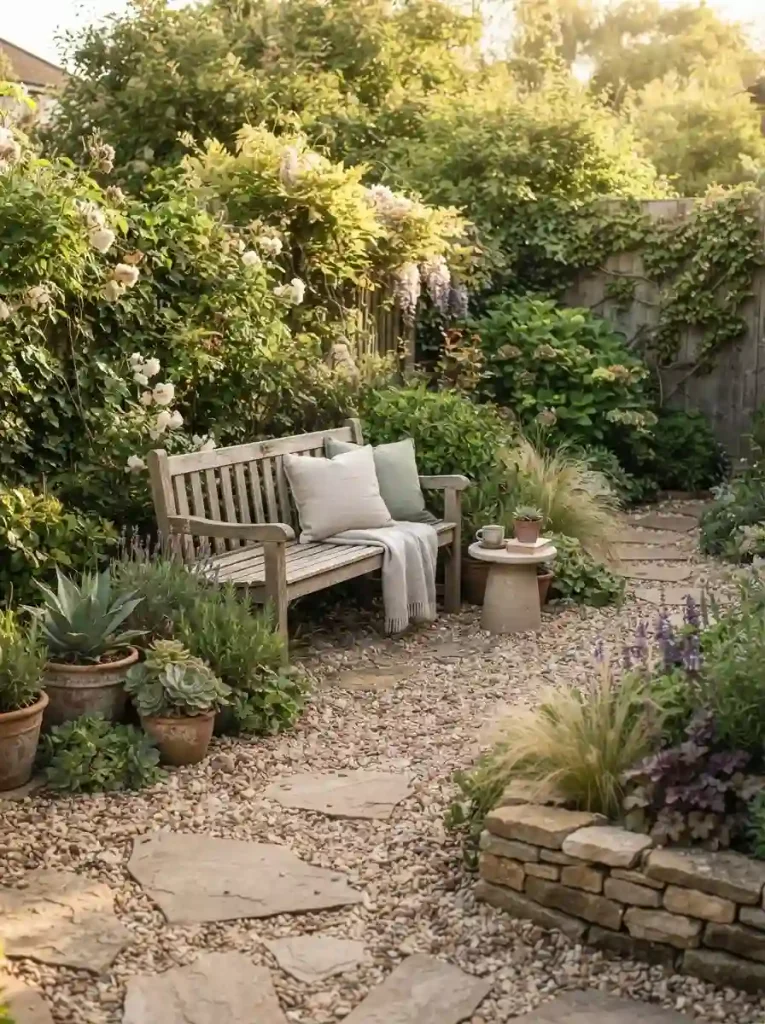
A gravel garden does not need to cover a large area to make an impact. A small seating corner beneath or beside a garden bench can become a peaceful retreat with very little maintenance.
Create a compact gravel pad beneath the bench and surround it with a few hardy plants. Keep the planting simple so the seating area remains comfortable and visually open.
A wooden, metal, or stone bench can work depending on the character of your home and garden.
12. Gravel Garden With Native Plants
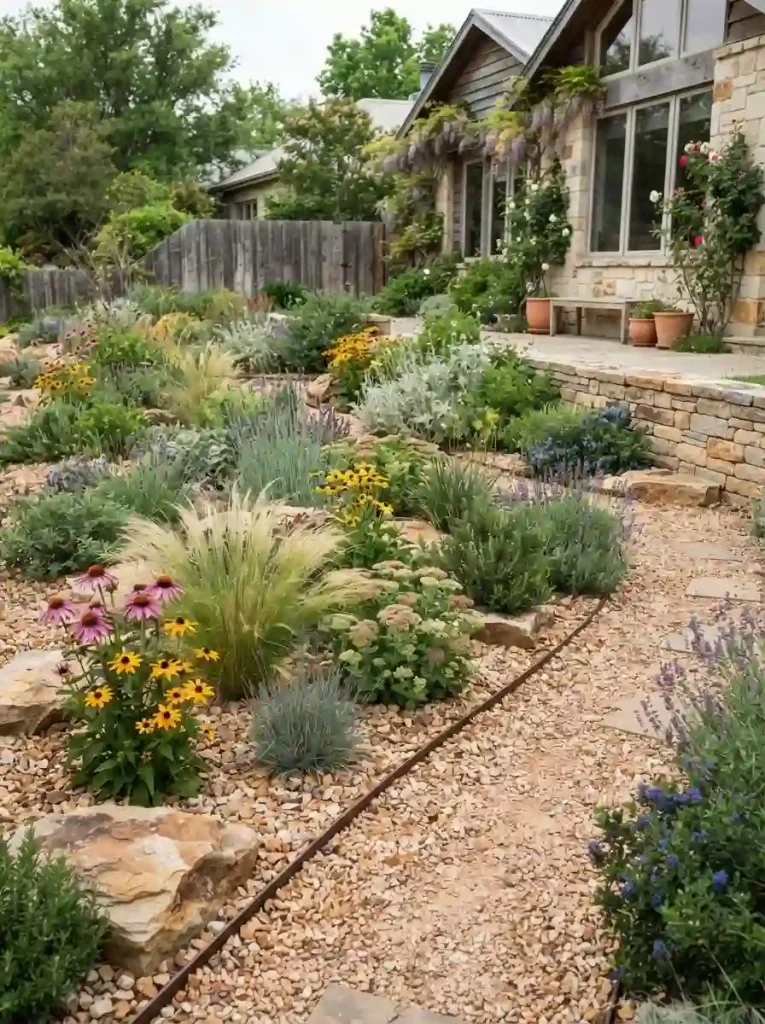
Using native plants is a practical way to reduce garden maintenance because these plants are generally better adapted to the local climate and growing conditions.
Create a gravel base and arrange native grasses, flowering perennials, or compact shrubs in natural-looking groups. Rather than trying to make everything perfectly symmetrical, allow different heights and textures to create a relaxed appearance.
Before planting, check which native species suit your region, soil, sunlight, and moisture conditions. The right plant choices can significantly reduce watering and ongoing care.
13. Gravel Garden With a Water Bowl
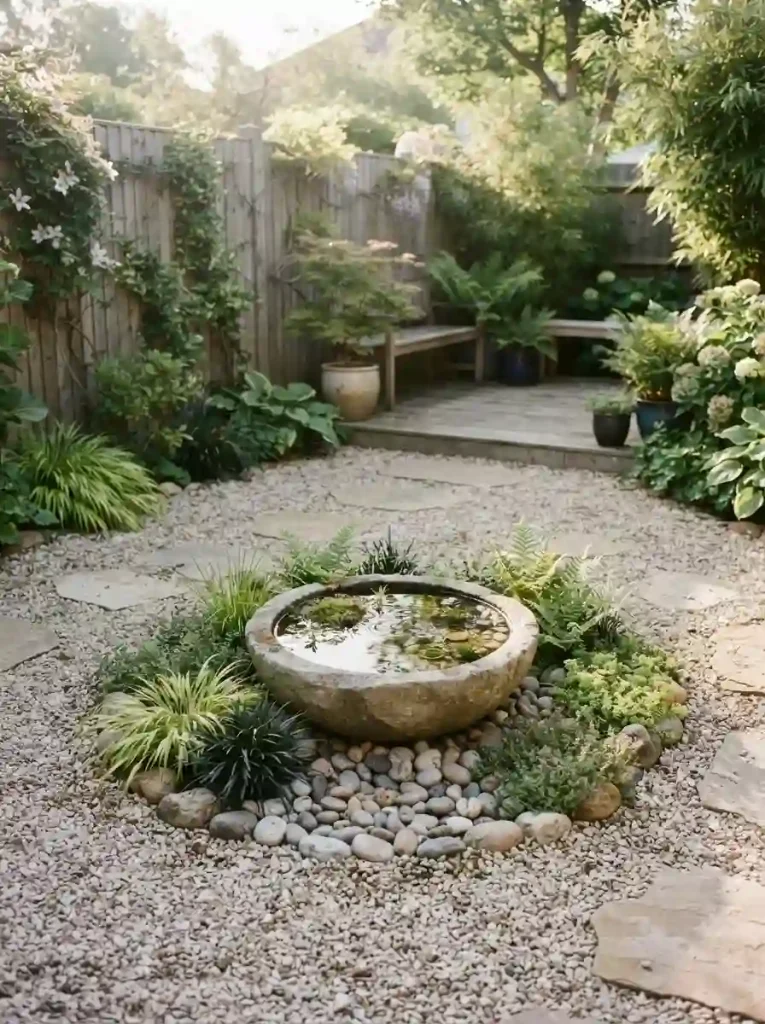
You do not need a large pond to introduce a water feature into a gravel garden. A shallow stone or ceramic water bowl can provide a small focal point without creating a complicated maintenance project.
Place the bowl among gravel and surround it with a few moisture-tolerant plants. Keep the design restrained so the water feature feels integrated rather than overly decorative.
A simple bowl can also attract birds and add movement to an otherwise quiet outdoor space.
14. White Gravel With Mediterranean Herbs
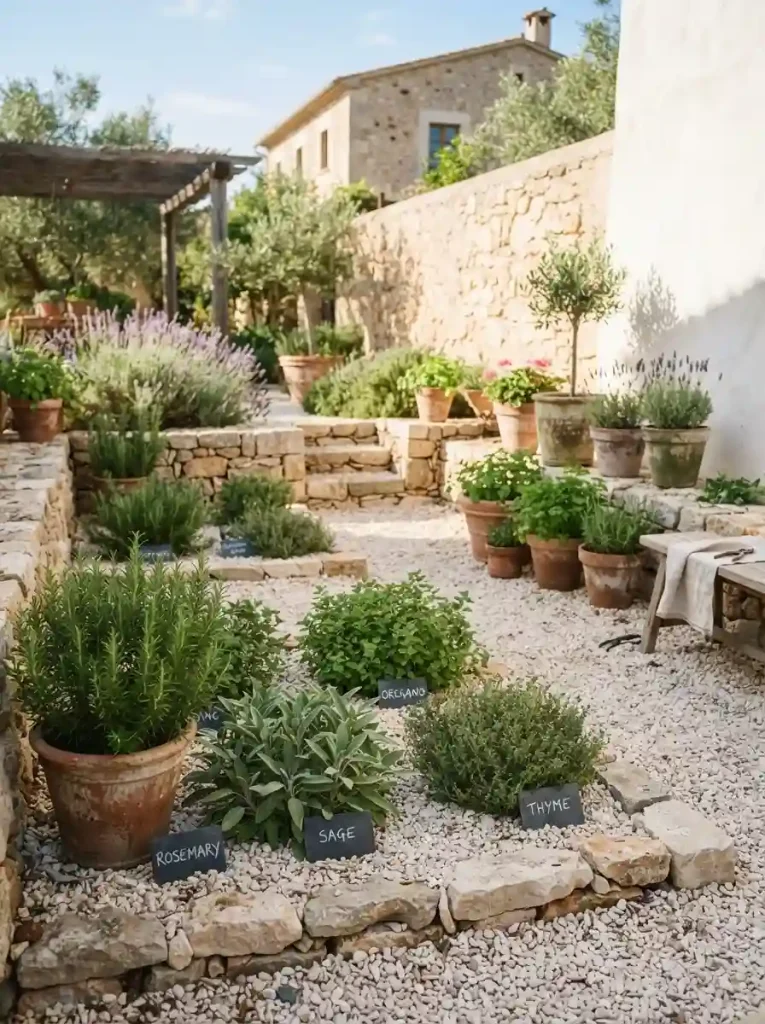
White or pale gravel can brighten a sunny garden and create a beautiful backdrop for culinary herbs. Rosemary, thyme, sage, and oregano can provide both visual interest and practical value.
Arrange herbs in separate clusters rather than mixing everything together. This makes individual plants easier to access and gives the garden a more organized appearance.
Add a few weathered pots or natural stone pieces to soften the bright gravel and create a warm Mediterranean feel.
15. Gravel Garden Along the Driveway
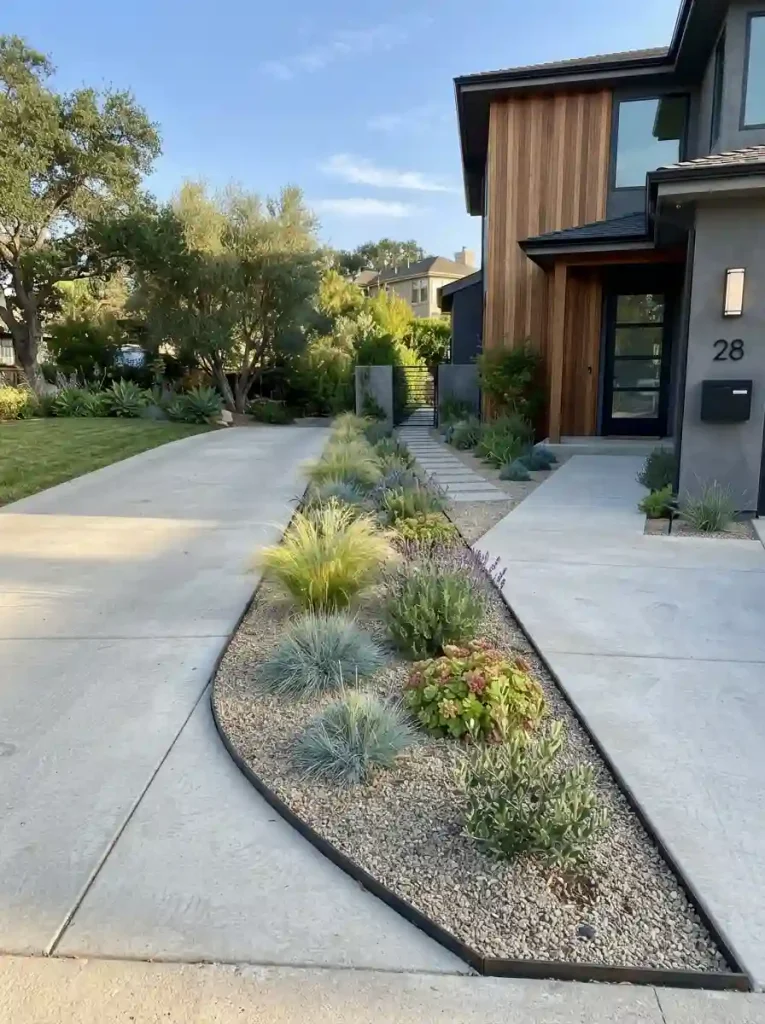
The narrow strip beside a driveway is often an overlooked landscaping opportunity. Gravel can turn this awkward space into a defined planting area while keeping maintenance relatively manageable.
Choose plants that tolerate reflected heat, compact soil, and occasional road exposure. Low ornamental grasses, hardy shrubs, and drought-tolerant perennials can work well when matched to the conditions.
Use a clear border between the driveway and garden to prevent gravel from gradually spreading onto the driving surface.
16. Gravel Garden With Large Decorative Rocks
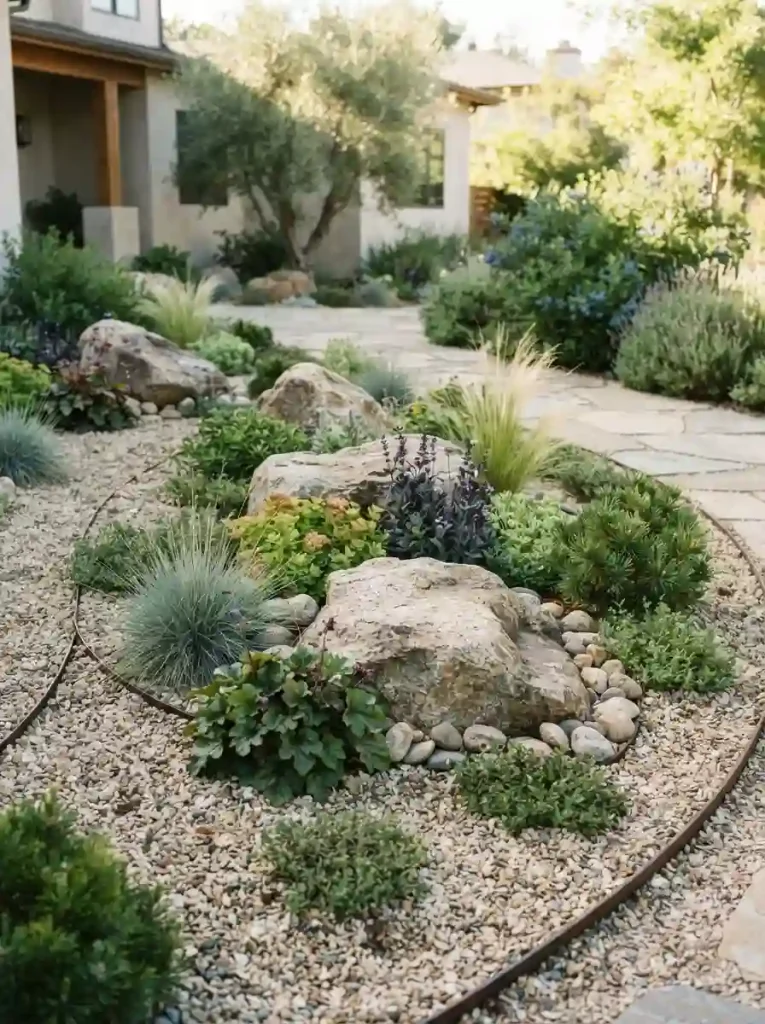
Large rocks can give a gravel garden a sense of permanence and natural structure. Instead of scattering them randomly, position a few substantial stones where they can anchor individual planting groups.
Partially burying larger rocks can make them appear more naturally integrated into the landscape. Combine them with low-growing plants and varied gravel sizes for additional texture.
This approach works particularly well when you want an interesting garden without relying heavily on flowers or decorative accessories.
17. Modern Gravel Garden With Concrete Edging
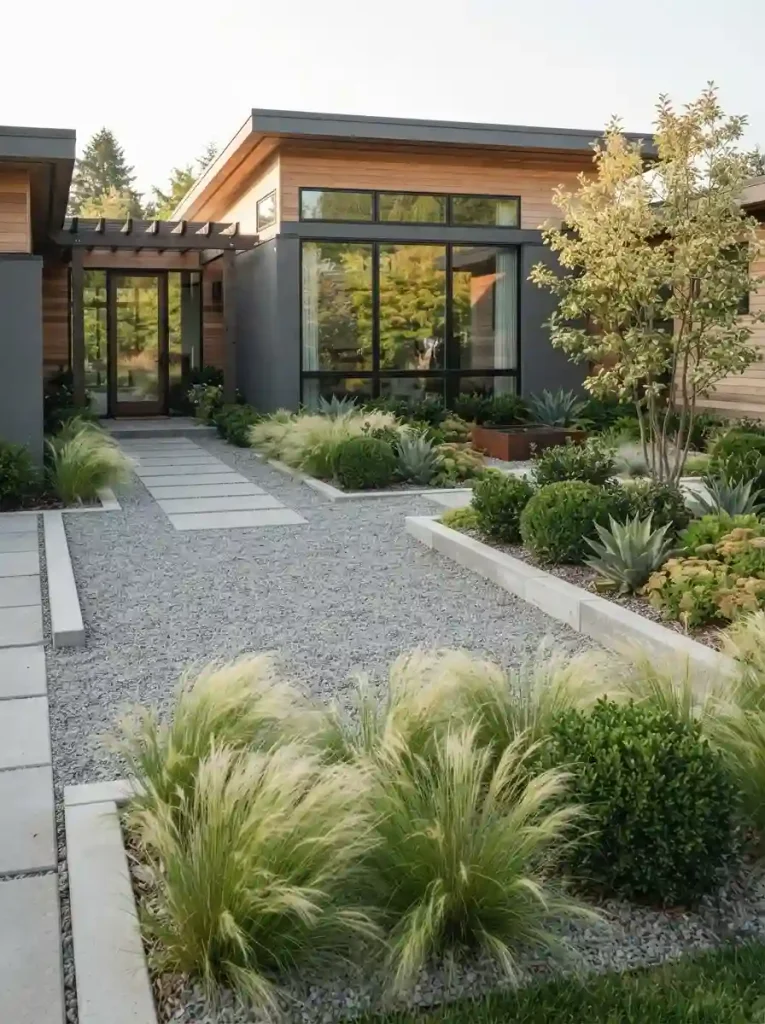
For a contemporary garden, combine gravel with clean concrete edging. The sharp boundary creates a strong visual contrast between the loose stone surface and architectural lines.
Keep the planting palette simple with a few carefully selected grasses, shrubs, or architectural plants. Repeating similar plants throughout the space can make a small garden feel more cohesive.
This style is especially effective around modern homes where simple geometric forms already dominate the architecture.
18. Gravel Garden With Lavender Borders
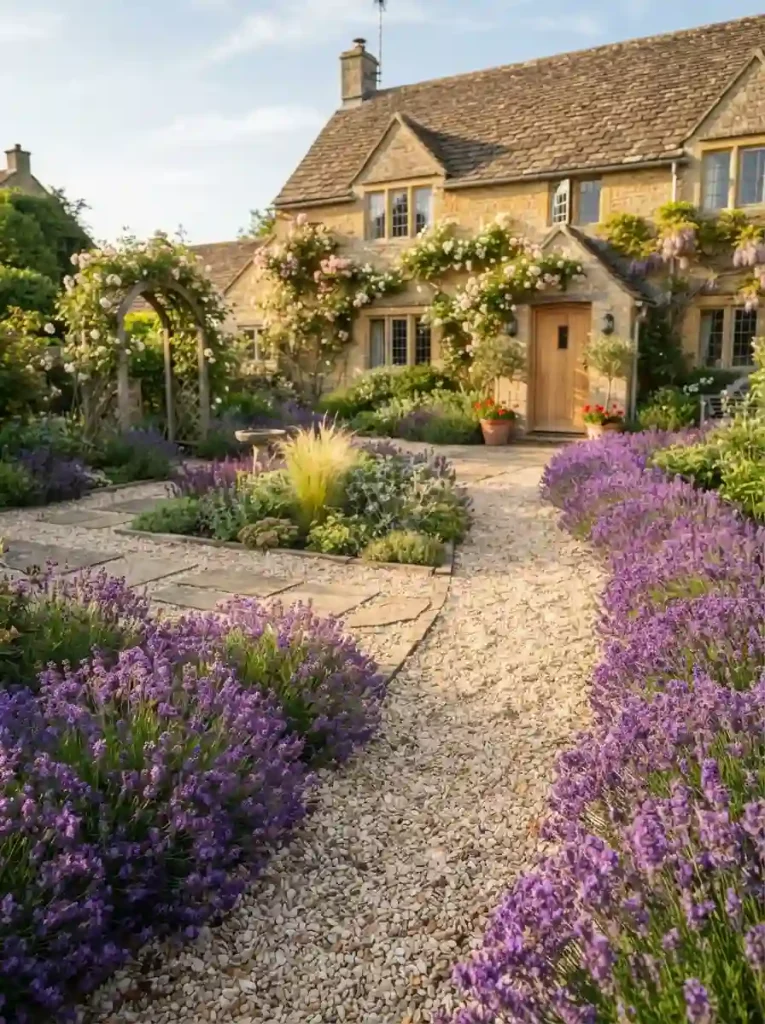
Lavender can add color, fragrance, and pollinator-friendly flowers without turning a garden into a high-maintenance flower bed. Planting lavender in a border creates a neat visual frame around the gravel area.
Give each plant enough room for mature growth and choose a sunny location with well-draining soil. Avoid overcrowding because good airflow helps keep the plants healthier.
Once established in suitable conditions, lavender can provide seasonal interest while maintaining a relatively simple care routine.
19. Gravel Garden Around a Mailbox
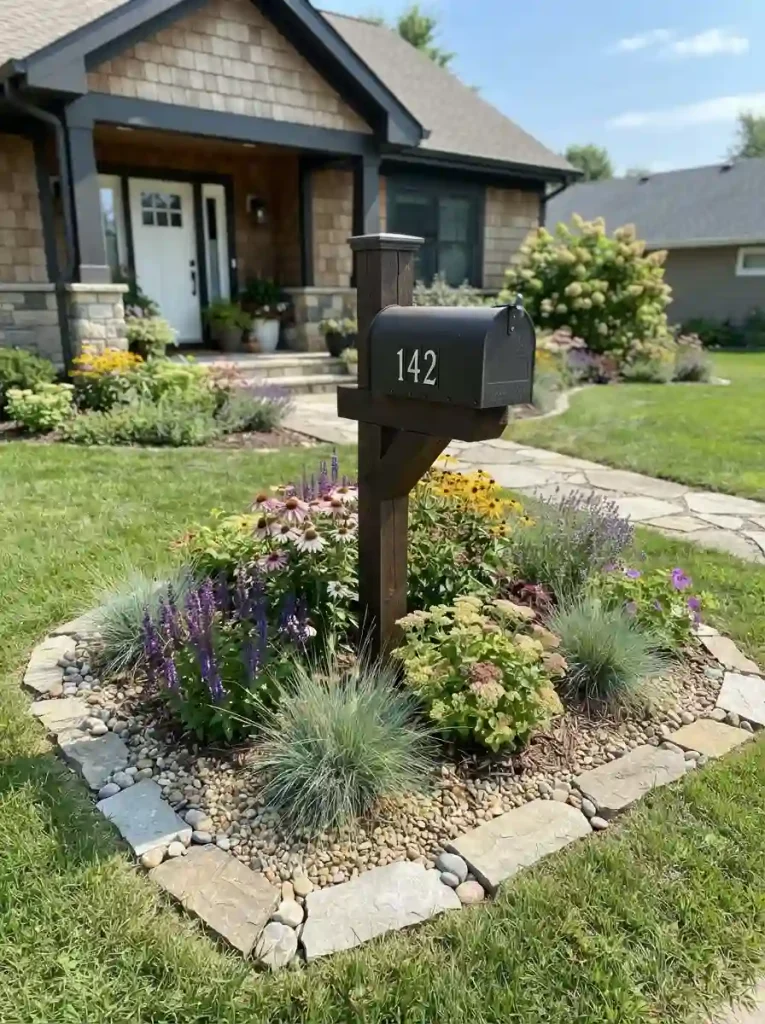
The area around a mailbox can become a small but noticeable landscaping feature. Replace an ordinary patch of lawn with gravel and add several compact plants suited to the available sunlight.
Keep the plants low enough that they do not interfere with visibility, access, or maintenance around the mailbox. A small ornamental grass or flowering perennial can provide enough height without overwhelming the space.
Choose durable materials because this area may receive more foot traffic than other garden sections.
20. Gravel Garden With a Circular Planting Design
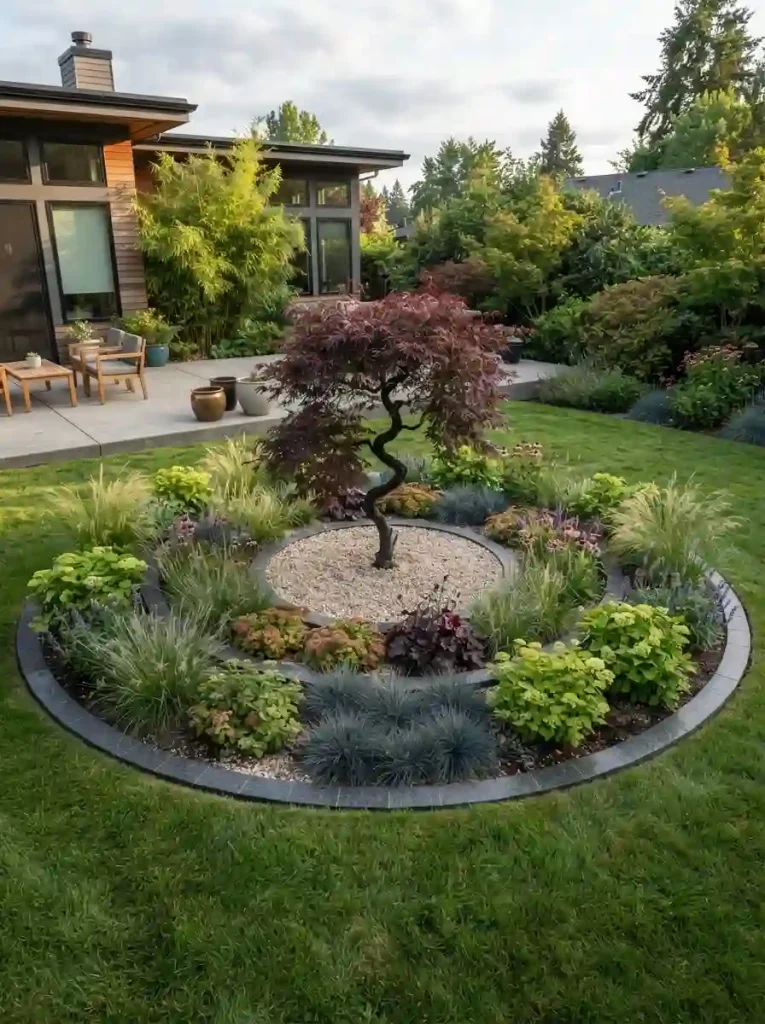
Circular planting beds can soften the appearance of a rectangular yard. Create a round gravel area and arrange plants around a central focal point such as a small tree, large pot, rock, or sculptural plant.
Repeat similar plants around the circle to create rhythm while varying their heights toward the center.
A defined circular edge also makes the garden easier to maintain because the boundary clearly separates the gravel from surrounding lawn or paving.
21. Gravel Garden With Rain-Friendly Planting
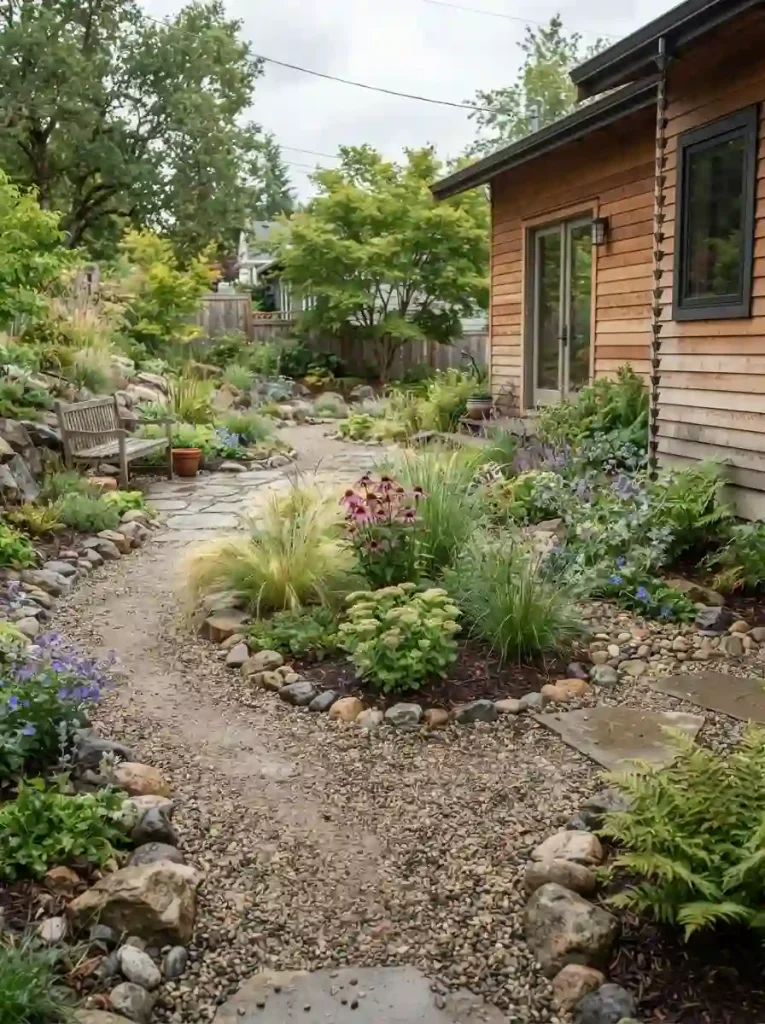
A gravel garden can be designed to manage rainfall more thoughtfully. Instead of allowing water to run quickly across paved surfaces, use appropriately designed planting areas where suitable plants can tolerate occasional moisture.
Choose plants based on your area’s rainfall and drainage conditions. Mix gravel with planted pockets and slightly lower areas where water can naturally collect.
Proper drainage planning is important, especially around foundations and buildings. Gravel alone does not automatically solve drainage problems.
22. Minimalist Gravel Garden With One Focal Plant
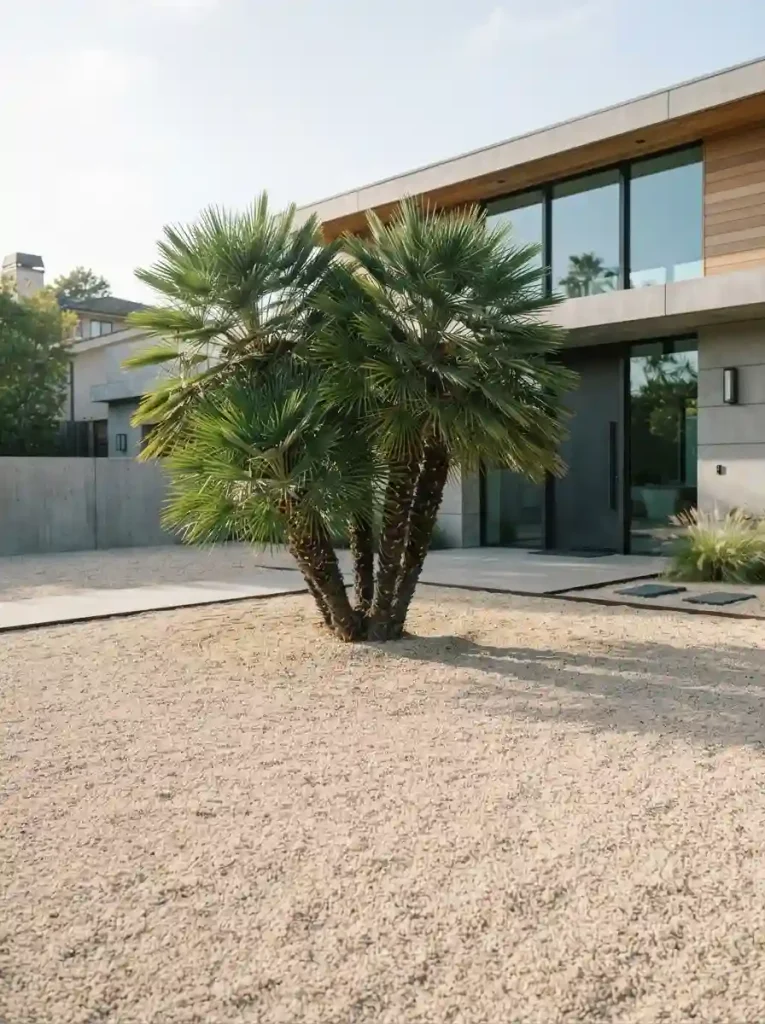
Sometimes the simplest garden makes the strongest impression. Cover the space with a consistent gravel material and allow one distinctive plant to become the main focal point.
A large agave, Japanese maple, olive tree, yucca, or other climate-appropriate specimen can provide enough visual interest on its own.
Keep surrounding elements restrained. A clean gravel surface, simple edging, and one strong plant can create a polished garden without requiring a complicated planting scheme.
Simple Tips for Creating a Low-Maintenance Gravel Garden
A successful gravel garden is not simply a matter of spreading stones across the ground. The preparation underneath and the plants you choose have a major effect on how much maintenance the finished space requires.
Start by clearing existing weeds and unwanted vegetation. Improve the soil where necessary before installing the gravel, particularly in areas where you plan to grow plants.
Choose the Right Gravel Size
Gravel comes in many sizes, shapes, and colors. Smaller stones are often comfortable for pathways, while larger decorative gravel can provide stronger visual texture in planting beds.
Think about how you will use the space before selecting the material. Gravel that looks beautiful in a decorative bed may not be the most comfortable choice for walking.
Use Edging to Keep Gravel in Place
Edging is one of the most useful additions to a gravel garden. It creates a clear separation between gravel, lawn, paving, and planting areas.
Without a defined edge, stones can gradually migrate into surrounding areas because of rainfall, foot traffic, pets, or routine garden maintenance.
Select Plants for Your Actual Climate
Low-maintenance does not mean completely maintenance-free. A plant that thrives with little water in one climate may require frequent attention somewhere else.
Consider sunlight, rainfall, temperature, soil drainage, mature plant size, and seasonal conditions before choosing your plants.
Leave Enough Space Between Plants
New plants often look small when they are first installed, but many will expand significantly as they mature. Leaving adequate space reduces overcrowding and allows air to circulate around the foliage.
It can also make pruning easier and prevent the garden from becoming visually crowded.
Consider a Weed Barrier Carefully
A landscape fabric or suitable barrier can sometimes help reduce weeds beneath gravel, but it is not a substitute for proper preparation and ongoing maintenance.
Use the approach that fits your garden, especially if you plan to grow plants directly through the gravel. Organic matter, wind-blown seeds, and accumulated debris can still create opportunities for weeds over time.
Think About Maintenance Before Adding Features
Before adding a fountain, intricate planting bed, delicate flowers, or complicated garden structure, consider how much attention it will need throughout the year.
The goal of a low-maintenance garden is to make routine care easier, not simply to replace lawn with a collection of features that require constant upkeep.
How to Make a Gravel Garden Look More Expensive
A polished gravel garden usually comes down to consistency and intentional design rather than expensive materials.
Use a limited color palette and repeat a few plant varieties throughout the space. Consistent edging can make even inexpensive gravel appear more refined.
Adding one or two strong focal points can also improve the overall appearance. A sculptural plant, attractive container, mature shrub, or carefully positioned boulder may be enough to give the garden a finished look.
Most importantly, avoid filling every available space. Open areas of gravel can provide visual breathing room and make the plants you do use appear more prominent.
Final Thoughts
Gravel gardens offer a practical way to create attractive outdoor spaces without relying on large expanses of lawn or demanding planting schemes. With the right gravel, suitable plants, defined edges, and thoughtful layout, even a small garden can feel polished and inviting.
The best approach is to work with your existing climate and the amount of maintenance you realistically want to provide. Start with a simple layout, choose plants suited to your conditions, and allow the gravel to become part of the design rather than treating it as an afterthought.
Whether you prefer a modern courtyard, Mediterranean planting, a natural rock garden, or a simple minimalist landscape, these gravel garden ideas can give you plenty of inspiration for creating an outdoor space that stays attractive with less everyday effort.