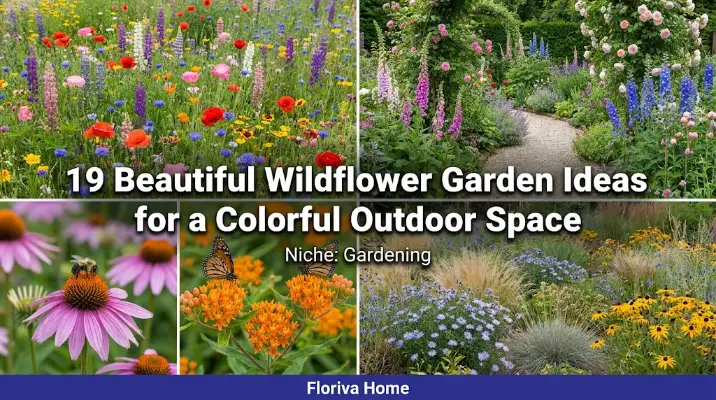
19 Beautiful Wildflower Garden Ideas for a Colorful Outdoor Space
Beautiful Wildflower Garden Ideas bring fresh color and natural charm to any outdoor space. Whether you love a cozy cottage garden or a relaxed backyard flower garden, these creative ideas combine native flowers, easy wildflowers, colorful landscaping, and thoughtful outdoor garden design.
Explore inspiring combinations that welcome pollinators, brighten garden borders, refresh flower bed ideas, and help you create a blooming garden filled with seasonal beauty and lasting garden inspiration for every yard, large or small, making every season feel vibrant, inviting, colorful, and alive.
Are wildflower gardens easy to maintain?
Yes. Once established, wildflower gardens require less watering, mowing, and fertilizing than traditional flower beds. Choosing native flowers, adding mulch, and planting varieties with different bloom times helps create a vibrant, low-maintenance garden throughout the growing season.
How to Choose a Wildflower Garden Style by Sun, Space, and Care Level
Start with the sun your yard actually gets, because wildflowers are picky about light in a way lawn grass is not. Full-sun spots suit the Cottage Garden Wildflower Mix, the Bright Pollinator Wildflower Garden, the Wildflower Meadow Lawn, and the Native Prairie Garden Design, where coneflowers, black-eyed Susans, and blazing star thrive in open light. Partly shaded edges suit the Woodland Edge Wildflower Garden and the Wooden Arbor with Wildflower Beds, where dappled light softens the planting. Next, match the style to your space: a narrow border suits the Curved Stone Path Wildflower Border or the Rustic Fence Wildflower Border, while a small yard suits the Raised Wildflower Flower Beds or the Rustic Wooden Raised Wildflower Planters, which keep the planting contained. Finally, be honest about care: the Four-Season Wildflower Garden and the Butterfly-Friendly Wildflower Garden reward a little deadheading and yearly cutting back, while the Colorful Wildflower Rock Garden and the Wildflower Garden with Natural Stone Borders ask the least once established. If you travel often or garden only on weekends, lean toward the lower-care styles and save the high-maintenance borders for a spot you pass every day.
1. Cottage Garden Wildflower Mix
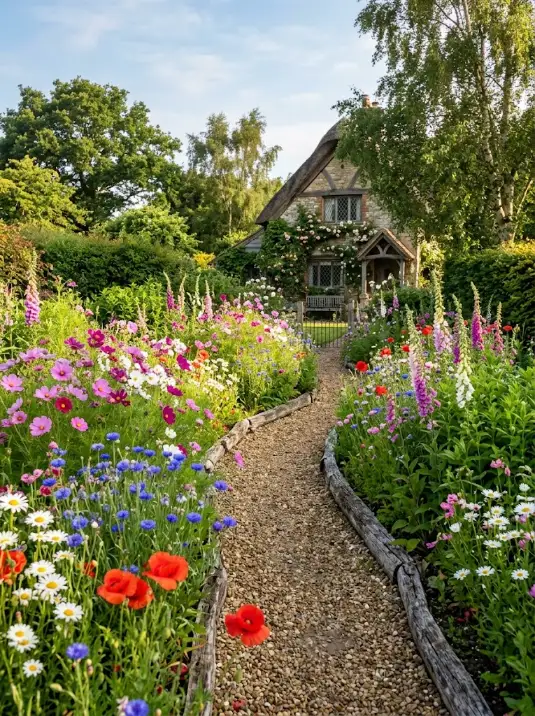
Create a relaxed cottage garden filled with cosmos, cornflowers, poppies, and daisies for soft movement and cheerful color. Mixed heights create an effortless look while winding edges keep the planting natural, welcoming butterflies throughout spring, summer, and early fall every single year.
This timeless layout suits front yards, backyard landscaping, and sunny borders. Plant taller blooms behind shorter native flowers and leave small open spaces for self-seeding growth that returns with colorful seasonal interest and minimal maintenance every blooming season with steady pollinator activity.
2. Curved Stone Path Wildflower Border
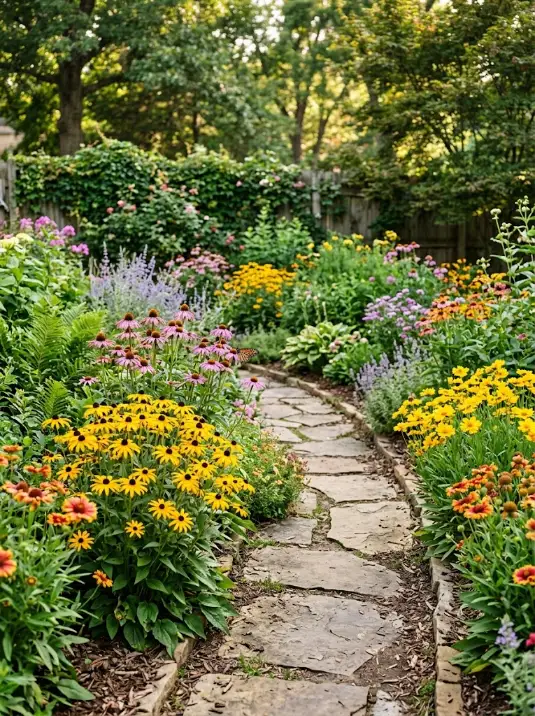
Design a curved backyard flower garden around a stone path lined with black-eyed Susans, purple coneflowers, coreopsis, and blanket flowers. Flowing drifts create colorful landscaping while gentle curves soften the entire outdoor garden design through every blooming month with natural visual balance.
Curved paths encourage slow walks and make medium gardens feel larger. Add mulch between plants to reduce weeds while keeping moisture steady for healthier roots, brighter blooms, stronger pollinator visits, and easier seasonal care each growing year with lasting appeal outdoors naturally.
3. Rustic Fence Wildflower Border
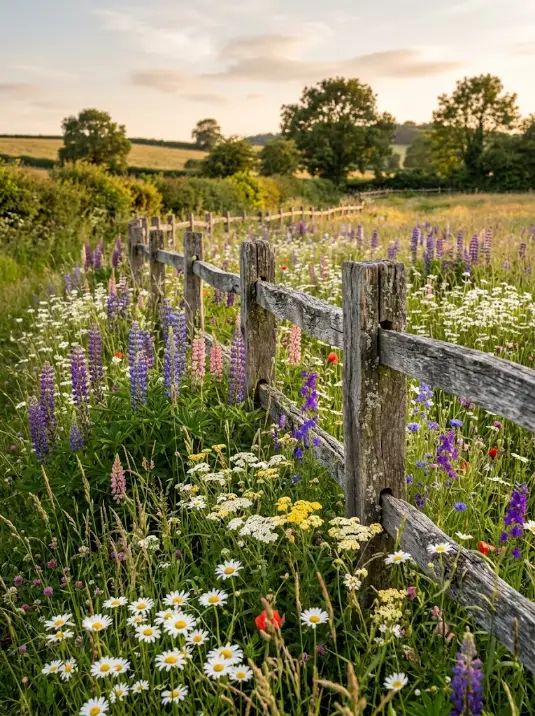
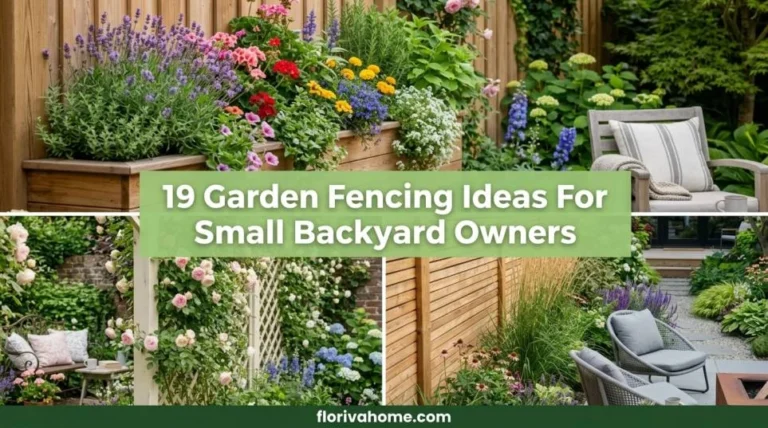
Frame a rustic wooden fence with cheerful wildflower borders featuring lupines, yarrow, oxeye daisies, and larkspur. Layered blooms create depth while soft textures blend beautifully with weathered wood across every season in relaxed country settings full of charm and color all around.
This rustic garden style works beautifully along property lines or country homes. Mix perennial native flowers with annual favorites for continuous blooms and healthy habitats supporting bees, butterflies, birds, and beneficial insects throughout the warmer months every single year with little effort.
4. Bright Pollinator Wildflower Garden
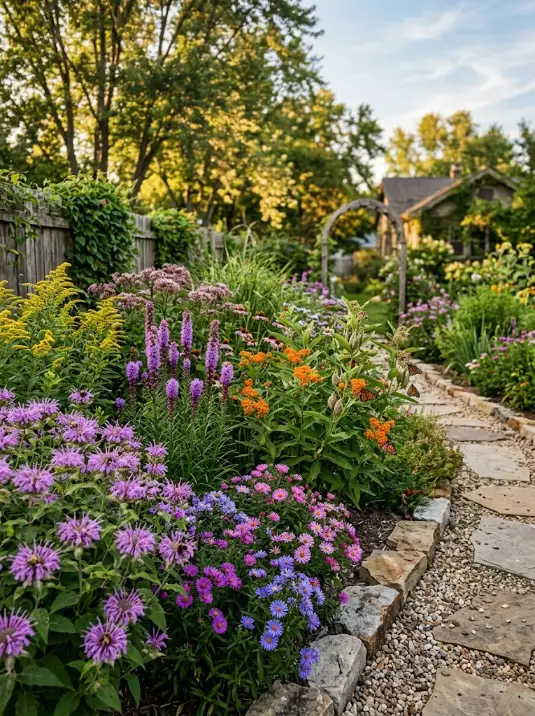
Plant a vibrant pollinator garden packed with bee balm, milkweed, asters, blazing star, and goldenrod. Bright clusters attract butterflies and hummingbirds while creating lively movement across sunny flower beds from summer into autumn every single season outdoors with nonstop color and life.
Choose sunny locations with well-drained soil. Group similar flowers together for stronger visual impact and easier watering while avoiding heavy fertilizer, allowing native plants to thrive naturally and support local wildlife throughout every growing season with beautiful blooms year after year effortlessly.
5. Raised Wildflower Flower Beds
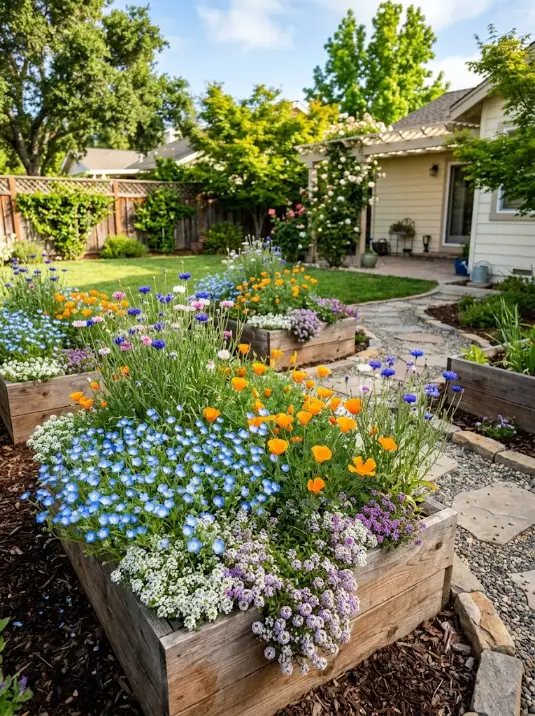
Fill raised flower beds with baby blue eyes, California poppies, sweet alyssum, and bachelor’s buttons for bright layered color. Defined edges keep the planting neat while overflowing blooms soften every border with welcoming cottage garden charm all season long outdoors every year.
Raised beds improve drainage and simplify maintenance for beginners and experienced gardeners alike. Refresh mulch yearly and mix early, midseason, and late bloomers for continuous color plus reliable garden inspiration through changing seasons with minimal upkeep and happy pollinators returning each spring.
6. Wildflower Meadow Lawn
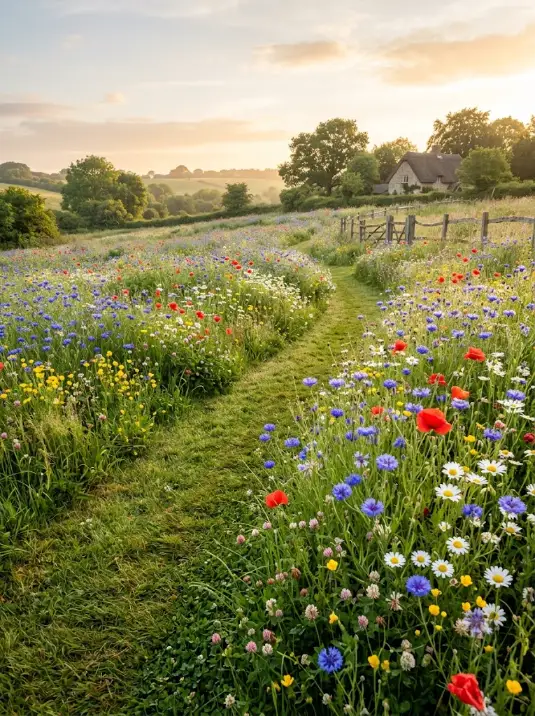
Replace part of a traditional lawn with a colorful wildflower meadow featuring cornflowers, poppies, oxeye daisies, buttercups, and clover. Natural planting patterns create a relaxed landscape while providing constant movement, seasonal blooms, and habitat for birds, butterflies, and busy pollinators.
Large backyards benefit most from meadow gardens because they require less mowing over time. Mow pathways through the flowers for easy access while preserving natural beauty, encouraging healthy reseeding, and creating charming walking routes across the blooming landscape every year.
7. Wooden Arbor with Wildflower Beds
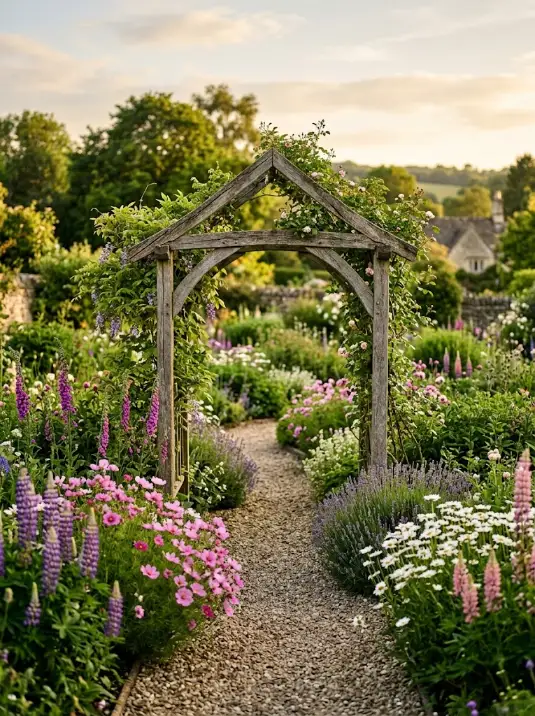
Highlight a simple wooden arbor by surrounding it with colorful wildflower beds filled with lupines, cosmos, daisies, lavender, and foxgloves. Soft layers of blooms create a welcoming entrance while adding height, fragrance, and continuous seasonal color throughout the growing months.
Position taller flowers behind shorter varieties to keep every bloom visible. A gravel path leading beneath the arbor adds structure while complementing the relaxed cottage garden style and creating an inviting focal point within your outdoor garden design for every season.
8. Native Prairie Garden Design
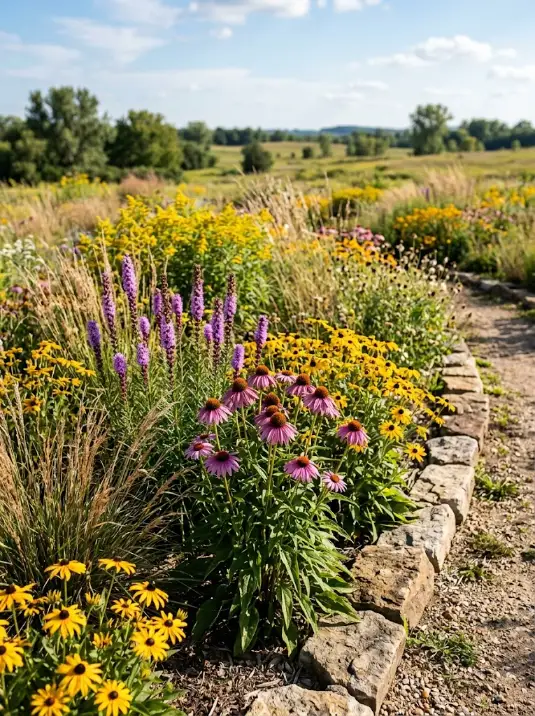
Celebrate local beauty by planting a native prairie garden featuring purple coneflowers, blazing star, black-eyed Susans, goldenrod, and ornamental grasses. Their natural combinations create colorful landscaping while supporting wildlife and thriving with little maintenance in sunny outdoor spaces.
Native flowers adapt well to regional conditions, reducing watering needs after establishment. Blend grasses with flowering plants for texture, movement, and year-round interest while encouraging beneficial insects and birds to visit your blooming garden throughout every changing season naturally.
9. Wildflower Garden Around a Birdbath
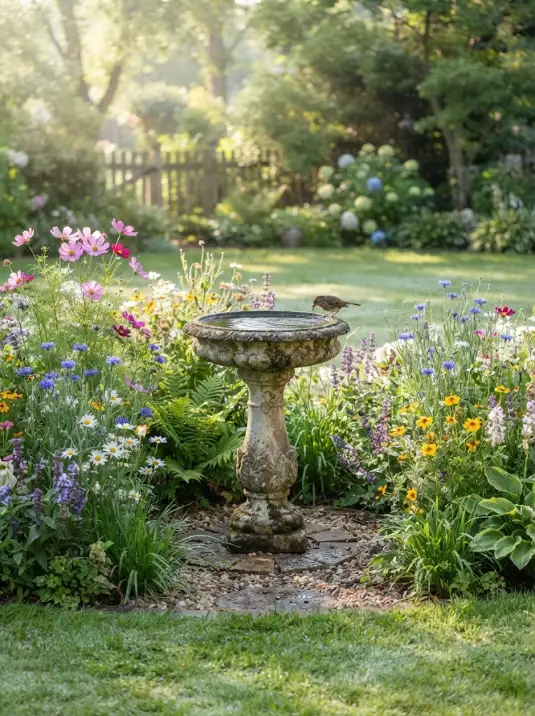
Place a classic stone birdbath at the center of colorful wildflowers including cosmos, bachelor’s buttons, daisies, and coreopsis. Circular planting creates balance while attracting birds, butterflies, and bees that bring extra life into the peaceful backyard flower garden every season.
Choose flowers with staggered bloom times so color surrounds the birdbath for months. Leave enough space for birds to land comfortably while keeping nearby plants trimmed, healthy, and visually balanced across the entire garden throughout the year with lasting natural charm.
10. Colorful Wildflower Garden Borders
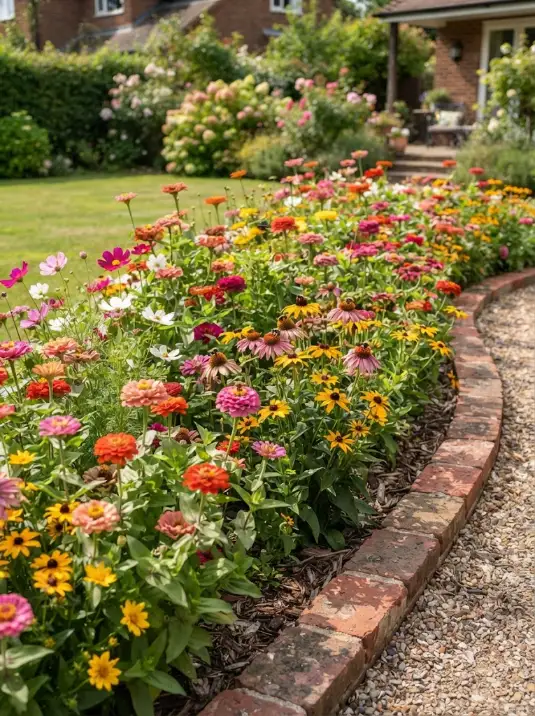
Brighten pathways and flower beds with colorful garden borders featuring zinnias, cosmos, coreopsis, black-eyed Susans, and purple coneflowers. Repeating flower groups create visual rhythm while adding cheerful color that naturally connects different areas across the entire landscape beautifully.
Border plantings frame gardens neatly and provide continuous blooms through the warm seasons. Combine taller flowers toward the back with shorter edging varieties for layered beauty, easier maintenance, healthier growth, and eye-catching backyard landscaping that always feels fresh and inviting.
11. Winding Gravel Path Through Wildflowers
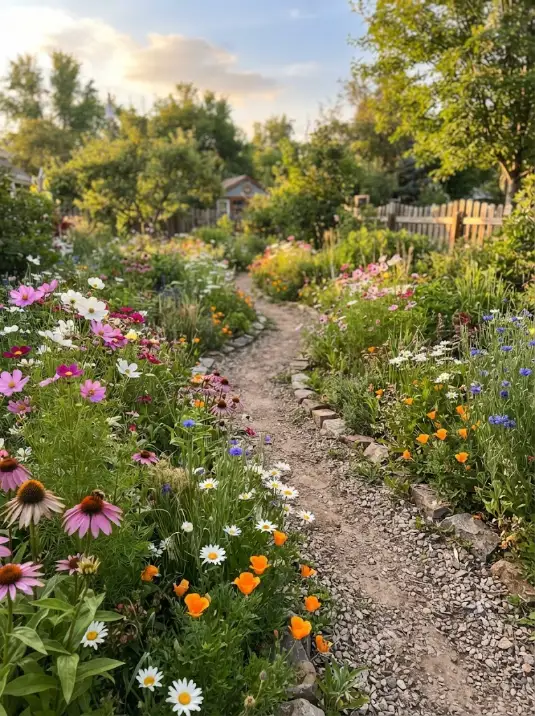
Guide visitors through your blooming garden with a winding gravel path bordered by cosmos, coneflowers, California poppies, daisies, and cornflowers. Gentle curves create a relaxed atmosphere while colorful flowers soften every edge with natural beauty across the growing season beautifully.
A meandering path makes gardens feel larger and encourages slow exploration. Use compacted gravel for durability and edge the walkway with low-growing native flowers to maintain clean borders while allowing taller blooms to frame every view with effortless seasonal charm.
12. Sunny Corner Wildflower Retreat
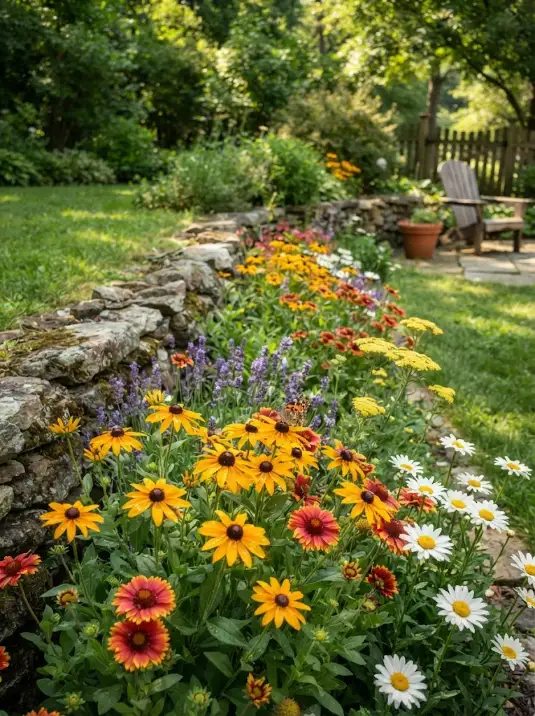
Turn an unused sunny corner into a colorful retreat using black-eyed Susans, blanket flowers, lavender, yarrow, and cheerful daisies. Layered planting creates warmth while filling overlooked spaces with continuous blooms that attract butterflies and brighten the surrounding landscape naturally.
Sunny corners often provide excellent growing conditions for easy wildflowers. Improve the soil with compost before planting and group flowers with similar watering needs for healthier growth, longer flowering periods, and simple seasonal maintenance that keeps the garden looking vibrant.
13. Rustic Wooden Raised Wildflower Planters
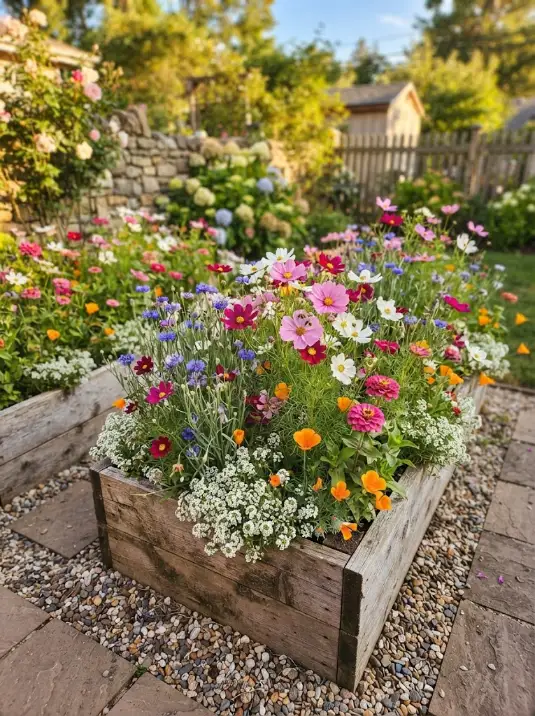
Rustic wooden planters overflowing with cosmos, bachelor’s buttons, sweet alyssum, California poppies, and zinnias create charming focal points. Elevated planting adds depth while making colorful flowers easier to admire throughout the blooming season in small or spacious outdoor gardens.
Raised planters work beautifully on patios, decks, and backyard landscapes. Refresh the soil each spring and remove faded flowers regularly to encourage fresh blooms while maintaining healthy plants that continue producing cheerful color for months with minimal care.
14. Wildflower Garden with Natural Stone Borders
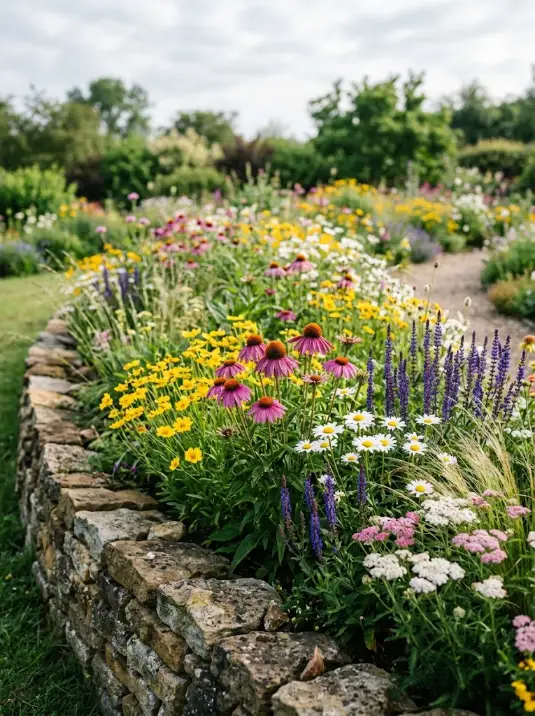
Natural stone borders give colorful wildflower beds a polished appearance without losing their relaxed character. Purple coneflowers, coreopsis, oxeye daisies, salvia, and yarrow blend beautifully against textured stone while creating an inviting outdoor garden design filled with seasonal color.
Stone edging helps define planting areas and keeps mulch neatly contained. Mix different flower heights to add visual depth while leaving enough spacing for mature growth, healthier air circulation, and easy maintenance throughout every growing season in your backyard garden.
15. Woodland Edge Wildflower Garden
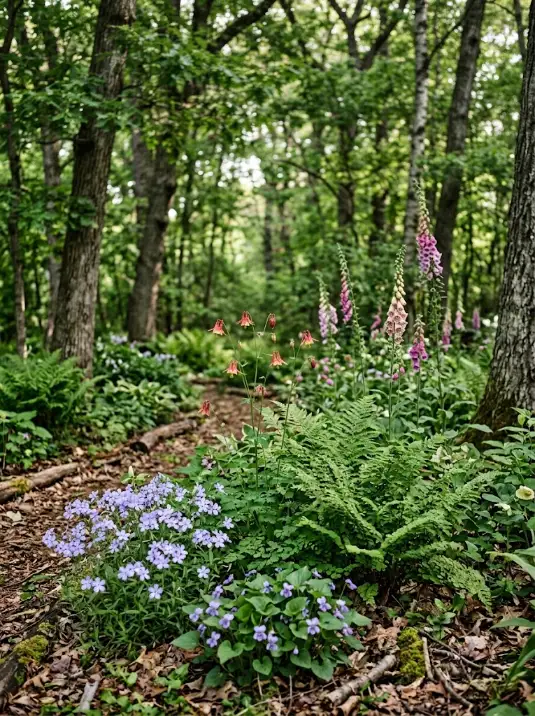
Create a peaceful woodland edge by planting woodland phlox, columbine, foxgloves, wild violets, and graceful ferns beneath mature trees. Soft textures and gentle colors produce a calm atmosphere while blending naturally with shaded outdoor spaces throughout spring and early summer.
Choose shade-loving native flowers that thrive beneath tree canopies with limited sunlight. Add leaf mulch to retain moisture, enrich the soil naturally, and reduce weeds while creating a healthy rustic garden that feels established and beautifully connected to nature.
16. White Picket Fence Wildflower Garden
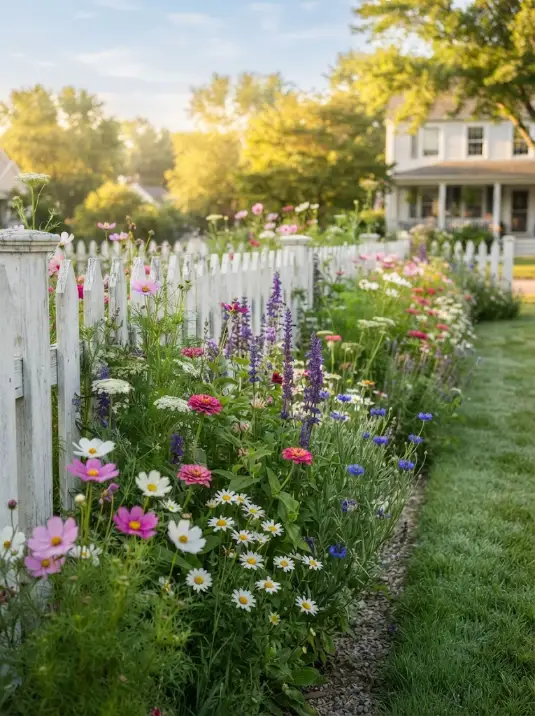
A classic white picket fence becomes even more inviting with colorful wildflowers spilling along its base. Cosmos, zinnias, daisies, salvia, and cornflowers create cheerful layers that soften hard edges while bringing lasting seasonal beauty to the surrounding outdoor space naturally.
This design complements traditional homes and cottage garden styles beautifully. Plant taller flowers nearest the fence and shorter blooms toward the front, creating colorful depth while making every flower visible from pathways, patios, and nearby seating areas throughout the growing season.
17. Butterfly-Friendly Wildflower Garden
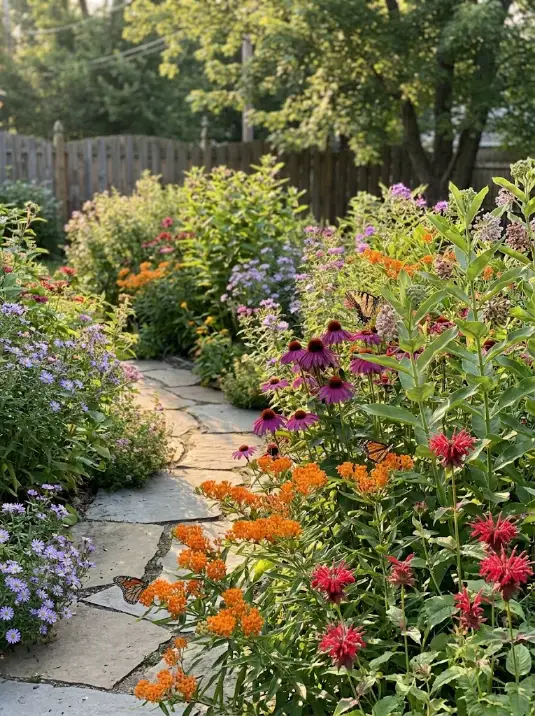
Design a butterfly-friendly garden using butterfly weed, bee balm, milkweed, asters, and purple coneflowers. Bright nectar-rich flowers provide continuous blooms while filling the landscape with lively colors and gentle movement from visiting butterflies throughout the warm growing season outdoors.
Butterflies prefer sunny, sheltered locations with plenty of flowering plants grouped together. Avoid chemical pesticides and include native flowers that naturally support every life stage, creating a healthy pollinator garden that flourishes with colorful blooms year after year effortlessly.
18. Colorful Wildflower Rock Garden
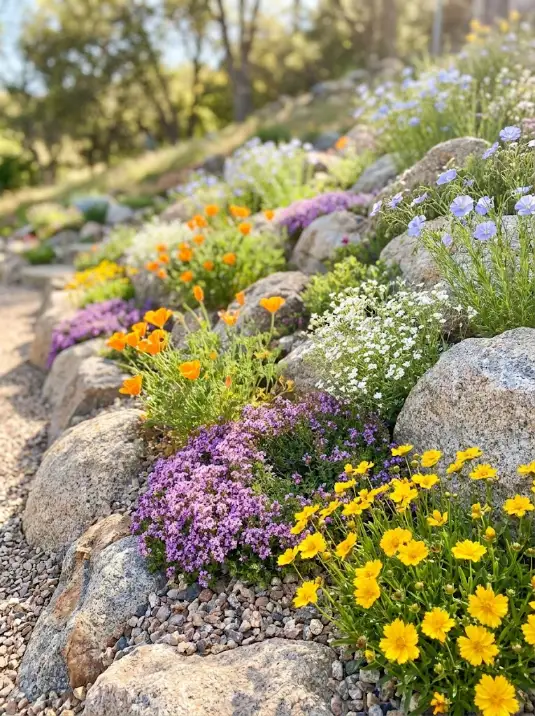
Blend natural stone with colorful wildflowers to create a charming rock garden full of texture and contrast. California poppies, creeping thyme, blue flax, and dwarf coreopsis brighten rocky spaces while thriving in sunny, well-drained locations with minimal maintenance requirements.
Rock gardens work especially well on slopes or dry areas where drainage remains excellent. Arrange larger stones first, then tuck flowering plants between them for a balanced outdoor garden design that looks natural and stays attractive through changing seasons effortlessly.
19. Four-Season Wildflower Garden
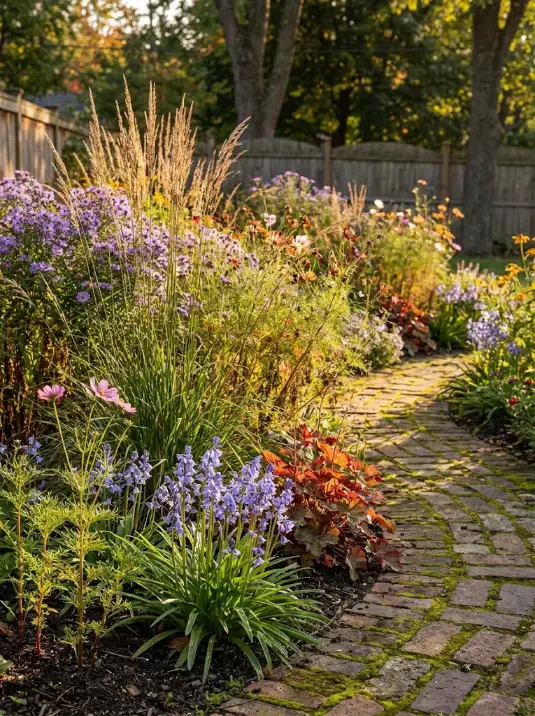
Plan a four-season wildflower garden by combining spring bluebells, summer cosmos, autumn asters, and ornamental grasses. Careful plant selection keeps fresh color appearing throughout the year while maintaining an inviting landscape filled with texture and natural beauty every season.
Choose flowers with different bloom periods and include evergreen plants for winter structure. Refresh mulch annually and divide crowded perennials when needed, ensuring healthier plants, longer flowering displays, and continuous garden inspiration that keeps your backyard looking beautiful every month.
How to Plant a Wildflower Garden in Order: Steps, Mistakes, and Care
Plant in this order and the garden fills in rather than fizzling out. First, clear the spot properly: remove existing grass and weeds, since wildflower seed sown into lawn mostly loses the fight. Second, prepare the soil lightly — rake it loose but skip heavy fertilizer, because rich soil favors weeds over wildflowers. Third, sow or plant by height: tall flowers like lupines and foxgloves at the back, mid-height cosmos and zinnias in the middle, and low sweet alyssum and baby blue eyes at the edges, so nothing hides behind a taller neighbor. Fourth, water gently until seedlings are established, then step back and let the planting find its rhythm.
Common mistakes include sowing seed too thickly, which crowds seedlings and invites disease; choosing flowers unsuited to the local climate, so they fade after one season; skipping mulch around transplants, which lets weeds take over early; and mowing a new meadow too soon, which cuts seedlings before they set seed. Another frequent slip is expecting a tidy flower bed — wildflowers look best a little loose, so resist the urge to straighten every stem. For care, water during dry spells in the first year, deadhead spent blooms to stretch the season, and cut the whole bed back once in late winter before new growth starts. Check new plantings weekly in their first summer, since a dry week can set a young bed back badly, and top up bare patches with extra seed in autumn. Leave seed heads standing through autumn where birds visit, and refresh mulch around beds each spring. A wildflower garden that gets one good tidy-up a year and regular weeding in its first season usually looks better in year two than it did in year one.
Frequently Asked Questions
When is the best time to plant a wildflower garden?
Spring and early fall are both good windows, and the right choice depends on your climate. Spring sowing suits annuals like cosmos, poppies, and zinnias, which bloom the same year and give fast color. Fall sowing suits perennials like coneflowers and black-eyed Susans, since the seed rests over winter and germinates with spring warmth. In mild climates, fall planting gives roots time to establish before summer heat.
Do wildflowers come back every year on their own?
Many do, but not all, and the mix matters. Perennials such as purple coneflowers, lupines, and yarrow return from their roots each year, while biennials like foxgloves bloom in their second year and then reseed. Annuals like cosmos and California poppies must drop seed to return, so let some flowers go to seed instead of deadheading everything. A bed that mixes all three types keeps color coming back with less replanting.
How do I keep weeds out of a wildflower garden?
Start clean and stay ahead of weeds in the first season, when wildflowers are most vulnerable. Clear the bed thoroughly before sowing, then mulch around transplants and hand-pull weeds while they are small, before they set seed. Avoid broad weedkiller, which harms wildflowers as surely as weeds. Once the planting thickens, it shades the soil and crowds weeds out on its own.
Can wildflowers grow in shade?
Some can, but most wildflowers in this list want sun, so shade calls for a different plant palette. Woodland-edge species, ferns, and shade-tolerant natives suit dappled light under trees, while sunny meadow mixes will grow leggy and bloom poorly in deep shade. If the spot gets only morning sun, choose the most shade-tolerant varieties and expect fewer blooms, and give those plants extra water until they are established.
Conclusion
Creating a colorful outdoor space with these Beautiful Wildflower Garden Ideas brings lasting beauty, supports local pollinators, and fills your landscape with natural charm throughout the seasons. Whether you prefer a cottage garden, rustic garden, or vibrant backyard flower garden, thoughtful plant choices can create a blooming retreat that feels welcoming every day.
Save your favorite ideas, mix designs that suit your space, and enjoy growing an outdoor garden filled with colorful flowers, wildlife, and endless inspiration for years ahead.