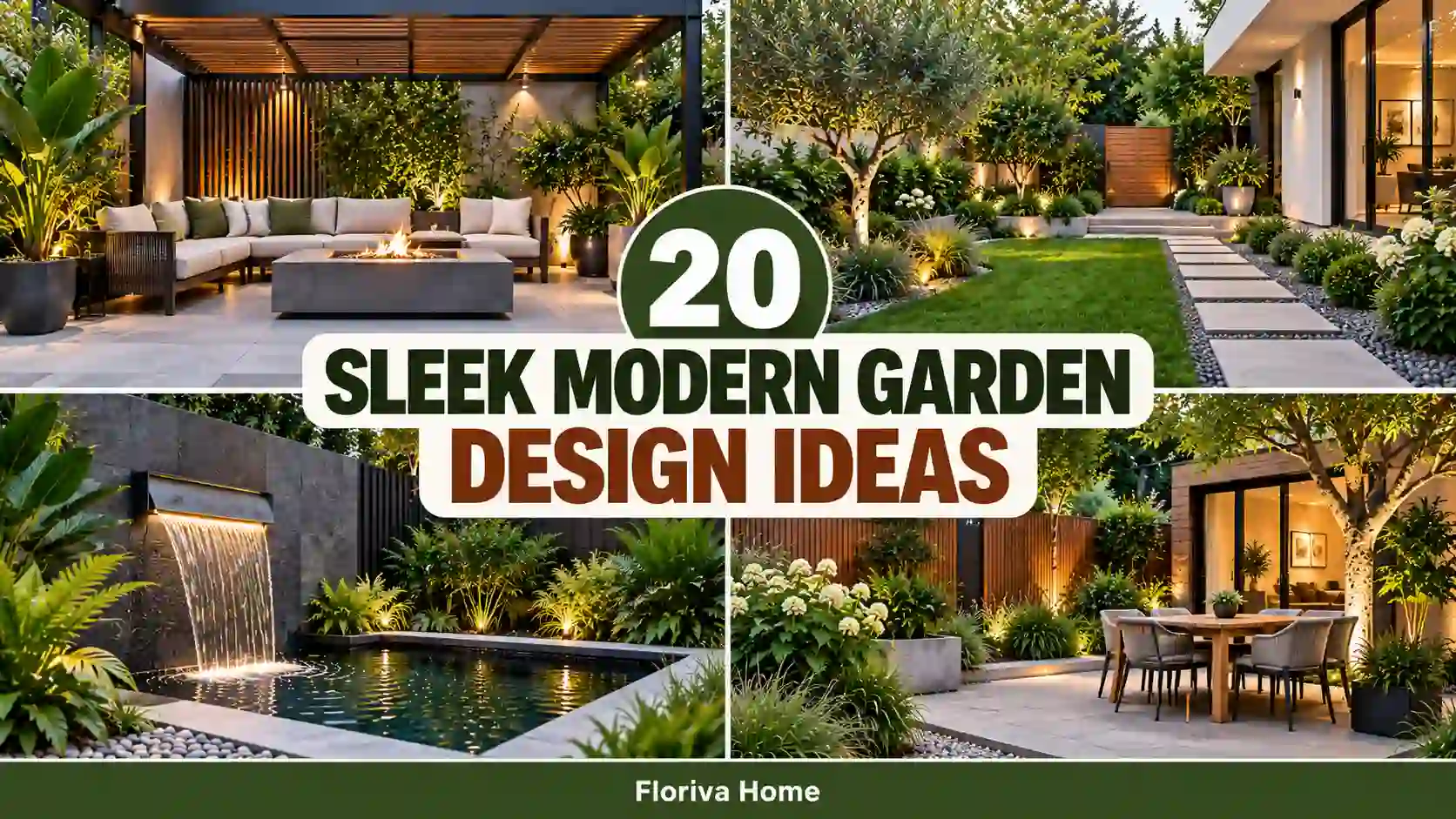
20 Sleek Modern Garden Design Ideas Worth Trying Now
A modern garden can completely change the way your outdoor space feels. Clean lines, carefully chosen plants, simple materials, and thoughtful lighting can make even an ordinary yard look polished without making it feel cold.
The best modern garden designs are not necessarily complicated. In fact, many rely on just a few strong elements that work together.
You can combine concrete with greenery, soften architectural shapes with ornamental grasses, or use gravel and large pavers to create a crisp contemporary look.
Whether you have a spacious backyard, a narrow side yard, or a compact courtyard, these modern garden design ideas can help you create an outdoor space that feels stylish, organized, and inviting.
1. Frame the Garden With Linear Planting Beds
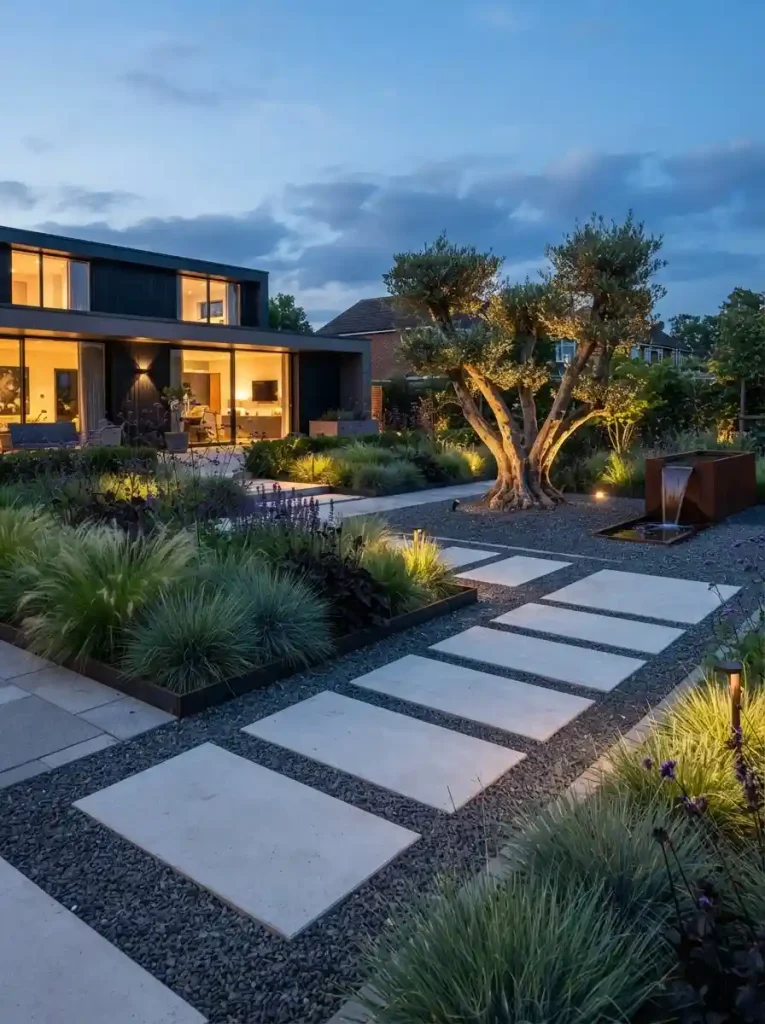
Long, straight planting beds are an easy way to give a garden a more architectural appearance.
Instead of scattering plants throughout the yard, create defined borders along fences, pathways, or the edge of a patio. Fill them with plants that have different heights and textures while keeping the overall arrangement controlled.
Ornamental grasses, evergreen shrubs, lavender, and sculptural trees can work particularly well in this type of layout.
Use a limited color palette for the hardscape and let the foliage provide most of the natural variation. This keeps the garden looking intentional without making it feel overly formal.
Design Tip:
Repeat the same plant in several sections rather than using dozens of unrelated varieties. Repetition creates visual rhythm and makes a modern landscape feel more cohesive.
2. Try Oversized Pavers Through a Gravel Garden
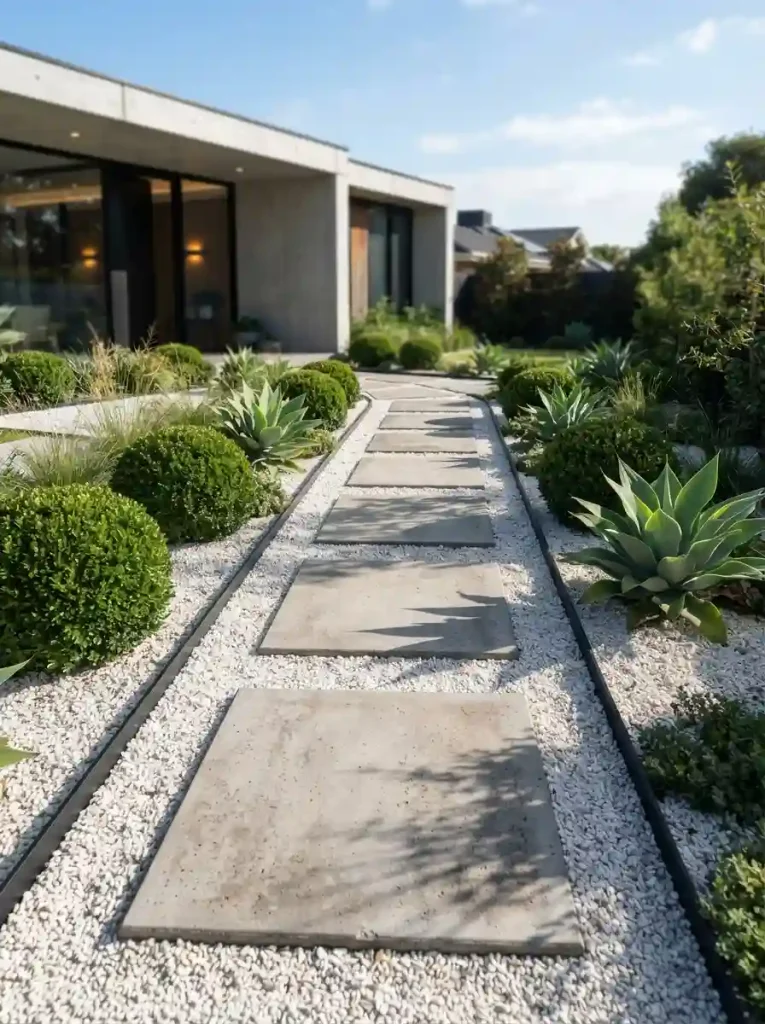
Large-format stepping stones can instantly make a garden feel cleaner and more contemporary.
Place oversized concrete or stone pavers across a gravel surface to create a simple walking route. The generous spacing gives the garden plenty of breathing room while the repeated shapes add structure.
For extra contrast, combine pale paving with darker gravel or charcoal edging. You can also soften the geometric appearance by planting ornamental grasses, agave, or low evergreen groundcovers around the path.
This approach works especially well in small gardens because the restrained palette prevents the space from looking visually crowded.
Design Tip:
Keep the paver spacing consistent. A regular rhythm will make the pathway look more deliberate and professionally planned.
3. Add a Vertical Slat Privacy Wall
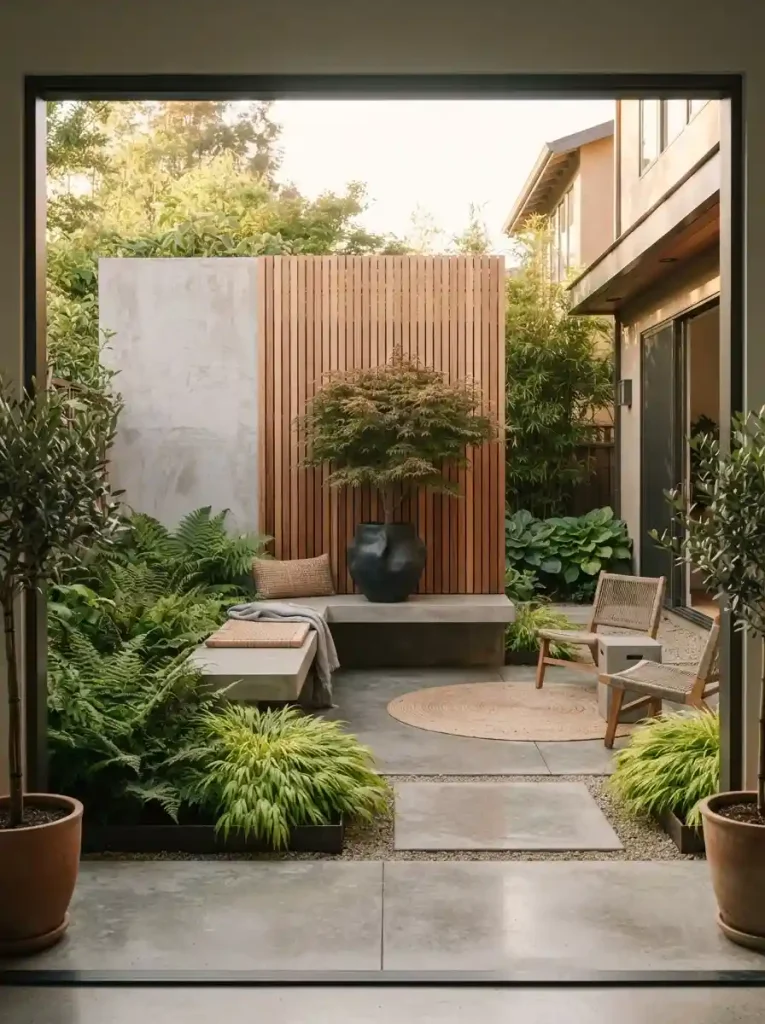
Privacy screens can do more than block unwanted views. They can also become one of the strongest design features in a modern garden.
Vertical timber slats are particularly effective because their repeated lines add height and texture without making the garden feel closed off. Choose natural wood for warmth or a dark finish for a more dramatic architectural effect.
Place the screen behind a bench, dining area, or planting bed. Then soften the hard surface with ferns, grasses, or leafy plants nearby.
The result is a garden that feels more private while still maintaining an open, contemporary atmosphere.
Design Tip:
Leave small gaps between the slats instead of creating a completely solid wall. This allows light to pass through and keeps the structure visually lighter.
4. Use Corten Steel for a Warm Modern Accent
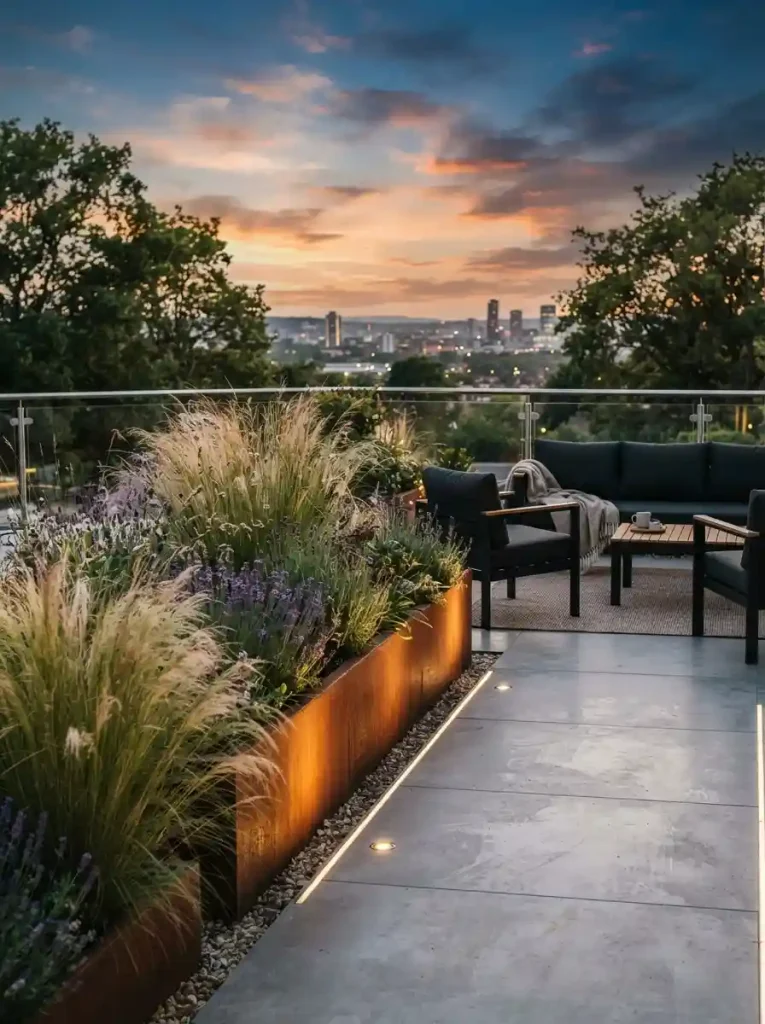
Corten steel introduces a rich, earthy color that works beautifully with contemporary materials. Its warm rust tone creates an interesting contrast against pale paving, green foliage, and cool-toned stone.
Try using corten steel for raised garden beds, edging, retaining walls, or sculptural planters. The material can give a simple planting scheme much more personality without adding complicated decoration.
Pair it with ornamental grasses, lavender, rosemary, or other plants with strong shapes for an effortless modern garden aesthetic.
Design Tip:
Use corten steel selectively rather than throughout the entire garden. One or two strong elements can make a bigger impact than repeating the material everywhere.
5. Create a Circular Seating Zone
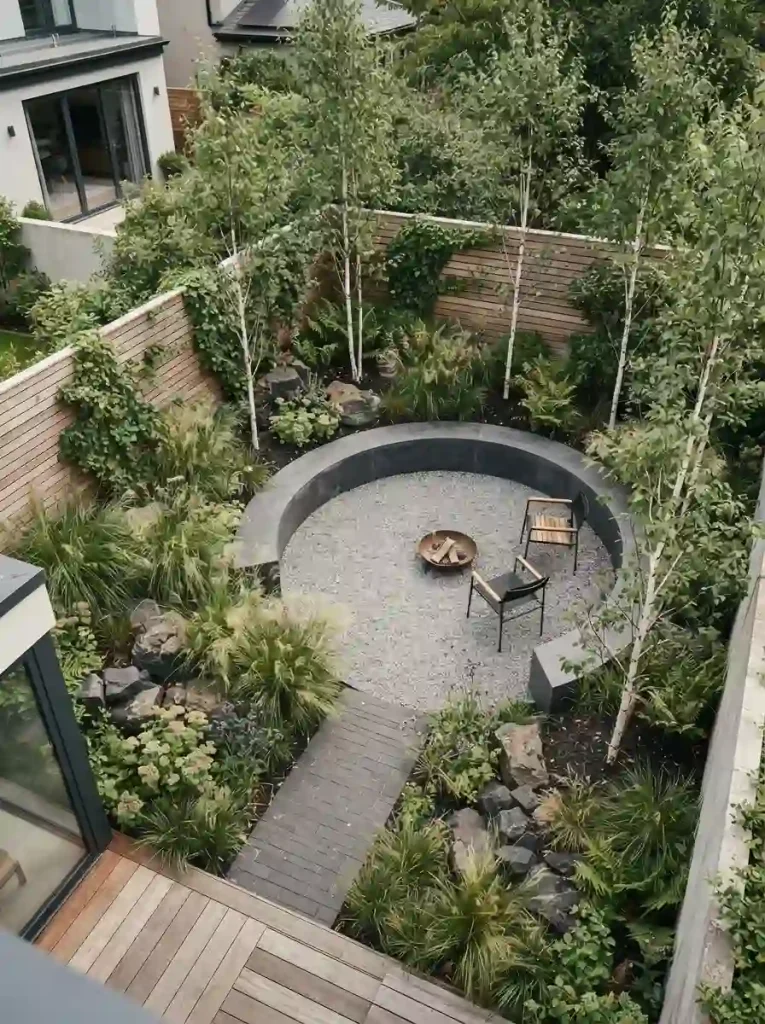
Straight lines are popular in modern landscaping, but adding one curved feature can make the space much more interesting.
Create a circular seating area using gravel, large-format pavers, or a curved paved surface. Surround it with low planting or architectural grasses to define the zone without creating visual barriers.
A curved concrete bench can reinforce the shape, while a small fire bowl or simple outdoor table can become the center point.
This design works particularly well in compact gardens because the circular arrangement encourages conversation while making efficient use of available space.
Design Tip:
Keep the surrounding planting relatively simple. The circular layout should remain easy to see rather than disappearing beneath dense foliage.
6. Make the Entrance Feel Architectural
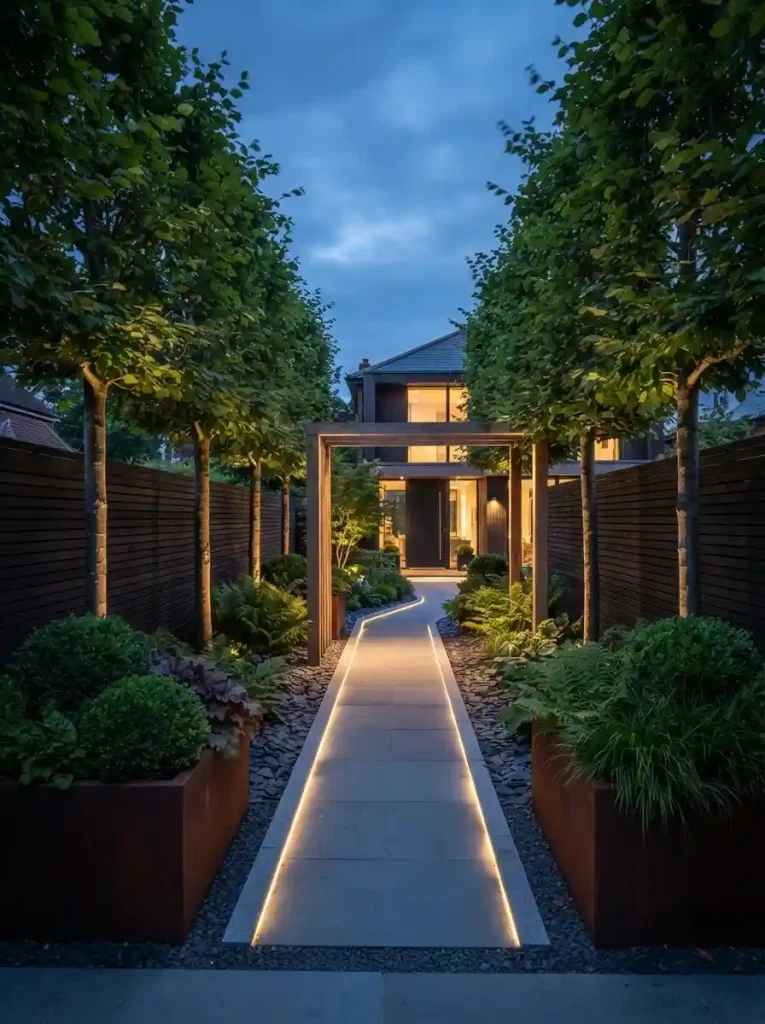
The entrance is often overlooked when planning a garden, but it can establish the entire design style before anyone reaches the main outdoor area.
Use repetition to make the entrance feel polished. Matching planters, evenly spaced trees, straight edging, and a clearly defined pathway can create a strong sense of order.
Pleached trees or tall narrow evergreens are useful when you want height without taking up too much ground space.
For evening appeal, add subtle pathway lighting that highlights the route without overwhelming the plants.
Design Tip:
Choose one dominant material for the entrance path and repeat it elsewhere in the garden. This small connection can make the whole landscape feel more unified.
7. Introduce a Slim Reflective Water Feature
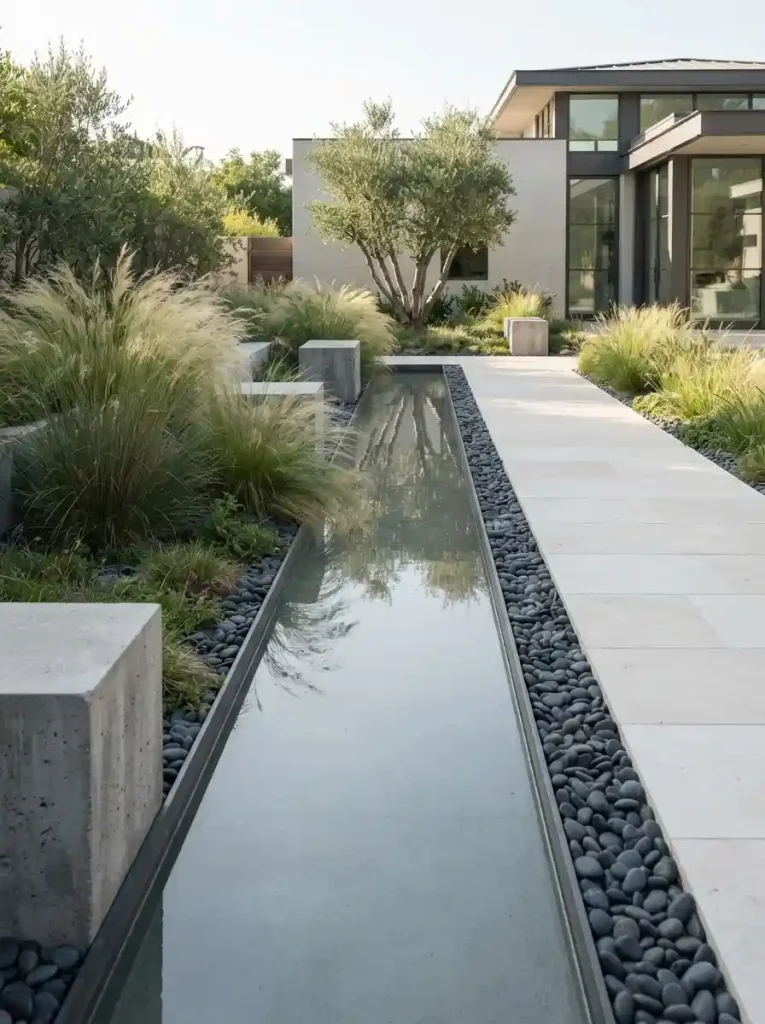
Water does not need to mean a large pond or elaborate fountain.
A narrow water channel can bring movement and reflection into a modern garden while taking up relatively little space. Position it alongside a walkway, patio, or retaining wall so it becomes part of the garden’s overall geometry.
Pale stone around the water can emphasize reflections, while dark pebbles provide contrast. Keep surrounding planting restrained to maintain the calm, architectural feeling.
At night, discreet lighting beneath or beside the water can create a subtle glow.
Design Tip:
Make safety and drainage a priority when installing any water feature. A professional installation can be worthwhile, particularly where electrical components or complex drainage are involved.
8. Build a Modern Garden Lounge Under a Pergola
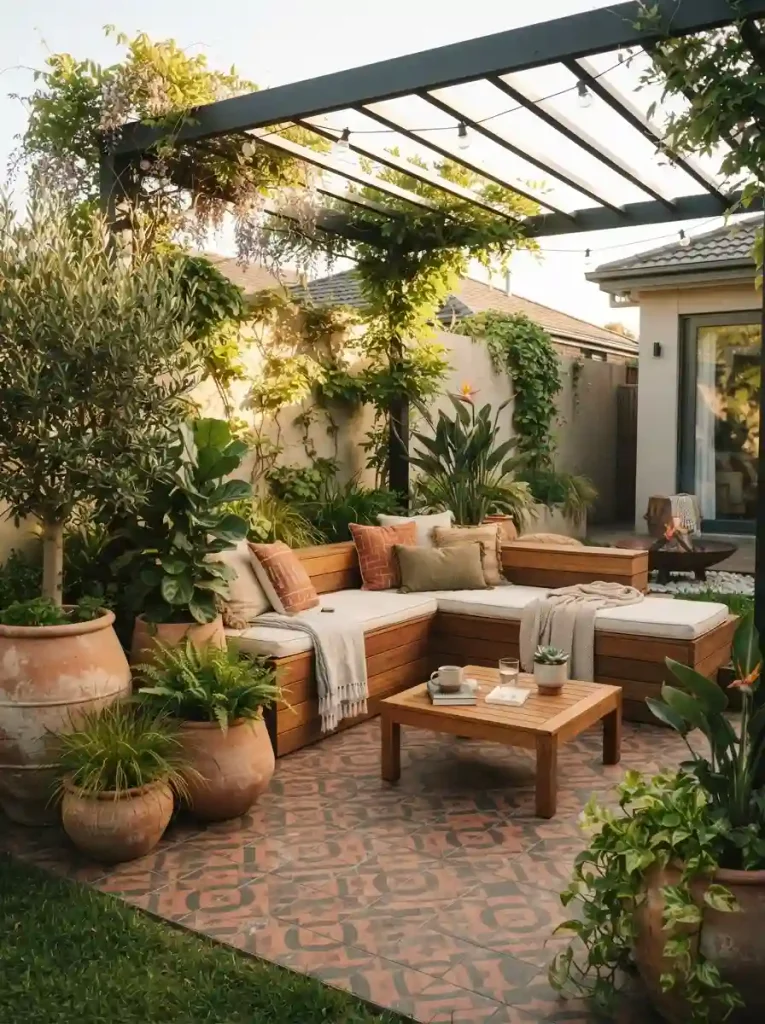
A pergola can turn an unused corner of the garden into a destination.
For a sleek modern appearance, choose a simple rectangular structure with minimal decorative detailing. Black or charcoal framing creates a strong architectural outline, while timber seating and terracotta containers add warmth.
Keep the furniture streamlined and comfortable rather than filling the area with too many accessories. A few large planters can have more impact than many small pots.
This type of garden lounge can serve as a quiet reading area, outdoor dining spot, or evening entertaining space.
Design Tip:
Think about the direction of afternoon sun before positioning the pergola. The structure should provide useful shade rather than simply acting as decoration.
9. Keep a Modern Front Garden Intentionally Simple
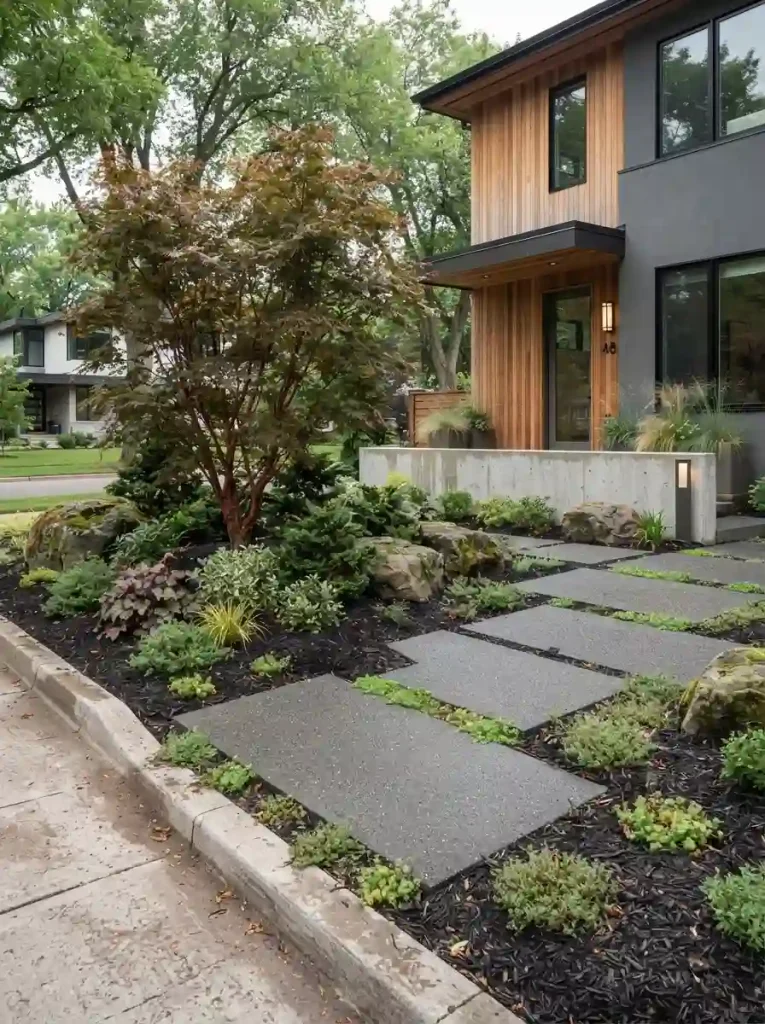
A front garden does not need a complicated planting scheme to look impressive.
Start with a strong focal plant, then build around it with a few repeated evergreen shapes. Large rocks, clean pathways, and generous areas of negative space can help the landscape feel modern without appearing sterile.
Avoid filling every available corner. Empty space is useful because it gives individual plants and architectural features room to stand out.
For homes with contemporary architecture, neutral paving and dark edging can reinforce the clean lines of the building.
Design Tip:
View the front garden from the street before finalizing your layout. A design that looks balanced up close may feel completely different from the main viewing angle.
10. Add Levels With Raised Planting Platforms
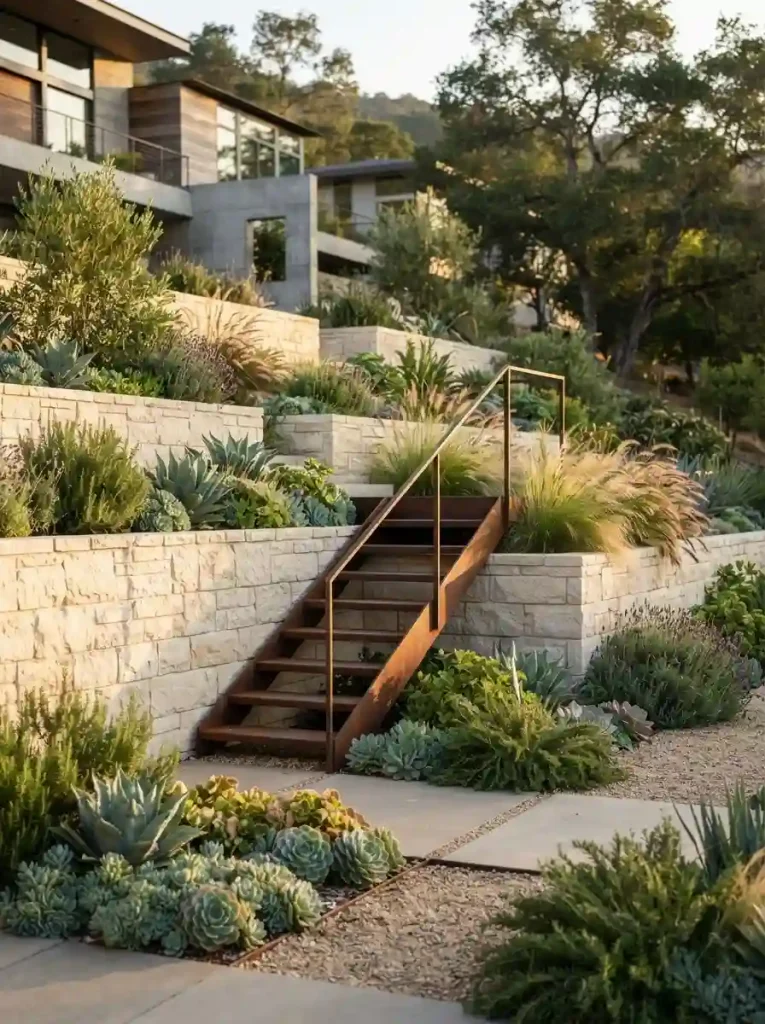
If your garden has a slope or awkward change in elevation, do not automatically try to hide it.
Use the difference in height to create distinct planting levels. Low retaining walls can turn an uneven yard into a series of clean geometric platforms.
Pale limestone, concrete, or rendered walls can provide a crisp backdrop for grasses, succulents, evergreen shrubs, and other architectural plants.
A narrow staircase or stepping path can connect each level while making the garden feel more substantial.
This technique is especially useful for giving a relatively small yard more depth and visual interest.
Design Tip:
Keep each terrace practical to maintain. Narrow planting beds can become difficult to weed or water, so allow enough access around plants when planning the layout.
11. Combine Black Edging With Soft Greenery
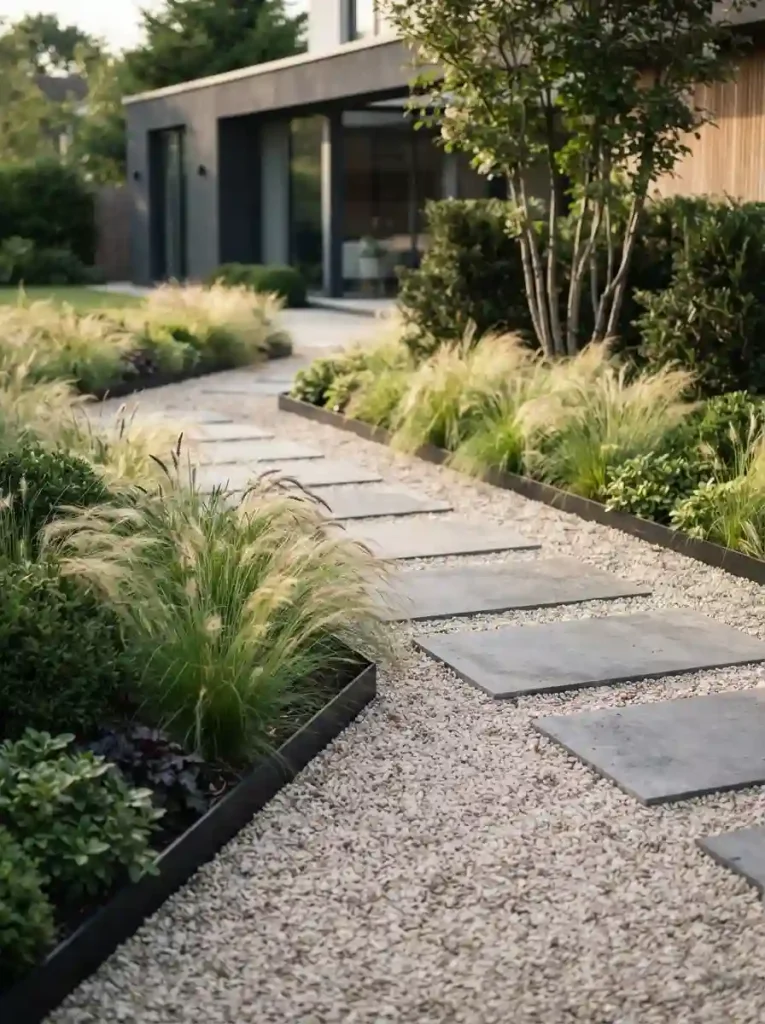
Black details can give a modern garden an instant sense of definition.
Use slim black metal edging around planting beds, pathways, or gravel areas to create a crisp boundary between different parts of the landscape. The dark line works especially well against fresh green foliage and light-colored stone.
You do not need many black elements to achieve the effect. A few carefully positioned borders can visually organize the entire garden.
For a softer appearance, plant flowing grasses or low groundcovers along the edging so the greenery gently contrasts with the straight lines.
Design Tip:
Keep the edging lines as straight and consistent as possible. Uneven borders can make an otherwise sophisticated garden look unfinished.
12. Design a Minimalist Courtyard Garden
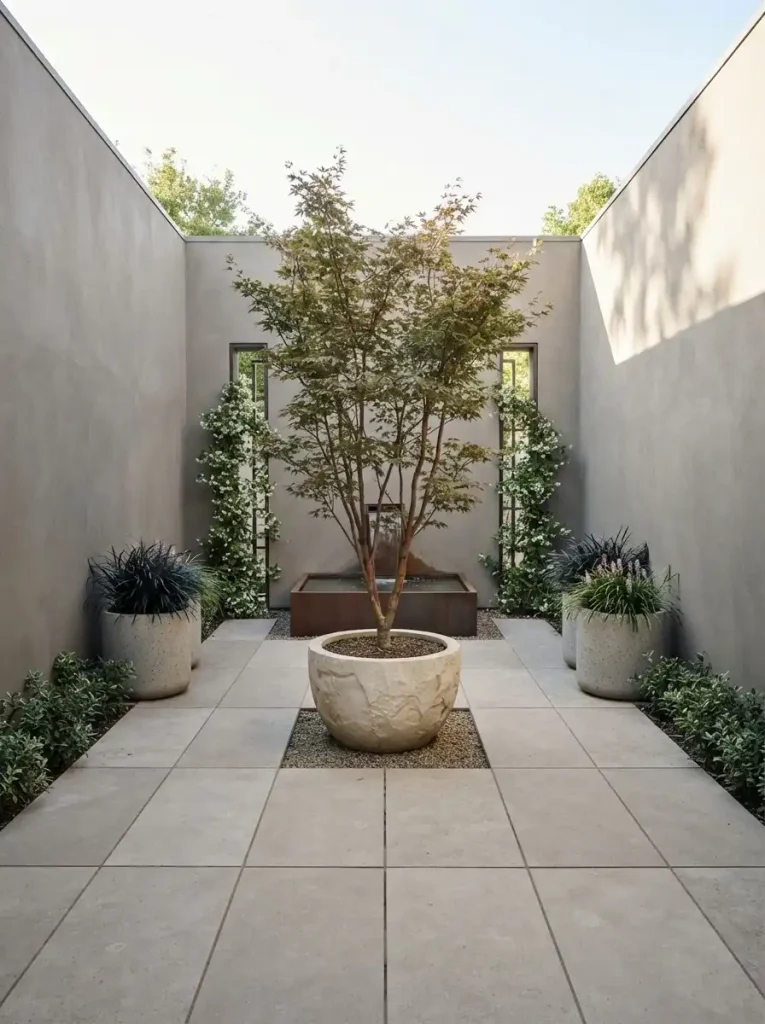
A courtyard can become a beautiful modern garden when every element has a clear purpose.
Instead of trying to fit too many plants into a limited area, choose one strong focal point. A small multi-stem tree, sculptural shrub, or architectural plant can provide the centerpiece.
Surround it with simple paving and just a few carefully selected containers. The walls themselves can act as part of the design, creating a quiet backdrop for the greenery.
This restrained approach makes a compact courtyard feel larger and more peaceful.
Design Tip:
Use vertical space whenever the ground area is limited. Wall-mounted planters, climbers, and tall narrow trees can add greenery without consuming valuable floor space.
13. Use Ornamental Grasses for Movement
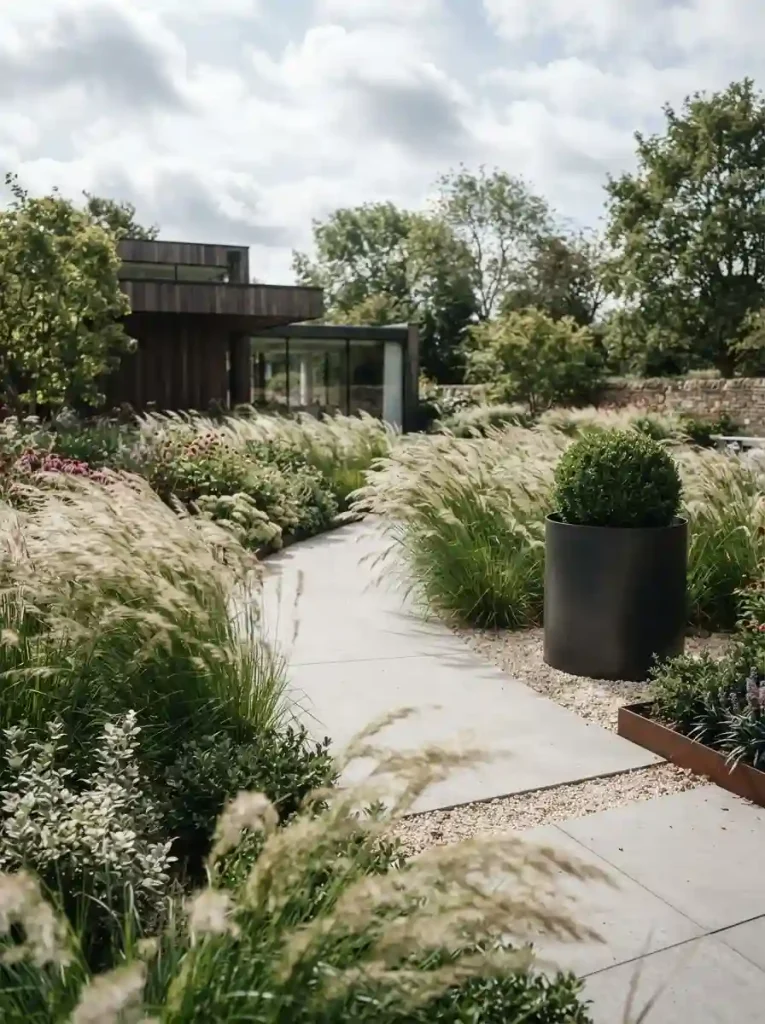
Modern gardens can sometimes become too rigid when every plant and surface has a hard geometric shape.
Ornamental grasses are an excellent way to introduce movement while maintaining a contemporary appearance. Their fine leaves and loose forms contrast beautifully with concrete, stone, and metal.
Plant them in groups rather than scattering individual specimens throughout the garden. Repeated clusters create a unified effect while allowing the foliage to move naturally in the breeze.
Choose varieties suited to your climate, available sunlight, and soil conditions.
Design Tip:
Leave enough space between grass clumps when planting. They often expand considerably as they mature, and overcrowding can reduce their visual impact.
14. Create a Monochromatic Green Planting Scheme
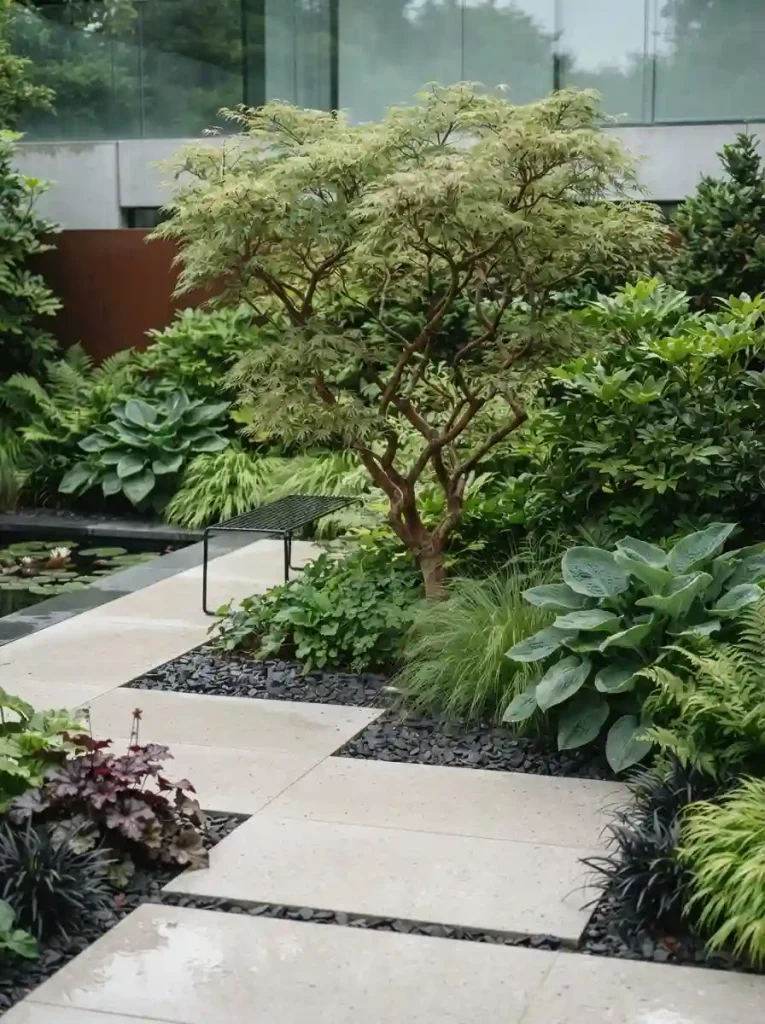
A monochromatic green planting scheme can create a sophisticated and relaxing atmosphere. Combine different leaf shapes, heights, and textures while keeping the dominant color within the green family.
For example, broad-leaved plants can contrast with fine grasses, while glossy evergreens can sit beside softer foliage.
Introduce subtle variation through materials rather than flowers. Gray stone, natural timber, and charcoal accents can provide enough contrast without disrupting the calm palette.
Design Tip:
Focus on texture as much as color. When the palette is restrained, differences in leaf shape and plant height become much more noticeable.
15. Add a Statement Tree to an Open Lawn
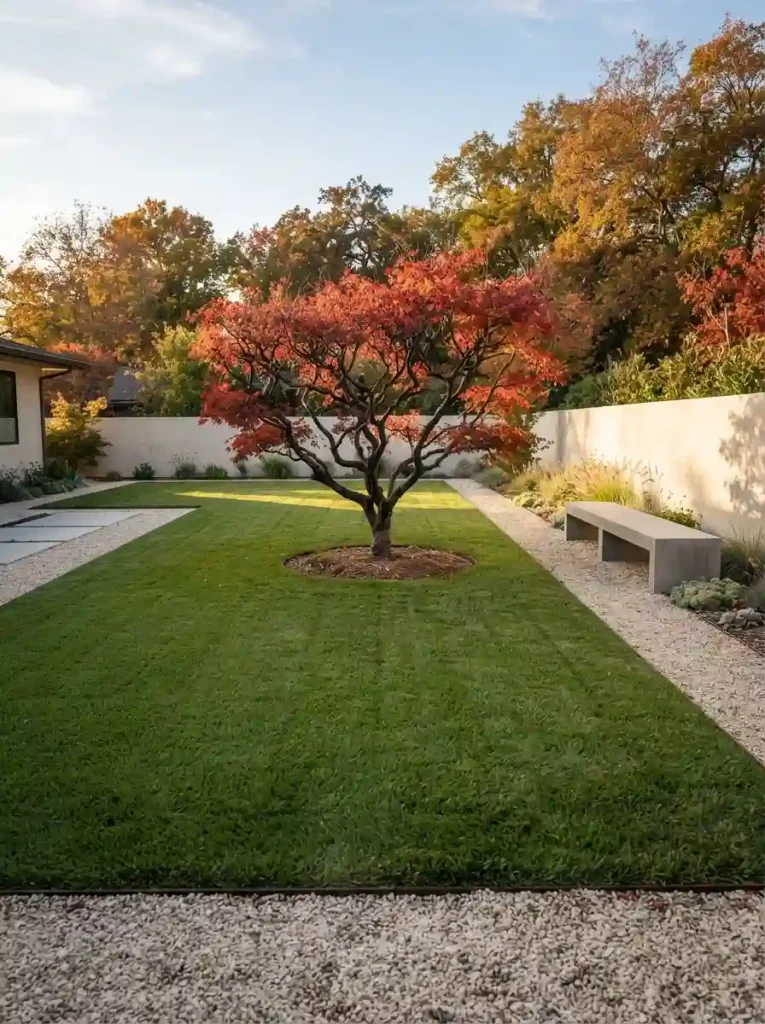
Sometimes one beautiful plant is all a modern garden needs.
Instead of filling an open lawn with multiple beds, consider placing a statement tree where it can become the main focal point. Trees with distinctive branching patterns or unusual silhouettes can look especially striking against a simple background.
Japanese maples, multi-stem birches, olive trees, and ornamental specimens can all create strong visual interest when suited to the local climate.
Keep the area around the tree relatively open so its shape remains visible.
Design Tip:
Think about the mature size of the tree before planting. A specimen that looks perfectly proportioned today can overwhelm a small garden after several years.
16. Use Large Planters as Architectural Features
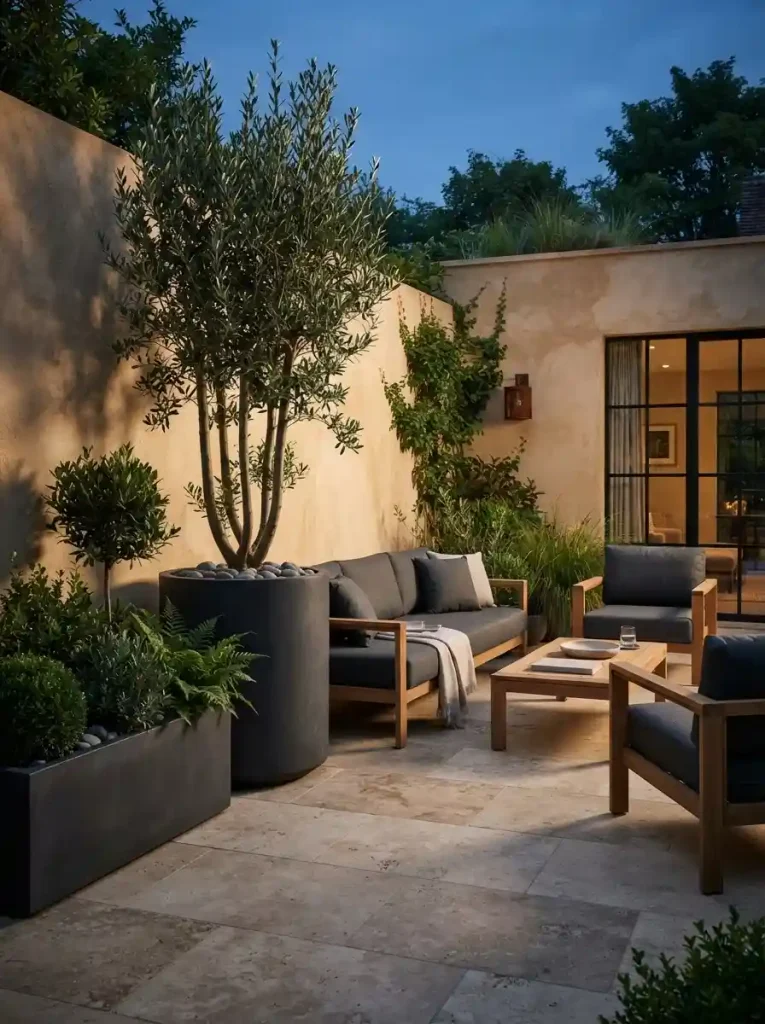
Large containers can provide structure without requiring major landscaping work.
Oversized planters are especially useful for renters, patios, terraces, and gardens where permanent planting beds are impractical. Choose containers with simple silhouettes and position them deliberately rather than placing them randomly.
A pair of matching planters can frame an entrance or seating area, while one oversized container can become a strong focal point.
Select plants with architectural shapes so the container and plant read as one complete design element.
Design Tip:
Before buying a large planter, check its drainage and final weight. A container filled with soil can become extremely heavy and difficult to move.
17. Introduce a Narrow Green Corridor
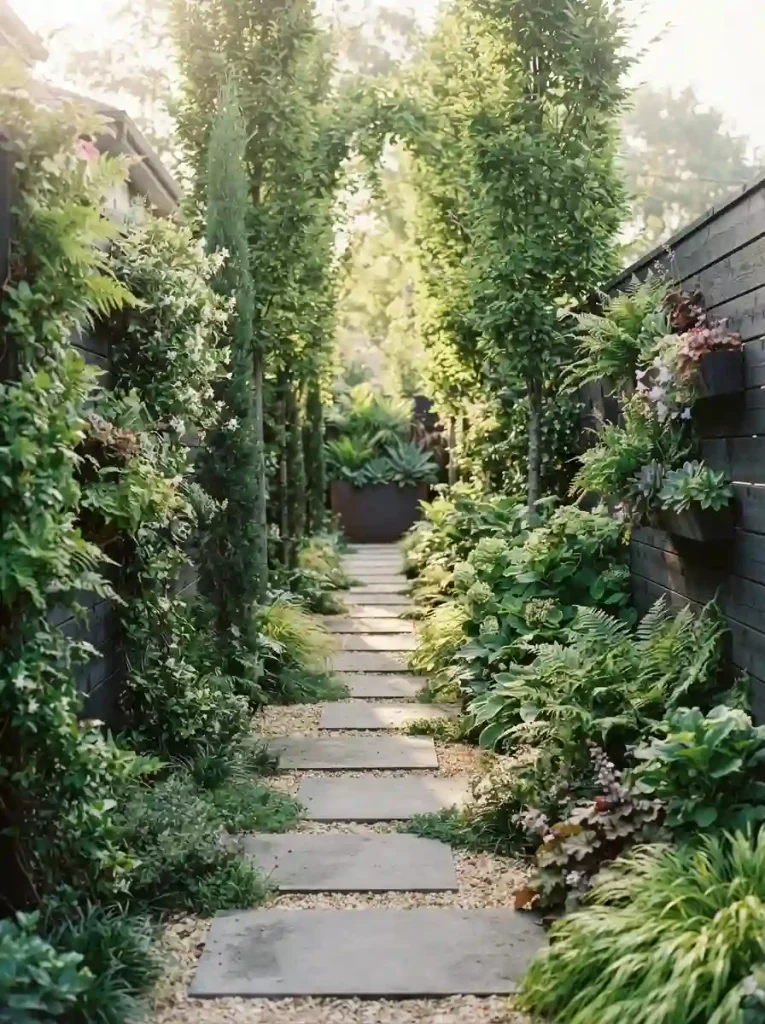
Narrow side yards can be challenging, but their proportions can actually work in favor of a modern design.
Treat the space as a garden corridor. Create one clear pathway and use planting along both sides to guide the eye toward the end of the yard.
Slim trees, vertical shrubs, grasses, and climbing plants can add height without making the passage feel crowded. Repeating similar plants also makes the narrow area appear more organized.
A contrasting feature at the far end, such as a decorative screen or large planter, can create a destination point.
Design Tip:
Avoid placing bulky plants directly beside the walking route. Choose narrow-growing varieties and leave enough clearance for comfortable movement.
18. Mix Concrete With Natural Timber
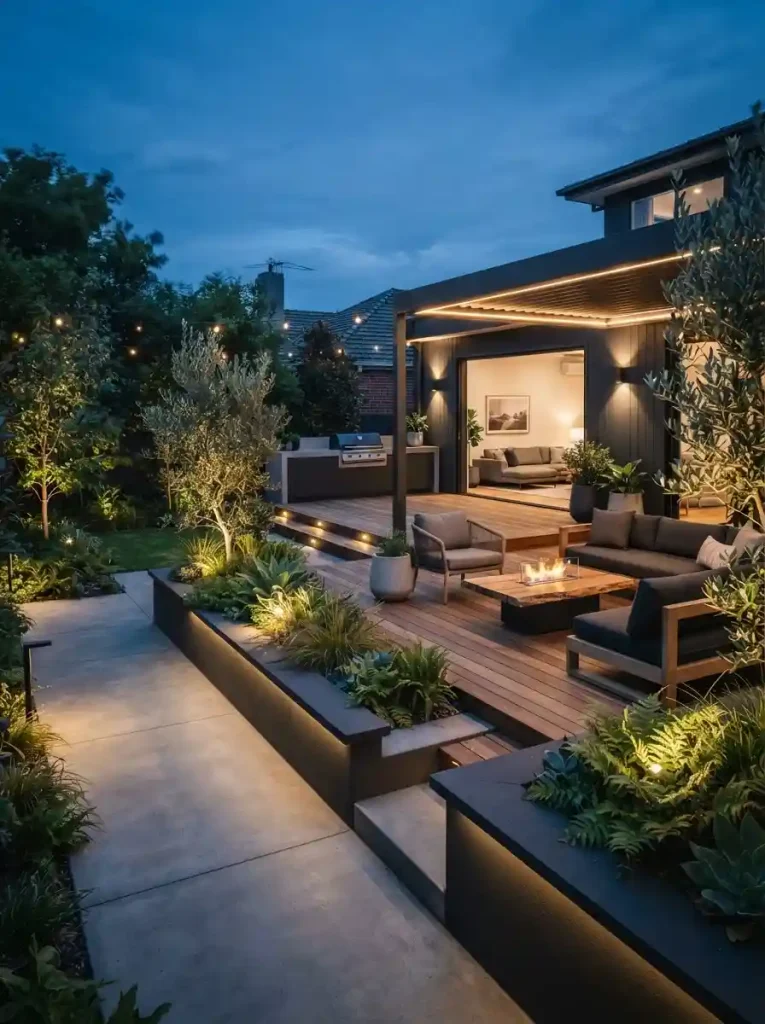
Concrete can provide the clean foundation of a modern garden, but too much hard material can make an outdoor space feel stark.
Natural timber is an effective way to bring warmth into the design.
Use timber decking, benches, screens, or raised beds alongside concrete paving and rendered walls. The contrast between smooth gray surfaces and warm wood creates a balanced contemporary look.
Keep the timber finish relatively simple and allow its natural grain to provide visual texture.
Design Tip:
Choose outdoor-rated timber and maintain it according to the manufacturer’s recommendations. Proper care helps preserve both its appearance and structural performance.
19. Create a Low-Maintenance Gravel Garden
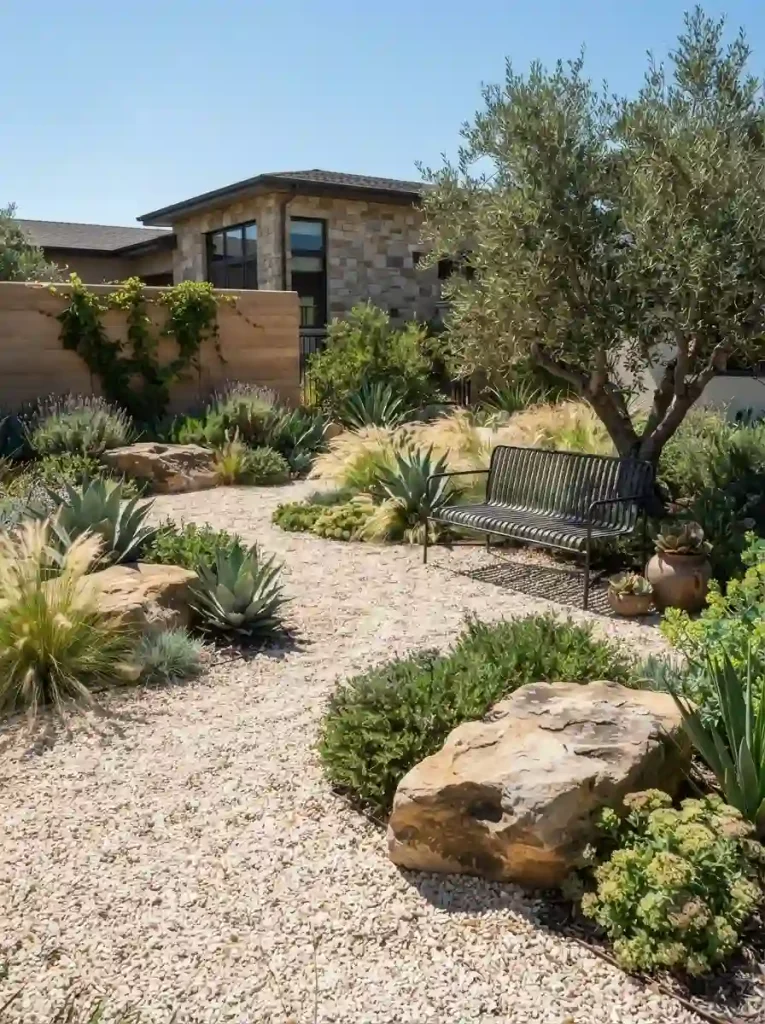
A gravel garden can be both practical and highly attractive when designed with intention.
Use gravel as the primary ground surface, then create visual structure with large rocks, bold plants, and clearly defined paths.
Drought-tolerant planting can make this approach particularly useful in suitable climates, although plant choices should always match your local growing conditions.
The key is to avoid treating gravel as simply an empty filler. Use different heights, textures, and carefully positioned focal plants to create a landscape that feels complete.
Design Tip:
Install a suitable weed-control layer beneath the gravel where appropriate, while ensuring drainage remains effective. Choose the gravel size and type based on how the area will actually be used.
20. Finish the Garden With Layered Lighting
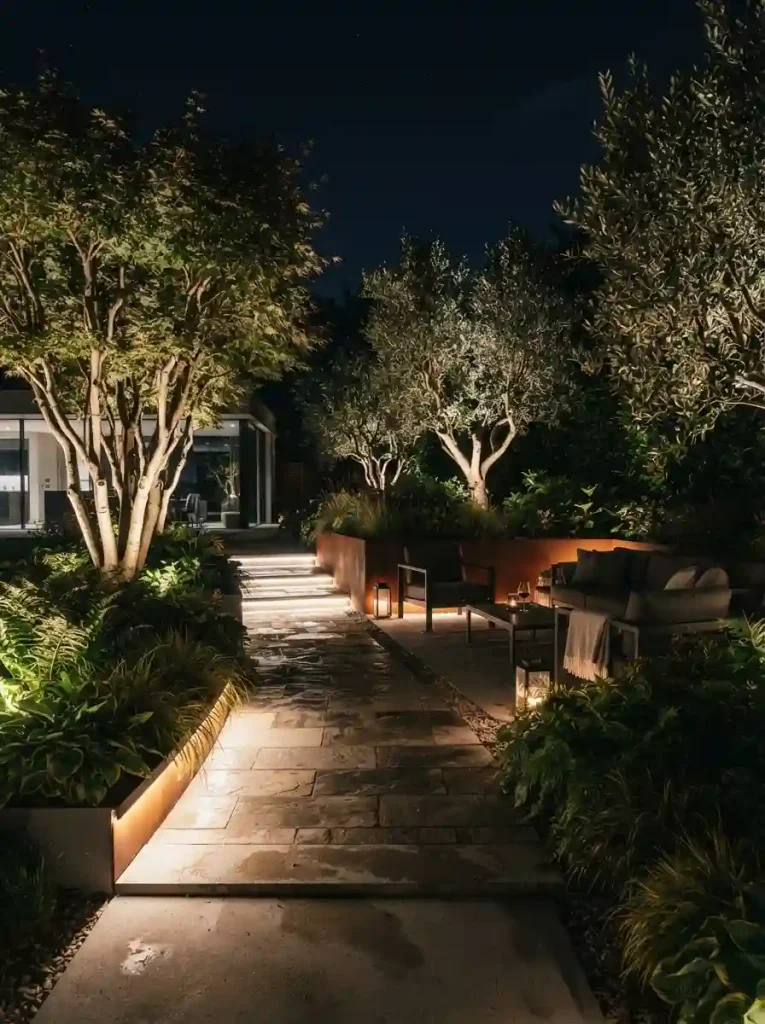
Good lighting can transform a modern garden after sunset.
Rather than relying on one bright outdoor fixture, combine several subtle layers. Path lights can define movement, uplights can emphasize trees or walls, and concealed lighting can highlight steps or architectural edges.
Warm-toned lighting generally creates a more inviting atmosphere for seating and entertaining areas. Keep fixtures discreet so the garden remains the main attraction.
Lighting can also improve practical visibility around paths, stairs, and entrances when installed correctly.
Design Tip:
Aim the light at plants, walls, or surfaces rather than directly toward people’s eyes. Concealed or shielded fixtures usually produce a more comfortable result.
Simple Tips for Planning a Modern Garden
Start With the Layout
Think about how you use the outdoor space first. Decide where you want seating, dining, pathways, planting beds, lawn, and storage.
Once those functional areas are established, the decorative choices become much easier.
Limit Your Material Palette
Too many competing materials can make a modern garden feel busy.
Choose two or three primary materials and repeat them throughout the space. For example, concrete could be combined with timber and dark metal, or stone could be paired with gravel and corten steel.
Repeat Shapes and Plants
Repetition is one of the easiest ways to achieve a professional-looking landscape.
If you use rectangular paving in one section, consider echoing that shape in a planter or planting bed. Similarly, repeating a few key plant varieties can make separate garden areas feel connected.
Leave Some Empty Space
Do not feel pressured to fill every corner.
Negative space gives plants, furniture, paving, and architectural features room to stand out. It is often one of the most important ingredients in a clean modern garden.
Think About Maintenance
A beautiful garden should also be realistic for the amount of time you want to spend maintaining it.
Consider mature plant sizes, watering requirements, seasonal pruning, drainage, sunlight, and access before committing to a particular design.
How to Make a Garden Look Modern on a Budget
You do not need to completely redesign your yard to create a contemporary appearance.
Start with inexpensive changes that have a strong visual effect. Clean up overgrown borders, redefine the edges of existing beds, repaint tired structures, rearrange outdoor furniture, or introduce a consistent group of planters.
Gravel can sometimes provide a more affordable alternative to extensive paving, while simple timber screens can add architectural interest without requiring a major construction project.
Another useful strategy is to tackle the garden in stages. Complete the layout and hardscape first, then gradually add plants, lighting, and decorative elements.
The goal is not to spend more. It is to make each design choice contribute to the overall look.
Final Thoughts
The most successful modern gardens balance structure with nature.
Straight pathways, geometric planting beds, concrete, timber, gravel, and metal can provide the architectural foundation, while trees, grasses, shrubs, and softer foliage keep the garden feeling alive.
You do not have to copy one particular style to achieve the look. Choose the ideas that suit your home’s architecture, climate, available space, and lifestyle.
Whether you start with a simple gravel pathway, a statement tree, a privacy screen, or a beautifully lit seating area, even one thoughtful improvement can make your outdoor space feel considerably more polished.
The best modern garden is ultimately one that looks intentional while remaining comfortable enough to enjoy every day.
Frequently Asked Questions
What makes a garden design look modern?
Modern gardens usually emphasize clean lines, simple shapes, restrained materials, purposeful planting, and uncluttered layouts. Repetition and negative space are also important because they help create a cohesive architectural appearance.
What plants work well in a modern garden?
Ornamental grasses, evergreen shrubs, architectural succulents, multi-stem trees, clipped shrubs, and plants with distinctive foliage can work well. The best choices depend on your climate, soil, sunlight, and maintenance preferences.
How can I make a small garden look modern?
Use a limited material palette, large-format paving, vertical planting, simple borders, and a few strong focal points. Avoid overcrowding the space with too many different plants or decorative features.
Are modern gardens difficult to maintain?
Not necessarily. A carefully planned modern garden can be relatively low-maintenance, particularly when it uses appropriate evergreen plants, well-designed gravel areas, efficient irrigation, and clearly defined planting zones.
Can a modern garden still feel cozy?
Yes. Natural timber, warm lighting, comfortable seating, textured planting, and earthy materials can soften architectural features and create a welcoming outdoor environment.
What colors work best in a modern garden?
Neutral colors such as gray, charcoal, white, beige, natural wood tones, and muted earthy shades are common. Green foliage then provides natural color and texture without making the design feel overly busy.