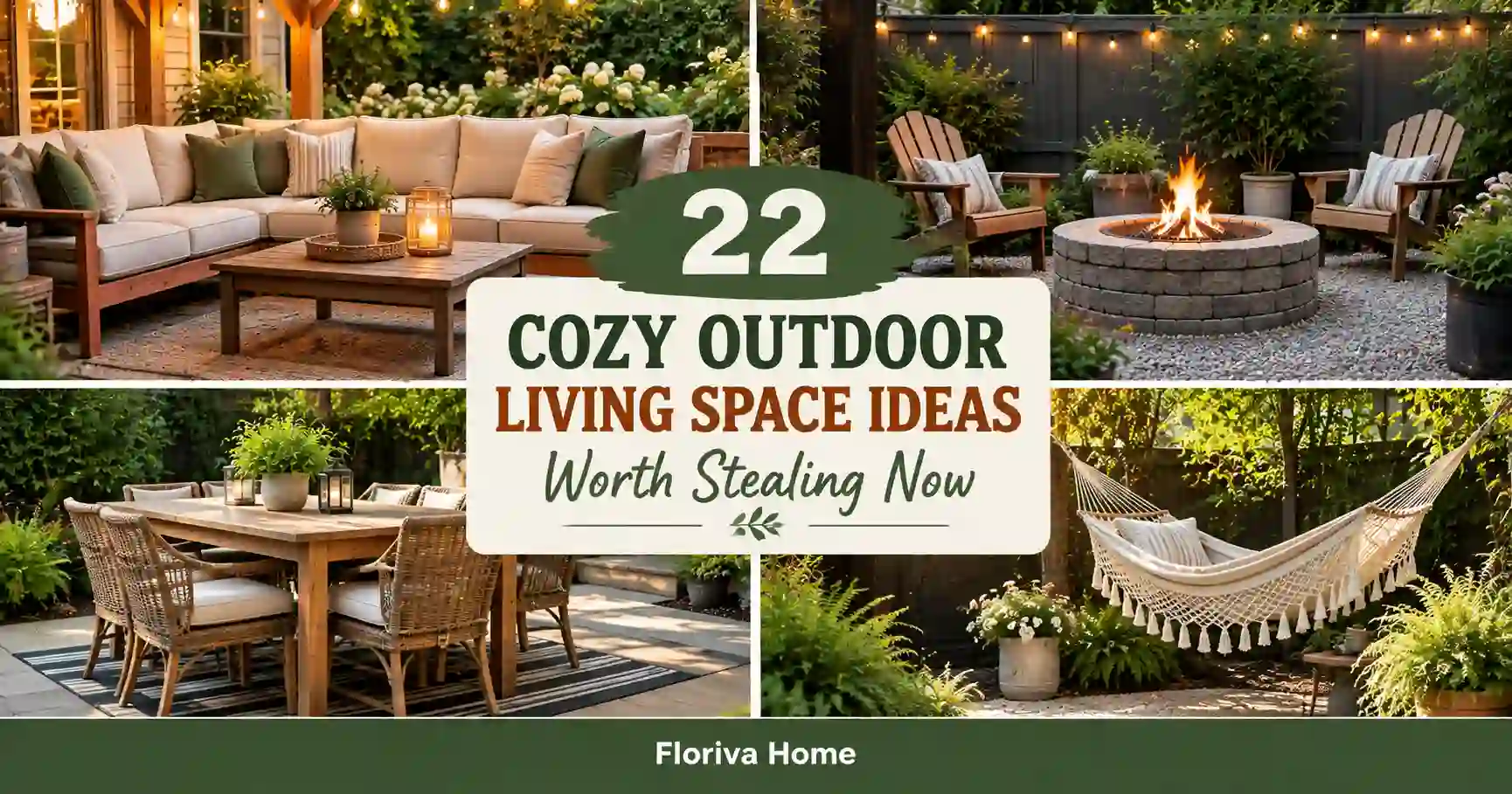
22 Cozy Outdoor Living Space Ideas Worth Stealing Now
Your outdoor space doesn’t have to be huge or expensive to feel like a place you never want to leave.
With the right seating, lighting, textures, and a few thoughtful details, even a simple backyard can become an inviting extension of your home.
Whether you want a peaceful corner for morning coffee, a comfortable spot for entertaining, or somewhere to unwind after a long day, these cozy outdoor living space ideas can help you create a backyard that actually feels lived in.
Here are 22 stylish and practical ideas worth stealing now, with plenty of inspiration for making your outdoor space warmer, more comfortable, and more personal.
1. Pergola lounge with a fire bowl
Relatable problem: Your backyard has plenty of room, but it still feels like an empty patch of furniture.
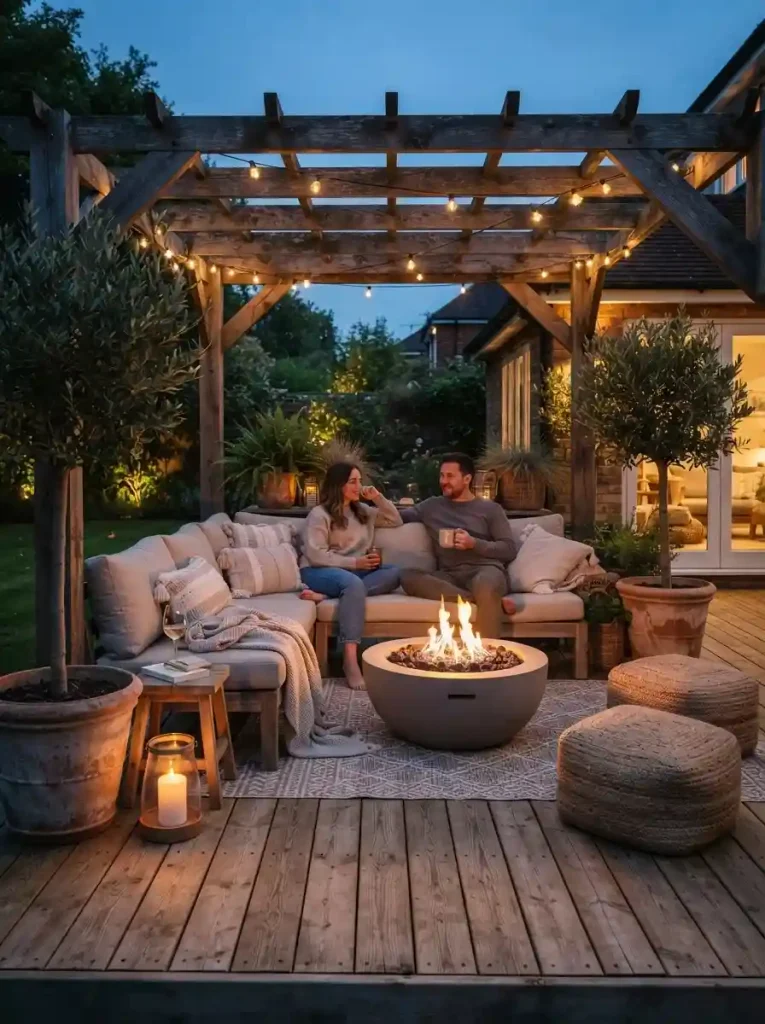
A pergola lounge can give the space a clear purpose while creating a cozy sense of enclosure. Start with a deep outdoor sofa, then arrange a few lightweight poufs around a compact fire bowl.
Layer in cushions and throws to make the seating feel more like an indoor living room. A few large planters can soften the edges and make the pergola feel connected to the surrounding garden.
The fire bowl becomes the natural gathering point, especially once the temperature drops in the evening.
You don’t need an oversized structure, either. A modest pergola can define a small seating area without overwhelming the rest of your yard.
Expert Tip:
Keep the fire feature far enough away from cushions, curtains, plants, and overhead materials. Always follow the manufacturer’s clearance requirements and local fire-safety rules.
2. Curved built-in bench beneath a garden wall
A curved bench can make an awkward backyard corner feel intentional instead of forgotten.
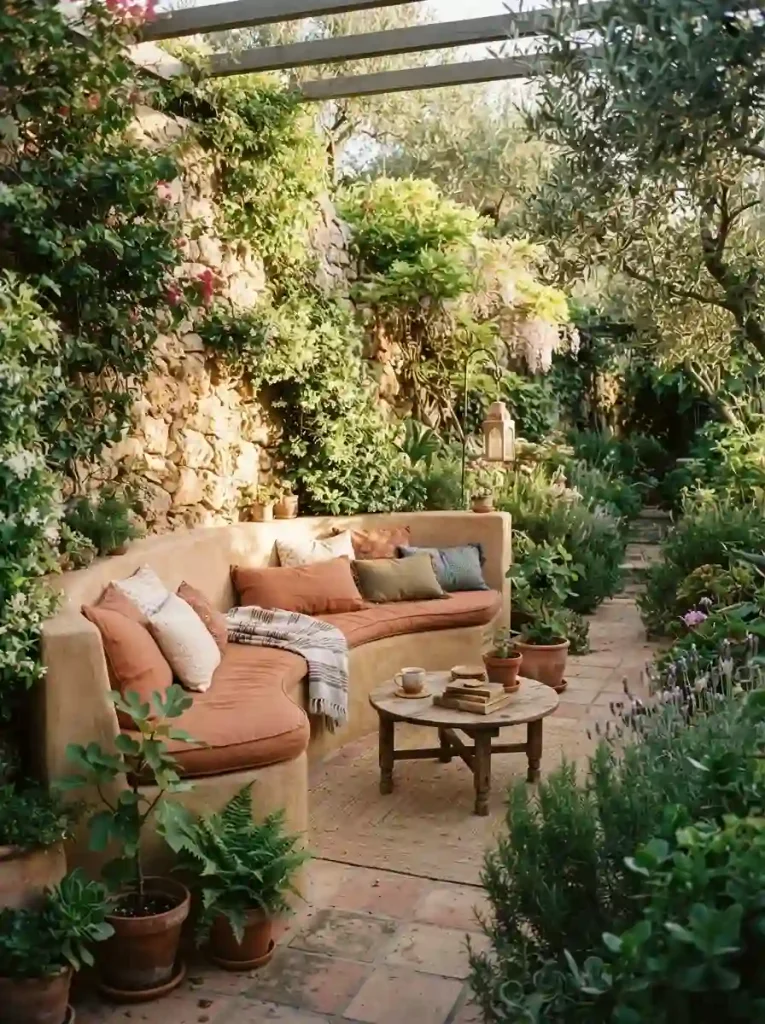
Rather than placing several individual chairs around the perimeter, build seating directly into the shape of the space. A gently curved design creates a softer visual flow and gives everyone a comfortable place to face one another.
Add thick outdoor cushions in earthy shades such as terracotta, sand, or olive. Behind the bench, a textured wall or climbing greenery can provide additional character.
This idea works particularly well in smaller yards because the bench doesn’t require the same amount of clearance as several bulky lounge chairs.
Add a small round table in front, and you have an easy spot for drinks, books, or morning coffee.
Expert Tip:
Choose removable, quick-drying cushions whenever possible. That makes seasonal cleaning and storage much easier.
3. Oversized sectional on a gravel patio
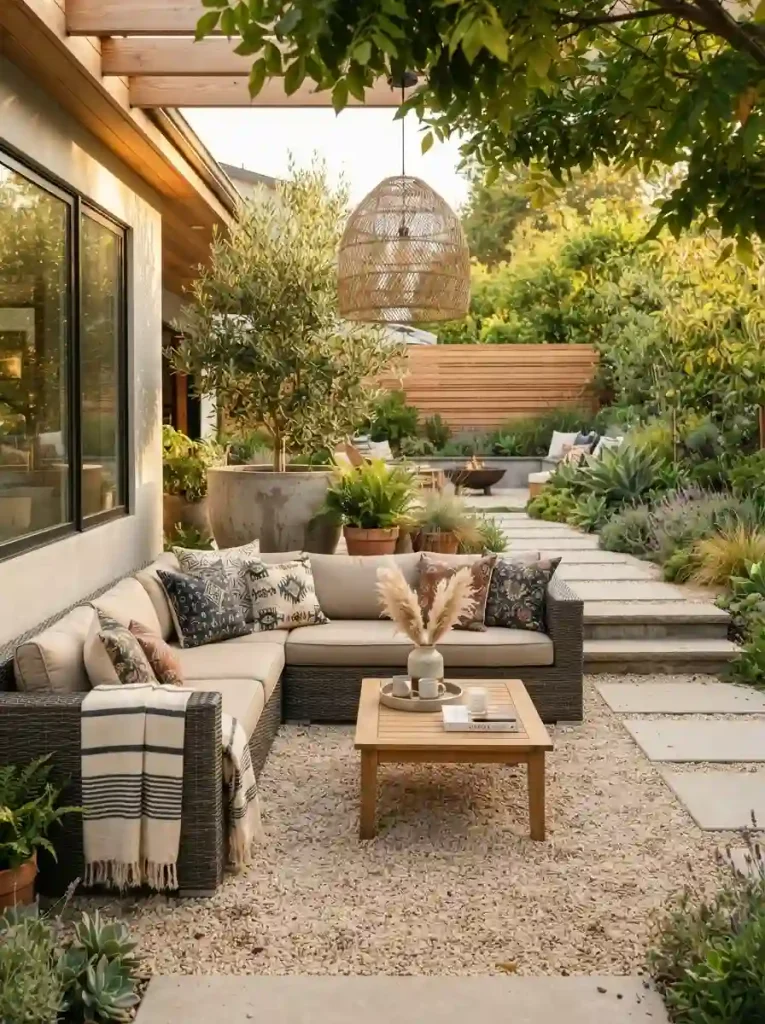
Surprising fact: A gravel patio can feel remarkably polished when the furniture is arranged like an indoor living room.
An oversized sectional instantly creates a comfortable destination in the backyard. Instead of scattering chairs around the patio, use one substantial seating piece to establish a central conversation zone.
Place a low coffee table in front and add a mixture of patterned and solid cushions for visual interest.
The gravel underneath provides a relaxed, natural foundation while large planters help anchor the furniture. You can also use stepping stones to create a clean route from the house to the seating area.
For a more finished appearance, repeat one or two colors from your home’s exterior in the cushions or accessories.
Expert Tip:
Use properly compacted patio gravel and choose furniture feet designed for uneven outdoor surfaces so the seating remains stable.
4. A dreamy outdoor daybed retreat
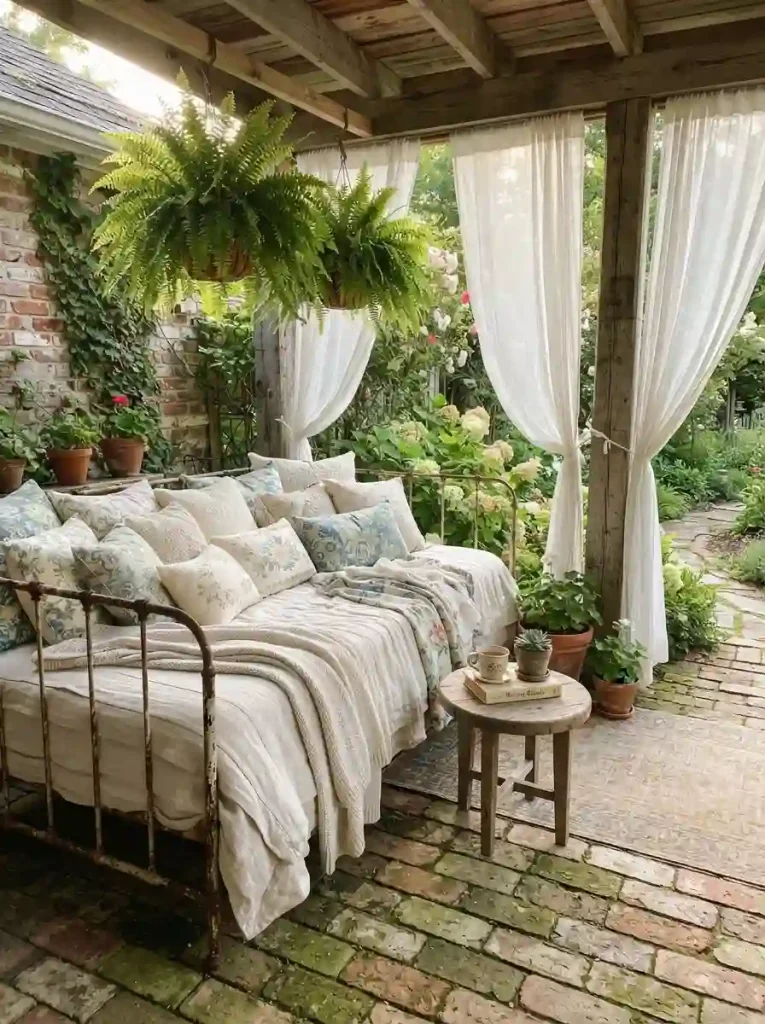
Want one outdoor spot that feels completely dedicated to relaxing?
Turn a covered patio corner into a daybed retreat.
A weather-resistant daybed gives you something more versatile than ordinary patio seating. It can become a reading nook during the afternoon, a place for an afternoon nap, or extra seating when guests arrive.
Layer several cushions across the back and add a lightweight outdoor throw for texture. Soft curtains around the perimeter can make the area feel more private without permanently closing it off.
Hanging greenery adds another layer of softness and helps the daybed blend into the garden.
The key is resisting the temptation to overcrowd it. A simple side table and one or two decorative accents are enough.
Expert Tip:
Select outdoor-rated upholstery and breathable fabrics so moisture doesn’t remain trapped beneath cushions.
5. Fire-pit conversation circle
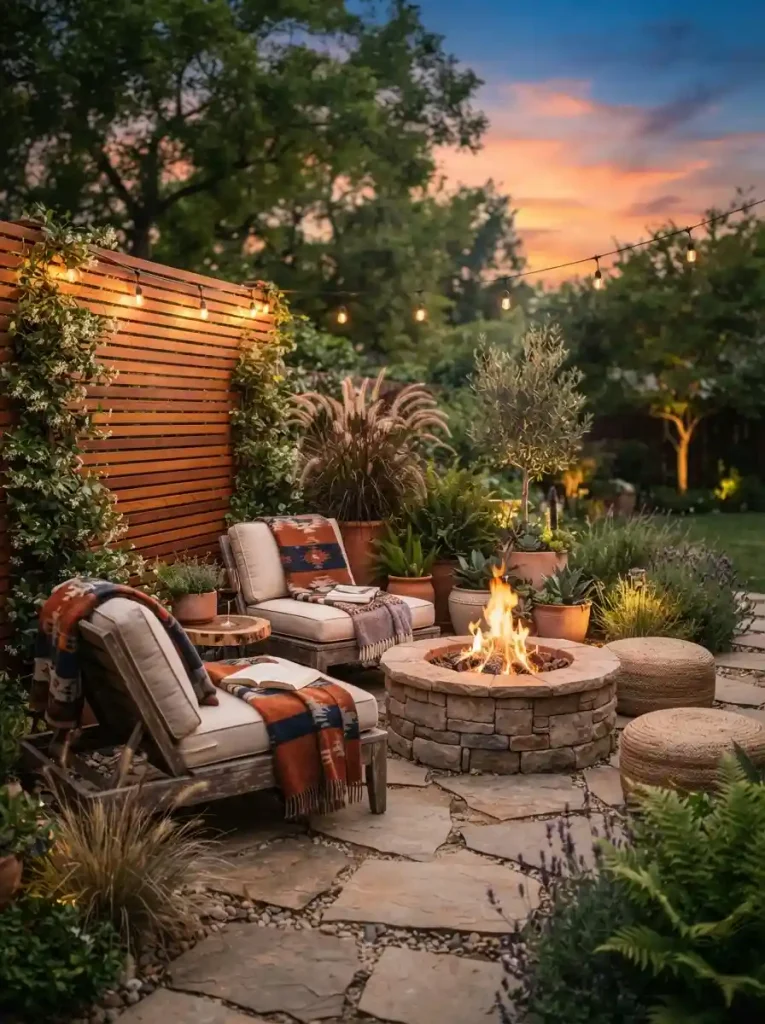
Myth-busting statement: You don’t need a huge outdoor fireplace to make your backyard feel warm and inviting.
A compact fire pit can create the same sense of gathering while taking up much less space.
Arrange four comfortable lounge chairs around it instead of pointing every seat toward the house. This encourages conversation and gives the area its own identity.
Colorful blankets can be folded over chair backs when temperatures fall, while ornamental grasses and planters provide a natural backdrop.
A simple privacy screen behind the seating can make the space feel more secluded without completely blocking the garden.
This arrangement is especially useful for households that enjoy casual evening gatherings rather than formal outdoor dining.
Expert Tip:
Leave adequate clearance around the fire feature and avoid placing it beneath low branches or combustible overhead structures.
6. Tiny outdoor dining nook with lantern lighting
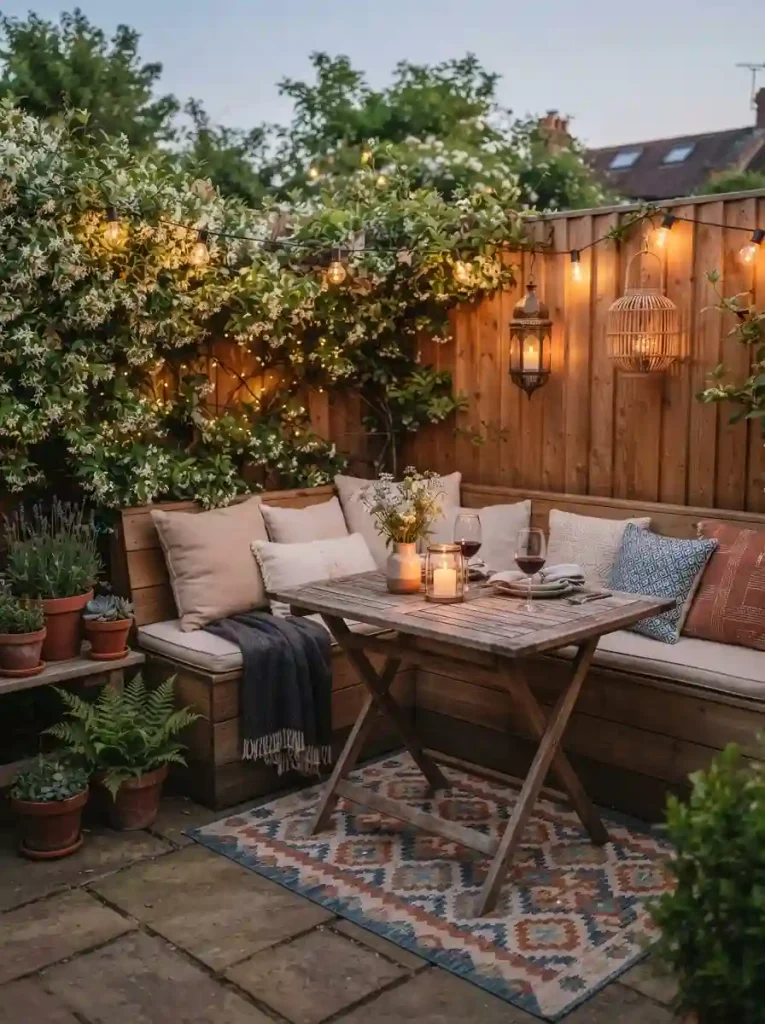
Relatable problem: You want to eat outdoors, but your backyard doesn’t have enough space for a full dining set.
A compact dining nook can solve that without sacrificing comfort.
Try pairing a small round table with a cushioned bench. The bench can accommodate more people than two individual chairs while keeping the footprint relatively small.
Instead of overhead string lights, use lanterns on the table, nearby steps, or a wall shelf. This creates a softer atmosphere without filling the entire ceiling with lighting.
Climbing plants can also make a plain fence feel more inviting. Jasmine, clematis, or another suitable local climber can add fragrance and greenery where space is limited.
Expert Tip:
Choose a round or oval table when possible. The lack of sharp corners makes movement easier in compact outdoor spaces.
7. Boho-inspired outdoor living room
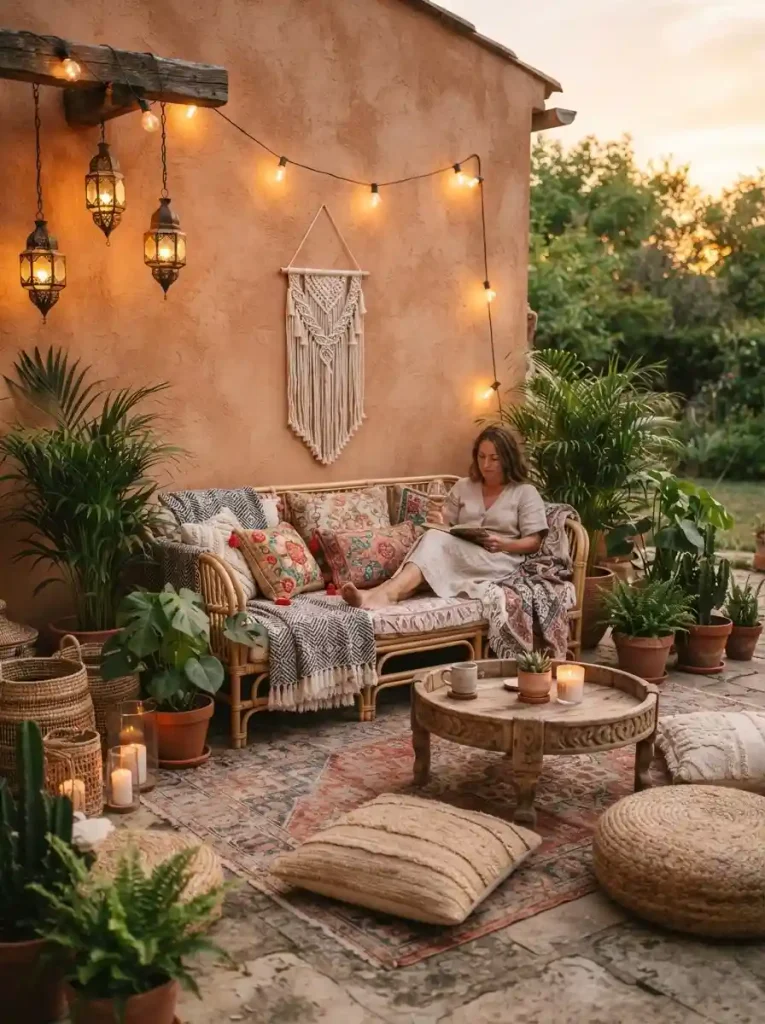
If you prefer an outdoor space that feels relaxed rather than perfectly coordinated, lean into a boho-inspired arrangement.
Start with natural materials such as rattan, wood, jute-style textures, and woven accessories. A low coffee table keeps the seating arrangement casual, while floor cushions give guests extra places to sit.
Mix patterns instead of matching every cushion. A patterned outdoor rug can bring the different textures together and visually define the lounge area.
Plants are another easy way to enhance the look. Palms, large leafy containers, and trailing plants can make the space feel lush and relaxed.
The result should feel collected rather than overly decorated.
Expert Tip:
Use outdoor-rated versions of natural-looking textiles whenever possible. They provide the boho appearance while standing up better to moisture and sunlight.
8. Modern concrete bench with a vertical garden
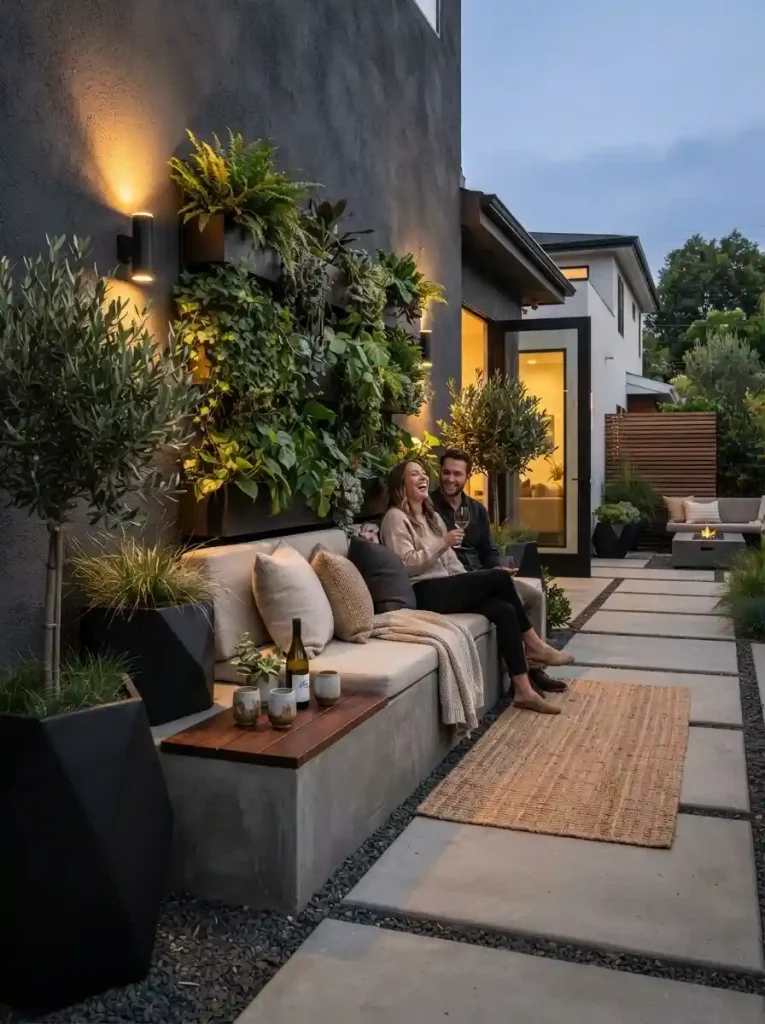
Surprising fact: Concrete can actually make an outdoor space feel cozy when it’s balanced with soft textures and greenery.
A streamlined concrete bench gives a modern backyard a strong architectural foundation. Then soften it with thick cushions, warm-toned textiles, and leafy plants.
A vertical garden behind the bench is especially useful if you don’t have much planting space. It draws the eye upward while creating a natural backdrop for the seating area.
You can also incorporate a narrow ledge beside the bench for drinks, small plants, or decorative objects.
Keep the color palette simple—think charcoal, cream, beige, and muted greens—to let the textures do most of the decorating.
Expert Tip:
If building permanent concrete seating, plan drainage carefully and use cushions that can be removed easily after rain.
9. Weather-ready lounge beneath a clear pavilion
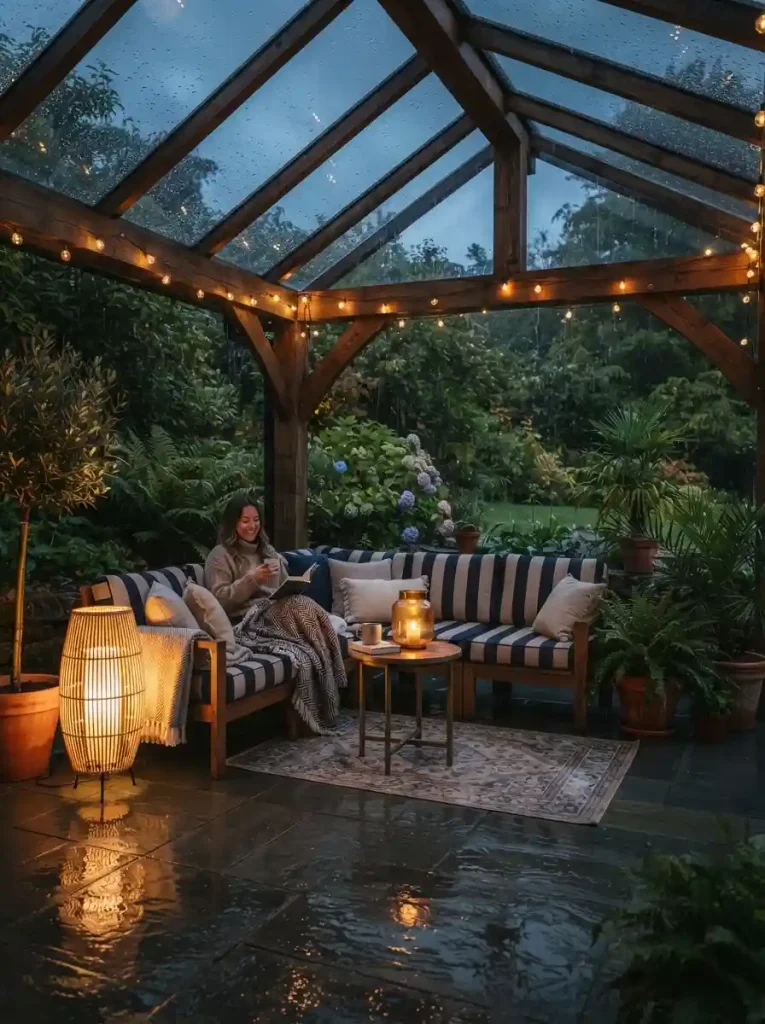
Relatable problem: Your favorite outdoor space becomes unusable every time the weather turns unpredictable.
A covered pavilion can help you enjoy the backyard through changing conditions while still keeping the area visually open.
A transparent or translucent roof allows daylight into the seating area while providing protection overhead. Underneath, choose a weather-resistant sectional and furniture that can handle occasional moisture.
Add floor lamps or protected outdoor lighting to create a warm atmosphere after sunset.
Stone flooring works beautifully here because its texture remains attractive even after rainfall. Large leafy planters can complete the space without making it feel crowded.
This approach is especially appealing if you want your outdoor living area to feel like a genuine extension of the home.
Expert Tip:
Make sure rainwater has a planned drainage path. A beautiful covered space quickly becomes frustrating if water collects around the seating area.
10. Outdoor pizza-making and dining station
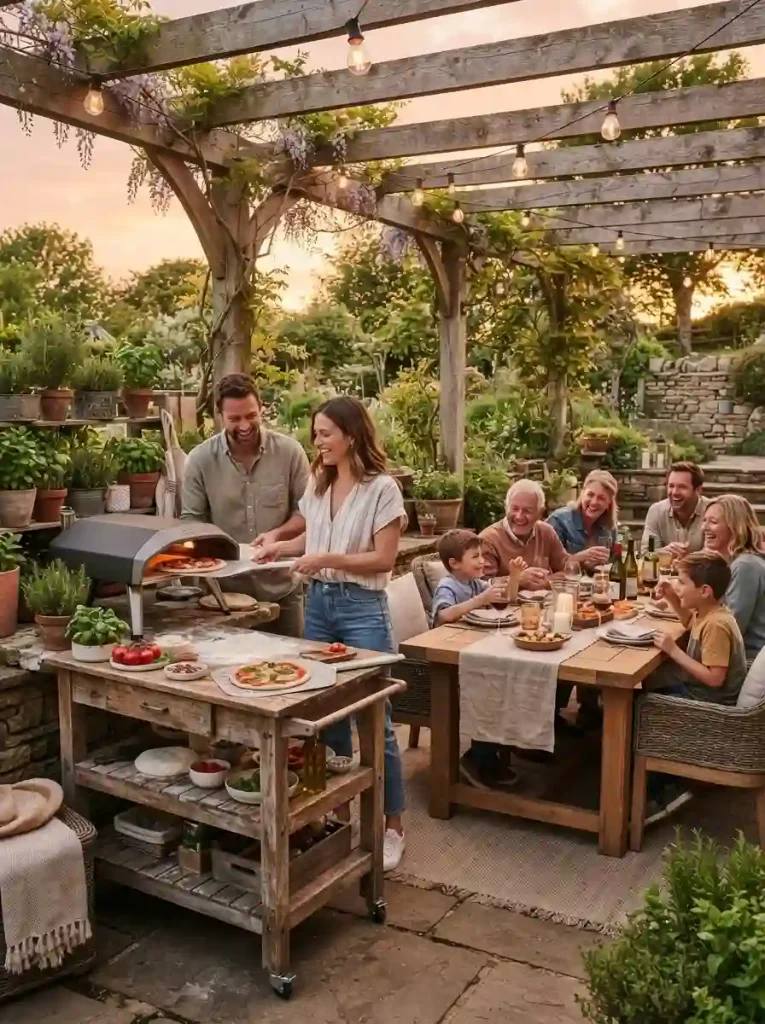
Personification: An outdoor pizza station has a way of becoming the backyard’s social magnet.
Instead of separating cooking from relaxing, create a setup where food preparation becomes part of the gathering.
A portable pizza oven can sit beside a sturdy prep cart stocked with serving boards, utensils, and ingredients. Nearby, place a small dining table where everyone can eat while the food is still hot.
Potted herbs such as basil, oregano, and rosemary make the station both decorative and practical.
A pergola overhead can provide shade during daytime cooking, while comfortable chairs make the whole area feel like a proper outdoor dining room.
It’s a particularly fun setup for families because preparing food becomes part of the experience rather than something happening indoors.
Expert Tip:
Position cooking equipment where smoke and heat can safely move away from the house and seating areas.
11. Hammock-chair reading corner
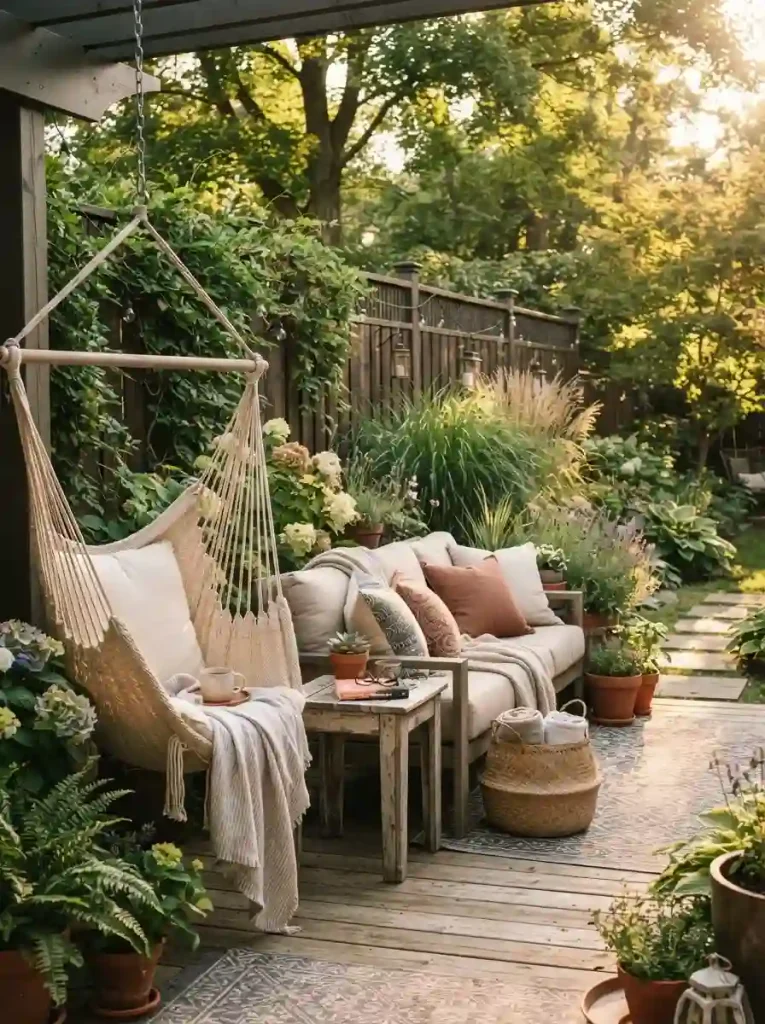
Sometimes the best outdoor living space isn’t designed for entertaining everyone.
It’s designed for you.
A hanging hammock chair can transform an unused backyard corner into a personal reading retreat. Place it beside a comfortable outdoor sofa if you want additional seating, or let it stand alone as a dedicated relaxation zone.
Keep a small side table nearby for a book, drink, or phone. A woven basket can hold blankets while tall grasses and flowering containers make the area feel tucked away.
This idea is particularly useful for awkward corners that don’t have enough room for a conventional seating arrangement.
Add a privacy fence, trellis, or dense planting behind it, and you’ll have a peaceful little escape just steps from your back door.
Expert Tip:
Use hardware specifically rated for the hammock chair and verify that the supporting structure can safely handle the expected load before installation.
12. Layered patio with an outdoor rug
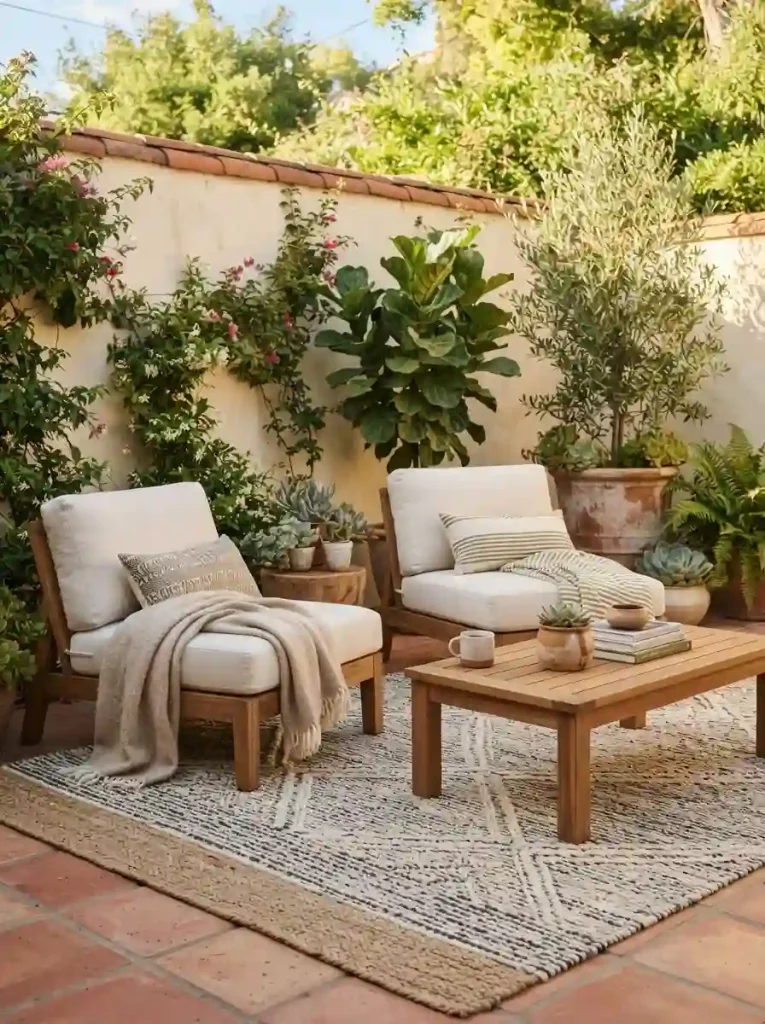
Design trick: An outdoor rug can make separate pieces of patio furniture feel like one cohesive room.
If your backyard currently feels like a collection of unrelated furniture, start from the ground up. Place a weather-resistant rug beneath the main seating arrangement to visually define the lounge.
Then layer in a coffee table, comfortable cushions, and a few side tables.
Choose a rug pattern that complements your home’s interior rather than competing with it. Subtle stripes, geometric designs, or faded natural patterns are particularly versatile.
The rug also adds softness underfoot, which can make hard patio surfaces feel considerably more comfortable.
Expert Tip:
Check that your outdoor rug has adequate drainage and can dry quickly after rain. Avoid trapping moisture against wooden decking.
13. Outdoor movie night setup
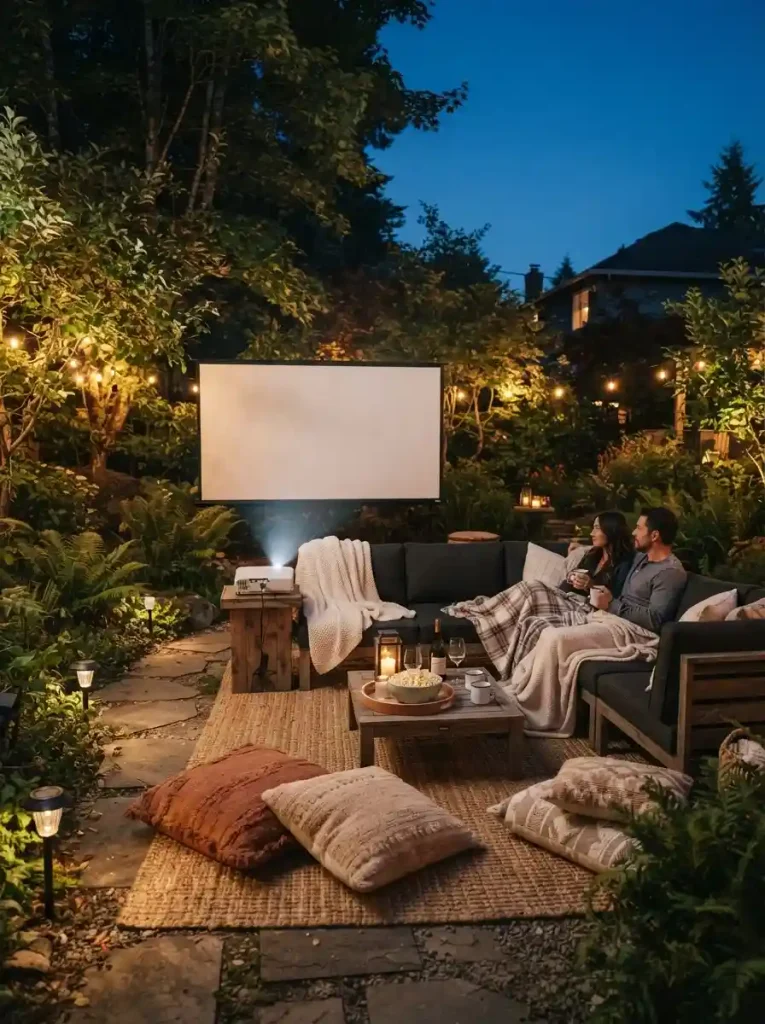
Surprising fact: You can create an outdoor movie area without building a permanent theater.
A portable projector and a simple screen can transform an ordinary patio into an entertainment zone.
Arrange the main seating toward the screen, then scatter a few oversized floor cushions around the front for relaxed seating. Keep blankets nearby for cooler evenings.
Lighting matters here. Use low-level pathway lights or lanterns positioned away from the screen so they provide atmosphere without washing out the image.
A small rolling cart can hold snacks and drinks while keeping the main seating area uncluttered.
The beauty of this setup is its flexibility. The equipment can be packed away when you want the patio to return to a regular living space.
Expert Tip:
Test projector brightness and screen visibility before buying permanent equipment. Ambient light can dramatically affect outdoor viewing quality.
14. Tropical plant-filled lounge
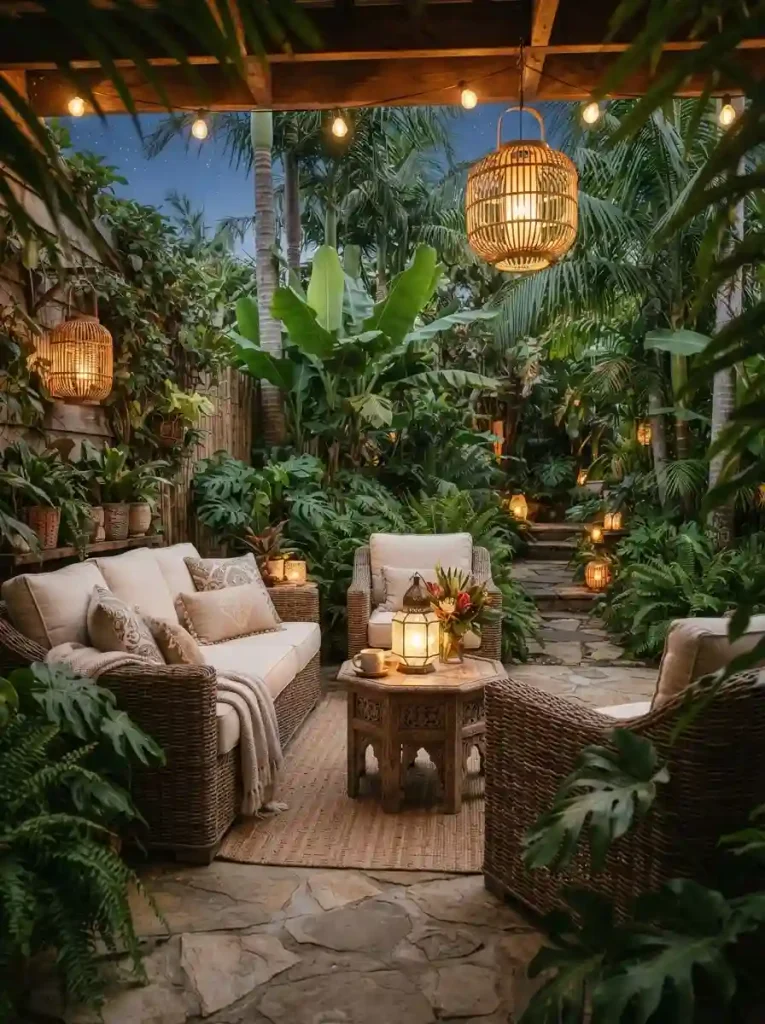
Want your backyard to feel like a vacation without leaving home?
Surround the seating area with lush foliage.
Large tropical-looking plants can create a dramatic backdrop around an outdoor sofa or pair of lounge chairs. Use different heights to create depth: tall plants behind the seating, medium containers beside it, and smaller pots near the coffee table.
Natural wood and woven furniture complement the greenery beautifully.
If your climate doesn’t support tropical plants outdoors year-round, use hardy plants that create a similar layered appearance. The goal is the visual effect, not copying a particular plant palette.
Keep a few open areas between containers so the space remains comfortable to walk through.
Expert Tip:
Choose plants according to your actual sunlight, temperature, and watering conditions. The right plant in the right location will always outperform a trendy choice that struggles.
15. Covered outdoor kitchen with a cozy seating zone
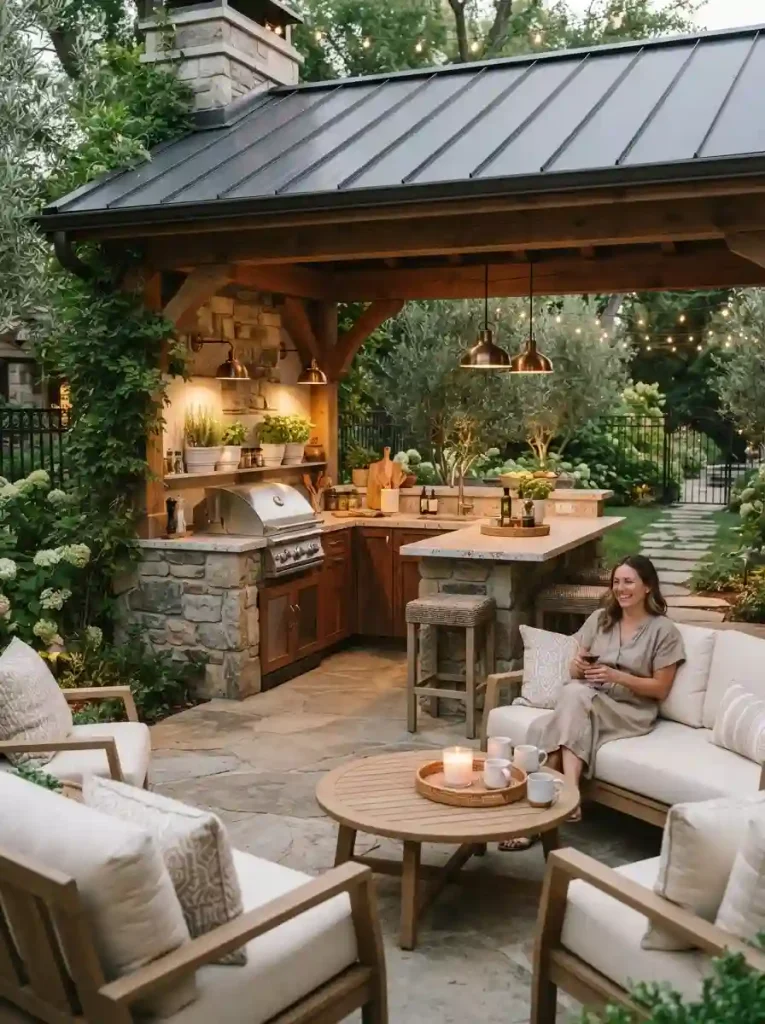
Relatable problem: Outdoor cooking is convenient, but nobody wants to spend the entire gathering standing beside the grill.
The solution is to combine the cooking and living zones.
Place the outdoor kitchen along one side of a covered patio and position comfortable seating nearby. This allows the person preparing food to remain part of the conversation.
A compact countertop can double as a serving area, while bar stools create additional casual seating.
Add herbs in attractive containers near the preparation surface for both convenience and visual interest.
Warm lighting under cabinets or along the ceiling can make the kitchen feel especially inviting after dark.
Expert Tip:
Plan ventilation, electrical connections, water supply, and appliance clearances carefully before installing a permanent outdoor kitchen.
16. Cottage-style porch with floral cushions
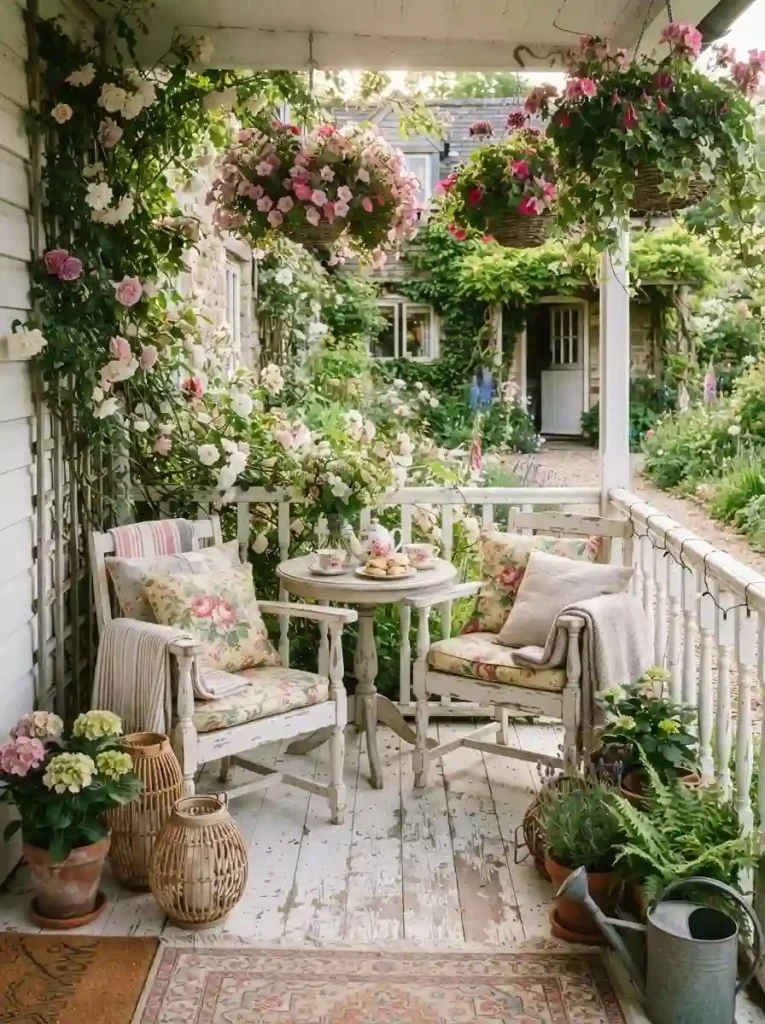
Myth-busting statement: Cozy outdoor spaces don’t have to follow a modern or minimalist aesthetic.
A cottage-inspired porch can feel just as stylish while bringing plenty of personality.
Choose painted wood furniture, floral or botanical cushions, and small decorative tables. Hanging baskets filled with seasonal flowers can soften the roofline while climbing plants add a romantic backdrop.
Don’t worry about everything matching perfectly. Slight variations in furniture styles can actually make the porch feel more collected and welcoming.
A small vintage-inspired lantern or ceramic planter can provide the finishing detail without overwhelming the space.
Expert Tip:
Keep the largest furniture pieces neutral and introduce stronger patterns through cushions and accessories. That makes seasonal style changes much easier.
17. Sunken outdoor lounge
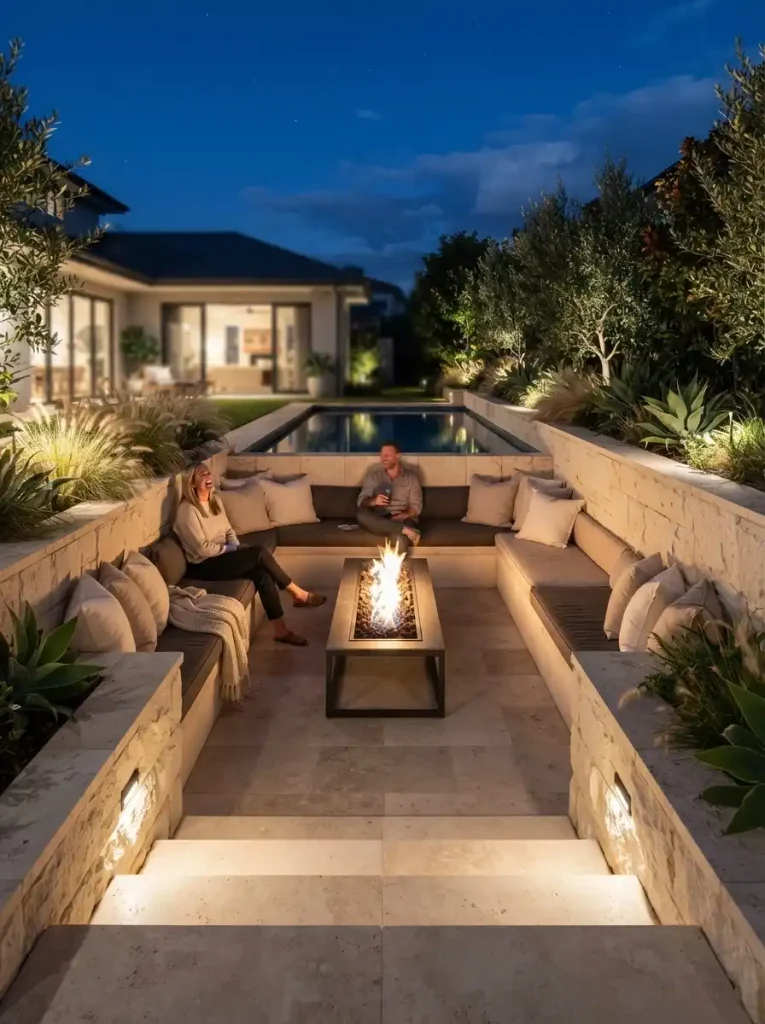
A change in level can make an outdoor living area feel like a completely separate destination.
A sunken lounge naturally creates a sense of enclosure, even when the surrounding yard is open.
Built-in benches can follow the perimeter, leaving the center available for a low table or appropriately designed fire feature.
Keep the materials consistent with the surrounding landscape so the lounge feels integrated rather than dropped into the yard.
Soft cushions are particularly important here because the hard edges of stone, concrete, or masonry need balancing with comfortable textures.
This is a more ambitious project, but the visual impact can be dramatic.
Expert Tip:
Proper drainage is essential for any below-grade outdoor area. Consult a qualified professional if excavation or structural retaining walls are involved.
18. Minimalist outdoor living room in neutral tones
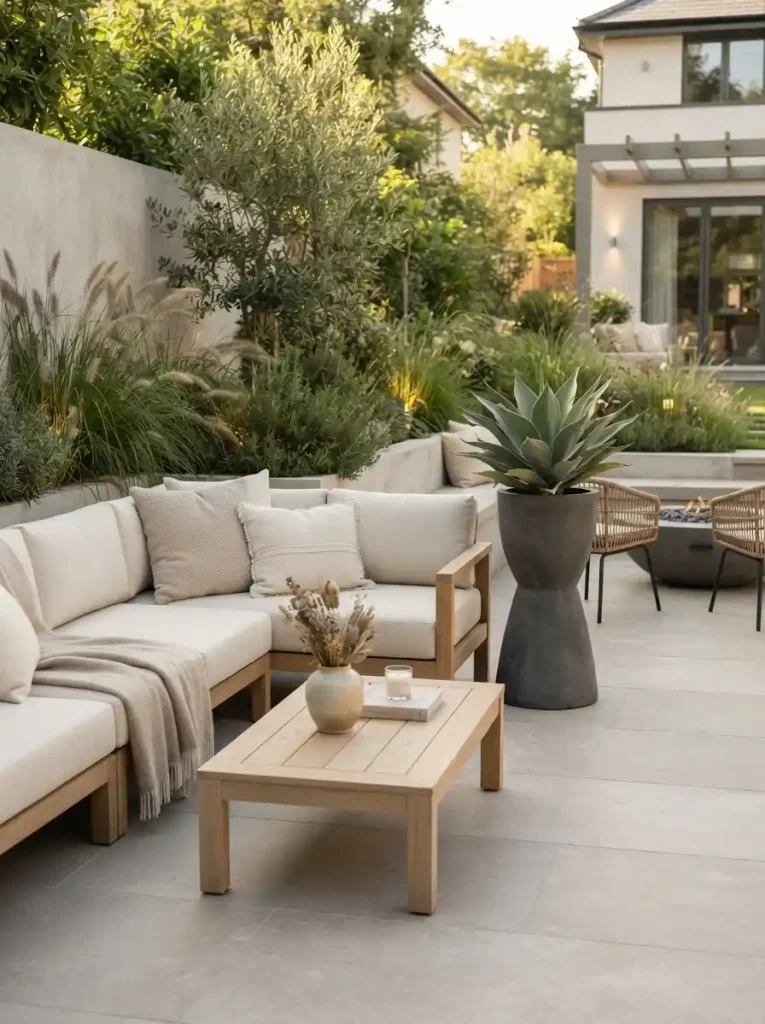
Surprising fact: A neutral palette can make a small outdoor space appear calmer and more spacious.
If your preference is clean and understated, keep the main furniture in shades of cream, beige, taupe, or soft gray.
Then introduce contrast through texture rather than lots of color.
Pair smooth stone with woven furniture, chunky cushions, timber accents, and leafy plants. A sculptural planter can add interest without creating visual clutter.
The result is an outdoor room that feels sophisticated while remaining comfortable.
This style also works particularly well when the architecture of the house is already strong and you want the landscaping to complement rather than compete with it.
Expert Tip:
Use several shades of the same neutral family instead of one flat color. Small tonal variations create depth without sacrificing the minimalist appearance.
19. Backyard bar beside the lounge
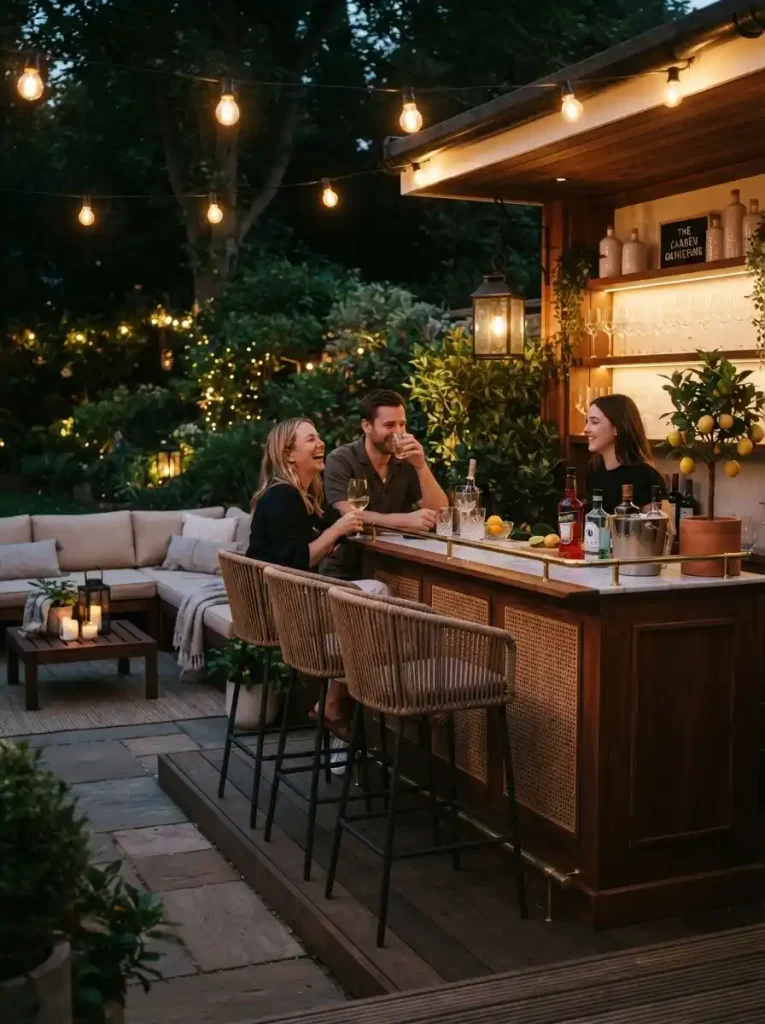
If you regularly entertain, a small outdoor bar can make the entire backyard more functional.
It doesn’t need to be elaborate. A narrow counter with a few stools can provide a dedicated serving station without consuming much space.
Keep frequently used items within easy reach and add a small shelf underneath for storage.
Position the bar close to the main seating area rather than isolating it at the opposite end of the yard. Guests can then move naturally between conversation and serving areas.
For a softer look, combine timber with woven stools and greenery.
Expert Tip:
If you’re adding plumbing, refrigeration, or electrical equipment, have the installation planned by appropriately qualified professionals and account for outdoor-rated components.
20. Layered lighting for evening coziness
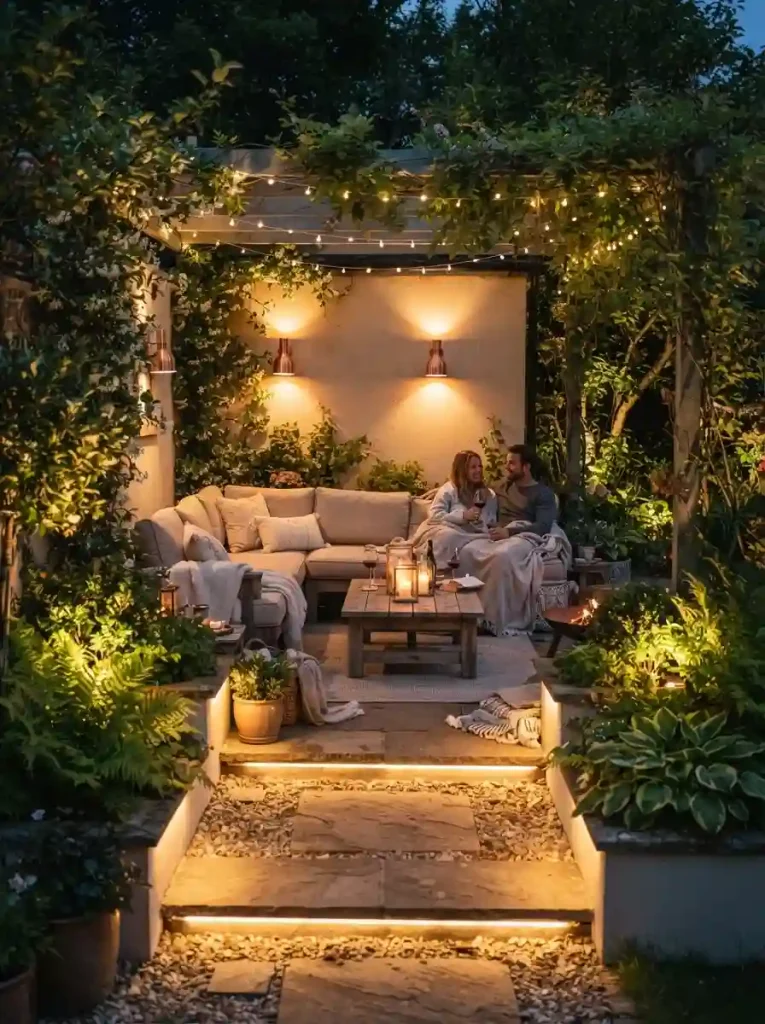
Relatable problem: Your patio looks beautiful during the day but completely loses its charm after sunset.
Lighting can change that.
Instead of relying on one bright fixture, combine several low-intensity sources.
Wall lights can provide practical illumination near doors. Small lanterns can brighten tables, while subtle landscape lights can highlight trees, planting beds, or architectural features.
The goal is to create overlapping pools of light rather than illuminating every corner equally.
This makes the outdoor room feel warmer and more intimate while preserving the nighttime atmosphere.
You can also use candles or enclosed flame-based lanterns where appropriate and safe.
Expert Tip:
Choose outdoor-rated fixtures designed for their specific location and weather exposure. Avoid using indoor extension cords or fixtures outdoors unless they are explicitly rated for that purpose.
21. Private garden lounge behind a screen
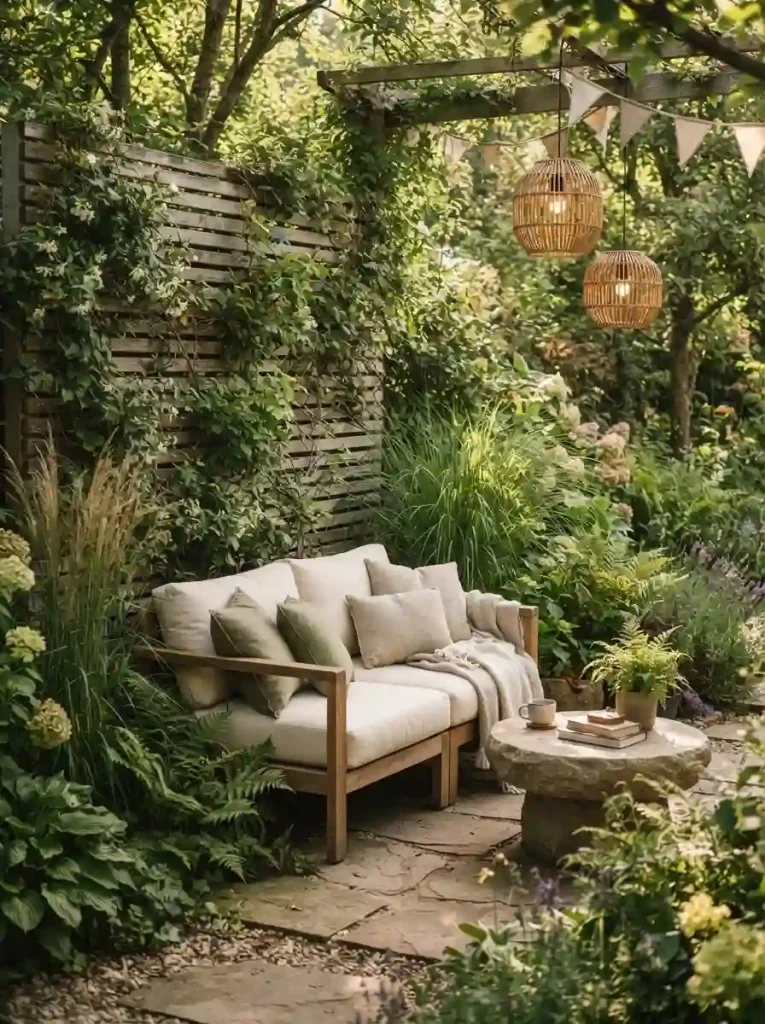
Privacy problem: Even a comfortable backyard can feel exposed when neighboring homes overlook it.
A strategically placed privacy screen can make a surprisingly big difference.
Instead of enclosing the entire yard, focus on the section where you actually sit. A slatted timber screen, trellis, or dense planting can block direct sightlines while still allowing light and airflow through.
Place a loveseat or two lounge chairs directly inside the protected zone.
Climbing plants can soften the structure over time, while tall grasses create additional movement and texture around the base.
This creates the feeling of a private garden room without requiring a completely enclosed fence.
Expert Tip:
Before installing a permanent screen, check local rules regarding fence height, property boundaries, and structures.
22. Cozy all-season outdoor living room
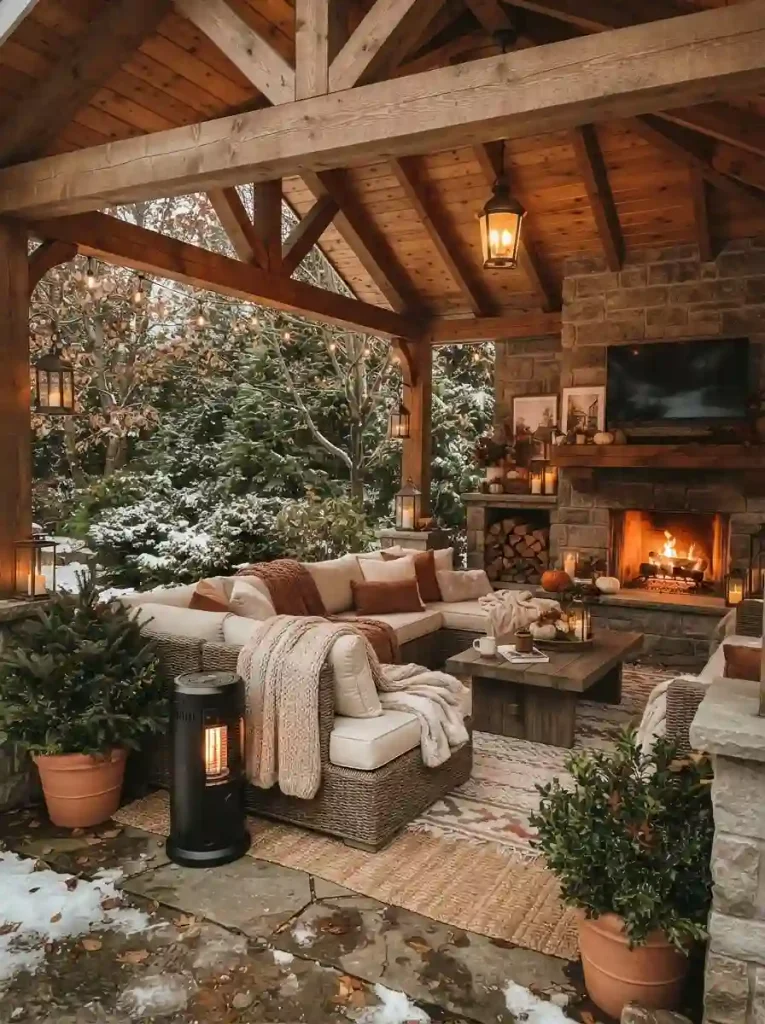
The big idea: The most useful outdoor living space is one you can enjoy beyond a few perfect summer days.
Build your design around comfort in different seasons.
A roof or substantial shade structure provides protection from sun and light rain. Comfortable weather-resistant seating makes longer stays enjoyable, while removable blankets can add warmth when evenings become cooler.
For colder climates, a properly selected outdoor heating solution can extend the usable season. In warmer regions, prioritize airflow, shade, and breathable fabrics instead.
Evergreen plants can keep the space visually appealing when seasonal flowers disappear, while timber and natural stone provide year-round texture.
The best approach is to think about your local climate first and decoration second.
Expert Tip:
Store cushions and textiles somewhere dry when severe weather is expected. Protecting the soft furnishings will significantly extend their useful life.
Practical Tips for Creating a Cozy Outdoor Living Space
You don’t need to copy an entire design to make your backyard more inviting. Start with the parts that solve your biggest problem.
Choose the seating first
Outdoor furniture is the foundation of the room. Prioritize comfortable seating before buying decorative accessories.
Think about how you actually use the space. Do you want a place to lounge, dine, read, entertain, or combine several activities?
Create a clear focal point
Every successful outdoor living room benefits from something that naturally draws attention.
That might be a fire pit, coffee table, outdoor kitchen, water feature, statement plant, or beautiful view.
Once you have a focal point, arrange furniture around it rather than placing everything against the walls.
Mix textures
Outdoor spaces can become visually flat when everything is made from the same material.
Mix wood, woven finishes, stone, metal, soft cushions, rugs, and greenery to create depth.
You don’t need dozens of accessories. A handful of contrasting textures can do most of the work.
Think about lighting early
Lighting shouldn’t be an afterthought.
Consider where you’ll need practical light, where you want decorative illumination, and which landscape features deserve attention after dark.
A layered approach usually feels more comfortable than one powerful overhead fixture.
Keep the weather in mind
Outdoor furniture needs to deal with conditions that indoor furniture never encounters.
Before buying anything, consider sunlight, rain, humidity, wind, temperature changes, and how easy each item will be to clean and store.
Investing in durable materials can save money over time.
Simple Outdoor Living Space Checklist
Before finishing your backyard makeover, ask yourself:
– Is there enough comfortable seating?
– Does the furniture arrangement encourage conversation?
– Is there adequate shade?
– Can the space be used after sunset?
– Do cushions and textiles suit the local weather?
– Is there enough room to walk comfortably?
– Does the seating have a clear focal point?
– Are plants positioned according to their light requirements?
– Is there practical storage for outdoor accessories?
– Can furniture and soft furnishings be protected during severe weather?
– Does the design feel connected to the house?
– Have safety and local regulations been considered for fire features, structures, electrical work, and outdoor kitchens?
You don’t have to solve every item at once. Even a few thoughtful changes can make a noticeable difference.
Final Thoughts
The best cozy outdoor living space isn’t necessarily the largest, most expensive, or most perfectly decorated one.
It’s the space that makes you want to stay outside a little longer.
A comfortable sectional, a shaded reading corner, a few well-placed plants, layered lighting, or a small fire feature can completely change how your backyard feels.
Start with one area that isn’t working well and give it a clear purpose. Then add comfort, texture, greenery, and lighting one layer at a time.
Whether your outdoor space is a spacious backyard, compact patio, covered porch, or tiny garden corner, there are plenty of ways to turn it into a comfortable extension of your home.
Which of these cozy outdoor living space ideas would you steal first?