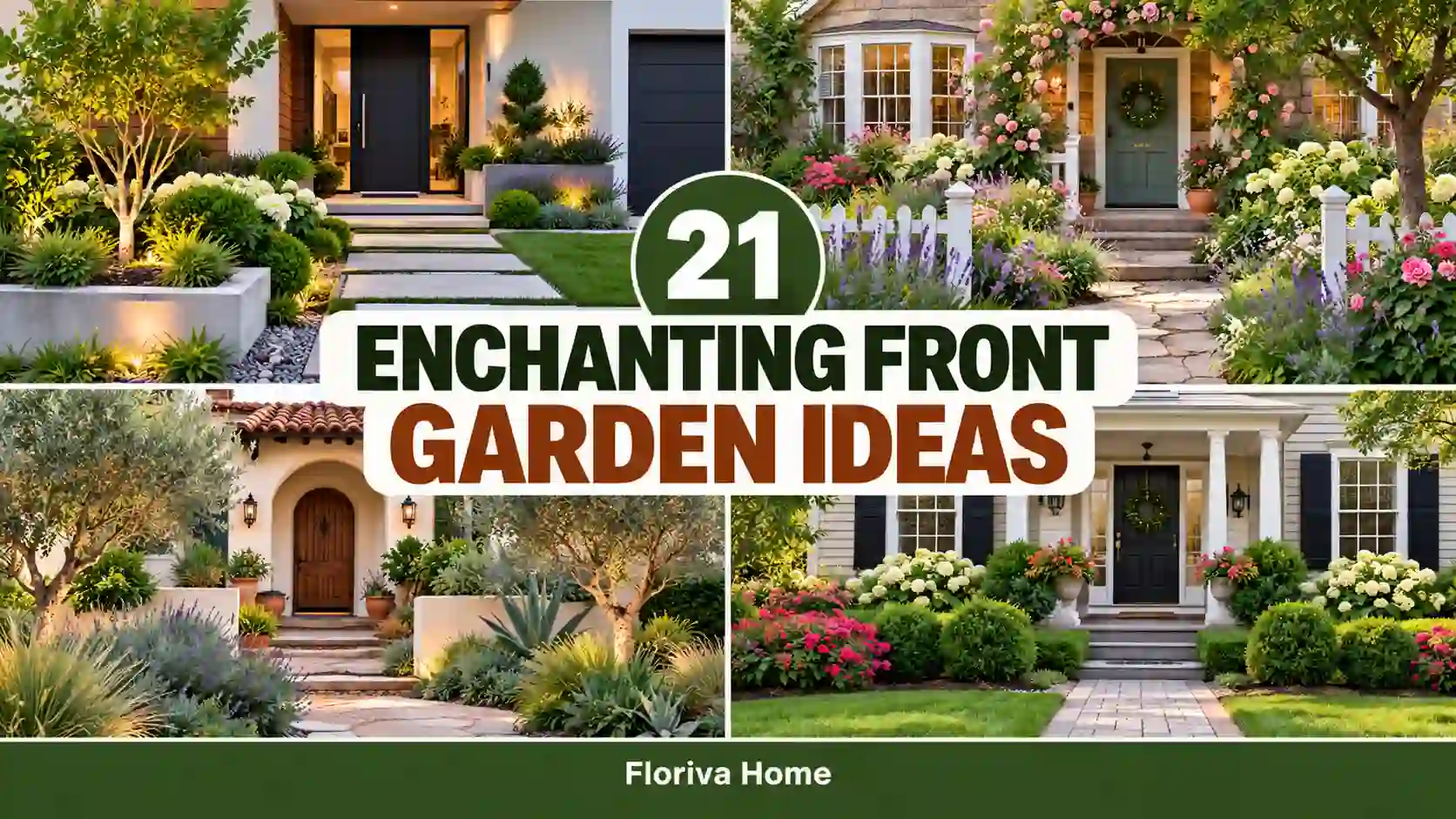
21 Enchanting Front Garden Ideas for Every Home Style
Your front garden is the first little glimpse people get of your home, so why not make it feel welcoming, beautiful, and completely yours?
You don’t need a huge yard or an expensive landscaping project to create an impressive entrance. A thoughtful combination of flowers, pathways, shrubs, containers, and architectural details can transform even a modest front garden.
Whether your home is traditional, modern, cottage-inspired, farmhouse-style, or wonderfully eclectic, there are plenty of ways to give the space more personality.
These 21 enchanting front garden ideas will help you create an entrance that feels inviting from the sidewalk all the way to your front door. From layered flower beds to elegant pathways and clever small-space solutions, there’s an idea here for almost every home style.
1. Frame the Front Walkway With Flower-Filled Borders
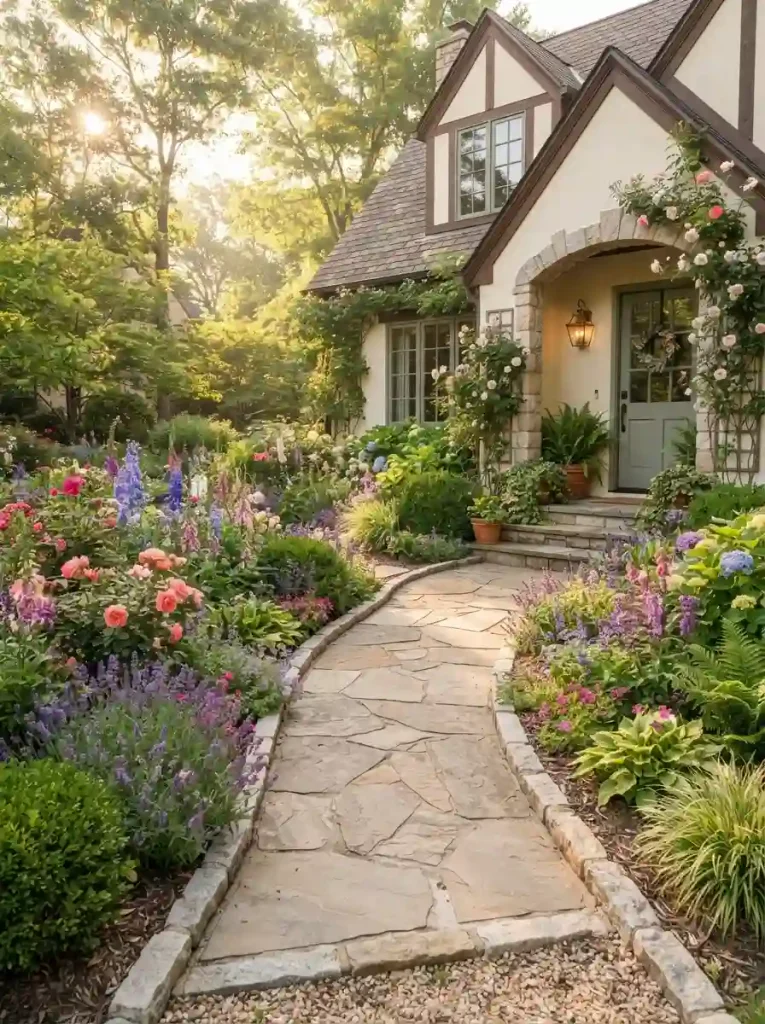
A walkway feels much more inviting when flowers gently frame both sides.
Instead of planting one continuous row of the same flower, create layers with different heights. Put taller blooms toward the back, medium plants in the middle, and low-growing flowers along the walkway edge.
This arrangement gives your front garden more depth and makes the path feel like it naturally leads visitors toward the house.
For a classic appearance, combine soft pink, white, and purple flowers with green foliage. If your home has a modern exterior, try a simpler combination of ornamental grasses and one or two repeating flower colors.
Just remember to leave enough space between the plants and the walkway. You want the garden to feel lush without making the entrance difficult to use.
Expert Tip:
Repeat a few plant varieties along the walkway instead of using dozens of different flowers. Repetition creates a more intentional landscape and makes the front garden easier to maintain.
2. Create a Layered Foundation Planting Around the House
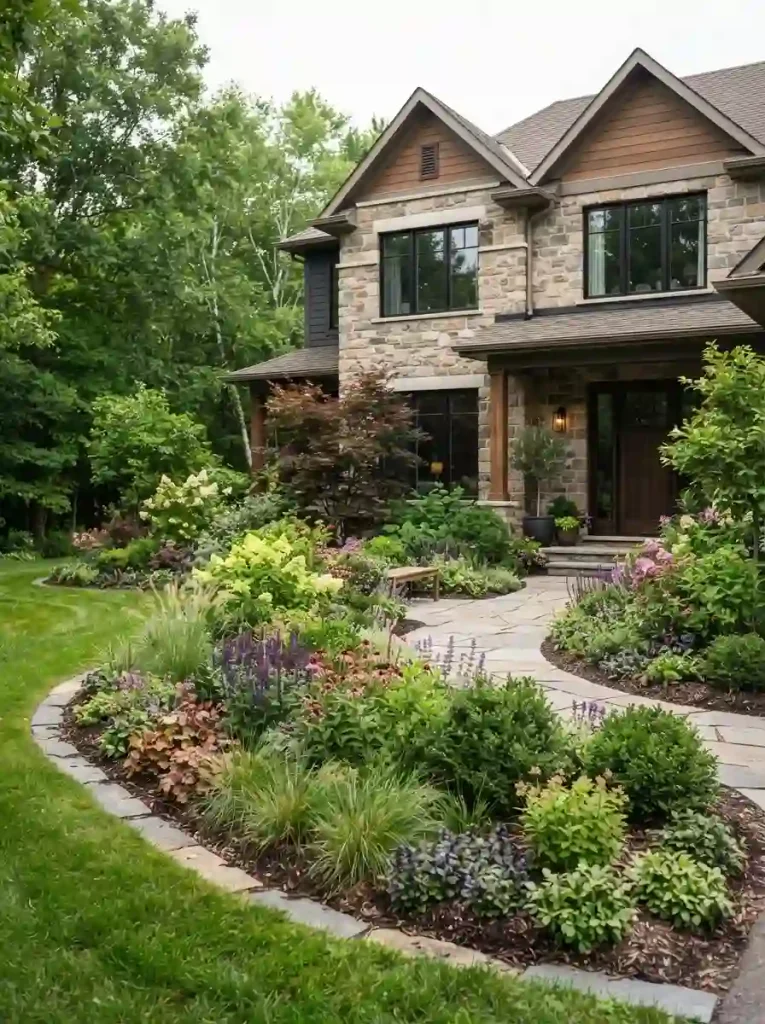
Foundation planting doesn’t have to mean a straight line of shrubs hugging the house.
Try creating a layered planting bed that softens the transition between your home and the lawn. Use evergreen shrubs as the foundation, medium-sized flowering plants for seasonal color, and a few taller accents near corners.
Curved planting beds can make a rectangular house feel softer, while structured geometric beds work beautifully with contemporary architecture.
Choose plants according to the amount of sunlight each side of your home receives. The front of the house may get very different conditions from the side, especially if nearby buildings or trees create shade.
Keep mature plant size in mind, too. A shrub that looks perfectly sized at the nursery can eventually cover windows or crowd the walkway.
Expert Tip:
Check the mature width of every shrub before planting. Leave enough breathing room so plants frame the house rather than hide it.
3. Add a Charming Cottage-Style Flower Garden
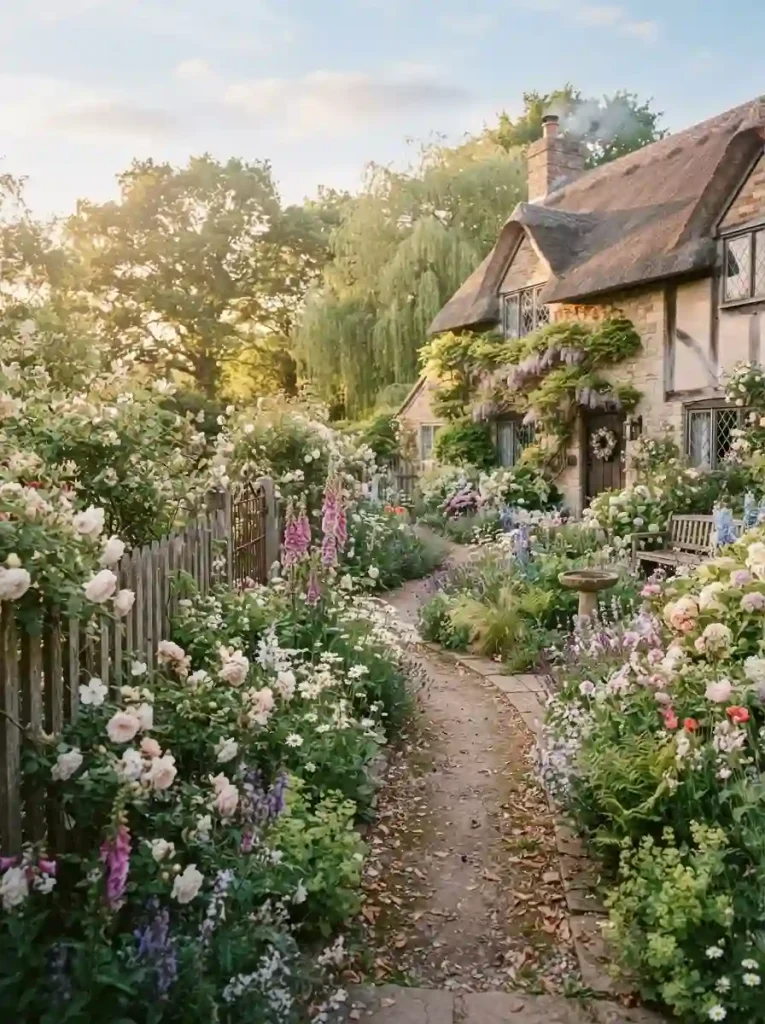
If you love relaxed, storybook landscaping, a cottage-style front garden can make your home feel incredibly welcoming.
The secret is to avoid making everything look too perfect. Combine flowers with different shapes, heights, and bloom times so the garden feels abundant rather than overly arranged.
Roses, lavender, daisies, salvia, foxgloves, and other cottage favorites can create a colorful mix. Add a narrow gravel path or a small picket fence to reinforce the relaxed character.
You can also let a few plants spill gently over the edges of the bed. That slightly informal look is part of the charm.
Cottage gardens work especially well with traditional homes, but you can adapt the idea to almost any property by choosing a restrained color palette.
Expert Tip:
Use three or four repeating flower colors throughout the garden. A little repetition keeps an abundant cottage garden from looking visually chaotic.
4. Use Large Planters to Highlight the Front Door
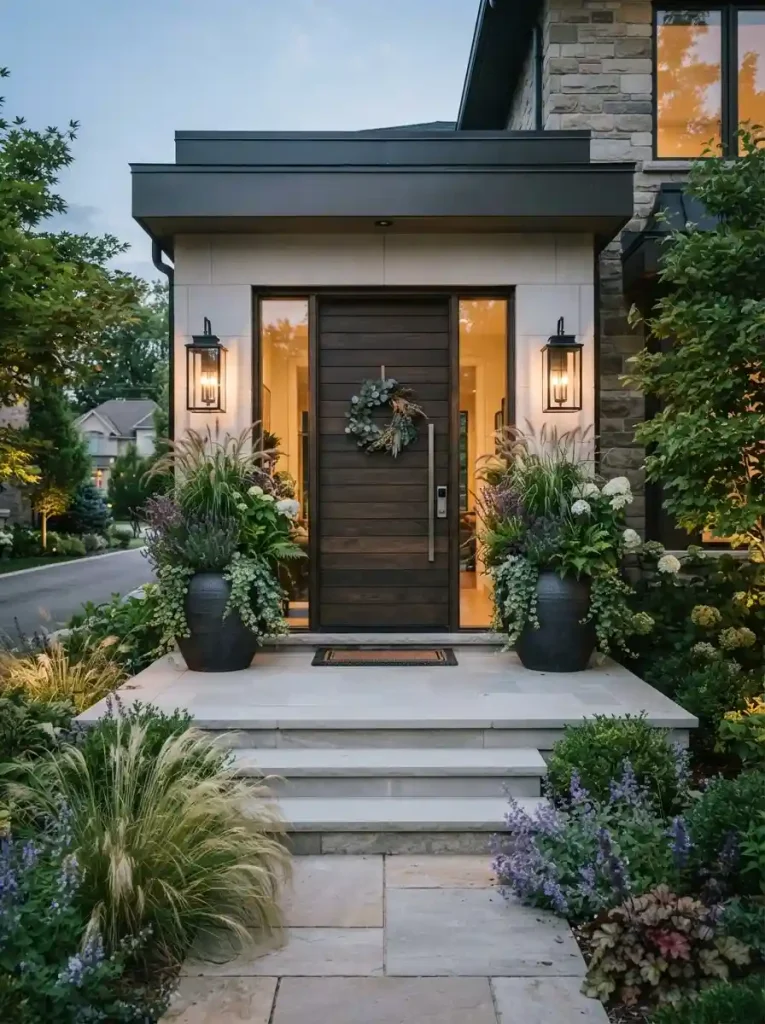
Sometimes the easiest way to upgrade a front garden is to focus attention on the entrance itself.
Place two large planters on either side of the front door or at the beginning of the porch. Matching containers create a polished appearance, while slightly different plants can keep the arrangement from feeling too formal.
For a modern home, consider tall grasses, sculptural evergreens, or architectural foliage. A traditional house may look better with flowering shrubs, hydrangeas, or softly trailing plants.
Choose containers that are large enough for the plants to remain stable. Tiny pots beside a large doorway can disappear visually, while oversized containers create a stronger focal point.
Make sure the pots have drainage holes and are positioned where watering is convenient.
Expert Tip:
Use containers that visually relate to your home’s exterior. Repeating a color or material from the front door, roof, or stonework can instantly make the entrance feel coordinated.
5. Design a Modern Gravel Garden With Sculptural Plants
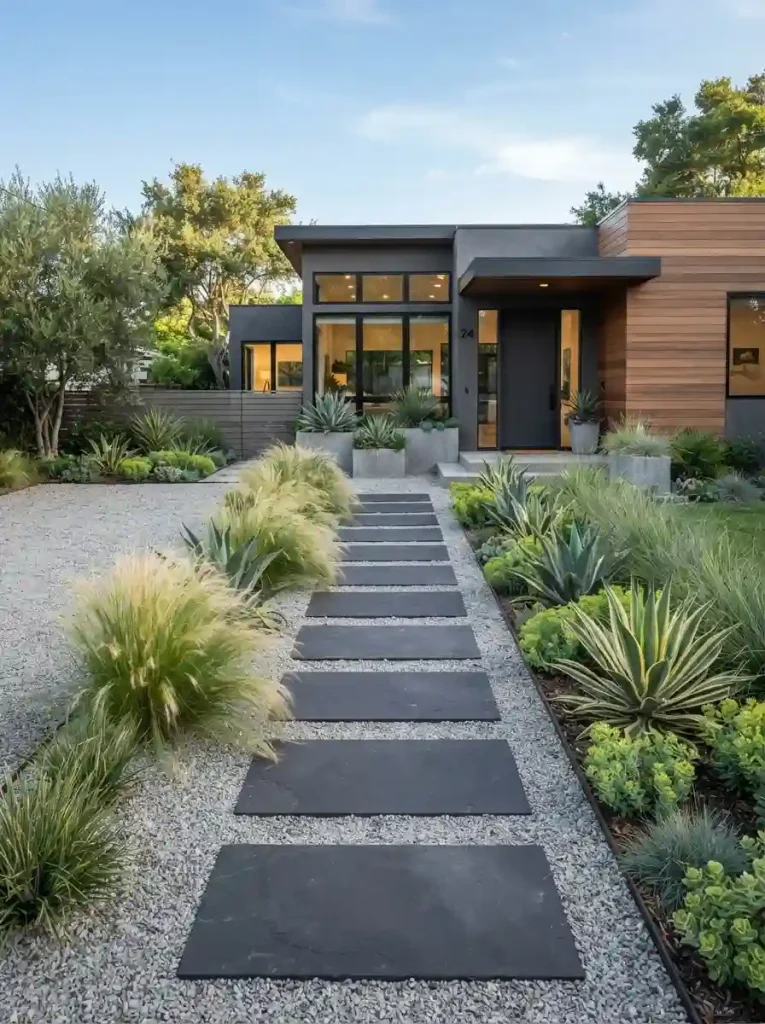
For a modern home, a gravel garden can create a clean look without requiring a lawn-heavy landscape.
Start with a simple gravel base and introduce plants with strong shapes. Ornamental grasses, compact evergreens, architectural perennials, and sculptural foliage can provide plenty of visual interest without making the garden feel crowded.
Use large stones or rectangular stepping slabs to create structure through the gravel. A few oversized planters can reinforce the contemporary style.
The key is restraint. Instead of filling every empty space, allow some gravel to remain visible. Those open areas give the plants room to stand out.
Choose gravel that complements your home’s exterior rather than automatically reaching for the brightest or most decorative option.
Expert Tip:
Repeat one or two materials throughout the space. For example, matching the gravel with stone stepping slabs can make a modern garden feel much more cohesive.
6. Line the Entry With Elegant Evergreen Shrubs
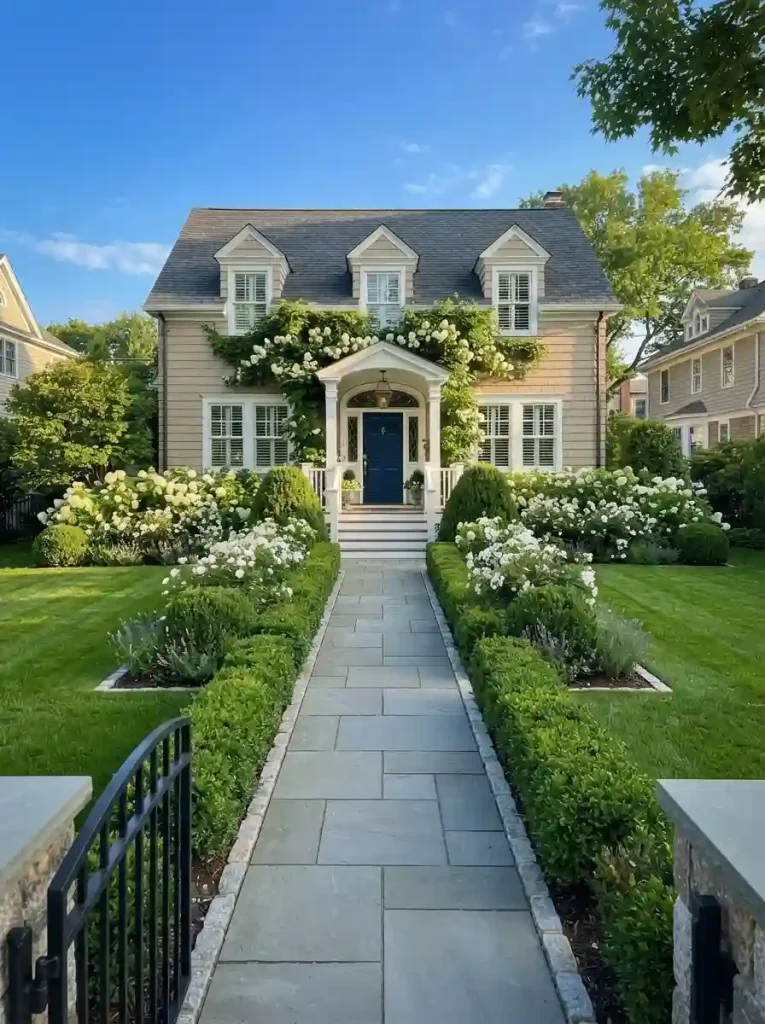
Evergreen shrubs are useful when you want your front garden to look attractive even when seasonal flowers are finished.
Plant compact evergreens along the walkway, around the porch, or beside the front steps. Their year-round foliage provides structure while flowering plants can add seasonal color between them.
You can choose a formal clipped appearance or allow shrubs to grow into softer natural shapes. The right choice depends on your home’s architecture.
For a traditional property, symmetrical evergreen planting can make the entrance feel especially elegant. For a relaxed home, rounded shrubs mixed with grasses and perennials can create a less formal effect.
Avoid placing large shrubs directly against windows. Keeping the mature height under control will save you from constant pruning later.
Expert Tip:
Think about winter first when choosing evergreen structure. Flowers may disappear for part of the year, but your permanent greenery will continue shaping the garden.
7. Build a Welcoming Front Garden Around a Small Tree
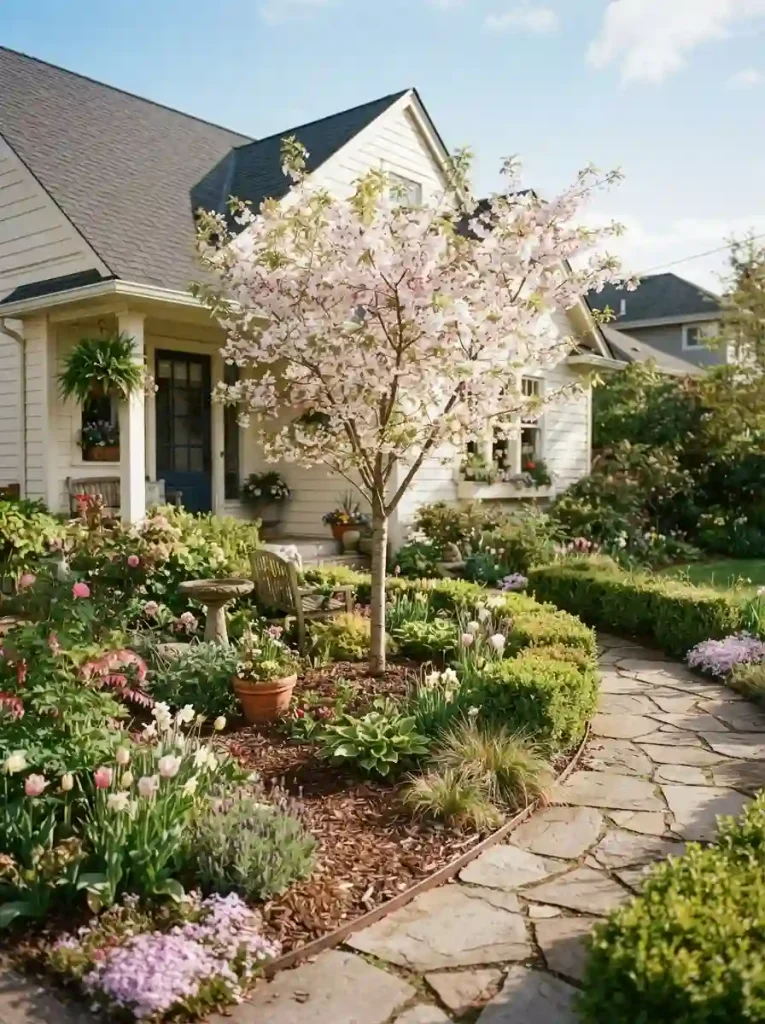
A small ornamental tree can become the anchor that brings your entire front garden together.
Place it where it can be seen from the street without blocking the entrance or important windows. Then build a planting bed around it with low shrubs, flowers, and ground covers.
A flowering tree can provide seasonal drama, while a small tree with interesting foliage can offer structure for a longer period.
Keep the planting underneath relatively low so the trunk and canopy remain visible. This creates a more balanced composition and prevents the tree from disappearing into a wall of plants.
If your front garden is small, choose a compact tree that fits the available space at maturity.
Expert Tip:
Look upward as well as outward when planning a front garden. A carefully chosen small tree adds a new layer of height without requiring a huge planting area.
8. Create a Romantic Rose-and-Lavender Entrance
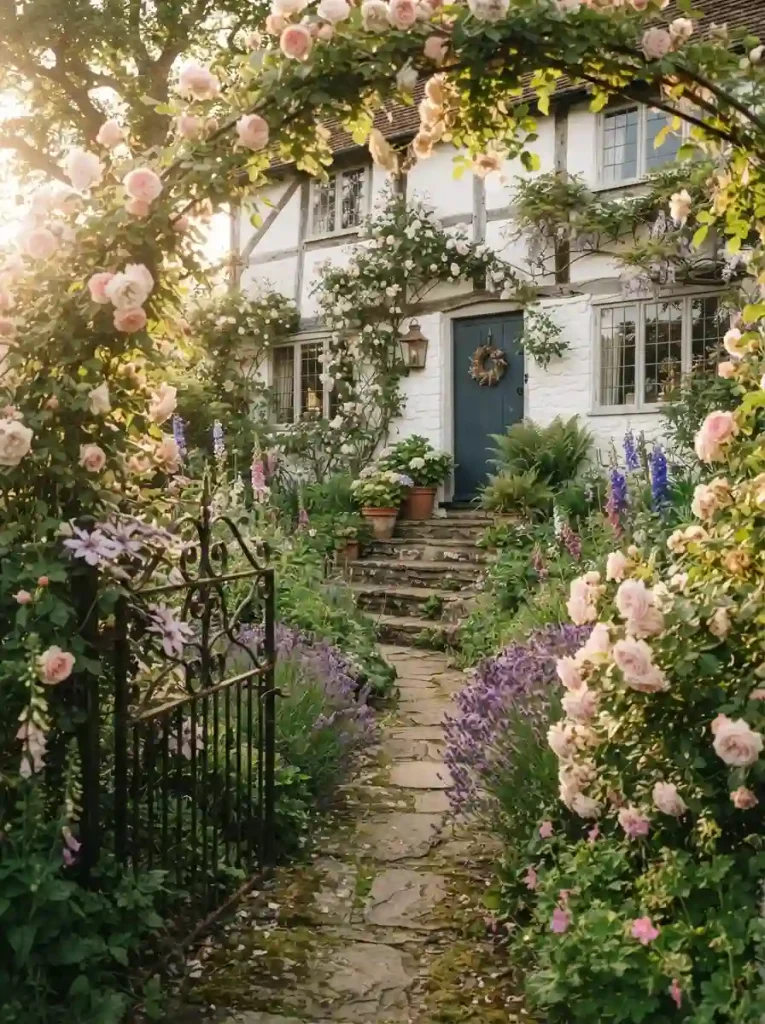
Roses and lavender make a beautiful partnership around a front entrance because their colors and forms complement each other so naturally.
Use roses as the taller feature and lavender as a lower edging plant. The purple flower spikes create a soft contrast against rose blooms while helping define the walkway.
This combination works particularly well around cottage, traditional, and country-style homes.
Give each plant enough room for mature growth and avoid creating an overcrowded strip along the path. Good airflow is important, especially around roses.
You can also repeat lavender farther down the garden to visually connect separate planting areas.
Expert Tip:
Place fragrant plants close enough to the walkway that you can actually enjoy them. A beautiful scent is one of the easiest ways to make a front garden feel memorable.
9. Add a Curved Stone Path for a Softer Look
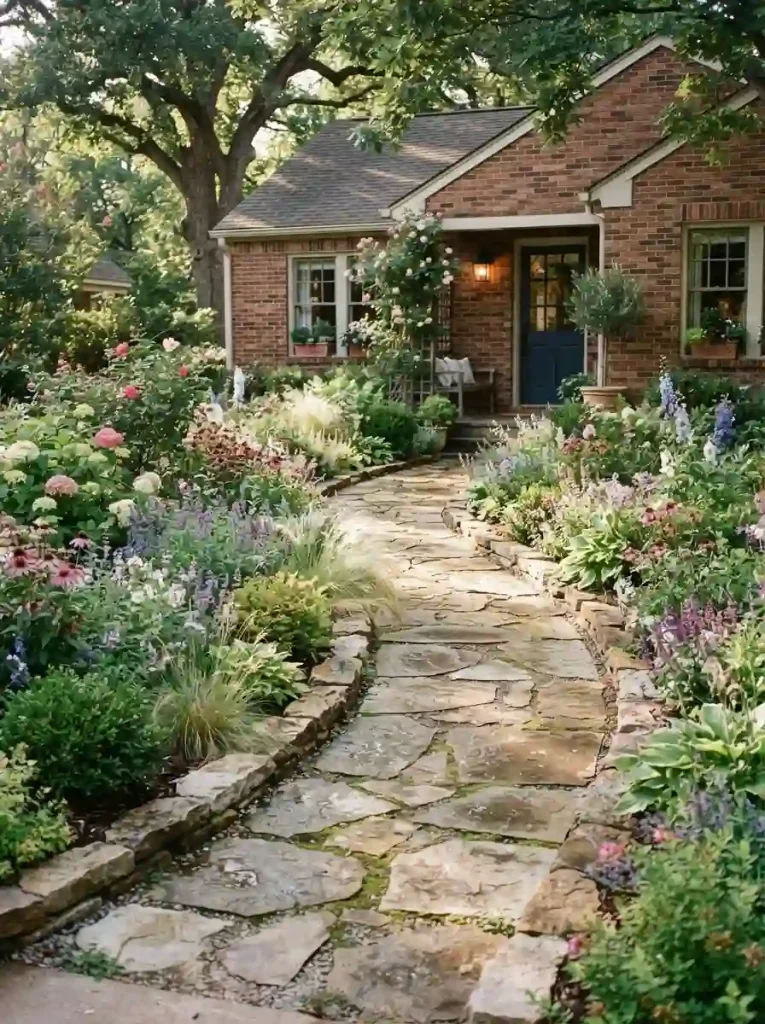
Straight paths are practical, but a gently curved walkway can make a front garden feel much more relaxed.
Use natural stone, pavers, or large stepping slabs to create a route that bends slightly through the planting area. The curve can also make a small garden appear more spacious because the entire destination isn’t visible immediately.
Keep the pathway wide enough for comfortable everyday use. If the surface becomes slippery when wet, choose a material with suitable texture and traction.
Surround the path with plants that stay relatively low near the edges. Taller plants can be positioned farther away so they don’t interfere with movement.
A curved path is especially effective when it leads the eye toward a porch, gate, bench, or front door.
Expert Tip:
Let the pathway determine the garden’s shape rather than squeezing a path into an existing bed. Designing both together usually creates a much more natural result.
10. Turn a Narrow Side Strip Into a Front Garden Feature
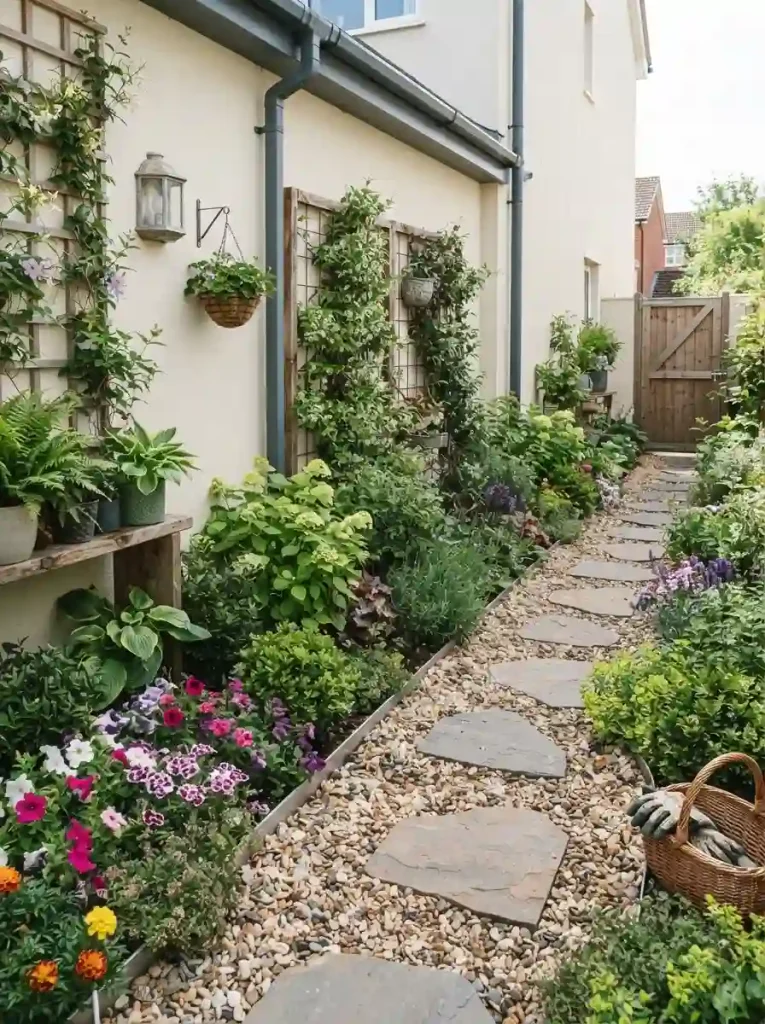
A narrow strip beside the house may not seem like much, but it can become one of the most interesting parts of your front landscaping.
Use vertical elements to make the space feel taller. A slim trellis, narrow evergreen, climbing plant, or wall-mounted planter can draw the eye upward without taking much ground space.
Keep the planting palette simple. Too many different plants can make a narrow space feel crowded.
Stepping stones can create a practical route through the strip, while gravel or mulch keeps the ground visually tidy.
This is also a good location for plants that need slightly different conditions from the main front bed, especially if the house creates afternoon shade.
Expert Tip:
Measure the available width before buying plants. In narrow gardens, mature plant size matters even more because there is little room for plants to spread.
11. Create a Welcoming Farmhouse-Style Front Garden
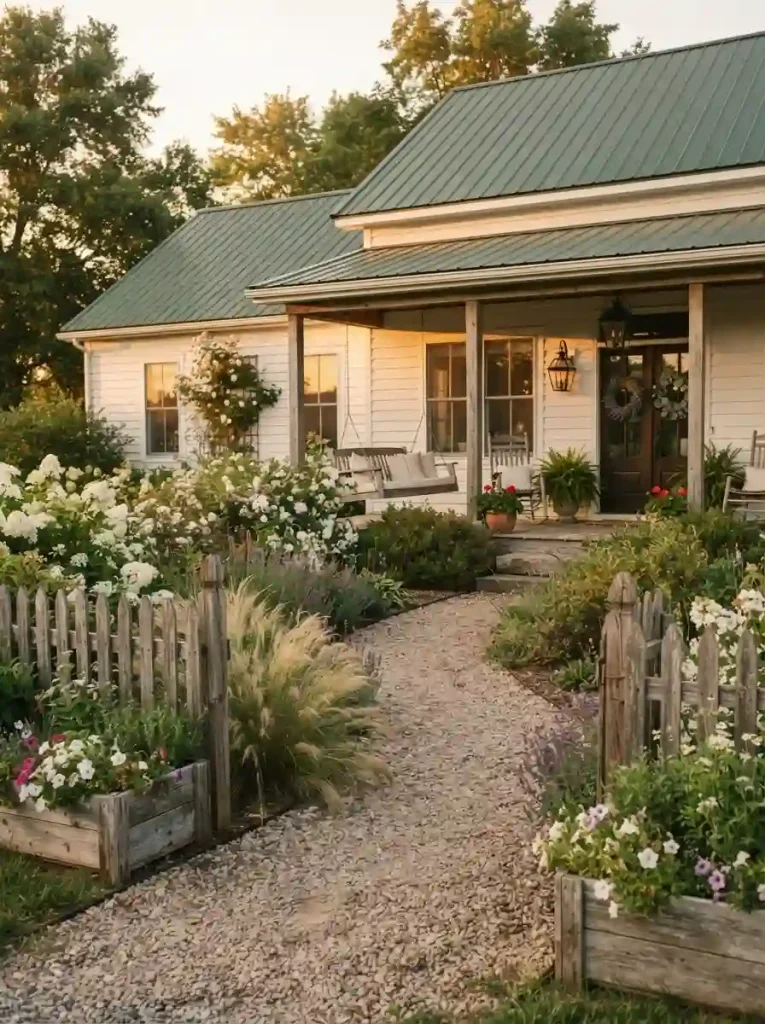
A farmhouse-style front garden should feel comfortable rather than overly polished.
Use natural materials such as wood, stone, gravel, and weathered metal to establish the look. Then soften those materials with flowering shrubs, grasses, and relaxed perennial plantings.
Wooden planter boxes near the porch can add extra color without requiring a large flower bed. A simple gravel walkway also fits naturally with the farmhouse aesthetic.
Keep the overall palette fairly restrained. Whites, creams, soft pinks, greens, and muted blues can create a calm appearance, although a few brighter flowers can add personality.
The goal is to make the garden look as though it belongs naturally with the house rather than feeling like a separate decoration.
Expert Tip:
Choose practical materials that age gracefully. A little weathering can actually enhance farmhouse character, while too many perfectly matched decorative pieces may make the garden feel staged.
Choosing Plants for Your Front Garden
Before planting everything you love, take a few minutes to understand the conditions around your home.
Notice how much sunlight the garden receives, where rainwater collects, how exposed the space is to wind, and how much room plants will have when they reach maturity.
A beautiful front garden is much easier to maintain when the plants are suited to the conditions instead of being chosen only for appearance.
Think about evergreen structure, seasonal flowers, foliage texture, mature plant size, drainage, and your local growing conditions.
You also don’t need every plant to bloom simultaneously. Combining plants with different flowering periods can keep the front garden interesting from one season to the next.
Expert Tip: “Before buying plants, spend one full day observing your front garden. Sunlight, shade, wind, and drainage patterns can tell you more than a plant label alone.”
12. Soften a Contemporary Home With Ornamental Grasses
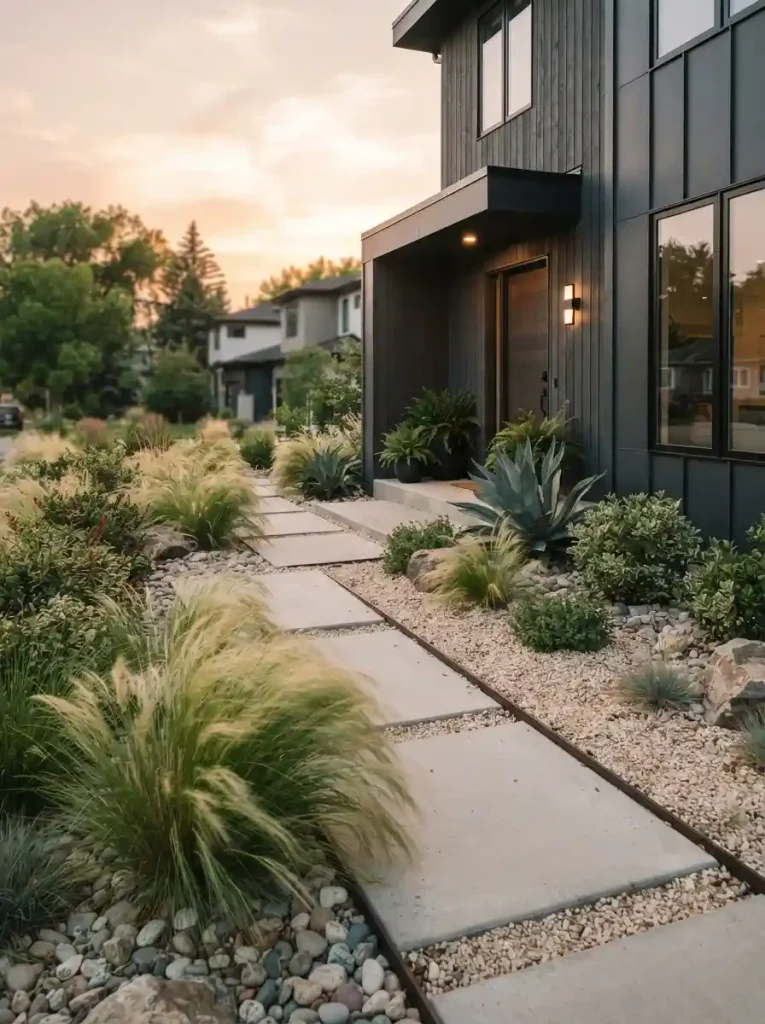
Ornamental grasses are an excellent way to add movement and softness to a contemporary front garden.
Their fine foliage contrasts beautifully with straight architectural lines, concrete surfaces, dark siding, and large windows. Choose a few varieties with different heights rather than filling the entire bed with one type.
Place taller grasses toward the back of the planting area and shorter varieties near pathways or borders. Their movement in the breeze can make an otherwise structured landscape feel more alive.
Grasses can also provide attractive texture after flowering, depending on the variety and climate.
Expert Tip:
Use ornamental grasses as punctuation rather than a solid wall. Leaving small gaps between groups helps preserve the clean appearance of a contemporary garden.
13. Add a Layered Front Garden With Native Plants
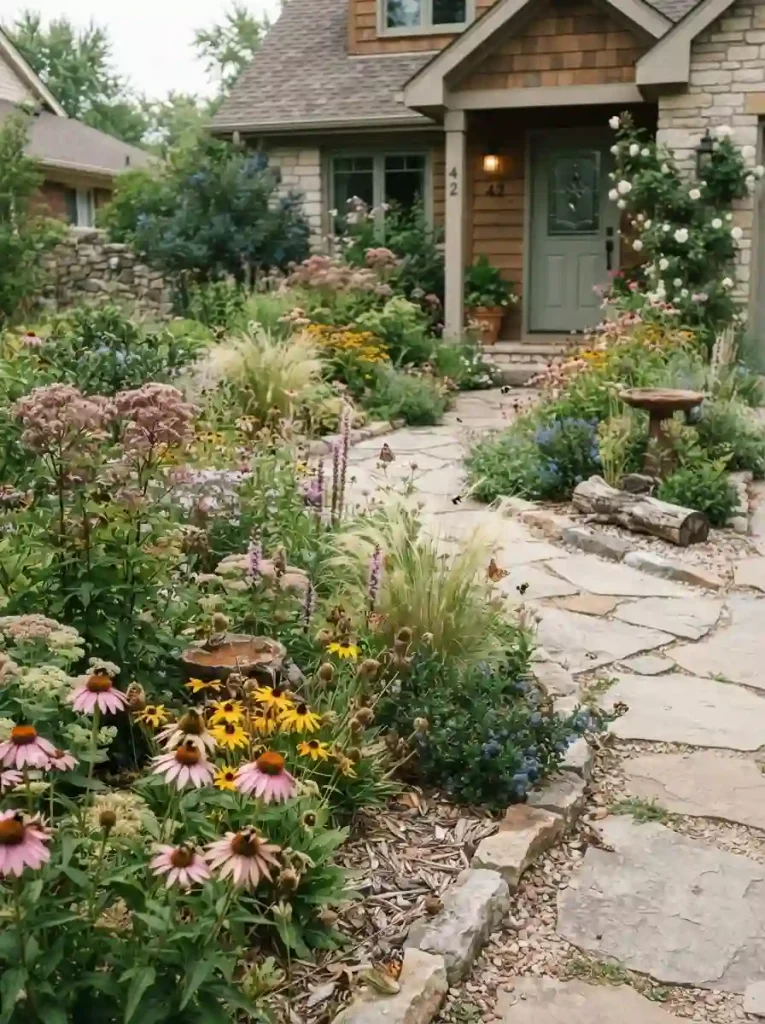
A front garden can be beautiful while also becoming a useful habitat for local wildlife.
Choose native or locally well-adapted plants that can thrive in your region. Combine flowering perennials, grasses, shrubs, and ground covers to create several layers of vegetation.
Different plant heights provide visual depth while offering food and shelter for insects and birds. Allowing some flowers to develop seed heads can add winter interest as well.
Native planting doesn’t have to look wild or untidy. Use defined borders, repeated plant groups, and a clear walkway to give the garden an intentional appearance.
This approach can also reduce the amount of effort needed to keep plants healthy when they are naturally suited to local conditions.
Expert Tip:
Research plants that naturally grow in your region before choosing your planting palette. Local gardening groups, botanical gardens, and extension services can be excellent sources of practical information.
14. Make a Small Front Yard Feel Bigger With Repetition
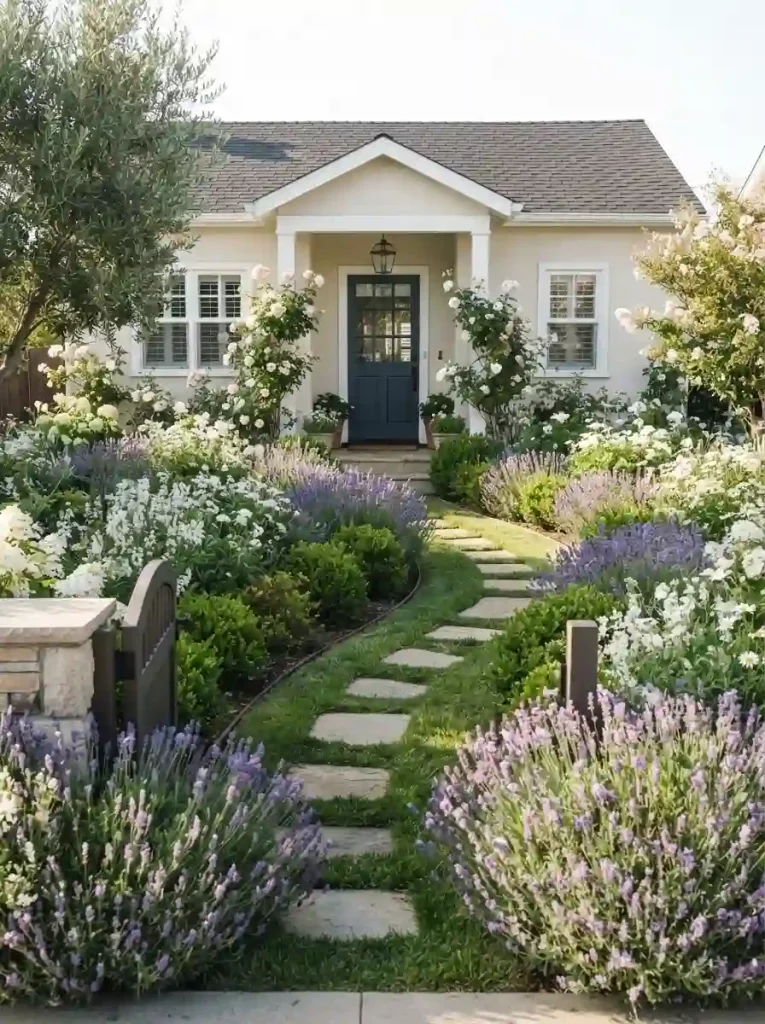
Small front yards can sometimes feel cluttered because every available space gets filled with something different.
Instead, repeat the same plants throughout the garden.
For example, three clusters of the same flowering perennial can visually connect the walkway, foundation bed, and front entrance. Repeated shapes and colors create continuity, allowing the garden to feel larger and more organized.
Keep the number of materials limited, too. One type of edging, one pathway material, and a small selection of complementary plants can make a dramatic difference.
You can also use a slightly narrower planting palette near the property boundaries to keep the eye moving toward the entrance.
Expert Tip:
Repeating plants is one of the simplest professional landscaping tricks. It creates rhythm and makes even a small garden look intentionally designed.
15. Create a Colorful Seasonal Flower Bed
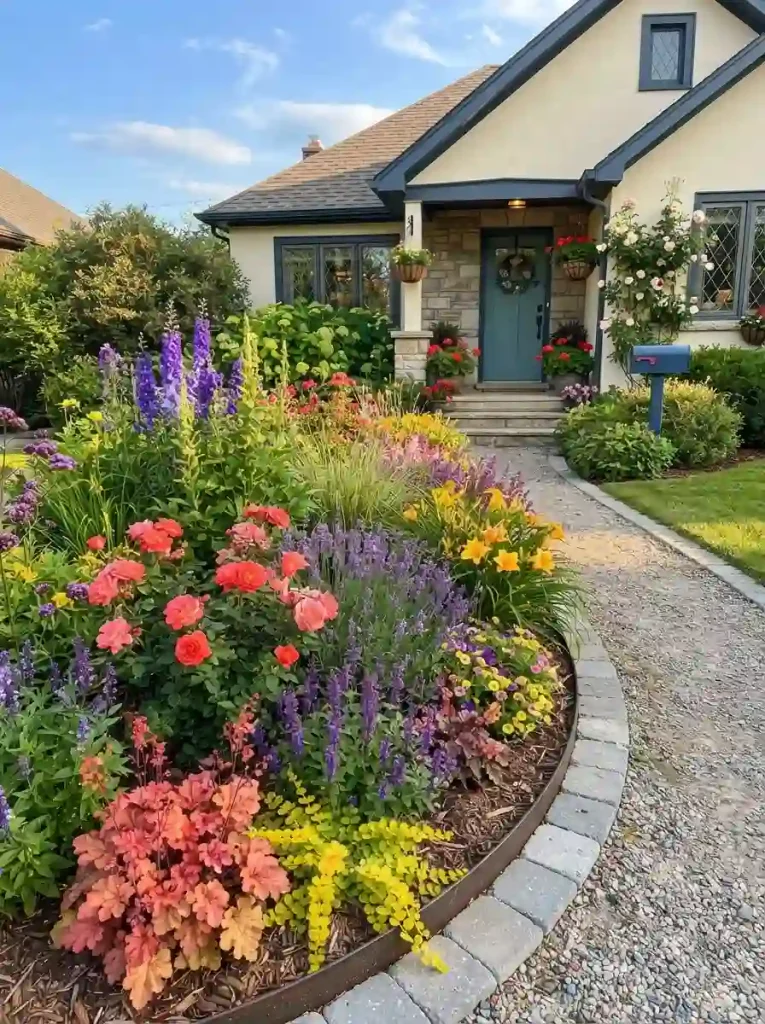
If you enjoy changing colors throughout the year, design your front garden around seasonal succession.
Choose a mixture of plants that bloom at different times instead of relying on one short flowering period. Spring bulbs can provide the first burst of color, followed by summer perennials and later-season flowers.
Annual flowers can be useful for filling temporary gaps or experimenting with new color combinations.
You don’t need to use every color. Pick a dominant palette and introduce one or two contrasting shades for emphasis.
For a sophisticated appearance, repeat your chosen colors in several locations rather than concentrating all the brightest flowers in one corner.
Expert Tip:
Create a simple planting calendar before shopping. Knowing when each plant flowers will help you build a garden that changes gradually instead of becoming bare between bloom periods.
16. Use Raised Beds for a Defined Front Garden
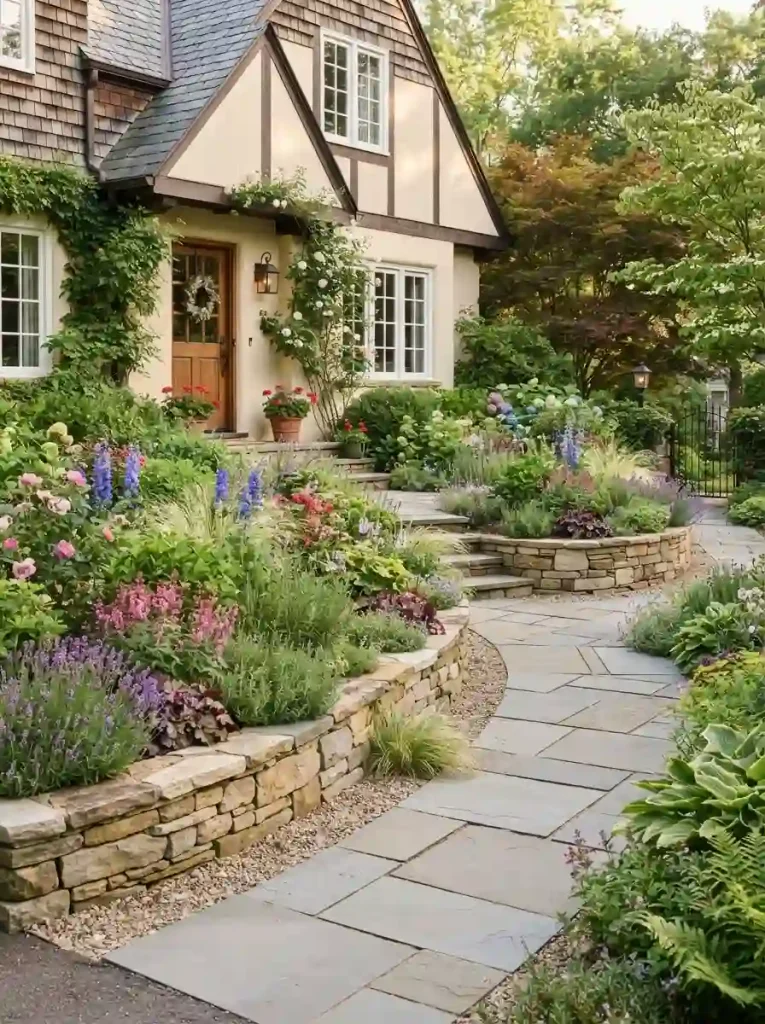
Raised beds can give a front garden an immediate sense of structure.
They are particularly useful when the existing soil is poor, drainage needs improvement, or you want to separate planting areas from a lawn or pathway.
Low stone, brick, timber, or masonry borders can work depending on your home’s style. Keep the height proportional to the property; extremely tall beds may look out of place in a small front yard.
Use the raised areas to create layers, with low-growing plants toward the edges and taller plants toward the center or rear.
Before building, make sure the structure won’t interfere with drainage or direct water toward your home’s foundation.
Expert Tip:
Keep raised beds visually connected to the house. Matching their material or general color with existing brick, stone, or paving can make the landscaping feel intentional.
17. Bring Vintage Charm With a Garden Gate
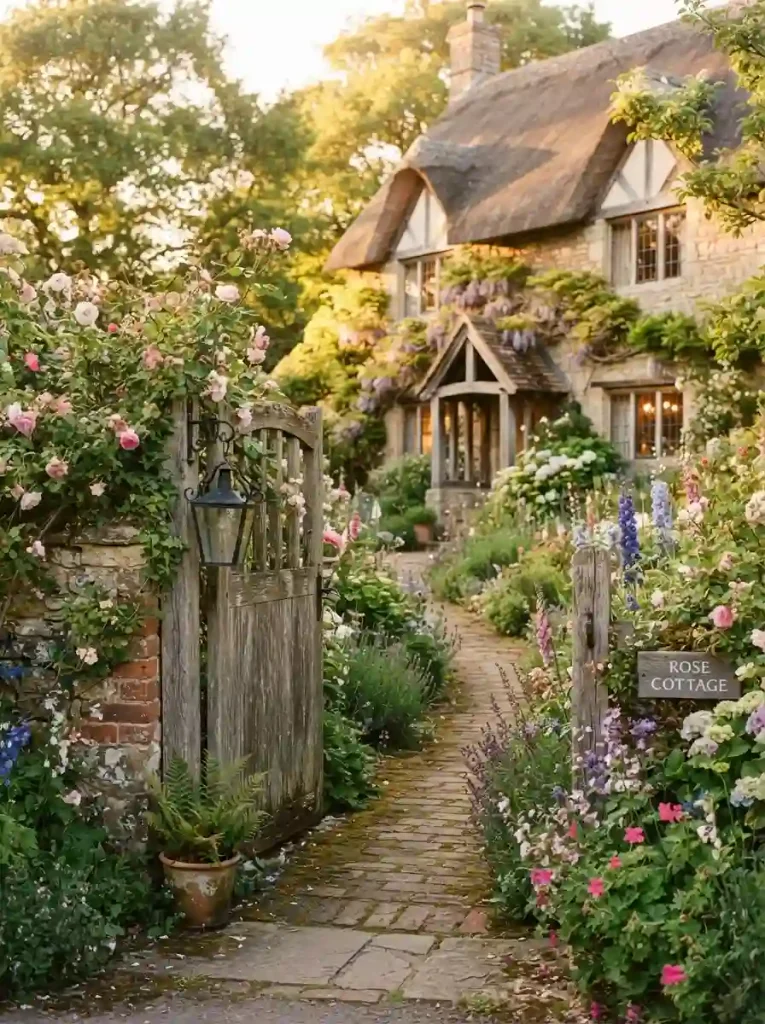
A garden gate can turn an ordinary entrance into a memorable focal point.
A simple wooden gate works beautifully with cottage and farmhouse homes, while painted metal can suit more traditional or romantic landscapes.
Frame the gate with plants that draw the eye upward. Climbing roses, clematis, honeysuckle, or other suitable climbers can eventually create a beautiful living arch.
Even without mature vines, the gate itself can add character. Choose hardware that complements the overall style rather than adding too many decorative elements.
Make sure the gate opens comfortably and doesn’t obstruct the sidewalk or pathway.
Expert Tip:
Treat the gate as part of the garden’s architecture. Its shape, material, and height should complement both the pathway and the home’s front entrance.
18. Add a Simple Water Feature as a Focal Point
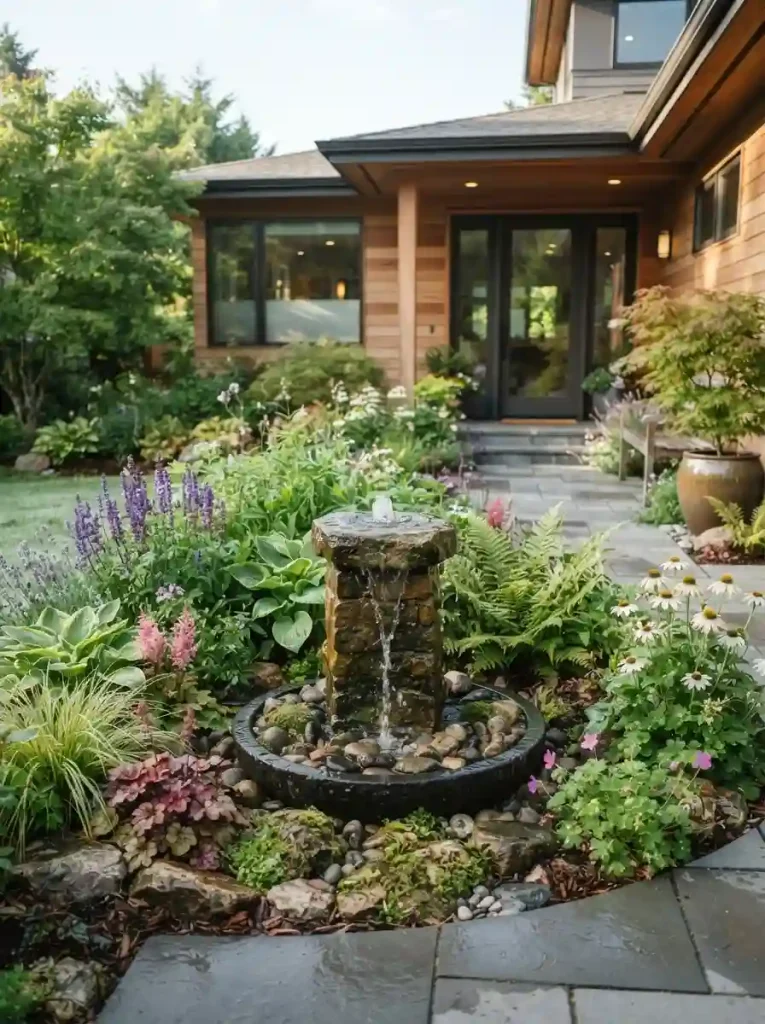
A small water feature can introduce sound and movement without requiring a large pond.
Consider a wall fountain, bubbling stone, compact basin, or self-contained feature depending on the available space.
Position it where visitors can see and hear it from the walkway or porch. Surrounding it with plants can help integrate the feature into the landscape rather than making it look like an isolated ornament.
Choose a style that matches your home. A carved stone feature may suit a traditional property, while a simple geometric fountain can complement modern architecture.
Think about maintenance before installing one. Water features need occasional cleaning and may require additional care depending on climate and design.
Expert Tip:
A small feature in the right location is often more effective than a large feature hidden at the edge of the garden. Place it where people naturally pause or pass by.
19. Combine Flowering Shrubs With Ground Covers
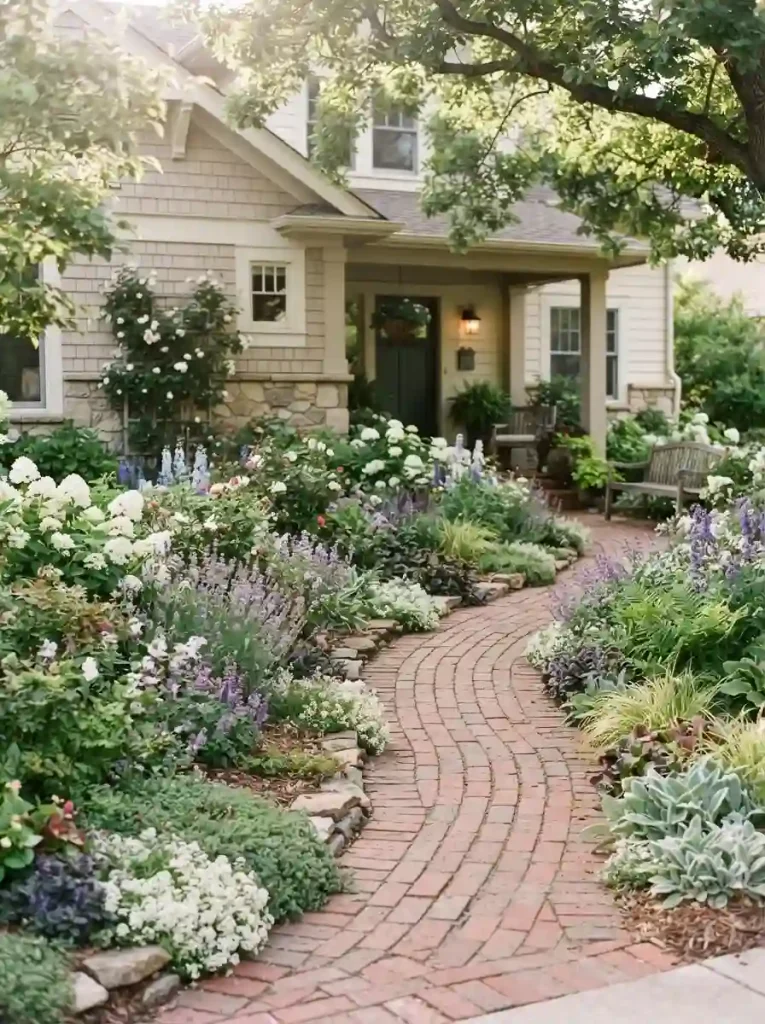
Ground covers can fill the spaces between larger plants and help your garden look finished from the ground upward.
Use them around flowering shrubs, beneath small trees, along borders, or beside stepping stones. Their low-growing habit can create a visual transition between taller plants and hard landscaping.
Choose varieties appropriate for your soil, light, and climate. Some ground covers spread quickly, so check their growth behavior before planting.
A particularly attractive arrangement pairs broad-leaved ground covers with upright flowers or shrubs. The contrast in leaf shapes makes the planting bed more interesting even when few plants are blooming.
Expert Tip:
Don’t automatically cover every inch of bare soil. Leave enough space around young plants for them to mature without immediately competing for water and nutrients.
20. Design a Front Garden That Looks Beautiful at Night
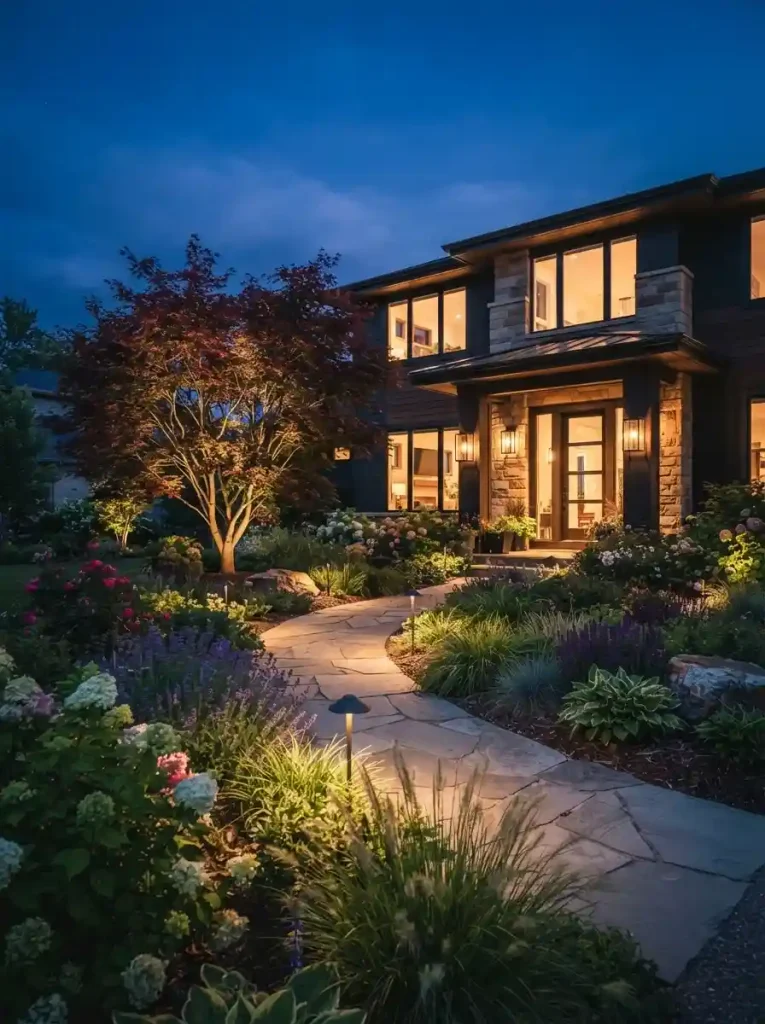
Your front garden doesn’t have to disappear after sunset.
A few carefully positioned lights can highlight trees, planting beds, steps, and pathways while making the entrance feel safer and more welcoming.
Path lights can define the route to the front door, while low uplighting can emphasize an architectural tree or attractive wall. Warm-toned lighting generally creates a softer residential atmosphere than harsh, overly bright illumination.
Avoid placing lights everywhere. Too much illumination can flatten the garden and create unwanted glare.
Think about what you want people to notice first. Perhaps it’s a beautiful tree, an architectural entrance, or a flowering border.
Expert Tip:
Light objects rather than simply lighting the entire garden. Selective illumination creates depth and makes the landscape more interesting after dark.
21. Create a Signature Front Garden That Reflects Your Home
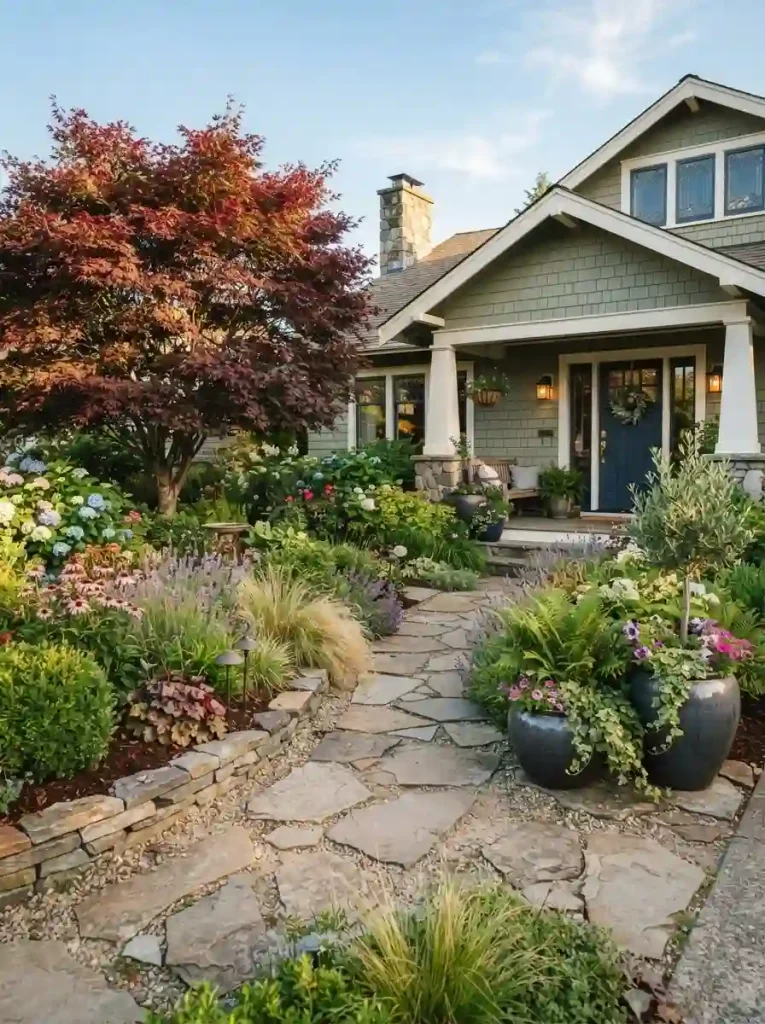
The best front garden isn’t necessarily the most expensive or elaborate one. It’s the one that feels like it belongs with the home and the people who live there.
Start by identifying the character of your property. Is it traditional and symmetrical? Modern and minimal? Rustic and relaxed? Small and urban? Once you understand that character, choose plants and materials that reinforce it.
Use a few strong design elements rather than trying to include every garden trend. A beautiful tree, distinctive pathway, layered planting bed, or pair of statement containers may be all you need to create a memorable entrance.
Most importantly, design for real life.
Choose plants you can realistically maintain, leave enough room for walking and access, and consider how the garden will look in every season.
A front garden should welcome you home as much as it impresses visitors.
Expert Tip:
Before adding another decorative feature, ask whether the garden already has a clear focal point. A strong focal point usually creates more impact than several competing features.
How to Make Your Front Garden Look More Expensive
You don’t need a huge landscaping budget to create a polished front garden.
A few design choices can make a surprisingly large difference:
- Maintain the basics: Healthy plants, trimmed edges, weed-free paths, and clean containers often matter more than expensive decorations.
- Add one statement feature: A beautiful tree, planter, gate, or water feature can become the garden’s signature element.
- Prioritize the entrance: Make the path and front door the visual destination.
- Create layers: Combine trees, shrubs, perennials, and ground covers to add depth.
- Use fewer materials: Coordinated stone, gravel, brick, or wood usually looks more intentional than a mixture of unrelated finishes.
- Define the edges: Clean borders between lawn, beds, and pathways make the garden look maintained.
- Repeat plants: Use the same flowers or shrubs in multiple areas to create rhythm.
Front Garden Ideas for Small Spaces
A small front yard doesn’t mean you have to sacrifice style.
Use vertical planting where possible, choose compact shrubs, and keep pathways visually simple. Containers can provide seasonal color without requiring permanent beds, while narrow trees can introduce height without overwhelming the property.
If lawn takes up most of the available area, consider replacing a portion with a planting bed. Even a small curved border can make the entrance feel more garden-like.
For very narrow spaces, concentrate on one strong idea rather than attempting several different themes.
A simple combination of one small tree, repeated shrubs, seasonal flowers, and a defined pathway can be remarkably effective.
Front Garden Maintenance Tips
Beautiful landscaping becomes much easier to enjoy when the maintenance routine is manageable.
Start by choosing plants according to their growing conditions rather than choosing solely based on appearance. Group plants with similar watering and sunlight requirements together whenever possible.
Mulch can help conserve moisture and make planting beds look tidy, although it should be kept away from direct contact with plant stems and the home’s foundation.
Prune shrubs according to their individual needs instead of cutting everything at the same time. Remove dead flowers when appropriate, keep paths clear, and check irrigation regularly.
Most importantly, don’t wait until the garden becomes overwhelming. A few minutes of maintenance each week can prevent small problems from becoming major projects.
Final Thoughts
Your front garden sets the tone for your entire home.
Whether you prefer a romantic cottage border, a sleek gravel landscape, a colorful flower bed, or a simple arrangement of evergreen shrubs, the most successful design is one that works with your home’s architecture, your local growing conditions, and the amount of time you want to spend caring for it.
Start with the entrance, establish a clear focal point, choose plants that will thrive in the space, and build layers gradually.
You don’t have to transform the entire yard at once. Even one beautifully designed planting bed or a pair of thoughtfully chosen planters can make the entrance feel completely different.
With the right combination of structure, seasonal color, texture, and personality, your front garden can become more than curb appeal—it can become one of the most inviting parts of your home.
Frequently Asked Questions
What are the best plants for a front garden?
The best plants depend on your climate, soil, sunlight, available space, and maintenance preferences. A balanced front garden often combines evergreen shrubs, flowering perennials, ground covers, ornamental grasses, and one or two structural plants such as a small tree.
How can I make a small front garden look attractive?
Keep the design simple and use repetition. Choose compact plants, define the pathway, add vertical interest, and avoid filling every available space. A limited color palette can also make a small garden feel more spacious.
How do I choose a front garden style?
Start with your home’s architecture. Traditional homes often work well with symmetrical planting and classic shrubs, while modern homes can benefit from simple geometric beds, gravel, grasses, and sculptural plants. Cottage and farmhouse homes suit softer, more informal planting.
How much maintenance does a front garden require?
Maintenance varies according to the plants and design. Low-maintenance landscapes generally use plants suited to local conditions, group plants according to their needs, limit high-maintenance annuals, and use practical hardscaping to reduce areas that require frequent attention.
Should a front garden have a lawn?
Not necessarily. A lawn can provide useful open space, but it isn’t essential. Flower beds, ground covers, gravel gardens, shrubs, and pathways can create an attractive front landscape while reducing the amount of lawn that needs mowing.
What makes a front garden look professionally designed?
Consistency is one of the biggest factors. Repeating plants, coordinating materials, creating clear pathways, using different plant heights, and establishing a strong focal point can make a garden look much more intentional.
What should I consider before planting?
Check sunlight, soil, drainage, wind exposure, available space, mature plant sizes, and local climate conditions. Also consider how much maintenance you realistically want to perform throughout the year.
How can I add curb appeal without a major renovation?
Focus on high-impact details such as refreshing planting beds, adding attractive containers near the entrance, defining pathway edges, pruning overgrown shrubs, improving lighting, or planting a small ornamental tree.
Final Takeaway
A beautiful front garden doesn’t have to follow a complicated formula. The strongest designs usually come from a few well-chosen elements working together: healthy plants, thoughtful structure, a welcoming pathway, seasonal interest, and a style that complements the home.
Choose one of these ideas as your starting point and build from there. Over time, even a simple front yard can become an enchanting garden that feels welcoming in every season.