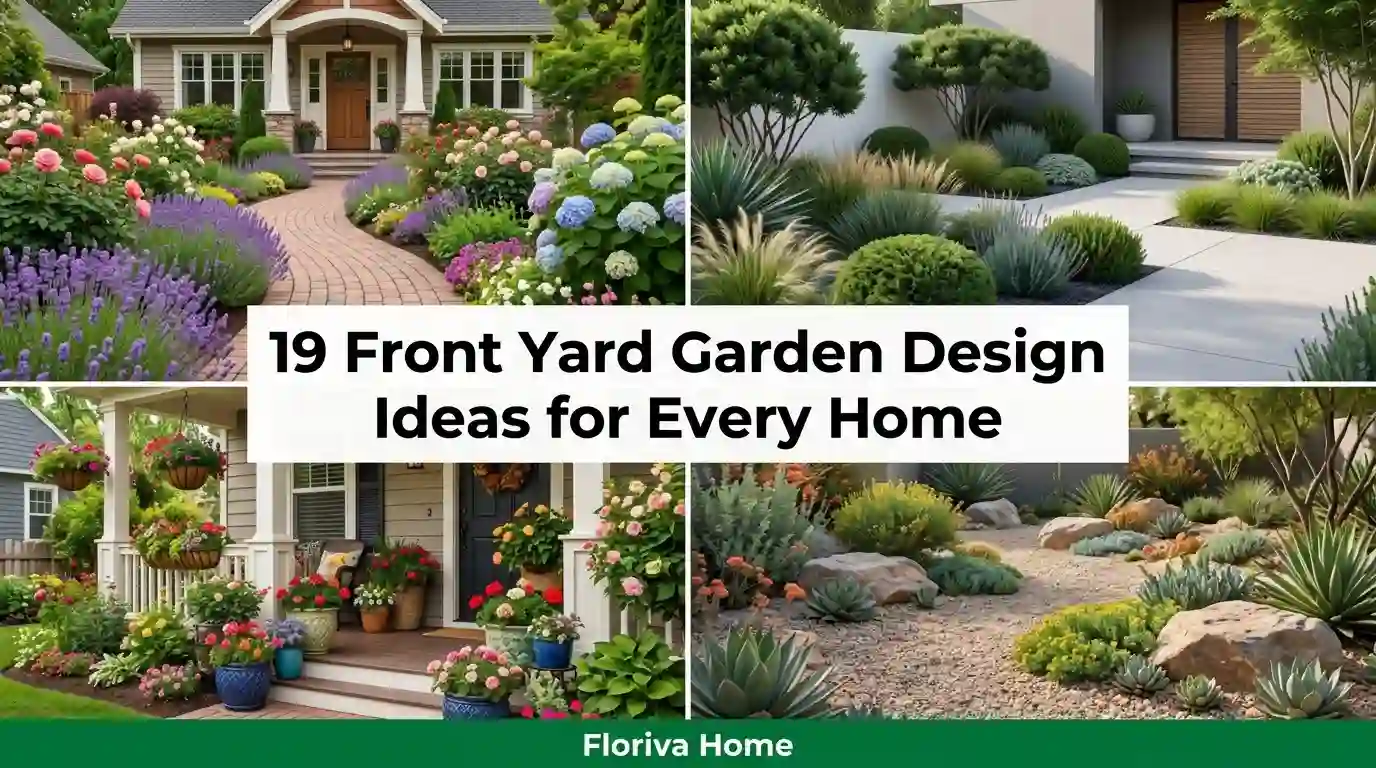
19 Front Yard Garden Design Ideas for Every Home
Your front yard is the first part of your home visitors see, so even a few thoughtful garden changes can make a big difference. You don’t need a huge space or an expensive landscaping project to create an inviting entrance.
The right combination of plants, pathways, containers, textures, and decorative details can give your front yard a polished look while still reflecting your personal style. Whether you have a narrow entrance, a small lawn, or a spacious garden, there are plenty of ways to make the space feel fresh and welcoming.
From structured planting beds to creative container displays, these front yard garden design ideas can help you create a beautiful outdoor space that works with your home rather than competing with it.
1. Frame the Front Door With Layered Flower Beds
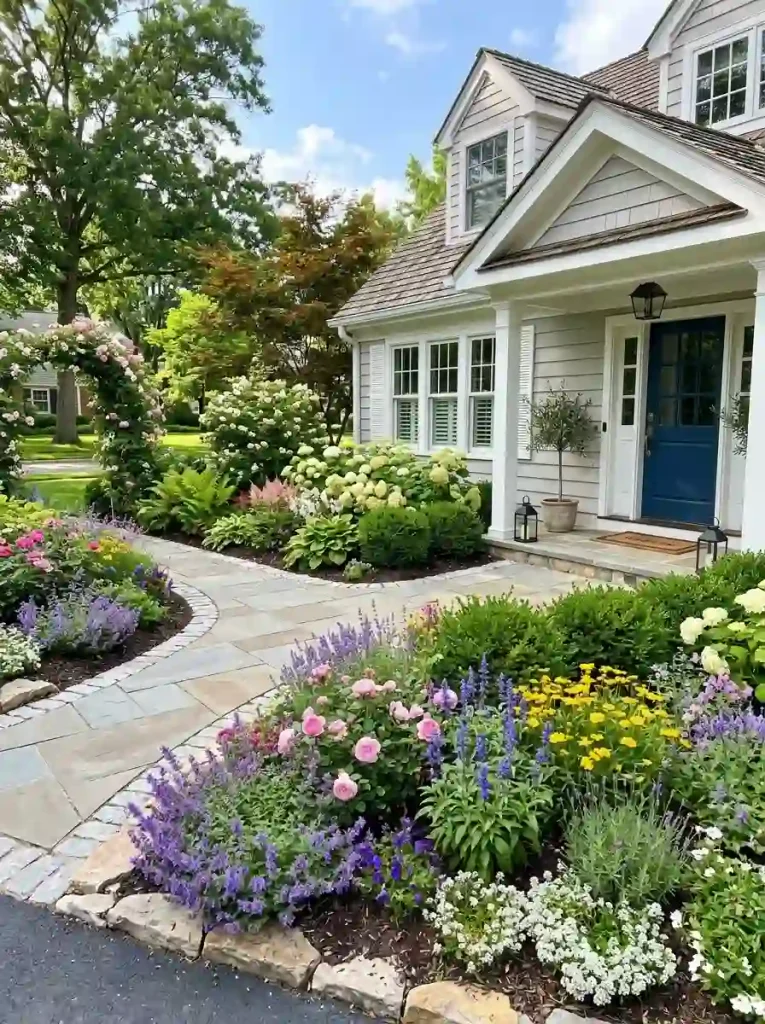
A simple flower bed around the entrance can instantly make your front door feel more inviting. Instead of planting everything at the same height, combine low-growing flowers near the walkway with medium-sized plants closer to the house.
This layered arrangement creates depth without requiring a complicated landscape plan. Choose flowers and foliage that complement your home’s exterior, then repeat a few colors throughout the bed for a coordinated appearance.
Curved edges can soften a boxy house, while straight planting lines work beautifully with modern architecture.
Keep taller plants toward the back and shorter varieties near paths so the entrance remains open and easy to navigate.
Expert Tip:
2. Create a Small Evergreen Corner for Year-Round Interest
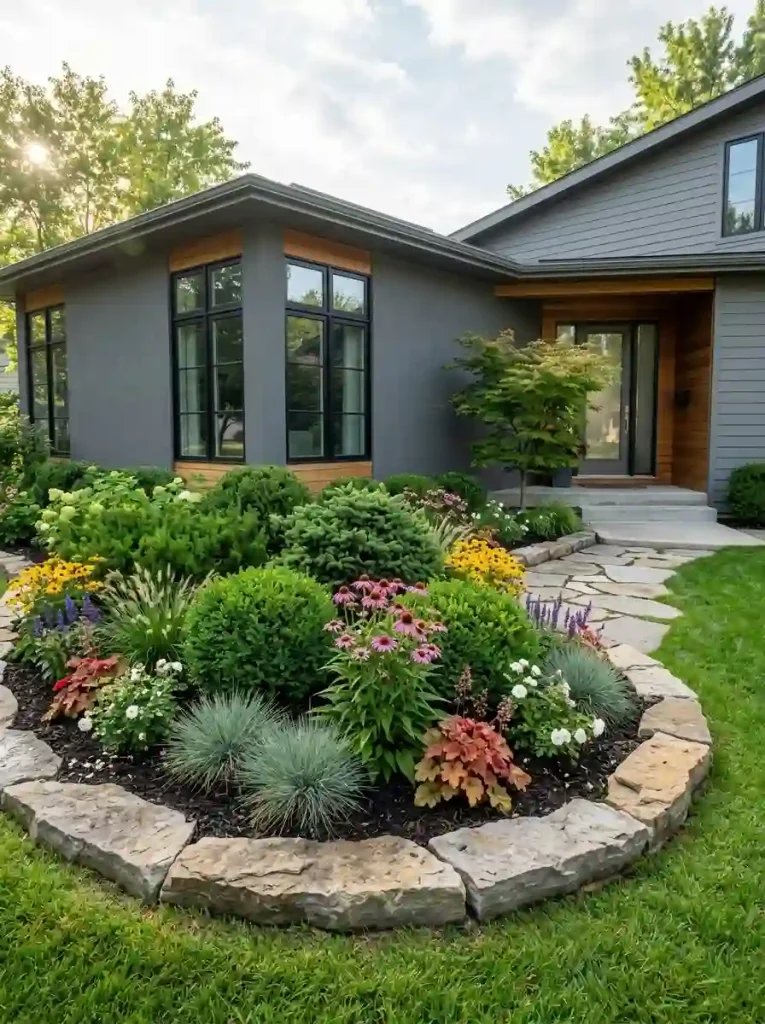
If you want your front yard to look attractive in more than one season, build a planting corner around evergreen shrubs. Their consistent foliage provides structure even when seasonal flowers disappear.
Use one taller evergreen as the anchor and surround it with smaller shrubs, ornamental grasses, or flowering perennials. The mixture creates visual variety without making the garden feel crowded.
This approach works particularly well beside a porch, garage, or empty corner that currently looks unfinished.
Choose evergreen varieties that match the mature size of your space so they do not eventually overwhelm windows, pathways, or the home’s facade.
Expert Tip:
3. Add a Curved Garden Border Along the Lawn
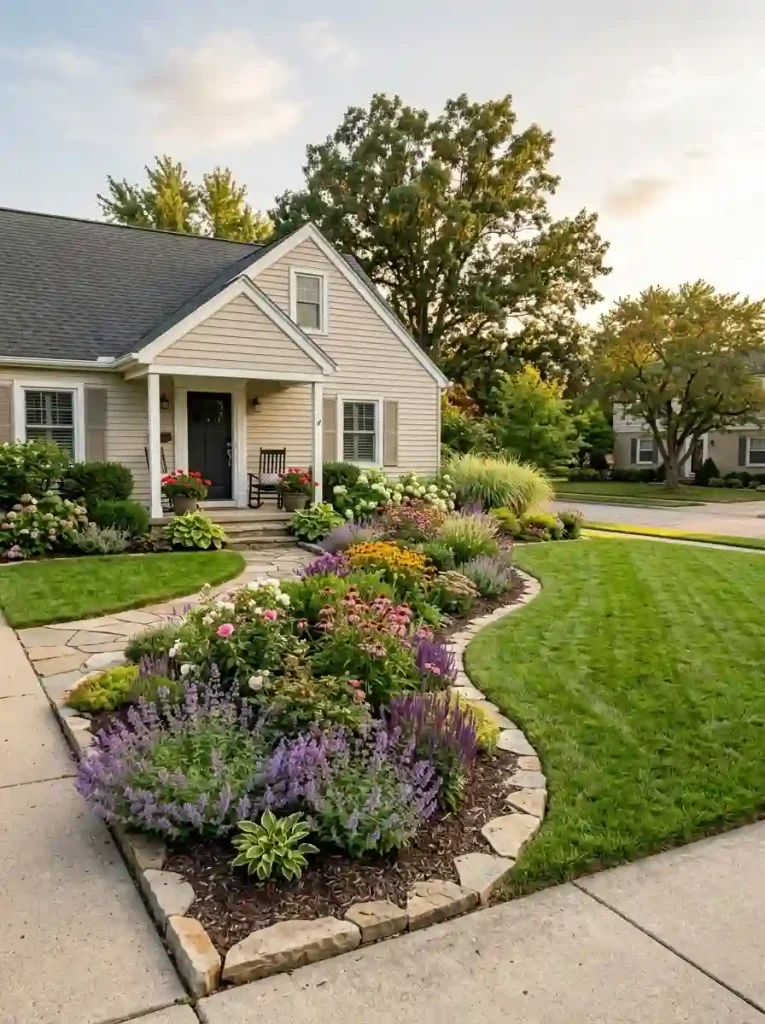
Straight lawn edges can sometimes make a front yard feel flat. A gentle curved border introduces movement and gives you a natural place to add flowers, shrubs, and groundcover.
Mark the curve before planting so you can see how it interacts with the driveway, sidewalk, and house. Once the shape feels right, define the edge with stones, bricks, or a clean soil boundary.
The result can make an ordinary lawn look intentionally designed without changing its entire layout.
Keep curves broad and gradual rather than creating several tight bends. Wide curves usually look more natural and are easier to maintain.
Expert Tip:
4. Turn a Porch Step Into a Container Garden
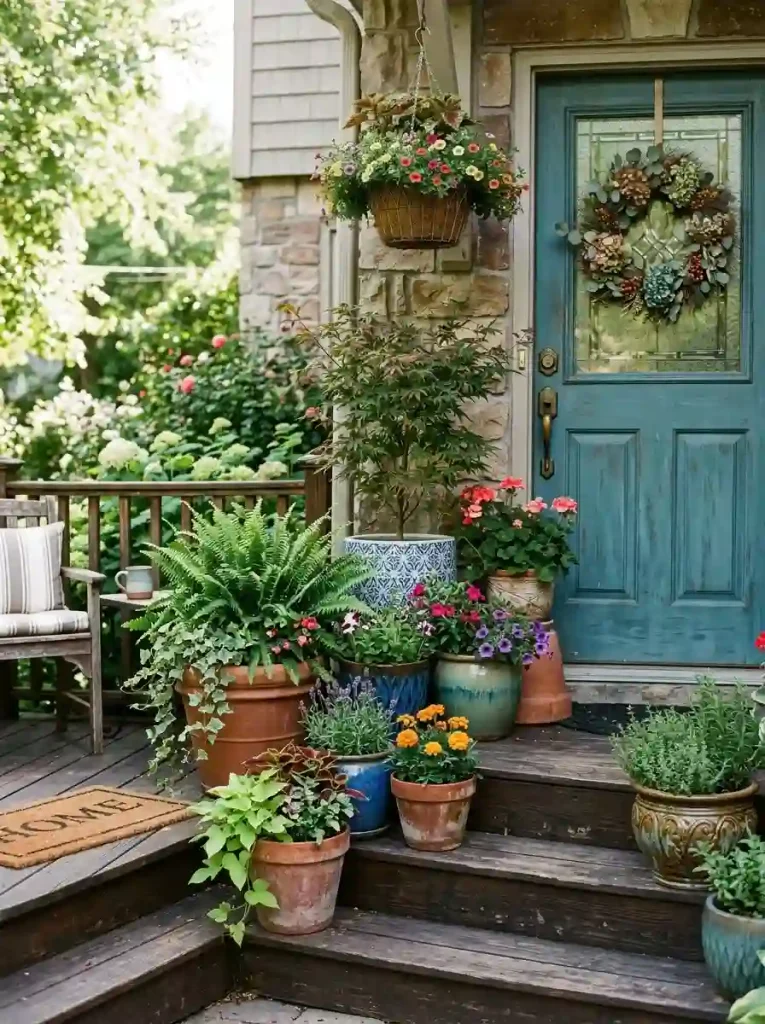
A small front entrance can still have plenty of personality. Place coordinated containers beside the porch steps and vary their heights to create a compact vertical garden.
Choose a mixture of leafy plants, flowering annuals, and trailing varieties so the display has different textures. Matching pots create a neat appearance, while a collection of complementary containers gives the space a more relaxed character.
Because containers are movable, this idea is especially useful for renters or homeowners who like to refresh their garden throughout the year.
Make sure every container has proper drainage, and group plants with similar sunlight and watering requirements together.
Expert Tip:
5. Design a Pollinator-Friendly Strip Beside the Walkway
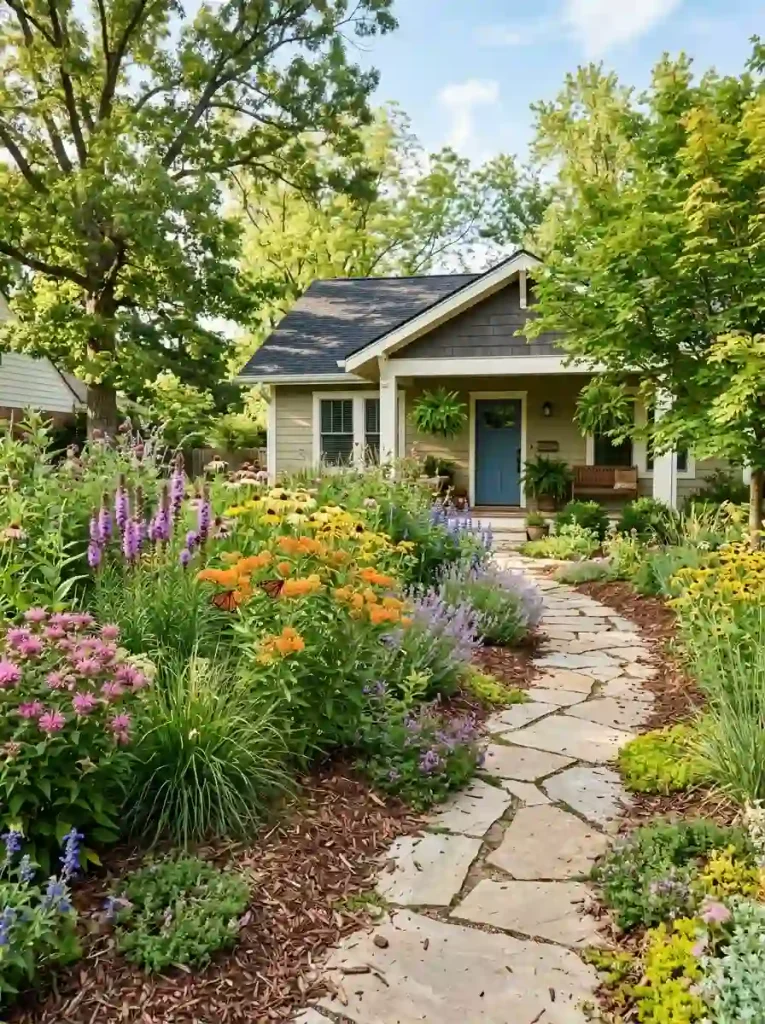
Give your front path more life by dedicating a narrow planting strip to flowers that attract bees and butterflies. This can be especially effective when lawn space is limited.
Choose several plants that bloom at different times so the area does not lose interest after one flowering period. A mix of flower shapes and heights also creates a more natural appearance.
Besides adding color, the planting strip can turn an otherwise unused edge into a lively garden feature.
Select flowering plants suited to your local growing conditions and avoid filling the strip so densely that you cannot easily access the walkway.
Expert Tip:
6. Use Ornamental Grasses to Soften Hard Edges
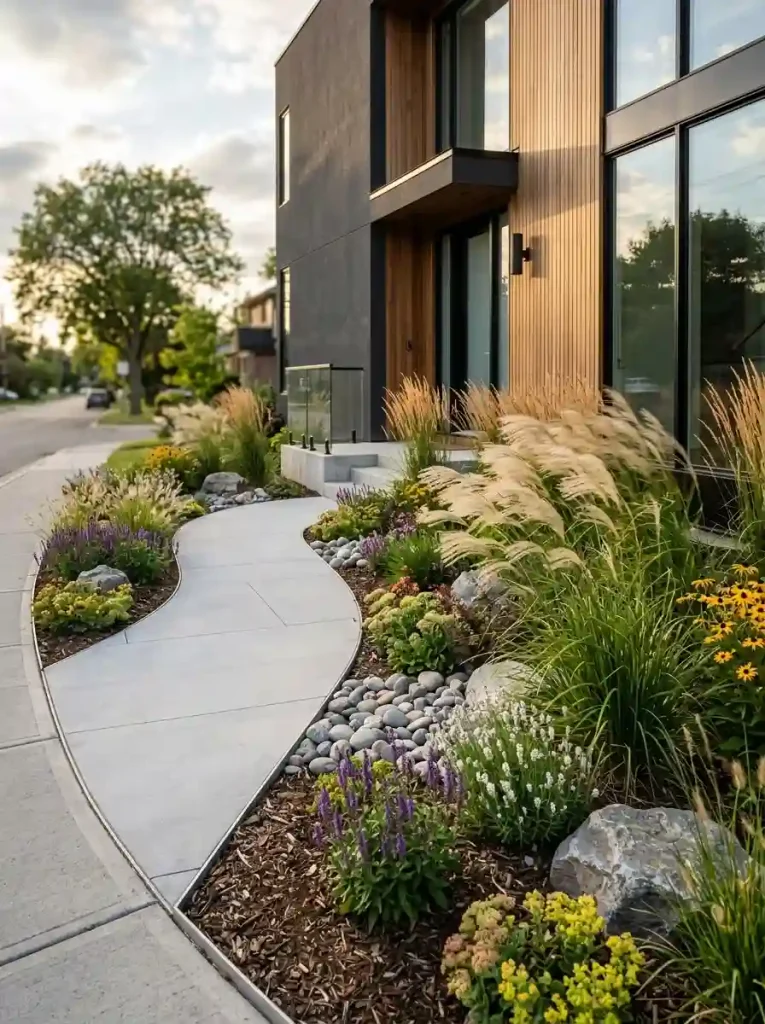
Ornamental grasses can bring movement and texture to a front yard without creating a heavy visual effect. Their narrow leaves and flowing shapes look beautiful around driveways, sidewalks, and foundation plantings.
Plant several grasses together for a stronger statement or combine them with flowering plants for contrast. Their upright forms can also help break up large areas of paving or walls.
For a modern home, grasses can provide a clean architectural look. In a cottage-style garden, they can make the planting feel more relaxed.
Check the mature height and spread before planting. Position taller grasses where they will not block signs, windows, or sightlines.
Expert Tip:
7. Build a Mini Rock Garden in a Sunny Spot
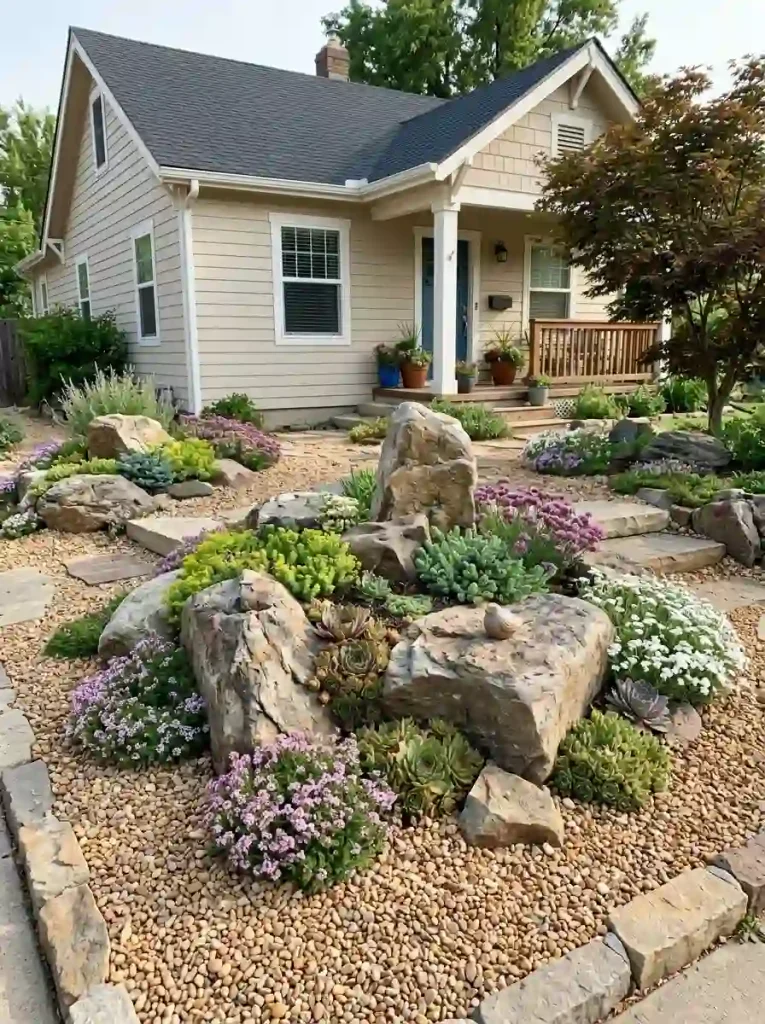
A sunny patch of front yard can become a striking rock garden with the right combination of stones and compact plants. This is a useful option for areas where traditional lawn struggles.
Arrange rocks in groups rather than scattering them randomly. Then tuck drought-tolerant plants, small succulents, or low-growing groundcovers between the stones.
The contrast between rugged rock surfaces and soft foliage creates visual interest while keeping the overall design relatively simple.
Start with a few larger stones as focal points, then add smaller rocks around them. This usually looks more natural than using stones of identical size.
Expert Tip:
8. Plant a Repeating Border for a More Polished Look
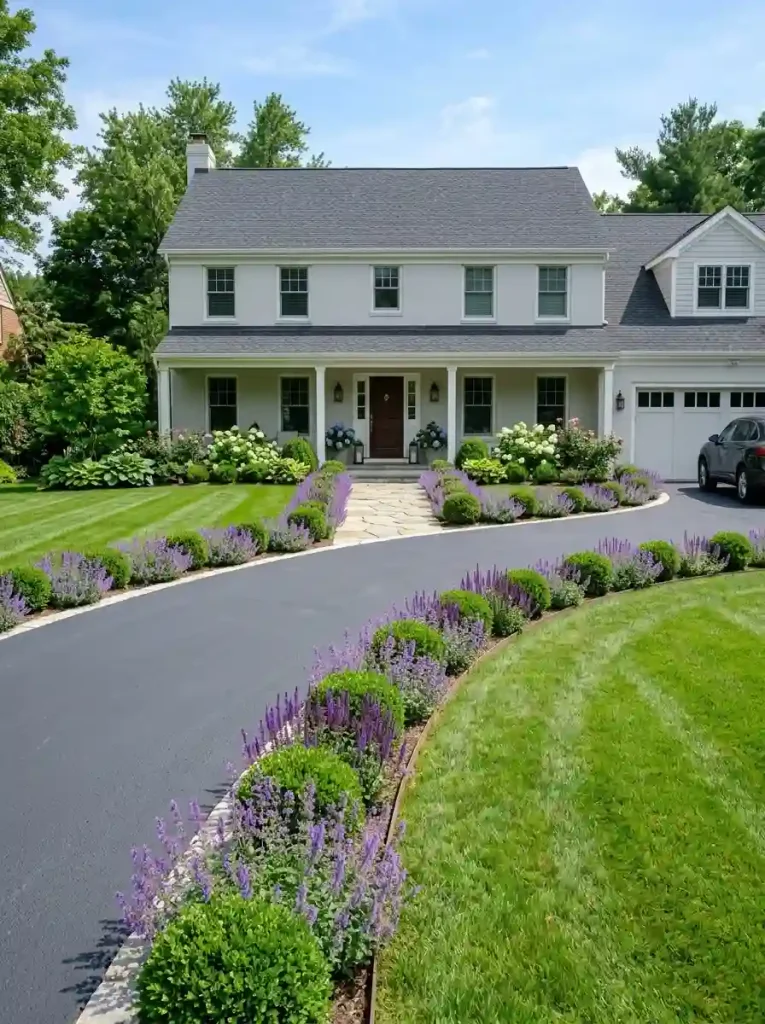
Repetition is one of the easiest ways to make a garden look professionally planned. Select one plant variety and repeat it along the front walkway, driveway, or foundation.
You can use flowering plants for seasonal color, compact shrubs for structure, or ornamental foliage for a quieter design. Repeating the same plant creates rhythm and connects different parts of the yard.
It is particularly effective in small gardens because the consistent pattern makes the space feel organized rather than cluttered.
Repeat plants in groups instead of placing one specimen at a time. Small clusters generally create a stronger visual impact.
Expert Tip:
9. Add a Small Tree as the Garden’s Focal Point
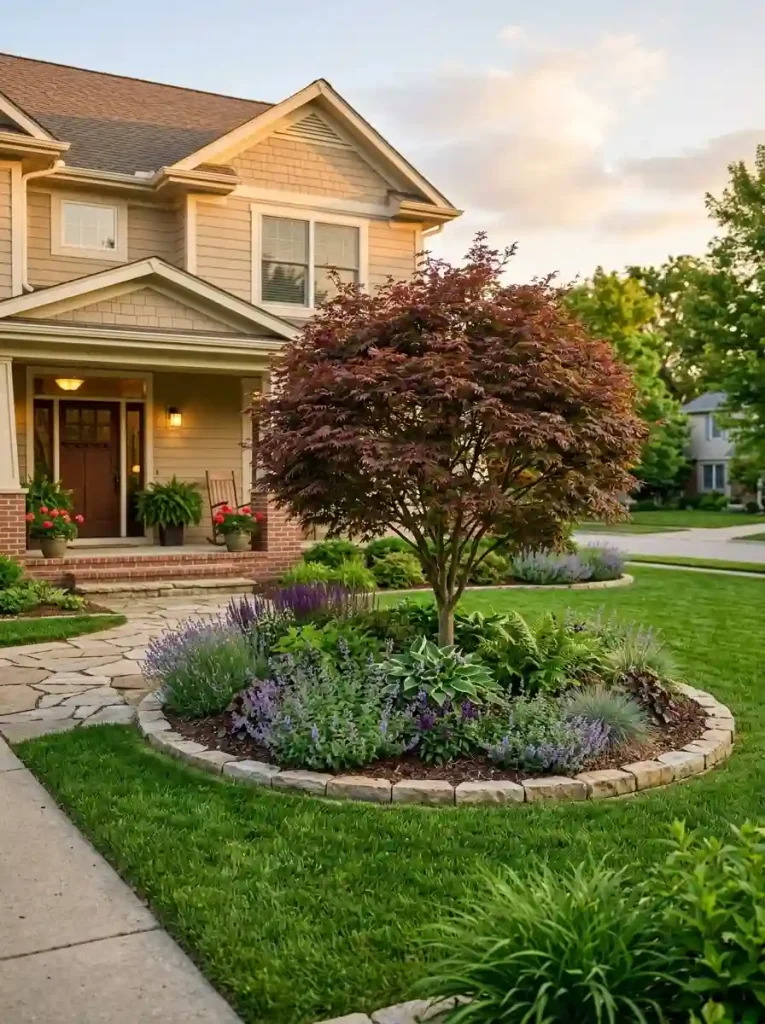
A carefully chosen small tree can give your front yard height and become a long-term focal point. Flowering varieties can add seasonal interest, while ornamental trees with attractive foliage provide a more consistent display.
Position the tree where its mature canopy will complement the house instead of hiding important architectural features. Surround the base with low plants or a simple mulch ring to make the planting feel intentional.
Even one well-placed tree can make a modest front garden feel much more established.
Think about the tree’s mature size, root behavior, sunlight requirements, and distance from structures before planting.
Expert Tip:
10. Create a Cottage-Style Mix of Flowers and Foliage
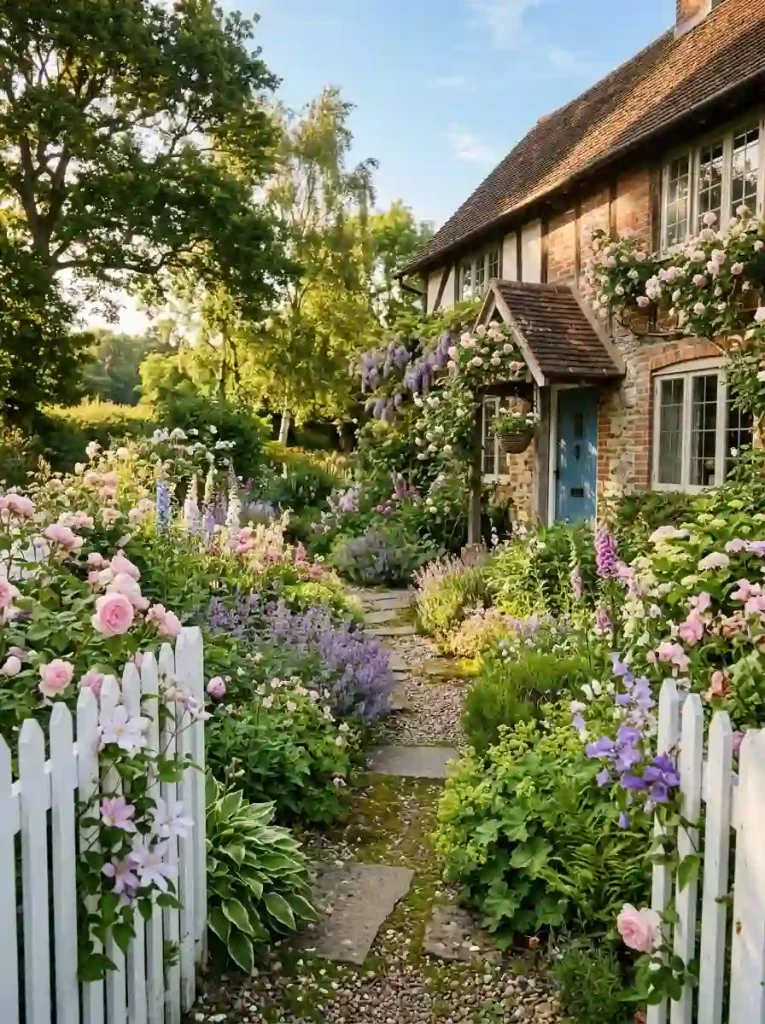
For a softer and more relaxed front yard, combine flowering plants with varied foliage instead of arranging everything in strict rows. The goal is to create a garden that feels abundant while still having a clear structure.
Mix different flower shapes, leaf sizes, and plant heights, but repeat a few colors to keep the display cohesive. A narrow pathway through the planting can make the garden feel especially charming.
This style works beautifully with traditional, farmhouse, and cottage-inspired homes.
Use a few repeated plants throughout the bed to connect the informal planting groups and prevent the garden from looking random.
Expert Tip:
11. Make a Narrow Front Yard Feel Fuller With Vertical Planting
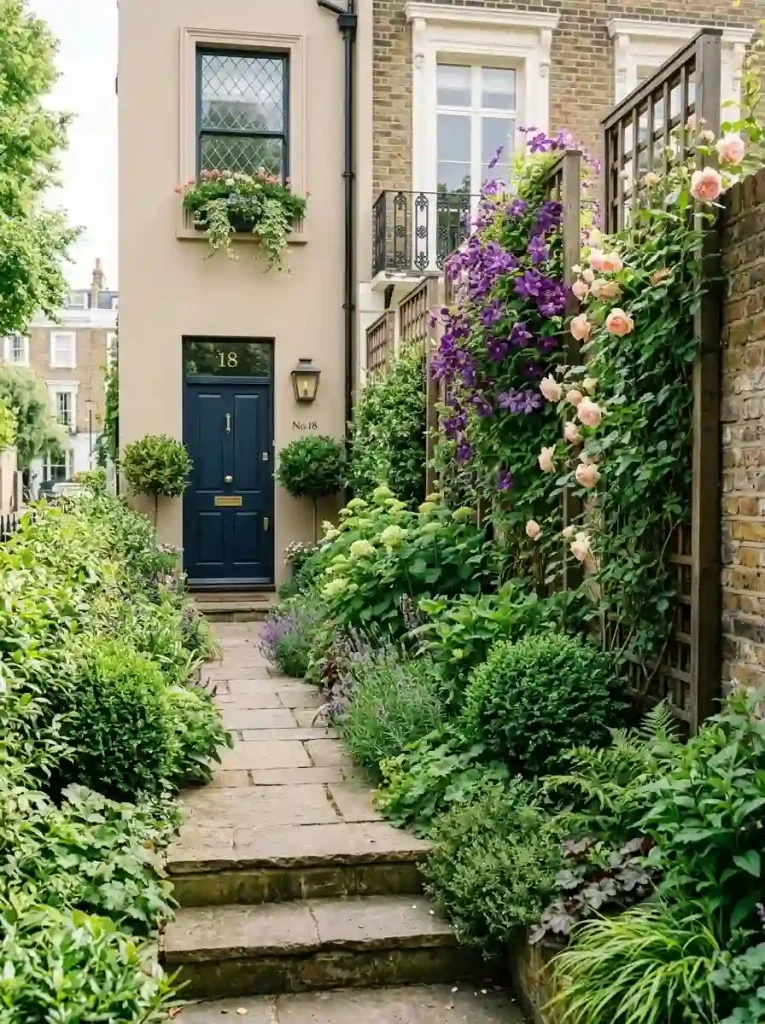
When your front yard is short on ground space, look upward. Trellises, slim climbing plants, and upright shrubs can add height without taking valuable room away from pathways or planting beds.
A simple trellis near the porch or along a wall can become a living feature when covered with a suitable climber. Combine it with low plants underneath to create three distinct levels of greenery.
This technique is especially useful for townhouses and narrow front gardens where every inch matters.
Leave enough clearance around doors, windows, and utility equipment so your vertical garden remains attractive without becoming difficult to maintain.
Expert Tip:
12. Use Raised Stone Beds for a Defined Front Garden
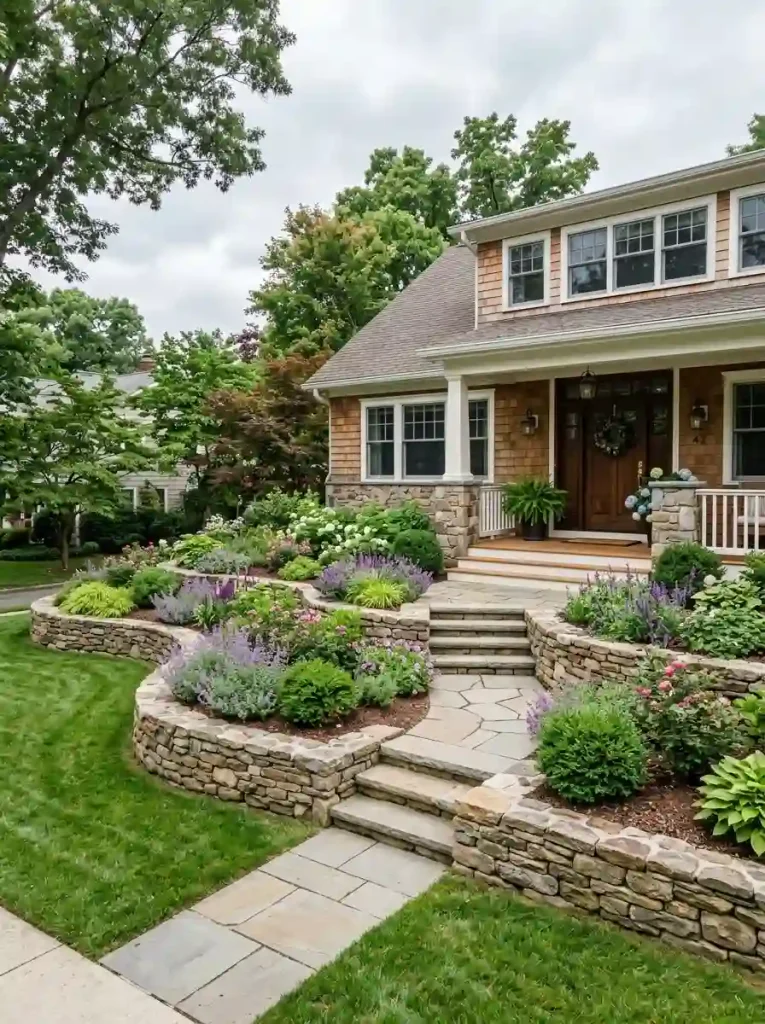
Raised planting beds can give your front yard a stronger sense of structure while making the plants easier to notice. Natural stone walls create a subtle change in height and add texture around the home.
Fill the raised bed with a combination of shrubs, flowers, and foliage plants. Keep the planting slightly lower near the walkway and gradually increase the height toward the house.
This design can work particularly well on properties with a gently sloping front yard.
Make sure raised beds have good drainage and avoid building them directly against siding or other materials that should stay dry.
Expert Tip:
13. Add a Stepping-Stone Path Through a Flower Border
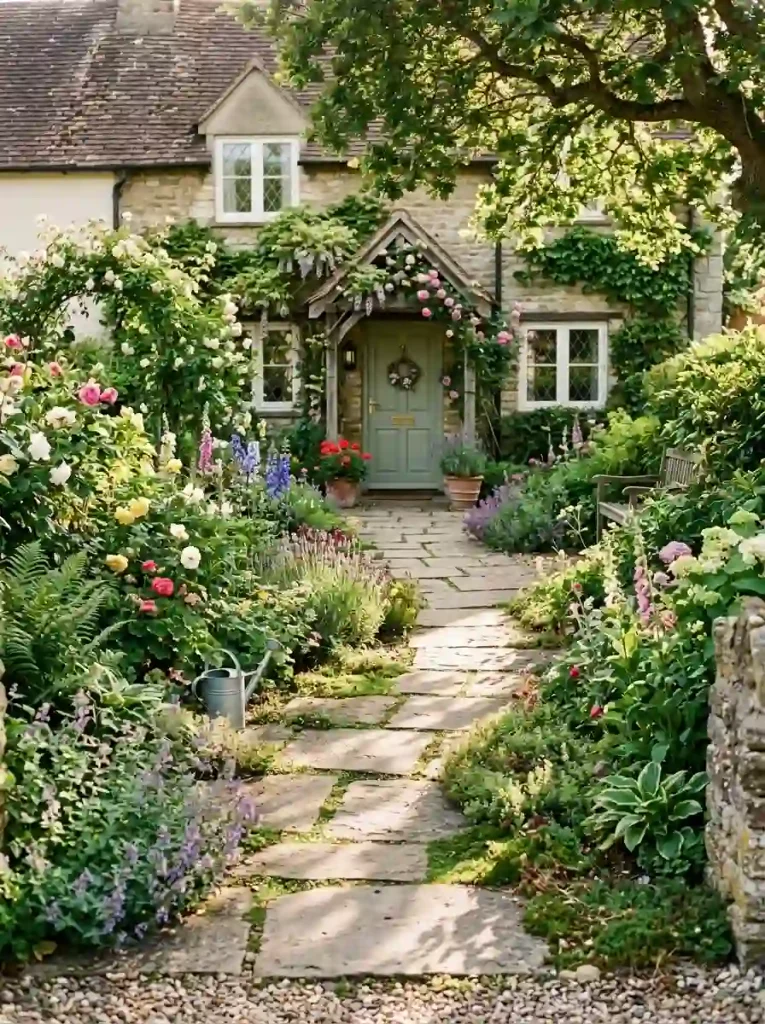
A pathway does more than lead visitors toward your front door. When surrounded by plants, it can become one of the most attractive features in the entire garden.
Place large stepping stones through a planting bed and leave enough space between them for groundcover to soften the edges. Add flowers of different heights along both sides for a relaxed garden feel.
The result is practical, decorative, and particularly charming when the path gently curves toward the entrance.
Set every stone firmly into the ground and keep the walking surface level to make the pathway comfortable and safe.
Expert Tip:
14. Create a Minimalist Gravel Garden Around the Entry
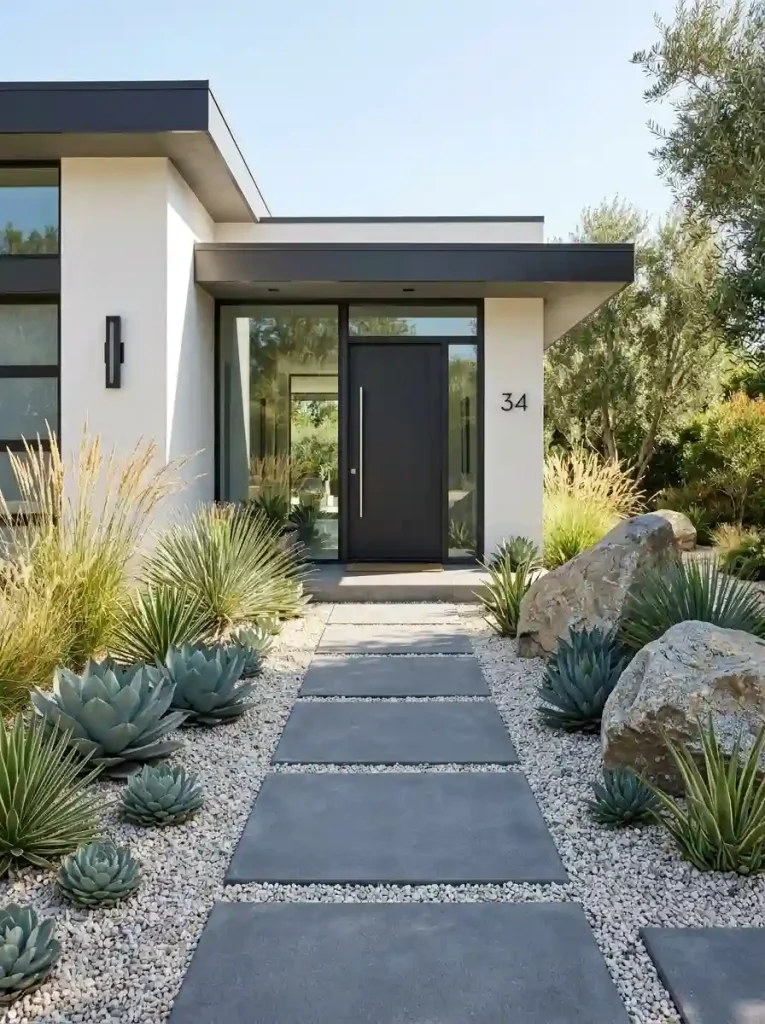
If you prefer a clean and contemporary look, consider replacing part of a traditional planting bed with decorative gravel.
Use a restrained combination of gravel, sculptural plants, and a few large stones. The open space allows each plant to stand out while giving the entrance a crisp architectural appearance.
This design is especially effective around modern homes with simple lines and neutral exterior materials.
Use a landscape fabric or another appropriate weed-control layer beneath the gravel where suitable, and choose plants that tolerate the conditions of the site.
Expert Tip:
15. Give a Mature Tree a Shaded Woodland Garden
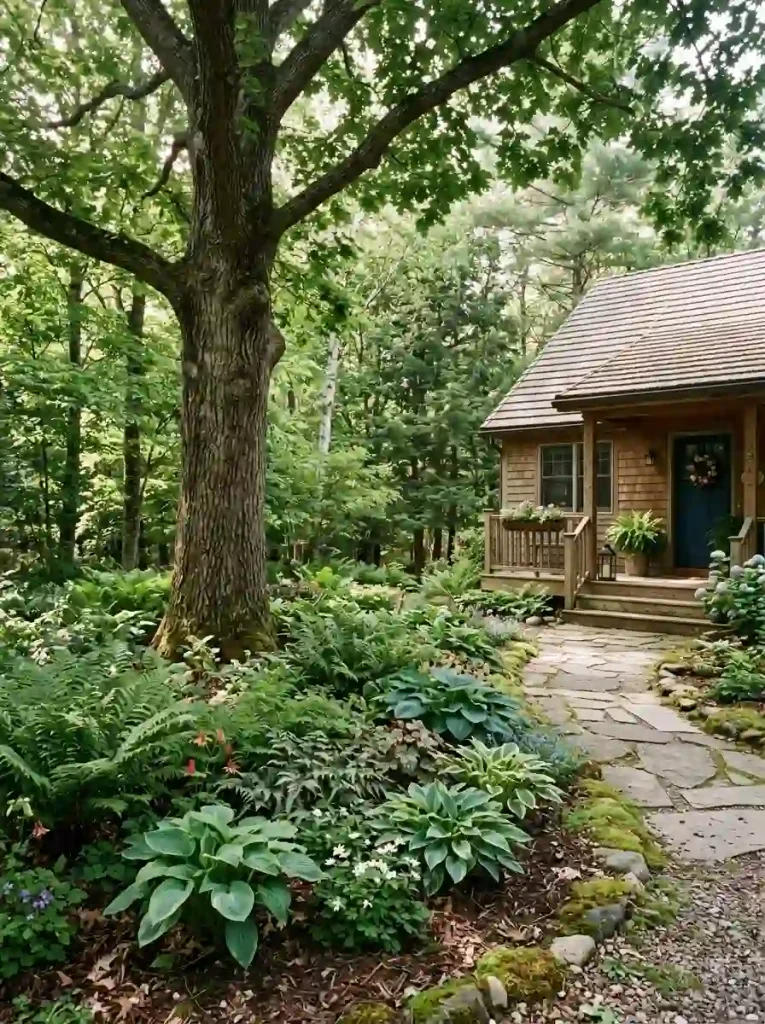
The area beneath a mature tree can be difficult to landscape because grass may struggle with shade and competition from established roots.
Instead of fighting the conditions, turn the space into a woodland-inspired garden. Use shade-tolerant foliage plants, ferns, groundcovers, and seasonal flowers to create a soft carpet around the trunk.
This approach makes an otherwise challenging area look deliberate and natural.
Avoid piling soil or mulch against the tree trunk. Keep the root flare visible and choose plants that can tolerate the existing shade conditions.
Expert Tip:
16. Highlight the Driveway With Repeated Shrubs
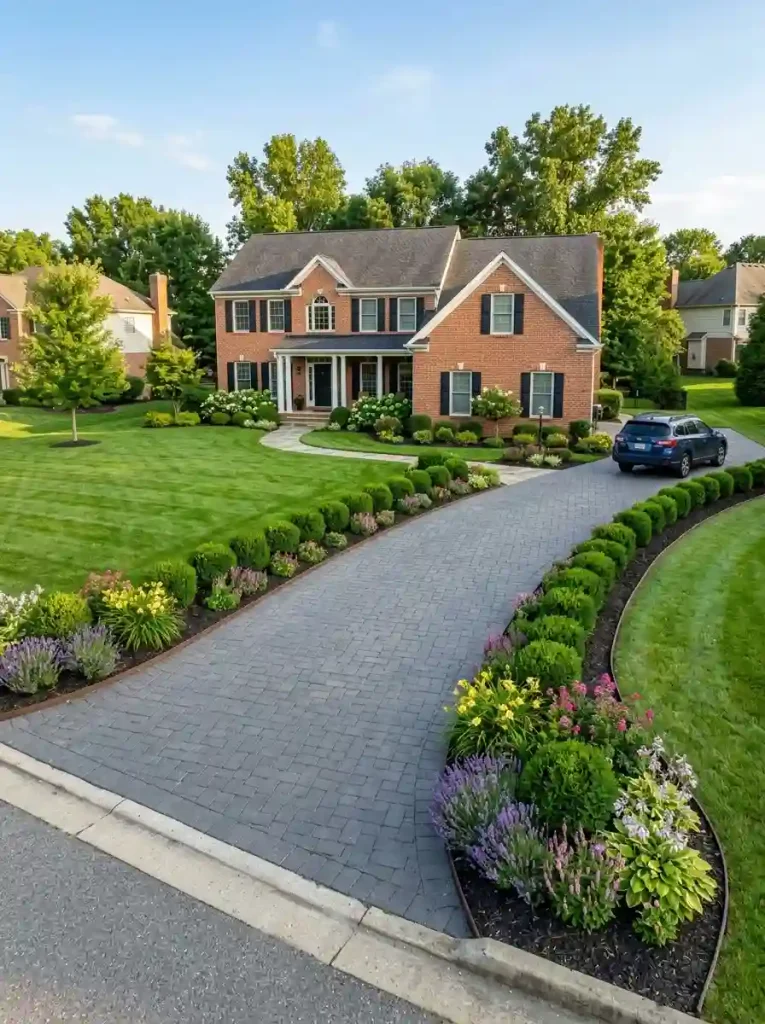
The driveway often takes up a large portion of the front yard, but that does not mean it has to look plain. A repeated row of compact shrubs can soften the hard surface and create a visual connection between the driveway and garden.
Choose plants that maintain a relatively consistent shape and repeat them at regular intervals. This creates rhythm while keeping the design simple.
Leave enough room between the plants and driveway so vehicles and passengers can move comfortably.
Avoid placing plants where they could interfere with visibility when entering or leaving the driveway.
Expert Tip:
17. Mix Edible Herbs Into the Front Garden
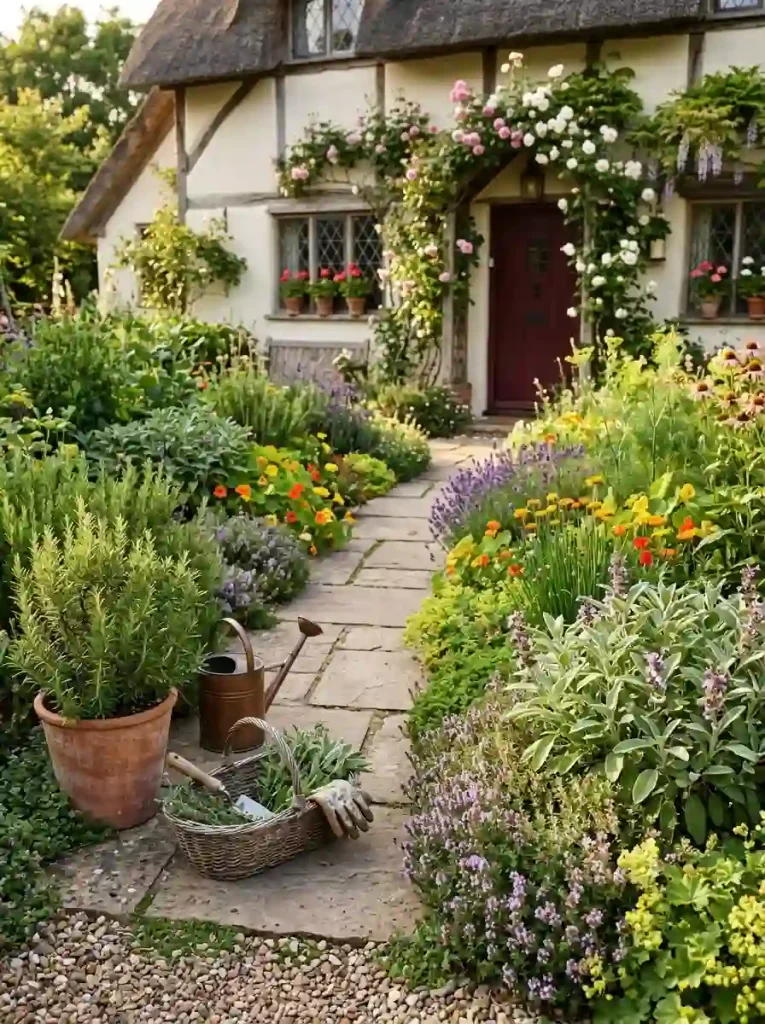
Your front garden does not have to be purely decorative. Herbs such as rosemary, thyme, sage, and other suitable culinary plants can add fragrance, texture, and practical value to an attractive planting bed.
Mix edible herbs with ornamental flowers instead of creating a separate vegetable-style plot. Their varied foliage can make the garden feel layered and informal.
A sunny area close to the walkway can also make harvesting convenient.
Check local growing conditions and choose herbs suited to your climate, soil, and available sunlight. Keep edible plants away from areas treated with unsuitable chemicals.
Expert Tip:
18. Create a Front Yard Seating Nook
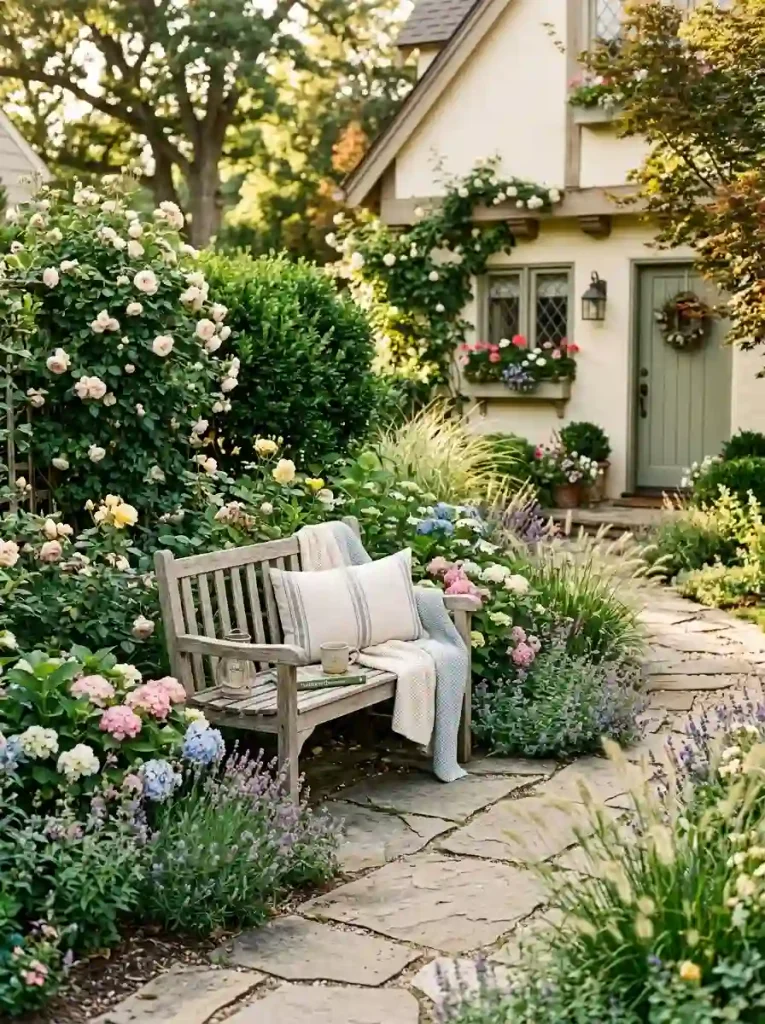
A front garden can be more than something you look at from inside the house. If local conditions and privacy allow, create a small seating nook where you can enjoy the garden.
A compact bench beneath a tree or beside a flower bed can transform an unused corner into a peaceful outdoor spot. Surround it with shrubs and flowers without completely hiding the seating area.
Even a small bench can make the garden feel more connected to everyday life.
Place seating where it has a pleasant view and enough shade or shelter for comfortable use. Keep pathways clear around the area.
Expert Tip:
19. Combine Mulch, Stone, and Plants for a Finished Look
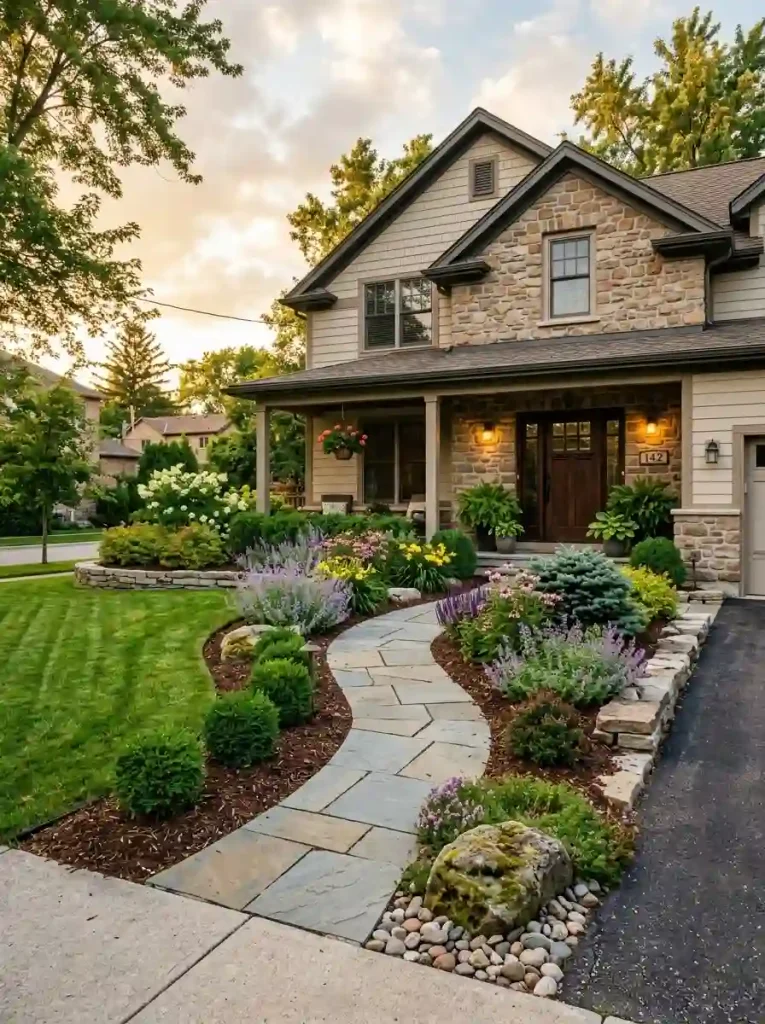
Sometimes the best front yard design is not one dramatic feature but a thoughtful combination of simple elements.
Use mulch beneath shrubs, stone along pathways, and carefully selected plants to create contrast between textures. Keep the overall color palette limited so the different materials feel connected.
This approach can adapt to almost any home style and allows you to improve the yard gradually rather than completing everything at once.
Start with the most visible section, then expand the design as your time and budget allow.
Repeat at least one material or plant throughout different parts of the yard. That small connection can make separate garden areas feel like one cohesive landscape.
Expert Tip:
How to Choose the Right Front Yard Garden Design
Before buying plants or materials, spend some time looking at how your front yard actually works. Notice where sunlight falls, where water collects, which areas are visible from the street, and how people naturally approach the entrance.
Consider Your Home’s Architecture
The garden should complement the house rather than compete with it. Clean planting lines and restrained materials can suit contemporary homes, while softer borders and abundant flowers may work beautifully with traditional or cottage-style architecture.
Think About Maintenance
A garden that looks beautiful but requires more time than you have will quickly become frustrating. Choose plants according to the amount of watering, pruning, mowing, and seasonal care you are realistically willing to provide.
Use Repetition to Create Cohesion
Repeating plants, edging materials, or colors throughout the yard makes the landscape feel intentional. You do not need dozens of different varieties to create visual interest.
Plan for Mature Plant Sizes
Small plants at a garden center can be deceiving. Always consider how wide and tall each plant is expected to become before placing it near windows, paths, driveways, or the foundation.
Simple Ways to Improve Your Front Yard on a Budget
You do not have to transform the entire property in one weekend. Start with changes that provide the biggest visual difference.
Fresh mulch can immediately make existing beds look cleaner. A defined garden edge can sharpen the boundary between lawn and planting areas. Containers can add seasonal color without requiring permanent construction.
You can also divide suitable established perennials, propagate certain plants, or look for end-of-season sales to stretch your gardening budget.
If you are doing the work yourself, tackle one section at a time. A finished small area usually looks better than several unfinished projects scattered across the yard.
Final Thoughts
A beautiful front yard does not depend on having a huge property or an unlimited landscaping budget. The strongest designs usually come from choosing plants and materials that suit the home’s architecture, climate, available space, and maintenance needs.
Whether you prefer colorful flower borders, structured shrubs, natural stone, ornamental grasses, containers, or a relaxed cottage garden, there is plenty of room to create a front entrance that feels personal and welcoming.
Start with one area that needs the most attention, make a clear plan, and build from there. Even a few thoughtful changes can turn an ordinary front yard into a garden that makes coming home feel a little better.