
24 Stunning Landscaping Around Patio Ideas to Try Now
Inside: 24 practical, good-looking ways to wrap your patio in plants, texture, and structure, whether you have a postage-stamp slab or a full backyard terrace.
A patio on its own is just a floor. The plants, edges, and little design touches around it are what make it feel like a place you want to be.
The good news is you don’t need a landscaping crew or a huge budget. The ideas below range from one-weekend projects to bigger builds. Pick the ones that fit your sun, space, and style.
1. Soften hard edges with ornamental grasses
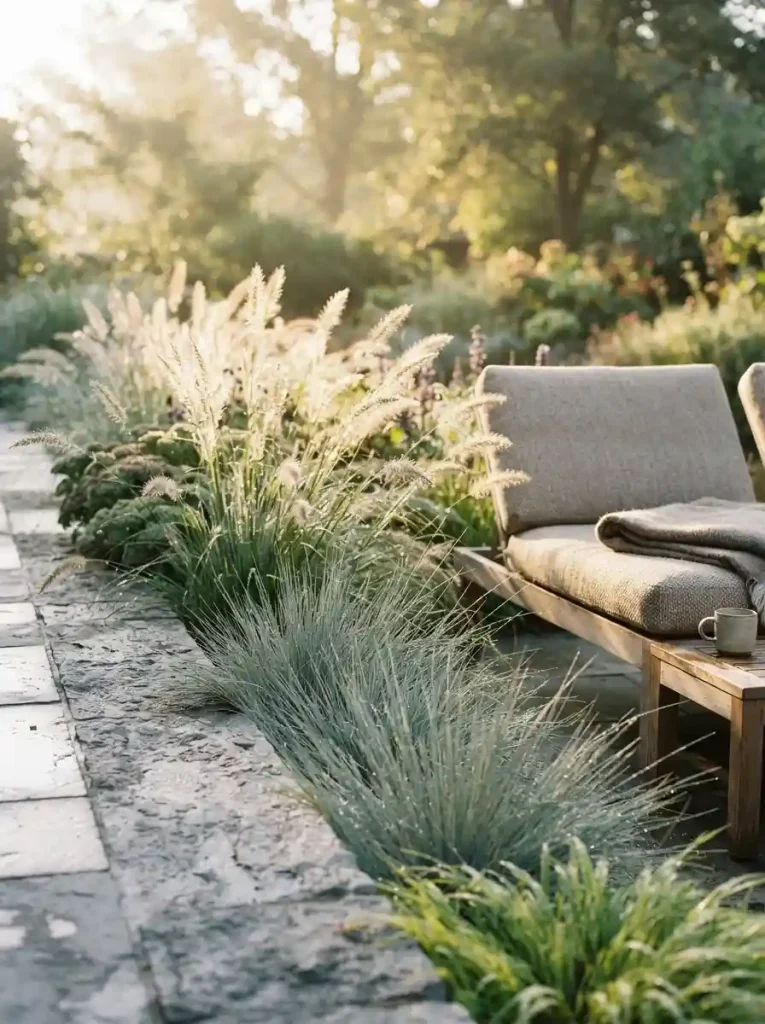
Hard patio edges can look stiff. Ornamental grasses blur that line with movement and a bit of sound whenever the breeze picks up. Feather reed grass, fountain grass, and blue fescue all work well. They are hardy across a wide range of zones, and most want at least six hours of sun.
Plant taller varieties at the back or corners and let shorter ones spill toward the paving. Their plumes catch low evening light beautifully.
Pro Tip:
Cut grasses back to a few inches in late winter, before new growth starts. It takes ten minutes and keeps them looking fresh all season.
2. Frame the space with a lavender hedge

Lavender is one of the few plants that looks good, smells good, and feeds pollinators all at once. A low row along the patio edge gives you a fragrant border that releases scent every time someone brushes past.
It needs full sun and fast-draining soil, so it suits patios with gravel or sandy beds. Space plants roughly 12 to 24 inches apart, depending on the variety, so they knit into a hedge within a couple of seasons.
Pro Tip:
Trim lightly right after the flowers fade, and never cut into bare, woody stems. Old wood rarely regrows.
3. Build a raised planter wall that doubles as seating

Why buy extra chairs when your garden bed can hold the overflow guests? A raised wall around part of the patio works as a planter and a bench in one. Aim for a seat height of about 17 to 19 inches and a top at least 14 inches deep so it’s comfortable to sit on.
Fill the beds with perennials and a few trailing plants, such as rosemary or creeping Jenny, to spill over the front. Add outdoor cushions when you want to sit longer.
Pro Tip:
Check local rules before building. Walls above a certain height often need a permit or proper engineering.
4. Plant creeping thyme between pavers
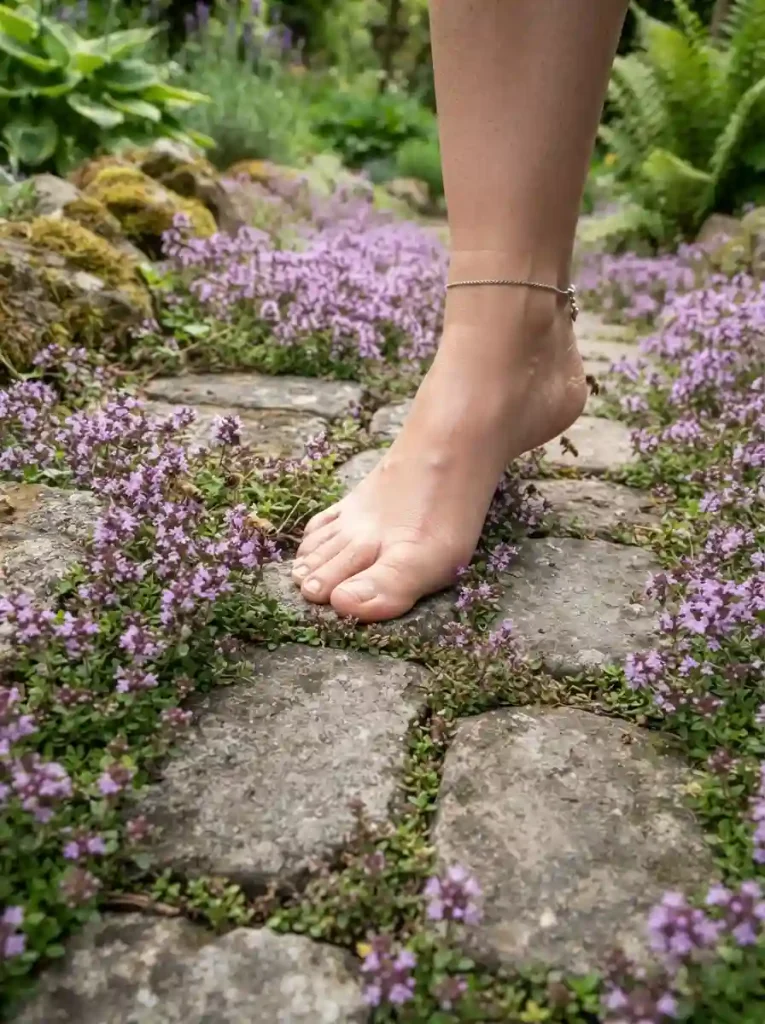
Gaps between pavers or flagstones are wasted space. Fill them with creeping thyme and you get a living carpet that smells wonderful underfoot and blooms in tiny purple clouds each summer.
It tolerates light foot traffic and loves sun. In shadier spots, try Irish moss or mazus. Leave joints at least an inch wide and fill them with a gritty soil mix so roots can establish without staying soggy.
Pro Tip: Water the new plugs regularly for the first few weeks, then back off. Thyme prefers to stay on the dry side once settled.
Pro Tip:
Water the new plugs regularly for the first few weeks, then back off. Thyme prefers to stay on the dry side once settled.
5. Create a leafy ceiling with a vine-covered pergola
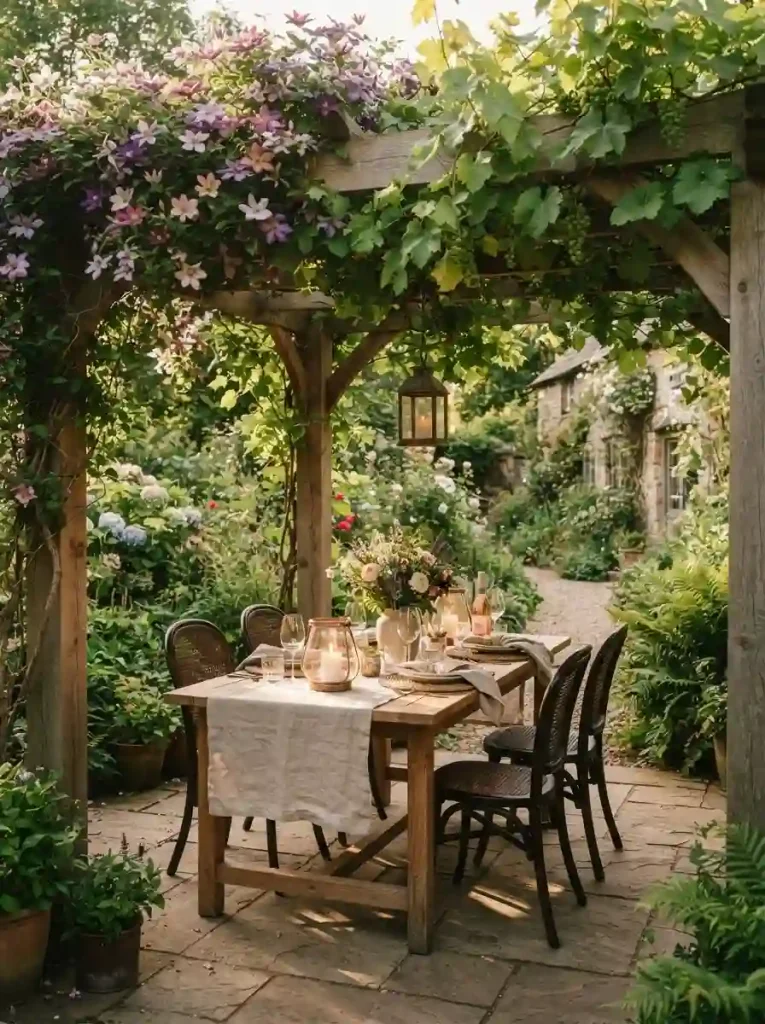
A pergola gives the patio a roof of shade, and the right vines turn it into a green canopy. Grapes, clematis, and hops are dependable choices. Together they give you dappled light in summer and, with deciduous vines, sun again in winter.
Build with sturdy 6×6 posts set securely in the ground. Vigorous climbers get heavy fast.
Pro Tip:
Be careful with wisteria. It’s gorgeous, but a mature plant can twist apart a flimsy structure, so only use it on a very solid frame.
6. Turn a corner into a gravel garden
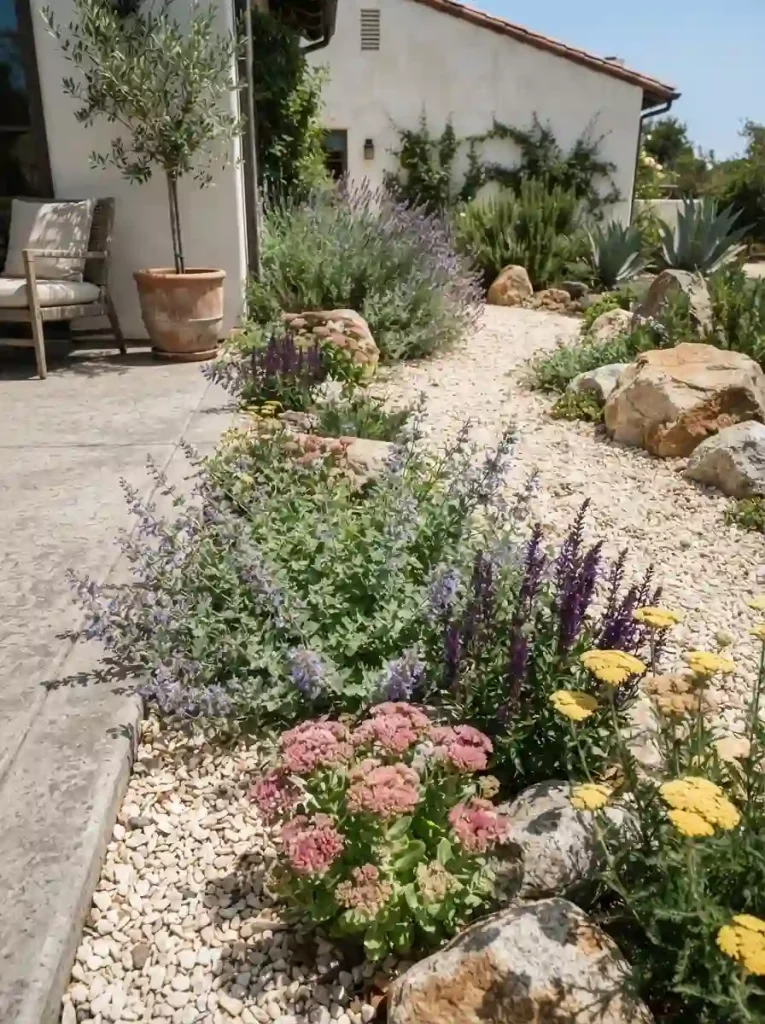
If you want a beautiful bed that asks almost nothing of you, try a gravel garden. Spread about two inches of pale pebbles over free-draining soil and plant drought-tough perennials straight through it. Catmint, salvia, sedum, and yarrow all thrive this way and keep blooming through dry spells.
A few large boulders add weight and a natural look. The gravel also keeps soil off your patio furniture after rain.
Pro Tip:
Skip heavy plastic sheeting under the gravel. It tends to suffocate roots and trap weeds on top anyway. Improving the soil with grit works better.
7. Line the back with a hydrangea hedge

Few shrubs deliver as much color as a row of hydrangeas. Panicle types handle more sun and bloom reliably, while bigleaf types prefer afternoon shade. Together they create a full, soft backdrop that makes a patio feel enclosed and romantic.
Give each plant room, usually three to five feet depending on the variety. Bigleaf flower color also shifts with soil acidity, which lets you nudge it toward blue or pink.
Pro Tip:
Prune panicle hydrangeas in late winter, but wait on bigleaf types until after they bloom or you may cut off next year’s flowers.
8. Showcase a dwarf Japanese maple in a statement pot
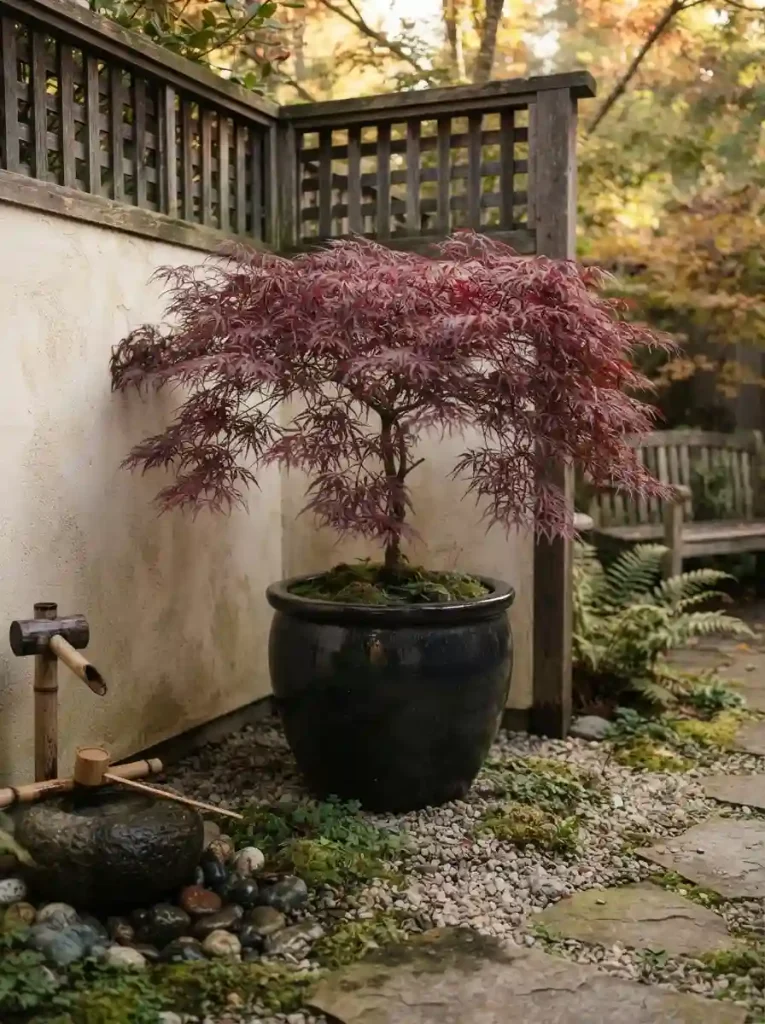
Sometimes one beautiful plant does more than ten average ones. A dwarf Japanese maple with lacy red or burgundy leaves makes an instant focal point at a patio corner, especially in a large glazed pot.
Choose a container at least 20 inches wide and give the tree afternoon shade so the leaf edges don’t scorch. Keep the soil evenly moist, never soggy.
Pro Tip:
In cold climates, move the pot to a sheltered spot or wrap it in winter. Roots in containers freeze much more easily than roots in the ground.
9. Plant a fragrance corner beside your seating

Scent does a lot of work at the end of a long day. Put your favorite perfumed plants within arm’s reach of where you actually sit. Star jasmine on a trellis, sweet alyssum and heliotrope in pots, and evening-scented nicotiana all fill the air once the day cools.
Choose plants for your climate. Jasmine, for example, needs warm winters, while annuals like alyssum work almost anywhere.
Pro Tip:
Place scented plants on the side the breeze blows from. That way the fragrance drifts across your seating instead of away from it.
10. Add a slatted privacy screen with built-in planters
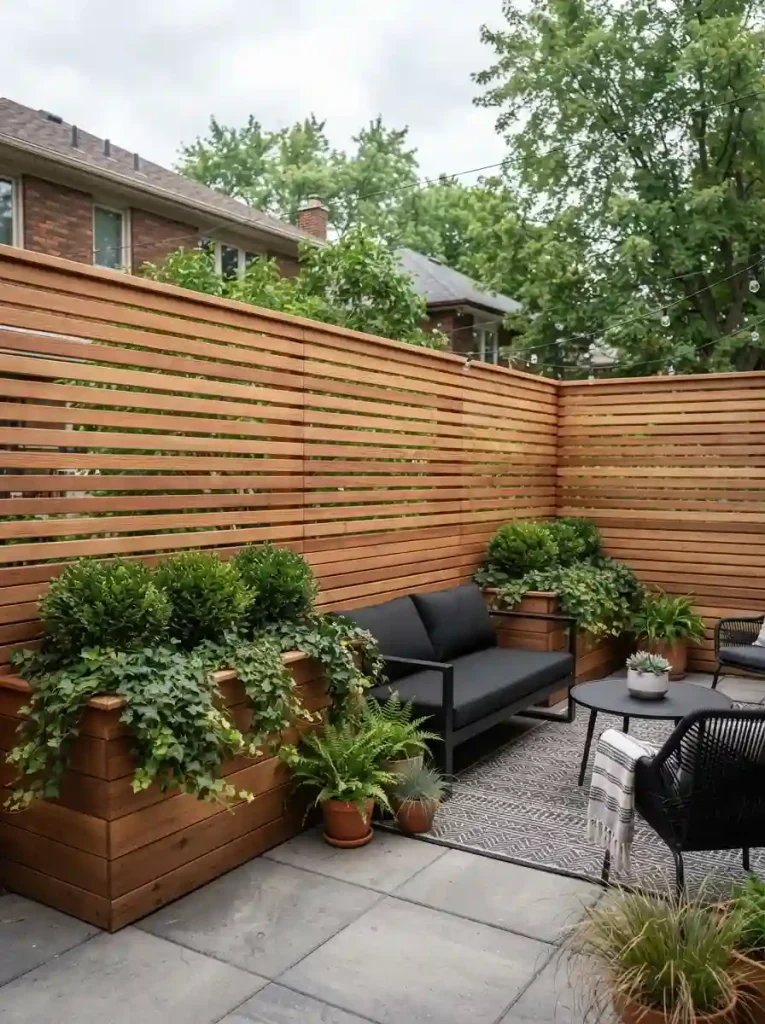
Open patios can feel exposed. A horizontal slat screen blocks sightlines but still lets air through if you leave a gap of about half an inch between boards. Cedar looks warm and holds up well outdoors.
Build planter boxes right into the base and fill them with evergreen boxwood globes and trailing ivy for a layered look. Line the boxes so moisture doesn’t rot the wood.
Pro Tip:
Check local fence and screen height limits before you build. Six feet is a common ceiling, but it varies.
11. Route rainwater into a dry creek bed

Here’s a project that’s as practical as it is pretty. A winding bed of river stones can carry downspout or patio runoff away from your seating area, and it looks like a natural streambed even when there hasn’t been rain for weeks.
Dig a shallow channel six to twelve inches deep, line it with fabric, and fill it with mixed stones, adding a few larger boulders along the edges. Plant moisture-lovers like Siberian iris, sedge, and astilbe along the banks. Make sure the ground slopes away from your house, at least six inches over ten feet.
Pro Tip:
Add a small footbridge if the bed crosses a walking path. It becomes a charming detail.
12. Go vertical with a pocket-planter living wall

Short on ground space? Look up. A pocket-planter wall turns a bare fence or wall into a hanging garden, perfect for small patios and balconies.
Fill the pockets with shallow-rooted plants such as trailing strawberries, begonias, silver dichondra, and variegated ivy. Use lightweight potting mix and, ideally, a simple drip line, since vertical gardens dry out quickly. If you mount it on your house, add a waterproof backing so moisture never reaches the siding.
Pro Tip:
Mix leaf colors and textures. Silver, green, and pink foliage together look much richer than a single type of plant.
13. Train a dwarf fruit tree against a sunny wall

Espaliering means training a tree flat against a wall or wires, and it’s a smart way to get fruit from a narrow strip beside your patio. Dwarf apples and pears take to it well. You get spring blossom, summer fruit, and a sculptural shape all year.
Choose a wall that gets six to eight hours of sun. Stretch horizontal wires about 18 inches apart and tie branches along them as they grow. Leave a few inches between the trunk and the wall so air can circulate.
Pro Tip:
Many apples and pears need a second variety nearby for pollination, so check the tag or choose a self-fertile type. Do your shaping prune in summer.
14. Design a moon garden for evening hangouts

If you mostly use your patio after work, plant for dusk. A moon garden relies on white flowers and silver foliage that seem to glow as the light fades. White cosmos, lamb’s ear, dusty miller, and white phlox are easy starters. Moonflower vine opens its big blooms right at sunset.
Cluster the plants where you’ll see them from your seating, and keep nearby lighting low and warm so it doesn’t wash out the effect.
Pro Tip:
Silver leaves reflect more light than green ones, so even on cloudy evenings the bed keeps its glow.
15. Plant a layered cottage border
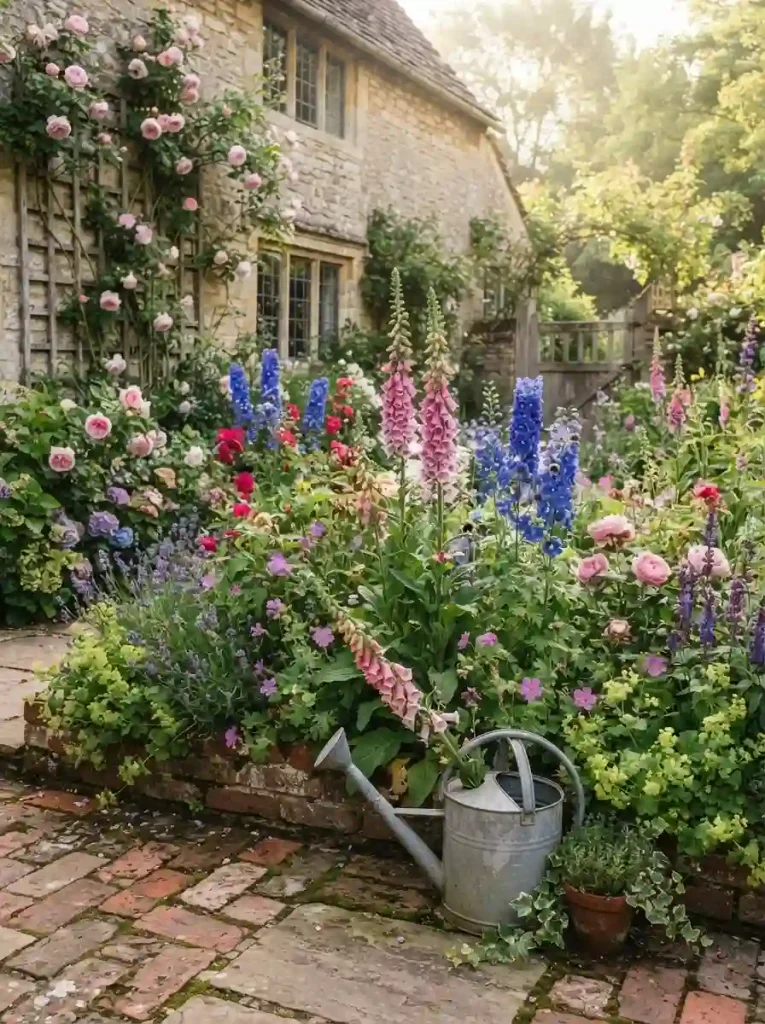
Cottage borders look relaxed, but the secret is structure. Put tall plants like delphiniums and climbing roses at the back, mid-height foxgloves and peonies in the middle, and soft edgers at the front. Stagger bloom times so something is always flowering from late spring into fall.
Let a few plants self-seed for that effortless look. Just keep an eye on anything that gets too pushy.
Pro Tip:
Foxgloves are toxic if eaten, so think twice before planting them where small children or curious pets play.
16. Terrace a sloped patio edge
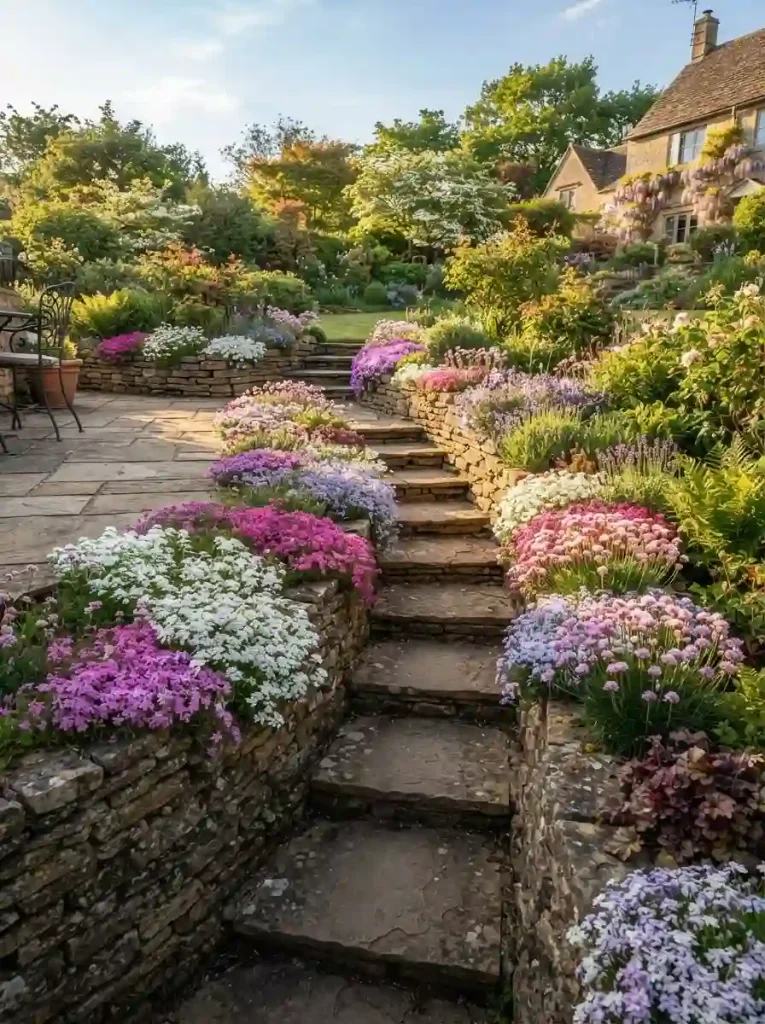
A slope beside your patio can be a headache or a design opportunity. Stepping it into low terraces gives you flat planting beds, stops soil washing onto the paving, and adds visual depth.
Keep each step to a foot or two in height and tuck gravel behind the walls so water can drain. Plant the faces with trailing, tough plants like creeping phlox, candytuft, and thrift.
Pro Tip:
Walls taller than about three feet usually need engineering and sometimes a permit, so check before you build high.
17. Anchor a corner with a potted olive or citrus tree

One tree in a good pot can make a patio feel like a Mediterranean courtyard. Olives bring silvery leaves and a sculptural trunk. A Meyer lemon gives you fragrant blossoms and fruit. Both love sun and fast-draining soil.
Choose a heavy container with drainage holes and use a gritty potting mix. Water deeply, then let the top inch or two dry out.
Pro Tip:
Olives and citrus aren’t hardy in many climates. Plan to move them into a bright, frost-free spot before the first freeze.
18. Sow a wildflower strip along the edge

Swapping a strip of lawn for wildflowers gives you color, butterflies, and a lot less mowing. Choose a seed mix suited to your region, clear the grass or weeds first, and sow in fall or early spring.
Expect the first season to look modest, since many wildflowers spend their first year building roots. By year two it fills in.
Pro Tip:
Mow a neat border along the edge. The tidy frame makes the wilder planting look intentional, not neglected.
19. Set up an herb station beside the grill

The best herb garden is the one within arm’s reach of where you cook. A crate or trough of basil, sage, oregano, and chives next to your outdoor grill means fresh flavor in seconds.
Give them six or more hours of sun and snip often, because regular harvesting keeps them bushy. If you want mint, keep it in its own pot. It spreads aggressively in the ground.
Pro Tip:
Pinch basil just above a pair of leaves. It branches out and gives you twice the harvest.
20. Place boulders as natural sculpture

Large stones add instant age and character. Group them in odd numbers, such as three or five, and bury about a third of each so they look like they’ve always been there.
Plant low, tough companions around the base, like dwarf mondo grass, creeping juniper, or moss patches. Big boulders are very heavy, so consider having them delivered and placed with equipment.
Pro Tip:
Vary the sizes. A set of identical stones looks like a delivery, while mixed sizes look natural.
21. Make a corner that welcomes birds

Birdsong is one of the nicest things a patio can offer. A shallow birdbath (one to two inches deep), a feeder, and berry-producing shrubs like serviceberry or elderberry will draw regular visitors.
Refresh the bath water every few days and scrub it occasionally to keep it clean.
Pro Tip:
Put feeders either within about three feet of windows or more than thirty feet away. Both distances reduce the risk of birds hitting the glass.
22. Define beds with crisp steel edging

Thin steel edging draws a clean line between the patio, planting beds, and gravel. Mulch and stones stay where they belong, and the beds look sharp all year.
Choose black or weathering steel and use gentle curves for a softer feel. Install it so only an inch or so shows above the ground, and stake it firmly.
Pro Tip:
Do the edging before you plant or mulch. It’s far easier to get clean lines on bare ground.
23. Grow a cutting garden you can raid for the table
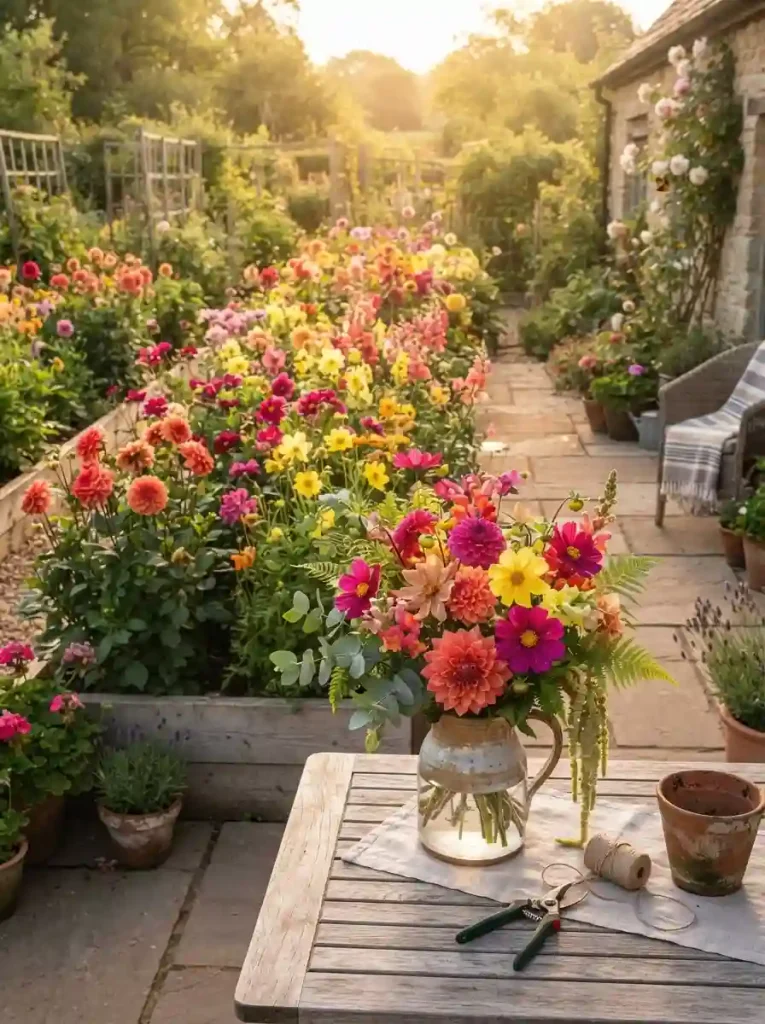
Fresh flowers from steps away from your patio beat anything from a store. Dahlias, cosmos, and snapdragons are generous bloomers, and the more you cut, the more they flower.
Cut in the cool of the morning and put stems in water straight away. In colder regions, dig up dahlia tubers after the first frost and store them for winter.
Pro Tip:
Plant in short rows or blocks so you can cut freely without leaving gaps in the display.
24. Plan for four-season interest
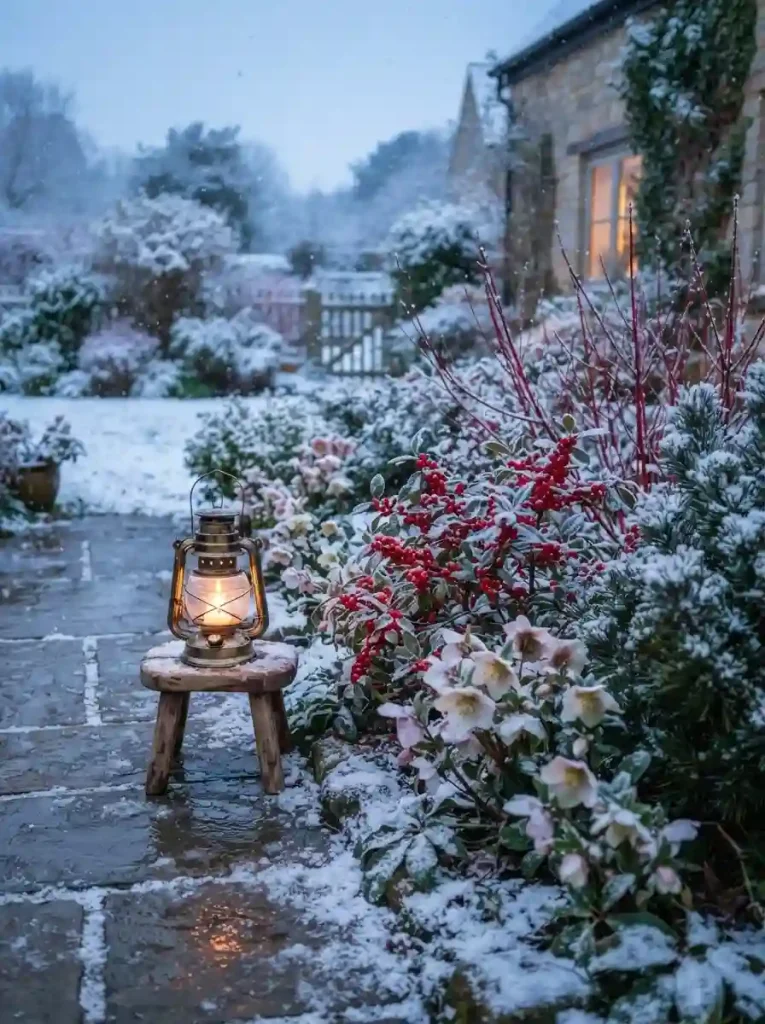
A patio that looks great only in July is only half done. Add plants that carry the other seasons: spring bulbs, grasses with winter seedheads, evergreens for structure, and winterberry holly or red-twig dogwood for color in the cold months. Hellebores bloom in late winter, when almost nothing else does.
Walk your patio in January and ask what you’re looking at. That’s the best test of whether your plan works year-round.
Pro Tip:
Winterberry needs a male plant nearby to produce berries on the females, so buy a matched pair.
Final Thoughts
You don’t have to use all 24 ideas. Start with one or two that suit your sun, space, and budget, such as a lavender edge, a few big pots, or a simple steel border. Then add more as you see how the space grows.
The best patio landscaping looks good, works with your climate, and makes you want to step outside.
FAQs
What are the best plants to put around a patio?
Choose by sun and climate first. Ornamental grasses, lavender, hydrangeas, and perennials like catmint suit sunny spots. Hostas and ferns suit shade. Aim for a mix of heights, textures, and bloom times.
How far from the patio should I plant shrubs?
Leave room for their mature width, not their current size. A common rule is to plant at least half the shrub’s mature spread away from the patio edge, so branches don’t crowd furniture or walkways.
What’s the lowest-maintenance way to landscape around a patio?
Gravel gardens, ornamental grasses, boulders, and tough perennials need the least care. Edging and a layer of mulch or gravel cut weeding even further.
Will plant roots damage my patio?
Most small perennials and shrubs won’t. Keep large trees and aggressive spreaders well away from paving, and choose non-invasive plants for beds that touch the patio edge.