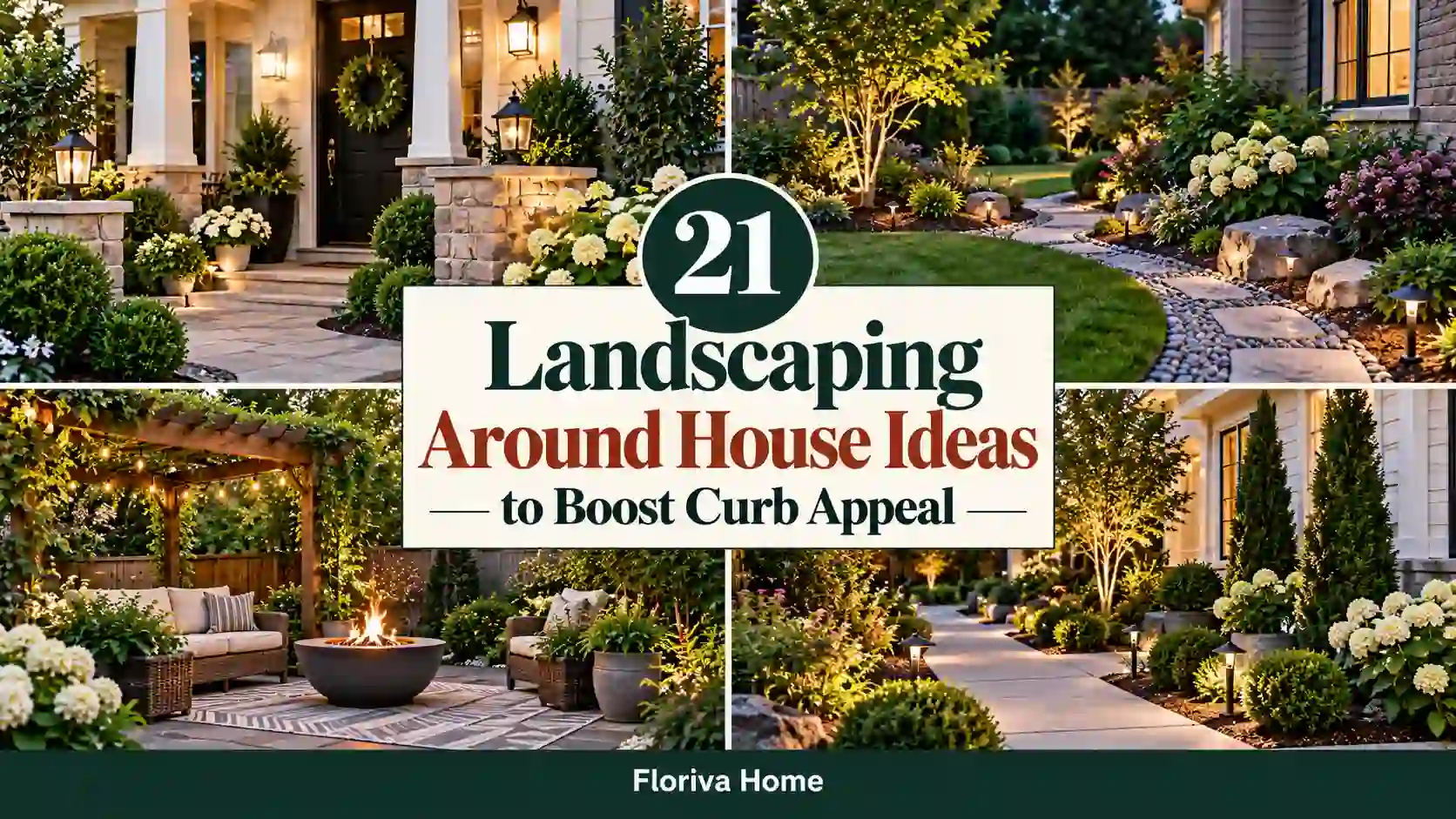
21 Landscaping Around House Ideas to Boost Curb Appeal
Landscaping around your house can completely change the way your property looks and feels. From colorful flower beds and elegant stone pathways to modern planters and lush greenery, the right design can make your home feel more welcoming without requiring a complete outdoor renovation.
The best landscaping ideas combine beauty with practicality. You want plants that suit your climate, pathways that are easy to use, and garden features that complement your home’s exterior. Whether you have a spacious front yard, a narrow side garden, or a small area around your foundation, there are plenty of ways to create an attractive outdoor space.
These 21 landscaping around house ideas will help you explore different styles, add visual interest, and make better use of the space surrounding your home.
1. Create Layered Foundation Flower Beds

Foundation flower beds are a beautiful way to soften the appearance of exterior walls and connect your home with the surrounding landscape. Instead of planting everything in a single row, arrange plants at different heights to create a fuller, more natural appearance.
Place taller shrubs toward the back, medium-sized flowering plants in the middle, and low-growing ground covers near the front edge. This arrangement adds depth without making the garden look crowded.
Choose plants according to the amount of sunlight your house receives. Areas beneath roof overhangs may stay dry, while spots near downspouts can become unusually wet. Leave enough space between mature plants and the exterior walls to allow airflow and easy maintenance.
2. Design a Welcoming Stone Walkway

A thoughtfully designed walkway makes your front entrance feel more inviting while providing a practical route to the door. Natural stone, concrete pavers, and brick can all work beautifully, depending on your home’s architectural style.
For a relaxed garden appearance, arrange irregular stone slabs through low-growing greenery. If your home has a contemporary exterior, choose evenly spaced rectangular pavers with gravel between them for a cleaner finish.
Keep the walking surface stable, level, and comfortable to use. Make sure the pathway connects naturally with the driveway, gate, or front steps rather than ending abruptly in the lawn.
For additional charm, plant compact flowers along the edges and add low-voltage lights where people need better visibility after dark.
3. Add Symmetrical Planters Beside the Front Door
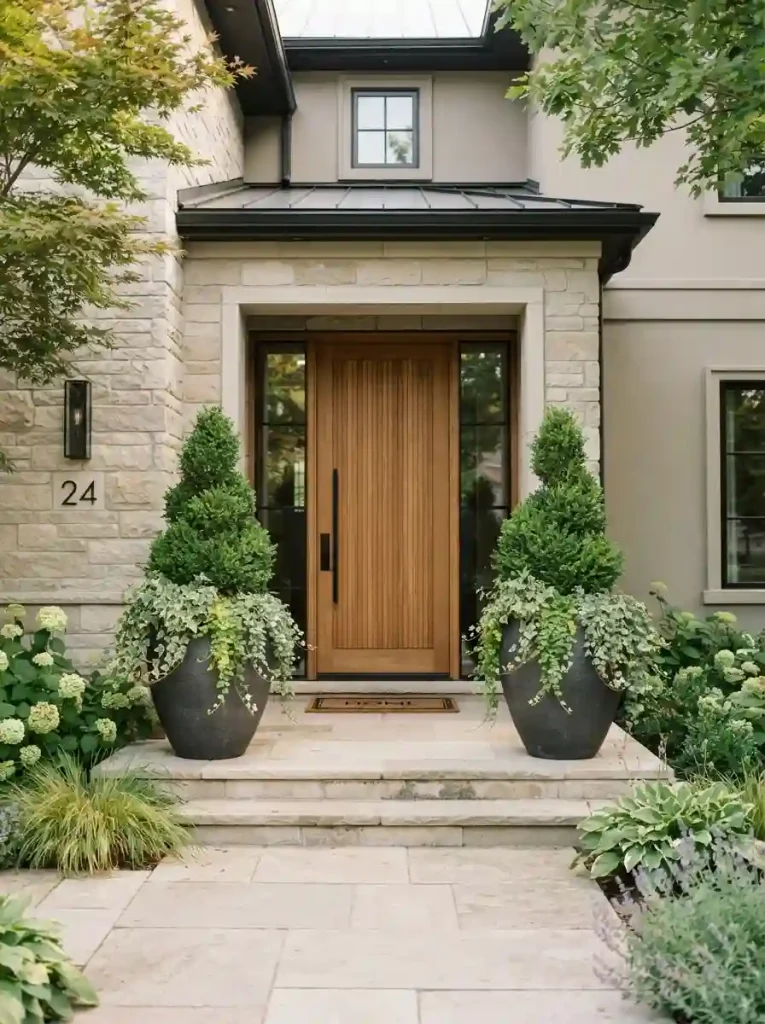
Matching planters are an easy way to make a house entrance look balanced and intentional. This approach works particularly well with traditional homes, modern entryways, and properties where there is limited space for a full garden bed.
Choose containers that complement your exterior finishes. Matte black, warm terracotta, textured concrete, and neutral ceramic pots can all create an attractive focal point without overwhelming the doorway.
For year-round structure, use compact evergreen shrubs or other plants suited to your climate. Add seasonal flowers around the base if you want a little more color throughout the year.
Remember to choose containers with drainage holes and an appropriate size for the plants. Proper drainage helps prevent waterlogged roots, while a well-proportioned planter keeps the entrance looking polished rather than cluttered.
4. Build a Curved Garden Border

Curved garden borders can make a yard feel softer and more thoughtfully designed. They are especially useful for breaking up large areas of grass or creating a transition between the lawn and the house.
Start by marking a gentle curve with a garden hose or rope before removing any grass. This lets you experiment with the shape until it looks balanced from the street and from your front windows.
Fill the border with a combination of shrubs, flowering perennials, and ornamental grasses. Repeating a few plant varieties throughout the bed helps the design feel cohesive instead of overly busy.
Finish the edge with a clean cut or suitable landscape edging to keep grass from spreading into the planting area. A defined border also makes mowing easier and helps the entire yard look better maintained.
5. Use Ornamental Grasses for Natural Texture
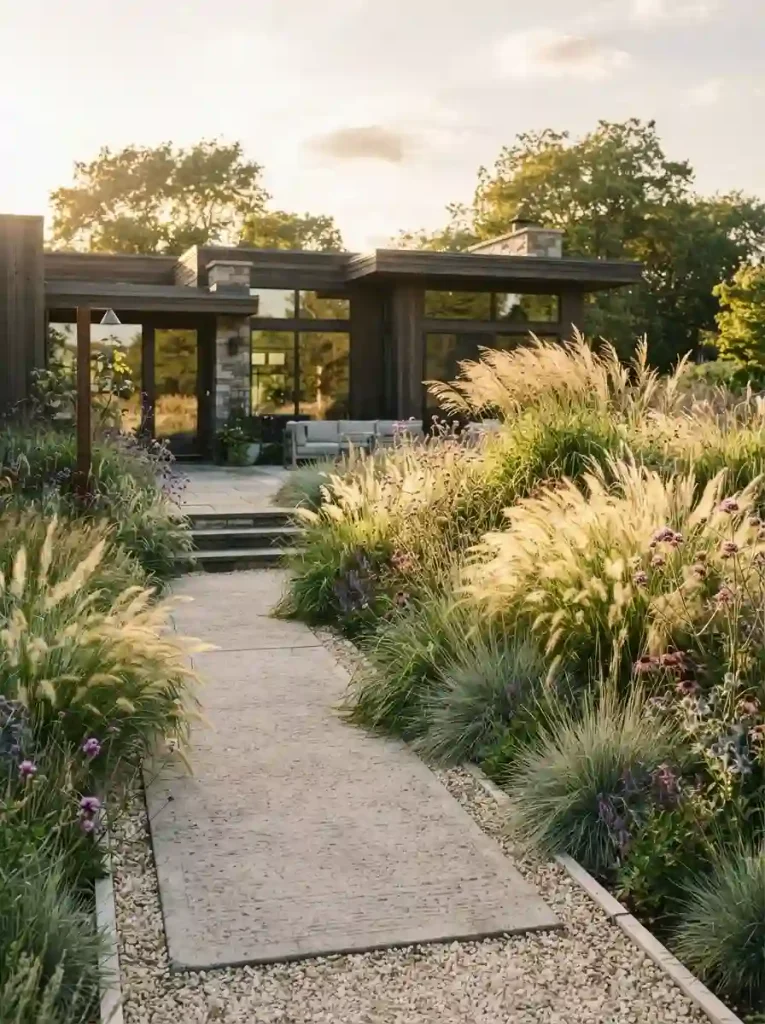
Ornamental grasses introduce movement, texture, and visual interest without relying entirely on colorful flowers. Their narrow leaves and soft plumes can complement brick homes, modern architecture, cottages, and naturalistic garden designs.
Plant several grasses in loose groups rather than scattering individual plants throughout the yard. Repeating the same variety creates rhythm, while mixing different heights adds dimension to foundation beds and property boundaries.
Some ornamental grasses remain attractive during colder months, giving the landscape structure even after many flowers have faded. However, the best varieties depend on your local climate, available space, and soil conditions.
Check the mature width before planting, especially near windows, walkways, and utility access points. Choose well-behaved varieties that suit your region, and trim them according to their specific growth requirements.
6. Create a Small Front Yard Rock Garden

A rock garden is a practical option if you want an attractive front yard without maintaining a large area of grass. It combines stones, gravel, and carefully selected plants to create a landscape that looks structured while still feeling natural.
Begin with a few stones in different sizes rather than covering the entire area with identical decorative rocks. Position the larger pieces first, then use smaller stones and plants to create a balanced composition.
Depending on your climate, suitable plants may include sedums, compact succulents, creeping ground covers, or other drought-tolerant varieties. Group plants according to their water and sunlight requirements so each one has the right growing conditions.
Prepare the soil and drainage before installing gravel. Avoid placing a thick layer of stone directly against the house, and leave suitable clearance around the foundation for inspection and maintenance.
7. Install Low-Voltage Landscape Lighting

Outdoor lighting can make your landscaping look just as appealing after sunset as it does during the day. It also improves visibility around entrances, steps, and frequently used garden paths.
Rather than illuminating every part of the yard equally, focus on a few important features. Path lights can guide visitors toward the front door, while discreet uplights can highlight a tree or textured exterior wall.
Warm-white lighting often creates a comfortable residential atmosphere. Choose fixtures designed for outdoor use and position them to reduce glare through windows and avoid shining directly into neighbors’ properties.
Low-voltage systems are a popular option for residential gardens, but installation should follow the manufacturer’s instructions and applicable electrical requirements. Keep cables protected and ensure fixtures do not interfere with mowing or routine garden maintenance.
8. Plant a Small Ornamental Tree

A small ornamental tree can become the focal point of your front yard without taking up as much space as a large shade tree. Its shape, foliage, flowers, or seasonal color can give the surrounding landscape a distinctive character.
Consider a tree with a form that complements your home’s architecture. A Japanese maple can suit a sheltered garden with appropriate growing conditions, while a compact flowering tree may work better if you prefer seasonal blooms.
Before choosing a variety, check its mature height and canopy width. Consider overhead wires, underground utilities, nearby foundations, and the amount of sunlight available throughout the day.
Plant the tree where it can grow naturally without blocking windows or narrowing a pathway. Add a simple mulch ring around the base, keeping mulch away from the trunk itself, to help protect the root zone and create a tidy finish.
9. Frame the Entrance With Flowering Shrubs

Flowering shrubs provide more structure than seasonal flowers alone, making them useful for landscaping around the front of a house. Their foliage fills empty spaces, while their blooms add color during particular times of the year.
Choose varieties based on your climate, available sunlight, and preferred maintenance level. Hydrangeas may suit some partially shaded gardens, while other flowering shrubs need more direct sun to produce their best blooms.
You can create a formal entrance by planting similar shrubs on both sides of the doorway. For a more relaxed look, combine different shapes and flower colors while repeating a few varieties to maintain visual balance.
Pay attention to mature plant size so shrubs do not cover windows, crowd steps, or obstruct the entrance. Pruning requirements also vary, so check whether your chosen variety flowers on old or new growth before cutting it back.
10. Add a Gravel Border Along the House

A gravel border can create a crisp transition between your home’s exterior and the surrounding lawn or garden beds. It is especially useful in narrow side yards where you want a tidy appearance without adding extensive planting.
Select a gravel color that works with your exterior finishes. Pale stone can brighten a darker facade, while gray or charcoal gravel can complement modern architecture and neutral walls.
Prepare the area properly before adding stone. Remove unwanted vegetation, establish suitable drainage, and use edging to prevent gravel from spreading into the lawn. A permeable landscape fabric may help with maintenance in some situations, but it should be selected and installed according to the site’s needs.
Keep the border accessible for checking the foundation and exterior walls. Gravel is not a substitute for correcting drainage problems, and the finished grade should direct water away from the house.
11. Design a Narrow Side-Yard Garden

Side yards are often overlooked because they receive less attention than the front entrance or backyard. However, even a narrow strip of outdoor space can become a useful and attractive part of your overall landscape design.
Start by deciding how the area will function. If it connects the front yard to the backyard, prioritize a clear walking route. If it is rarely used for access, you may have room for slim planters, shade-tolerant greenery, or a small decorative feature.
Use vertical space where the ground is limited. Wall-mounted planters, narrow trellises, and climbing plants can add greenery without taking up much floor area, provided the wall and growing conditions are suitable.
Choose plants that tolerate the amount of sunlight the passage receives. Keep drains, utility meters, gates, and maintenance access clear, and avoid placing large plants where they could make the walkway difficult to navigate.
12. Create a Colorful Seasonal Flower Garden

Seasonal flowers are an easy way to refresh your home’s exterior throughout the year. They bring color to foundation beds, brighten entranceways, and help your landscaping feel lively even when the rest of the garden has a simple design.
Choose flowers that suit your local growing season. Tulips and daffodils can bring color to spring gardens, while zinnias and marigolds provide cheerful summer displays in suitable climates. Autumn-friendly flowers can add warmth when temperatures begin to drop.
For a more coordinated appearance, select two or three main colors instead of mixing every available shade. Combine taller flowers with compact varieties to create depth, and include a few evergreen plants so the garden does not look empty between flowering seasons.
Consider grouping plants with similar watering and sunlight requirements. This makes maintenance easier and helps your flower beds stay attractive for longer.
13. Add a Decorative Front Yard Bench

A garden bench adds a welcoming, lived-in feeling to the landscape. It creates a place to relax, enjoy the garden, or take a short break while making an otherwise empty corner feel purposeful.
Choose a bench that complements your home’s exterior. Natural wood works well with cottage and rustic designs, while powder-coated metal or simple concrete seating can suit contemporary properties.
Position the bench where it has a pleasant view of the garden without blocking the entrance or narrowing a frequently used path. A spot beneath a small tree or beside a flowering shrub can provide visual interest and some shade, depending on the location.
For a finished appearance, surround the seating area with low-growing plants or a small paved base. Choose weather-resistant materials and leave enough space to move around the bench comfortably.
14. Use Raised Garden Beds Near the House

Raised garden beds can introduce structure and organization to an outdoor space. They are especially helpful when the existing soil is difficult to work with or when you want a defined planting area along a lawn or garden path.
Wood, stone, and masonry are popular materials for raised beds. Select a style that matches your home’s exterior rather than introducing a finish that looks unrelated to the rest of the property.
You can use raised beds for ornamental flowers, compact shrubs, culinary herbs, or a combination of suitable plants. Arrange them in a straight line for a modern appearance or use a staggered layout to create more visual movement.
Before installation, consider drainage, access, and the mature size of the plants. Avoid piling soil against your house’s siding or covering foundation vents, and maintain an appropriate gap between the beds and the building.
15. Create a Modern Minimalist Landscape

Minimalist landscaping focuses on clean lines, intentional spacing, and a limited selection of materials. It can make a home look modern and organized without requiring an elaborate collection of flowers or decorative accessories.
Start by choosing a simple palette of two or three complementary materials, such as concrete, natural stone, and gravel. Repeat a small number of plant varieties to create consistency throughout the garden.
Architectural plants, compact evergreens, and ornamental grasses work well in this style because they provide shape and texture without making the space feel crowded. A few larger plants can create focal points, while open areas help the overall design breathe.
Although minimalist gardens often look simple, thoughtful planning is important. Choose plants suited to the site, allow enough room for mature growth, and establish clear edges so the landscape remains tidy over time.
16. Install a Decorative Garden Trellis

A garden trellis adds height and visual interest without requiring a large planting area. It can make a plain exterior wall more attractive, define a garden entrance, or introduce a decorative feature beside a walkway.
Wood and metal trellises offer different looks. A natural timber structure suits cottage-inspired landscaping, while a slim black metal design can complement modern or traditional architecture.
Choose climbing plants according to your climate and the amount of sunlight available. Climbing roses, clematis, and other suitable vines can soften the structure with foliage and seasonal flowers.
Install the trellis securely and leave sufficient space for airflow and plant maintenance. If you attach it to the house, follow appropriate installation guidance to protect the exterior wall from moisture damage. Avoid allowing vigorous vines to grow into gutters, rooflines, or windows.
17. Landscape Around a Front Porch

Your front porch can become a natural focal point when the surrounding landscaping is designed to complement it. The right combination of plants, containers, and pathways creates a smooth visual connection between the house and the garden.
Start by identifying the porch’s main features, such as its columns, railings, steps, and entrance door. Repeat a few colors or materials from these elements in nearby planters and garden borders to create a coordinated appearance.
Use lower plants near the steps and walking routes so the entrance remains open and accessible. Taller shrubs can be placed farther away to frame the porch without blocking windows or making the area feel enclosed.
If your porch receives limited sunlight, choose shade-tolerant plants for the nearby beds. Keep containers and foliage away from door swings, drainage outlets, and any areas that need regular access.
18. Add Ground Cover Between Trees and Shrubs

Ground cover plants can help fill empty spaces between larger landscape features. They create a softer appearance than exposed soil and can reduce the amount of lawn that needs mowing in suitable locations.
Choose varieties that match the available sunlight, soil moisture, and local growing conditions. Some ground covers prefer shade beneath trees, while others need open sunlight to spread successfully.
Plant in groups rather than placing widely separated individual plants throughout the area. As the plants mature, they can form a more connected layer of greenery that ties nearby shrubs and trees together.
Ground covers still need appropriate care. Remove invasive weeds, water new plantings while they establish, and select non-invasive varieties suitable for your region. Keep plants away from tree trunks and avoid covering the root flare with excessive soil or mulch.
19. Create a Welcoming Driveway Border

A driveway border can transform a plain paved area into an attractive part of your home’s overall landscaping. It provides a visual transition between the hard surface and the garden while making the entrance feel more finished.
For a structured design, plant compact evergreen shrubs at regular intervals and fill the spaces between them with flowers or ornamental grasses. A more relaxed approach can use flowing groups of perennials and low-growing greenery.
Keep the planting far enough from the driveway to avoid interfering with parked vehicles, opening car doors, and pedestrian access. Choose plants that can tolerate the heat reflected by nearby paving if the area receives strong sunlight.
Defined edging can help prevent soil and mulch from spreading onto the driveway. Avoid placing tall plants where they could obstruct visibility for drivers leaving the property.
20. Incorporate Natural Stone Garden Accents

Natural stone accents add texture and a sense of permanence to landscaping around a house. They can complement a traditional cottage, a rustic farmhouse, or a contemporary property, depending on the stone’s shape and finish.
You do not need a large rock feature to make an impact. A small group of carefully positioned boulders can create a focal point within a flower bed, while a low stone border can define the edge of a planting area.
Choose stones that work with the colors of your exterior walls, paving, and other garden materials. Combining too many different finishes can make the landscape look disjointed, so repetition is often more effective than variety.
Place heavier stones on a stable base and consider drainage before installation. If you are building a retaining wall or using large boulders on a slope, seek appropriate professional guidance to ensure the feature is secure.
21. Design a Low-Maintenance Landscape Around the House
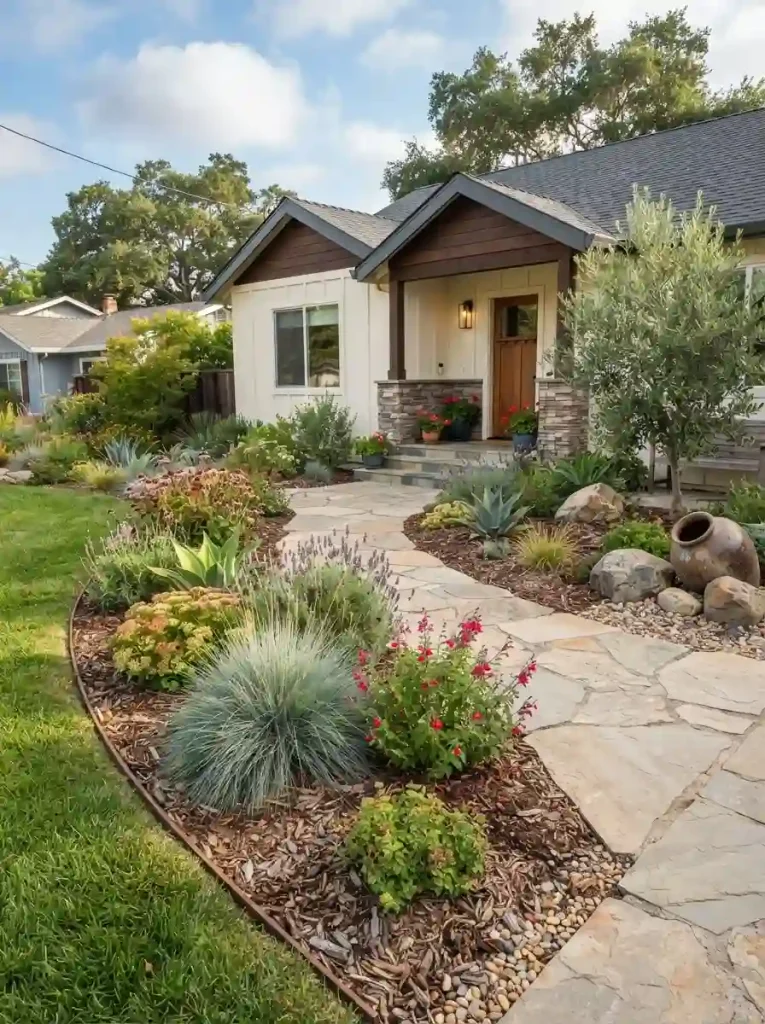
A low-maintenance landscape is ideal if you want an attractive property without spending every weekend pruning, mowing, and watering. The key is choosing suitable plants and materials before the garden is installed.
Start by assessing your local climate, soil type, and sunlight conditions. Native plants and other well-adapted varieties often require less supplemental watering once established, although their needs still depend on the site and weather.
Group plants with similar water requirements together. Use mulch in appropriate planting beds to help moderate soil temperature and reduce moisture loss, and consider reducing lawn areas that are difficult to maintain.
You can also simplify the layout by repeating a small selection of shrubs, perennials, and ground covers. Fewer plant varieties can make pruning, watering, and seasonal cleanup easier while giving the landscape a consistent appearance.
Remember that low-maintenance does not mean maintenance-free. Newly planted areas need attention while they establish, and every garden benefits from occasional weeding, trimming, and checking its irrigation and drainage.
Tips for Landscaping Around Your House
Before starting a landscaping project, consider how the garden will look throughout the year and how much time you can realistically spend maintaining it. A well-planned design should complement your home while remaining practical for everyday use.
- Choose plants for your climate: Consider local temperatures, rainfall, soil conditions, and sunlight before selecting flowers, shrubs, or trees.
- Maintain clearance around the foundation: Keep soil, mulch, and plants from interfering with siding, vents, drainage systems, and foundation inspections.
- Plan for mature plant sizes: Allow enough room for roots, branches, and foliage to develop without crowding pathways or windows.
- Use a consistent design: Repeat a few materials, colors, and plant varieties to create a coordinated appearance.
- Manage water carefully: Direct surface water away from the house and correct drainage problems before adding new landscape features.
- Make pathways practical: Keep entrances, steps, and frequently used routes clear, stable, and easy to navigate.
- Consider year-round interest: Combine evergreen structure with seasonal flowers, interesting foliage, and plants that provide texture in different seasons.
- Set a realistic budget: Start with the most visible or useful improvements, then add decorative features as time and money allow.
Frequently Asked Questions
1. What is the best landscaping to put around a house?
The best landscaping depends on your home’s architecture, local climate, soil, and available space. Foundation shrubs, layered flower beds, ornamental grasses, native plants, and clearly defined walkways are popular options. A combination of evergreen plants and seasonal flowers can provide structure and color throughout the year.
2. What should you avoid planting directly next to a house?
Avoid planting trees or shrubs that will outgrow their available space, damage nearby paving, block access, or interfere with building maintenance. Vigorous roots and branches can create problems in unsuitable locations. Also avoid placing moisture-sensitive plants where roof runoff or poor drainage keeps the soil excessively wet.
3. How far should landscaping be from a house foundation?
There is no single distance that works for every plant or building. Keep enough clearance for airflow, inspection, and maintenance, and make sure the finished soil and paving direct water away from the foundation. Follow local building guidance and account for the mature size of any shrubs or trees you install.
4. How can I landscape around my house on a budget?
Start with simple improvements such as cleaning existing garden beds, defining lawn edges, adding mulch, planting a few well-chosen shrubs, and creating a basic walkway. Dividing suitable perennial plants and choosing locally adapted varieties can also reduce costs. Complete the project in stages instead of redesigning the entire yard at once.
5. What are the best low-maintenance plants for landscaping around a house?
Suitable choices depend on your region and growing conditions. Native shrubs, compact evergreens, ornamental grasses, and drought-tolerant perennials can work well when matched to the site. Select plants based on sunlight, soil moisture, mature size, and local invasive-species guidance rather than choosing them solely for appearance.
Final Thoughts
Landscaping around your house does not have to involve a major renovation to make a noticeable difference. A curved walkway, a few well-placed shrubs, attractive foundation beds, or simple outdoor lighting can improve the appearance of your property and make it feel more welcoming.
The most successful designs balance visual appeal with practical details such as drainage, plant spacing, maintenance, and accessibility. Choose ideas that complement your home’s architecture, work with your local growing conditions, and fit your budget.
Start with one area that needs the most attention, then build on your improvements over time. With thoughtful planning and suitable plants, you can create a beautiful outdoor space that enhances your home’s curb appeal throughout the seasons.