
21 Pressed Flower Journal Ideas for Creative Pages
Have a collection of dried flowers but aren’t sure how to use them? A journal is a beautiful way to preserve their colors, shapes, and memories. These pressed flower journal ideas combine natural materials, simple stationery, and creative layouts to help you make pages that feel personal.
You can use flowers from your garden, bouquets, nature walks, or even small leaves collected during seasonal outings. From minimalist botanical pages to colorful scrapbook spreads, these projects offer inspiration for beginners and experienced journal lovers alike.
1. Minimalist Pressed Flower Journal Page
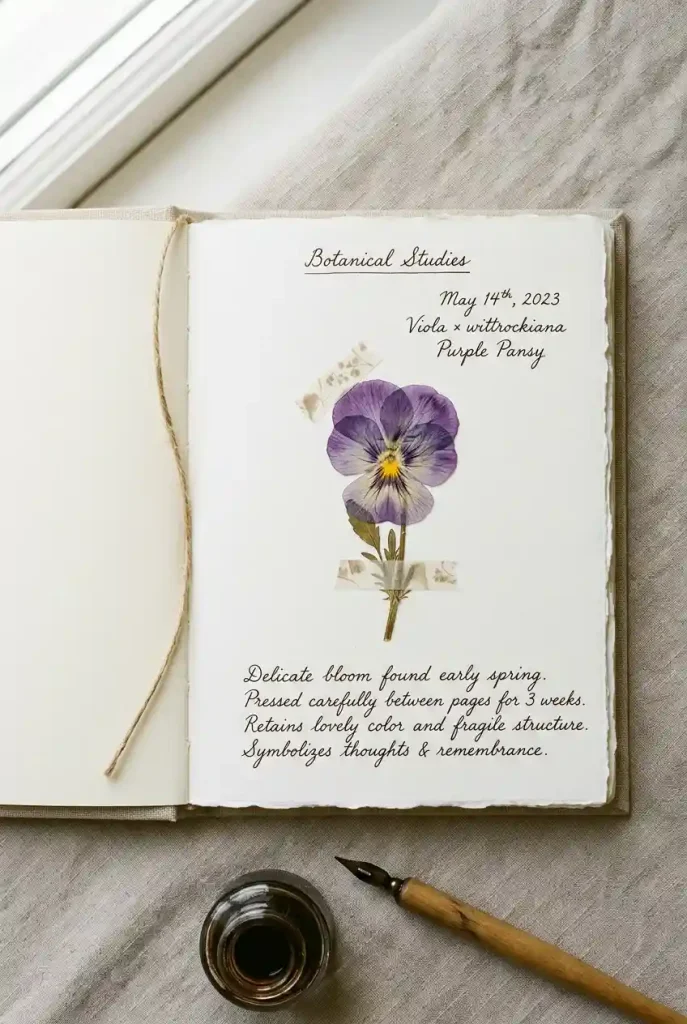
A simple journal page can make a single pressed flower feel like a special keepsake. Choose a small pansy, daisy, forget-me-not, or fern leaf and place it near one corner of a cream-colored page. Leave plenty of empty space around it to highlight the delicate shape.
Add a handwritten date, flower name, or short memory beneath the specimen. Use archival glue or narrow strips of acid-free tape to secure the flower without covering its details.
This style works especially well in neutral notebooks with textured paper. Keep the arrangement uncluttered for a timeless botanical look.
2. Seasonal Flower Memory Spread

Create two journal pages that capture the flowers you collected during a particular season. The design uses a warm spring palette with pressed tulips, daisies, tiny blossoms, and fresh-looking green leaves arranged around handwritten notes.
One page can list the collection date, location, and weather, while the other displays the flowers. Use light watercolor washes or colored pencil accents to connect the two pages.
This layout makes your journal a record of changing seasons. Store flowers collected during damp weather only after they are completely dry to prevent mold.
3. Flower Journal With Handwritten Quotes

Choose a meaningful quote about nature, growth, or memories and build your page around it. Write the quote in the center using a fine black pen, then arrange pressed lavender, baby’s breath, or small white daisies around the edges.
Keep the flowers away from the main text so everything remains easy to read. A pale beige or soft sage background creates a calm appearance without competing with the specimens.
Use tiny pieces of archival tape rather than heavy glue. This idea is perfect for reflective journaling, gratitude pages, or documenting a peaceful afternoon.
4. Botanical Collection Catalog

Turn your journal into a personal flower catalog by arranging specimens in separate sections. Write the common name, collection date, and location beside each flower. Use small paper labels for a tidy appearance.
Keep the specimens flat and avoid thick stems that may create bumps in the pages. A botanical catalog becomes more useful over time because you can compare flowers collected during different seasons and remember which plants grew well in your garden.
5. Pressed Flower Journal With Watercolor Background

Soft watercolor backgrounds can make delicate flowers stand out without overwhelming them. Paint a pale blue, blush, or warm yellow wash across the page and let it dry completely before attaching your specimens.
Arrange pressed cosmos, tiny daisies, or rose petals in a loose cluster near the bottom. Add a few handwritten notes about where you found them. Keep the watercolor very light because darker paint may hide the natural details. Use a medium-weight journal paper that can handle moisture without excessive curling.
Pro Tip: Test your watercolor on a spare page first, and attach delicate flowers only after the painted surface is fully dry.
6. Build a Flower Pocket Journal
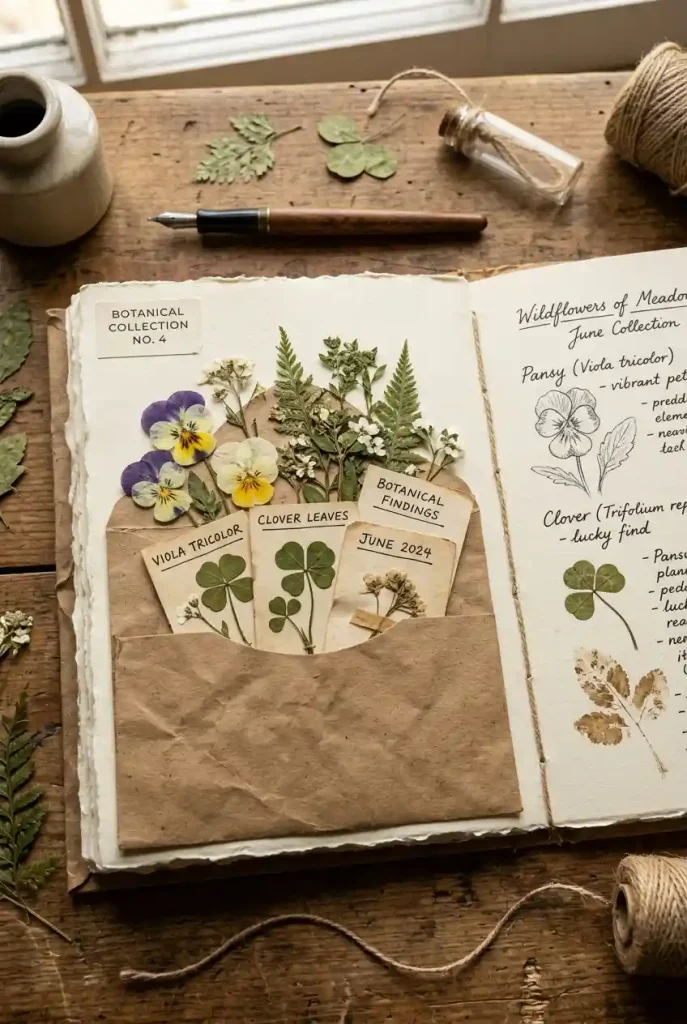
- 1. Choose a journal with sturdy pages and create a pocket using folded kraft paper.
- 2. Attach the pocket along three edges with double-sided tape.
- 3. Add small pressed flowers, loose petals, and handwritten collection cards.
- 4. Decorate the outside with a tiny botanical label and date.
This interactive layout lets you store extra specimens without permanently attaching everything. Use lightweight flowers such as baby’s breath, clover, or small pansies.
Avoid storing flowers that still contain moisture. Place a piece of tissue paper between specimens to protect fragile petals. A pocket journal is especially useful when you collect more flowers than you can fit onto a single page.
7. Can You Make a Pressed Flower Journal With One Flower?

A single flower can create a beautiful journal page when you give it enough room. Choose a larger specimen such as a pressed rose, pansy, cosmos, or small sunflower petal arrangement.
Place it slightly off-center and write a short description beside it. Include details about its color, shape, collection date, or why it caught your attention. Use a neutral background to avoid distracting from the flower.
This layout is inexpensive and beginner-friendly because it requires only a notebook, one specimen, and archival adhesive.
8. Why a Flower Timeline Journal Works

- Seasonal memories: Arrange specimens by month to see how your garden and local landscape change throughout the year.
- Personal storytelling: Add short notes about walks, gifts, special events, or flowers picked during memorable days.
- Easy organization: Use dated pages and small labels so you can find specific collections without searching through every spread.
Best for: Gardeners, nature lovers, travelers, and anyone who enjoys preserving small memories. Start with a monthly divider and add only a few flowers at a time to keep the journal manageable.
9. The Garden Harvest: Pressed Flower Journal
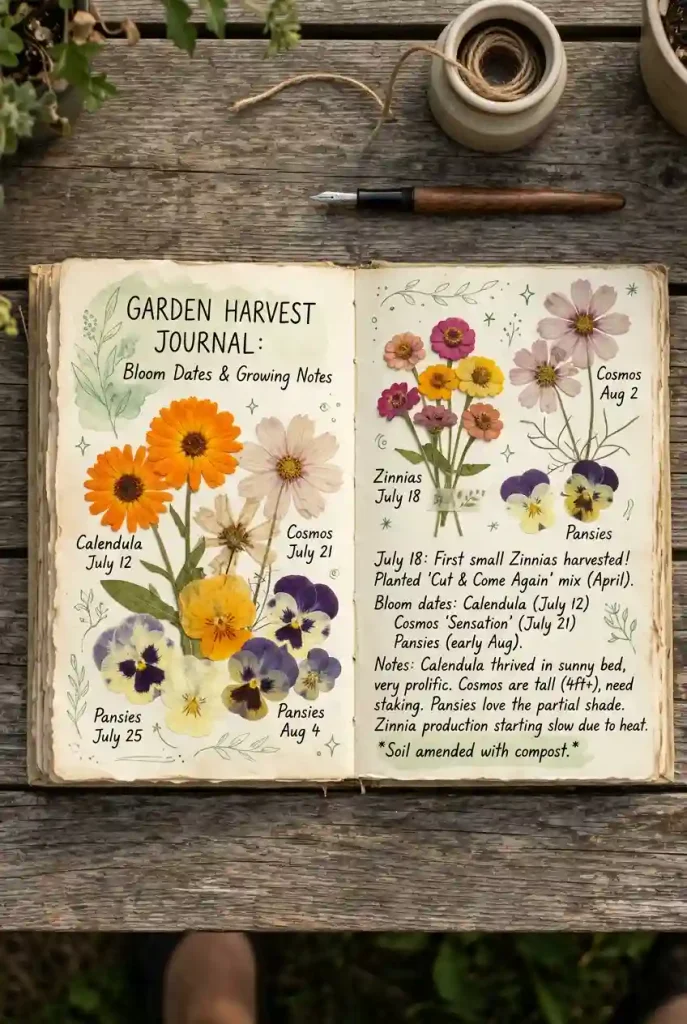
The Setup: Collect flowers from your garden or containers, including calendula, cosmos, pansies, and small zinnias. Press them between absorbent sheets before arranging them in your journal.
Why It Works: The page records your garden’s colors and blooming periods while preserving specimens that might otherwise fade or disappear.
Try This: Add the plant name, approximate bloom date, growing location, and one observation about sunlight or watering. Leave space for next year’s notes.
10. Quick Details for a Flower Scrapbook Journal

A scrapbook-style journal gives you room to mix flowers, photographs, decorative paper, and personal memories.
Use a few pressed specimens alongside ticket stubs or small handwritten cards. Keep the page colors coordinated so the different materials feel connected.
- Quick Details: Use kraft paper, floral-patterned scraps, and archival adhesive for a low-budget project.
- Quick Details: Choose lightweight flowers and flat decorations to prevent bulky pages.
- Quick Details: Difficulty is easy; arrange everything before gluing to avoid accidental damage.
11. Pressed Flower Journal With a Nature Walk Theme

A nature walk journal captures flowers collected during outdoor adventures rather than from a single garden. Use small violets, clover, fern tips, or other locally suitable specimens gathered where collection is permitted.
Create a page with a simple map, the walk’s date, and a few notes about the surroundings. Include a pressed flower beside each observation. This style is ideal for hikers and nature lovers who want to remember specific trails.
Avoid collecting protected plants or flowers from parks where removal is prohibited.
12. Pressed Flower Journal With Vintage Paper

Vintage-style paper gives pressed flowers a timeless appearance. Choose cream, beige, or lightly distressed pages and decorate them with small pieces of lace-patterned paper, old-style labels, and handwritten notes.
Pressed roses, forget-me-nots, and baby’s breath work beautifully with this theme. Arrange the flowers like an old botanical specimen sheet, but keep the page personal by including the date and a short memory.
You can create this look affordably with kraft paper and tea-stained scraps. Avoid soaking your journal pages with tea because excess moisture can cause warping.
13. Flower Color Palette Journal
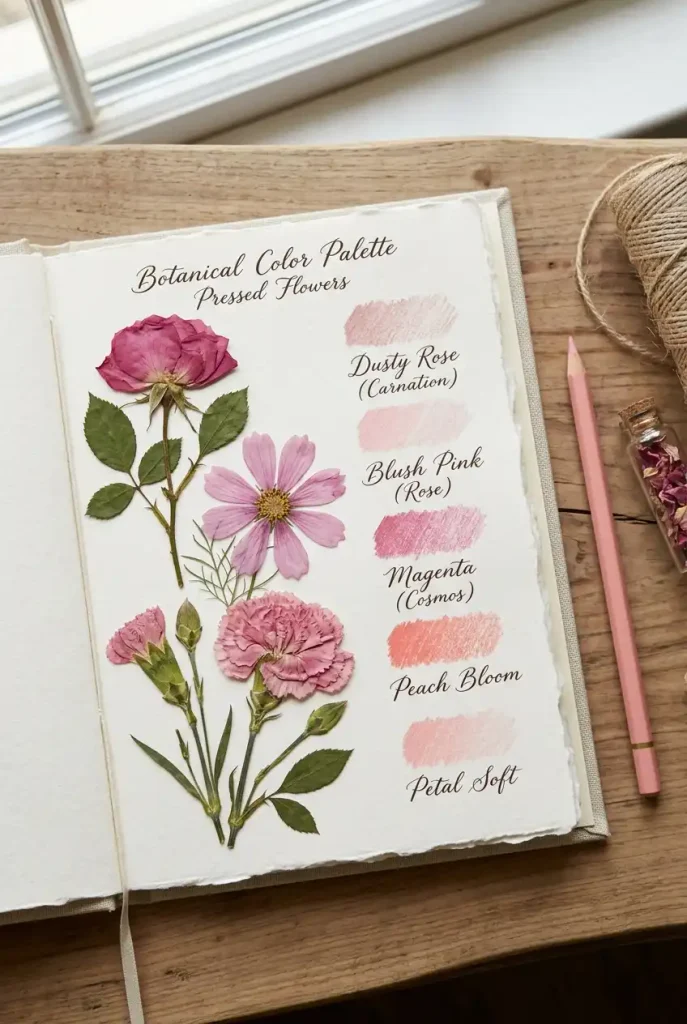
Create a journal page based on one flower color and collect specimens that match it. A pink page could include rose petals, pink cosmos, and pale carnations.
A purple spread might feature lavender, violets, and statice. Add colored pencil swatches beside each specimen and write the flower’s name underneath. This method helps you build visually balanced pages while learning about natural color variations.
Choose flowers that are fully dry and avoid mixing fresh and pressed specimens. Keep the swatches light so the flowers remain the main focus.
14. Create a Flower Journal With a Four-Season Table

A four-season journal helps you organize specimens throughout the year. Divide a spread into spring, summer, autumn, and winter sections, then add a few flowers or leaves from each season.
Include collection dates and brief weather notes. Use small specimens to avoid overcrowding. If a plant is unavailable during a particular season, leave that section open until you find something suitable.
This creates a journal that grows naturally instead of requiring you to finish everything at once.
15. Pressed Flower Journal With Botanical Borders

Botanical borders frame your writing without taking over the page. Arrange tiny flowers, thin fern leaves, or delicate stems along one or two edges of your notebook. Leave the center open for journaling, lists, or sketches.
Small white daisies and lavender are excellent choices because their shapes create a light border. Use a pencil to plan the placement before attaching anything. Keep the border narrow, around one inch, so the flowers do not make the page difficult to write on.
Pro Tip: Place flowers along the outer edge rather than near the binding, where thicker specimens can make your notebook difficult to close.
16. Make a Flower Identification Journal

- 1. Select a flower you can identify confidently or research its common name.
- 2. Press a small specimen and attach it beside a handwritten label.
- 3. Record its color, approximate size, location, and collection date.
- 4. Add a sketch or leaf detail to help distinguish similar plants.
This journal combines creativity with learning. Choose common garden flowers such as marigolds, pansies, daisies, or cosmos. Avoid guessing plant names when identification is uncertain.
Keep the specimens small and use separate pages for plants with similar appearances. A simple identification journal is especially helpful for beginners who want to learn more about the plants growing in their neighborhood or garden.
17. How Do You Make a Pressed Flower Journal Look Elegant?
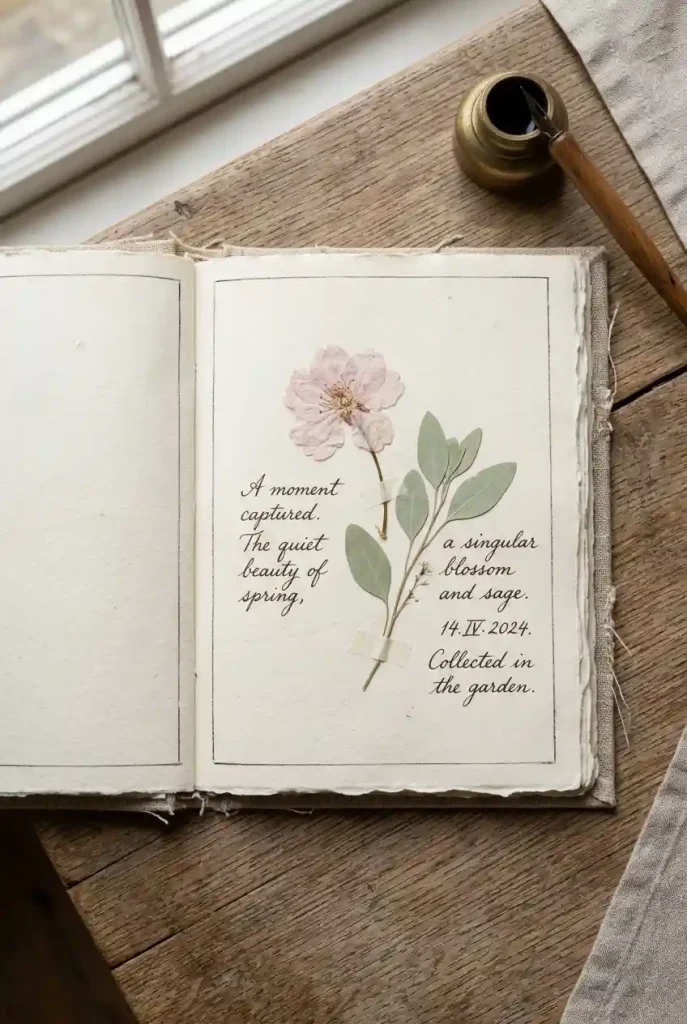
Use a limited color palette and give each flower enough space to stand out. Cream, pale beige, soft sage, and dusty pink work well with most dried specimens.
Choose one or two flowers per page rather than filling every corner. Add fine handwriting, thin borders, or small botanical labels for detail. A clean layout looks elegant without expensive supplies.
Use archival adhesive and avoid heavy decorations that can damage petals or prevent your journal from closing properly.
18. Why a Flower Memory Journal Is Worth Keeping

- Meaningful keepsakes: Preserve flowers from birthdays, weddings, holidays, garden visits, or other special moments.
- Creative expression: Combine pressed specimens with handwriting, sketches, photographs, and decorative paper.
- Lasting memories: Record the location, date, and story behind each flower so its meaning remains clear later.
Best for: Anyone who enjoys sentimental crafts and wants to create a personal record of memorable days. Choose flowers that have a story rather than collecting specimens simply to fill pages.
19. The Petal Archive: A Pressed Flower Journal

The Collection: Gather small flowers and leaves from different places, such as your garden, a permitted nature trail, or a bouquet.
The Arrangement: Place specimens in rows or small clusters with handwritten names, collection dates, and location notes.
The Preservation: Use acid-free paper and archival adhesive. Keep the journal in a dry place away from direct sunlight to reduce fading.
The Personal Touch: Add a short sentence about why you chose each specimen or what you remember about the day.
20. Quick Details for a Travel Flower Journal

A travel flower journal preserves small botanical memories from trips and outdoor adventures. Use flowers collected legally from permitted locations, or save fallen specimens when appropriate. Pair each flower with a map snippet, ticket, or handwritten travel note.
- Quick Details: Choose a compact notebook with sturdy pages for easy travel.
- Quick Details: Keep specimens between paper sheets until fully pressed and dry.
- Quick Details: Difficulty is easy; use simple layouts to avoid bulky pages.
21. Pressed Flower Journal With a Personalized Cover
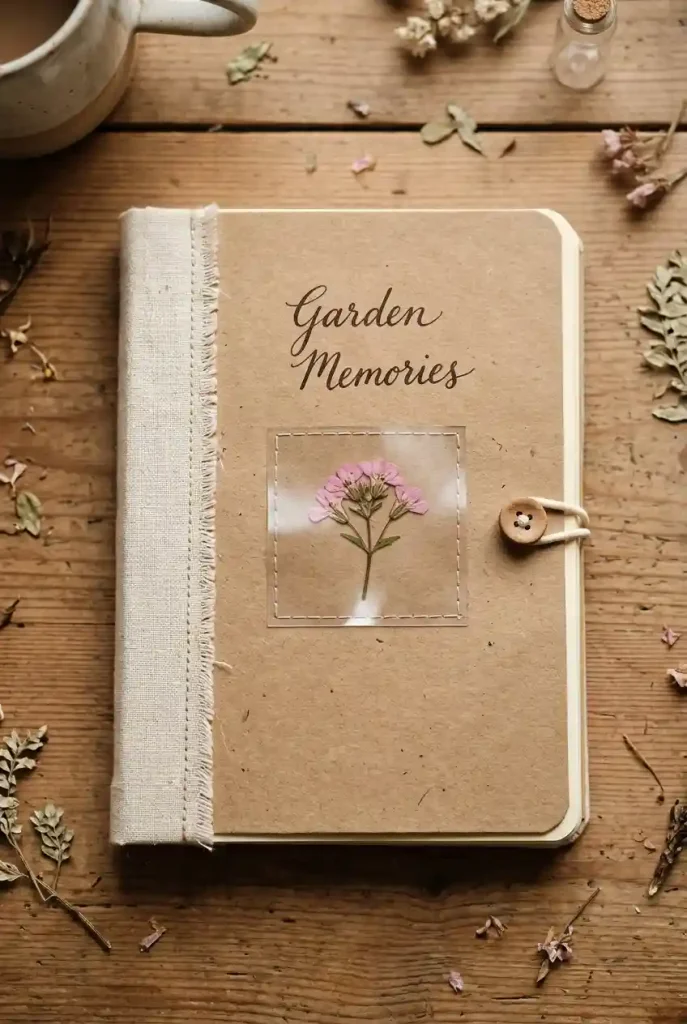
Finish your journal with a cover that reflects the flowers and memories inside. Use a plain kraft notebook, linen-covered journal, or recycled hardcover. Decorate it with a small pressed flower protected beneath a transparent cover or attach a botanical illustration instead.
Add a handwritten title such as “My Flower Collection” or “Garden Memories.” Keep the cover decoration flat to prevent petals from breaking during storage. This project has a low budget when using an existing notebook and is easy enough for beginners.
Frequently Asked Questions
How long do pressed flowers last in a journal?
Pressed flowers can last for many years when completely dry and stored away from moisture, direct sunlight, and excessive heat. Use archival paper and adhesive to reduce deterioration. Some colors may fade naturally over time, especially flowers exposed to bright light.
Which flowers are best for a pressed flower journal?
Small, flat flowers such as pansies, violets, daisies, cosmos, and forget-me-nots are easier to press and attach. Fern leaves, baby’s breath, and individual rose petals also work well. Choose flowers without thick, moisture-filled centers for better results.
Can I use fresh flowers directly in my journal?
No, fresh flowers should not be attached directly because their moisture can cause mold, stains, and damaged pages. Press flowers between absorbent paper until fully dry. Make sure the specimens are completely moisture-free before gluing them into your journal.
What supplies do I need for pressed flower journaling?
You need a notebook, pressed flowers, tweezers, archival glue or acid-free tape, and a fine pen. Optional supplies include watercolor, colored pencils, decorative paper, labels, and small pockets. Begin with basic materials before buying extra stationery.
Conclusion
A pressed flower journal can be simple, colorful, sentimental, or beautifully organized. Start with a few flowers that have personal meaning, then experiment with borders, seasonal pages, botanical labels, and scrapbook layouts.
You don’t need expensive supplies to create something memorable. Let your collection grow naturally as you discover new flowers and preserve meaningful moments.
Save your favorite pressed flower journal ideas so you can return to them whenever you’re ready to create another beautiful page.