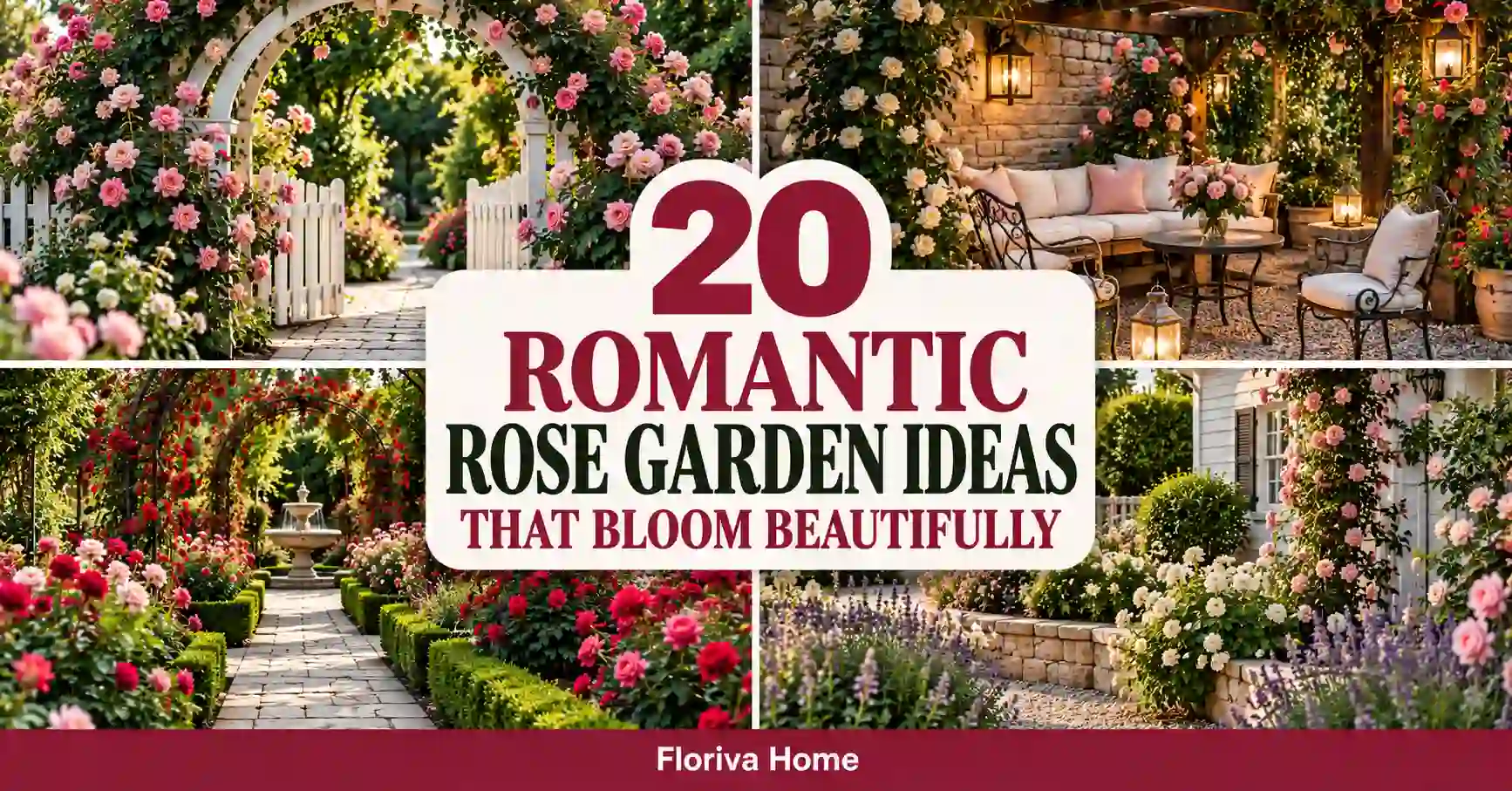
20 Romantic Rose Garden Ideas That Bloom Beautifully
A rose garden can turn even a simple outdoor space into something wonderfully romantic. From softly colored blooms climbing an old trellis to roses surrounding a charming garden path, there are countless ways to create a dreamy setting.
Whether you have a spacious backyard, a small cottage garden, or just a sunny corner beside your patio, roses can bring fragrance, color, and timeless character to the space. The key is choosing the right arrangement and pairing your roses with features that complement their natural beauty.
If you’re looking for romantic rose garden ideas that feel elegant without looking overly planned, these designs offer plenty of inspiration.
Why Choose Roses for a Romantic Garden?
Roses naturally create a romantic atmosphere through their layered petals, graceful shapes, and often beautiful fragrance. They can work as climbing accents, colorful borders, focal plants, or even informal hedges.
You can also create different moods by changing the colors and companions around them. Soft blush roses feel gentle and dreamy, while deep red varieties create a richer and more dramatic garden.
From traditional cottage-style spaces to modern outdoor retreats, roses are versatile enough to fit almost any garden personality.
Here are some beautiful rose garden ideas to inspire your next outdoor project:
1. Soft Blush Rose Border
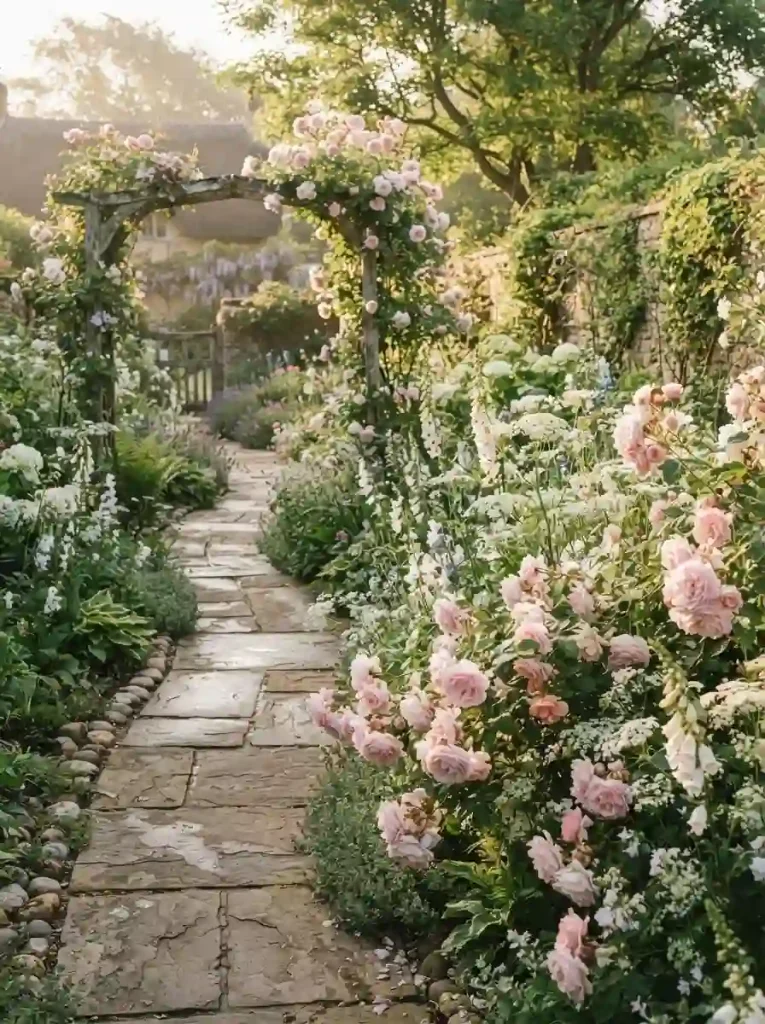
A border filled with pale pink and blush roses can give your garden an instantly romantic appearance. Plant roses along a walkway, patio edge, or lawn boundary so their blooms create a soft transition between different areas.
For an especially natural look, allow the plants to grow at slightly different heights rather than creating a perfectly uniform line. White flowers, silvery foliage, and low-growing greenery can add subtle contrast without taking attention away from the roses.
Garden Tip:
Choose roses with similar growing requirements when creating a mixed border. This makes watering, pruning, and general maintenance much easier.
2. Roses Climbing an Old Garden Arch
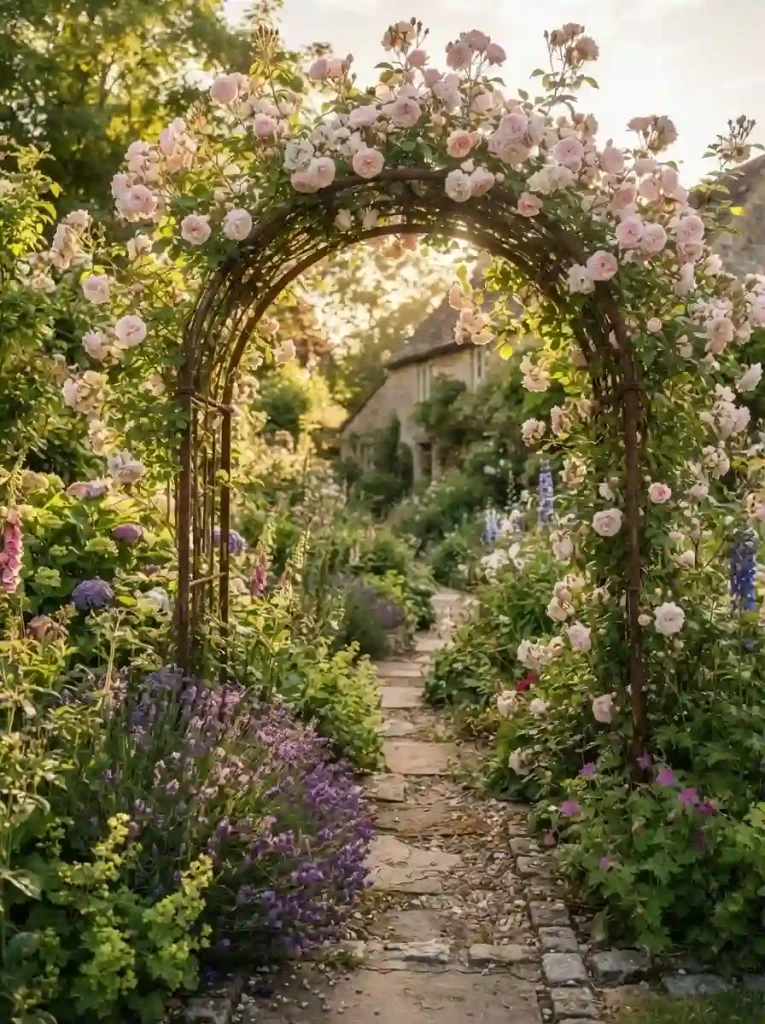
A rose-covered arch can become a beautiful entrance to a backyard garden. Train climbing roses over a wooden or wrought-iron structure and let the branches gradually soften the shape of the arch.
This idea works particularly well when the arch leads somewhere meaningful, such as a seating area, flower bed, or secluded garden corner. Pale pink, creamy white, or peach roses can create a light and welcoming entrance.
Garden Tip:
Give climbing roses sturdy support and guide young stems gently along the structure as they grow. This helps create fuller coverage over time.
3. White Roses Around a Garden Bench
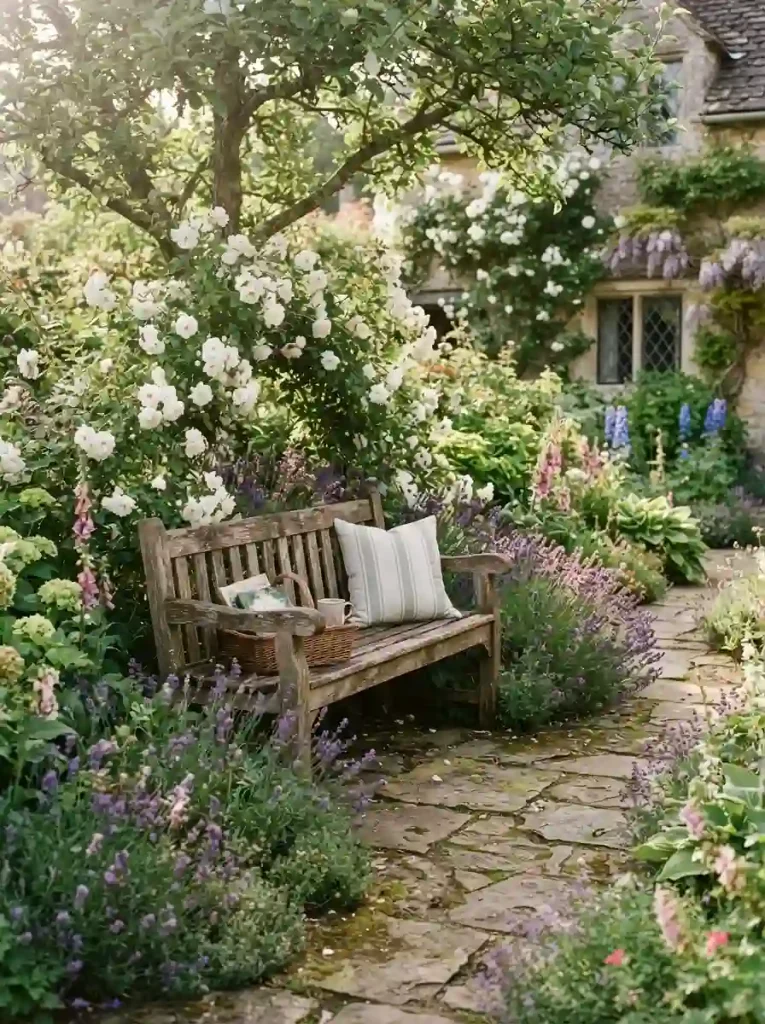
Create a peaceful garden retreat by surrounding a simple wooden bench with flowering white roses. The combination of soft petals and natural wood creates an understated romantic setting without feeling overly decorative.
Plant roses behind or beside the bench, leaving enough open space for comfortable seating. Adding a few lavender plants or fine-textured grasses nearby can make the area feel more relaxed and inviting.
Garden Tip:
Place the bench where you can enjoy the fragrance of the roses while still giving the plants enough sunlight and airflow.
4. Vintage Rose Garden With Wrought Iron Details
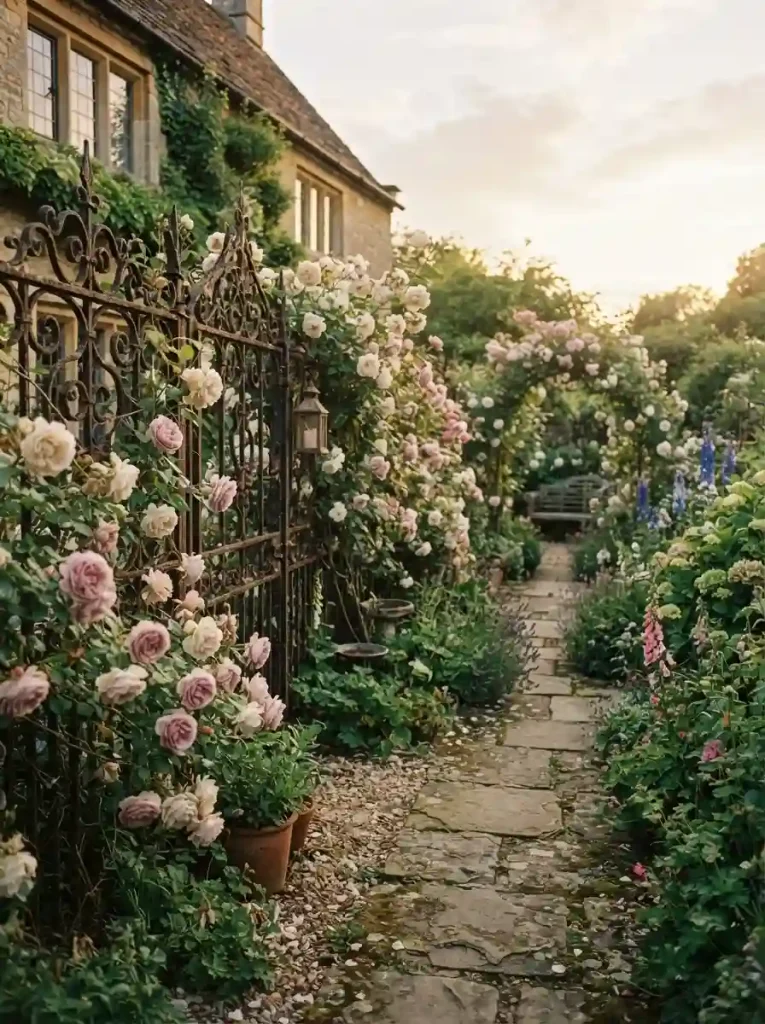
For an old-world romantic feeling, combine roses with vintage-inspired wrought iron. A decorative fence, small gate, or ornamental plant support can give the garden a timeless character.
Deep pink, dusty rose, and cream-colored flowers work beautifully against dark metal. Keep the surrounding planting slightly informal so the space feels established rather than perfectly manicured.
Garden Tip:
Use repeating rose colors throughout the area to connect separate sections and create a cohesive garden design.
5. Romantic Roses Along a Curved Path
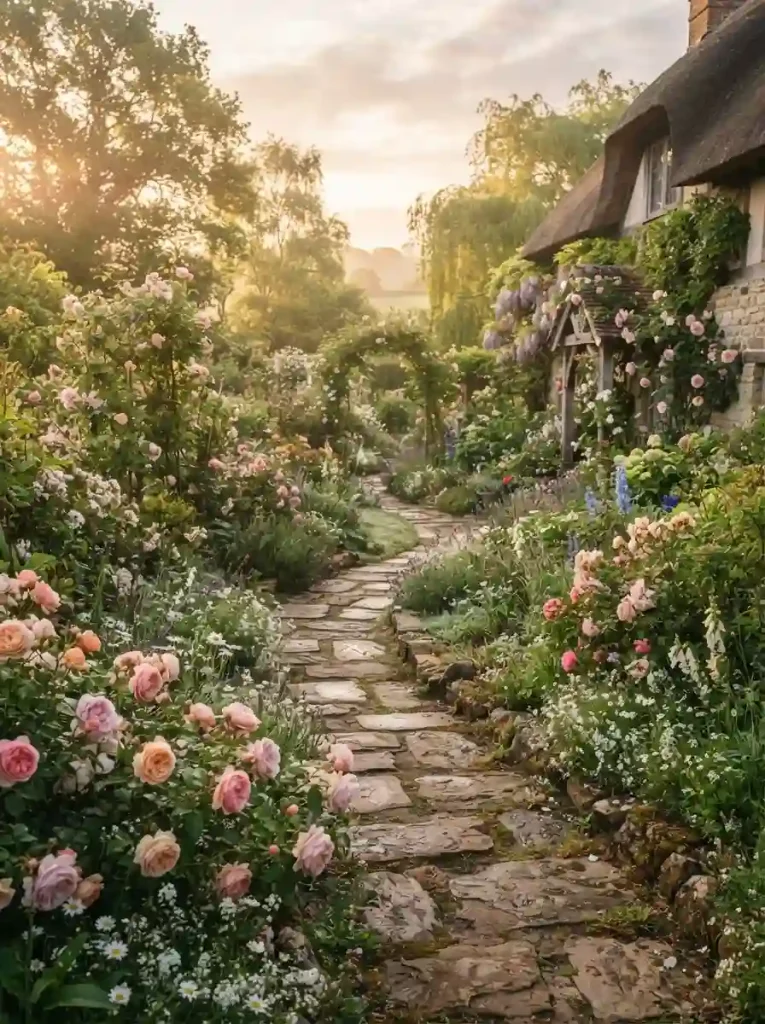
A curved pathway surrounded by roses can make a garden feel larger and more mysterious. Instead of revealing the entire space immediately, the winding path encourages visitors to slowly explore what lies beyond each turn.
Plant roses in loose groups along the edges and mix them with low-growing flowers to soften the pathway. Repeating similar colors along the route will help the design feel intentional.
Garden Tip:
Keep taller rose plants slightly farther from the walking surface so branches and thorns do not interfere with the path.
6. Pink Roses With Lavender
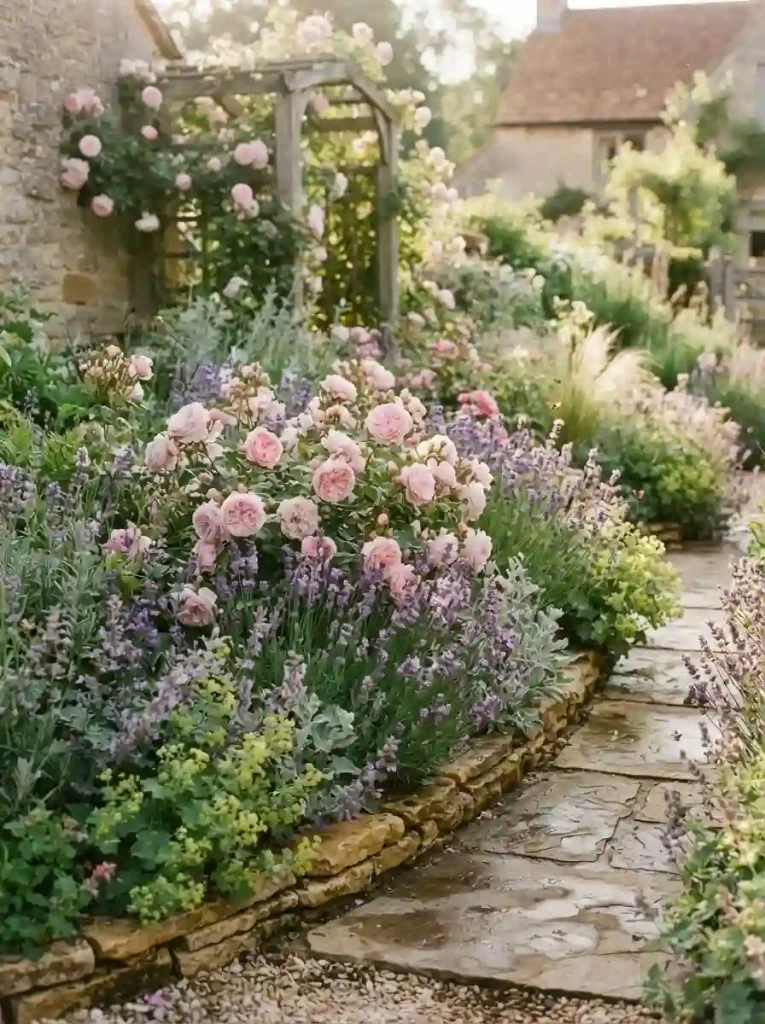
Pink roses and lavender make a naturally beautiful combination. The rounded rose blooms contrast with lavender’s slender flower spikes, creating layers of texture while keeping the overall color palette soft and calming.
This pairing works especially well around patios, walkways, and informal flower borders. The cool purple tones of lavender can balance warm pink roses without competing with them.
Garden Tip:
Make sure both plants have suitable drainage. Avoid placing them in an area where water regularly collects after rain.
7. Romantic Rose Garden With a Small Fountain
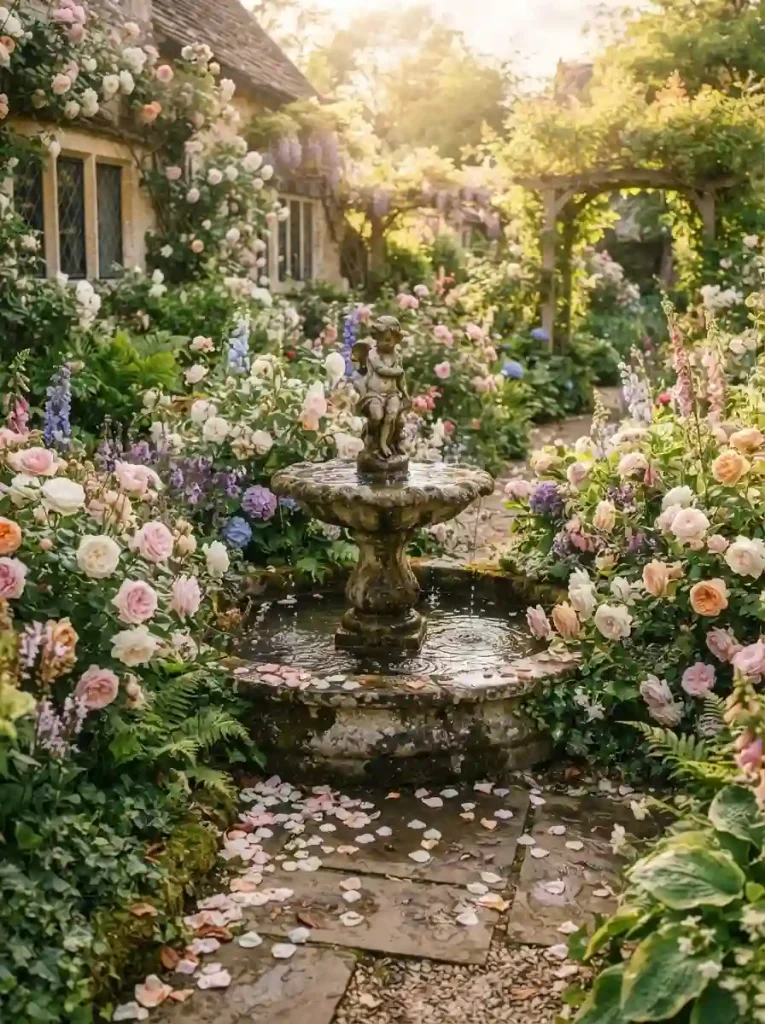
Adding a small fountain can transform a rose garden into a peaceful focal point. Position roses around the fountain rather than completely hiding it, allowing the water feature and flowers to complement one another.
White, blush, and light peach roses can create a soft palette around weathered stone. A few leafy plants at different heights can make the arrangement feel mature and layered.
Garden Tip:
Keep fallen petals and leaves cleared from the fountain basin so the water feature remains attractive and functions properly.
8. Climbing Roses Over a Pergola
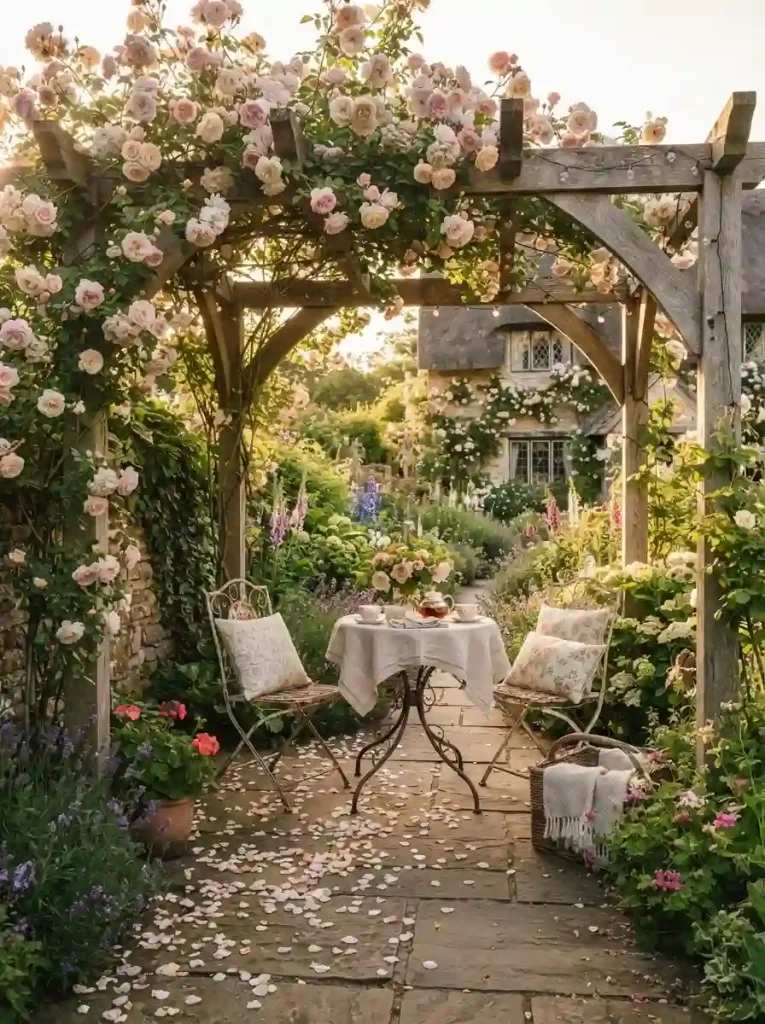
A pergola covered with climbing roses can create an intimate outdoor room. As the vines mature, their foliage and flowers can provide a soft natural canopy over a dining table, bench, or small seating area.
Choose a strong pergola structure and train the roses across the upper beams. Mixing two complementary rose colors can add visual depth while keeping the design elegant.
Garden Tip:
Prune and tie climbing stems regularly so the plant spreads across the pergola instead of becoming tangled in one concentrated area.
9. Rose Garden With White Picket Fencing
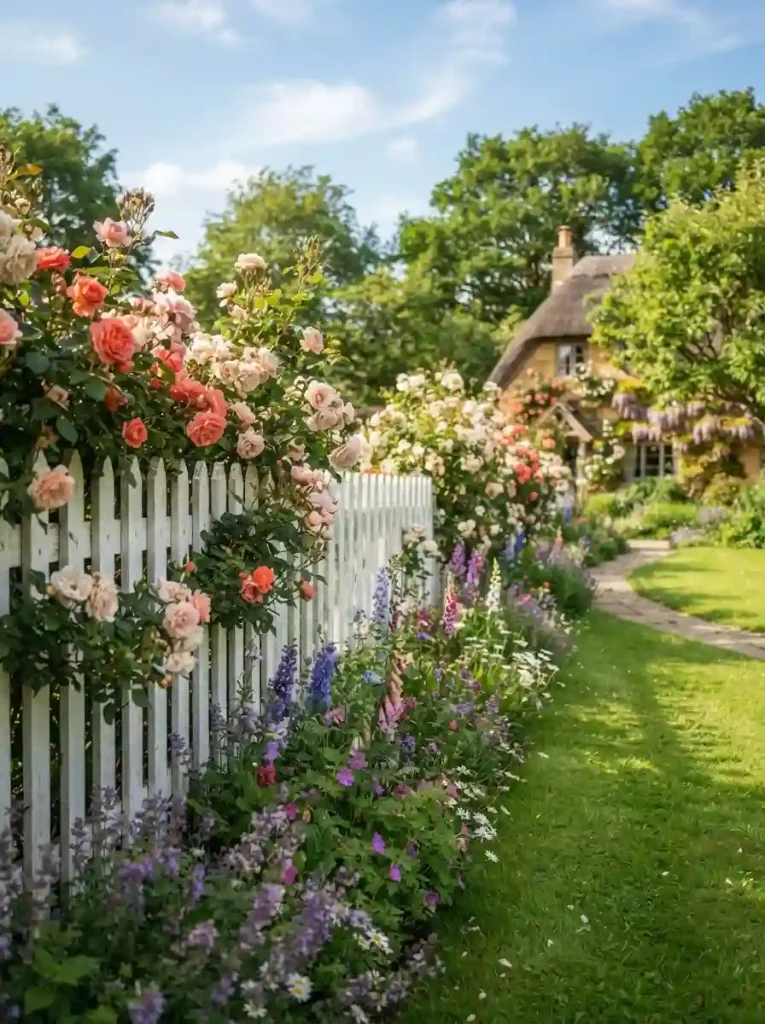
A white picket fence provides a classic backdrop for colorful roses. Plant roses along the fence line and allow some branches to naturally lean through or above the fence for a relaxed cottage appearance.
Coral, pink, red, and peach roses can all work beautifully against white fencing. Add smaller flowers in front to create several layers of color and texture.
Garden Tip:
Leave enough room between the fence and rose plants for airflow and maintenance. Crowded plants are harder to prune and inspect.
10. Romantic Rose Garden With a Stone Seat
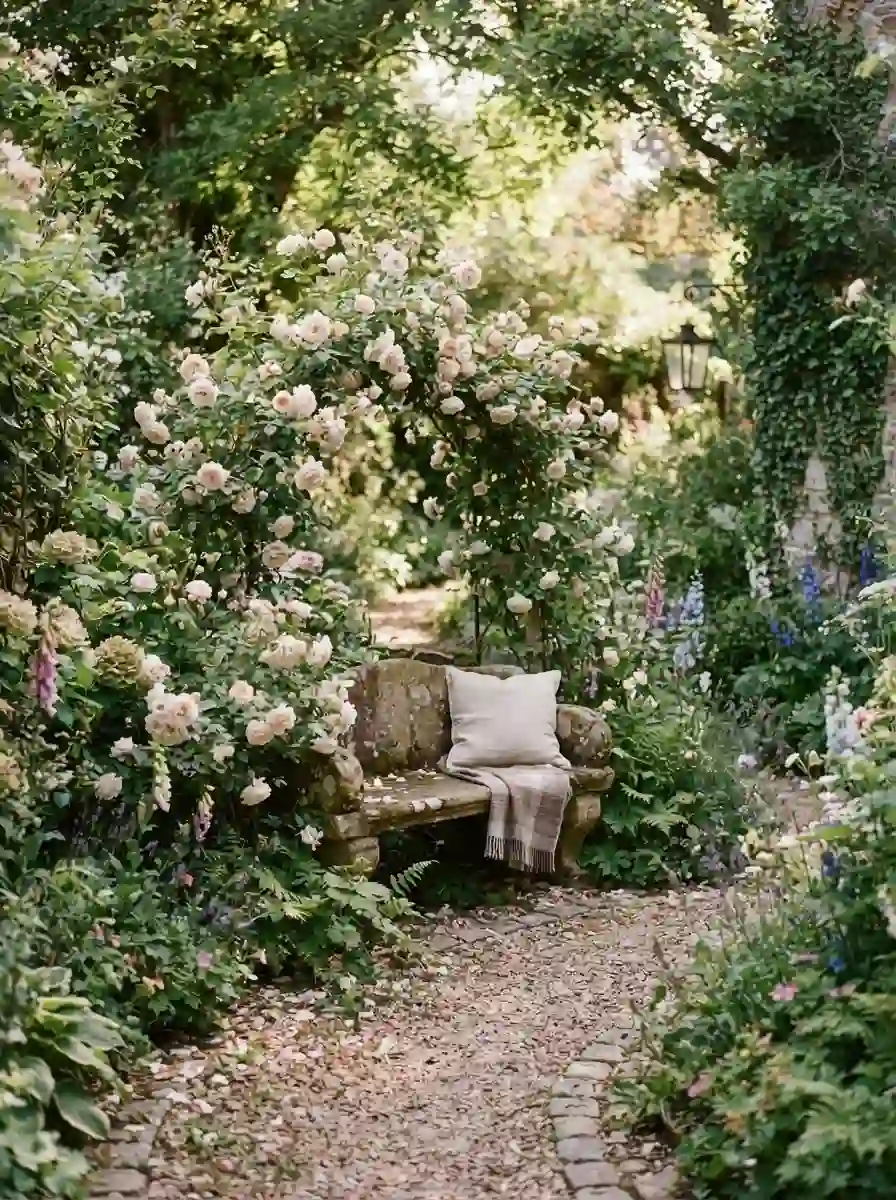
A natural stone seat surrounded by roses can create a quiet place for reading, relaxing, or enjoying the garden. Choose roses with soft, layered blooms and plant them around the seating area without completely enclosing it.
Use natural stone, gravel, and green foliage to keep the setting grounded. The result can feel romantic while still looking effortless and connected to the landscape.
Garden Tip:
Place the seating area where it receives comfortable light but is not exposed to harsh afternoon heat if your climate is particularly warm.
What Makes a Rose Garden Feel Romantic?
The most romantic rose gardens usually combine flowers with thoughtful structure rather than relying on roses alone. Curved paths, arches, benches, stone elements, soft lighting, and layered planting can all make the garden feel more intimate.
Color also plays an important role. Blush pink, cream, peach, soft white, and muted red roses create different moods, so choose a palette that works with your existing landscape and outdoor furniture.
For a natural appearance, avoid planting every rose in perfectly straight rows. Slight variation in height, spacing, and companion plants can make the garden feel established and inviting.
Garden Tip: Before planting, observe the space throughout the day. Knowing where sunlight reaches the garden will help you choose suitable rose varieties and position them more successfully.
Planning Your Rose Garden
Before buying plants, think about how you want to use the space. A garden designed around a seating area will need a different layout from one intended mainly to frame a walkway or property boundary.
Consider mature plant size, sunlight, drainage, access for pruning, and the visual relationship between roses and nearby structures. Planning these details first can prevent overcrowding later.
With the right combination of roses, supporting plants, and garden features, even a modest outdoor area can become a beautiful seasonal retreat.
11. Roses Around a Circular Flower Bed
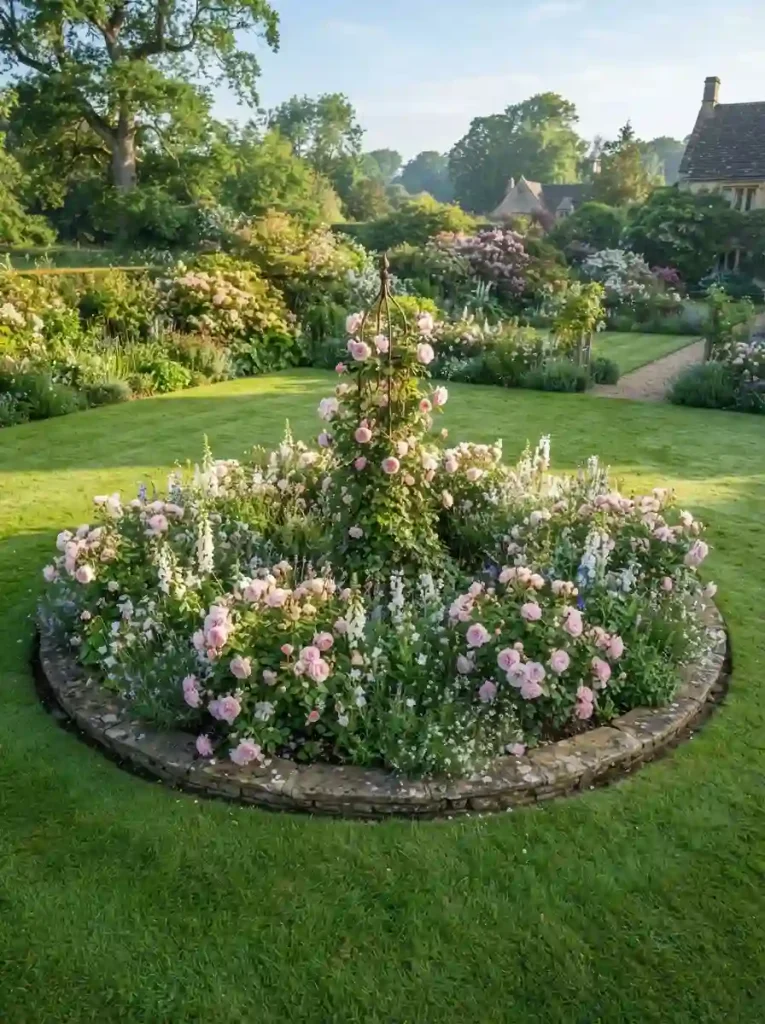
A circular flower bed can create a graceful centerpiece in a lawn or larger backyard. Surround the outer edge with roses and fill the center with complementary flowers or low-growing greenery.
Choose one dominant rose color to keep the arrangement cohesive, then introduce smaller amounts of contrasting shades for added interest. A circular design also looks beautiful when viewed from several directions.
Garden Tip:
Keep the center of the bed accessible enough for watering, pruning, and removing spent blooms. A little extra space can make maintenance much easier.
12. Peach Roses Beside a Garden Gate
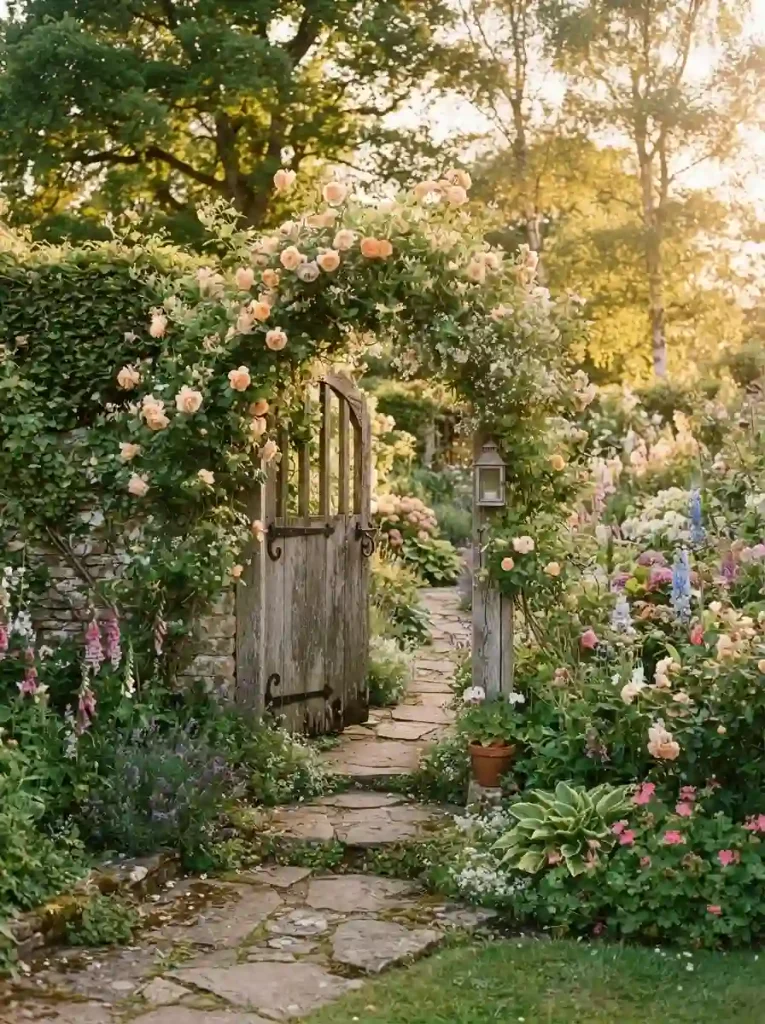
A garden gate becomes much more inviting when framed with warm peach roses. Let the flowers grow naturally on either side while leaving the gate visible as an architectural focal point.
Peach roses pair beautifully with weathered wood, natural stone, and muted green foliage. The warm color gives the entrance a welcoming character without creating an overly formal appearance.
Garden Tip:
Choose rose varieties that fit the available space around the gate. Avoid allowing thorny branches to grow directly across areas where people regularly pass.
13. Deep Red Roses for a Dramatic Garden
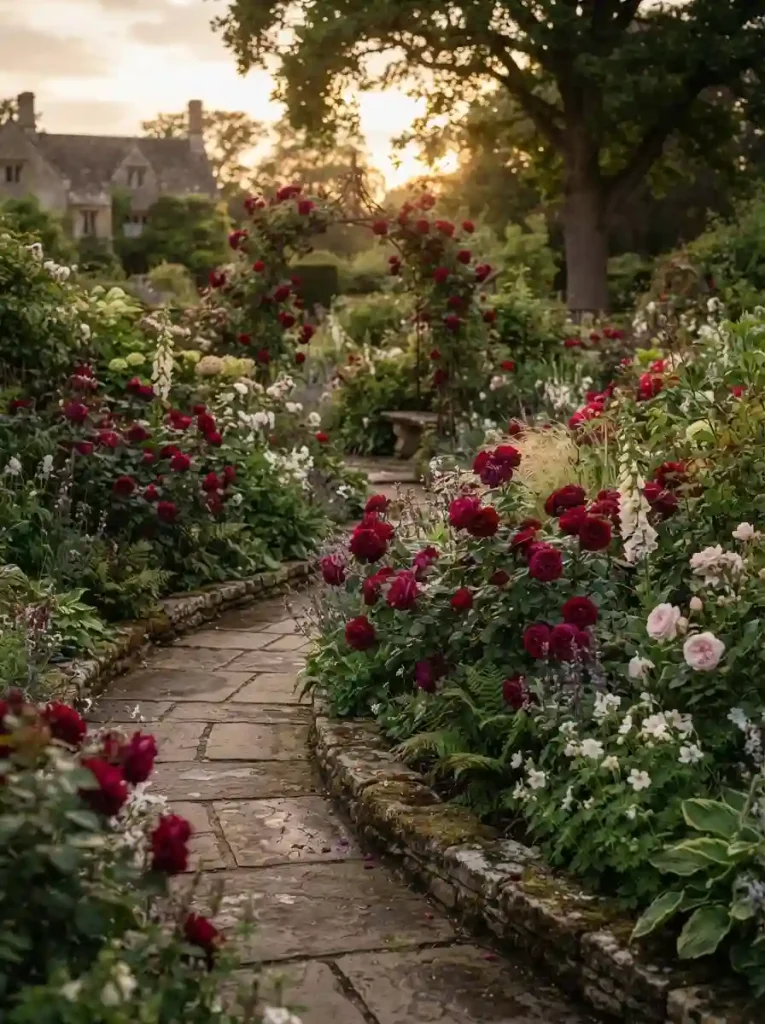
For a richer interpretation of romance, use deep red roses as the main feature. Their saturated color can create a dramatic focal point, especially when surrounded by darker green foliage and neutral garden materials.
Rather than filling the entire space with red flowers, use them selectively around a seating area, entrance, or central bed. This allows the intense color to remain visually striking.
Garden Tip:
Pair deep red roses with pale flowers or silver-toned foliage if you want to soften the overall look.
14. Roses Around a Cozy Patio
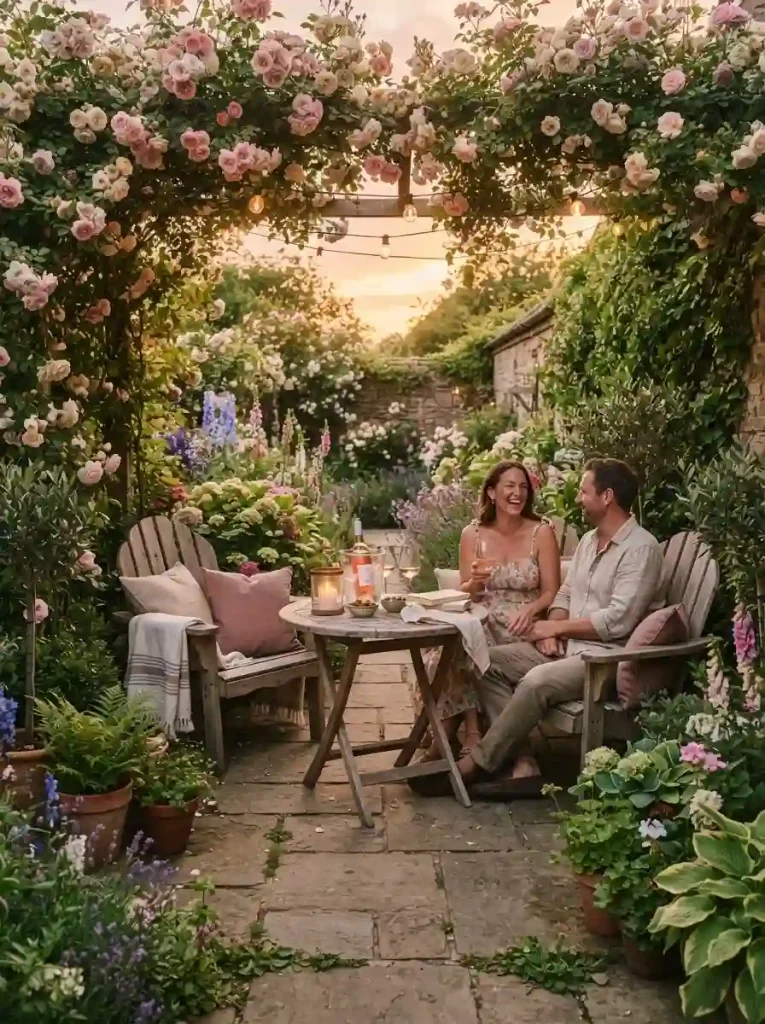
Bring the rose garden closer to everyday living by planting roses around a small patio. Flowers along the perimeter can soften hard surfaces while creating a colorful transition between the patio and surrounding landscape.
Use pots, raised beds, or in-ground planting depending on the available space. A few fragrant roses near seating can make outdoor meals and quiet evenings especially enjoyable.
Garden Tip:
Avoid overcrowding the patio edges. Leave enough room for furniture, movement, pruning, and airflow around mature plants.
15. Cottage Rose Garden With Wildflowers
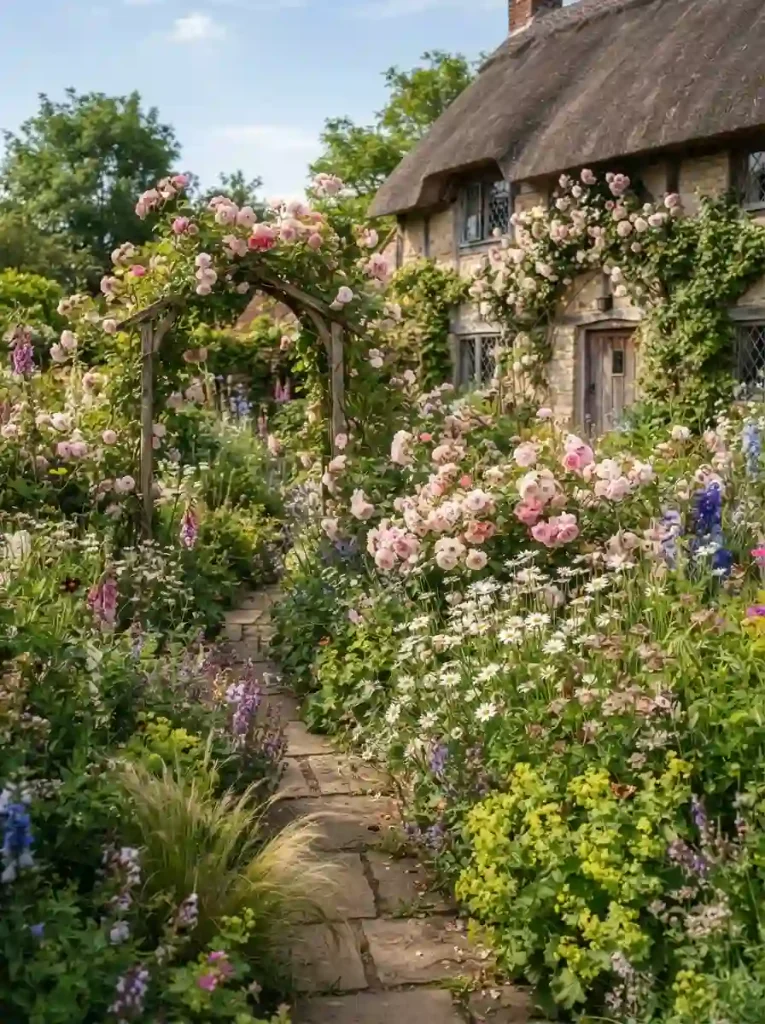
For a relaxed country-inspired garden, combine roses with informal wildflowers. Instead of making the roses perfectly symmetrical, allow different plants to grow together in loose groups.
Small daisies, airy flowers, grasses, and leafy perennials can give the garden a wonderfully natural appearance. This approach is ideal if you prefer a garden that feels abundant rather than carefully arranged.
Garden Tip:
Repeat a few flower colors throughout the bed to prevent the informal planting from looking visually disconnected.
16. Roses Growing Beside a Garden Wall
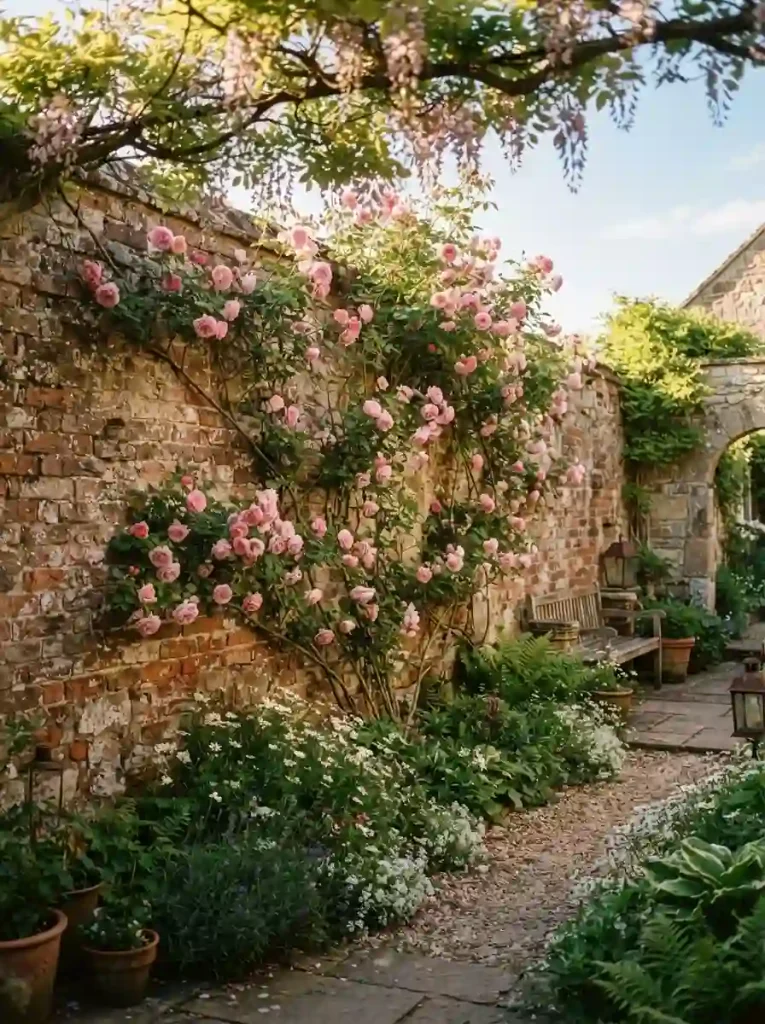
A garden wall can provide an attractive backdrop for roses while helping their colors stand out. Train climbing varieties along suitable supports or plant bush roses in front of the wall for a layered effect.
Old brick, pale stone, and textured stucco can each create a different mood. The wall adds structure while the roses bring softness and seasonal color.
Garden Tip:
Check the wall and support system before training climbing roses. The structure should be strong enough to handle mature stems and foliage.
17. Rose-Filled Window Garden
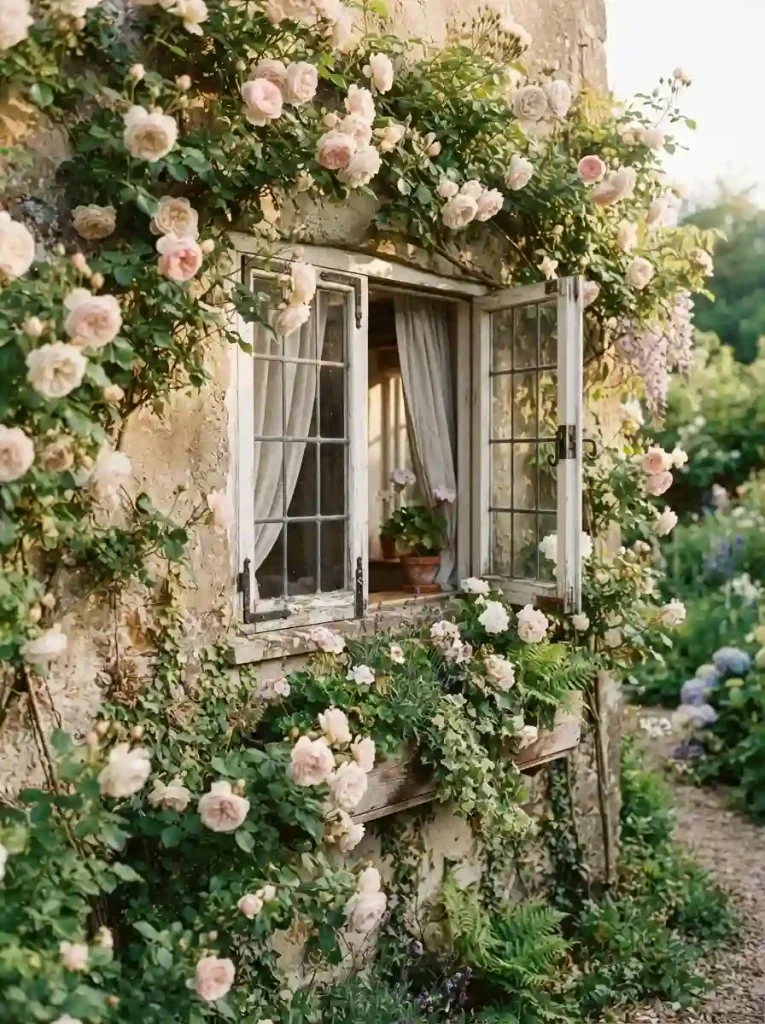
Turn a garden-facing window into a beautiful focal point by planting roses directly outside it. Flowers at different heights can frame the window and make the view from indoors feel more connected to nature.
Choose lower roses or carefully pruned varieties if the window needs to remain accessible. Soft pink, cream, and peach flowers can create a particularly gentle appearance.
Garden Tip:
Keep branches away from windows and doors that need regular access. A little spacing will also make cleaning and pruning easier.
18. Romantic Rose Garden With a Small Pond
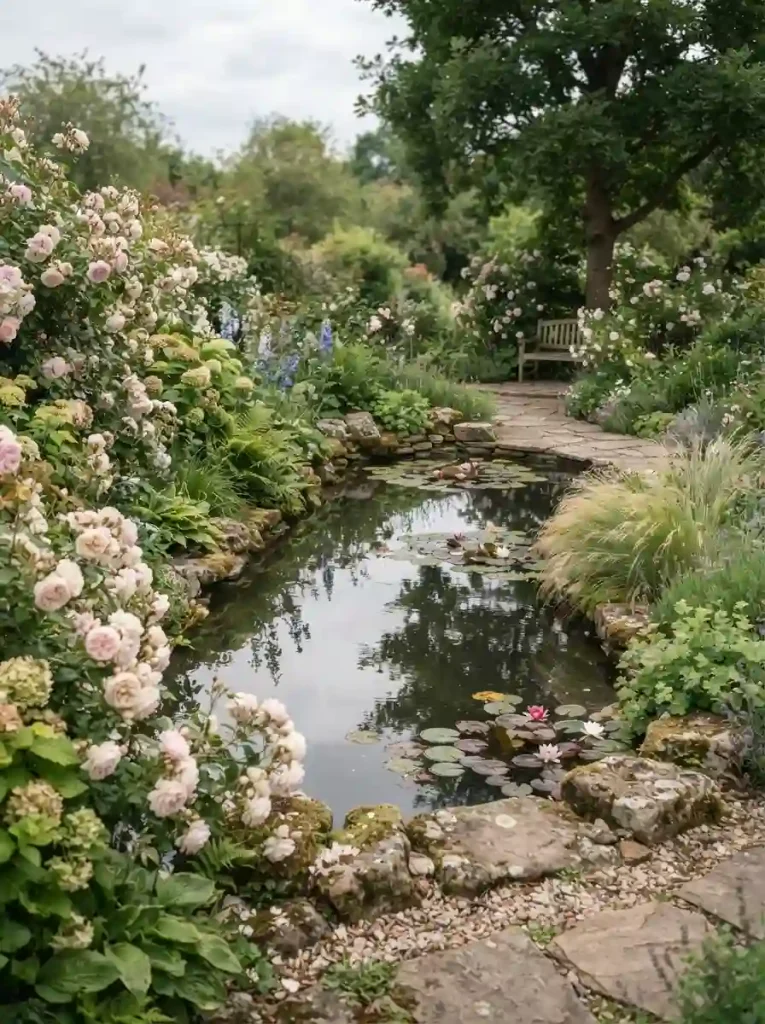
Water and roses can create a peaceful combination in a larger garden. Position roses around a small pond while leaving sections of the water visible so reflections and flowers can both become part of the design.
Use stones, grasses, and moisture-tolerant companion plants around the pond edge. The mixture of moving water and flowering plants creates a relaxing outdoor retreat.
Garden Tip:
Keep rose planting far enough from the pond edge that falling leaves and petals do not constantly accumulate in the water.
19. Rose Garden With a Secret Seating Corner
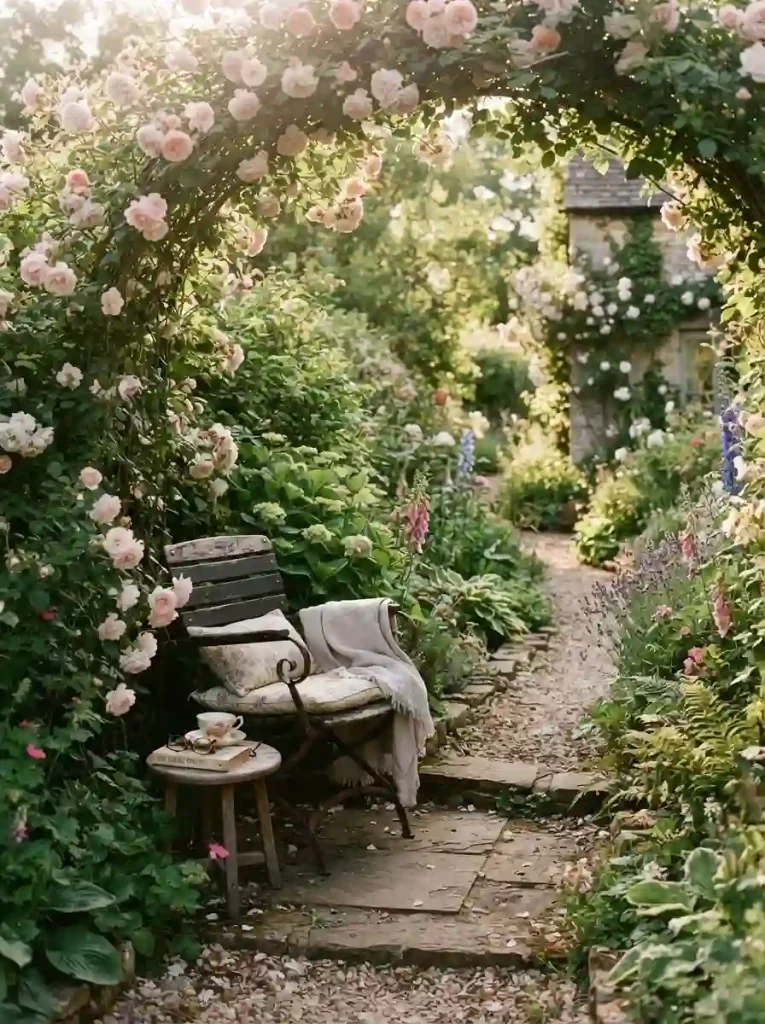
Create a secluded garden hideaway by surrounding a small chair or bench with roses and taller plants. The goal is not to completely hide the seating area but to make it feel tucked away from the rest of the yard.
Climbing roses, shrubs, and leafy perennials can create natural boundaries around the space. Add a small side table for books, drinks, or garden accessories.
Garden Tip:
Leave one clear opening into the seating area so the space feels inviting rather than enclosed.
20. Layered Rose Garden With Mixed Heights
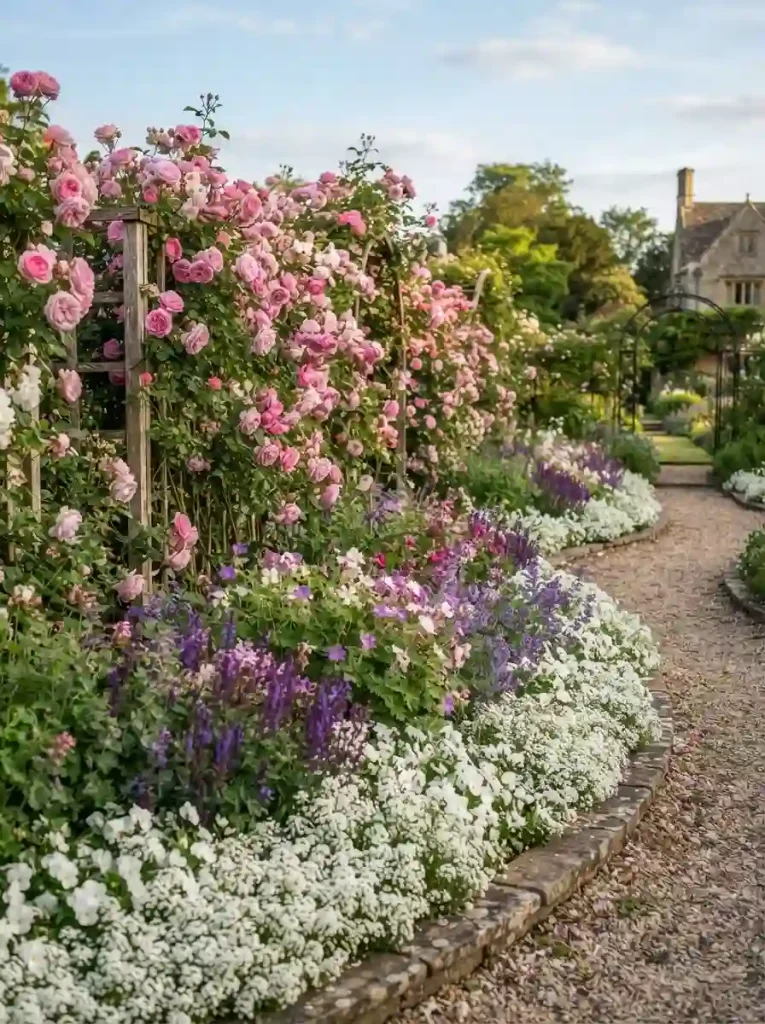
For a fuller and more professionally designed appearance, arrange roses and companion plants in several height levels. Taller roses can form the background, medium plants can fill the middle, and low flowers can soften the front edge.
This layered approach creates depth and helps the garden remain interesting even when individual plants are not flowering at the same time.
Garden Tip:
Research the mature height and width of every plant before purchasing. Planning around mature dimensions helps prevent overcrowding and keeps each layer visible.
How to Keep a Romantic Rose Garden Looking Beautiful
A beautiful rose garden needs regular attention throughout the growing season. Remove faded flowers when appropriate, keep the surrounding soil reasonably clear, and watch plants for signs of stress or disease.
Watering should be directed toward the soil rather than repeatedly wetting the foliage. Good air circulation is also important, particularly when roses are planted closely together.
Pruning requirements vary by rose type, so identify the variety before making major cuts. Climbers, shrubs, floribundas, and other roses can have different pruning needs.
Choosing Colors for a Romantic Rose Garden
Your color palette can completely change the personality of the garden.
Soft pink and blush roses create a gentle, dreamy atmosphere, while cream and white varieties give the space a clean and timeless appearance. Peach roses add warmth, and deep red varieties introduce stronger contrast.
You do not need to use only one color. Instead, select two or three complementary shades and repeat them throughout the garden. This creates visual continuity without making every planting area look identical.
Adding Companion Plants Around Roses
Roses look especially attractive when surrounded by plants with contrasting shapes and textures. Lavender, salvia, ornamental grasses, small flowering perennials, and low-growing foliage can all help fill empty areas around rose bushes.
Companion plants also make the garden more visually interesting when roses are between blooming periods. Choose plants according to your climate, soil, sunlight, and watering conditions rather than selecting them only for appearance.
Final Thoughts
A romantic rose garden does not need to be enormous or perfectly formal. A simple border, a flowering arch, a cozy bench, or a few roses beside a garden gate can completely change the feeling of an outdoor space.
Focus on the features you enjoy most, whether that is fragrance, soft colors, climbing flowers, peaceful seating areas, or a classic cottage-garden look. Then build your planting around those priorities.
With thoughtful spacing, suitable rose varieties, complementary plants, and a little regular care, you can create a garden that feels beautiful throughout the flowering season and becomes a place you genuinely enjoy spending time in.