23 Cozy Rustic Landscaping Ideas You’ll Want to Copy
Rustic landscaping is all about creating an outdoor space that feels warm, natural, and full of character. Instead of perfectly trimmed hedges and matching decorations, this style celebrates earthy textures, weathered materials, relaxed planting, and thoughtful details that make a garden feel welcoming.
Whether you have a spacious backyard, a small cottage garden, or an empty corner beside your porch, there are plenty of ways to bring rustic charm outdoors. From natural stone features to cozy woodland-inspired planting, these rustic landscaping ideas will help you create a beautiful space without making it feel overly designed.
The best part? You can mix affordable materials, reuse existing features, and choose plants suited to your climate to create a landscape that looks lovely throughout the seasons.
1. Create a Rustic Dry Creek Bed
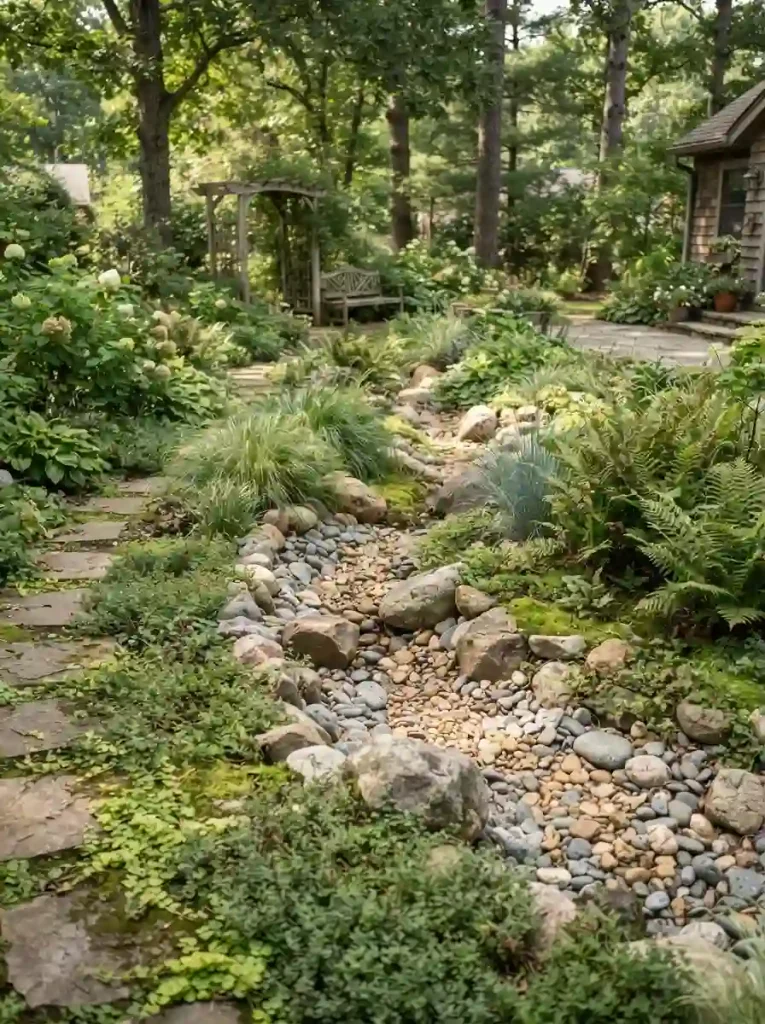
A dry creek bed is a beautiful way to add natural texture and movement to your landscape without installing a pond or fountain. It uses stones and pebbles arranged to resemble a small stream, creating the appearance of water flowing through your garden even when the bed is completely dry.
Start by choosing a gently curved route through an empty section of your yard. Place larger rocks along the edges and fill the center with smaller river stones in different earthy shades. Add ornamental grasses, moisture-tolerant plants, or low-growing ground cover around the edges to soften the design.
Besides looking attractive, a properly designed dry creek bed can help guide rainwater away from areas where it collects. Plan the slope carefully and ensure the water has a safe outlet rather than directing it toward your home’s foundation.
2. Frame Garden Beds With Rough Timber Edging
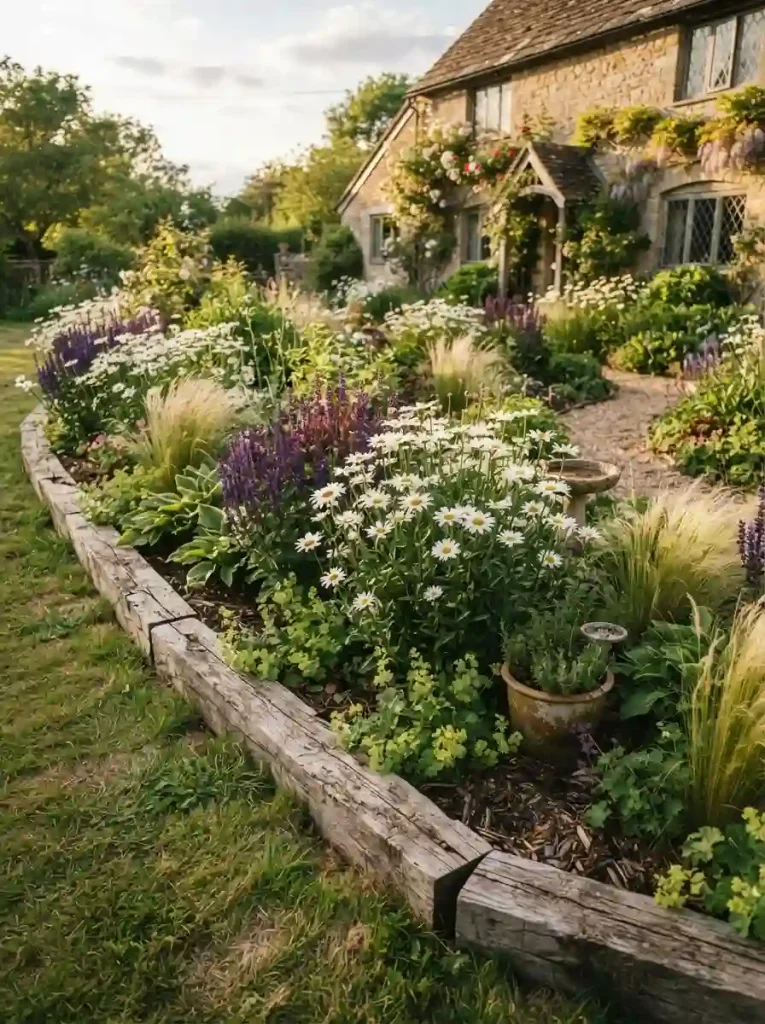
Sometimes, a simple border makes the biggest difference in a garden. Rough timber edging gives flower beds a countryside appearance while creating a clear separation between planting areas, lawn, gravel, and walkways.
Choose naturally weather-resistant timber or untreated wood suitable for outdoor garden use. Arrange the pieces along the edges of your flower beds, keeping their natural grain and subtle imperfections visible. You can use thick horizontal logs for a substantial border or smaller timber pieces for a more delicate finish.
Fill the beds with a relaxed mixture of flowering perennials, leafy plants, and low-growing greenery. The contrast between the rough wood and softer foliage creates the cozy atmosphere that makes rustic landscaping so appealing.
For a cohesive look, repeat the same timber finish in two or three places rather than introducing different wood colors throughout the yard. Keep wood away from constantly wet soil where possible to help it last longer.
3. Design a Garden Around a Statement Boulder
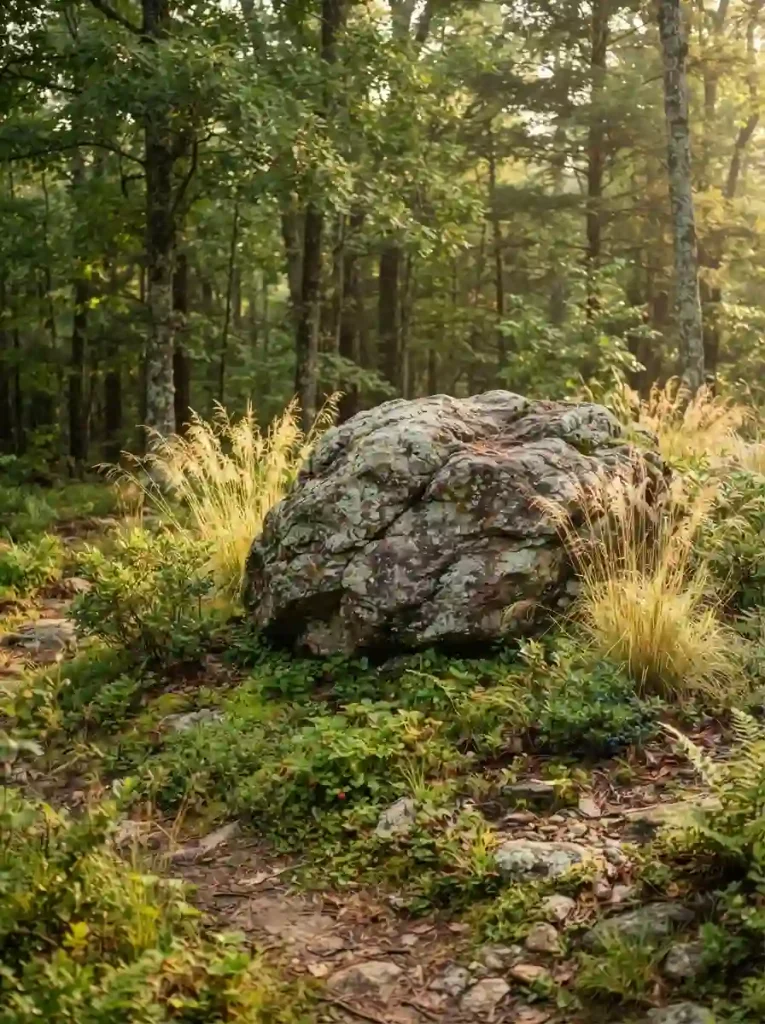
A large natural boulder can become the centerpiece of a rustic landscape without requiring elaborate decorations or expensive structures. Its irregular shape, earthy color, and textured surface bring a sense of permanence that works beautifully in both small gardens and expansive yards.
Look for a location where the boulder can stand out naturally, such as the edge of a planting bed, an open lawn, or a quiet corner beneath a mature tree. Surround it with smaller stones and plants that complement its color rather than compete with it.
Ornamental grasses, creeping ground cover, and compact shrubs are particularly useful for softening the transition between stone and soil. In a shady garden, choose plants suited to lower light levels instead.
Keep the arrangement slightly asymmetrical for a more natural appearance. One substantial stone surrounded by thoughtfully placed plants often looks more convincing than a collection of decorative rocks scattered randomly around the yard.
4. Build a Woodland Fern Corner
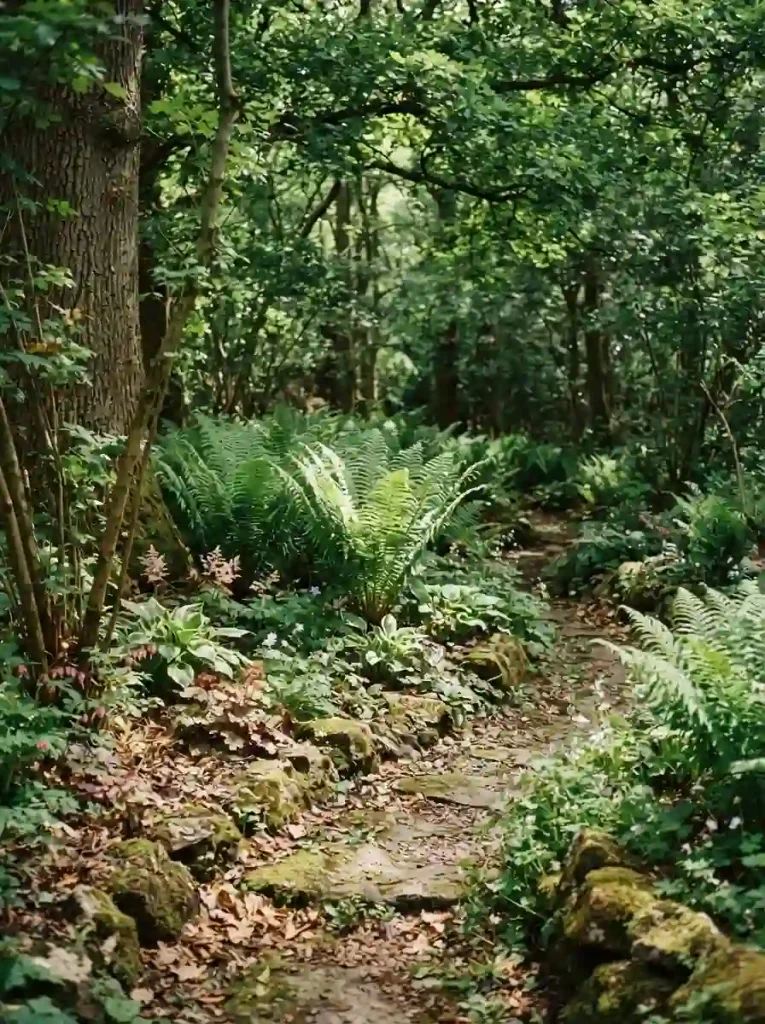
If your backyard has a shady area where grass struggles to grow, turn it into a woodland-inspired garden. Ferns, moss-like ground cover, leafy perennials, and natural tree bark can transform an overlooked corner into a peaceful retreat.
Begin by observing how much sunlight the area receives and whether the soil stays moist or dries quickly. Select ferns and companion plants suited to those conditions. Layer taller foliage toward the back, medium-sized plants through the middle, and low-growing greenery near the edges.
To add rustic character, introduce a few pieces of natural bark or place a small weathered stone among the plants. Avoid overcrowding the space with decorations; the beauty of a woodland garden comes from its layered greenery and relaxed arrangement.
This idea works especially well beneath mature trees, beside fences, or along the shaded side of a house. If tree roots compete heavily for water, choose resilient shade plants and water them as needed while they establish.
5. Add a Rain Chain With a Pebble Basin
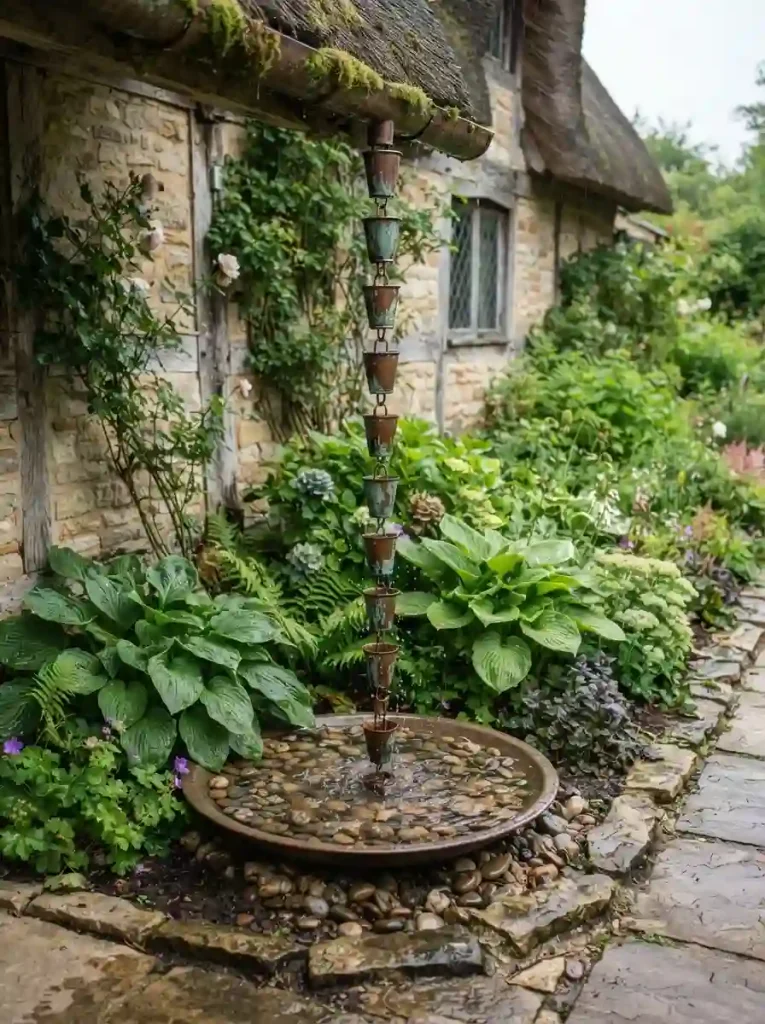
A rain chain is a charming alternative to a conventional downspout. It guides rainwater downward through linked cups or decorative metal shapes, creating a gentle visual feature that suits rustic homes and natural gardens.
Hang the chain from a suitable roof drainage point and position a shallow basin or stone-filled collection area beneath it. Copper develops a changing patina over time, while dark metal creates a more understated appearance.
Surround the basin with moisture-tolerant plants and a few larger stones to connect the feature with the rest of your landscaping. The sound and movement of rain can make this small area especially enjoyable during wet weather.
Make sure the water drains away appropriately, and avoid creating standing water that attracts mosquitoes. A rain chain is most useful when it forms part of a properly planned drainage system rather than serving as a decorative replacement for essential water management.
6. Group Terracotta Pots in a Relaxed Garden Display
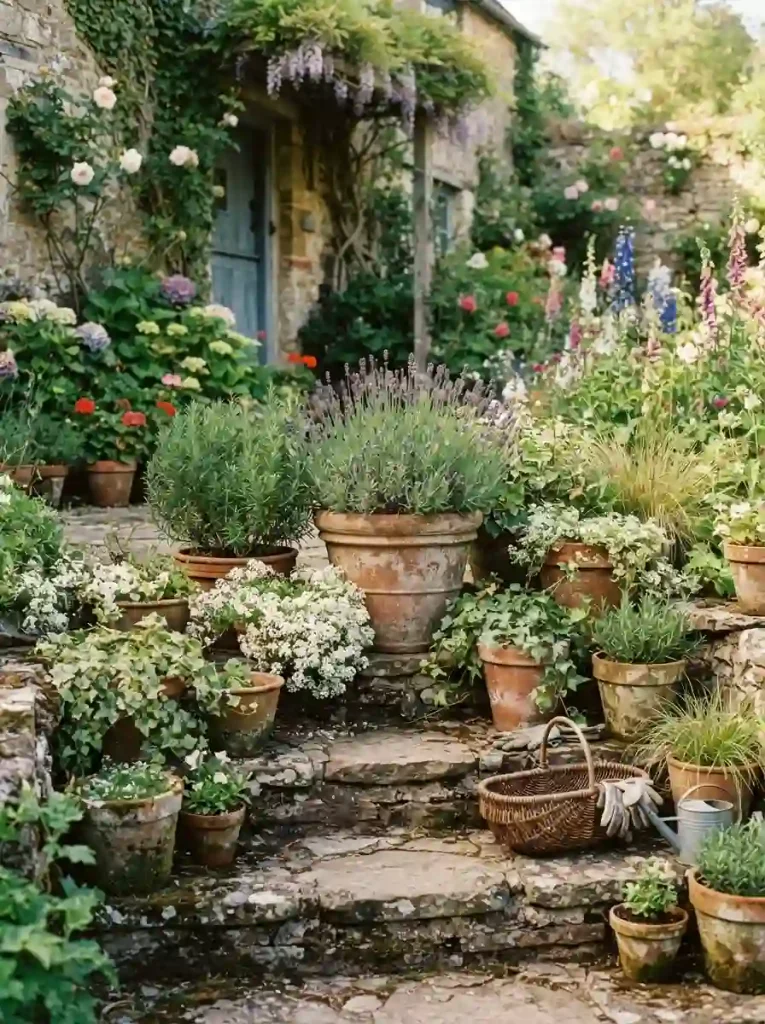
Terracotta pots bring warm, earthy color to outdoor spaces and pair naturally with stone, timber, gravel, and traditional garden plants. Their simple appearance makes them an easy choice for creating a rustic display on a porch, patio, or garden step.
Instead of lining up identical pots in a perfect row, group containers of different heights and widths. Place a larger pot toward the back, medium-sized containers beside it, and smaller pots near the front to create a layered arrangement.
Fill them with a mixture of herbs, flowering plants, compact grasses, or trailing greenery. You can also combine a few naturally aged pots with newer ones for a lived-in appearance.
Choose containers with drainage holes and use potting mix appropriate for the plants you select. Since terracotta can dry out faster than some other materials, check moisture levels regularly during warm weather.
This is one of the easiest rustic landscaping ideas for renters or homeowners who want a flexible garden feature without digging up the yard.
7. Create a Low Fieldstone Garden Wall
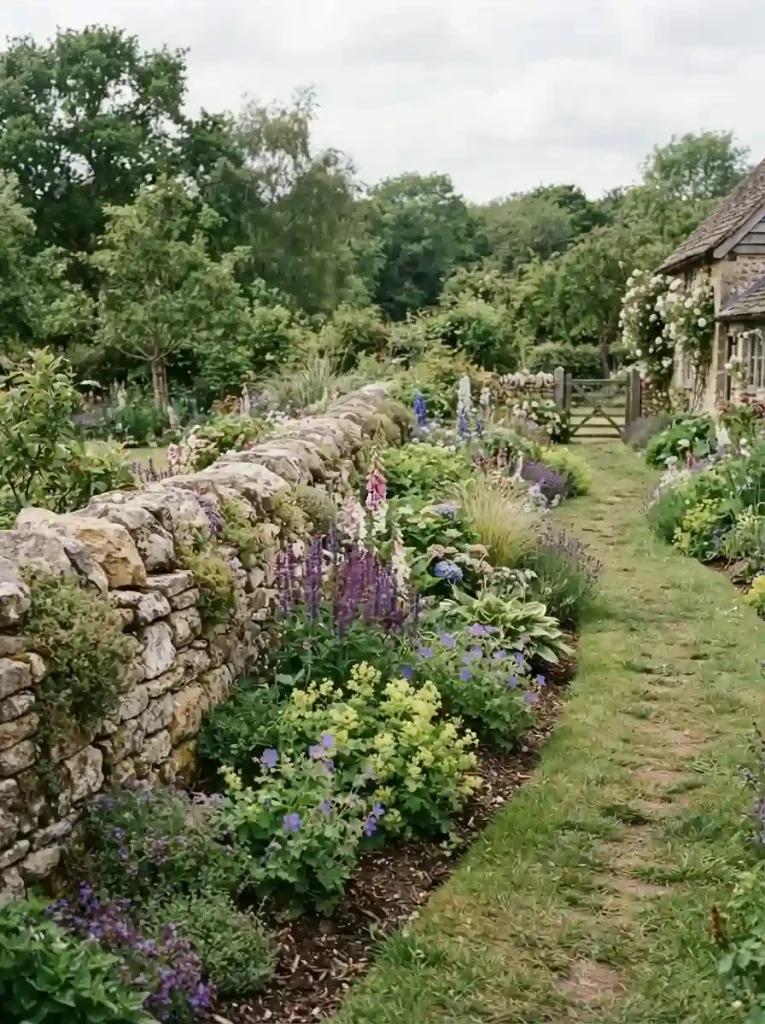
A low fieldstone wall can give a garden a sense of age and structure while helping separate different levels or planting areas. Its uneven shapes and natural color variations create a softer look than a perfectly uniform masonry border.
Use fieldstones in a mixture of sizes, keeping the overall appearance balanced rather than overly symmetrical. A low wall can frame a flower bed, edge a gently raised area, or create a boundary between a path and a lawn.
Plant compact perennials, small shrubs, and ground cover around the stones to soften their edges. Allow some plants to spill naturally over the wall where appropriate, but keep pathways clear and avoid planting species that could destabilize the structure.
If the wall needs to retain a significant amount of soil, proper construction and drainage become especially important. Larger retaining walls may require professional planning to remain stable.
For a relaxed countryside look, repeat the stone’s natural colors elsewhere in the landscape, perhaps through a gravel path or a few larger garden rocks.
8. Welcome Guests With a Rustic Garden Arch
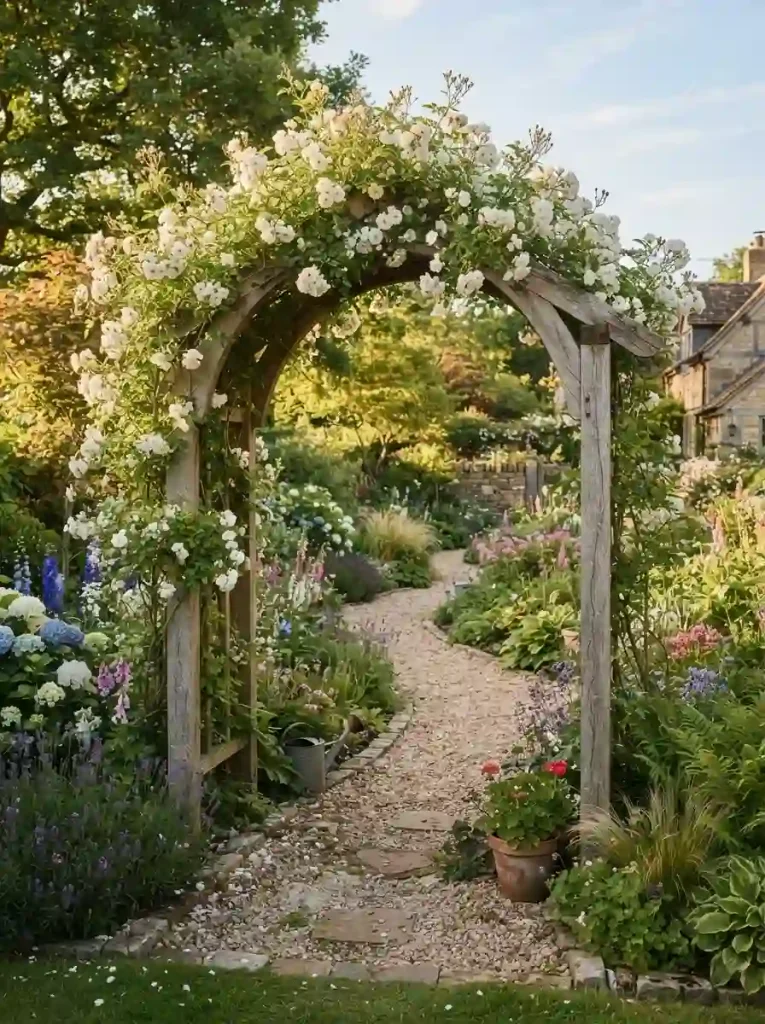
A garden arch creates a welcoming entrance and gives even a modest yard a sense of discovery. It can mark the beginning of a garden path, frame a transition between outdoor areas, or draw attention to a beautiful planting bed beyond it.
Choose a wooden arch with a straightforward design and a finish that complements your fence, porch, or outdoor furniture. Cedar and other suitable outdoor timbers can work well when properly installed and maintained.
Train climbing plants along the sides so they gradually soften the structure. Select varieties according to your climate, available sunlight, and the strength of the arch. Lightweight flowering climbers are often easier to manage than vigorous plants that become excessively heavy.
A gravel or stepping-stone path leading beneath the arch makes the entrance feel more intentional. You can also plant low flowers along either side to create a gentle transition into the garden.
Keep the opening wide enough for comfortable passage and secure the structure properly against wind. The goal is to create an inviting feature that remains practical as the plants mature.
9. Plant Ornamental Grasses for a Soft Countryside Look
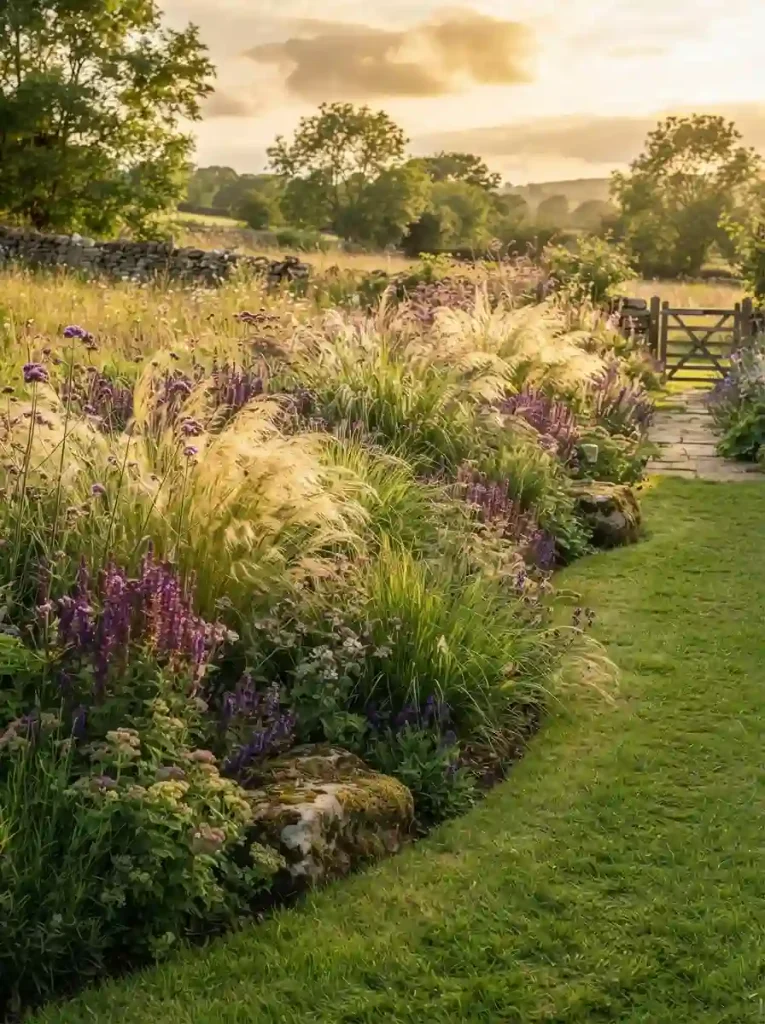
Ornamental grasses add movement, texture, and a relaxed countryside feeling to rustic landscaping. Their slender leaves and feathery seed heads sway in the breeze, bringing life to areas that might otherwise look flat or overly formal.
Use different grass heights to create depth. Taller varieties can form a loose background screen, while shorter clumps work well along paths, near stone borders, or around larger landscape features.
Combine the grasses with flowering perennials in complementary colors. Purple blooms, white flowers, and soft yellow accents can balance the golden or green tones of the grasses without making the planting feel too busy.
Choose varieties that suit your local climate and available space, since some grasses spread aggressively or grow much larger than expected. Native or locally appropriate species can be particularly useful for a lower-maintenance garden.
Leave enough room between plants for mature growth and airflow. Many ornamental grasses also provide attractive winter texture, so you can enjoy their changing appearance throughout the year.
10. Turn a Fallen Tree Trunk Into a Natural Garden Feature
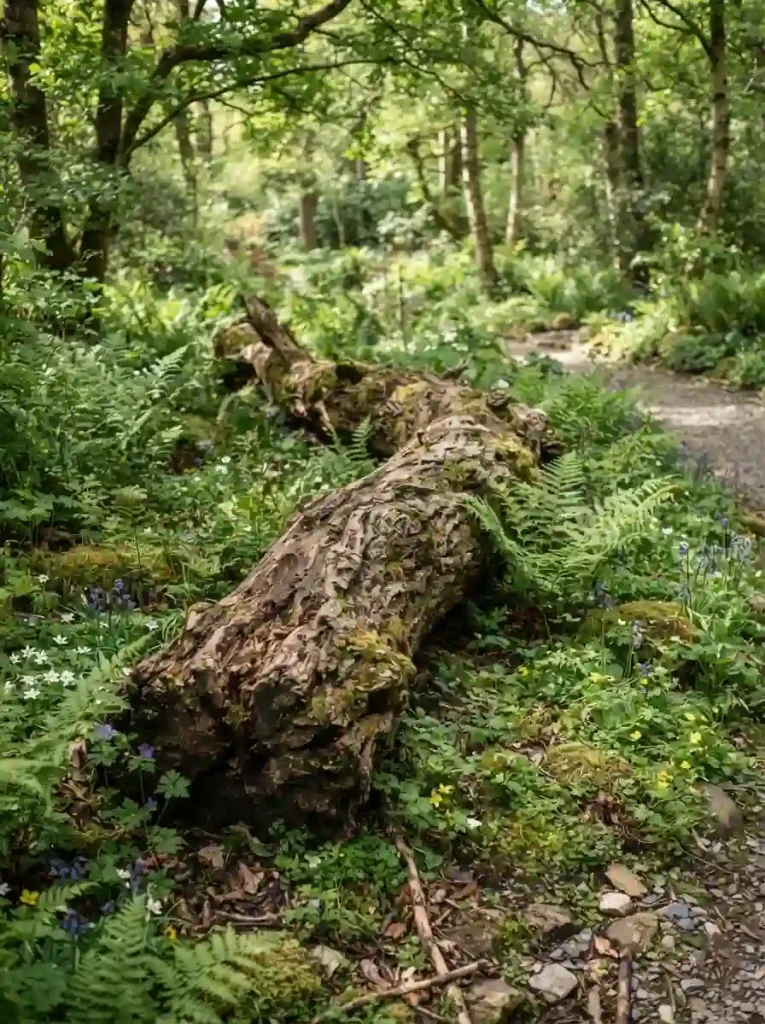
A fallen tree trunk can become a distinctive feature in a rustic garden instead of being removed immediately. Its textured bark and irregular shape introduce the kind of natural detail that is difficult to recreate with manufactured decorations.
Place a suitable trunk along the edge of a woodland bed or in a quiet corner where it can sit comfortably within the planting. Surround it with ferns, shade-loving perennials, small stones, or low ground cover to create a cohesive arrangement.
You can leave the trunk in its natural state or use part of it as a low display surface for lightweight containers. As the wood ages, it may also provide habitat for beneficial garden organisms.
Check the trunk for instability, sharp splinters, and unwanted pests before using it. Keep decaying wood away from structures and healthy trees if it could harbor pests or disease.
This idea is particularly attractive in informal gardens where a slightly wild appearance feels appropriate. It adds character while making use of a natural material that might otherwise go to waste.
11. Make a Small Rustic Courtyard With Gravel and Greenery
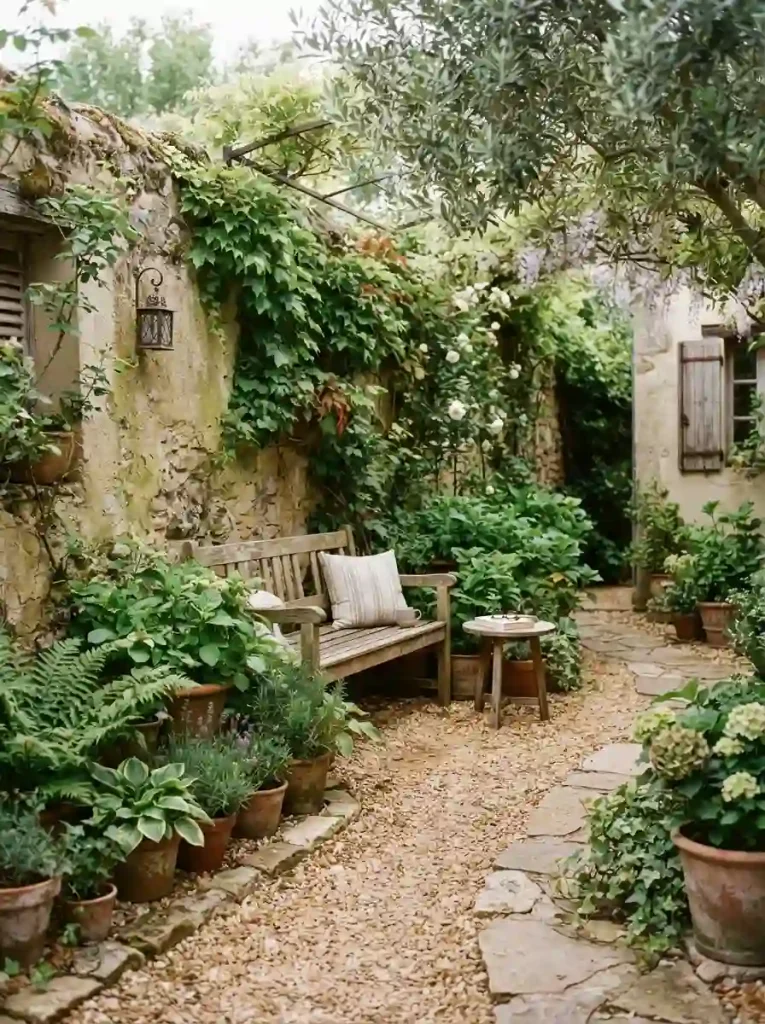
You don’t need a large backyard to enjoy rustic landscaping. A small courtyard can feel warm and inviting when you combine a simple gravel surface with natural materials and thoughtfully placed plants.
Start by defining the main area with compacted, suitable gravel and secure edging. Choose a warm neutral color that works with your home’s exterior. Add a modest wooden bench or a simple outdoor chair to create a comfortable place to sit.
Use pots, narrow planting beds, or a few compact shrubs to introduce greenery without taking up too much walking space. If the courtyard is shaded, select plants that thrive in lower light; sunny spaces can accommodate herbs and flowering varieties.
Keep the arrangement uncluttered by choosing a few materials and repeating them throughout the space. A small stone accent, weathered timber, and terracotta containers can provide plenty of character without overwhelming the courtyard.
Pay attention to drainage and provide a stable, accessible walking surface. With the right layout, even a narrow side yard or enclosed patio can become a cozy outdoor retreat.
12. Create a Natural Hillside Garden With Layered Planting
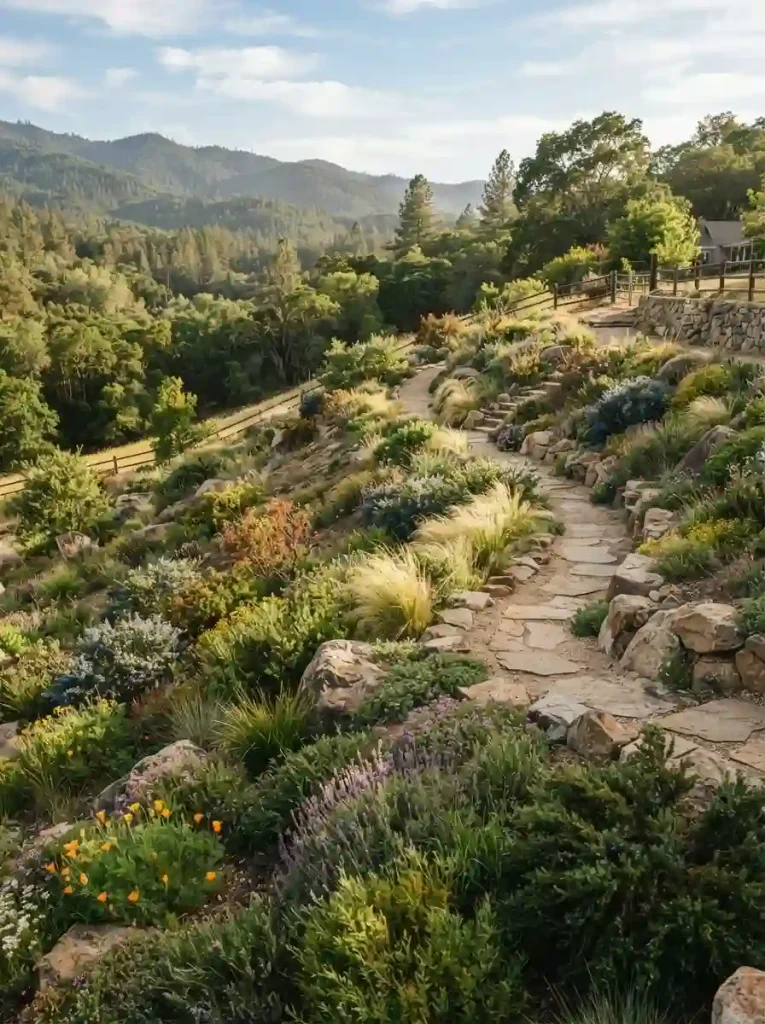
A sloping yard can become one of the most interesting parts of your landscape when you work with its natural contours instead of trying to make everything flat. Layered planting gives the hillside depth while helping it blend into the surrounding environment.
Begin by assessing the slope, soil conditions, sunlight, and how rainwater moves across the area. Choose plants with root systems and growing habits suited to the site. Low-growing ground cover, compact shrubs, and ornamental grasses can create a varied planting scheme when arranged in thoughtful layers.
Use naturally placed stones to add visual structure and help define planting areas. For steeper slopes, erosion control and appropriate drainage are essential; significant grading or retaining work may need professional guidance.
Repeat a few plant varieties across the hillside so the overall design feels connected rather than random. Vary their heights and textures to create a relaxed, natural appearance.
Once established, a well-planted hillside can offer seasonal color and visual interest from different viewpoints around your property. It can also make an awkward patch of lawn feel like a purposeful part of the garden.
13. Add a Rustic Wooden Garden Bench
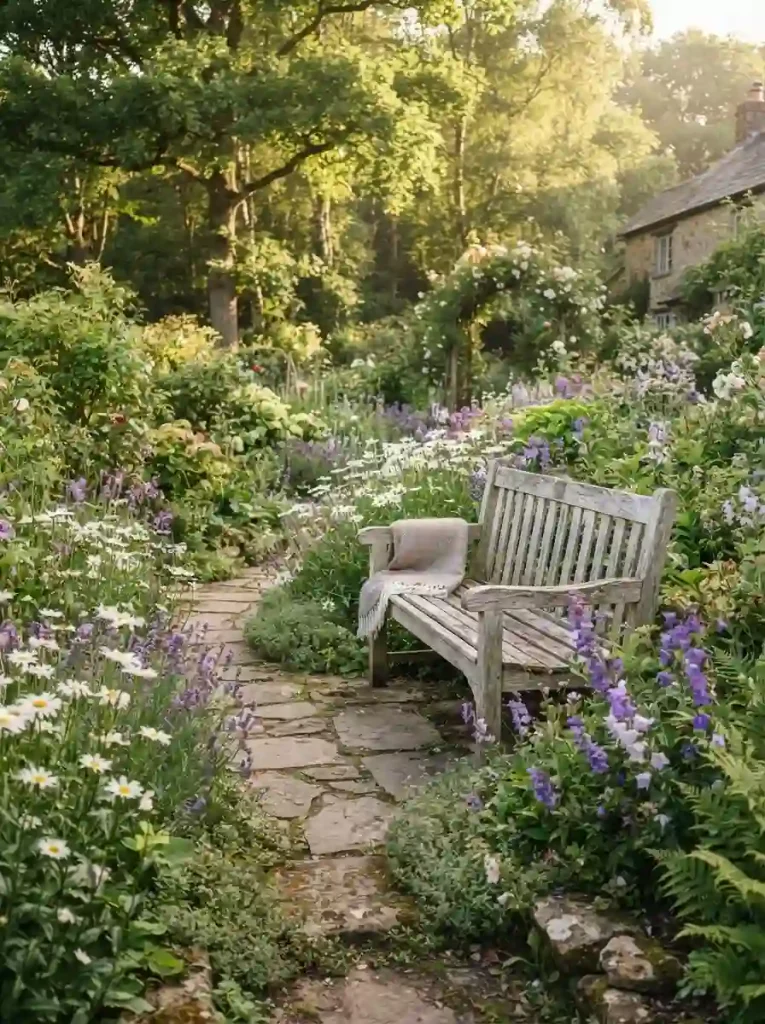
A weathered wooden bench can turn an ordinary garden corner into a peaceful place to sit and enjoy the outdoors. Its natural finish works beautifully with stone pathways, mature trees, cottage-style flowers, and informal planting beds.
Choose a sturdy bench made from outdoor-suitable timber, with a design that feels comfortable rather than overly decorative. Place it where you can enjoy a pleasant view, such as beside a flower bed, beneath a tree, or at the end of a garden path.
Surround the seating area with a few flowering perennials, low shrubs, and natural stones. You can also position two large planters nearby to make the spot feel more secluded without crowding the space.
Think about practical details before choosing the location. A level, well-drained surface helps keep the bench stable, while partial shade can make it more comfortable during warmer months.
For an especially cozy atmosphere, let the surrounding plants grow naturally while keeping the immediate seating area accessible. The result is a simple outdoor retreat that encourages you to slow down and appreciate your garden.
14. Design a Rustic Flagstone Pathway
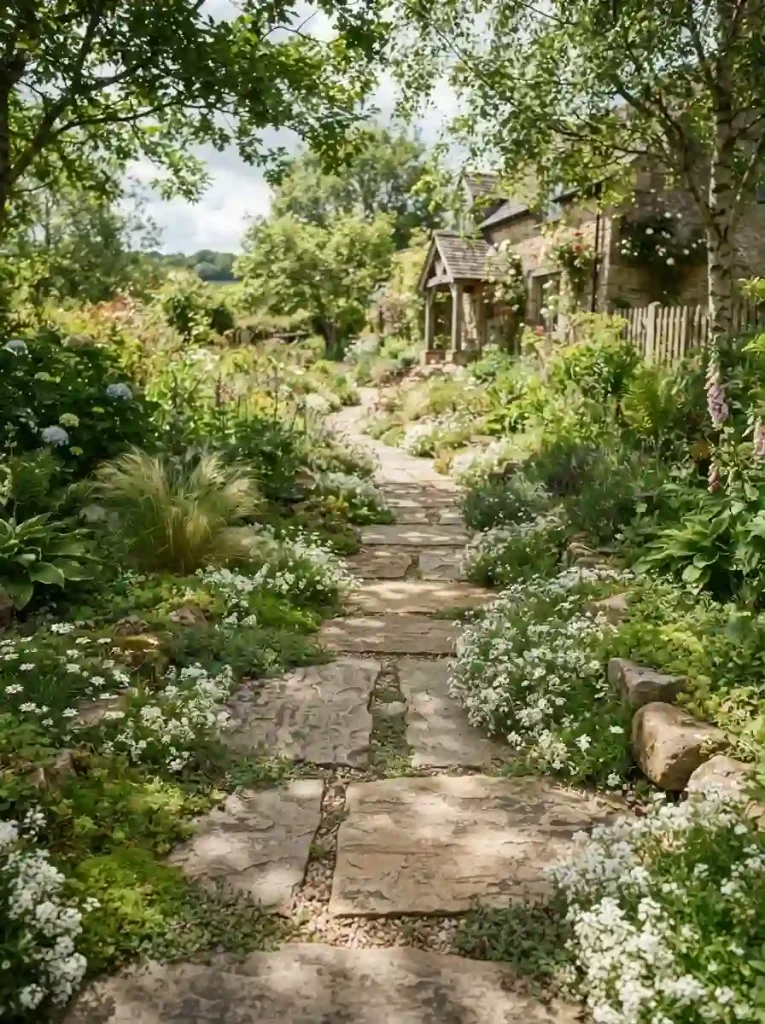
A flagstone pathway adds structure to a rustic garden while keeping the overall appearance relaxed and natural. Unlike perfectly uniform paving, irregular stone slabs create subtle variations in shape, color, and spacing that suit countryside-inspired landscapes.
Lay the stones along a gentle curve instead of creating a completely straight route. This approach can make a garden feel more spacious and encourage visitors to explore different planting areas.
Depending on your preferred look and site conditions, place the flagstones in compacted aggregate, an appropriate mortar setting, or a suitable permeable pathway system. Leave enough room for comfortable steps and ensure the finished surface remains stable and reasonably even.
Plant low-growing ground cover between stones where conditions allow, or surround the pathway with ornamental grasses, flowering perennials, and small shrubs. Choose plants that can tolerate occasional foot traffic if they will grow between the stepping surfaces.
For a cohesive design, repeat the same stone colors in nearby borders or seating areas. A thoughtfully planned flagstone path can connect the garden’s different features while giving the entire landscape a timeless, handcrafted appearance.
15. Repurpose an Old Wooden Ladder as a Garden Display
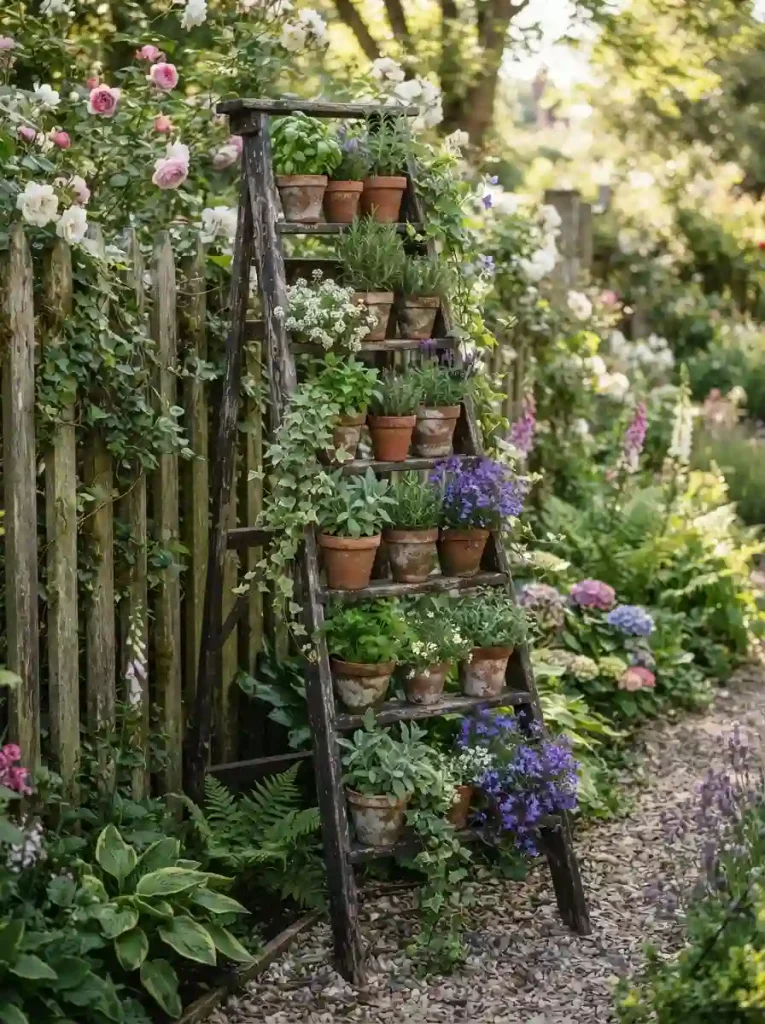
An old wooden ladder can become an eye-catching garden display when you give it a new purpose. Its worn finish, simple shape, and visible wood grain make it a natural fit for rustic outdoor spaces.
Position the ladder against a suitable wall or secure it firmly in a protected garden corner. Use its rungs to support lightweight pots filled with herbs, compact flowers, or trailing greenery. Mixing plant heights helps create a more interesting arrangement without requiring many additional decorations.
A weathered ladder looks particularly appealing beside a shed, near a patio, or against a fence surrounded by climbing plants. You can keep the wood’s original finish for a vintage appearance or apply an appropriate outdoor treatment if needed.
Before using an old ladder, check for rot, loose joints, sharp edges, and unstable rungs. It should serve only as a decorative display unless it is specifically designed and maintained for another purpose.
This project is also a practical way to reuse materials you already own. With a few suitable containers and healthy plants, you can add vertical interest to a small garden without sacrificing valuable floor space.
16. Create a Cozy Fire Pit Surround With Natural Stone
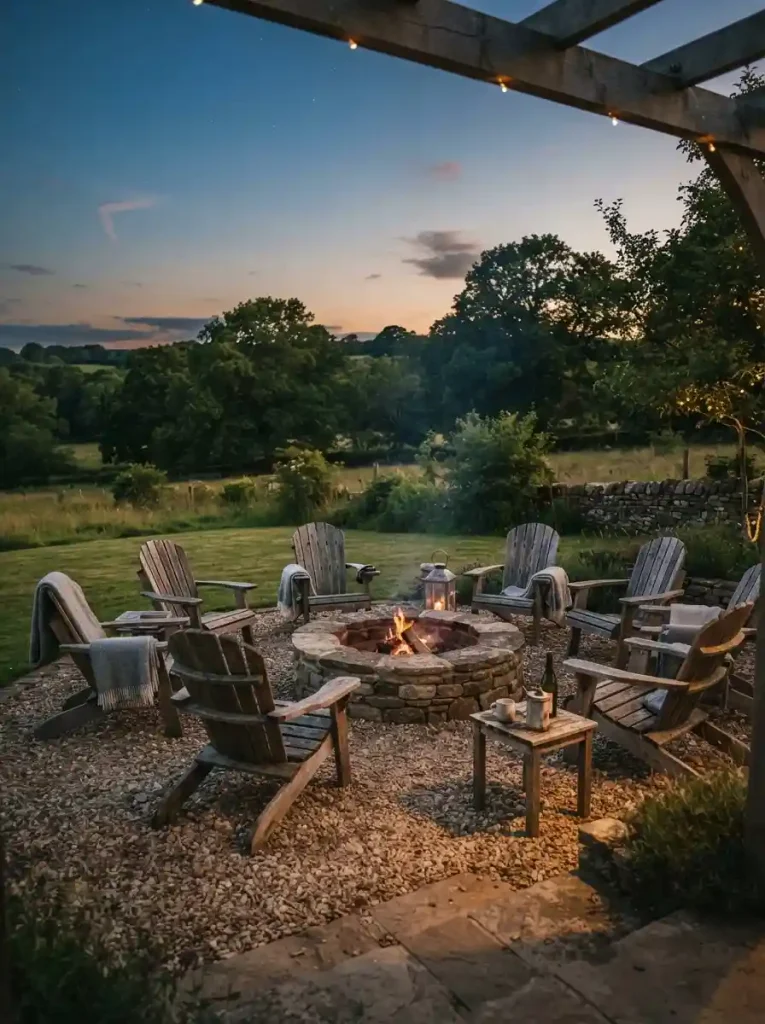
A fire pit can become the heart of an outdoor gathering area, providing a comfortable place to spend cool evenings with family and friends. Natural stone helps the feature blend into a rustic landscape rather than looking like a separate addition.
Choose a location with adequate clearance from buildings, fences, overhanging branches, and other combustible materials. A properly constructed fire pit should use materials specifically suitable for high temperatures, along with a stable, noncombustible surrounding surface.
Arrange outdoor chairs around the feature with enough room for people to move safely. Gravel, stone paving, and simple timber seating can reinforce the countryside-inspired look. Add nearby planting beds with suitable ornamental grasses or low shrubs, keeping combustible vegetation at a safe distance.
For smaller yards, consider a purpose-built fire bowl instead of a permanent stone structure. It can provide a similar atmosphere while offering more flexibility in how the space is arranged.
Always follow local fire regulations, manufacturer instructions, and current fire restrictions. A well-planned fire pit area should feel welcoming and comfortable while keeping safety at the center of the design.
17. Plant a Cottage-Style Flower Border
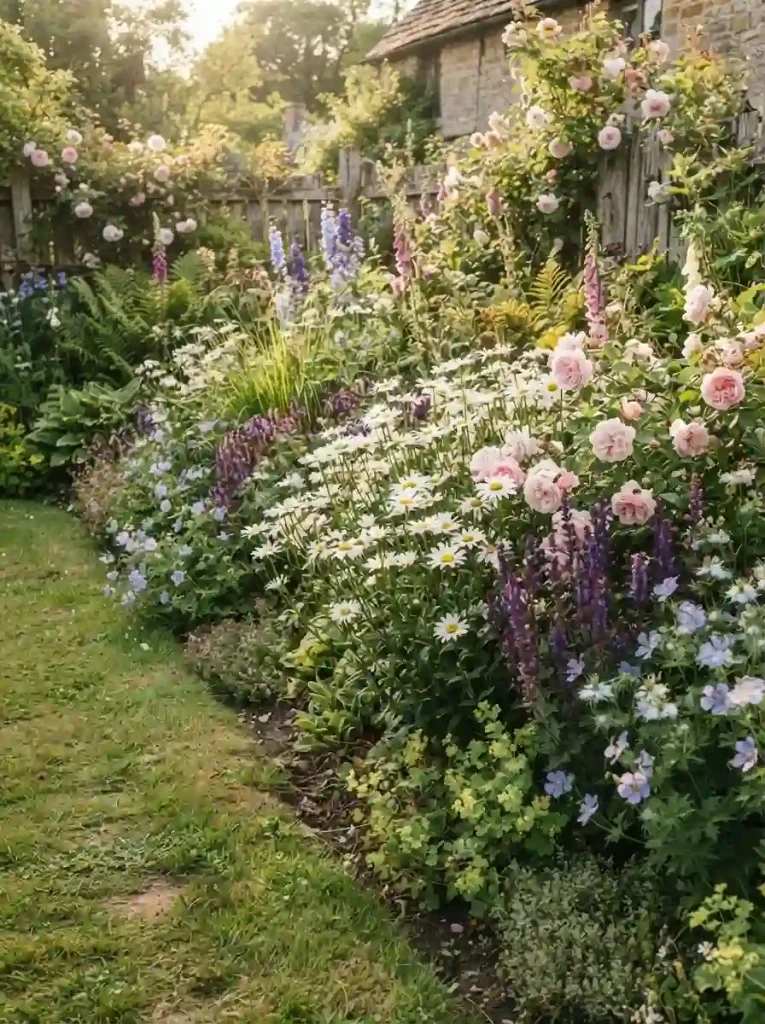
A cottage-style flower border brings softness, color, and seasonal interest to rustic landscaping. Instead of arranging every plant in a strict row, combine flowers of different heights and textures to create a relaxed, abundant appearance.
Start with a few reliable plants that suit your climate and soil. Taller flowering perennials can provide a backdrop, medium-height blooms can fill the middle, and compact plants can soften the front edge.
Choose a restrained color palette if you want the garden to feel calm. White, pale pink, lavender, and soft blue work beautifully together, while a few brighter flowers can introduce contrast.
Mix flowering plants with leafy varieties so the border still looks attractive between blooming periods. Plants with different flowering seasons can also help maintain interest from spring through autumn.
Leave enough space for mature growth and avoid planting everything too closely. Although a full flower border looks appealing in photographs, healthy spacing helps reduce competition and improves airflow.
Finish the border with a simple lawn edge, natural stone edging, or a narrow gravel strip. The result is a garden that feels colorful and welcoming without appearing overly formal.
18. Add a Rustic Wooden Pergola
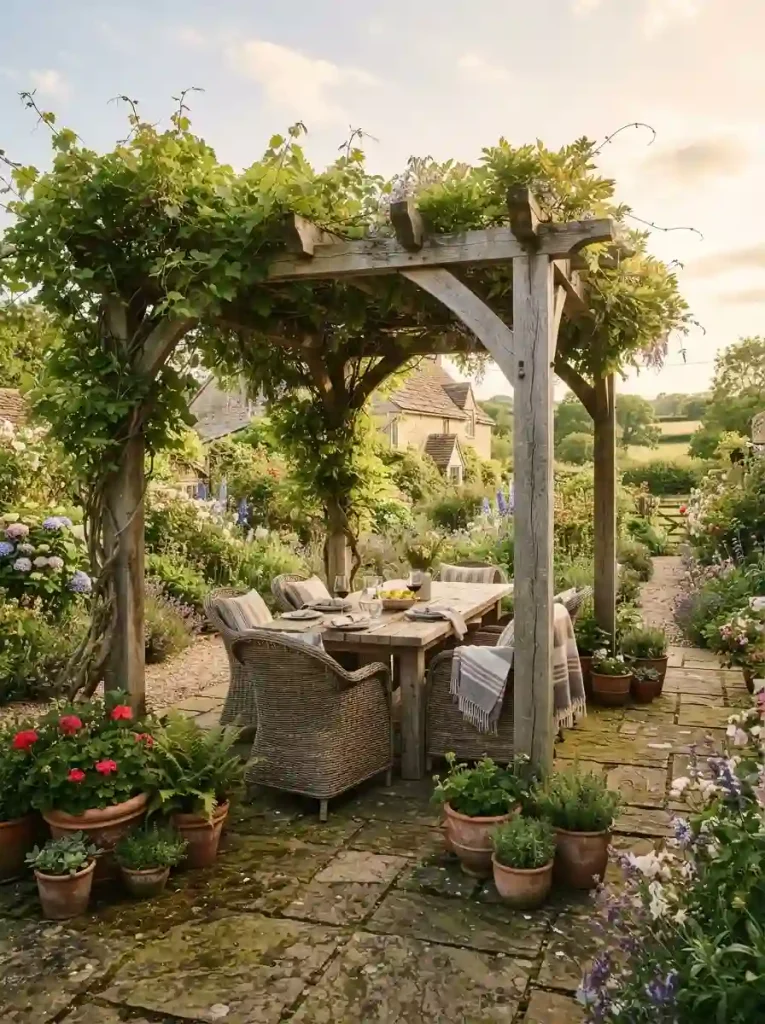
A wooden pergola adds height and character to an outdoor space while creating a natural frame for seating or dining. Its exposed beams and warm timber tones complement stone patios, gravel paths, and lush garden planting.
Place the pergola over a patio or in a quiet corner where you would enjoy spending time outdoors. Choose a simple timber design that complements your home’s architecture rather than competing with it.
Climbing plants can soften the structure and provide seasonal interest. Select suitable vines based on your climate, available sunlight, and the pergola’s strength. You can also hang outdoor lighting designed for exterior use to create a welcoming atmosphere after sunset.
Underneath, arrange a small table and comfortable chairs or a simple outdoor bench. Potted herbs and leafy plants can help connect the seating area to the surrounding landscape.
Make sure the pergola is securely anchored and built to withstand local weather conditions. With thoughtful placement and natural materials, it can become a beautiful focal point while providing a more defined outdoor living area.
19. Use Reclaimed Bricks for Garden Edging
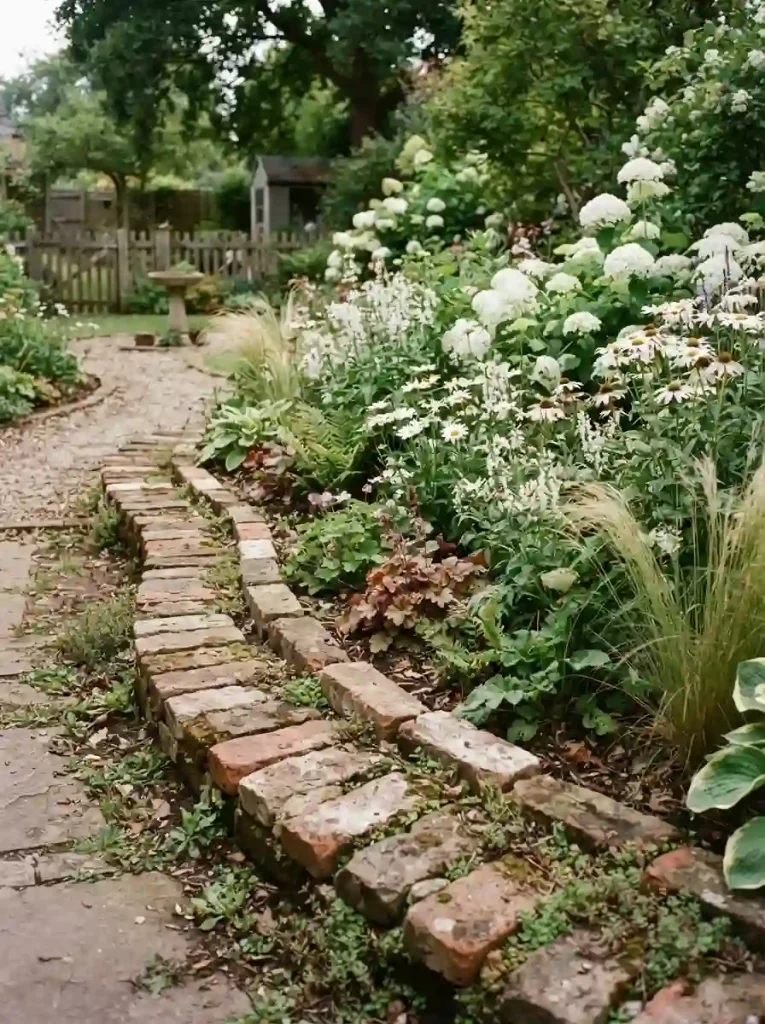
Reclaimed bricks bring warmth and an appealing aged texture to rustic landscaping. Their faded red, brown, and muted orange tones work well alongside green foliage, natural stone, and weathered wooden features.
Use the bricks to define a flower bed, create a border beside a pathway, or separate a gravel seating area from the lawn. You can arrange them in a simple straight line or introduce gentle curves that follow the shape of the garden.
Before installing the edging, prepare a stable base so the bricks remain in position. Choose an installation method suited to the soil, drainage, and intended use of the area.
Pair the warm brick tones with plants that have contrasting foliage. Soft ornamental grasses, compact flowering perennials, and low ground cover can prevent the border from feeling too rigid.
If you are reusing old bricks, check that they are in suitable condition and free from harmful residues. Reclaimed materials can give a garden distinctive character while helping you make practical use of existing resources.
20. Build a Rustic Herb Garden Beside the Kitchen
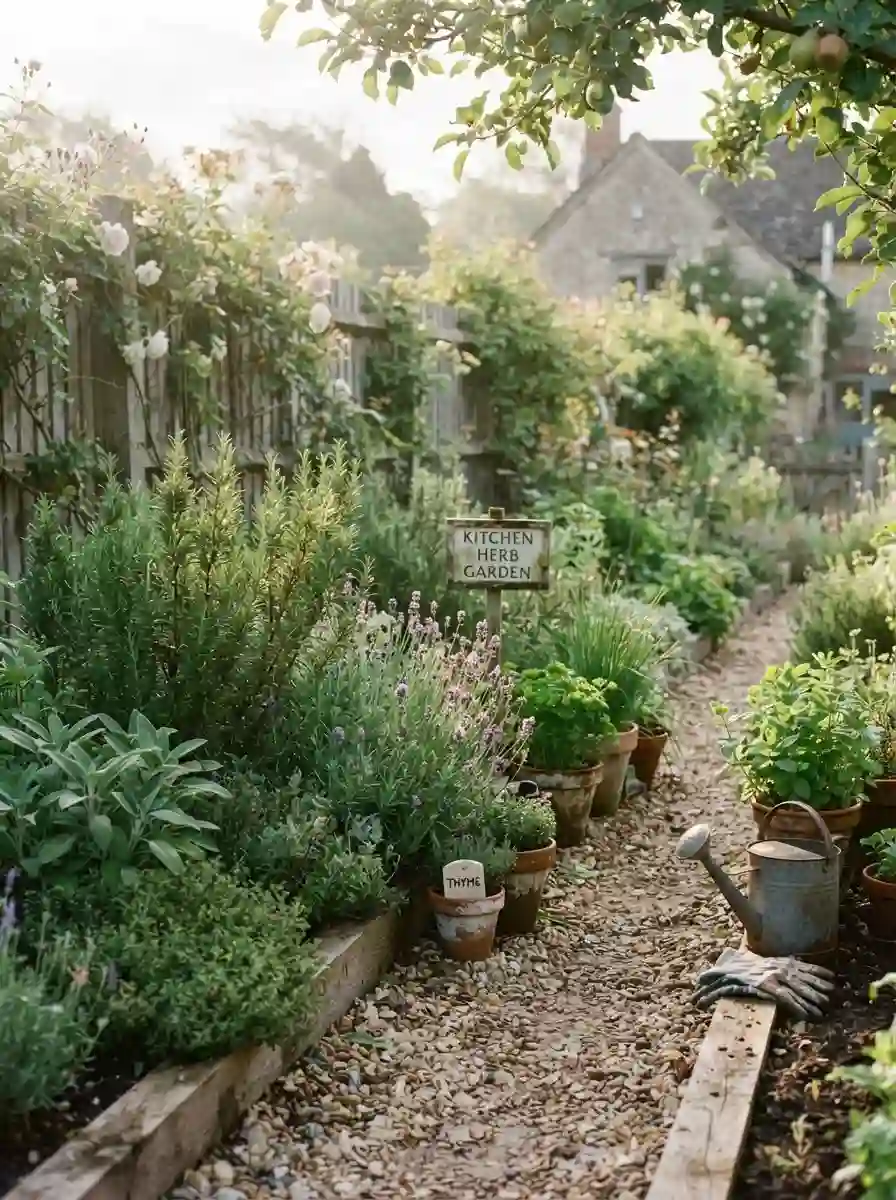
A kitchen herb garden combines rustic charm with everyday usefulness. Fresh herbs bring fragrance, texture, and greenery to the landscape, and keeping them close to the kitchen makes it easier to use them while cooking.
Choose a sunny location with suitable drainage, then arrange herbs in a small raised bed, a simple ground-level planting area, or several terracotta pots. Rosemary, thyme, sage, and oregano are useful choices for many climates, although their growing requirements vary.
Group plants according to their watering needs. Mediterranean herbs generally prefer well-drained soil and should not remain waterlogged, while other herbs may need more consistent moisture.
For a rustic appearance, use simple timber edging, natural stone markers, or weathered containers. You can organize the herbs into separate clusters while allowing their foliage to create a relaxed, informal look.
Keep pathways accessible so you can harvest the herbs without stepping on the planting beds. Regular trimming encourages many herbs to grow well and provides fresh ingredients throughout the growing season.
A thoughtfully arranged herb garden is a practical landscaping feature that looks attractive even in a relatively small outdoor space.
21. Create a Rustic Water Feature With Natural Stones
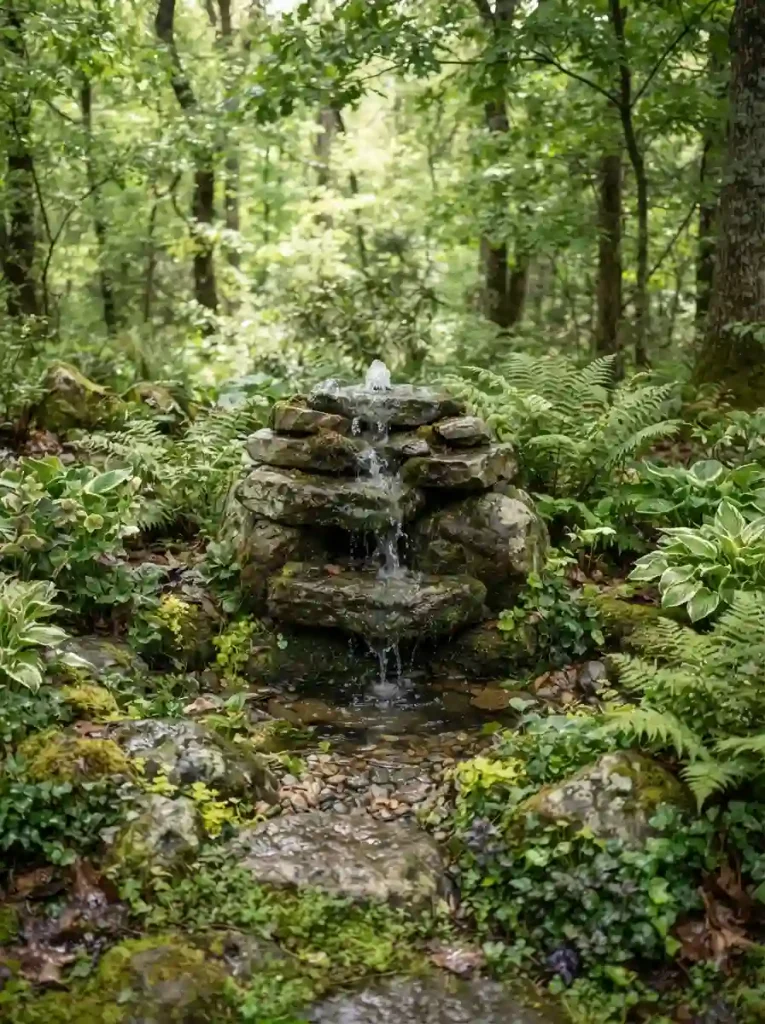
The gentle sound of moving water can make a garden feel calmer and more inviting. A small stone water feature adds that atmosphere without requiring the space or maintenance of a large pond.
Consider a compact recirculating fountain built from natural-looking stones. Water can emerge from a carefully selected rock and flow into a concealed reservoir, creating a subtle feature that blends with the surrounding planting.
Place it where you can enjoy its sound from a patio, garden bench, or nearby window. Surround the feature with moisture-tolerant plants, low ground cover, and a few additional stones to create a cohesive composition.
Choose a properly installed pump and ensure the reservoir is suitable for outdoor use. Regularly clean the system, monitor water levels, and protect electrical components according to the manufacturer’s instructions.
If you have young children or pets, consider a design with minimal exposed standing water and appropriate safeguards.
A natural stone fountain can become a relaxing focal point, particularly when surrounded by layered greenery rather than an elaborate collection of decorations.
22. Design a Gravel Garden With Drought-Tolerant Plants
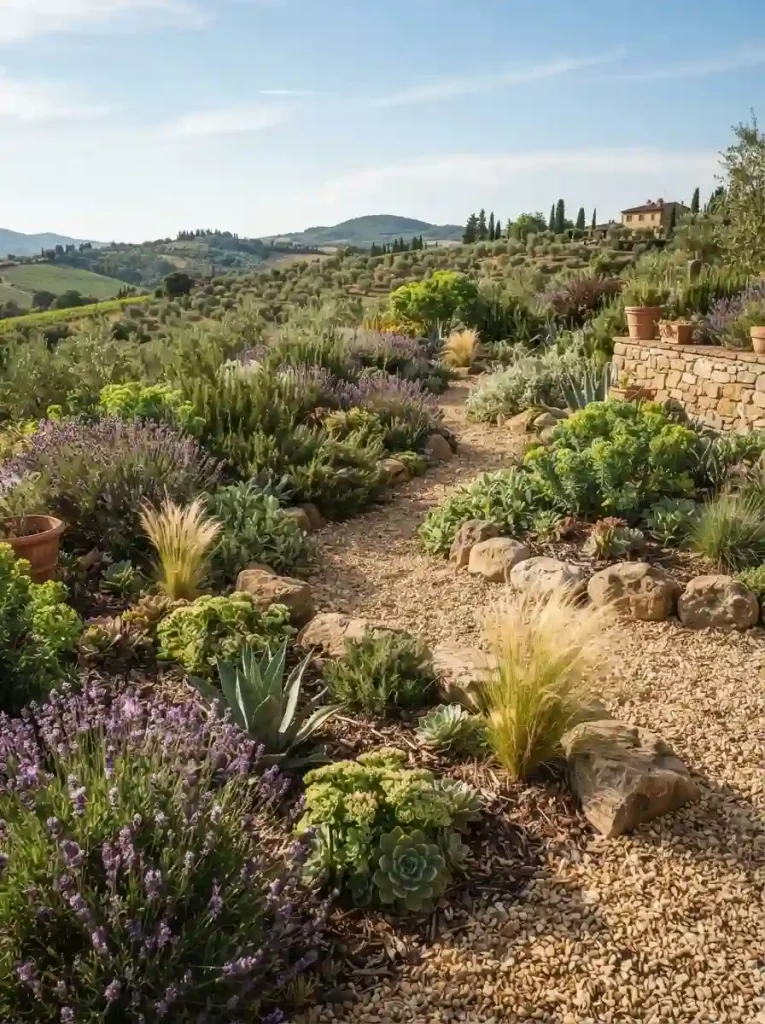
A gravel garden is a useful option for creating a rustic landscape with a more relaxed maintenance routine. When designed with plants suited to local conditions, it can provide attractive texture and seasonal interest without relying on an extensive lawn.
Begin by assessing sunlight, soil drainage, and local rainfall. Choose drought-tolerant plants that thrive in your climate, such as suitable ornamental grasses, lavender, or certain succulents where temperatures allow.
Use gravel in a natural color that complements the plants and surrounding architecture. Place a few larger stones among the planting to create focal points, varying their sizes and positions for a balanced appearance.
Plan the planting layout before spreading the gravel, and prepare the soil according to the requirements of your chosen species. Not every plant grows well in the same conditions, so avoid combining varieties with incompatible watering needs.
Remember that gravel gardens still require occasional weeding, watering while plants establish, and seasonal pruning. The amount of maintenance depends on plant selection and site conditions.
With a thoughtful combination of foliage, stone, and open space, a gravel garden can feel both practical and beautifully rustic.
23. Create a Rustic Entryway With Natural Planters and Stone
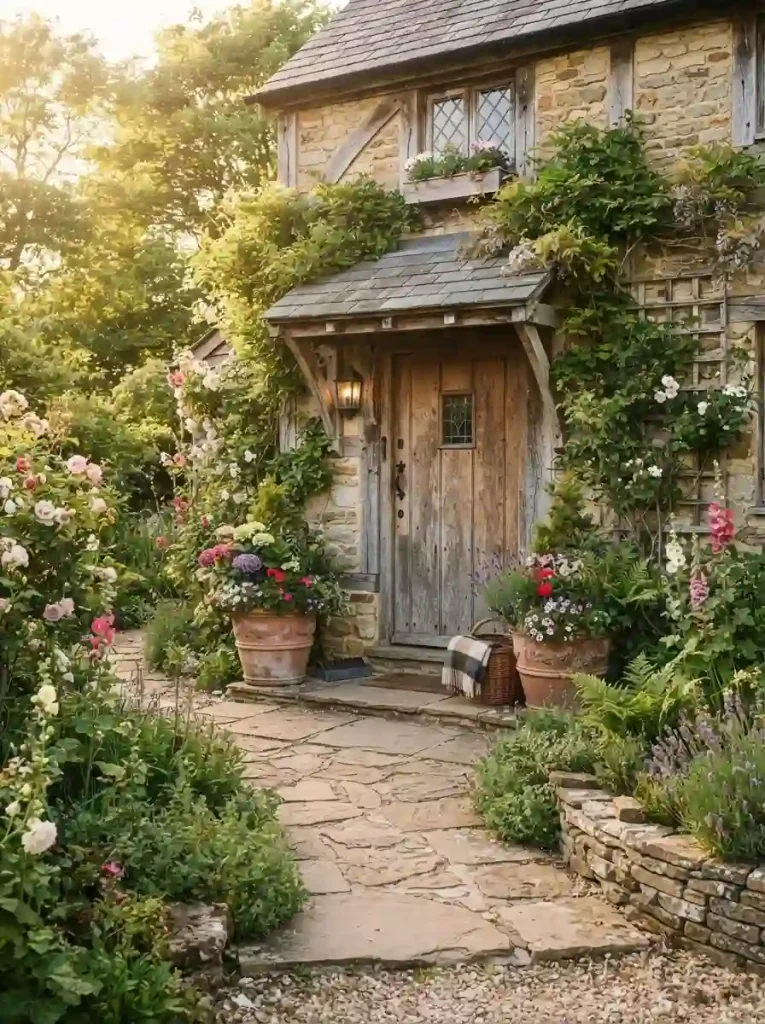
Your front entrance is a wonderful place to introduce rustic landscaping because even a few natural materials can make the entire home feel more welcoming. A combination of stone, greenery, and simple planters creates a charming first impression without requiring a complete garden makeover.
Start with the walkway leading to your front door. Natural stone pavers, gravel borders, or a simple stepping-stone path can add texture and guide visitors toward the entrance.
Place a pair of terracotta pots or weathered planters near the doorway. Fill them with compact evergreen shrubs, seasonal flowers, or a mixture of leafy plants suited to your climate. If the entrance receives plenty of sunlight, flowering plants can add color; shaded entrances may benefit from attractive foliage instead.
You can also introduce a small timber bench, a natural stone border, or climbing greenery along a nearby wall. Keep the arrangement balanced and leave enough room for the door to open and visitors to walk comfortably.
Choose plants and materials that complement your home’s exterior rather than introducing too many contrasting finishes. A few thoughtfully selected details can make the entrance feel cozy, timeless, and connected to the rest of your landscape.
Final Thoughts
Rustic landscaping is less about creating a perfectly polished garden and more about making your outdoor space feel natural, comfortable, and full of character. Weathered timber, reclaimed bricks, fieldstone, gravel paths, and relaxed planting can all help create that inviting countryside atmosphere.
You don’t need to tackle every project at once. Start with one feature that suits your yard, whether it’s a simple flower border, a natural stone pathway, a cozy seating corner, or a collection of terracotta pots. Build around it gradually, choosing materials and plants that complement your home’s existing style.
Remember to consider your climate, soil, drainage, and available sunlight before making major changes. These practical details will help your landscape look attractive while keeping maintenance manageable.
The most successful rustic gardens feel like they belong to their surroundings. By combining natural textures, thoughtful planting, and a few personal touches, you can create an outdoor space that feels welcoming throughout the seasons.