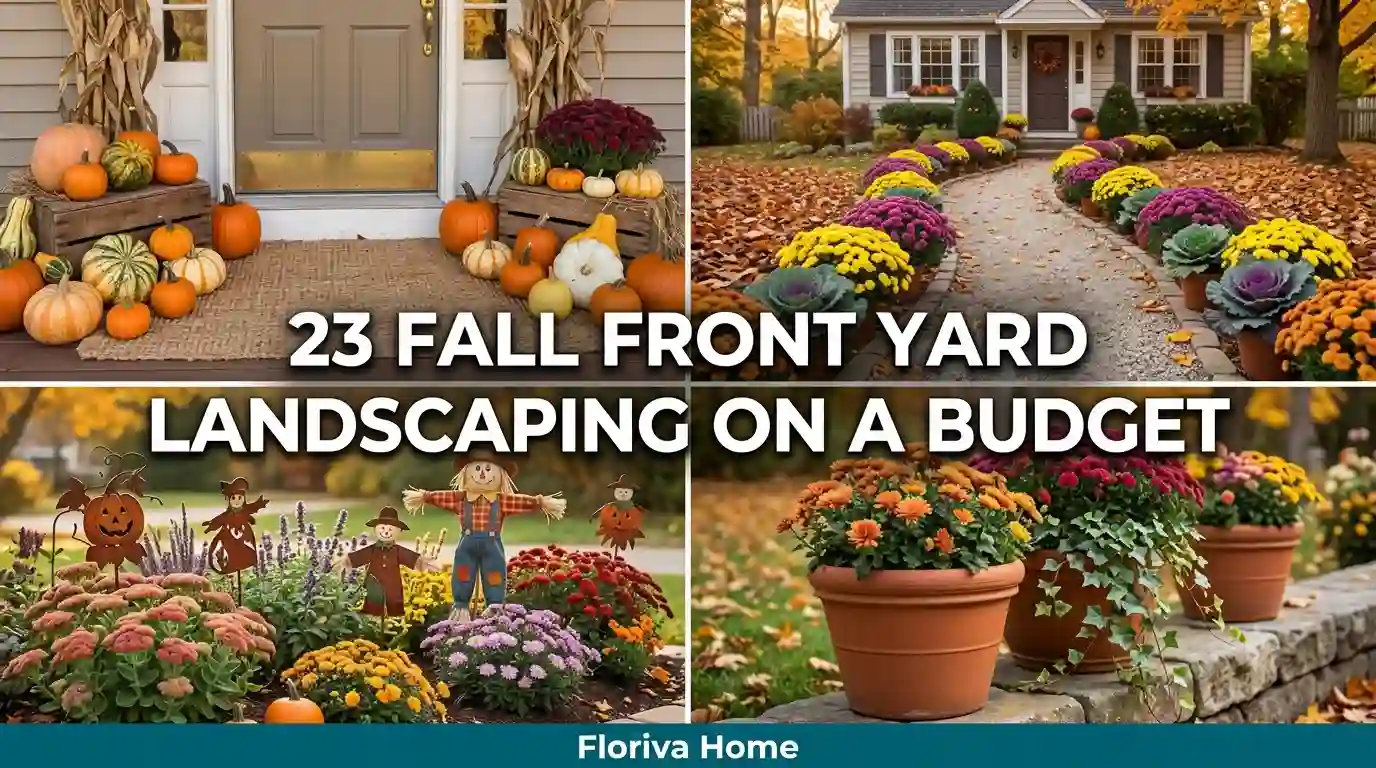
23 Fall Front Yard Landscaping on a Budget
Fall is one of those seasons when a front yard can look completely different without requiring a major landscaping project. Cooler temperatures, changing foliage, and inexpensive seasonal materials give you plenty of opportunities to refresh your curb appeal without spending a fortune.
The best part is that you do not need to replace your entire landscape to make it feel seasonal. A few thoughtful changes around the walkway, garden beds, porch, and entry can create a warm autumn look while keeping your existing plants and hardscape in place.
If you are decorating on a budget, focus on things you can reuse, repurpose, grow, or find inexpensively. Even simple materials can look intentional when they are arranged with some attention to height, color, texture, and spacing.
A Few Things to Consider Before You Start
Before buying anything for your fall front yard, take a quick look at what you already have. Existing shrubs, planters, stones, branches, baskets, and containers can often become part of the seasonal design instead of being replaced.
It also helps to choose a limited color palette. Warm shades such as rust, cream, golden yellow, muted green, and burgundy can make inexpensive decorations feel coordinated rather than random.
Most importantly, do not feel pressured to decorate every corner. Concentrating your budget around the entrance and the most visible parts of the yard usually creates more impact than scattering small decorations everywhere.
23 Fall Front Yard Landscaping Ideas on a Budget
These ideas are designed for homeowners who want noticeable autumn curb appeal without turning the project into an expensive renovation. Some take only a few minutes, while others can become enjoyable weekend DIY projects.
Choose the ideas that work with your existing landscape, adapt the materials to what you already own, and build the look gradually.
1. Refresh Existing Garden Beds With Fall-Colored Mulch
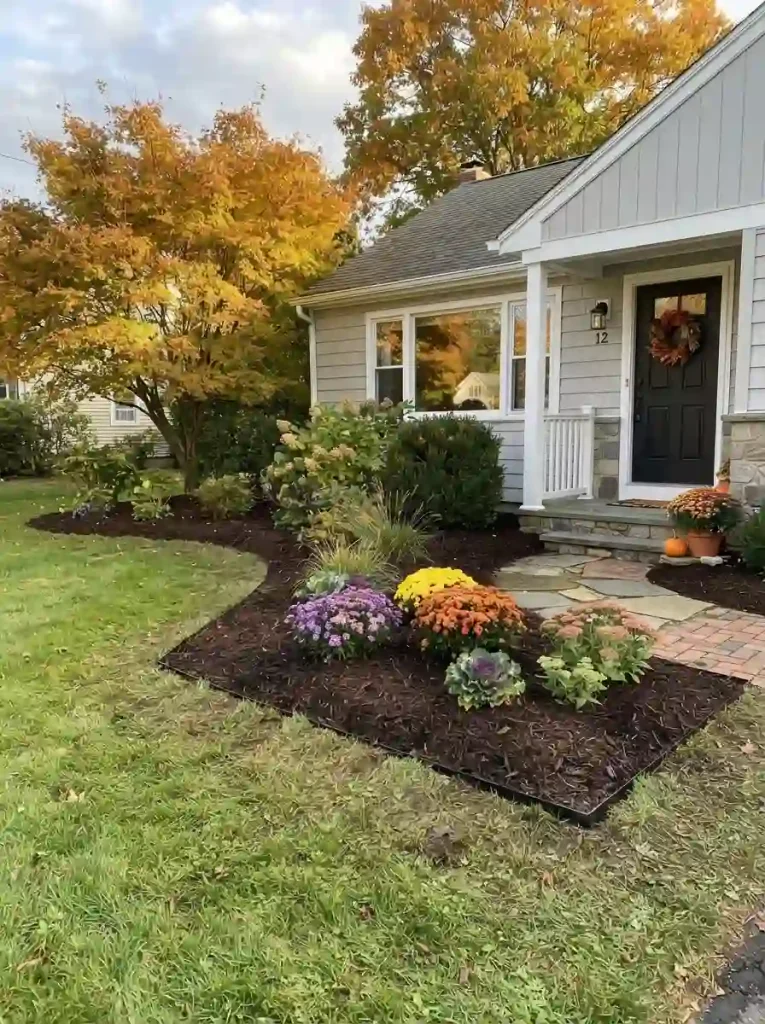
One of the easiest ways to make an established front yard feel ready for fall is to refresh the garden beds rather than replacing the plants. A fresh layer of mulch can instantly make tired areas look cleaner and more defined.
Dark brown mulch works particularly well with golden foliage and warm-toned flowers, while natural wood chips create a softer, more rustic appearance. You can also use leftover mulch from another garden project instead of purchasing enough to cover the entire property.
Keep the mulch a few inches away from plant stems and tree trunks to avoid creating overly damp conditions around them. A neat edge along the lawn will make the inexpensive update look much more polished.
2. Turn an Old Basket Into a Porch Planter
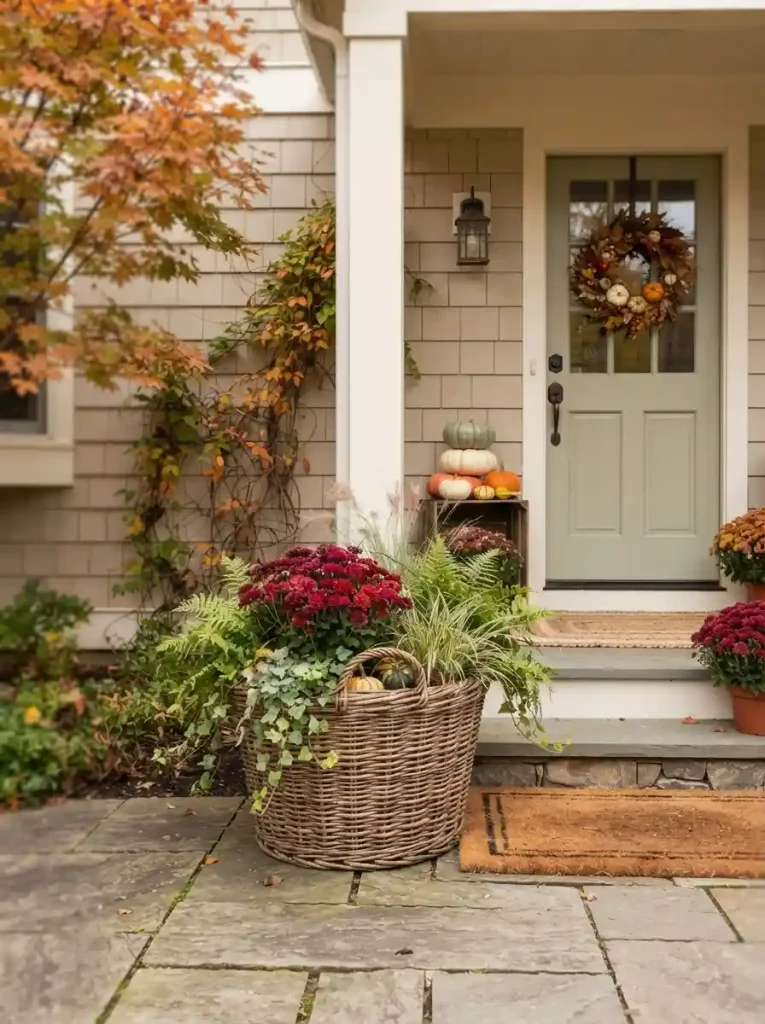
Before buying a new fall planter, look around your home for containers that have stopped being used. An old woven basket can become a charming seasonal planter when lined properly and filled with inexpensive cool-weather plants.
Choose compact mums, ornamental grasses, pansies, or small leafy plants depending on your climate. For an even cheaper option, combine one flowering plant with foliage from your existing garden.
Place the basket near the front door or at the beginning of the walkway where visitors will notice it. If the basket is not designed for outdoor use, protect it from constant moisture and use a removable plastic nursery pot inside.
3. Edge the Walkway With Small River Stones
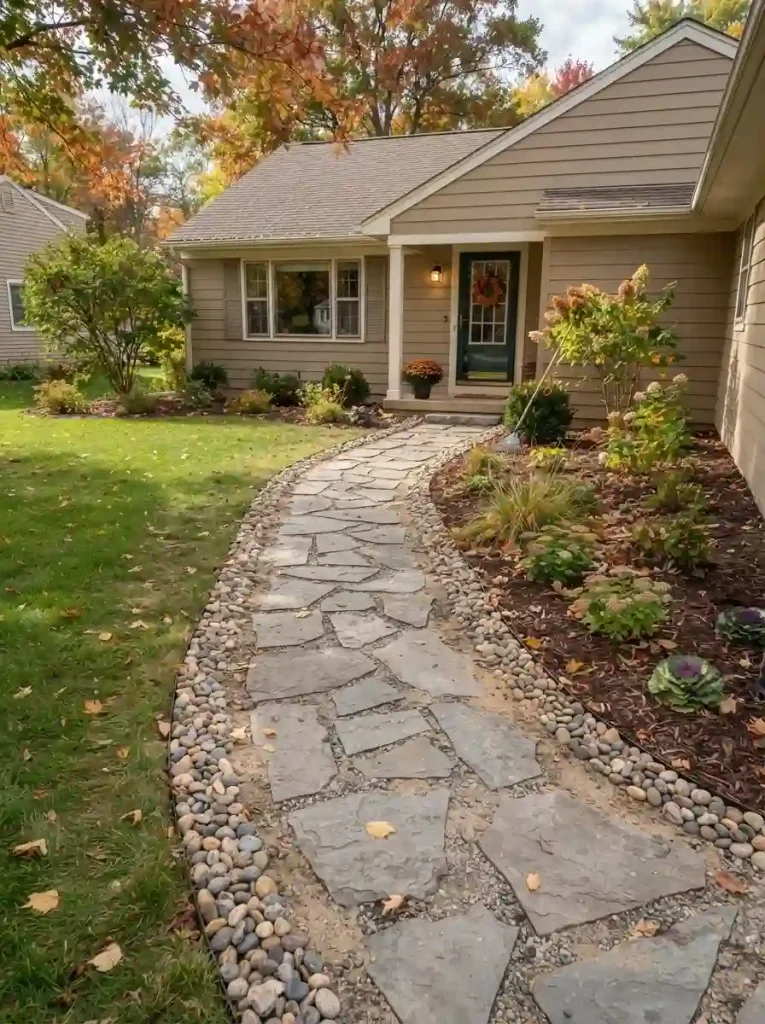
A walkway can look more finished simply by defining its edges. Instead of installing expensive permanent borders, use small river stones or leftover landscape rocks to create a loose seasonal edge.
The stones add texture while separating the path from grass or garden soil. Choose similarly sized pieces for a cleaner appearance, or mix natural shapes for a more relaxed cottage-garden feel.
This is especially useful when you already have stones available from another landscaping project. Work in short sections and keep the border narrow enough that it does not reduce the usable walking area.
4. Plant a Small Patch of Fall Pansies
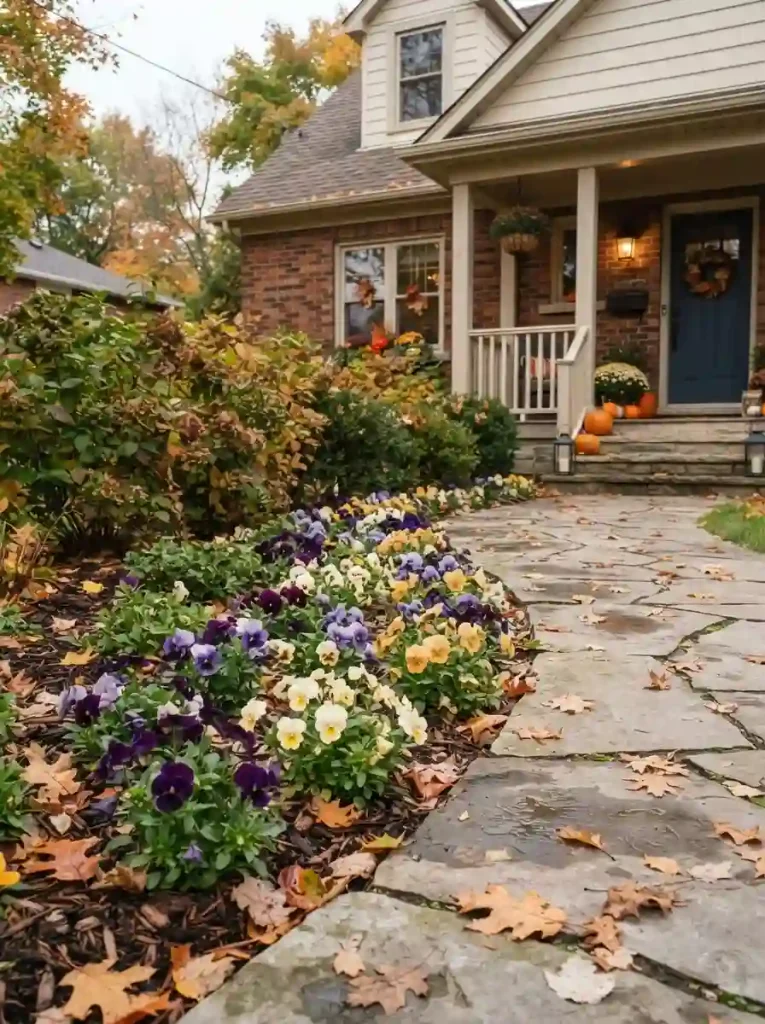
You do not need dozens of flowers to add seasonal color. A small cluster of pansies can bring plenty of personality to an otherwise green front yard.
Plant them near the walkway, beneath a window, or around the base of an existing shrub. Combining two or three complementary shades creates a fuller effect without requiring a large number of plants.
If your garden center sells smaller nursery plants at the end of the season, look for healthy specimens that can fill small gaps inexpensively. With the right conditions, these cool-season flowers can provide color well beyond the first few weeks of autumn.
5. Create a Simple Leaf-Covered Garden Path
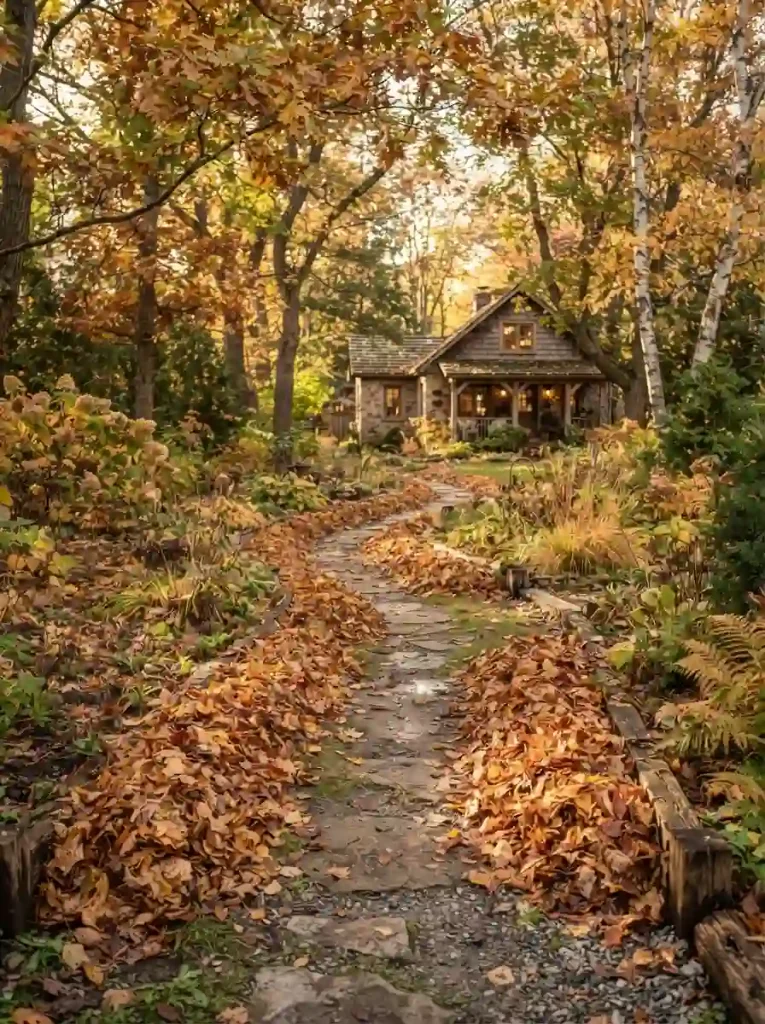
Fallen leaves do not always need to be removed from every part of the yard. A controlled layer of leaves can actually make a garden path feel more natural and seasonal.
Instead of covering the main walking surface, allow leaves to collect lightly along the sides of a path or through a less-used garden area. Use a rake to shape the leaves into an intentional border rather than leaving them scattered randomly.
This approach costs nothing and works especially well in yards surrounded by mature trees. Keep high-traffic areas clear and avoid allowing thick wet layers to remain where they could become slippery.
6. Repurpose a Wooden Chair as a Plant Stand
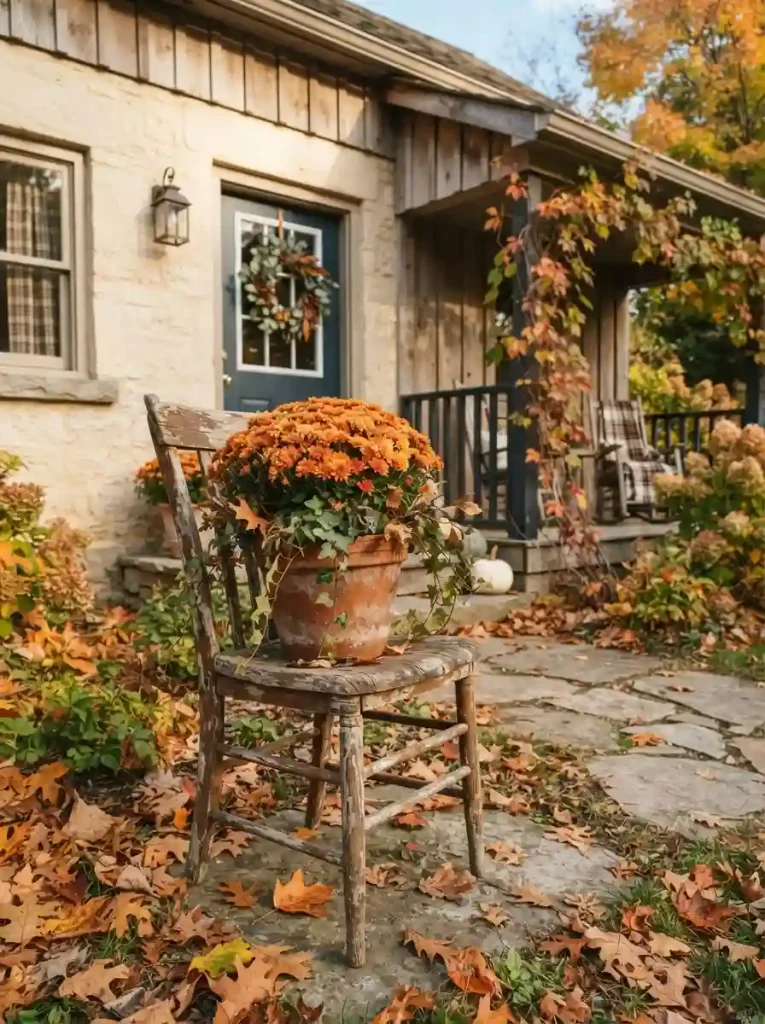
An old wooden chair can become an unexpected focal point in a fall garden. Instead of throwing away a worn chair, place it beside the entryway and use the seat as a platform for a seasonal plant.
A terracotta pot filled with mums or trailing foliage works beautifully against aged wood. You can leave the chair naturally weathered for a rustic appearance or give it a simple coat of exterior paint if you already have leftover paint available.
Position the chair slightly off to one side rather than directly in the middle of the entrance. This keeps the walkway open while giving the display a relaxed, collected look.
7. Create a Budget-Friendly Shrub Border
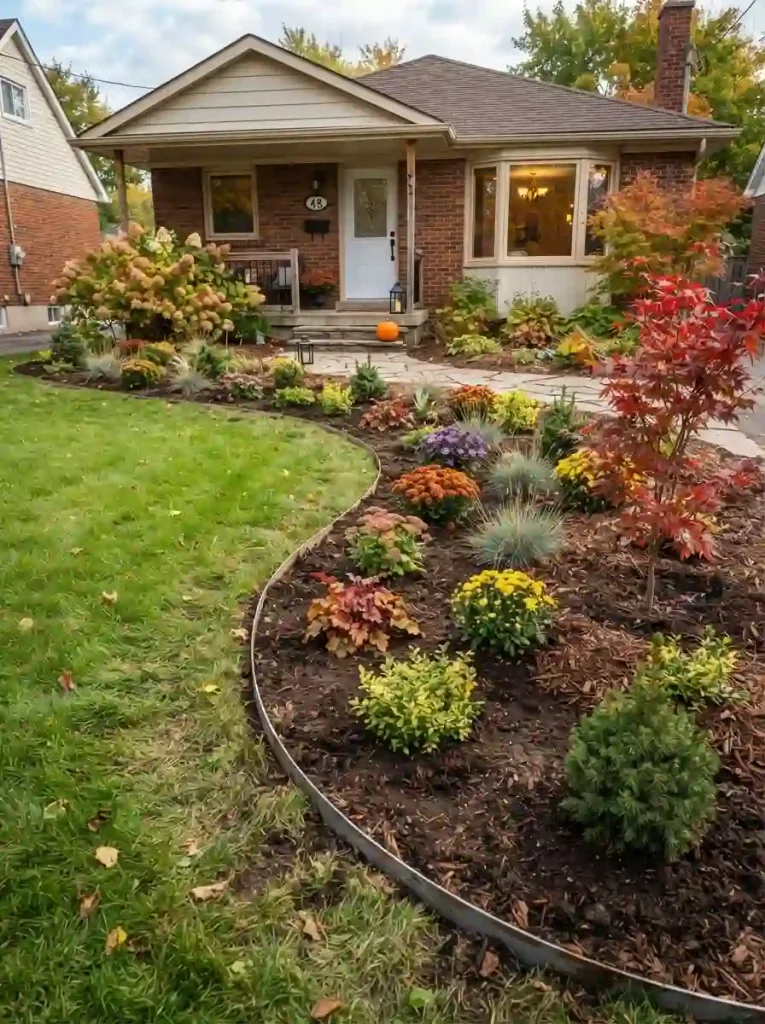
If your front yard feels visually flat, a small border of inexpensive plants can create much more definition. Rather than installing a long formal hedge, use a few compact shrubs or hardy perennial plants to establish visual boundaries.
Place taller plants toward the back and lower-growing varieties near the lawn. This creates layers without requiring large quantities of expensive mature plants.
Shopping for smaller nursery specimens can dramatically reduce the initial cost. They may take longer to reach their mature size, but the savings can make sense if you are building a landscape gradually.
8. Use Fallen Branches to Add Natural Structure
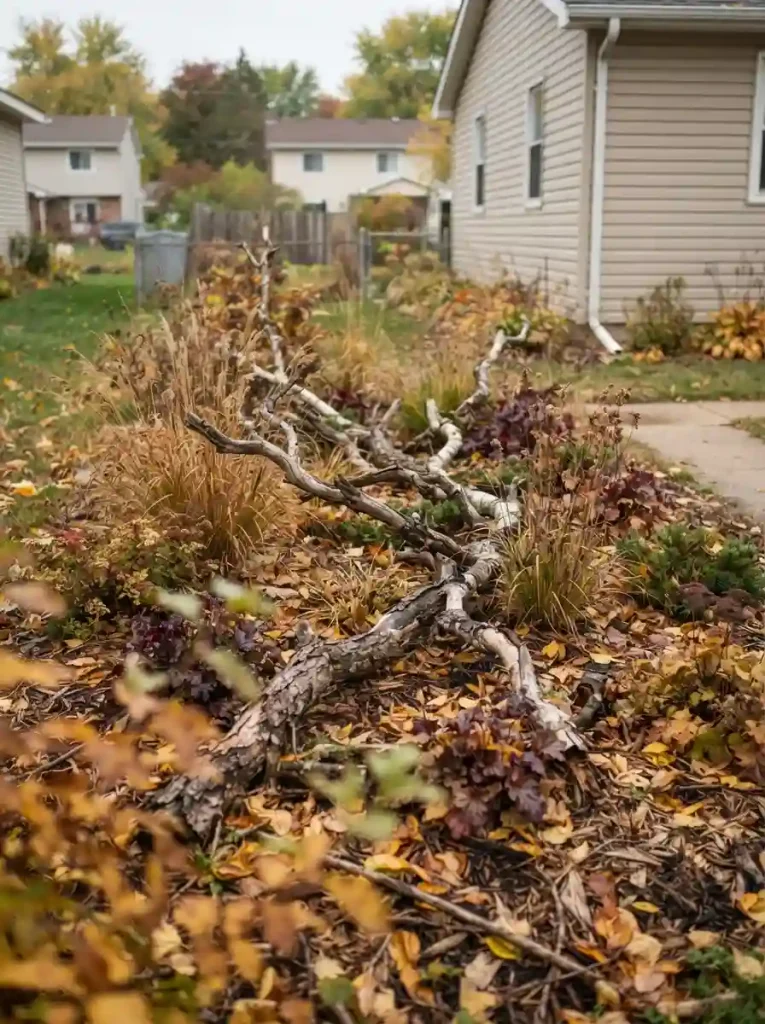
After autumn pruning or a windy day, look at fallen branches before sending everything to the yard waste pile. Interesting branches can provide free decorative structure in garden beds.
Choose dry, stable branches with attractive shapes and place them among existing grasses or shrubs. A few upright branches can add height to a low planting area without purchasing decorative stakes or garden sculptures.
Avoid branches that are rotten, unstable, or likely to interfere with pathways. The goal is to create a natural-looking accent that blends into the landscape rather than appearing like a separate decoration.
9. Give an Existing Tree a Simple Circular Bed
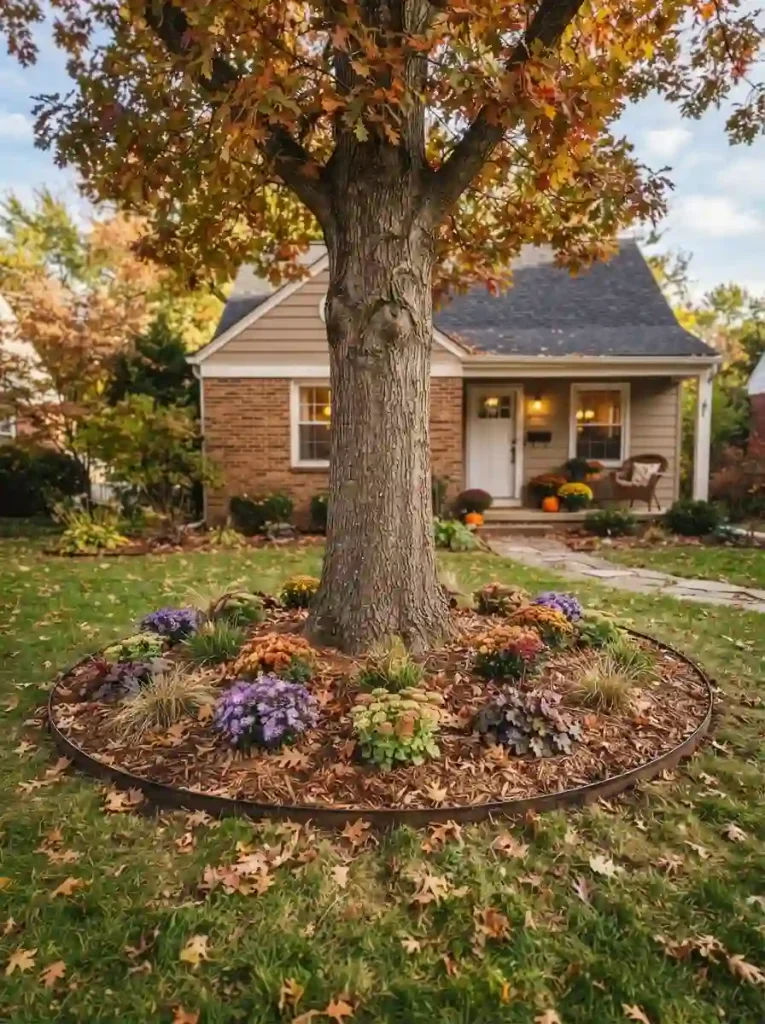
A mature tree can become the centerpiece of your fall landscaping without any expensive structural changes. Create a simple circular planting bed around the trunk and fill it with seasonal foliage or low-growing plants.
Use a garden hose to outline the circle before digging so you can adjust the shape easily. Keep the planting bed proportional to the tree rather than making a tiny ring that looks disconnected.
A layer of mulch around the plants can finish the area and reduce the amount of visible bare soil. Keep mulch away from direct contact with the trunk.
10. Paint Plain Planters in a Warm Autumn Shade
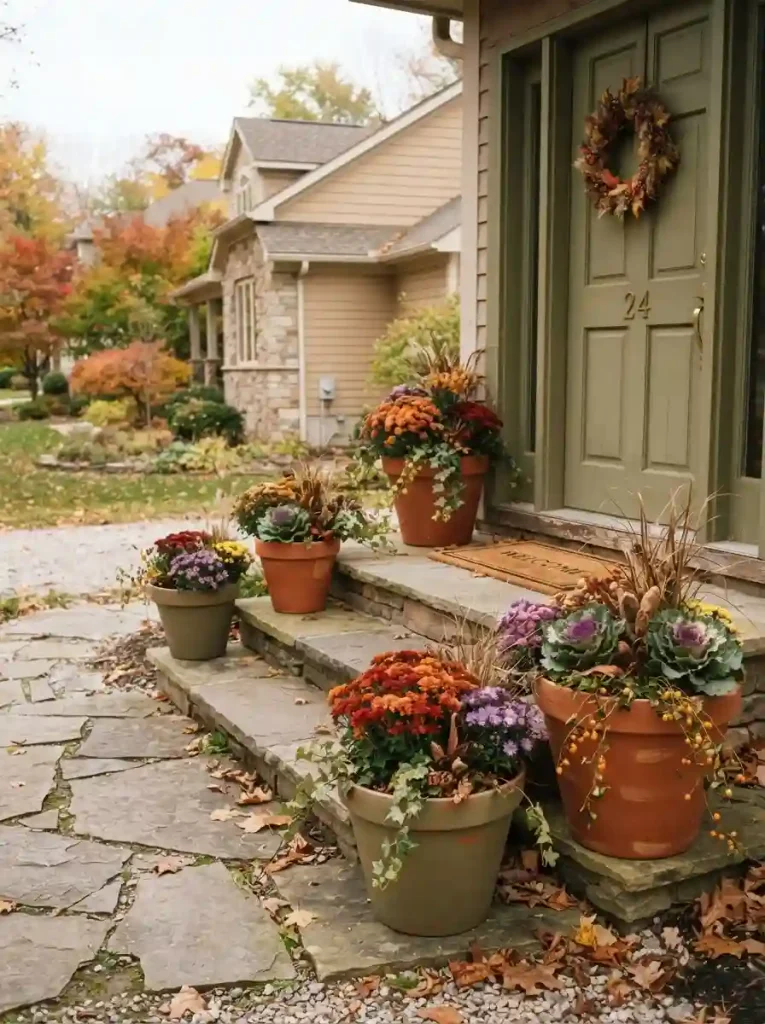
You do not need new containers to change the appearance of your front yard. A little exterior paint can give old plastic, terracotta, or wooden planters an entirely different personality.
Warm cream, muted clay, olive, charcoal, or dusty rust can all work well with autumn foliage. Use paint appropriate for the container material and allow it to cure properly before placing the planter outdoors.
Rather than painting every container the same color, consider choosing one shade for the most visible planters. Repeating one color creates cohesion without making the yard look overly coordinated.
11. Fill a Reclaimed Crate With Seasonal Plants
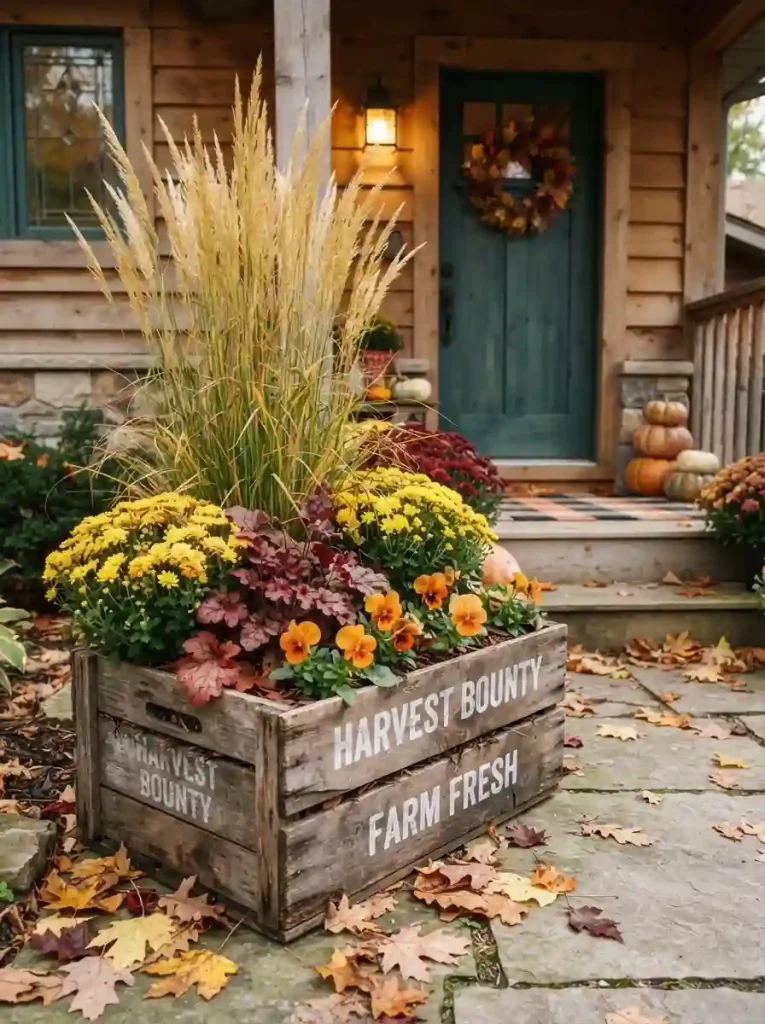
Wooden crates are useful for creating height in a front yard without buying expensive plant stands. Look for sturdy reclaimed crates or unused storage boxes and check that they are safe and stable for outdoor use.
Place a nursery pot inside rather than planting directly into untreated wood. This lets you change the plants later and protects the crate from excessive moisture.
Arrange one taller plant toward the back and shorter flowers toward the front. The result is a small tiered display that works particularly well beside a porch, garage entrance, or garden gate.
12. Add a Narrow Strip of Ornamental Grass
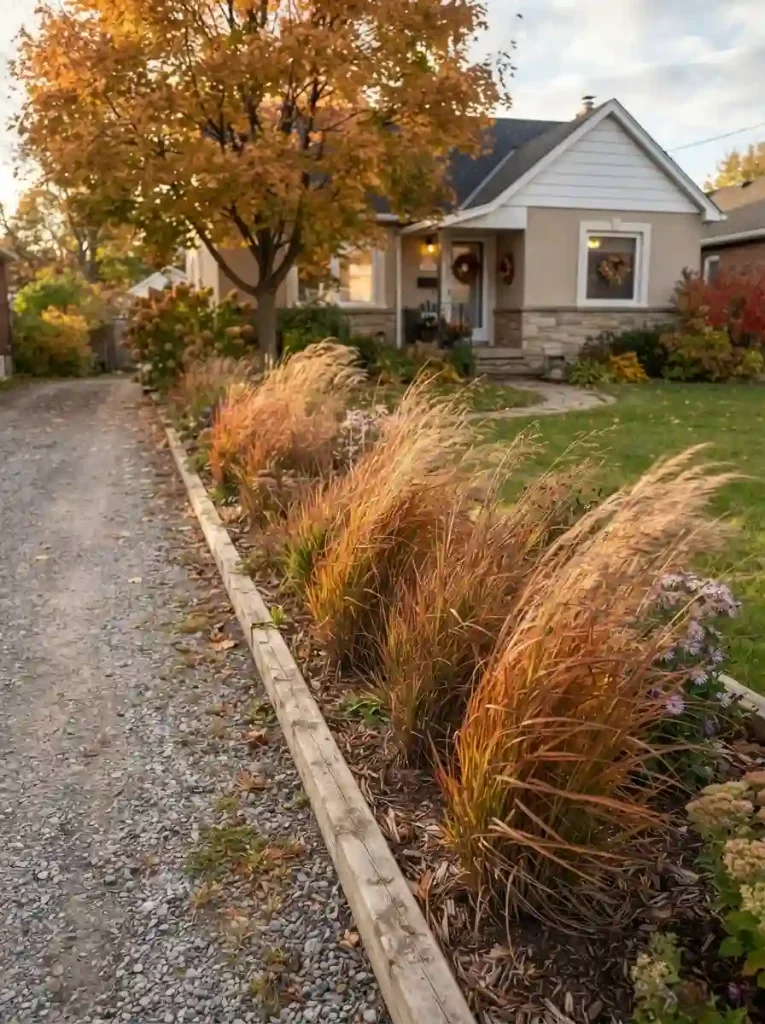
Ornamental grasses can make a front yard feel fuller and more dynamic because their fine blades move naturally with the wind. A narrow planting strip can also soften hard edges around a driveway or walkway.
Choose varieties that suit your local growing conditions and mature size. Planting a few young specimens with enough room to spread is often more economical than purchasing large established plants.
Their texture works particularly well in fall because many grasses develop warm tan, bronze, or golden tones as temperatures cool. Leave healthy dried stems standing when appropriate so they continue providing structure into late fall.
13. Create a Simple Pumpkin Planting Display
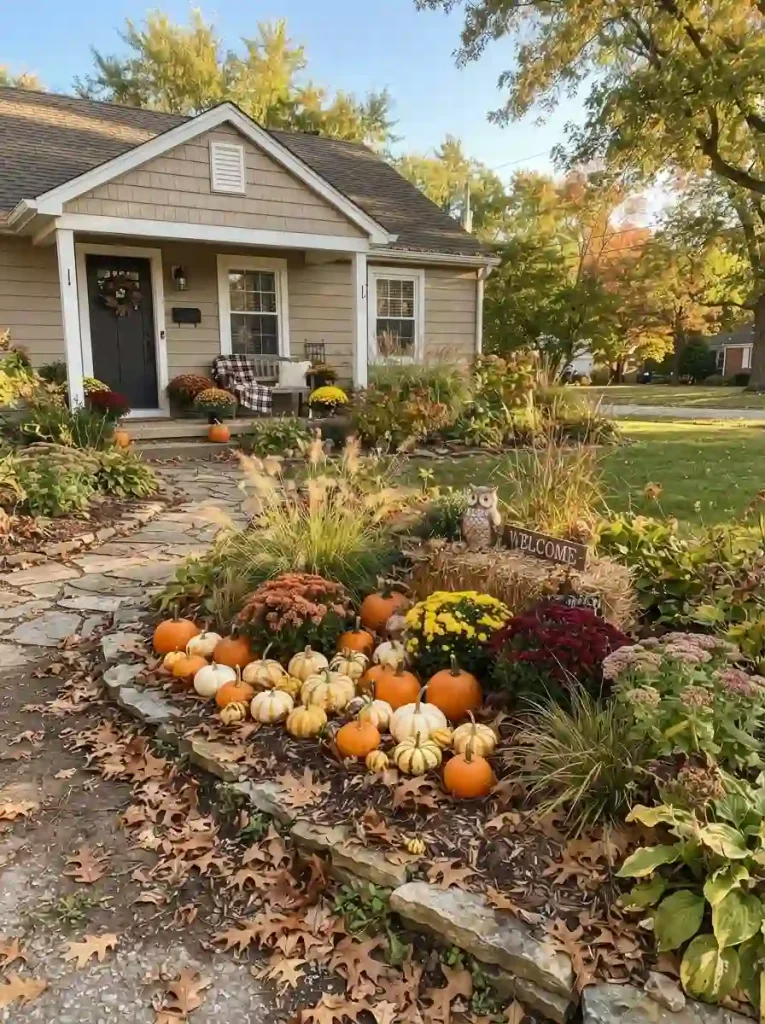
Pumpkins can do more than sit on a porch. A small collection of pumpkins arranged among your existing landscape plants can create an inexpensive fall focal point without changing the garden itself.
Choose pumpkins in different sizes and place them naturally near shrubs, steps, or the edge of a garden bed. You do not need expensive specialty varieties; ordinary pumpkins can look just as attractive when grouped thoughtfully.
For a more natural display, combine pumpkins with fallen leaves, ornamental grasses, or a few inexpensive mums. Keep the arrangement low enough that it does not block windows or pathways.
14. Line the Front Steps With Small Potted Plants
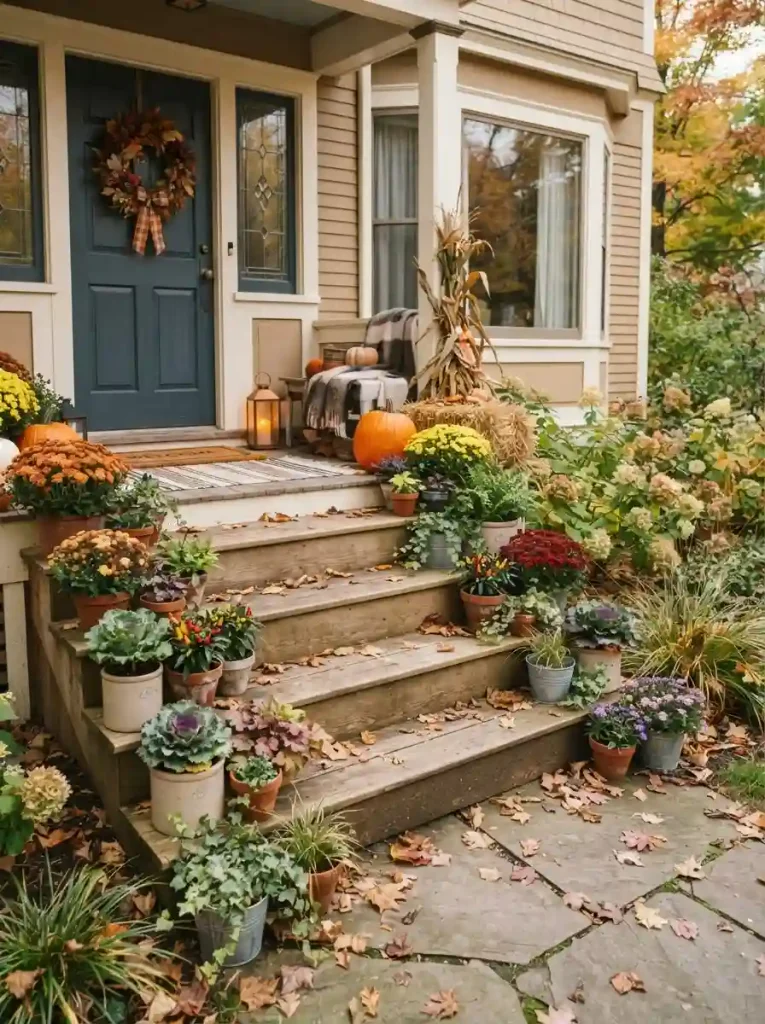
Front steps naturally attract attention, making them one of the best places to spend a small decorating budget. Instead of filling every step with large planters, use a few compact pots positioned strategically.
Choose hardy seasonal plants in different heights to create visual movement. A taller plant can sit at the bottom while smaller pots frame the upper steps.
If you already have mismatched containers, use them together rather than buying a matching set. Similar plant colors can make different pots feel like part of one intentional arrangement.
15. Build a Mini Rock Garden With What You Have
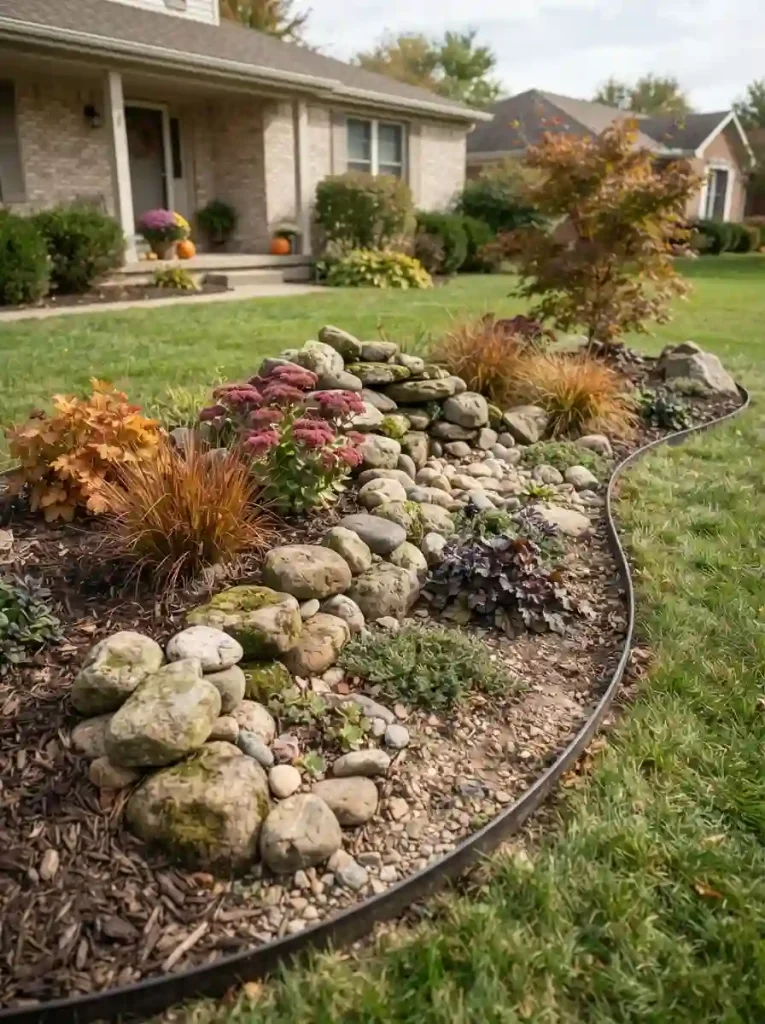
A small rock garden can add structure to an otherwise ordinary section of the front yard. You do not need a large collection of decorative stones to make it work.
Use rocks already available on your property when possible, arranging larger stones toward the back and smaller pieces around low-growing plants. Add drought-tolerant plants or compact grasses suited to your local conditions.
Keep the design intentionally simple. A small, well-defined rock garden often looks more sophisticated than a large area filled with too many different materials.
16. Use a Repurposed Wheelbarrow as a Fall Planter
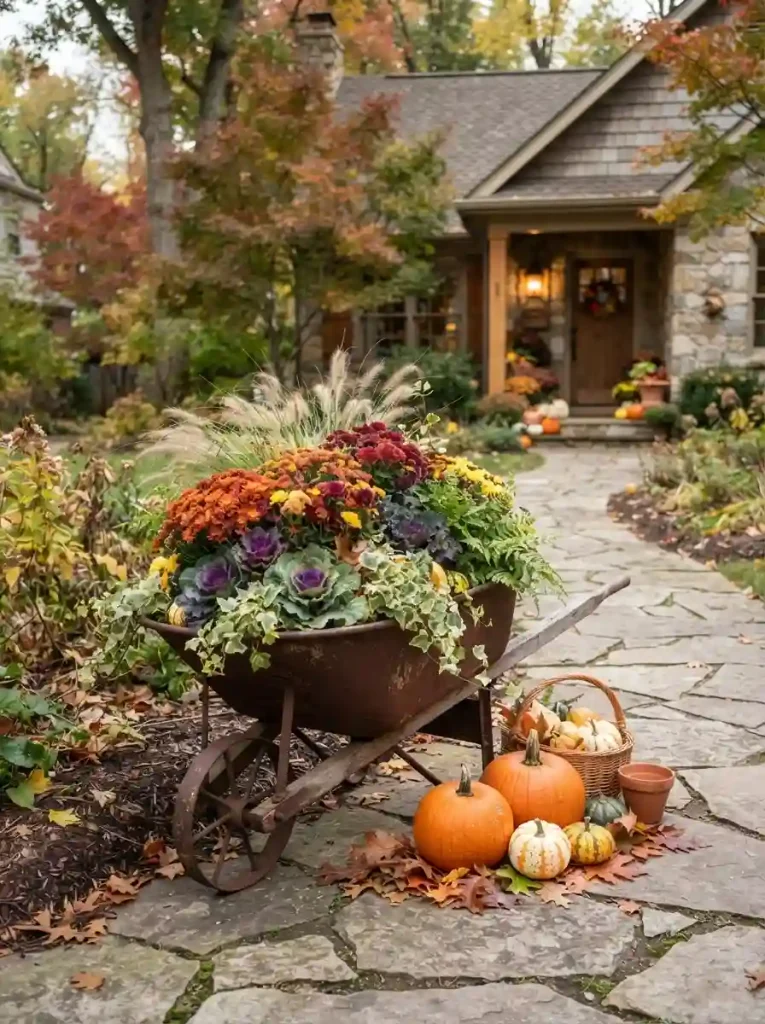
An old wheelbarrow can become a charming seasonal planter and an excellent way to add height without purchasing a new garden feature.
Fill it with nursery pots of mums, ornamental cabbage, grasses, or other cool-weather plants. Keeping the plants in individual pots makes the display easier to refresh and protects the wheelbarrow from constant moisture.
Position the wheelbarrow at an angle near the garden entrance rather than directly facing the front door. A few pumpkins or fallen leaves around its base can complete the autumn arrangement.
17. Define the Lawn With a Simple Garden Edge
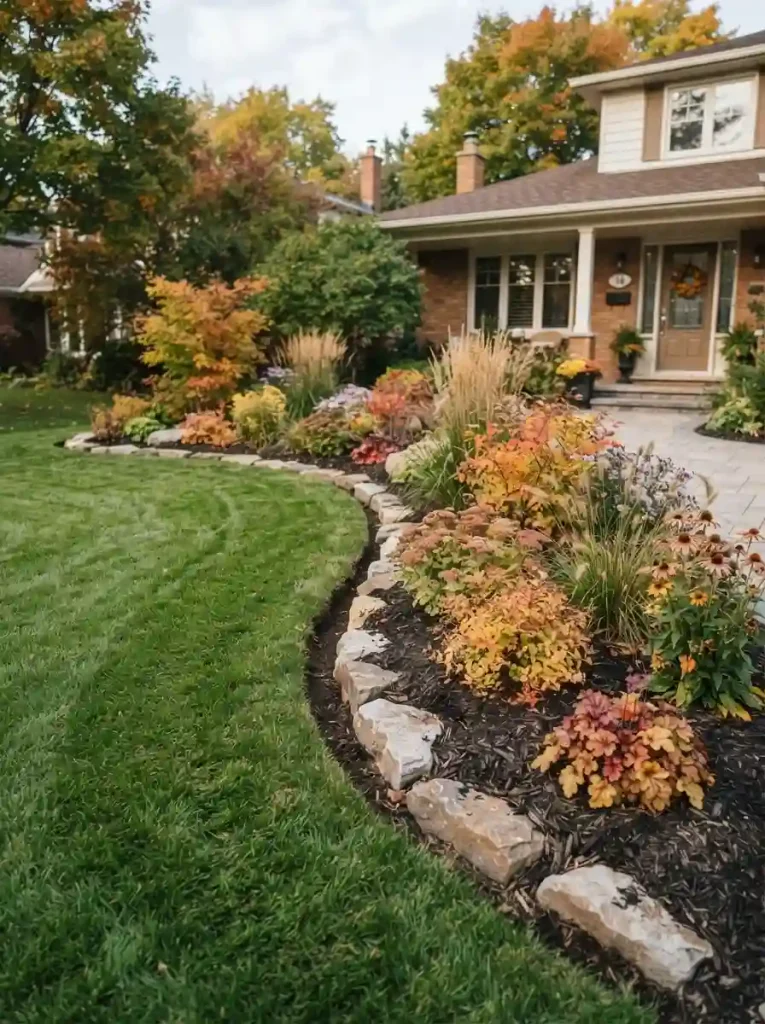
A clean transition between lawn and garden can make the entire front yard look more maintained. If your current beds have irregular or disappearing edges, reshape them into simple curves.
You can create a temporary edge using a garden hose to experiment with the shape before cutting into the soil. This costs nothing and lets you see how the new outline will look from the street.
For a permanent border, consider inexpensive materials you already have, such as leftover stones or reclaimed bricks. Even without a physical border, a sharply defined soil edge can make a noticeable difference.
18. Add a Small Gravel Accent Area
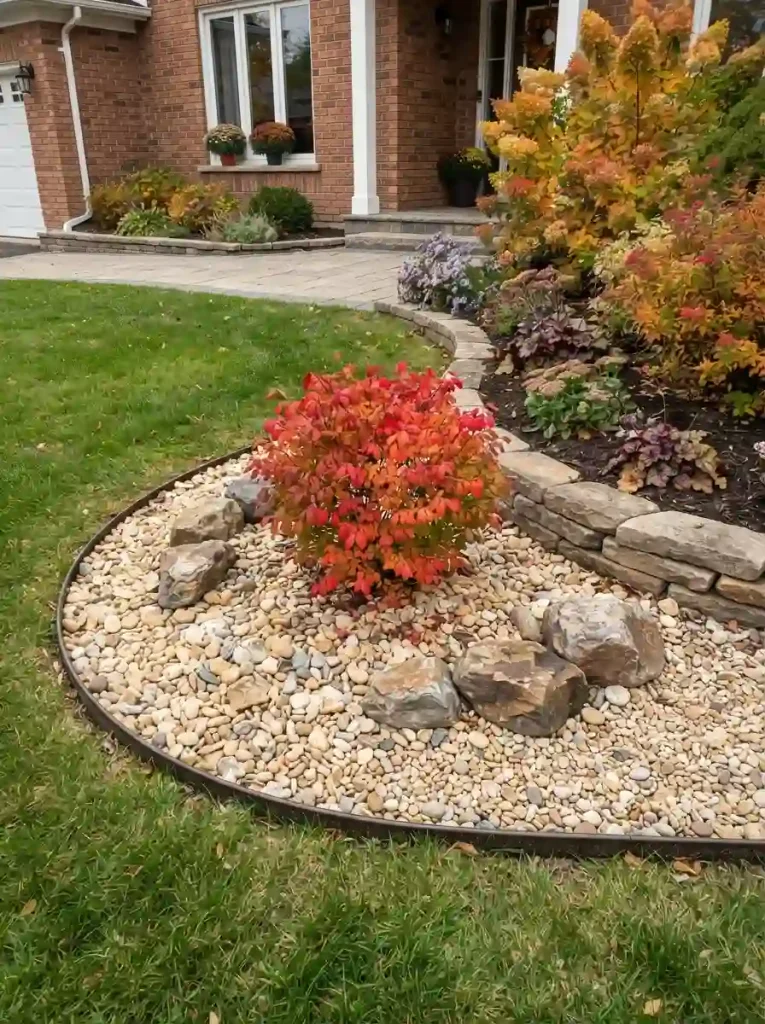
A little gravel can introduce texture and help solve an awkward empty section of the front yard. Instead of covering a large area, create a compact accent zone around a planter, mailbox, or small tree.
Use a simple shape such as a circle, oval, or narrow rectangle. Combining gravel with one or two larger stones gives the area visual interest without requiring many materials.
If you already have leftover gravel from another project, this can be an especially inexpensive improvement. Install landscape fabric underneath when appropriate to help reduce weed growth.
19. Decorate the Mailbox Area With Seasonal Plants
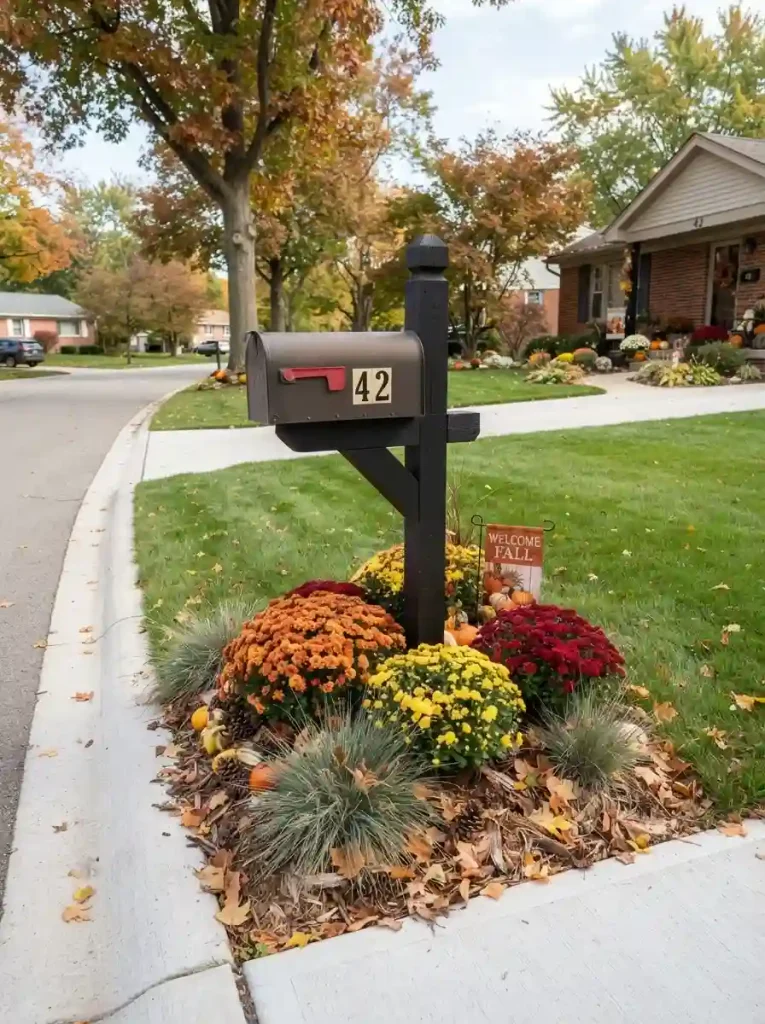
The mailbox is often overlooked, even though it sits directly along the street where curb appeal is most visible. A small planting area around it can create a surprisingly strong seasonal accent.
Use low-growing flowers and foliage that will not interfere with access or visibility. A few pansies, compact mums, or ornamental grasses can be enough.
Avoid making the display too dense. Leaving some open space around the mailbox keeps it practical while giving the surrounding area a finished appearance.
20. Make a DIY Branch Trellis for Climbing Plants
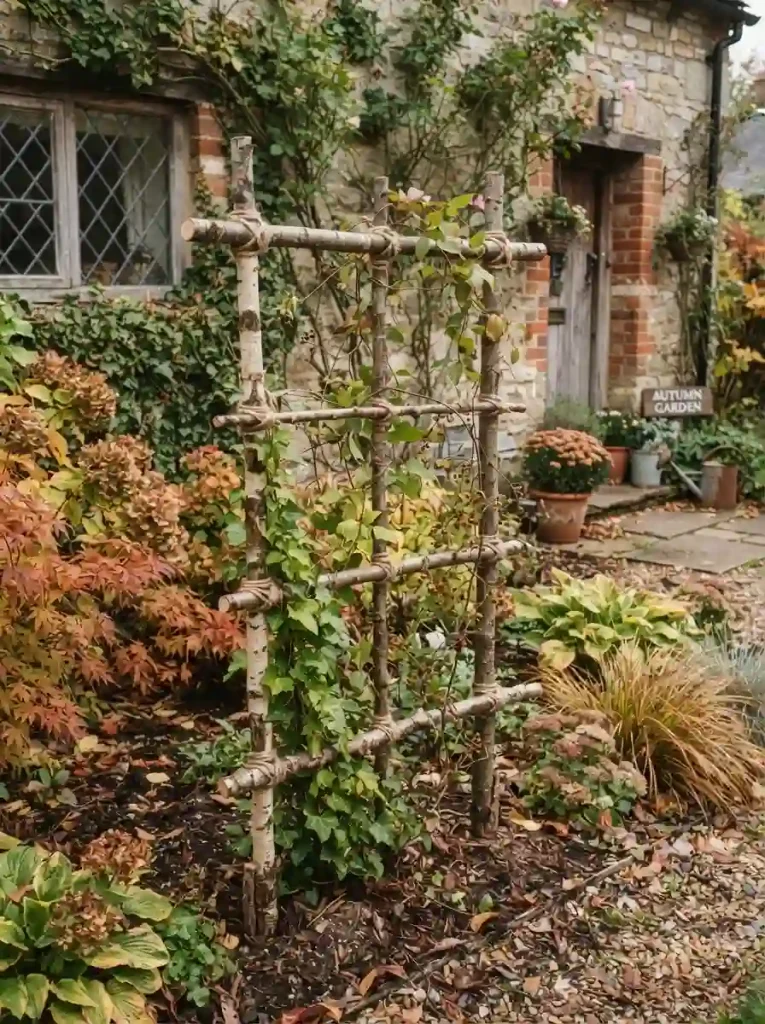
Straight branches can be turned into a simple garden trellis with almost no expense. Gather several sturdy pieces and arrange them into a basic teepee or ladder shape.
Secure the branches with garden twine and place the structure beside a suitable climbing plant. Even when the plant is not flowering, the natural framework adds height and texture to the garden.
This idea works particularly well in informal or cottage-style landscapes because the slightly imperfect shape makes the display feel handmade rather than manufactured.
21. Group Small Pots Around a Larger Plant
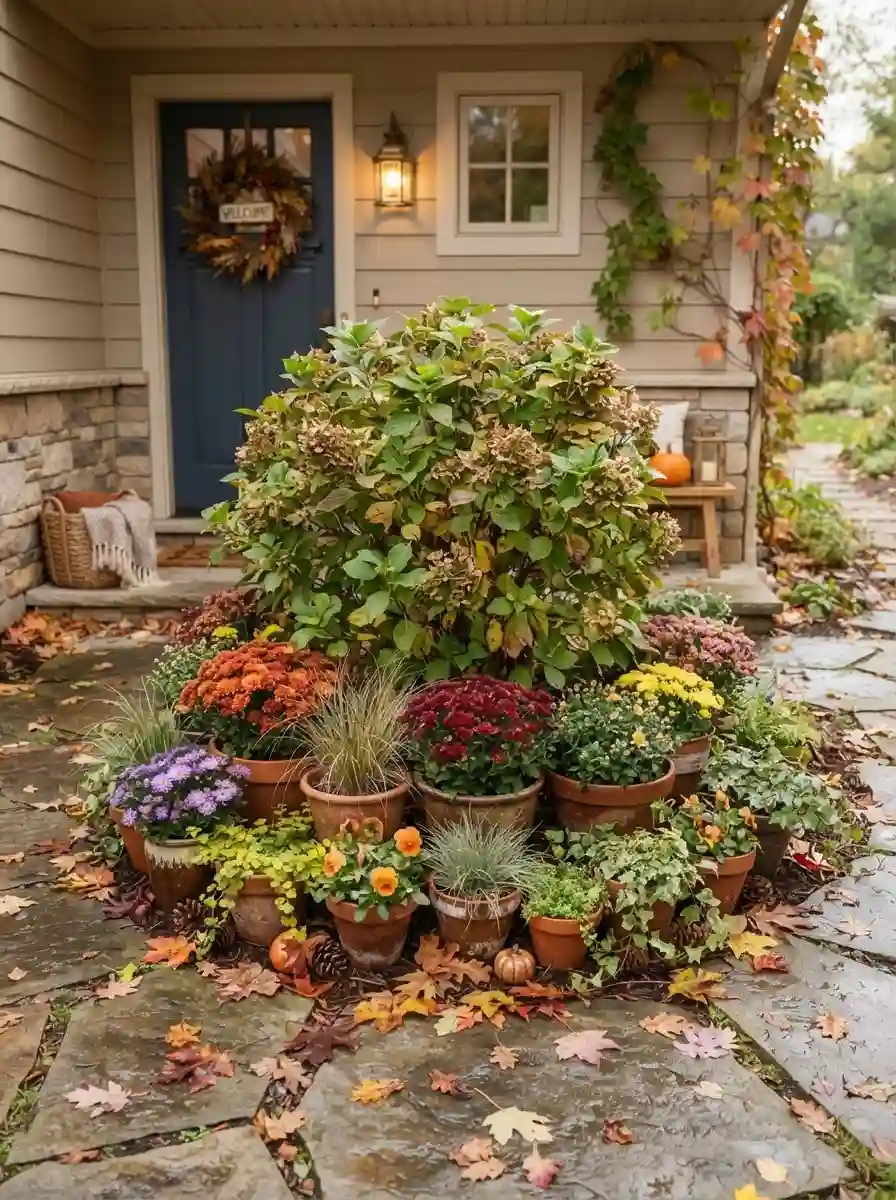
If your garden has one established shrub or large container plant, use it as the center of a small seasonal grouping. Surrounding it with several inexpensive pots creates the appearance of a fuller planting bed.
Use different heights and textures rather than placing every pot at exactly the same level. Small mums, leafy plants, grasses, and trailing varieties can work together beautifully.
The advantage of this arrangement is flexibility. When the season changes, you can move the smaller containers elsewhere instead of redesigning the entire area.
22. Reuse Bricks for a Rustic Garden Border
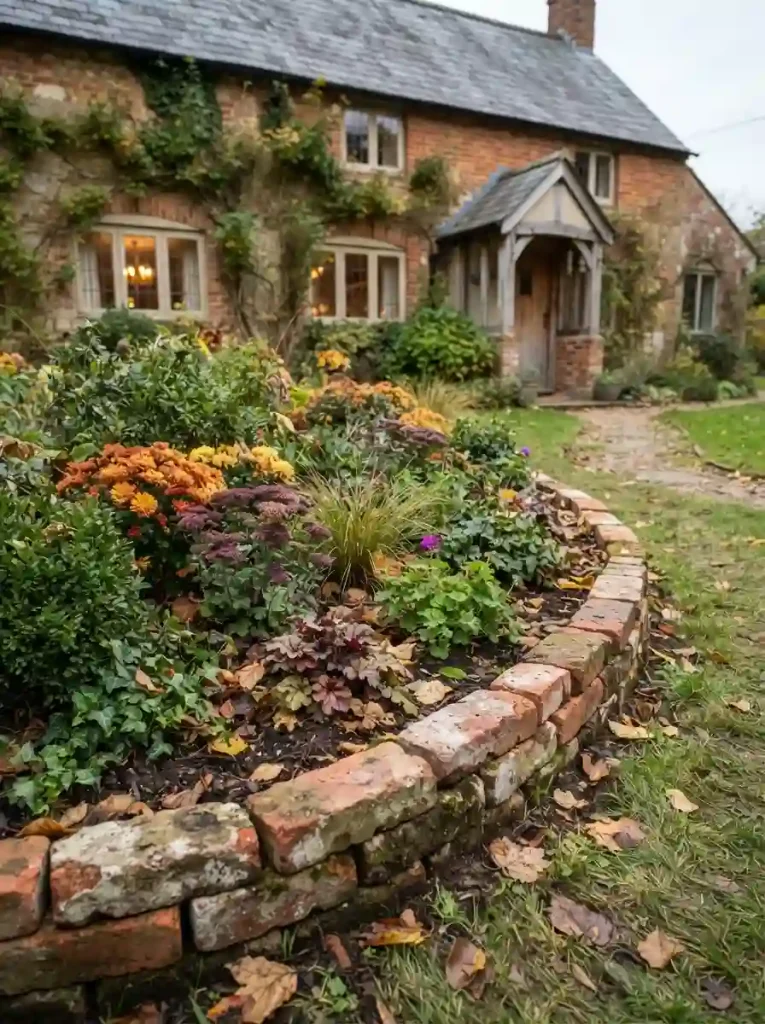
Leftover bricks can become an attractive garden border instead of taking up space in storage. Lay them flat for a subtle edge or position them vertically for a more noticeable rustic boundary.
Keep the pattern consistent around the garden bed to make the result look intentional. Slightly weathered bricks can be especially attractive with autumn plants because their earthy appearance complements seasonal colors.
If you do not have enough bricks for the entire property, use them only around one focal bed. A smaller finished section is often better than an incomplete border.
23. Create a Cozy Fall Entry With Layered Texture
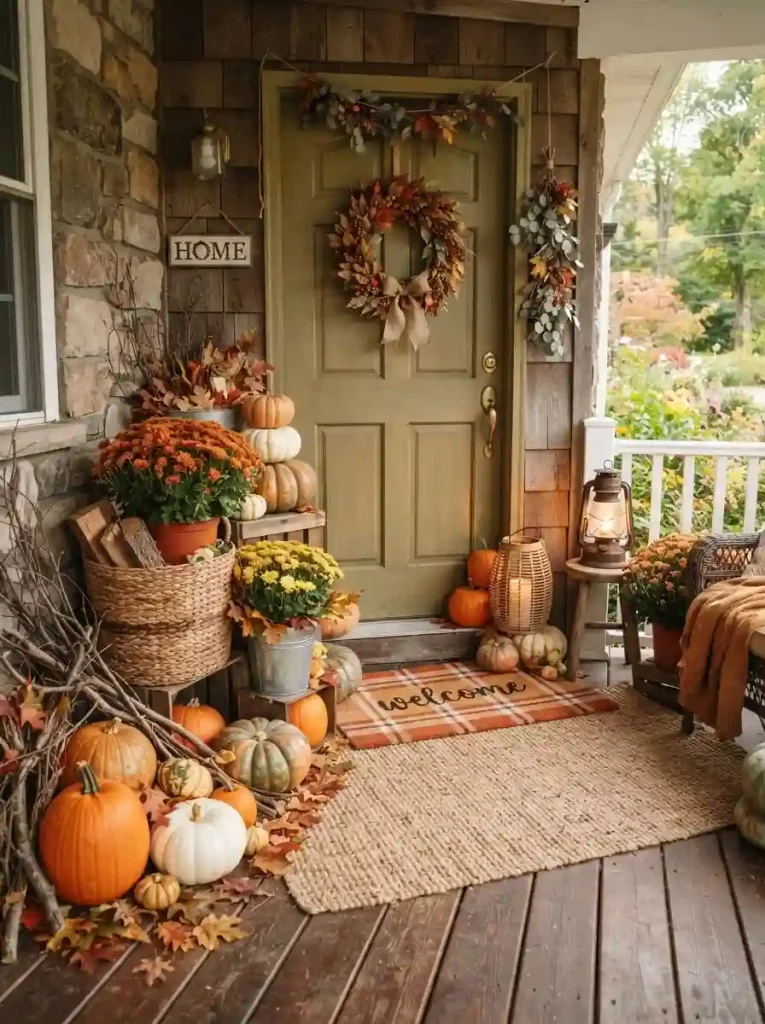
For the final idea, bring several inexpensive elements together around the entrance. The key is layering rather than buying more decorations.
Start with one larger planter or basket, then add a smaller pot, a few pumpkins, and natural elements such as branches or fallen leaves. Vary the heights so the arrangement feels dimensional.
Use colors that already appear elsewhere in the yard. Repeating the same warm tones in the planting beds and entry area will make the entire front landscape feel connected.
Simple Ways to Save More on Fall Landscaping
A beautiful fall yard does not have to come from a single large shopping trip. In fact, some of the most effective budget landscaping projects begin with materials you already own.
Before purchasing anything, walk around your property and make a list of usable items. Old containers, spare bricks, leftover stones, branches, garden tools, baskets, and outdoor furniture can all become part of the design.
Shop Small Plants
Large mature plants are convenient, but they can be expensive. Smaller healthy plants usually cost less and can eventually fill out the space as they grow.
Reuse Containers
Do not worry about having a perfectly matching collection of planters. Grouping different containers together can create a more relaxed and personalized look.
Buy Seasonal Plants at the Right Time
Prices and availability can change throughout the season. Local nurseries and garden centers may offer discounts as they make room for new inventory.
Focus on High-Visibility Areas
You do not need to landscape every square foot. Prioritize the front entrance, walkway, mailbox, and garden beds that are easiest to see from the street.
Use Free Natural Materials
Fallen leaves, branches, stones, and garden trimmings can provide texture without adding to your budget. Just make sure anything you reuse is safe, clean, and suitable for outdoor use.
How to Make a Small Budget Go Further
The secret to inexpensive landscaping is not necessarily using the cheapest materials. It is using a small number of materials effectively.
For example, one large planter surrounded by a few smaller seasonal plants can create more visual impact than ten tiny decorations scattered around the yard. Repetition also helps. Using the same flower color in two or three locations can make a small investment feel much larger.
Think in layers:
• Background: existing shrubs and trees
• Middle layer: grasses, flowers, and smaller shrubs
• Foreground: pots, pumpkins, stones, or seasonal accents
• Finishing touches: mulch, leaves, and clean garden edges
Fall Front Yard Landscaping on a Budget FAQs
What is the cheapest way to decorate a front yard for fall?
Using what you already have is usually the cheapest approach. Fallen leaves, branches, existing containers, pumpkins, inexpensive seasonal flowers, and refreshed garden beds can create a noticeable autumn transformation without a major investment.
How can I make my front yard look better without spending much money?
Start by cleaning and reshaping existing garden beds, trimming overgrown plants, defining lawn edges, and removing unnecessary clutter. Then add one or two seasonal focal points rather than decorating the entire yard.
What are good inexpensive fall plants for a front yard?
Depending on your climate, options can include pansies, mums, ornamental grasses, ornamental cabbage, and other cool-season annuals or hardy perennials. Choose plants based on your area’s temperatures, sunlight, and soil conditions.
How can I decorate my yard without making it look cluttered?
Limit the number of colors and repeat a few materials throughout the landscape. Instead of placing decorations everywhere, create small groupings around the entrance, garden beds, and walkway.
Can I use fallen leaves as part of fall landscaping?
Yes, leaves can be used as a seasonal visual element and can also provide organic material when managed appropriately. Keep paths, steps, drains, and other high-traffic areas clear so wet leaves do not become slippery.
How do I create curb appeal on a very small budget?
Concentrate on the areas people see first. A clean walkway, tidy lawn edges, refreshed mulch, a few seasonal plants, and one attractive entry display can make a significant difference without requiring a complete landscape makeover.
Final Thoughts
Creating a beautiful fall front yard does not require an expensive landscaping budget. With a little creativity, existing plants and everyday materials can become the foundation for a warm seasonal transformation.
Start with the areas that need the most attention, then add inexpensive layers of color, texture, and height. Repurposed containers, small plants, natural materials, pumpkins, gravel, and refreshed garden beds can all contribute to a polished autumn look.
Most importantly, choose ideas that fit your existing landscape instead of trying to recreate an entirely new yard. A few thoughtful changes can make your home feel welcoming for fall while keeping your landscaping project affordable.