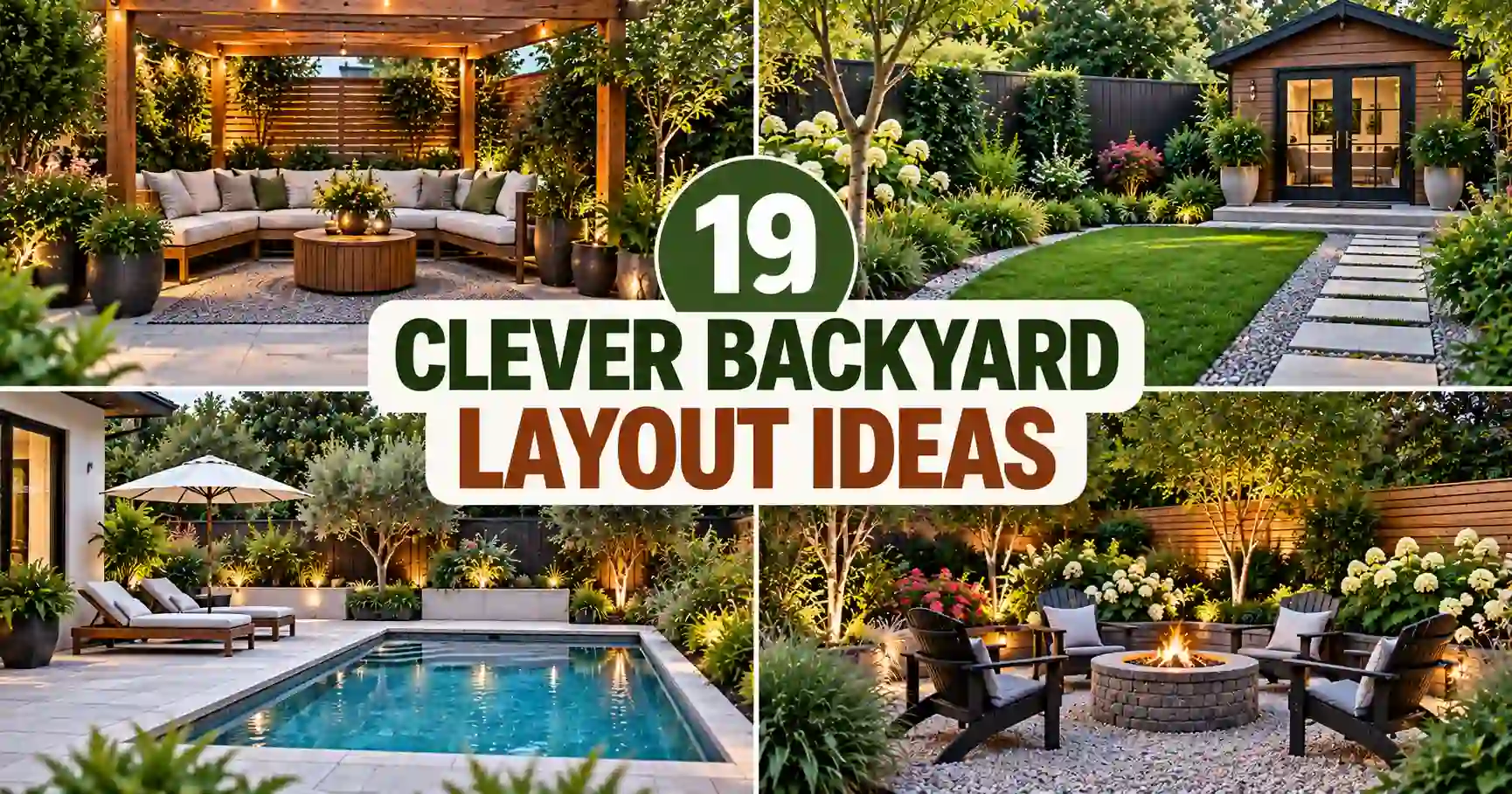
19 Clever Backyard Layout Ideas for Any Sized Yard
Your backyard doesn’t need to be huge to feel beautiful, functional, and thoughtfully designed. The right layout can make a compact yard feel more spacious, give a large yard better structure, or create separate areas for relaxing, dining, gardening, and entertaining.
From clever zoning tricks to space-saving arrangements, these backyard layout ideas can help you make better use of every corner. Whether you’re working with a tiny urban yard or a wide-open lawn, there’s an approach here that can fit your space and your style.
1. Create a Cozy Corner Patio
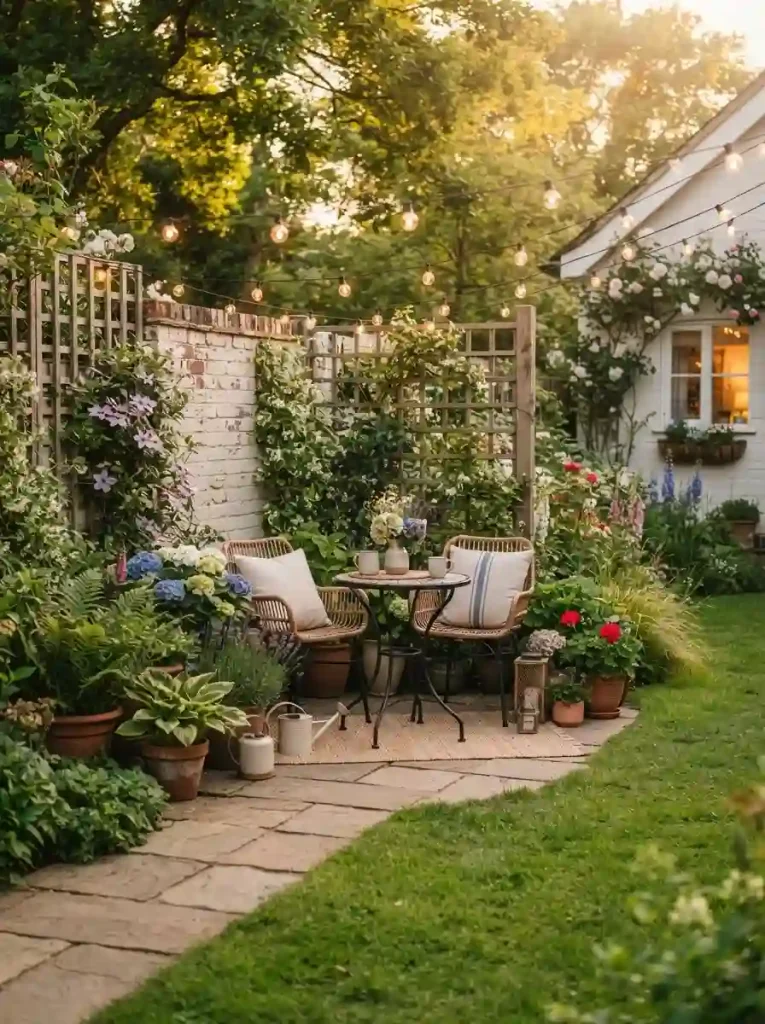
A patio tucked into one corner of the backyard can instantly make an awkward or underused area feel intentional. Instead of covering the entire yard with hardscaping, reserve a smaller section for comfortable seating and leave the rest open.
A compact square or rectangular patio works especially well beside the house, beneath a pergola, or next to a garden border. Add a small outdoor sofa, two chairs, and a coffee table without overcrowding the space.
For a softer transition between the patio and lawn, surround the area with ornamental grasses, potted plants, or a narrow planting bed. This helps the patio feel like a destination rather than an isolated slab.
This layout works particularly well when you want a small outdoor room without sacrificing most of the yard.
Expert Tip:
Keep furniture proportional to the patio. A few appropriately sized pieces will make a small outdoor room feel much more spacious.
2. Divide the Yard Into Outdoor Rooms
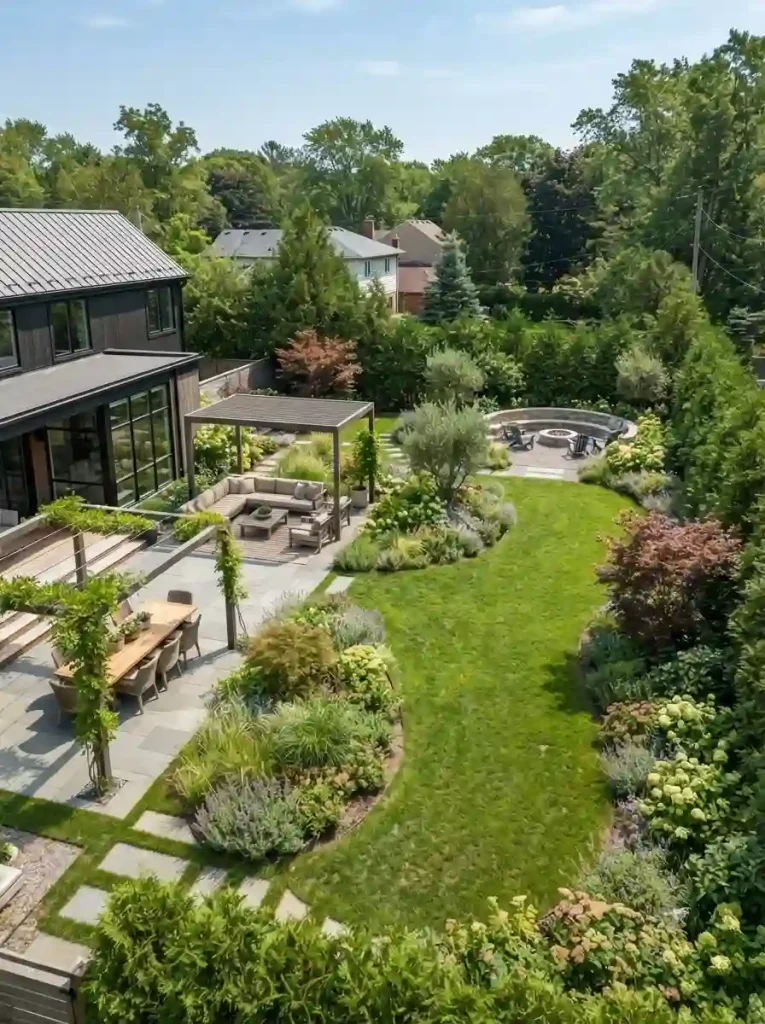
A large backyard can sometimes feel strangely empty when everything is treated as one continuous lawn. Dividing it into separate outdoor rooms gives the space more purpose and makes it easier to decide how each area should be used.
One section could become a dining area, another a lounge, and another a garden or play zone. You don’t necessarily need walls between them. Changes in flooring, planting, furniture, or elevation can create enough separation.
For example, place a dining table on a paved surface near the house, then use a planting bed to transition toward a grassy lounge area. A small fire pit farther away can become another destination.
This approach works particularly well in larger yards because it breaks up long sightlines and creates interesting places to explore.
Expert Tip:
Give every outdoor room a clear purpose before buying furniture. A simple layout plan can prevent the backyard from becoming cluttered with mismatched pieces.
3. Use a Curved Path to Connect Spaces
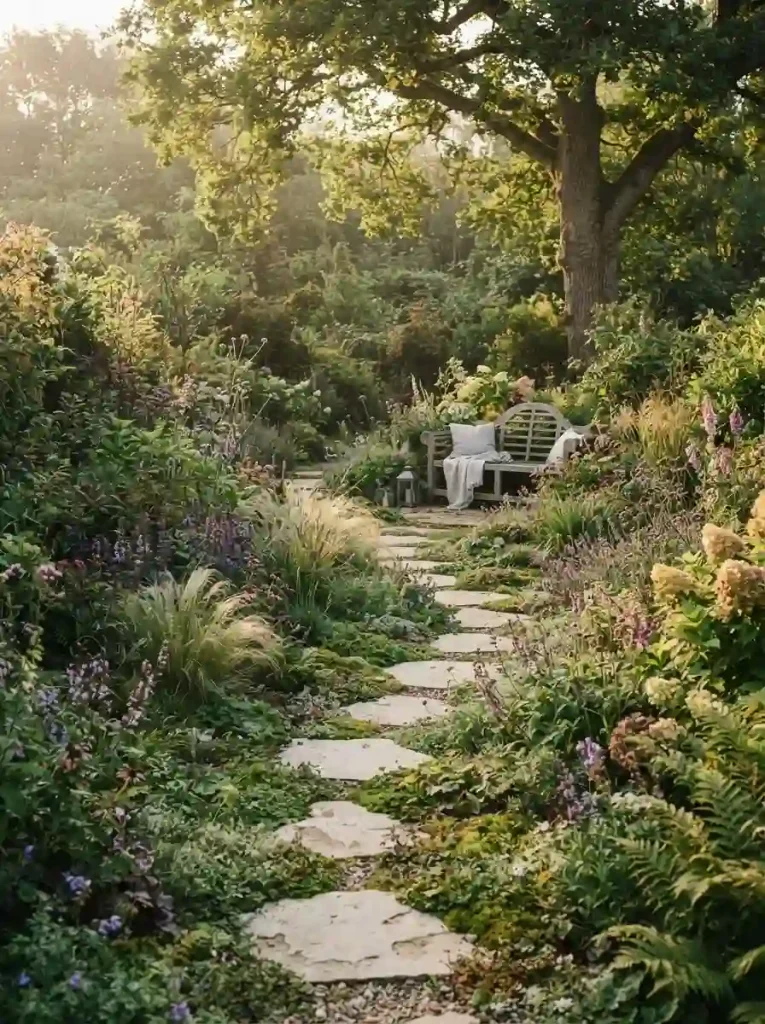
A straight walkway can be practical, but a gently curving path can make a backyard feel larger and more interesting. It encourages the eye to move through the landscape instead of seeing the entire yard at once.
Use the path to connect important areas such as the patio, shed, vegetable garden, seating nook, or back gate. Gravel, stepping stones, brick, or large concrete pavers can all work depending on your style.
Keep the curves broad rather than creating lots of tight turns. Planting low flowers or grasses alongside the walkway can soften its edges and make the route feel integrated with the rest of the landscape.
This layout is especially useful when you want a small yard to feel less predictable.
Expert Tip:
Let the path lead toward something worth seeing, such as a bench, fountain, flowering tree, or attractive garden feature.
4. Build a Long Narrow Garden Bed
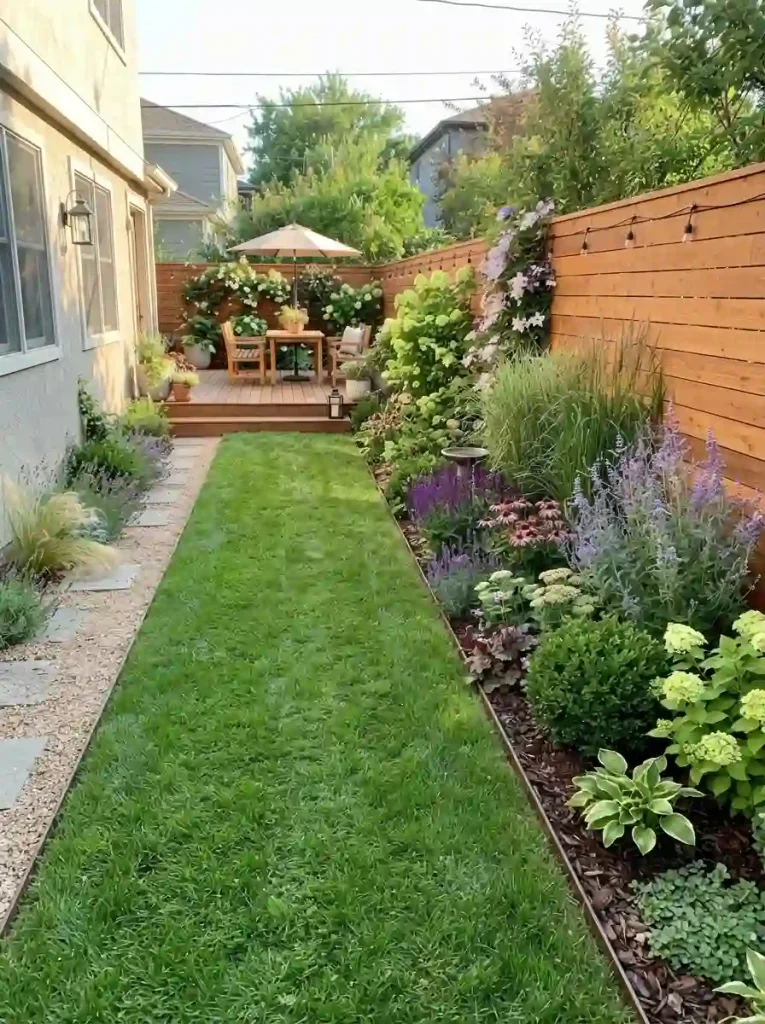
If your backyard is narrow, a long planting bed can make the proportions work in your favor. Rather than scattering plants randomly across the lawn, create one continuous garden zone along a fence or property boundary.
Use plants of different heights to create layers. Taller ornamental grasses or shrubs can sit toward the back, while flowering perennials and low groundcovers fill the front.
The remaining lawn can then function as a clean central area for children, pets, furniture, or entertaining. This creates a simple visual rhythm without sacrificing usable space.
A narrow bed also gives you a defined gardening area that can be easier to maintain than several small planting pockets.
Expert Tip:
Keep the planting palette limited to a few repeating varieties. Repetition makes a narrow yard look more cohesive and deliberately designed.
5. Add a Built-In Bench Along the Fence
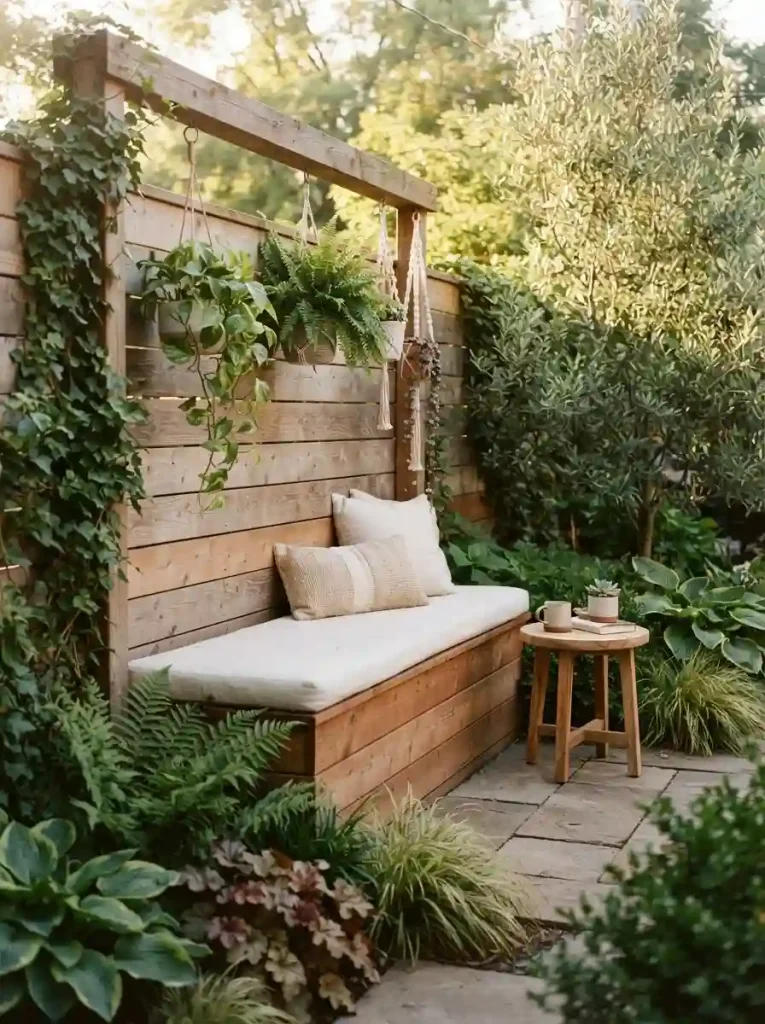
Fence lines often become wasted space, especially in smaller yards. Turning part of that boundary into seating can add function without taking valuable floor area away from the center of the yard.
A simple built-in bench can run along one section of fencing and provide seating for several people. Add cushions, a small side table, and nearby planters to create a comfortable outdoor nook.
This layout is particularly useful for narrow backyards where traditional chairs would make the walking area feel cramped. The bench can also become a visual anchor for a small garden or patio.
For a more finished appearance, coordinate the bench material with your fence, deck, or other outdoor structures.
Expert Tip:
Leave enough circulation space in front of the bench so people can walk comfortably without bumping into furniture.
6. Frame the Lawn With Planting Borders
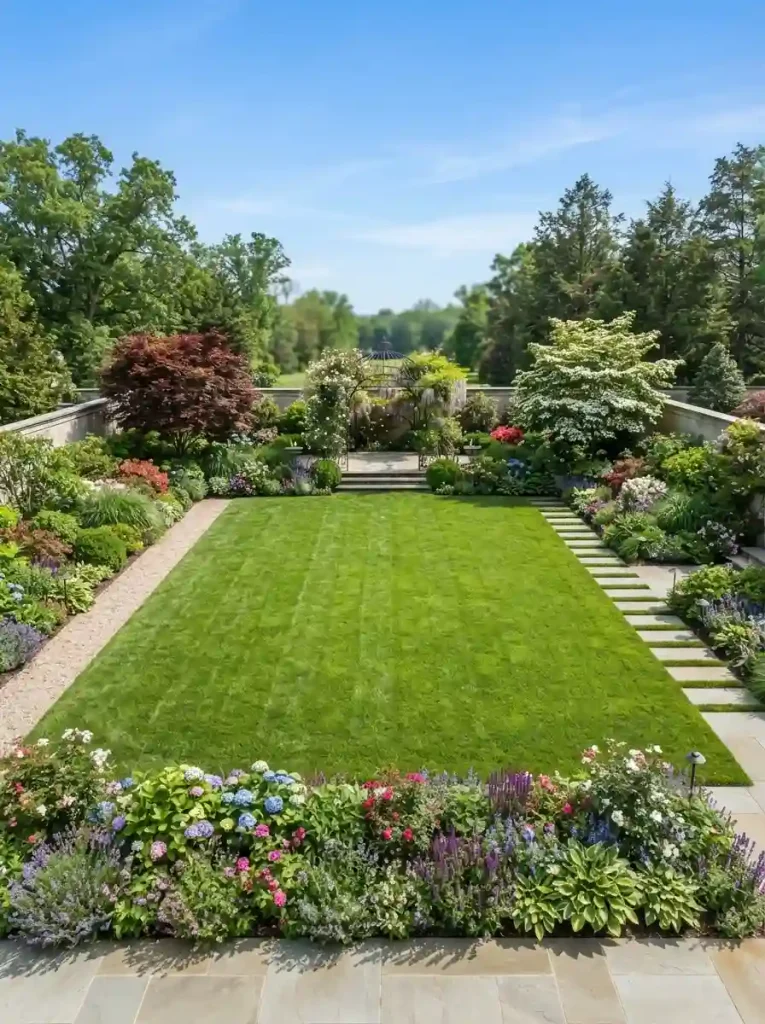
If you want to keep a generous lawn but still give the backyard a designed appearance, frame the grass with planting borders. This creates a strong central shape while allowing plenty of open space for everyday activities.
The borders don’t have to be wide. Even a relatively slim strip can contain shrubs, flowers, grasses, and small trees that visually define the lawn.
Try varying the height of the plants so the edges don’t look like a flat green wall. Taller specimens toward corners can add privacy, while shorter plants along the front maintain an open view.
This layout is versatile enough for both traditional and contemporary landscapes.
Expert Tip:
Think of the lawn as the centerpiece rather than leftover space. Keeping its shape simple will make the surrounding planting design look more intentional.
7. Turn an Awkward Side Yard Into a Garden Walk
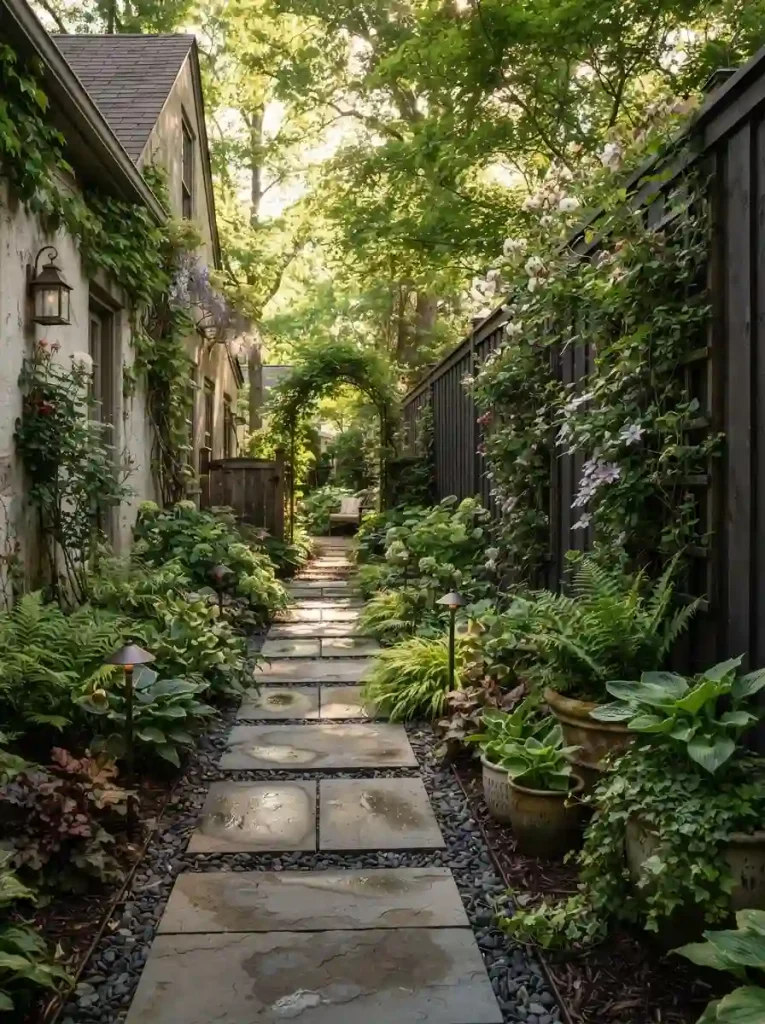
That narrow strip between a house and fence doesn’t have to remain an unused passageway. With thoughtful planning, it can become a charming garden walk that adds another layer of interest to the backyard.
Use a narrow path through the center and keep plants close to the boundaries. Shade-tolerant greenery can work well beside walls, while containers can provide seasonal color where planting space is limited.
A few decorative elements—such as a small trellis, wall planter, or garden light—can give the walkway personality without taking up much room.
This is also a smart way to make the entire property feel connected rather than treating the side yard as an afterthought.
Expert Tip:
Keep the walking surface level and easy to navigate. Decorative details should enhance the route without narrowing it too much.
8. Put a Small Dining Area Near the Kitchen
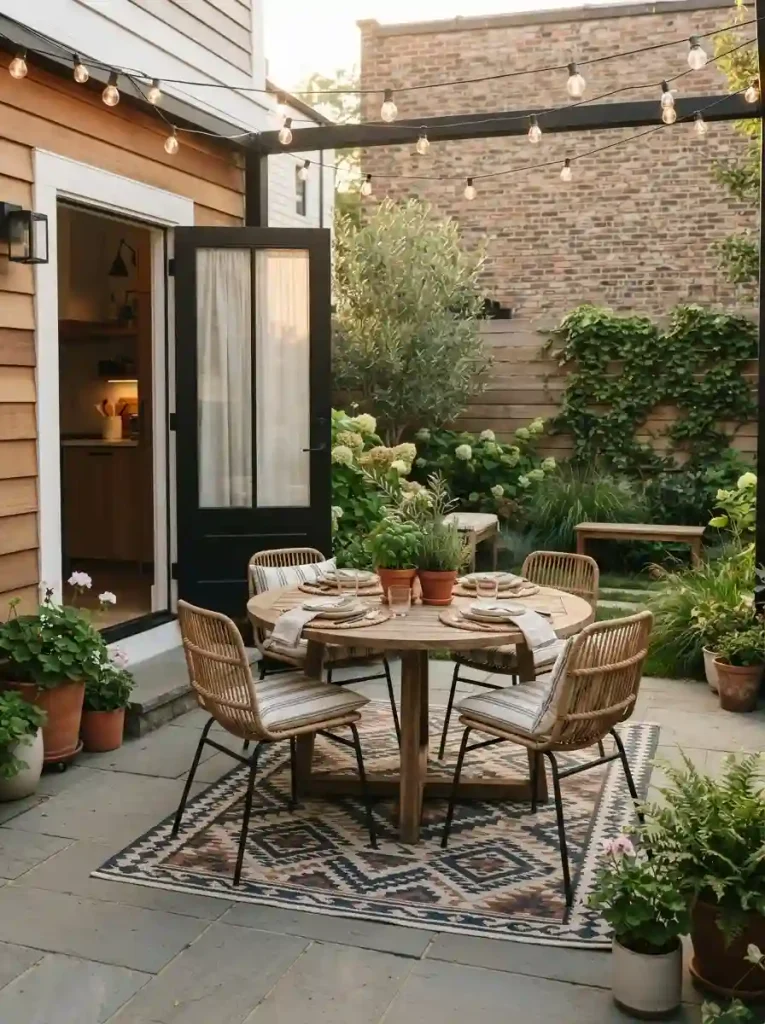
Outdoor dining works best when the table is easy to reach from the kitchen. Positioning a dining zone directly outside a back door creates a practical layout that makes meals, drinks, and entertaining much easier.
You don’t need a huge patio. A modest paved rectangle can accommodate a compact table and several chairs while leaving enough room for people to move around it.
Add overhead lighting or a nearby pergola if you frequently use the space after sunset. A narrow planting bed along one side can soften the hardscape without reducing usable seating space.
For particularly small yards, a round table can improve circulation because it eliminates sharp corners.
Expert Tip:
Keep the shortest, clearest route between the kitchen and dining table. Good backyard design should be beautiful but also convenient.
9. Make a Tiny Yard Feel Bigger With Layers
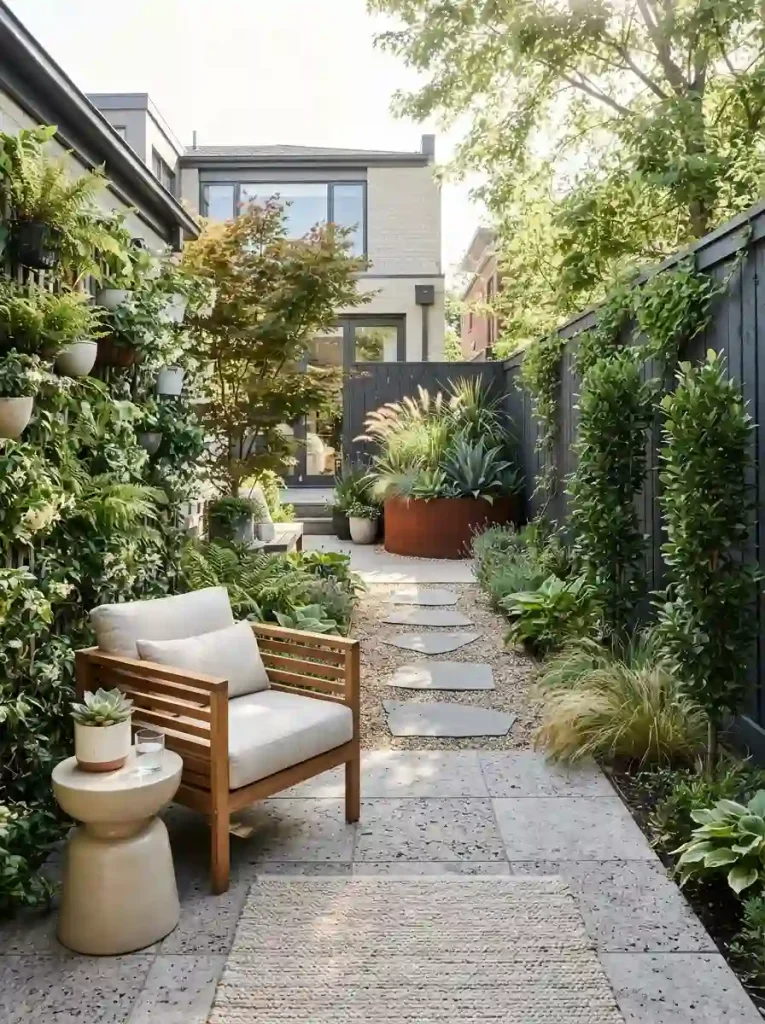
Small yards benefit from visual depth. Instead of filling the space with lots of separate features, create layers that gradually draw the eye from the house toward the farthest point of the yard.
Start with a compact seating area near the house, transition into a small patch of lawn or paving, and finish with taller plants or a focal feature at the back.
Using different heights also makes the space feel richer without requiring more square footage. Vertical gardening, climbing plants, narrow trees, and wall-mounted planters can all contribute.
Keeping the central walking area relatively open is equally important. Too many objects can make a small yard feel even tighter.
Expert Tip:
Choose one strong focal point at the far end of a small yard. It naturally pulls attention outward and can make the space appear deeper.
10. Design a Multi-Use Backyard Deck
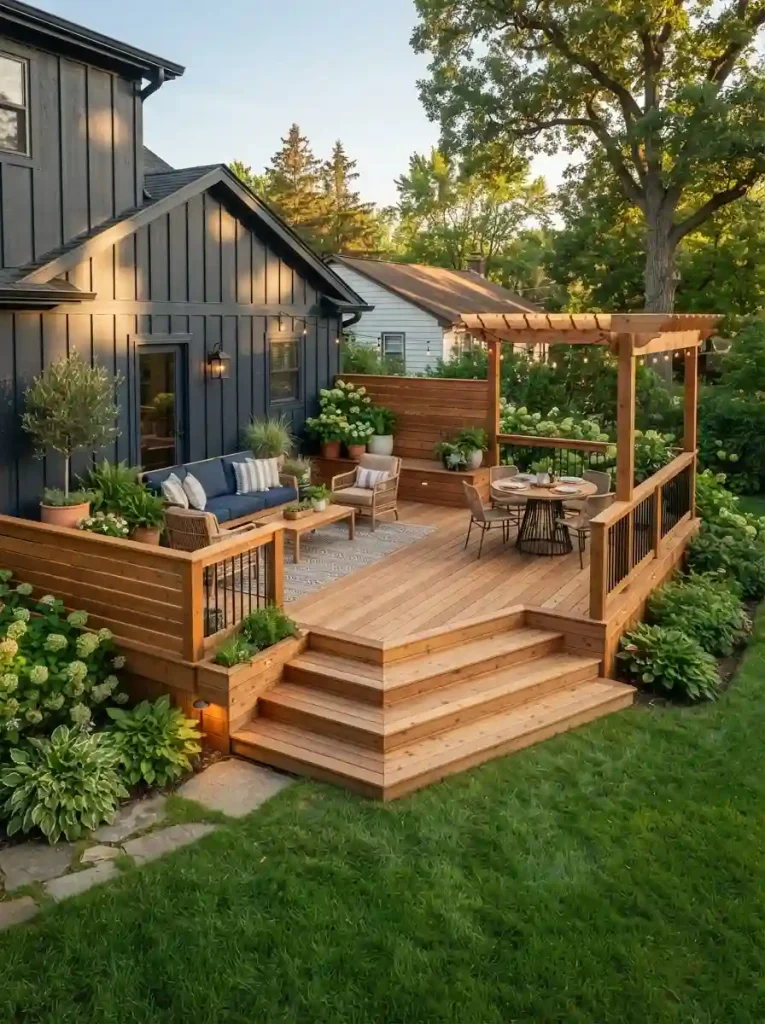
A deck can do more than provide a place for chairs. When carefully planned, one structure can combine dining, lounging, container gardening, and even a small outdoor kitchen.
For a compact backyard, build the deck around the activities you actually use. A built-in bench can handle everyday seating while a foldable table provides flexibility for meals.
Leave one edge open for planters or steps into the garden. This creates a softer transition between the raised deck and surrounding landscape.
In a larger yard, the deck can serve as the main hub while lawn and planting areas extend beyond it, giving the backyard a natural progression from structured to relaxed.
Expert Tip:
Before building, mark the furniture footprint with tape or stakes. This makes it much easier to check whether the planned deck will comfortably fit everything you need.
11. Add a Circular Seating Area
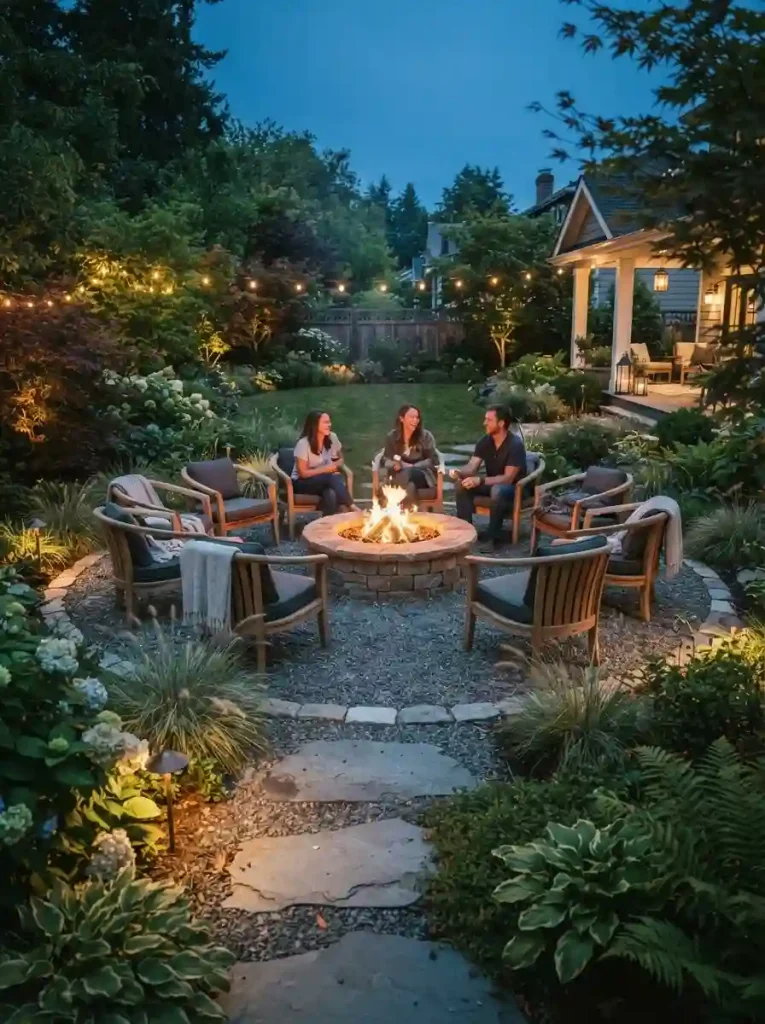
A circular seating arrangement can introduce a softer shape into a backyard dominated by straight fences, rectangular patios, and square planting beds. It also naturally encourages conversation because everyone faces toward the center.
A small circular gravel area can accommodate a fire pit surrounded by several chairs. In a larger yard, you could use curved built-in seating around a central tree, fountain, or outdoor fireplace.
This layout works particularly well when you want to create a destination away from the house. A short path can connect the seating circle to the main patio while planting beds help define the space.
For smaller yards, skip bulky furniture and use lightweight chairs that can be moved when the area is needed for another purpose.
Expert Tip:
Keep the center visually simple. One focal element is usually enough to make a circular seating area feel purposeful.
12. Use a Pergola to Define the Main Zone
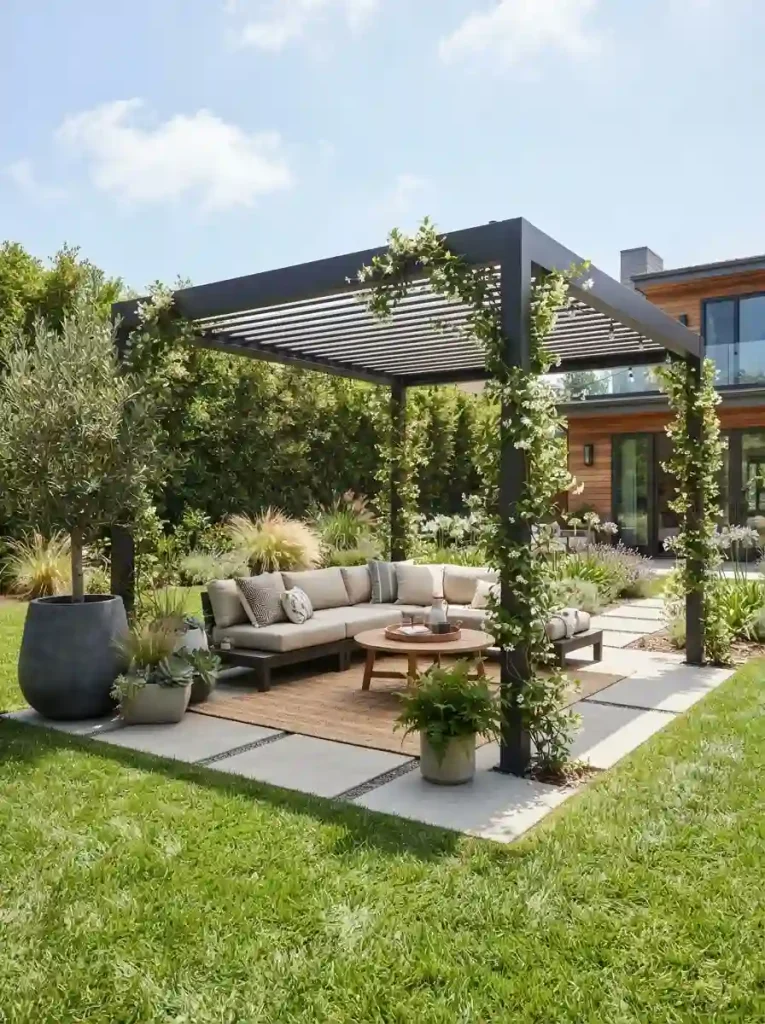
A pergola can give a backyard an instant sense of structure without completely enclosing the space. Use one over a patio, dining area, or lounge to visually establish the main gathering zone.
In a small yard, a relatively narrow pergola attached to the house can extend the feeling of indoor living outdoors. For larger properties, a freestanding structure can become a separate destination farther into the garden.
Climbing plants can soften the posts and provide additional greenery over time. Alternatively, keep the structure clean and architectural for a modern landscape.
The key is to position the pergola where it supports the way you use the yard rather than simply adding another decorative feature.
Expert Tip:
Check how the pergola affects sunlight at different times of day before choosing its location.
13. Create a Dedicated Vegetable Garden Zone
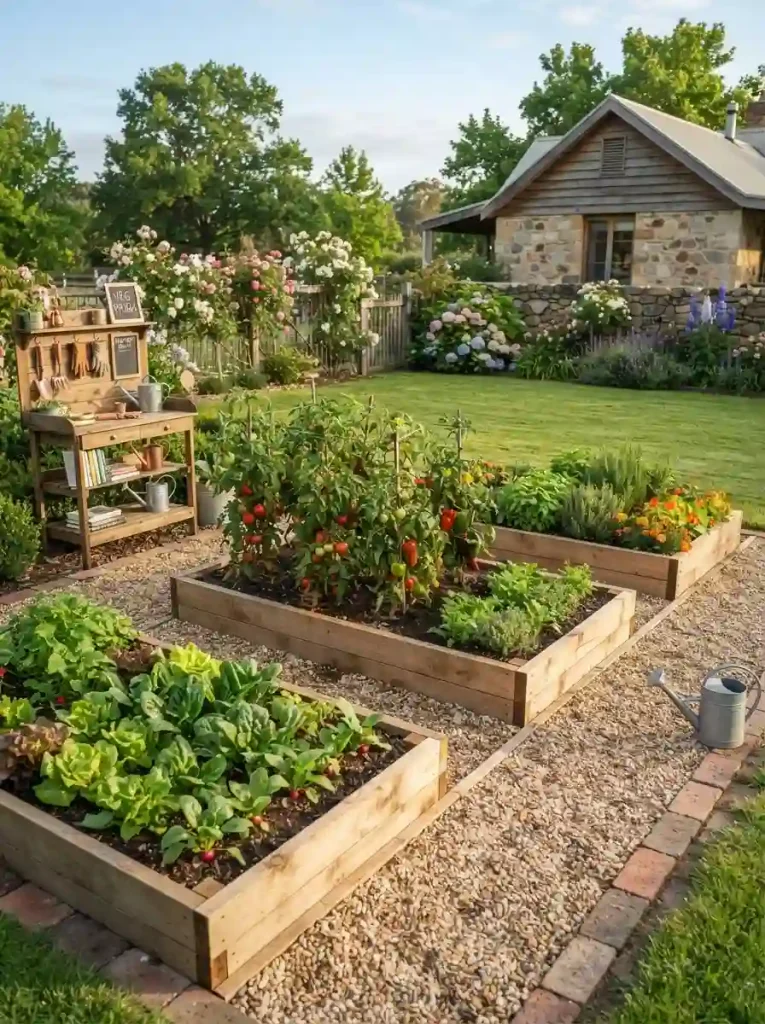
A productive garden can fit into almost any backyard when you give it a dedicated location. Instead of mixing vegetables throughout ornamental beds, create a defined growing area with raised beds, containers, or narrow planting rows.
Place the vegetable garden somewhere that receives adequate sunlight and is easy to reach from the house. A nearby water source can make routine maintenance considerably easier.
Raised beds can also introduce structure to a larger yard while keeping pathways clear. Gravel or stepping stones between beds prevent muddy feet and make harvesting more convenient.
Even a small garden can produce herbs, salad greens, tomatoes, peppers, and seasonal vegetables without taking over the entire backyard.
Expert Tip:
Leave comfortable walking space around every bed. Easy access is just as important as maximizing planting area.
14. Put a Tree at the End of the View
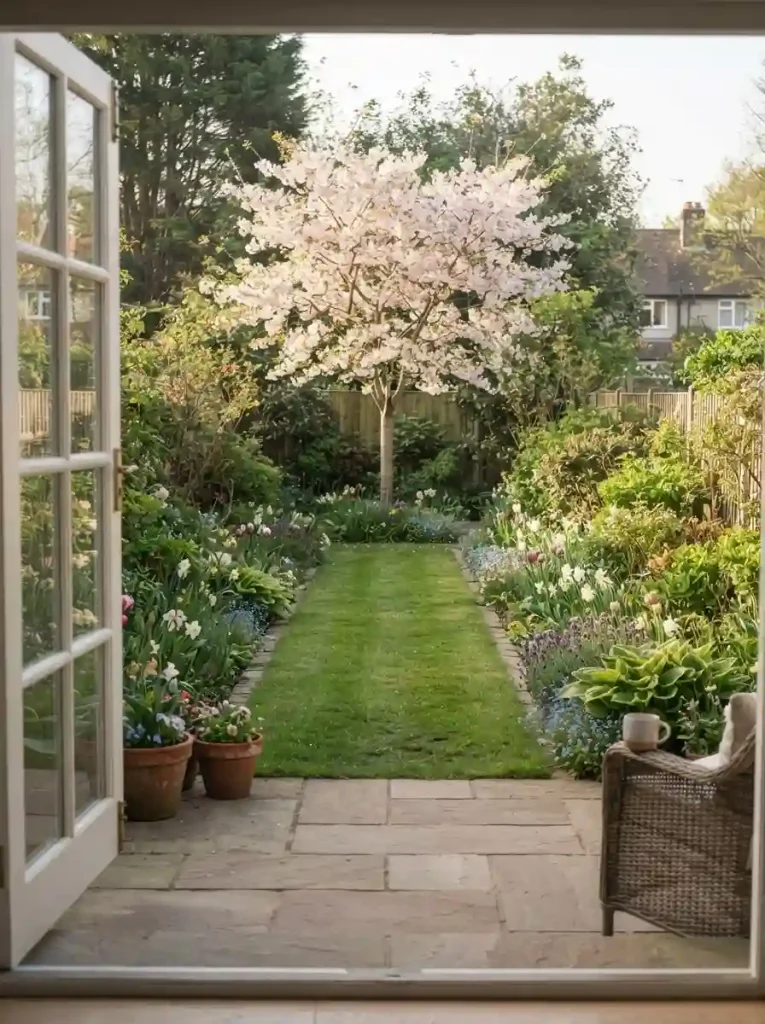
A carefully positioned tree can become the focal point that gives an otherwise ordinary backyard a memorable layout. Rather than placing trees randomly, consider how they appear from the house, patio, or main garden path.
A flowering tree can provide seasonal color, while a small ornamental tree can offer structure without overwhelming a compact property.
For a narrow backyard, positioning a tree toward the far boundary can create visual depth. Frame it with lower plants so the eye naturally travels toward it.
The tree doesn’t have to sit directly in the center. An offset position can create a more relaxed and natural appearance.
Expert Tip:
Choose a tree according to its mature size, not the size it has when you buy it. This prevents future crowding and excessive pruning.
15. Combine Lawn With a Compact Play Area
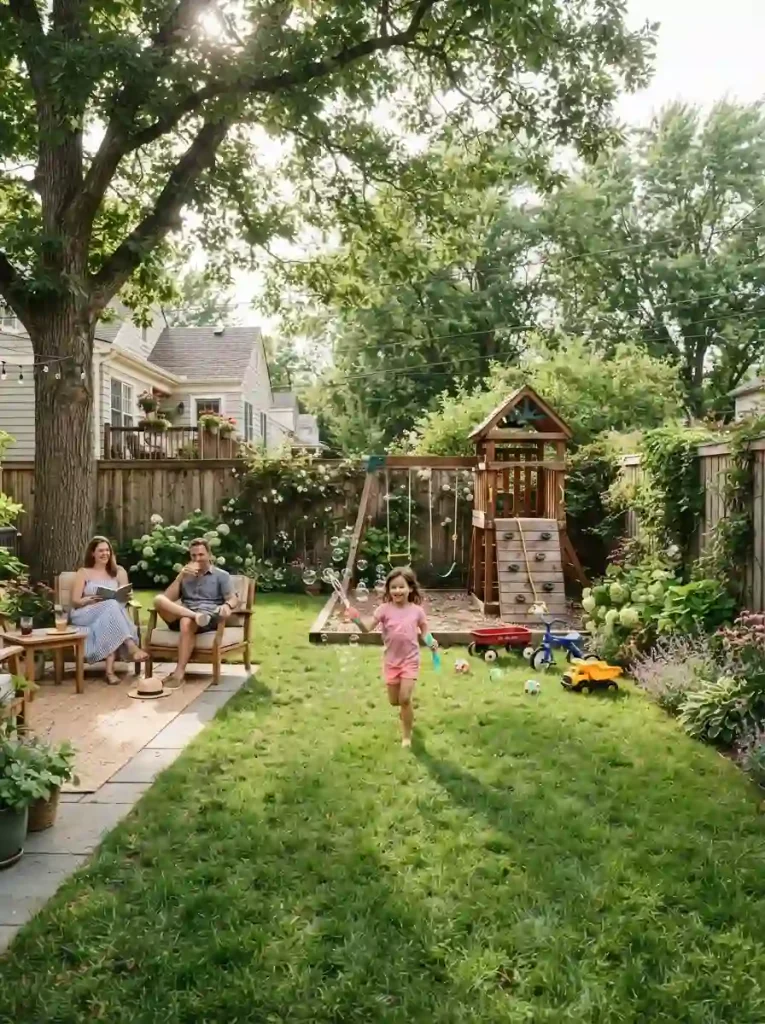
A family backyard needs to balance relaxation with active space. Instead of dedicating the entire property to playground equipment, reserve one defined section for play and allow the remaining landscape to serve multiple purposes.
A simple lawn can accommodate outdoor games, while a compact play structure, sandbox, or climbing feature can sit along one edge. Positioning equipment near a fence helps preserve the central open area.
Natural screening plants can separate the play zone from an adult seating area without making the yard feel divided.
Flexible furniture is another useful addition. Lightweight chairs can be moved when more room is needed for games or gatherings.
Expert Tip:
Keep play equipment visible from the home’s main living areas so adults can comfortably supervise children.
16. Build Around an Existing Tree
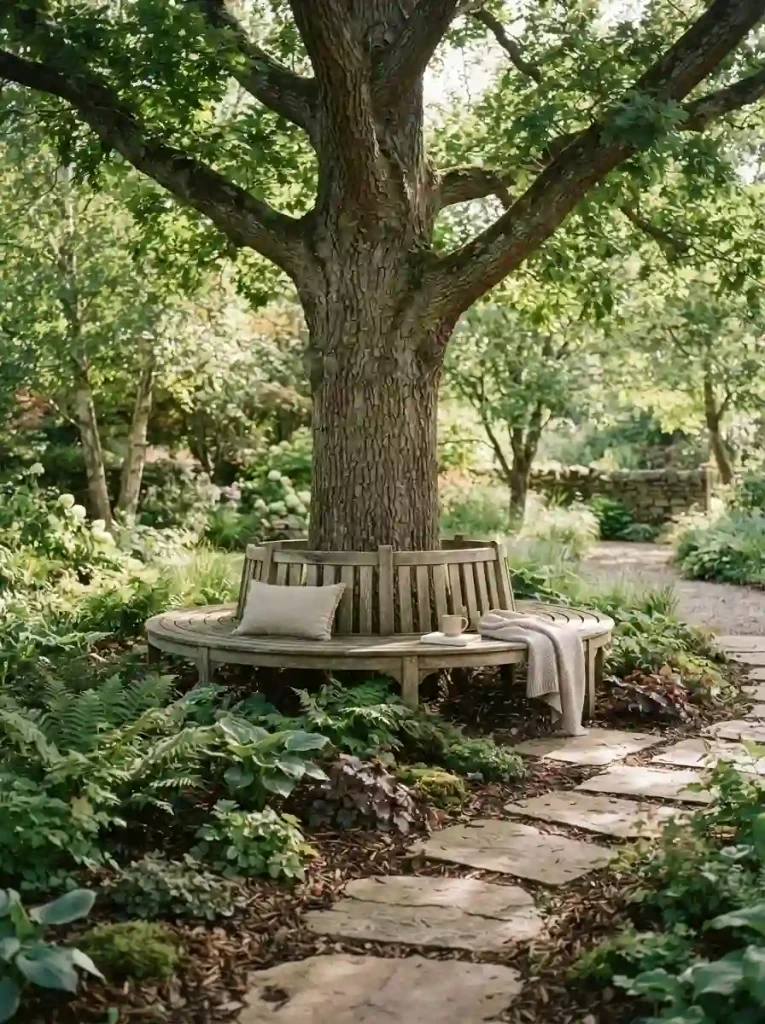
An established tree can be one of the most valuable features in a backyard, so design around it instead of removing it simply to create a cleaner layout.
You can surround the tree with a curved bench, circular planting bed, gravel seating area, or stepping-stone design. The canopy can provide natural shade and make the area especially pleasant during warmer months.
If the tree is close to a patio, leave adequate space around the trunk and avoid unnecessarily disturbing major roots. A thoughtful design should accommodate the tree’s natural growth.
This approach can also save money because you’re working with an existing landscape feature rather than trying to create shade and character from scratch.
Expert Tip:
Avoid piling soil against the trunk. Preserve the tree’s natural root environment when adding surrounding landscaping.
17. Use Raised Levels to Separate Functions
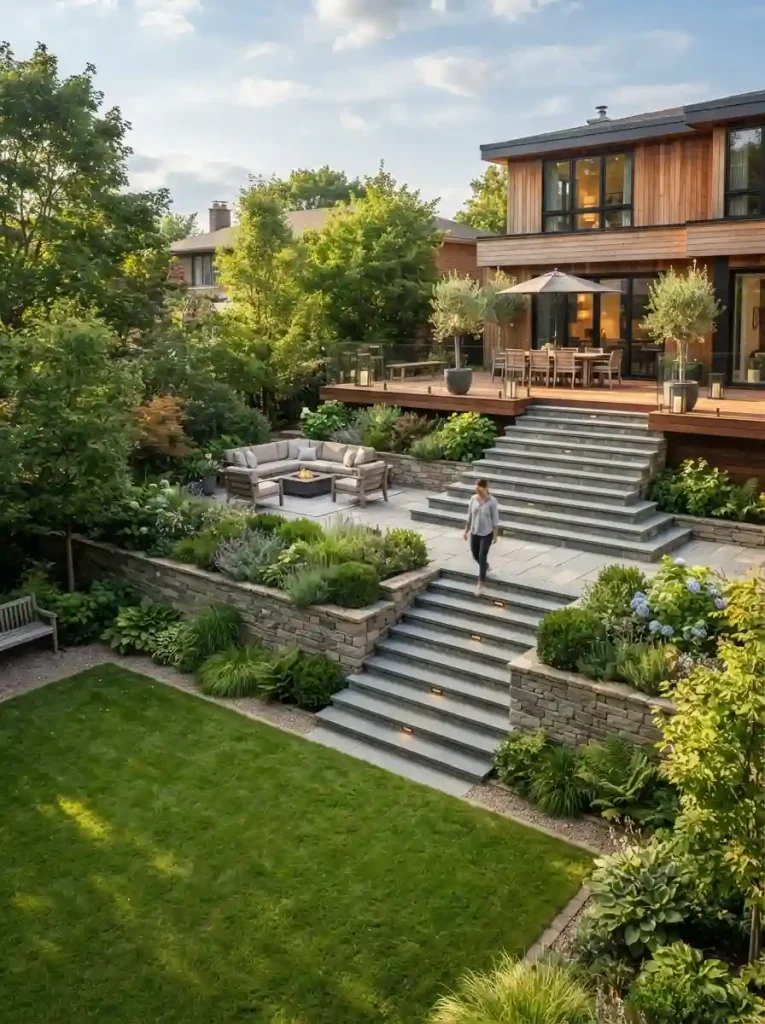
If your property has a natural slope, use it to your advantage. Different levels can separate backyard functions without requiring tall fences or solid walls.
A raised deck could serve as a dining area, while a lower lawn provides room for recreation. Another small terrace might contain planting beds or a quiet seating nook.
Even subtle changes in elevation can make a large yard more visually interesting. Retaining edges, steps, or low walls can reinforce the transitions between spaces.
Good drainage should be considered whenever you’re changing levels. The layout should improve both appearance and practicality.
Expert Tip:
Use the highest, most stable area for major furniture or structures and reserve lower sections for uses that can better accommodate changes in terrain.
18. Design a Hidden Relaxation Nook
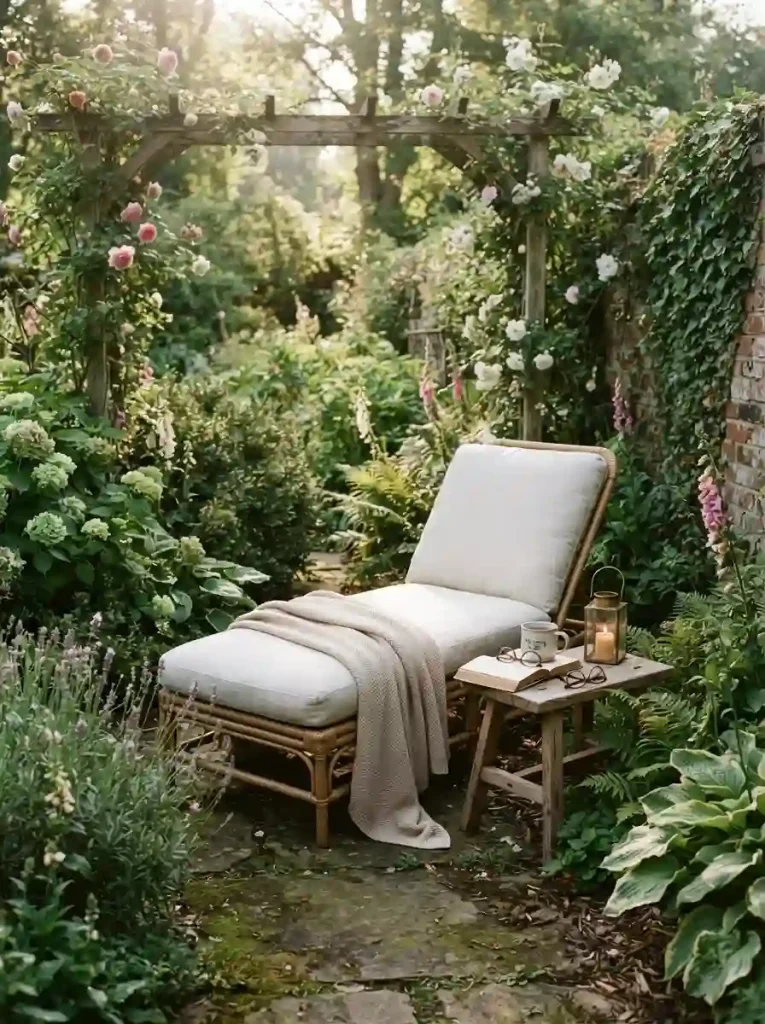
Not every part of the backyard needs to be designed for entertaining. A tucked-away relaxation nook can give you a private place to read, drink coffee, or simply enjoy the garden.
Look for an unused corner behind shrubs, beside a shed, or near the far end of the property. Add a comfortable chair or small bench and surround it with plants that create a sense of enclosure.
You can make the nook feel even more secluded with a trellis, tall grasses, evergreen shrubs, or a decorative screen. Keep the furnishings simple so the surrounding greenery remains the focus.
This idea is particularly valuable in busy households where having one quiet outdoor destination can make the backyard feel more personal.
Expert Tip:
Orient the seat toward the most attractive garden view rather than automatically facing the house.
19. Keep a Flexible Open-Center Layout
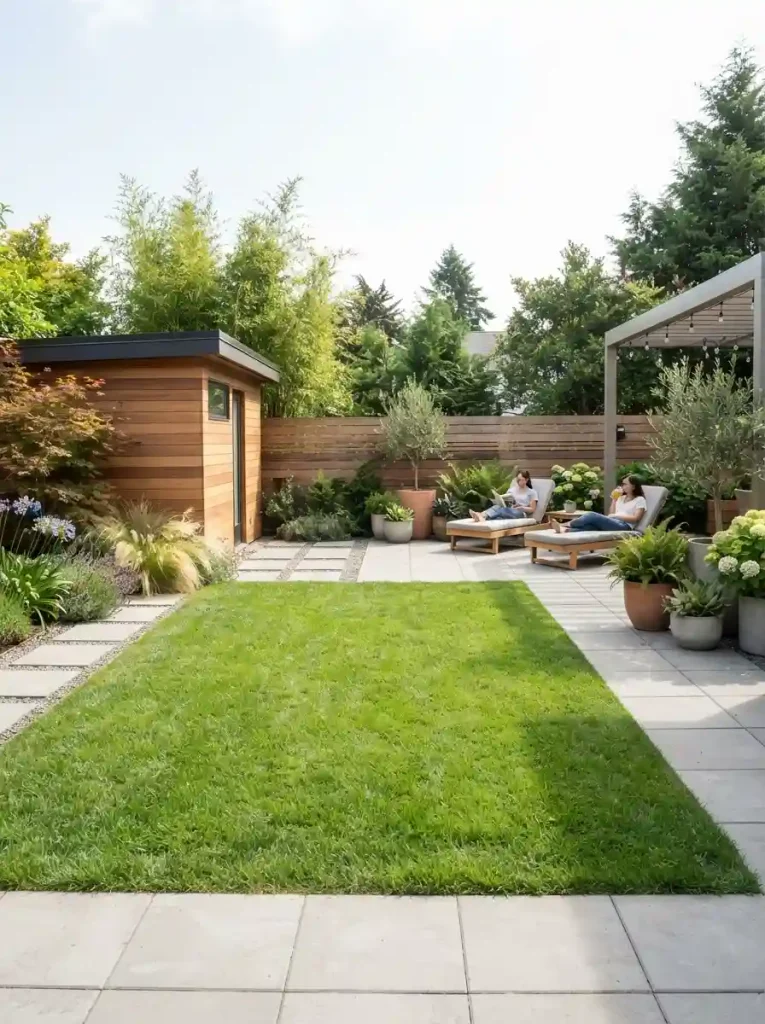
When you’re unsure how much space each activity will eventually require, an open-center layout is one of the safest choices. Keep the middle of the backyard relatively clear and organize permanent features around the perimeter.
Patios, planting beds, storage, seating, and garden structures can occupy the edges while the center remains flexible. That open area can become a play space today, an entertaining area tomorrow, or simply a comfortable patch of lawn.
This arrangement also makes smaller backyards feel less crowded because the eye has an unobstructed central view.
Use movable furniture and containers when possible. That way, you can quickly change the configuration for gatherings, seasonal activities, or everyday use.
Expert Tip:
Resist the temptation to fill every empty corner. Negative space is an important part of a successful backyard layout.
Practical Tips for Planning Your Backyard Layout
1. Measure the Space First
Measure the overall yard and note the location of doors, fences, gates, existing trees, utility areas, and other permanent features. Even a basic sketch can reveal how much usable space you really have.
2. Think About Traffic Flow
Consider how people naturally move through the yard. Keep routes between the house, patio, garden, shed, and gate clear. Avoid placing furniture where it creates narrow passageways.
3. Plan Around Sun and Shade
Notice which areas receive morning sun, afternoon sun, and shade. This matters for everything from vegetable gardens to outdoor seating. A shaded corner might be ideal for relaxing but unsuitable for sun-loving plants.
4. Use the Perimeter Efficiently
Fences and property edges are excellent locations for planting beds, benches, storage, vertical gardens, and privacy screening. Keeping these elements toward the boundaries can preserve valuable central space.
5. Choose a Focal Point
Every backyard doesn’t need a dramatic centerpiece, but having something that naturally attracts attention can make the layout feel more organized. A tree, seating area, water feature, pergola, or beautiful planting bed can serve this purpose.
6. Leave Room for Growth
Plants and trees become larger over time. Furniture arrangements can also feel tighter than expected once people are actually using the space. Give your design some breathing room instead of planning every inch.
How to Choose the Best Backyard Layout for Your Yard
For small yards, prioritize multifunctional furniture, perimeter planting, vertical features, and open sightlines. Avoid filling the space with too many permanent structures.
For long narrow yards, use paths, layered planting, and strategically positioned focal points to create depth and break up the long shape.
For large backyards, divide the property into outdoor rooms. Separate dining, lounging, gardening, recreation, and entertaining areas so the space feels purposeful.
For family yards, keep an open lawn while positioning play areas and seating where they remain easy to supervise.
And if you enjoy gardening, reserve sunny areas for productive plants while using ornamental borders and trees to make the growing space feel like part of the overall landscape.
Final Thoughts
A successful backyard layout isn’t necessarily the one with the most features. It’s the one that makes the available space work better for the people who use it.
Whether you have a tiny courtyard, a narrow suburban yard, or a sprawling outdoor space, thoughtful zoning can create room for relaxation, gardening, entertaining, and everyday activities.
Start by identifying what you actually want from your backyard. Then build the layout around those priorities, keeping pathways clear, leaving useful open space, and choosing plants and structures that suit the scale of the property.
With a little planning, even an ordinary backyard can become a functional outdoor space that feels intentional, comfortable, and distinctly your own.
Frequently Asked Questions
What is the best layout for a small backyard?
A small backyard generally benefits from an open center, perimeter planting, multifunctional furniture, and clearly defined zones. Keeping the middle of the yard visually open can make the entire space feel larger.
How can I make a large backyard feel more organized?
Divide the yard into outdoor rooms with different purposes. Patios, planting areas, paths, pergolas, and changes in flooring can visually separate spaces without making the property feel closed in.
How do I make a narrow backyard look wider?
Avoid creating too many long straight lines. Curved paths, horizontal planting beds, layered greenery, and strategically positioned focal points can help interrupt the narrow shape and create more visual interest.
Should a patio be centered in the backyard?
Not necessarily. A patio can work especially well near the house or in a corner. Its location should depend on how you use the space, sunlight, access from the home, and the amount of lawn you want to preserve.
How do I plan a backyard layout before landscaping?
Start with a simple scaled sketch showing the house, boundaries, existing trees, doors, gates, and utilities. Then mark desired zones such as dining, seating, lawn, gardening, and storage before choosing specific materials or plants.