20 Powerful Curb Appeal Ideas That Wow the Neighbors
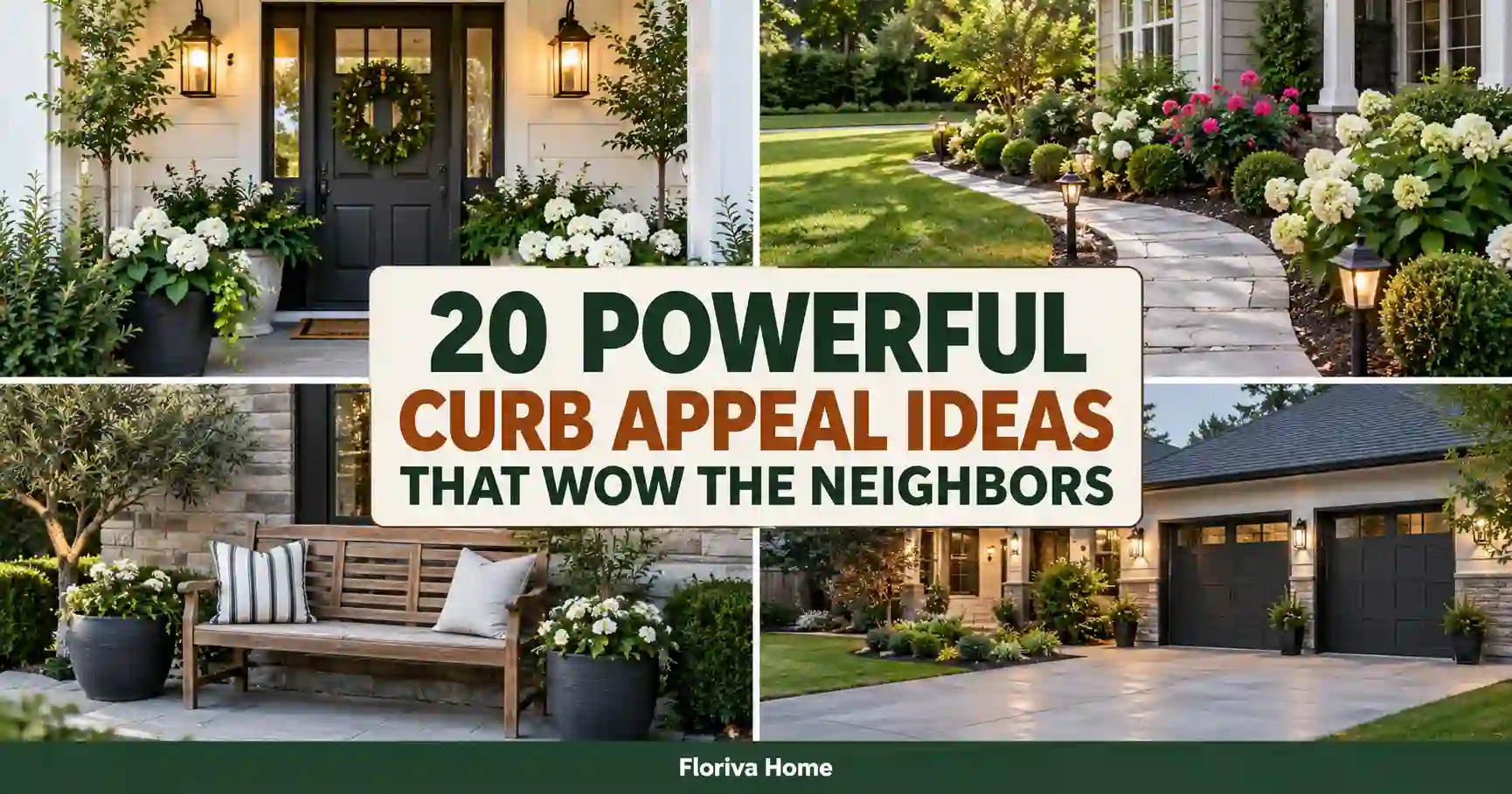
Your home’s exterior creates an impression before anyone reaches the front door, and thoughtful curb appeal can make that first look feel polished, welcoming, and distinctly yours. These curb appeal ideas cover everything from statement doors and creative landscaping to porch styling and practical lighting.
Whether you have a spacious front yard, a compact townhouse entrance, or a modest bungalow, you’ll find approachable ways to refresh the space without making it feel overdone. The goal is simple: combine attractive details with smart choices that make your home look cared for, inviting, and memorable from the street.
1. Make the Front Door the Star
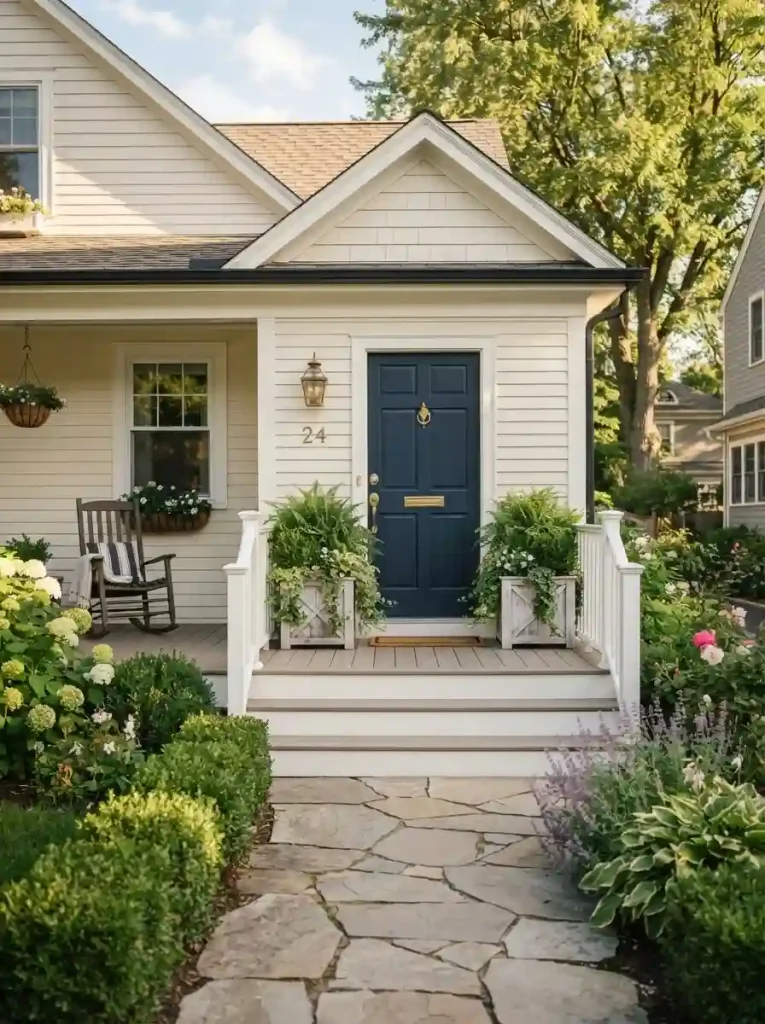
A bold front door can completely change how the entire facade feels. Navy creates a classic contrast against light siding or brick, while brass hardware adds warmth without requiring a major renovation. Choose an exterior-rated paint and finish the look with matching planters placed on both sides.
Keep the surrounding area relatively simple so the door remains the focal point. A clean doormat, polished handle, and healthy greenery can make the entrance feel intentional rather than crowded. This approach works especially well when the rest of your exterior is neutral and needs one memorable detail.
2. Give Your House Numbers a Modern Upgrade
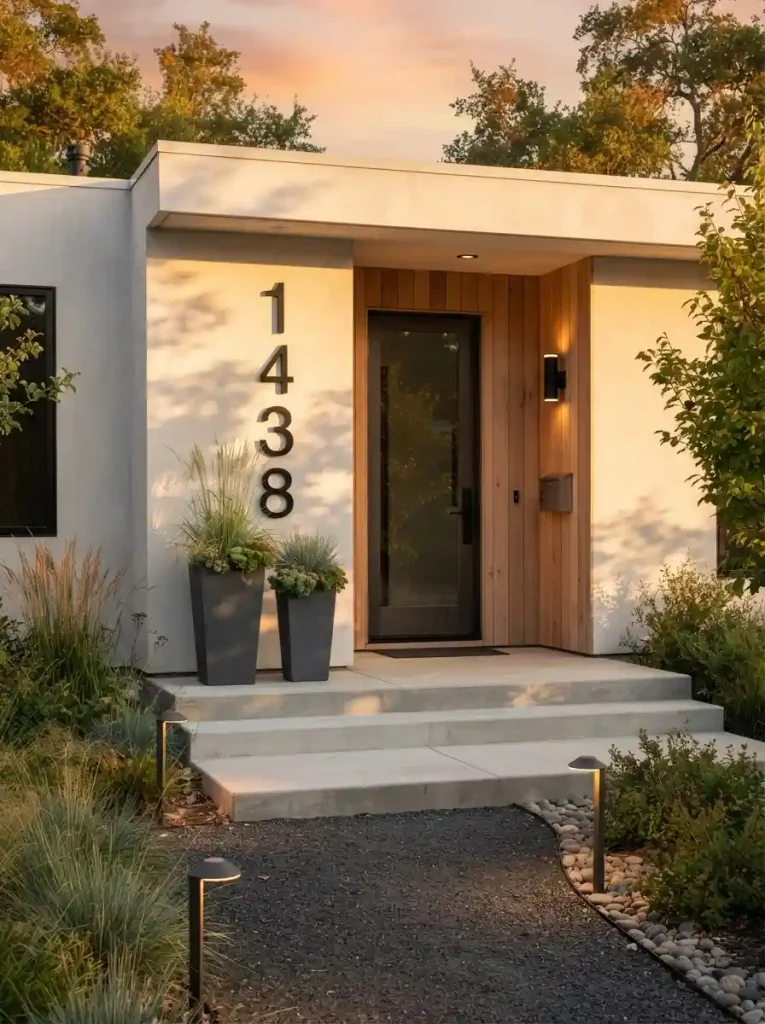
- Choose oversized numbers: Larger house numbers are easier to read from the street and create a stronger architectural detail.
- Match the finish: Matte black works beautifully with modern, white, gray, or natural wood exteriors.
- Consider placement: Install numbers where visitors can see them without searching around the doorway.
- Keep spacing consistent: Even alignment makes inexpensive hardware look considerably more polished.
- Coordinate nearby details: Repeat the same finish on a light fixture, mailbox, or door hardware.
For a particularly clean result, mount the numbers directly onto the facade rather than placing them on a decorative plaque. This simple change gives a townhouse or contemporary home a sharper appearance while improving everyday practicality for guests, deliveries, and emergency visitors.
3. Create a Cottage-Style Garden Walkway
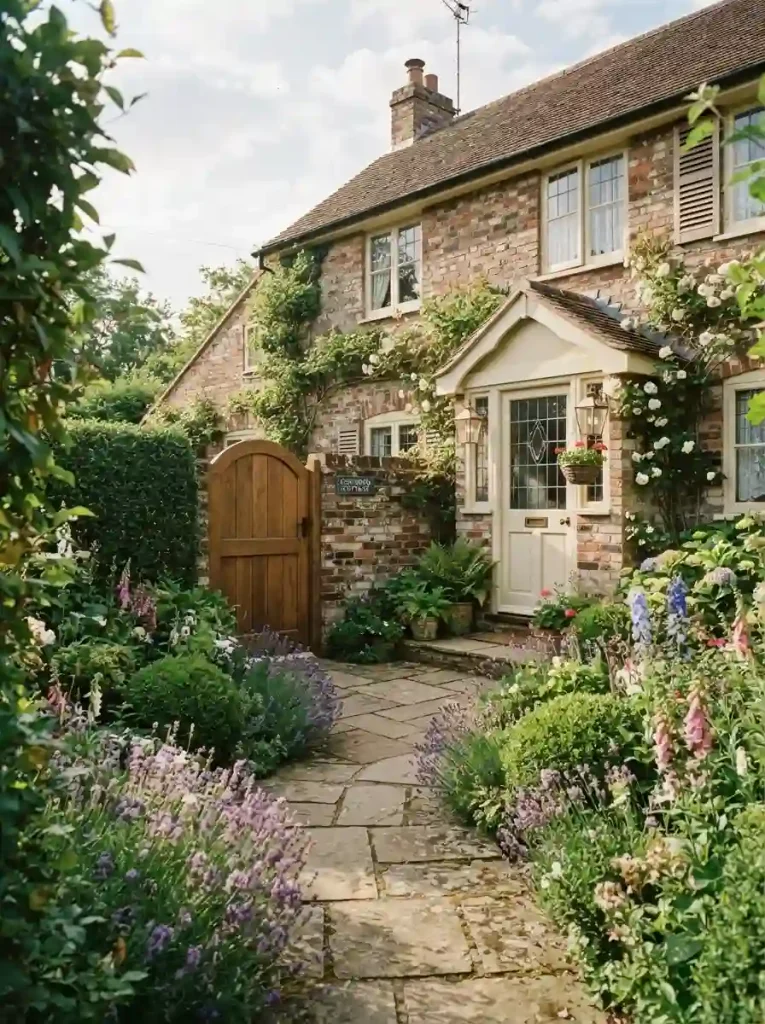
Quick Tip: Let the walkway curve gently instead of creating a perfectly straight route. Even a subtle change in direction can make a small front garden feel more layered and interesting.
Combine low boxwood with flowering plants at different heights, keeping taller growth toward the back of the border. Stone paving adds texture while cream trim and vintage-style lanterns reinforce the cottage character. Leave enough walking space around plantings so the entrance remains practical.
Choose plants suited to your climate and sunlight rather than copying a specific garden palette. Lavender, for example, needs plenty of sun and well-drained soil, while the overall cottage effect can be recreated with locally appropriate flowering plants.
4. Frame the Yard With a Sculptural Tree
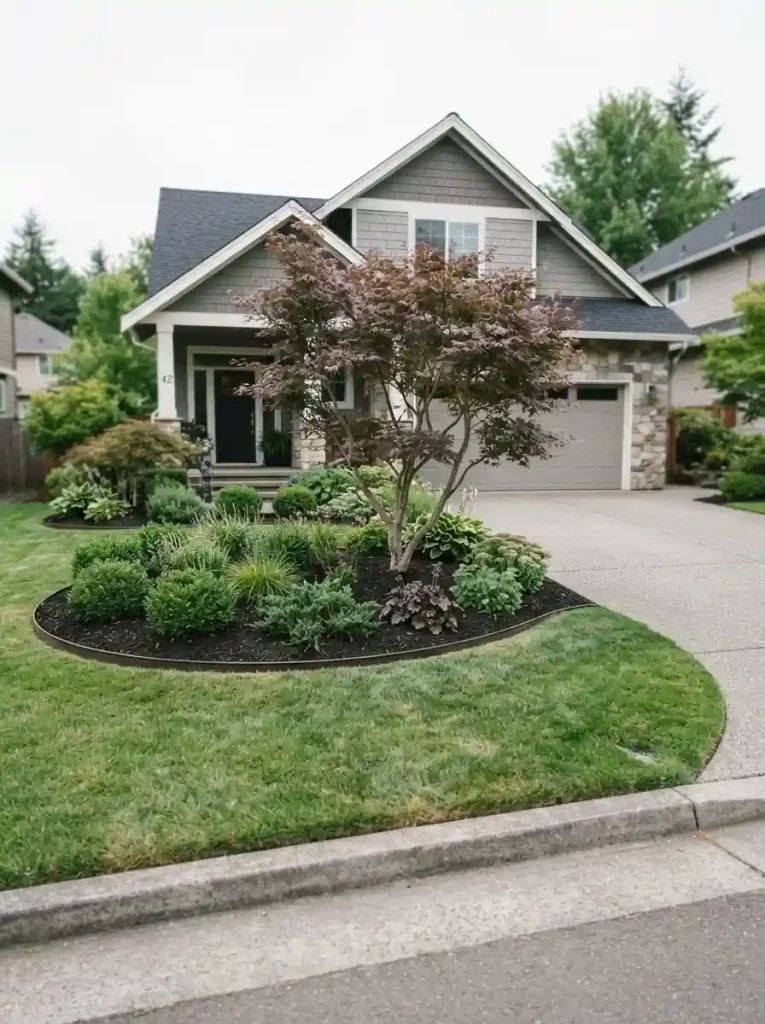
BEFOREThe front lawn feels flat because everything sits at the same visual height. There is plenty of open grass, but nothing naturally draws attention toward the entrance.
AFTERA carefully positioned ornamental tree creates a central focal point without overwhelming the yard. A defined mulch ring, low shrubs, and crisp lawn edging make the landscape appear organized while leaving plenty of usable open space.
This idea works particularly well for homeowners who want noticeable landscaping without filling every available area with plants. Select a tree that fits its mature size and place it where roots, branches, and shade will not interfere with paths, utilities, or the house.
5. Turn the Porch Into an Outdoor Welcome
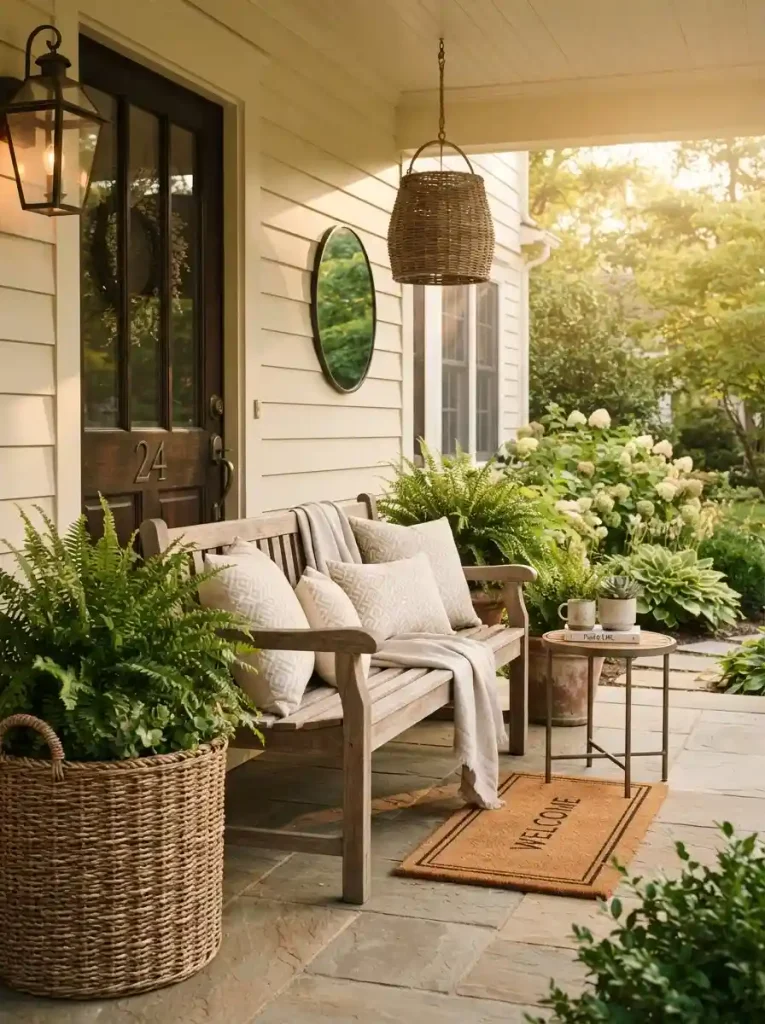
- Start with one useful seating piece, such as a narrow bench, and choose a weather-resistant cushion in a restrained pattern.
- Add one woven planter with healthy greenery or a fern to soften the porch’s hard architectural lines.
- Use a compact side table only if space allows, keeping the route to the door completely clear.
- Choose natural materials such as rattan, woven fiber, or wood to introduce texture without overcrowding the entrance.
A porch does not need to be large to feel inviting. The most successful arrangements balance comfort with clear circulation, allowing visitors to approach the door easily while still giving the space a relaxed, lived-in character.
6. Use Vertical Planters in a Small Entry
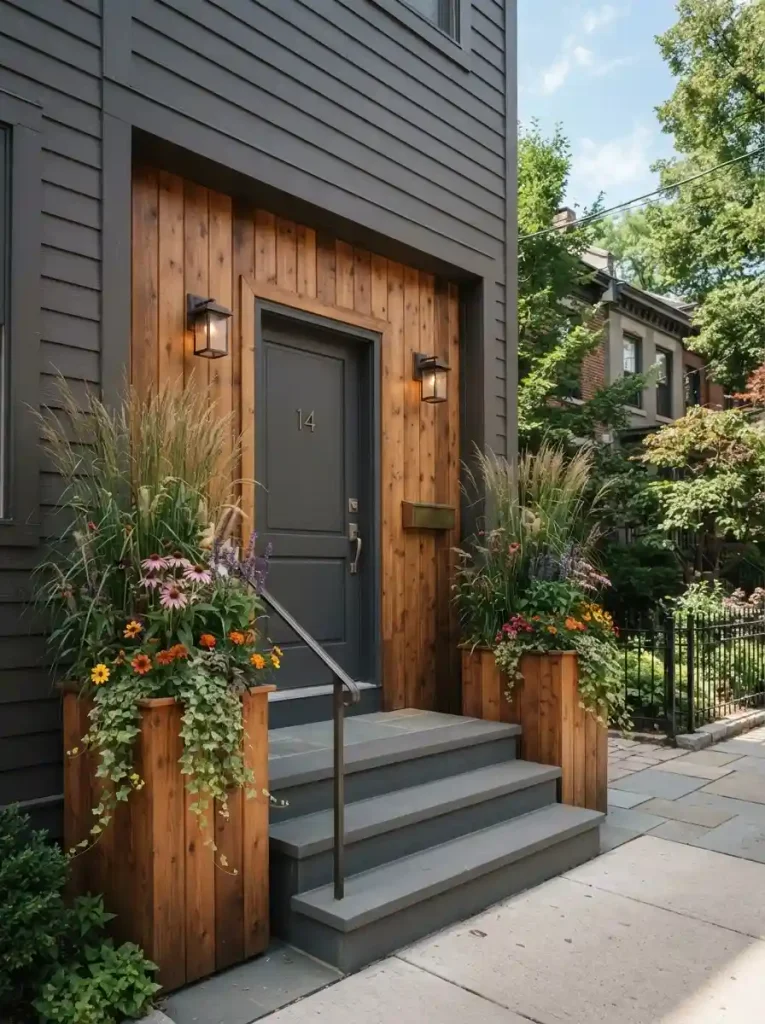
| Approach | Best Choice | Why It Works |
| Narrow Entry | Tall cedar planter | Uses vertical space while preserving walking room |
| Modern Home | Simple geometric planter | Matches clean architectural lines |
| Cottage Home | Wood planter with flowers | Adds warmth and seasonal color |
| Low Maintenance | Grasses and hardy foliage | Needs less frequent attention |
Vertical planting is especially useful for townhouse facades where traditional garden beds may be impossible. The combination of warm cedar, dark charcoal, and lively foliage creates contrast without requiring a large landscaping project or extensive front-yard space.
7. Add Personality With Coordinated Color
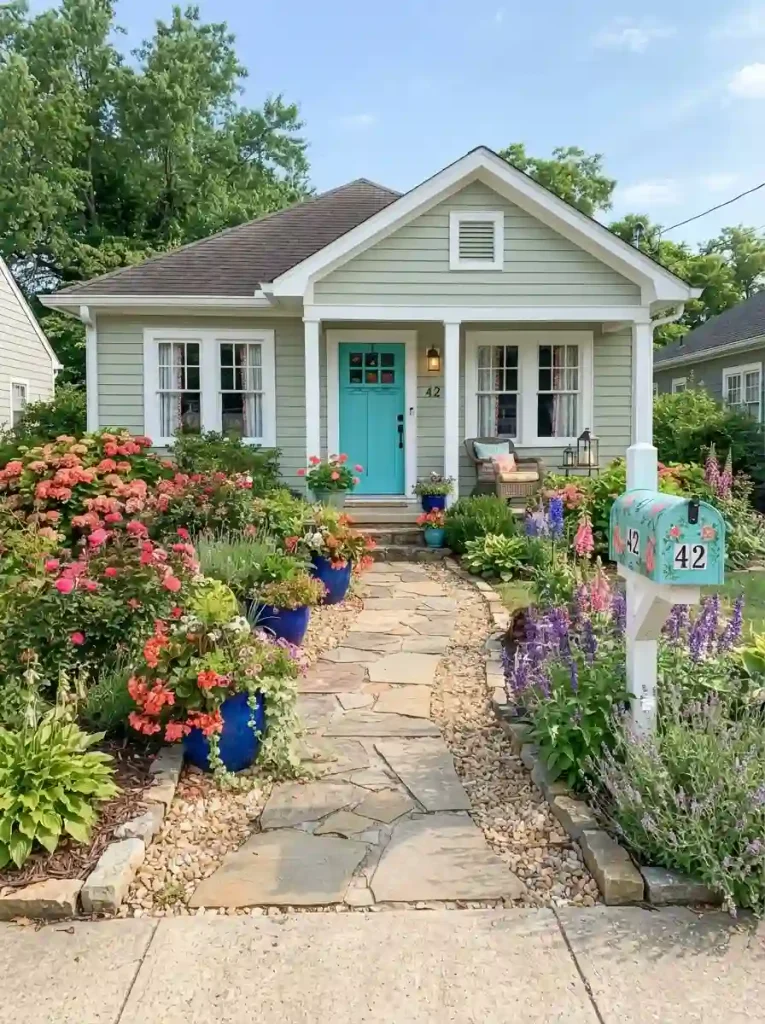
DO
- Choose one dominant exterior color and one or two supporting shades.
- Repeat colors in small details such as pots, flowers, or the mailbox.
- Use white or another neutral tone to visually balance brighter colors.
- Select flowering plants that complement the permanent colors of the house.
DON’T
- Use several unrelated bright colors across every surface.
- Paint architectural features without considering the existing siding or brick.
- Let seasonal flowers become the only source of color.
- Overload a small bungalow with competing decorative details.
A cheerful palette works because the colors are repeated intentionally. For example, a turquoise door can connect with blue ceramic pots while coral flowers provide contrast. The result feels energetic but still organized, making a colorful exterior look thoughtfully designed rather than random.
8. Try a Low-Maintenance Gravel Landscape
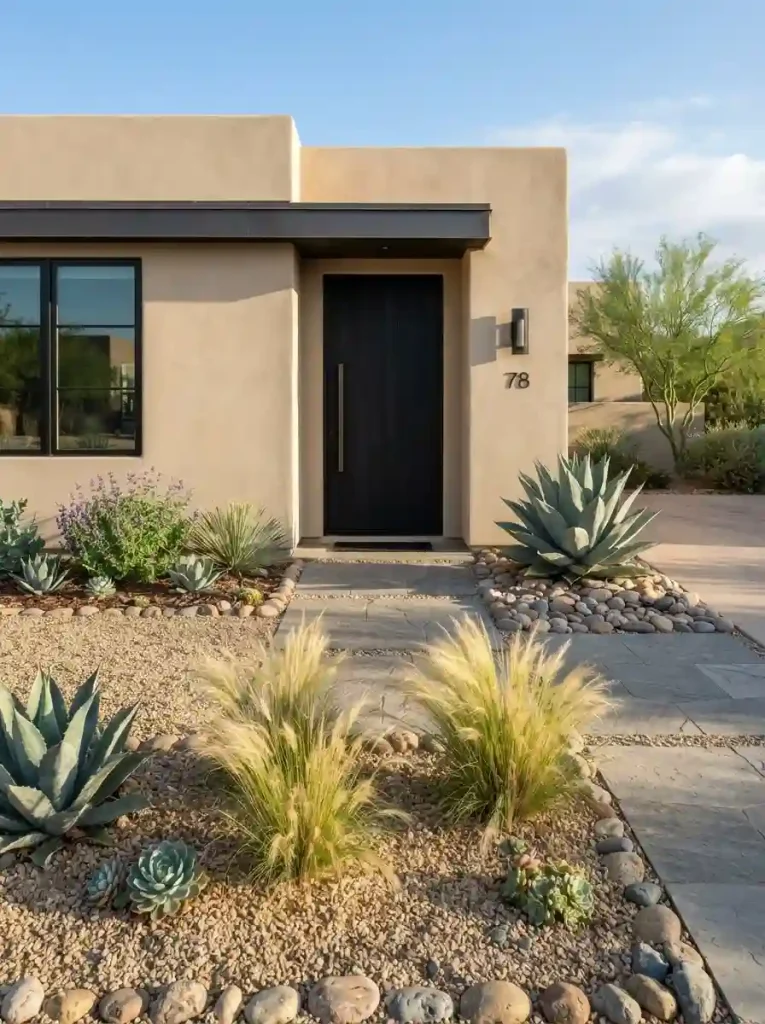
Cost: Moderate
Time: One to three days
Skill Level: Beginner to intermediate
Best For: Sunny yards, busy homeowners, and contemporary homes
Materials: Landscape gravel, edging, drought-tolerant plants, decorative stones, weed barrier where appropriate
Space Needed: Works in both narrow beds and larger front gardens
Gravel landscaping can reduce mowing and create a crisp transition between the lawn, driveway, and house. Use several gravel sizes or textures sparingly, then add plants with contrasting forms. Always consider local drainage and plant requirements before replacing a lawn with hardscape or gravel.
9. Bring Farmhouse Charm to the Front Yard
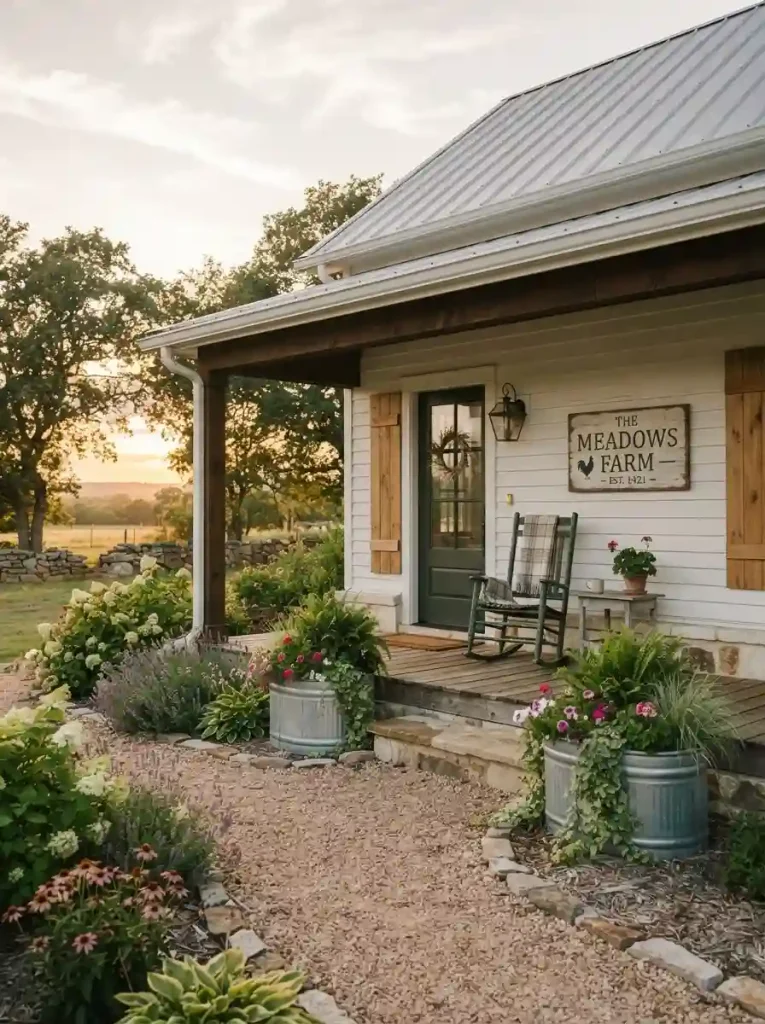
The farmhouse look depends more on restrained materials than on filling the porch with decorations. Galvanized metal, natural wood, white siding, and greenery create enough visual interest on their own. A single rocking chair can make the entrance feel lived-in while keeping the walkway clear.
For a personalized touch, use a small wooden sign rather than multiple signs and plaques. Position it where it complements the architecture instead of competing with the front door. Weather-resistant finishes will help outdoor materials maintain their appearance through changing seasons.
10. Illuminate the Walkway After Dark
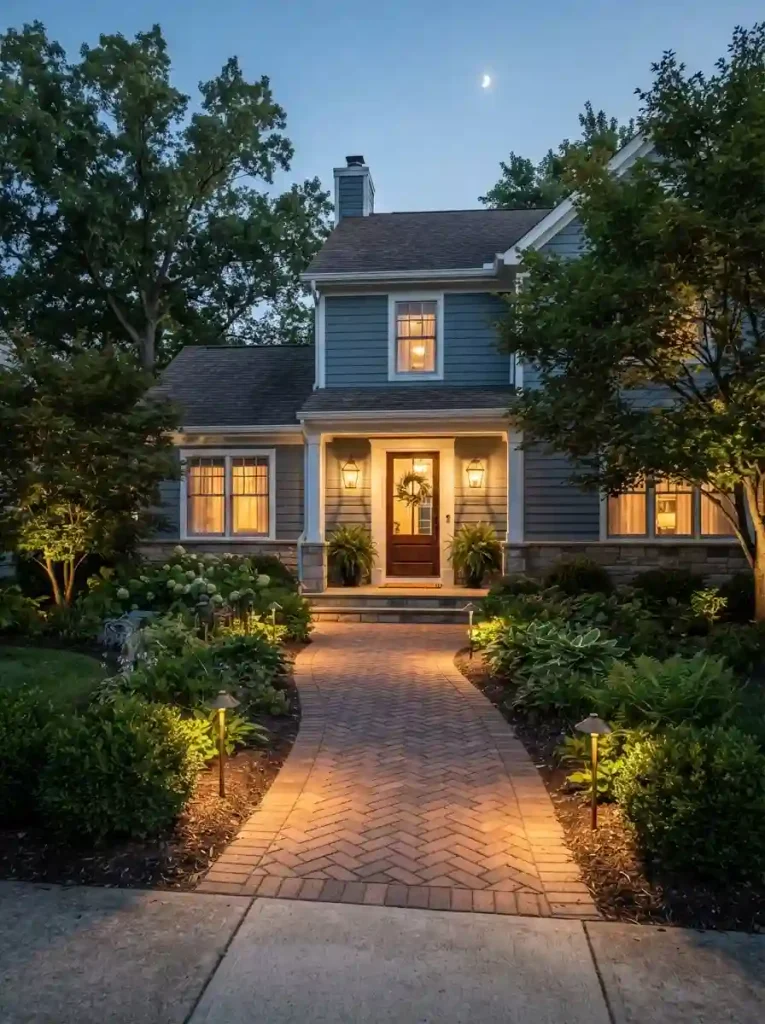
- Place low-level fixtures along the walkway to create a comfortable visual path.
- Aim lights downward so the beam highlights paving and planting without shining directly into visitors’ eyes.
- Combine path lighting with a softly illuminated front door for layered brightness.
- Keep fixture spacing consistent while avoiding a rigid runway effect.
- Use warm-toned lighting with brick, wood, stone, or neutral siding for a softer evening appearance.
Pathway lighting changes the way a home looks after sunset while making the route to the entrance easier to navigate. Instead of relying on one bright fixture, layering several gentle lights creates a welcoming atmosphere and gives landscaping more depth at night.
11. Upgrade the Mailbox With a Built-In Garden Bed
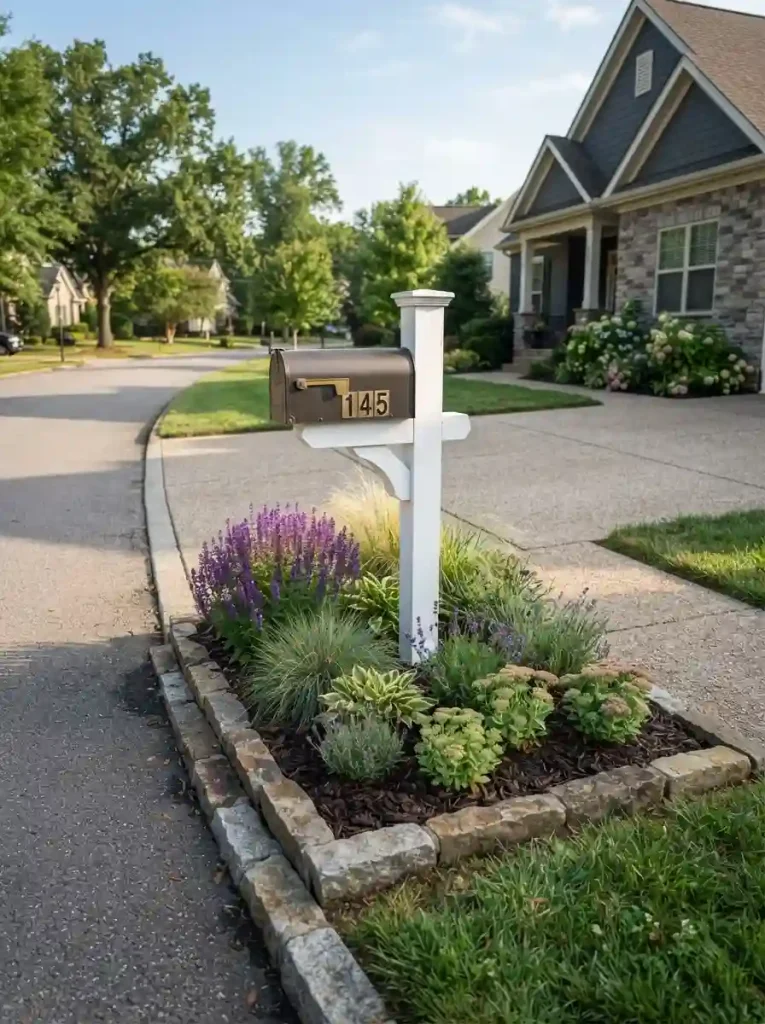
Quick Tip: Keep plants low enough that they never hide the mailbox, house numbers, or delivery area. Define the bed with stone or brick edging so it looks like an intentional extension of the front landscape.
Choose compact flowers, grasses, and foliage suited to your climate, then repeat one or two colors already used near the house. Dark mulch can make the planting bed look finished while also creating contrast around the mailbox post.
A mailbox garden is a small project with a surprisingly visible impact because it sits close to the street. Healthy planting and a tidy border can make an ordinary mailbox feel like part of the overall landscape design without requiring a large investment.
12. Define the Lawn With Crisp Edging
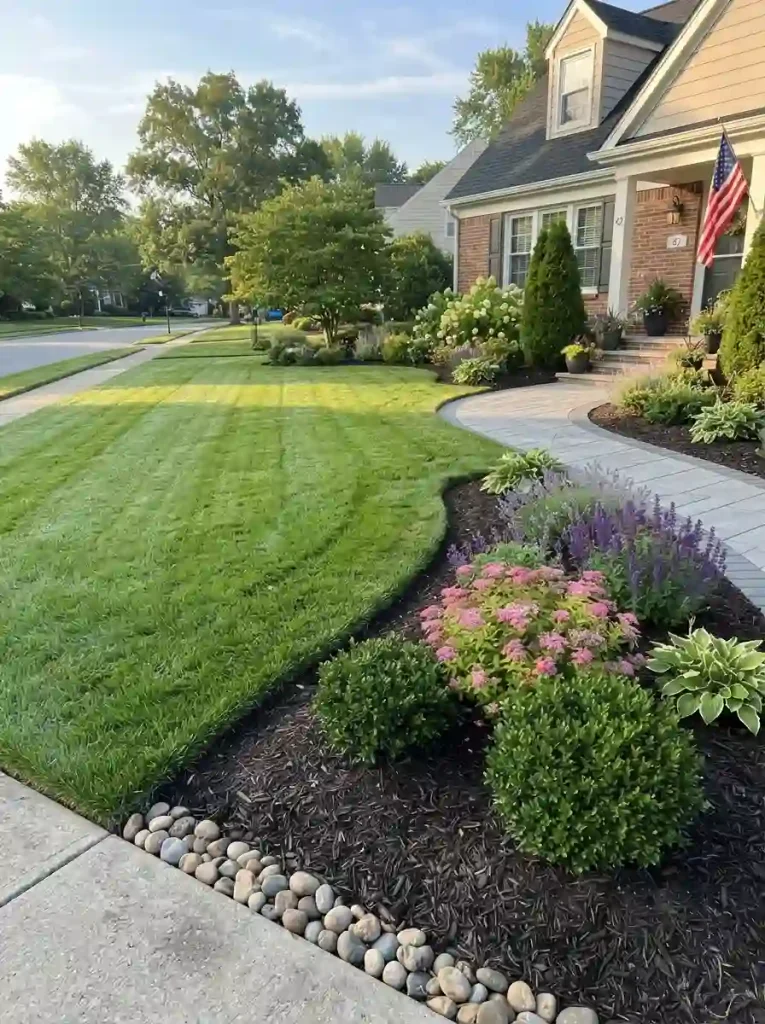
BEFOREThe grass gradually blends into mulch and planting beds, creating soft, uneven boundaries. Even attractive plants can look less polished when the edges are difficult to distinguish.
AFTERA smooth, continuous border separates lawn from garden areas and creates stronger visual lines. The defined edge makes existing landscaping appear more organized without requiring additional plants or decorations.
This is particularly useful when your landscaping already looks attractive but somehow feels unfinished. Rather than adding more plants, sharpen the existing borders. The contrast between neatly trimmed grass and defined planting areas can make the entire front yard look better maintained.
13. Install Window Boxes Full of Seasonal Color
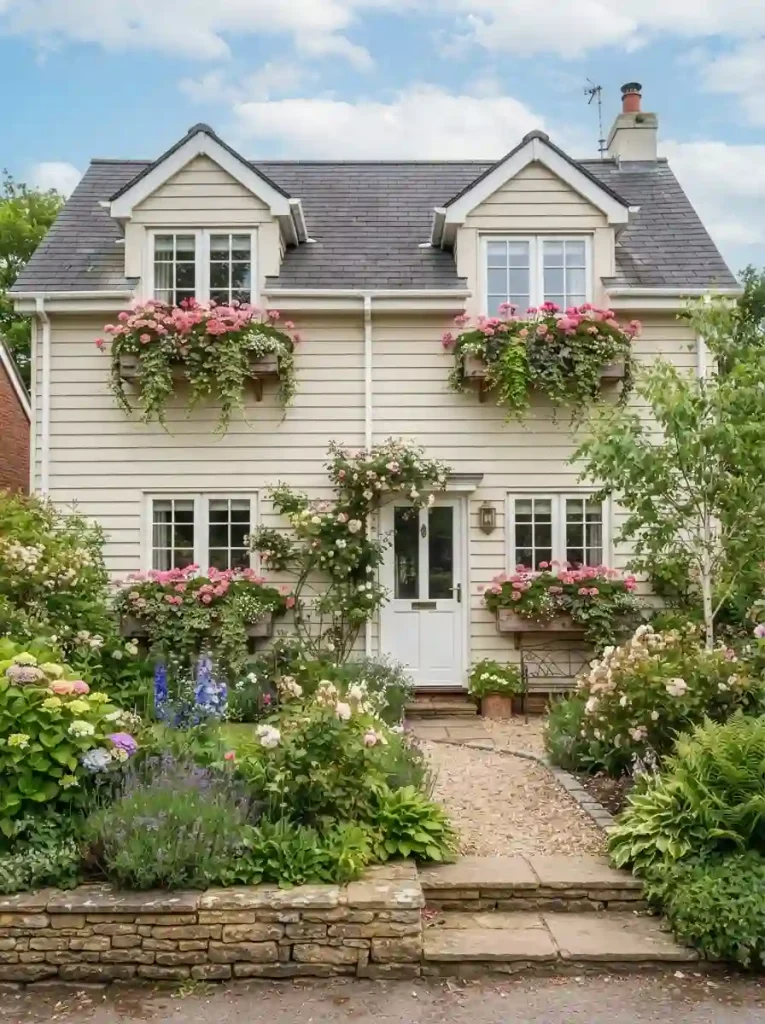
- Choose containers that complement the home’s trim, siding, brick, or shutters.
- Secure each box properly and provide adequate drainage before adding soil.
- Combine upright flowers with trailing plants to create a layered appearance beneath the windows.
- Select plants according to sunlight exposure and seasonal temperatures rather than color alone.
- Keep watering needs practical so the boxes remain attractive without becoming difficult to maintain.
Window boxes create a direct connection between the house and garden by placing seasonal color at eye level. They are particularly effective on homes with plain exterior walls or limited ground space, adding personality without changing the architecture.
14. Create a Welcoming Stone-Step Entrance
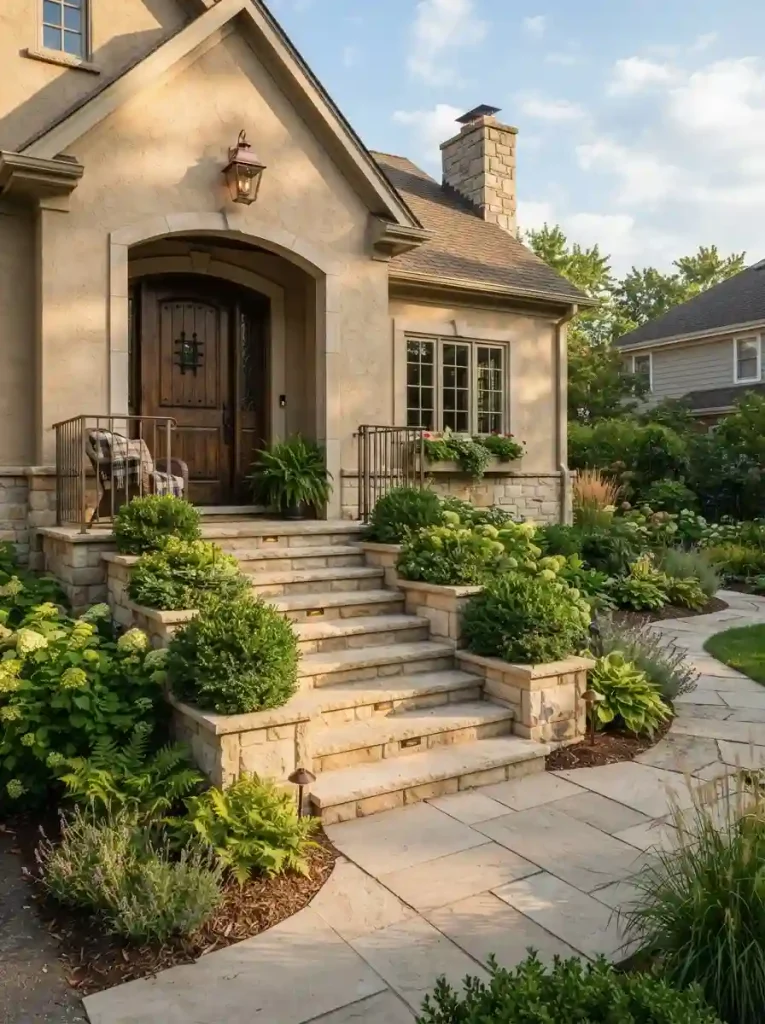
| Approach | Look | Best Use |
| Natural Stone | Warm and textured | Traditional or cottage homes |
| Smooth Stone | Clean and refined | Modern exteriors |
| Stone + Greenery | Soft and welcoming | Homes with garden entrances |
| Stone + Lighting | Dramatic after dark | Front steps needing visibility |
A stone-focused entry gives a home a grounded, established appearance. Natural variations in texture and color prevent the facade from looking too uniform, while greenery softens harder surfaces. Choose slip-resistant materials and keep stairs free of decorative objects that could become trip hazards.
15. Pair Evergreen Shrubs With Seasonal Flowers
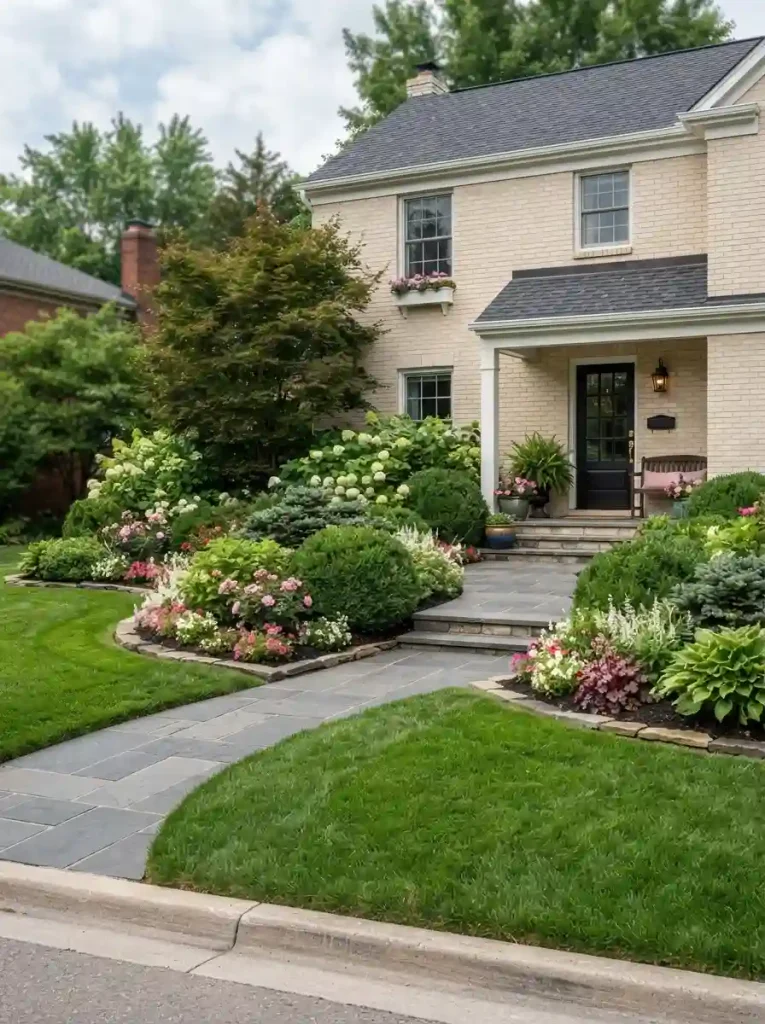
DO
- Use evergreen shrubs as the permanent structure of the planting bed.
- Add seasonal flowers for temporary bursts of color.
- Repeat flower colors near the entrance for visual connection.
- Choose plants with different heights to create depth.
DON’T
- Depend entirely on annual flowers for year-round structure.
- Mix too many unrelated plant shapes in a small bed.
- Place mature shrubs where they will eventually block windows.
- Ignore the light and water requirements of the plants.
A combination of permanent greenery and seasonal flowers gives the front yard structure throughout the year while allowing its appearance to change. Keep evergreens as the visual foundation and use flowers for temporary color so the landscape remains attractive between blooming periods.
16. Make a Small Front Yard Feel Layered
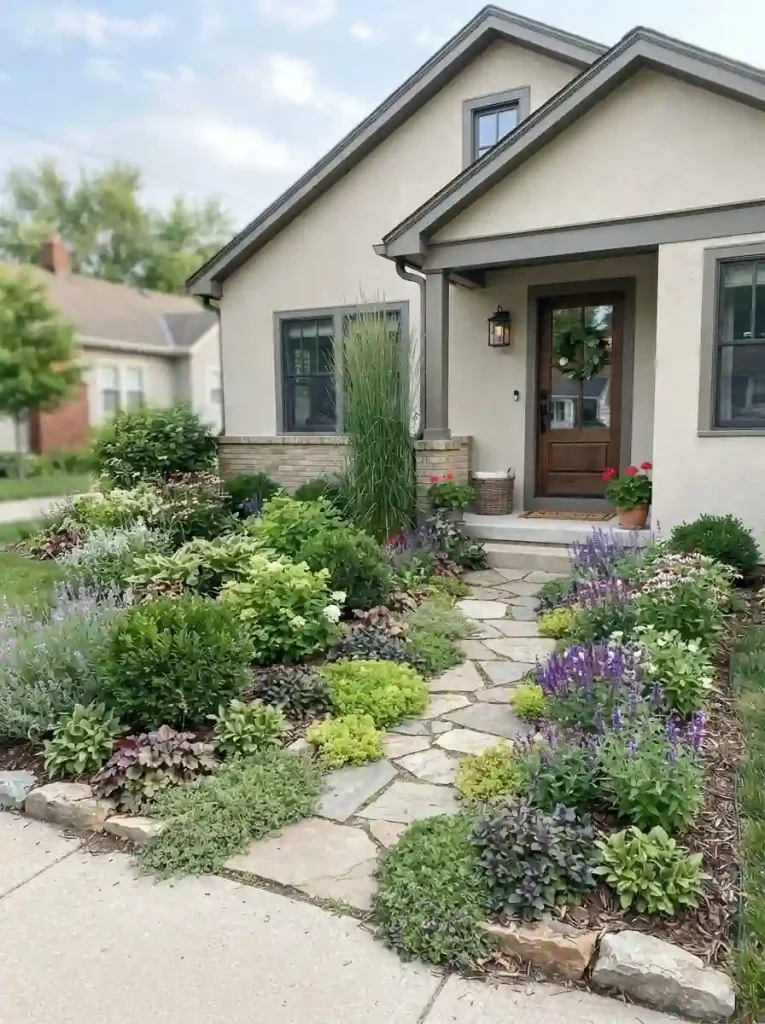
Best For: Compact yards, townhouses, and narrow front gardens
Planting Order: Groundcover near paths, medium shrubs in the middle, taller feature plants toward the back
Space Needed: Small footprint with varied vertical heights
Maintenance: Moderate, depending on plant selection
Key Result: More depth without filling the entire yard
Layering gives a compact yard depth without requiring more square footage. Groundcovers soften edges, medium shrubs provide body, and one taller plant creates vertical interest. Keep the center of the walkway open so the landscaping frames the entrance rather than making it feel enclosed.
17. Add a Simple Wooden Privacy Screen
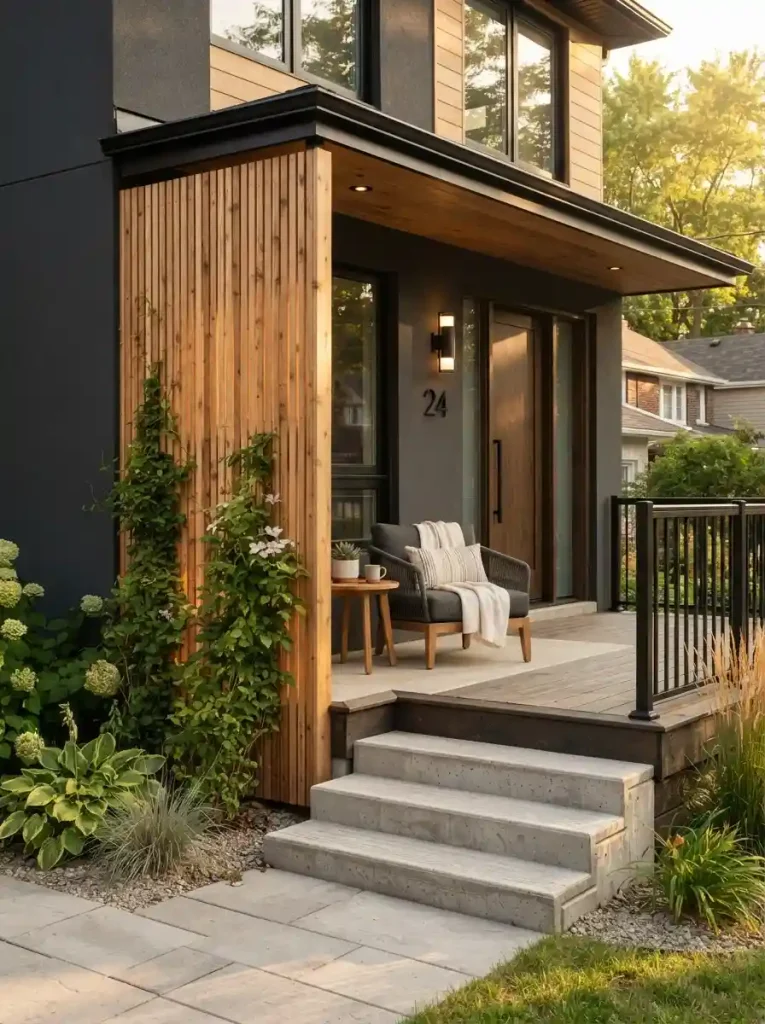
A partial wooden screen can make an exposed entrance feel more private without completely closing it off from the street. A slatted design allows sunlight and airflow to pass through, while natural cedar brings warmth to a neutral facade.
Keep the screen proportional to the porch and use exterior-rated wood, fasteners, and protective finishes. Adding climbing greenery near the base can soften the straight lines, but avoid plants that could become too heavy or difficult to maintain against the structure.
18. Refresh the Driveway Border
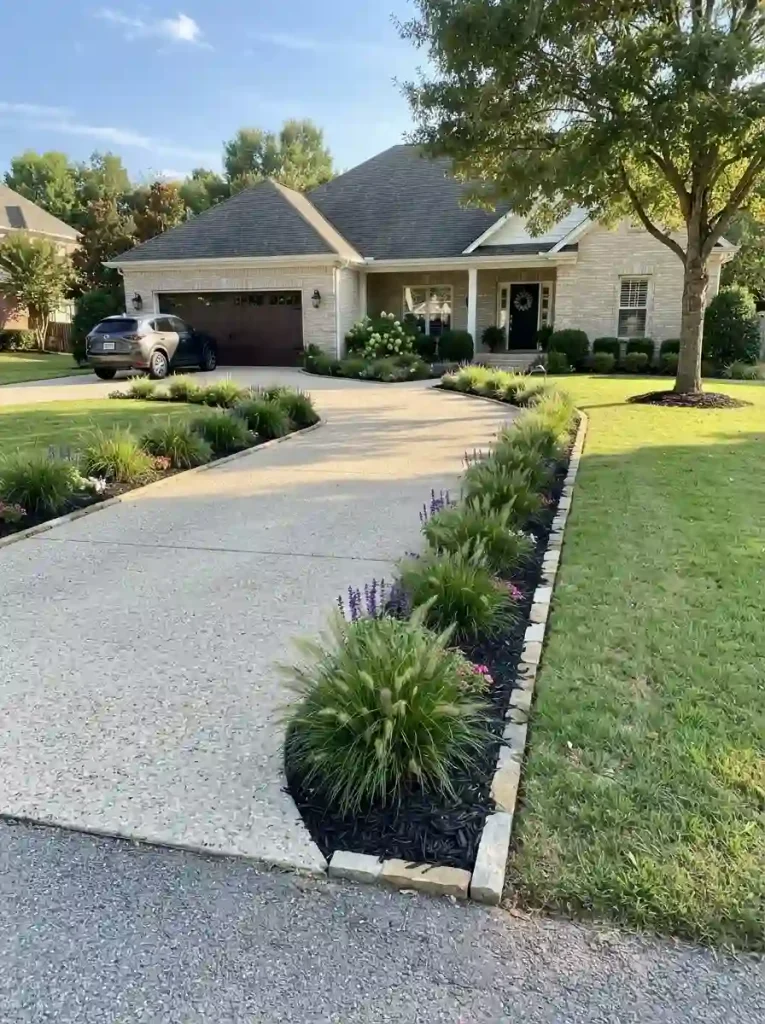
- Use repeating ornamental grasses to create rhythm along the driveway edge.
- Add dark mulch or gravel for contrast against the pavement.
- Install clean stone or metal edging to control grass growth.
- Leave enough clearance for vehicles, doors, and routine driveway maintenance.
- Repeat a few plants rather than filling the border with many unrelated varieties.
Treating the driveway as part of the landscape can make the entire front exterior feel more cohesive. Repetition creates a strong visual rhythm, while low-growing or upright plants provide texture without creating a dense barrier beside parked vehicles.
19. Give the Porch Ceiling a Fresh Finish
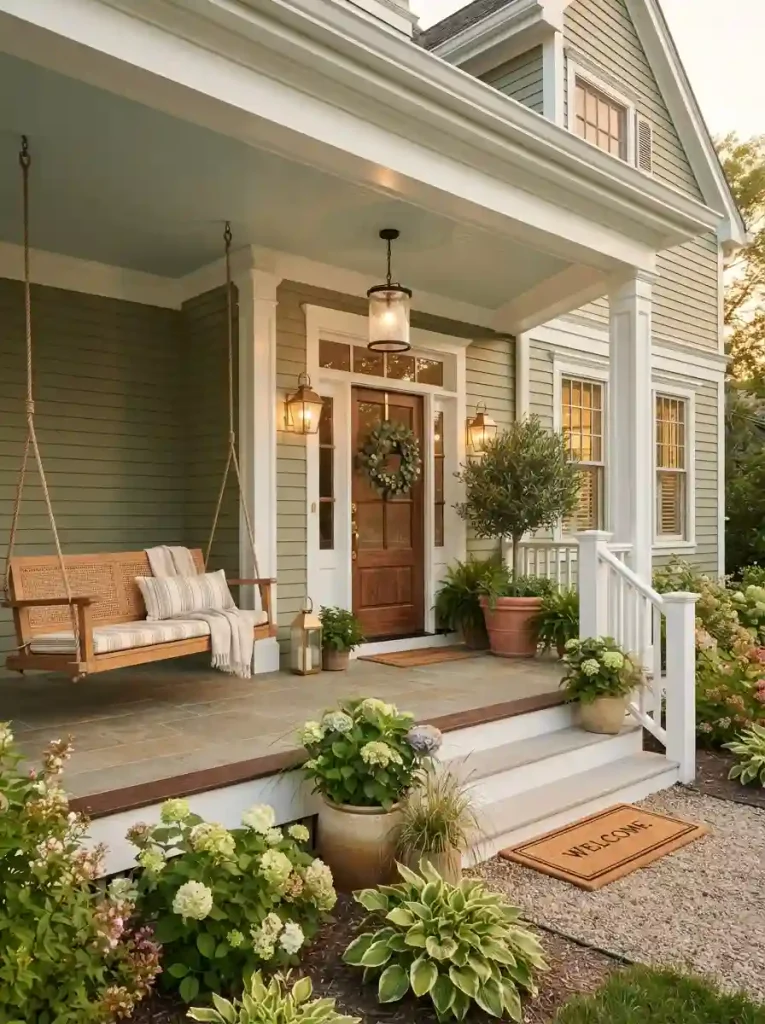
Quick Tip: Do not paint over peeling or damaged areas before identifying the cause. Clean the surface, repair problem spots, and address moisture issues first so the new finish lasts longer.
A freshly finished porch ceiling can make the whole entrance feel cleaner and more complete. A soft neutral keeps the space bright, while a subtle blue-green tone can introduce traditional character without competing with the facade.
Use an exterior-rated coating appropriate for the ceiling material and local climate. Pair the refreshed ceiling with a simple pendant or ceiling fixture for a finished look, keeping the rest of the porch furnishings intentionally understated.
20. Combine Three Layers of Curb Appeal
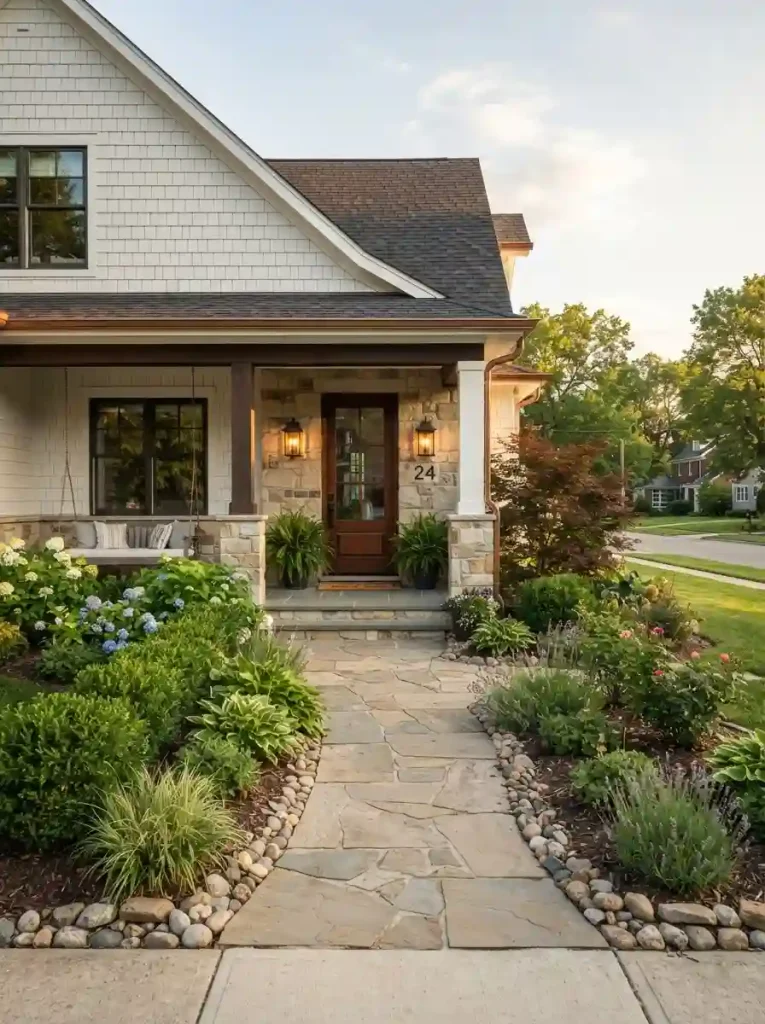
BEFOREThe exterior has several attractive elements, but they feel disconnected because the architecture, landscaping, and finishing details were chosen separately. The result can look acceptable without feeling especially cohesive.
AFTERThree coordinated layers bring the property together: clean architectural features, balanced landscaping, and carefully selected finishing details. Repeated materials, colors, and textures help the eye move naturally from the street toward the front door.
The strongest curb appeal usually comes from several small decisions working together rather than one oversized decoration. Focus first on what needs improvement, then add details that support the overall design. This creates an exterior that feels intentional without becoming overly decorated.
Conclusion
Great curb appeal does not require a complete exterior makeover. A refreshed front door, defined garden borders, thoughtful planting, attractive lighting, or a few well-chosen architectural details can make a meaningful difference. The best curb appeal ideas are the ones that suit your home’s style, available space, climate, maintenance routine, and budget.
Start with one area that feels unfinished, improve it carefully, and build from there. With the right combination of practical improvements and personal touches, your front exterior can feel welcoming, polished, and unmistakably connected to the home behind it.
Frequently Asked Questions
1. What is the easiest way to improve curb appeal?
Painting the front door, cleaning the exterior, trimming overgrown plants, refreshing the doormat, and improving house-number visibility are among the simplest changes. These projects can make an entrance look noticeably fresher without requiring major landscaping or construction work.
2. How can I improve curb appeal on a small budget?
Focus on high-visibility areas first. Clean pathways and siding, add fresh mulch, trim shrubs, repaint the mailbox or door, and use a few attractive containers. Reusing healthy existing plants and dividing perennials can also reduce landscaping costs.
3. Which plants are good for front-yard curb appeal?
The best choices depend on your climate, sunlight, soil, and maintenance preferences. Evergreen shrubs provide year-round structure, while ornamental grasses, flowering perennials, and seasonal flowers can add texture and color. Choose plants according to their mature size so they do not eventually block windows or pathways.
4. How do I make my house look more welcoming from the street?
Create a clear visual route toward the front door. Keep the walkway tidy, make the entrance easy to identify, use attractive lighting, maintain healthy landscaping, and add one or two personal details such as a welcoming planter or comfortable porch seat.
5. Does curb appeal increase home value?
A well-maintained exterior can contribute to a strong first impression, but the financial effect varies by property, location, market conditions, and the improvements made. Practical maintenance and improvements that enhance appearance and usability can generally make a property more appealing to potential buyers.