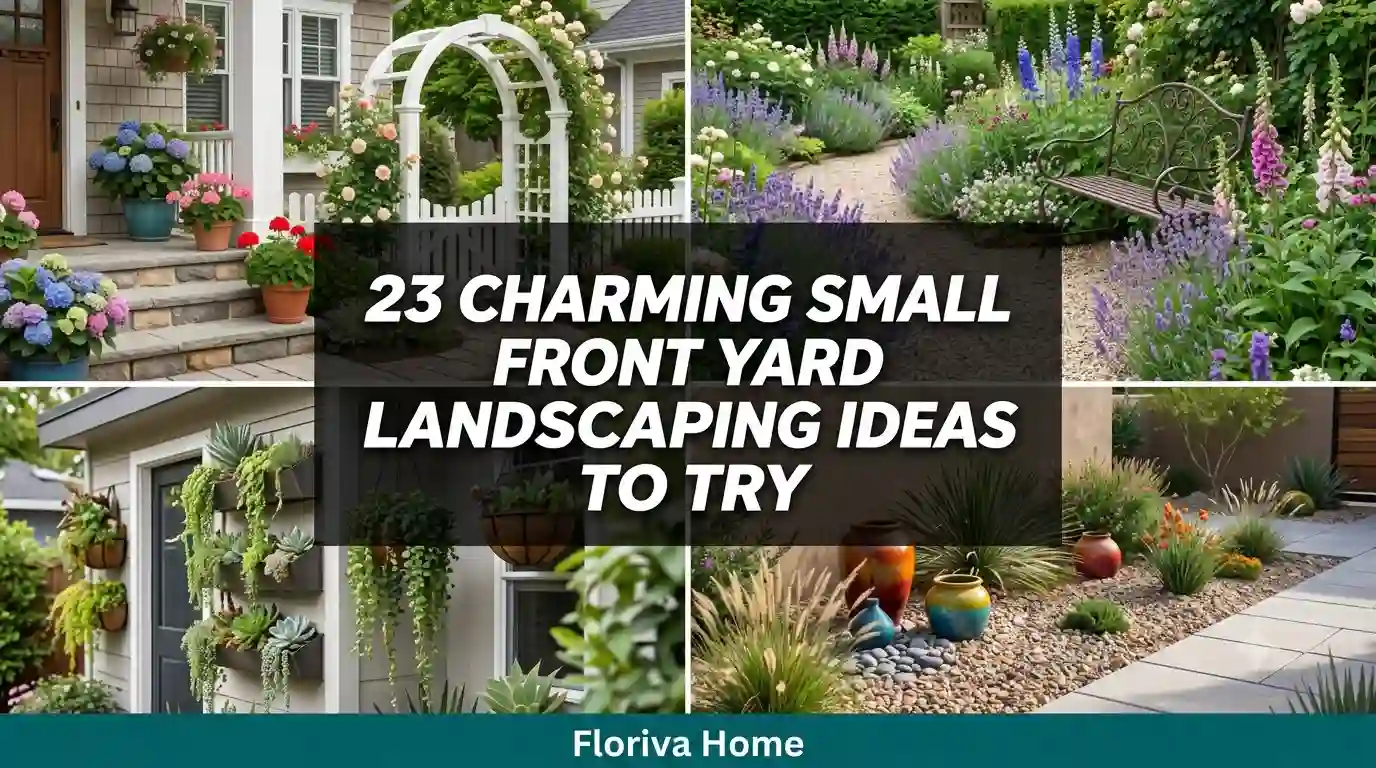
23 Charming Small Front Yard Landscaping Ideas to Try
Your front yard may be short on space, but that doesn’t mean it has to be short on charm. A thoughtfully designed small front yard can feel welcoming, polished, and full of personality without requiring a huge budget or endless maintenance.
These small front yard landscaping ideas are perfect if you’re working with a narrow entryway, a compact lawn, a tiny garden bed, or even just a little strip of soil beside your walkway.
The trick is to make every part of the space count. A few well-chosen plants, attractive edging, smart vertical elements, and a clear pathway can completely change how your home looks from the street.
You’ll find ideas here for different styles and budgets, from colorful cottage-style planting to simple modern landscaping. Pick the features that fit your home, climate, and maintenance routine, then make them your own.
1. Create a welcoming curved walkway
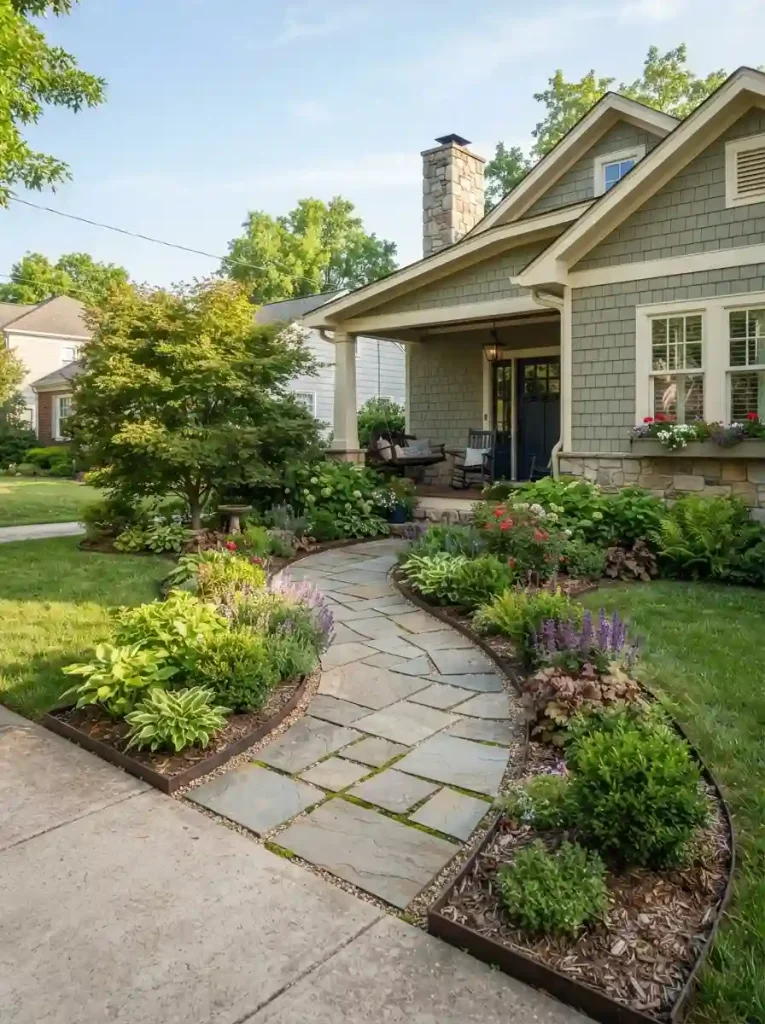
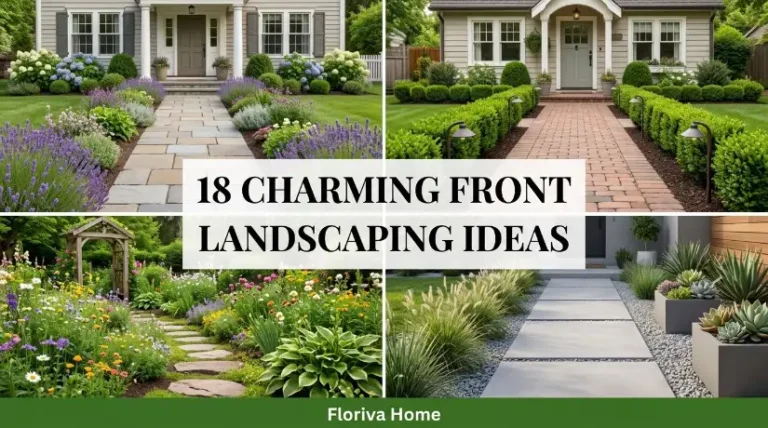
A curved walkway can make a small front yard feel more interesting without taking up much additional space. Instead of directing visitors straight from the sidewalk to the front door, a gentle curve creates a sense of movement and makes the entrance feel more intentional.
Use stepping stones, brick, concrete pavers, or natural stone depending on the style of your home. Keep the curve subtle so the path remains practical rather than looking forced.
You can soften both sides with low-growing plants, ornamental grasses, or a narrow strip of mulch.
If your yard is extremely small, even a slight offset in the walkway can create the same visual effect without sacrificing valuable planting space.
Expert Tip:
Keep the walking surface wide enough for comfortable everyday use, and choose materials that complement the colors already found on your home’s exterior.
2. Frame the front door with symmetrical planters
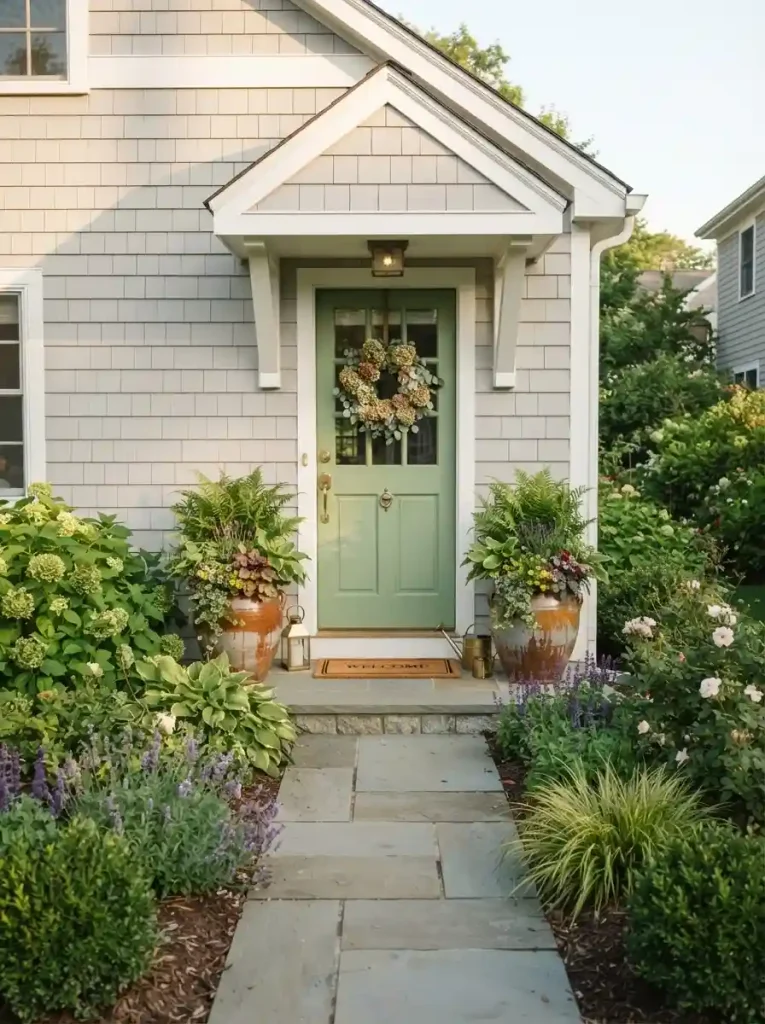
Sometimes the easiest way to improve a small front yard is to focus attention on the front door.
Place matching planters on either side of the entrance for an instantly organized appearance. Tall containers can add height without requiring additional garden space, making them especially useful when the yard is narrow.
Choose evergreen plants if you want year-round structure, or use seasonal flowers for more color. You can also combine a taller centerpiece with trailing plants around the edges.
Keep the containers proportional to the entrance. Oversized pots can make a compact porch feel crowded, while tiny containers may disappear against the house.
Expert Tip:
Matching planters create a classic look, but they don’t have to contain identical plants. Use similar shapes and colors while choosing plants suited to each container’s light conditions.
3. Replace part of the lawn with a flower border
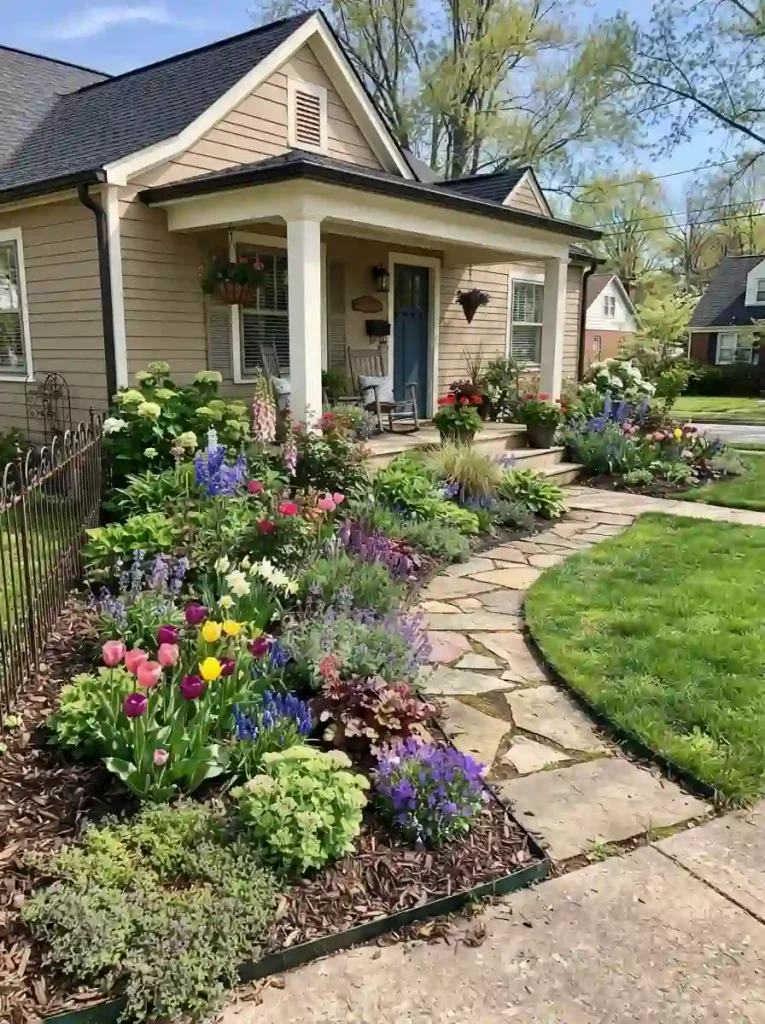
A tiny lawn can sometimes make a front yard feel even smaller because it leaves a large open area without much visual interest.
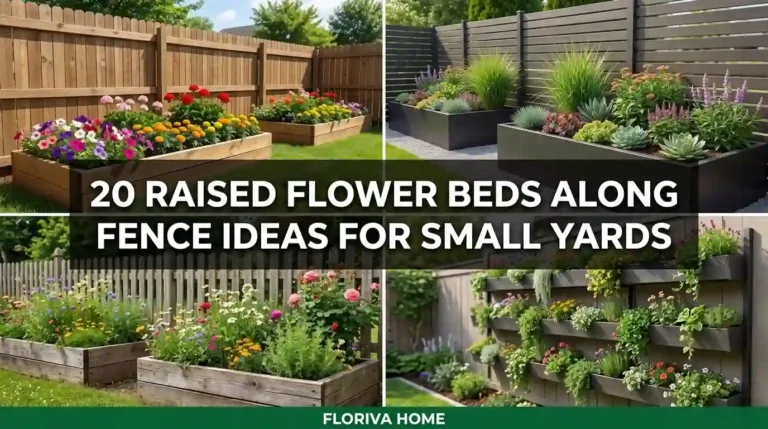
Instead, carve out a narrow flower border along one side or around the edge of the lawn. This gives you room for color and texture while keeping enough grass for an open, uncluttered appearance.
Layer plants by height. Put taller flowers toward the back, medium-sized perennials in the middle, and low ground covers near the walkway.
For a cohesive look, repeat a few plant varieties rather than filling the entire border with dozens of unrelated species.
Expert Tip:
Choose plants according to your yard’s sunlight and local growing conditions first. A simple border of healthy plants will always look better than an elaborate collection struggling in the wrong location.
4. Use dwarf shrubs for year-round structure
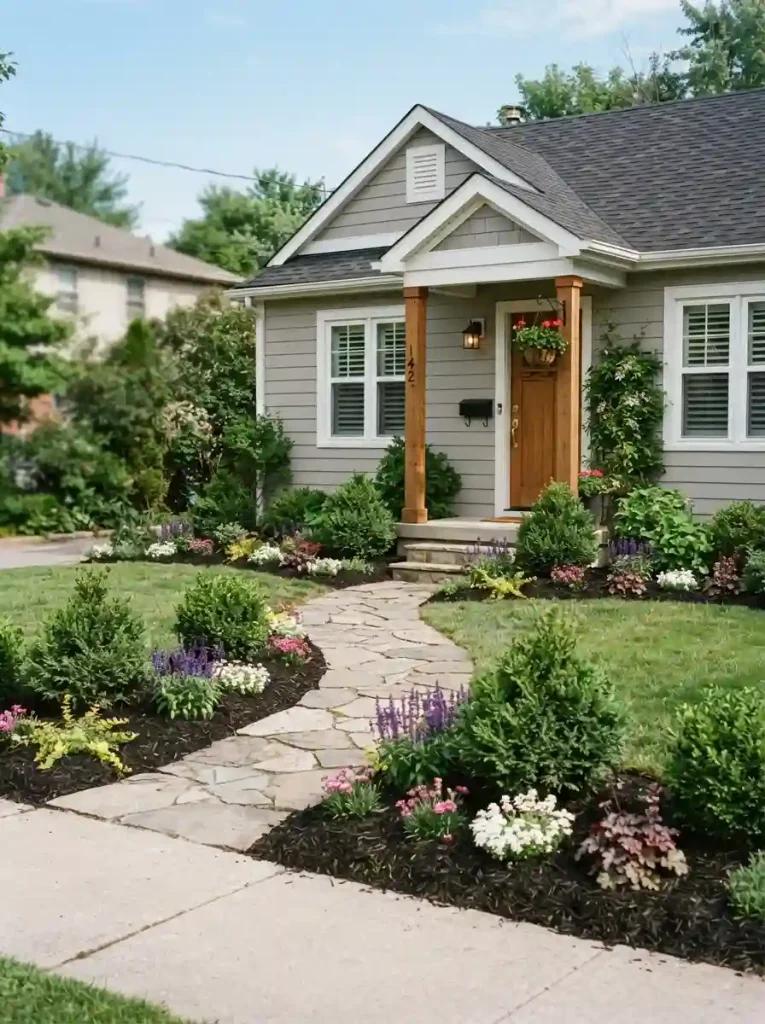
Dwarf shrubs can be incredibly useful when you want your front yard to look finished throughout the year.
Unlike fast-growing shrubs that can quickly overwhelm a small property, compact varieties provide structure while staying easier to manage. Place them near the foundation, along a pathway, or at the corners of your planting beds.
Mix evergreen shrubs with flowering plants for contrast. The evergreen foliage provides a dependable backdrop while seasonal flowers add bursts of color.
Before planting, check the mature width of each shrub. A plant that looks perfectly sized at the garden center can become surprisingly large after a few seasons.
Expert Tip:
Think about the plant’s mature dimensions, not its current size. Leaving enough room around dwarf shrubs will reduce pruning and prevent your small yard from becoming overcrowded.
5. Add a narrow vertical garden
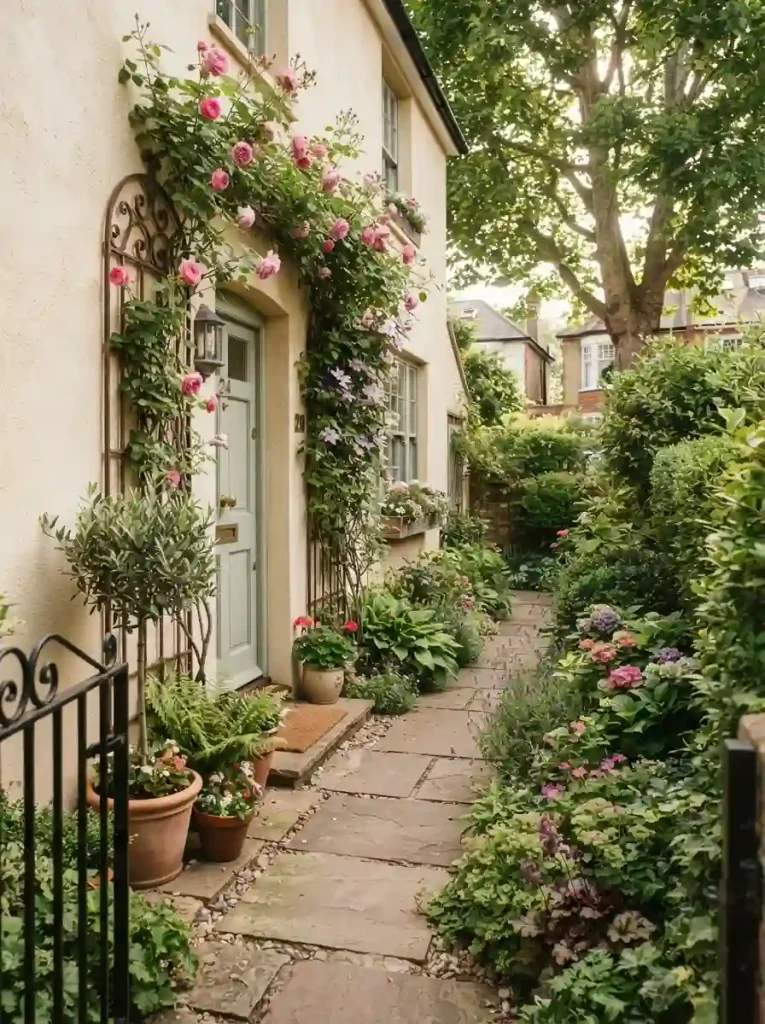
When ground space is limited, look upward.
A narrow trellis or vertical planter can add greenery without taking valuable space away from your walkway or planting beds. This works particularly well beside a porch, fence, garage wall, or front gate.
Climbing plants can soften hard surfaces and introduce height into an otherwise flat landscape. Alternatively, wall-mounted planters can hold herbs, trailing flowers, or decorative foliage.
The key is to keep the installation visually light. A single well-designed vertical feature usually works better than covering every available wall with plants.
Expert Tip:
Secure trellises firmly and choose climbing plants that suit your climate. Fast-growing vines can become difficult to manage if they aren’t given enough support or regular trimming.
6. Try a charming cottage-style planting scheme
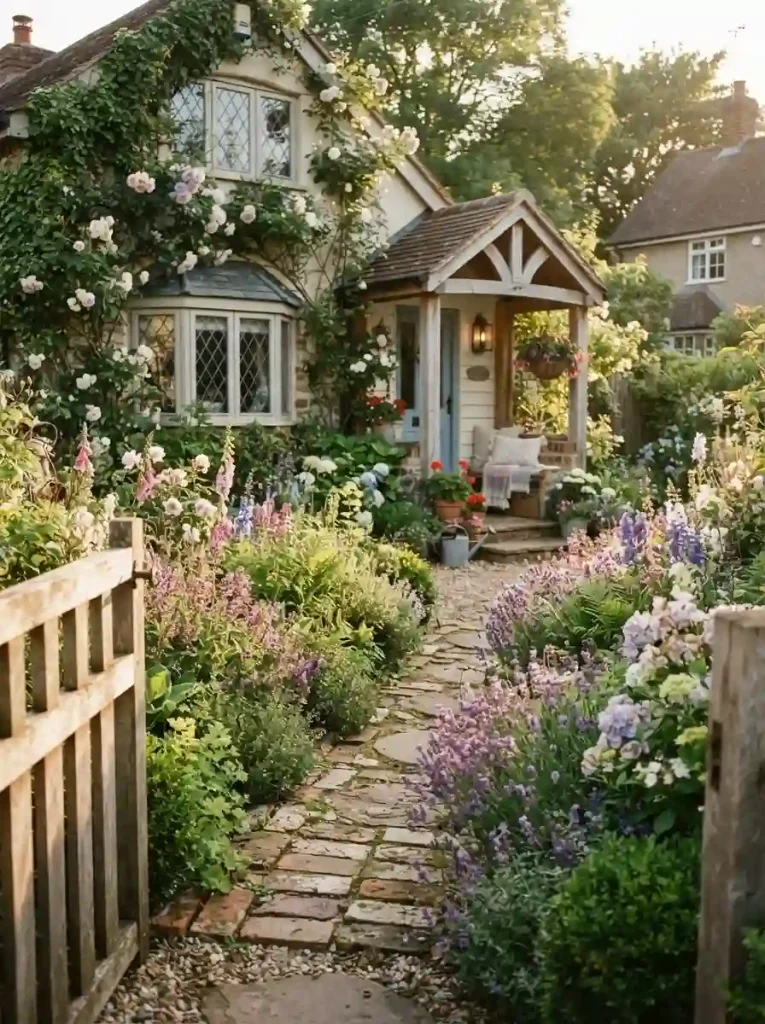
A cottage garden doesn’t need acres of space.
You can create the same relaxed feeling in a compact front yard by combining flowers, herbs, low shrubs, and informal planting around a simple pathway.
Choose a limited color palette so the garden doesn’t become visually chaotic. Soft pinks, whites, purples, blues, or warm yellows can each create a different mood.
Let plants overlap slightly instead of arranging everything in rigid rows. That casual layering makes a small space feel lush and abundant.
Add a small bench, vintage-style pot, or simple garden ornament if you have room, but don’t overcrowd the planting area.
Expert Tip:
Repeat your favorite flowers in several parts of the yard. Repetition creates cohesion and makes a small cottage garden feel thoughtfully designed rather than randomly planted.
7. Define the garden with attractive edging
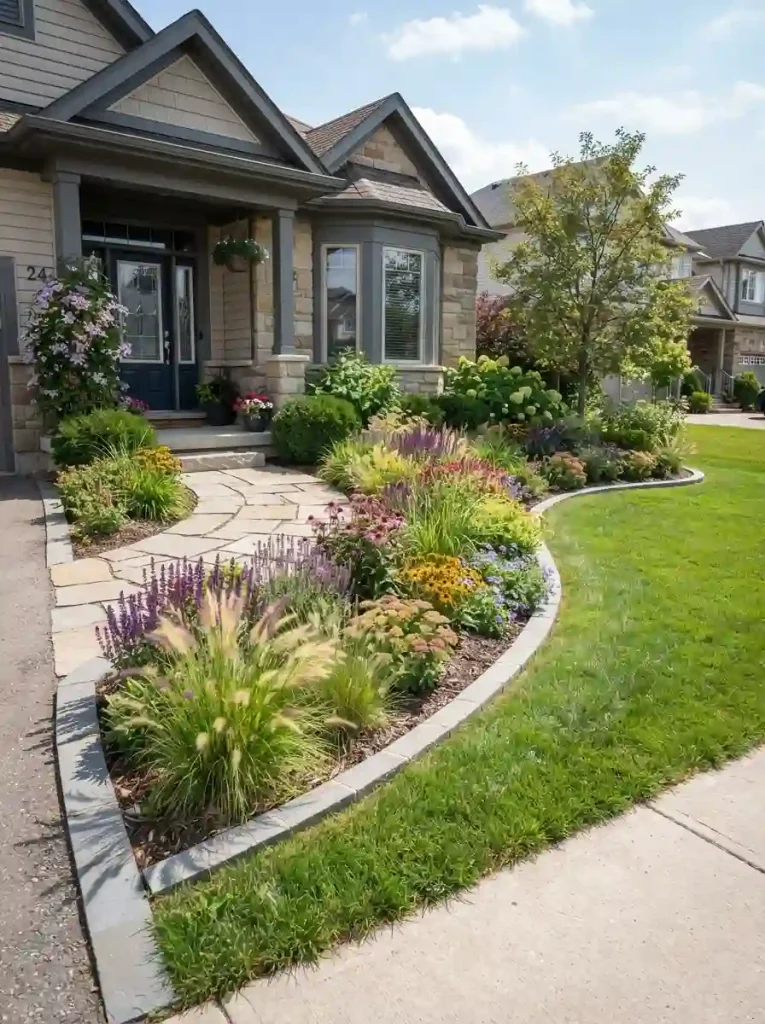
Clean garden edging can make a surprisingly big difference in a small front yard.
A defined border separates planting beds from grass, gravel, or walkways and gives the entire landscape a more finished appearance.
Brick, natural stone, metal edging, or even carefully arranged pavers can work well. Choose an edging material that relates to your home’s exterior rather than introducing another unrelated color or texture.
Curved edging can create a softer garden, while straight borders give the space a more structured appearance.
Expert Tip:
Keep the edging consistent throughout the yard. Using one main border material helps separate different areas without making a compact landscape feel visually fragmented.
8. Build a tiny rock garden
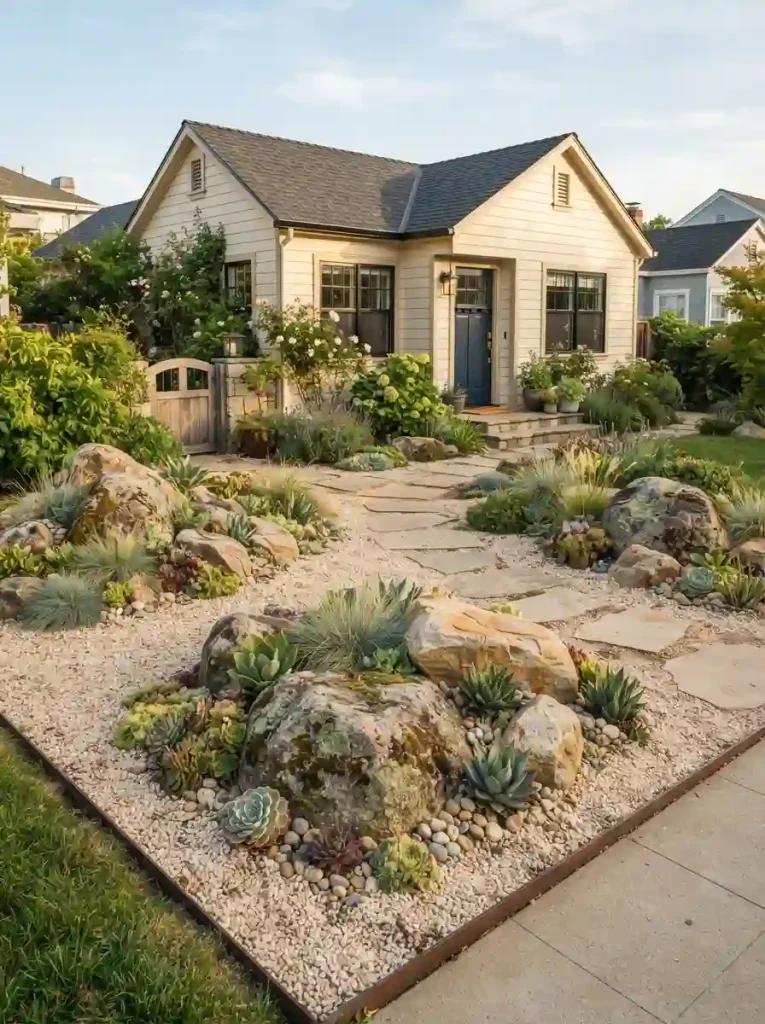
A rock garden can be an excellent solution when you want an attractive landscape with relatively little lawn maintenance.
Use a handful of larger stones as anchors and surround them with smaller gravel and drought-tolerant plants. Succulents, ornamental grasses, creeping plants, and other compact varieties can work beautifully in the right conditions.
Avoid covering the entire yard with random rocks. A restrained composition with intentional spacing will look much more polished.
This approach is especially attractive around modern homes, but you can soften it with flowering plants for a more traditional appearance.
Expert Tip:
Vary stone size while keeping the overall color family consistent. That gives the rock garden natural depth without making the design look scattered.
9. Plant a compact ornamental tree
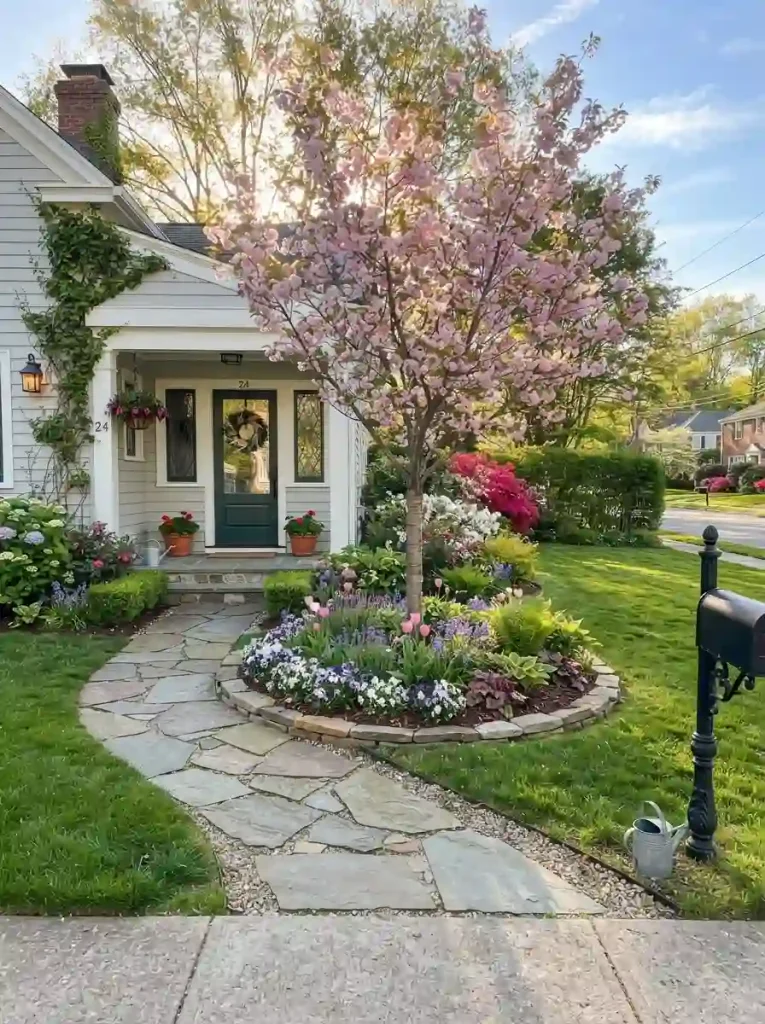
A small ornamental tree can become the focal point of a front yard without taking over the entire landscape.
Choose a species that stays appropriately sized for your property and consider its mature canopy before planting. A tree with spring flowers, attractive foliage, or interesting bark can provide several seasons of visual interest.
Place it where it won’t block the front door or obscure windows. Surround the trunk with a simple circular or irregular planting bed rather than filling the area with too many competing plants.
A single small tree can also give a flat front yard a much-needed sense of height.
Expert Tip:
Look beyond the tree’s current nursery size. Check mature height, canopy spread, root characteristics, and sunlight requirements before choosing its permanent location.
10. Make a narrow gravel garden
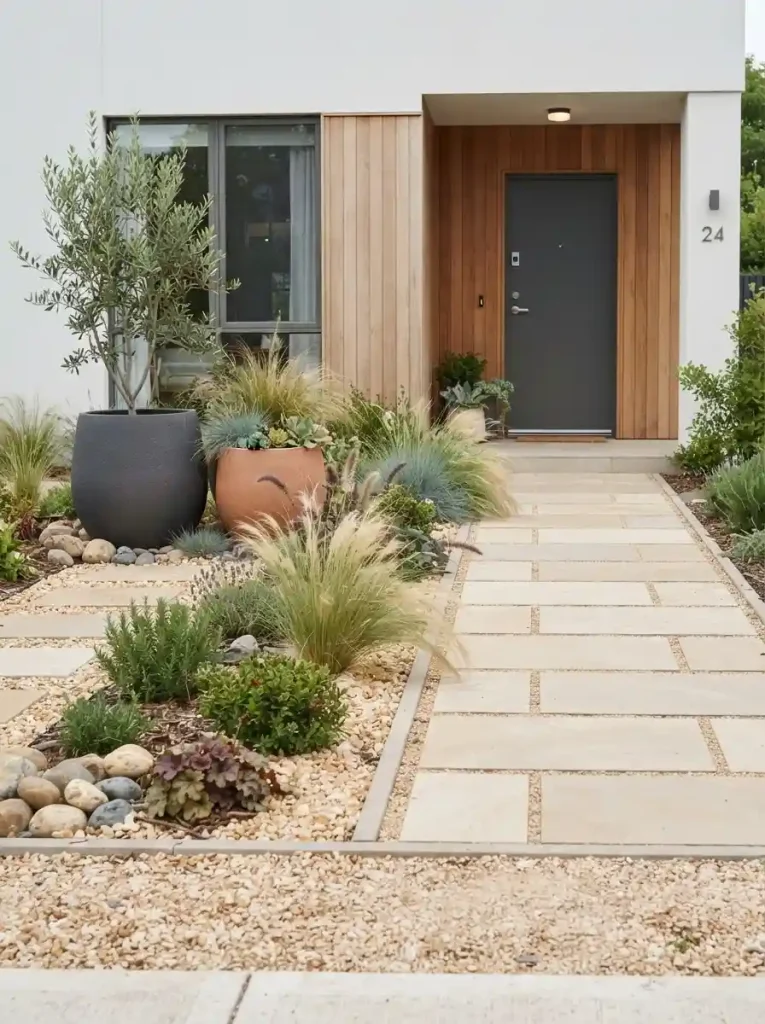
Gravel can make a small front yard feel intentionally designed while reducing the amount of lawn that needs regular care.
Create a narrow gravel section beside the walkway or use it as a base for containers and drought-tolerant plants. Choose gravel that complements your home’s siding, brick, stone, or driveway.
The secret is to give the gravel a clear boundary. Without edging, it can gradually spread into planting beds and walking areas.
Add a few larger stones, sculptural plants, or containers to keep the surface from looking flat.
Expert Tip:
Install a suitable landscape fabric or properly prepared base beneath decorative gravel where appropriate. Good preparation helps keep weeds and unwanted movement under control.
11. Add window boxes for instant color
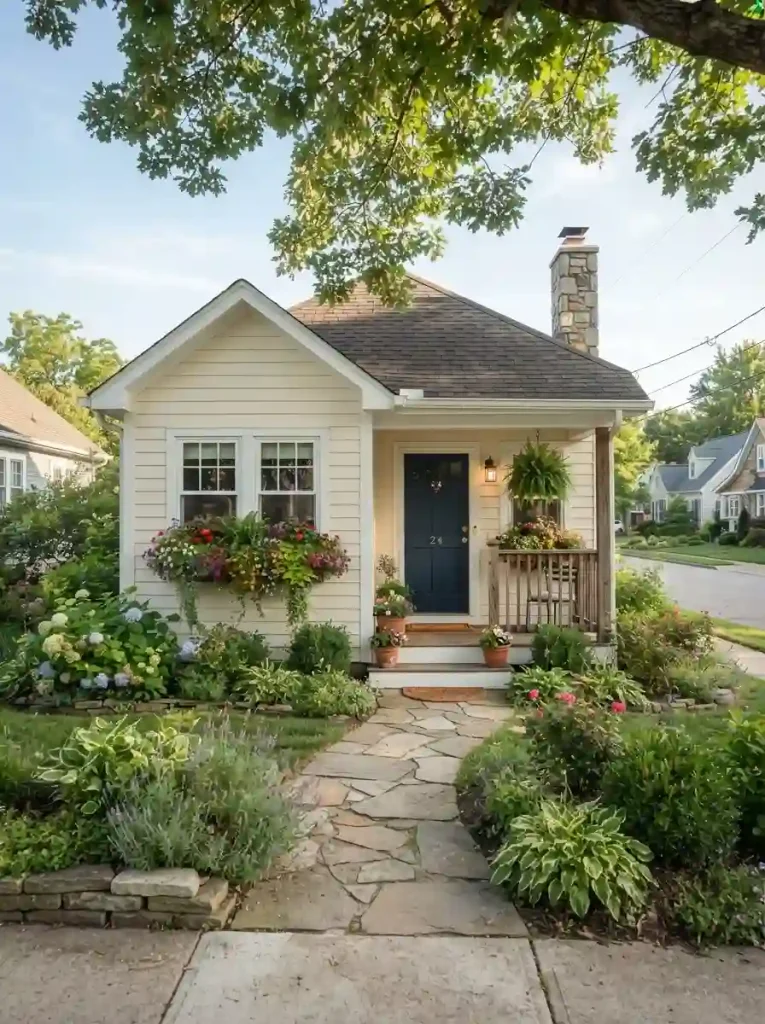
If your yard has almost no planting space, don’t forget the house itself.
Window boxes can bring flowers and greenery up to eye level while keeping the ground area open. They’re especially effective on small homes where a little vertical color can dramatically improve curb appeal.
Fill them with a mixture of upright flowers, trailing plants, and foliage for a fuller appearance. Seasonal combinations allow you to refresh the look throughout the year.
Make sure the boxes are securely installed and have adequate drainage.
Expert Tip:
Choose plants based on how much direct sunlight each window receives. A beautiful window box won’t stay beautiful if the plants aren’t suited to its exposure.
12. Use one bold focal point
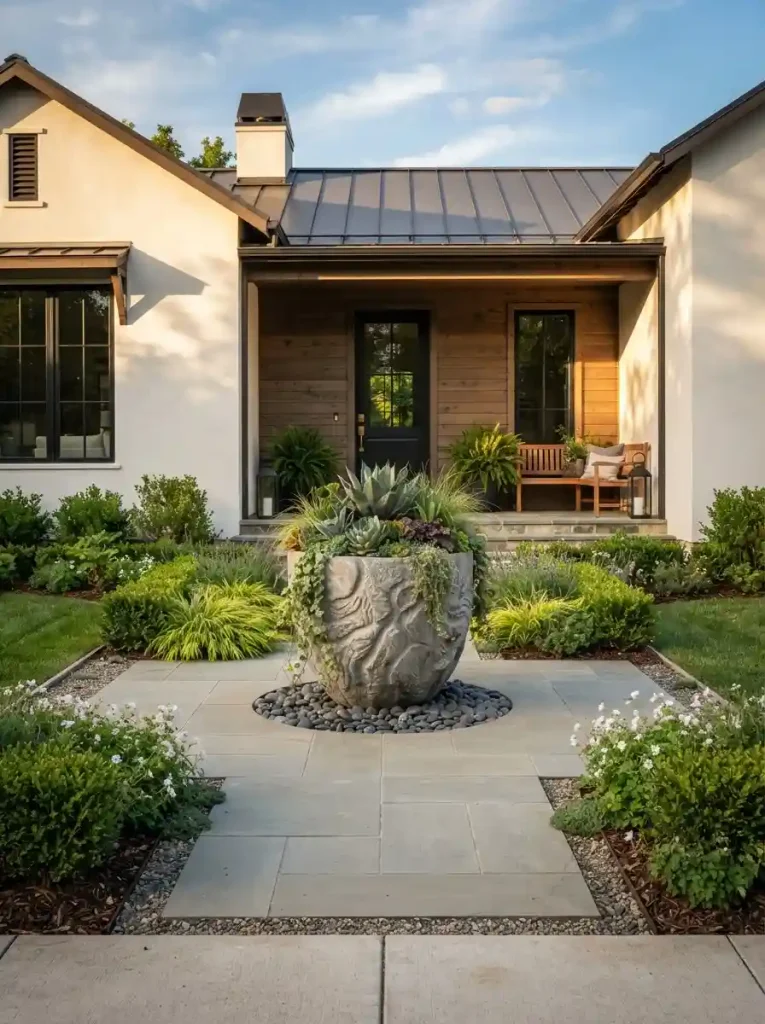
A small yard doesn’t need lots of decorations to make an impression. In fact, one strong focal point can often work better.
Try a large decorative planter, sculptural tree, distinctive boulder, attractive bench, birdbath, or architectural garden feature.
Place it somewhere naturally visible from the street or front entrance. Then keep the surrounding landscaping relatively simple so the focal point has room to stand out.
This technique is particularly useful when your front yard feels too busy. Removing several small decorative objects and replacing them with one intentional feature can instantly make the space feel more sophisticated.
Expert Tip:
Pick one feature that supports the style of your home. A contemporary planter may suit a modern house, while a natural stone feature can work beautifully with a cottage or traditional exterior.
13. Layer plants by height for a fuller look
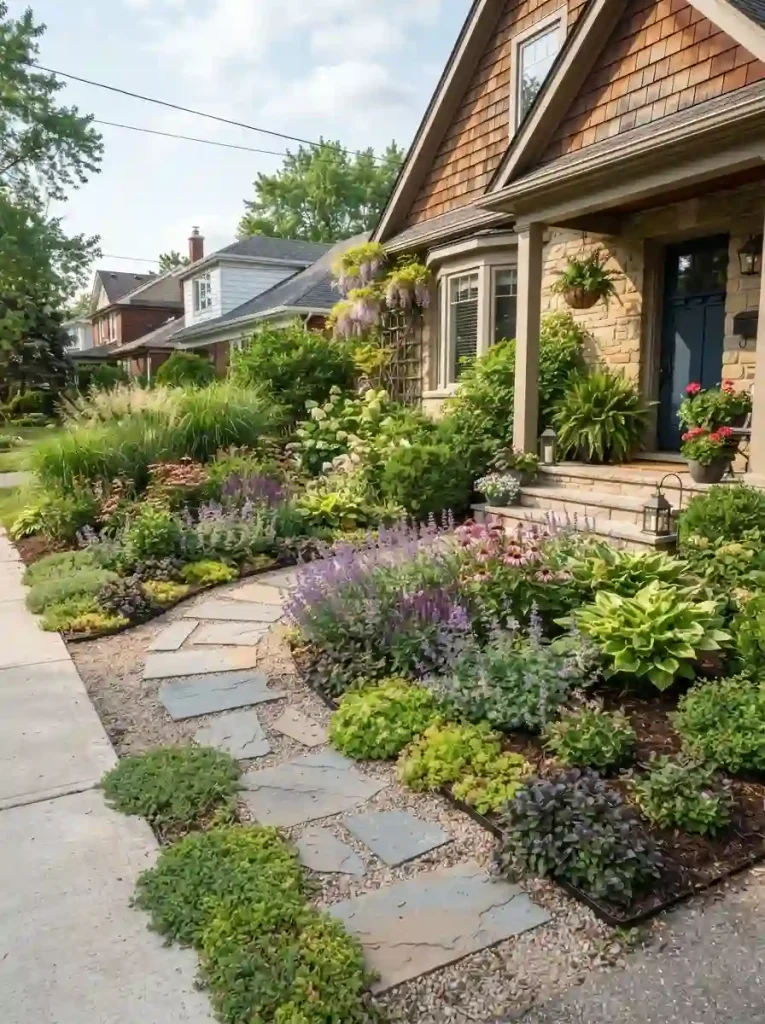
When a front yard is small, planting everything at the same height can make the landscape look flat.
Instead, create layers. Use low ground covers near the sidewalk, medium plants through the center, and taller shrubs or grasses toward the back.
This simple technique creates depth without requiring additional square footage. It also makes the garden more interesting from different viewpoints.
Try repeating the same heights or plant groups across the bed so the arrangement feels intentional rather than crowded.
Expert Tip:
Leave enough breathing room between mature plants. Layering should create depth, not turn your front garden into an impenetrable wall of greenery.
14. Incorporate a low-maintenance ground cover
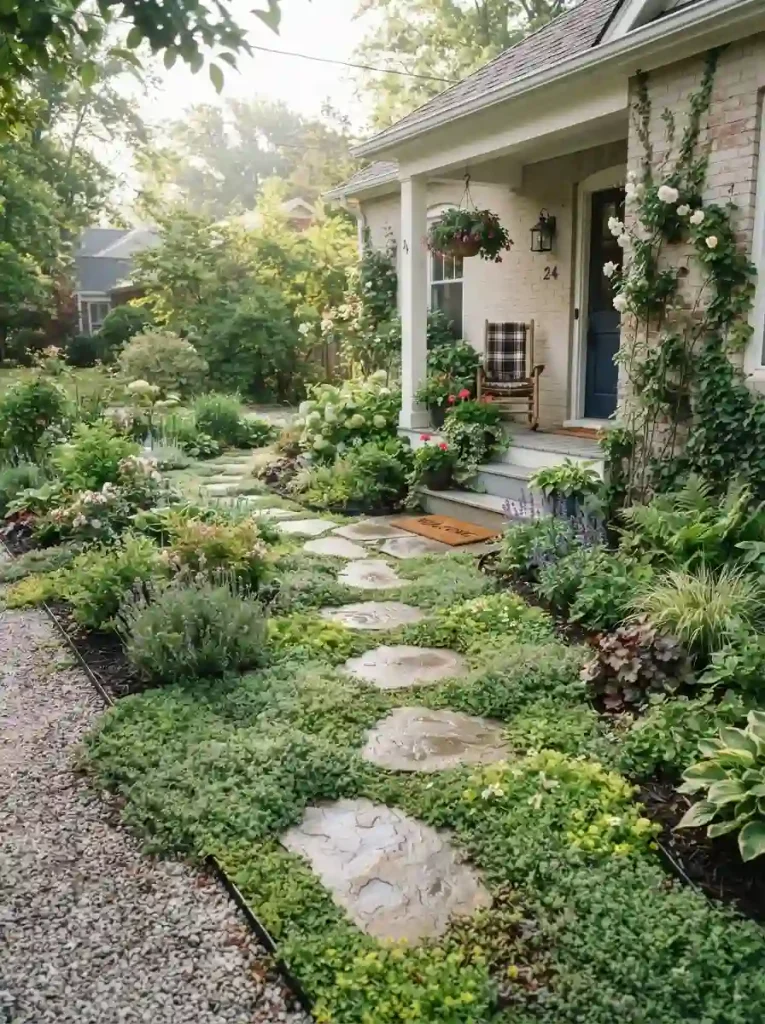
Ground cover plants are a smart way to fill awkward spaces where grass struggles or where you simply don’t want to spend time mowing.
Use them along the edges of pathways, beneath shrubs, or between larger landscape features. Once established, suitable ground covers can create a lush carpet that ties the rest of the garden together.
Choose varieties according to your climate, soil, and available sunlight. Some prefer shade, while others perform best in full sun.
Ground covers can also help soften hardscape materials such as stone paths and gravel.
Expert Tip:
Don’t assume every ground cover is maintenance-free. Check its mature spread and growth habits before planting so it doesn’t escape into areas where you don’t want it.
15. Design a simple monochromatic garden
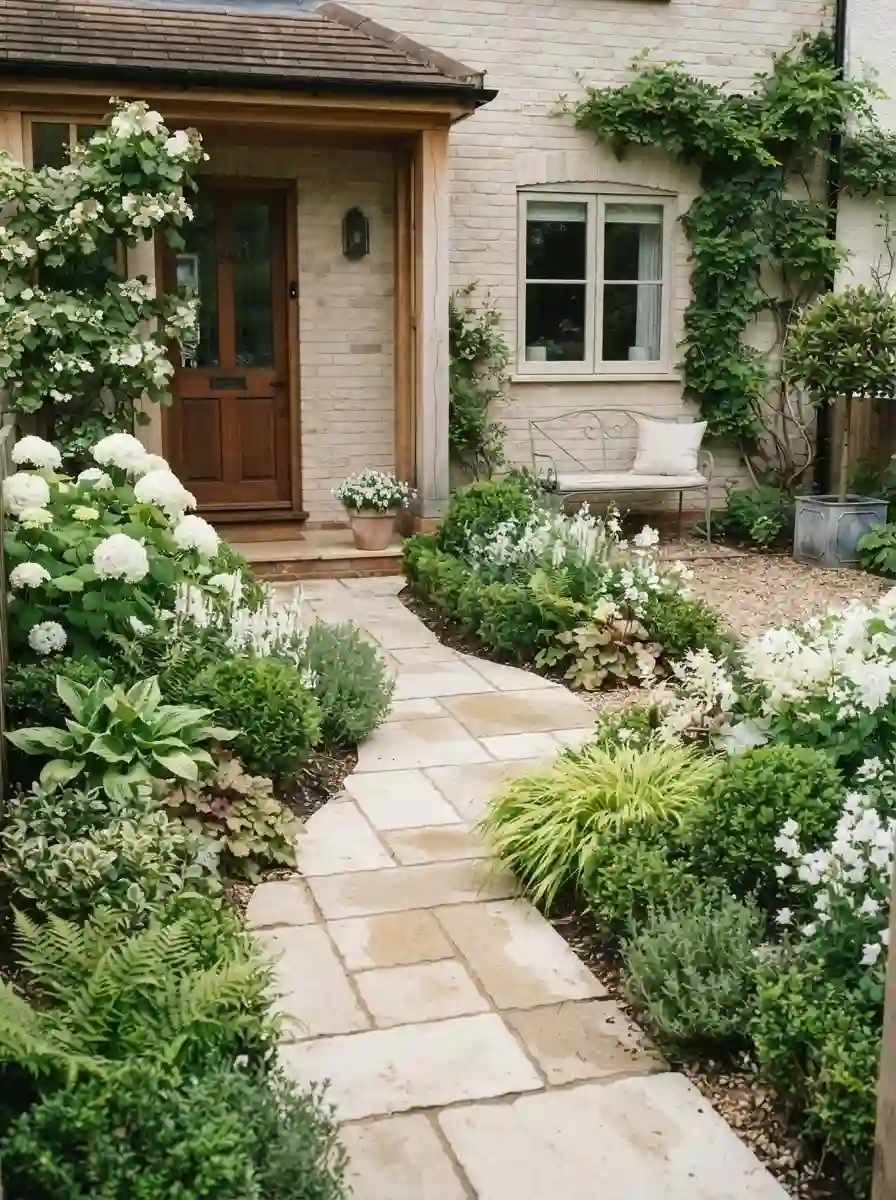
A limited color palette can make a small front yard appear calmer and more cohesive.
Instead of using every flower color available, choose one dominant shade and build the garden around it. White flowers with green foliage create an elegant look, while purple, pink, yellow, or blue planting schemes can create very different moods.
Vary the textures and plant heights so the garden doesn’t feel repetitive.
This approach is especially helpful if your home’s exterior already has a strong color or architectural style.
Expert Tip:
Let foliage provide much of the visual interest. Different leaf shapes and textures can keep a single-color garden attractive even when fewer flowers are blooming.
16. Turn the front steps into a mini garden
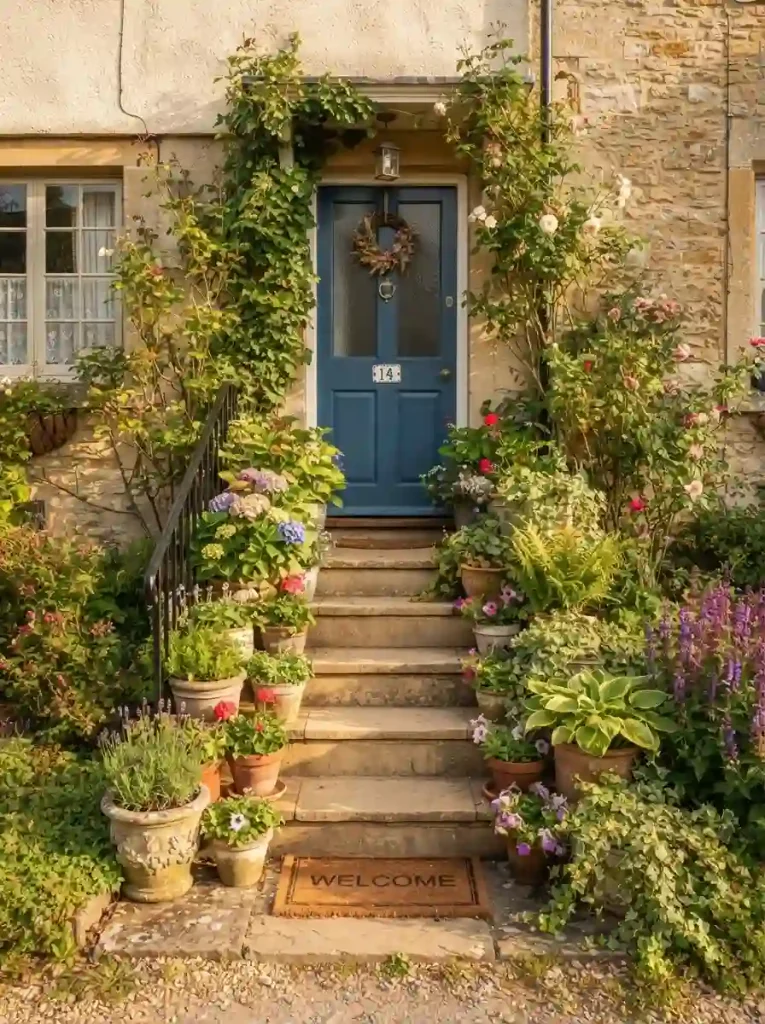
If your actual yard space is limited, make the most of the area around your front steps.
A few carefully positioned pots can turn an ordinary entrance into a welcoming mini garden. Use different container heights to create layers without spreading plants across the entire walkway.
You can also place narrow planters along the sides of the steps, provided they don’t interfere with safe passage.
Choose containers that complement your home’s exterior and repeat their materials or colors for a coordinated appearance.
Expert Tip:
Keep the center and immediate edges of the stairs clear. Beautiful landscaping should enhance the entrance without creating a tripping hazard.
17. Add a small bench beneath greenery
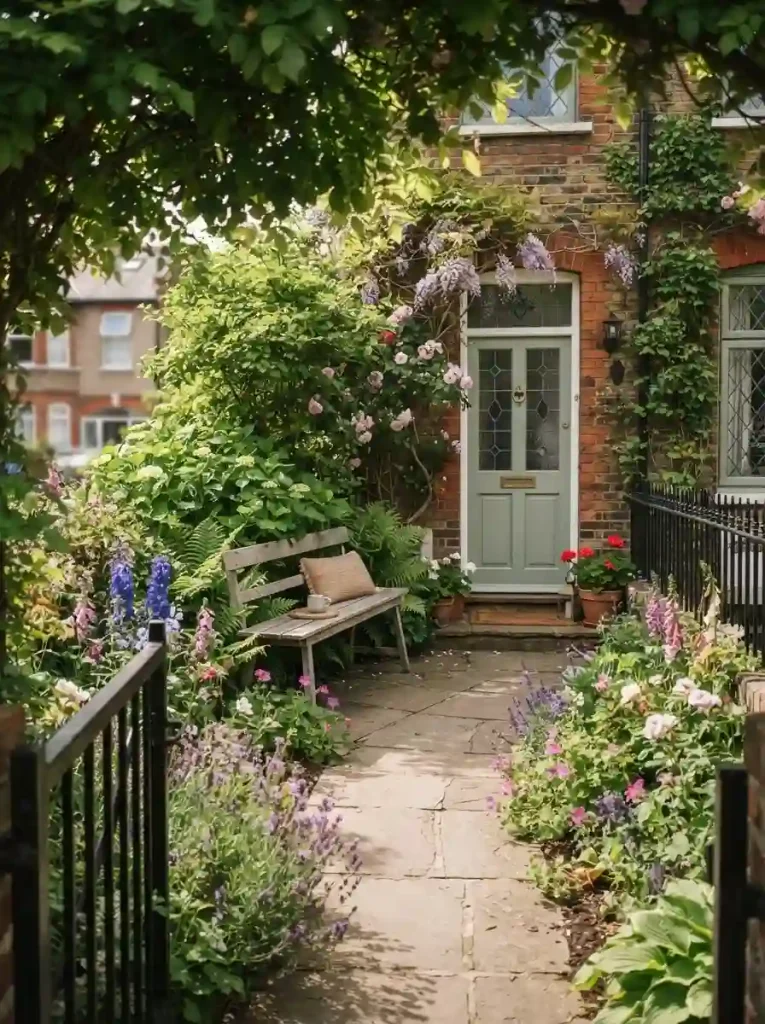
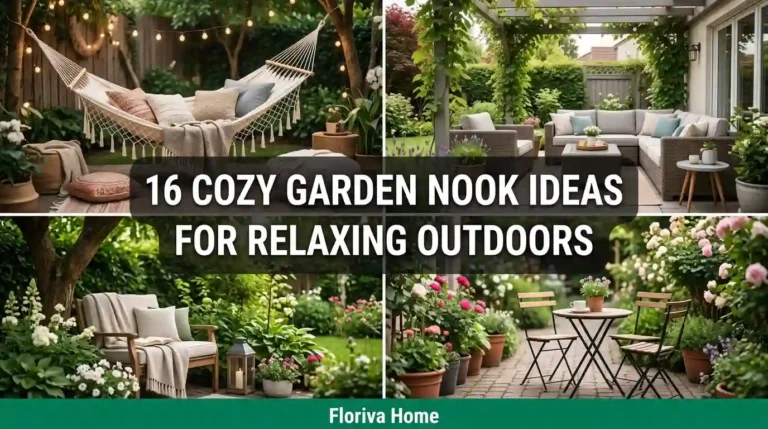
A small bench can give even a compact front yard a sense of purpose.
Place one beneath a small tree, beside a porch, or against a suitable wall where it doesn’t obstruct the main pathway. The bench doesn’t need to be large; a narrow wooden or metal seat can be enough.
Surround it with low plants or a small garden bed to make it feel integrated into the landscape.
Besides adding charm, seating gives your front yard a more lived-in, welcoming character.
Expert Tip:
Choose weather-resistant materials and position the bench somewhere comfortable rather than treating it purely as decoration.
18. Create a mini Mediterranean-inspired garden
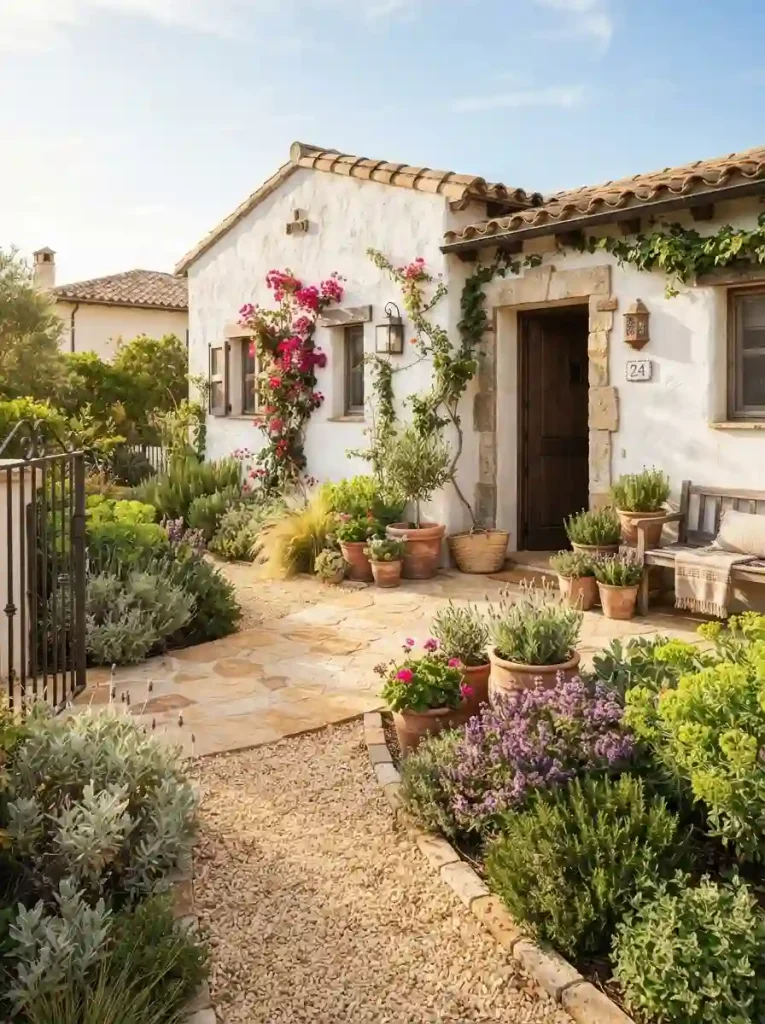
Bring a sunny Mediterranean feeling to a small front yard with a restrained mix of gravel, terracotta, stone, and drought-tolerant plants.
Depending on your growing conditions, consider plants with silvery foliage, aromatic leaves, architectural shapes, or warm-toned flowers.
Terracotta containers can reinforce the theme, while a pale gravel surface helps reflect light and keeps the design visually open.
You don’t need to recreate an entire Mediterranean landscape. A few carefully selected elements can provide the atmosphere without overwhelming the property.
Expert Tip:
Mediterranean-inspired doesn’t automatically mean every plant will tolerate drought. Select species appropriate for your local climate rather than choosing plants solely for appearance.
19. Use ornamental grasses for movement
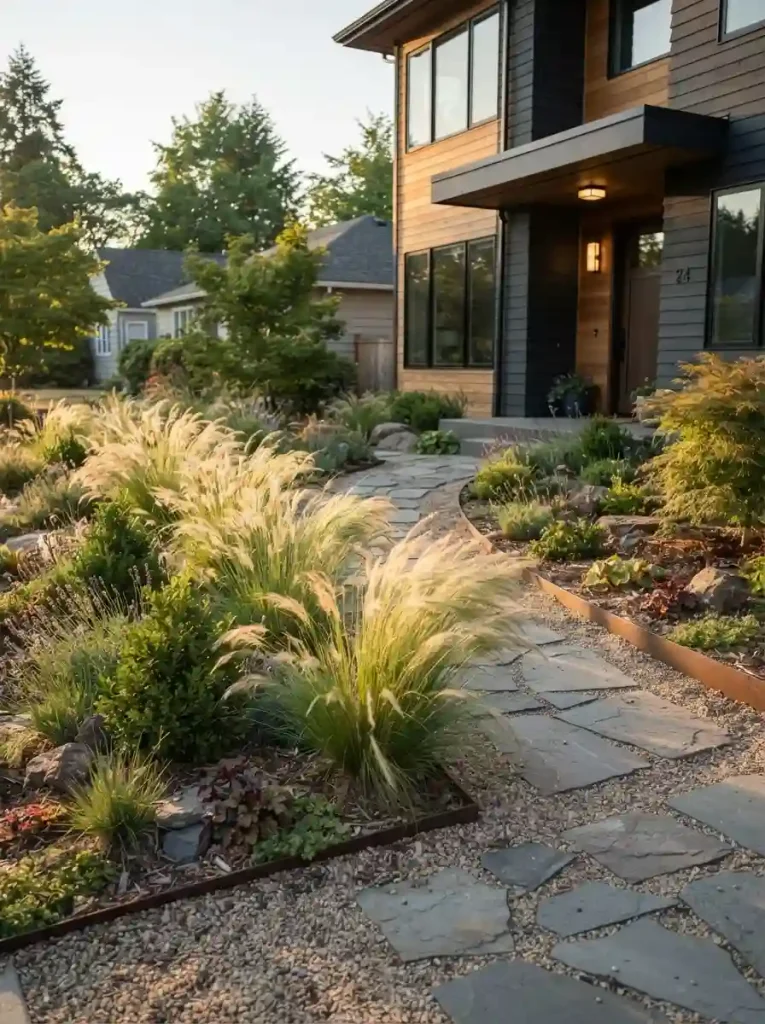
Ornamental grasses can add movement and texture without requiring a large planting area.
Their narrow leaves sway in the breeze and create a softer contrast against walls, paving, and other architectural features.
Choose compact varieties that won’t eventually hide windows or dominate the entrance. Plant them in small groups or combine them with low perennials and shrubs.
Their texture can also help a simple landscape look more layered without adding lots of different plant types.
Expert Tip:
Before planting, research the grass’s mature height and spread. Some ornamental grasses become much larger than expected and may need dividing or trimming.
20. Make a tiny pollinator-friendly garden
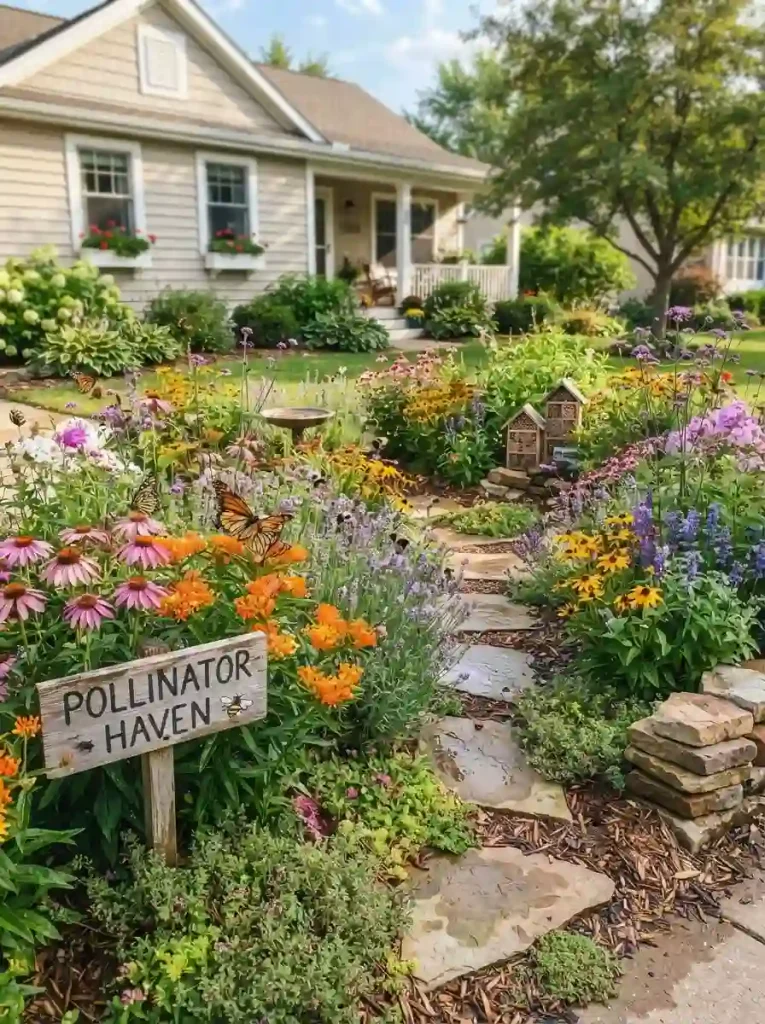
A small front yard can still provide valuable habitat for pollinators.
Choose flowering plants that provide nectar and pollen across different parts of the growing season. Grouping plants together makes the flowers easier to notice while creating a stronger visual impact.
Avoid filling every inch with flowers. Leave some open space for pathways and use foliage plants to provide structure between blooms.
A shallow water source or other appropriate habitat feature can add another useful element if your space allows.
Expert Tip:
Focus on plants suited to your region and consider native species where practical. A small collection of locally appropriate plants can support wildlife while keeping the garden easier to maintain.
21. Create a polished modern front yard
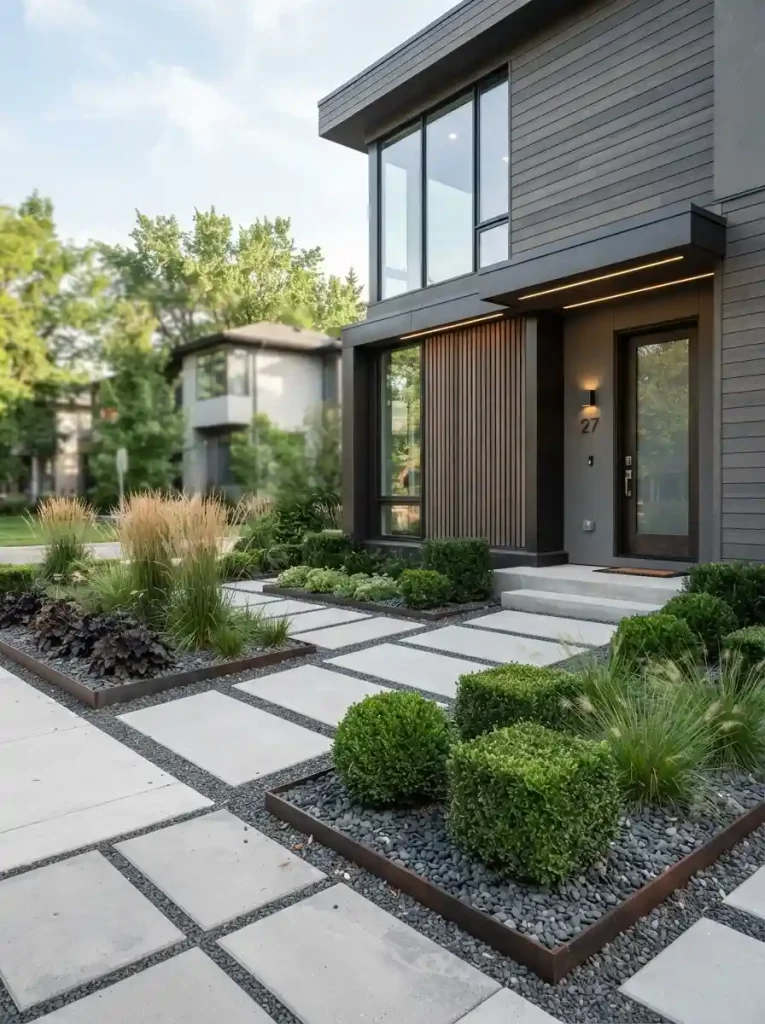
For a contemporary home, a simple modern landscape can make a small yard look remarkably sophisticated.
Start with clean lines and a limited material palette. Combine rectangular pavers, gravel, architectural plants, and carefully clipped shrubs for a structured appearance.
Instead of filling every garden bed, allow some negative space around the main features. Empty space is particularly valuable in small landscapes because it prevents the design from feeling cramped.
Repeat materials from the house wherever possible for a stronger connection between architecture and garden.
Expert Tip:
Resist the temptation to add too many decorative elements. Modern landscaping generally looks strongest when a few carefully selected features do most of the visual work.
22. Add a charming mailbox garden
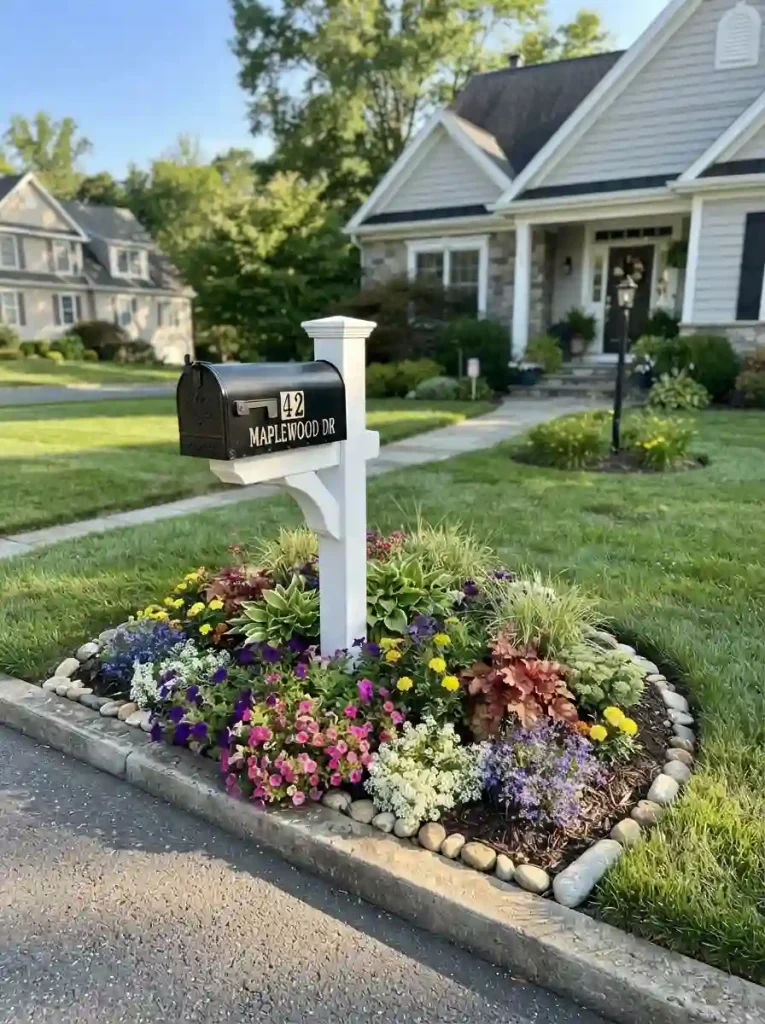
A mailbox area is often overlooked, but it can become a charming little landscaping feature.
Create a small planting bed around the mailbox using low flowers, ground covers, or compact ornamental plants. Keep everything well away from the mailbox opening and make sure postal access remains convenient.
A curved border or a few attractive stones can help distinguish the planting area from the surrounding lawn.
Because this space is usually visible from the street, even a tiny bed can contribute noticeably to your home’s curb appeal.
Expert Tip:
Choose durable plants that can handle roadside conditions such as heat, wind, occasional foot traffic, or reflected heat from pavement.
23. Combine a small lawn with defined garden beds
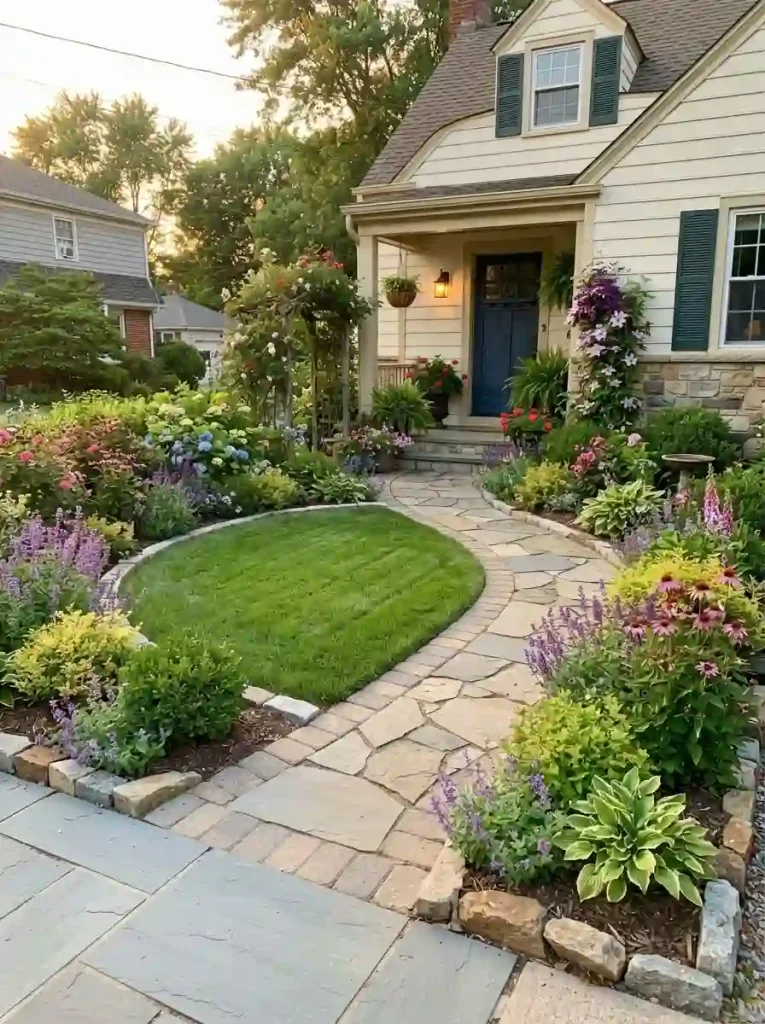
You don’t have to choose between a lawn and a garden.
A small, clearly defined patch of grass can actually make a compact front yard feel more spacious when it is surrounded by attractive planting beds.
Keep the lawn shape simple and use the surrounding beds to introduce flowers, shrubs, grasses, or ground covers. This creates a balance between open space and greenery.
If maintenance is a concern, keep the lawn modest rather than trying to preserve a large grass area simply because that’s what a traditional front yard usually looks like.
Expert Tip:
Give the lawn a clear shape and edge. A small patch of healthy, neatly maintained grass can look intentional and attractive when it works as part of the overall landscape rather than dominating it.
Practical Tips for Landscaping a Small Front Yard
Once you have your favorite ideas, a little planning can prevent expensive mistakes. Small spaces leave less room for trial and error, so think about the finished landscape before buying plants or materials.
Measure before you plant
Take basic measurements of the yard, pathways, planting beds, and areas around windows and doors. Even a rough sketch can help you understand how much usable space you actually have.
Remember to account for the mature size of plants rather than arranging everything according to its nursery size.
Prioritize the entrance
The pathway and front door are usually the most important visual areas. Make sure plants and decorative features guide attention toward the entrance instead of blocking it.
A simple walkway with attractive planting on either side can often create more curb appeal than a yard filled with unrelated decorations.
Choose plants for your conditions
Before purchasing anything, consider:
• How many hours of sunlight the area receives
• Soil drainage
• Local temperatures
• Seasonal rainfall
• Mature plant size
• Water requirements
• Maintenance needs
The best small front yard landscaping isn’t necessarily the one with the most plants. It’s the one where the selected plants are healthy and appropriately sized.
Repeat materials and plants
Repetition makes a compact landscape feel more cohesive.
For example, you could repeat the same stone along the walkway and garden border, or use the same flowering plant in several separate beds.
This creates visual continuity without requiring a complicated design.
Leave some empty space
One of the easiest mistakes in a small yard is trying to fill every available area.
Open space helps the garden breathe. It also makes pathways easier to navigate and gives your favorite plants room to stand out.
How to Make a Small Front Yard Look Bigger
You can make a compact yard appear more spacious by creating visual depth and avoiding unnecessary clutter.
Use layered planting to create foreground, middle-ground, and background interest. A narrow pathway can also draw the eye toward the entrance and make the space feel longer.
Light-colored gravel or paving can visually open up darker areas, while strategically placed mirrors or reflective surfaces may work in some sheltered garden settings.
Another useful trick is to avoid placing tall plants directly beside the sidewalk. Keeping the front portion relatively low can preserve sightlines and make the entire property feel more open.
Final Thoughts
A small front yard doesn’t need a complicated landscape design to make a beautiful first impression.
Whether you prefer a colorful cottage garden, a clean modern landscape, a gravel garden, or a simple lawn bordered with flowers, the most successful design will be one that fits your home’s architecture and your everyday lifestyle.
Start with the features that matter most—usually the walkway, entrance, and main planting area. Then add height, texture, color, and personality gradually.
With the right plant choices and a little planning, even the smallest front yard can become a welcoming extension of your home.
FAQs About Small Front Yard Landscaping
What is the easiest landscaping idea for a small front yard?
Adding a defined planting border with a few attractive shrubs and flowers is one of the easiest approaches. It can improve curb appeal without requiring a complete redesign.
How can I landscape a small front yard on a budget?
Start with one or two high-impact changes, such as refreshing the garden edging, adding mulch, planting a small group of flowers, or improving the walkway. You don’t have to renovate the entire yard at once.
What plants work best in a small front yard?
The best plants depend on your climate, soil, and sunlight. Generally, compact shrubs, dwarf trees, ground covers, ornamental grasses, and appropriately sized flowering perennials are useful because they can add structure without consuming excessive space.
Should I remove the grass from a small front yard?
Not necessarily. A small, healthy lawn can make a compact yard feel open. If maintenance or water use is a concern, however, replacing portions of grass with suitable planting beds, gravel, or ground covers can be a practical alternative.
How do I stop a small front yard from looking crowded?
Use fewer plant varieties, leave intentional open space, choose plants based on their mature size, and avoid adding too many decorative objects. Repeating a few materials and plants can also make the design feel more organized.
How many plants should I put in a small front garden?
There isn’t a fixed number. Focus on mature plant sizes and spacing requirements rather than trying to reach a particular plant count. A smaller number of healthy, well-positioned plants will usually look better than an overcrowded bed.