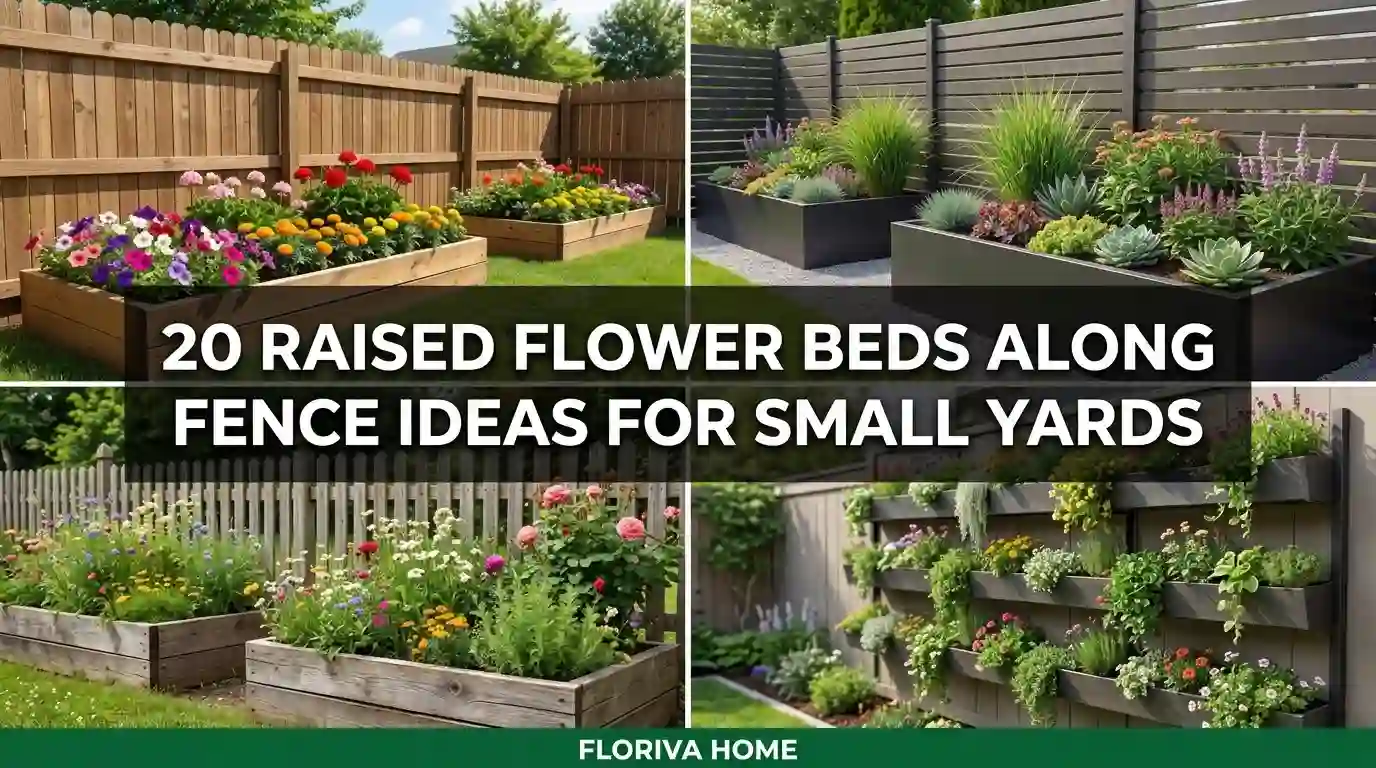
20 Raised Flower Beds Along Fence Ideas for Small Yards
A narrow fence line can become one of the most useful parts of a small yard when you give it the right garden design. Raised flower beds let you turn unused edges into colorful planting areas without taking over the center of your outdoor space.
The best part is that you can customize the beds around your yard’s size, sunlight, fence style, and gardening habits. From slim wooden planters to layered designs and compact corner beds, there are plenty of ways to make a small fence line feel intentional and beautiful.
If your yard feels short on planting space, these raised flower bed ideas can help you create more growing room while keeping the layout neat, practical, and visually appealing.
1. Slim Cedar Beds for a Clean Fence-Line Garden
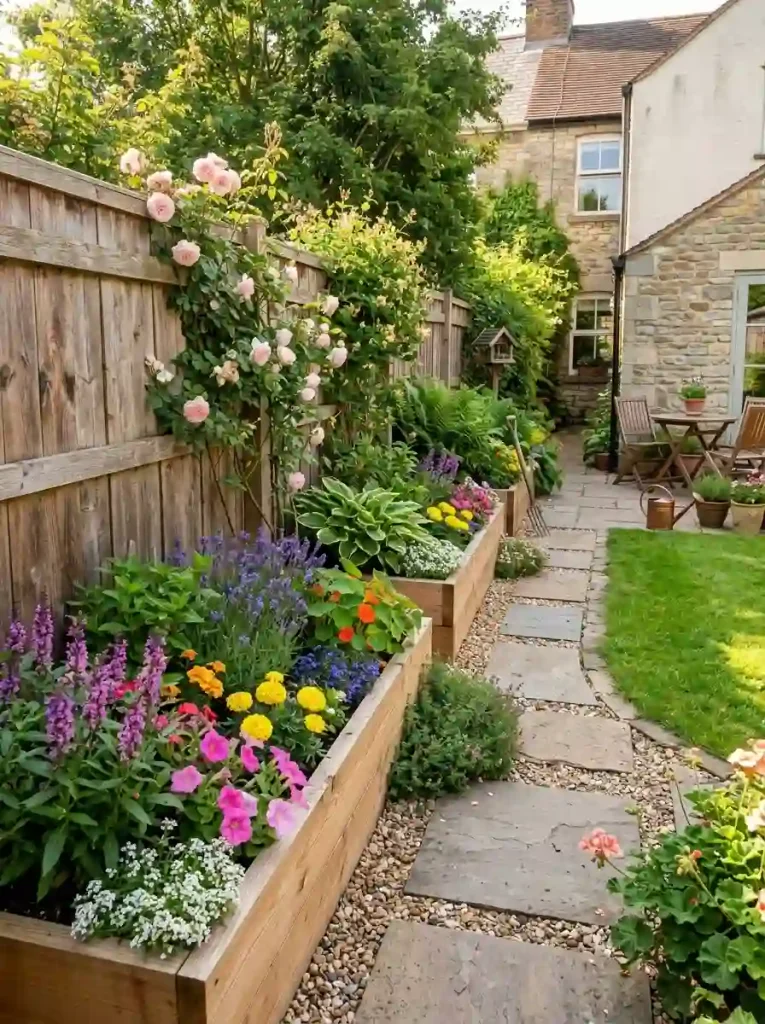
When floor space is limited, a long and narrow cedar raised bed can make excellent use of the strip beside your fence. Instead of extending far into the yard, the bed stays compact while providing enough room for seasonal flowers, ornamental grasses, or small flowering plants.
Cedar is especially attractive for this style because its natural appearance blends easily with greenery and outdoor fencing. Keep the bed relatively narrow so you can still walk comfortably around the yard and reach every plant for watering or maintenance.
For a polished appearance, repeat the same bed dimensions along the fence instead of mixing several unrelated shapes. A continuous planting line can make a small yard appear longer and more organized.
Practical Tip:
Leave enough space between the raised bed and fence for airflow and maintenance. Avoid placing soil directly against wooden fencing, especially if the fence material is vulnerable to moisture.
2. Corner Raised Beds That Wrap Around the Fence
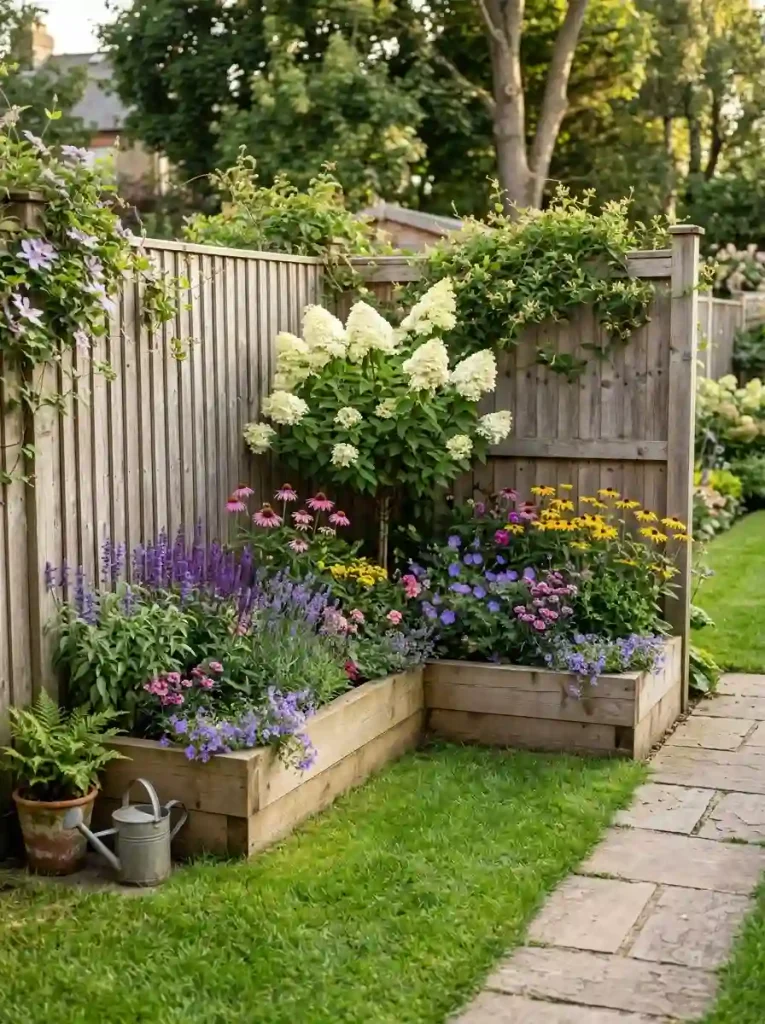
Fence corners are often overlooked in small yards, but they can become excellent planting zones with an L-shaped raised bed. This arrangement follows the natural shape of the fence and creates a continuous garden feature without occupying much central lawn space.
Use the longer section for flowers that provide height and color, while the shorter return section can hold compact plants or trailing varieties. The corner itself can become a focal point by placing one taller plant or decorative feature there.
This design works particularly well when two fence panels meet at a visually prominent corner. It gives the garden a finished appearance and prevents the edges of the yard from feeling forgotten.
Practical Tip:
Keep the inside corner accessible enough to reach when planting and weeding. If the corner is difficult to access, choose low-maintenance plants rather than varieties that require frequent pruning.
3. White Raised Beds for a Bright Small-Yard Look
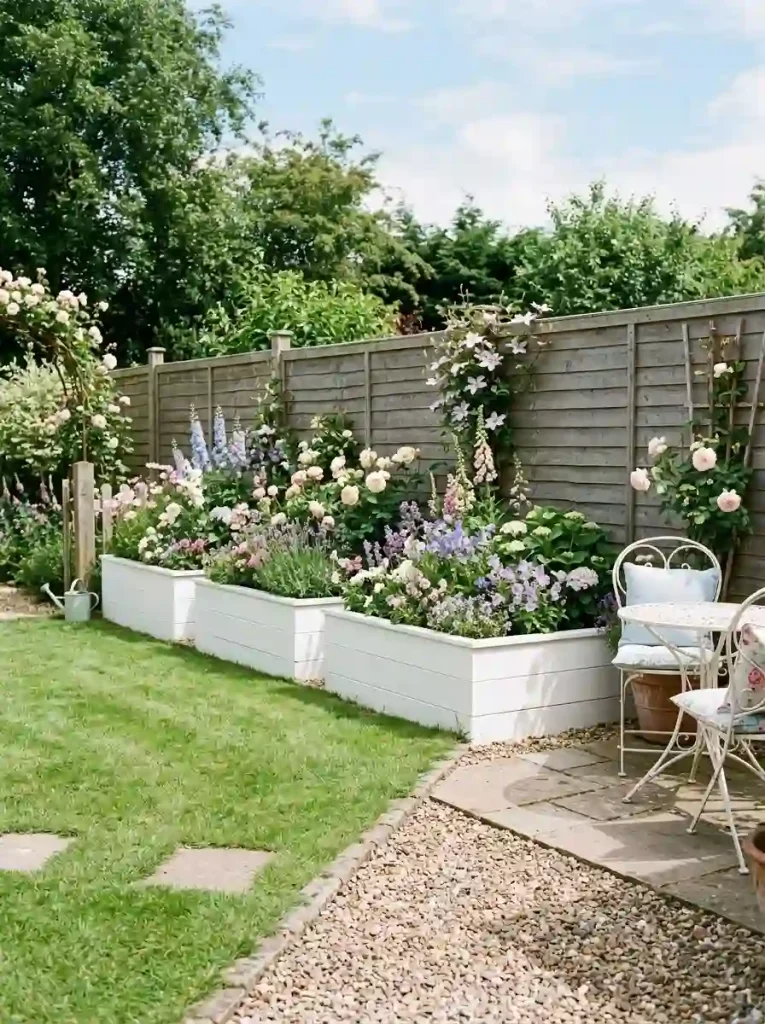
White-painted raised beds can make a compact garden feel lighter and more open. They create a crisp contrast against green foliage and work especially well with white, gray, or natural wood fencing.
Choose weather-resistant exterior paint and use a simple rectangular design to keep the overall look uncluttered. Soft-colored flowers can create a calm appearance, while brighter blooms can make the bed feel more cheerful.
Because white surfaces reflect light, this approach can be particularly attractive in smaller yards that feel visually enclosed by surrounding fences. Repeating white edging along the fence also creates a strong sense of consistency.
Practical Tip:
Use an outdoor primer and paint formulated for exterior wood. Check the beds periodically for peeling or moisture damage so small maintenance issues do not become larger problems.
4. Two-Level Beds for More Flowers Without More Floor Space
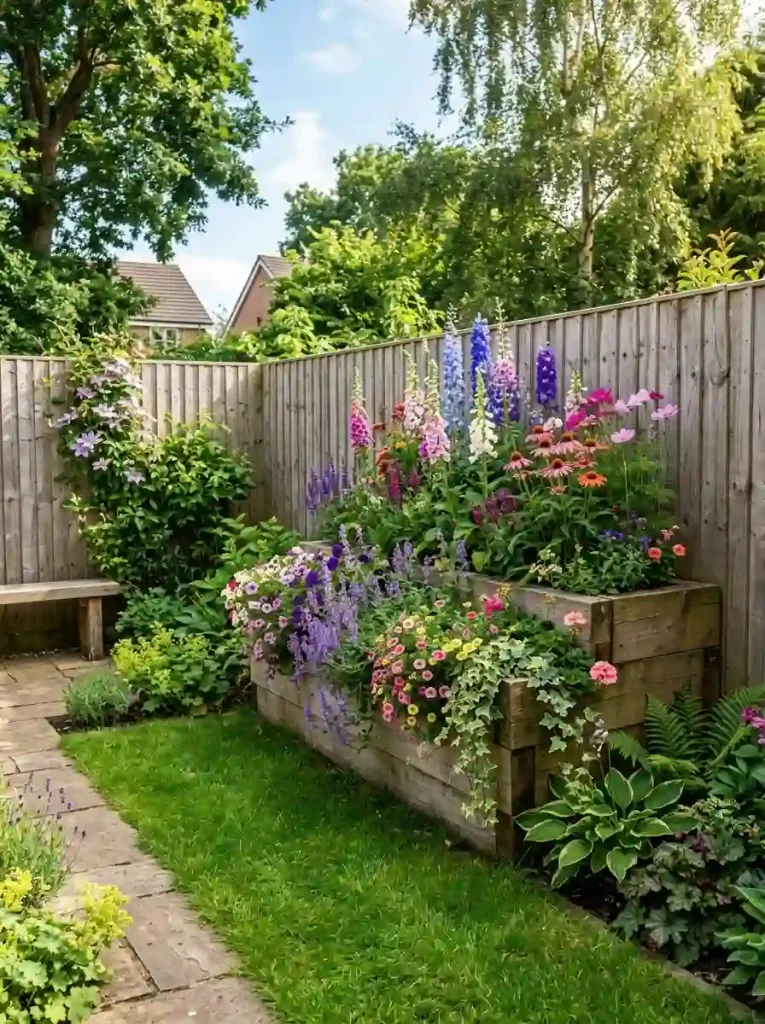
A two-level raised bed can add planting capacity while keeping its footprint relatively small. The lower section can hold spreading flowers, while the elevated portion provides space for taller or contrasting plants.
This arrangement also adds visual depth to a flat fence line. Instead of seeing one uninterrupted row of plants, the different heights create layers that make the garden feel fuller.
Use the higher section for plants that benefit from extra visibility and keep trailing varieties near the lower edge so they can spill naturally toward the yard. This creates a soft transition between the structured bed and the surrounding lawn.
Practical Tip:
Make sure the upper section is securely supported and that each level has adequate drainage. Avoid making the upper tier so deep that it becomes difficult to reach the plants at the back.
5. Pastel Flower Beds for a Soft Cottage Feel
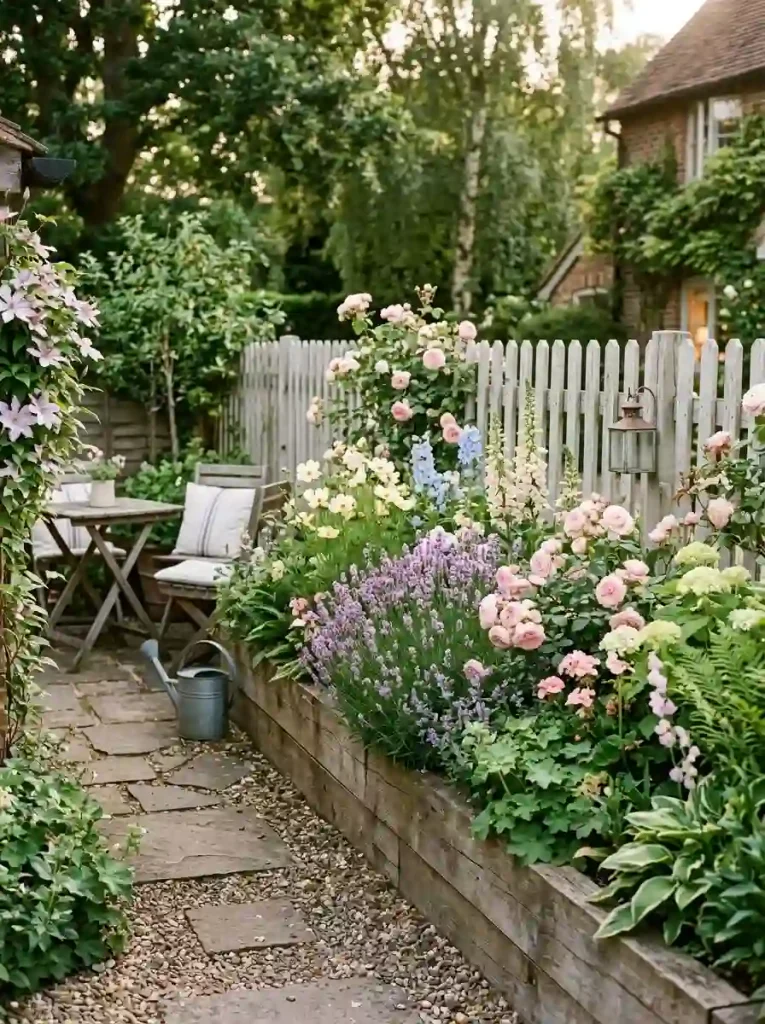
If you want your fence line to feel gentle and welcoming, build a raised bed around a soft pastel planting palette. Blush pink, lavender, pale yellow, cream, and light blue flowers can create a relaxed cottage-inspired appearance.
The raised structure keeps the planting area clearly defined while the delicate colors soften the hard lines of a fence. Mixing flowers with different heights can make the bed feel abundant without requiring a large footprint.
This idea works particularly well in small yards where a strong mix of colors might feel overwhelming. Keeping the palette limited to a few related shades creates visual harmony.
Practical Tip:
Repeat one or two flower colors throughout the bed rather than using many unrelated shades. This makes a small planting area appear more cohesive and thoughtfully designed.
6. Fence-Matching Raised Beds for a Built-In Appearance
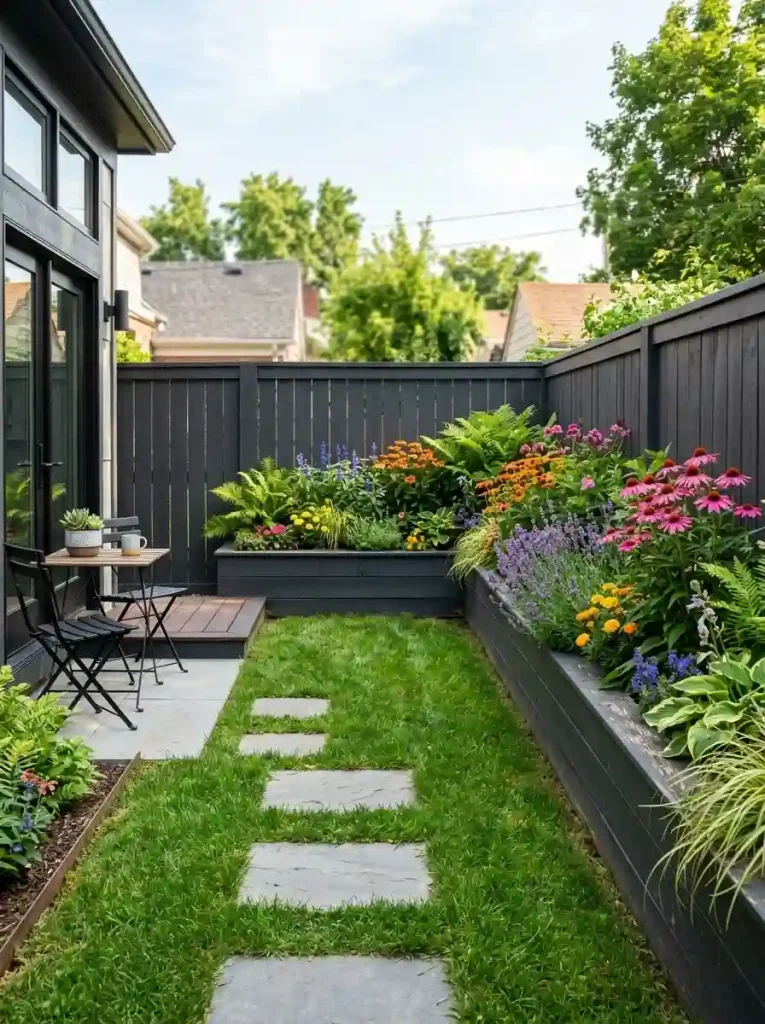
For a subtle and coordinated garden, finish the raised beds in a color that closely matches the fence. Instead of making the planters compete with the background, this approach makes them appear almost built into the fence line.
The plants then become the main attraction. Bright flowers and rich green foliage stand out against the consistent background, creating a clean visual frame around the garden.
This can be especially effective in very small yards because matching colors reduce visual clutter. A simple bed design paired with a consistent fence color can make the entire space look more intentional.
Practical Tip:
Test paint or stain on a small section before finishing the entire structure. Outdoor surfaces can look different depending on sunlight, surrounding materials, and the existing fence color.
7. Tall Narrow Beds for a Tiny Patio-Style Yard
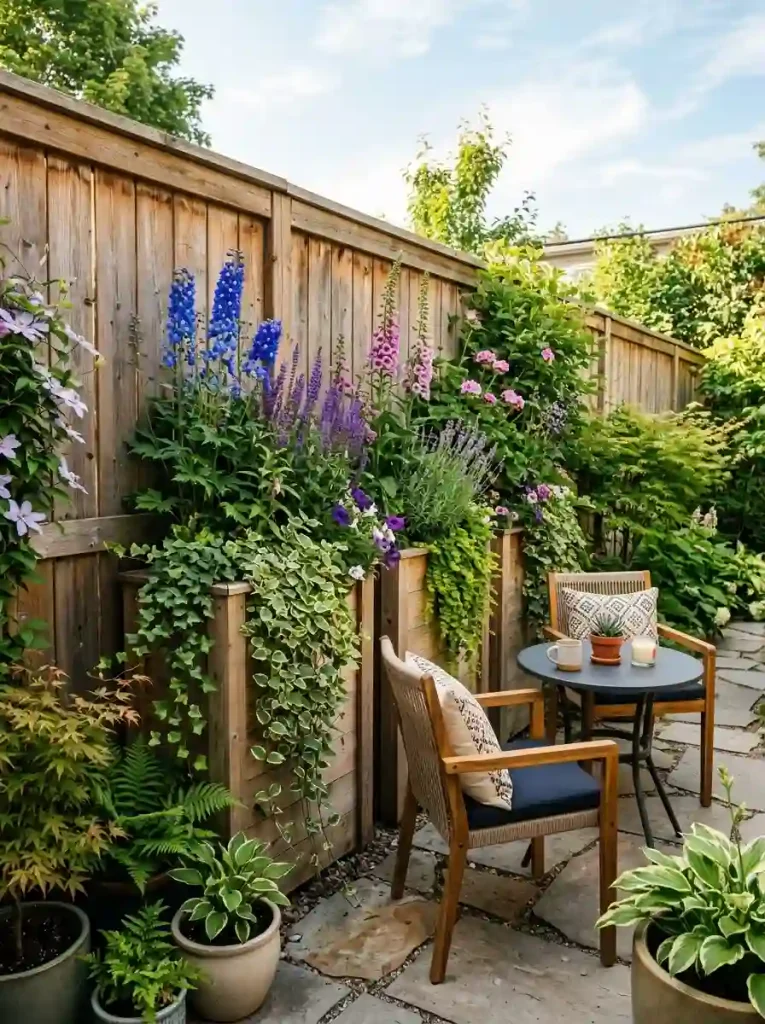
A taller raised bed can be useful when your yard has very little horizontal planting room. By increasing planting height rather than width, you can create a noticeable garden feature while preserving valuable floor space.
These beds can work beautifully along fences beside patios, decks, or narrow seating areas. Choose flowers with upright growth habits, compact shrubs, or plants that naturally spill over the sides.
The extra height also makes flowers easier to see from nearby seating. In a tiny yard, that can help transform a previously empty fence into a backdrop for the entire outdoor living area.
Practical Tip:
Taller beds can dry out faster than ground-level planting areas, so check soil moisture regularly. Make sure the structure is stable and cannot easily tip or shift.
8. Pollinator-Friendly Raised Beds Along the Fence
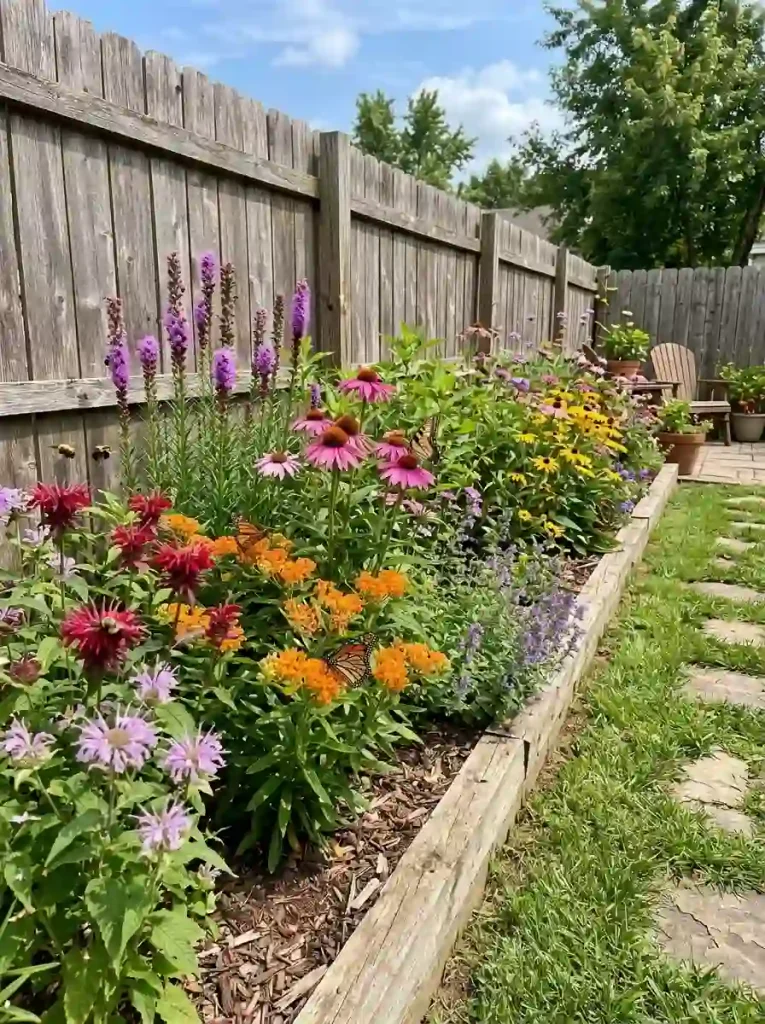
A small raised bed can become a valuable pollinator garden when planted with flowers that attract bees, butterflies, and other beneficial insects. You do not need a huge yard to create a lively planting area.
Choose several flower types with different shapes and bloom periods so the bed provides interest over a longer season. Native or locally suitable plants are often a practical choice because they are adapted to regional growing conditions.
Keep the arrangement slightly informal rather than making every plant perfectly symmetrical. A varied combination of heights and textures can give the fence line a natural garden character.
Practical Tip:
Avoid filling the bed with plants solely because they look attractive. Check their sunlight, water, mature size, and local suitability before planting so the garden remains healthy and manageable.
9. Black Raised Beds for a Dramatic Modern Contrast
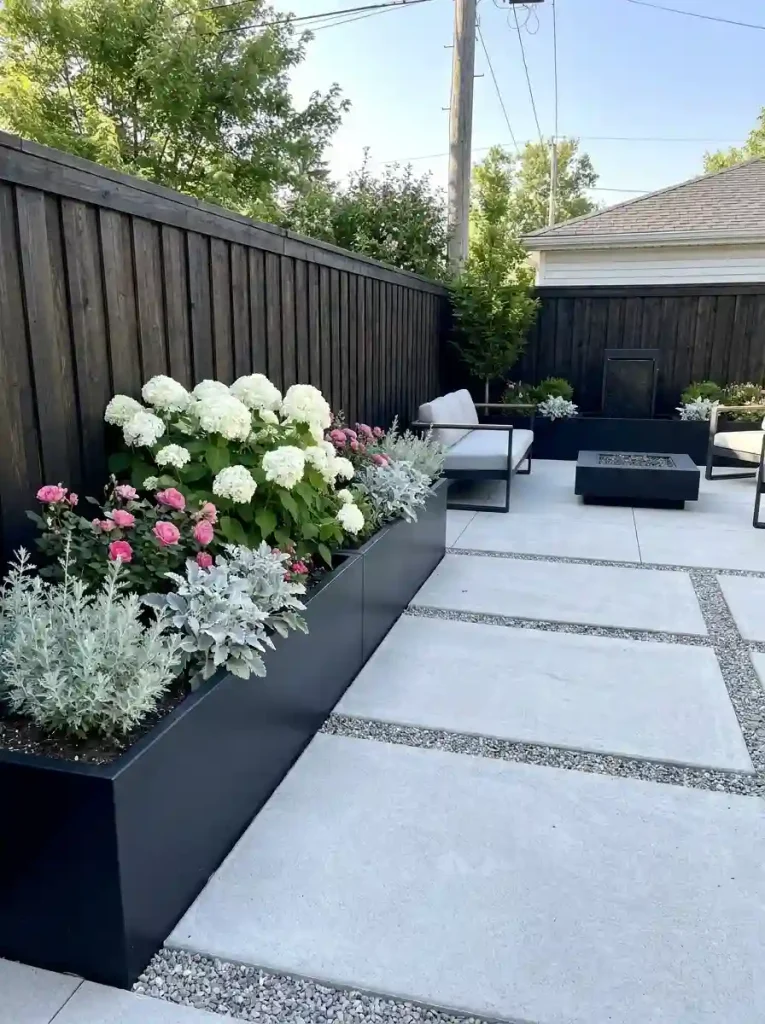
Black raised beds can give a small yard a surprisingly sophisticated appearance. Their dark finish creates a strong backdrop for bright flowers, silver foliage, and fresh green leaves.
Keep the bed shape simple and pair it with restrained planting rather than filling every available space. White flowers, soft pink blooms, or architectural grasses can stand out dramatically against the darker structure.
This approach is particularly effective when the rest of the yard already has modern details such as dark fencing, simple outdoor furniture, or contemporary paving.
Practical Tip:
Dark-colored containers and bed walls can become warmer in direct sunlight. Monitor soil moisture during hot weather and choose plants that are comfortable with the conditions of your particular yard.
10. Stepped Fence Beds for a Small Sloped Yard
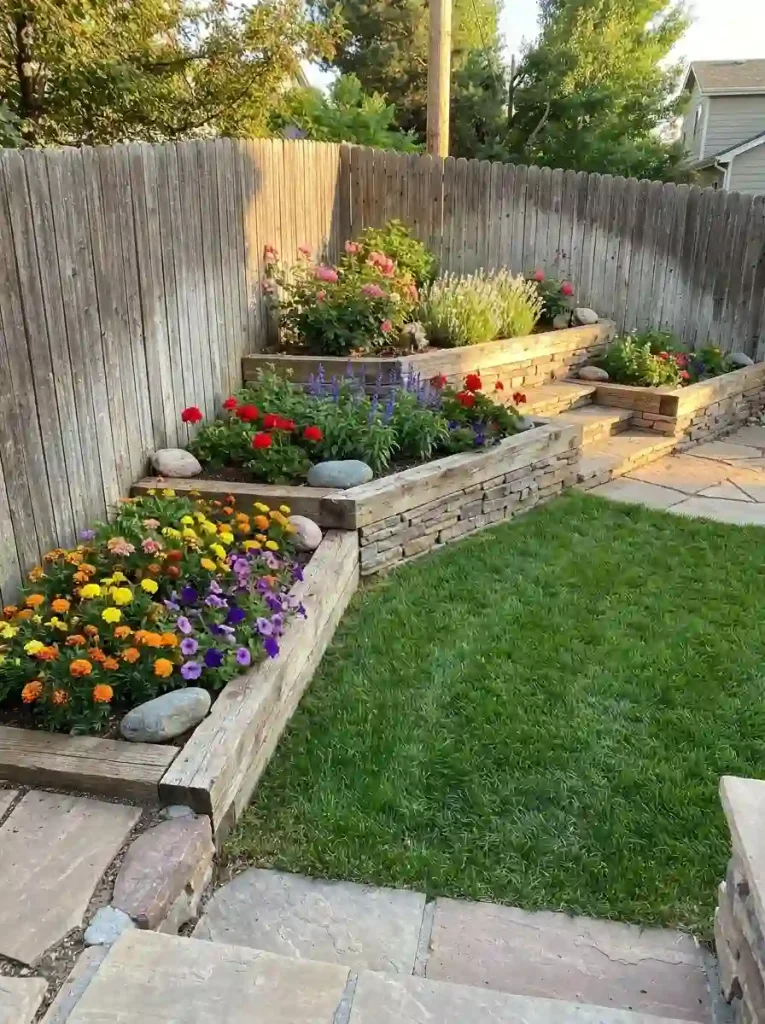
If your small yard has even a gentle slope, stepped raised beds can turn the uneven ground into an attractive garden feature. Each section can follow the change in elevation while creating distinct planting zones.
Instead of fighting the slope with one oversized bed, divide the garden into several manageable levels. This can improve the overall structure of the space and give different plants their own visual stage.
Use taller plants toward the higher sections and shorter or trailing flowers toward the lower areas. The result can resemble a compact garden terrace without requiring a large amount of land.
Practical Tip:
Make sure every retaining section is sturdy and designed to handle the weight of wet soil. Good drainage is particularly important on sloped sites to prevent water from collecting in the wrong areas.
11. Rustic Stone-Edged Beds Along a Wooden Fence
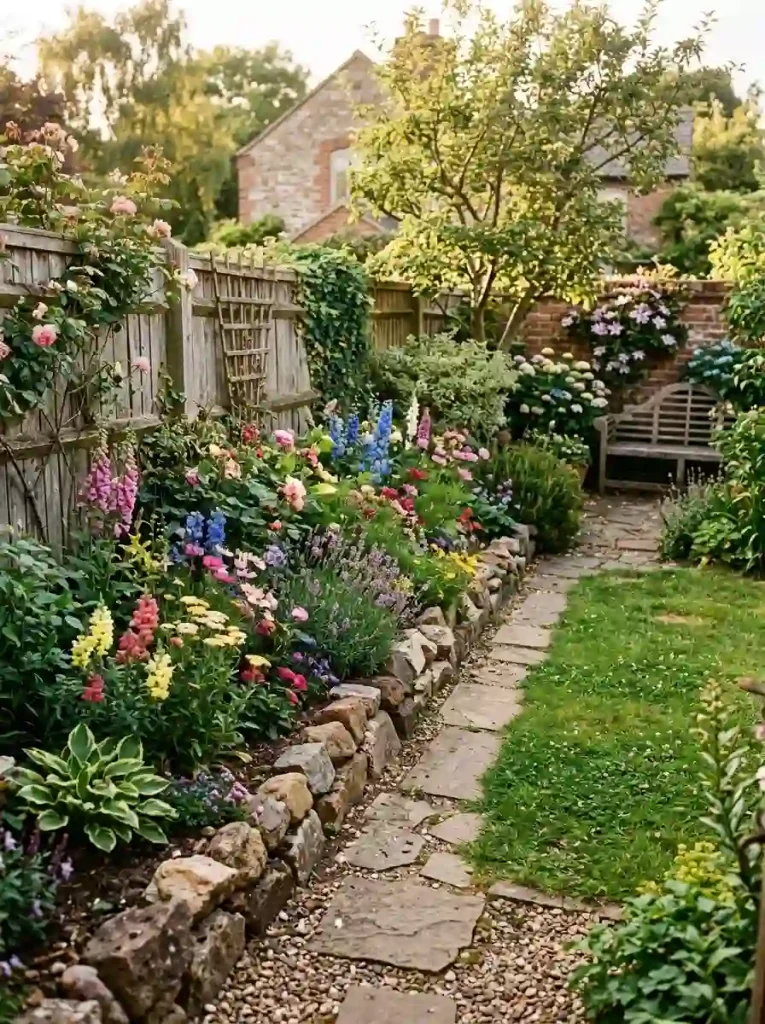
For a more natural look, combine a simple raised planting box with stone edging. The contrast between warm wood, rough stone, and colorful flowers can make an ordinary fence line feel like a thoughtfully designed garden.
This style works especially well in smaller yards because the natural materials add character without requiring complicated landscaping. Use a mixture of flowering plants and foliage to soften the edges of the structure.
You can also vary the stone sizes slightly to create a relaxed, handcrafted appearance. Keep the rest of the garden relatively simple so the fence bed remains the main feature.
Practical Tip:
Choose stones that are stable and relatively flat when creating the edging. Secure the raised structure properly rather than relying on decorative stones to hold the soil in place.
12. Tiered Flower Boxes for a Narrow Fence Strip
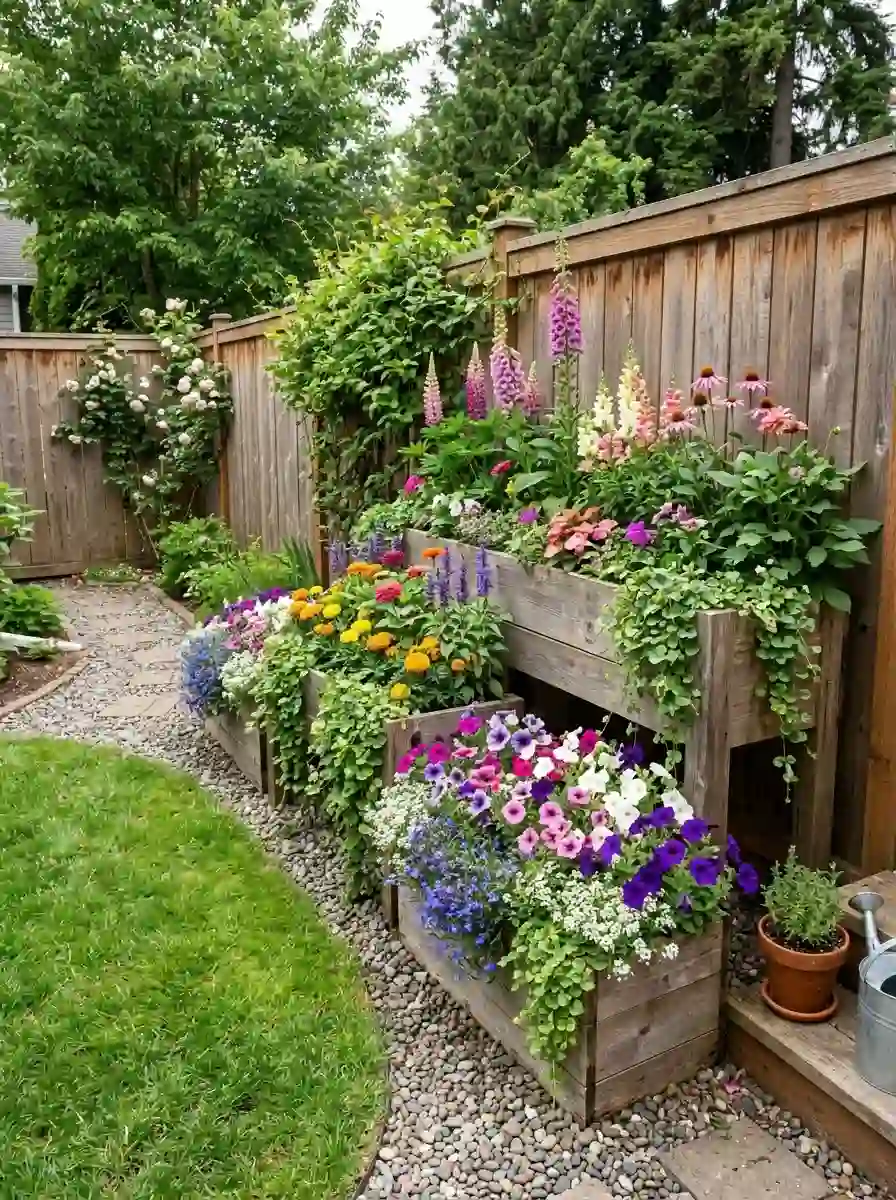
A narrow strip beside a fence does not have to limit your planting variety. Tiered flower boxes allow you to arrange plants at different heights, creating a fuller appearance without dramatically increasing the bed’s footprint.
Place compact flowers toward the front and taller varieties toward the rear. Trailing plants can be positioned near the edges so they cascade downward and visually connect the different levels.
This design can be especially useful for homeowners who want a colorful garden but have only a few feet of usable space along the fence.
Practical Tip:
Leave sufficient room between tiers so plants receive adequate sunlight and air circulation. Make sure each box has drainage holes before adding soil.
13. Built-In Bench With Raised Flower Beds
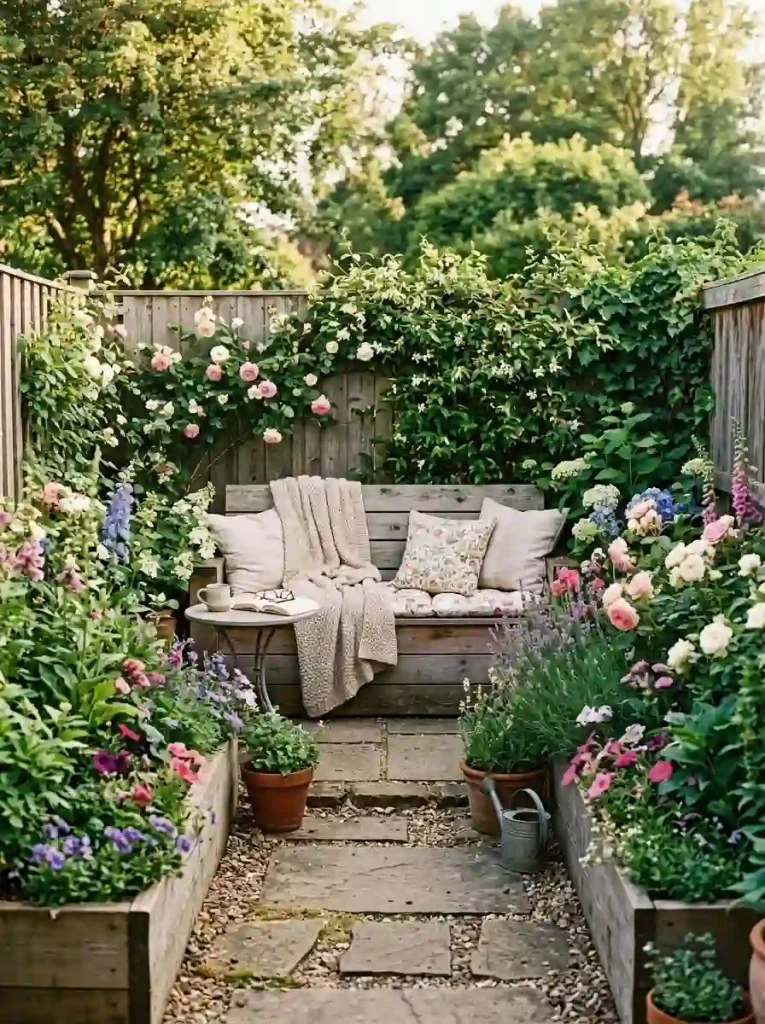
Turn your fence garden into a functional outdoor retreat by incorporating a small bench between or beside raised flower beds. The planting areas frame the seating space while making the fence feel like part of the garden design.
This is a smart choice for small yards because one area can serve multiple purposes. Instead of having separate garden beds and seating, combine them into one compact arrangement.
Add fragrant flowers or attractive foliage around the bench to make the space more inviting. A small cushion or simple outdoor accessories can complete the cozy setup.
Practical Tip:
Keep plants around the seating area low enough that they do not interfere with comfortable sitting. Avoid thorny or highly irritating plants near places where people will regularly sit.
14. Gravel-and-Wood Raised Flower Bed
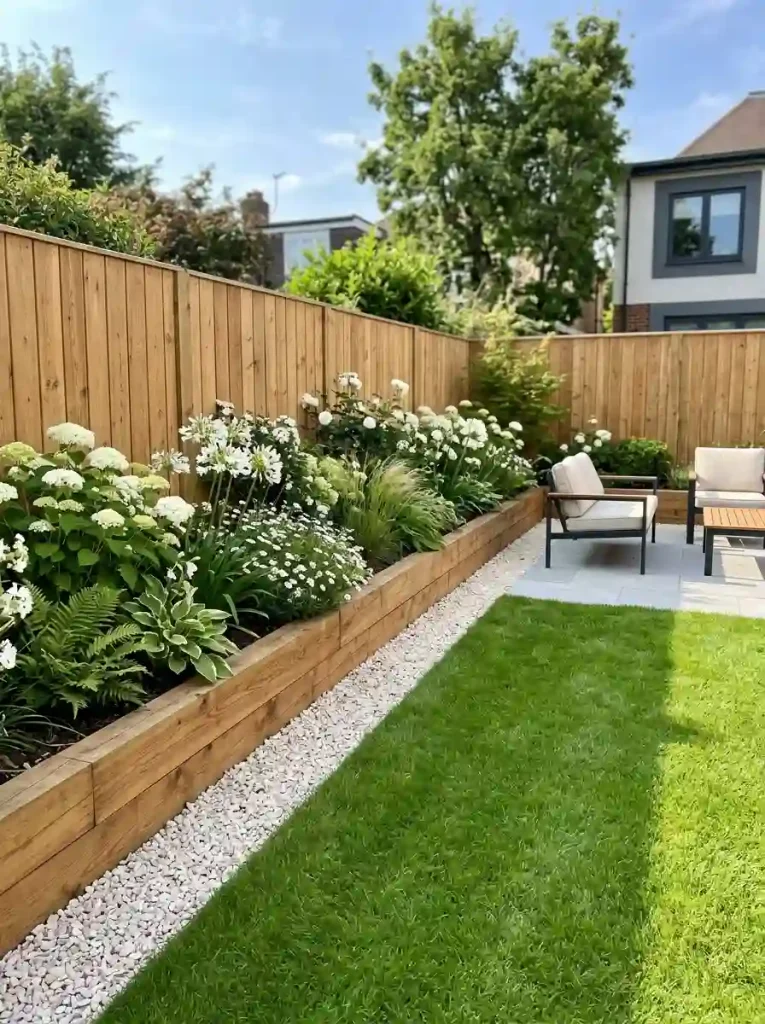
Combining a wooden raised bed with a narrow gravel border can give a small yard a clean and organized appearance. The gravel creates a visual transition between the garden and lawn while helping define the fence-side planting area.
Choose a restrained flower palette to keep the design modern. Green foliage, white blooms, and subtle flowering plants can work particularly well with natural wood and neutral gravel.
This setup is also practical when you want a clear maintenance path along the fence. The gravel separates the planting structure from the surrounding grass and gives the edge a finished appearance.
Practical Tip:
Use landscape fabric beneath the gravel if appropriate for your site, and maintain a clear boundary so gravel does not gradually spread into the lawn.
15. Colorful Annuals for a Seasonal Fence Garden
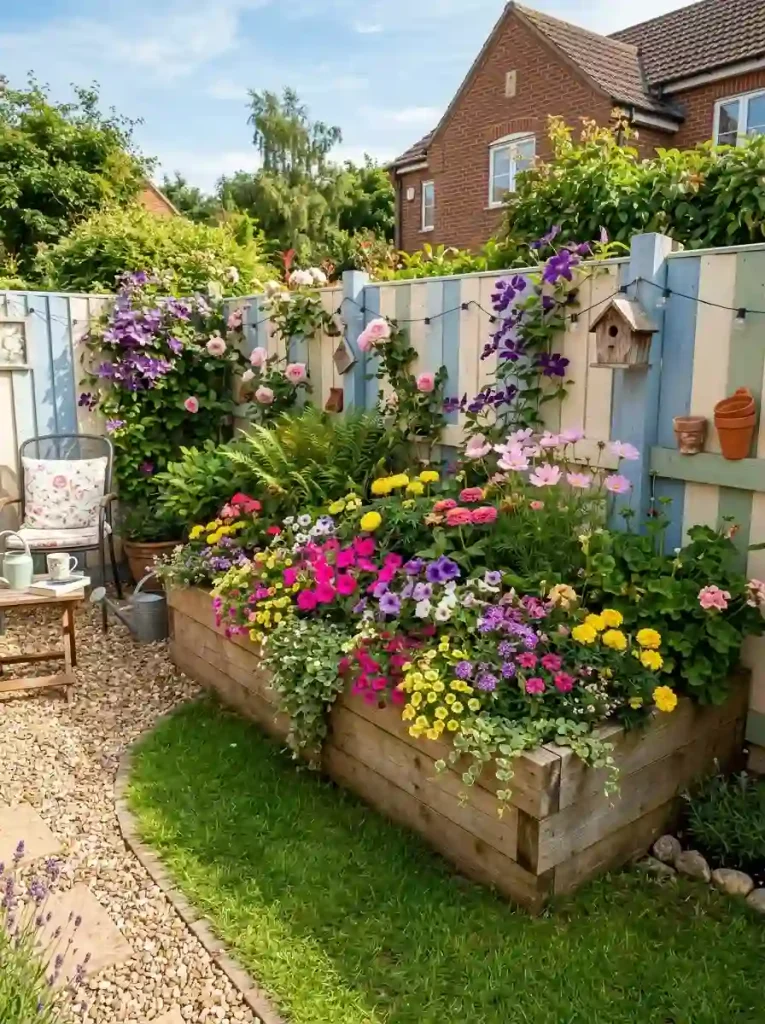
Raised beds make it easy to create a vibrant seasonal display using annual flowers. Because annuals can be changed from year to year, you can experiment with different colors and combinations without redesigning the entire garden.
For a small yard, consider choosing one dominant color and adding two complementary shades. This keeps the display energetic without making the narrow space feel visually crowded.
Mix plants with different bloom shapes and heights to give the bed depth. A few trailing varieties around the front edge can also make the structure appear softer.
Practical Tip:
Check each plant’s mature size before planting. Closely packed annuals may look attractive initially but can become overcrowded as they grow.
16. Raised Herb-and-Flower Combination Bed
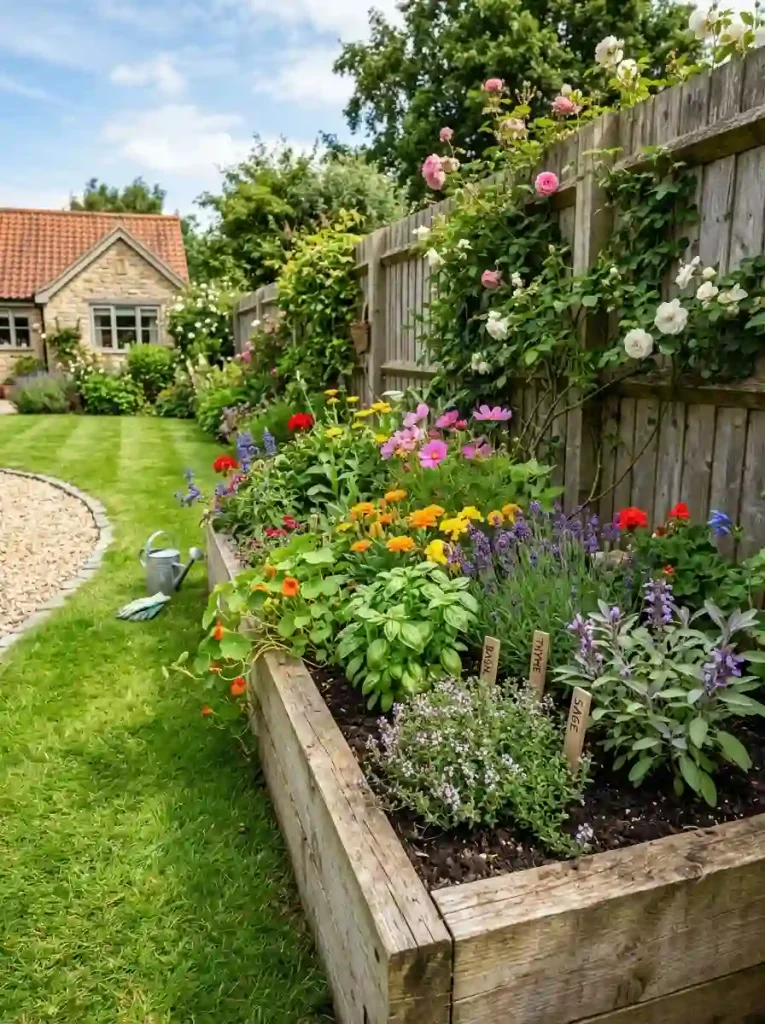
A fence-side raised bed does not have to be purely decorative. Combining herbs with flowers can create a garden that is both attractive and useful.
Place culinary herbs such as basil, thyme, sage, or parsley among flowering plants, depending on your growing conditions. The contrasting textures can make the bed more interesting while giving you convenient access to fresh herbs.
Keep plants with similar sunlight and watering requirements together. This makes maintenance easier and reduces the chance that one type of plant receives conditions it cannot tolerate.
Practical Tip:
Research mature plant sizes and watering needs before combining herbs and flowers. Keep aggressive spreaders contained so they do not quickly take over the smaller bed.
17. Cottage-Style Raised Beds With Curved Planting
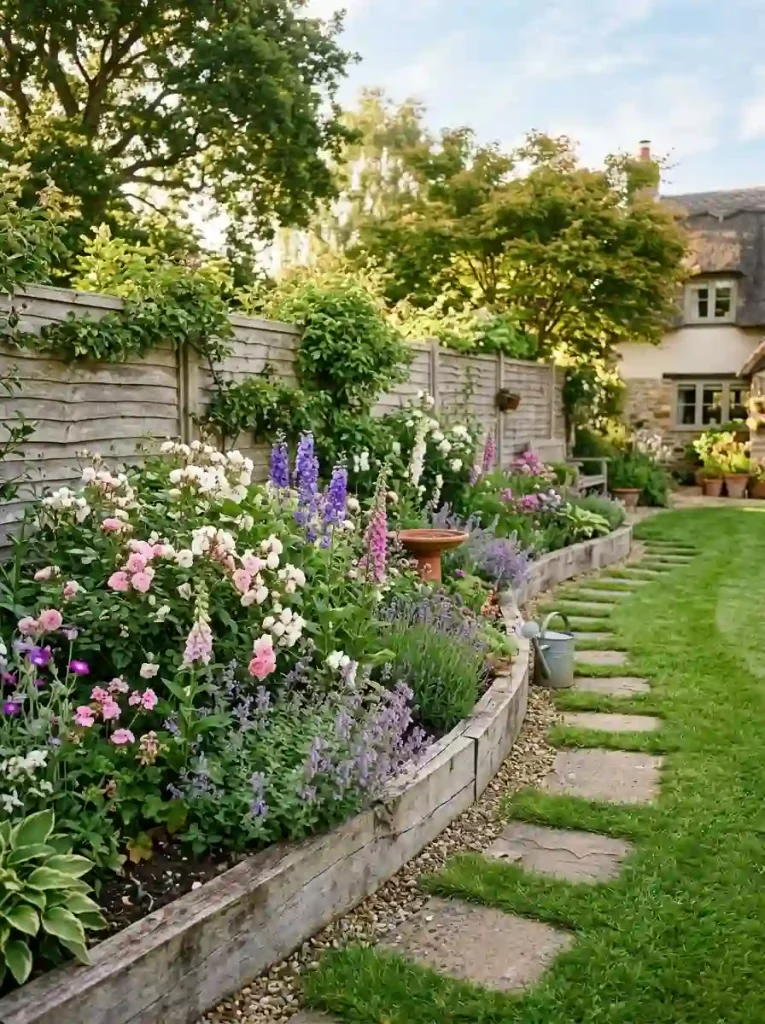
Although raised beds are often rectangular, you can soften the appearance by using curved or gently rounded planting arrangements along the fence. The structure can remain practical while the plants create a less rigid visual effect.
Choose flowers with varied shapes and allow some foliage to spill slightly over the edges. This makes the fence line feel more organic and helps soften hard architectural surfaces.
A limited palette of colors can prevent the curved planting area from becoming too busy, particularly when working with a small yard.
Practical Tip:
Keep the curves broad and simple rather than creating complicated shapes. Simple forms are easier to construct, maintain, and keep visually balanced in a compact space.
18. Vertical Trellis Above a Raised Flower Bed
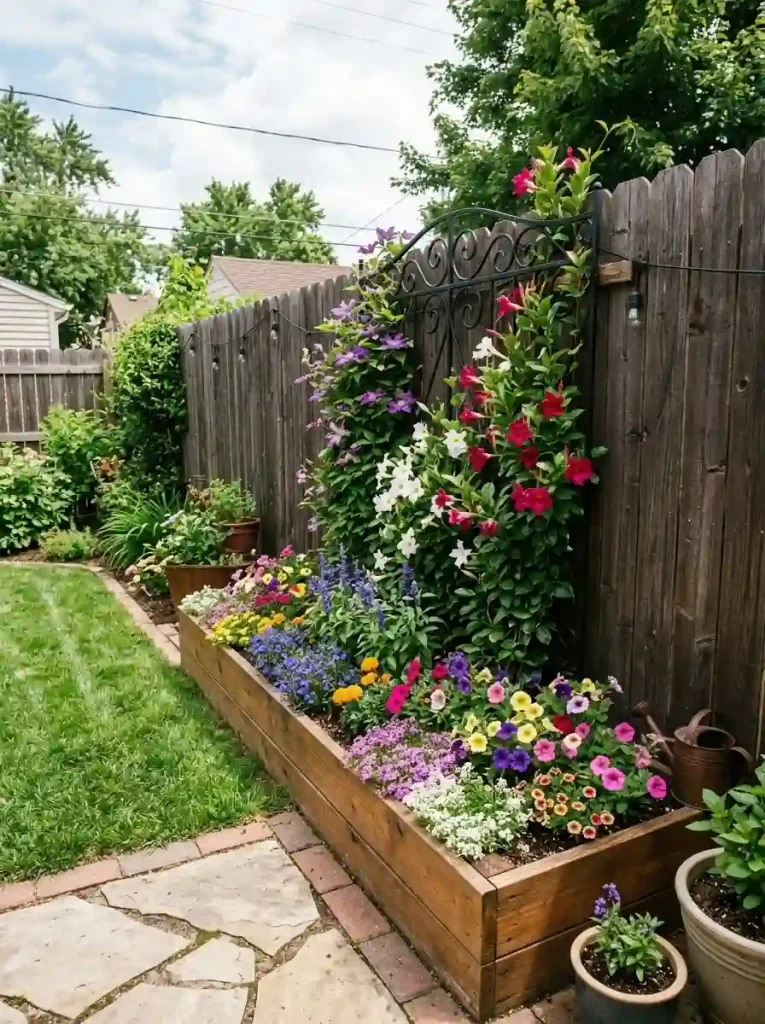
Add vertical interest without using additional ground space by installing a trellis above a raised fence-side flower bed. Climbing plants can draw the eye upward and make the garden feel taller rather than wider.
The trellis can support flowering climbers or other suitable plants while providing an attractive transition between the raised bed and the fence.
This design is especially useful when a small yard feels visually flat. A vertical element gives the planting area another dimension while keeping the footprint compact.
Practical Tip:
Select a trellis and climbing plant combination that suits your fence and local growing conditions. Secure the trellis properly so mature plants and strong winds do not put excessive strain on the structure.
19. Recycled Timber Raised Beds for a Budget-Friendly Yard
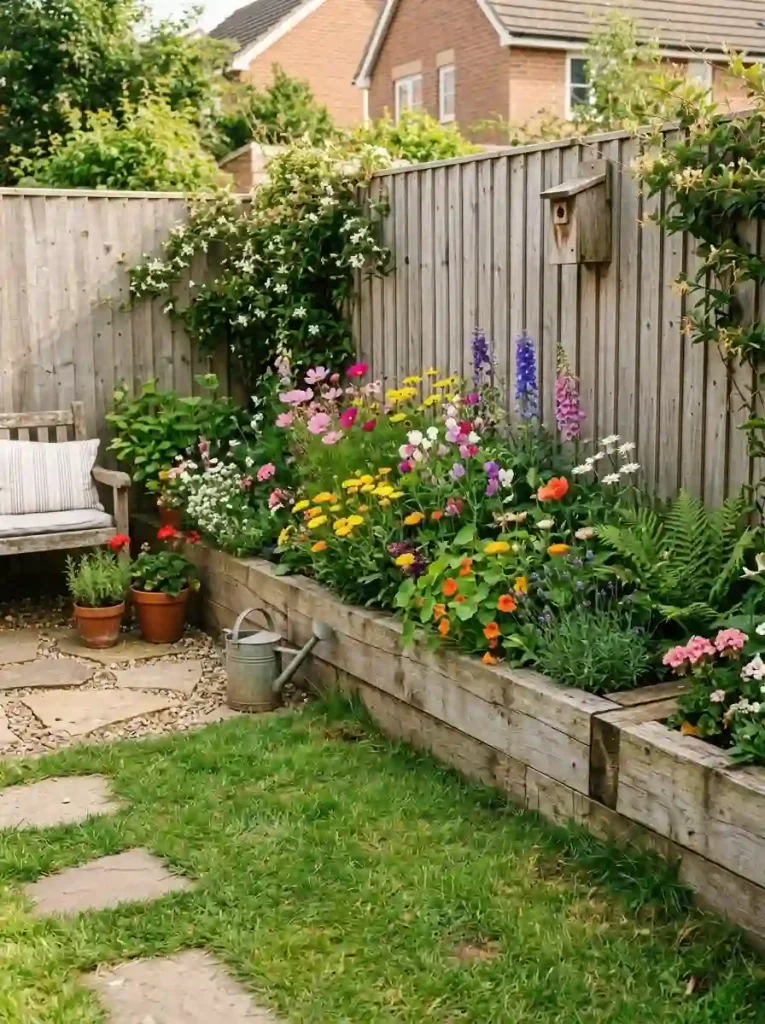
You do not need expensive landscaping materials to create an attractive fence-side garden. Reclaimed or responsibly reused timber can provide an affordable way to construct simple raised beds while giving the space a relaxed character.
Different wood tones can create an informal garden atmosphere, particularly when paired with abundant flowers and natural foliage. Keep the construction sturdy and avoid materials that may contain harmful treatments or contaminants.
This idea is ideal for homeowners who want to improve a small yard gradually rather than investing in a complete landscape makeover at once.
Practical Tip:
Only reuse wood when you know it is appropriate for garden construction. Avoid questionable treated, painted, or contaminated materials, and prioritize durable outdoor-rated lumber when buying new materials.
20. Minimalist Monochrome Raised Bed Design
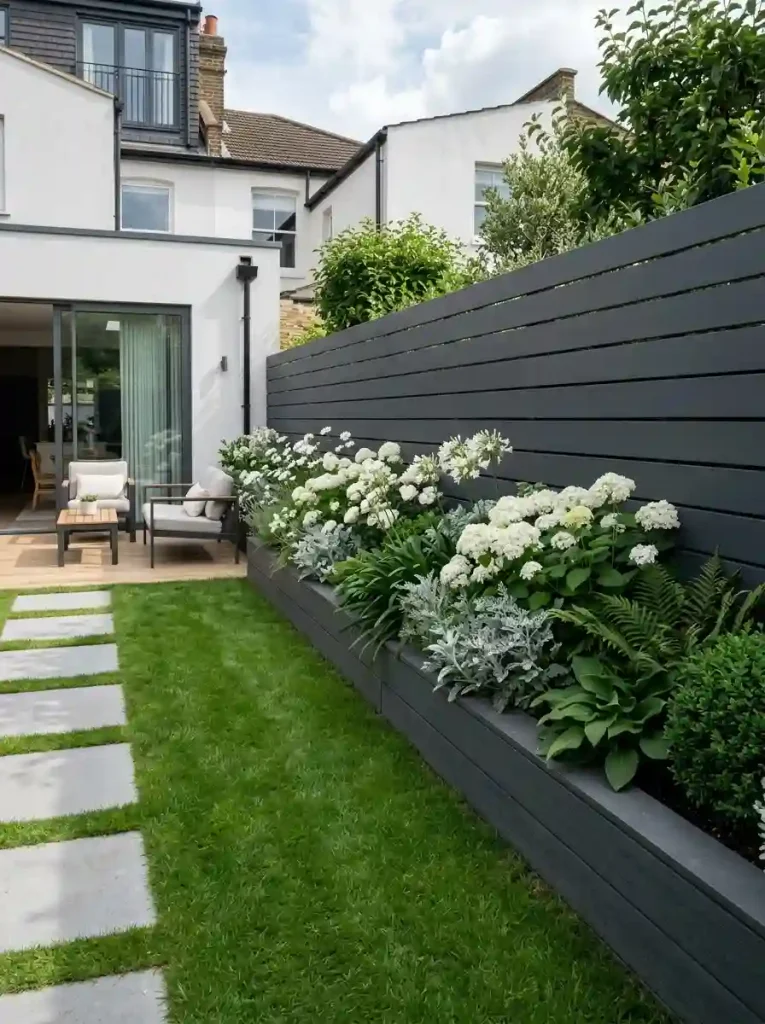
For a small yard with a modern aesthetic, consider keeping the entire fence-side bed within one restrained color family. A monochrome planting scheme can make the space feel sophisticated and visually calm.
For example, different shades of white can be combined with silvery foliage and deep green leaves. Alternatively, one dominant flower color can be repeated throughout the bed with several different plant forms.
The key is variation in texture rather than a large number of colors. Different leaf shapes and flower sizes keep the planting interesting while maintaining a clean overall appearance.
Practical Tip:
Use plants with different bloom periods and foliage textures so the bed does not lose interest when one variety finishes flowering.
How to Choose the Right Raised Flower Bed for a Small Yard
The best raised flower bed is not necessarily the largest or most elaborate option. In a small yard, the design should work with the available space rather than compete with it.
Start by measuring the distance between your fence and the areas you need to keep accessible. Leave enough room for walking, mowing, watering, and routine maintenance.
Next, consider sunlight. Watch the fence line throughout the day and determine whether it receives full sun, partial shade, or mostly shade. Choose plants according to those conditions rather than selecting flowers based only on appearance.
Think about the height of the bed as well. A taller structure can provide more visual impact in a narrow area, but it may require stronger construction and more frequent watering.
Finally, consider the relationship between the bed and the fence. Matching materials can create a seamless appearance, while contrasting colors can make the flowers stand out more dramatically.
Best Plants for Raised Flower Beds Along a Fence
Plant selection should depend on your climate, sunlight, soil, and the mature size of each variety. For small fence-side beds, compact and manageable plants are generally easier to maintain.
Some possibilities include:
• Marigolds: Bright seasonal color and compact growth.
• Petunias: Useful for colorful displays and trailing edges.
• Lavender: Adds fragrance and attractive foliage where conditions suit it.
• Salvia: Provides vertical flower spikes and can attract pollinators.
• Geraniums: Suitable for colorful container-style displays in appropriate climates.
• Zinnias: Excellent for cheerful seasonal color where they grow well.
• Ornamental grasses: Add movement and texture when space allows.
• Creeping or trailing flowers: Useful for softening the front edge of raised beds.
Before planting, check the mature height and spread of every variety. A plant that looks small at the garden center can quickly become too large for a narrow raised bed.
Tips for Maintaining Fence-Side Raised Flower Beds
Raised beds can simplify gardening, but they still require regular care. Because these beds often contain a relatively concentrated planting area, small problems can become noticeable quickly.
Water according to conditions: Raised soil may drain faster than surrounding ground, especially during hot weather. Check moisture instead of relying solely on a fixed watering schedule.
Watch plant spacing: Avoid overcrowding. Good spacing improves airflow and gives plants room to develop naturally.
Refresh the soil: Over time, soil can settle and lose organic matter. Add suitable compost or other amendments when needed based on your plants and soil conditions.
Control weeds early: Pull weeds while they are small rather than allowing them to establish deep roots.
Inspect the structure: Periodically check the boards, supports, drainage, and connections. Repair damaged areas before they compromise the bed.
Keep the fence accessible: Do not let plants completely block the fence surface if you need access for painting, repairs, or cleaning.
How to Make a Small Fence Garden Look Bigger
A few design choices can make a compact yard feel more spacious.
Use long horizontal beds when you want to emphasize the length of the yard. Repeating similar materials can also create continuity from one end of the fence to the other.
For a stronger sense of height, introduce vertical elements such as trellises or upright plants. This draws attention upward instead of making the garden feel crowded at ground level.
Keep pathways visually clear and avoid filling every available area with plants. A little empty space can actually make the garden look more polished and spacious.
You can also repeat colors between the raised bed, fence, furniture, and other garden features. Coordinated details help the entire outdoor space feel connected.
Final Thoughts
Raised flower beds along a fence are a smart solution when a small yard needs more color without sacrificing valuable open space. With the right proportions, plant choices, materials, and layout, even a narrow fence line can become one of the most attractive parts of the garden.
Whether you prefer rustic timber, modern black planters, colorful seasonal flowers, tiered beds, or a simple monochrome design, the most successful approach is one that fits your actual space and maintenance routine.
Start with one manageable section, choose plants suited to your conditions, and build from there. A small fence-side garden does not need to be complicated to make a noticeable difference.
Frequently Asked Questions
How wide should a raised flower bed along a fence be?
The ideal width depends on the available space and the plants you want to grow. In a small yard, a narrower bed is usually preferable so it does not interfere with walking or other outdoor activities. Make sure you can comfortably reach the plants for watering and maintenance.
Can raised flower beds be placed directly against a fence?
It is generally better to leave some space between the raised structure and the fence when practical. This improves access and airflow and can make fence maintenance easier. The exact spacing depends on the fence material and raised-bed design.
What flowers are best for a small raised bed?
Compact flowers that suit your sunlight and climate are generally easiest to manage. Marigolds, petunias, zinnias, salvia, and similar plants can work well in suitable conditions, but always check their mature size before planting.
How deep should a raised flower bed be?
The required depth depends on the plants and their root systems. Many ornamental flowers can grow successfully in moderately deep beds, while plants with larger root systems may require considerably more soil. Choose the depth according to the plants rather than using one measurement for every garden.
How do I keep a raised bed from drying out?
Check the soil regularly, particularly during hot or windy weather. Adding suitable organic matter can improve moisture retention, while mulch can help reduce evaporation. However, the bed should still drain properly so roots are not sitting in water.
Are raised flower beds good for very small yards?
Yes. Raised beds can be particularly useful in small yards because they allow you to create a defined planting area along an otherwise underused fence line. Narrow, tiered, or vertically oriented designs can maximize the available space without taking over the whole yard.
Should I use a liner inside a raised flower bed?
A liner is not automatically necessary. The appropriate construction depends on the bed material, drainage requirements, soil conditions, and whether the structure is intended to protect the surrounding surface. Prioritize proper drainage and use materials appropriate for outdoor gardening.
How can I make a fence-side flower bed low maintenance?
Choose plants suited to your local conditions, avoid overcrowding, use mulch where appropriate, and select a bed size that you can comfortably reach. Low-maintenance design begins with choosing the right plants rather than simply reducing the amount of care afterward.