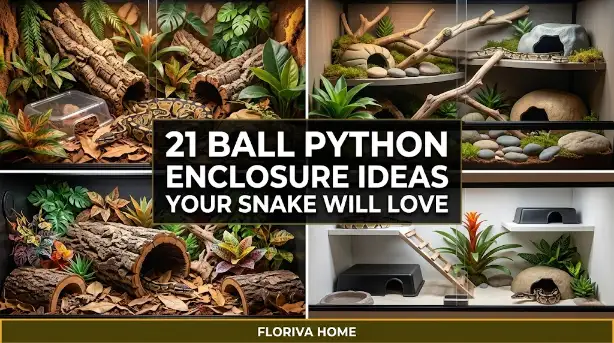
21 Ball Python Enclosure Ideas Your Snake Will Love
Creating the perfect home for your Ball Python goes far beyond choosing a simple tank. A well-designed enclosure helps your snake feel secure, stay healthy, and express natural behaviors like hiding, climbing, and exploring comfortably.
Whether you prefer natural habitats, modern terrarium designs, or creative themed setups, the right enclosure can make a huge difference in your pet’s daily life. Here are inspiring Ball Python enclosure ideas that combine comfort, beauty, and enrichment for a habitat your snake will truly enjoy.
What should I put inside a Ball Python enclosure?
A Ball Python enclosure should include secure hiding spots, proper substrate, a water bowl, heating equipment, and decorative enrichment like branches or plants. These essentials help create a comfortable habitat that supports humidity, security, and natural snake behavior.
How to Choose a Ball Python Enclosure Theme by Space, Upkeep, and Temperament
Start with the enclosure size and the keeper’s routine, because the prettiest theme fails if it cannot be cleaned or maintained. A smaller setup suits the Modern Minimalist Terrarium, the Cozy Cave Retreat, and the Cork Bark Habitat, which give a snake solid hides and climbing options without complex planting. A larger enclosure can carry the Natural Jungle Setup, the Bioactive Rainforest Habitat, or the Ultimate Bioactive Paradise, where plants, leaf litter, and cleanup crews create a fuller habitat. Keepers who enjoy daily hands-on care suit planted themes like the Tropical Plant Paradise and the Moss Garden Enclosure, while keepers who prefer simpler routines suit the Stone Cave Sanctuary, the Rustic Woodland Habitat, and the Wooden Vivarium Design.
Next, think about the snake’s needs before the look. Every theme here works only if it includes secure hides on both the warm and cool sides, a sturdy water bowl, and climbing branches or cork that will not topple — the Elevated Branch Habitat, the Hollow Log Hideaway, and the Hidden Burrow Setup all build around those basics. Finally, match the theme to temperament: shy snakes settle better with dense cover like the Leafy Jungle Retreat, the Black Forest Theme, and the Bamboo Forest Habitat, while confident explorers use open climbing space like the Natural Riverbank Theme and the Luxury Glass Showcase. A theme that hides the snake completely may look natural but makes health checks harder, so keep at least one hide easy to lift.
1. Natural Jungle Setup
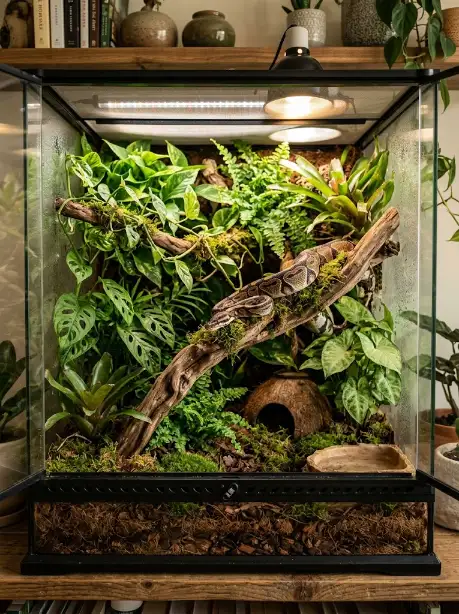
A natural jungle setup creates a habitat inspired by tropical forests where Ball Pythons feel naturally comfortable. Live plants, moss substrate, wood branches, and earthy textures help build a realistic environment while giving the enclosure a beautiful, wild appearance that feels visually stunning.
This type of habitat supports natural humidity levels while offering shaded hiding spots that help reduce stress. The branches provide light climbing opportunities, while the soft substrate creates comfort, helping your Ball Python feel secure, relaxed, and more confident inside its space.
2. Bioactive Rainforest Habitat
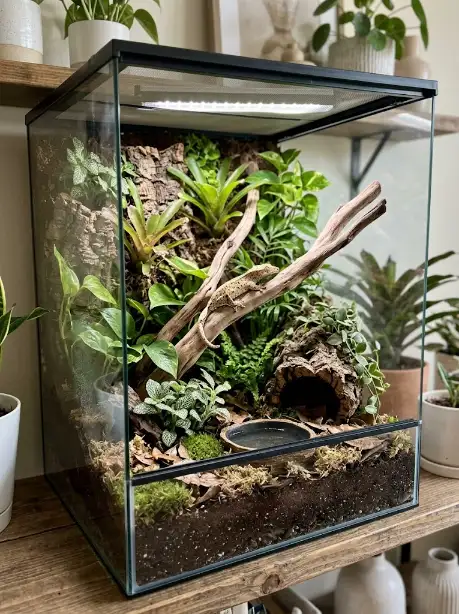
A bioactive rainforest enclosure creates a living ecosystem using plants, beneficial insects, organic substrate, and natural materials. The entire habitat feels dynamic and alive while maintaining a highly natural appearance that closely mimics environments where reptiles thrive comfortably in nature.
The living ecosystem helps regulate humidity naturally while reducing enclosure maintenance over time. Ball Pythons benefit from cleaner surroundings, secure hiding spaces, and a more stimulating environment that encourages natural behaviors while maintaining comfort throughout daily activity and rest periods.
3. Cozy Cave Retreat
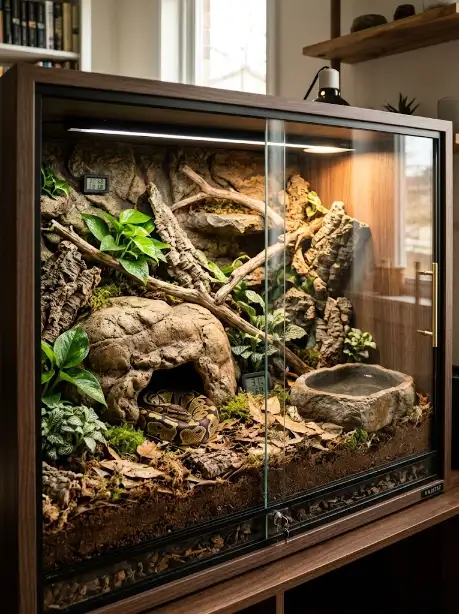
A cozy cave retreat focuses on security by creating multiple enclosed hiding spaces where Ball Pythons feel protected. Rock caves, dark corners, earthy substrate, and minimal open space create a calm habitat that perfectly suits their naturally shy behavior patterns.
Ball Pythons spend much of their time hidden, making secure shelter incredibly important for comfort. A cave-focused setup helps reduce anxiety, supports better feeding behavior, and creates stable temperature zones that allow your snake to regulate body heat naturally throughout the day.
4. Modern Minimalist Terrarium
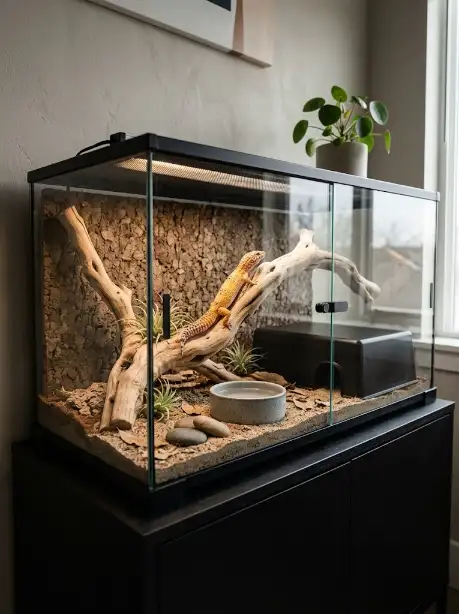
A minimalist terrarium combines clean design with essential habitat features while keeping the enclosure visually modern. Neutral colors, simple decorations, open glass visibility, and carefully selected accessories create a premium aesthetic that looks elegant without overwhelming the enclosure environment.
This setup keeps the habitat organized while still providing proper comfort and security. Ball Pythons enjoy controlled temperatures, safe hiding areas, and uncluttered movement space, making the enclosure easy to maintain while ensuring the snake remains relaxed and comfortable daily.
5. Desert Rock Theme
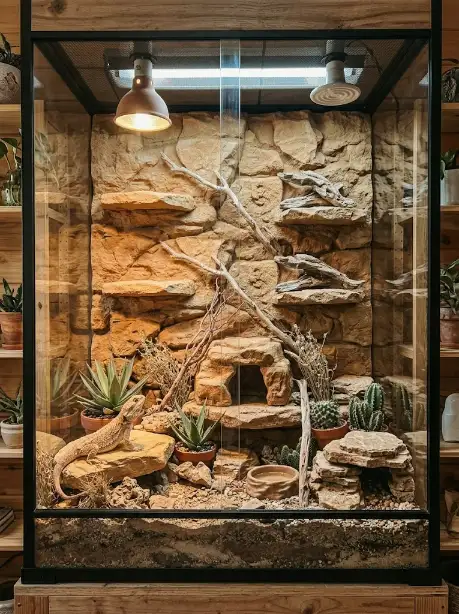
A desert-inspired enclosure uses realistic sandstone decorations, rocky hideouts, textured substrate, and warm earthy colors to create a dramatic visual style. Although Ball Pythons prefer humidity, careful adjustments allow this setup to maintain proper environmental balance while looking incredibly unique.
Strategically placed humid hides ensure your snake stays comfortable despite the dry visual theme. The rocks create secure shelter while different temperature zones support natural thermoregulation, giving your Ball Python both environmental comfort and visually engaging surroundings to explore safely.
6. Wooden Vivarium Design
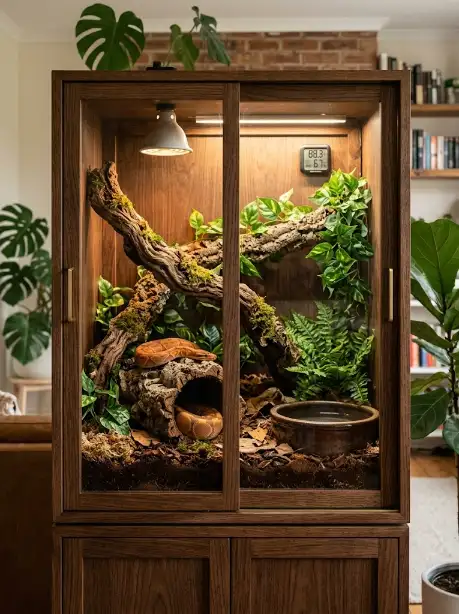
A wooden vivarium offers excellent insulation while creating a warm and natural appearance that blends beautifully into home interiors. Wooden walls, natural bark decorations, earthy substrate, and secure interior design help create a cozy environment perfectly suited for tropical reptile care.
The insulated structure helps maintain steady temperatures while reducing sudden environmental fluctuations. Ball Pythons benefit from stable warmth, comfortable humidity retention, dark sheltered hiding areas, and a secure habitat that supports stress-free daily living and healthy long-term enclosure conditions.
7. Tropical Plant Paradise
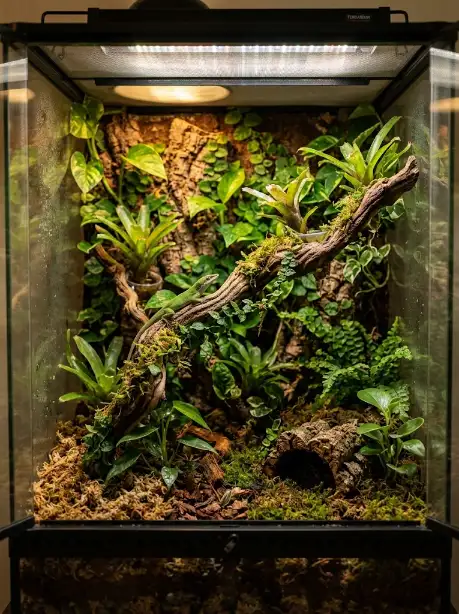
A tropical plant paradise creates an enclosure filled with dense greenery, hanging vines, live tropical plants, moss bedding, and natural wood features. The habitat feels rich and vibrant while closely recreating a beautiful forest-inspired environment that looks highly decorative and natural.
Dense foliage gives Ball Pythons extra privacy while supporting excellent humidity retention inside the enclosure. Multiple hiding zones, climbing surfaces, and shaded resting areas encourage natural exploration while creating a calm environment where your snake feels protected and comfortable throughout the day.
8. Hollow Log Hideaway
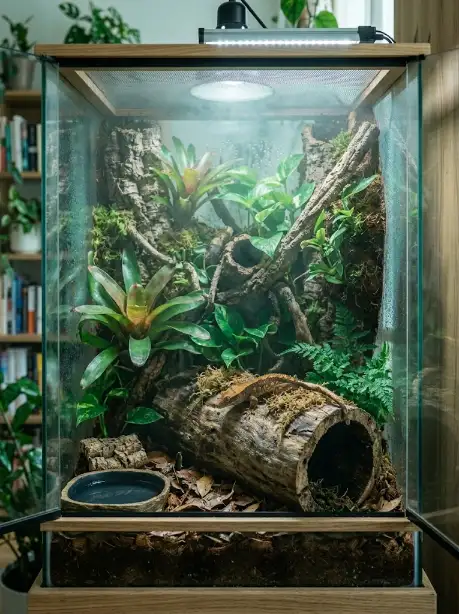
A hollow log hideaway creates a woodland-inspired habitat centered around large tunnel structures that offer privacy and shelter. Natural bark decorations, earthy textures, and simple forest-style details make the enclosure feel organic while giving the setup a beautiful natural appearance.
Ball Pythons naturally seek enclosed spaces, making tunnel shelters extremely comforting for daily rest. The secure hiding structure reduces stress, supports normal feeding behavior, and provides a protected retreat where your snake can comfortably relax while feeling completely safe.
9. Black Forest Theme
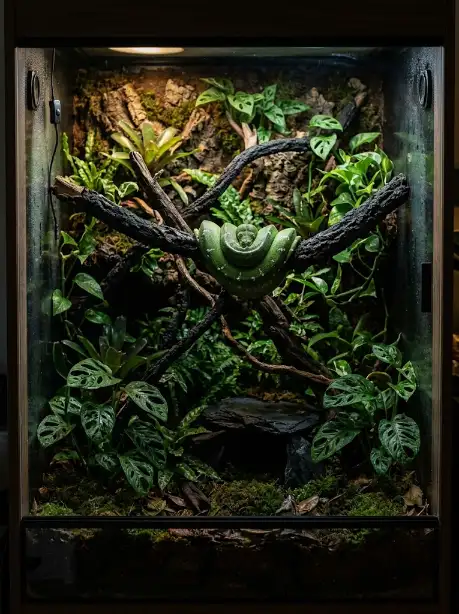
A black forest enclosure uses darker decorative elements to create a dramatic habitat with rich visual contrast. Dark bark branches, shadowy caves, deep green plants, and textured substrate create an exotic atmosphere that feels premium while maintaining a highly natural reptile environment.
The darker surroundings make hiding areas feel safer for shy Ball Pythons that prefer low-exposure spaces. The secure environment encourages calm behavior while proper humidity, stable temperatures, and multiple shelter zones help support healthy daily activity and comfortable long resting periods.
10. Elevated Branch Habitat
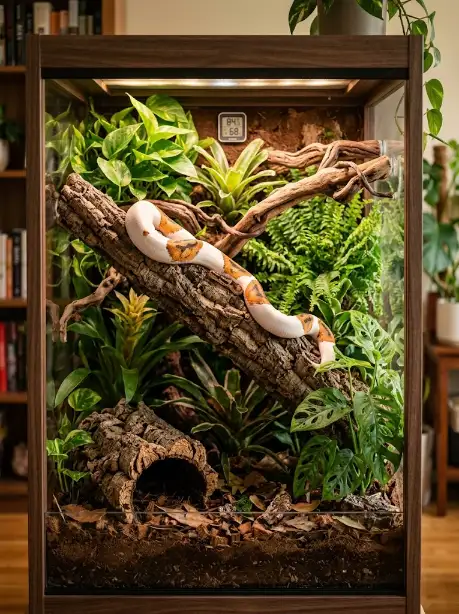
An elevated branch habitat focuses on creating vertical movement opportunities using carefully placed natural wood structures. Combined with tropical foliage, earthy substrate, and secure hides, the enclosure feels spacious while encouraging occasional climbing behavior many Ball Pythons naturally enjoy exploring.
The branch placement creates environmental enrichment that promotes movement and curiosity without causing stress. Your Ball Python benefits from exercise, additional shaded resting zones, improved temperature options, and a more interactive enclosure that feels stimulating yet remains comfortable and secure.
11. Stone Cave Sanctuary
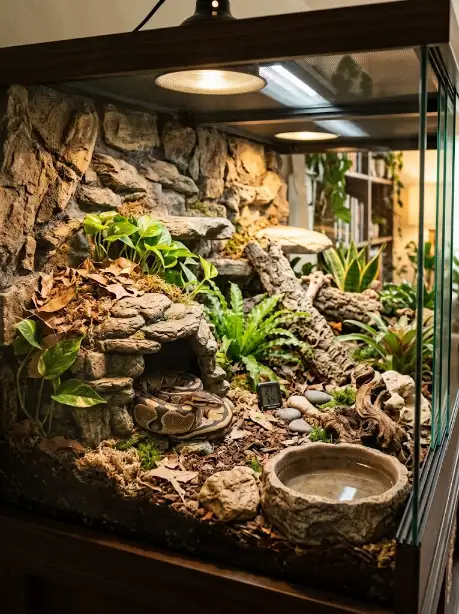
A stone cave sanctuary focuses heavily on realistic rocky structures designed to imitate hidden underground shelters. Artificial stone caves, textured backgrounds, earthy substrate, and natural enclosure details create a rugged environment that feels secure while maintaining an attractive premium terrarium appearance.
Ball Pythons naturally prefer tight enclosed hiding spaces, making stone caves highly comforting. The secure shelters reduce stress while helping your snake feel protected during rest periods, supporting healthy behavior patterns and creating temperature zones where proper thermoregulation happens comfortably.
12. Moss Garden Enclosure
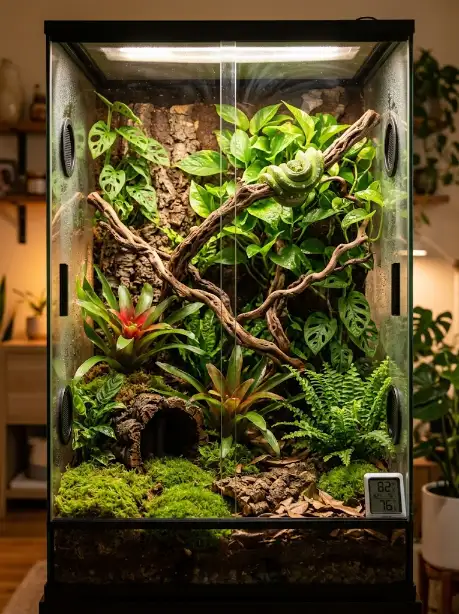
A moss garden enclosure creates a soft, vibrant habitat filled with lush green textures that instantly feel natural and calming. Thick moss coverage, tropical plants, natural wood decorations, and earthy enclosure elements combine beautifully to create a highly decorative reptile environment.
Moss helps retain humidity while providing softer surfaces throughout the habitat. Ball Pythons benefit from moisture stability, comfortable movement, shaded resting areas, and a peaceful enclosure atmosphere that supports healthy shedding while encouraging natural exploration in a secure environment.
13. Hidden Burrow Setup
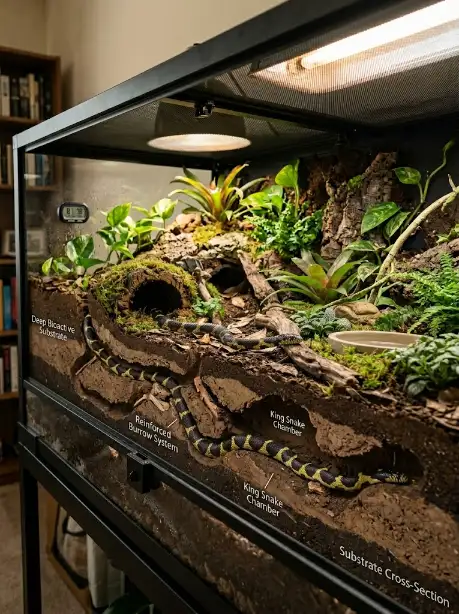
A hidden burrow setup focuses on creating underground-inspired shelter areas that mimic protected hiding spots found in nature. Deep substrate layers, enclosed tunnel structures, bark pieces, and earthy decorative elements make the enclosure feel secure while maintaining a natural underground habitat style.
Ball Pythons often prefer enclosed resting places where they feel completely hidden from outside disturbances. Burrow-style shelters reduce stress, encourage calm behavior, maintain warmth efficiently, and create secure retreat zones that support healthy feeding habits and comfortable daily rest.
14. Bamboo Forest Habitat
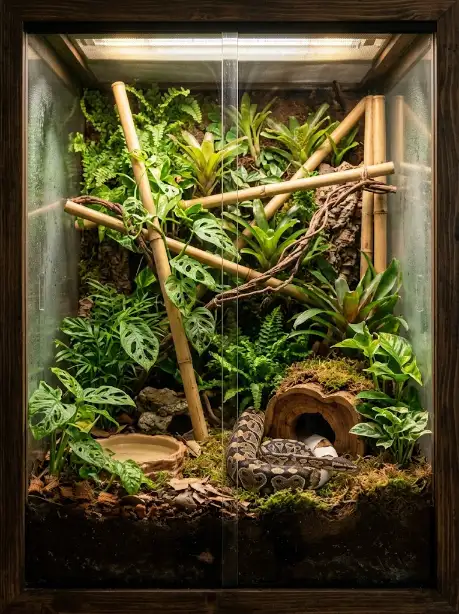
A bamboo forest habitat creates an elegant tropical enclosure using vertical bamboo decorations, soft moss substrate, natural wood features, and lush greenery. The enclosure feels refreshing and exotic while providing a beautifully balanced environment that looks decorative and naturally inspired.
The vertical bamboo structures create extra privacy while adding interesting visual depth inside the habitat. Ball Pythons benefit from shaded retreat areas, stable humidity retention, secure hiding zones, and a peaceful enclosure environment that supports both comfort and natural behavior patterns.
15. Rustic Woodland Habitat
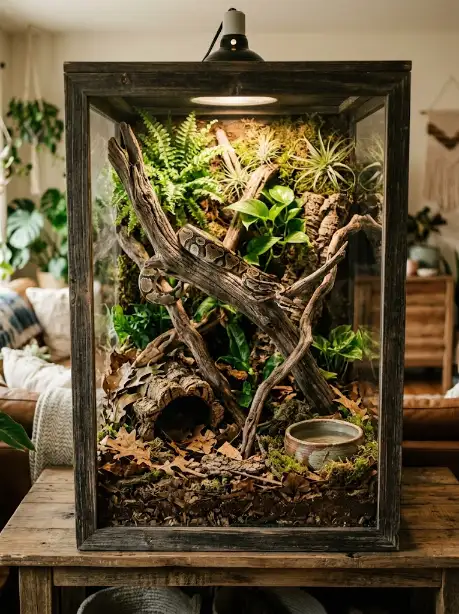
A rustic woodland habitat recreates a forest floor environment using aged wood pieces, bark shelters, natural leaf litter substrate, and earthy decorative textures. The enclosure feels warm and organic while creating a highly realistic setup inspired by nature’s quiet woodland spaces.
The natural wood shelters provide secure hiding areas while helping the habitat feel calm and protected. Ball Pythons enjoy sheltered resting zones, comfortable humidity retention, safe movement across soft substrate, and an environment that encourages natural daily routines without unnecessary stress.
16. Luxury Glass Showcase
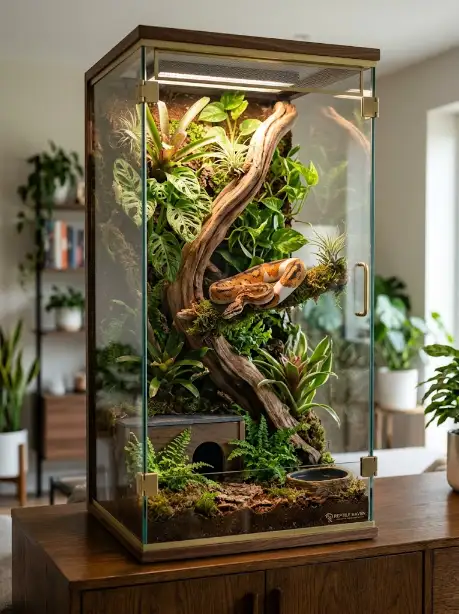
A luxury glass showcase enclosure combines premium terrarium design with elegant interior styling that looks visually impressive inside modern homes. Clean glass panels, carefully placed decor, stylish lighting, and natural reptile accessories create a habitat that feels sophisticated and beautifully organized.
Despite the elegant appearance, comfort remains the main focus inside the enclosure. Ball Pythons benefit from secure hiding areas, excellent temperature control, proper humidity management, and a carefully balanced habitat that supports healthy daily activity while maintaining complete environmental stability.
17. Leafy Jungle Retreat
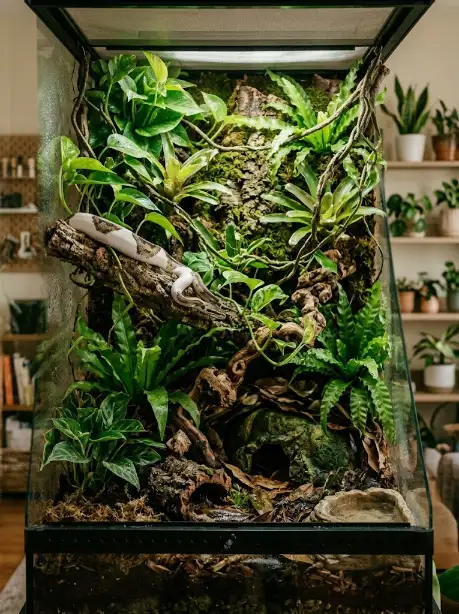
A leafy jungle retreat creates a dense enclosure filled with large tropical leaves, hanging vines, moss bedding, and natural bark decorations. The setup feels rich and immersive while closely resembling humid tropical habitats that create visually stunning and naturally beautiful reptile environments.
Dense foliage creates excellent cover that helps Ball Pythons feel hidden and protected throughout the day. The humidity-friendly environment supports healthy shedding while multiple shaded spaces encourage natural exploration, restful hiding behavior, and reduced stress within a comfortable enclosed habitat.
18. Underground Tunnel Habitat
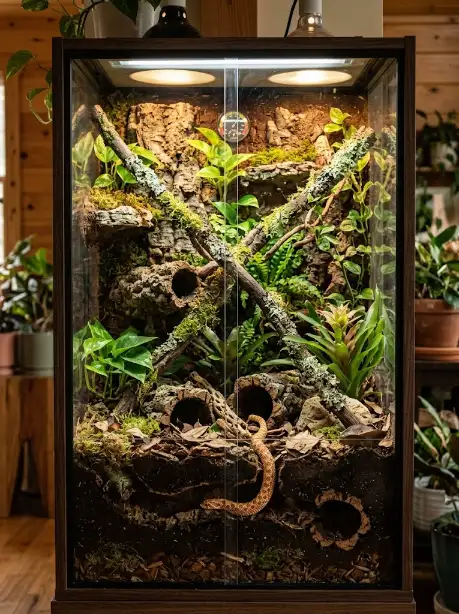
An underground tunnel habitat focuses on creating connected hidden passageways that imitate protected underground reptile shelters. Deep substrate, bark tunnels, enclosed hide structures, and earthy textures make the enclosure feel secure while offering a highly unique and naturally inspired design.
Tunnel systems provide excellent security for Ball Pythons that prefer enclosed spaces during rest periods. Hidden pathways reduce stress while maintaining warmth efficiently, giving your snake protected movement areas that encourage natural behavior while creating a comfortable and relaxing habitat.
19. Cork Bark Habitat
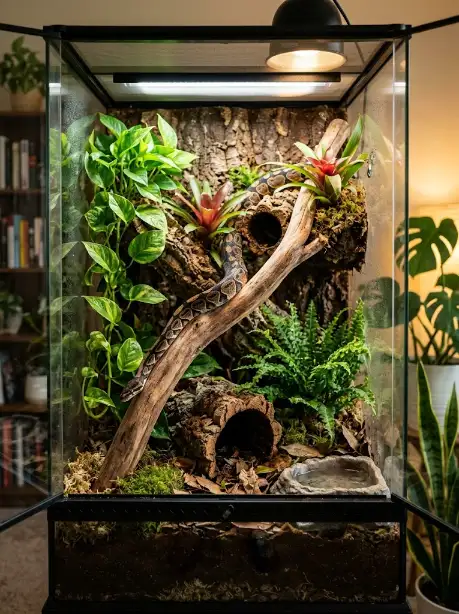
A cork bark habitat uses lightweight natural bark tunnels as the central design feature while creating a warm tropical environment. Combined with live plants, natural substrate, and earthy decorative textures, the enclosure feels organic while offering a clean and naturally balanced reptile setup.
Cork bark creates excellent hiding structures that Ball Pythons naturally enjoy using for rest. The enclosed spaces provide security while supporting humidity retention, comfortable movement, safe shelter options, and a calming habitat environment that helps reduce stress levels significantly.
20. Natural Riverbank Theme
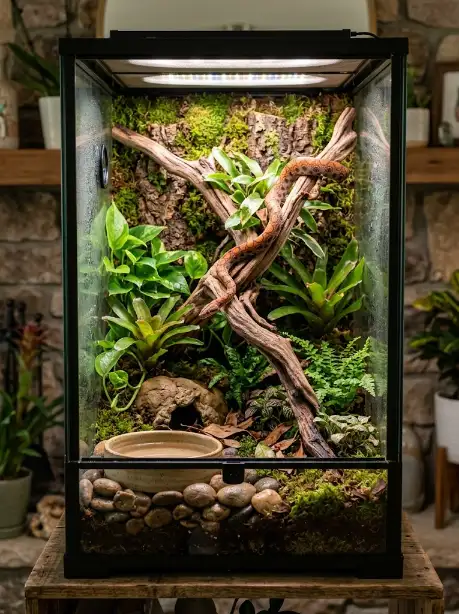
A natural riverbank enclosure combines smooth river stones, driftwood pieces, tropical greenery, and earthy substrate to create a habitat inspired by peaceful natural water environments. The enclosure feels refreshing and balanced while creating a beautifully decorative terrarium design full of texture.
The varied textures encourage gentle exploration while giving Ball Pythons multiple comfortable resting zones. Natural humidity retention supports healthy shedding while secure hiding spaces, proper warmth gradients, and soft movement surfaces help create a safe and enriching habitat environment.
21. Ultimate Bioactive Paradise
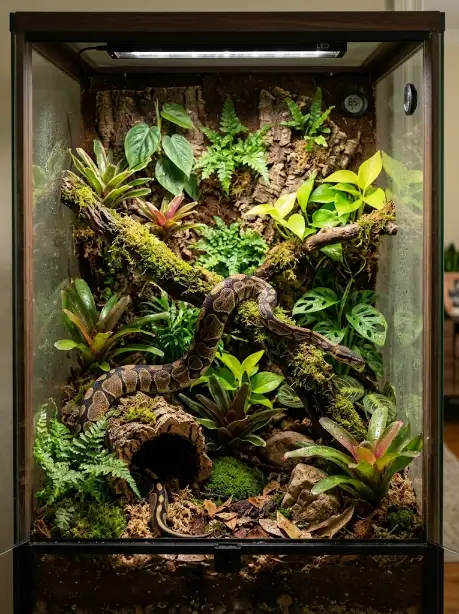
An ultimate bioactive paradise combines living plants, natural wood structures, healthy microfauna, organic substrate, and balanced humidity to create a self-sustaining reptile ecosystem. The enclosure feels vibrant, alive, and beautifully natural while offering one of the most advanced habitat designs available.
This environment provides excellent humidity control while encouraging highly natural behavior patterns throughout daily activity. Ball Pythons benefit from cleaner surroundings, secure shelter areas, stable temperature management, enrichment opportunities, and a habitat designed to maximize comfort, health, and long-term wellbeing.
How to Set Up a Ball Python Enclosure in Order: Steps, Mistakes, and Care
Set the enclosure up in this order and the habitat stays safe and easy to maintain. First, choose and prepare the enclosure: check that lids and doors lock securely, since ball pythons are strong and persistent escapers, and place it away from drafts and direct sun. Second, set heating and thermostats before adding the snake, and let the setup run for a day so temperatures stabilize — heat sources should always be controlled by a thermostat and guarded so the snake cannot rest directly against them. Third, add substrate and the basics: a water bowl heavy enough not to tip, at least two snug hides, and a humidity-friendly substrate layer. Fourth, add decor: branches, cork bark, plants, and tunnels like the Underground Tunnel Habitat, anchoring anything tall so it cannot fall. Fifth, introduce the snake and leave it undisturbed for several days to settle, offering food only once it is exploring and hiding normally.
Common mistakes include using a hide that is too large, so the snake feels exposed instead of secure; skipping a thermostat on a heat source; placing the water bowl under a heat lamp, which dries the air; and decorating with sharp or loose items that can injure or trap a snake. For care, spot-clean daily, refresh water daily, and do a full substrate change on a regular schedule. Check hides and branches monthly for mold or damage, and monitor shedding: incomplete sheds often signal low humidity or a missing rough surface to rub against. Because care needs vary by age, size, and individual snake, check species-specific care guidance from a reputable reptile source or veterinarian before changing heating, humidity, or feeding routines, and treat any health concern as a reason to consult a reptile veterinarian rather than guessing.
Frequently Asked Questions
What are the must-have items for a ball python enclosure?
The essentials are two snug hides, one on the warm side and one on the cool side, a heavy water bowl large enough to soak in, a suitable substrate, and a thermostat-controlled heat source. Beyond that, branches, cork bark, fake or live plants, and tunnels add enrichment and climbing options. Every item should be secure, easy to clean, and free of sharp edges, and nothing should block the snake from reaching both hides and the water bowl.
How big should a ball python enclosure be?
An adult ball python needs an enclosure long enough to stretch out along at least one side, with floor space for two hides, a water bowl, and room to move between warm and cool areas. Bigger is generally better as long as the space still feels secure, with plenty of hides and cover so an open, empty enclosure does not stress the snake. Young snakes often settle better in smaller setups and can move up as they grow.
Do ball pythons need light in their enclosure?
Ball pythons benefit from a regular day and night cycle, which a simple light on a timer provides. They do not bask like some reptiles, so bright light is not essential, and a hide should always offer a dark retreat. Avoid leaving lights on around the clock, since constant light disrupts rest, and keep any heat lamp on a thermostat with a guard so the snake cannot contact the bulb.
How often should I clean a ball python enclosure?
Spot-clean daily by removing waste and refreshing water, and replace substrate fully on a regular schedule, more often for simple setups and less often for bioactive ones with cleanup crews. Wash the water bowl and hides during full cleans, and check decor for mold, mites, or damage. A clean enclosure smells neutral, and any strong odor, mold, or pest sign means a full clean is overdue.
Conclusion
Designing the perfect Ball Python enclosure means creating a habitat where beauty and comfort work together naturally. The right setup helps your snake feel secure, maintain healthy behaviors, regulate temperature properly, and enjoy an environment built around its natural instincts.
Whether you prefer simple terrarium designs or elaborate bioactive habitats, every enclosure should focus on safety, enrichment, and comfort first. A thoughtfully designed habitat creates a healthier, happier Ball Python while turning reptile care into a rewarding experience.