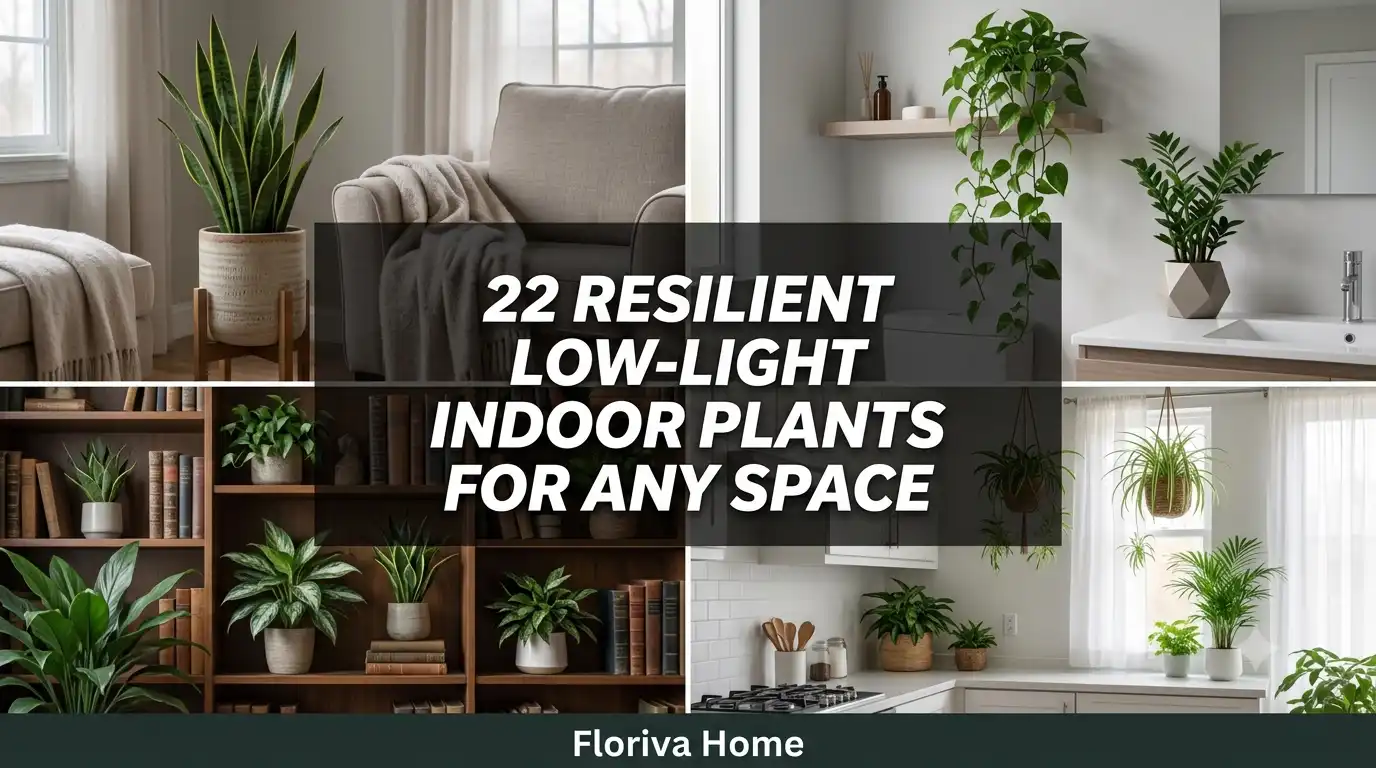
22 Resilient Low-Light Indoor Plants for Any Space
Not every room in your home gets bright, sunny windows—and that doesn’t mean you have to give up on having beautiful houseplants.
Some indoor plants are surprisingly adaptable to dim corners, shaded rooms, offices, hallways, and spaces where direct sunlight is hard to find. The key is choosing varieties that can handle lower light without demanding constant attention.
These 22 resilient low-light indoor plants can help you bring more greenery into almost any space. Whether you’re new to houseplants or simply want something that won’t complain about a less-than-perfect window, there’s an option here worth trying.
Let’s start with some of the toughest and easiest choices for darker indoor spaces.
1. ZZ Plant for Nearly Effortless Greenery
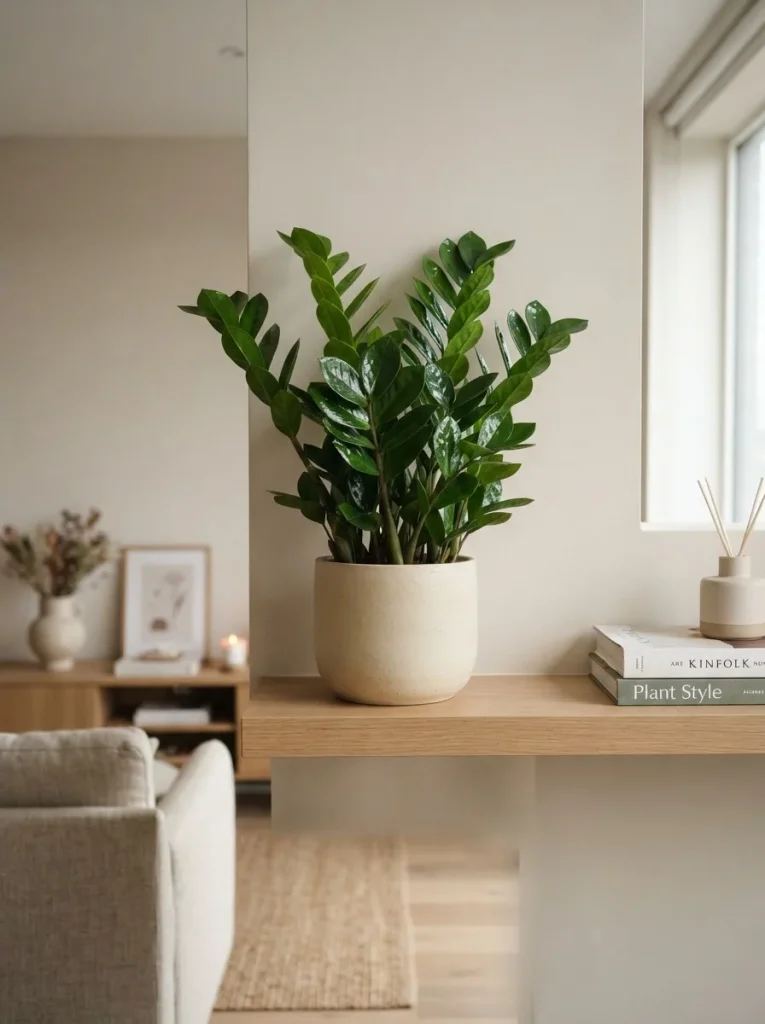
The ZZ plant is one of those houseplants that seems almost made for busy households. Its thick, glossy leaves can tolerate lower-light conditions, and its underground rhizomes help it store water for periods between watering.
That makes it especially useful for offices, bedrooms, entryways, and corners where brighter plants may struggle.
Keep the soil from staying constantly wet, because overwatering is a much bigger concern than forgetting to water occasionally. A spot with indirect light is ideal, but this plant can adapt to considerably less light than many decorative houseplants.
If you want a plant that looks polished without requiring a complicated care routine, the ZZ plant is an excellent starting point.
Expert Tip:
Let the potting mix dry substantially between waterings, and always use a container with drainage holes.
2. Snake Plant for Dark Corners
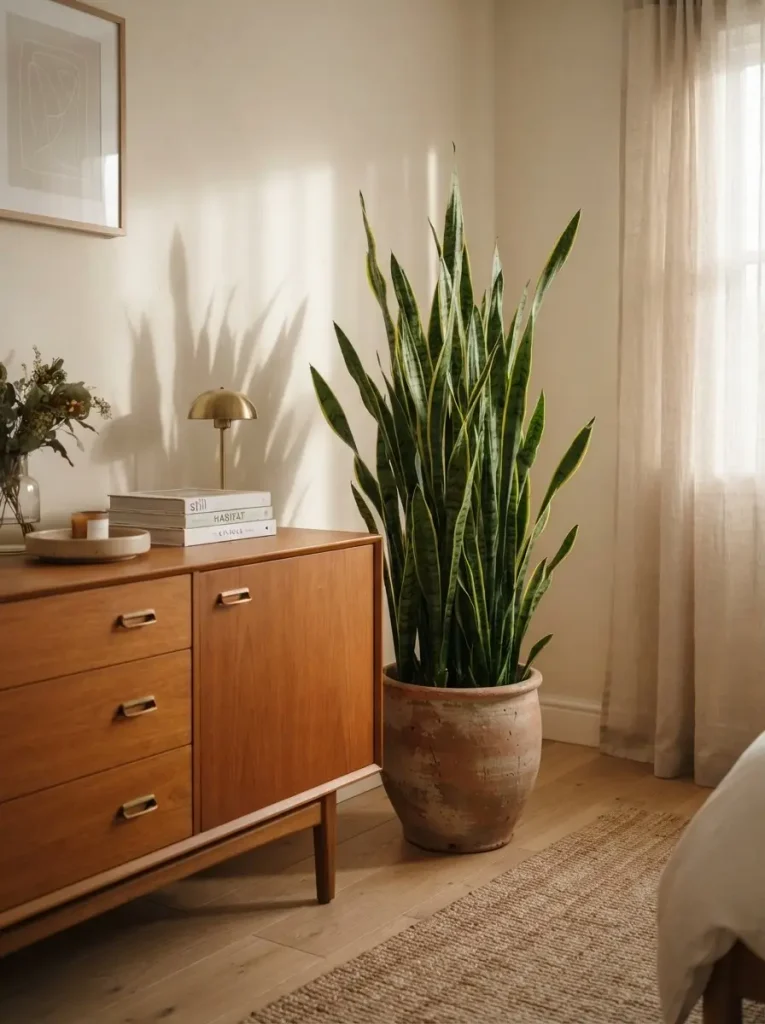
Snake plants are incredibly versatile indoor plants and can work well in rooms that receive limited natural light. Their upright leaves also make them useful when floor space is limited.
You can choose compact varieties for desks and shelves or taller forms for empty corners that need some height. Their sculptural shape adds visual interest even when the rest of the room has simple decor.
Snake plants prefer the soil to dry between waterings. In low light, they generally use water more slowly, so watering on a strict schedule can easily lead to excess moisture.
Place one near a hallway, bedroom, or office where you want greenery without creating a bulky display.
Expert Tip:
When growing a snake plant in lower light, resist the urge to water more often simply because the room feels darker.
3. Pothos for Shelves and Hanging Displays
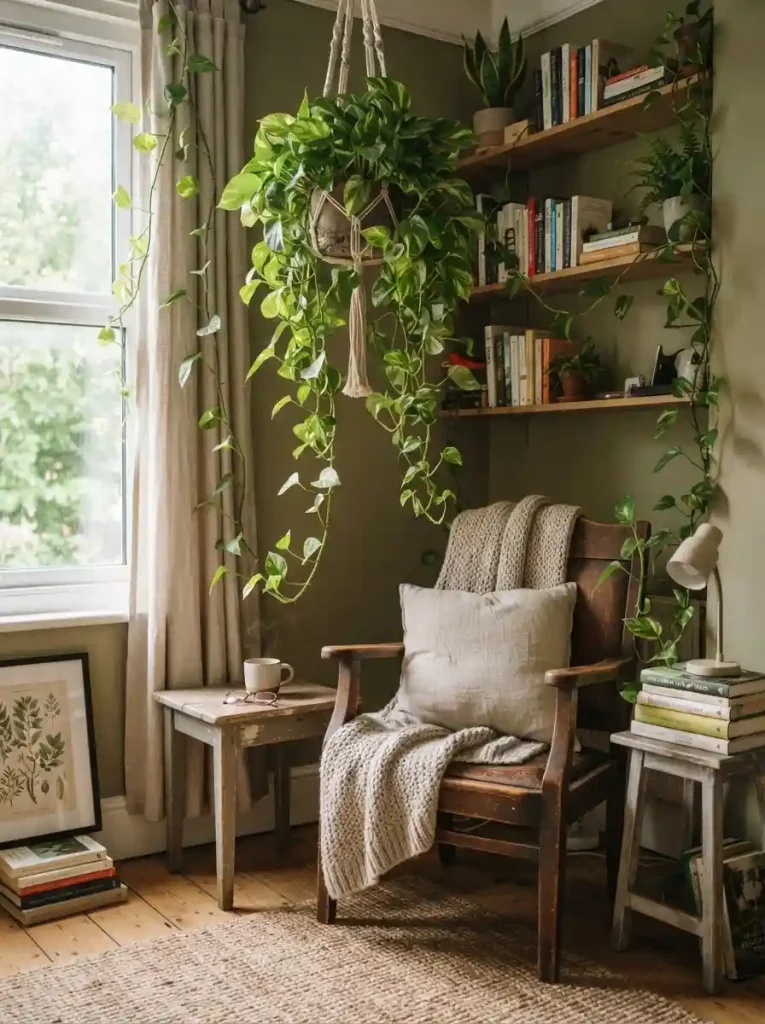
Pothos is a fantastic choice when you want a low-light plant that also adds movement to your room. Its trailing stems can spill gracefully from shelves, bookcases, cabinets, and hanging containers.
Golden pothos may show stronger variegation when given brighter indirect light, while lower-light conditions can encourage greener foliage. Either way, the plant can create a lush effect without needing a large footprint.
Water when the upper portion of the potting mix has dried rather than keeping the roots constantly damp. Trim long vines whenever you want a fuller appearance.
It’s especially handy for renters or small-space decorators because a hanging pot can add greenery without taking up valuable floor space.
Expert Tip:
Rotate the container occasionally so the stems receive light more evenly and grow with a more balanced shape.
4. Cast Iron Plant for Shady Rooms
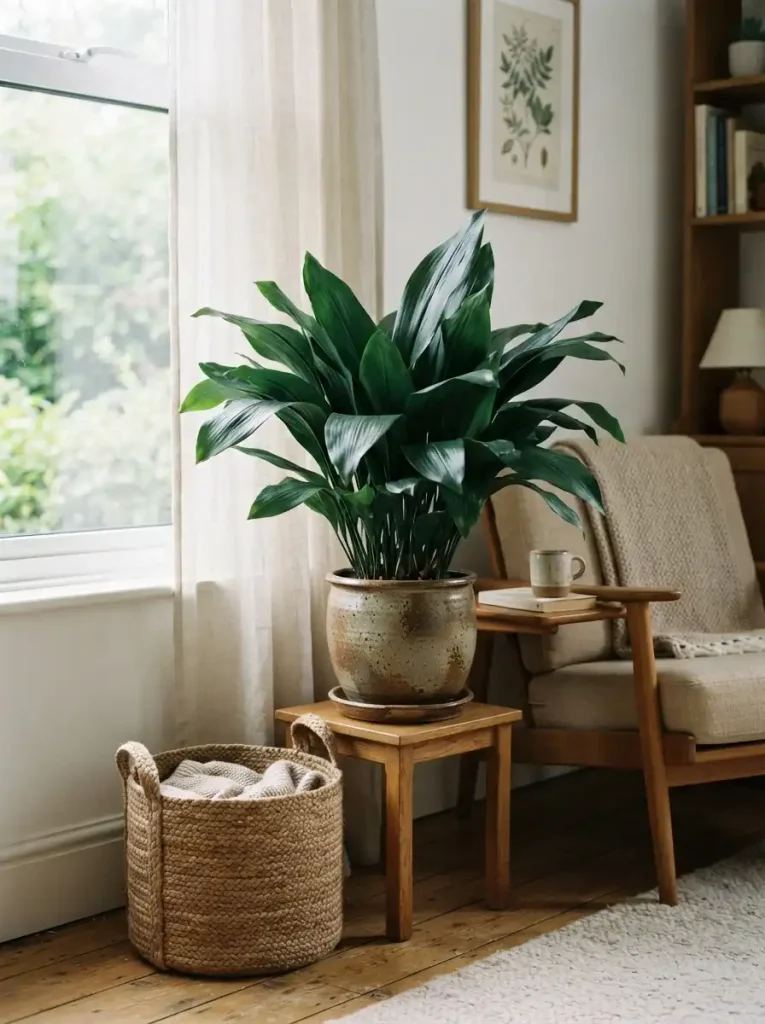
The cast iron plant has earned its reputation for toughness. Its broad, attractive foliage can handle lower-light interiors and less-than-perfect conditions better than many delicate tropical plants.
This makes it a practical option for hallways, north-facing rooms, covered balconies, or other areas where sunlight is limited.
It grows relatively slowly, which can actually be an advantage if you don’t want a plant that constantly needs pruning or repotting. Give it a well-draining potting mix and avoid leaving its roots saturated.
Its large leaves also bring a softer, leafy appearance to spaces that need a little more visual warmth.
Expert Tip:
Dust the leaves occasionally with a soft, damp cloth so the foliage stays clean and can make the most of available light.
5. Chinese Evergreen for Low-Light Living Rooms
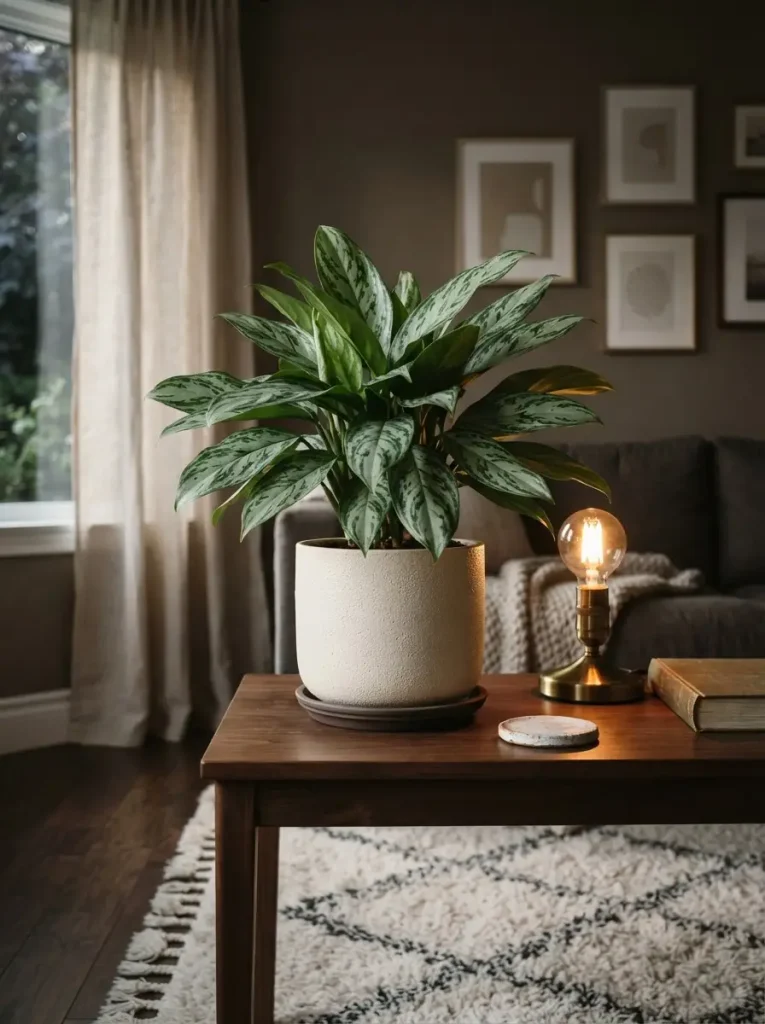
Chinese evergreen, often called Aglaonema, is a favorite for indoor spaces because many varieties tolerate relatively low light while offering attractive foliage.
Different cultivars can bring shades of green, silver, cream, or subtle patterning into your room. In darker conditions, some highly colorful varieties may develop less intense coloration, so brighter indirect light can help preserve their patterns.
The plant works beautifully on side tables, plant stands, consoles, or office surfaces. It also tends to have a naturally full shape, making it useful when you want a substantial-looking plant without a complicated arrangement.
Keep the soil moderately moist but not waterlogged, and allow the surface to begin drying before watering again.
Expert Tip:
If your room is extremely dim, move the plant closer to the brightest indirect light available rather than placing it directly against a dark wall.
6. Heartleaf Philodendron for Easy Trailing Vines
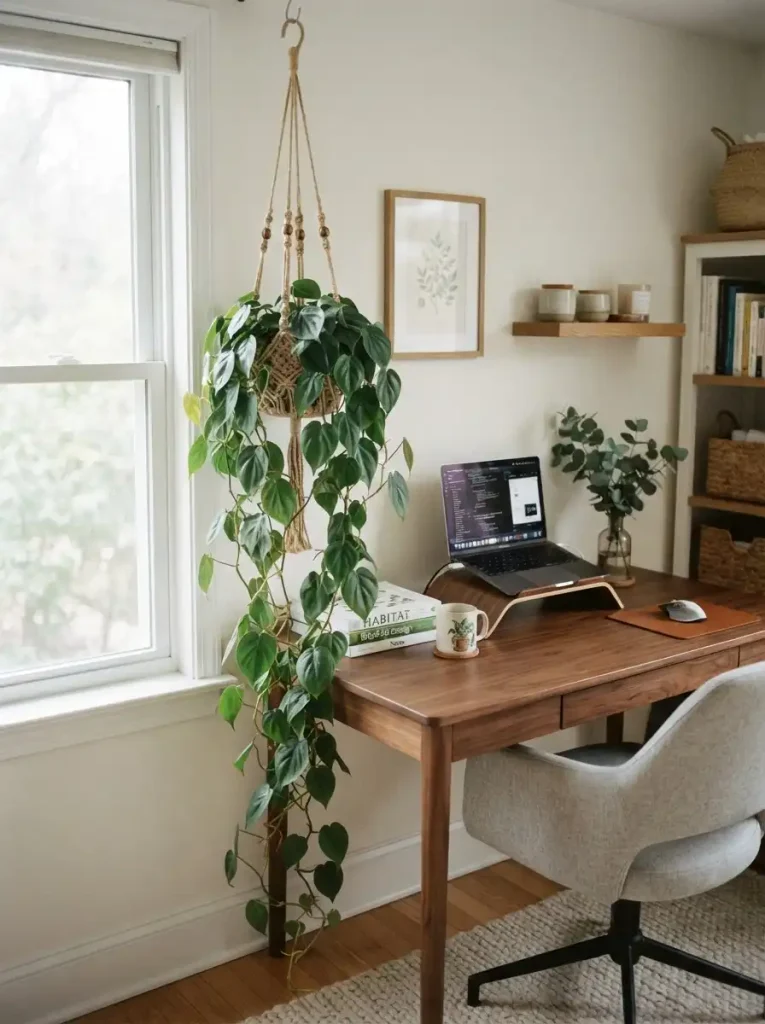
The heartleaf philodendron is another dependable option for bringing trailing greenery into lower-light interiors. Its heart-shaped leaves give it a softer, more romantic appearance than many upright houseplants.
Let the vines spill from a shelf, hang them from a ceiling planter, or train them along a small support. Its flexible growth makes it easy to adapt to different decorating styles.
Although it tolerates lower light, growth may become slower and the spaces between leaves may increase when conditions are very dim. A location with gentle indirect light can help maintain fuller growth.
Water after the upper part of the soil has had time to dry, and prune long stems if you want a bushier appearance.
Expert Tip:
Pinching or trimming the growing tips can encourage the plant to produce a fuller display instead of relying on a few long vines.
7. Parlor Palm for a Softer Indoor Look
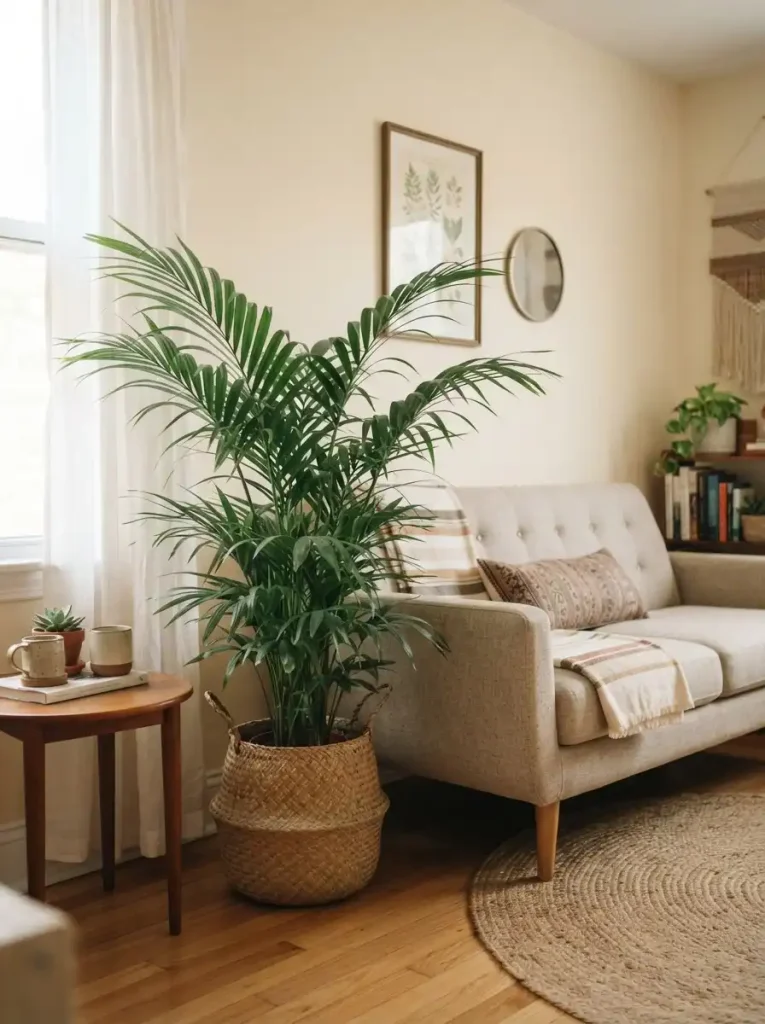
If you want something taller and airier, the parlor palm can bring a gentle tropical feeling to a room without demanding intense sunlight.
Its thin stems and delicate fronds create a lighter visual effect than large-leaved plants. That makes it especially attractive beside sofas, reading chairs, entryway furniture, or empty corners.
Parlor palms generally appreciate bright indirect light but can adapt to lower-light indoor conditions. Growth will usually be slower when light levels are reduced, so patience is important.
Avoid keeping the roots constantly saturated. Good drainage and careful watering are more useful than trying to maintain a constantly damp pot.
Expert Tip:
Keep the palm away from harsh heating or cooling vents, which can create stressful temperature and humidity changes around the foliage.
8. Peace Lily for a Dim Bedroom
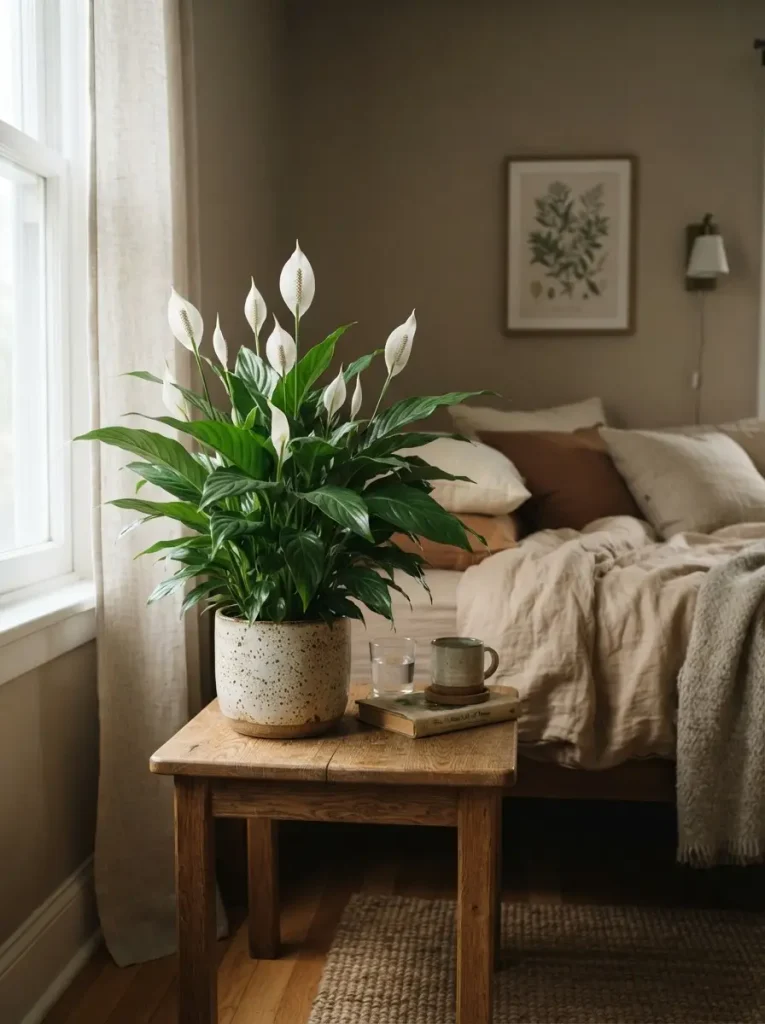
Peace lilies are well suited to indoor environments where you want lush foliage along with occasional flowers. They can tolerate lower light, although brighter indirect light generally encourages better flowering.
Their dark green leaves create a strong contrast against pale walls, making them particularly effective in bedrooms, bathrooms, and quiet reading spaces.
One useful feature is that a peace lily can visibly droop when it needs water. However, it’s better not to wait for severe wilting every time. Check the potting mix and water when the upper layer has begun to dry.
Avoid placing it in intense direct sun, which can scorch its foliage.
Expert Tip:
If flowering is your priority, move the plant toward brighter filtered light while protecting it from harsh midday sun.
9. Lucky Bamboo for Small Spaces
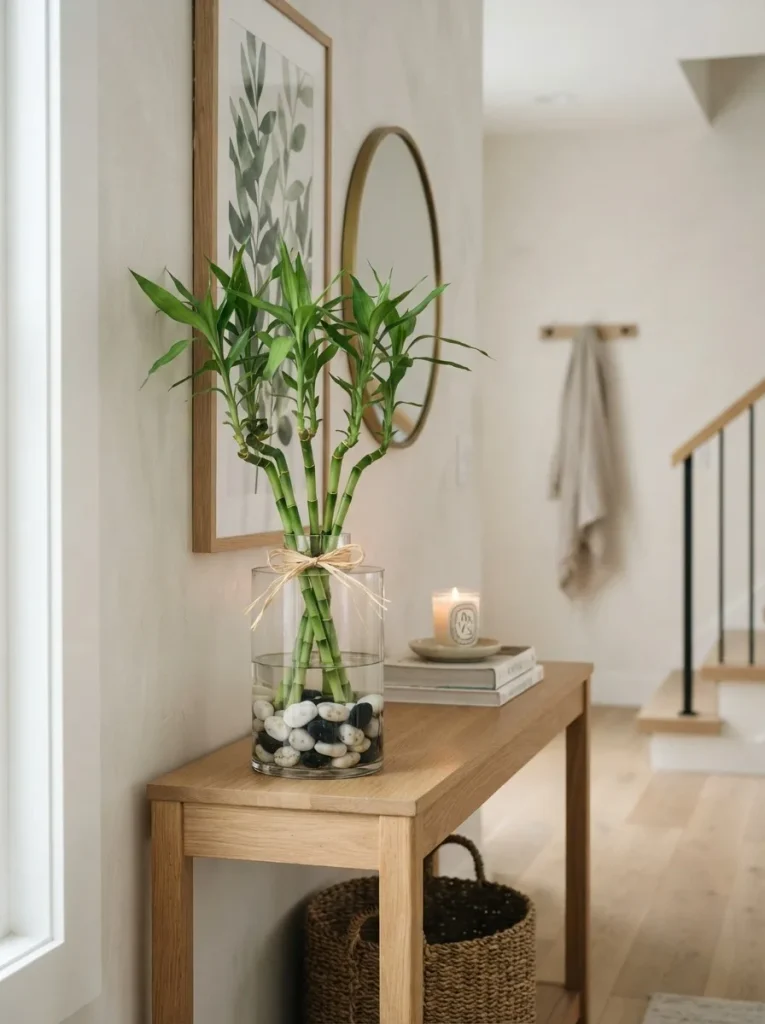
Lucky bamboo is a compact option when you want greenery but have very little room for a traditional potted plant. Its upright stalks work especially well on desks, bathroom counters, shelves, and narrow consoles.
It is commonly grown in water, although it can also be cultivated in soil. If you keep it in water, use a clean container and refresh the water regularly rather than allowing it to become stagnant.
The plant prefers indirect light and can handle relatively dim indoor locations. Avoid strong direct sunlight, which can damage the foliage.
Its simple shape also makes it easy to combine with stones, glass containers, or minimalist decor.
Expert Tip:
If growing lucky bamboo in water, keep the roots submerged while avoiding unnecessary saturation of the stalks themselves.
10. Dracaena for an Upright Statement
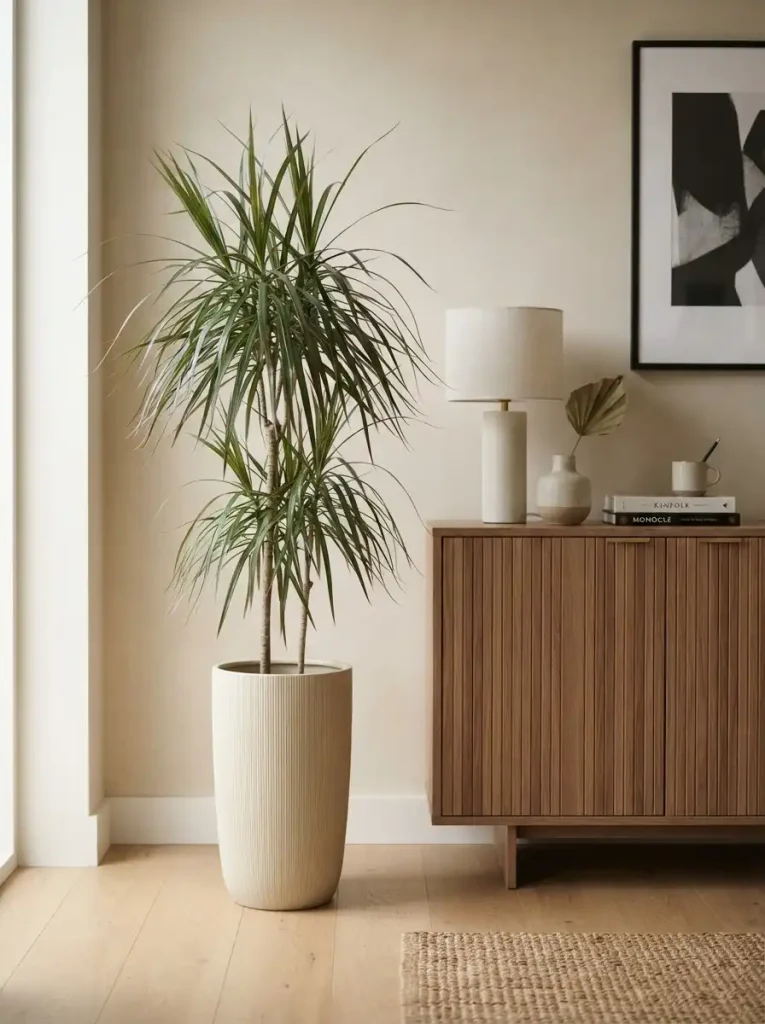
Dracaena varieties can add height without requiring a huge amount of floor space. Their long leaves and upright growth create an instant vertical accent in rooms with simple furniture.
Many dracaenas prefer bright indirect light but can tolerate lower-light conditions. When light is limited, growth tends to slow, which can actually make the plant easier to manage in compact rooms.
Allow the potting mix to dry somewhat between waterings, especially when the plant is growing in a dim location. Consistently wet soil can create root problems.
A tall dracaena works especially well beside cabinets, sofas, desks, or other areas where a narrow vertical plant can fill an awkward gap.
Expert Tip:
If the plant begins leaning toward its light source, rotate the container periodically to encourage more even growth.
11. Prayer Plant for Patterned Foliage
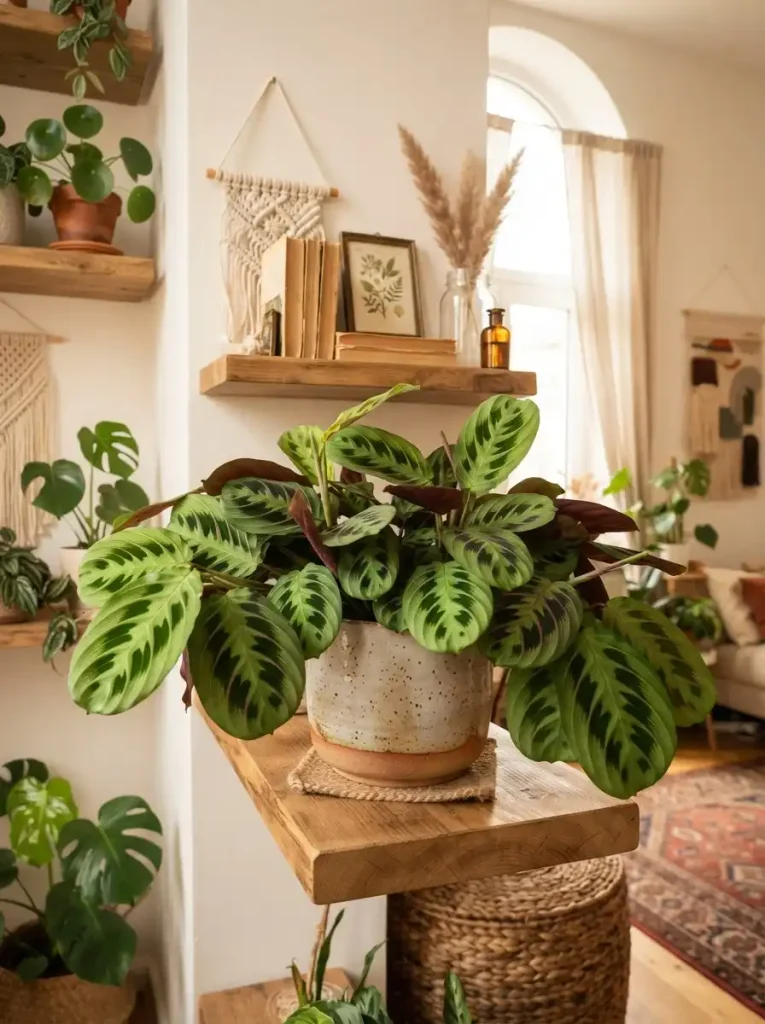
Prayer plants bring something different to a low-light collection: beautifully patterned foliage. Their leaves can feature stripes, contrasting veins, and rich shades that make them decorative even without flowers.
They generally prefer indirect light and can tolerate moderate lower-light conditions, although very dark spaces may reduce growth and leaf vibrancy.
Unlike some of the toughest plants on this list, prayer plants appreciate more consistent moisture and humidity. They’re a good choice if you enjoy giving a little extra attention to your greenery.
A bathroom or another naturally humid room with gentle light can be particularly appealing, provided temperatures remain comfortable.
Expert Tip:
Use a well-draining mix and avoid letting the plant sit in a saucer filled with standing water after watering.
12. Spider Plant for Easygoing Greenery
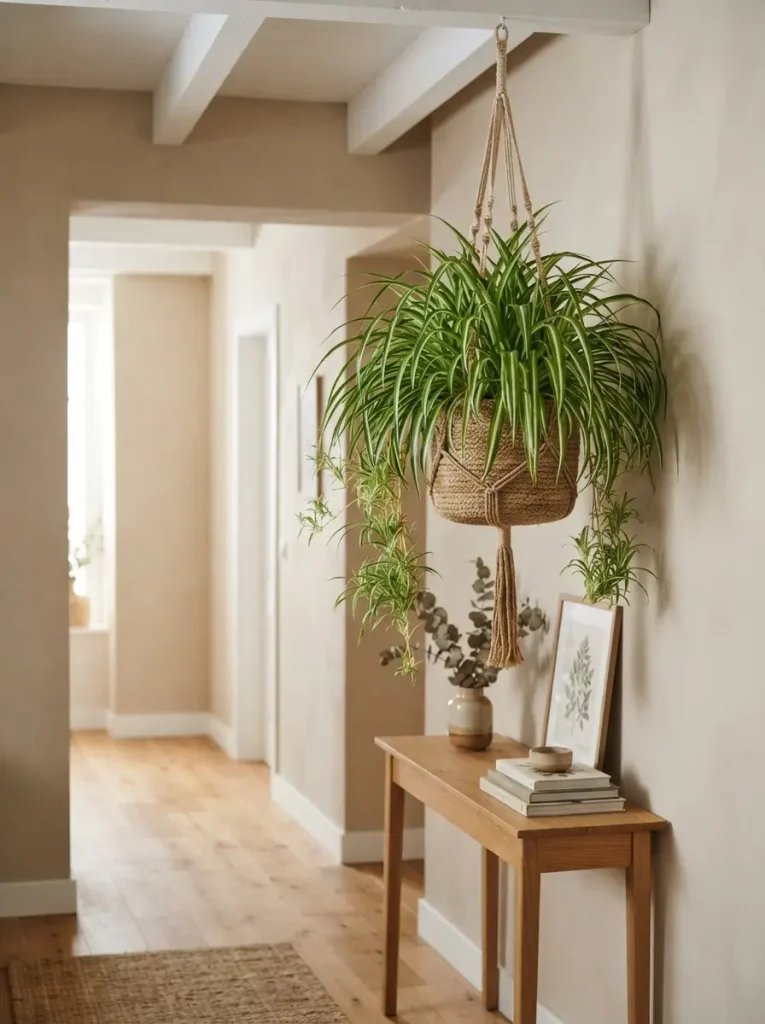
Spider plants are cheerful, adaptable houseplants that can brighten spaces without requiring direct sunlight. Their long, arching leaves give them a relaxed appearance, while mature plants often produce small offsets that hang from the mother plant.
They’re particularly useful in hanging baskets, on tall shelves, or on furniture where their foliage can naturally cascade downward.
Although spider plants can tolerate lower light, they generally grow more vigorously when exposed to bright, indirect illumination. Allow the soil to dry slightly between waterings rather than keeping it continuously saturated.
They’re also a nice choice for beginners because they tend to recover well from occasional care mistakes.
Expert Tip:
If the leaf tips become brown, check watering consistency and consider whether your water quality or very dry indoor air could be contributing to the problem.
13. Chinese Money Plant for a Small Desk
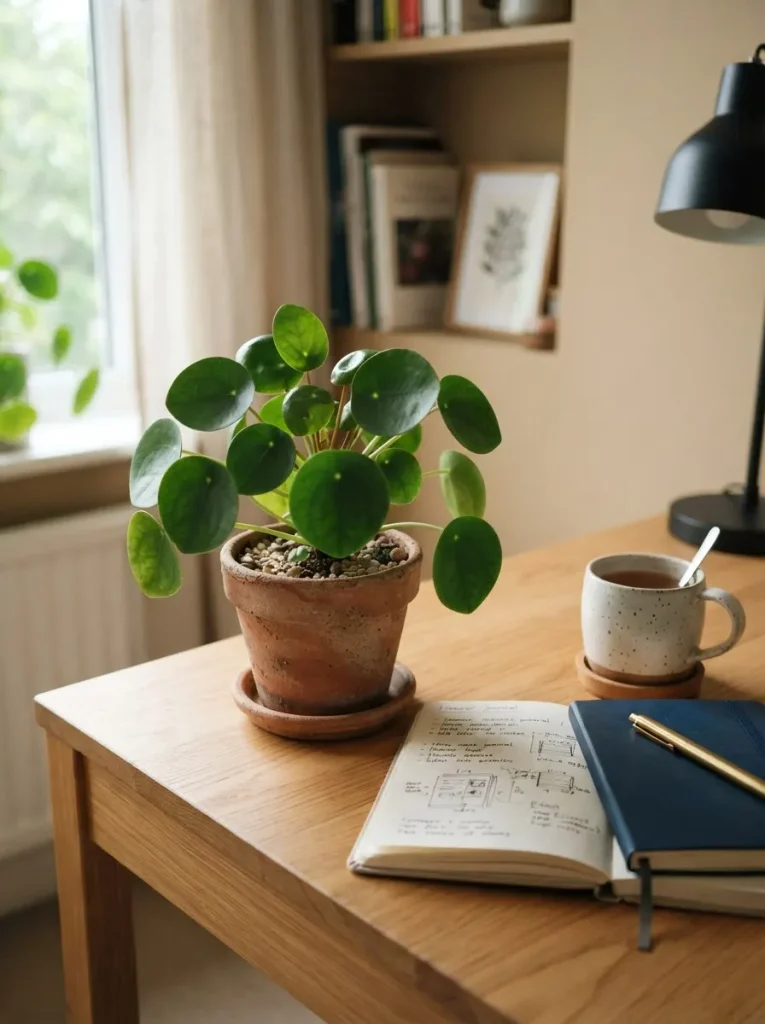
The Chinese money plant, or Pilea peperomioides, is a charming choice for desks, shelves, and compact rooms. Its distinctive round leaves give it a playful appearance that stands apart from more traditional foliage plants.
It prefers bright indirect light but can manage moderate lower-light conditions. In a very dark room, however, growth can become slower and the stems may stretch toward the nearest light source.
Rotate the pot every so often to maintain a more balanced shape. Water when the upper portion of the soil has dried, and make sure excess water can escape freely.
Its compact footprint makes it particularly useful for apartments, dorm rooms, home offices, and small bedrooms.
Expert Tip:
Place it near the brightest indirect light available rather than assuming that a plant labeled “low light” will thrive in complete darkness.
14. Boston Fern for a Humid Corner
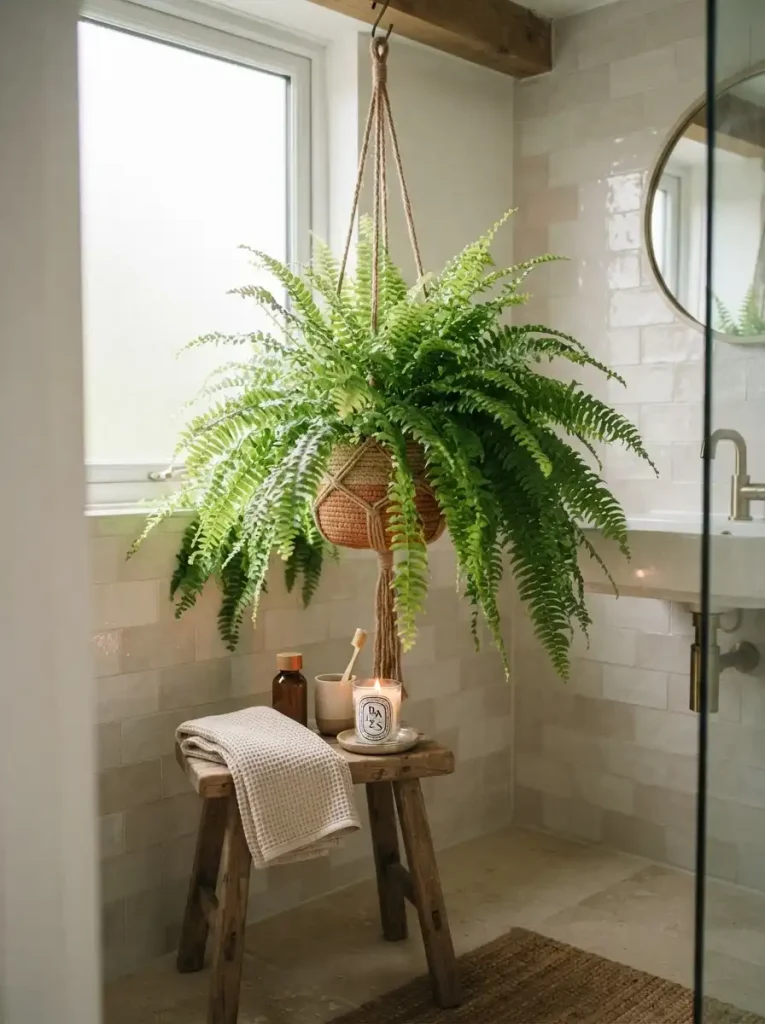
Boston ferns can transform a quiet corner into a lush green retreat. Their finely divided fronds create plenty of texture and movement, especially when displayed in a hanging planter.
They prefer indirect light and higher humidity, so bathrooms with suitable natural light can provide an attractive environment. They may also work in other shaded rooms if humidity and watering are managed carefully.
Unlike drought-tolerant plants, ferns generally don’t enjoy being allowed to become completely dry. Check the soil regularly and provide consistent moisture without leaving the roots sitting in water.
Because their foliage is so full, even one fern can make a relatively small space feel considerably greener.
Expert Tip:
If the fronds become crisp around the edges, look at humidity and watering habits before assuming the plant simply needs more sunlight.
15. Rubber Plant for a Moody Interior
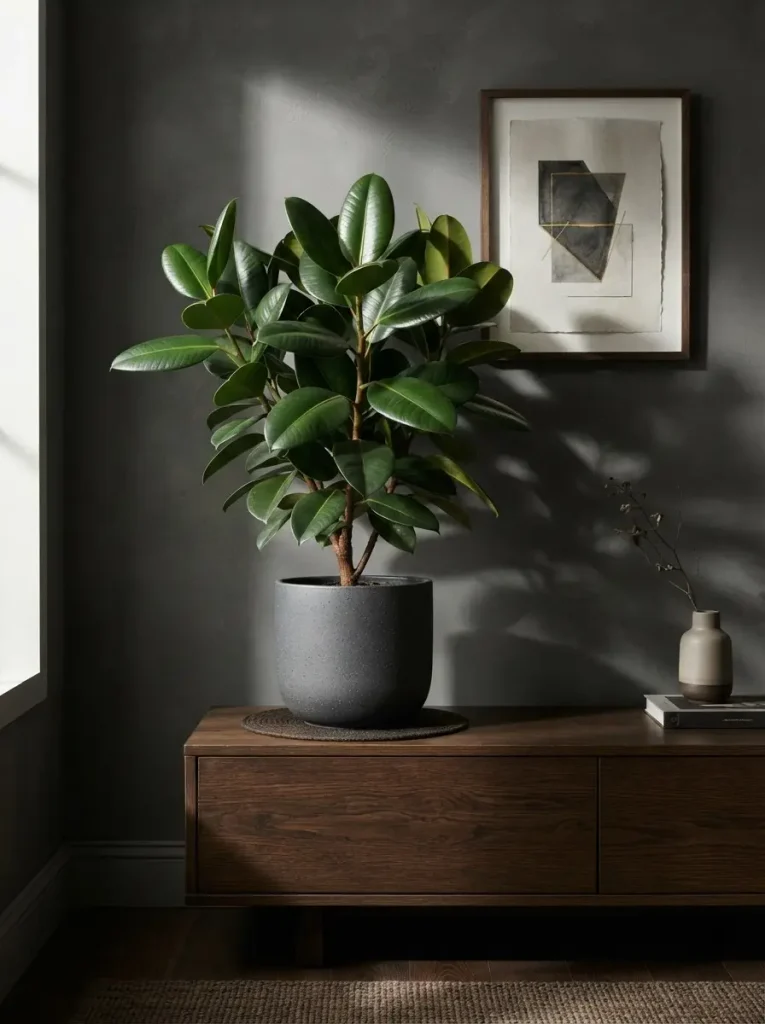
Rubber plants are known for their large, glossy leaves and strong architectural presence. They usually perform best with bright indirect light, but established plants can adapt to moderate indoor light.
A lower-light location will typically mean slower growth, so choose one if you’re comfortable with a plant that develops gradually rather than rapidly.
Its substantial foliage can make a strong statement in a living room, bedroom, office, or entryway. Give it enough space for the leaves to spread naturally.
Water once the upper portion of the soil has dried, and use a container with good drainage.
Expert Tip:
Clean broad leaves gently from time to time. Dust can build up quickly on large foliage and make the plant look dull.
16. Nerve Plant for a Tiny Shelf
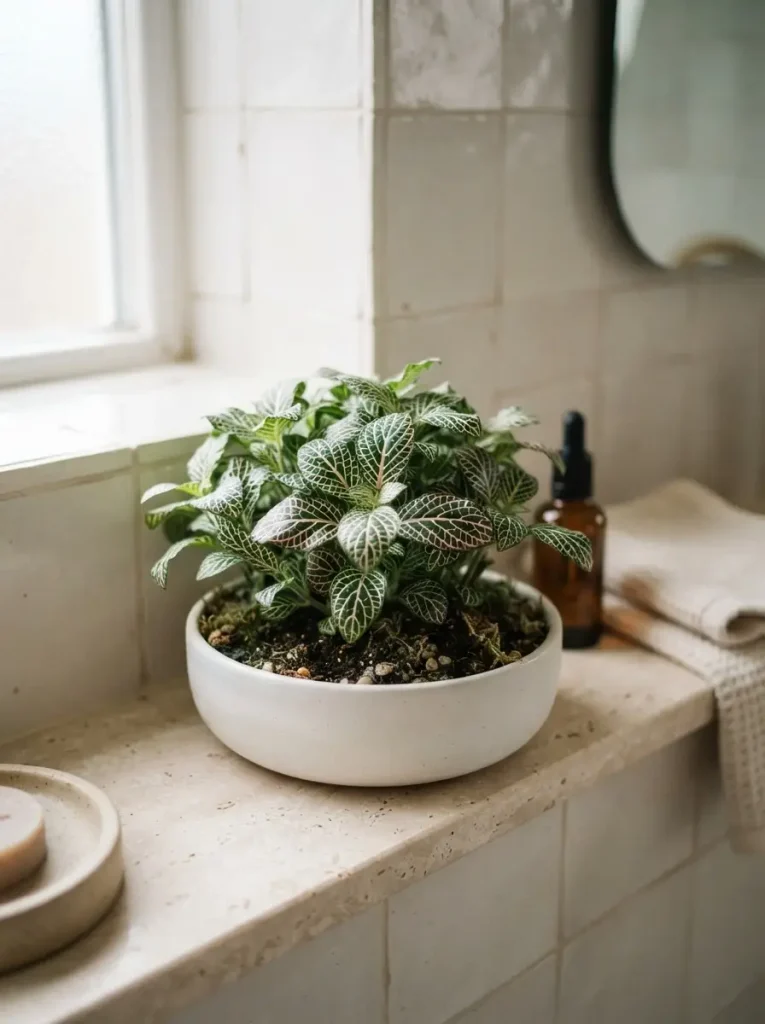
Nerve plants are excellent when you want something small and visually distinctive. Their leaves can feature intricate contrasting veins that create the appearance of hand-painted patterns.
They prefer indirect light and tend to appreciate humidity, making them suitable for smaller bathrooms or enclosed plant displays when conditions are appropriate.
Because they stay relatively compact, you can tuck one onto a shelf, windowsill, plant cabinet, or small side table without overwhelming the area.
Keep the soil from drying out completely, but don’t confuse a preference for moisture with a need for waterlogged roots.
Expert Tip:
If your nerve plant wilts dramatically, check the soil promptly. It can recover from temporary dryness, but repeated severe dehydration can stress the plant.
17. English Ivy for a Cascading Display
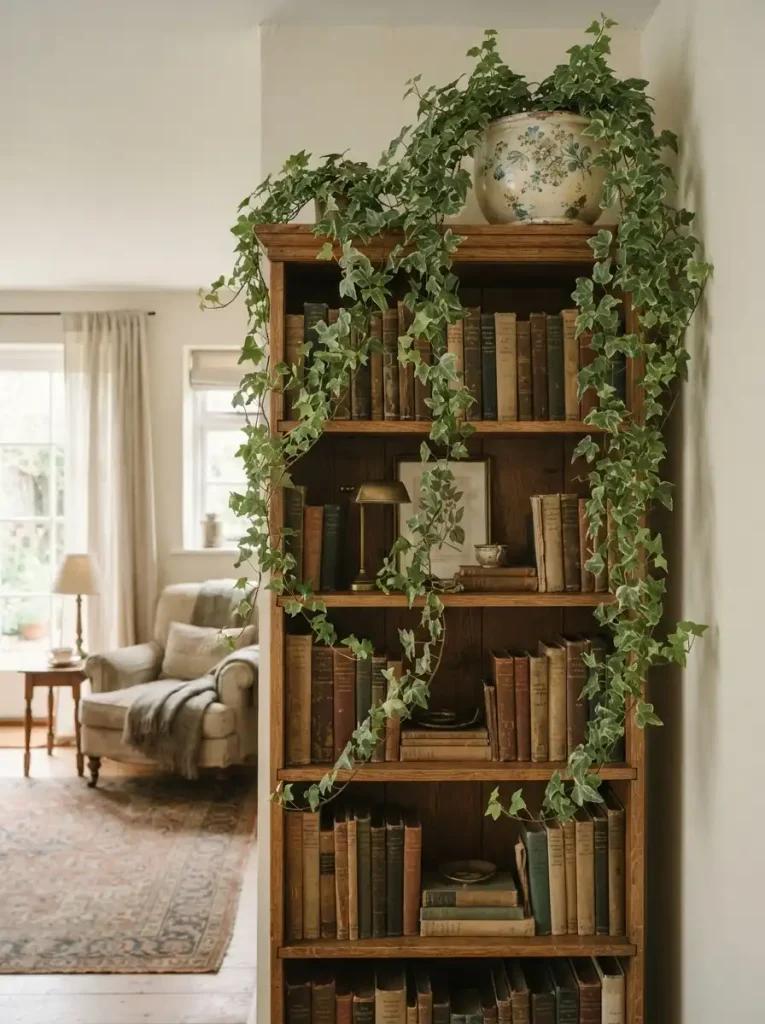
English ivy can add a classic trailing effect to shelves and elevated planters. Its small lobed leaves create a dense visual texture when the plant receives suitable care.
It prefers bright indirect light but can tolerate moderate shade. In very low light, however, growth may become sparse, so it’s worth placing ivy in the brightest shaded position available.
Good airflow can also help indoor ivy, particularly because dense foliage can retain moisture.
Trim the vines when they become too long or uneven, and use the cuttings to maintain a more compact display.
Expert Tip:
Keep indoor ivy away from areas with extremely dry air and regularly inspect dense foliage for common houseplant pests.
18. Peacock Plant for a Decorative Touch
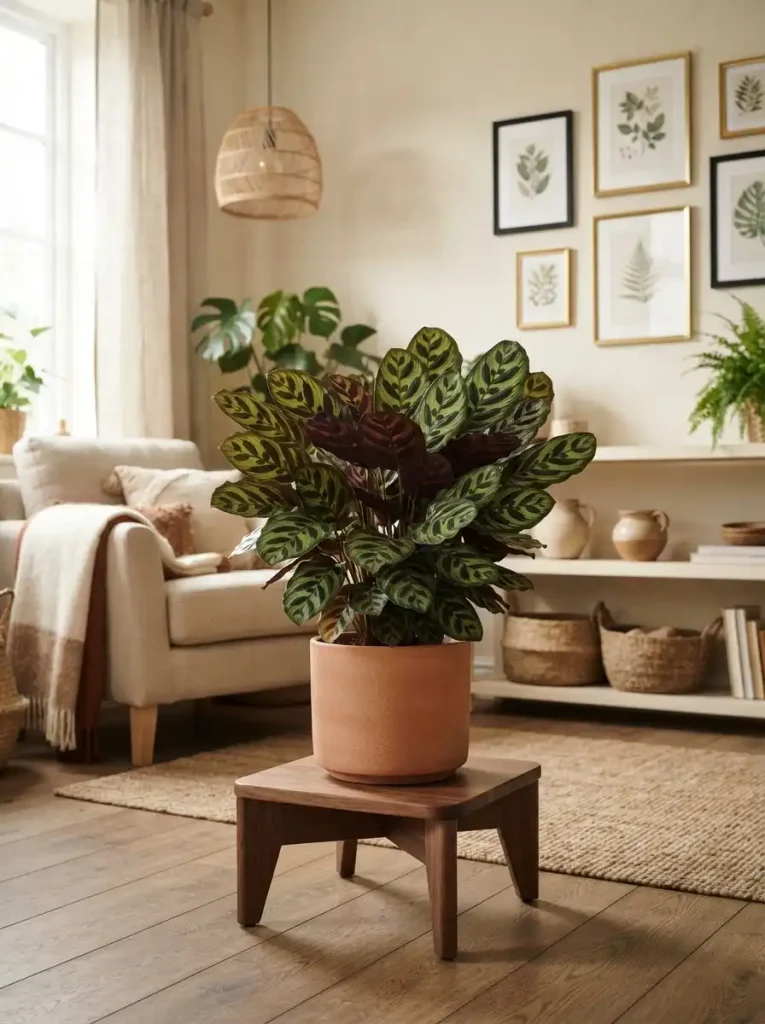
Peacock plants, part of the Calathea group, are popular for their beautifully patterned leaves. They can add a decorative quality to an indoor plant collection even when flowers aren’t part of the display.
These plants generally prefer indirect light and higher humidity. Strong direct sunlight can damage their foliage, while extremely dry conditions may cause leaf edges to brown.
They require somewhat more attention than hardy plants such as ZZ plants or snake plants, but they can be rewarding for anyone who enjoys caring for tropical foliage.
Choose a stable location away from harsh drafts and sudden temperature changes.
Expert Tip:
If the leaves begin curling or developing crispy edges, evaluate humidity, watering consistency, and exposure to direct sunlight.
19. Arrowhead Plant for Flexible Growth
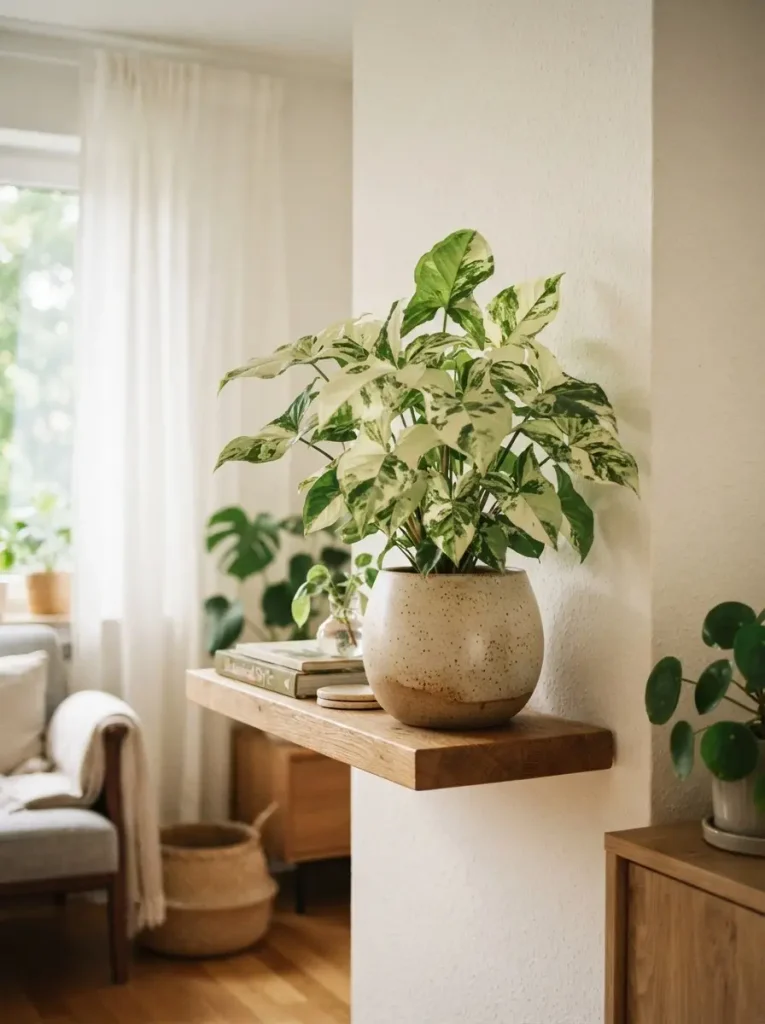
Arrowhead plants are versatile because their growth can change as the plant matures. Younger plants often have a compact appearance, while older stems can begin trailing or climbing.
They prefer bright indirect light but can adapt to lower-light indoor locations. Variegated varieties may show less contrast when light levels are very low.
Use one as a tabletop plant when young or let its stems trail from a shelf as it develops. Regular pruning can help maintain a fuller appearance.
Water when the upper layer of soil begins to dry and avoid leaving the pot sitting in collected water.
Expert Tip:
If you want a bushier plant, trim long stems just above a leaf node to encourage additional growth.
20. Peacock Spiderwort for a Colorful Accent
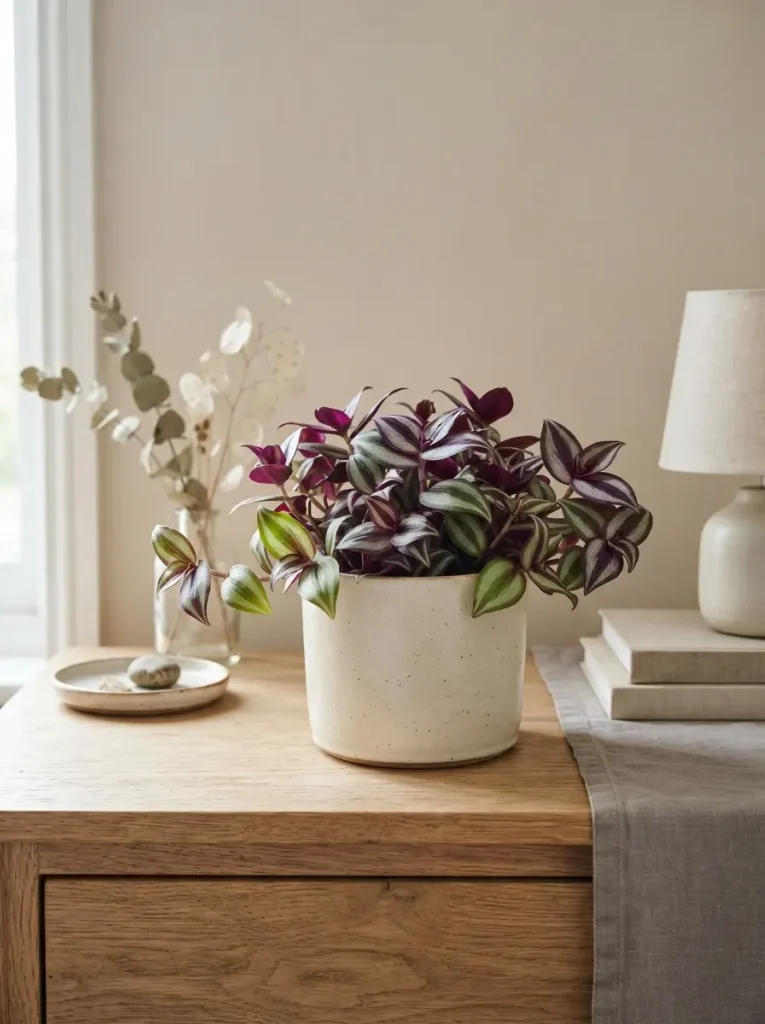
Spiderwort varieties can bring extra color to a low-light-friendly indoor collection. Depending on the variety, their foliage may combine green, purple, silver, or striped patterns.
They typically appreciate brighter indirect light for their strongest coloration, but they can tolerate less intense indoor light for periods of time.
Their trailing growth makes them useful in hanging baskets or elevated containers. Regular trimming can prevent the stems from becoming excessively long and sparse.
Allow the soil to dry slightly between waterings while avoiding prolonged dryness.
Expert Tip:
If colorful foliage begins losing its intensity, try moving the plant gradually toward brighter indirect light rather than placing it immediately in direct sun.
21. Maidenhair Fern for a Soft, Delicate Look
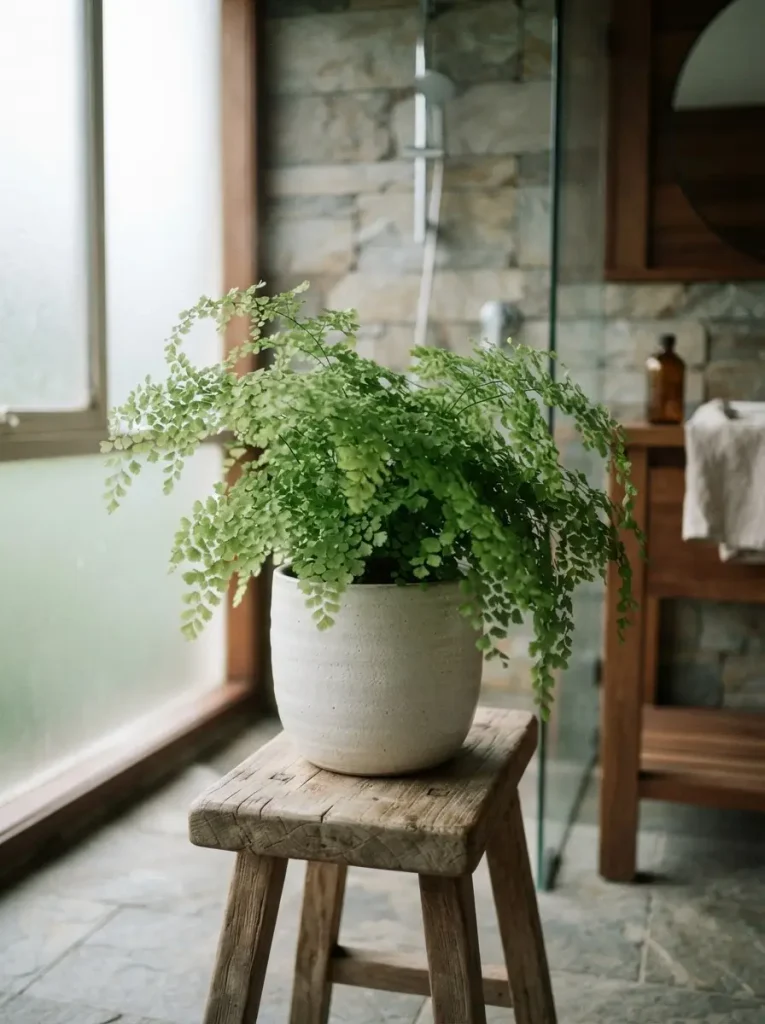
Maidenhair ferns have some of the most delicate-looking foliage on this list. Their fine leaflets can soften an otherwise plain corner and create a beautiful woodland-inspired atmosphere.
They generally prefer indirect light, steady moisture, and higher humidity. This makes them less forgiving than some of the tougher low-light plants featured here.
A naturally humid bathroom with suitable filtered light can be a good location. Keep the plant away from hot, dry drafts and avoid allowing the potting mix to repeatedly dry out.
Their delicate appearance means they may need more attention, but that can be part of the appeal for plant lovers who enjoy a hands-on routine.
Expert Tip:
Consistency is more important than perfection. Try to maintain stable moisture and humidity rather than repeatedly moving the fern between different environments.
22. Dracaena Janet Craig for a Deep-Shade Spot
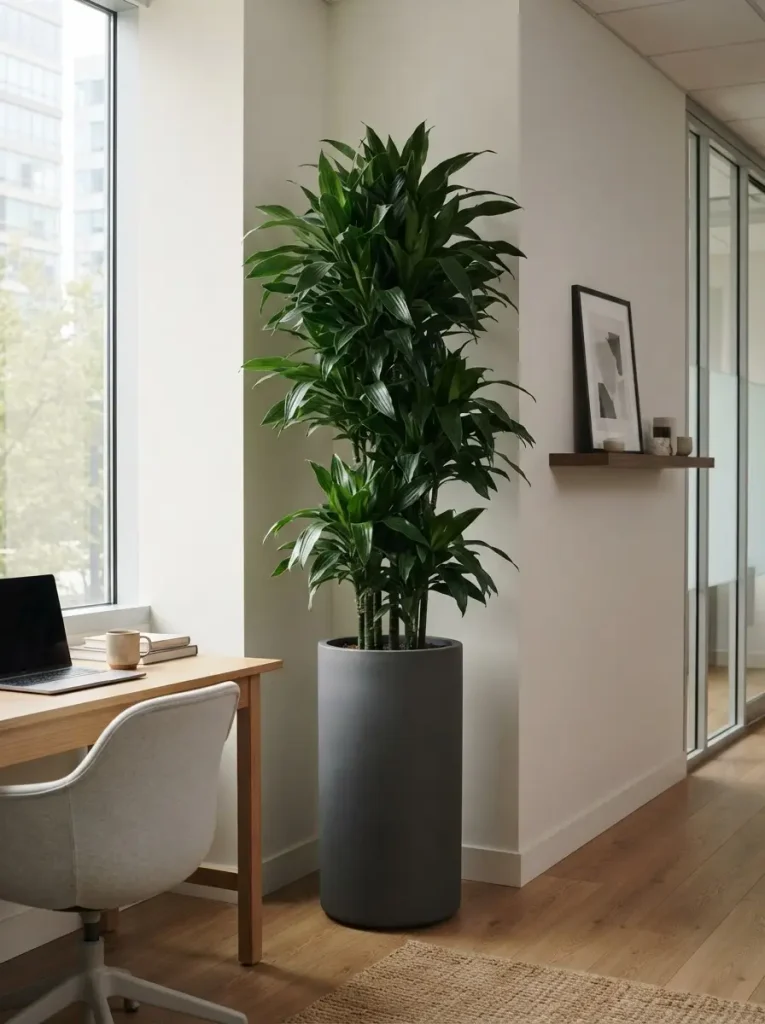
Dracaena Janet Craig is a particularly useful choice for spaces where you want substantial green foliage without relying on bright sunlight.
Its dark leaves and upright growth create a sophisticated look that works well in offices, living rooms, hallways, and other indoor areas where a taller plant can fill an empty corner.
As with many low-light-tolerant plants, slower growth should be expected when illumination is limited. Avoid overwatering, especially if the plant is receiving very little light and therefore using moisture slowly.
Give it a stable location with indirect light and enough room for its foliage to develop naturally.
Expert Tip:
In a dim room, always check the soil before watering. Lower light usually means the potting mix takes longer to dry.
How to Choose the Best Low-Light Plant for Your Space
Finding the right plant isn’t only about choosing the variety labeled “low light.” Think about the actual conditions in the room.
A bathroom may offer higher humidity than a dry office. A hallway may have almost no natural light, while a bedroom may receive several hours of soft morning illumination.
Here are a few things to consider before buying:
Look at the Available Light
Low light does not mean complete darkness. Most plants still need some usable light to photosynthesize and stay healthy.
If you can comfortably read near the proposed plant location during the daytime without turning on a lamp, there may be enough ambient light for certain shade-tolerant plants. If the space is consistently very dark, consider supplementing it with a suitable grow light.
Match Watering Needs to Your Routine
One of the biggest mistakes with low-light houseplants is assuming they all need frequent watering.
Plants often use water more slowly when light levels are low. Before watering, check the potting mix rather than following a rigid calendar.
Consider the Plant’s Mature Size
A small desk may be perfect for a Pilea or nerve plant but unsuitable for a mature rubber plant.
Likewise, an empty living-room corner can benefit from something upright such as a dracaena or snake plant.
Think about the plant’s eventual size before deciding where it belongs.
Choose the Right Container
A beautiful planter is helpful, but drainage is more important.
Use a pot with drainage holes whenever possible and place it on a saucer or tray to protect furniture and floors. Decorative cachepots can be used around a functional nursery pot as long as excess water can be emptied.
Tips for Keeping Low-Light Indoor Plants Healthy
Even resilient plants need the basics to thrive. A few simple habits can make a significant difference.
Rotate plants occasionally: Turning the container helps prevent uneven growth when light comes primarily from one direction.
Clean dusty leaves: Wiping broad foliage gently can improve its appearance and help you make better use of the available light.
Avoid overwatering: Low light often means slower water use. Always inspect the soil before adding more moisture.
Watch for stretched growth: Long spaces between leaves can indicate that the plant is searching for more light.
Don’t place plants in total darkness: A plant can tolerate shade, but it still requires light to survive. For very dark rooms, a grow light may be necessary.
Acclimate gradually: If you move a plant from a dim room to a sunny window, increase light exposure gradually to reduce the chance of leaf damage.
Final Thoughts
A home doesn’t need huge sunny windows to support a beautiful collection of indoor plants.
From the exceptionally forgiving ZZ plant and snake plant to patterned Chinese evergreens, trailing pothos, compact nerve plants, and humidity-loving ferns, there are plenty of choices for rooms with limited natural light.
The most important thing is to match the plant to the conditions you actually have. Pay attention to available light, watering needs, humidity, drainage, and mature size instead of choosing a plant based on appearance alone.
With the right variety and a little consistent care, even a shaded bedroom, quiet hallway, or dim office can become a greener and more inviting part of your home.
Frequently Asked Questions
What is the most resilient low-light indoor plant?
The ZZ plant and snake plant are among the most forgiving choices for indoor spaces with limited light. Both can tolerate periods of dryness and generally require less frequent watering than moisture-loving houseplants.
Can indoor plants survive without sunlight?
Plants need light to photosynthesize, so they cannot thrive indefinitely in complete darkness. If a room has very little natural light, a suitable artificial grow light can provide the additional illumination needed.
How often should I water low-light indoor plants?
There is no universal schedule. Check the soil before watering because plants in lower light often dry more slowly. Water according to the plant’s individual requirements and the moisture level of its potting mix.
Which low-light plant is best for beginners?
ZZ plants, snake plants, and pothos are excellent beginner-friendly choices because they are relatively adaptable and can tolerate occasional lapses in care.
Are low-light plants suitable for bedrooms?
Many low-light-tolerant houseplants can work well in bedrooms as long as the room provides enough ambient light and appropriate conditions. Consider the plant’s watering, humidity, and temperature preferences before placing it there.
Can I put a low-light plant in a windowless room?
A truly windowless room provides little or no natural light, so even shade-tolerant plants will eventually need artificial lighting. A grow light on an appropriate schedule can make the environment more suitable.
Why are my low-light plant leaves turning yellow?
Yellow leaves can have several causes, including overwatering, poor drainage, natural aging, insufficient light, or environmental stress. Check the soil moisture and overall growing conditions before changing your care routine.
Do low-light indoor plants grow slowly?
Many plants grow more slowly when light intensity is reduced. That isn’t necessarily a problem. If the plant has healthy foliage and is otherwise stable, slower growth can simply reflect its environment.