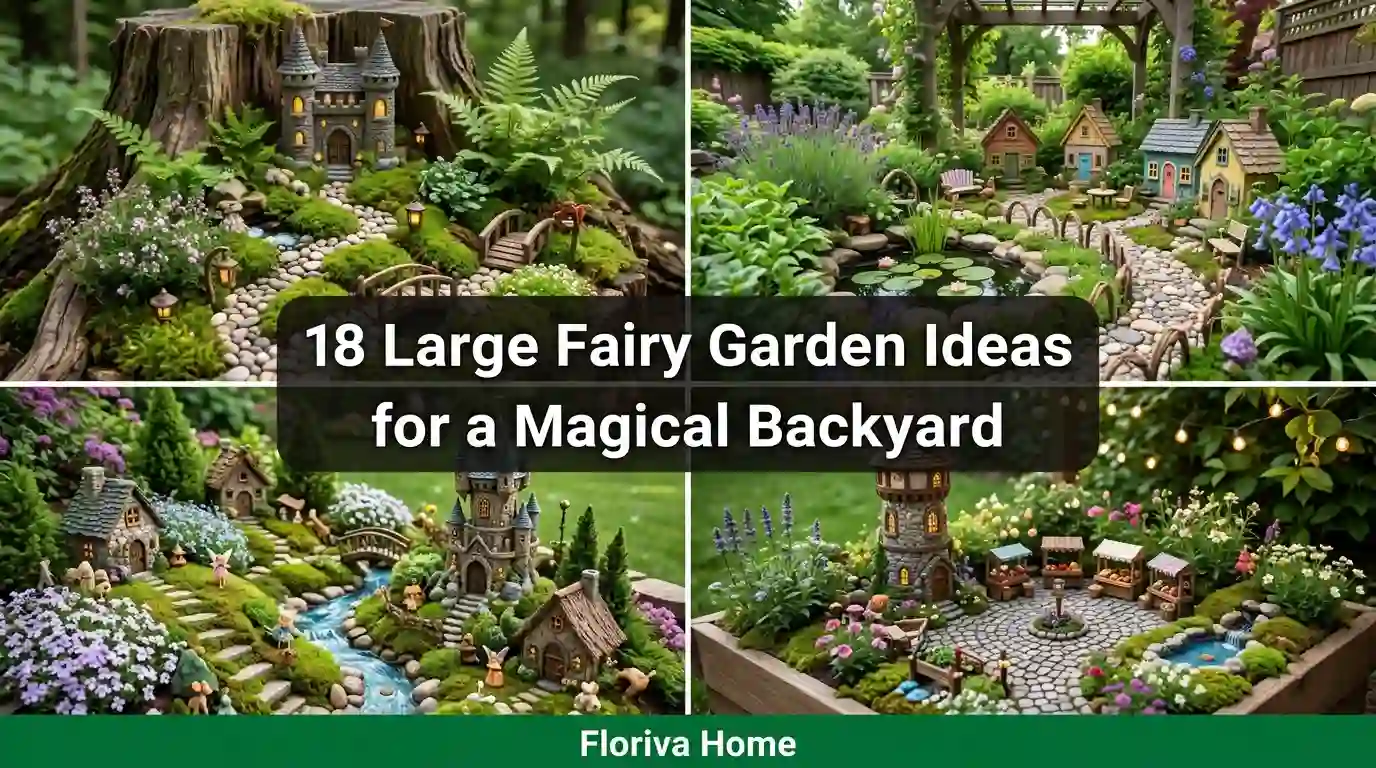
18 Large Fairy Garden Ideas for a Magical Backyard
A large fairy garden can turn an ordinary backyard into a little world filled with imagination, greenery, and unexpected details. With more space to work with, you can create separate areas, build miniature landscapes, and give each corner its own magical personality.
The best part is that you don’t need an enormous budget or professional landscaping skills. A combination of plants, natural materials, miniature structures, and a little creativity can create an outdoor fairy setting that feels special without looking overly complicated.
Whether you have a spacious lawn, a shaded backyard corner, or an unused garden bed, these large fairy garden ideas can help you transform the space into a whimsical outdoor retreat.
1. Turn a Raised Garden Bed Into a Complete Fairy Village
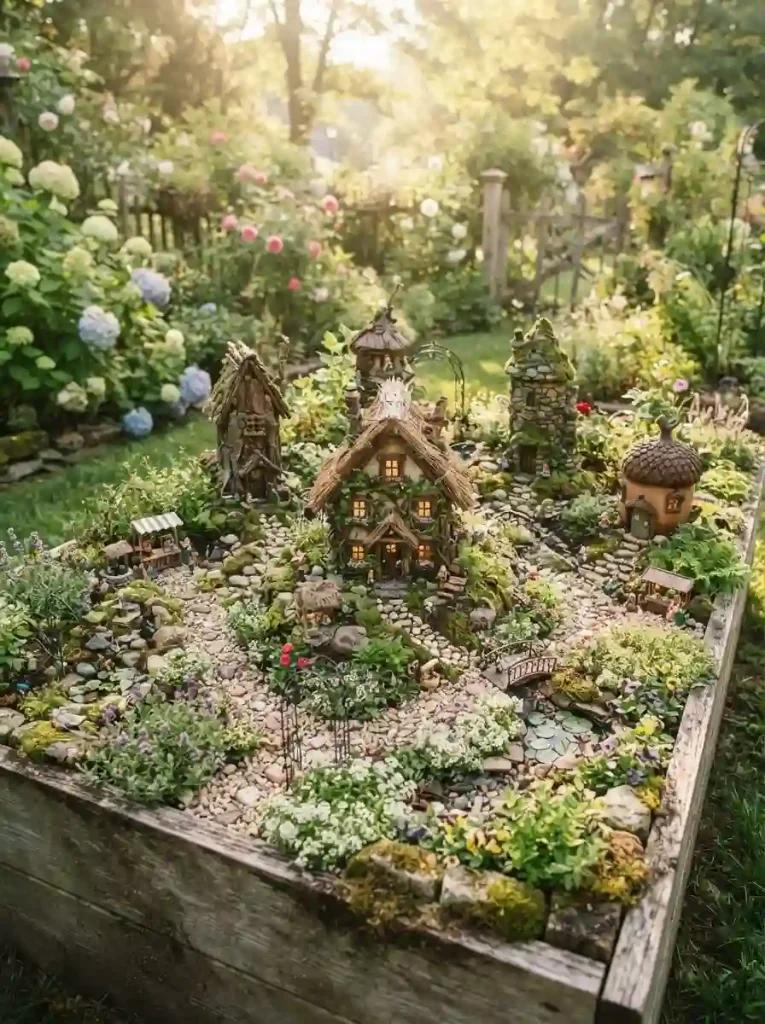
A raised garden bed gives you a defined space for building an entire fairy community instead of placing decorations randomly throughout the yard. Divide the bed into small sections and give each area a different purpose.
One corner could become a cottage neighborhood, while another can feature a tiny garden, gathering area, or woodland retreat. Varying the heights of the miniature buildings makes the scene feel much larger and more interesting.
Use low-growing plants around the structures so the houses remain visible without looking disconnected from the landscape.
Garden Tip:
Choose a raised bed with enough depth for both plants and decorations. Creating several levels within the bed can make a small collection of fairy accessories feel like a much larger village.
2. Design a Fairy Village Around a Curved Garden Path
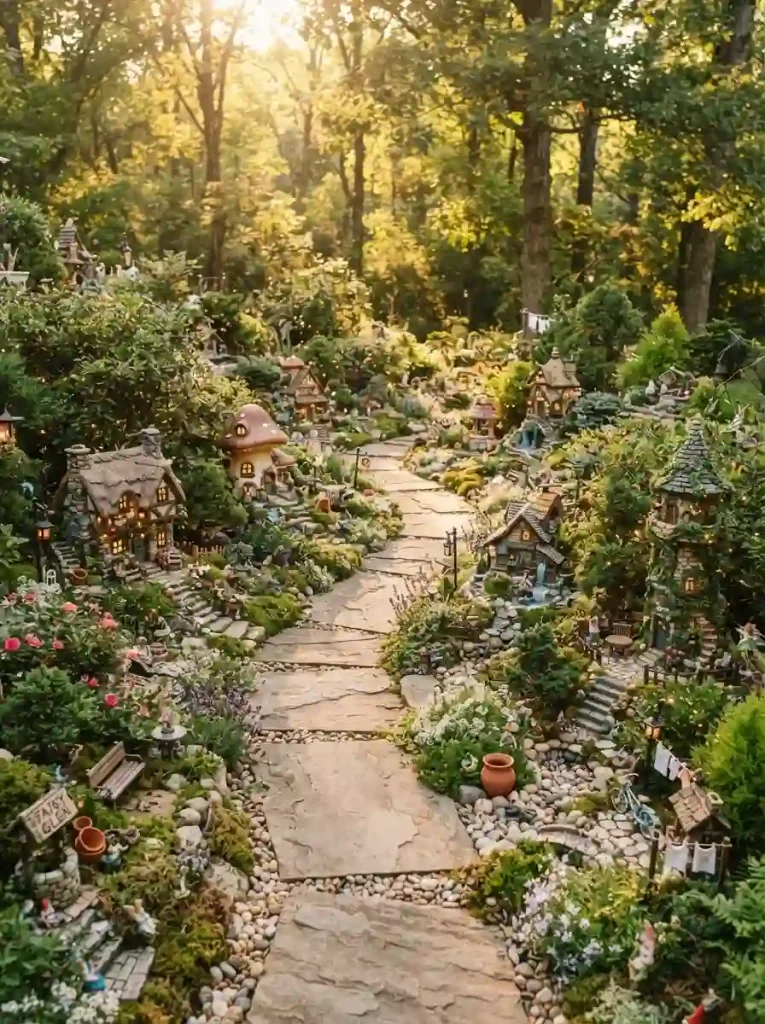
Instead of treating a fairy garden as one central display, make the pathway the feature that connects everything together. A curved route naturally encourages visitors to explore the garden from one scene to the next.
Place miniature homes, plants, decorative stones, and tiny garden scenes at different points along the path. Avoid making both sides perfectly symmetrical because a more natural arrangement feels like a miniature landscape that developed over time.
For a larger backyard, let the pathway gradually disappear behind plants before revealing another fairy scene farther away.
Garden Tip:
Keep the path slightly wider than the miniature scale might suggest. This makes the garden easier to maintain and allows the different displays to remain visually separated.
3. Create a Fairy Castle Garden With a Dramatic Central Tower
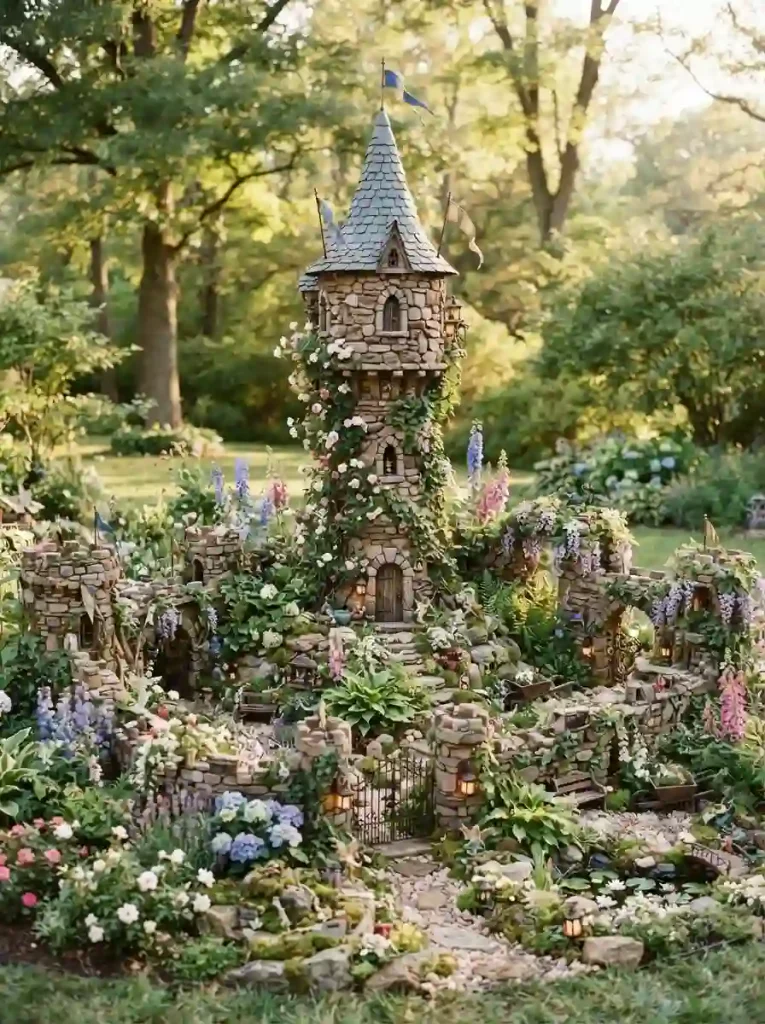
If you want your fairy garden to have a strong focal point, build the design around a miniature castle. Rather than filling the space with dozens of unrelated decorations, let one impressive structure anchor the entire scene.
Surround the tower with smaller architectural details such as walls, gates, courtyards, or tiny garden sections. Plants with different leaf shapes can help create the feeling of a much larger fantasy landscape.
For an especially convincing effect, place taller plants behind the castle and shorter ground covers around the front. This creates depth without requiring a huge number of decorations.
Garden Tip:
Pick one dominant color or material for the castle so it looks intentional. Weathered stone, muted wood, or earthy ceramic generally blends more naturally with surrounding plants.
4. Build a Fairy Forest Using Layers of Shade-Loving Plants
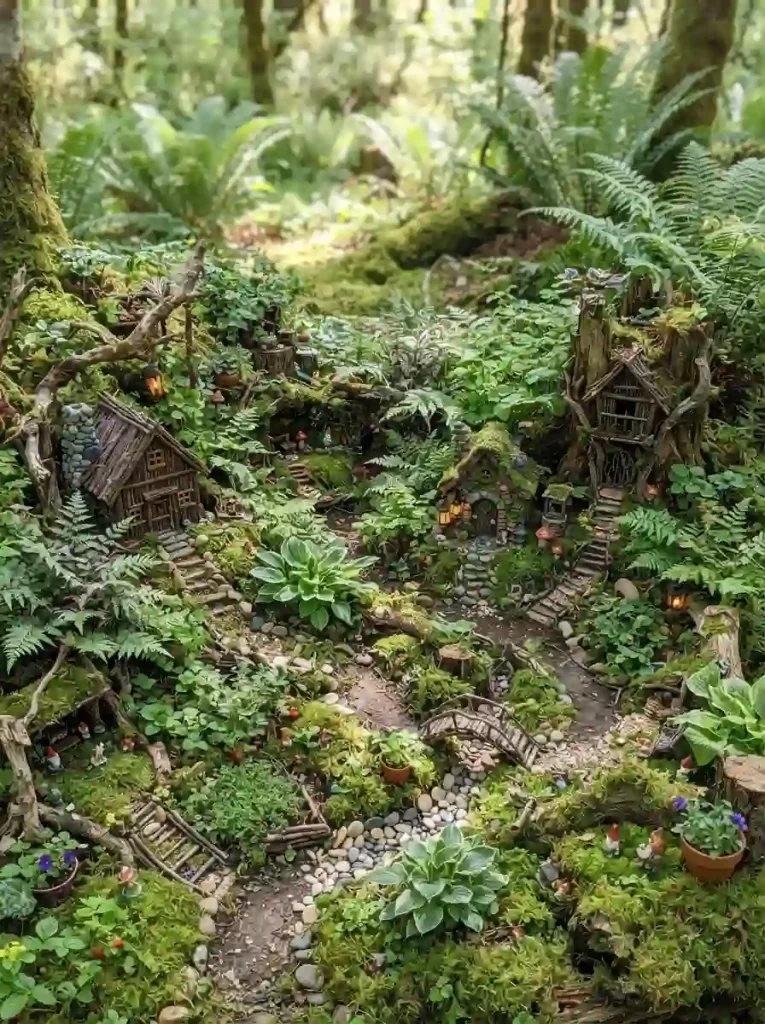
A spacious shady corner can become one of the most atmospheric parts of a fairy garden. Instead of relying heavily on decorations, use plants to create the feeling of a secret woodland.
Layer taller foliage toward the back, medium-sized plants through the middle, and low ground covers around the miniature features. Small cottages can then appear partially hidden between leaves, creating a sense of discovery.
This approach also works particularly well for gardens that already contain mature trees or naturally shaded areas.
Garden Tip:
Select plants according to your actual light and moisture conditions. A fairy garden is much easier to maintain when the miniature landscape works with the growing environment instead of fighting it.
5. Add a Giant Fairy Garden Arch Covered With Climbing Plants
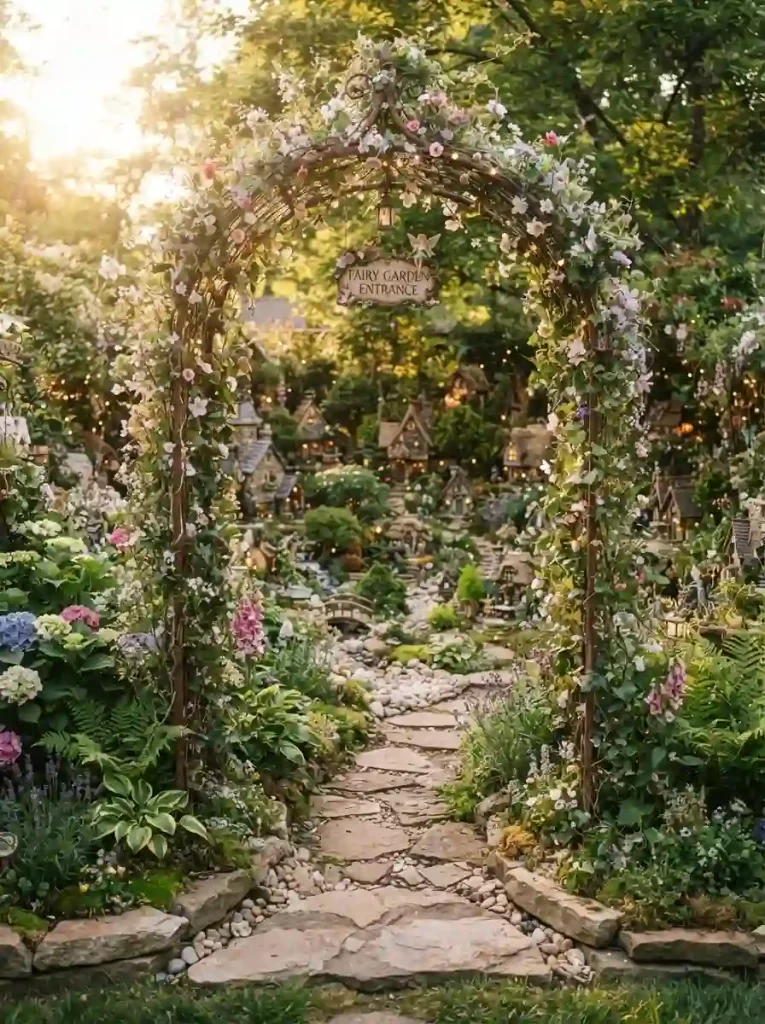
Give your fairy garden an entrance that feels like stepping into another world. A decorative arch can establish a clear transition between the ordinary backyard and the miniature landscape beyond it.
Choose an arch made from wood, metal, or another outdoor-friendly material, then soften its appearance with climbing plants. Let some greenery grow naturally around the structure rather than trimming everything into a perfect shape.
The space beyond the arch can gradually reveal the fairy village, making the entrance feel like part of the story rather than simply another decoration.
Garden Tip:
Secure the arch firmly before adding climbing plants. As vines mature, they can become surprisingly heavy, especially after rain.
6. Make a Fairy Bakery With a Tiny Outdoor Café Area
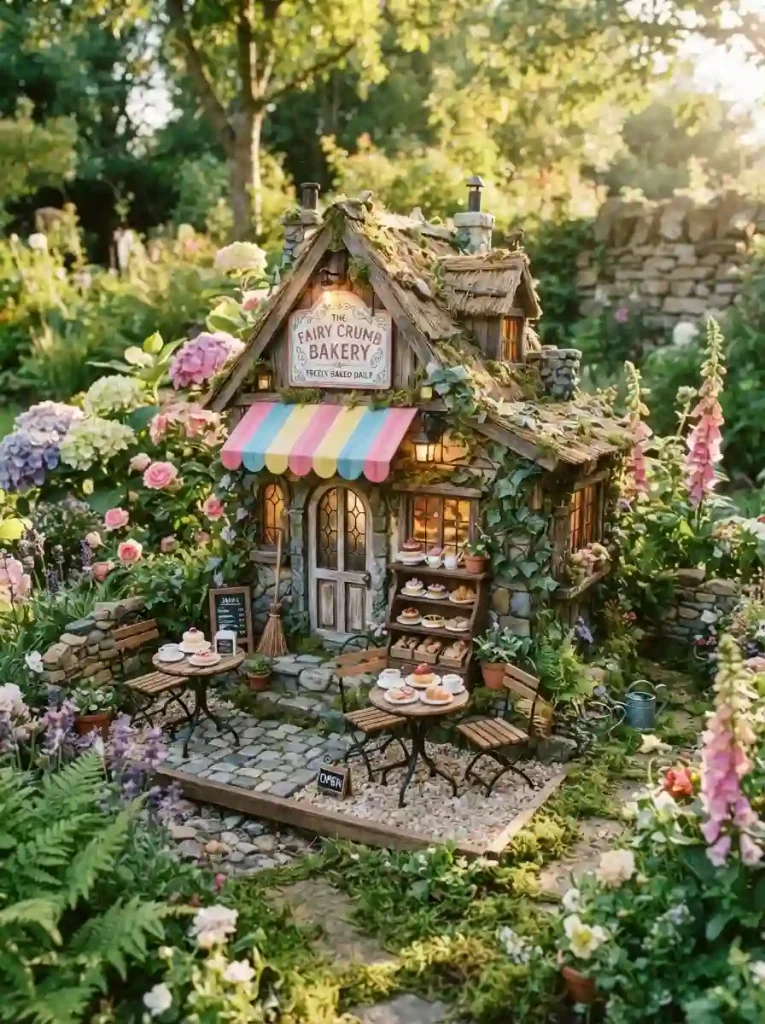
Give your fairy village a little personality by creating a bakery or café scene. This type of display allows you to introduce lots of small details without making the entire garden feel cluttered.
A tiny storefront can feature a painted sign, miniature shelves, pretend baked goods, and a couple of outdoor tables. Place it near fragrant flowers or herbs to make the surrounding area feel like a cozy gathering place.
You can also change the tiny decorations throughout the year, creating seasonal pastries, flowers, or table settings.
Garden Tip:
Keep the smallest decorative pieces slightly sheltered from heavy rain and strong wind. This helps delicate details stay attractive for longer.
7. Create a Fairy Garden With Different Miniature Neighborhoods
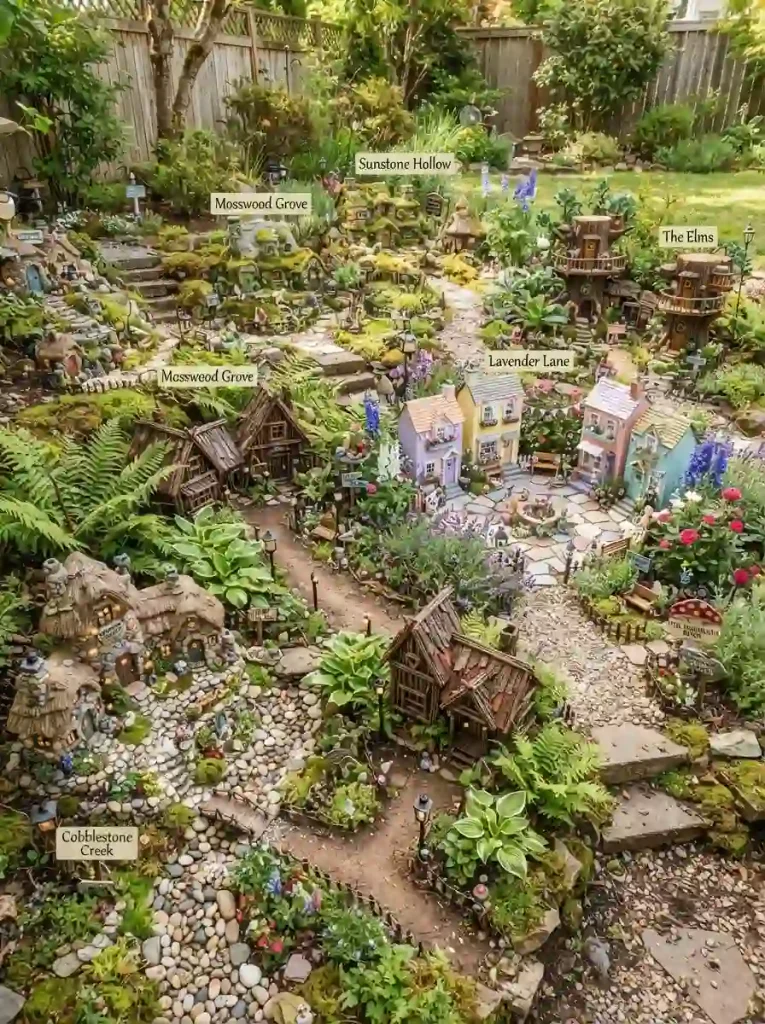
Large spaces give you an opportunity to think beyond one miniature scene. Divide the garden into several neighborhoods, each with a slightly different purpose or personality.
One section might have cozy woodland homes, another could feature colorful cottages, while a third becomes a peaceful garden district filled with flowers. Connect the areas with consistent pathways or repeating materials so the entire garden still feels unified.
This approach is especially useful when you want to keep adding to your fairy garden over time.
Garden Tip:
Start with two or three clearly defined zones instead of trying to complete the whole backyard at once. You can expand the village whenever you discover a new idea you love.
8. Turn an Unused Corner Into a Fairy Botanical Conservatory
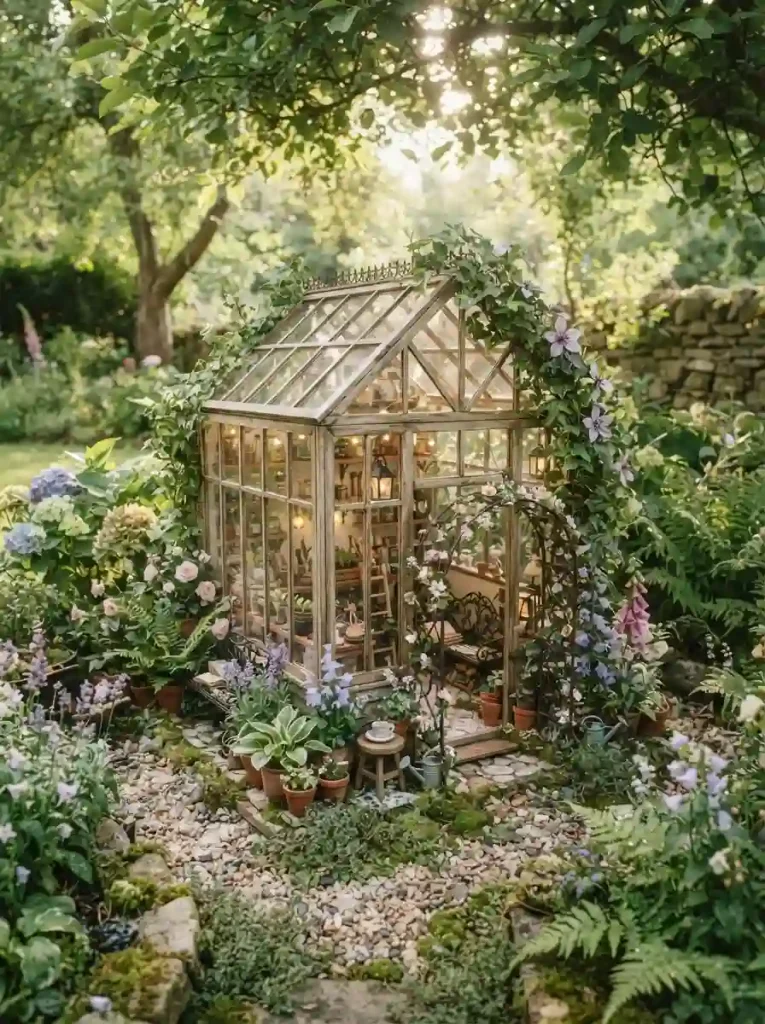
A tiny greenhouse can become the centerpiece of a more sophisticated fairy garden. Use a miniature glasshouse or transparent structure as a botanical conservatory where tiny plants appear to be carefully cultivated for the fairy community.
Surround it with miniature pots, plant shelves, benches, and small gardening accessories. Keep the colors relatively natural so the greenery remains the star of the scene.
This idea works beautifully when you want your fairy garden to feel more like a tiny working community rather than a collection of decorative objects.
Garden Tip:
If you use a real miniature greenhouse, make sure it receives suitable light and ventilation. Even tiny enclosed spaces can become surprisingly hot under direct summer sun.
9. Create a Moonlight Fairy Garden for Evening Magic
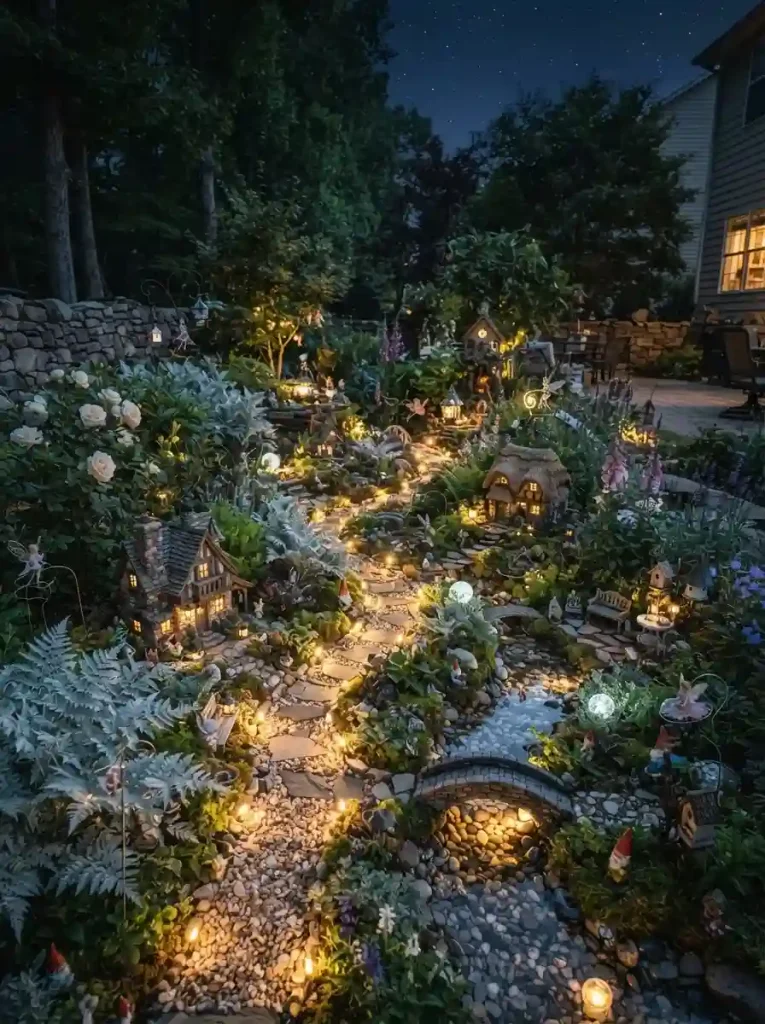
Your fairy garden doesn’t have to disappear when the sun goes down. Design one section specifically around an evening atmosphere using plants, reflective surfaces, and subtle outdoor lighting.
Silvery foliage and pale flowers can catch available light beautifully, while strategically positioned low-level lights can highlight pathways and miniature buildings. Keep the illumination soft rather than turning the garden into a brightly lit display.
The result can feel completely different at night compared with the daytime garden.
Garden Tip:
Use outdoor-rated lighting and keep cables or connections protected from moisture. A few carefully positioned lights usually create a more magical effect than covering every inch of the garden in illumination.
10. Build a Fairy Village Beside a Miniature Pond
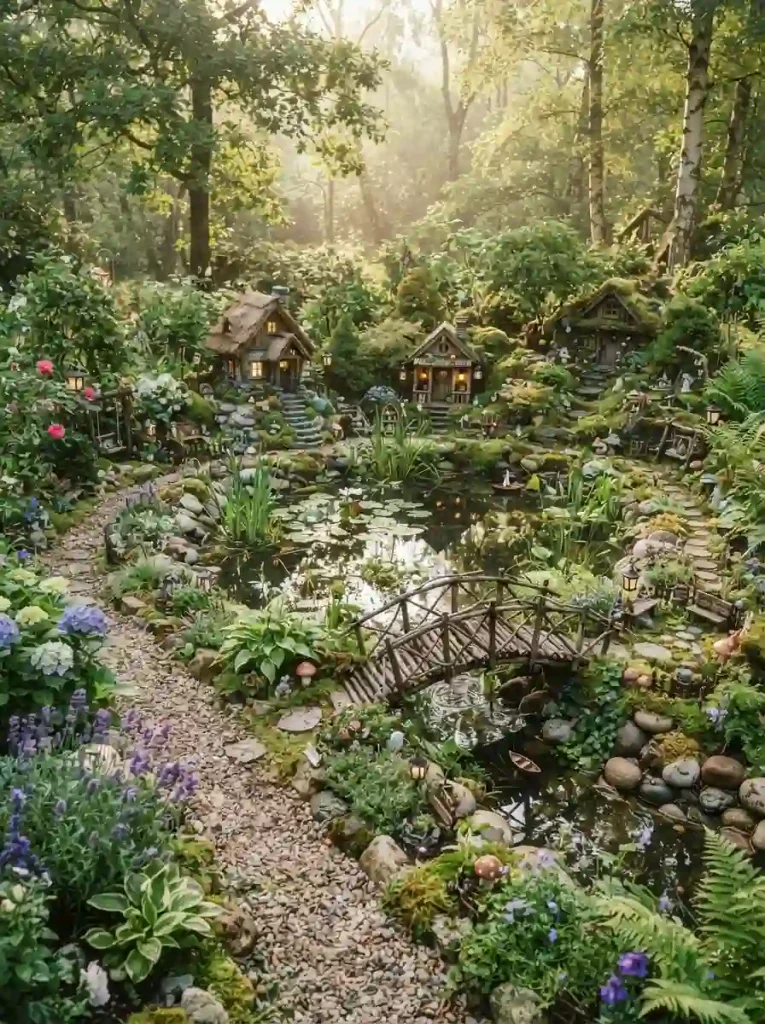
Water can instantly make a fairy garden feel more like a complete miniature world. A small pond provides a natural centerpiece while giving you another landscape feature to decorate.
Add a tiny bridge, stepping stones, water-loving plants, or a miniature dock around the edge. Keep the arrangement slightly irregular so it resembles a natural pond rather than a perfectly constructed display.
If you don’t want to maintain real water, a shallow decorative basin or reflective glass surface can create a similar visual effect.
Garden Tip:
Avoid placing tiny loose decorations directly where they could fall into the water. Secure larger pieces and leave enough open space around the pond for easy cleaning.
11. Design a Fairy Treehouse Hidden Among Mature Trees
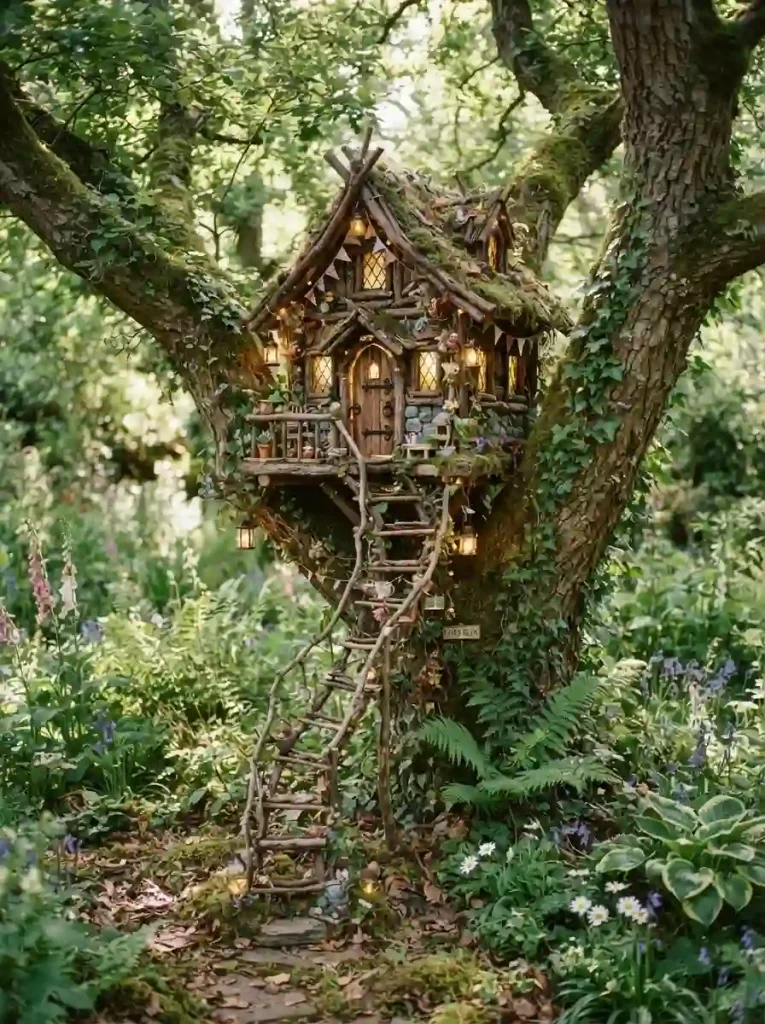
Have a mature tree in your backyard? Turn the area around it into a secret fairy hideaway.
A miniature treehouse can become an exciting focal point, especially when it is partly concealed by foliage. Add a tiny ladder, rope-style details, miniature seating, or a small balcony to make the structure feel inhabited.
You don’t necessarily need to attach anything directly to a living tree. A freestanding miniature structure placed among roots and low branches can create the same effect without potentially damaging the tree.
Garden Tip:
Leave adequate space around the tree trunk and avoid fastening decorations tightly against living bark.
12. Create a Fairy Farm With Tiny Vegetable Gardens
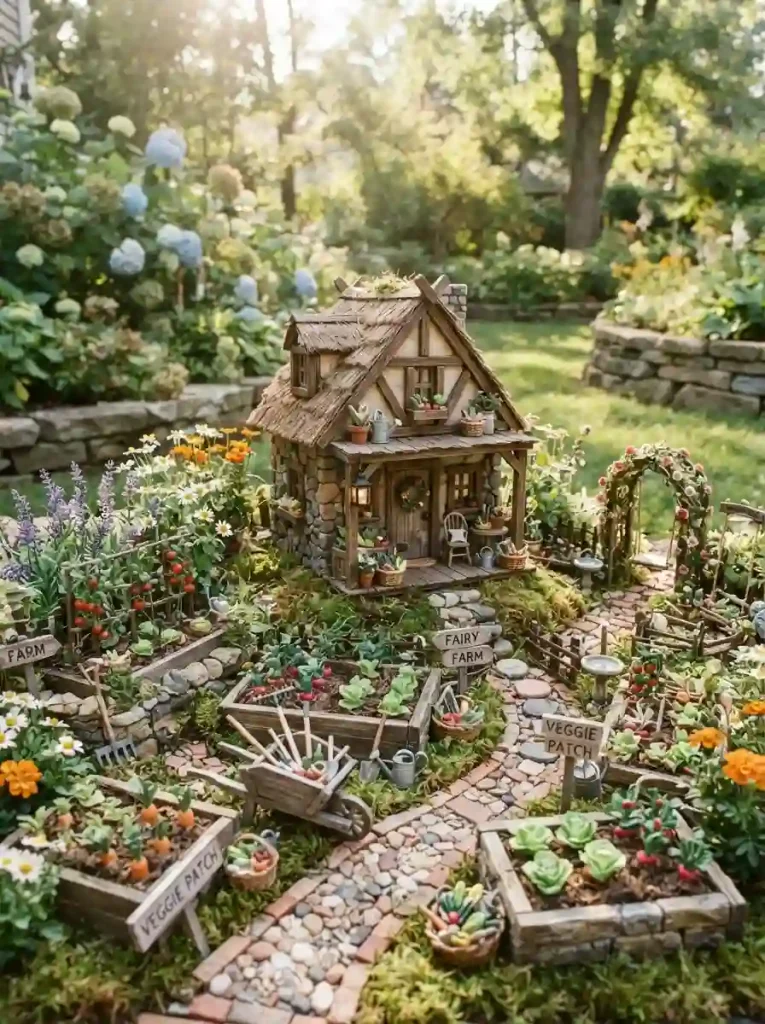
Give your miniature residents somewhere to grow their own food by creating a tiny fairy farm.
Use miniature raised beds, tiny fences, little tools, and rows of small plants to suggest a working vegetable garden. Herbs and compact edible plants can serve as real landscaping while adding to the miniature story.
A tiny farmhouse or barn can anchor the scene, with pathways connecting the growing areas.
Garden Tip:
Choose compact plants that won’t quickly overwhelm the miniature structures. Regular trimming can keep the scene looking intentional as the garden grows.
13. Create a Whimsical Fairy Market Square
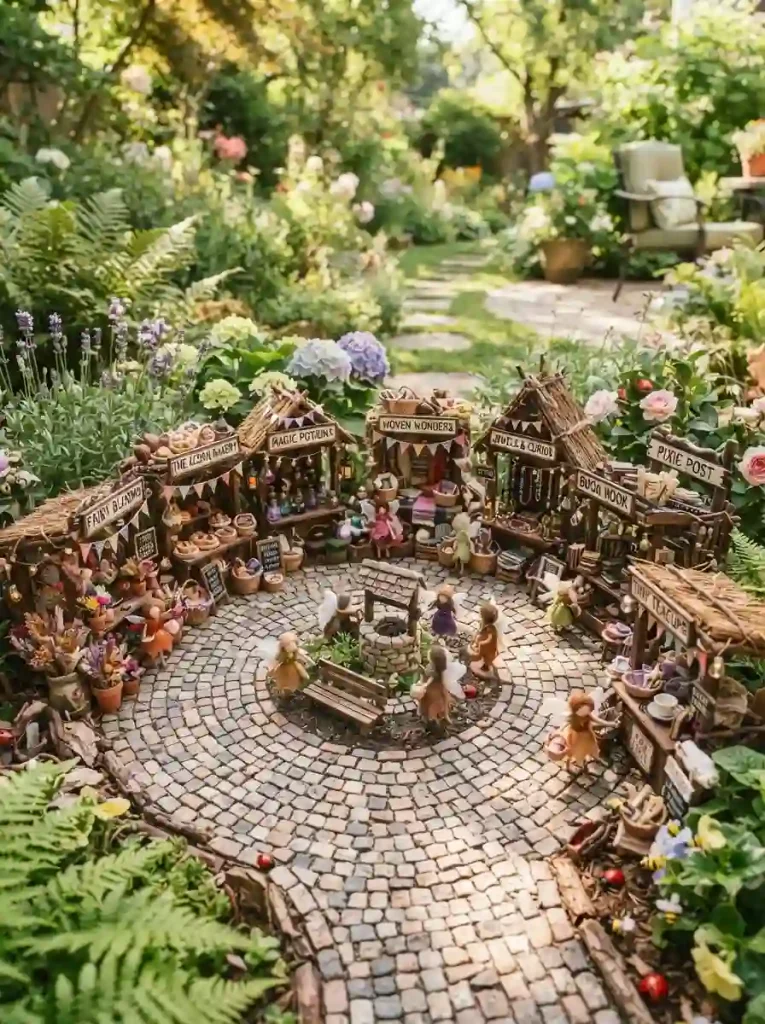
A market square gives a large fairy garden a sense of activity and community. Instead of concentrating everything around houses, create an open central area where miniature stalls become the attraction.
Small booths can represent a flower seller, plant shop, craft stand, or imaginary food vendor. Vary the shapes and heights of the stalls so the display feels collected over time.
A circular arrangement around a small central feature can make the market feel like the heart of your fairy village.
Garden Tip:
Leave a little breathing room between stalls. Tiny accessories are easier to appreciate when they aren’t packed together.
14. Add a Secret Fairy Door Beneath a Garden Stairway
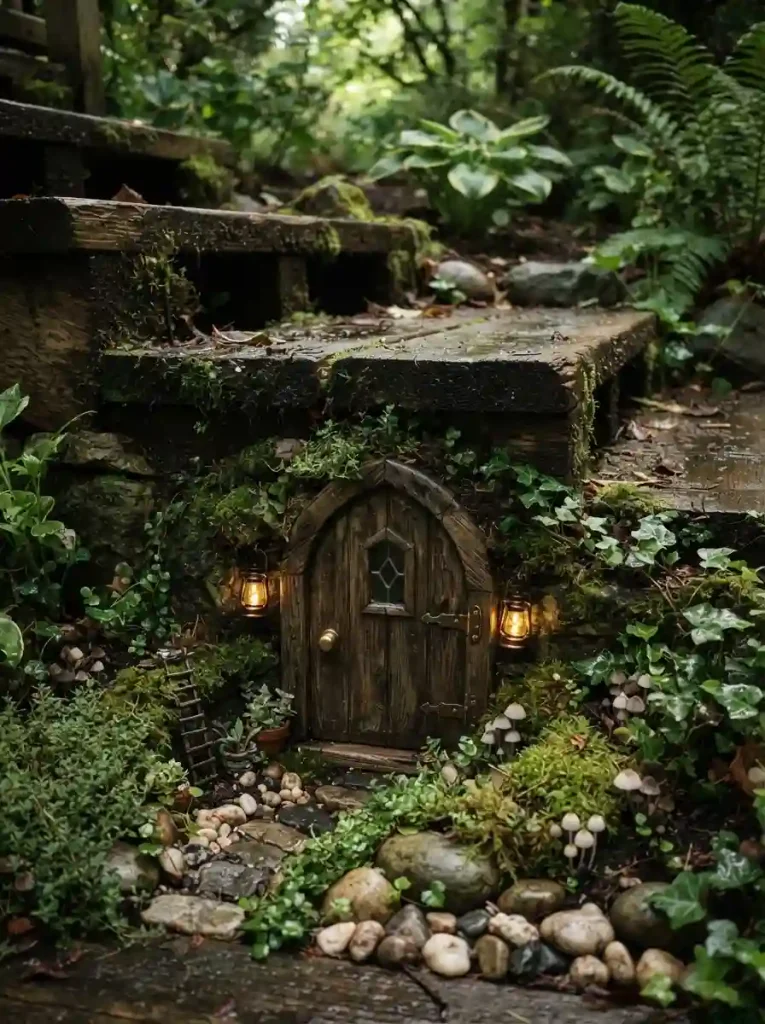
Not every fairy feature needs to be large. A hidden door can be one of the most charming discoveries in a spacious garden.
Look for overlooked spaces beneath steps, beside retaining walls, around tree roots, or underneath raised structures. Install a miniature door and surround it with subtle details such as moss, stones, tiny lanterns, or low-growing plants.
The goal is to make visitors notice it only after exploring the garden.
Garden Tip:
Choose outdoor-safe materials and position the door where water won’t constantly collect. A little natural weathering can actually make the feature look more authentic.
15. Create a Fairy Garden Around a Rustic Wheelbarrow
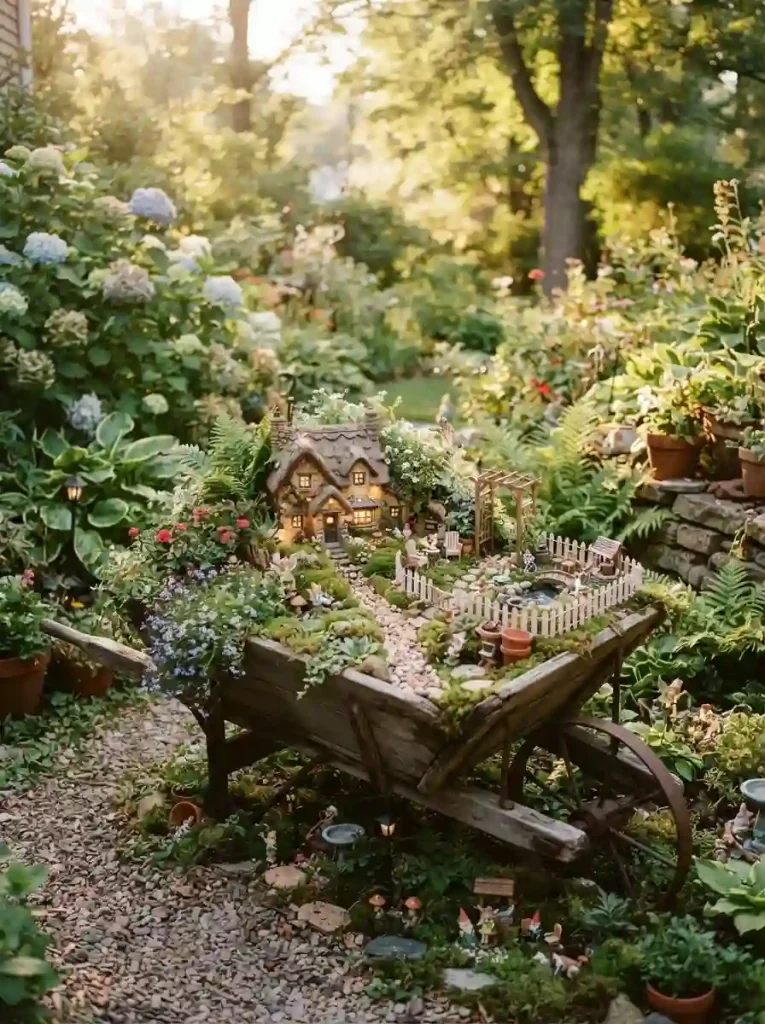
A wheelbarrow can become a portable miniature landscape while also adding height to a larger garden design.
Fill it with soil and compact plants, then create a tiny scene inside using a cottage, pathway, stones, or small garden accessories. Position the wheelbarrow slightly off-center rather than directly in the middle of the yard.
An old weathered wheelbarrow works particularly well because its aged texture blends naturally with plants and rustic garden materials.
Garden Tip:
Make sure the container has drainage holes. Good drainage will help prevent waterlogged soil after heavy rain.
16. Build a Fairy Garden With a Miniature Mountain Landscape
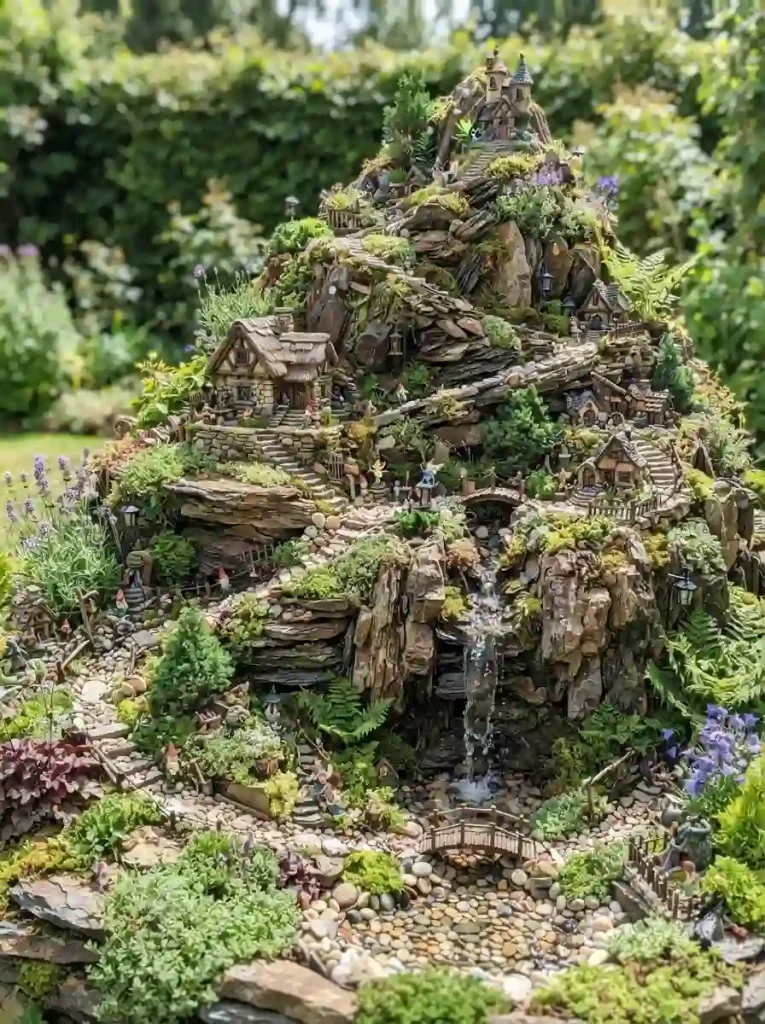
If you have plenty of outdoor space, experiment with elevation instead of keeping everything at ground level.
Use rocks, soil, small retaining elements, and carefully chosen plants to create miniature hills and elevated sections. Place fairy houses at different heights so the eye naturally travels through the landscape.
A small waterfall, rocky passage, or winding trail can make the garden feel like an adventurous fantasy world.
Garden Tip:
Build the largest slopes first and test how rain moves through the area. Proper drainage is especially important when creating raised miniature landscapes.
17. Create a Fairy Cottage Garden Filled With Flowers
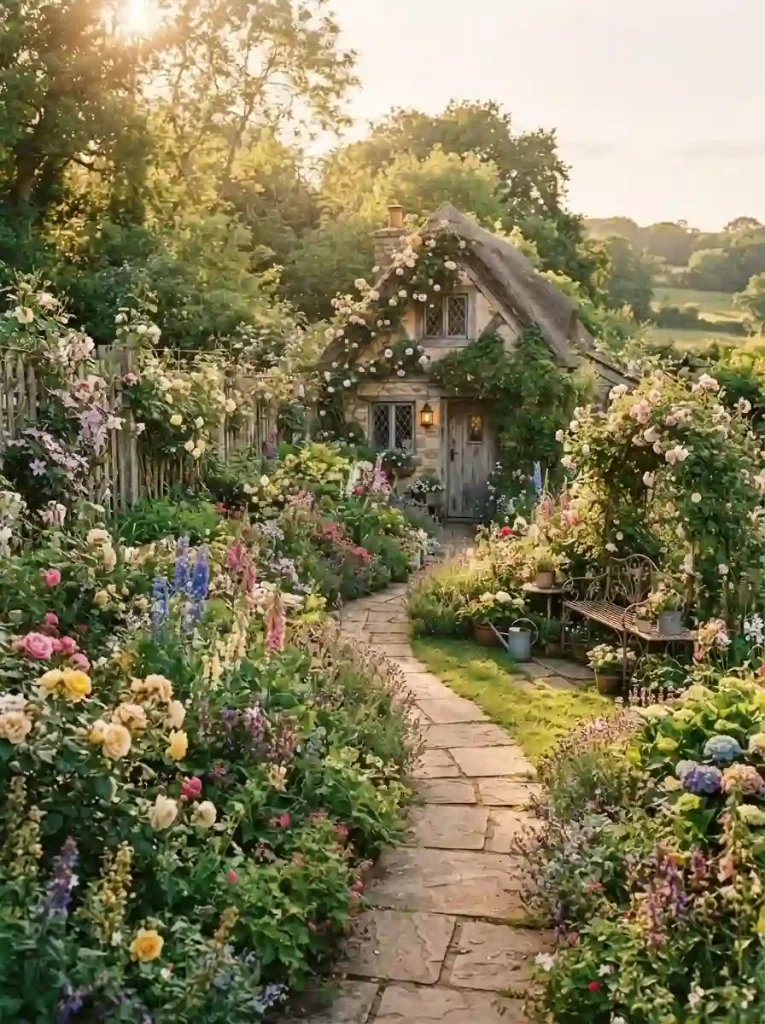
For a softer and more traditional look, let flowers become the main attraction.
Surround a miniature cottage with layers of flowering plants in different heights. Curved borders, rustic fencing, natural stone, and a tiny bench can reinforce the cozy cottage-garden feeling without overwhelming the plants.
Choose a mixture of bloom colors that work together rather than using every available color. A restrained palette often makes a large fairy garden look more polished.
Garden Tip:
Include plants with different flowering periods so the display continues to have interest throughout the growing season.
18. Design a Full Backyard Fairy Wonderland
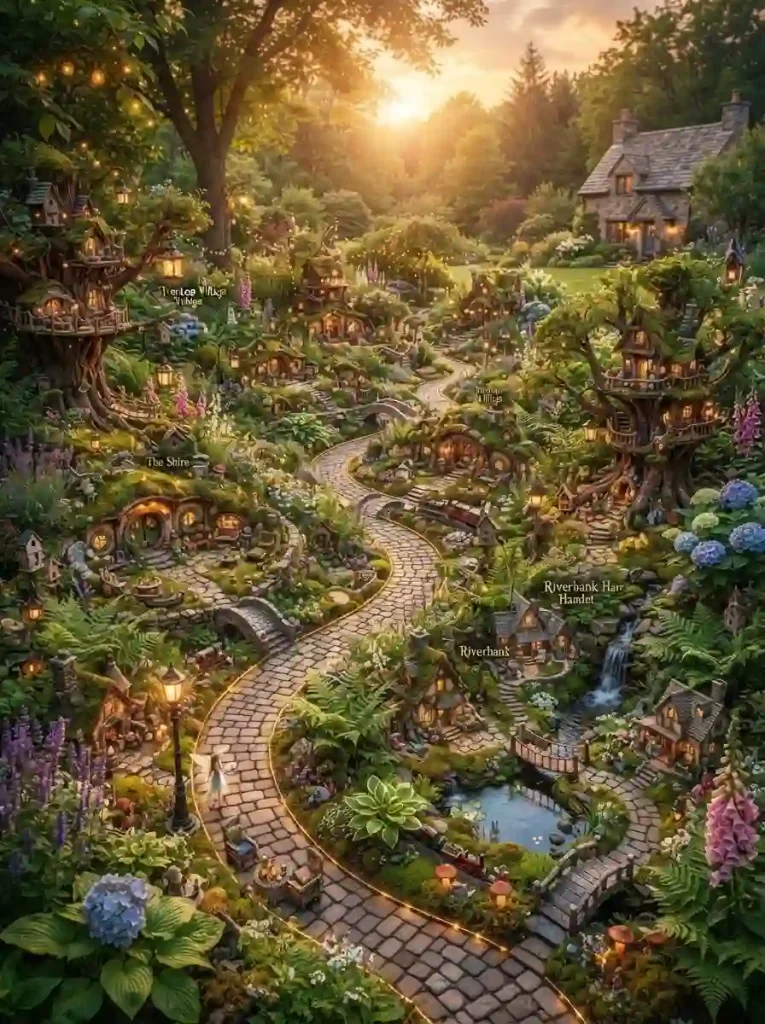
If you have enough space, combine several of these concepts into one connected fairy wonderland.
Rather than making every section identical, give each part of the backyard a distinct character. A woodland corner can transition into a cottage village, which leads toward a pond, market square, or flower-filled garden.
Use repeated materials—such as the same type of stone, wood, or pathway—to visually connect all the separate scenes.
The result should feel like one expansive miniature world rather than many unrelated displays.
Garden Tip:
Build your backyard fairy garden in stages. Establish the major pathways and planting areas first, then gradually add structures and tiny details as you discover what the space needs.
How to Make a Large Fairy Garden Look Natural
The easiest way to make a large fairy garden look believable is to blend miniature decorations into the existing landscape.
Avoid placing every fairy house, bridge, and accessory in an obvious line. Instead, create small discoveries throughout the garden. Let plants partially frame structures, use stones to define pathways, and vary the height of different features.
Natural materials such as wood, stone, bark, moss, and gravel can also help miniature elements feel like part of the garden rather than objects simply placed on top of it.
Choose Plants That Match the Scale
Plant selection can make or break a miniature garden.
Very aggressive plants may quickly hide tiny structures, while extremely sparse planting can make the decorations look disconnected. Look for compact varieties, ground covers, small ferns, herbs, mosses, and other plants that suit your local growing conditions.
Think about mature size rather than just how a plant looks when you purchase it.
Protect Your Fairy Garden From Weather
Outdoor miniature decorations have to deal with sun, rain, wind, and changing temperatures.
Before adding an item, check whether it is designed for outdoor use. Wood can benefit from appropriate weather protection, while lightweight decorations may need to be anchored against strong wind.
Keep delicate accessories in sheltered positions and inspect the garden occasionally for damaged pieces.
Plan the Garden Before Buying Decorations
A little planning can prevent a large fairy garden from becoming overcrowded.
Start by deciding where the main pathway, focal point, planting areas, and larger structures will go. Then fill the smaller spaces with miniature details.
It can help to sketch the backyard on paper before purchasing decorations. You don’t need an elaborate landscape plan—a simple drawing showing major zones can be enough.
Final Thoughts
A large fairy garden gives you much more freedom than a small container display. You can create pathways, villages, woodland spaces, water features, flower gardens, and hidden corners that encourage people to explore.
The key is not to fill every available space with decorations. Give your garden room to breathe, combine miniature features with real plants, and allow the landscape to develop gradually.
Whether you create a tiny cottage neighborhood or transform the entire backyard into a magical fairy world, the most memorable garden will be the one that reflects your own creativity and personality.
Frequently Asked Questions
How much space do I need for a large fairy garden?
There is no fixed size. A large fairy garden can occupy a dedicated flower bed, a backyard corner, or several connected areas. The important thing is to design the layout around the space you already have.
What plants are good for a fairy garden?
Compact plants, mosses, ground covers, small ferns, herbs, and other slow-growing varieties can work well. Always choose plants based on your local climate, sunlight, soil, and watering conditions.
Can a fairy garden stay outside all year?
Yes, many outdoor fairy gardens can remain outside, but durability depends on the materials and local weather. Outdoor-rated decorations generally last longer, while delicate pieces may need seasonal protection.
How do I keep a large fairy garden from looking cluttered?
Create defined areas and leave open spaces between major features. Use pathways, planting groups, and repeated natural materials to connect the different sections.
Can I make a fairy garden without buying expensive decorations?
Absolutely. Natural stones, sticks, bark, small containers, reclaimed wood, and suitable garden materials can become excellent miniature landscaping elements. A few carefully chosen focal pieces can be more effective than a large collection of decorations.