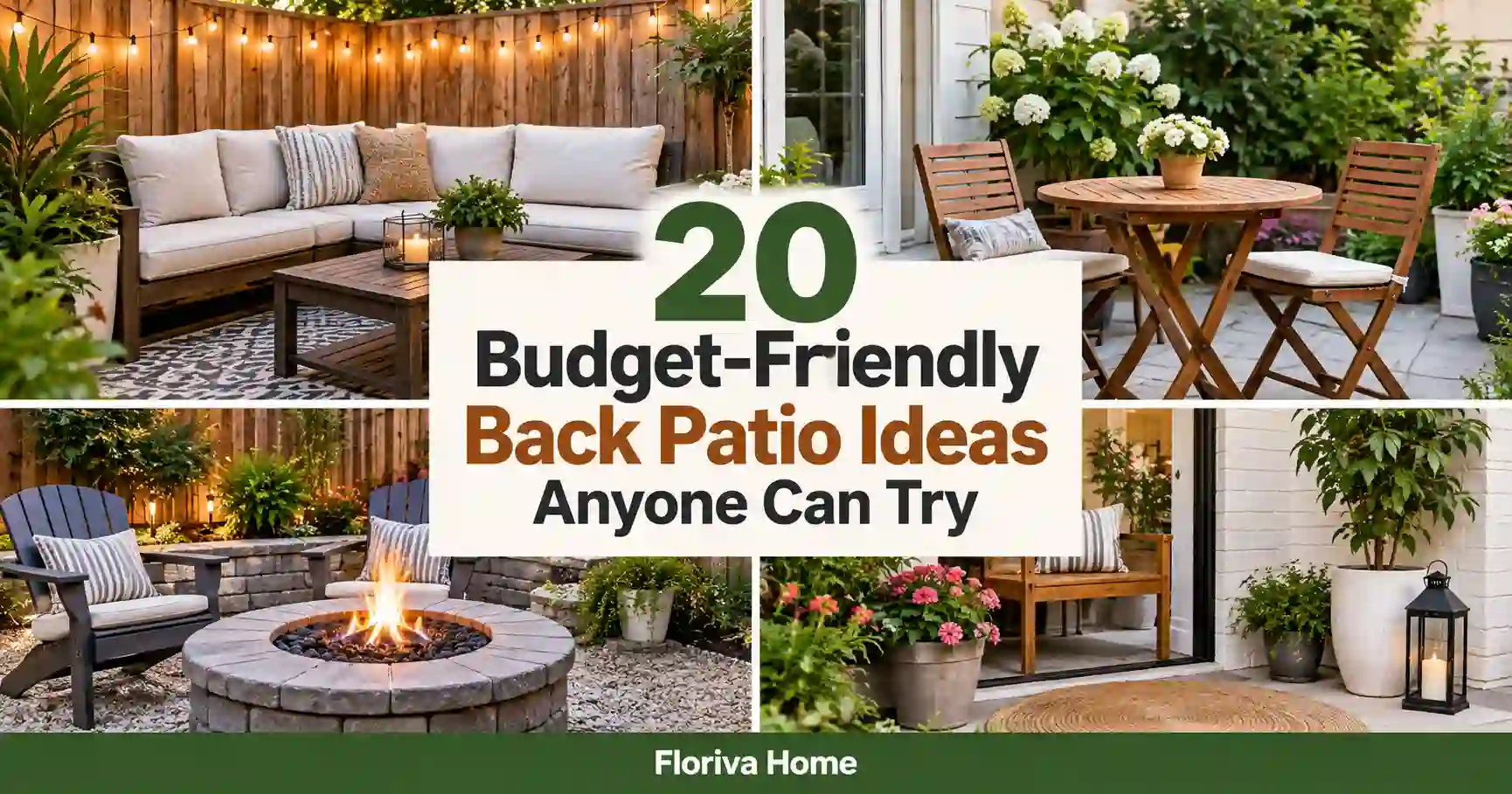
20 Budget-Friendly Back Patio Ideas Anyone Can Try
You don’t need a huge budget to make your backyard patio feel comfortable, stylish, and inviting. A few smart changes can completely transform a plain outdoor area into a space where you actually want to relax, eat, or spend time with family.
From inexpensive furniture updates to simple lighting and creative DIY touches, there are plenty of ways to make your patio look great without spending a fortune. The trick is to focus on practical improvements that add comfort and personality without requiring a major renovation.
Here are 20 budget-friendly back patio ideas to help you create an outdoor space you’ll love using.
1. Create a Simple Gravel Patio
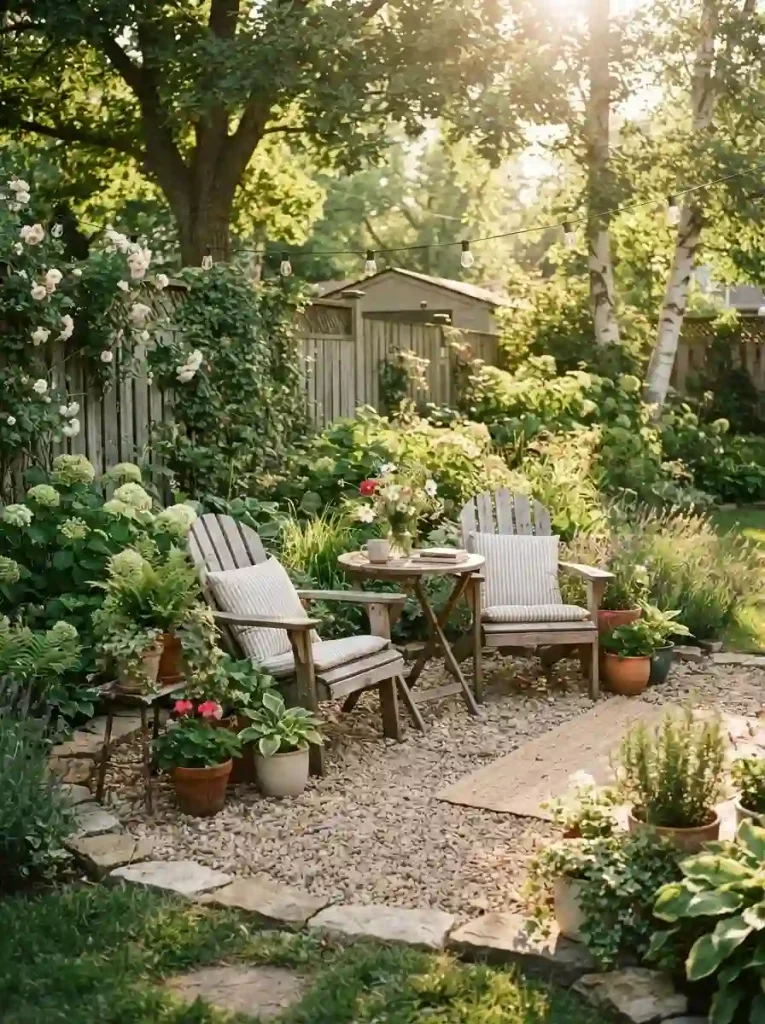
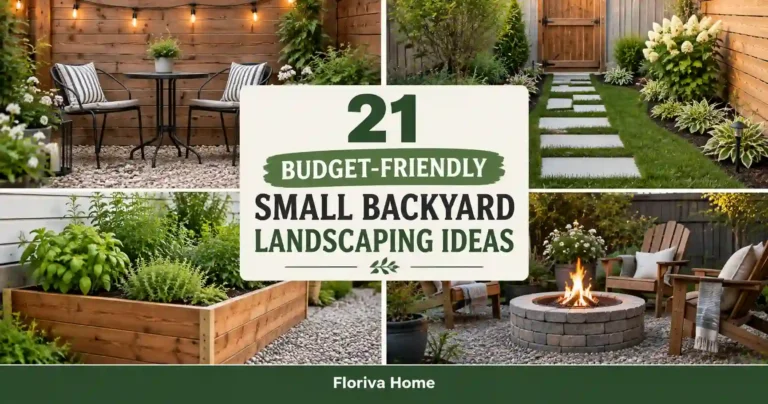
A gravel patio is one of the easiest ways to create a defined outdoor sitting area without paying for a full concrete or stone installation. Pea gravel or crushed stone can give your backyard a relaxed, natural appearance while keeping material costs manageable.
Start by choosing a level section of the yard and marking the patio boundaries. A simple border made from inexpensive bricks, reclaimed timber, or natural stones can keep the gravel contained and make the finished area look more polished.
Add a small table, two chairs, and a few plants, and you already have a comfortable spot for morning coffee or evening conversations.
Expert Tip:
Use landscape fabric underneath the gravel to help reduce weed growth. A properly prepared base will also make the patio more comfortable and prevent the gravel from spreading into surrounding areas.
2. Refresh Old Patio Furniture With Paint
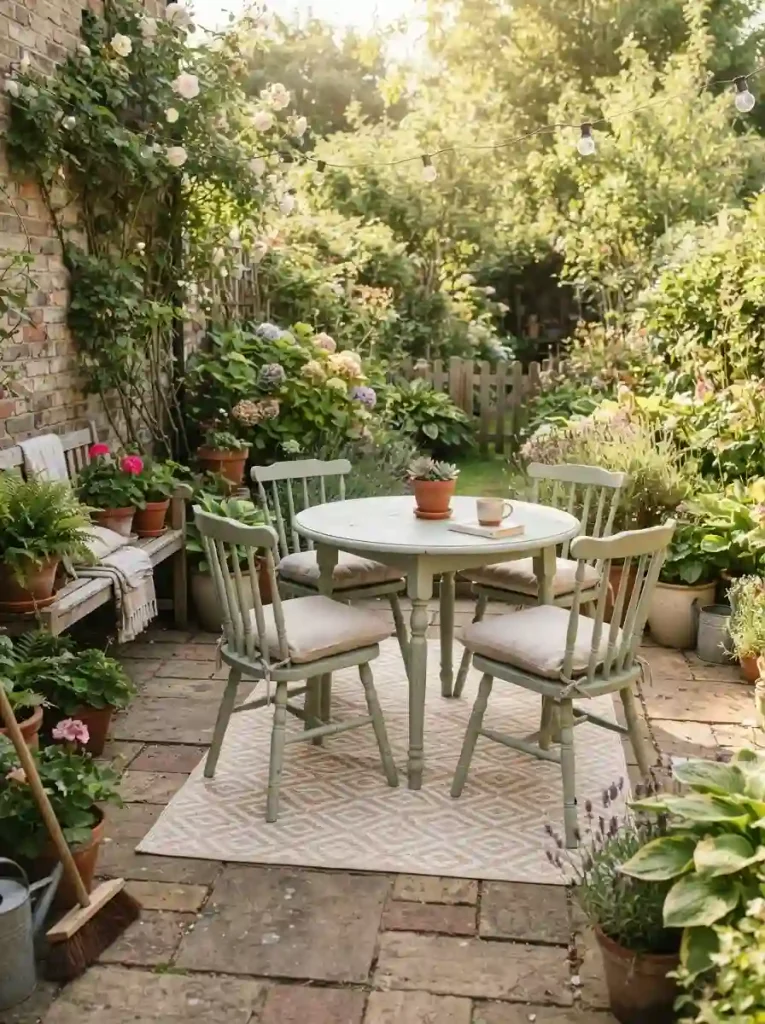
Before buying new patio furniture, take a second look at what you already have. Older wooden or metal chairs can often look completely different after a thorough cleaning and a fresh coat of exterior paint.
Choose a color that works with your home and surrounding garden. Soft neutrals can create a calm look, while a darker shade can make inexpensive furniture feel more modern.
You can also replace worn cushions or sew simple outdoor cushion covers instead of replacing the entire seating set. A small makeover can save considerable money while giving your patio a fresh personality.
Expert Tip:
Clean and lightly sand surfaces before painting. Always use paint or coating designed for the specific outdoor material so the finish holds up better against weather.
3. Add a DIY Outdoor Rug
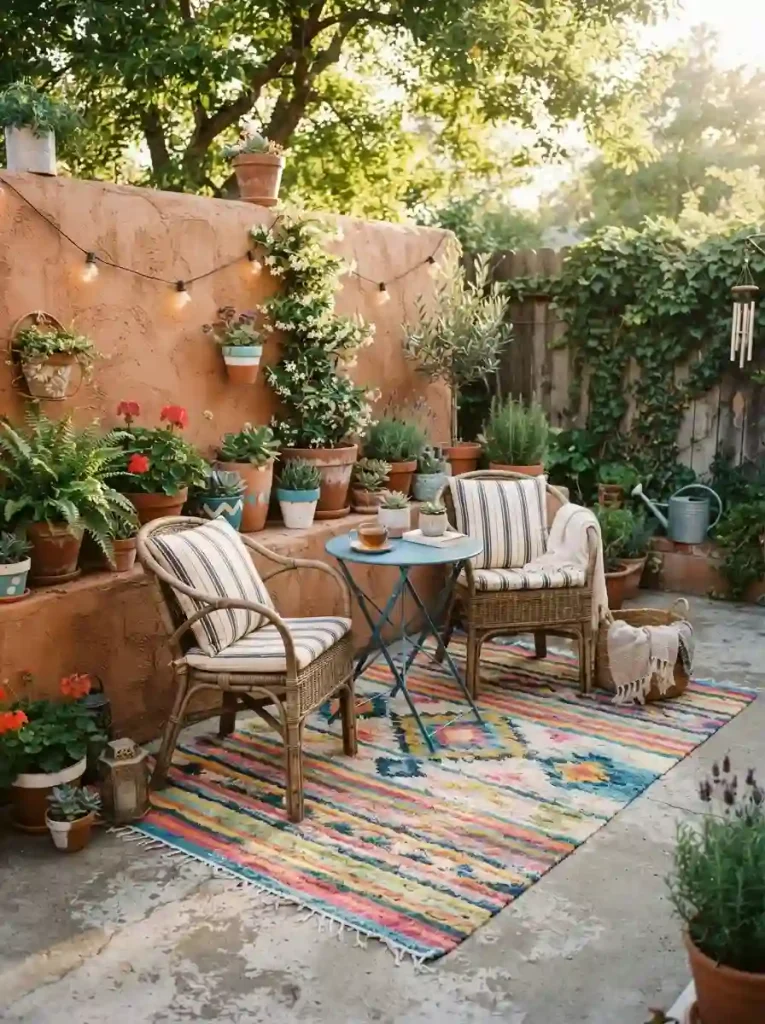
An outdoor rug can instantly make a patio feel more like an extension of your home. If store-bought options are outside your budget, consider creating a simple DIY version using an inexpensive flat-weave rug and weather-resistant paint.
Keep the design uncomplicated. Stripes, simple geometric shapes, or a subtle border can add personality without requiring advanced painting skills.
Place the rug beneath a small seating area to visually define the space. It can also help make mismatched chairs and tables feel like they belong together.
Expert Tip:
Choose a rug that dries quickly and can handle outdoor conditions. Avoid placing it where water regularly collects, since trapped moisture can encourage mildew.
4. Use Pallets to Build Patio Seating
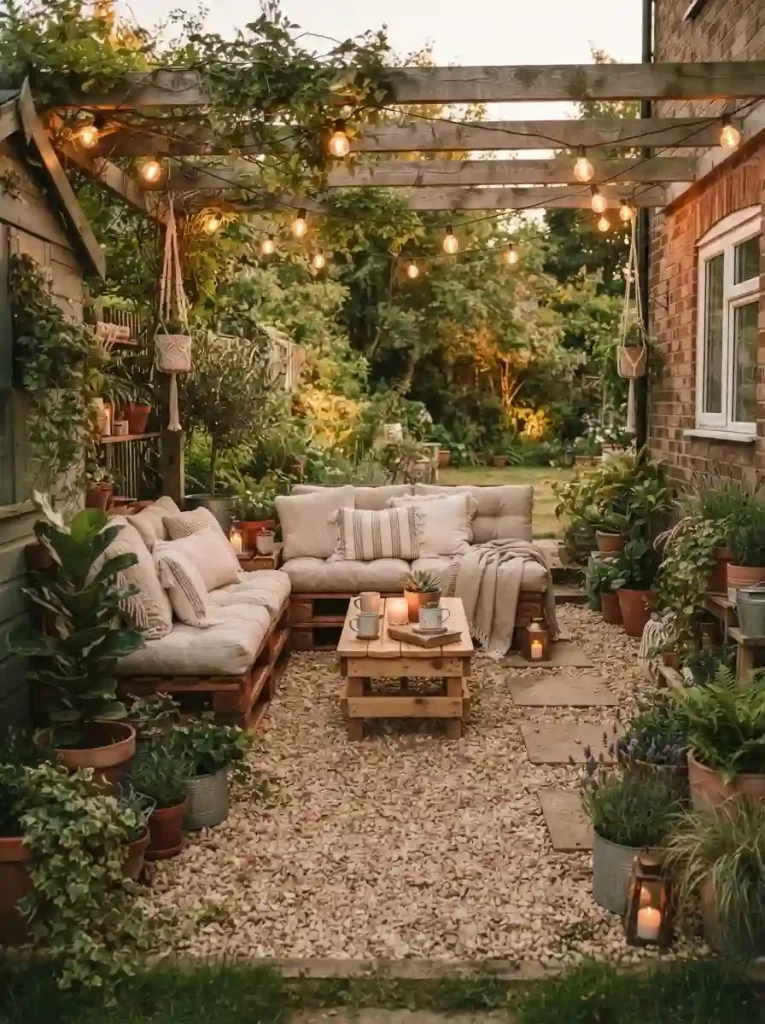
Wooden pallets can become surprisingly useful patio furniture when they are cleaned, prepared, and assembled carefully. Stack them to create a simple sofa base, then add cushions to turn the structure into comfortable outdoor seating.
You can leave the wood natural for a rustic appearance or paint it to coordinate with your home. Adding a matching pallet coffee table can create a complete seating arrangement for very little money.
Make sure the pallets are suitable for your intended use and are free from damage or questionable chemical treatment. Sand rough areas thoroughly before using them.
Expert Tip:
Raise pallet furniture slightly off damp ground whenever possible. A weather-resistant finish can also help protect the wood from moisture and seasonal changes.
5. Hang String Lights Over the Patio
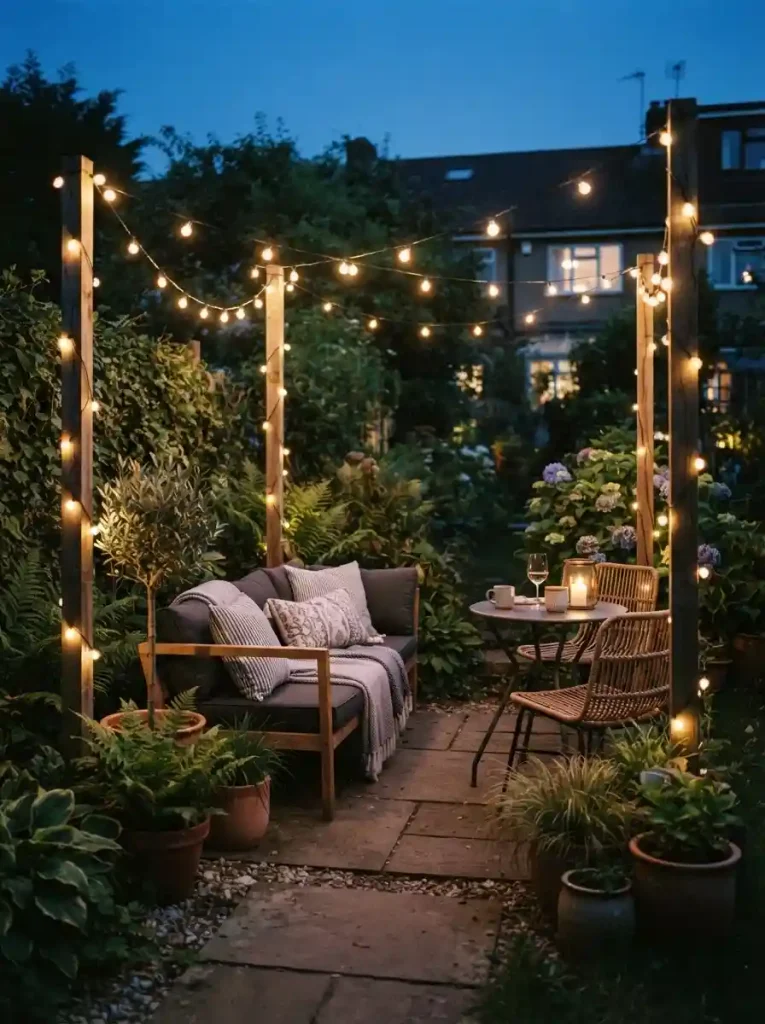
Lighting can completely change the feeling of a patio once the sun goes down. String lights are particularly useful because they add warmth without requiring expensive outdoor fixtures.
Attach them between existing structures, sturdy posts, or carefully positioned poles. You can run one long strand across the seating area or create a simple zigzag pattern above the patio.
The soft illumination works especially well around a dining table or conversation area. During the day, the lights also add a little decorative character without overwhelming the space.
Expert Tip:
Use outdoor-rated lights and weather-resistant connections. Keep cords organized and positioned where they won’t become a tripping hazard.
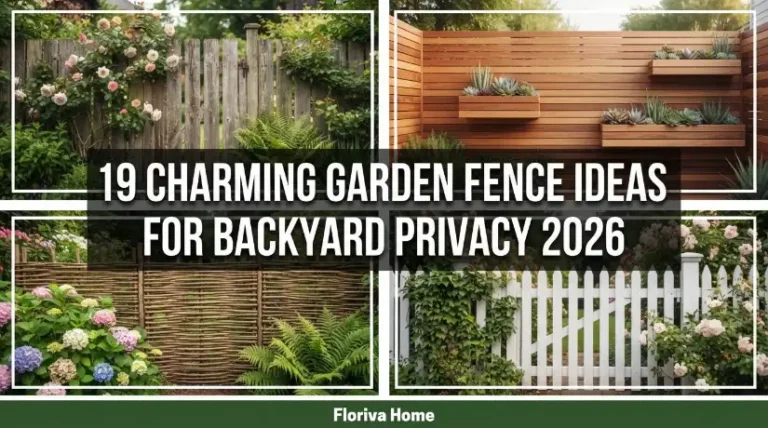
6. Build a Small Patio Privacy Screen
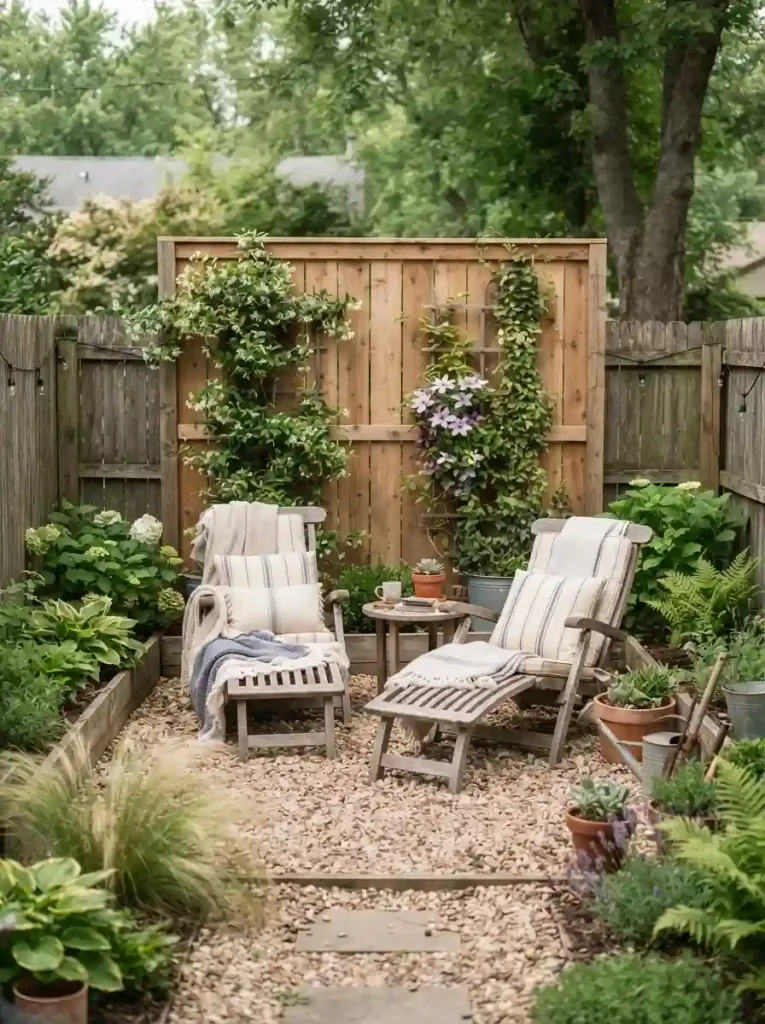
If your patio feels exposed to neighbors, you don’t necessarily need an expensive fence. A simple privacy screen can create a more comfortable atmosphere while also becoming an attractive design feature.
Use inexpensive timber boards, lattice panels, bamboo-style screening, or even a series of tall planters. Position the screen only where privacy is needed instead of enclosing the entire patio.
Climbing plants can soften the structure over time and introduce additional greenery. A screen can also help visually separate your seating area from the rest of the yard.
Expert Tip:
Secure freestanding screens properly, especially in windy areas. Choose materials that can tolerate outdoor moisture and sunlight for a longer-lasting result.
7. Turn an Unused Corner Into a Cozy Seating Nook
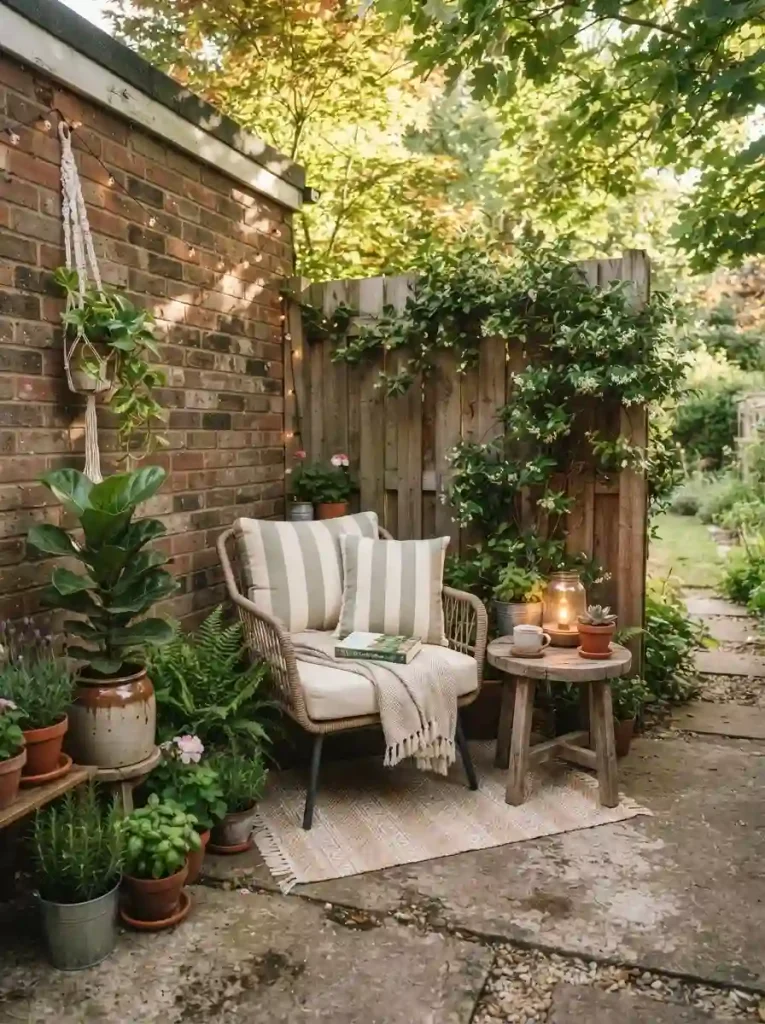
You don’t need to redesign the entire patio to make a noticeable improvement. Sometimes the best approach is to find one neglected corner and give it a clear purpose.
Place a comfortable chair or small bench there, then add a side table for drinks, books, or a small plant. A cushion and outdoor rug can make the area feel much more finished.
This approach is particularly useful for smaller patios because it creates a dedicated relaxation spot without taking up much room.
Expert Tip:
Keep the furniture proportional to the corner. A single comfortable chair can often make a small space feel more inviting than several oversized pieces.
8. Add Container Gardens Around the Patio
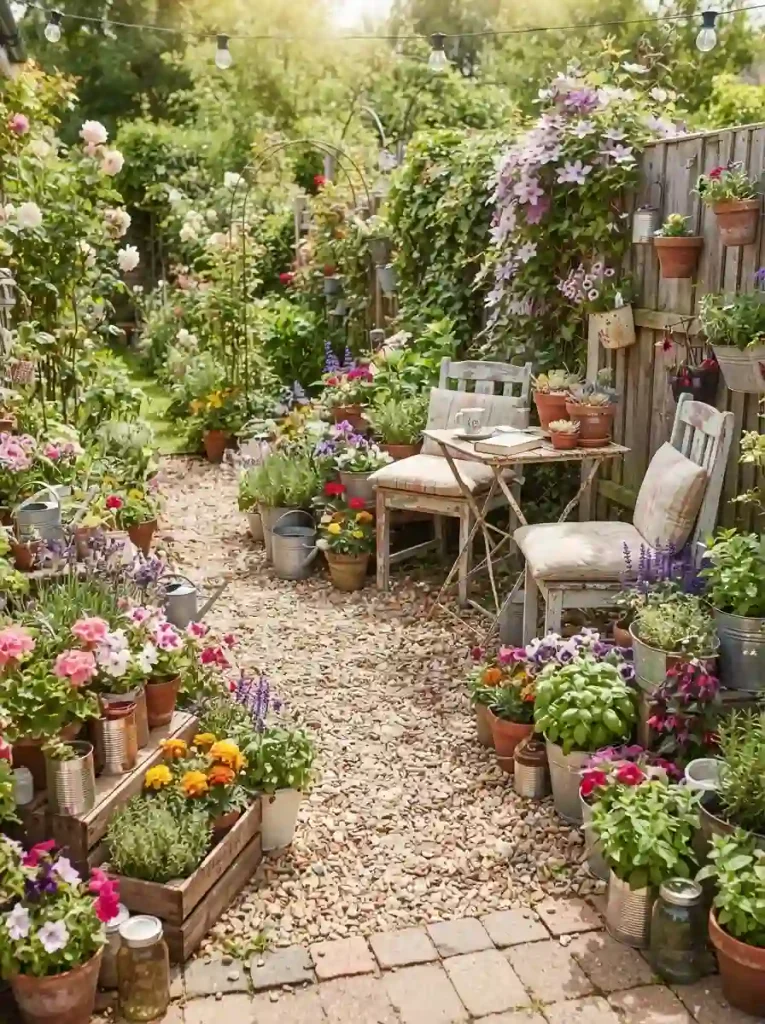
Container plants are an easy way to bring color and greenery onto a patio without creating permanent garden beds. You can use traditional pots, old buckets, wooden crates, or other suitable containers.
Group several containers at different heights to create visual interest. Herbs can sit close to an outdoor dining area, while flowering plants can brighten the edges of a seating space.
Using containers also gives you flexibility. You can move plants around whenever you want to change the patio layout or adjust them according to sunlight.
Expert Tip:
Make sure every container has adequate drainage. Group plants with similar watering and sunlight needs together to make maintenance easier.
9. Make a DIY Patio Coffee Station
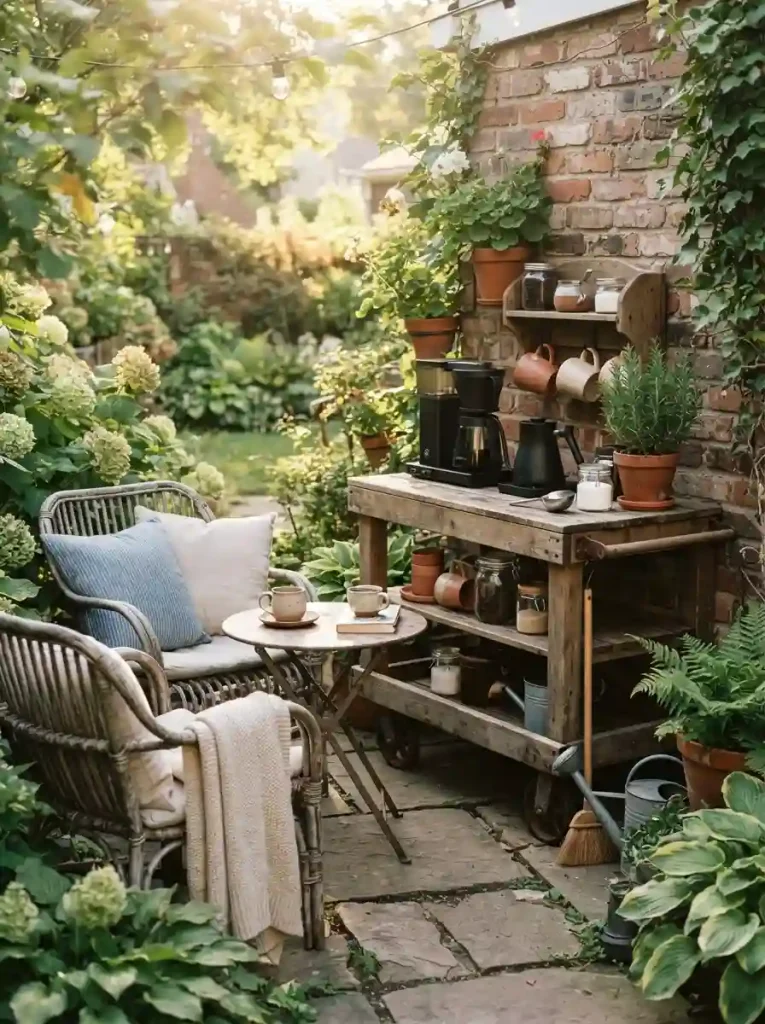
A small coffee station can turn an ordinary patio into a favorite morning destination. You don’t need a built-in outdoor kitchen; a narrow cart, small cabinet, or sturdy table can provide enough space.
Keep the setup simple with mugs, a tray, coffee supplies, and perhaps a small container for sugar or tea. Add one potted herb or plant to make the station feel connected to the garden.
If electricity isn’t conveniently available outdoors, prepare drinks indoors and use the patio station mainly for serving and storage.
Expert Tip:
Choose a weather-protected location for anything that shouldn’t be exposed to moisture. Bring electrical appliances indoors after use unless they are specifically designed for outdoor conditions.
10. Use Reclaimed Bricks for a Patio Border
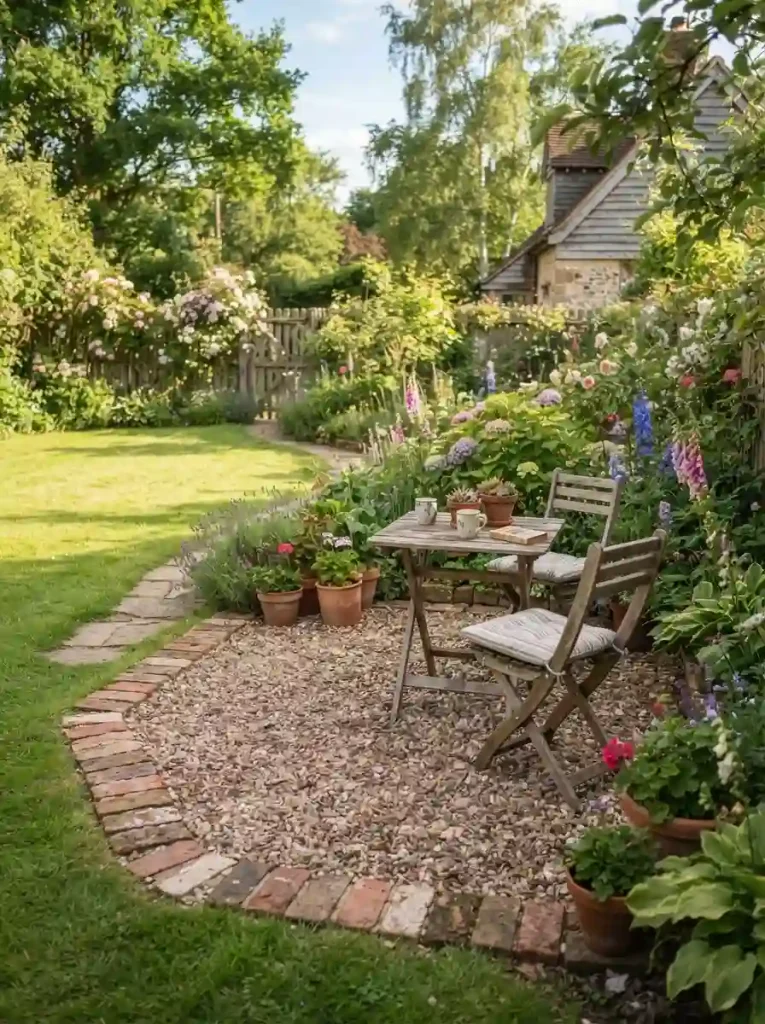
A simple border can make even an inexpensive patio look intentional and finished. Reclaimed bricks are especially useful because they can introduce texture and character without requiring a costly decorative installation.
Arrange the bricks around a gravel, mulch, or compacted-soil patio area. You can place them in a straight line for a clean appearance or create a slightly irregular border for a more relaxed garden style.
This small detail also helps separate the patio from surrounding grass and planting areas, making the outdoor space easier to maintain.
Expert Tip:
Level the ground beneath the bricks before installation. A stable, even base will help prevent the border from shifting or becoming uneven after rain.
11. Create a Simple Outdoor Dining Area
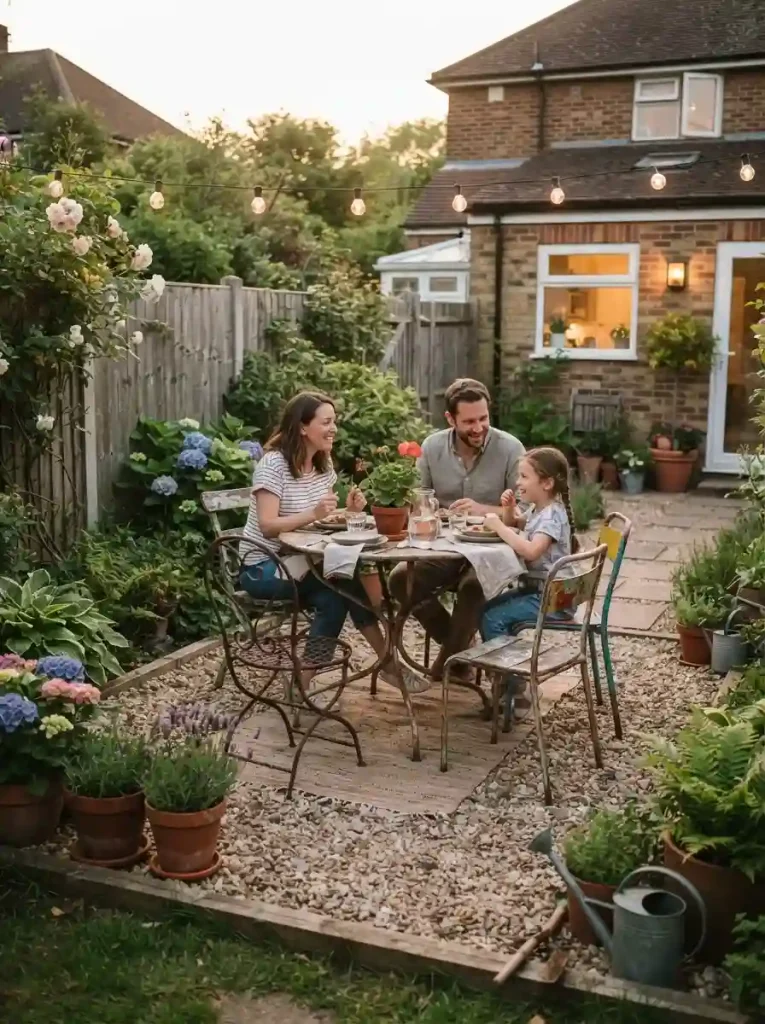
You don’t need a large dining set to enjoy meals outside. A small secondhand table and a few sturdy chairs can create a practical dining area for family breakfasts, casual lunches, or weekend dinners.
Look for furniture at thrift stores, garage sales, or local marketplaces before purchasing new pieces. Mismatched chairs can actually give the patio a relaxed and collected appearance.
Keep the table close to the kitchen or back door if you regularly carry food outside. This makes the setup more convenient and encourages you to use it more often.
Expert Tip:
Choose a table size that leaves enough walking space around it. A compact arrangement usually feels more comfortable than trying to squeeze oversized furniture into a small patio.
12. Add a DIY Planter Bench
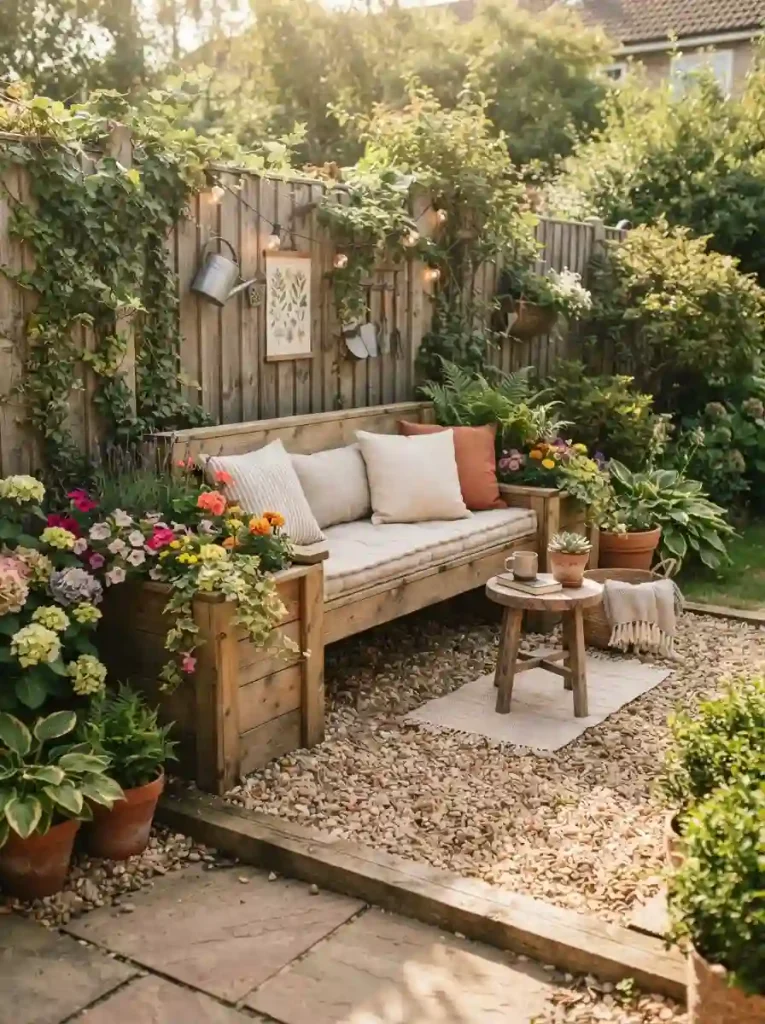
Combine seating and greenery by building a simple bench with planter boxes at each end. This gives you a useful place to sit while adding plants without taking up additional floor space.
The basic design can be made from inexpensive timber, outdoor boards, or reclaimed wood. Fill the side planters with flowers, herbs, or compact foliage to frame the seating area naturally.
A bench like this works particularly well along the edge of a patio where you want to create a visual boundary.
Expert Tip:
Use weather-resistant materials and make sure the bench has strong support. Keep the planter sections separate from the seating structure so excess water does not remain against the wood.
13. Repurpose an Old Table as a Patio Bar
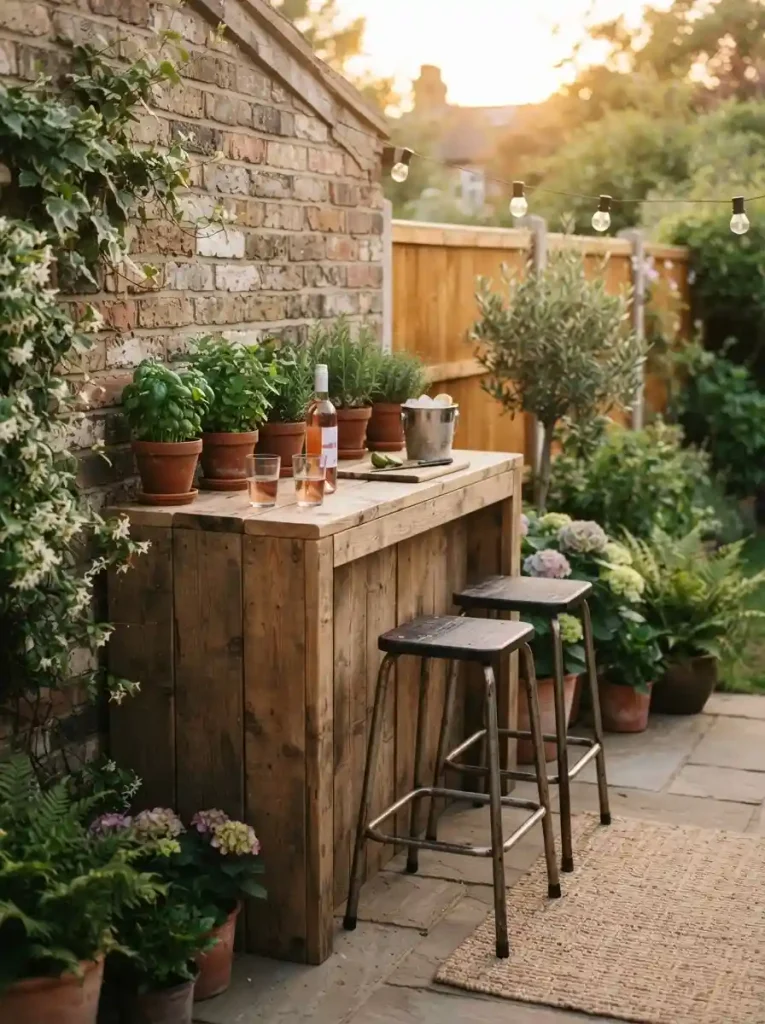
An old narrow table can become a useful outdoor serving station with very little modification. Give it a thorough clean, repair loose parts, and refinish the surface if necessary.
Position the table against a wall or patio edge so it doesn’t interfere with movement. Add two stools and use the surface for drinks, snacks, or outdoor meals.
You can also place a few baskets underneath for napkins, serving pieces, or other patio supplies. The result feels purposeful without requiring a permanent outdoor bar.
Expert Tip:
Protect the tabletop with an exterior-grade finish appropriate for its material. Store delicate serving items indoors rather than leaving them exposed to changing weather.
14. Make a Fire Pit Seating Circle
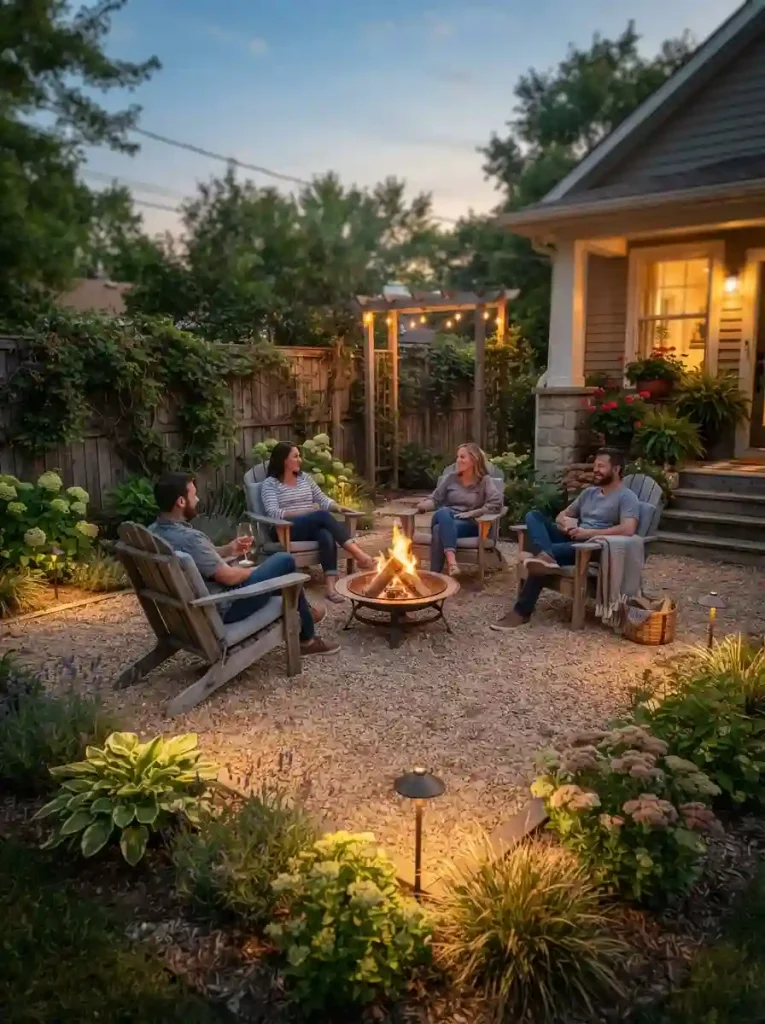
A fire pit can become the focal point of a backyard without requiring an elaborate outdoor renovation. Create a simple seating circle using existing patio chairs or inexpensive weather-resistant seats.
For the surrounding area, gravel or pavers can help visually distinguish the fire pit zone from the rest of the yard. Keep the design open and uncluttered so people can move around comfortably.
Always follow local fire regulations and the manufacturer’s clearance requirements. The fire feature should be placed well away from structures, trees, fences, and combustible materials.
Expert Tip:
Keep a suitable method of extinguishing the fire nearby and never leave an active fire unattended. Safety should come before decoration when planning any backyard fire feature.
15. Decorate With Thrifted Patio Accessories
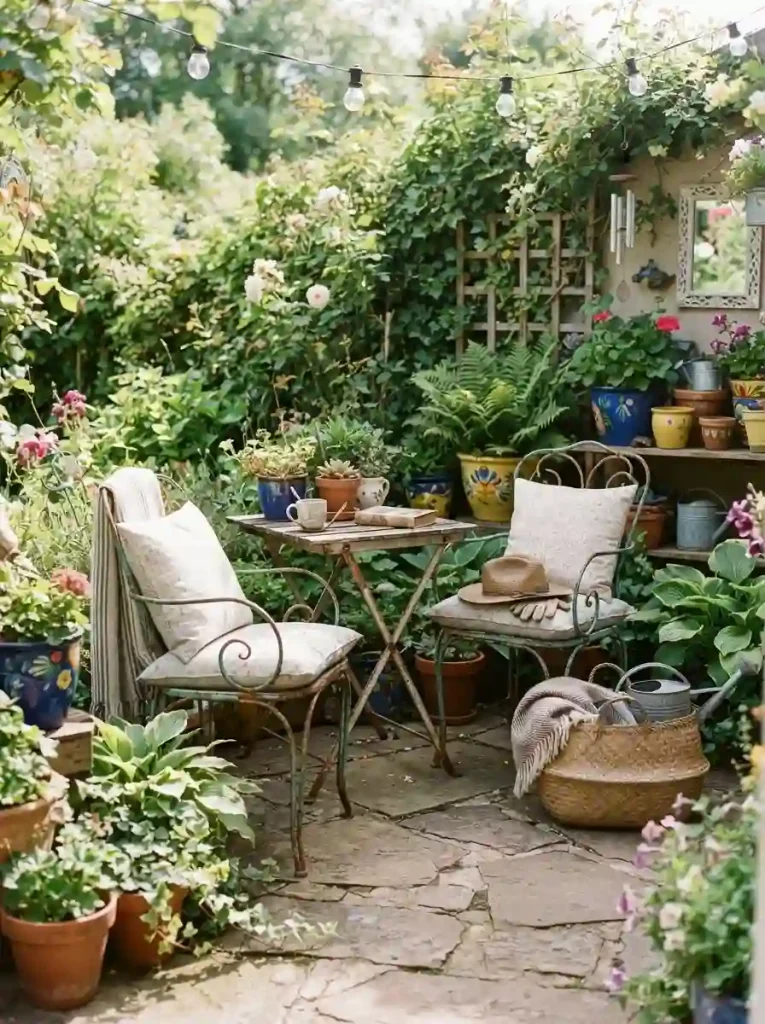
Patio decorating doesn’t have to mean buying everything from a garden furniture store. Secondhand shops, flea markets, and local resale listings can be excellent places to find affordable outdoor accessories.
Look for sturdy side tables, plant stands, metal chairs, baskets, lanterns, and decorative containers. A few carefully selected pieces can give the patio character without making it feel crowded.
Try choosing accessories that share one or two colors. This simple approach helps different secondhand items look more coordinated.
Expert Tip:
Inspect used furniture carefully for rust, structural damage, rot, or signs of pests before bringing it into your outdoor space.
16. Install a Simple Shade Solution
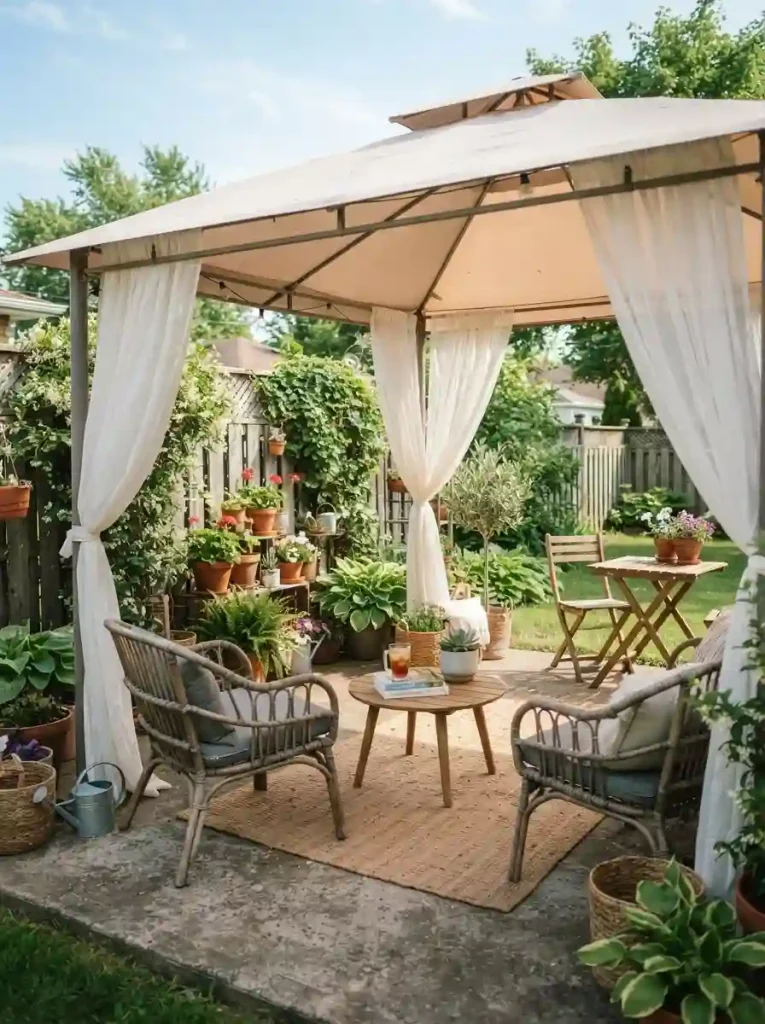
Too much direct sunlight can make a patio uncomfortable during the hottest part of the day. A simple shade solution can make the space considerably more usable without building a permanent structure.
Depending on your patio, options can include a basic shade sail, outdoor umbrella, canopy, or lightweight weather-resistant curtain arrangement. Choose the solution that fits the size and layout of your space.
A neutral shade can blend into the garden, while a subtle color can become a decorative feature.
Expert Tip:
Secure shade structures properly and check their condition regularly. Temporary shade products should be removed or secured appropriately during severe weather and strong winds.
17. Build a Vertical Herb Garden
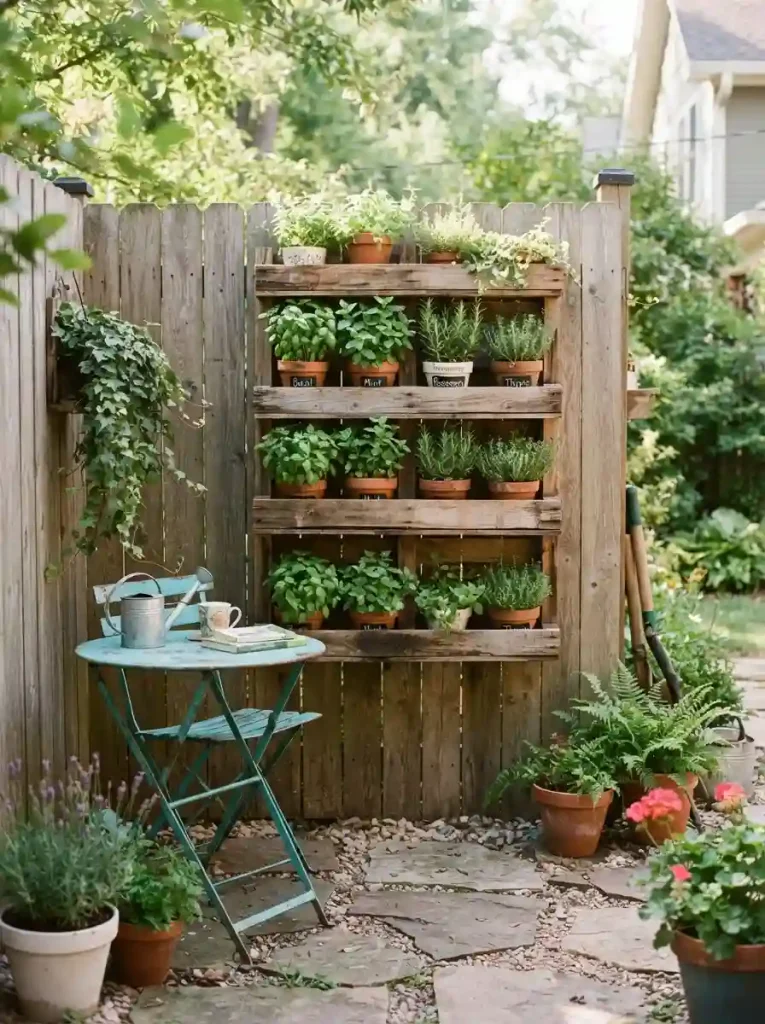
If floor space is limited, take your garden upward. A vertical herb garden can transform an empty wall or fence into a productive and attractive part of the patio.
Use wall-mounted planters, narrow shelves, hanging containers, or a simple wooden frame. Grow herbs that you actually use in cooking so the garden provides both decoration and practical value.
Place the plants somewhere they receive the amount of sunlight they need. Keep watering requirements in mind when choosing which herbs to group together.
Expert Tip:
Make sure wall-mounted containers are securely attached and have proper drainage. Protect the wall or fence behind them from constant moisture where necessary.
18. Give the Patio a Fresh Gravel Refresh
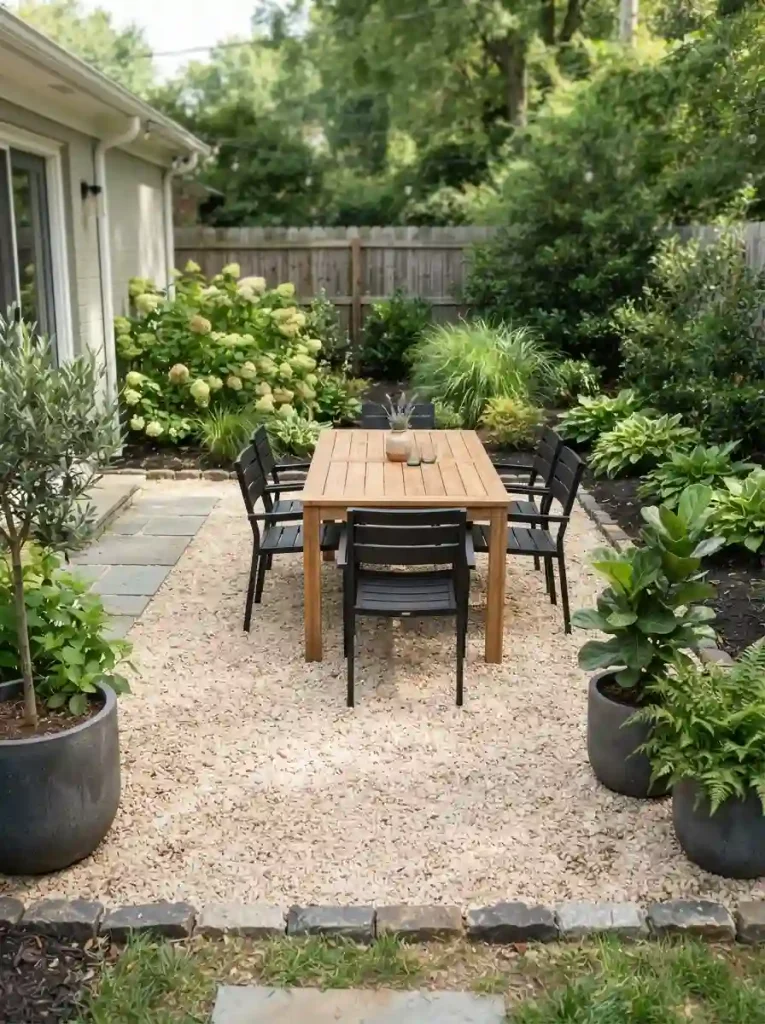
Sometimes the patio doesn’t need a completely new design. Replacing worn gravel, cleaning the surrounding edges, and rearranging the furniture can make an older outdoor area look significantly fresher.
Remove weeds and debris before adding new gravel. Rake the existing surface evenly and top up areas that have become thin or uneven.
Pair the refreshed surface with a few large containers or a small seating set for an inexpensive visual update.
Expert Tip:
Match the new gravel to the existing material whenever possible. If you are changing the color or type, use a clearly defined border so the new surface looks intentional.
19. Create a Relaxing Hammock Spot
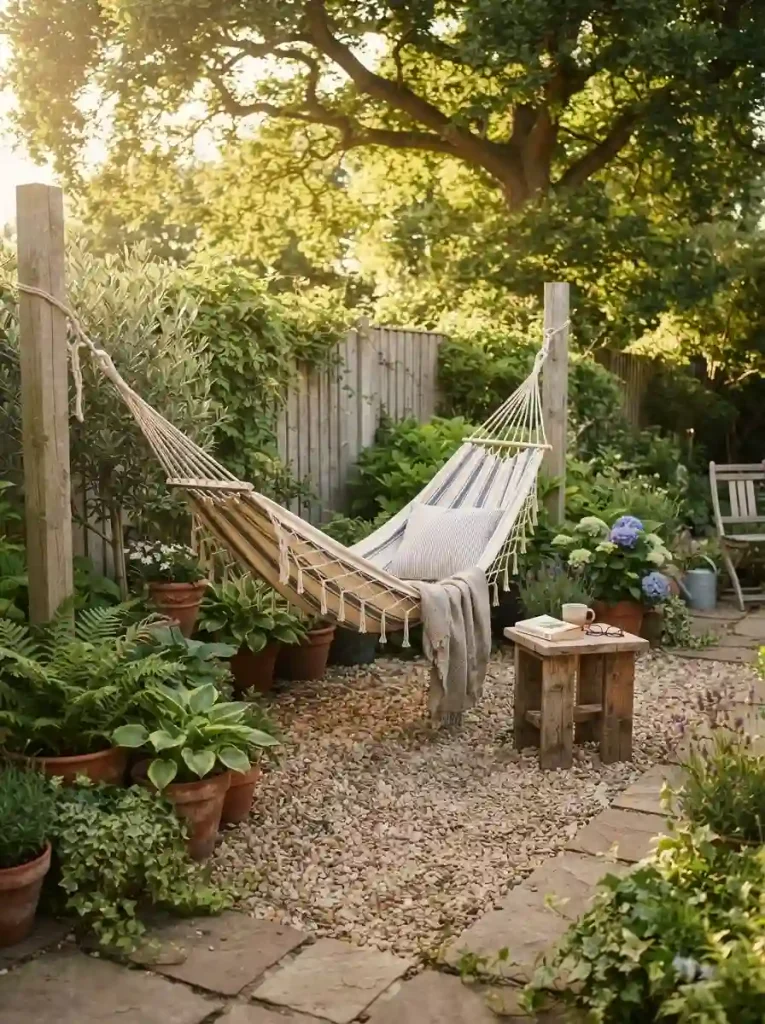
A hammock can turn an unused part of the backyard into a dedicated relaxation zone. It requires very little additional decoration because the hammock itself becomes the main feature.
Place a small side table nearby for books, drinks, or sunglasses. A couple of potted plants can soften the surrounding area without taking up much room.
If there are no suitable trees, use a properly designed freestanding hammock stand rather than attaching the hammock to an unsuitable structure.
Expert Tip:
Always follow the hammock and stand manufacturer’s weight and installation instructions. Check attachment points regularly before use.
20. Give Everything a Fresh Layout
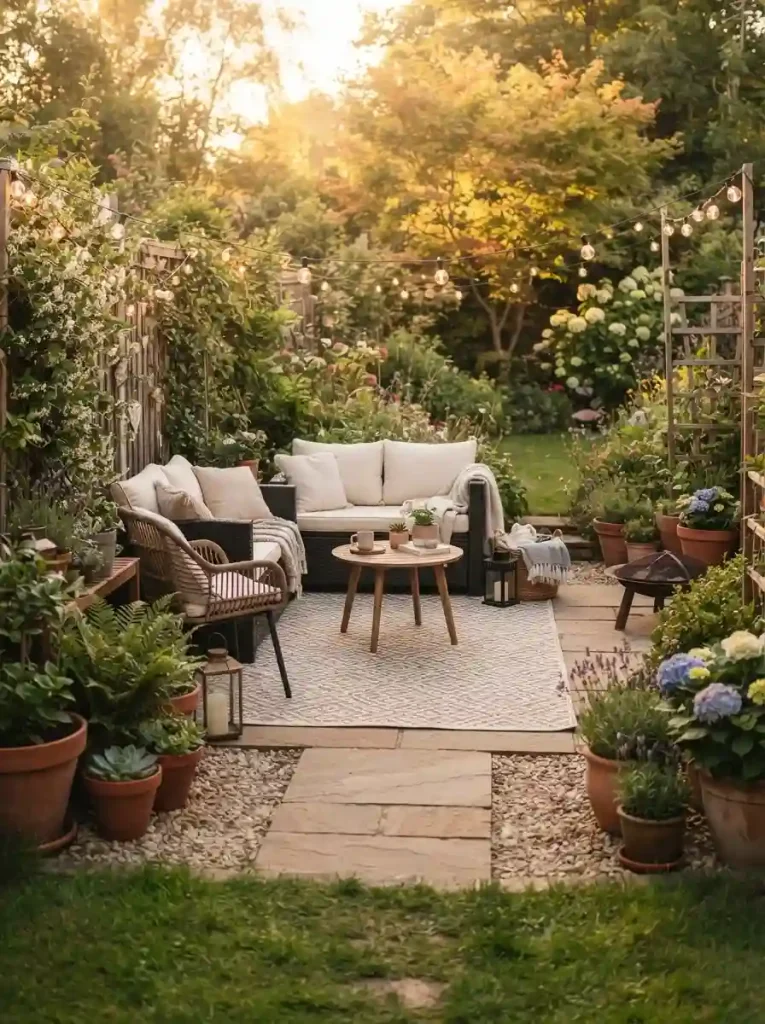
One of the cheapest patio improvements costs absolutely nothing: rearrange what you already own.
Move seating closer together to create a conversation area, reposition plants around the edges, and remove furniture that rarely gets used. Creating clear walking paths can make the entire patio feel larger and more organized.
Try several arrangements before deciding on the final layout. Sometimes moving a table only a few feet or turning chairs toward the garden can completely change how the space feels.
Expert Tip:
Start with the largest furniture pieces and build the layout around them. Leave comfortable space for people to walk, pull out chairs, and move between the patio and house.
How to Make a Patio Look Expensive on a Small Budget
You don’t need expensive furniture or a complete landscape renovation to create a polished patio. A few design principles can make inexpensive materials look much more intentional.
Start by choosing a simple color palette. Two or three coordinating colors are usually enough for furniture, cushions, pots, and accessories.
Next, focus on repetition. Matching planter colors, similar cushions, or repeated materials can make unrelated pieces feel connected.
Finally, avoid filling every empty space. Leaving some open floor area makes a small patio feel calmer, cleaner, and often more spacious.
Easy Ways to Save Money on a Patio Makeover
Before spending money, make a list of what your patio actually needs. You may discover that cleaning, rearranging, repainting, or repairing existing pieces solves much of the problem.
- Shop secondhand before buying new furniture.
- Repurpose suitable containers as planters.
- Refresh old furniture with exterior-grade finishes.
- Focus improvements on one patio zone at a time.
- Use plants to add color instead of expensive decorations.
- Buy materials during seasonal sales when possible.
- Choose simple designs that require fewer materials.
- Reuse existing furniture in a different arrangement.
A gradual makeover can also make the project easier to manage financially. Complete one useful improvement, enjoy the result, and then decide what the space actually needs next.
Final Thoughts
A beautiful backyard patio doesn’t have to come with a large price tag. With a little creativity, existing furniture, affordable materials, and a few thoughtful upgrades, you can create an outdoor space that feels comfortable and personal.
The most effective budget makeovers usually focus on how the patio will actually be used. Whether you want a quiet reading corner, a place for family meals, or a cozy area for evening conversations, start with that purpose and build around it.
Try one or two of these ideas first rather than changing everything at once. Small improvements can add up to a patio that feels completely different while keeping your spending under control.