

22 Savvy Tips: Can You Use Orchid Soil for Succulents?
Have you ever found yourself with a bag of orchid potting mix and wondered whether you could use it for your succulents instead of buying another product? The answer is yes, in some cases. However, the results depend on the ingredients, the succulent variety, and how quickly the mixture dries after watering.
Orchid soil often contains chunky bark, perlite, charcoal, or coconut husks that create air spaces around plant roots. These ingredients can be useful for succulents, but some orchid mixes also contain moisture-retaining moss that may keep the roots wet for too long.
In this guide, you’ll discover 22 practical tips for evaluating orchid soil, improving its texture, and creating a suitable growing medium for your plants. We’ll explore different ingredients, soil comparisons, practical adjustments, and common mistakes so you can make a more informed decision.
Can You Use Orchid Soil for Succulents?
Yes, orchid soil can work for succulents if its ingredients and moisture-retention properties suit the plant. You may be able to use a bark-heavy mix with only minor adjustments, while a blend containing substantial sphagnum moss might require more modification.
The main consideration is drainage. Many succulents prefer a growing medium that allows excess water to escape and provides sufficient airflow around their roots. Orchid mixes can offer good aeration, but their moisture retention varies considerably.
Before using orchid soil, examine its texture, remove unsuitable materials when necessary, and consider adding mineral ingredients such as pumice or perlite. A pot with drainage holes is also essential for most potted succulents.
1. Check the Ingredients Before Using Orchid Soil
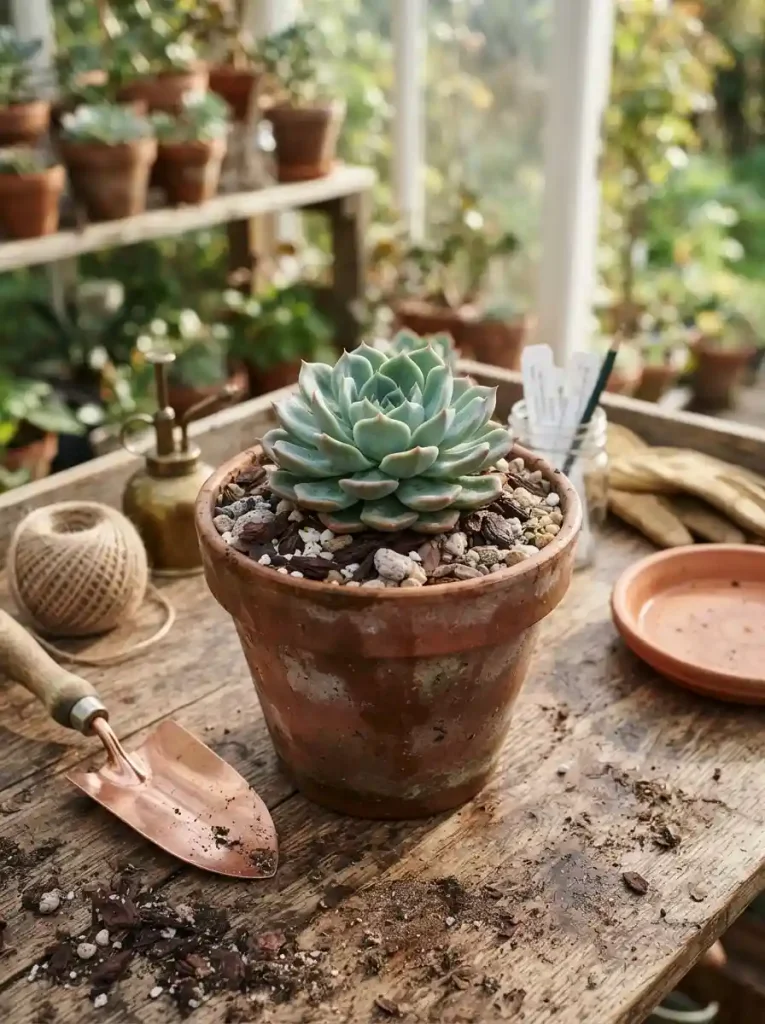
Not every orchid potting mix contains the same ingredients. Some are made primarily from chunky bark, while others include sphagnum moss, coconut coir, or materials designed to retain additional moisture.
Read the product label before using the mix for succulents. Bark and perlite can provide useful airflow, but excessive moss or fine organic material may make the mixture unsuitable for plants that need to dry relatively quickly.
The goal is not to remove every organic ingredient. Instead, create a balanced mix that suits your succulent’s roots and growing environment.
| Ingredient | What to consider |
| Pine bark | Creates air spaces but may be too chunky in large pieces |
| Perlite | Helps improve aeration |
| Pumice | Adds porous mineral material |
| Sphagnum moss | Retains moisture and may need reducing |
| Coconut coir | Holds water, depending on its quantity and particle size |
| Horticultural charcoal | Adds a coarse component but does not replace proper drainage |
2. Understand Why Succulents Need Well-Draining Soil

Succulents store water in their leaves, stems, or roots, allowing many varieties to survive dry periods. However, their ability to store water does not mean their roots can tolerate continuously saturated soil.
When a growing medium stays wet for too long, roots may become damaged, increasing the risk of root rot. This is particularly important for indoor succulents because containers, limited airflow, and low light can slow drying.
A suitable potting mix should allow excess water to drain while maintaining air spaces around the roots. Orchid soil may help provide that structure, especially when it contains coarse bark, but its performance depends on the complete mixture.
3. Compare Orchid Soil With Succulent Potting Mix

Orchid soil is generally designed to provide airflow around orchid roots, while succulent potting mixes are formulated to balance drainage, moisture retention, and root support for plants that often prefer drier conditions.
The two mixtures can share ingredients, but they are not automatically interchangeable. A coarse orchid mix might work well for certain succulents after adjustment, whereas a moss-heavy blend may retain too much water.
| Feature | Orchid soil | Succulent potting mix |
| Common ingredients | Bark, moss, perlite, charcoal | Potting medium, pumice, perlite, grit |
| Typical texture | Often chunky | Usually gritty or moderately coarse |
| Moisture retention | Depends on ingredients | Depends on the formula |
| Main purpose | Provide suitable conditions for orchids | Support succulent growth and drainage |
| Possible adjustment | Reduce excessive moisture retention | Adjust if the mix is too dense |
Which should you choose? If you already own orchid soil, inspect and test it before purchasing another product. A well-balanced succulent mix may be more convenient, but a suitable orchid mix can be a useful starting point.
4. Add Perlite to Improve Aeration
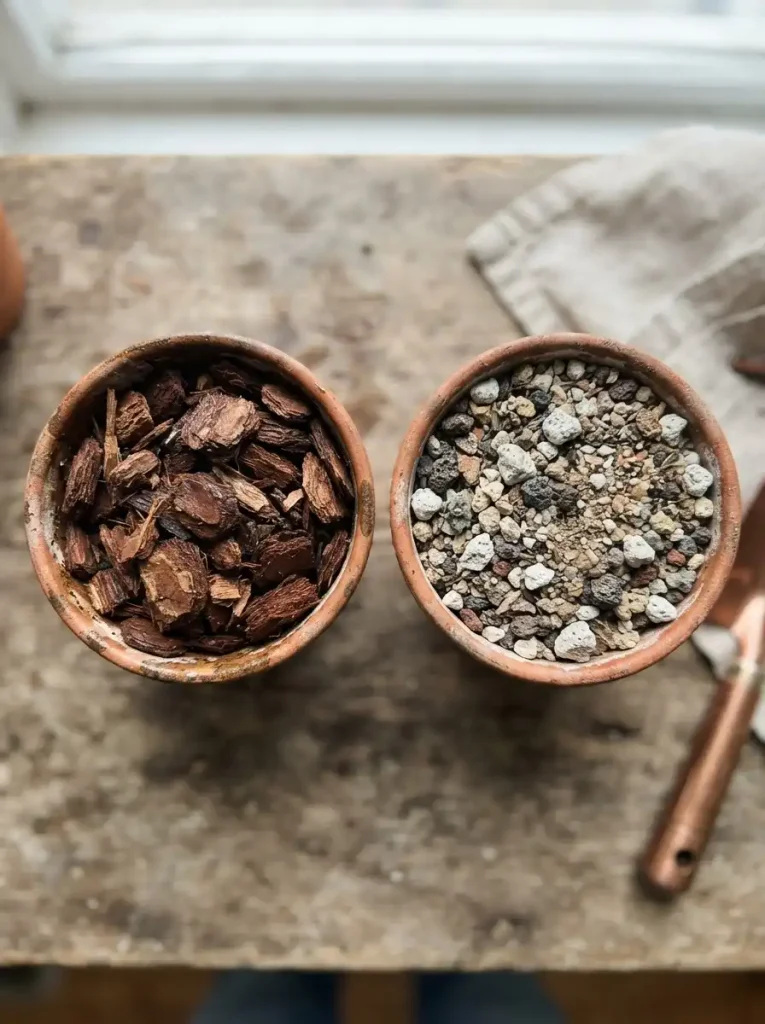
Perlite is a lightweight, porous material that can help improve aeration in a potting mixture. If your orchid soil contains too much moisture-retaining material, adding perlite may help create a looser structure.
For a first trial, you could combine equal volumes of orchid mix and perlite, then assess the texture and drying behavior. This is a starting point, not a universal recipe. A bark-heavy blend may require less modification than a mix containing substantial moss.
Distribute the ingredients evenly throughout the container rather than placing perlite in a separate layer. Avoid inhaling its fine dust while handling it.
5. Use Pumice for a Grittier Mixture

Pumice is a porous volcanic material that adds mineral structure to potting mixes. It can help create a well-aerated growing medium without relying entirely on organic ingredients.
If your orchid soil contains a large amount of bark or moss, consider adding pumice to improve the balance. Choose particles that are appropriate for the size of your pot and plant. Very fine particles may fill the gaps between larger pieces, so a consistent, suitably coarse texture is preferable.
Pumice does not eliminate the need for careful watering. A pot can still remain wet for too long if it is oversized, receives little light, or sits in a cool environment.
6. Remove Excess Sphagnum Moss
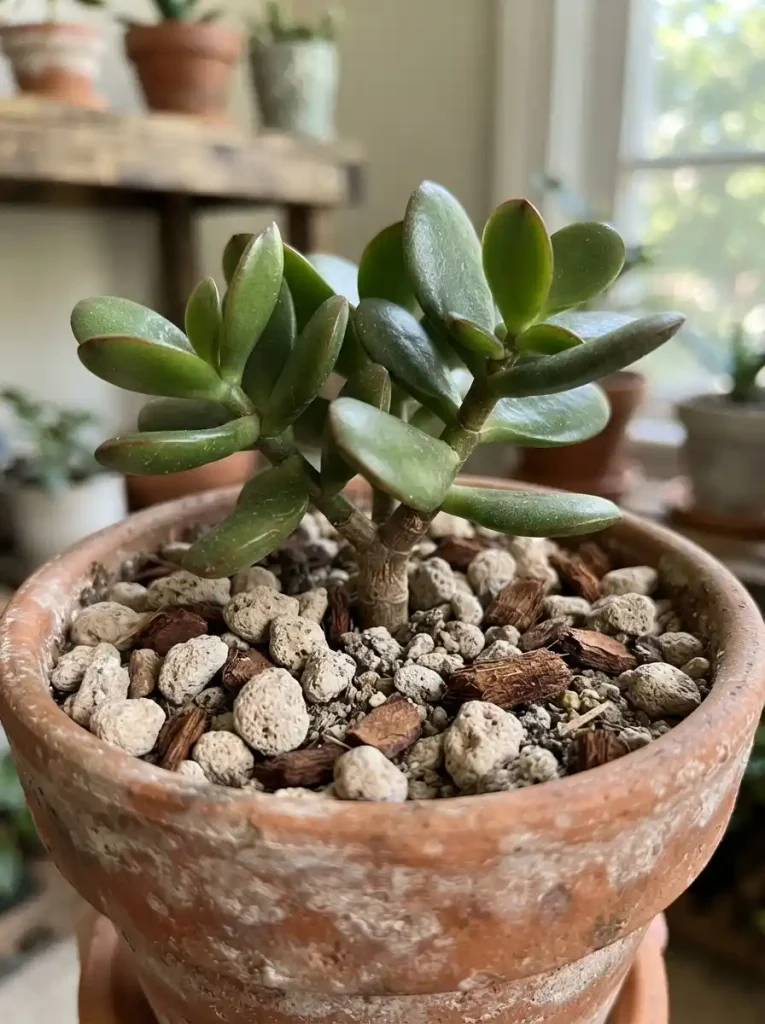
Sphagnum moss is useful in many orchid mixes because it holds moisture. However, a blend containing too much moss may dry more slowly than certain succulents prefer.
Inspect the mixture before planting. If thick clumps of moss dominate the blend, remove some and replace the lost volume with appropriate mineral ingredients, such as pumice or perlite.
Do not assume that every succulent needs a completely dry growing medium at all times. Different varieties have different moisture requirements, and even drought-tolerant plants need water to grow. The goal is to prevent prolonged saturation, not to deprive the roots of moisture.
7. Choose a Pot With Drainage Holes

Even a suitable soil mixture can cause problems when excess water has nowhere to escape. A pot with an unobstructed drainage hole allows water to leave the growing medium rather than accumulating around the roots.
Terracotta is a popular choice because its porous walls can help the medium dry more quickly. Plastic and glazed ceramic pots can also work, but they may retain moisture differently, so adjust your watering routine accordingly.
Before and After: Choosing the Right Pot
Before: No drainage. Water may collect at the bottom, leaving roots exposed to prolonged moisture.
After: Proper drainage. Excess water can escape, making moisture management easier.
If you prefer a decorative cover pot, keep the succulent in a separate draining container and empty any collected water after watering.
8. Adjust the Bark Pieces to Suit Your Plant

Large bark pieces can leave considerable gaps around the roots of a small succulent. Although these gaps allow airflow, they may make it difficult to position the plant securely in its pot.
Sort the bark before planting and remove pieces that are disproportionately large. Combine appropriately sized bark with mineral ingredients to create a more even texture while preserving enough air space.
For young plants with delicate roots, a consistently sized mixture may be easier to work with than one containing a few very large chunks. Larger succulents may tolerate a coarser mix, provided their roots receive adequate support.
9. Test the Mixture Before Repotting Every Succulent
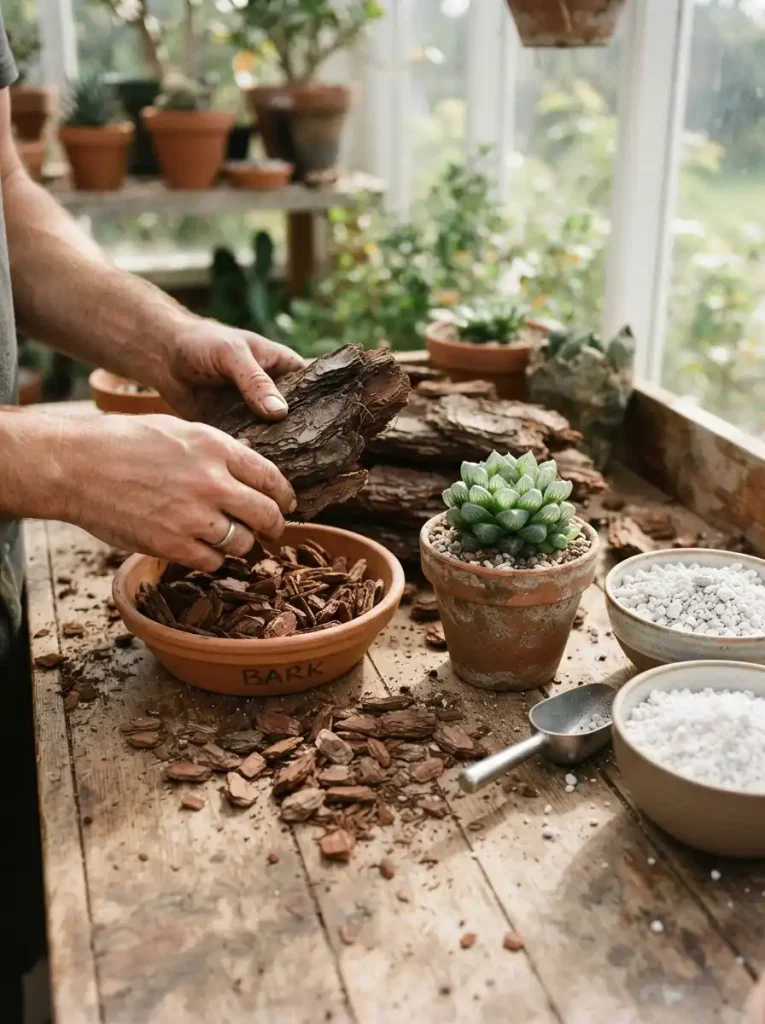
Before changing the soil for your entire collection, test the modified mixture with one suitable plant. This lets you observe how it behaves in your home without unnecessarily disturbing every succulent.
After watering, check that excess water drains freely. Over the following days, assess the moisture deeper in the pot instead of relying only on the surface. The drying time will vary with pot size, light, temperature, humidity, and airflow.
If the mix stays wet for an extended period, consider reducing moisture-retaining ingredients or increasing the proportion of suitable mineral material. If it dries unusually quickly, reassess the blend and your plant’s watering needs before making further changes.
10. Match the Soil to Your Succulent Variety

Not every succulent has identical growing requirements. Echeverias, haworthias, jade plants, and trailing varieties differ in their root structures, natural habitats, and moisture preferences. Therefore, the same orchid soil formula may not be ideal for every plant.
Many desert-type succulents benefit from a gritty mixture that drains freely. Tropical and woodland succulents, such as Christmas cactus, generally prefer a different balance of moisture and aeration than many desert species.
| Succulent type | What to consider |
| Echeveria | Use a free-draining mix and avoid prolonged wetness |
| Haworthia | Provide drainage and avoid keeping roots saturated |
| Jade plant | Use a well-draining medium that supports its roots |
| Burro’s tail | Choose a mix that drains well while supporting trailing stems |
| Christmas cactus | Allow more balanced moisture retention than many desert succulents |
Use these differences as a starting point and research the needs of your particular species before adjusting the soil.
11. Find the Right Ratio of Orchid Soil to Mineral Materials
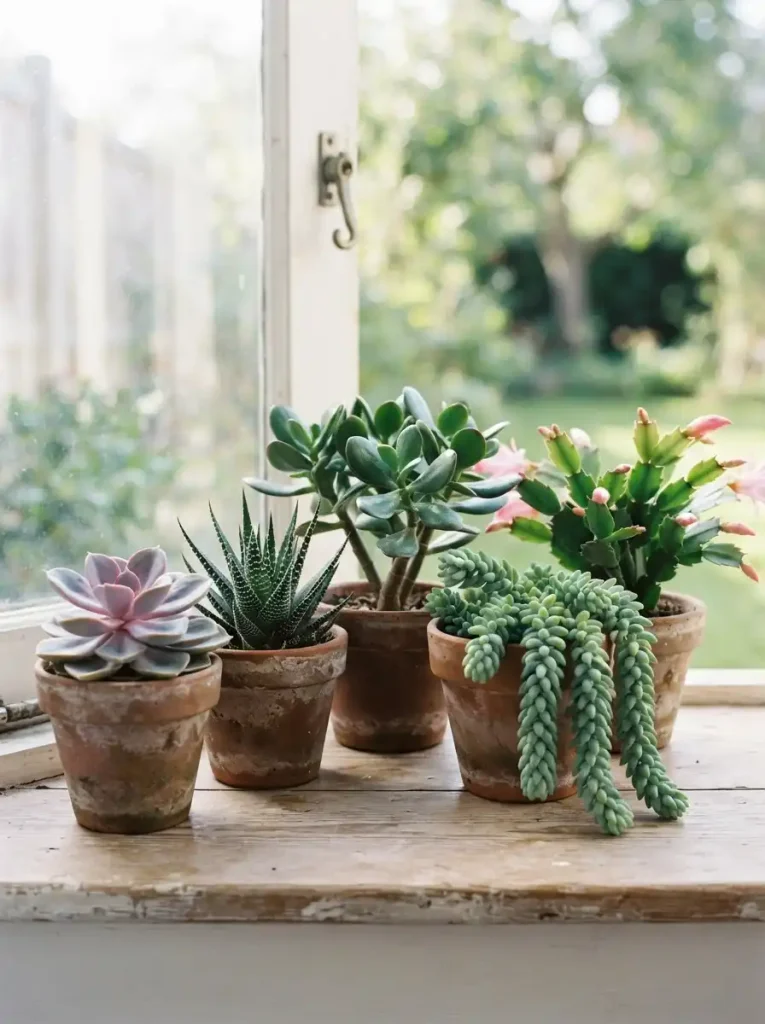
There is no single soil ratio that works for every succulent, but adjusting the proportions of orchid bark and mineral materials can help you create a more suitable growing medium. The right balance depends on the original mix, the plant species, and how quickly your pots dry.
For a starting point, try one of these experimental blends and observe how it performs before using it throughout your collection.
| Trial mixture | Orchid mix | Pumice or perlite | Best use |
| Blend A | 2 parts | 1 part | Testing a coarse, bark-heavy mix |
| Blend B | 1 part | 1 part | A balanced starting experiment |
| Blend C | 1 part | 2 parts | Testing a more mineral-heavy blend |
These are starting points, not universal recipes. If your orchid soil already contains a lot of perlite, it may need less additional mineral material. If it contains substantial moss, you may need to remove some moss before blending.
12. Water According to Soil Moisture, Not a Fixed Schedule

One of the most common succulent care mistakes is watering on a rigid schedule without checking the growing medium. Orchid soil can dry at different rates depending on its ingredients, the pot, and the surrounding environment.
Instead of automatically watering every few days, assess the moisture deeper in the pot. For many desert succulents, allow the mix to dry substantially between thorough waterings, while following the needs of your particular species. When watering, wet the root zone thoroughly and allow excess water to drain away.
A Simple Watering Routine
Check the growing medium below the surface.
Consider the plant’s species, season, light, and temperature.
Water when the mix has reached the appropriate dryness for that plant.
Let excess water drain completely.
Recheck the soil before watering again.
This approach is more reliable than following the same calendar for every succulent.
13. Repot Your Succulent Without Damaging Its Roots

Repotting gives you an opportunity to replace unsuitable soil, inspect the roots, and introduce a better-balanced mixture. However, handling the plant too roughly can damage its root system and delay recovery.
Step 1: Remove the plant gently. Loosen the old container and support the plant at its base without pulling forcefully on the stems or leaves.
Step 2: Inspect the roots. Remove loose old soil carefully. Look for damaged or mushy roots and use clean tools if any pruning is necessary.
Step 3: Add the new mixture. Position the plant at its previous depth and fill around the roots without packing the medium tightly.
Step 4: Allow recovery. Follow the appropriate watering guidance for the species and the condition of its roots, particularly if repotting involved root pruning.
14. Avoid Using Orchid Soil That Contains Fertilizer You Do Not Need

Some commercial orchid mixes contain added fertilizer, while others contain only potting ingredients. Check the label before planting your succulents, especially if you already use a separate fertilizer.
Excessive fertilization can encourage weak growth or contribute to salt accumulation in containers. Succulents generally benefit from appropriate, measured feeding during active growth rather than repeated applications of several products at once.
| What the label says | What to do |
| No added fertilizer | Follow your normal succulent feeding plan if needed |
| Slow-release fertilizer included | Check its nutrient analysis and release instructions before adding more |
| Fertilizer amount unclear | Contact the manufacturer or choose a clearly labeled mix |
| Unwanted fertilizer already present | Consider a suitable alternative rather than guessing the concentration |
You do not need to add fertilizer simply because you are using orchid soil. Start by understanding what is already in the bag.
15. Check Soil pH When Your Plant Shows Persistent Problems

Soil pH affects how readily plants can access certain nutrients. Orchid mixes can vary in pH depending on their ingredients, and some may be more suitable for a particular plant than others.
Most commonly grown succulents do not require constant pH testing when they are healthy and growing in a suitable commercial potting mix. However, testing may be useful if you notice persistent growth problems that cannot be explained by watering, light, pests, or root damage.
Do not automatically add lime or other pH-adjusting products without knowing the starting pH and the needs of your plant. Unnecessary amendments can create additional problems rather than solving the original issue.
16. Do Not Use Orchid Soil as a Substitute for Proper Drainage

Even a coarse orchid mix cannot compensate for a pot that traps water. Drainage depends on the combination of the growing medium, the container, and the conditions in which the plant grows.
For example, a pot filled with chunky bark may still remain wet if it sits inside a decorative container full of collected water. Similarly, an oversized pot can hold more moisture than a small root system can use.
Keep the drainage hole unobstructed, empty standing water from the outer container, and choose a pot appropriate for the root ball. These small changes can make your soil mixture work more effectively.
Common mistake: Adding stones to the bottom of a pot without a drainage hole does not create proper drainage. Water can still accumulate above the stone layer.
17. Watch for Signs That Your Soil Mix Is Too Wet

Succulents can show several warning signs when their roots stay wet for too long. However, similar symptoms may also result from other growing problems, so examine the soil and roots before deciding what is wrong.
| Warning sign | Possible explanation | What to check |
| Soft, translucent leaves | Excess moisture or tissue damage | Soil moisture and watering history |
| Yellowing lower leaves | Overwatering, natural aging, or other stress | Whether several leaves are affected |
| Mushy or dark roots | Possible root rot | Root condition and soil wetness |
| Soil stays wet for many days | Poor drying conditions or moisture-retentive mix | Pot size, light, airflow, and ingredients |
| Unpleasant smell from the soil | Possible decomposition or root problems | Roots and the condition of organic materials |
If you suspect root rot, remove the plant carefully and inspect its roots. Trim clearly damaged tissue with clean tools, allow any pruning wounds to dry as appropriate, and repot into a suitable fresh mix. Severe damage may require further care, and recovery is not guaranteed.
18. Help Orchid Soil Dry More Effectively Indoors
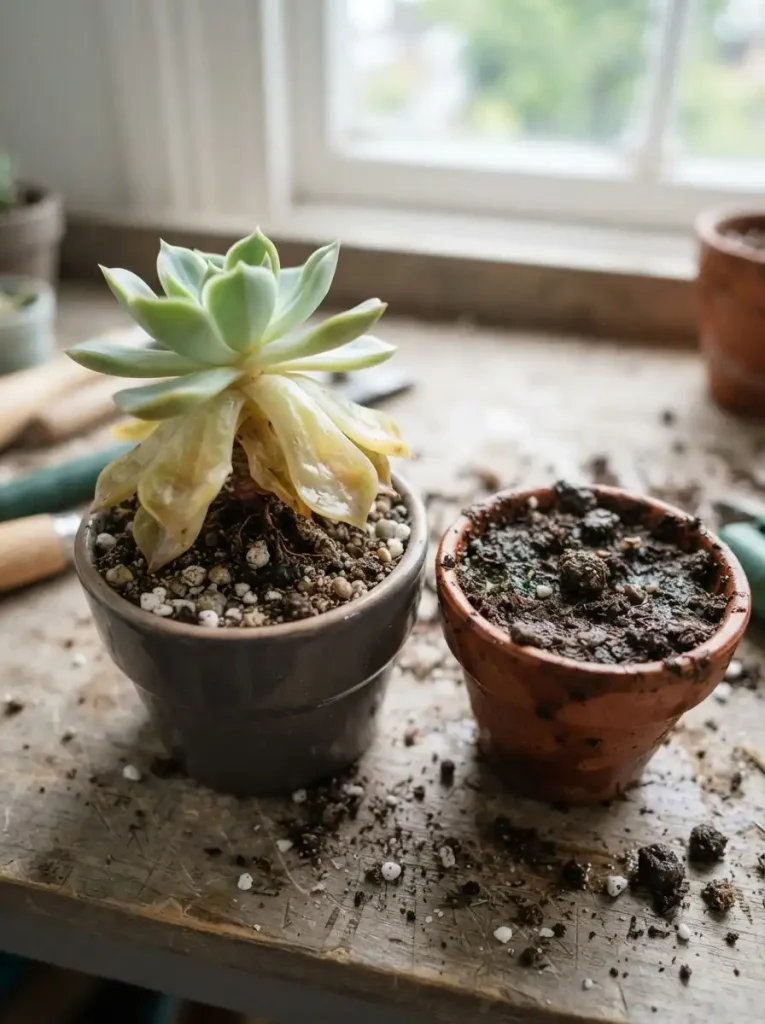
Indoor growing conditions can change how well orchid soil works for succulents. A mix that dries quickly outdoors in warm weather may remain moist much longer in a cool room with limited light and airflow.
Instead of changing the soil immediately, review the plant’s environment.
- Light: Give the succulent appropriate bright light for its species, introducing stronger sunlight gradually.
- Airflow: Avoid overcrowding plants so air can circulate around their containers.
- Pot size: Choose a container that comfortably accommodates the roots without excessive unused soil.
- Season: Expect drying times to change as temperatures and daylight hours shift.
- Watering: Check the mixture before adding more water.
Do not use intense heat or direct scorching sunlight simply to force the soil to dry. Improve the growing conditions gradually while protecting the plant from stress.
19. Refresh Orchid Soil When the Bark Breaks Down
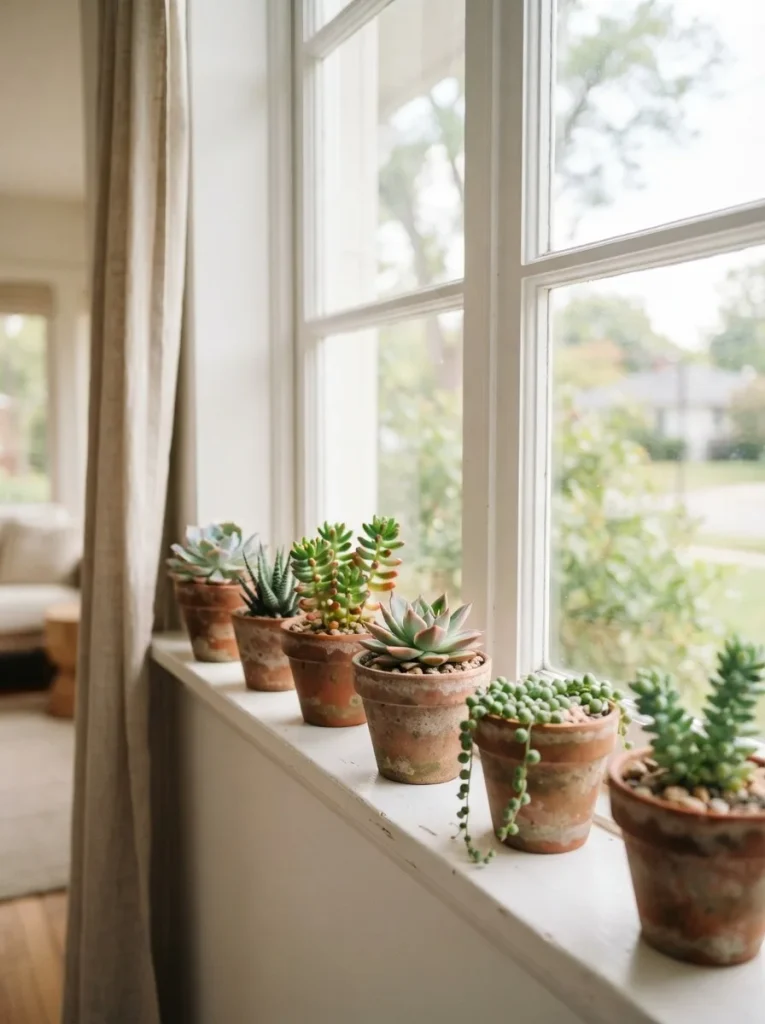
Orchid bark is an organic material that gradually breaks down. As it decomposes, small particles can accumulate between larger pieces, changing the texture and reducing airflow through the growing medium.
Check your potting mix periodically, especially when a succulent starts drying more slowly than it used to. If the soil has become dense, smells unusual, or contains substantial decomposed material, repotting may be more appropriate than simply adding another ingredient on top.
There is no universal replacement schedule because bark quality, watering practices, and environmental conditions vary. Let the condition of the mix and the plant guide your decision.
Before and After: Refreshing an Aging Mixture
Before: Aging soil. Fine, decomposed bark may make the mixture denser and slower to dry.
After: Refreshed mix. Fresh, appropriately sized ingredients can restore a more open texture.
20. Decide When Orchid Soil Is Not the Right Choice
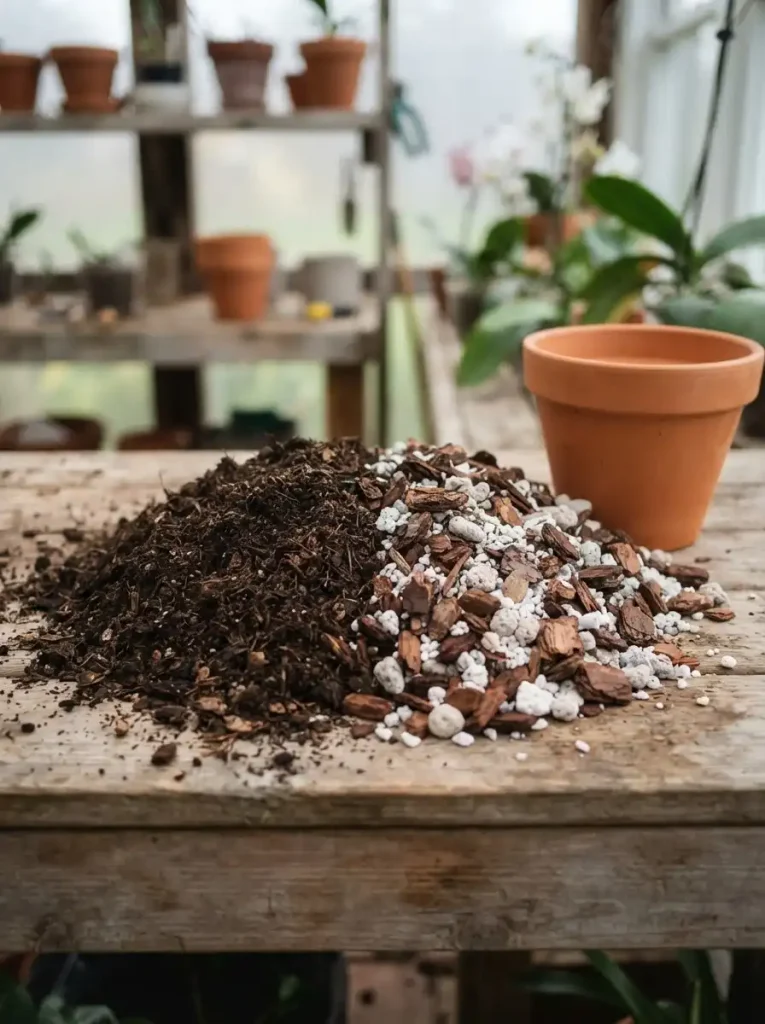
Although orchid soil can be useful for some succulents, there are situations where choosing a different mixture is simpler and more reliable.
Consider using a purpose-made succulent mix or preparing a new blend if your orchid soil is dominated by moisture-retaining moss, contains very fine compacted material, or remains wet for too long under your normal growing conditions.
| Situation | Practical decision |
| Mostly chunky bark with good aeration | Test it and adjust if necessary |
| Excessive sphagnum moss | Remove some or choose another mix |
| Dense, fine, moisture-retentive texture | Replace or substantially reformulate it |
| Succulent with specialized growing requirements | Research the species before selecting ingredients |
| Unknown additives or unsuitable fertilizer | Check the label or select a known alternative |
You do not have to use orchid soil just because you already own it. The priority is providing a growing medium that supports healthy roots and suits the plant’s environment.
21. Create a Simple Orchid Soil Blend for Your Succulents

If your orchid soil has suitable ingredients, you can use it as the foundation of a customized succulent growing medium. The aim is to balance organic material with mineral components while preserving enough air space around the roots.
What You Will Need
- Orchid potting mix with suitable ingredients
- Pumice or horticultural perlite
- A clean mixing container
- A pot with drainage holes
- A succulent suited to the growing conditions
22. Create a Simple Orchid Soil Blend for Your Succulents
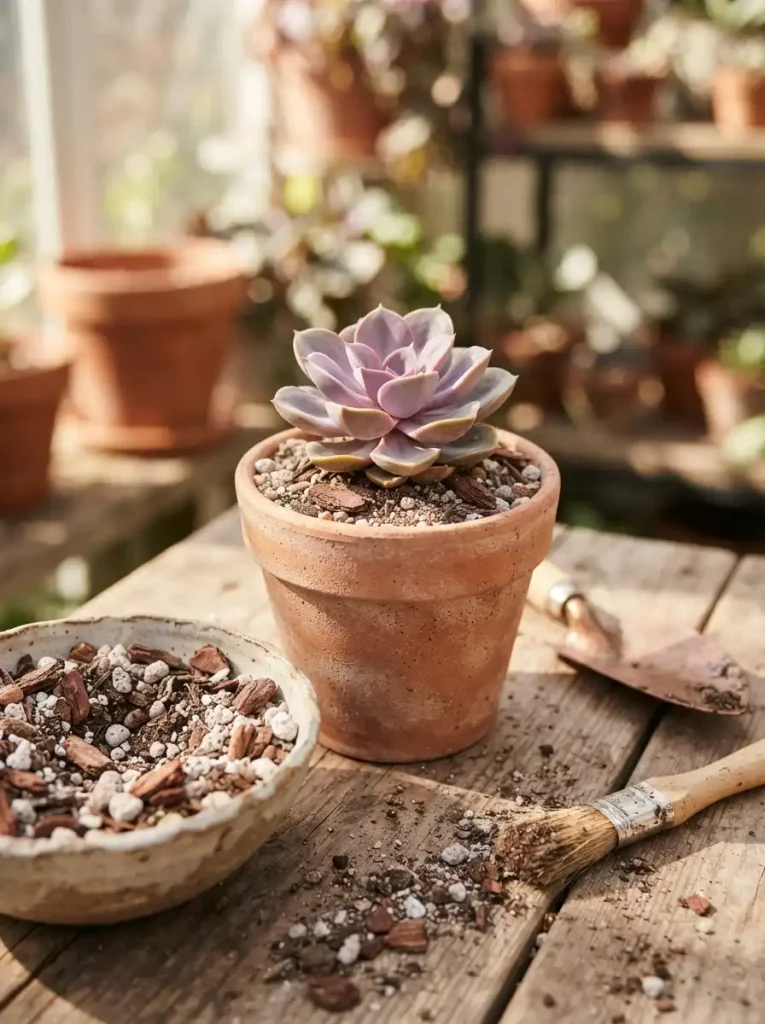
Combine chunky orchid bark with pumice or perlite to create a loose, well-draining mixture for your succulents.
Remove excess moss, break down oversized bark pieces, and mix everything evenly. Plant your succulent in a terracotta pot with drainage holes, then monitor soil moisture and adjust watering according to its needs.
How to Prepare the Mixture
Inspect the orchid soil. Remove excessive moss and oversized bark pieces when necessary.
Choose your mineral ingredient. Add pumice or perlite to improve the mixture’s structure.
Mix thoroughly. Distribute the ingredients evenly rather than creating separate layers.
Check the texture. The blend should remain loose and allow excess water to escape.
Plant carefully. Position the succulent in a suitable draining pot and support the roots without compacting the mixture.
Monitor the result. Observe the plant and check the moisture between waterings, adjusting your approach if the mix remains wet for too long.
The final ratio should reflect your original ingredients, plant variety, and growing environment. A mix that works in a warm, bright room may behave differently in a cool, humid space.
Frequently Asked Questions
Can I use 100% orchid bark for succulents?
Sometimes, but it is not ideal for every succulent. Large bark pieces may provide airflow but insufficient support for small roots and can leave substantial gaps. A balanced mixture containing suitable mineral material and appropriately sized particles is often easier to manage.
Is orchid soil better than regular potting soil for succulents?
Neither is automatically better. Regular potting soil may retain too much moisture when used alone, while some orchid mixes contain excessive moss or coarse bark. Choose the mixture that provides suitable drainage, moisture retention, and root support for your particular succulent.
Can I mix orchid soil with cactus soil?
Yes. Combining orchid soil with a suitable cactus or succulent mix can work if the resulting texture is appropriate. Inspect the ingredients in both products because some cactus mixes contain substantial organic material and may need additional mineral components.
Does orchid soil cause root rot in succulents?
Orchid soil does not automatically cause root rot. Problems can develop when the growing medium stays wet for too long, particularly when combined with poor drainage, unsuitable watering, or inadequate light. The ingredients and growing conditions determine whether the mix is appropriate.
Should I add sand to orchid soil for succulents?
Coarse horticultural sand can be useful in some mixtures, but fine sand may fill air spaces and make the medium denser. Pumice or perlite is often easier to use for improving aeration. Avoid assuming that every type of sand improves drainage.
How often should I water succulents planted in orchid soil?
There is no universal schedule. Check the moisture in the root zone and consider the plant species, season, light, temperature, and pot material. Many desert succulents need the mixture to dry substantially between thorough waterings.
Final Thoughts
So, can you use orchid soil for succulents? Yes, provided the mixture suits your plant and you make adjustments when necessary.
Chunky bark can help maintain airflow, while pumice or perlite can improve the balance of the growing medium. However, excessive moss, decomposed bark, unsuitable pots, and frequent watering can still create problems.
Start by checking the ingredients, testing a small batch, and observing how your succulent responds. With the right combination of soil, drainage, light, and watering, you can make an informed choice without automatically discarding the orchid mix you already have.