
24 Trees for Front Yard That Add Instant Curb Appeal
A thoughtfully chosen front-yard tree can change the entire appearance of a home. It can soften a straight roofline, frame the entrance, add shade to an open lawn, and bring color to the landscape as the seasons change. Whether your style is modern, traditional, cottage-inspired, or natural, the right tree can make the front of your property feel more welcoming and complete.
The best choice is not always the biggest or most colorful tree. Consider the mature height and width, sunlight, soil drainage, local climate, and how close the tree will be to the house, driveway, sidewalks, and utility lines. The ideas below include flowering trees, colorful ornamental varieties, and evergreens, so you can find an option that suits both your yard and the look you want to create.
1. Japanese Maple for a Colorful Front Yard

Japanese maple brings a refined, sculptural quality to a front yard. Its delicate leaves and branching shape create visual interest even when the tree is not in bloom, while foliage colors can range from fresh green to deep burgundy, copper, and fiery orange. A specimen planted beside the front walkway or near a porch can become a natural focal point without overwhelming the house.
This tree is especially effective in a layered garden with low-growing ground cover, ornamental grasses, or simple stone edging around the base. Many varieties prefer well-drained soil and protection from intense afternoon sun, particularly in hot climates. Choose a cultivar based on its mature size and leaf color, and give the roots room rather than crowding the trunk with paving.
Expert tip:
Use a restrained planting scheme around the tree so its foliage and graceful form remain the main attraction.
2. Flowering Dogwood for Springtime Beauty

Flowering dogwood creates a gentle, welcoming look with its horizontal branching and spring blooms that appear like pale pink or white accents against the landscape. Its layered shape feels at home beside traditional houses, cottages, and woodland-style gardens. After the flowers fade, the tree continues to contribute through its foliage, seasonal berries, and often attractive autumn color.
Dogwood works beautifully near a front lawn edge or beside a garden path where its branching structure can be appreciated. It generally performs best in well-drained soil with partial shade or mild morning sunlight, depending on the local climate. Keep the root area evenly moist while the tree establishes, and select a variety suited to your region to improve long-term health.
Expert tip:
Avoid hot, dry locations where the tree may become stressed, and keep lawn equipment away from the trunk.
3. Magnolia for a Grand and Welcoming Entrance
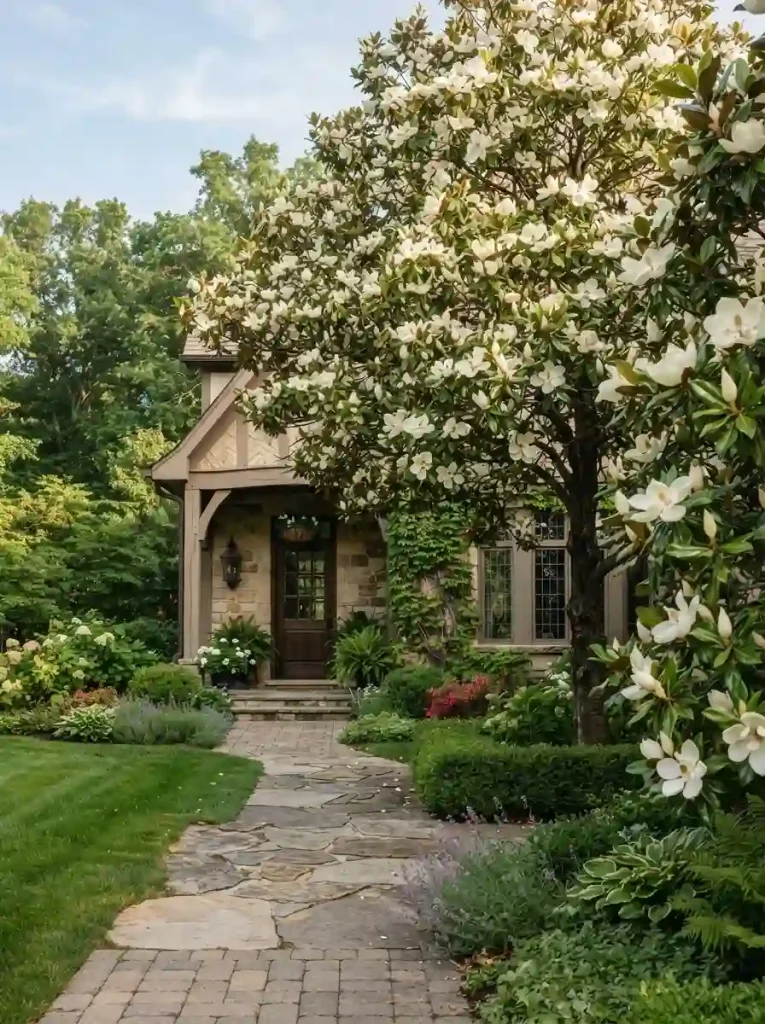
A magnolia can give the front of a home a timeless, graceful presence. Its large flowers make a dramatic seasonal display, while glossy leaves provide a lush backdrop for the rest of the garden. Depending on the variety, magnolias may be evergreen or deciduous, and some bloom on bare branches before their leaves emerge, creating a striking spring feature.
Plant a magnolia where its mature canopy has room to spread and where the flowers can be seen from the street or front windows. It can be paired with low shrubs or a simple bed of mulch, but avoid filling the area with too many competing plants. Because magnolias vary greatly in size, check the mature dimensions carefully before choosing a location near a house or walkway.
Expert tip:
A single well-placed magnolia often makes a stronger statement than several trees planted too close together.
4. Eastern Redbud for a Pink Spring Display
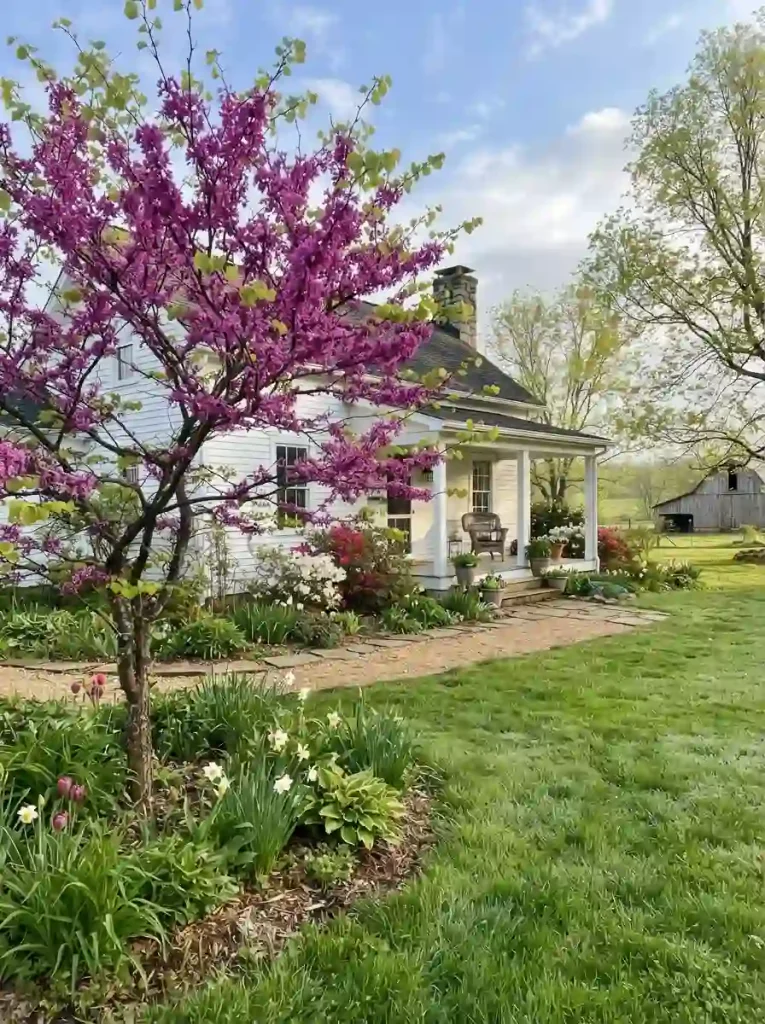
Eastern redbud is known for its vibrant pink-purple flowers that appear along its branches in early spring, sometimes before the heart-shaped leaves emerge. This unusual flowering pattern gives the tree a lively, almost cloud-like appearance and helps bring color to the yard at a time when many plants are still waking up. Its naturally rounded canopy suits informal and contemporary landscapes alike.
Redbud is a practical choice for many small and medium front yards because it usually remains more compact than large shade trees. It can be planted as a stand-alone feature or included in a mixed border with evergreen shrubs and spring bulbs. Choose a sunny or lightly shaded site with good drainage, and water regularly during the first growing seasons so the roots can establish.
Expert tip:
Leave a little open space around the canopy so the spring flowers can be seen clearly from the street.
5. Crape Myrtle for Long-Lasting Summer Color

Crape myrtle brings extended summer color to sunny front yards, with flower clusters that may appear in pink, white, red, lavender, or purple. Many varieties also develop attractive bark and warm autumn foliage, allowing the tree to contribute interest beyond its flowering period. Its airy canopy works well near a driveway, along a front lawn, or in a landscape with warm-weather planting.
This tree is best suited to regions where summers are warm enough for reliable flowering. Give it full sun and soil that drains well, and choose a cultivar whose mature height fits the space. Crape myrtle can be trained as a multi-stem small tree or grown with a single trunk, depending on the desired look. Selective pruning helps preserve its natural shape and encourages a balanced canopy.
Expert tip:
Avoid cutting the top branches back severely each year; choose the right-sized variety instead.
6. Serviceberry for Four-Season Interest

Serviceberry is a versatile small tree that provides several layers of seasonal interest. White spring flowers appear before or around the time its leaves develop, followed by small berries that may attract birds and colorful foliage in autumn. Its graceful branching and moderate size make it a good fit for front yards where you want a natural look without a bulky canopy.
Use serviceberry near a lawn, along a path, or as part of a wildlife-friendly garden with native perennials and shrubs. It usually grows well in sun or partial shade and prefers soil that drains properly but does not become excessively dry. A light layer of mulch helps conserve moisture and gives the planting area a finished appearance. Prune only as needed to remove damaged or crossing branches.
Expert tip:
If you want a tree-like silhouette, select a single-stem specimen; multi-stem forms create a softer, more natural effect.
7. Dwarf Alberta Spruce for a Neat, Formal Look

Dwarf Alberta spruce has a dense, naturally conical form that brings order and structure to a front entrance. Its compact evergreen foliage stays present through winter, making it useful when the rest of the garden becomes bare. Planted in matching pairs beside steps or a doorway, it can create a balanced, formal appearance without needing elaborate landscaping.
This spruce is often used in small garden beds, but it still needs suitable drainage and enough room for its eventual width. In warmer regions, afternoon shade can help reduce heat stress, while regular checks can catch browning or pest issues early. Combine it with simple ground cover or low flowers rather than tightly packing the area around its base.
Expert tip:
Check the mature dimensions on the plant label; a dwarf tree still needs room to maintain its natural shape.
8. Eastern Red Cedar for Year-Round Greenery
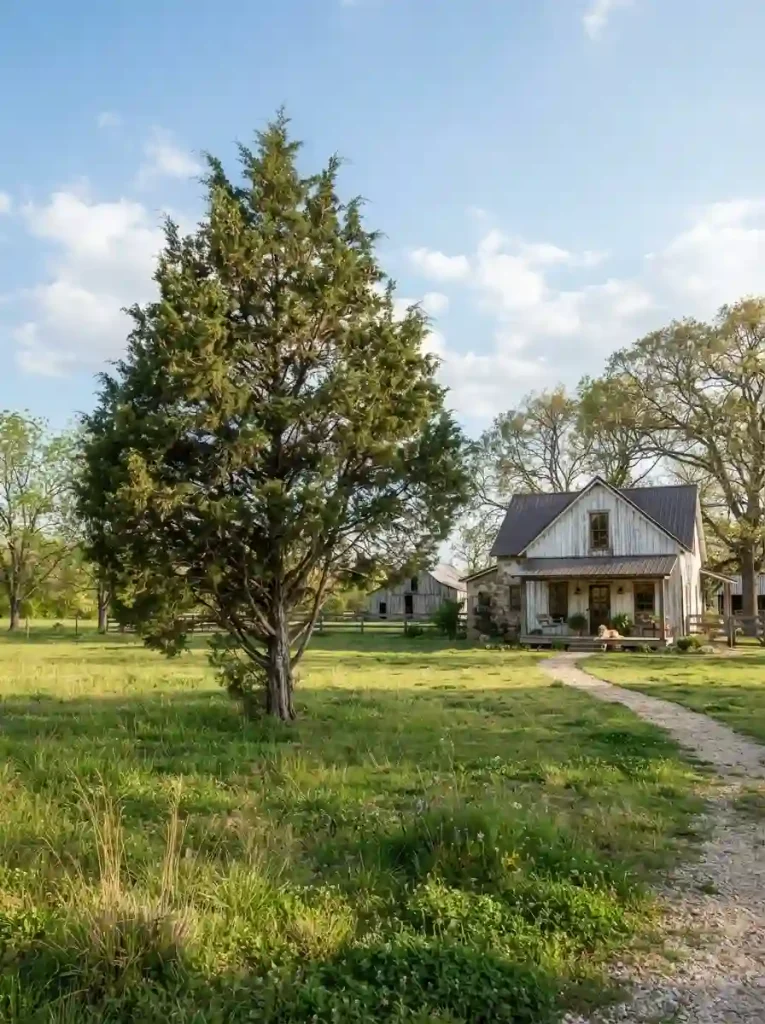
Eastern red cedar offers dependable evergreen color and a strong upright shape that can anchor a larger front yard. Its dense foliage gives the landscape structure during winter and can provide shelter for birds. The tree’s natural, slightly rugged character fits rural homes, traditional properties, and landscapes designed to feel more connected to the surrounding environment.
Because eastern red cedar can become broad and substantial, it is best placed where the canopy has room to develop. It prefers full sun and well-drained soil and can tolerate dry conditions once established. Use it as a specimen tree or as part of a loose screen, but avoid forcing it into a narrow foundation bed or a spot where water collects around its roots.
Expert tip:
Confirm that the tree’s mature size fits the property before planting, especially near driveways and overhead lines.
9. Crabapple for Flowers and Colorful Fruit
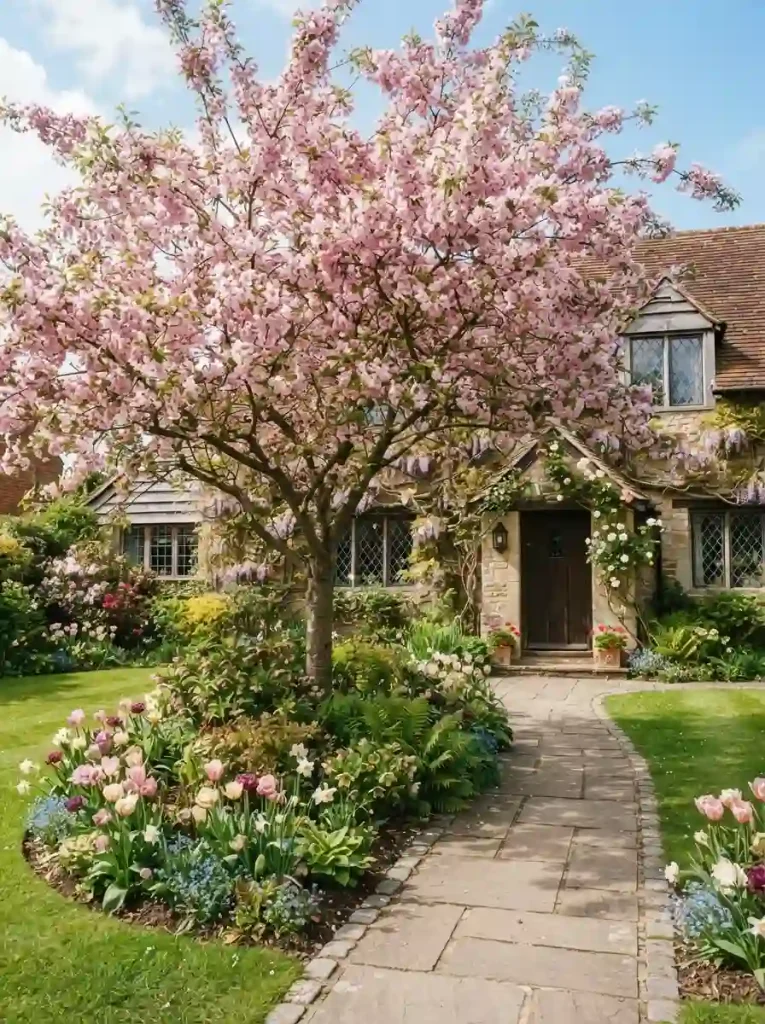
Ornamental crabapple trees deliver a showy burst of spring blossoms in white, blush pink, or deeper rose tones. Many varieties also carry small decorative fruits into autumn, adding color after the flowers have disappeared and attracting birds to the yard. Their manageable scale makes them useful as a feature tree near a lawn, walkway, or open front garden.
Crabapples look especially attractive when the surrounding planting is kept simple, allowing the blossoms and fruit to stand out. Choose a disease-resistant cultivar suited to your region, since some varieties can develop leaf and fruit problems in humid conditions. A sunny location with good air circulation helps the tree thrive, and occasional selective pruning can maintain a balanced canopy.
Expert tip:
Ask a local nursery about disease-resistant varieties and whether the fruit tends to persist or drop quickly.
10. American Holly for Evergreen Structure
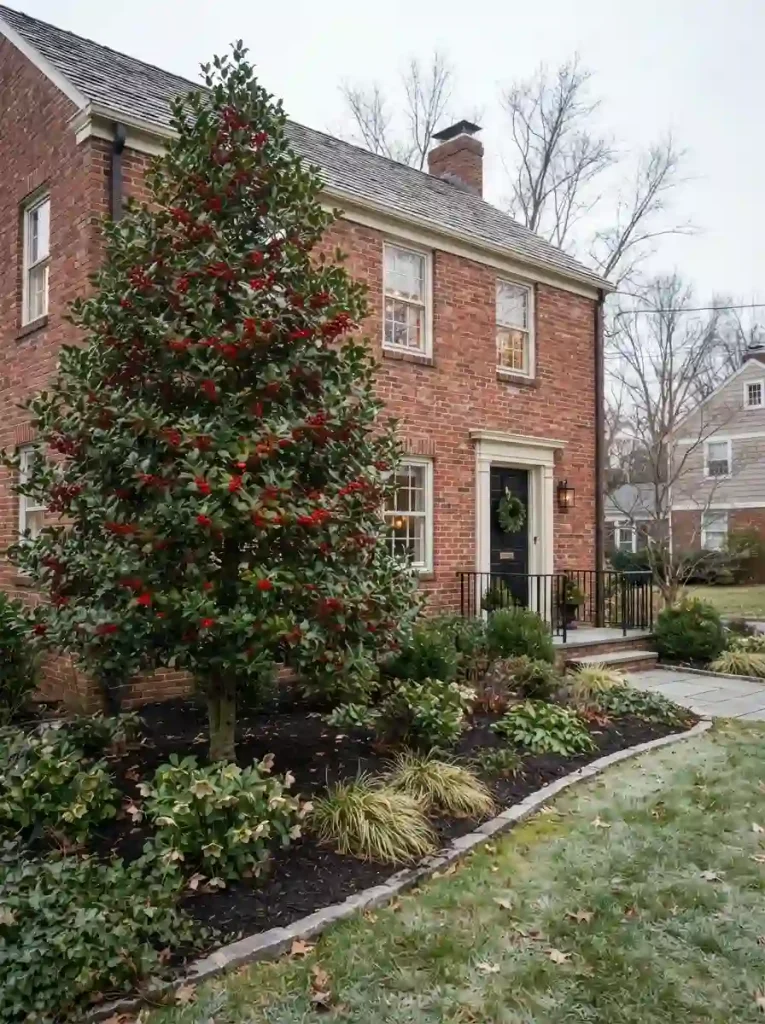
American holly offers year-round structure through its glossy evergreen leaves and naturally upright form. Female plants can produce bright red berries when pollination conditions are suitable, adding a classic seasonal accent to the front yard. The tree works well in traditional landscapes and can bring depth to a planting scheme even when flowering perennials have died back for winter.
Holly can be planted as a specimen or used to anchor a larger mixed border with shade-tolerant shrubs and ground covers. It generally prefers well-drained, slightly acidic soil and can grow in sun or partial shade. Check the selected variety’s mature size and berry characteristics before planting. If berries are a priority, ask whether a compatible male pollinator is needed nearby.
Expert tip:
Leave enough clearance for the mature branches and avoid planting where the roots will sit in consistently soggy soil.
11. Paperbark Maple for Unique Bark and Fall Color

Paperbark maple is a distinctive choice for homeowners who want their front-yard tree to remain interesting even after the leaves fall. Its cinnamon-colored bark peels in delicate curls, creating texture through winter, while the foliage often turns warm orange and red in autumn. The tree has a refined, rounded shape that suits uncluttered landscapes and homes with neutral exterior colors.
Place it where the trunk can be seen from the street, front windows, or a path. A simple ground-cover planting or a clean mulch ring helps draw attention to the bark without making the garden look busy. Paperbark maple prefers well-drained soil and regular moisture while young, and it benefits from being given space to form a natural canopy.
Expert tip:
Do not hide the lower trunk behind tall shrubs; the peeling bark is one of this tree’s best features.
12. Eastern White Pine for a Tall Evergreen Feature
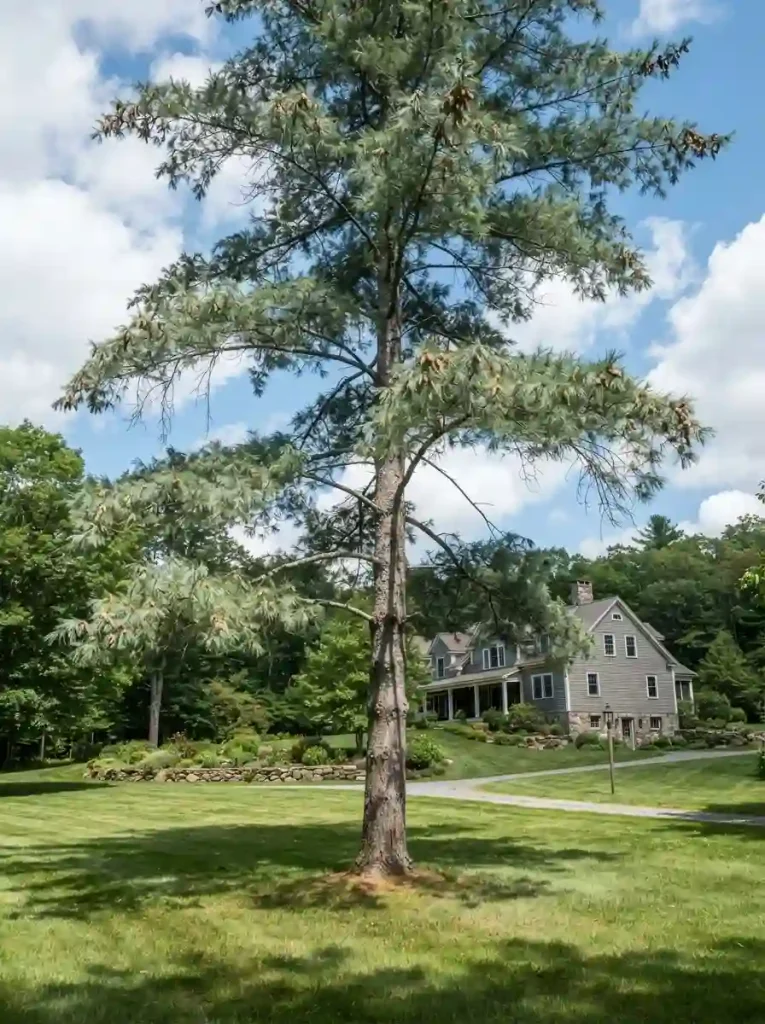
Eastern white pine brings a soft, airy evergreen presence to a spacious front yard. Its long needles and layered branches create a lighter texture than many dense conifers, and the tree can provide a green backdrop through every season. It works particularly well on larger properties where a tall tree can balance the scale of the house and open lawn.
This pine grows into a substantial tree, so it needs generous space away from buildings, overhead wires, and narrow driveways. Plant it in a suitable, well-drained site and water consistently while it establishes. Its natural shape is part of its appeal, so avoid placing it where regular cutting would be needed to control its size.
Expert tip:
Treat eastern white pine as a long-term landscape tree, not a small foundation plant that can be trimmed into place.
13. Amur Maple for a Smaller Front Yard
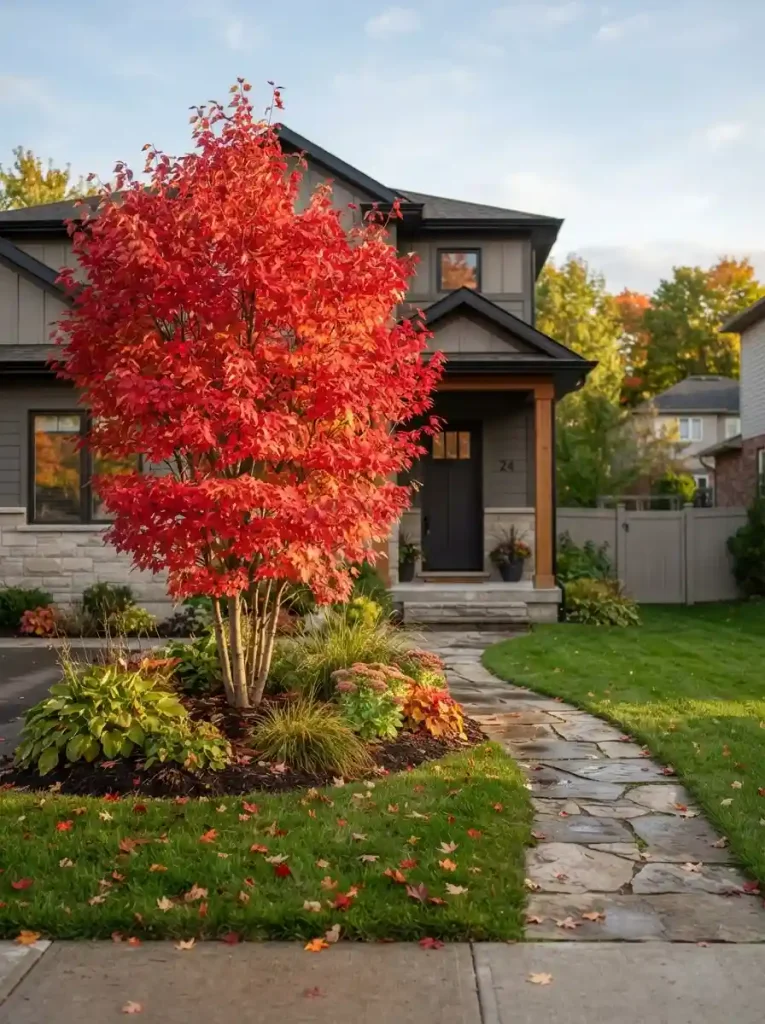
Amur maple is often selected for its compact scale and bright red autumn foliage. It can provide seasonal color in a smaller yard where a large shade tree would dominate the house or block important views. Its branching structure also gives the landscape a defined shape during winter, while its leaves create a full canopy in the warmer months.
Before planting, check local recommendations because Amur maple can spread aggressively and is considered invasive in some regions. Where it is appropriate, choose a sunny location with well-drained soil and leave room for the canopy to develop. If local guidance discourages it, a non-invasive small maple or another compact ornamental tree can provide a similar effect.
Expert tip:
Confirm that this species is suitable for your area before buying it from a nursery.
14. Sweetbay Magnolia for a Softer, Natural Look

Sweetbay magnolia has a relaxed, graceful appearance that feels less formal than some larger magnolia varieties. Its creamy-white flowers can be fragrant, and the foliage often has a soft, silvery underside that catches the light when the breeze moves through the branches. Depending on the climate, it may keep some or most of its leaves through winter.
This tree is well suited to a naturalistic front garden with layered shrubs, ferns, and other plants that appreciate moisture. It generally prefers moist, acidic soil and can tolerate partial shade, though the best conditions depend on the local climate. Give it enough room to grow naturally and avoid allowing the root area to dry out for long periods while the tree is young.
Expert tip:
Choose sweetbay magnolia when your site can provide the moisture it prefers rather than forcing it into a dry, exposed bed.
15. Ginkgo for Golden Autumn Leaves
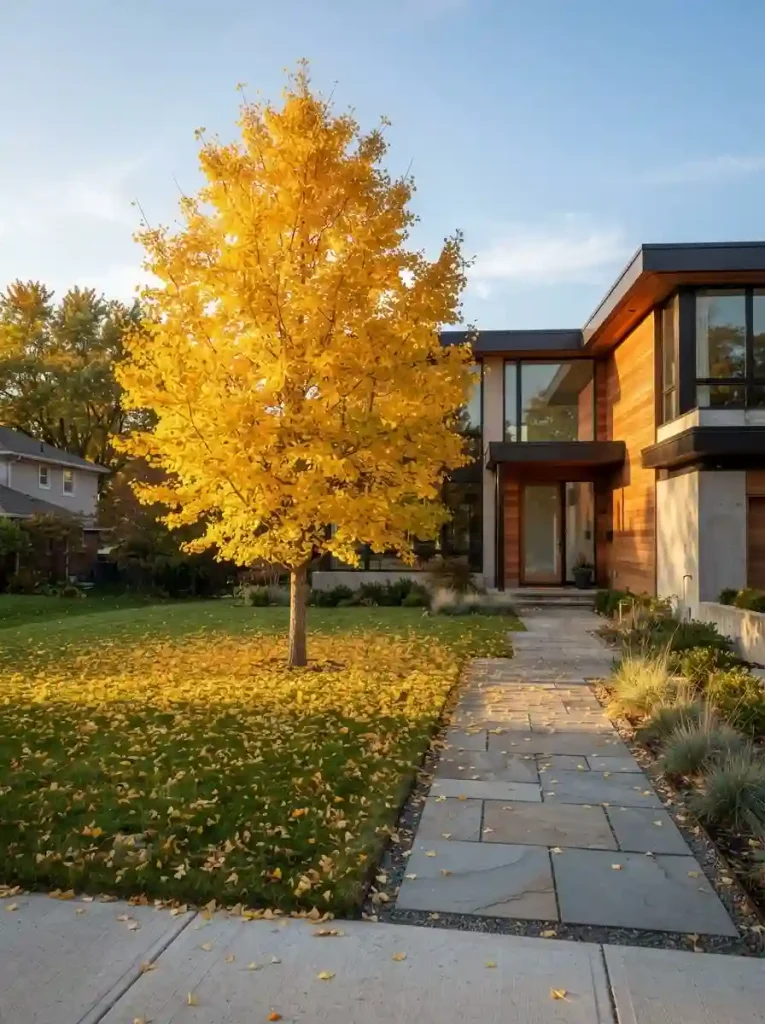
Ginkgo is admired for its unusual fan-shaped leaves and brilliant golden color in autumn. Its upright growth when young and broad mature canopy can make it a memorable feature in an open front lawn. Even though it is not a flowering showpiece, the distinctive foliage and strong seasonal change give it a clear presence in the landscape.
Choose a male cultivar for residential planting because female ginkgo trees produce fleshy fruit with a strong, unpleasant smell as it falls. Ginkgo grows best in full sun and can adapt to a range of soil conditions once established. Buy from a reputable nursery, confirm the cultivar, and leave enough room for the mature canopy to expand.
Expert tip:
Verify the tree’s cultivar before purchasing rather than relying on a general label that simply says ginkgo.
16. American Hornbeam for a Refined, Compact Tree

American hornbeam has a quiet elegance that suits homeowners who prefer texture and natural form over bright flowers. Its smooth, fluted trunk looks sculptural, and its rounded canopy creates a gentle outline against the house. The tree also offers seasonal foliage color, making it an understated but rewarding addition to a front yard with a woodland or classic style.
Hornbeam can be useful in areas with partial shade and soil that stays reasonably moist without becoming waterlogged. It is generally slower-growing than some ornamental trees, so it is best for a long-term design rather than a quick screen. Prune selectively to remove damaged or crossing branches and preserve the natural branching structure that makes the tree attractive.
Expert tip:
Pair it with simple shade-loving plants so its trunk and canopy remain visible instead of getting lost in a crowded bed.
17. River Birch for Attractive Peeling Bark

River birch adds visual interest through its peeling bark, which can reveal layers of cream, tan, and cinnamon tones along the trunk. A multi-stem specimen has a particularly sculptural look and can soften the straight lines of a modern or traditional house. Its light canopy and textured bark make it appealing even when the garden is not in flower.
River birch is better suited to locations with adequate moisture and space than to a very dry foundation bed. It can grow into a substantial tree, so consider the canopy and root zone before planting near paths, paving, drains, or underground services. Water deeply during establishment and use mulch to conserve moisture, keeping the mulch away from direct contact with the trunk.
Expert tip:
Plant it where the bark can be appreciated from the main approach to the house, rather than hidden behind other shrubs.
18. Saucer Magnolia for Dramatic Spring Flowers

Saucer magnolia produces large, cup-shaped flowers in shades of pink, purple, and white, often before its leaves emerge. The display can transform a front lawn into a spring focal point and works particularly well against a simple exterior or a background of evergreen shrubs. Its rounded form provides structure after the flowering period ends.
Early flowers can be damaged by strong winds or late frosts, so a sheltered location is helpful. Choose a spot with enough room for the mature spread and soil that drains well. Saucer magnolia generally needs little shaping, and heavy pruning can spoil its natural form. Allow the tree to develop a balanced canopy and keep the surrounding planting relatively low.
Expert tip:
If late frost is common in your area, ask a local nursery which magnolia varieties flower later.
19. American Yellowwood for Fragrant White Flowers

American yellowwood is a graceful shade tree with a rounded crown and hanging clusters of fragrant white flowers that appear in late spring or early summer. Its smooth bark gives it a clean appearance, while golden autumn foliage adds a second season of color. It works well as a specimen tree in a lawn where its natural shape can be appreciated.
Yellowwood needs space to mature and generally prefers a sunny to lightly shaded position with well-drained soil. It may take time to establish, so consistent watering during its early years is worthwhile. Avoid aggressive pruning and allow the branches to form a natural, balanced canopy. A simple ring of mulch around the root zone can help the tree settle in.
Expert tip:
Give yellowwood a prominent open position instead of squeezing it into a narrow planting strip.
20. Arborvitae for a Structured Evergreen Entrance

Arborvitae varieties are valued for their upright evergreen shape and ability to create a tidy, organized look around an entrance. Narrow cultivars can frame a doorway, soften the edge of a driveway, or provide privacy along a front boundary without using as much space as a broad-canopied tree. Their foliage keeps the garden looking structured through winter.
There are many arborvitae varieties, and their mature sizes differ considerably. Choose based on the expected height and width rather than the plant’s small nursery size. Provide adequate drainage and water during establishment, and choose a variety suited to local winter conditions and summer heat. Avoid crowding plants too closely, since good spacing helps maintain healthy foliage.
Expert tip:
Use matching specimens for a formal entrance, but vary the planting around them slightly to keep the design from feeling rigid.
21. Flowering Cherry for a Beautiful Spring Canopy

Flowering cherry trees create a memorable spring display with clouds of white or pink blossoms. Their branching patterns can be graceful and architectural, making them an attractive feature near a front lawn or open garden bed. Many varieties also develop autumn color, so the tree can contribute interest beyond its main flowering season.
Choose a variety suited to your climate and available space, and plant it where it receives ample sunlight. Good air circulation and appropriate watering can help reduce disease pressure. Consider where petals or fruit may fall, especially if the tree will be close to a frequently used path, driveway, or parked car. Avoid planting it where the canopy will quickly become crowded.
Expert tip:
Check the mature spread and maintenance needs of the specific flowering cherry before deciding where it belongs.
22. Bald Cypress for a Distinctive Landscape Feature

Bald cypress has soft, feathery foliage and a distinctive form that can give a front yard a calm, natural character. Its foliage often turns bronze or copper in autumn before dropping, offering a warm seasonal display. It is a stronger choice for properties with enough room for a medium-to-large tree rather than a compact foundation bed.
Although bald cypress is associated with wet environments, it can adapt to ordinary landscape soil when established, provided the site is appropriate for the species. Check the expected size and allow space around the tree for the canopy to develop. Water young trees during dry spells and maintain a mulch ring to conserve moisture without covering the trunk flare.
Expert tip:
Use bald cypress as a stand-alone specimen where its form can be seen from the street.
23. American Linden for Shade and Fragrance

American linden is a classic choice for a larger front lawn where a broad shade canopy can anchor the landscape. Its heart-shaped leaves create a full green crown in summer, and small fragrant flowers can attract bees and other pollinators. The tree gives a property a mature, established feeling and can help shade part of the yard during hot weather.
Because linden can become large, it needs to be planted well away from overhead utility lines, the house, and narrow paved areas. It grows best in reasonably fertile soil with consistent moisture while young. Allow it to develop naturally rather than relying on repeated hard pruning to keep it small, and consider the mature canopy when planning paths and garden beds.
Expert tip:
Reserve American linden for an open lawn where its shade and broad form will be an asset rather than a space problem.
24. Eastern Hemlock for a Soft Evergreen Backdrop

Eastern hemlock has fine, layered branches and soft evergreen needles that create a quiet woodland feel. Its texture contrasts well with stone, brick, and broad-leaved shrubs, and it can serve as a specimen or a green backdrop for shade-loving plants. The overall effect is softer than the dense, rigid outline of some other evergreen trees.
Hemlock generally prefers cool conditions, consistent moisture, and protection from harsh afternoon sun. It can be vulnerable to hemlock woolly adelgid, so check regional pest guidance before planting and monitor it for signs of stress. If your local climate or pest pressure makes hemlock difficult to maintain, choose a different evergreen suited to your area.
Expert tip:
Check local pest advisories and growing recommendations before investing in this tree.
Quick Comparison of Front-Yard Trees
| Tree | Main Attraction | Best Use |
| Japanese Maple | Colorful foliage and graceful form | Small ornamental spaces |
| Flowering Dogwood | Spring flowers and autumn interest | Traditional or cottage gardens |
| Magnolia | Large, showy flowers | Statement planting near an entrance |
| Eastern Redbud | Early spring color | Small to medium front yards |
| Crape Myrtle | Long summer flowering | Sunny yards in warm regions |
| Serviceberry | Flowers, berries, and fall color | Wildlife-friendly landscapes |
| Dwarf Alberta Spruce | Compact evergreen shape | Formal entrances |
| Eastern Red Cedar | Hardy evergreen structure | Larger yards and natural screens |
| Crabapple | Blossoms and decorative fruit | Seasonal color near a lawn |
| American Holly | Evergreen foliage and berries | Year-round structure |
| Paperbark Maple | Peeling bark and fall color | Distinctive specimen planting |
| Eastern White Pine | Tall, soft evergreen canopy | Spacious properties |
| Amur Maple | Red autumn foliage | Small yards where locally appropriate |
| Sweetbay Magnolia | Fragrant flowers | Moist, naturalistic gardens |
| Ginkgo | Golden autumn leaves | Open lawns |
| American Hornbeam | Sculptural trunk | Woodland-style gardens |
| River Birch | Peeling bark | Moist sites with room |
| Saucer Magnolia | Large spring flowers | Sheltered front lawns |
| American Yellowwood | Fragrant flower clusters | Open lawns |
| Arborvitae | Upright evergreen form | Framing an entrance |
| Flowering Cherry | Spring blossoms | Sunny yards with canopy space |
| Bald Cypress | Feathery foliage and fall color | Medium-to-large landscapes |
| American Linden | Broad shade canopy | Large front lawns |
| Eastern Hemlock | Soft evergreen texture | Cool, shaded gardens |
How to Choose the Best Tree for Your Front Yard
Start by measuring the planting area and checking the tree’s expected height and canopy width. Keep large trees away from overhead utility lines, foundations, underground pipes, and narrow walkways. Think about the purpose you want the tree to serve: flowers, autumn color, shade, privacy, evergreen foliage, or a focal point visible from the street.
Match the tree to your climate, soil, and available sunlight. A tree that thrives in one region may struggle in another, so check local hardiness guidance and ask a reputable nursery or arborist about varieties suited to your area. A well-matched tree will be easier to care for and more likely to develop a healthy, attractive shape over time.
Frequently Asked Questions
What is the best tree to plant in a front yard?
The best tree depends on your climate, yard size, soil, and preferred style. Japanese maple, redbud, dogwood, magnolia, and serviceberry are popular ornamental choices, while suitable evergreen varieties provide year-round structure.
Which trees are suitable for a small front yard?
Compact Japanese maples, serviceberries, smaller redbuds, and carefully selected dwarf evergreens can work well in small yards. Check the mature height and spread before planting, because nursery-sized trees can grow much larger.
Should I plant a tree close to my house?
Only plant close to a house when the tree’s mature size and root needs suit the location. Large trees generally need more distance. Account for foundations, roof overhangs, drains, paving, and overhead utility lines, and follow local planting guidance.
Which front-yard trees look good all year?
Evergreens such as suitable holly, arborvitae, and cedar varieties retain foliage through winter. Deciduous trees such as paperbark maple can also offer winter interest through distinctive bark, while other varieties provide flowers or autumn color.
When is the best time to plant a front-yard tree?
In many regions, early spring or fall is suitable because temperatures are milder and roots can establish before extreme heat or cold. The best timing depends on local climate, soil conditions, and the species being planted.
Final Thoughts
The right front-yard tree does more than fill an empty patch of lawn. It can frame the entrance, add seasonal color, provide shade, and help the whole property feel more welcoming. Choose a variety that suits the available space and local growing conditions, then give it the room and care it needs to mature. With a thoughtful choice, the tree can become one of the most attractive and lasting features of your landscape.