
22 Fearless Florida Fun Sun Plants That Love the Heat
Inside: 22 tough, colorful plants that shrug off Florida’s scorching sun, sticky humidity and sandy soil while keeping your garden full of blooms and pollinators.
Anyone who has gardened in Florida knows the sun here doesn’t play around. By July, plants that looked fine in spring can end up crispy, sulking, or both. The good news is that a whole group of plants actually wants that blazing light and heat.
This list mixes Florida natives with reliable tropical favorites, so you can fill borders, containers, groundcover spots and coastal yards with color. Whether you’re starting fresh or replacing something that cooked in the heat, you’ll find a plant here that fits.
1. Coreopsis (Tickseed)
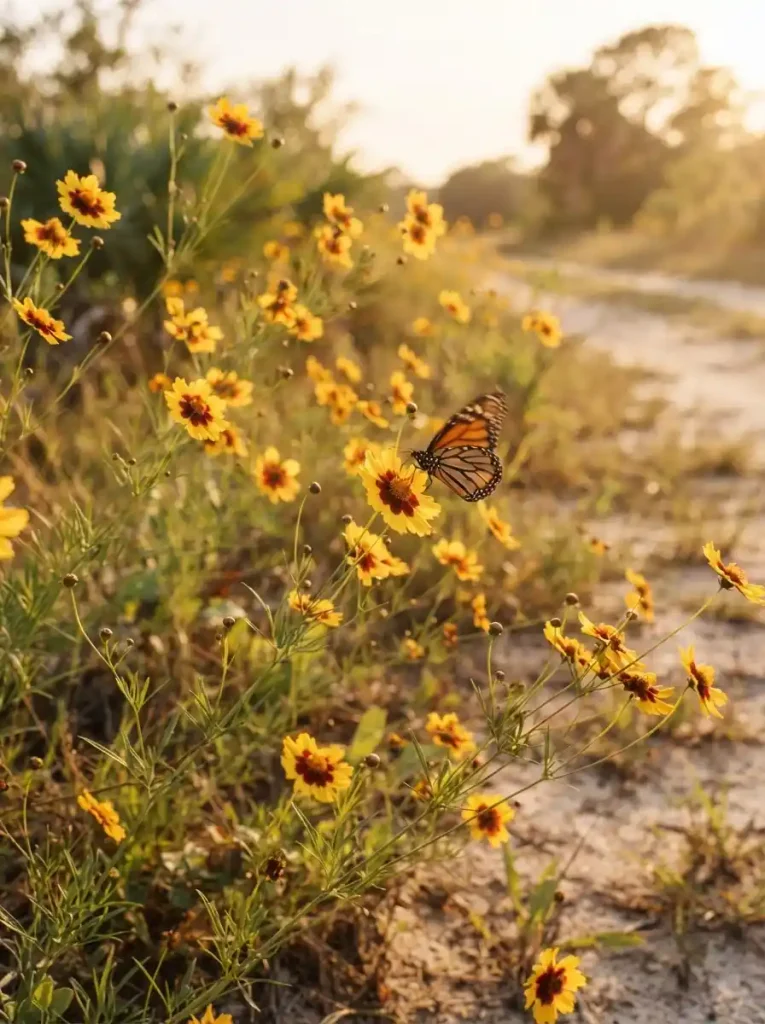
Coreopsis is Florida’s official state wildflower, and it earns the title. Its sunny yellow daisies, often with a maroon center, appear from spring well into fall and light up any spot that gets six or more hours of direct sun.
It’s happiest in sandy, fast-draining soil, the kind many gardeners struggle with. Rich, soggy beds usually make it flop or fade. Once established, it handles dry spells well.
Let a few spent blooms go to seed and it will often self-sow, filling gaps with free plants the next season. It also makes a cheerful cut flower.
Grower’s Tip:
Skip the heavy fertilizer. Lean soil and plenty of sun give you sturdier stems and more flowers.
2. Beach Sunflower
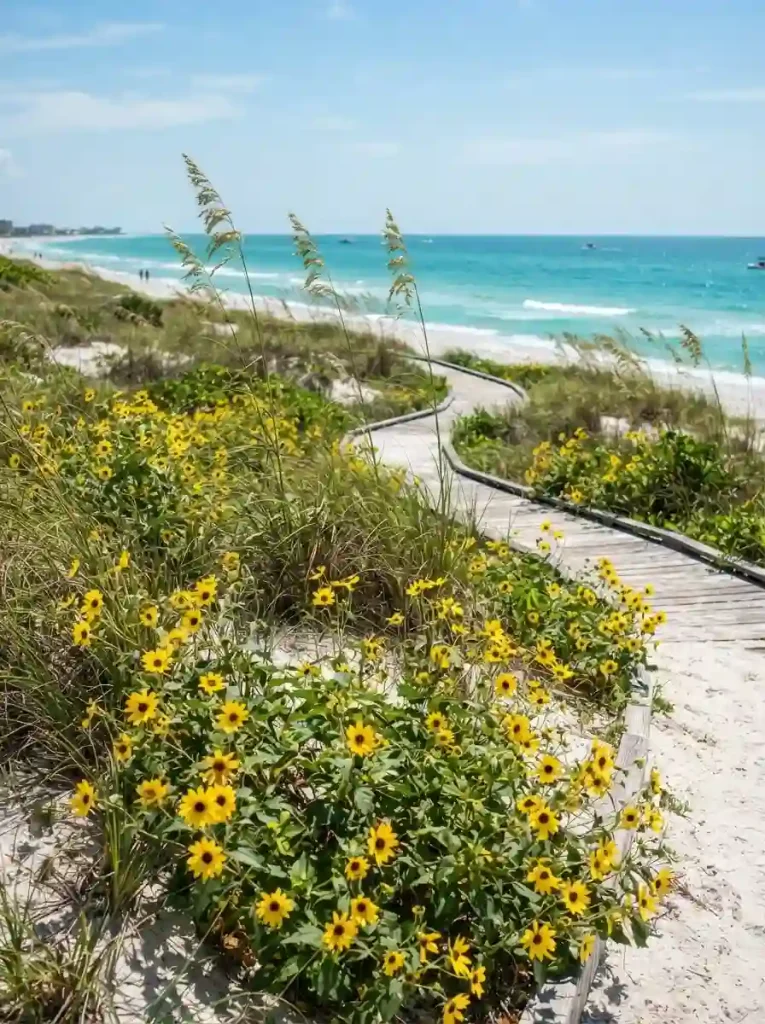
If you want a groundcover that can take sun, salt and sand, beach sunflower is hard to beat. This native stays low, usually one to two feet tall, and spreads into a mat dotted with bright yellow, dark-centered blooms.
It grows naturally on coastal dunes, so drought and salt spray don’t faze it. In warmer parts of the state it can flower nearly year-round, which makes it a steady pollinator magnet.
Use it along sunny slopes, at the edge of a driveway, or anywhere grass struggles. Give it room, because it can wander.
Grower’s Tip:
Trim it back by a third once or twice a year to keep it tidy and encourage fresh, bushy growth.
3. Porterweed
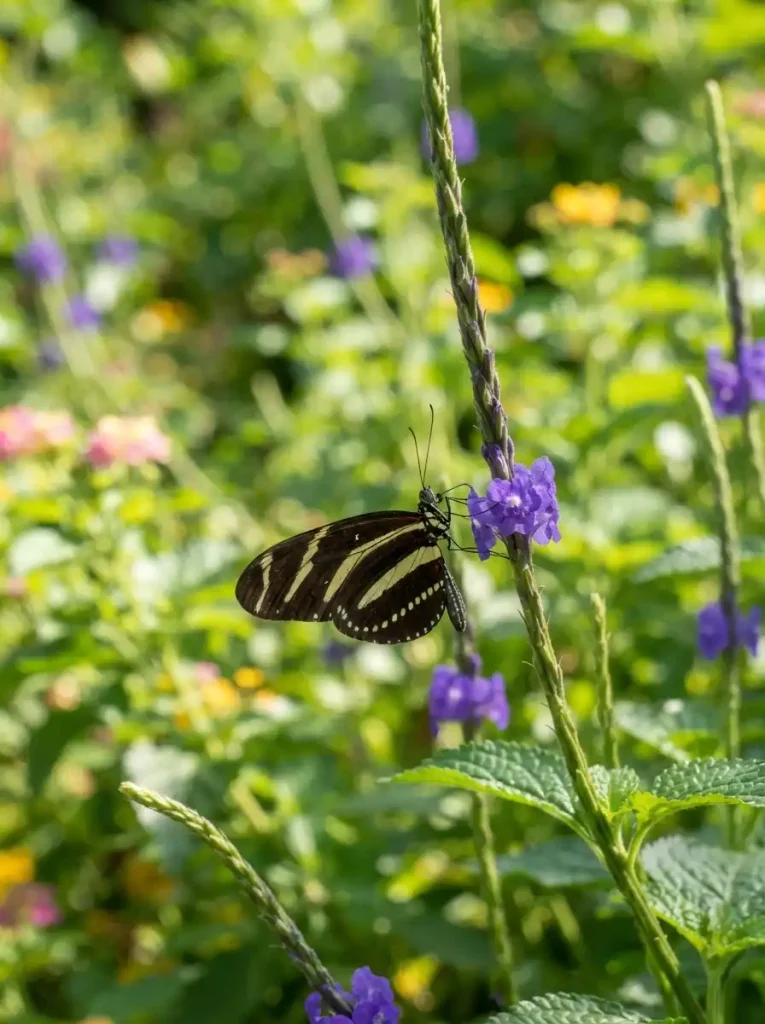
Porterweed sends up long, slender flower spikes dotted with small blooms, and butterflies seem to find them within minutes. It’s a standout for a pollinator garden and keeps producing flowers for much of the year in warm areas.
Plant it in full sun with decent drainage and it will grow into a loose, airy shrub of about two to four feet. It handles heat well but is tender to frost, so northern gardeners may need to protect it or replant.
Choose the native blue porterweed when you can. Some non-native porterweeds spread aggressively, so check with your local UF/IFAS Extension office before buying.
Grower’s Tip:
Pinch back the tips in spring to keep it compact and covered in blooms instead of leggy.
4. Society Garlic
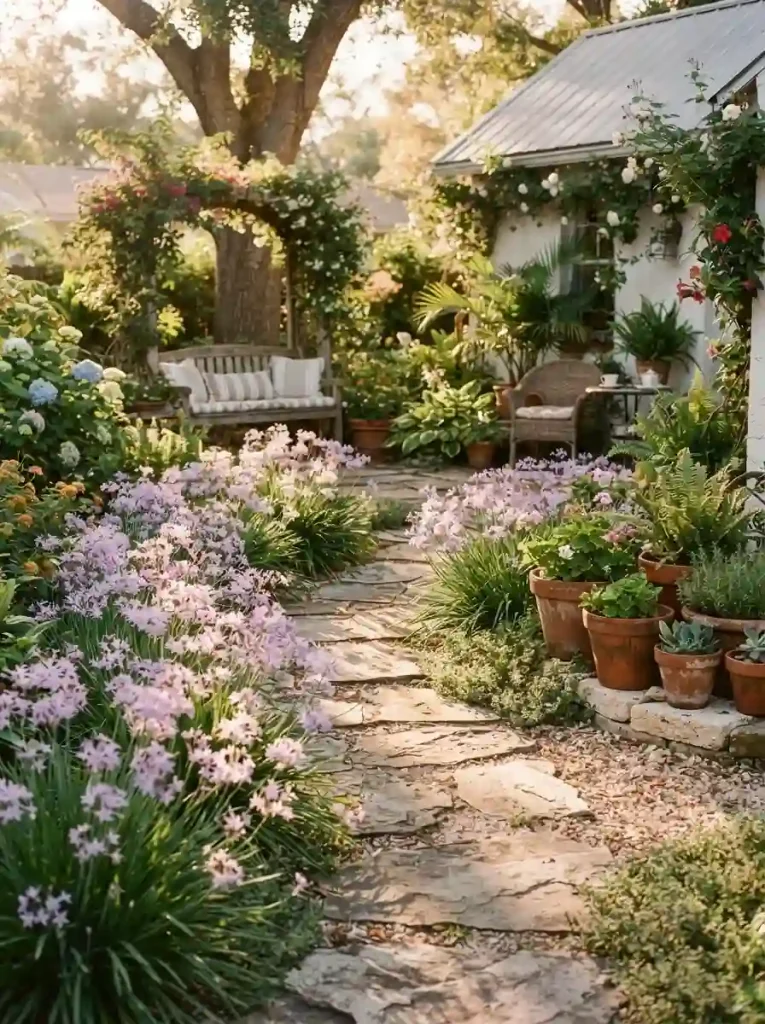
Society garlic brings a softer look to a hot garden. Slim, strappy leaves form tidy clumps, and clusters of lavender, star-shaped flowers dance above them on thin stems for months.
It does best in full sun, though it tolerates a little light shade. Once its roots settle, it copes with dry periods nicely. The leaves smell faintly of garlic when crushed, which many gardeners find helpful for keeping nibbling pests away from nearby plants.
It’s a great edging plant for walkways, a natural fit for containers, and a good filler between larger shrubs.
Grower’s Tip:
Divide crowded clumps every couple of years and replant the pieces to fill more of your border for free.
5. Blue Salvia (Mealycup Sage)
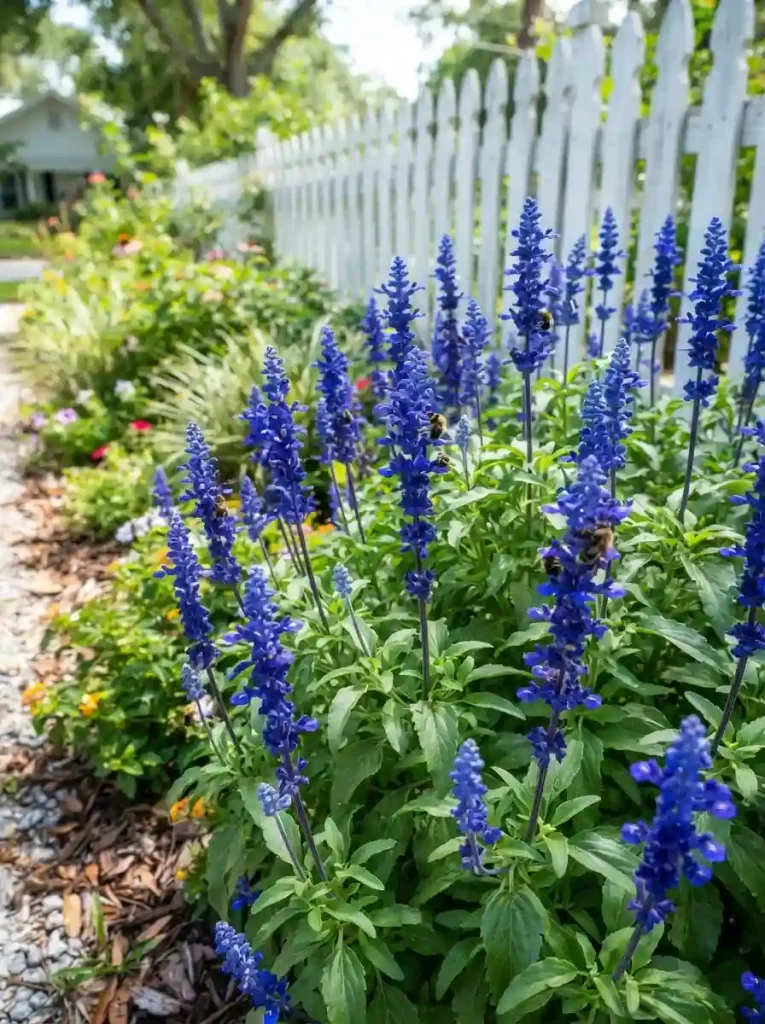
Few flowers give you true, cool blue like blue salvia does. Upright spikes of violet-blue blooms rise above deep green foliage, creating a vertical accent that stands out against hot-colored neighbors.
It wants full sun and soil that drains well, and it blooms from spring through fall. Bees and butterflies visit constantly. Keep it a bit on the dry side, since constantly wet roots are what usually do it in.
Plant it in drifts of three to five for impact, or tuck it between yellow and orange bloomers for a bold color contrast.
Grower’s Tip:
Deadhead faded spikes right above a set of leaves to prompt a fresh flush of flowers.
6. Sunshine Mimosa
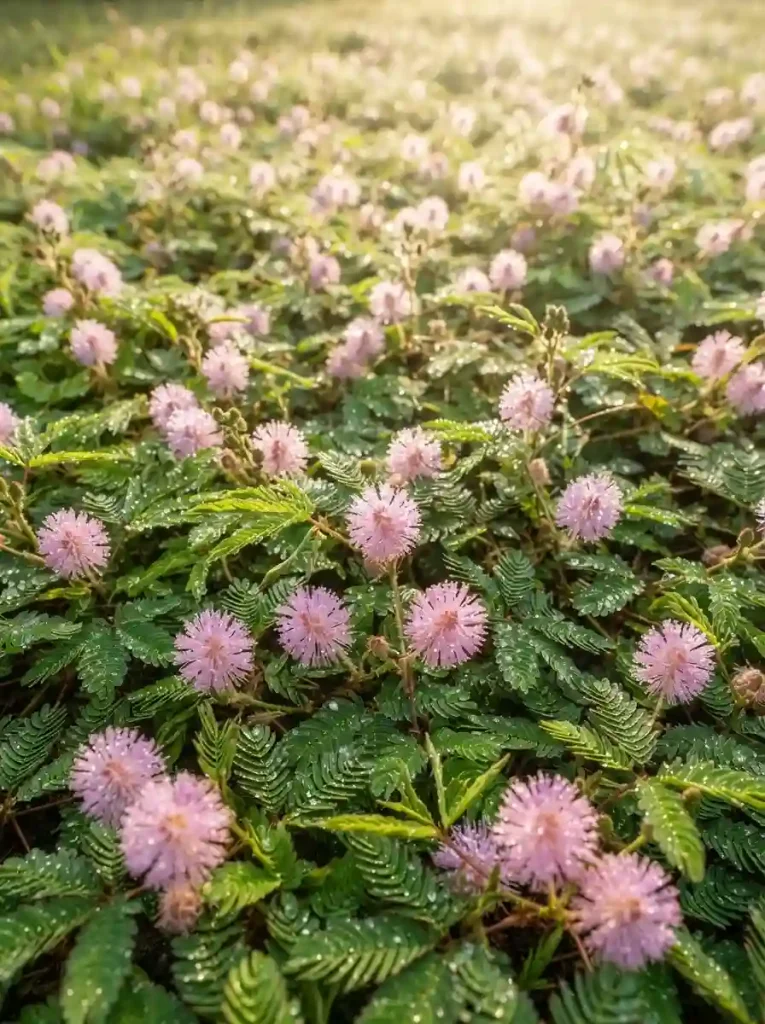
Sunshine mimosa is a native groundcover with a playful side. Its fern-like leaves fold shut when touched, and fluffy pink powder-puff flowers appear over the foliage through the warm months.
It thrives in full sun, tolerates poor and sandy soil, and can even handle occasional mowing, which makes it a popular low-maintenance lawn alternative. As a member of the legume family, it also helps enrich the soil it grows in.
Expect it to spread steadily by runners. In cooler winters, the top growth may die back and return when the weather warms.
Grower’s Tip:
Water it regularly for the first few weeks after planting so the runners root in quickly, then back off.
7. Portulaca (Moss Rose)
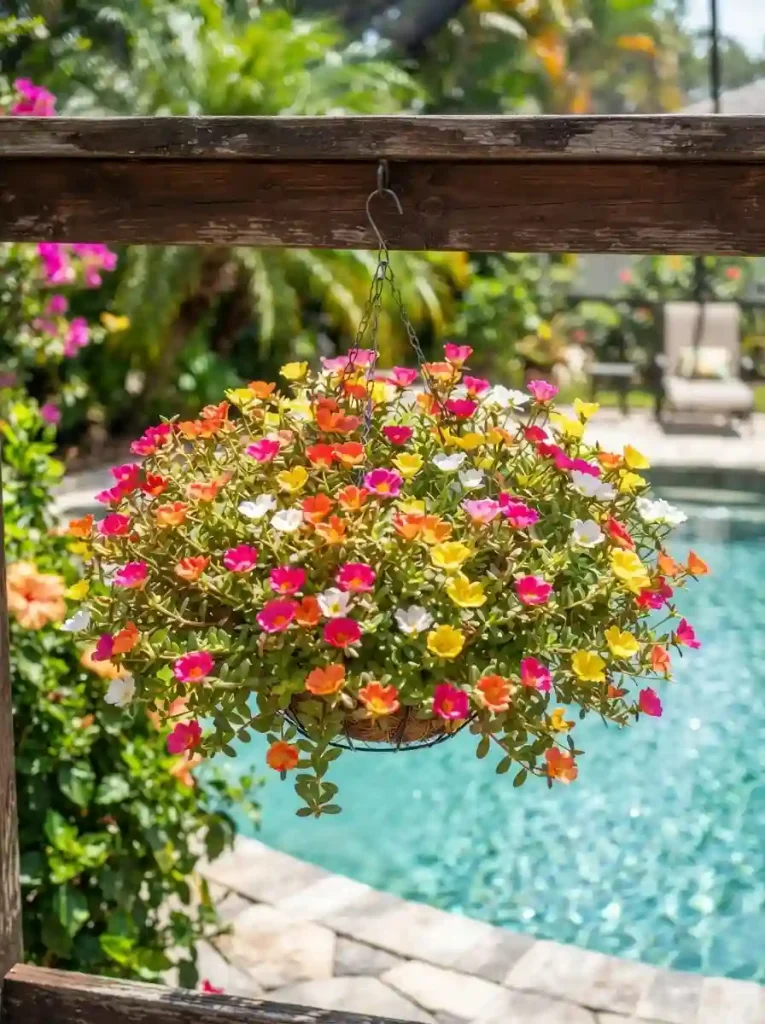
Portulaca is the plant for the spot where everything else gives up: a hot, dry pot on a sunbaked patio. Its fleshy, succulent-like leaves store water, and its papery blooms come in hot pink, orange, yellow and white.
The flowers open in strong sunlight and often close on cloudy days or by evening, so give it the sunniest position you have. Use fast-draining potting mix and let it dry between waterings.
It looks great in hanging baskets, rock gardens and along sunny edges. In many areas it reseeds, popping up again next season.
Grower’s Tip:
Mix several colors in one basket, then tuck it somewhere you’ll see it at midday, when the blooms are fully open.
8. Ixora
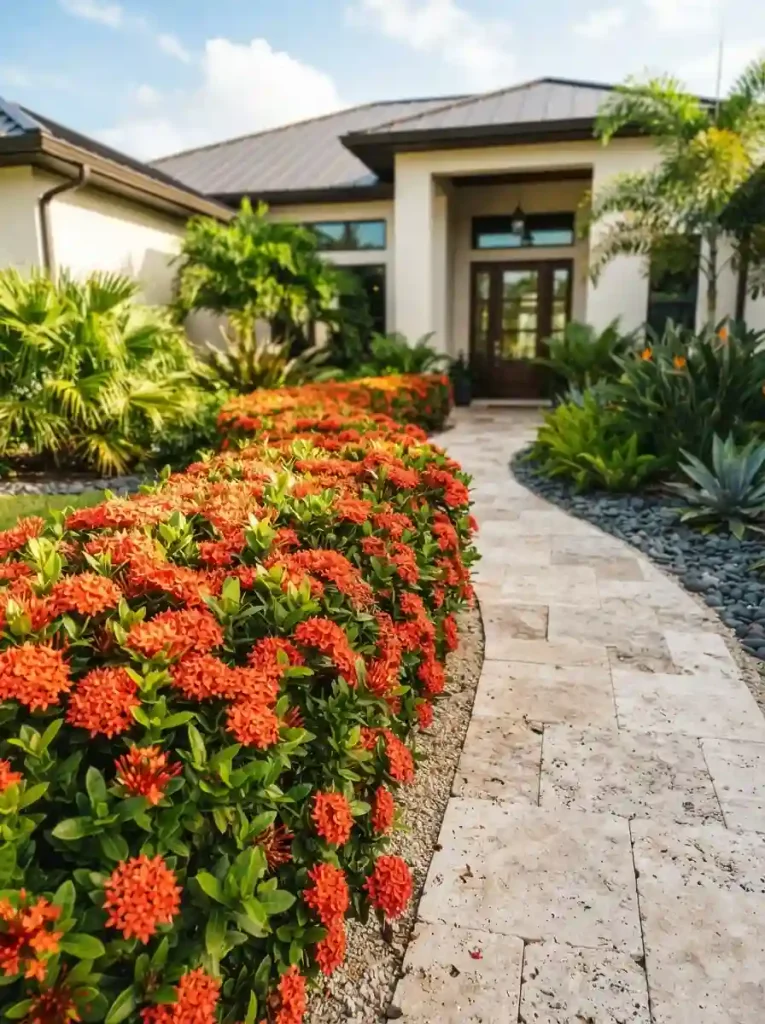
Ixora packs dense, rounded clusters of tiny flowers in orange, red, yellow or pink onto a glossy-leaved shrub. It’s a classic of central and south Florida landscapes, and for good reason: the color is nonstop in the warm months.
Give it full sun and regular watering while it establishes. It prefers slightly acidic soil. In alkaline ground, the leaves can turn yellow from iron deficiency, which a chelated micronutrient feeding can help correct.
Shape it as a low hedge, a foundation planting, or a standalone mound. It’s tender to frost, so cover it during cold snaps.
Grower’s Tip:
Mulch around the base to keep roots cool and moisture steady, but keep the mulch away from the stems.
9. Croton
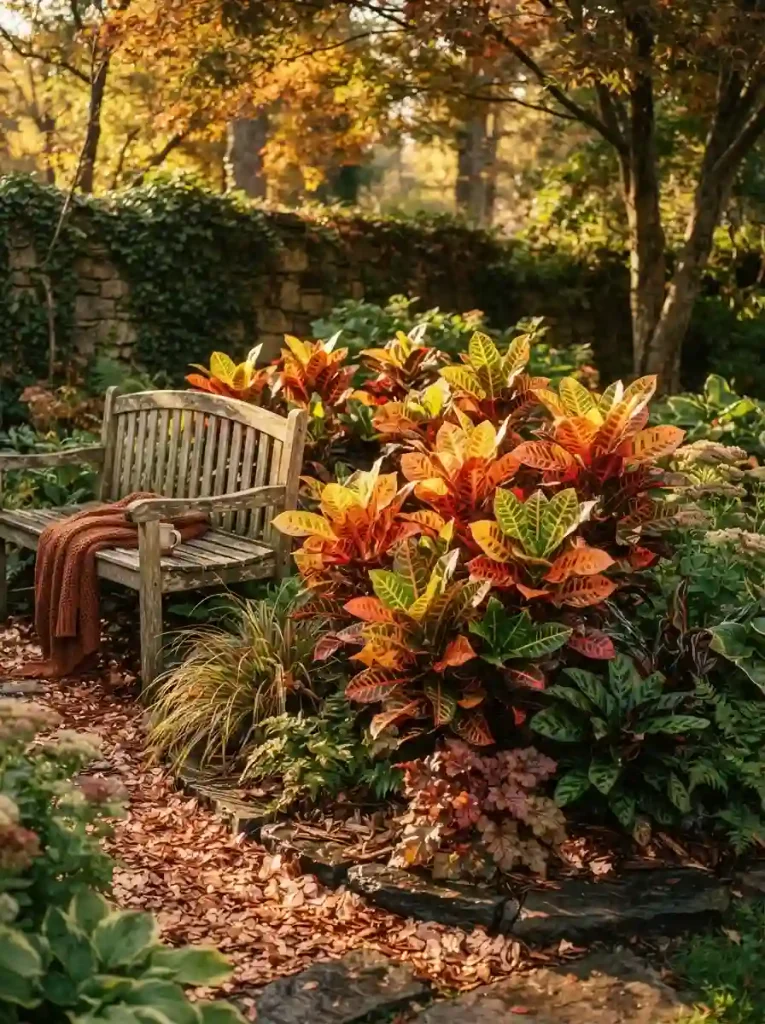
Not every sun lover relies on flowers. Croton delivers a fireworks display with its leaves alone, mixing red, orange, yellow, bronze and green in bold, sometimes marbled patterns.
The more direct sun it gets, the richer and more vivid the color becomes. Plants in too much shade tend to fade toward plain green. Water it consistently, especially in dry spells, and protect it from frost.
It works well as a color accent in mixed beds, a patio container, or a loose hedge. Keep in mind that the milky sap can irritate skin, so wear gloves when pruning.
Grower’s Tip:
Group several varieties together for a layered, painterly effect that stays interesting all year.
10. Coontie
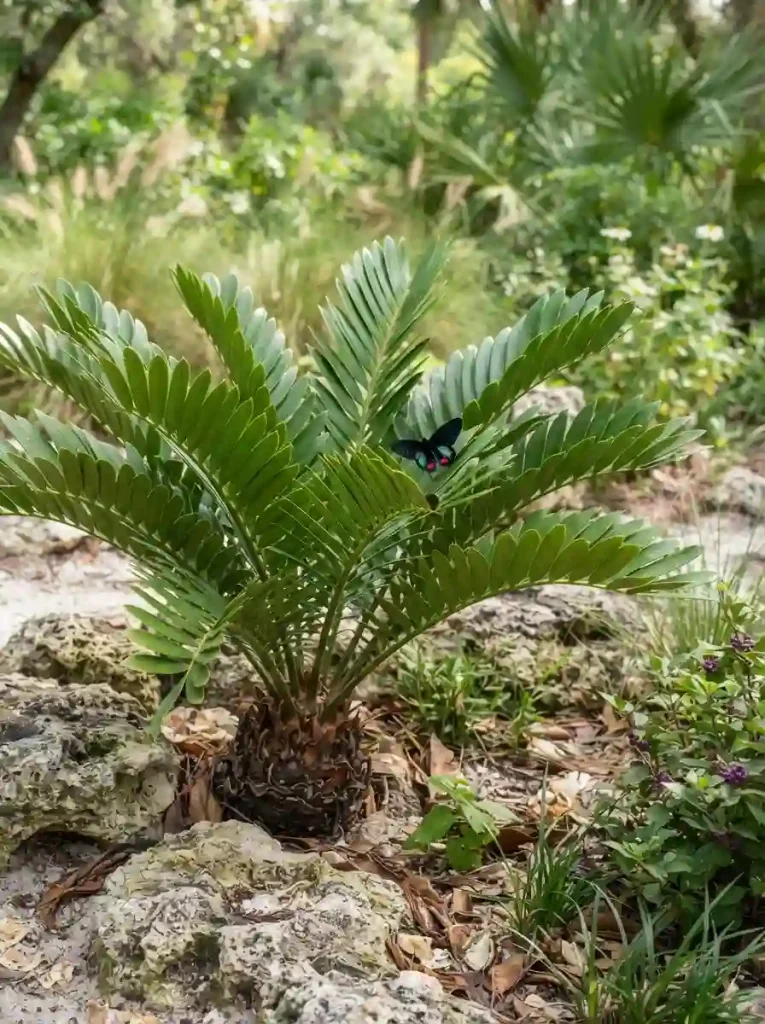
Coontie is a native cycad, a tough, slow-growing plant that looks like a small palm with arching, glossy, feather-like leaves. It brings a lush, tropical shape to dry, sunny beds without asking for much.
It tolerates full sun to fairly deep shade and handles drought once settled, which gives you real placement flexibility. It also plays host to the atala butterfly, whose caterpillars feed on the leaves, so a little chewing is part of the deal.
Be aware that all parts of the plant are toxic if eaten, so use it carefully around curious pets and small children.
Grower’s Tip:
Be patient. Coontie grows slowly, so buy the largest size that fits your budget if you want instant presence.
11. Tropical Sage (Scarlet Sage)
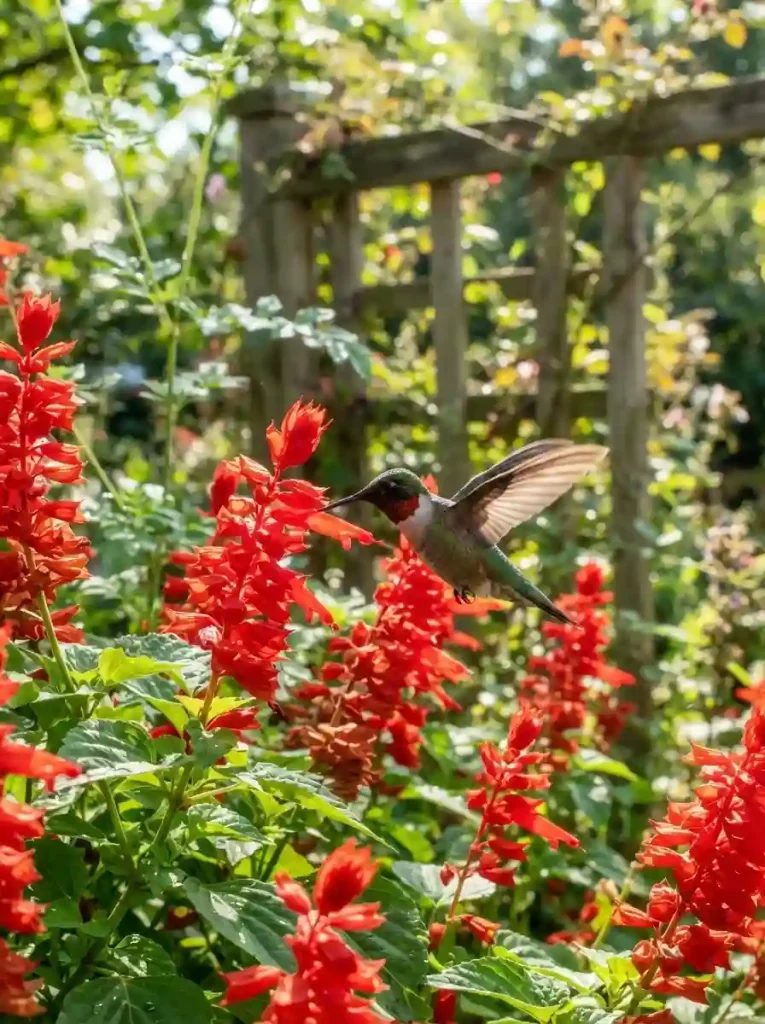
Tropical sage is a native with brilliant red flowers that hummingbirds seem to track down from across the neighborhood. It blooms over a long season, often nearly year-round in the warmest regions, on plants that reach about two to four feet.
It does well in full sun, though a bit of afternoon shade is fine, and it adapts to a range of soils. It reseeds readily, so you’ll often find new seedlings next to the parent. You can move them or pull extras.
It fits beautifully in wildlife gardens, informal borders and cottage-style plantings.
Grower’s Tip:
Cut it back by about a third after a heavy bloom flush to keep it full and flowering.
12. Blue Plumbago
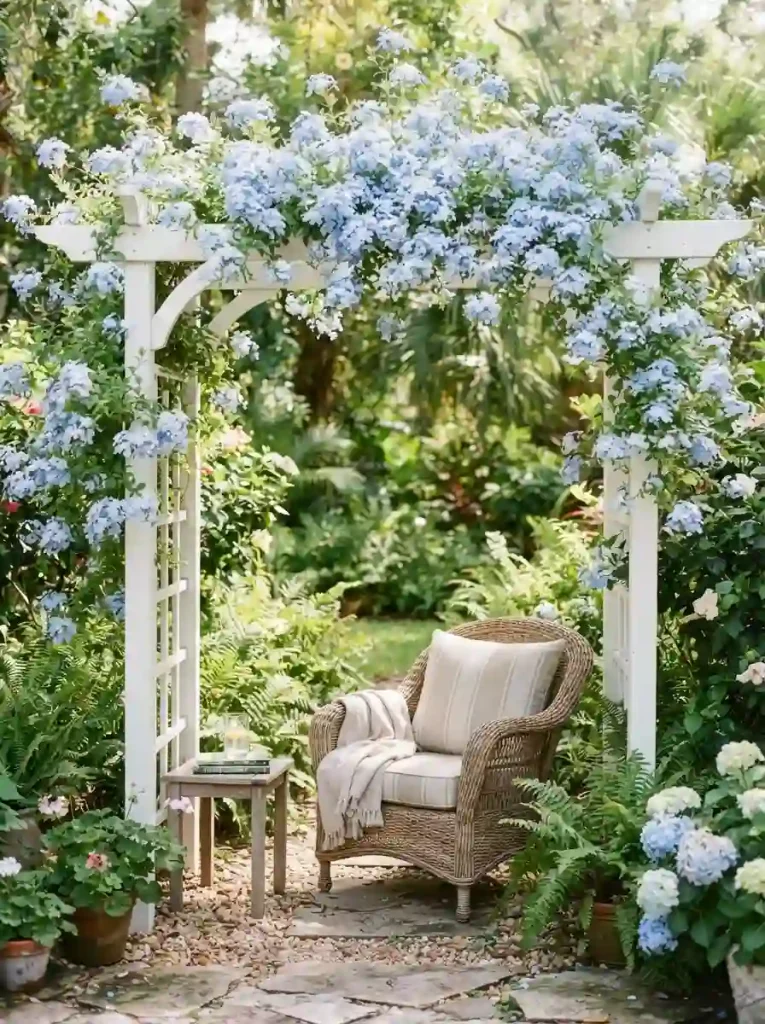
Plumbago produces soft, sky-blue flower clusters that look cool even on the hottest afternoon. The sprawling shrub reaches about four to six feet and can be trained over a fence, arbor or low wall.
It loves full sun and handles heat and dry spells well once rooted in. Light frost may burn the top growth, but the plant often returns from the roots when warm weather comes back.
Keep in mind that the flower calyces are sticky and tend to cling to clothing and passing pets, so avoid planting it right beside a busy walkway.
Grower’s Tip:
Prune lightly after a big flush of blooms to keep it shaped and flowering through the season.
13. Golden Dewdrop
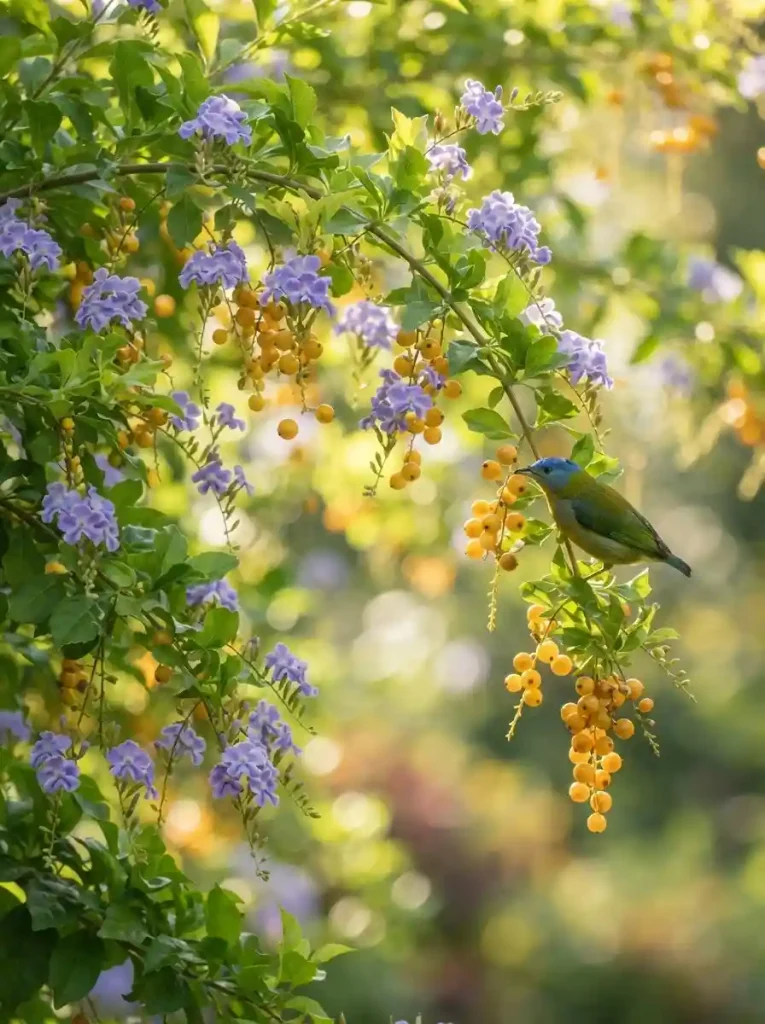
Golden dewdrop (Duranta) gives you two shows in one. Sprays of lavender-blue flowers hang from arching branches, then give way to clusters of glowing golden-yellow berries that look like tiny drops of sunshine.
This fast-growing shrub, often six to ten feet tall, needs full sun and moderate watering. It makes an excellent screen, a backdrop for lower plants, or a single specimen. Butterflies visit the flowers, and birds enjoy the fruit.
Those berries are toxic to people and pets, so think twice about planting it where children or dogs roam.
Grower’s Tip:
Shape it in late winter or early spring, before the main growth surge, so you don’t cut off the coming blooms.
14. Fakahatchee Grass
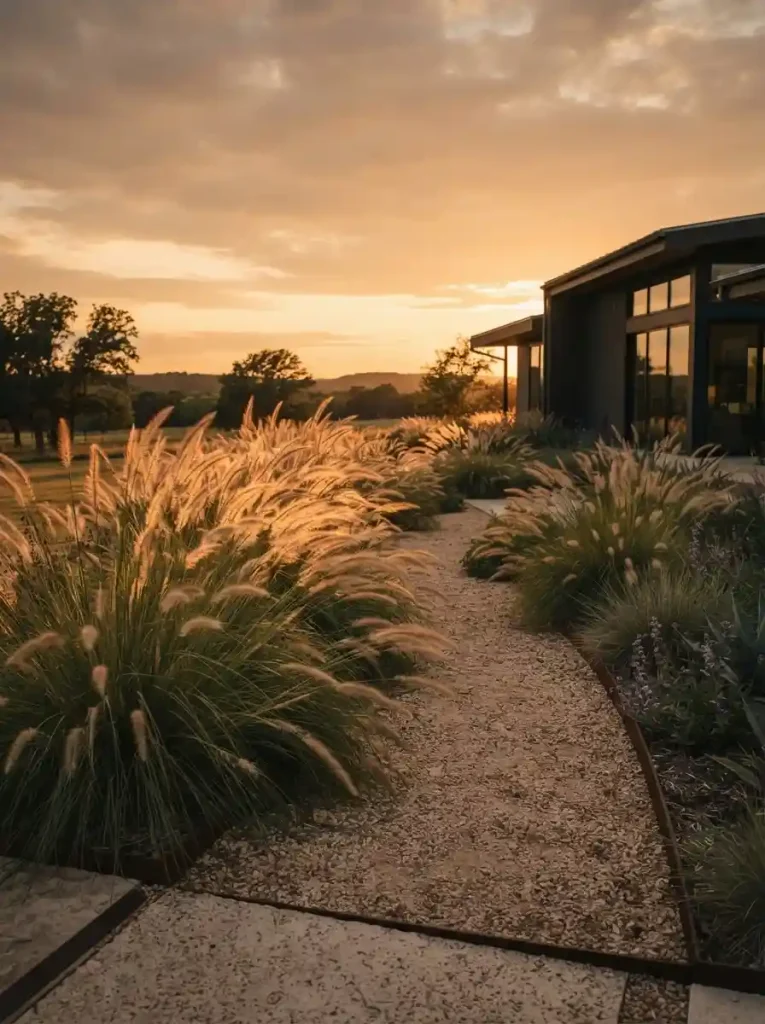
Not every sun lover has to bloom. Fakahatchee grass, also called Florida gamagrass, is a native ornamental grass that forms graceful, arching clumps of broad blades with slender seed heads that catch the light.
It does best in full sun to light shade and is notably adaptable. It copes with dry stretches and also tolerates soggy soil after summer storms, which makes it handy for tricky drainage spots.
Plant it as a focal point, along a pond edge, or as a soft backdrop for flowering perennials. It adds movement and texture without any fuss.
Grower’s Tip:
Cut the clump back in late winter to let fresh, tidy blades emerge for the coming season.
15. Daylily
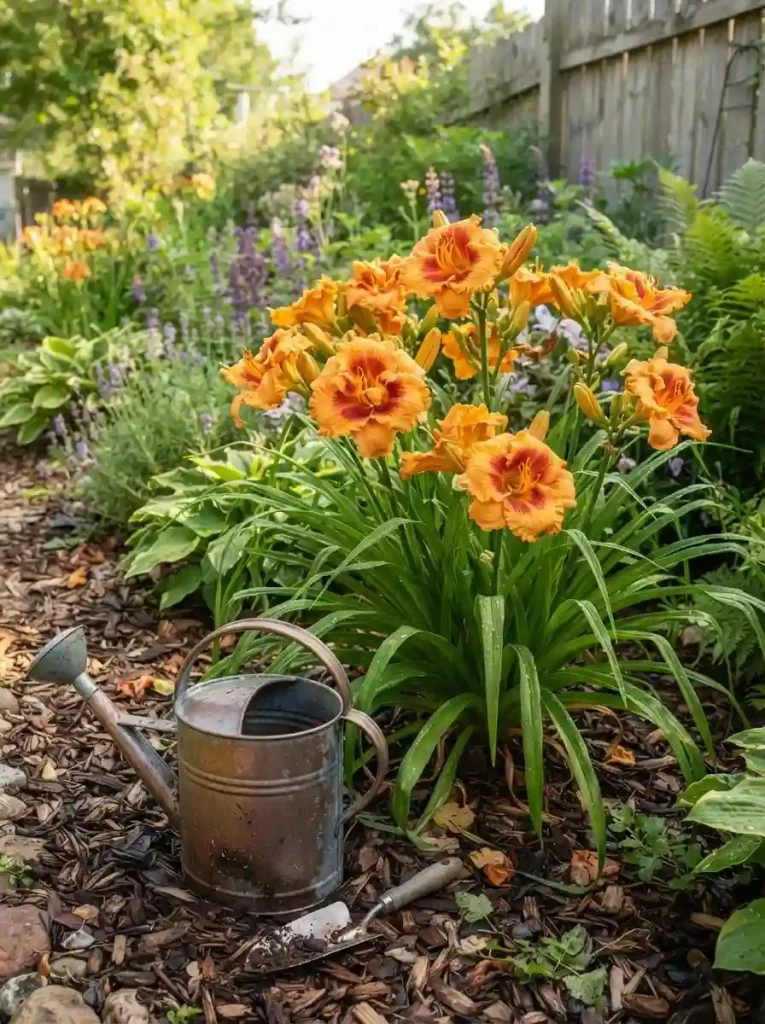
Daylilies are the dependable workhorses of the summer border. Each bloom lasts a single day, but established plants send up so many buds that the display feels continuous for weeks, in shades from buttery yellow to deep burgundy.
Choose varieties labeled evergreen or semi-evergreen for Florida, since they handle mild winters best. Give them at least six hours of sun, a layer of mulch, and consistent moisture while they settle in.
They fill space quickly, suppress weeds, and look great massed along a driveway or tucked into a mixed bed.
Grower’s Tip:
Remove the spent flower stalks (scapes) once all the buds finish to keep the clump looking fresh.
16. Mexican Heather
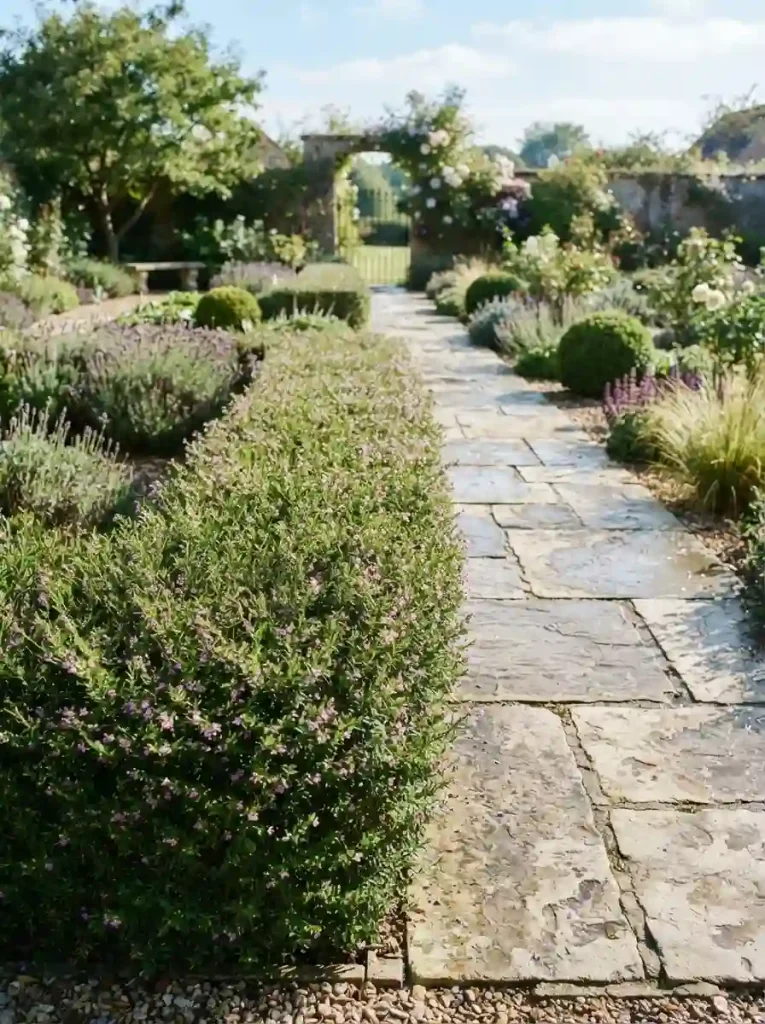
Mexican heather is a petite, tidy plant covered in tiny lavender-purple flowers that sit against fine, dark green foliage. Despite its delicate look, it takes Florida heat in stride and can bloom for much of the year in mild areas.
It typically grows one to two feet tall, making it ideal as a low edging, a mini hedge, or a filler in front of taller shrubs. It prefers full sun to light afternoon shade and benefits from regular watering, especially in dry weather.
A hard freeze can damage it, but it usually bounces back with spring warmth.
Grower’s Tip:
Shear it lightly a few times a year to keep a neat, dense shape and plenty of new flower buds.
17. Dwarf Bottlebrush
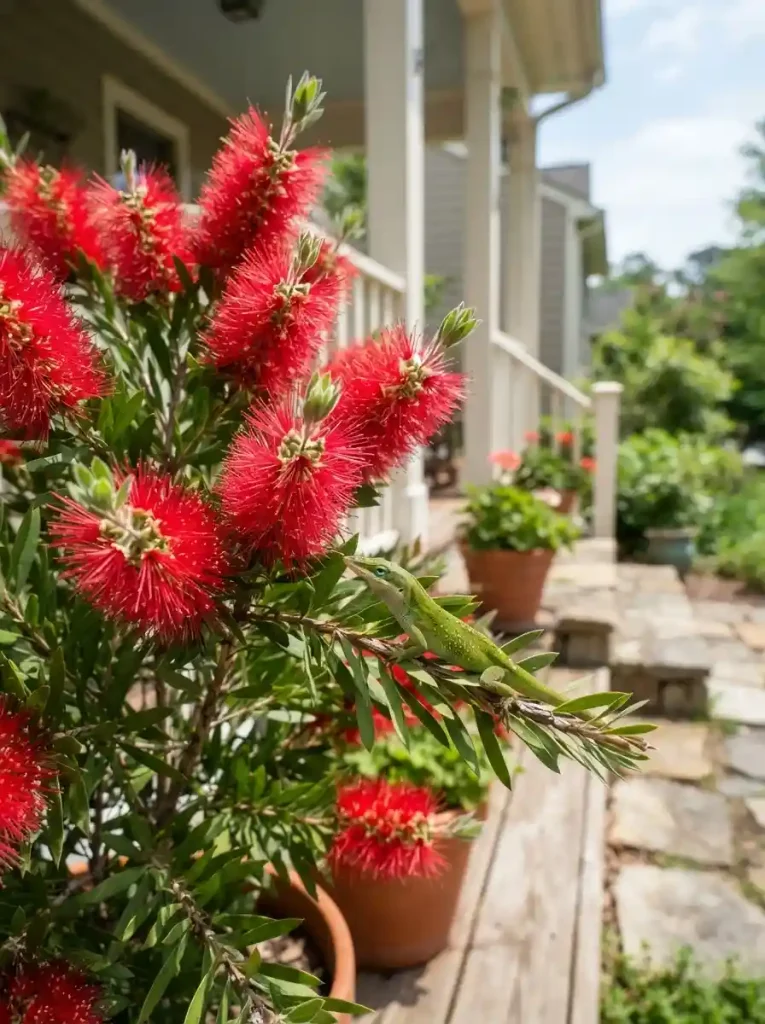
Bottlebrush gets its name from its bright red, brush-shaped flower spikes, which cover the shrub in spring and may reappear later in the year. Dwarf varieties stay compact, often three to five feet tall, so they suit smaller yards.
It wants full sun and soil that drains well. After its first season, it needs only occasional watering during long dry periods. The flowers attract pollinators, and the narrow leaves add a fine, airy texture.
Use it near a front entry, in a foundation bed, or in a large container for a bold pop of red.
Grower’s Tip:
Prune right after flowering so you shape the plant without removing next season’s flower buds.
18. Aloe
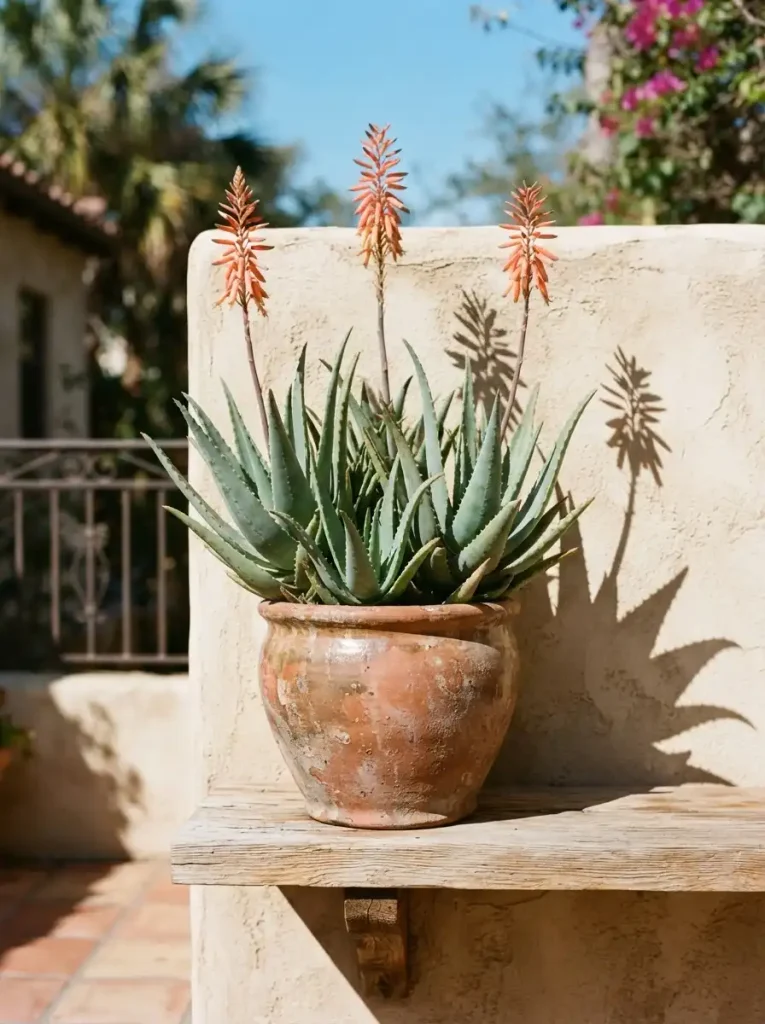
Aloe brings sculptural form to a sunny spot and rewards you with tall spikes of coral or yellow flowers. Its thick, water-storing leaves make it one of the easiest plants for a hot, dry corner.
It thrives in well-drained, sandy or gritty soil and does very well in containers, where you can control moisture. In Florida’s most intense summer sun, leaves may turn orange or brown from stress, which is a sign it would appreciate a little afternoon shade.
Aloe is tender to frost, so potted plants can be moved indoors or covered when a cold front arrives.
Grower’s Tip:
Water deeply but infrequently, and always let the soil dry out fully between drinks to prevent rot.
19. Mandevilla
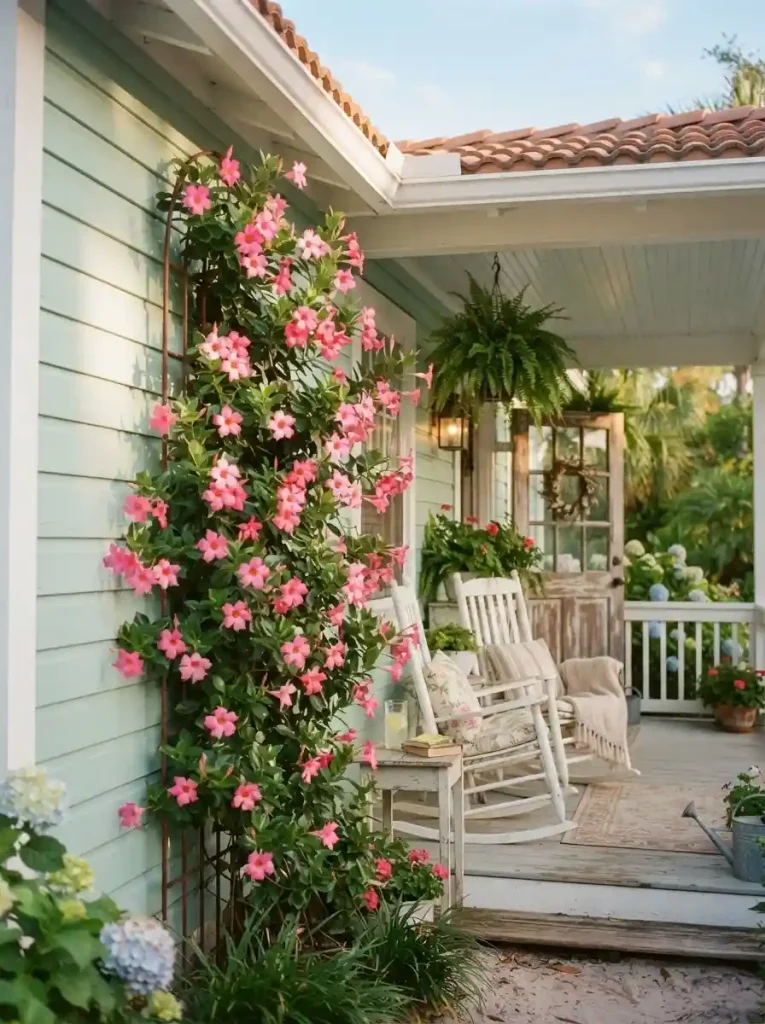
Mandevilla is a twining vine with big, glossy leaves and showy trumpet flowers in pink, red or white. It turns a plain trellis, mailbox post or porch rail into a focal point within a single season.
It blooms best with at least six hours of direct sun, rich but well-drained soil, and regular watering during hot weather. It’s frost-tender, so in cooler parts of the state it’s often grown in a pot that can be sheltered when temperatures dip.
Its sap can irritate skin and is best kept away from pets, so wear gloves when pruning.
Grower’s Tip:
Feed it with a bloom-boosting fertilizer in spring and early summer for more flowers, following the label rates and any local rules.
20. Bulbine
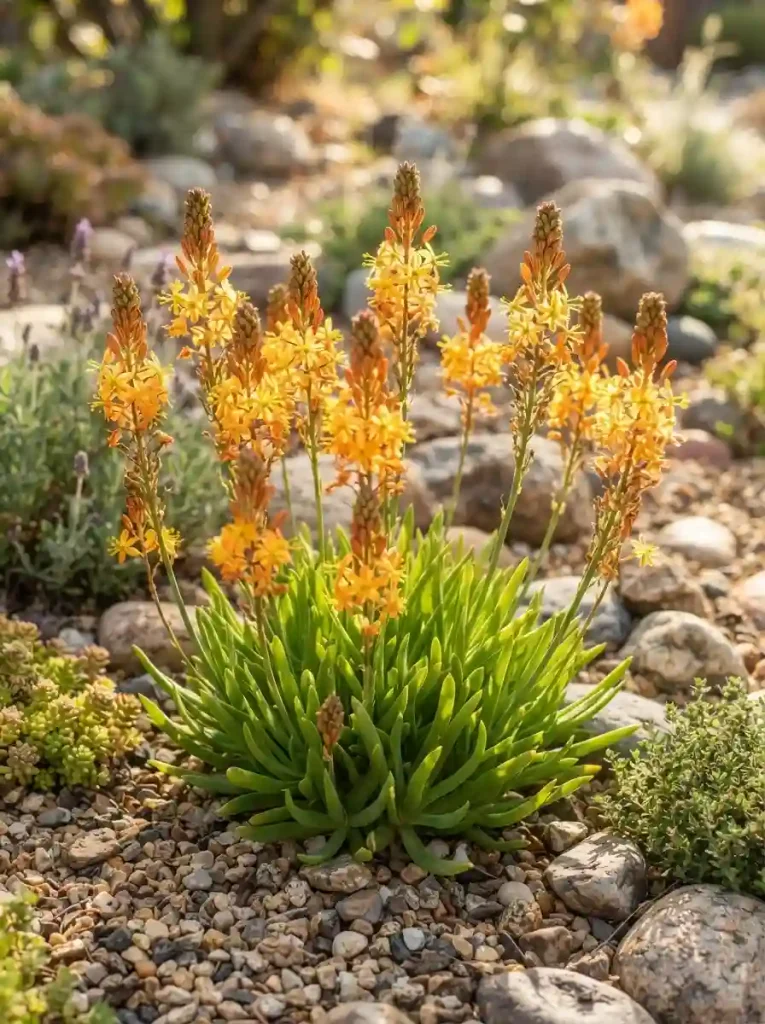
Bulbine sends up slender spikes topped with fuzzy, star-shaped flowers in orange or yellow, rising above clumps of succulent, grass-like leaves. It keeps blooming through much of the year in warm regions.
Because the leaves store water, bulbine handles heat and dry weather impressively. Plant it in full sun with fast-draining soil, and avoid overwatering, which is the most common way to lose it.
It’s a natural fit for rock gardens, gravel beds, borders and containers, and it pairs well with blue and purple flowers for strong contrast.
Grower’s Tip:
Divide crowded clumps in spring to refresh older plants and make more for other parts of the garden.
21. Verbena
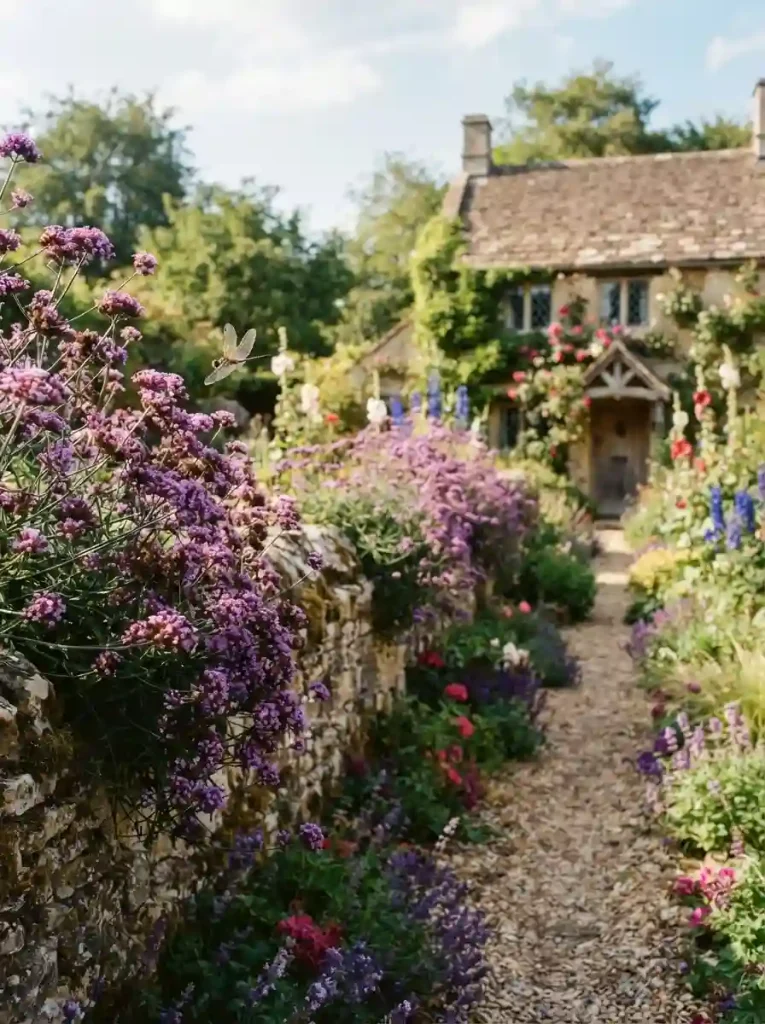
Verbena is a sun-loving trailer that drapes itself over walls, containers and bare ground in clusters of purple, pink or white blooms. Native types, such as Tampa vervain, are especially well suited to Florida conditions.
Give it full sun and well-drained soil. Good airflow helps too, since crowded, damp foliage can develop powdery mildew. Water at the base of the plant instead of overhead whenever possible.
It’s a great choice for spilling over retaining walls, softening the edges of paths, or adding color to hanging baskets.
Grower’s Tip:
Trim back leggy stems by a few inches to trigger fresh growth and a new wave of flowers.
22. Butterfly Weed
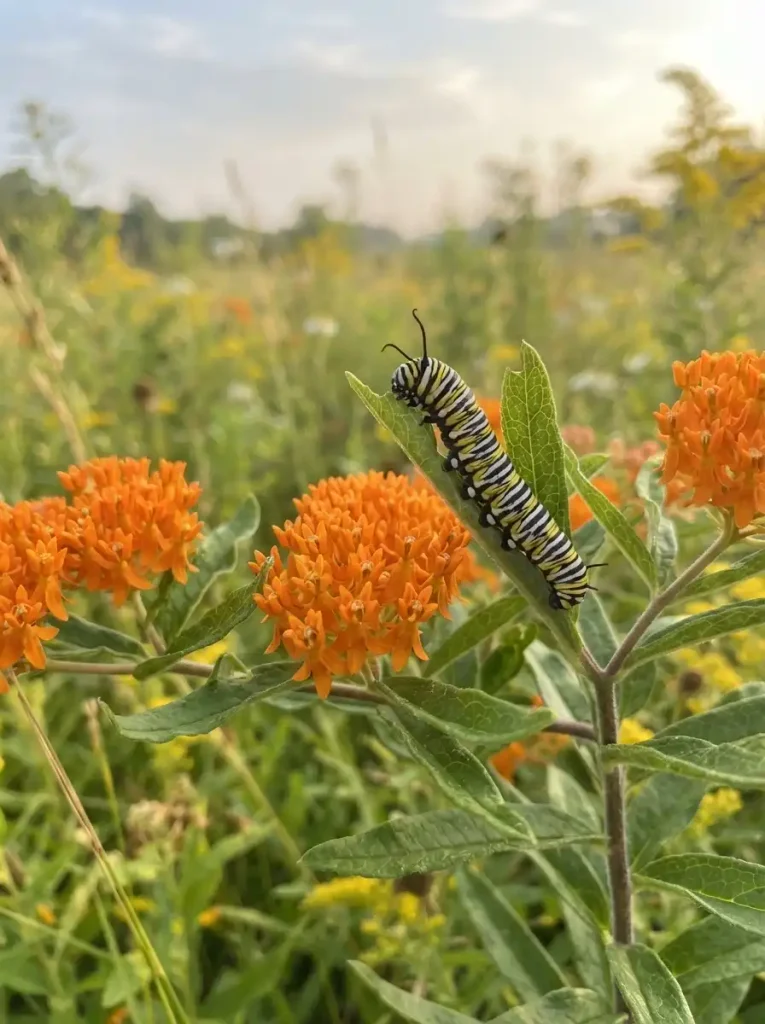
Butterfly weed is a native milkweed with flat clusters of vivid orange flowers that practically glow in full sun. It serves as a host plant for monarch caterpillars, so a few chewed leaves mean you’re doing something right.
It prefers sandy, well-drained soil and grows one to three feet tall. It develops a deep taproot, so choose its permanent spot carefully, since it dislikes being moved later. Established plants tolerate drought nicely.
Choose native milkweed species like this one rather than tropical milkweed, which can stay green and keep monarchs from following their natural seasonal cycle. All milkweeds are toxic if eaten.
Grower’s Tip:
Plant a small group rather than a single plant. Monarchs and other butterflies find bigger patches more easily.
Important Planting Considerations
Follow Florida-Friendly Landscaping Principles
The University of Florida’s Florida-Friendly Landscaping program encourages choices that save water, protect local waterways and reduce chemical use. Most plants on this list fit those goals well, especially once they’re established.
Right Plant, Right Place
“Full sun” generally means six or more hours of direct light. Still, a spot with reflected heat from a driveway or wall can be harsher than open lawn. Match each plant to the actual conditions in your yard and you’ll skip a lot of maintenance.
Native or Non-Native?
Natives such as coreopsis, beach sunflower, coontie, tropical sage, Fakahatchee grass and butterfly weed typically need less water and fertilizer and support local wildlife. Non-natives can still earn a spot, but check with your county’s UF/IFAS Extension office to make sure a plant isn’t considered invasive in your area.
Group by Water Needs
Put drought-tolerant plants like aloe, bulbine and portulaca together, and thirstier ones like ixora and Mexican heather in a separate zone. This keeps irrigation simple and prevents overwatering.
Think About Salt and Wind
For coastal yards, beach sunflower and coontie handle salt spray well. Test other plants on exposed sites before committing to a large planting.
Plan for Pollinators
Porterweed, blue salvia, tropical sage, butterfly weed and bottlebrush all draw butterflies, bees or hummingbirds. Grouping several of these creates a lively wildlife corner.
Seasonal Care Calendar
- Spring (March to May): Plant new additions, apply a light slow-release feeding, divide crowded clumps, and prune frost-damaged growth.
- Summer (June to August): Check mulch depth, water deeply during dry spells, deadhead blooms, and watch for stress during peak heat. Many local governments restrict fertilizer in the rainy season, so check your area’s rules.
- Fall (September to November): Do light shaping, refresh mulch, and plant natives while the weather cools.
- Winter (December to February): Protect frost-tender plants during cold snaps, cut back ornamental grasses, and water less often.
FAQs About Florida Sun-Loving Plants
Q1. What does “full sun” really mean in Florida?
It means at least six hours of direct sunlight a day. In the hottest months, some plants labeled full sun still appreciate a little afternoon shade, especially when they’re young or growing in pots.
Q2. How often should I water sun-loving plants?
New plants usually need water every few days for the first several weeks. Once established, most of these plants do well with a deep soak about once or twice a week, and many natives need even less. Always check the soil before watering.
Q3. Which plants are best for beginners?
Coreopsis, beach sunflower, society garlic, daylily and coontie are forgiving and low-maintenance. They tolerate a range of conditions and rarely demand special attention.
Q4. Can I grow these plants in containers?
Yes. Portulaca, aloe, bulbine, mandevilla, society garlic and verbena all do well in pots with fast-draining potting mix. Containers also make it easy to move tender plants indoors when it gets cold.
Q5. How do I protect plants during a cold snap?
Cover tender plants with frost cloth or an old bedsheet before the temperature drops near freezing, and remove it the next morning. Avoid plastic touching the leaves. Moving potted plants to a sheltered spot, such as against a south-facing wall or under an overhang, can also help.
Final Words
Florida’s sunshine doesn’t have to be something your garden survives. With the right plants, it becomes the reason your yard looks so alive. From golden coreopsis to blazing bottlebrush, each plant in this list is chosen to enjoy the heat, not just endure it.
Start with a few that fit your space and care style, then add more as you gain confidence. Use mulch, water wisely, and group plants with similar needs. Before long, you’ll have a bright, buzzing, low-fuss garden that looks great through every Florida summer.