
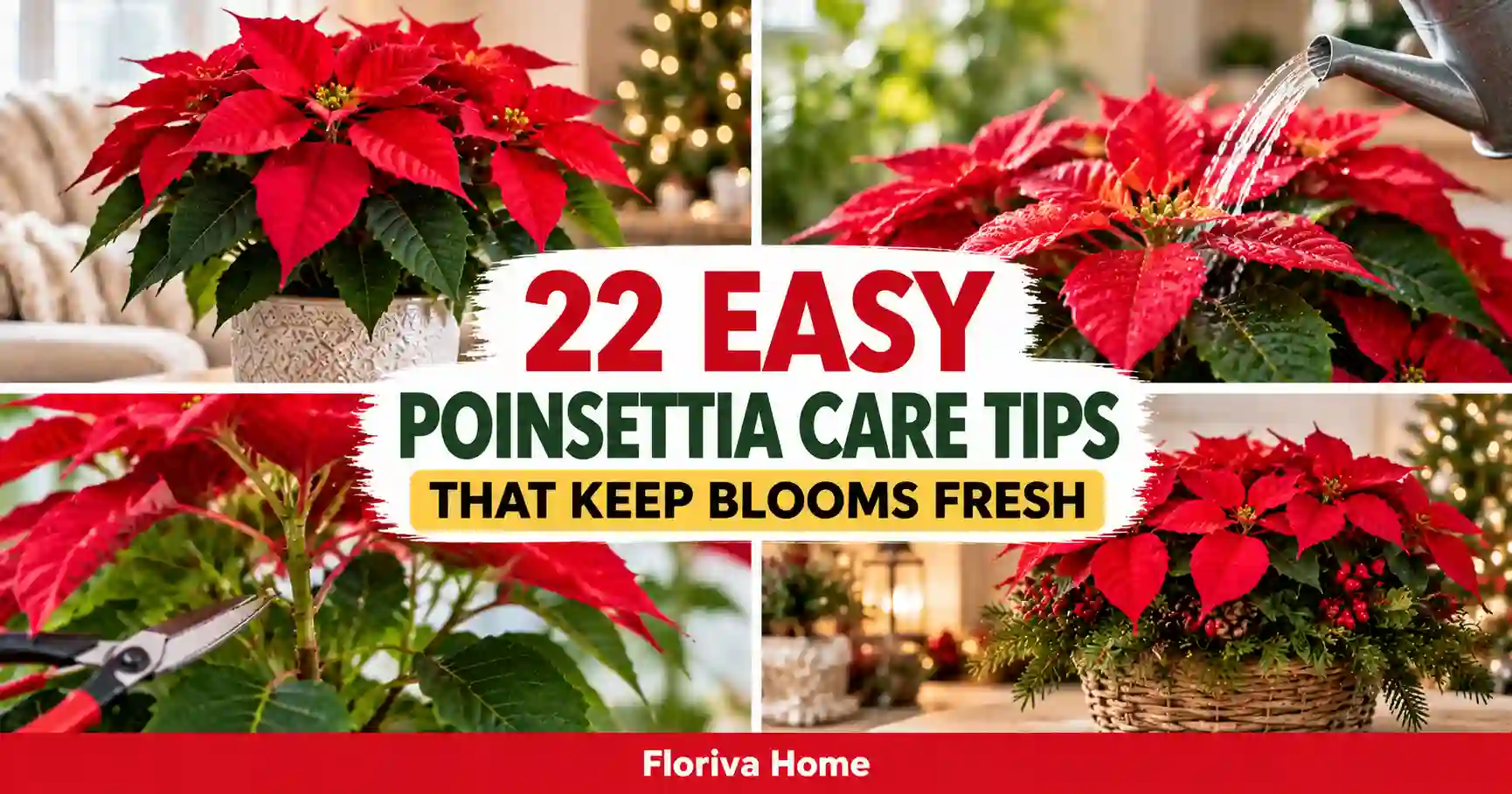
22 Easy Poinsettia Care Tips That Keep Blooms Fresh
Poinsettias are one of the easiest ways to bring a warm holiday feeling into your home. Their colorful bracts can stay attractive for weeks when the plant gets the right balance of light, water, warmth, and attention.
The good news is that poinsettia care does not have to be complicated. A few simple habits can help prevent drooping leaves, faded color, and unnecessary stress.
Whether you just brought home a new poinsettia or want to keep one looking beautiful beyond the holidays, these easy tips will help you give it a healthier growing environment.
Easy Poinsettia Care Tips
Poinsettias respond well to consistent care rather than constant attention. Instead of following a rigid routine, pay attention to what your plant is telling you.
From choosing the right location to watering at the right time, these simple poinsettia care tips can help your plant stay colorful, fresh, and attractive.
1. Choose a Bright Indoor Spot
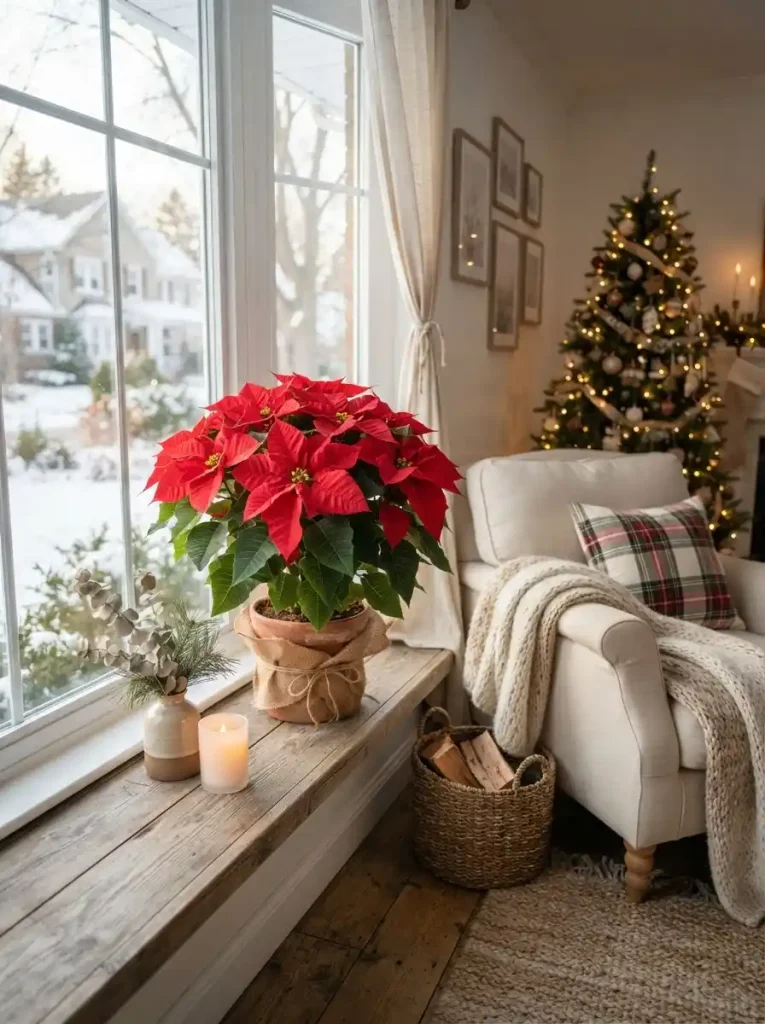
Place your poinsettia somewhere bright where it can receive plenty of natural daylight without being exposed to harsh conditions. A room with a bright window can work beautifully.
Avoid hiding the plant in a dark corner just because it is being used as holiday decor. Insufficient light can leave the plant looking weak and less vibrant.
Also, rotate the pot occasionally so different sides receive similar amounts of light. This can help the plant maintain a more balanced appearance instead of leaning toward one direction.
2. Keep It Away From Cold Drafts
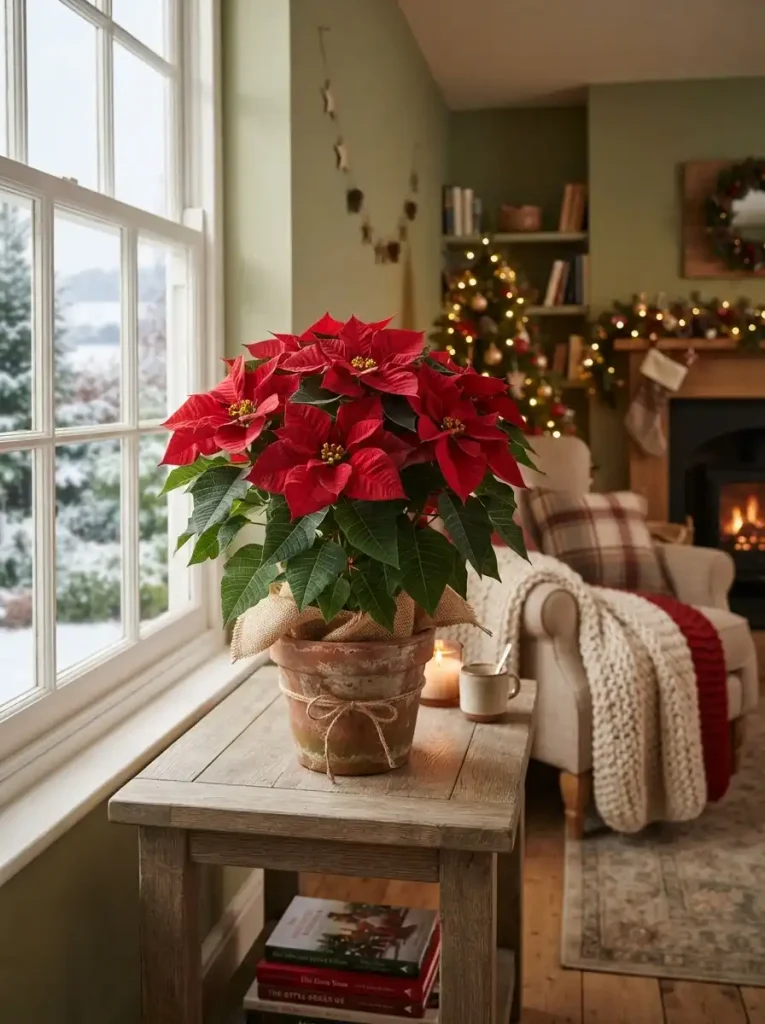
Poinsettias appreciate stable indoor conditions, so avoid placing yours directly beside an exterior door, frequently opened window, or chilly hallway.
Sudden temperature changes can put unnecessary stress on the plant. A location that feels comfortable to you is generally a better choice than an exposed spot with constant drafts.
During colder weather, check the area around the plant at different times of day. A seemingly comfortable location can become much colder overnight.
3. Give the Plant Room to Breathe
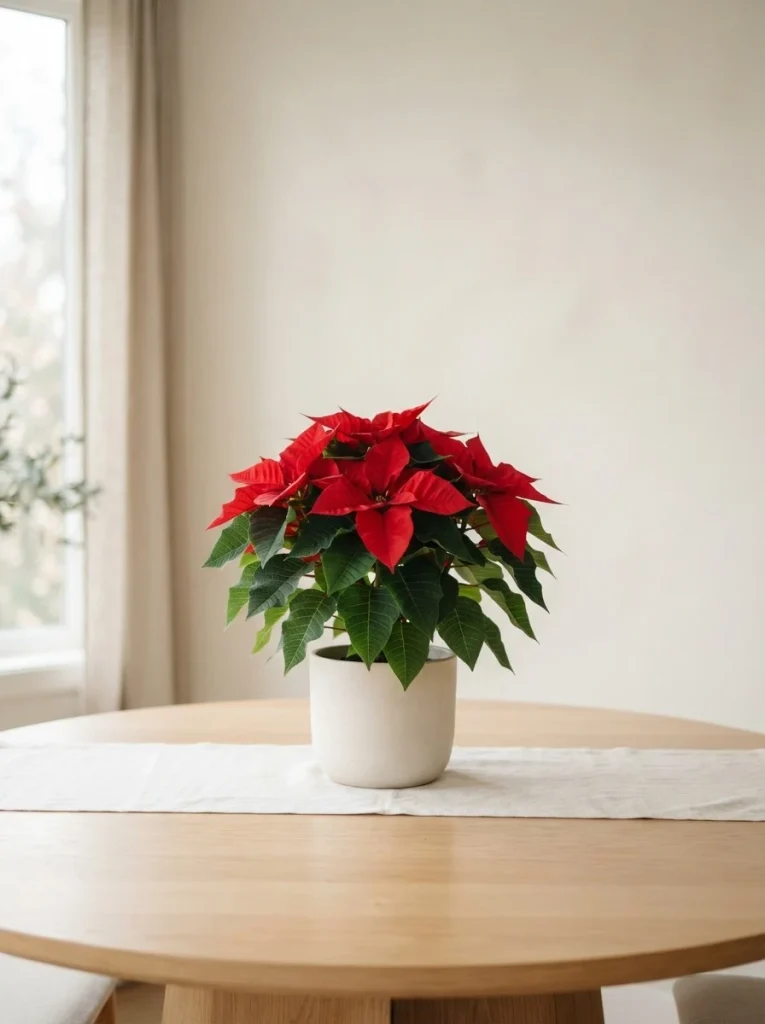
Avoid squeezing your poinsettia between several decorations or placing it directly against other houseplants. Good air movement around the foliage helps create a healthier environment.
You do not need a fan blowing directly at the plant. Simply leaving some open space around the leaves is enough for most indoor situations.
This also makes it easier to inspect the foliage and notice changes before a small problem becomes difficult to manage.
4. Check the Soil Before Watering
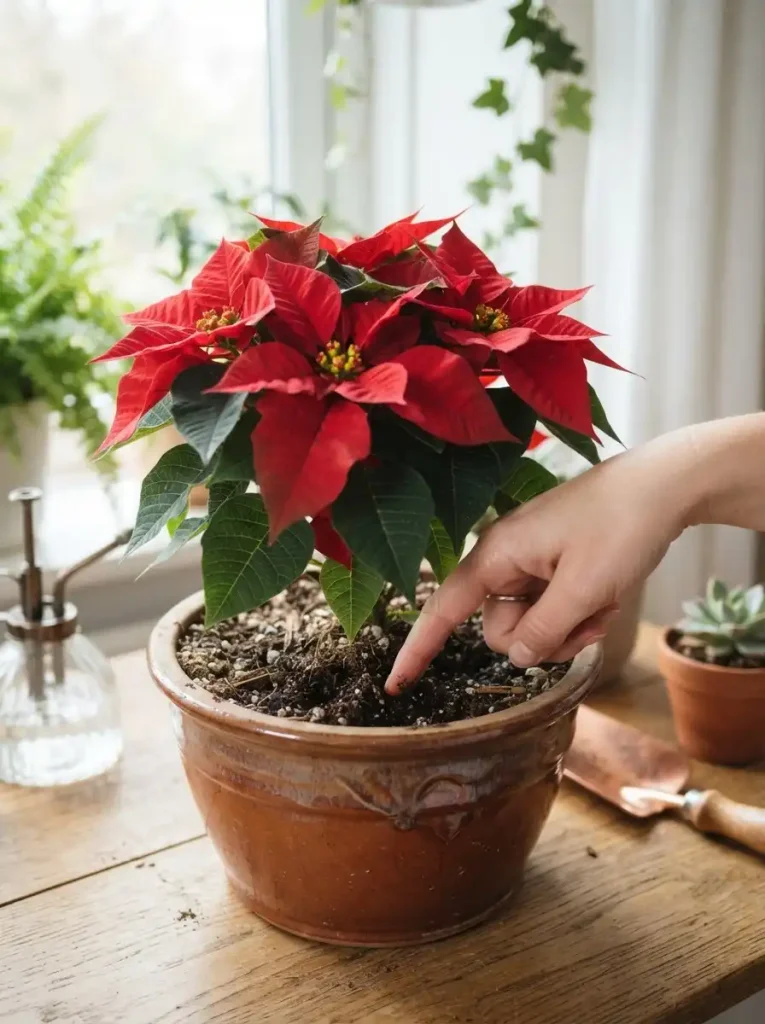
One of the easiest ways to improve poinsettia care is to stop watering according to the calendar and start checking the soil.
Touch the surface of the potting mix before adding water. If the upper layer still feels noticeably moist, give it more time. If it feels dry, the plant may be ready for another drink.
This simple check is more useful than automatically watering every few days because indoor conditions can change with temperature, sunlight, and humidity.
5. Water Thoroughly, Then Let Excess Drain
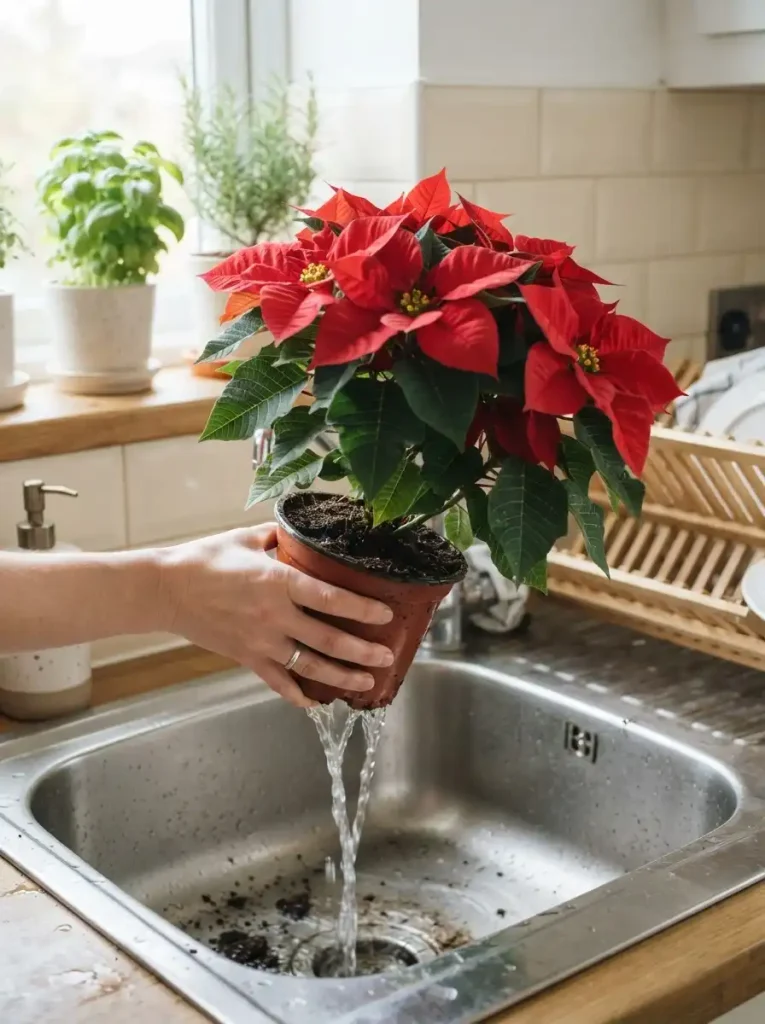
When your poinsettia needs water, give it enough to moisten the root area rather than adding tiny amounts repeatedly.
The important part is allowing excess water to escape afterward. If the decorative cover or saucer collects water, empty it instead of letting the pot remain submerged.
This creates a better balance between moisture and drainage and helps prevent the soggy conditions that can damage roots.
6. Never Leave the Pot Sitting in Water
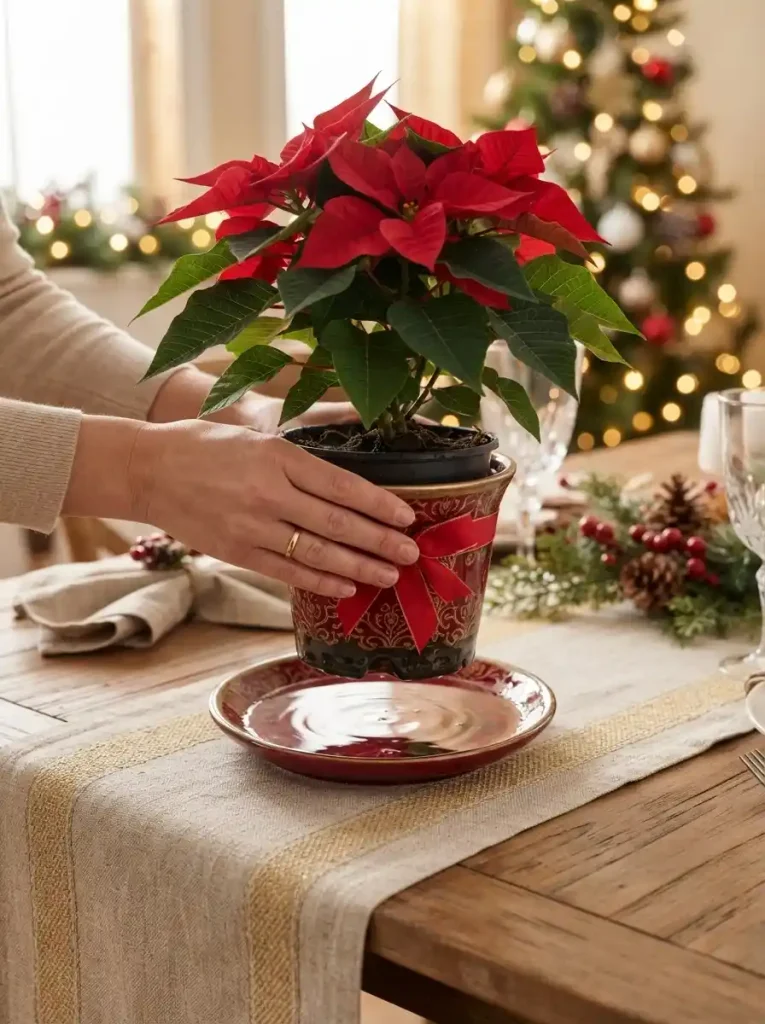
Decorative holiday pots and foil wrappers can sometimes hide standing water around a poinsettia container. That extra moisture can easily go unnoticed.
After watering, check beneath the pot and inside any decorative cover. If water has collected there, remove it.
A drainage hole is only useful when excess water actually has somewhere to go. Keeping the roots from constantly sitting in water is an important part of healthy poinsettia care.
7. Protect the Leaves From Heat Sources
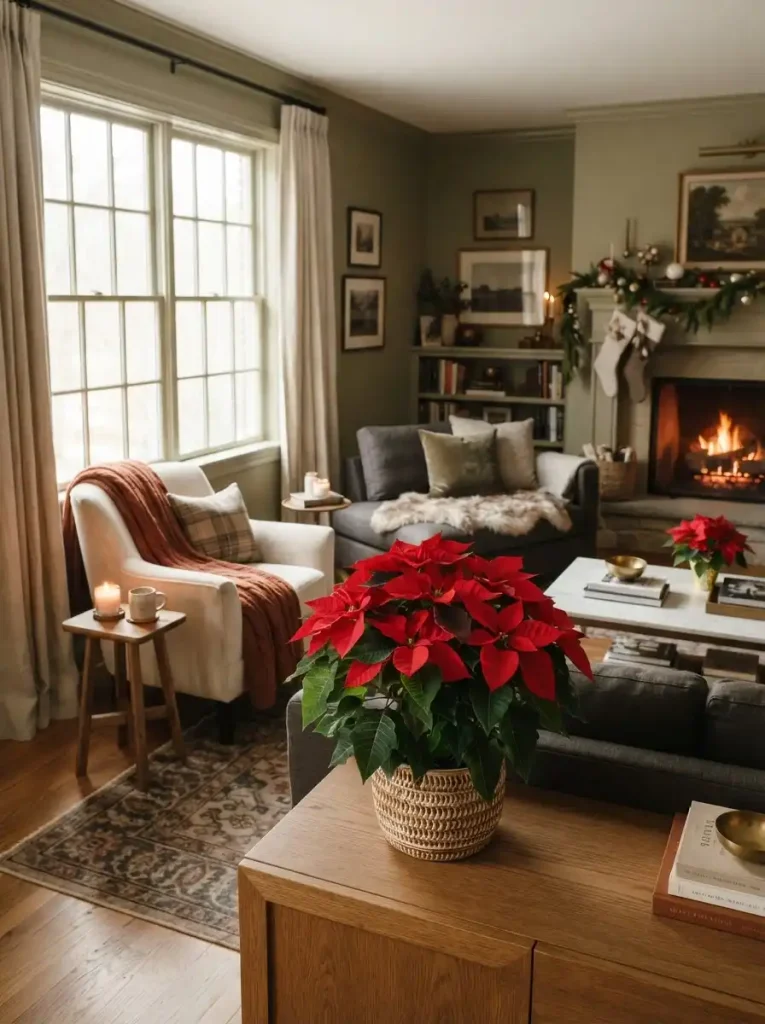
Keep your poinsettia away from radiators, fireplaces, heating vents, and other strong sources of dry heat.
A plant can look perfectly comfortable near a warm vent while gradually becoming stressed by the constant airflow. Leaves may become dry or the plant may lose its fresh appearance.
Choose a spot with steady room conditions instead of one that experiences repeated blasts of hot air.
8. Keep the Foliage Dry When Watering
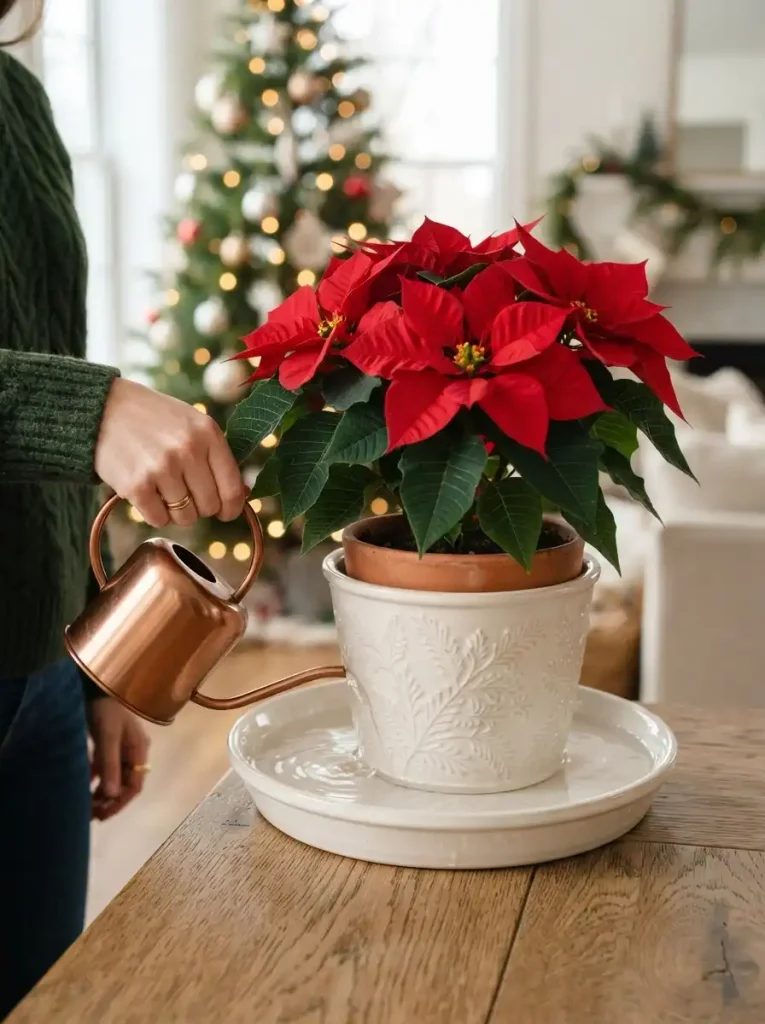
Direct water toward the potting mix instead of routinely soaking the leaves and colorful bracts.
Wet foliage that stays damp for long periods can create an unfavorable environment for leaf problems, particularly when airflow is limited.
Watering at the base also makes the process cleaner and helps keep the poinsettia looking polished when it is displayed as part of your holiday decor.
9. Turn the Pot for Even Growth
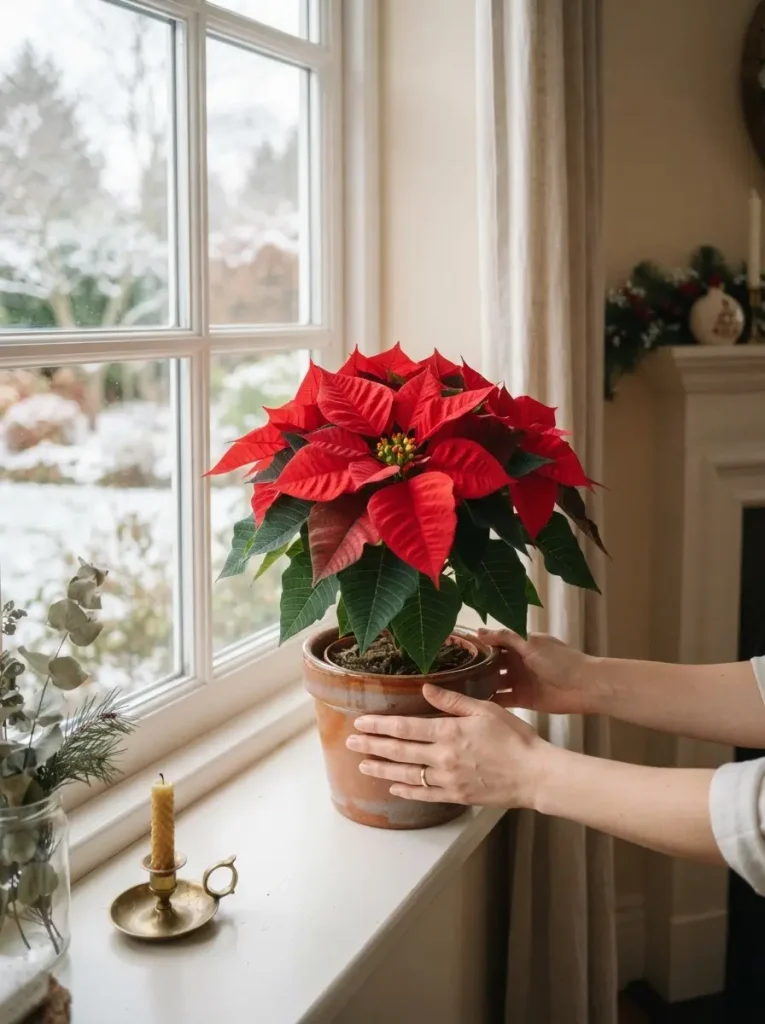
If your poinsettia sits beside a window, it may naturally grow toward the strongest source of light.
Give the container a gentle turn every few days so the plant receives light more evenly from different directions. This can help maintain a fuller and more attractive shape.
Small rotations are enough. There is no need to move the plant to a completely different location each time.
10. Remove Damaged Leaves Promptly
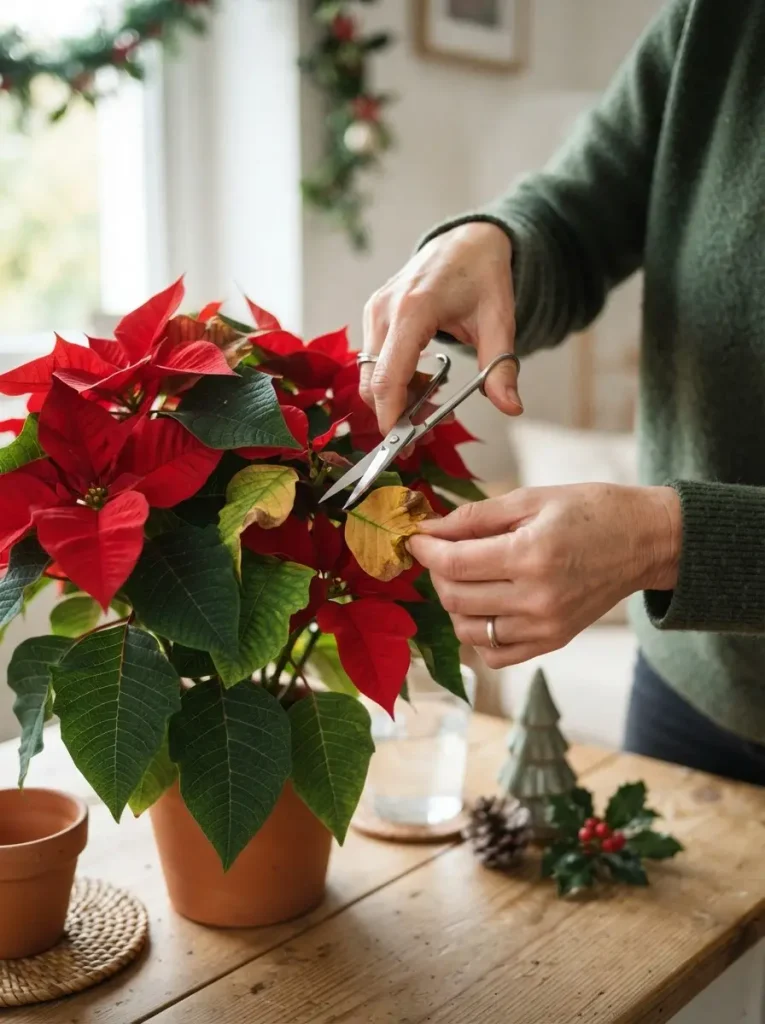
Inspect your poinsettia regularly and remove leaves that are completely yellow, severely damaged, or already fallen.
Use clean scissors when a leaf or small stem needs trimming rather than pulling aggressively on the plant.
Regular tidying keeps the display looking attractive and makes it easier to spot changes in the remaining foliage. It also prevents fallen plant material from accumulating around the pot.
11. Give It Consistent Room Temperatures
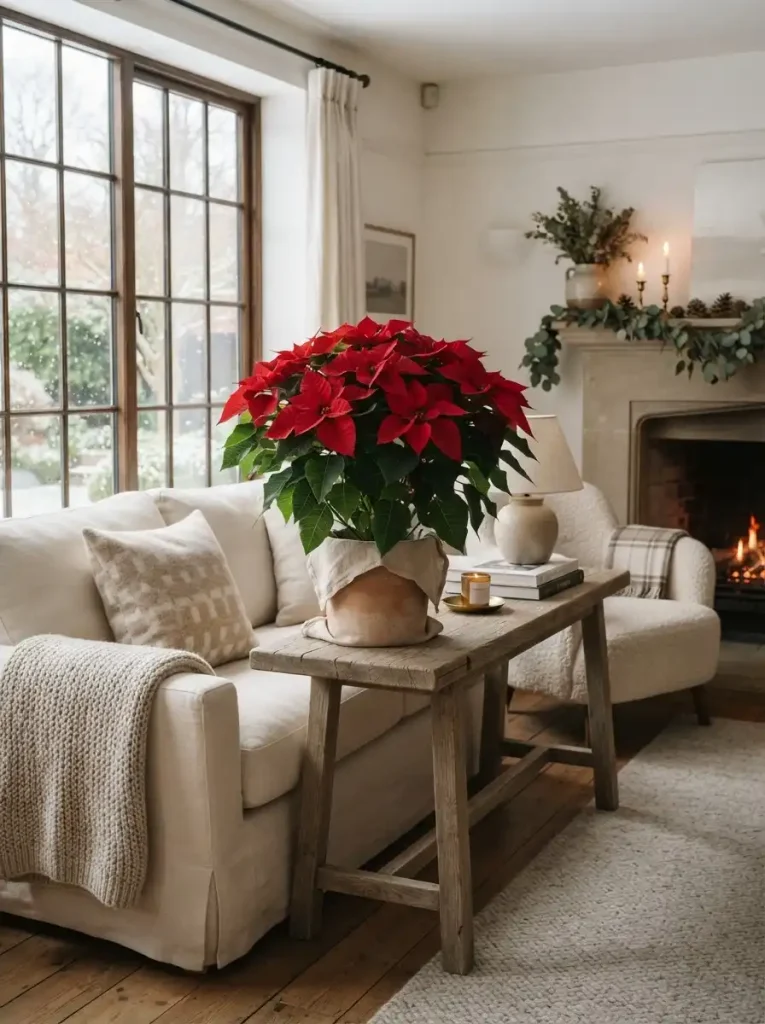
Poinsettias generally do better when their surroundings remain relatively stable rather than swinging between very cold and very warm conditions.
Try to choose a comfortable indoor location away from drafty entrances, cold glass, and powerful heating equipment.
Consistency matters especially during winter, when indoor temperatures can change considerably throughout the day. A stable location can help the plant remain attractive for longer.
12. Avoid Overcrowding Your Poinsettia
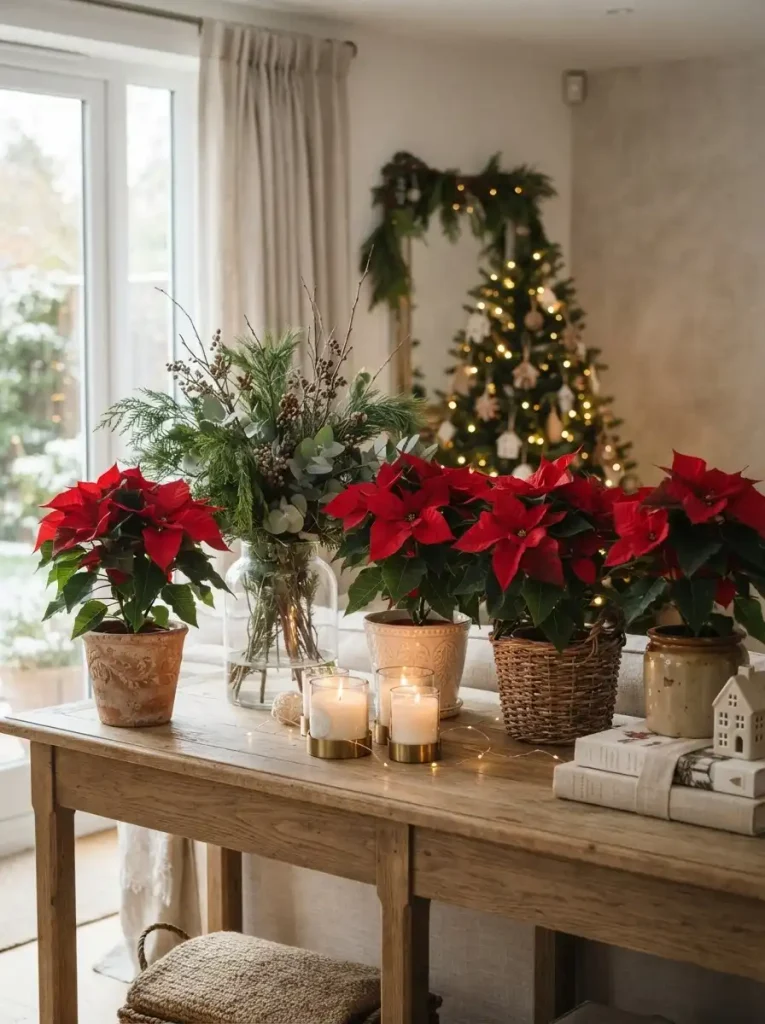
Give your poinsettia enough space around the pot and foliage, especially if you have several holiday plants displayed together.
Crowding can reduce airflow and make it harder to inspect the leaves for discoloration, pests, or other changes. A little breathing room also allows each plant to remain visually attractive.
If you are creating a holiday display, leave enough space between containers rather than grouping them tightly together.
13. Keep Your Poinsettia Away From Cold Glass
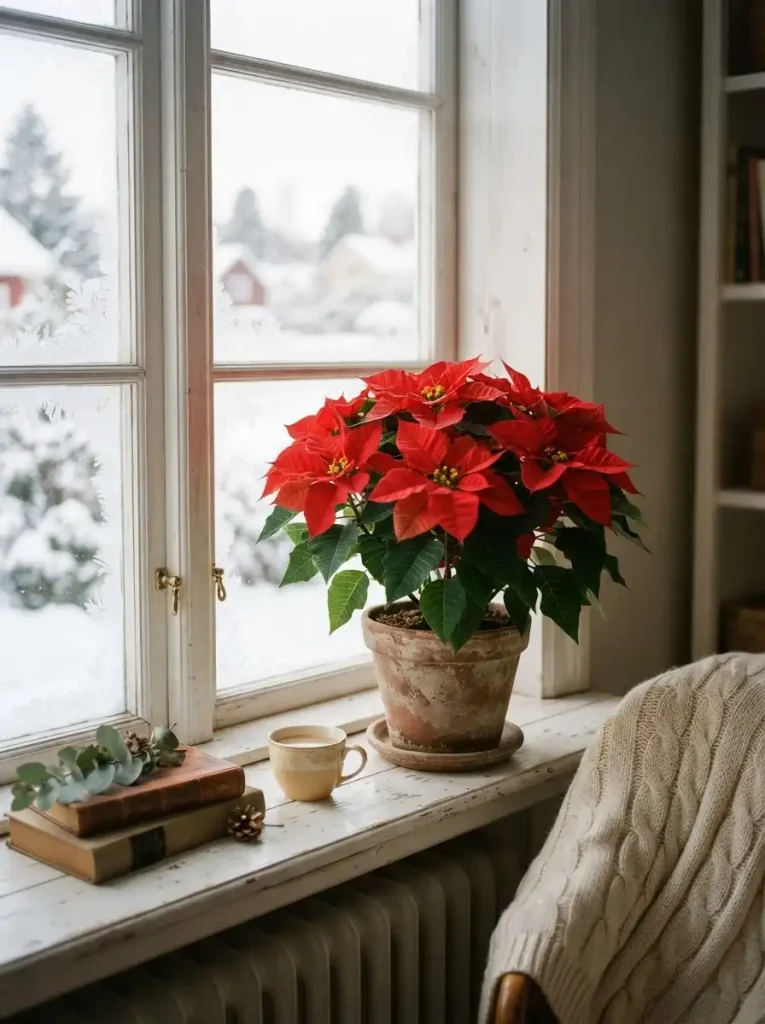
A sunny window can be an excellent location during winter, but avoid allowing the leaves to press directly against very cold glass.
The temperature near a window can be significantly different from the rest of the room, particularly overnight. Position the plant slightly back from the glass while still giving it access to bright natural light.
This small adjustment can make the location more comfortable without sacrificing the light your poinsettia needs.
14. Check the Leaves for Pests
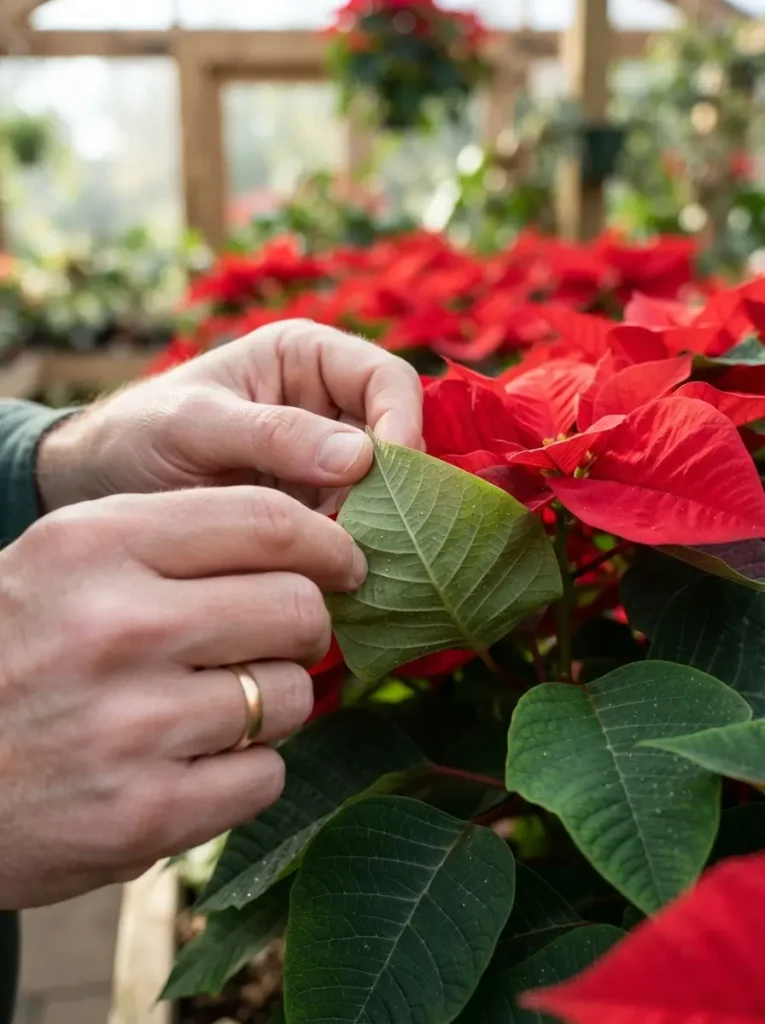
Take a few seconds to look closely at both the upper and lower surfaces of the leaves.
Small pests can sometimes hide beneath foliage where they are difficult to notice from a distance. Look for unusual spots, tiny insects, webbing, or leaves that suddenly appear distorted.
Catching an issue early is much easier than dealing with a widespread problem later. Regular inspection is one of the simplest poinsettia care habits to develop.
15. Increase Humidity When Indoor Air Is Very Dry
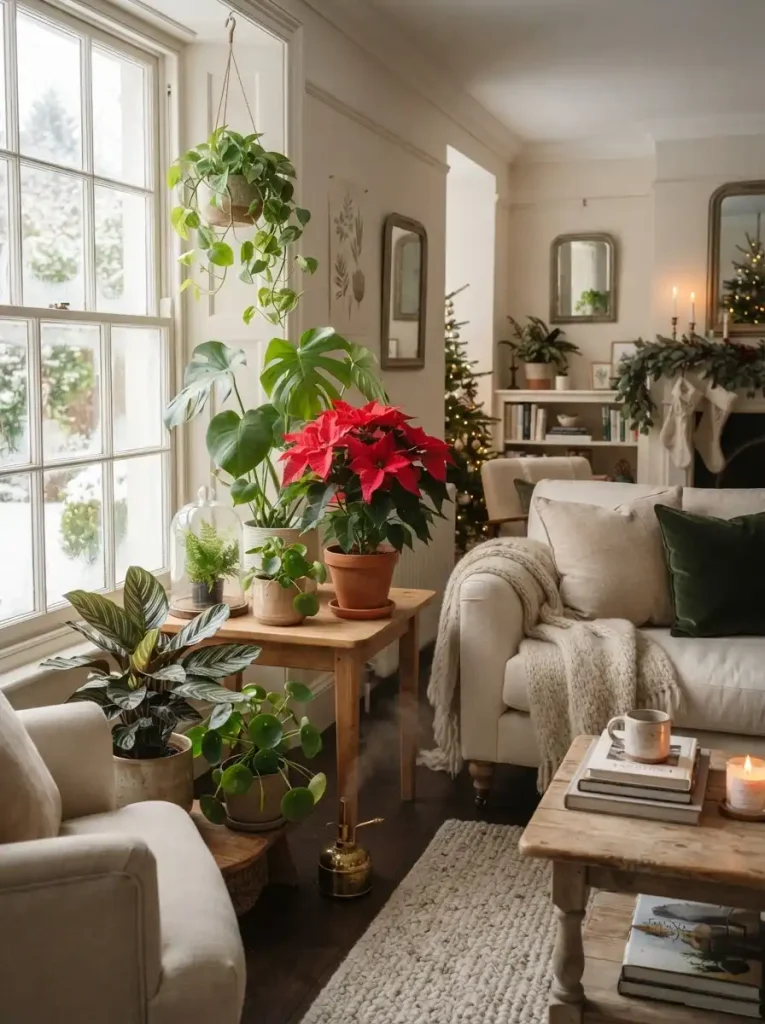
Winter heating can make indoor air noticeably dry. Although you do not need to create a tropical environment, extremely dry conditions may make some poinsettias less comfortable.
If your home becomes particularly dry, consider placing the plant in a naturally comfortable room rather than directly beside a heat source.
Grouping compatible houseplants nearby can also create a slightly more humid microenvironment, while keeping enough space between plants for good airflow.
16. Use a Container With Good Drainage
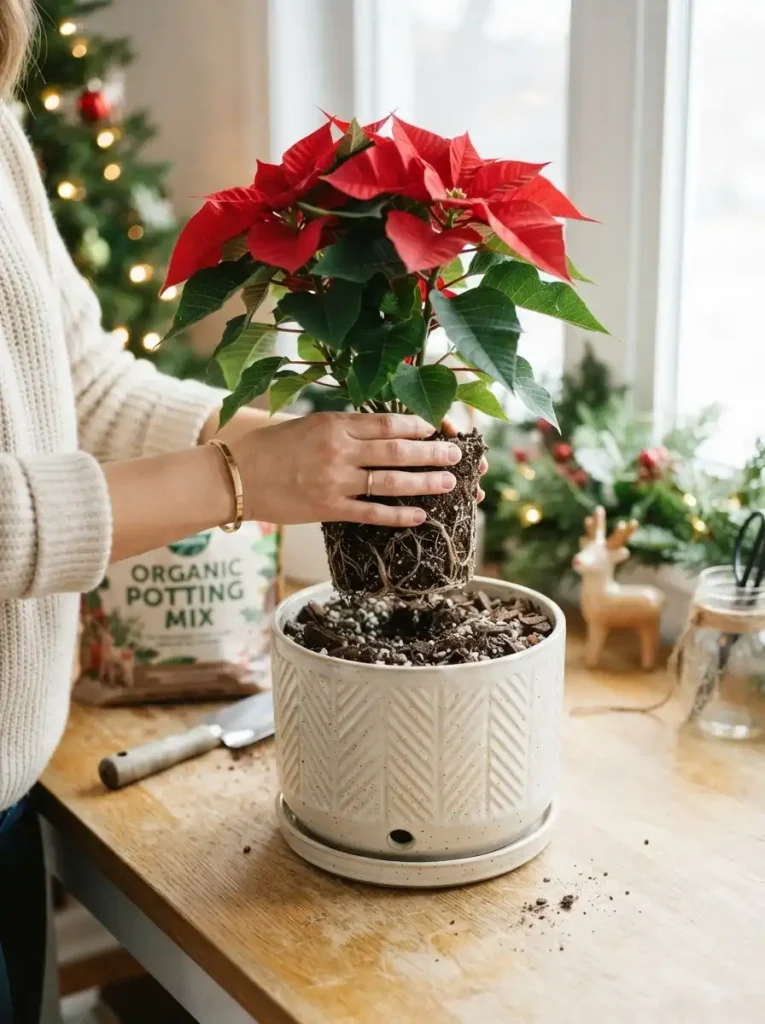
A beautiful decorative pot is not necessarily a good growing container. Make sure the actual plant container has drainage holes that allow excess water to escape.
If your poinsettia comes wrapped in decorative foil, check whether water can drain freely after watering.
Good drainage is one of the most important foundations of indoor plant care because it helps prevent water from remaining trapped around the roots.
17. Avoid Moving It Constantly
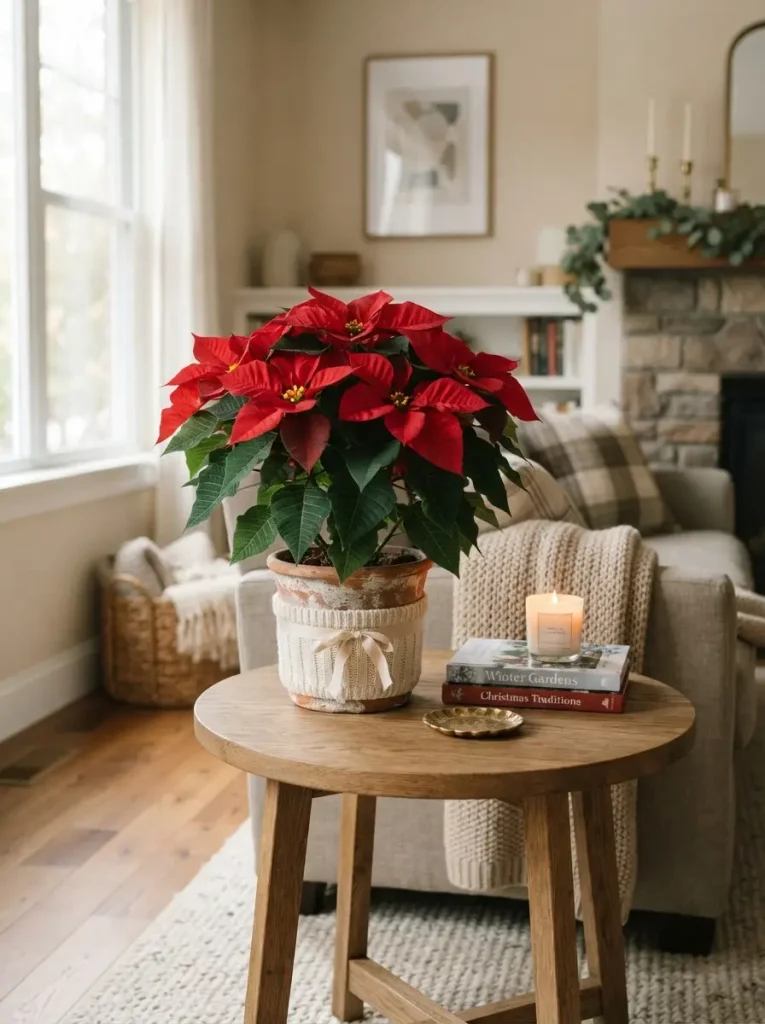
Once you find a comfortable location with suitable light and temperature, try to leave your poinsettia there.
Moving a plant from room to room can expose it to completely different light, temperature, humidity, and airflow conditions.
It is fine to relocate it when necessary, but constant rearranging simply for decoration can make consistent care more difficult. Choose a beautiful permanent spot whenever possible.
18. Feed the Plant at the Right Time
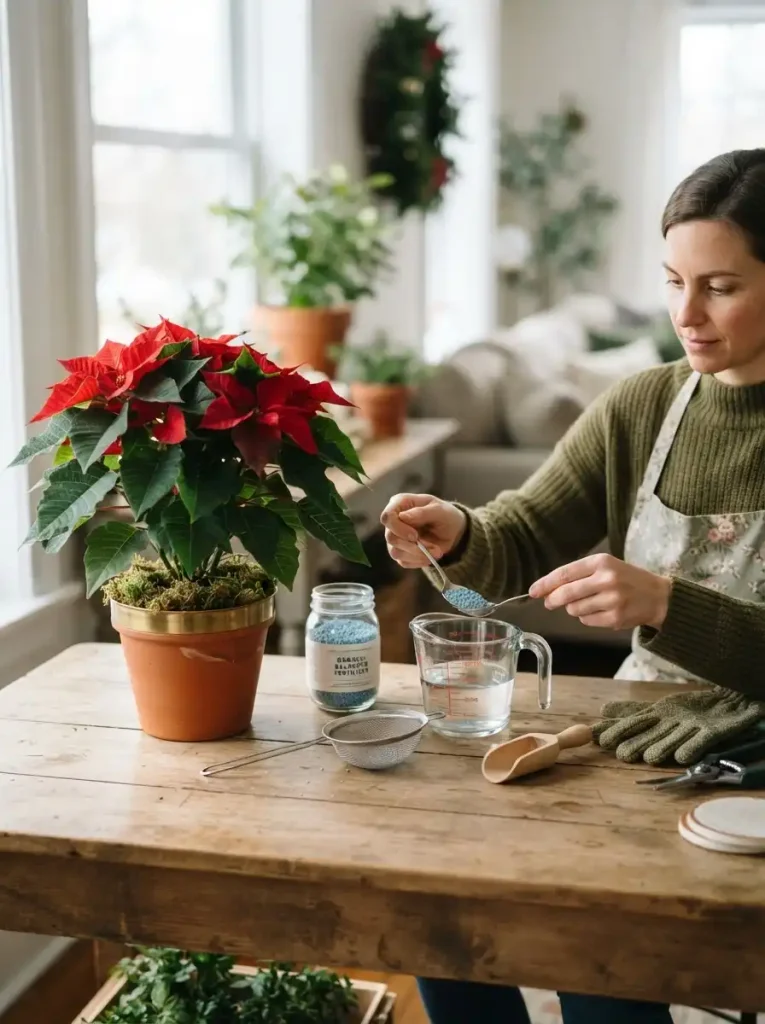
A newly purchased poinsettia usually does not need immediate heavy fertilizing simply because it is flowering.
If you plan to keep the plant growing after the holiday season, feeding can become more relevant later as active growth resumes.
Always follow the instructions on your chosen fertilizer and avoid applying more than recommended. Extra fertilizer does not automatically produce a healthier plant.
19. Give It More Light After the Holidays
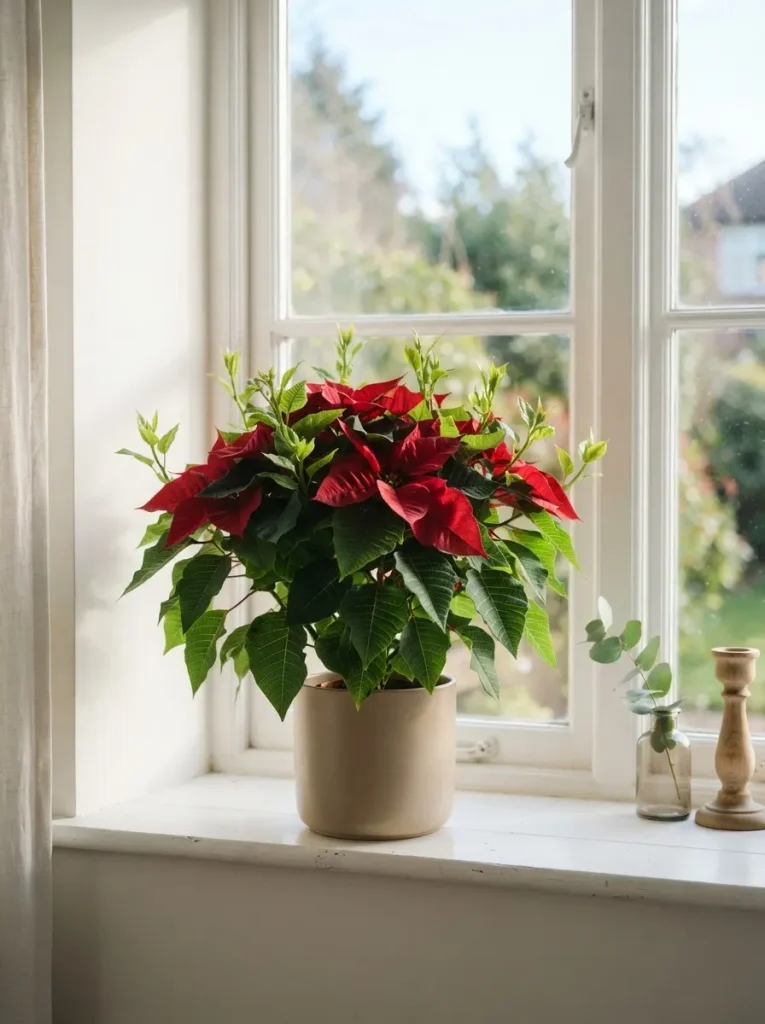
Once the holiday decorations come down, your poinsettia can continue growing if you provide suitable care.
Move it to a bright indoor location where it can receive good natural light. Continue checking the soil before watering and maintain comfortable room conditions.
With proper attention, a poinsettia does not have to be treated as a temporary Christmas decoration. It can remain a rewarding houseplant long after its original display period.
20. Prune It After Flowering
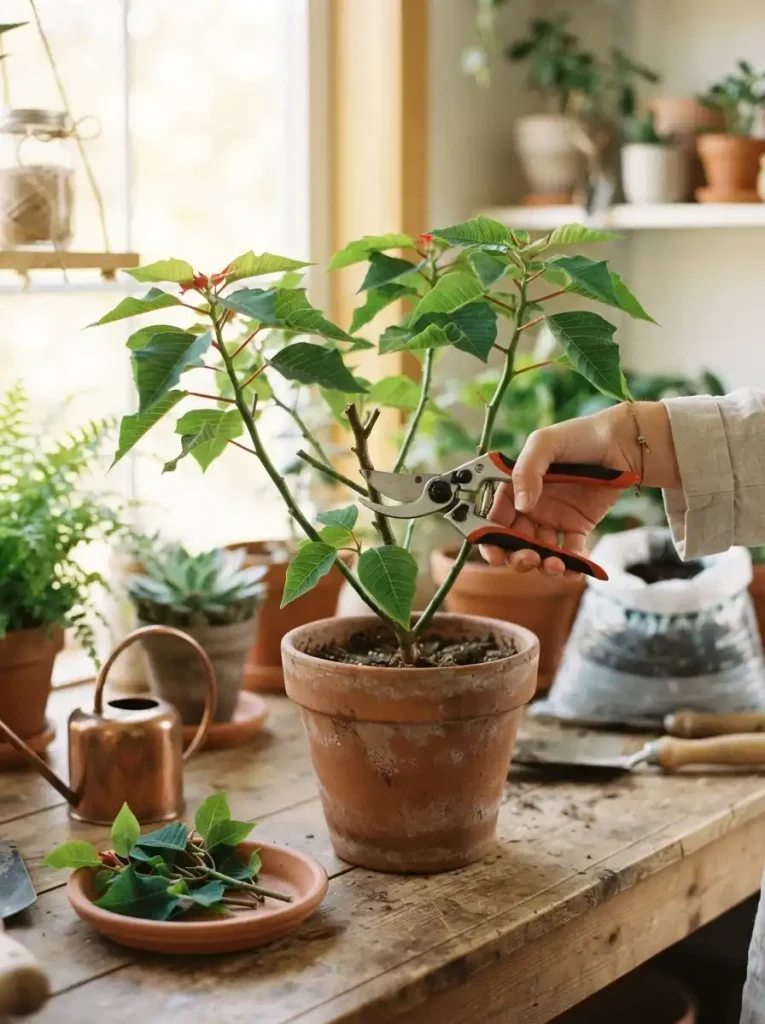
If you want to maintain your poinsettia for another growing season, pruning can help create a more compact plant.
After the colorful display has faded and the plant enters a period of reduced growth, old stems can be cut back appropriately.
Avoid aggressive pruning simply because the plant looks untidy. Timing and the plant’s growth stage matter, so give it time to transition before making major cuts.
21. Watch for Sudden Leaf Drop
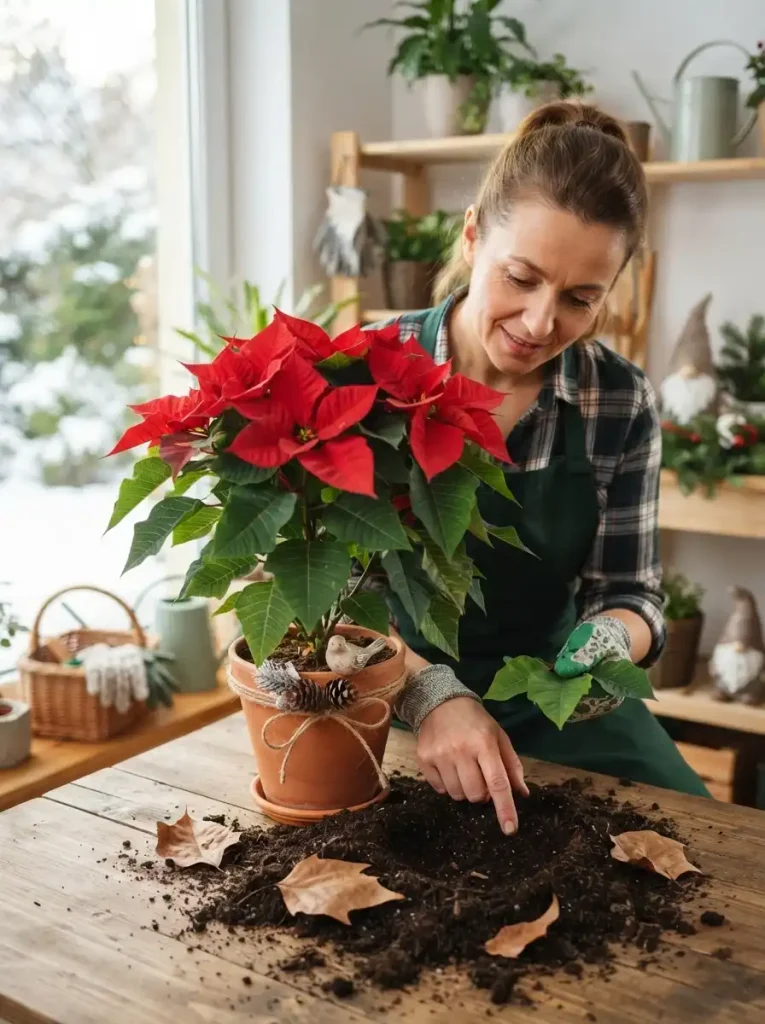
A few fallen leaves do not always mean your poinsettia is dying. Leaf drop can happen when a plant experiences stress from temperature changes, watering problems, insufficient light, or relocation.
Instead of immediately adding more water or fertilizer, review the plant’s recent conditions.
Think about what changed during the previous few days. Identifying the environmental change can help you correct the problem without creating another one.
22. Be Consistent With Your Care Routine
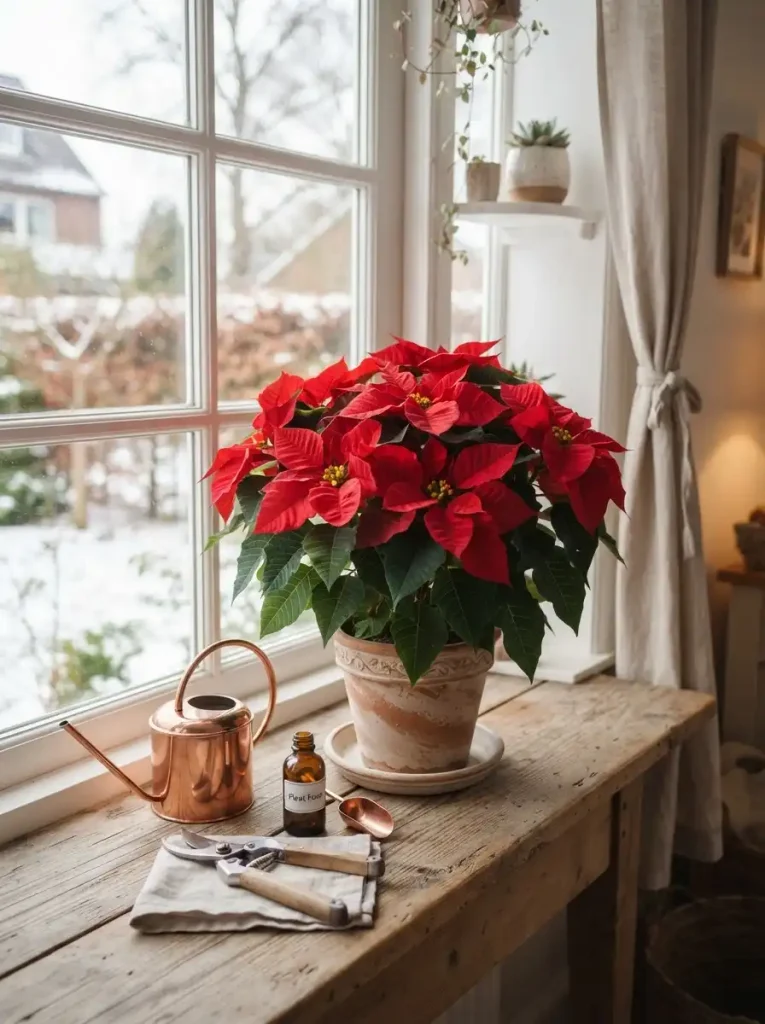
The best poinsettia care routine is simple enough to maintain.
Check the soil, observe the leaves, provide suitable light, protect the plant from temperature extremes, and make sure excess water can drain away.
You do not need to constantly adjust the plant. Consistency is often more helpful than giving it too much attention. Once you understand its environment, caring for a poinsettia becomes surprisingly straightforward.
Common Poinsettia Care Mistakes to Avoid
Even when you understand the basics, a few common mistakes can make poinsettia care harder than necessary.
Watering on a Fixed Schedule
Watering every plant on the same schedule is not always effective. Indoor temperature, sunlight, pot size, and soil conditions can all influence how quickly the potting mix dries.
Check the soil instead of automatically watering because a certain number of days has passed.
Keeping It Too Close to Heat
A warm fireplace or heating vent may seem like a cozy location, but direct heat can create an unnecessarily stressful environment.
Choose a bright area with relatively stable conditions instead.
Ignoring Drainage
A decorative container can hide excess water. Always make sure the growing pot can drain properly and never allow the plant to remain in standing water.
Placing It in a Dark Corner
Poinsettias are often treated as decorative accessories during the holidays, but they are still living plants. Give yours sufficient bright indoor light rather than sacrificing plant health for decoration.
Making Too Many Changes at Once
If your poinsettia begins looking unhappy, resist the temptation to change everything immediately.
Check the soil, light, temperature, and drainage one at a time. A gradual, thoughtful adjustment makes it easier to understand what your plant actually needs.
How to Keep Poinsettia Blooms Looking Fresh
The colorful parts of a poinsettia can remain attractive when the plant receives steady care.
Keep it in bright natural light, maintain comfortable indoor temperatures, water when the soil needs it, and prevent the roots from sitting in excess water.
It also helps to keep the plant away from busy doorways and locations where it can easily be bumped or exposed to sudden drafts.
Most importantly, observe your poinsettia regularly. Changes in leaves, soil moisture, and overall appearance can tell you when something in its environment needs attention.
Can You Keep a Poinsettia After Christmas?
Yes. A poinsettia can continue growing after the holiday season when it receives appropriate light, water, and general care.
The colorful bracts may eventually fade, but that does not necessarily mean the plant has reached the end of its life. Once the holiday display is over, continue treating it as a living houseplant.
With patience and proper seasonal care, you can encourage new growth and potentially enjoy the plant again in the future.
Final Thoughts
Keeping a poinsettia fresh does not require complicated gardening skills. The biggest difference usually comes from getting the basics right: suitable light, careful watering, good drainage, comfortable temperatures, and consistent observation.
Instead of treating your poinsettia as a short-term decoration, give it the same thoughtful care you would give any indoor plant. With the right environment, those colorful holiday bracts can remain a beautiful part of your home for weeks, while the plant itself can continue growing beyond the festive season.