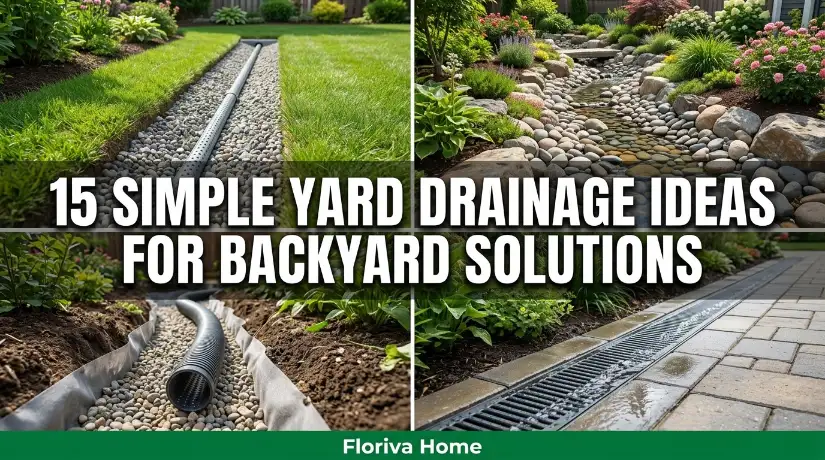
15 Simple Yard Drainage Ideas for Backyard Solutions
Good yard drainage can make a backyard feel cleaner, healthier, and easier to enjoy. When rain collects around the lawn, patio, garden beds, or foundation, it can leave muddy spots, encourage erosion, and turn outdoor spaces into soggy messes.
The right drainage plan moves excess water where it can safely soak in, flow away, or be collected. From simple gravel channels to rain gardens and French drains, these 15 yard drainage ideas combine practical function with landscaping details worth saving for your next backyard project.
What are simple backyard drainage solutions?
Simple backyard drainage solutions include gravel drainage strips, downspout extensions, dry creek beds, rain gardens, rock aprons, and drainage swales. The right option depends on your yard’s slope, soil, amount of runoff, and the location of recurring wet spots.
1. French Drain for Persistent Soggy Areas
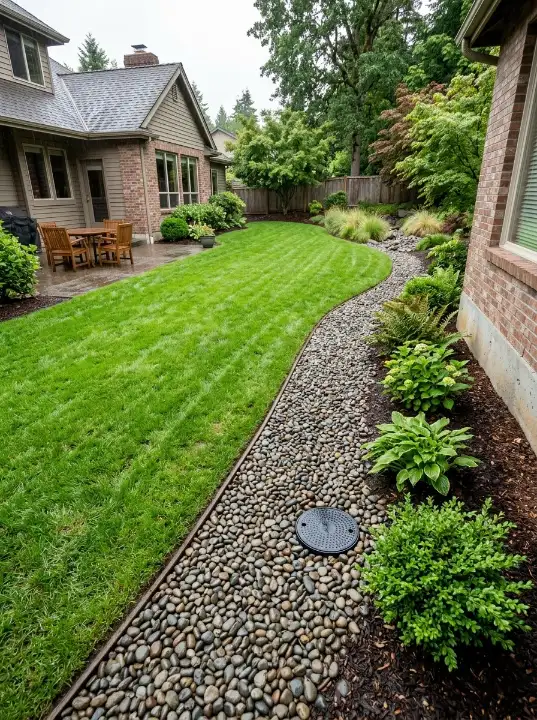
A French drain is a buried trench filled with gravel and a perforated pipe that collects excess water and carries it toward a safer outlet. Water filters through the gravel, enters the pipe, and moves away from low, soggy parts of the yard.
Use this solution where water repeatedly pools after storms, especially along a lawn edge or beside a patio. Slope the pipe toward its outlet, wrap it with landscape fabric, and finish with clean gravel so the visible drainage area blends naturally with nearby plants.
2. Dry Creek Bed That Looks Like Landscaping
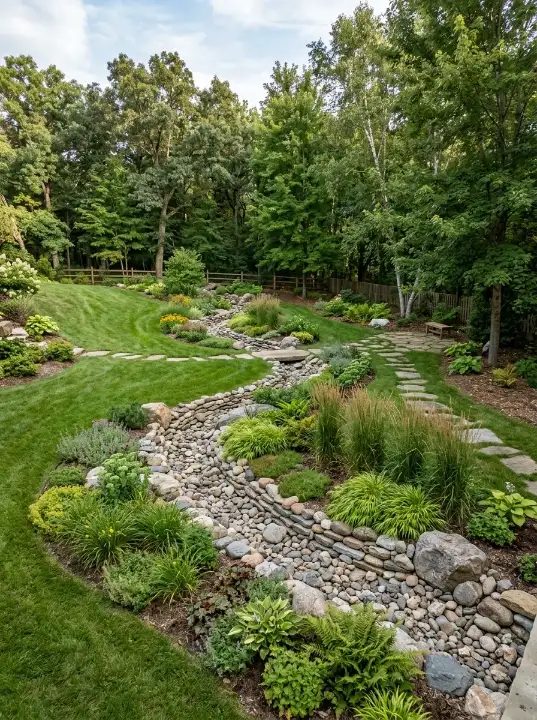
A dry creek bed creates a shallow, rock-lined channel that guides stormwater across the yard instead of letting runoff spread randomly. Layer different sizes of river rock along the channel, with larger stones near curves, and shape the sides gently to slow flowing water.
This drainage feature suits yards that receive noticeable runoff from roofs, slopes, or neighboring areas. Plant moisture-tolerant groundcovers beside the stones, keep the channel clear of leaves, and give it a defined route toward surrounding beds and a lower, stable collection point.
3. Rain Garden for Natural Water Absorption
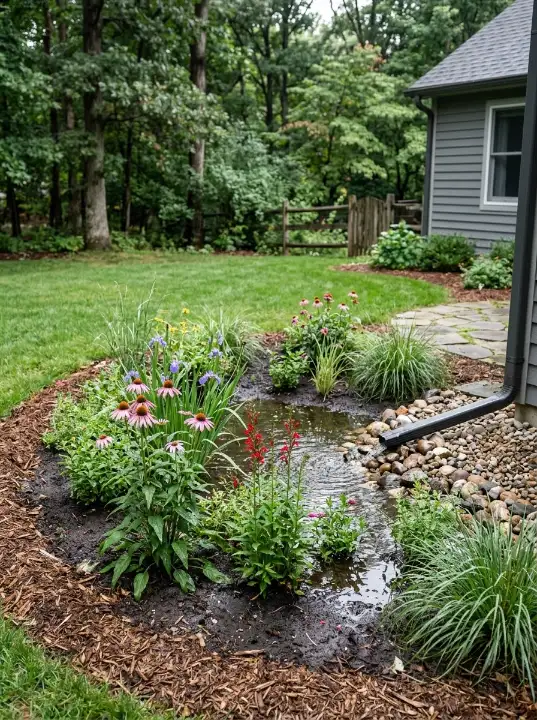
A rain garden is a planted, shallow depression designed to collect and temporarily hold rainwater from nearby roofs, driveways, or lawns. Use amended soil and water-tolerant plants to help moisture soak gradually into the ground rather than rushing across the landscape.
Choose a location away from the home’s foundation and observe where water naturally gathers. A curved planting bed can make the feature look intentional, while mulch and deep-rooted plants also help protect soil from splash and reduce visible muddy patches after rain.
4. Gravel Drainage Strip Along the Patio
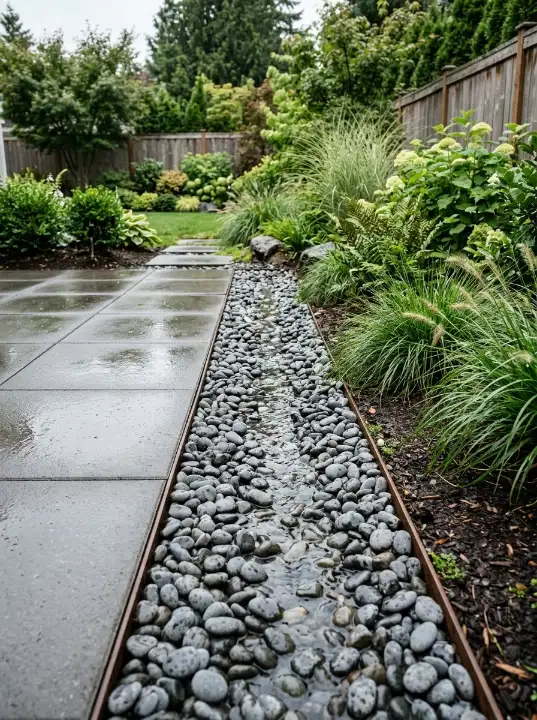
A gravel drainage strip creates a simple permeable zone beside a patio, walkway, or hardscape edge. A shallow excavated trench filled with washed gravel gives rainwater space to collect and infiltrate while keeping the patio border cleaner and less muddy during storms.
This approach works well when runoff spills from a hard surface into nearby soil. Install landscape fabric beneath the gravel, maintain a slight grade away from structures, and refresh displaced stones occasionally so the drainage strip stays open each season and attractive.
5. Downspout Drainage Extension
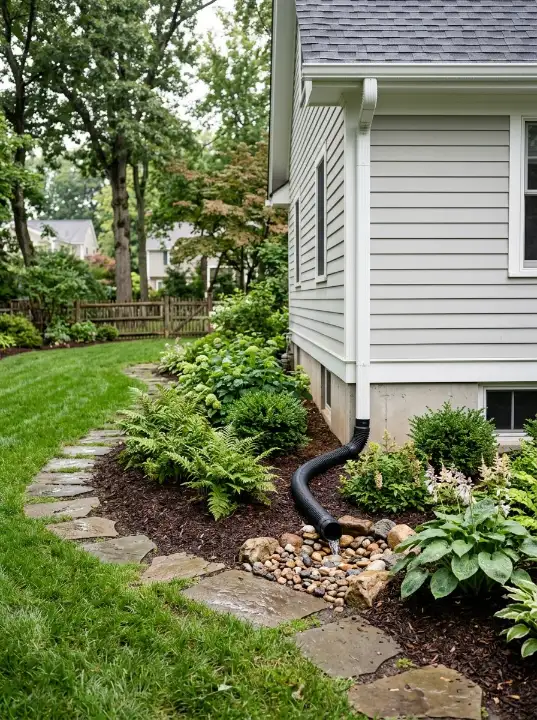
A downspout extension redirects roof runoff away from the house before it can saturate nearby soil. Connect the downspout to a solid drainage pipe or surface extension, then guide water toward a suitable lower area, rain garden, or approved discharge point.
This small change can help solve wet lawn patches close to exterior walls and gutters. Keep the outlet directed away from foundations, walkways, and erosion-prone soil. Cover exposed pipe with mulch or coordinate it with a planting border for a cleaner appearance.
6. Shallow Drainage Swale Across the Yard
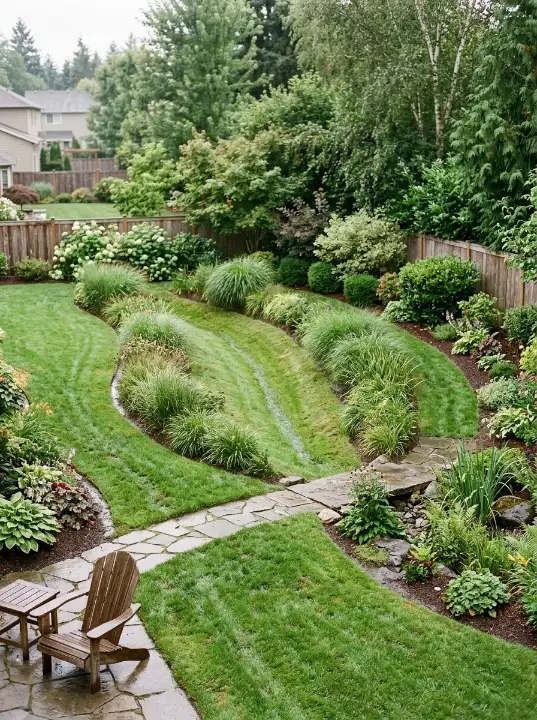
A drainage swale is a broad, shallow depression that gently guides surface water across a yard. Unlike a deep ditch, it can be shaped into the landscape with grass, groundcover, or suitable plants while giving runoff a defined path toward a safe outlet.
Swales are useful on gently sloping properties where stormwater crosses a lawn in a predictable direction. Keep the grade consistent, stabilize the channel with vegetation, and avoid creating steep sides. A softly curved swale can look like a planned garden contour.
7. Stepping-Stone Runoff Channel
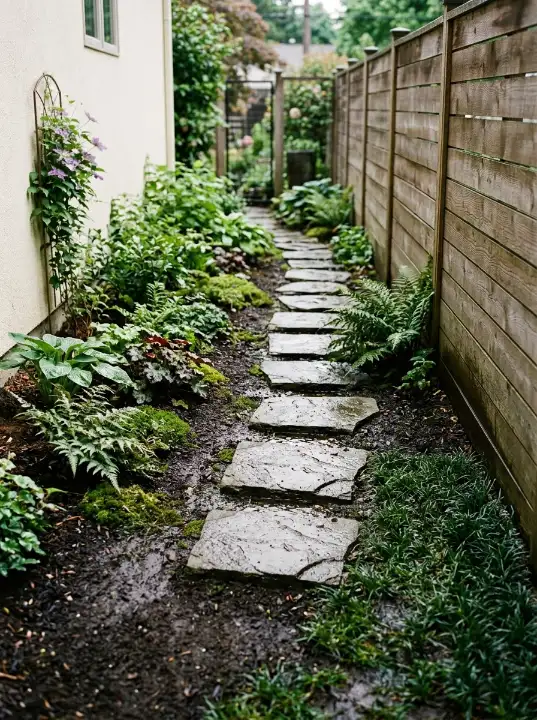
A stepping-stone runoff channel combines a narrow drainage path with flat stones placed above or beside the water route. Gravel surrounds the stones, allowing rainwater to move through the channel while creating a practical walkway across a frequently wet section during storms.
This option fits side yards where drainage and foot traffic compete for the same space. Set stones firmly on compacted material, leave clear gaps for water movement, and keep the channel slightly lower than surrounding ground so runoff does not spill onto the path.
8. Permeable Paver Patio Border
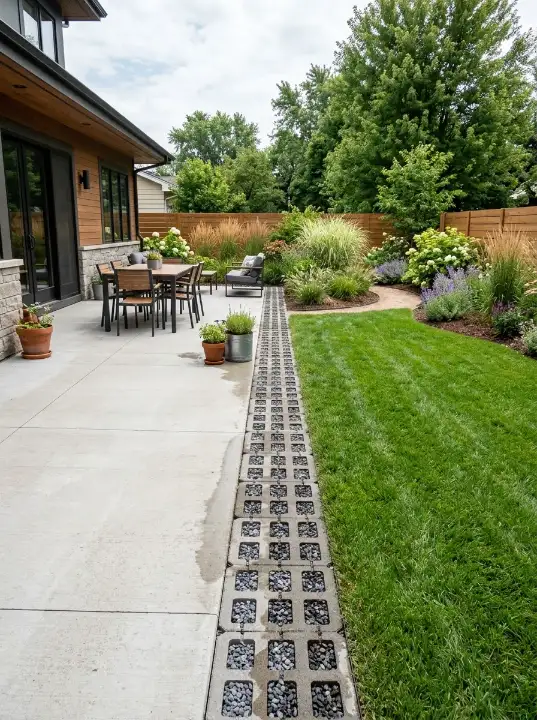
A permeable paver border gives rainwater a place to pass between specially designed paving units rather than sheeting across the yard. Install the pavers over a properly prepared layer of open-graded aggregate, creating a stable edge that also helps reduce runoff from hard surfaces.
This works especially well where a patio or walkway sends water toward a lawn. Keep joints filled with compatible aggregate, sweep debris away periodically, and maintain the surrounding grade so water enters the permeable edge instead of collecting beside the hardships.
9. Catch Basin for a Low Yard Spot
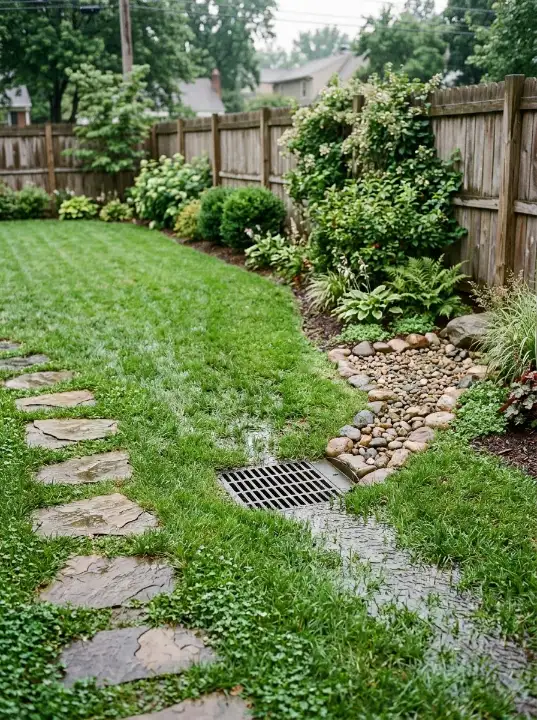
A catch basin collects surface water at a low point through a grated opening connected to a solid drainage pipe. The basin sits below the surrounding grade, allowing runoff from nearby lawn or paving to enter quickly and travel toward a suitable discharge area.
Use a catch basin where water consistently gathers in one defined depression and needs a controlled route away. Keep the grate accessible for cleaning, remove leaves and sediment regularly, and protect the outlet so fast-moving water does not create new erosion.
10. Erosion-Control Rock Apron
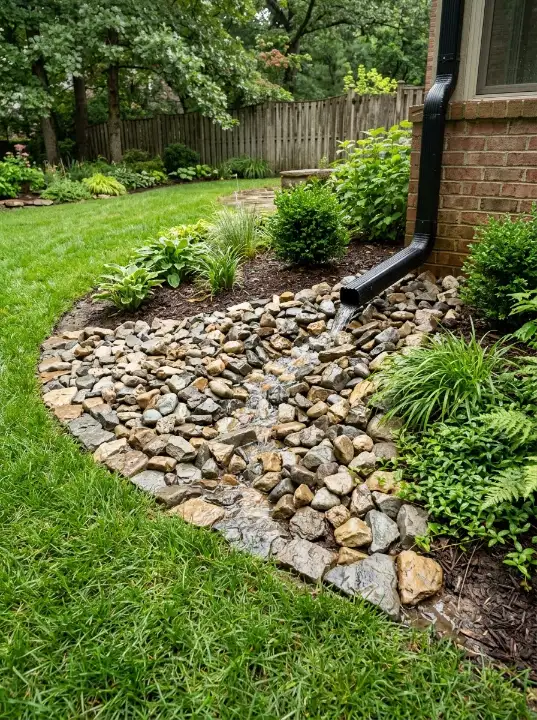
A rock apron is a layer of durable stones placed where concentrated water exits a pipe, downspout, or drainage channel. The stones spread and slow the flow, protecting bare soil from being carved away by repeated runoff during heavy rain.
Install the apron at the discharge point rather than randomly across a wet yard. Choose appropriately sized angular or rounded stone for the flow, secure the surrounding soil with vegetation, and inspect the area after storms for displaced rocks or new channels.
11. Mulched Rain Runoff Garden Edge
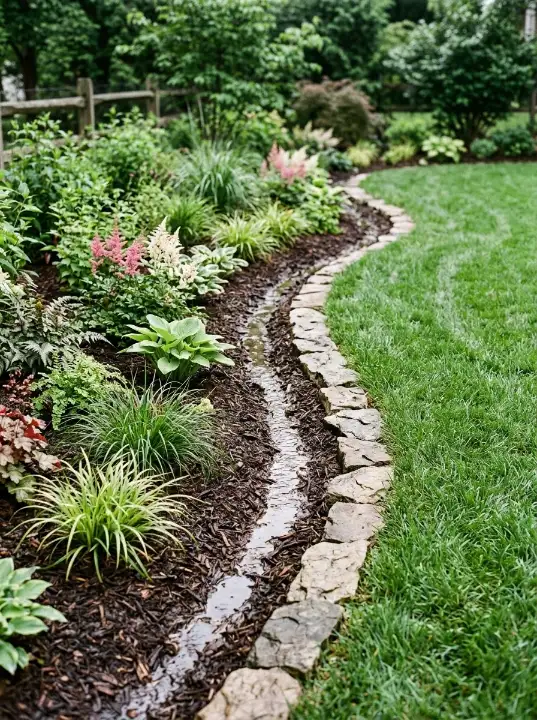
A planted drainage edge uses a shallow, mulched strip beside a lawn or garden bed to receive small amounts of surface runoff. The softened edge combines absorbent soil, organic mulch, and moisture-tolerant plants while giving water a gentle place to spread and soak.
This option suits modest drainage problems where water moves slowly rather than rushing downhill. Keep mulch several inches away from structures, refresh it as it decomposes, and choose plants suited to alternating wet and dry conditions for a resilient border each season.
12. Terraced Planting Beds on a Slope
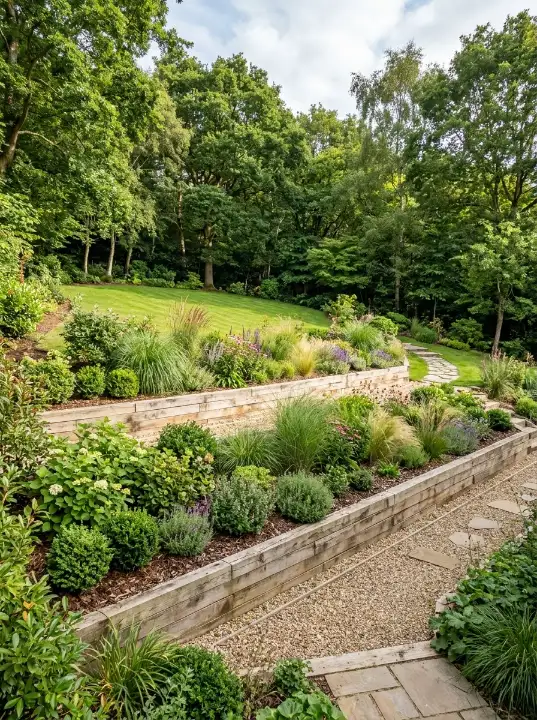
Terraced planting beds break a sloped backyard into shorter, level sections that slow runoff and reduce the distance water travels downhill. Low retaining edges, soil-filled beds, and layered plants create several gentle steps instead of one continuous slope exposed to fast-moving rain.
Terracing can make a difficult hillside easier to landscape while helping control erosion. Build each level securely, provide drainage behind retaining structures where required, and keep runoff moving toward a planned outlet rather than allowing water to collect against the beds.
13. Lawn-to-Garden Drainage Basin
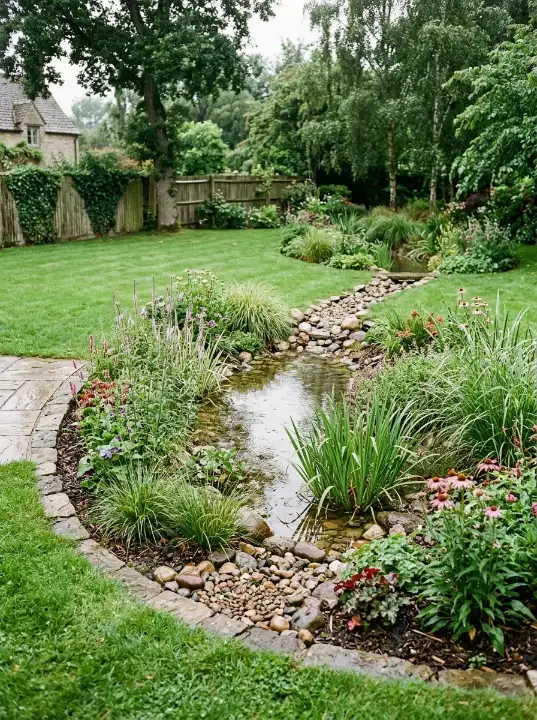
A shallow drainage basin creates a designated low area where excess lawn water can collect before infiltrating the soil. Its broad shape can be integrated into a garden bed, with a defined overflow route for storms that produce more water than the basin can hold.
This is useful for a lawn with one recurring wet pocket that does not need a buried pipe. Shape the basin gradually, improve compacted soil where appropriate, and use plants that tolerate occasional saturation while keeping overflow directed away from structures nearby.
14. Bioswale Along the Driveway
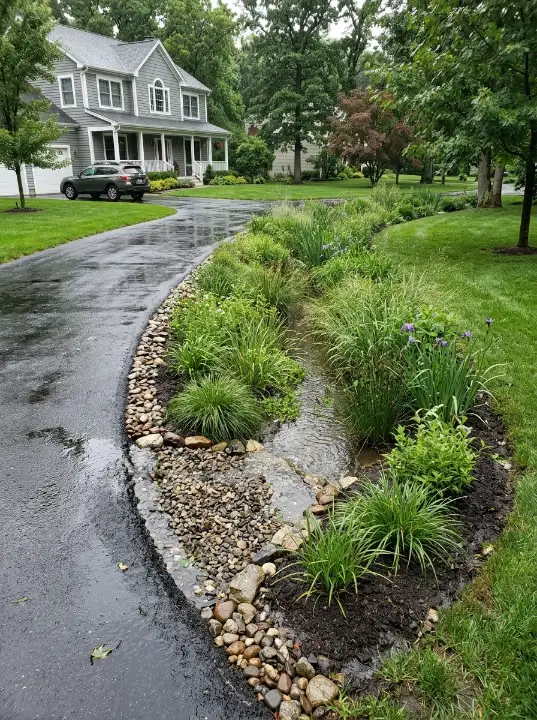
A bioswale beside a driveway is a planted, shallow channel designed to slow, filter, and guide runoff from the paved surface. A mix of soil, gravel, and suitable vegetation forms the channel, while its gentle grade carries excess water toward a lower drainage area.
Place the bioswale along the side receiving driveway runoff, leaving enough width for safe maintenance. Dense roots help hold the soil, while a defined inlet prevents water from washing across the driveway edge. Trim plants seasonally and keep the channel free of debris.
15. Rain Barrel Downspout Collection
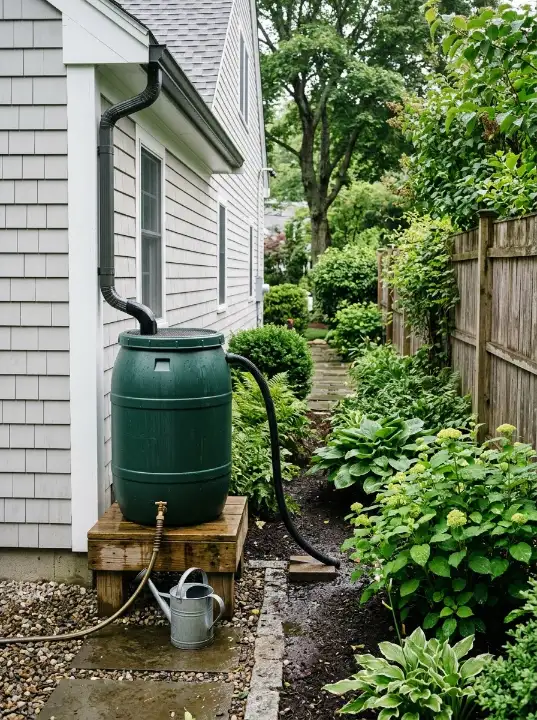
A rain barrel collects roof runoff directly from a downspout, temporarily storing water before it can reach the ground around the house. Position the barrel on a stable base, connect an overflow route, and keep its surrounding area clear so excess water drains safely.
This approach helps reduce immediate downspout discharge where outdoor space is limited. Use a secure lid and screened openings, check connections for leaks, and direct overflow away from the foundation. A simple barrel tucked beside a planting bed can look intentional.
Conclusion
Good drainage does more than move rainwater away; it protects lawns, planting beds, patios, slopes, and the areas around your home from moisture problems. The right backyard drainage solution depends on where water comes from, how quickly it moves, and what the landscape can handle.
A French drain, dry creek bed, swale, rain garden, catch basin, or planted drainage feature can each serve a different purpose. Start by watching your yard during a storm, then choose an approach that fits the space, soil, slope, and style.