
21 Striking Corner Lot Front Yard Landscaping Ideas
A corner lot is a gift and a puzzle at the same time. You get more frontage, more light, and more chances to show off your home. But you also have two street-facing sides, more foot traffic, and a yard that everyone sees from every angle.
The best corner lot designs treat the whole property as one connected picture, not two separate yards. With the right plants, edges, and focal points, you can build something that feels private, welcoming, and memorable.
Below are 21 ideas for beginners and seasoned gardeners alike. Each includes plant suggestions and a practical tip so you can start planning right away.
1. Anchor the corner with a specimen tree

Every corner lot needs a visual anchor, and a single well-chosen tree does the job beautifully. It pulls the eye toward your property and gives the whole design a clear starting point. Japanese maple, serviceberry, and crabapple are all good choices because they stay a manageable size.
Place the tree a comfortable distance back from the curb. That keeps branches away from street signs and leaves room for the roots to spread. Underplant it with shade-tolerant perennials like hostas or ferns to finish the look.
Pro Tip:
Autumn is an ideal time to plant trees. Cooler air and warm soil help roots settle in before winter.
2. Keep the sight triangle low and open

Drivers and cyclists need to see around your corner. The area closest to the intersection, often called the sight triangle, should hold only low plants. Think lavender, catmint, creeping phlox, or compact grasses that stay under about two feet.
This rule is practical and beautiful. A low, airy planting at the corner makes your yard feel open, and it lets taller shrubs and trees do their work farther back. Many towns set their own height limits, so check local rules before you plant.
Pro Tip:
Mature height matters more than the size on the nursery tag. Always read the plant label.
3. Wrap an L-shaped border around the corner

Instead of planting two unrelated beds, run one continuous border along both street sides. The “L” shape hugs the lawn like a frame and makes your yard feel intentional from every direction. It also gives passersby a gentle sense of movement as they walk past.
Repeat a few key plants along the length to tie the border together. Salvia, yarrow, and phlox work well because they handle sun and look good in drifts. Vary the heights so the border rises gently toward the back.
Pro Tip:
Repeat the same three or four plants every few feet. Repetition makes a border look designed, not random.
4. Build a layered privacy screen along the side street

The side of a corner lot often faces a busy sidewalk or road, which can make a yard feel exposed. A layered planting solves this far better than a single flat hedge. Put evergreens like arborvitae at the back, flowering shrubs like viburnum in the middle, and grasses along the front edge.
The layers soften noise, block views, and create a lush backdrop that changes with the seasons. Keep this screen along the side boundary and away from the intersection so it never blocks visibility.
Pro Tip:
Stagger the shrubs in a zigzag instead of a straight line. It looks more natural and fills in faster.
5. Define edges with a low stone retaining wall

If your lot has a slight slope or you want a crisp boundary, a low stone wall adds character and structure. A wall under two feet tall defines the garden without feeling like a barrier. It also creates a raised planting pocket that shows off trailing plants.
Let rosemary, thyme, and sedum spill over the stones to soften the lines. A gentle curve usually looks friendlier than a hard straight edge, especially along a sidewalk.
Pro Tip:
Tilt the wall’s stones slightly backward into the slope. This adds stability and helps the wall last for years.
6. Give both streets a welcoming path
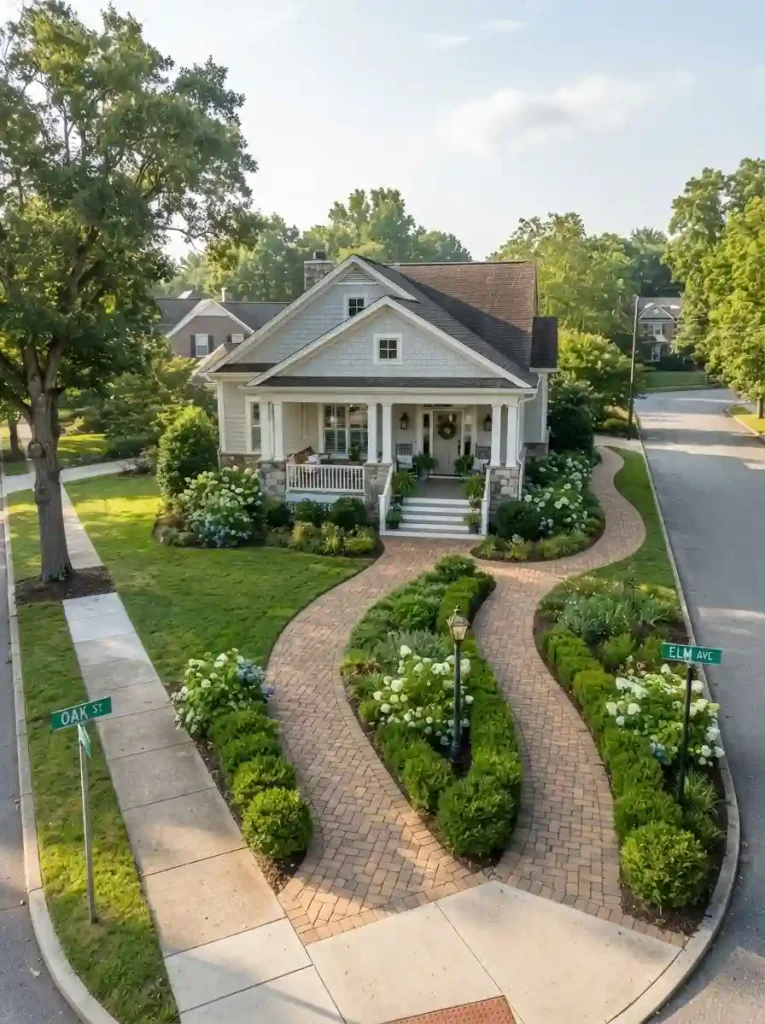
Visitors may arrive from either street, so why not welcome both? A second walkway from the side street makes your home feel connected to the whole neighborhood and cuts down on cut-through trampling across the lawn.
Both paths can meet at the porch or front steps. Edge them with boxwood or low hydrangeas so they feel like part of the same design. Brick pavers or pea gravel are budget-friendly materials that suit most home styles.
Pro Tip:
Make sure each path is at least three feet wide. This lets two people walk side by side comfortably.
7. Tuck in a gravel sitting nook

Front yards rarely get used for relaxing, but a corner lot has the space to change that. A small gravel courtyard with a bistro set gives you a spot for morning coffee and quiet chats with neighbors who walk by.
Surround the nook with low hedges or raised planters so it feels cozy without feeling hidden. A potted olive or dwarf citrus adds height, and string lights make it glow in the evening. Gravel drains well and needs almost no upkeep.
Pro Tip:
Lay landscape fabric under the gravel before you pour it. It keeps weeds from sneaking up through the stones.
8. Create a cottage-style mailbox garden

The mailbox is the first thing many visitors notice, so it deserves some attention. A small cottage garden at its base adds personality and costs very little. Start with a sturdy post, then plant a few cheerful, tough flowers around it.
Clematis can climb the post, while shasta daisies and sweet alyssum fill the ground below. Choose plants that tolerate road salt, heat, and the occasional missed watering, since this spot is often dry and exposed.
Pro Tip:
Keep a clear path around the mailbox so your mail carrier can reach it easily all year.
9. Float an island bed in the lawn

Large corner lawns can feel like an empty stage. An island bed placed in the middle breaks up the space and gives the eye something to rest on. Choose a soft kidney or teardrop shape so it looks natural from both streets.
Plant a small tree or tall shrub in the center, then ring it with grasses, rudbeckia, and sedum. It will look good from several angles, and it shrinks the area you have to mow.
Pro Tip:
Lay your hose on the lawn first to test the bed’s shape. Adjust it until the curves feel smooth.
10. Add a low picket fence with climbing roses
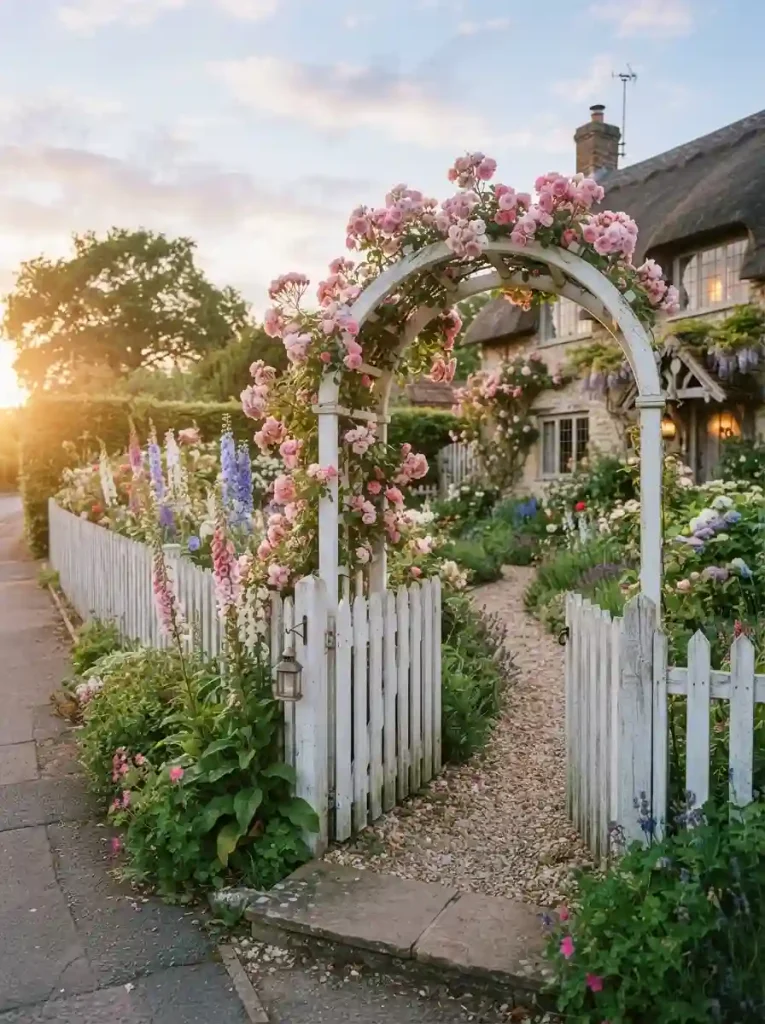
A knee-high picket fence is a classic way to mark your boundary without closing off the yard. It says “welcome” while quietly telling pets and kids where the garden ends. White is traditional, but soft gray or sage green can look fresh and modern.
Train climbing roses over a small arch at the gate for a storybook entrance. Foxgloves and delphiniums behind the fence add height and old-fashioned charm.
Pro Tip:
Choose disease-resistant rose varieties. They need less spraying and still deliver plenty of blooms.
11. Turn the corner with layered foundation planting

On a corner lot, the house itself is visible from two sides. Planting along the foundation should wrap around the corner of the building, not stop at the front wall. This makes the home look grounded and finished from every angle.
Use evergreens like inkberry holly for structure, then add softer plants like Japanese forest grass in front. Keep taller shrubs below the window sills and leave a little space between plants and the wall so air can circulate.
Pro Tip:
Plant at least two feet from the foundation. Mature shrubs need room, and the gap makes it easier to maintain the house.
12. Plan for winter with berries and colorful bark

A corner lot is seen all year, so the bare months matter. Choose plants that still look good when the flowers are gone. Red twig dogwood glows against snow, and winterberry holly keeps its bright berries long after the leaves drop.
Mix these with evergreens and tan grasses for a layered winter scene. Birds will thank you for the berries, and you’ll enjoy a yard that never goes dull.
Pro Tip:
Winterberry needs both male and female plants to produce fruit. Ask your nursery which pairs bloom at the same time.
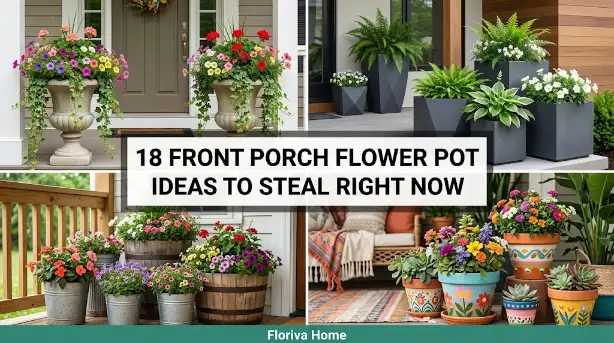
13. Flank the entry with matching urns
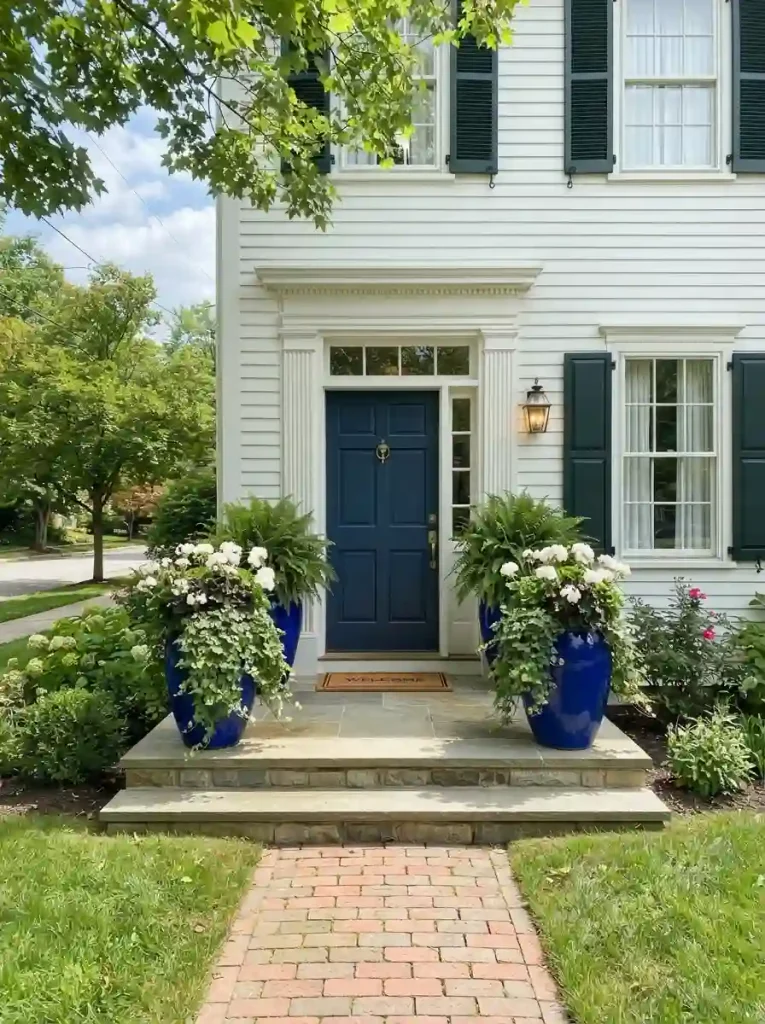
Beautiful containers give your entrance a strong focal point, and they’re easy to change with the seasons. A matching pair on either side of the door adds balance and a hint of formality that works with almost any house style.
Fill them with a “thriller, filler, spiller” mix: something tall in the middle, bushy plants around it, and trailing vines over the edge. Choose big pots. Small ones dry out fast and look lost next to a front door.
Pro Tip:
Add pot feet or small risers so water drains freely. This prevents root rot and stains on your porch.
14. Add wide garden steps to a sloped corner

Many corner lots slope toward the street. Instead of fighting the grade, turn it into a feature with broad, shallow steps. They make the yard safer to walk and add instant architectural interest.
Soften the edges by tucking lamb’s ear or creeping juniper into the gaps. Flank the steps with mounded shrubs so they feel like part of the garden, not a construction project.
Pro Tip:
Keep each step’s rise between four and seven inches. Consistent steps are comfortable and much safer in wet weather.
15. Soften the driveway edge with a planted gravel strip
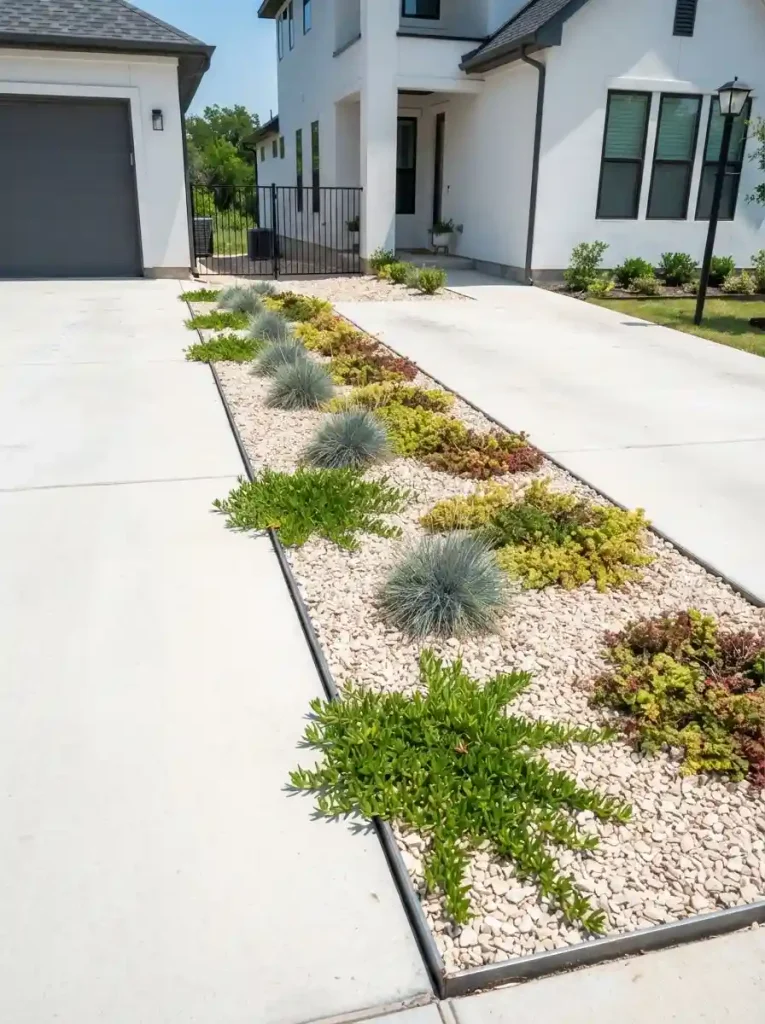
A long expanse of concrete can dominate a corner yard. A narrow strip of gravel planted with tough, drought-friendly plants breaks it up and adds a modern touch. It also keeps car tires from grinding down the lawn edge.
Blue fescue, sedum, and ice plant handle heat and reflected sunlight well. The pale stones set off their colors, and the whole strip needs very little water once established.
Pro Tip:
Use a firm base layer under the gravel. It keeps the stones in place and stops them from sinking into the soil.
16. Turn a soggy corner into a rain garden
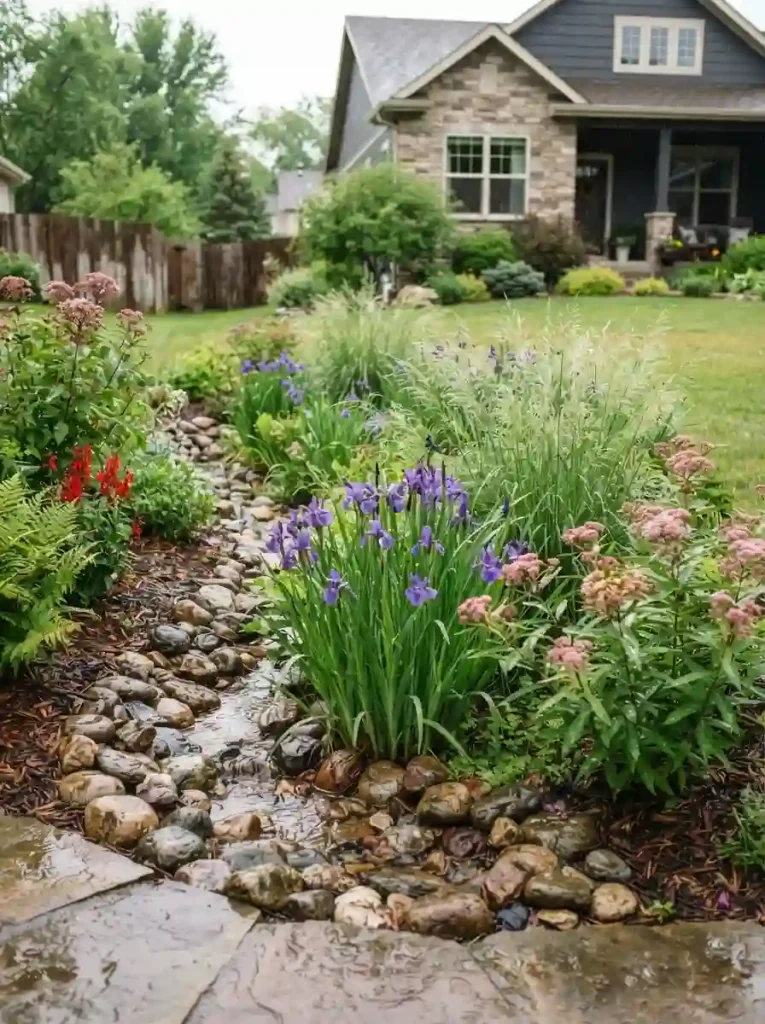
If water gathers at the low point of your lot, don’t fight it. A rain garden is a shallow, planted dip that soaks up runoff and filters it slowly into the ground. It solves a drainage problem and creates a lovely feature at the same time.
Choose plants that handle both wet feet and dry spells, such as blue flag iris, switchgrass, and swamp milkweed. Line the basin with smooth stones so it looks tidy even when it’s dry.
Pro Tip: Build the rain garden at least ten feet from your foundation so water never flows toward the house.
Pro Tip:
Build the rain garden at least ten feet from your foundation so water never flows toward the house.
17. Draw crisp lines with steel edging

With so much of your yard visible from the street, clean edges make a big difference. Thin black or dark steel edging draws a sharp line between lawn and bed, and it nearly disappears visually, so the plants take center stage.
Sweeping curves look relaxed and natural, while straight lines feel more formal. Either way, the edge keeps grass out of your beds and mulch off your lawn, which saves you work every weekend.
Pro Tip:
Leave about an inch of steel above the soil. That’s enough to stop creeping grass while staying nearly invisible.
18. Train a fruit tree against a fence
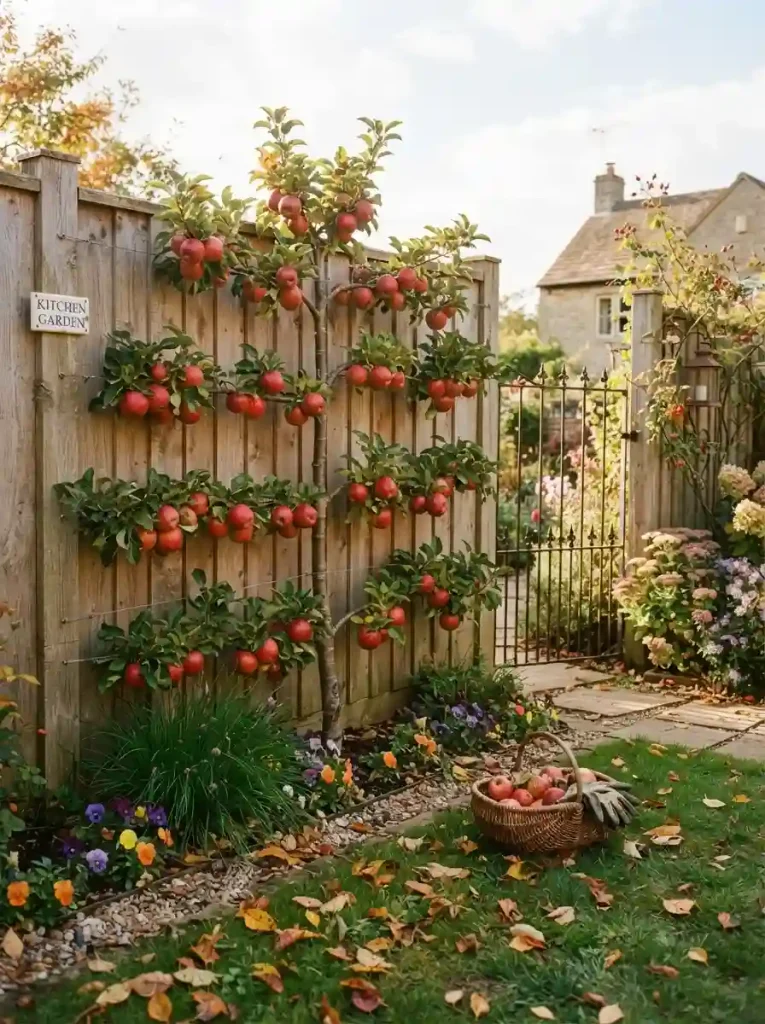
An espaliered fruit tree is a living sculpture. Its branches are trained flat along wires against a wall or fence, which makes it perfect for narrow strips along a side street. You get blossoms in spring and fruit in fall without giving up much space.
Apples and pears are the easiest to train. Underplant with chives and violas for a pretty and edible carpet. Prune lightly in summer to keep the shape neat.
Pro Tip:
Pick a dwarf or semi-dwarf rootstock. These stay compact and are much easier to train than full-size trees.
19. Stick to a calm, limited color palette

When a yard is visible from two streets, too many colors can feel chaotic. Choosing two or three shades gives the whole property a polished, cohesive look. Blue and white is cool and fresh, while yellow and orange feels warm and cheerful.
Repeat your chosen colors in flowers, containers, and even furniture. Silver foliage like artemisia works as a neutral that ties everything together and keeps the palette from feeling flat.
Pro Tip:
Match your palette to your home’s exterior. Warm brick looks lovely with golds and purples, while gray siding pairs well with blues and whites.
20. Go modern with stepping pads and groundcover
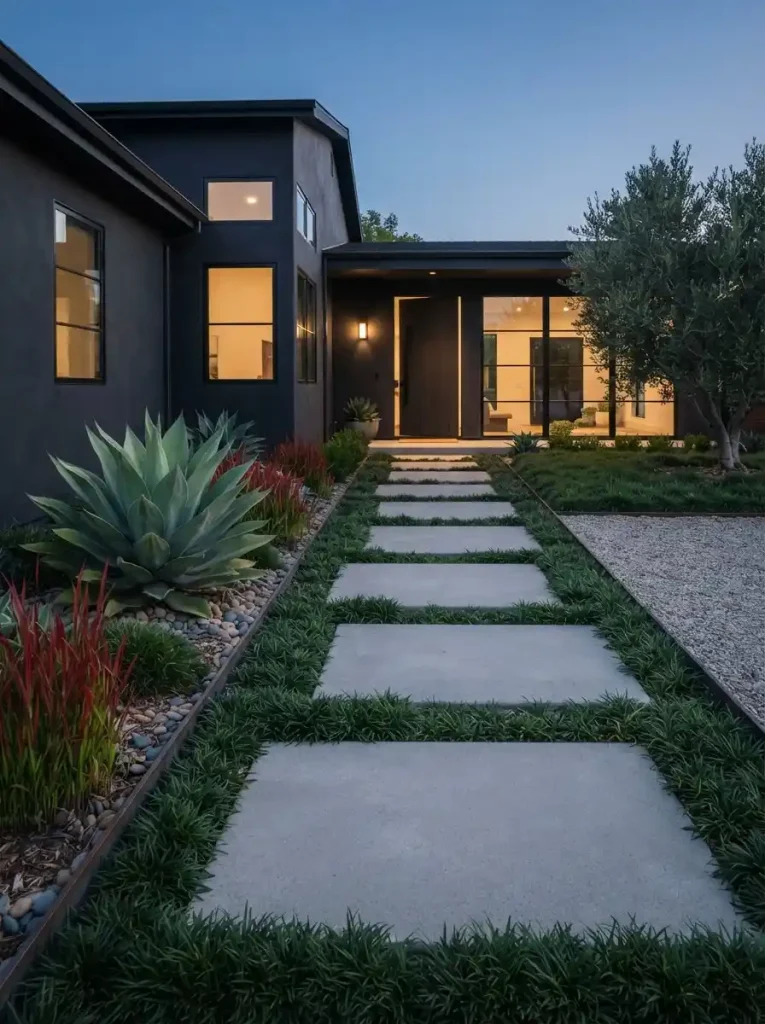
If you prefer clean lines, replace some lawn with large concrete pads surrounded by low groundcover. The geometry looks sharp from both street views, and it cuts down on mowing and watering at the same time.
Dwarf mondo grass makes a dense green carpet between the pads. Add one or two sculptural plants, such as agave or Japanese blood grass, as accents. Less is more here, so keep the plant list short.
Pro Tip:
Space the pads about a comfortable stride apart, usually 24 to 30 inches center to center, so walking feels natural.
21. Finish with a fragrant evening garden

Corner lots get plenty of evening foot traffic, so plan for a little magic after sunset. Plants that release their scent at dusk turn an ordinary walk into something special for you and your neighbors.
Star jasmine on a trellis, tall nicotiana, and moonflowers all perfume the evening air, and their pale blooms glow in low light. Add a couple of lanterns near the path to complete the mood.
Pro Tip:
Plant fragrant flowers near a seating spot or the front door, where you’ll actually enjoy the scent.
Final Thoughts
A corner lot gives you extra visibility, so a little planning goes a long way. Start by keeping the intersection open and safe, then add your anchor tree, borders, and paths. Layer in privacy, seasonal color, and small details that make the yard feel like yours.
You don’t need to try all 21 ideas. Pick three or four that fit your climate, budget, and style, and build from there. Over time, your corner can become the best-looking spot on the block.