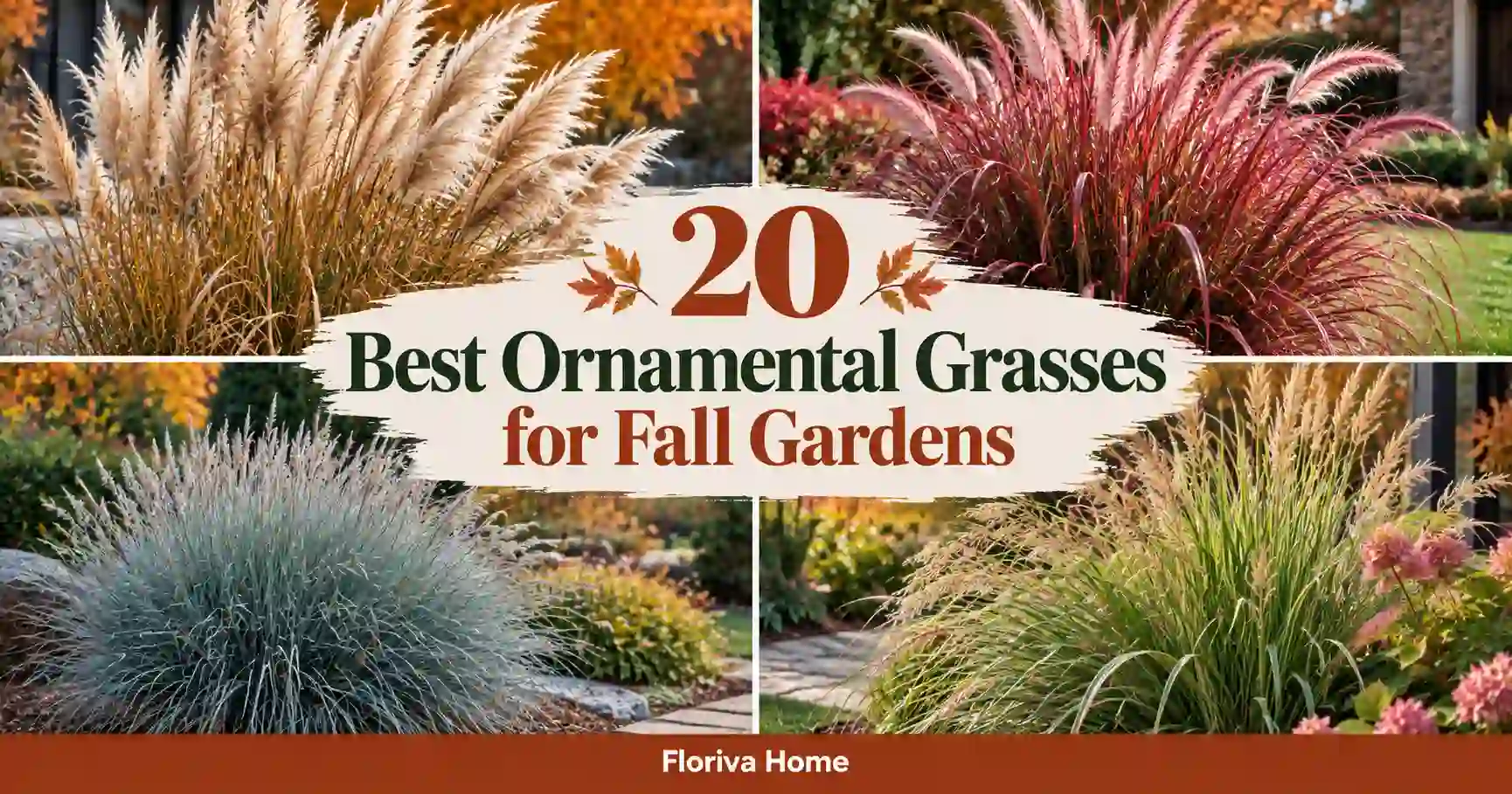
20 Best Ornamental Grasses for Fall Gardens
Ornamental grasses can completely change the look of a garden when summer starts fading. Their feathery seed heads, warm foliage colors, and graceful movement can keep outdoor spaces looking interesting well into fall.
Some varieties stay upright and architectural, while others form soft mounds that work beautifully along paths, flower beds, patios, and borders. Whether you want autumn color, privacy, texture, or an easy-care focal point, there are plenty of ornamental grasses worth considering.
Ornamental Grasses for Fall Gardens
Fall is one of the best seasons to appreciate ornamental grasses. As many flowering plants begin to fade, grasses can develop richer colors and prominent seed heads that add another layer of texture to the landscape.
The right variety can also serve a practical purpose. Taller grasses can create a soft screen, medium-sized types can fill gaps between perennials, and compact varieties can define the edges of pathways or garden beds.
Before planting, consider the mature size, sunlight requirements, soil conditions, and hardiness of the variety you choose. It is also worth checking with your local extension service for species that may be invasive in your area.
Why Plant Ornamental Grasses in Fall Gardens?
- They add movement whenever the wind passes through the foliage.
- Many develop attractive seed heads in late summer or fall.
- Warm tan, copper, burgundy, gold, and bronze tones complement autumn gardens.
- Taller varieties can provide screening and vertical interest.
- Compact grasses work well in borders, containers, and small garden spaces.
- Many established varieties tolerate periods of dry weather.
- Their foliage can continue providing structure after many flowers have finished blooming.
- Different heights and textures make them easy to combine with shrubs and perennials.
1. Switchgrass
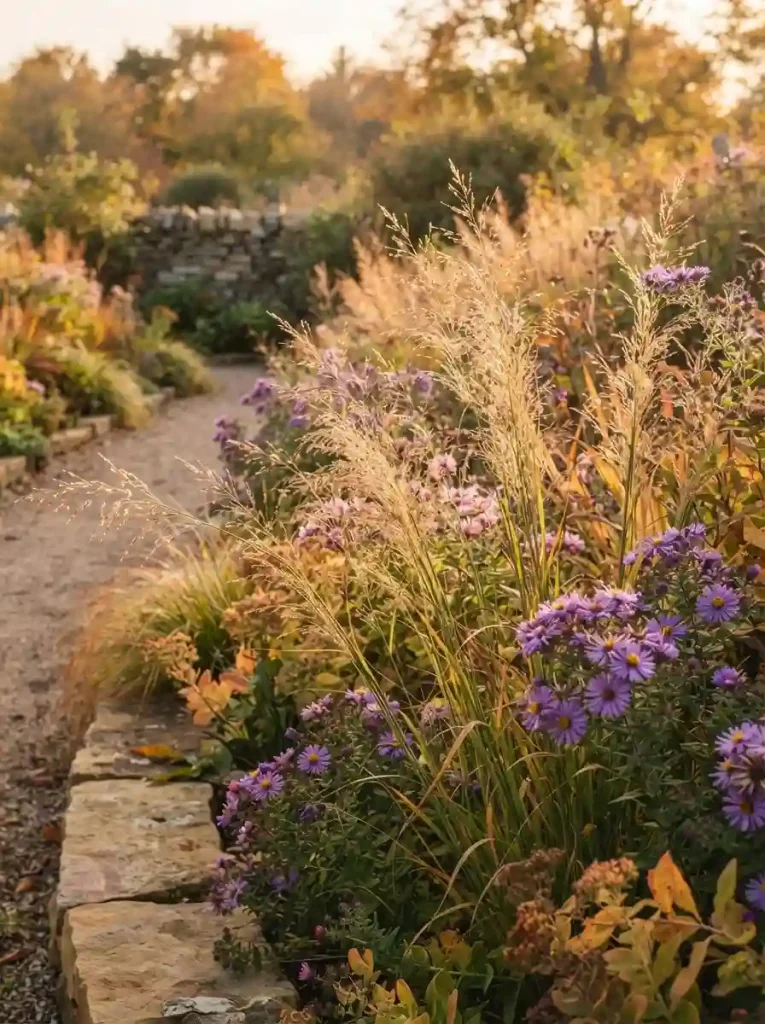
Switchgrass is a versatile native ornamental grass that can bring both structure and softness to a fall landscape. Its upright growth habit makes it useful toward the back of a perennial border, while its airy flower clusters give the plant a lighter appearance.
Depending on the cultivar, the foliage can shift into attractive shades of red, burgundy, bronze, or golden yellow as the season progresses. This makes switchgrass especially useful when you want autumn color without relying entirely on flowering plants.
- Prefers full sun for strong growth and color
- Generally adaptable to a range of soil conditions
- Many cultivars remain relatively upright through winter
- Mature size varies considerably by cultivar
- Works well in native, cottage, prairie, and contemporary gardens
- Useful for adding height without creating a heavy visual wall
2. Japanese Blood Grass
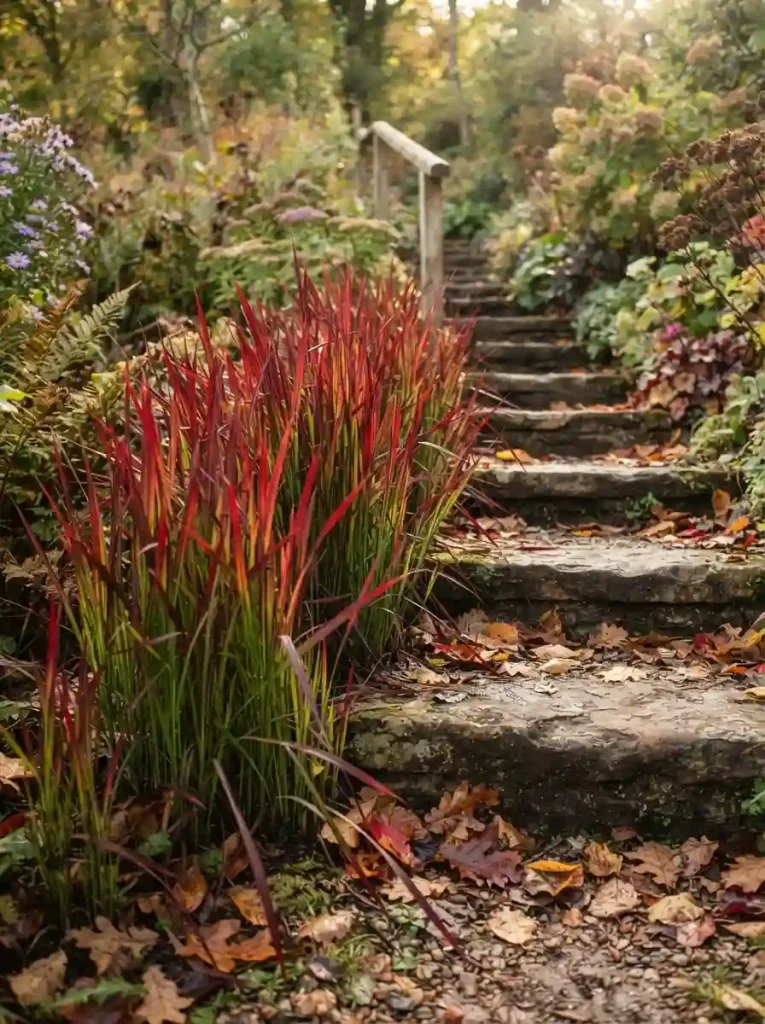
Japanese blood grass is an eye-catching choice when you want stronger foliage color in your fall garden. Its narrow green blades develop deep red coloring toward the tips, creating a dramatic contrast against softer green plants and neutral hardscaping.
This grass works particularly well as an accent rather than being scattered randomly throughout a planting bed. Place it where the colorful foliage can be easily seen from a pathway, patio, or garden entrance.
- Grows best with plenty of sunlight
- Known for its green-and-red foliage
- Compact compared with many tall ornamental grasses
- Works nicely along borders and pathways
- Creates strong contrast beside silver, green, or golden foliage
- Check local invasive-plant guidance before planting
3. Little Bluestem
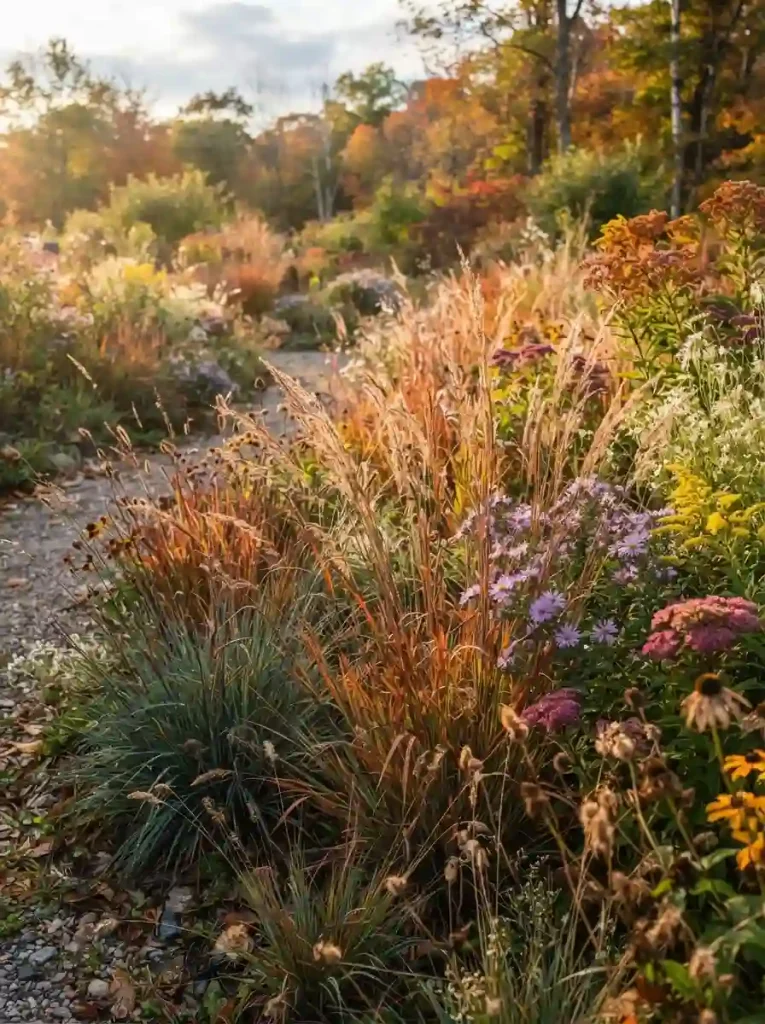
Little bluestem is an excellent option for gardeners who like a naturalistic or prairie-inspired landscape. Despite its name, the foliage can develop striking blue-green tones during the growing season before transitioning toward coppery and bronze shades in fall.
Its fine texture keeps the plant from feeling bulky, making it easy to combine with flowering perennials, low shrubs, and other grasses.
- A warm-season ornamental grass
- Performs well in sunny locations
- Develops attractive copper and bronze fall tones
- Handles dry conditions once established
- Works particularly well in native-style landscapes
- Can provide winter interest when left standing
4. Indian Grass
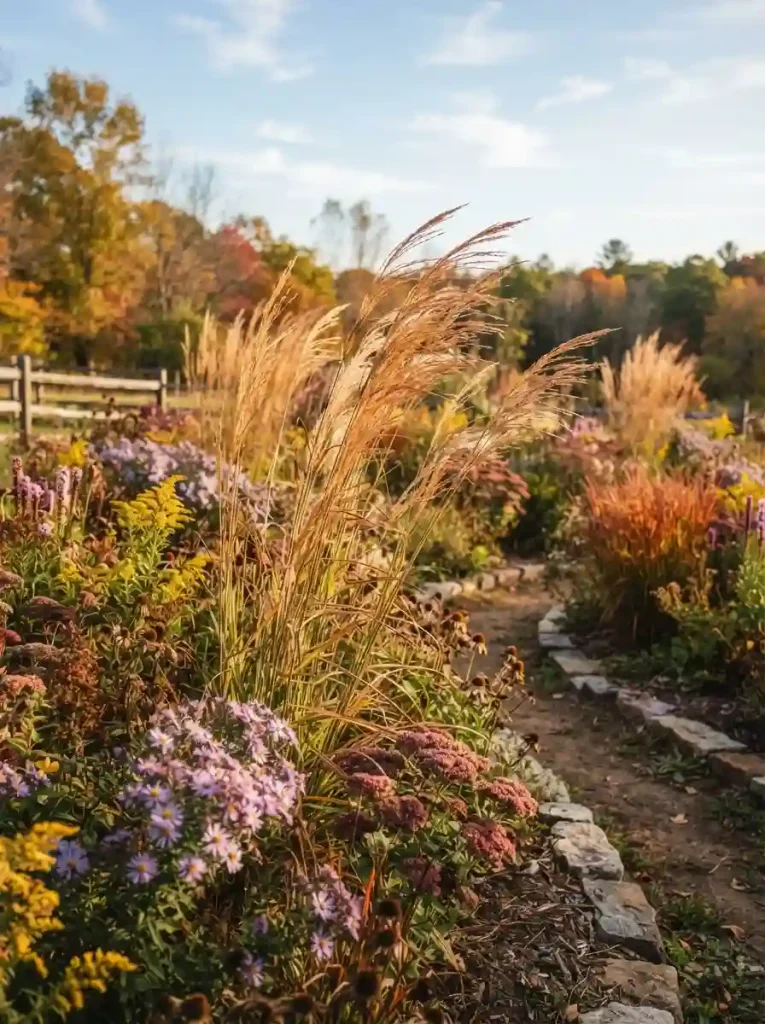
Indian grass brings height and a distinctly prairie-like appearance to fall planting schemes. Its tall stems and golden flower clusters can rise above shorter perennials, creating a layered garden rather than a flat bed.
Use it toward the rear of a border or in groups where several plants can create a natural rhythm. Its golden tones are especially attractive alongside purple, burgundy, and deep green foliage.
- Best suited to sunny planting locations
- Produces tall, warm-colored flower clusters
- Particularly attractive in late summer and fall
- Useful for prairie and wildlife-friendly gardens
- Provides strong vertical structure
- Looks natural when planted in groups
5. Prairie Dropseed
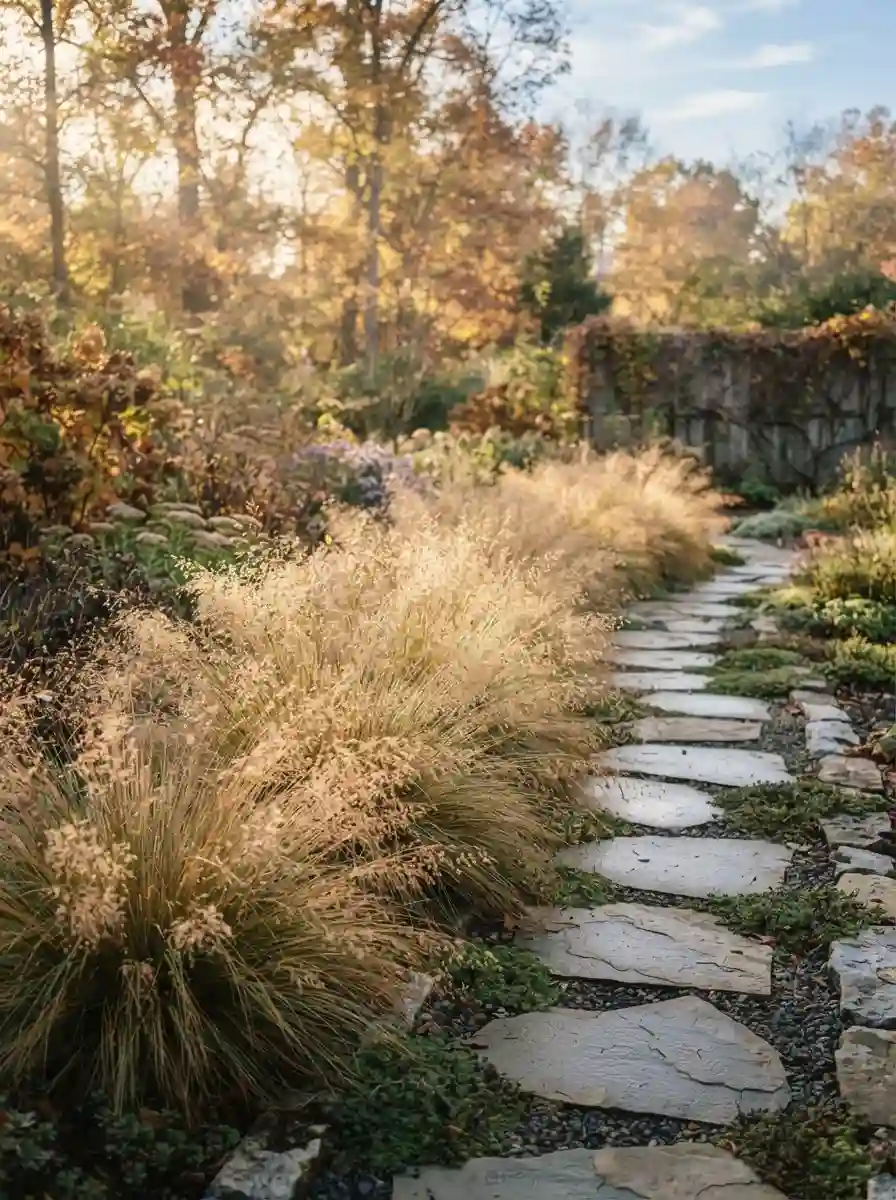
Prairie dropseed is a graceful, fine-textured grass that can soften hard edges throughout the garden. Instead of creating a tall screen, it forms rounded fountains of narrow foliage that look particularly beautiful when planted along pathways or the front of borders.
Its subtle appearance makes it a useful companion for bolder fall plants. Group several together to create repetition and give the landscape a more intentional appearance.
- Prefers sunny conditions
- Forms attractive rounded clumps
- Well suited to naturalistic landscapes
- Handles dry conditions after establishment
- Excellent for edging paths and planting beds
- Fine foliage creates contrast with broad-leaved plants
6. Tufted Hair Grass
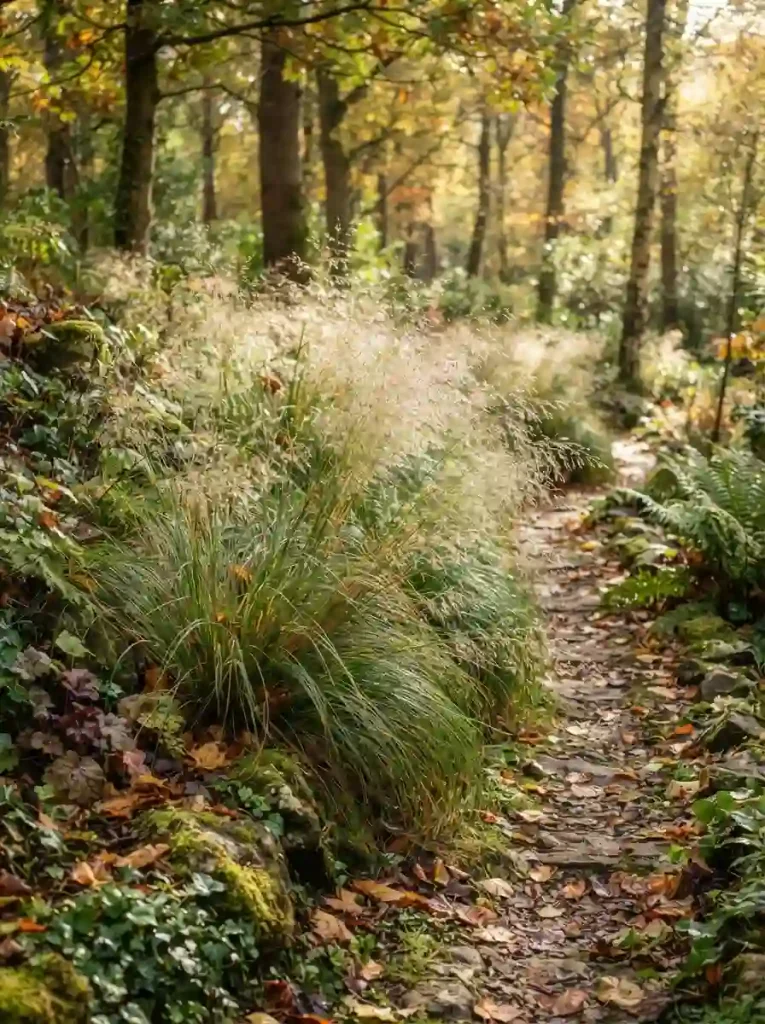
Tufted hair grass is a delicate-looking option for gardens where you want texture without overwhelming nearby plants. Its fine foliage and airy seed heads can create a soft, almost cloud-like effect.
It is particularly attractive in cooler, partially shaded garden settings where some larger ornamental grasses may struggle. Plant it near woodland paths, beneath taller plants, or along the edge of a shaded perennial bed.
- Produces fine, airy flower stems
- Works well in cooler garden conditions
- Suitable for moist soil depending on variety
- Can tolerate partial shade
- Adds delicate texture to woodland-style plantings
- Looks attractive when planted in small groups
7. Blue Oat Grass
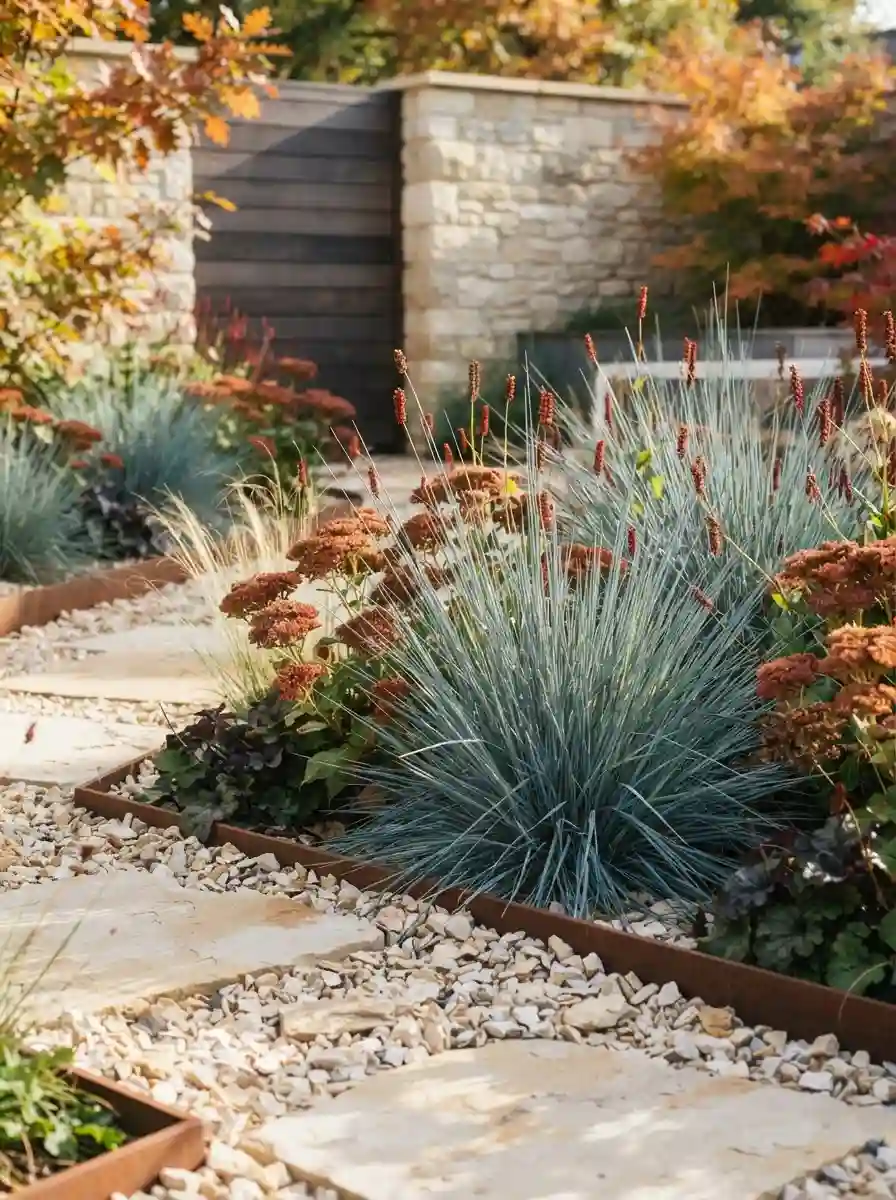
Blue oat grass is a compact ornamental grass with foliage that provides a cool counterpoint to the warmer colors of autumn. Its steel-blue leaves can look especially striking beside rust-colored flowers, golden grasses, and dark stone.
Because it stays relatively compact, it is a practical choice for smaller gardens where a towering ornamental grass would be too large.
- Prefers full sun
- Produces distinctive blue-gray foliage
- Works well in modern and Mediterranean-inspired landscapes
- Generally forms neat clumps
- Useful along borders and pathways
- Provides year-round structural interest in suitable climates
8. Feather Reed Grass
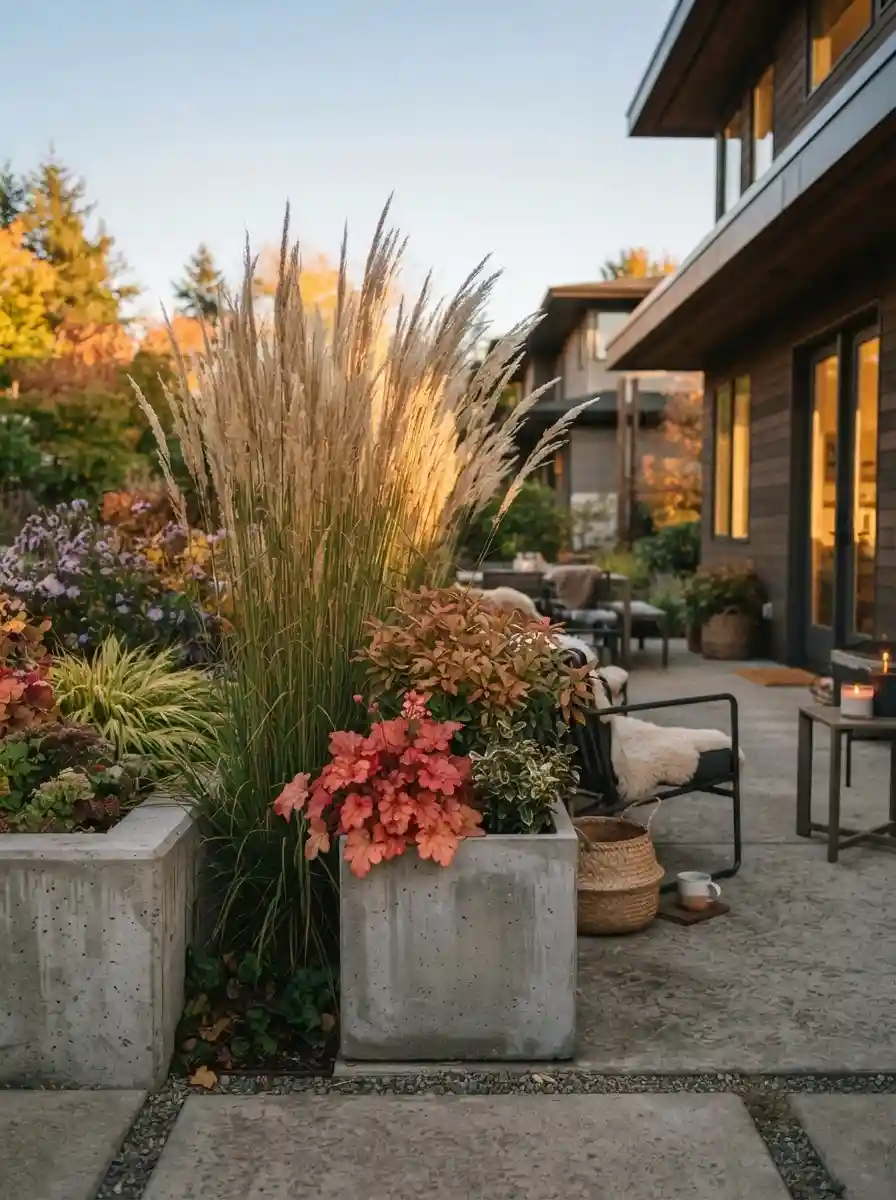
Feather reed grass is a strong choice when you want an ornamental grass with an upright, organized appearance. Unlike loose, fountain-shaped grasses, its stems tend to stay relatively vertical, making it useful for adding structure to contemporary or formal planting designs.
Plant several in a row to create rhythm beside a patio, fence, walkway, or property boundary.
- Performs best in sunny locations
- Upright growth creates strong vertical lines
- Attractive seed heads can persist into cooler months
- Useful for screening and structure
- Suitable for formal and modern landscapes
- Several cultivars offer different mature heights
9. Mexican Feathergrass
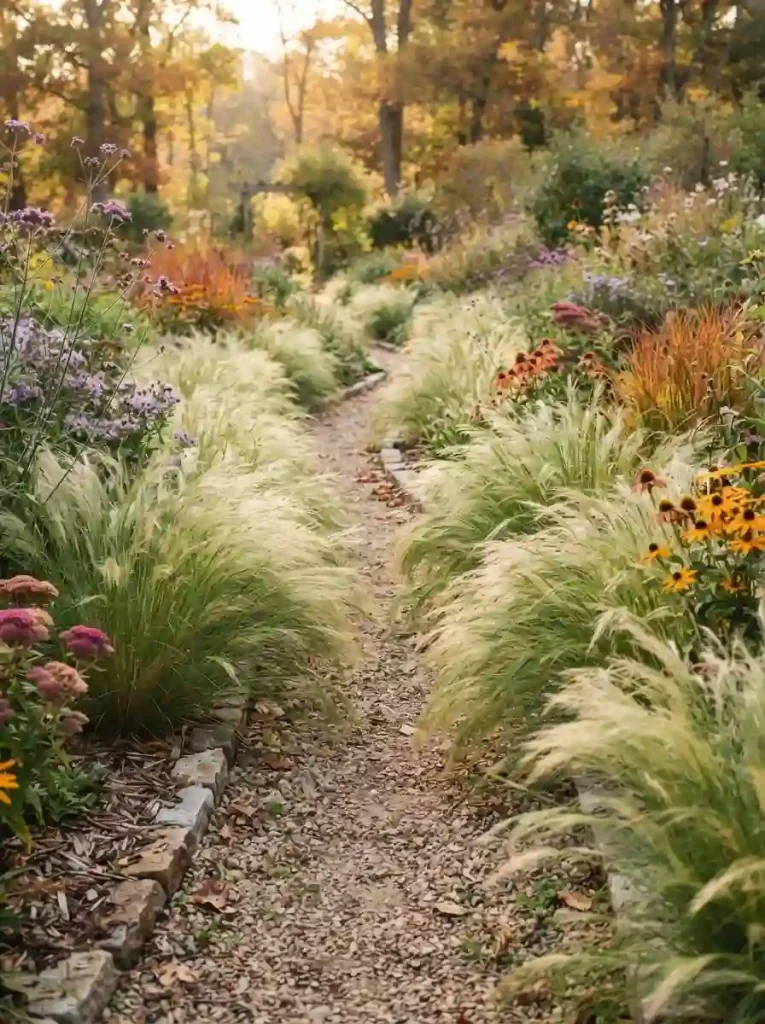
Mexican feathergrass has a light, flowing appearance that works beautifully in relaxed fall landscapes. Its exceptionally fine blades catch the breeze and create movement even when the rest of the garden feels still.
This grass is especially effective around gravel paths, rock gardens, and informal borders where its delicate texture can contrast with stone and architectural plants.
- Produces very fine, flowing foliage
- Best in sunny locations
- Works beautifully with gravel and stone
- Adds movement without excessive visual weight
- Suitable for naturalistic and modern planting styles
- Check regional guidance because behavior can vary by location
10. Purple Moor Grass
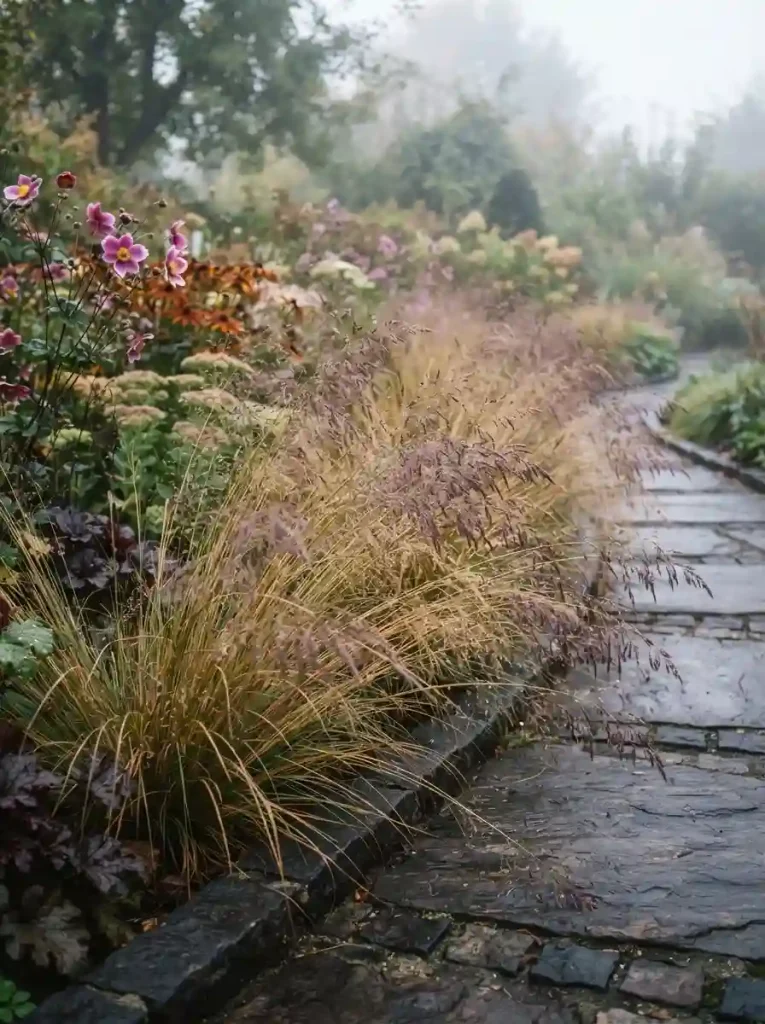
Purple moor grass adds an elegant, slightly wild character to an autumn planting bed. Its narrow foliage and delicate flower stems create a transparent texture, allowing surrounding plants and garden features to remain visible.
Use it as a focal point among late-season flowers or repeat it throughout a border for a more cohesive design.
- Prefers sunlight or light shade depending on conditions
- Creates fine, arching foliage
- Produces delicate flowering stems
- Particularly useful in naturalistic planting designs
- Looks attractive beside dark stone and autumn flowers
- Works well when repeated through larger borders
11. Fountain Grass
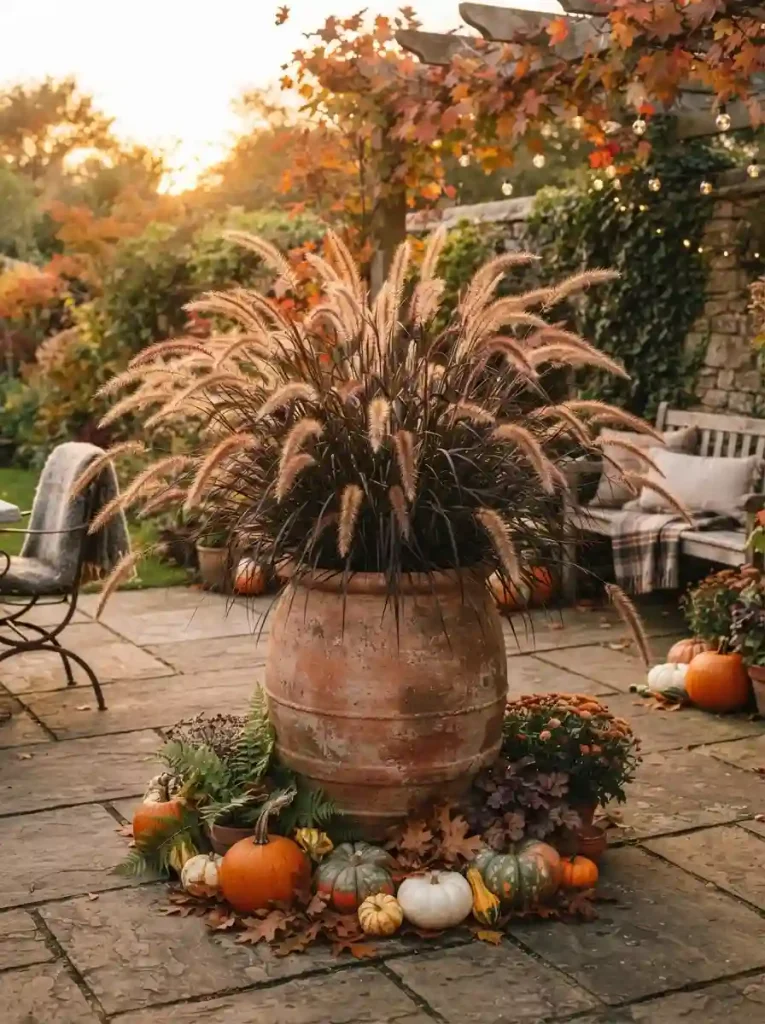
Fountain grass is named for the way its narrow foliage and arching flower spikes spill outward like a fountain. It can bring a soft, flowing shape to a fall garden while its bottlebrush-like seed heads provide plenty of texture.
It works especially well as a focal plant in containers, mixed borders, or areas where you want a graceful transition between taller and shorter plants.
- Prefers full sun
- Produces distinctive bottlebrush flower spikes
- Works well in containers and borders
- Adds movement and softness to structured landscapes
- Available in several sizes and foliage colors
- Check local guidance because some fountain grass types can be invasive
12. Japanese Forest Grass
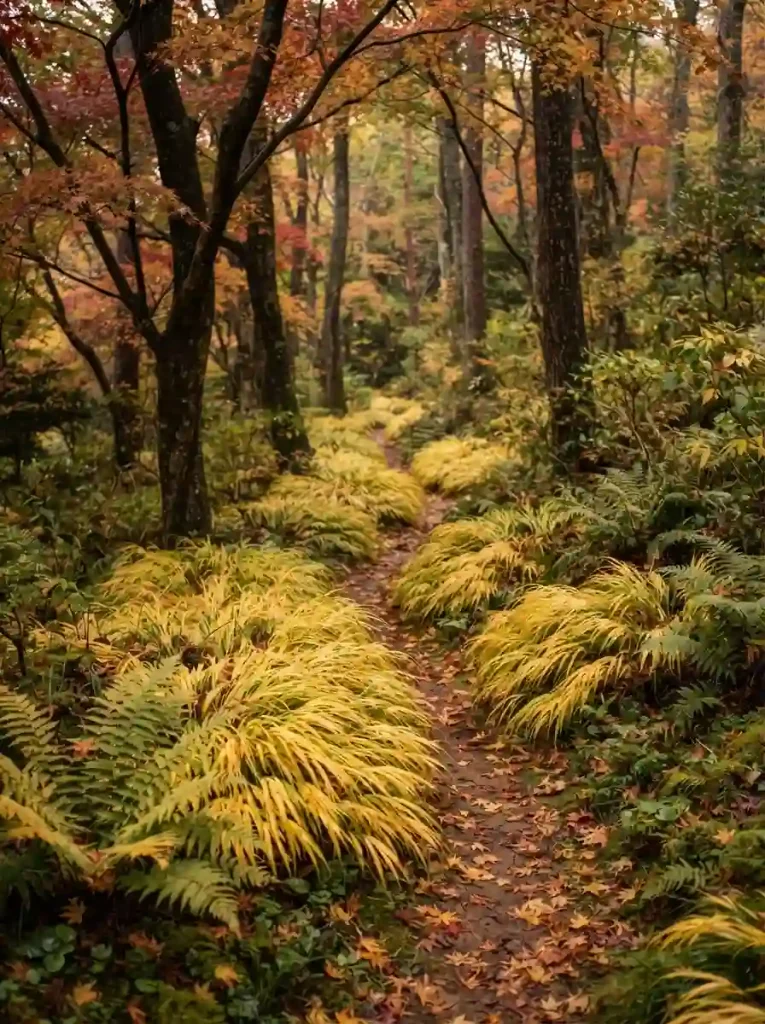
Japanese forest grass is a beautiful choice for gardeners looking to add ornamental foliage to a partially shaded fall garden. Its arching leaves form low, flowing mounds that can brighten darker corners and create a soft transition between shrubs and perennials.
Golden-leaved cultivars can be particularly effective beneath trees or along shaded walkways.
- Performs well in partial shade
- Forms attractive cascading mounds
- Golden and green cultivars are available
- Useful beneath trees and taller shrubs
- Prefers consistently moist, well-drained soil
- Excellent for woodland-inspired gardens
13. Northern Sea Oats
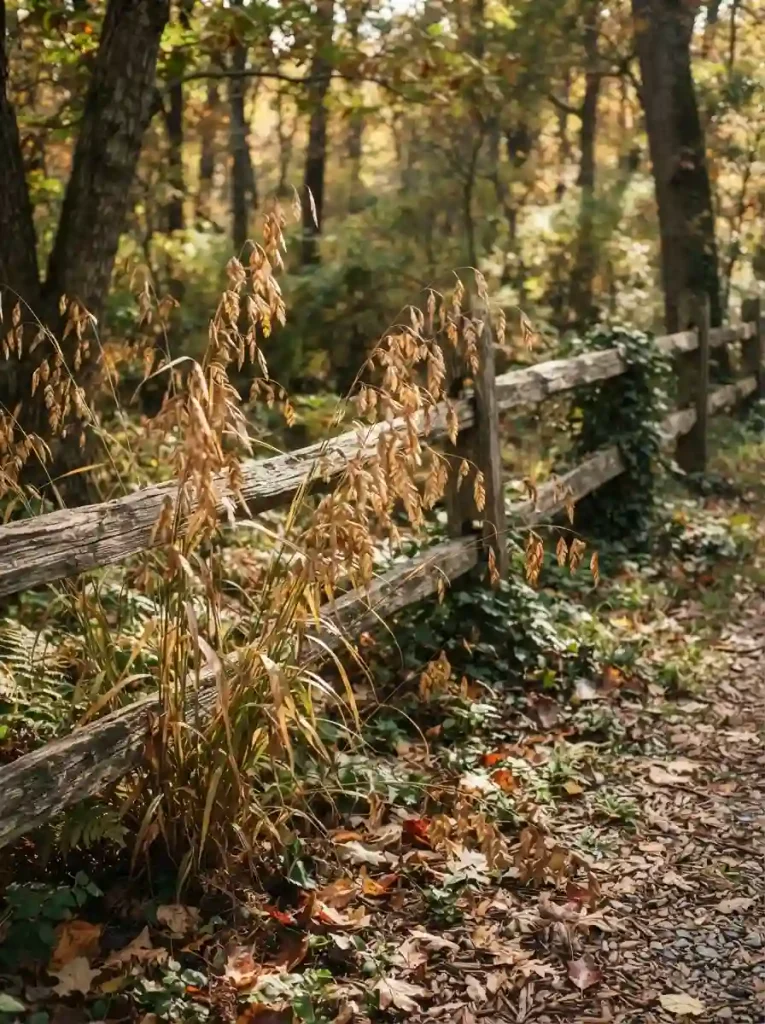
Northern sea oats offers an unusual texture that makes it stand out from many familiar ornamental grasses. Its distinctive, oat-like seed clusters hang from slender stems and can turn a warm bronze shade as autumn develops.
It is especially attractive in informal gardens and naturalized areas, where the seed heads can remain part of the landscape after the growing season.
- Handles partial shade better than many grasses
- Produces distinctive hanging seed heads
- Works well in woodland and naturalistic gardens
- Provides attractive fall and winter texture
- Can spread readily in favorable conditions
- Remove unwanted seedlings if necessary
14. Blue Fescue
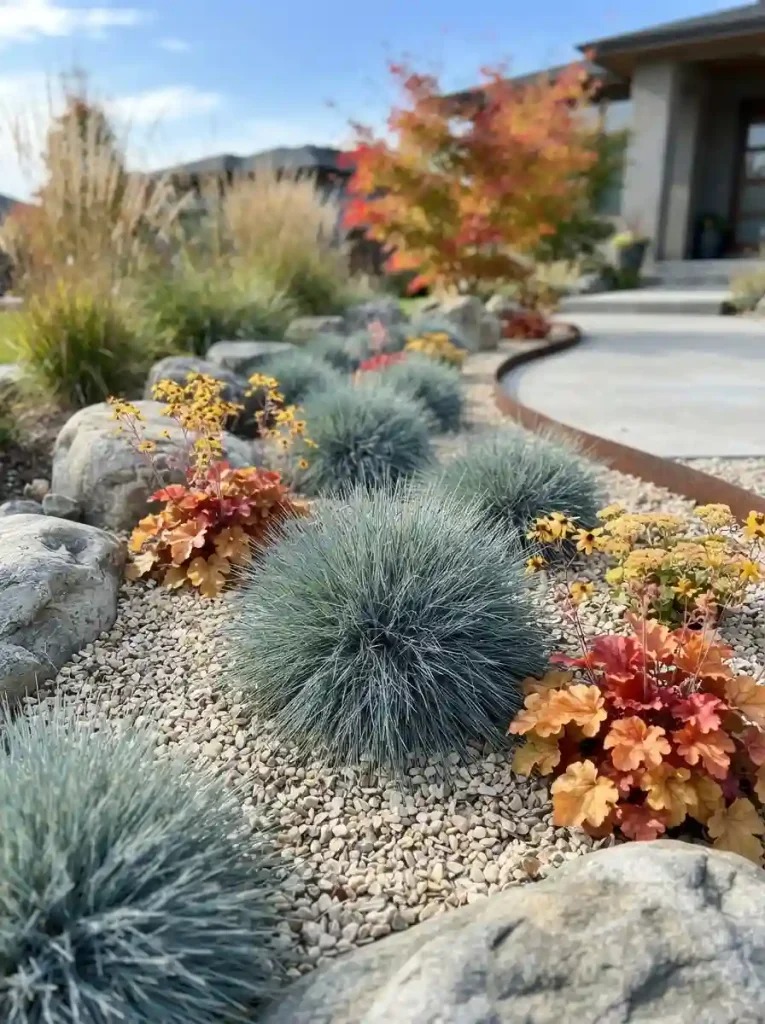
Blue fescue is a compact grass that can add cool-toned color to an otherwise warm autumn planting. Its rounded tufts of blue-gray foliage create a tidy appearance and work particularly well in rock gardens, edging, containers, and modern landscapes.
Pair it with copper foliage or golden flowers to make its cool coloring stand out.
- Stays relatively compact
- Prefers full sun
- Produces blue-gray foliage
- Useful for borders and rock gardens
- Works well in containers
- Benefits from good drainage
15. Pink Muhly Grass
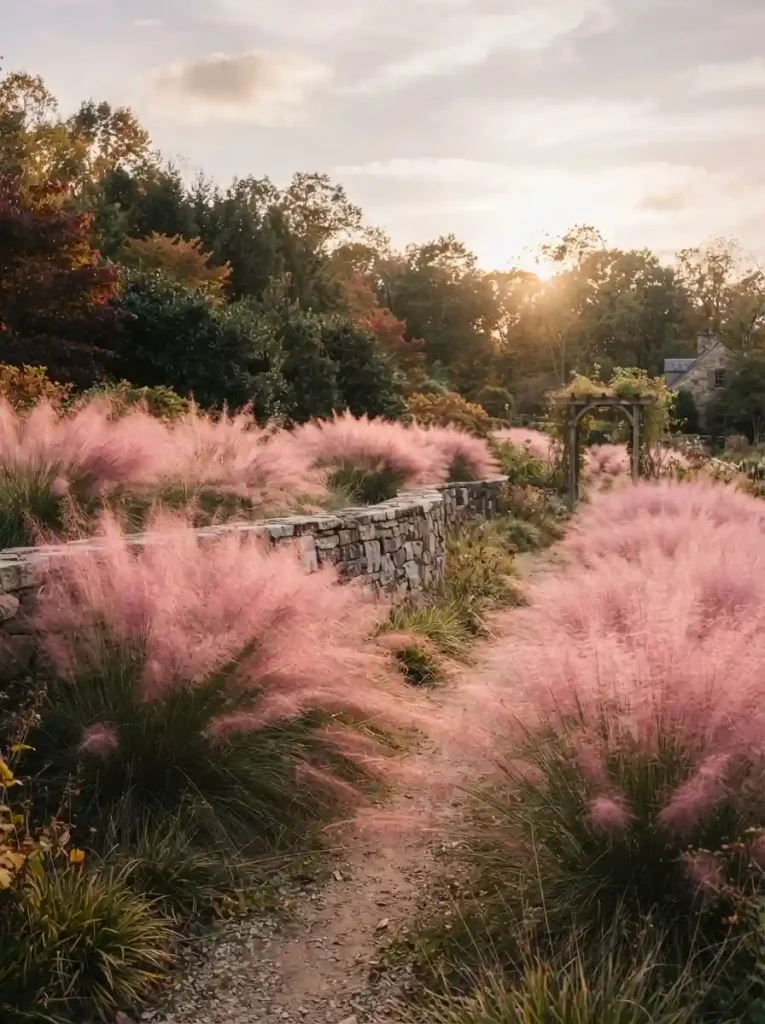
Pink muhly grass can create one of the most dramatic autumn displays in a sunny garden. In bloom, its airy pink flower clouds seem to float above the foliage, creating a soft haze of color that catches sunlight beautifully.
Give it enough space to develop naturally, and use it where its late-season flowering can be viewed from a patio or garden path.
- Requires plenty of sunlight
- Known for airy pink flower clouds
- Especially attractive in late summer and fall
- Works well in mass plantings
- Pairs beautifully with dark foliage
- Prefers well-drained conditions
16. Japanese Silver Grass
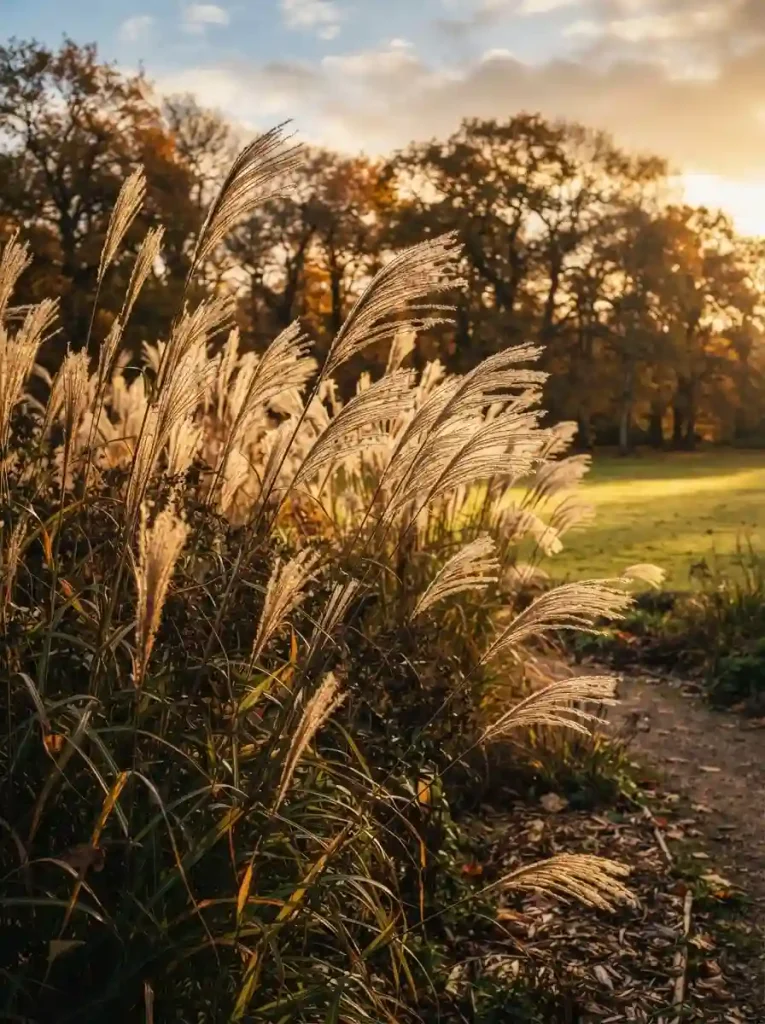
Japanese silver grass is a classic choice for adding height and movement to an autumn garden. Its tall foliage and feathery plumes create a dramatic silhouette, especially when backlit by the low autumn sun.
It can be planted as a single specimen or grouped into a loose screen for greater impact.
- Best in full sun
- Provides significant height
- Produces showy feathery plumes
- Excellent for screening and privacy
- Adds strong winter interest when left standing
- Many cultivars offer different heights and foliage patterns
17. Ribbon Grass
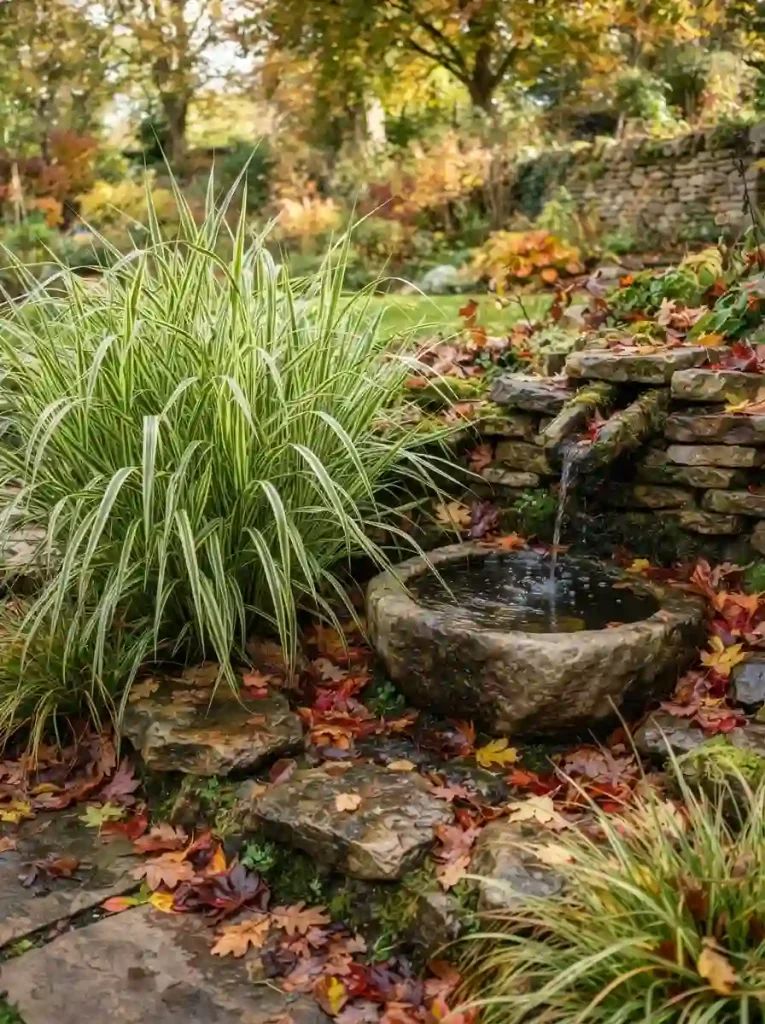
Ribbon grass is a bold foliage plant that can brighten areas where you need a strong vertical or spreading texture. Its striped leaves create visual interest even when flowers are absent, making it useful for foliage-focused garden designs.
Because it can spread aggressively, choose its location carefully and consider containers or confined areas when appropriate.
- Adaptable to sun and partial shade
- Known for striped foliage
- Useful for filling larger planting areas
- Can tolerate moist conditions
- Spreads readily in suitable environments
- Best planted where its growth can be controlled
18. Fiber Optic Grass
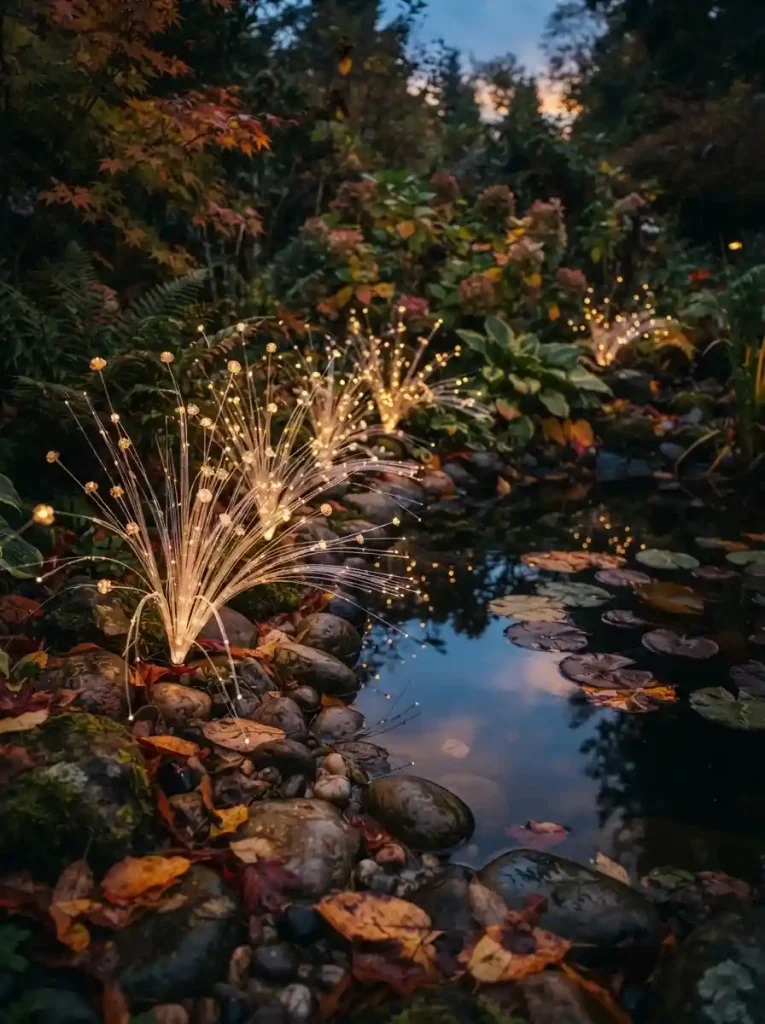
Fiber optic grass is a fun option for gardeners who want something different from traditional tall ornamental grasses. Its thin green stems are topped with tiny rounded flower heads, creating the impression of small glowing points scattered across the foliage.
It is particularly useful around water features, containers, and moist garden spaces.
- Prefers consistently moist soil
- Often grown as a seasonal accent in cooler climates
- Works well around water features
- Suitable for containers
- Provides unusual fine texture
- Forms compact, rounded clumps
19. Giant Miscanthus

Giant miscanthus is suited to gardeners who want a dramatic architectural plant. It can reach impressive heights and create a substantial backdrop for shorter autumn flowers and shrubs.
The tall stems and plumes become particularly striking when planted where they can move in the breeze. Allow plenty of room when choosing its location.
- Requires ample space
- Performs best in full sun
- Provides substantial vertical height
- Excellent for screening
- Creates movement and texture in large landscapes
- Choose a suitable cultivar for your climate and garden size
20. New Zealand Wind Grass
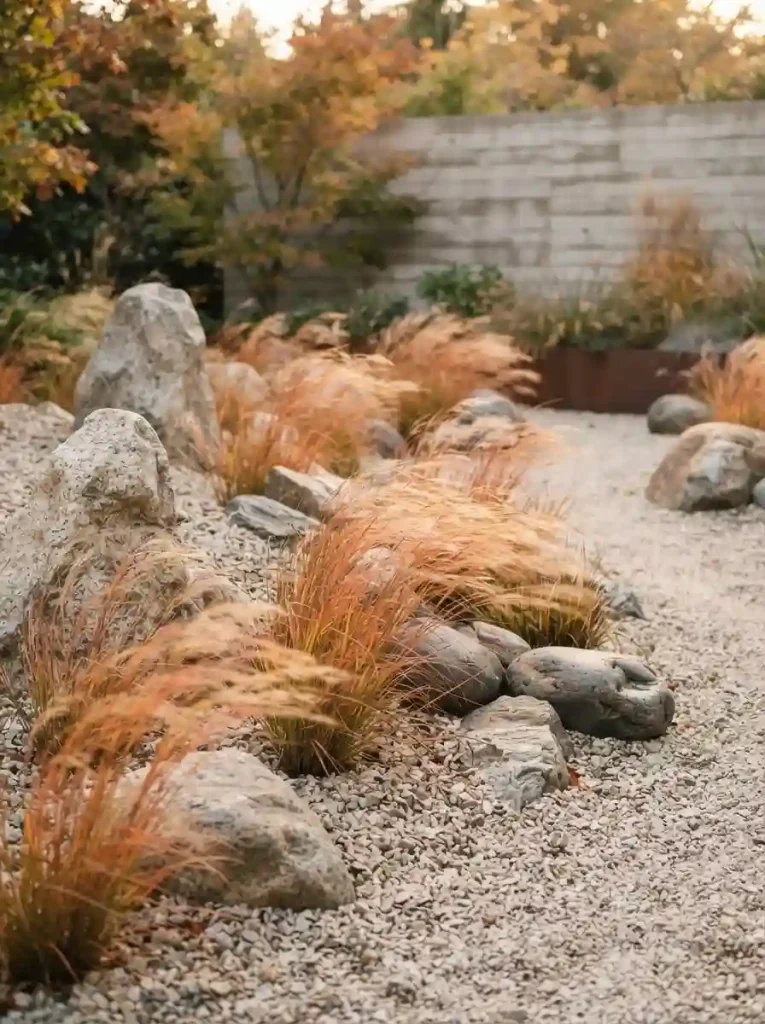
New Zealand wind grass offers a graceful, finely textured look that suits contemporary and naturalistic gardens alike. Its narrow blades form elegant clumps, while slender flowering stems rise above the foliage and move easily in the breeze.
It can soften gravel landscapes, modern pathways, and mixed perennial beds without becoming visually heavy.
- Prefers sunny conditions
- Creates fine, flowing texture
- Works well with gravel and stone
- Useful in modern and naturalistic designs
- Adds movement with relatively little visual bulk
- Plant with adequate spacing for good airflow
How to Choose the Right Ornamental Grass
With so many varieties available, choosing an ornamental grass should start with your garden rather than the appearance of the plant alone.
Consider Sunlight
Most ornamental grasses prefer plenty of sunlight, but some varieties perform better with partial shade. Observe how much direct sun your intended planting area receives before choosing a variety.
Check Mature Size
A grass that looks small at the nursery can become surprisingly large after several growing seasons. Check both its mature height and width before planting.
Tall varieties are useful toward the back of borders or for screening, while compact grasses are generally easier to incorporate along paths and in smaller beds.
Think About Fall Color
If autumn appearance is your priority, look for grasses known for bronze, copper, burgundy, golden, or silver tones. Also consider the color of their seed heads, since these can remain attractive after the foliage begins to fade.
Match the Grass to Your Garden Style
Different grasses create very different moods.
For a modern garden, try tidy blue-gray or strongly upright varieties. Naturalistic gardens can benefit from airy, flowing grasses, while cottage-style borders often look best with grasses mixed among flowering perennials.
How to Plant Ornamental Grasses
Planting requirements vary by species, but a few general practices can help ornamental grasses establish successfully.
Choose a location that matches the plant’s light and moisture requirements. Prepare compacted soil before planting, and give each grass enough space to reach its mature size.
After planting, water thoroughly and continue watering as needed while the roots establish. A layer of mulch can help moderate soil moisture and temperature, but keep mulch slightly away from the crown of the plant.
Fall Care for Ornamental Grasses
One of the advantages of ornamental grasses is that many need relatively little attention once established.
In many cases, it is better to leave attractive grass foliage and seed heads standing through winter rather than cutting everything back immediately in fall. The dried stems can provide structure, shelter, and visual interest during the colder months.
For varieties that should be cut back, late winter or early spring is often a better time than autumn. Always follow the care recommendations for the particular species or cultivar.
Remove damaged or diseased material when necessary, and divide overcrowded clumps according to the plant’s specific requirements.
Creating a Beautiful Fall Grass Garden
Ornamental grasses become even more effective when combined thoughtfully with other plants.
Try placing taller grasses behind late-blooming perennials and using compact grasses toward the front of the border. Purple, burgundy, yellow, white, and orange flowers can create attractive contrasts against tan or blue-green grass foliage.
You can also repeat the same grass at several points throughout a planting bed. Repetition creates visual rhythm and makes a garden feel more cohesive.
For a low-maintenance look, combine grasses with shrubs, stone, gravel, and long-lasting perennials rather than filling every available space with seasonal flowers.
Final Thoughts
The best ornamental grasses for fall gardens are the ones that bring something useful to your particular landscape. Some provide brilliant foliage color, others create impressive height, while fine-textured varieties add movement and softness.
From compact blue fescue to towering miscanthus, these grasses can extend the beauty of a garden long after many summer flowers have disappeared.
Before buying, consider the plant’s mature size, sunlight needs, moisture requirements, winter behavior, and local growing conditions. With the right selection and placement, ornamental grasses can become some of the most dependable and attractive features in an autumn landscape.
Frequently Asked Questions
What is the best ornamental grass for fall color?
There is no single best choice for every garden. Little bluestem, switchgrass, Japanese blood grass, and several other varieties can develop attractive warm-season colors. Choose according to your climate, available space, and desired mature size.
Should ornamental grasses be cut back in fall?
Not necessarily. Many ornamental grasses look attractive throughout winter when their foliage and seed heads are left standing. Cutting them back in late winter or early spring can preserve winter interest while making room for new growth.
Do ornamental grasses need full sun?
Many do, but not all. Some ornamental grasses tolerate or prefer partial shade. Always check the light requirements of the specific species or cultivar before planting.
Are ornamental grasses easy to maintain?
Many established ornamental grasses are relatively low maintenance. However, their care requirements differ considerably. Some spread aggressively, some need consistently moist soil, and others require excellent drainage.
Can ornamental grasses grow in containers?
Yes. Compact varieties such as blue fescue and smaller fountain grasses can work well in containers when provided with suitable soil, drainage, sunlight, and adequate moisture.
When is the best time to plant ornamental grasses?
Planting time depends on the species and local climate. In many regions, planting during the growing season gives perennial grasses time to establish roots before extreme winter or summer conditions arrive. Local growing recommendations should take priority.