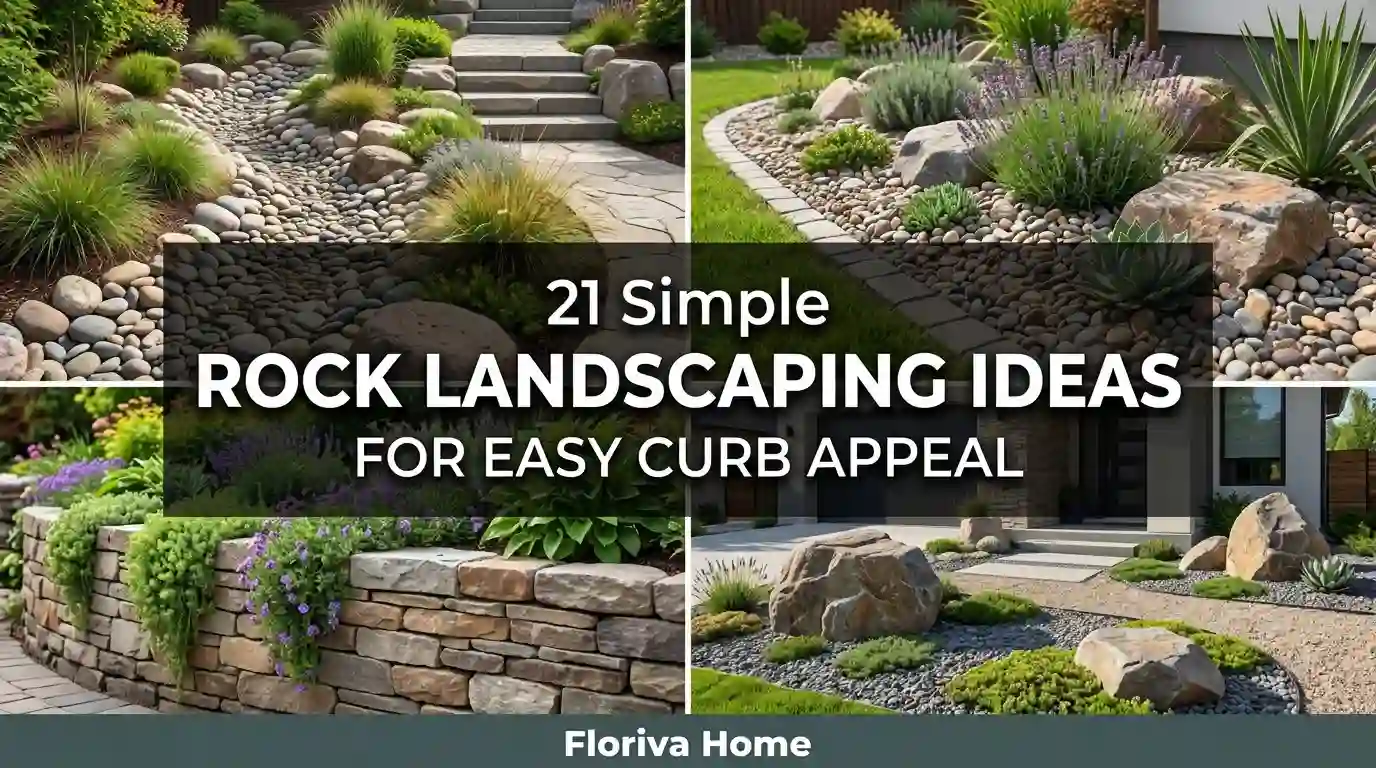
21 Simple Rock Landscaping Ideas for Easy Curb Appeal
Rock landscaping is one of the easiest ways to give an outdoor space a more finished appearance without creating a garden that demands constant attention. Rocks can define boundaries, add texture, highlight plants, and bring visual interest to otherwise plain areas of your yard.
From small decorative stone accents to larger landscape features, there are plenty of ways to use rocks without making your yard feel complicated or overdesigned.
If you’re looking for simple rock landscaping ideas that can improve your home’s curb appeal while keeping maintenance manageable, these ideas offer plenty of inspiration.
1. Create a Gravel Accent Around Your Front Walk
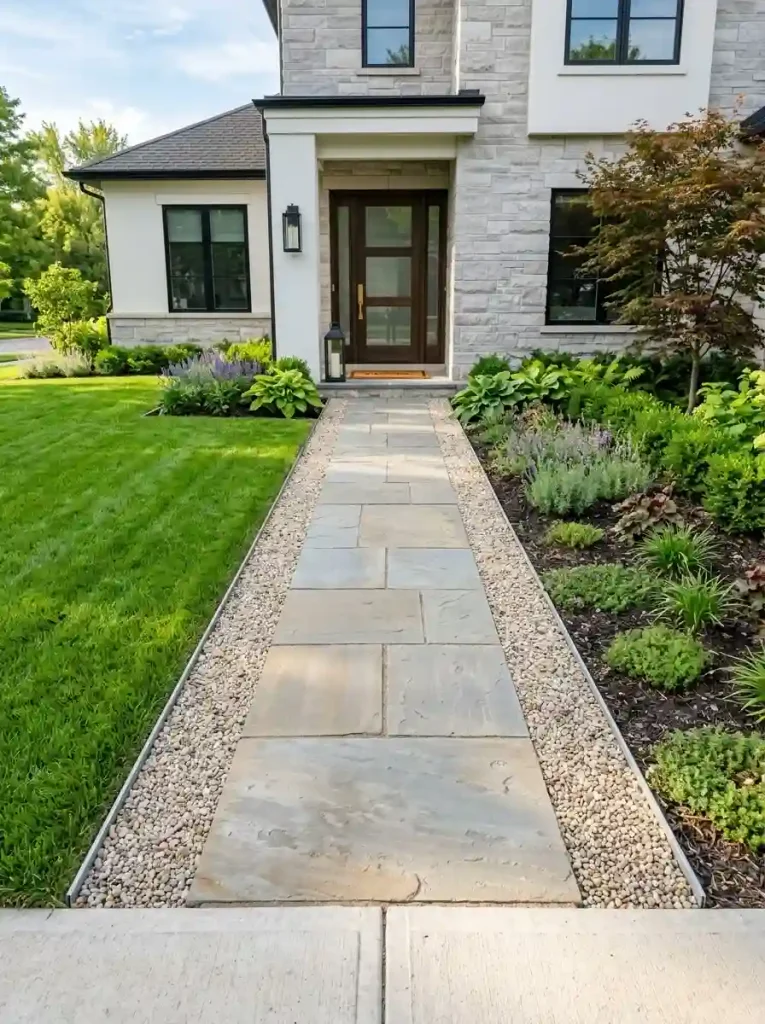
A front walkway naturally draws attention toward your home, so giving its edges a little definition can make the entire entrance feel more intentional.
Instead of allowing grass to grow directly against the path, create a narrow gravel accent along one or both sides. Choose a stone color that works with your home’s exterior and keep the width consistent for a polished appearance.
You can leave the gravel completely plant-free for a minimalist look or add a few small ground-cover plants for a softer transition.
Expert Tip:
Use landscape edging beneath the gravel to keep stones from gradually spreading into your lawn.
2. Give Your Mailbox a Mini Rock Garden
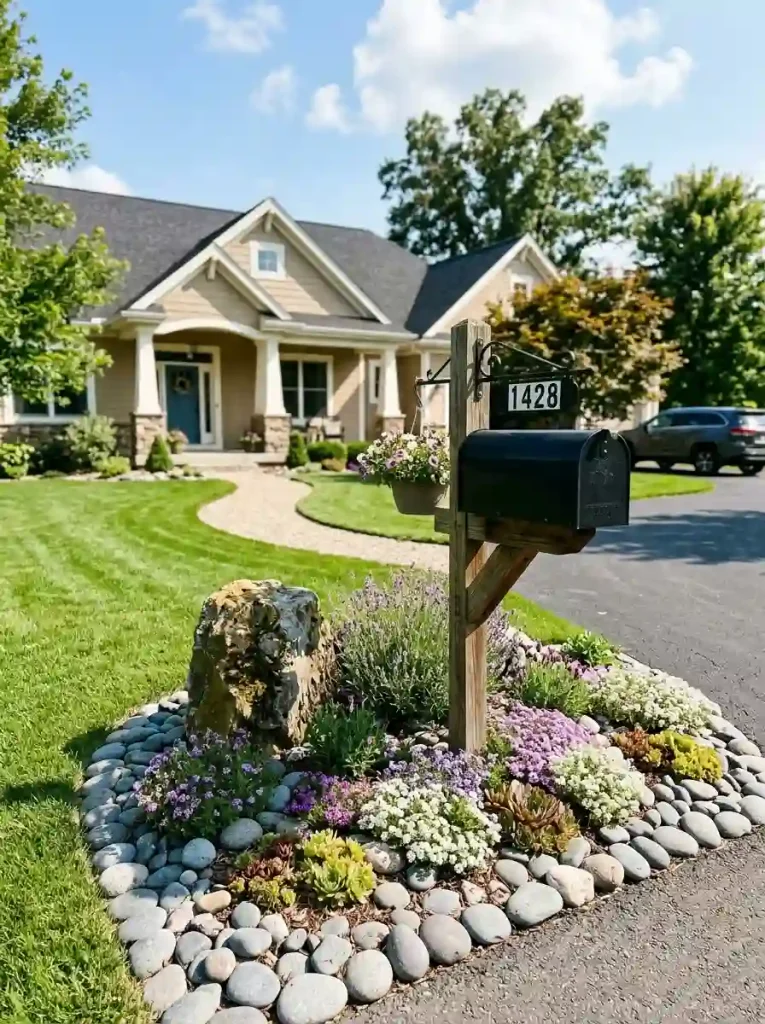
The mailbox is easy to overlook, but it sits directly in the sightline from the street. A small rock garden can turn this otherwise ordinary area into a thoughtful landscape feature.
Surround the mailbox with a combination of decorative stones and compact plants. Consider using one larger stone as a focal point and smaller rocks to fill the surrounding space.
Keep plants low enough that they don’t interfere with the mailbox door or obscure the house number.
Expert Tip:
Repeat one stone type or plant from another part of your yard to make this small feature feel connected to the rest of your landscaping.
3. Place Statement Boulders in an Open Lawn
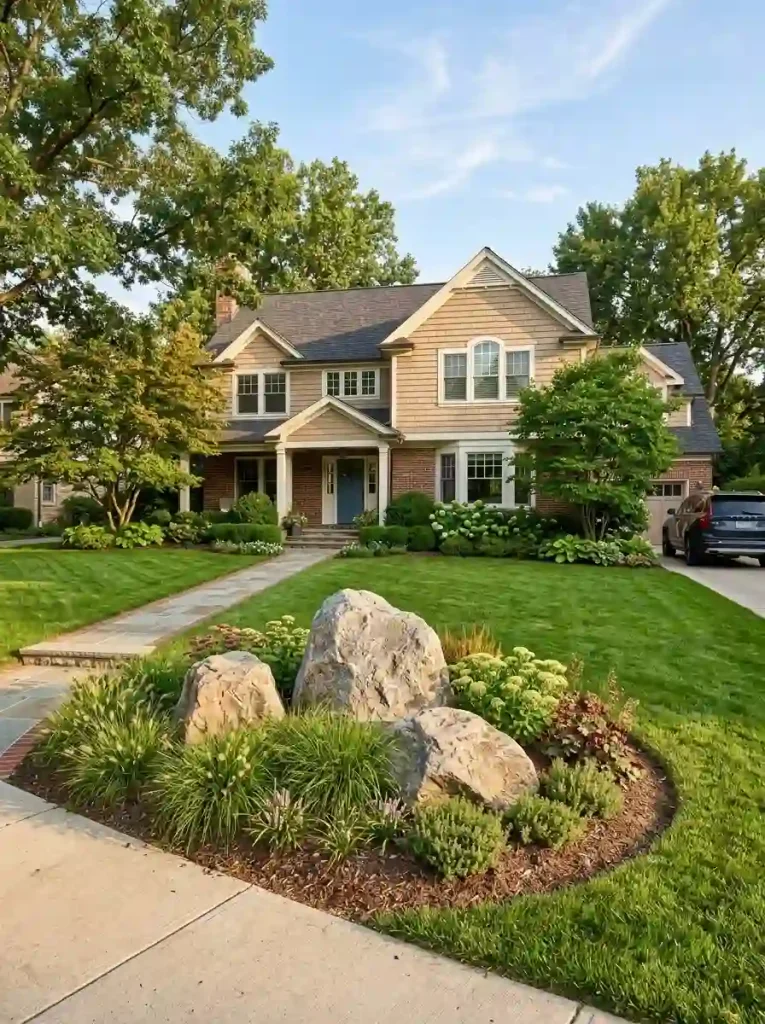
A completely open lawn can sometimes feel unfinished even when it’s perfectly maintained. A few large landscape rocks can introduce structure without requiring another planting bed.
Look for naturally shaped boulders rather than perfectly symmetrical decorative stones. Position them in an arrangement that feels balanced, with the largest rock acting as the visual anchor.
Partially setting the stones into the ground can make them appear more naturally integrated into the landscape.
Expert Tip:
Avoid placing several large rocks at equal distances from each other. Slightly varied spacing usually creates a more natural composition.
4. Build a Decorative Stone Bed Along the Foundation
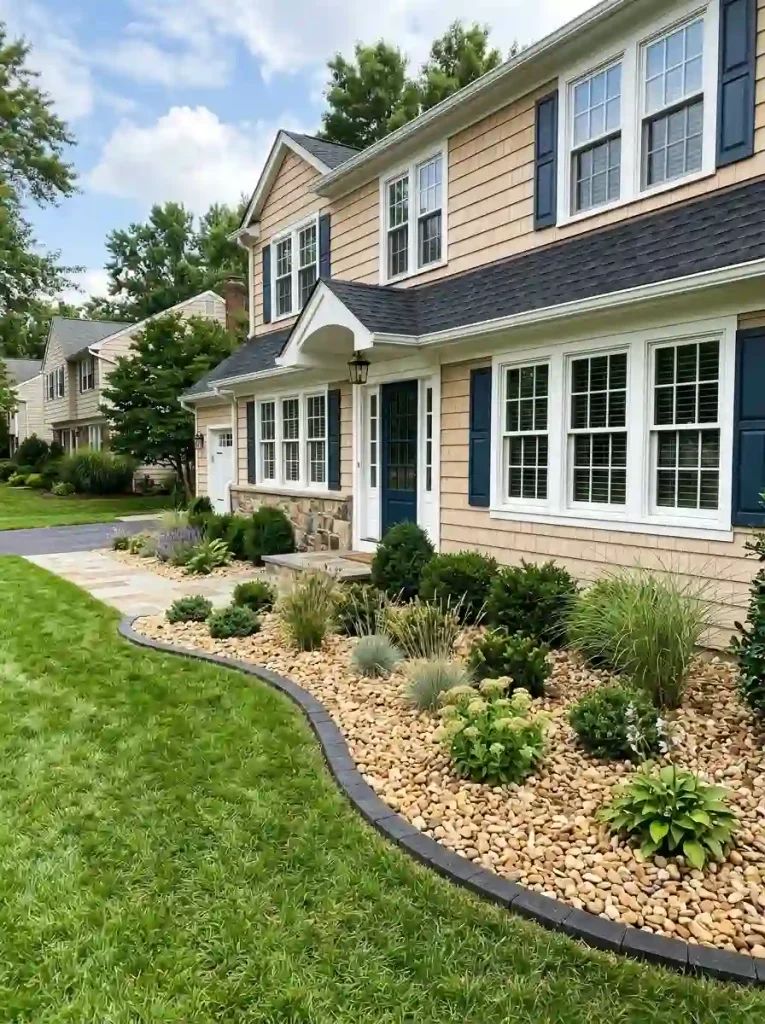
The narrow area around your home’s foundation can become difficult to maintain when grass, weeds, and soil constantly meet the walls.
A decorative stone bed provides a clear visual boundary while adding texture around the exterior of the house.
Use one primary rock material throughout the bed and introduce plants selectively rather than filling every available space. Evergreen shrubs, ornamental grasses, and small flowering plants can provide enough greenery without creating a crowded appearance.
Before installation, make sure the design works with your property’s drainage requirements and doesn’t interfere with necessary access around the foundation.
Expert Tip:
Choose stone colors that complement your siding, brick, roof, or trim rather than treating the rock bed as a completely separate design element.
5. Transform an Awkward Driveway Corner
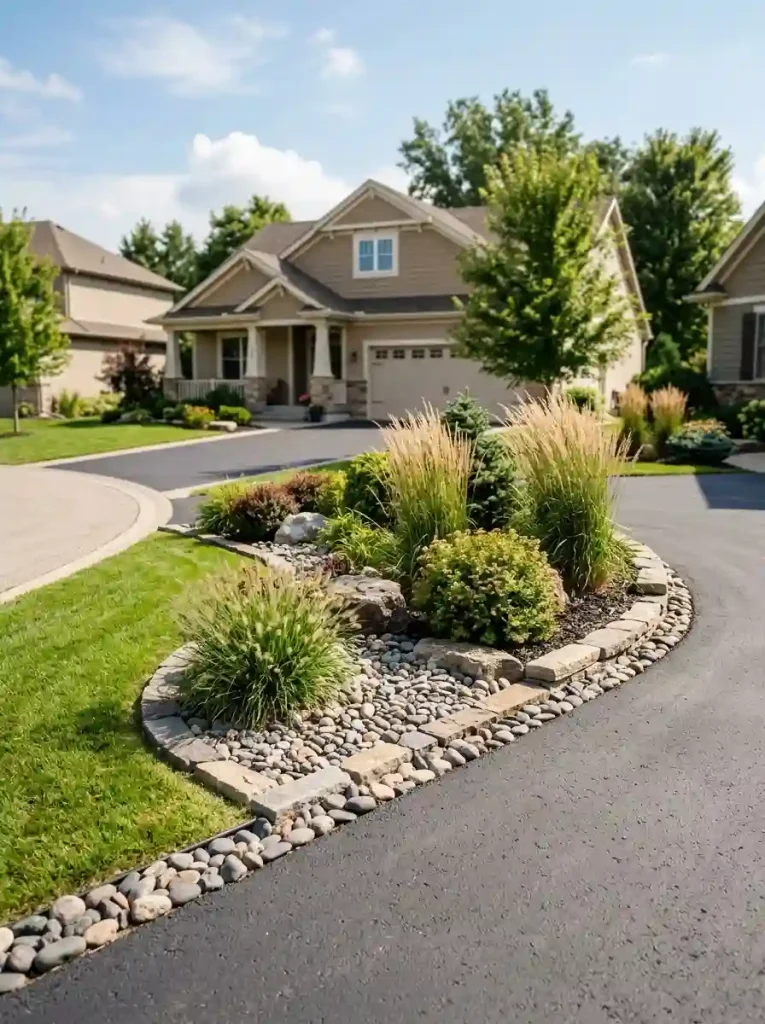
Driveway corners can become difficult areas to mow and maintain, especially where pavement meets a lawn at an unusual angle.
Instead of trying to force grass into the space, create a small rock landscaping feature. Outline a simple curved or geometric bed, fill it with decorative stones, and add several plants for height and texture.
A compact ornamental tree, rounded shrub, or cluster of grasses can make the corner more visually interesting while breaking up the hard surface of the driveway.
Expert Tip:
Keep the planting island proportional to the driveway. A small space usually looks better with a simple composition than with too many decorative elements.
6. Outline a Porch Flower Bed With Natural Stones
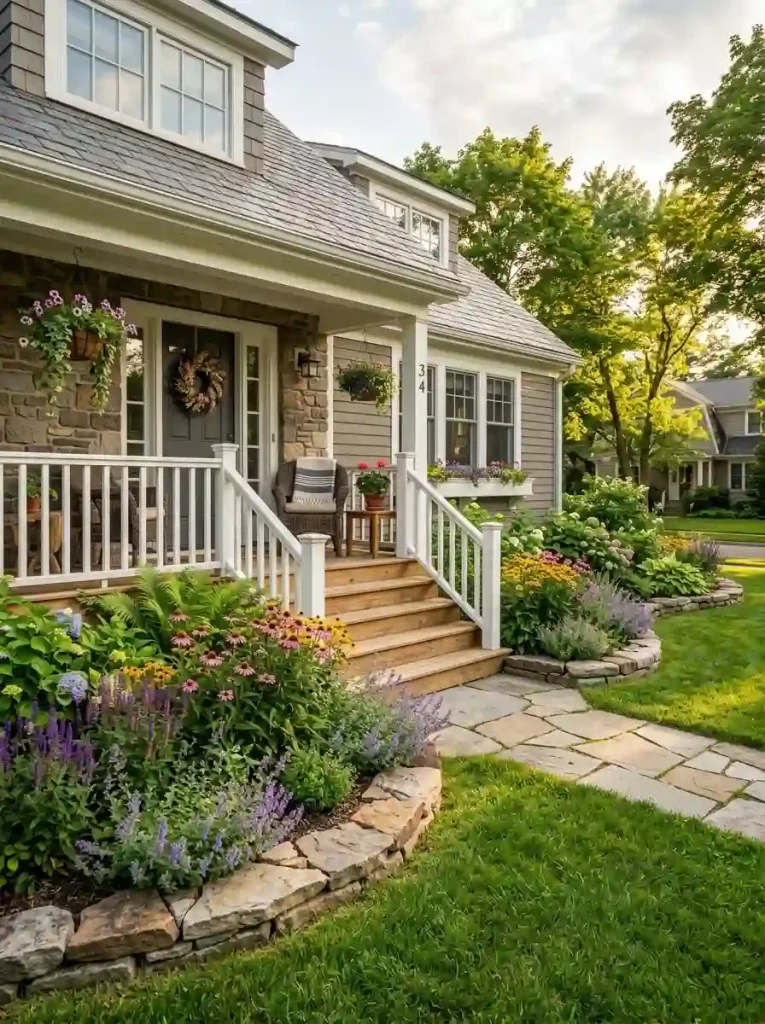
A planting bed around the front porch can become much more defined with a simple stone border.
Arrange medium-sized natural rocks around the outside edge of the bed, creating a transition between the plants and surrounding lawn. The irregular shapes of the stones can give the garden a relaxed, natural character.
For a more formal appearance, choose stones with similar colors and dimensions. For a cottage-style landscape, varying shapes can work beautifully.
Expert Tip:
Set the rocks close enough together that the border reads as one continuous feature rather than a collection of unrelated stones.
7. Create Contrast With Charcoal-Colored Rock
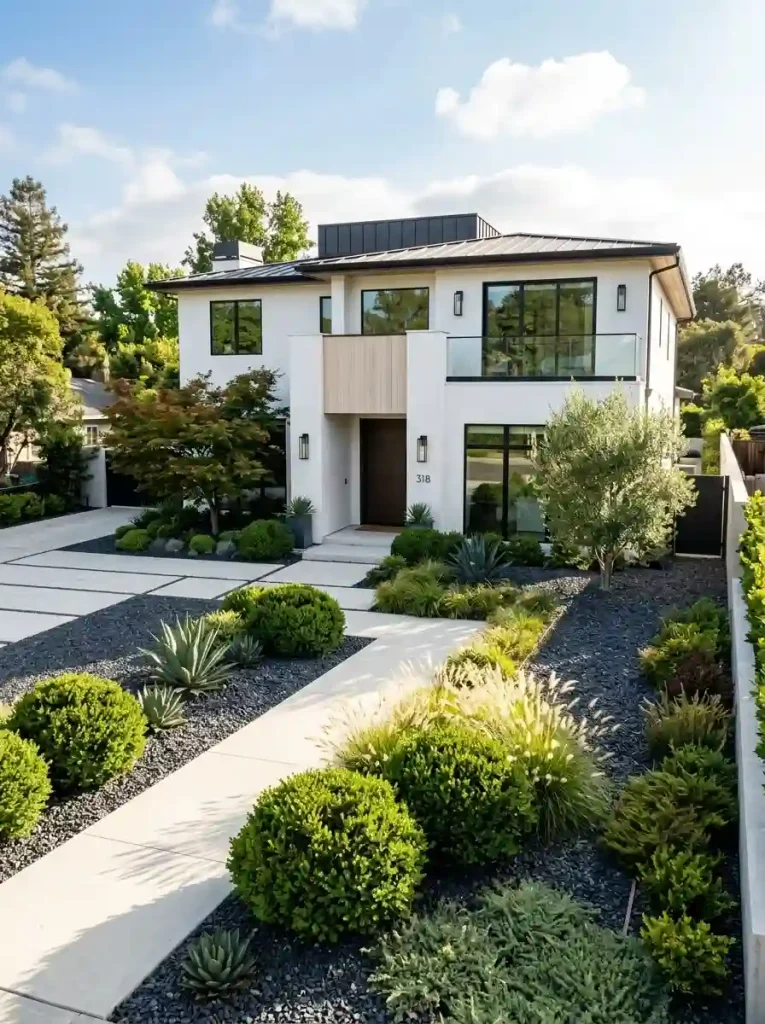
If your house has light siding or pale brick, darker landscape rock can create an attractive contrast.
Charcoal, dark gray, and nearly black stones work particularly well with contemporary homes. They can make green foliage stand out while giving the landscape a cleaner, more architectural appearance.
You don’t necessarily need to use dark rock throughout the property. A single foundation bed, planting island, or entrance feature can provide enough contrast to make the design noticeable.
Expert Tip:
Combine dark stones with plenty of greenery so the landscape feels balanced rather than overly stark.
8. Turn a Sloped Area Into a Rock Garden
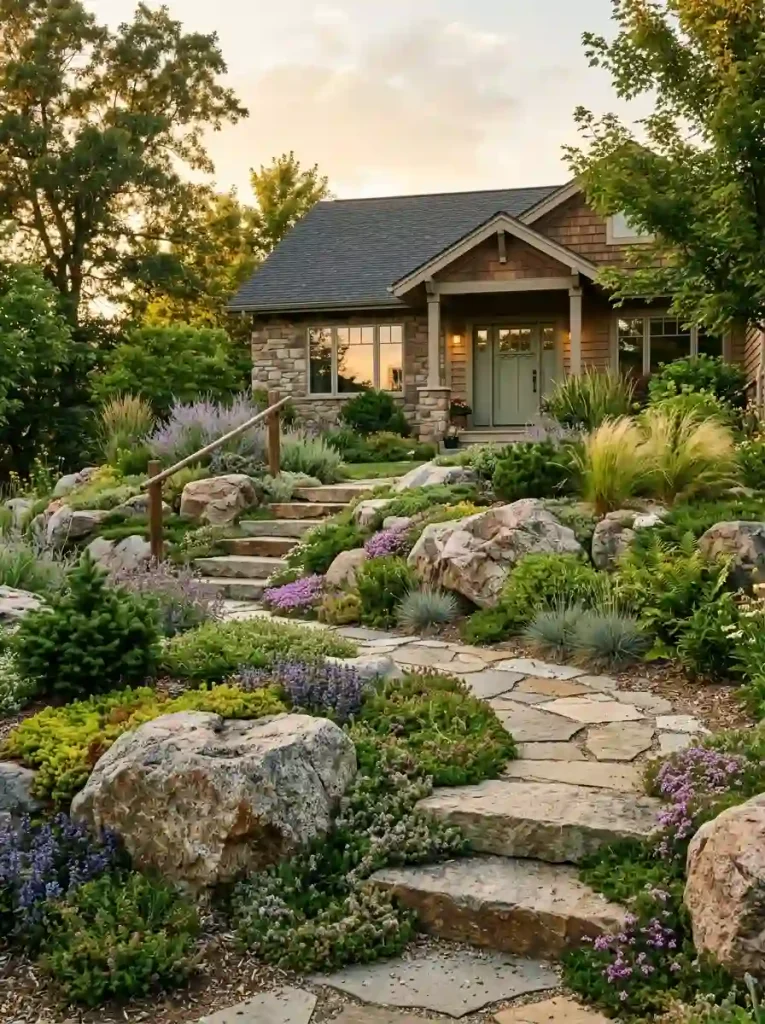
Sloped sections of a front yard can be challenging to mow and may feel disconnected from the rest of the landscape.
Instead of treating the slope like ordinary lawn, turn it into a layered rock garden. Position larger stones throughout the slope and use smaller rocks to transition between planting areas.
Low-growing plants and ornamental grasses can soften the stone while helping create a more natural appearance.
If your slope experiences significant runoff or erosion, address those functional issues as part of the landscaping plan rather than choosing rocks based on appearance alone.
Expert Tip:
Place the largest rocks first. Once they’re positioned, smaller stones and plants can be arranged around them much more naturally.
9. Surround a Small Water Feature With River Stones
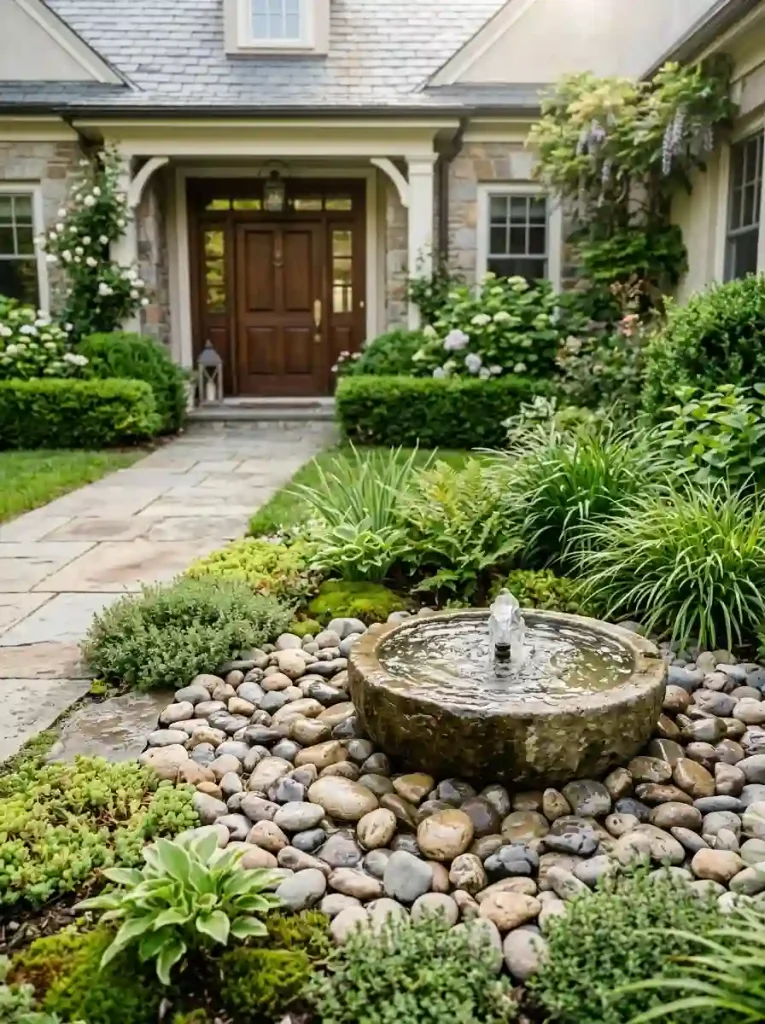
Smooth river stones can make a simple outdoor water feature look much more integrated into its surroundings.
Use rounded stones of different sizes around a fountain, bubbling feature, or small recirculating pond. Larger stones can frame the feature while smaller pebbles fill the spaces between them.
Add a limited number of plants around the water to introduce greenery without hiding the feature.
This approach works particularly well when you want your front yard to have a relaxing focal point without building an elaborate landscape.
Expert Tip:
Mix several stone sizes rather than using identical pieces. Natural variation makes the water feature feel more organic.
10. Keep the Area Beneath Windows Simple
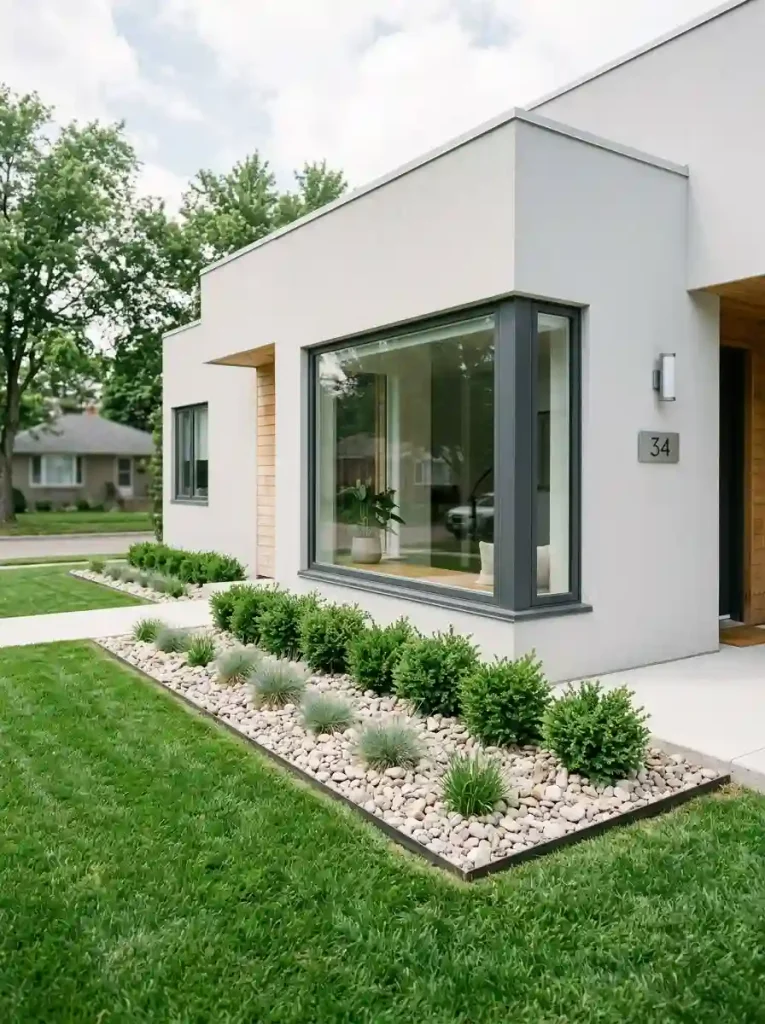
The space below a front window doesn’t always need a large collection of plants.
A shallow rock bed with a few carefully selected low-growing plants can provide texture while keeping the window unobstructed.
Use decorative stone as the foundation of the design, then add compact shrubs or grasses that remain comfortably below the window. This creates a tidy appearance without sacrificing natural color and texture.
It’s especially useful for homeowners who want attractive landscaping but don’t want to spend every weekend pruning plants away from their windows.
Expert Tip:
Always consider mature plant size when choosing greenery for a window bed. A small nursery plant can become surprisingly large over time.
11. Separate Your Lawn From the Driveway With Gravel
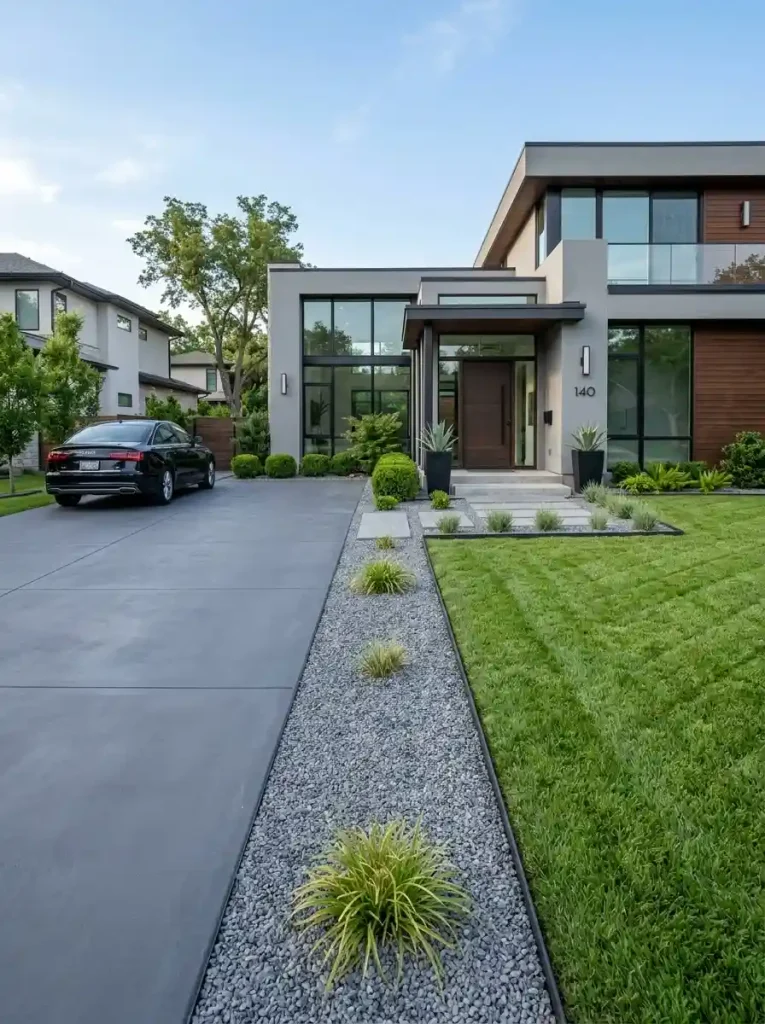
The narrow boundary between a lawn and driveway can be an ideal location for a simple rock feature.
A strip of gravel creates a visual separation between soft grass and hard pavement. It also gives you a defined edge that can make mowing and trimming easier.
For contemporary homes, a straight strip of uniformly colored gravel can reinforce clean architectural lines. For more traditional properties, irregular stone and a few low plants can create a softer transition.
Expert Tip:
Make the gravel strip wide enough to remain visible after installation and occasional lawn growth. An overly narrow strip can quickly disappear.
12. Add a Curved Rock Bed Around a Small Tree
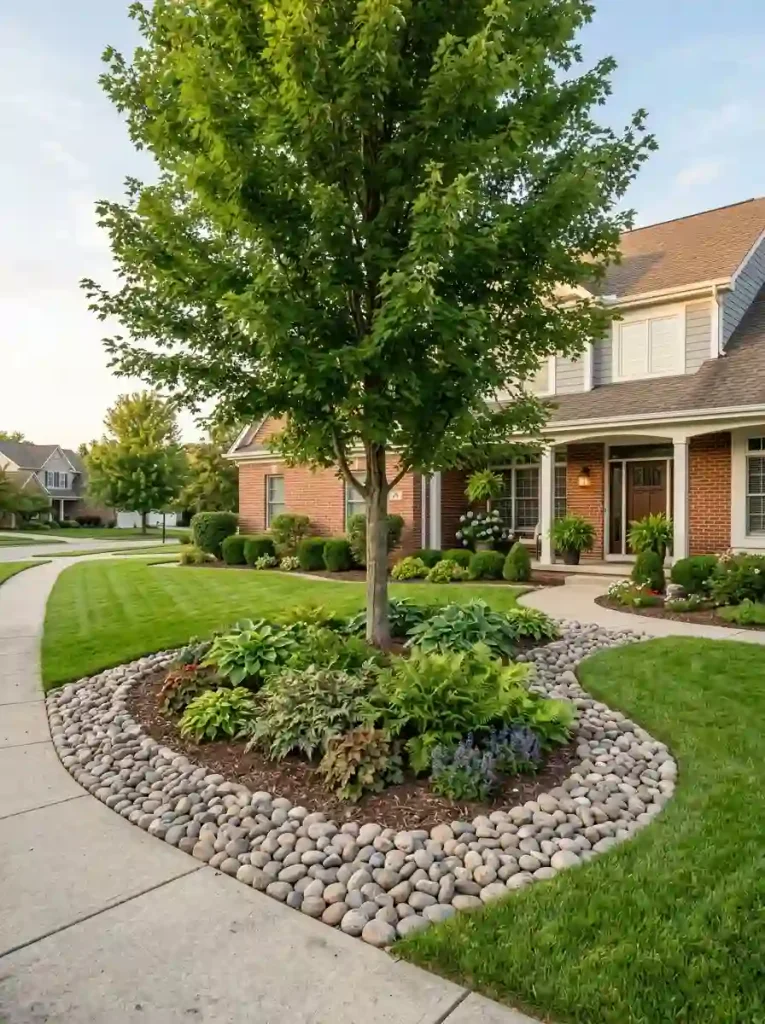
A tree can become a natural focal point in your front yard, but the area surrounding its trunk doesn’t have to remain a plain patch of grass.
Create a gently curved bed around the tree and fill it with decorative stones. The curved shape can soften the straight lines of sidewalks and driveways while giving the tree a more intentional place in the landscape.
Add a few shade-tolerant plants around the outer portion of the bed if conditions allow. Keep the area immediately around the trunk clear rather than piling rocks directly against it.
Expert Tip:
Leave appropriate space around the trunk so the tree’s base remains visible and isn’t surrounded by material that could interfere with healthy growth.
13. Make a Small Rock Garden Beside the Front Steps
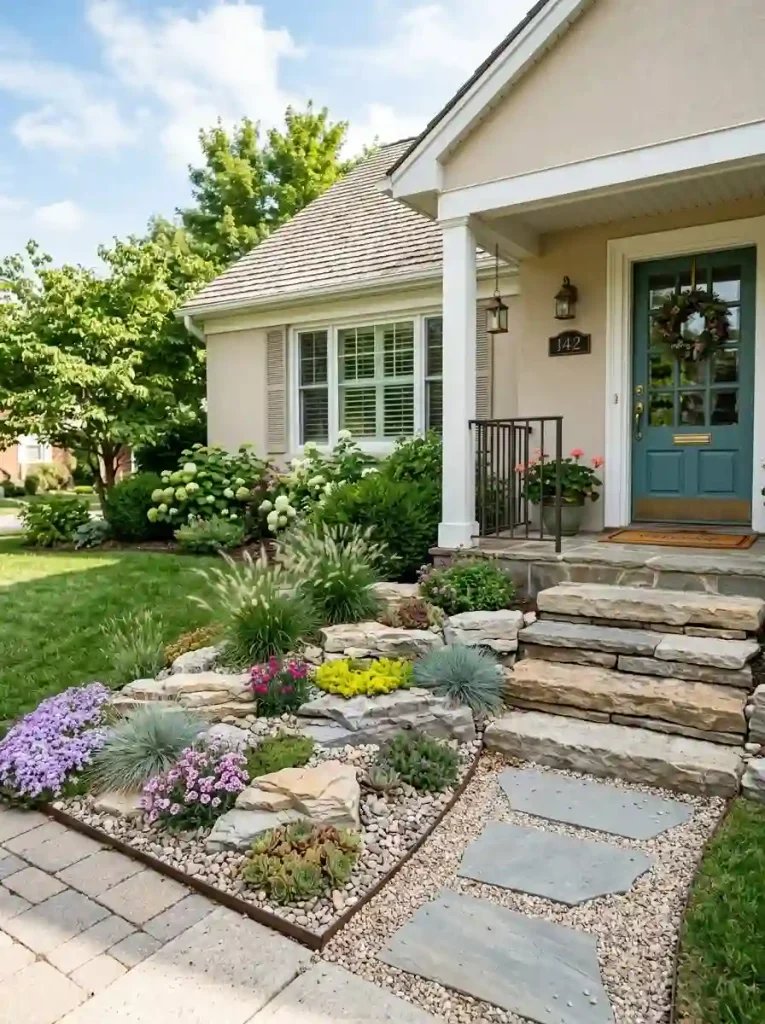
The area beside your front steps is an excellent place for a compact rock garden because it naturally receives attention from anyone approaching the entrance.
Use several rocks with different shapes and sizes, then add drought-tolerant plants, ornamental grasses, or other compact greenery between them.
Rather than filling the entire area with stones, create pockets of planting space. This combination gives you the low-maintenance benefits of rock landscaping while keeping the entrance warm and welcoming.
Expert Tip:
Keep the tallest feature toward the back of the garden so it frames the steps without making the entrance feel crowded.
14. Mix Rock With Mulch for a Softer Landscape
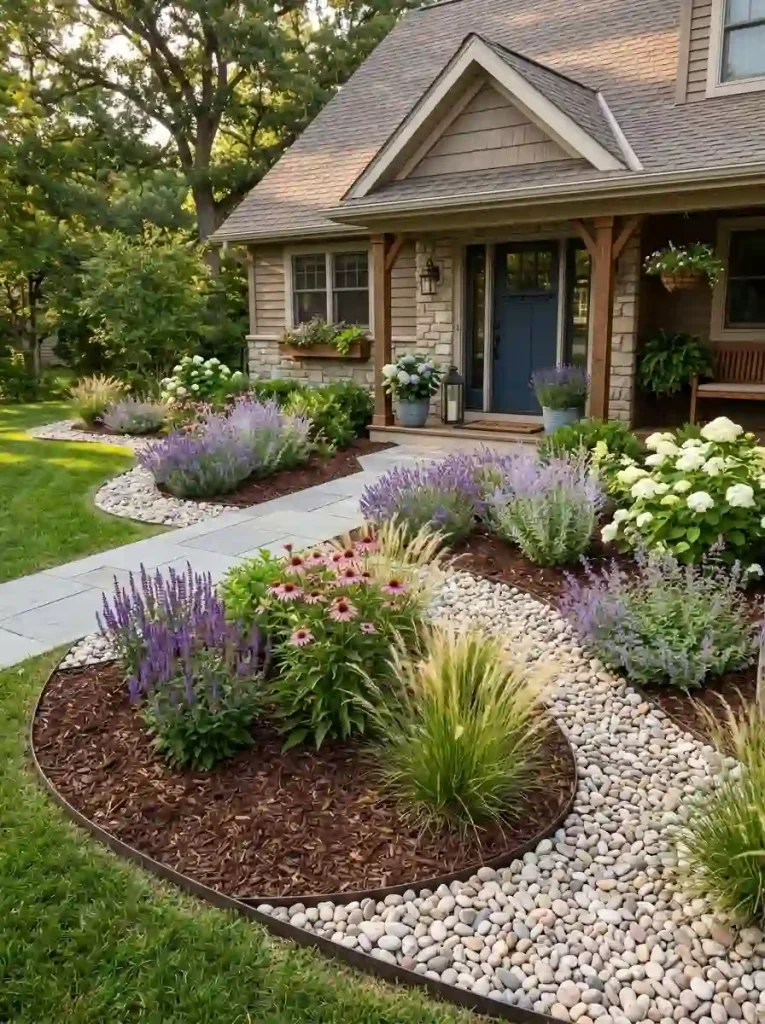
You don’t have to choose between rock and mulch. Using both materials can create more visual variety in a front-yard garden.
For example, use decorative rock around the outside edge of a planting bed and mulch closer to shrubs and flowers. The difference in texture creates subtle separation while preventing the landscape from becoming visually flat.
This approach works particularly well when you want the durability of stone but still prefer the warmer appearance of a traditional planted garden.
Expert Tip:
Choose complementary colors rather than making the rock and mulch compete. One material should feel like the primary feature while the other supports it.
15. Create a Rock Accent Beneath a Porch Light
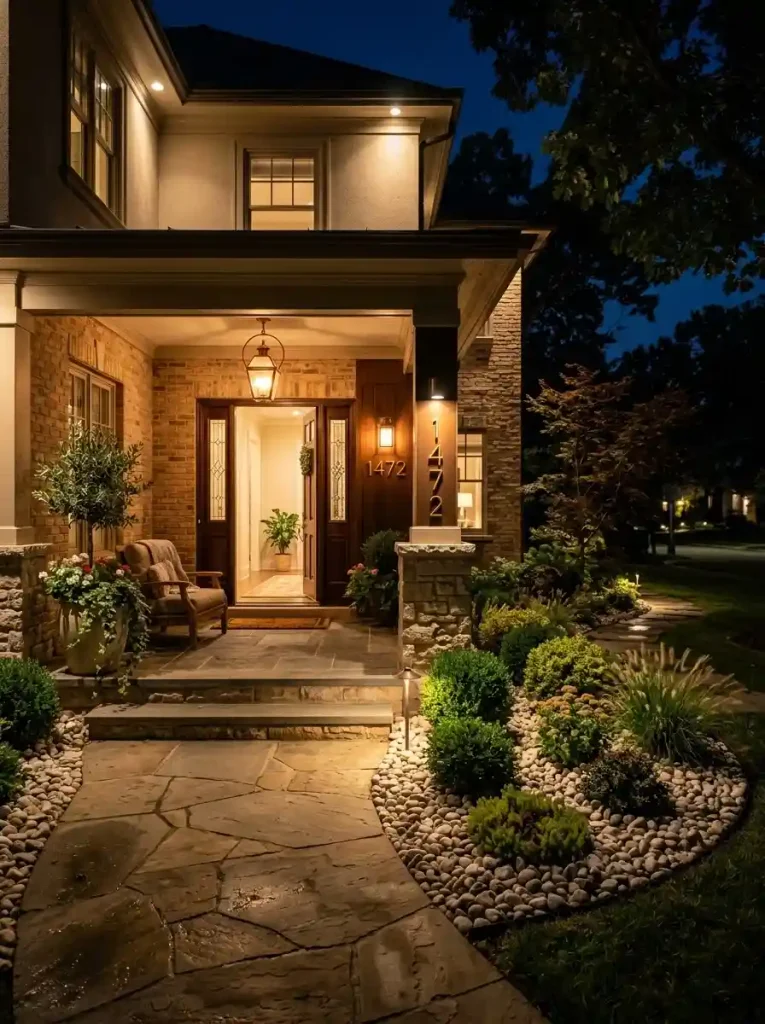
Small architectural details can make a big difference in curb appeal, especially after sunset.
Create a compact rock bed beneath or near an exterior porch light. The stones can provide a textured background while the lighting highlights nearby plants, house numbers, or architectural features.
Light-colored stones can reflect some of the illumination and make the area feel brighter without adding additional decorative objects.
Keep the arrangement simple so the lighting remains the main feature.
Expert Tip:
Test your lighting after dark before finalizing the stone arrangement. A slight change in rock placement can dramatically affect the shadows and highlights.
16. Use Flat Stones to Create a Simple Stepping Route
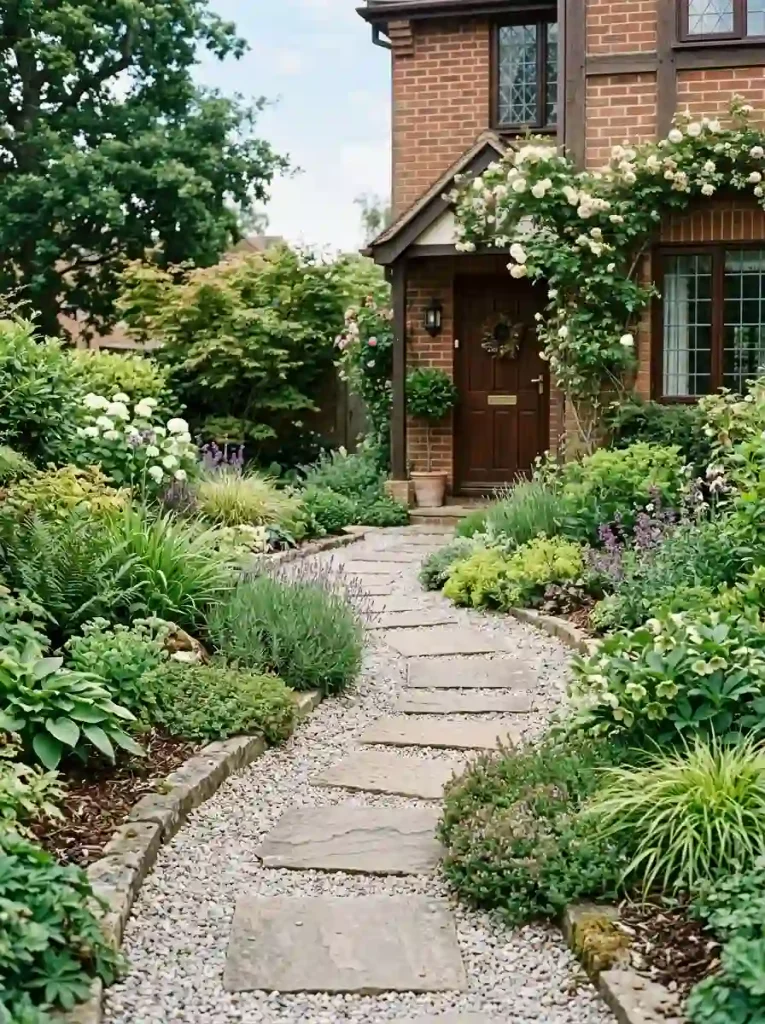
Flat landscape stones can create a practical route through a garden while adding another layer of texture to the yard.
Rather than constructing a formal walkway, position several broad stones with comfortable spacing and surround them with gravel or low-growing plants.
The stones should sit securely and remain relatively level so they don’t become a tripping hazard. Choose shapes that complement the architecture of your home for a more cohesive result.
Expert Tip:
Arrange the stepping stones around your natural walking pattern rather than forcing a perfectly straight line. A subtle curve can feel more natural in a garden.
17. Surround a Garden Bench With Decorative Stone
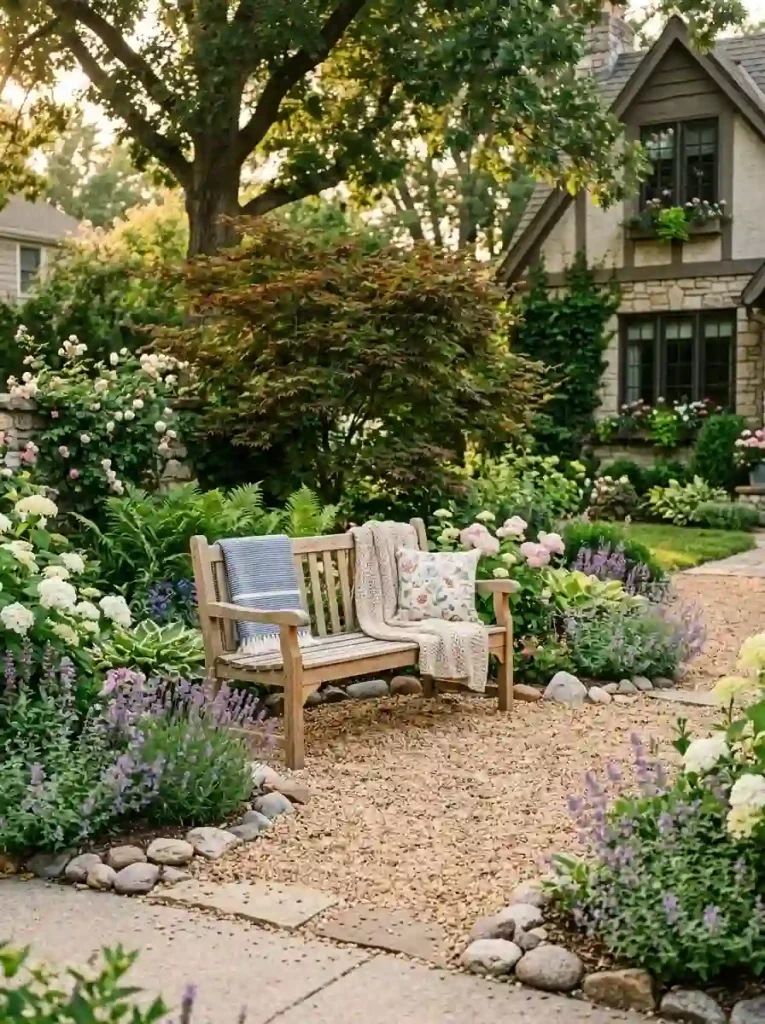
A small bench can make a front garden feel more inviting, and decorative rocks can help define the space around it.
Create a compact sitting area using gravel or small stones beneath the bench. Add plants around the perimeter while leaving enough open space for comfortable access.
This can turn an unused corner into a quiet place to enjoy the garden while also creating a visual focal point from the street.
Expert Tip:
Choose a bench material that complements the stone. Natural wood works particularly well when you want to soften the harder texture of gravel and rocks.
18. Build a Dry Creek-Inspired Drainage Feature
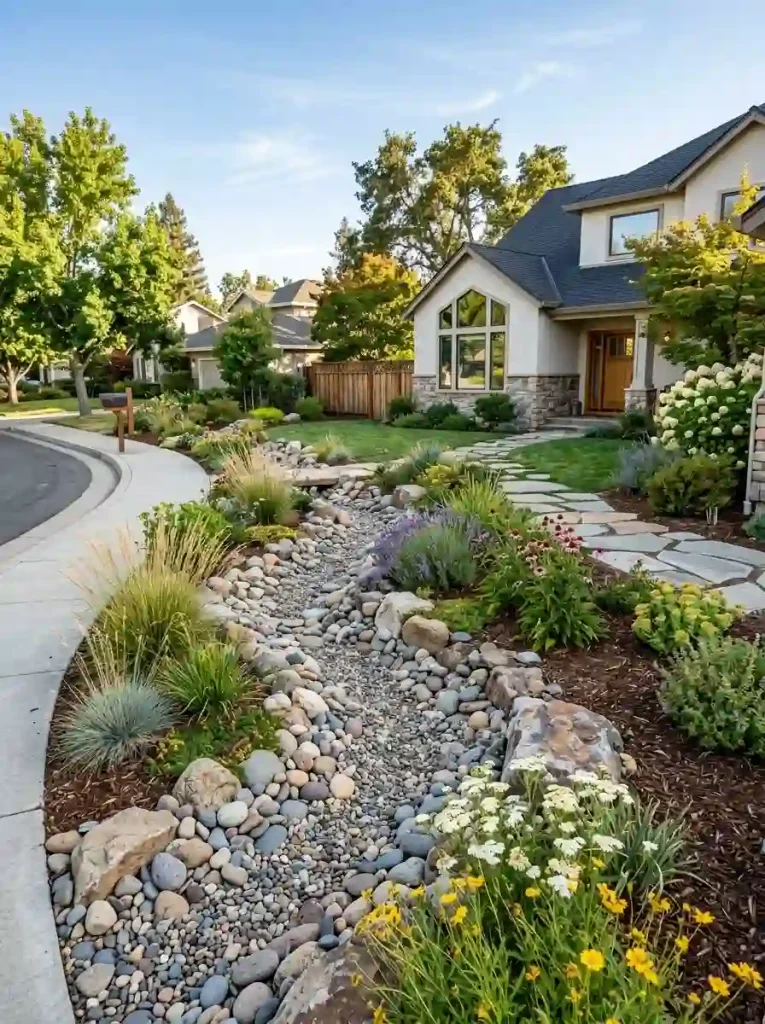
A dry creek-inspired feature can give an otherwise ordinary section of the yard a distinctive landscape character.
Use stones of varying sizes to create the impression of a natural channel, with larger rocks along selected edges and smaller stones through the center. Plants can be added along the sides to make the feature blend into the surrounding garden.
If you’re using the design to address actual runoff, make sure the drainage plan is appropriate for your property rather than treating the feature as purely decorative.
Expert Tip:
Follow the natural direction that water already takes across the property instead of creating an artificial-looking channel in a completely random location.
19. Highlight a Front-Door Planting Area With Pebbles
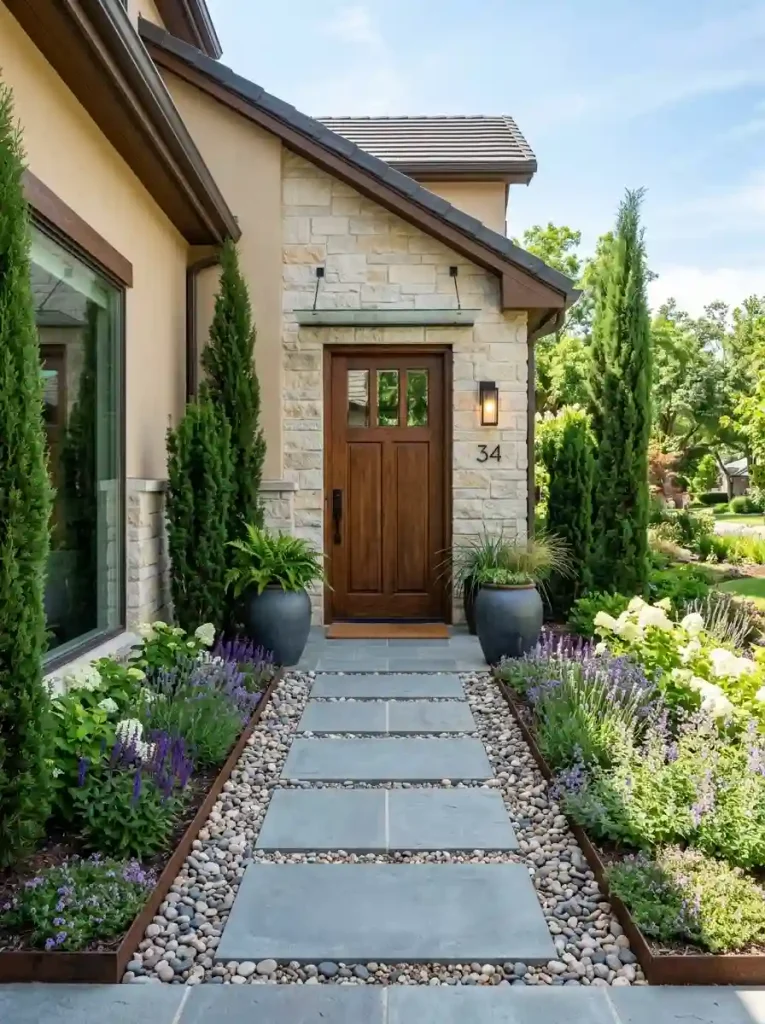
Your front door should remain the visual destination of the yard, and a small pebble-filled planting bed can help guide attention toward it.
Use fine decorative pebbles beneath a few carefully selected plants near the entrance. Tall narrow greenery can frame the doorway while low plants keep the lower portion of the bed visually balanced.
Choose a limited palette of stone and plant colors so the entrance doesn’t become overly busy.
Expert Tip:
Repeat a color from your front door, trim, or exterior finish in the surrounding plants or stone for a subtle connection.
20. Create a Desert-Inspired Rock Garden
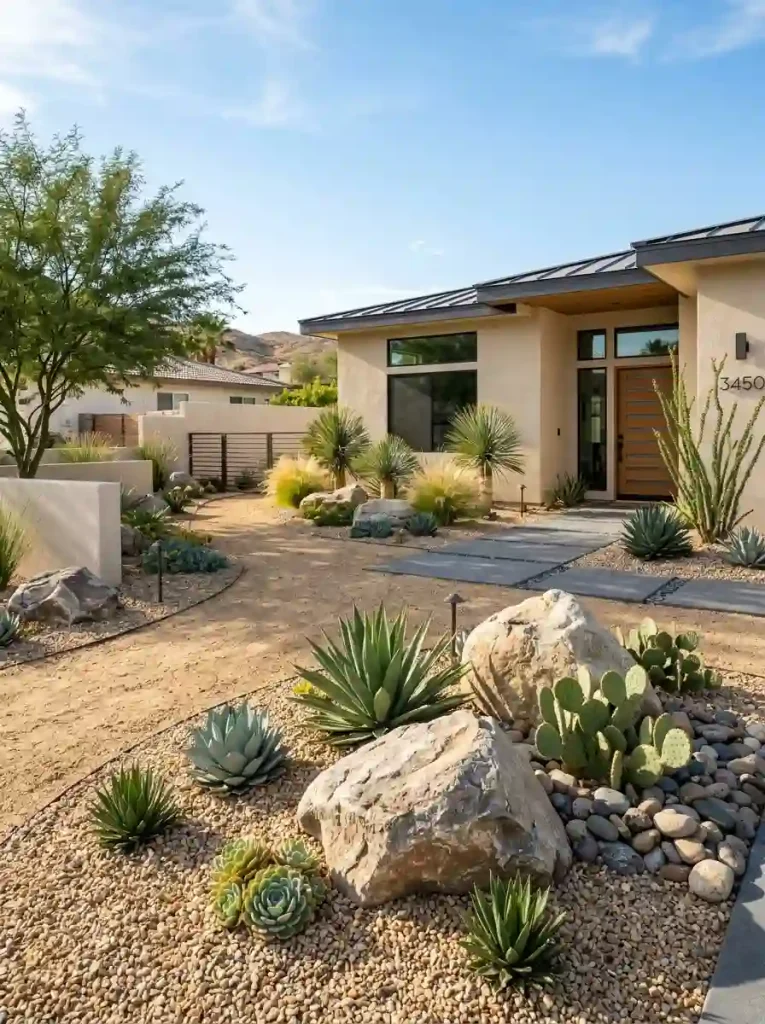
If you prefer a landscape that doesn’t rely heavily on lush lawn, consider creating a desert-inspired rock garden.
Combine gravel, larger stones, sculptural plants, and open spaces to create a simple composition with strong texture. Depending on your climate, suitable plants might include drought-tolerant varieties such as succulents or ornamental grasses.
The key is not to overcrowd the area. Desert-inspired landscapes often look best when individual plants and rocks have enough room to stand out.
Expert Tip:
Choose plants that are genuinely suited to your local climate. A desert-inspired appearance doesn’t mean every drought-tolerant plant will thrive in every region.
21. Combine Several Rock Sizes for a Layered Look
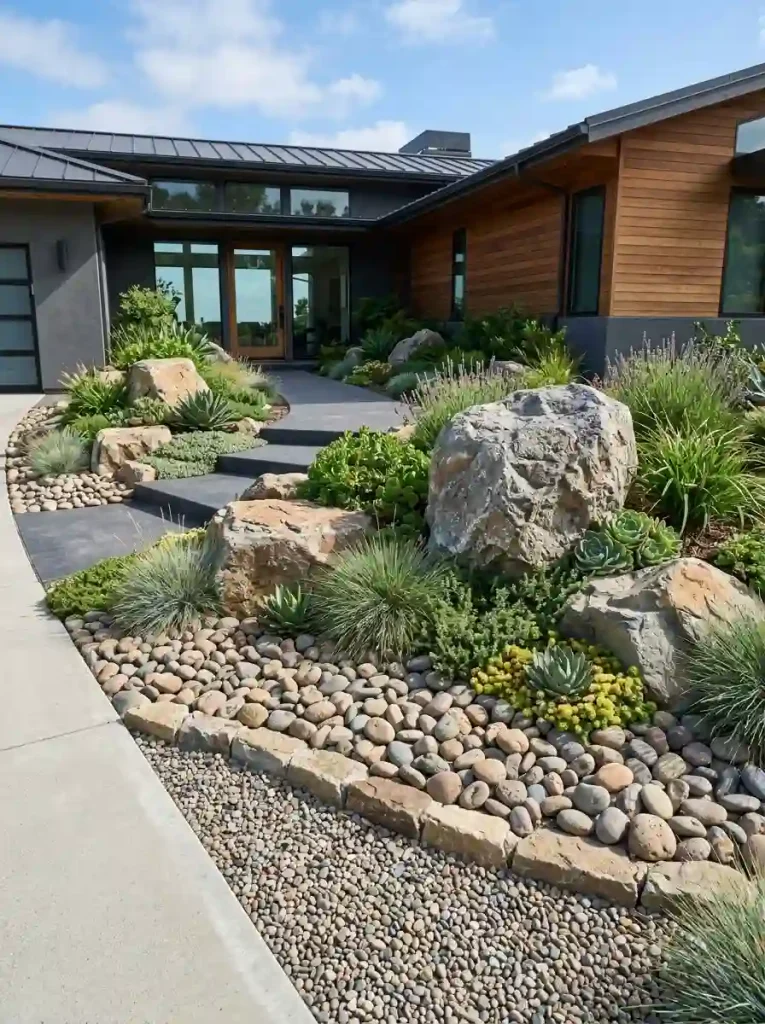
Using only one size of stone can sometimes make a landscape look flat. Combining different scales creates more depth and gives the eye several details to discover.
Start with a dominant ground-cover material such as gravel or small pebbles. Then introduce medium stones and finish with one or two larger rocks as focal points.
This layered approach can work around planting beds, trees, pathways, or even a small front-yard garden.
Expert Tip:
Choose one dominant rock color and vary the size rather than using many unrelated colors. Consistent color helps the landscape feel cohesive.
How to Choose the Right Rocks for Your Landscape
Choosing the right rock is about more than picking the color you like most. Think about the scale of your yard, your home’s exterior, the amount of foot traffic, and how you want the finished landscape to feel.
Consider the Color
Light-colored stones can create a bright, airy appearance, while darker rocks provide stronger contrast against pale homes and green plants.
Try to connect the rock color with something already present on your property, such as brick, siding, roof materials, pathways, or outdoor furniture.
Think About Rock Size
Small gravel is useful for filling broad areas and creating paths, while medium stones work well for borders and planting beds. Large boulders are better suited to focal points where you want to create visual weight.
Mixing sizes can add depth, but avoid using so many different sizes that the design looks random.
Match the Style of Your Home
A contemporary home may look best with clean-edged gravel beds and consistent stone colors.
A traditional or cottage-style home can handle more irregular stones, natural shapes, and varied textures.
The goal isn’t to make the rocks stand out completely on their own. They should feel like part of the overall property.
Simple Tips for Installing Rock Landscaping
Before bringing in bags or loads of stone, spend some time planning the area.
Measure the space first so you have a reasonable estimate of how much material you’ll need. Prepare the ground by removing unwanted vegetation and creating a stable, level base where appropriate.
Landscape edging can be particularly useful around loose gravel because it helps establish a defined boundary and keeps stones from migrating into lawns or walkways.
If you’re combining rocks with plants, group plants according to their light, moisture, and space requirements. This makes the landscape easier to maintain as everything matures.
Proper drainage also matters, especially around a home’s foundation. Rocks can be attractive, but they should never be installed in a way that creates unwanted water problems.
How to Keep a Rock Landscape Looking Fresh
Rock landscaping is generally easier to maintain than a traditional lawn, but it isn’t completely maintenance-free. Wind, rain, leaves, weeds, and normal foot traffic can gradually change its appearance.
Remove leaves and other organic debris before they accumulate heavily. Pull weeds while they’re still small, and occasionally rake loose gravel back into its original position.
Over time, some areas may lose stone because of weather or movement. Keeping a small amount of matching material available makes it easy to refresh those spots.
Plants will also need their normal seasonal care. Rock landscaping reduces some maintenance work, but it doesn’t eliminate pruning, watering, or plant care where greenery is included.
Final Thoughts
Simple rock landscaping can make a front yard look more organized, textured, and intentional without requiring an elaborate redesign.
The best designs don’t simply cover empty spaces with stones. They use rocks for a purpose—framing plants, defining boundaries, guiding movement, highlighting architectural features, or creating a focal point.
Start with one area that currently feels unfinished. A driveway corner, front walkway, porch bed, or small section beneath a window can be enough to make a noticeable difference.
Once you see how the first feature changes your curb appeal, you can repeat similar materials throughout the property to create a cohesive landscape.
The goal isn’t to add as many rocks as possible. It’s to use the right rocks in the right places so your yard feels simple, balanced, and thoughtfully designed.
Frequently Asked Questions
Are Rocks Good for Front-Yard Landscaping?
Yes. Rocks can add structure, texture, and visual contrast to a front yard while reducing the amount of lawn or mulch you need to maintain.
They work particularly well for borders, pathways, planting beds, accent areas, and focal points. Combining them with plants helps keep the landscape natural and inviting.
What Is the Easiest Rock Landscaping Idea for Beginners?
A small decorative gravel bed is one of the easiest places to begin.
Try adding one around a mailbox, beneath a window, beside a walkway, or in an awkward corner of your yard. Starting with a small area also lets you experiment with rock colors and sizes before committing to a larger project.
Should I Use Landscape Fabric Under Rocks?
Landscape fabric can be useful in certain decorative rock beds because it separates stone from the underlying soil and may help with maintenance.
However, it isn’t automatically the best solution for every garden. Consider your soil, plants, drainage, and long-term maintenance requirements before installing it.
What Rocks Look Best Around a House?
River rock, pea gravel, crushed stone, decorative pebbles, and larger natural boulders can all work around a home.
The best choice depends on your architecture and landscaping style. Rather than choosing rocks in isolation, look for colors and textures that complement your siding, brick, roof, walkway, and existing plants.
How Do I Stop Landscaping Rocks From Spreading?
Landscape edging can help keep loose stones contained.
Metal edging creates a subtle modern boundary, while brick or natural stone can provide a more decorative appearance. Whatever material you choose, make sure the border clearly separates the rock from surrounding lawn, soil, or pavement.
Can Rock Landscaping Reduce Yard Maintenance?
Yes, particularly when rock replaces areas of lawn that would otherwise require regular mowing and trimming.
However, rock landscaping isn’t completely maintenance-free. Leaves and debris still need to be removed, weeds may occasionally appear, and loose gravel sometimes needs to be raked or replenished.
What Should I Put Under Landscaping Rocks?
The appropriate base depends on where the rocks are being installed and how the area will be used.
Ground preparation is important so the surface remains stable. Some decorative beds may benefit from landscape fabric, while pathways may require a more substantial prepared base.
Drainage should always be considered, especially when installing stone close to your home.
How Can I Make Rock Landscaping Look Less Harsh?
Introduce softer elements such as ornamental grasses, evergreen shrubs, flowering plants, ground covers, mulch, or natural wood.
You can also combine different rock sizes while keeping the color palette consistent. This creates visual depth without making the landscape feel cluttered.
Are Large Landscaping Rocks Worth Using?
Large rocks can be extremely effective when they’re positioned intentionally.
One substantial boulder may create more visual impact than dozens of smaller decorative stones. Large rocks are especially useful for anchoring planting beds, slopes, garden corners, and other areas that need a strong focal point.
How Do I Make Rock Landscaping Look Professional?
Start with a limited palette of materials and repeat them throughout the landscape.
Create clear boundaries, balance large rocks with smaller materials, vary plant heights, and leave enough open space for important features to stand out.
Most importantly, avoid adding decorative elements simply because there’s empty space. A restrained design usually looks more polished than a yard filled with unrelated rocks, colors, and ornaments.