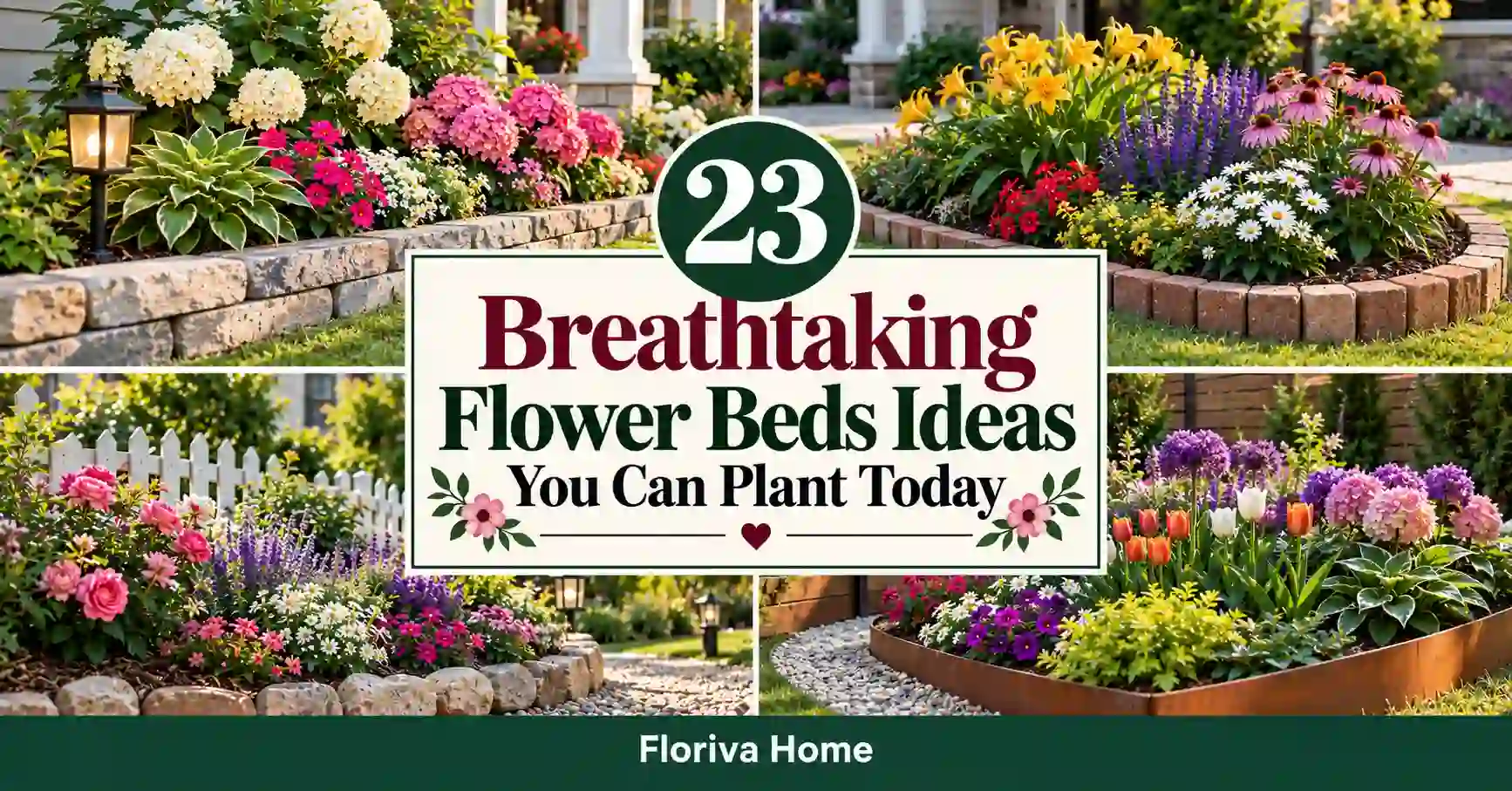
23 Breathtaking Flower Beds Ideas You Can Plant Today
Flower beds can make even a simple yard feel more welcoming. A colorful border beside the front door, a layered garden along a fence, or a small bed beneath a tree can completely change how an outdoor space looks.
The best part is that you don’t need to hire a landscaper or fill your yard with dozens of different plants. A thoughtful combination of flowers, foliage, and garden edging can create a beautiful result on almost any budget. These flower bed ideas will help you find a style that fits your space, available sunlight, and gardening experience.
1. Mix Roses and Daisies for a Charming Flower Bed

Roses and daisies make a lovely combination when you want a garden that feels colorful without looking overly formal. The rounded rose blooms provide a rich focal point, while simple daisies create a lighter, more relaxed appearance around them.
Try blush pink roses with white daisies for a soft romantic look, or choose coral roses for a warmer display. Plant roses with enough space for mature growth, and select daisy varieties that enjoy the same sunlight and soil conditions.
2. Layer Flowers for a Fuller Garden Display

Layering is one of the simplest ways to make a flower bed look professionally designed. Instead of planting flowers at a uniform height, arrange tall varieties toward the back, medium-sized blooms in the middle, and low-growing plants along the front edge.
For a sunny garden, combine purple, pink, yellow, and white flowers for a balanced display. If your bed is viewed from all sides, place the tallest plants in the center and gradually reduce the height toward the edges.
| Layer | Flower examples | Purpose |
| Back | Delphiniums, tall salvia | Add height and structure |
| Middle | Coneflowers, coreopsis | Provide color and volume |
| Front | Alyssum, creeping thyme | Soften the border |
3. Use Evergreen Shrubs for Year-Round Structure

Flowers bring seasonal color, but evergreen shrubs give a garden a dependable structure even when blooms disappear. Compact boxwood varieties, suitable small conifers, and other climate-appropriate evergreens can form a green backdrop for seasonal flowers.
Start with a few shrubs that suit the mature size of your garden, then fill the spaces between them with flowering plants. Check the expected height and spread before planting, and avoid placing shrubs so close together that they become crowded.
| Before | An empty border with bare soil and little visual interest. |
| After | Evergreen structure combined with seasonal flowers creates a more complete garden. |
4. Brighten Your Yard With a Marigold Flower Bed

Marigolds are a practical choice when you want a flower bed filled with bright, cheerful color. Their yellow and orange blooms work well around walkways, along low garden borders, and beside patios. Many varieties flower generously in warm weather when they receive adequate sunlight.
For a simple design, plant one color in a continuous border. If you prefer something more playful, alternate orange and yellow clusters. Leave enough room between plants for air circulation, water the soil rather than constantly wetting the foliage, and remove faded blooms when appropriate.
5. Create an Elegant Purple and White Flower Bed

A purple and white color scheme can make a flower bed feel coordinated and elegant without requiring elaborate landscaping. Purple salvia and lavender-toned flowers add depth, while white daisies and other pale blooms brighten the arrangement.
Repeat each flower variety in small groups instead of planting a different species in every available space. Add plants with silvery foliage or fine ornamental grasses for texture. Choose varieties with compatible watering and sunlight needs.
6. Frame a Garden Walkway With Flowers

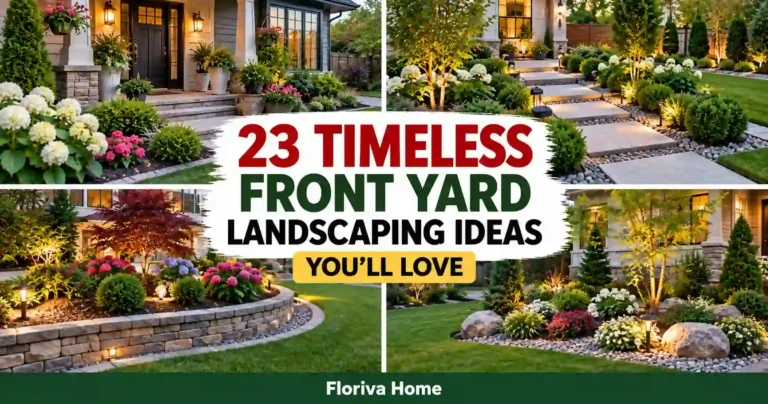
A walkway flower bed creates an inviting entrance and makes an ordinary path feel like part of the garden design. Curved borders work well in informal landscapes, while straight planting lines can complement modern homes.
Use low-growing flowers close to the path and place taller plants farther away so the walkway stays clear. Repeat two or three flower varieties along the route, and include plants that bloom at different times of the year.
7. Build a Raised Flower Bed for a Defined Look

A raised flower bed gives your planting area a clear boundary and can make gardening easier. It is also useful for patios, compact yards, and spaces where the existing soil needs improvement.
Wood, brick, and stone are common materials for raised beds. Choose a material that suits your outdoor style, then fill the bed with appropriate growing medium and flowers suited to the location. Make sure excess water can drain away and that you can comfortably reach all parts of the bed.
| Material | Appearance | Considerations |
| Timber | Warm and natural | Check durability and suitability for garden use |
| Brick | Traditional and tidy | Requires a stable base |
| Stone | Rustic or premium | Can be heavy and costly |
| Metal | Clean and contemporary | May heat up in direct sun |
8. Plant a Pollinator-Friendly Flower Bed
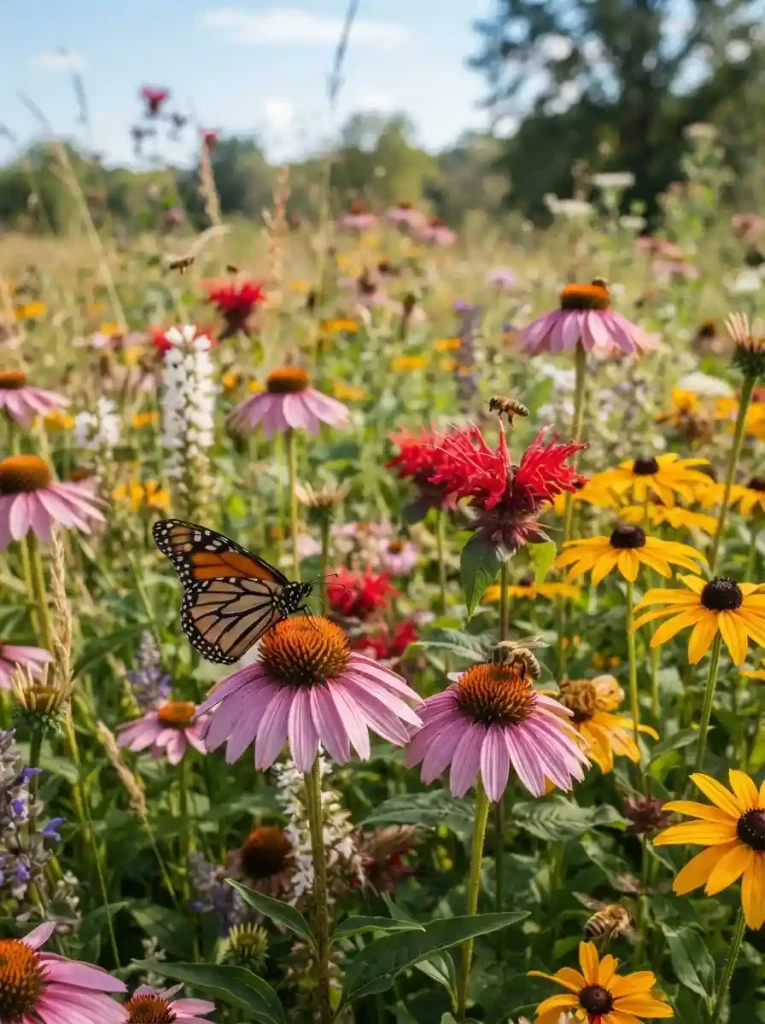
A pollinator-friendly flower bed combines beautiful blooms with plants that provide nectar and pollen for bees, butterflies, and other beneficial insects. Coneflowers, bee balm, rudbeckia, and suitable native flowering plants can create a lively display.
Choose species that bloom at different times to provide food across a longer part of the year. Native plants can be especially useful because they are often suited to local growing conditions. Avoid pesticides that may harm beneficial insects.
9. Surround a Tree With Shade-Loving Flowers

The space beneath a mature tree can become a garden feature rather than an empty patch of ground. A gently curved or circular bed creates a neat outline, while shade-tolerant flowers bring color beneath the canopy.
Impatiens, begonias, ferns, and other locally suitable shade-loving plants may work well, depending on conditions. Avoid digging aggressively around exposed roots, raising the soil level against the trunk, or covering the root flare with mulch.
10. Design a White Flower Bed for a Peaceful Garden

White flowers create a calm, clean appearance and can brighten a garden without introducing too many competing colors. White hydrangeas, cosmos, daisies, and other suitable flowering plants provide different shapes and sizes while maintaining a consistent palette.
Combine rounded blooms with delicate flowers and silver-green foliage. This approach works particularly well near a seating area, along a pale stone path, or outside a contemporary home. Check each plant’s light and moisture requirements before combining varieties.
11. Create a Tropical Flower Bed With Bold Colors

A tropical-inspired flower bed brings dramatic foliage and vibrant colors into your outdoor space. Large leaves, bright hibiscus blooms, and colorful canna lilies can create a lush, layered effect.
Start with plants that suit your climate. In warm regions, tropical varieties may grow outdoors for much of the year. In cooler areas, use containers for plants that need winter protection or select hardy plants with similarly bold foliage.
12. Make a Flower Bed With a Curved Border

Curved flower beds can make a garden feel softer and more natural than straight planting borders. They work particularly well around lawns, along fences, and beside patios where a flowing outline helps connect different areas of the yard.
Mark the proposed curve with a garden hose or rope before removing any grass. Use low-growing flowers along the front and taller plants toward the back to create depth. Choose plants according to your local climate and sunlight conditions.
13. Plant a Butterfly Garden Flower Bed

A butterfly garden adds movement and seasonal interest to your yard. Choose nectar-rich plants that attract butterflies and other pollinators. Zinnias, coneflowers, verbena, and regionally suitable native species can provide a colorful mix of blooms.
Plant several flowers of the same variety together and select different flowering periods to provide a longer season of nectar. To support butterflies through their life cycle, research which host plants local butterfly species need for their caterpillars.
14. Create a Flower Bed With Ornamental Grasses

Ornamental grasses can transform a flower bed by adding height, movement, and texture. Their fine leaves contrast beautifully with the rounded petals of flowering plants, creating a garden that looks attractive even when individual blooms fade.
Combine suitable ornamental grasses with pink coneflowers, purple salvia, or other flowering perennials that share similar growing requirements. Choose clump-forming varieties that suit your available space and check whether a grass spreads aggressively in your region.
15. Build a Small Flower Bed for a Compact Yard

A small yard can still have a beautiful flower bed. The key is to work with the available space instead of filling every corner with different plants. A narrow border beside a wall, a compact bed near the entrance, or a small planting area beside a patio can provide plenty of color.
Choose compact flowering varieties and repeat a limited selection of plants for a tidy appearance. Measure the area and check each plant’s mature width so the bed looks full without becoming crowded.
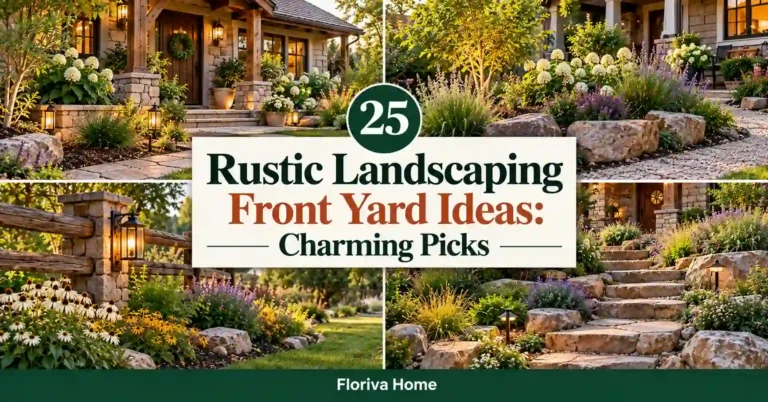
16. Try a Rustic Flower Bed With Natural Stone

Natural stone edging gives a flower bed a rustic character that works beautifully in cottage gardens and informal landscapes. Irregular stones create a relaxed boundary, while flowers soften the hard edges.
Choose stones that complement your home’s exterior, then arrange them securely along the border. Fill the bed with flowers suited to the site’s conditions. Avoid stacking loose stones too high where they could become unstable.
17. Design a Flower Bed for Morning Sun
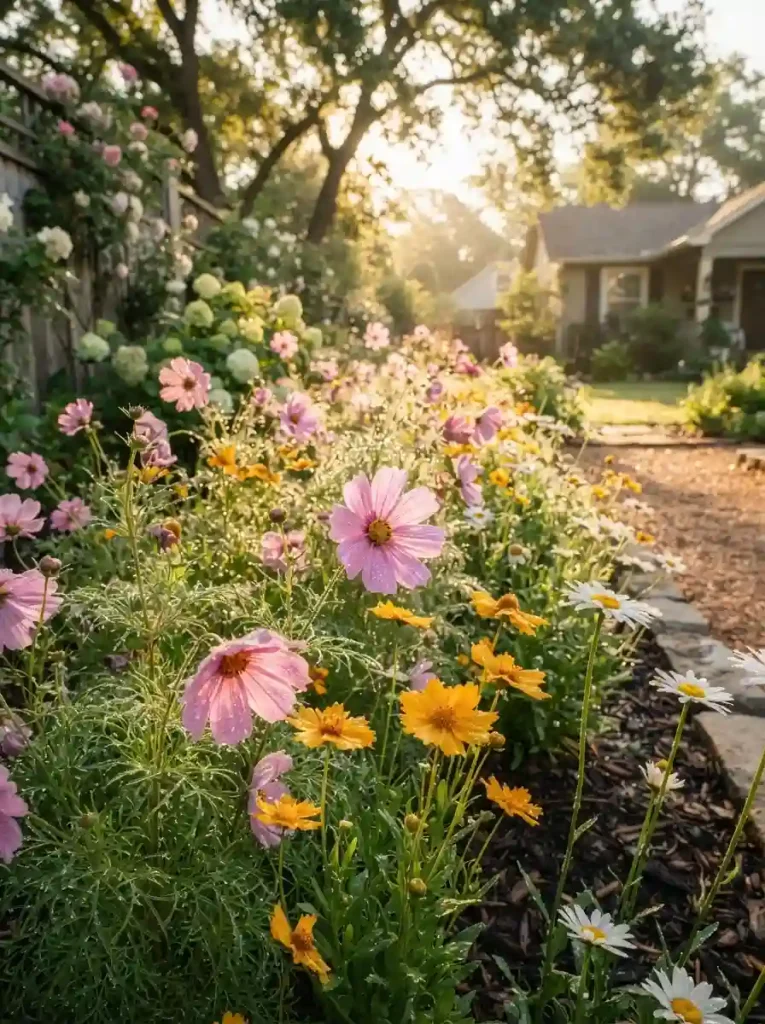
A garden that receives morning sun can be a good location for many flowering plants, although the best choices depend on how much direct sunlight the bed receives. Pink cosmos, yellow coreopsis, and suitable daisies can provide cheerful color in a bright location.
Observe the area at different times of day before deciding what to plant. Morning sunlight followed by afternoon shade creates different conditions from a bed that receives direct sun for most of the day. Choose varieties with suitable light requirements.
18. Create a Flower Bed With a Water Feature

A small fountain can become the focal point of a flower bed, bringing together flowers, greenery, and the soothing appearance of moving water. This design works well in courtyards, patio gardens, and quiet corners.
Arrange flowering plants around the fountain without blocking access for cleaning or maintenance. Choose varieties that suit the available sunlight and moisture conditions, and keep fallen petals and leaves away from the pump.
19. Plant a Flower Bed Along Your Fence

A fence provides a natural backdrop for a flower bed and can make a plain boundary feel like part of your garden. Tall flowering plants add height, while medium-sized blooms and low-growing edging plants create a layered arrangement in front.
Choose flowers according to the sunlight near the fence. Leave enough room between plants and the fence for airflow, pruning, and access for repairs. Repeating the same flowers along the length can create a consistent appearance.
20. Make a Flower Bed With Warm Sunset Colors

Warm flower colors can make an outdoor space feel inviting and energetic. Orange, golden yellow, burgundy, and rust-colored blooms work particularly well with natural wood, brick, or stone.
Combine orange zinnias, burgundy dahlias, and golden rudbeckia in a sunny flower bed. Add ornamental grasses or dark foliage to balance brighter flowers. Choose plants with compatible growing needs and stagger flowering periods where possible.
21. Create a Fragrant Flower Bed Near Your Seating Area

A fragrant flower bed can make an outdoor seating area feel more relaxing. Include flowers with pleasant scents that you can enjoy while reading, drinking tea, or spending time with family.
Lavender, fragrant roses, and suitable jasmine varieties can work well, depending on your climate and available space. Place fragrant plants near a bench or patio, and check whether a plant is suitable for children and pets if they use the garden.
22. Design a Flower Bed With a Circular Layout

A circular flower bed creates a clear focal point in the middle of a lawn or open garden. Its balanced shape works well in front yards, near entrances, or in larger spaces where a central planting feature can be appreciated from several directions.
Mark a circle and choose one main plant or flower group for the center. Arrange progressively shorter flowers toward the outer edge. Repeat the same color sequence around the circle for a coordinated design.
23. Build a Low-Maintenance Perennial Flower Bed
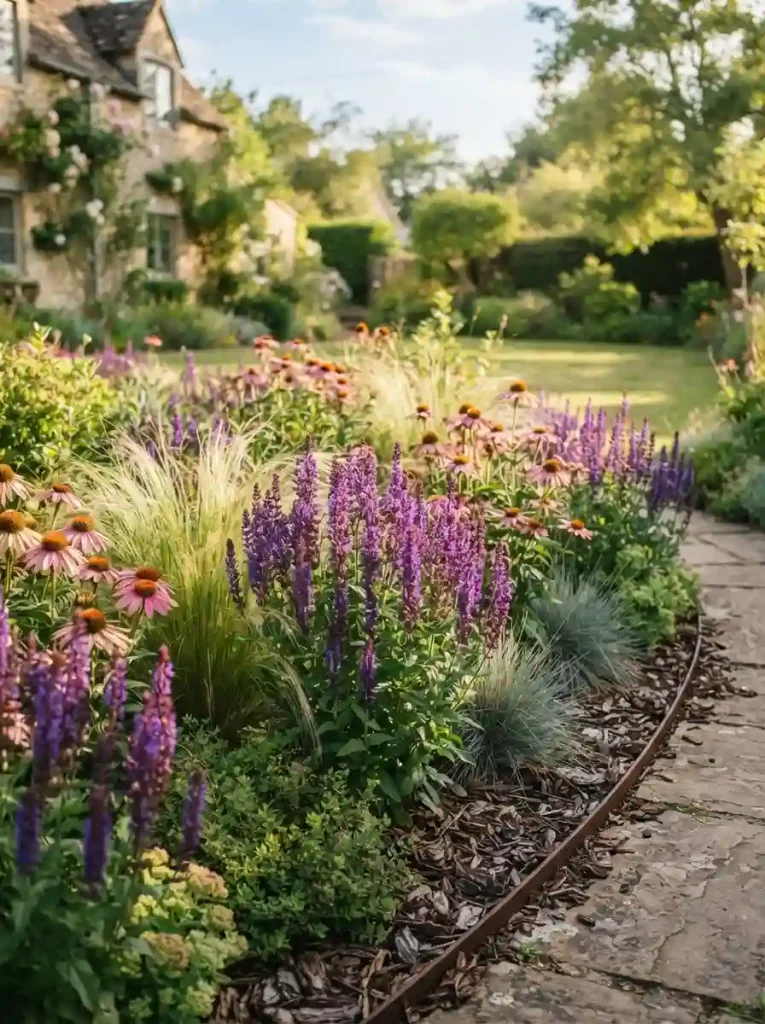
If you want a beautiful garden without replanting every season, consider a flower bed built around suitable perennial plants. Many perennials return year after year when they are well suited to the climate, soil, and growing conditions.
Choose plants with similar sunlight and watering needs. Coneflowers, hardy salvia, and suitable perennial ground covers are potential options for sunny gardens. Add mulch to help moderate soil moisture and suppress weeds, keeping it away from plant crowns and woody stems.
Tips for Planning Your Flower Bed
Before planting any design, check the conditions in your yard. A beautiful flower bed depends on choosing suitable plants as much as arranging them attractively.
| Planning step | What to consider |
| Sunlight | Observe how many hours of direct sunlight the area receives. |
| Soil | Check drainage and whether the soil needs improvement. |
| Plant size | Allow enough space for mature height and width. |
| Flowering season | Combine varieties that bloom at different times. |
| Watering | Group plants with similar moisture requirements. |
| Garden style | Repeat a few colors and textures for a coordinated look. |
Frequently Asked Questions
What flowers are best for a beginner’s flower bed?
Marigolds, zinnias, cosmos, and suitable hardy perennials can be good starting points. The best choice depends on your local climate, sunlight, soil, and watering routine. Choose plants suited to your conditions rather than relying on appearance alone.
How do I make my flower bed look fuller?
Combine plants of different heights, repeat flower varieties in small groups, and use suitable low-growing plants along the edges. Allow enough space for mature growth so the bed becomes full without overcrowding or restricting airflow.
What is the best shape for a flower bed?
Curved borders work well in informal and cottage-style gardens, while rectangular beds can complement modern landscapes. Circular beds are useful as focal points in open lawns. Choose a shape that suits your yard, pathways, and existing landscaping.
How can I create a flower bed on a budget?
Start with a small area, choose affordable seasonal flowers or suitable perennials, and grow additional plants from seeds or divisions when practical. Reuse suitable garden materials for edging and expand the design gradually.
How often should I water a flower bed?
Watering frequency depends on the weather, soil, plant species, and stage of growth. Check soil moisture before watering and give plants the amount they need rather than following a rigid daily schedule. Newly planted flowers generally need closer attention while their roots establish.
Final Thoughts
Creating a beautiful flower bed doesn’t require a large yard or an elaborate landscaping plan. From colorful cottage borders and raised beds to fragrant planting areas and low-maintenance perennial gardens, there are plenty of ways to make your outdoor space more inviting.
Start with a design that suits your available space and sunlight, choose plants with compatible growing requirements, and give them enough room to thrive. With a little planning and regular care, your flower bed can become a colorful feature that makes your garden more enjoyable throughout the growing season.