
22 Landscaping Without Plant Ideas That Look Gorgeous
Creating a beautiful yard doesn’t mean you need flowers, shrubs, or a traditional green lawn. With the right materials, textures, lighting, and outdoor features, you can design a stylish landscape that looks inviting throughout the year without relying on living plants.
Landscaping without plants is also worth considering if you want to reduce watering, avoid regular pruning, or make better use of a small outdoor space. From modern paved surfaces to cozy seating areas, there are plenty of ways to give your yard character without filling it with greenery.
These 22 landscaping without plant ideas explore different styles, from contemporary outdoor designs to rustic features and relaxing backyard spaces. Whether you’re updating your front yard, redesigning a side passage, or creating a low-maintenance backyard, you’ll find inspiration to suit your space and budget.
1. Create a Modern Paver Patio

A paver patio is a practical way to transform an empty yard into a polished outdoor space. Large concrete pavers in gray, beige, or charcoal create a clean appearance, while consistent spacing gives the surface a modern feel. You can use the patio as a place for outdoor dining, morning coffee, or relaxing with family.
For extra visual interest, combine two complementary paver shades or arrange the slabs in a geometric pattern. Add a simple outdoor table and comfortable chairs to make the area feel complete. Choose pavers designed for outdoor use, and prepare a stable, well-drained base to help prevent uneven surfaces over time.
2. Install Decorative Gabion Walls

Gabion walls offer an interesting way to add structure and texture without planting anything. These features consist of sturdy metal cages filled with stones, creating a rugged yet architectural appearance. Depending on the materials you choose, they can complement industrial, contemporary, or rustic outdoor designs.
Use a gabion wall as a boundary feature, a privacy divider, or a raised edge beside a seating area. Pale limestone creates a softer appearance, while darker stones provide a bold contrast against concrete paving. For a cohesive design, repeat the same stone colors in other parts of the yard. Make sure taller walls have suitable foundations and professional support where necessary.
3. Design a Decorative Gravel Courtyard

A gravel courtyard can look elegant when the stone color, borders, and surrounding surfaces work together. Instead of spreading gravel randomly, divide the space into defined sections using metal edging, concrete strips, or contrasting stone borders. This creates a deliberate design rather than an unfinished-looking yard.
Choose a gravel shade that complements your home’s exterior. Cream and light beige stones brighten small spaces, while darker gray gravel gives modern homes a more dramatic finish. A compact bench or a sculptural outdoor accessory can provide a focal point without introducing plants. Use suitable compacted layers and drainage materials, and select gravel that is comfortable and stable for walking.
4. Add a Pergola With a Comfortable Seating Area

A pergola can give an open yard a strong architectural feature without depending on climbing plants or leafy decorations. Its overhead beams create attractive lines and provide a natural framework for arranging furniture, lighting, and outdoor accessories.
Place a compact lounge set underneath the pergola to establish a dedicated relaxation zone. Timber creates a warm, welcoming atmosphere, while powder-coated metal suits a contemporary home. You can also install weather-resistant curtains for additional privacy and a softer appearance. If shade is important, consider a suitable roof covering or adjustable louvers, because an open pergola alone offers limited protection from direct sunlight and rain.
5. Build a Decorative Concrete Feature Wall

A concrete feature wall can turn an ordinary outdoor boundary into a striking design element. Its simple surface provides a clean backdrop for furniture, decorative lighting, and architectural details. Depending on your preferred style, you can choose smooth poured concrete, textured concrete panels, or large-format concrete blocks.
To prevent the space from looking too plain, introduce subtle contrasts through warm-toned paving, dark metal details, or a wooden bench positioned against the wall. Recessed wall lights can highlight the surface after sunset and create attractive shadows. This idea works particularly well in narrow side yards and compact courtyards where decorative planting beds would take up valuable space.
6. Create a Mosaic Stone Path

A mosaic stone path adds artistic detail to a landscape while keeping the design entirely plant-free. Rather than using identical paving slabs, arrange small stones, tiles, or suitable outdoor mosaic pieces into repeating shapes, curved bands, or simple geometric patterns.
This approach works especially well near an entrance, across a courtyard, or along a side passage that needs more visual interest. You can use two or three complementary colors to maintain a balanced appearance without making the path feel overly busy. Choose slip-resistant materials suitable for outdoor conditions, and make sure the finished surface is level enough for comfortable walking.
7. Install Large Outdoor Porcelain Tiles

Large-format porcelain tiles create a refined, almost seamless appearance in outdoor spaces. Their simple lines can make a small yard appear more spacious, especially when the tile color complements the flooring inside the house. Popular choices include limestone-inspired beige, soft gray, and natural stone-look finishes.
Use these tiles to connect a patio with an outdoor dining area or create a clean surface beside a garage or entrance. Select porcelain products specifically rated for exterior installation, with a slip-resistant finish and appropriate weather performance. Professional installation and correct drainage are important for a durable result, particularly in areas exposed to heavy rain or temperature changes.
8. Design a Cozy Raised Deck

A raised deck can add depth and purpose to a flat or uneven backyard. Timber or composite boards create a warm surface that feels different from surrounding concrete or gravel, helping the outdoor area look more layered without using plants.
Arrange the deck as a small outdoor lounge, a dining platform, or a quiet corner with a comfortable chair and side table. Built-in step lighting can improve visibility and make the space more inviting after dark. Choose weather-resistant decking materials and ensure the structure has proper support, ventilation, and drainage. For elevated decks, suitable railings and compliant construction are essential.
9. Add a Freestanding Outdoor Sculpture
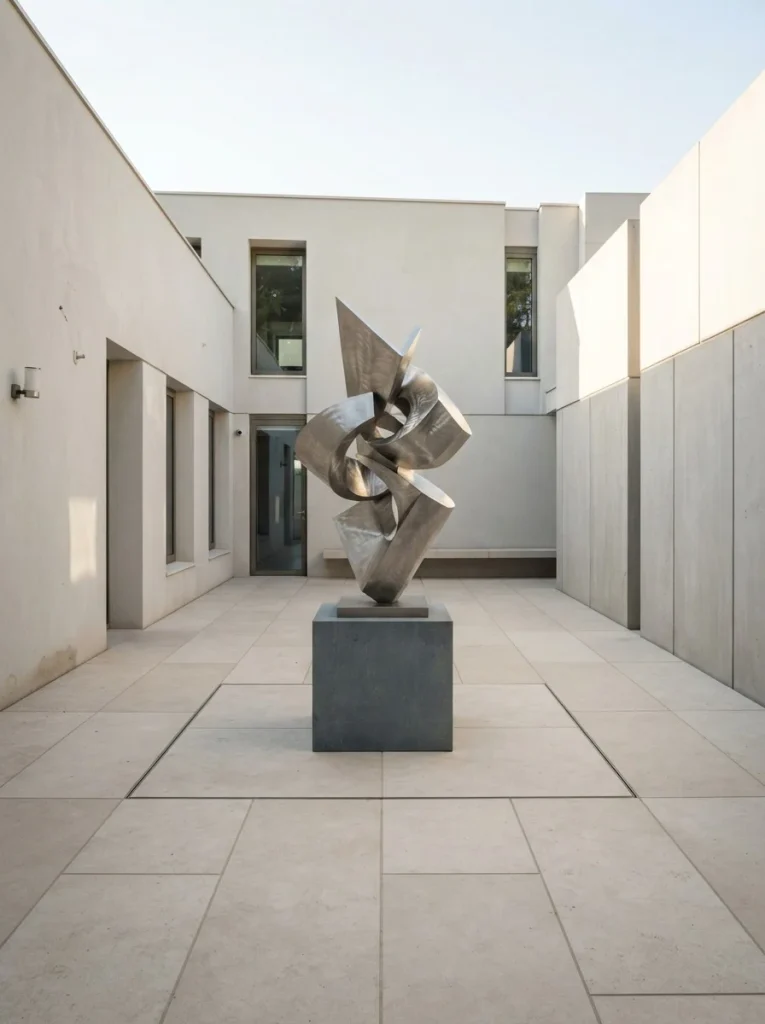
An outdoor sculpture gives your yard a distinctive focal point without needing a flower bed or decorative greenery. It can be an abstract metal form, a carved stone object, or a modern geometric piece that complements the architecture of your home.
Placement makes a major difference. Position the sculpture where it can be seen from a window, entrance, or seating area, and leave enough open space around it so its shape remains the main attraction. A simple gravel or paved base can help define the display area. Choose materials suitable for your local weather and secure heavier pieces properly to prevent movement or tipping.
10. Create an Outdoor Dining Nook

An outdoor dining nook makes even a modest yard feel more useful. You don’t need a large garden or elaborate landscaping to create an inviting place for meals. A compact table, comfortable chairs, and a well-defined paved surface can provide everything you need.
Choose furniture according to the size of the area. A round table often works well in a tight courtyard, while a rectangular table suits a longer patio. Add weather-resistant cushions, simple tableware, or a pendant light beneath a covered structure to give the nook a finished look. Keep enough room around the furniture for people to pull out chairs and move comfortably.
11. Use Corten Steel Landscape Panels
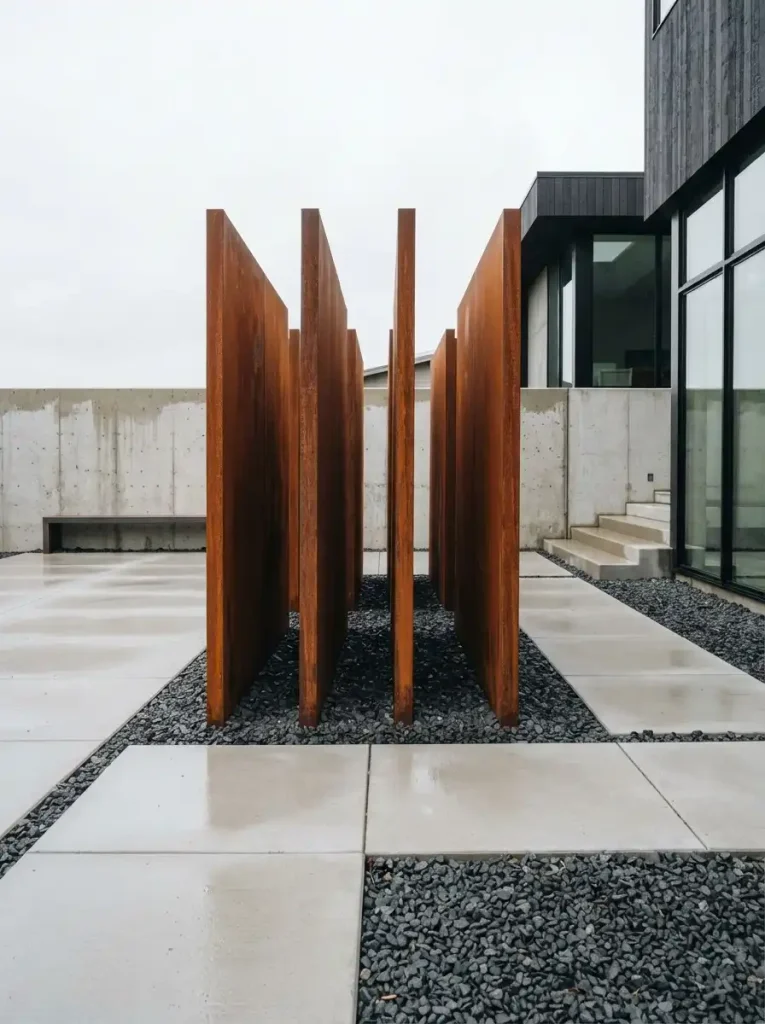
Corten steel panels bring rich, earthy color and a distinctive modern edge to a plant-free landscape. Their naturally weathered rust-toned finish contrasts beautifully with pale concrete, dark gravel, and neutral stone. They can also help divide a large yard into separate functional areas.
Use the panels as decorative screens, low boundary features, or architectural dividers beside a paved walkway. Repeating the same metal finish in a few carefully selected places helps the overall design feel connected. Keep in mind that weathering steel can release rust-colored runoff, so position it carefully near light-colored paving and follow the manufacturer’s installation recommendations.
12. Install a Modern Water Feature
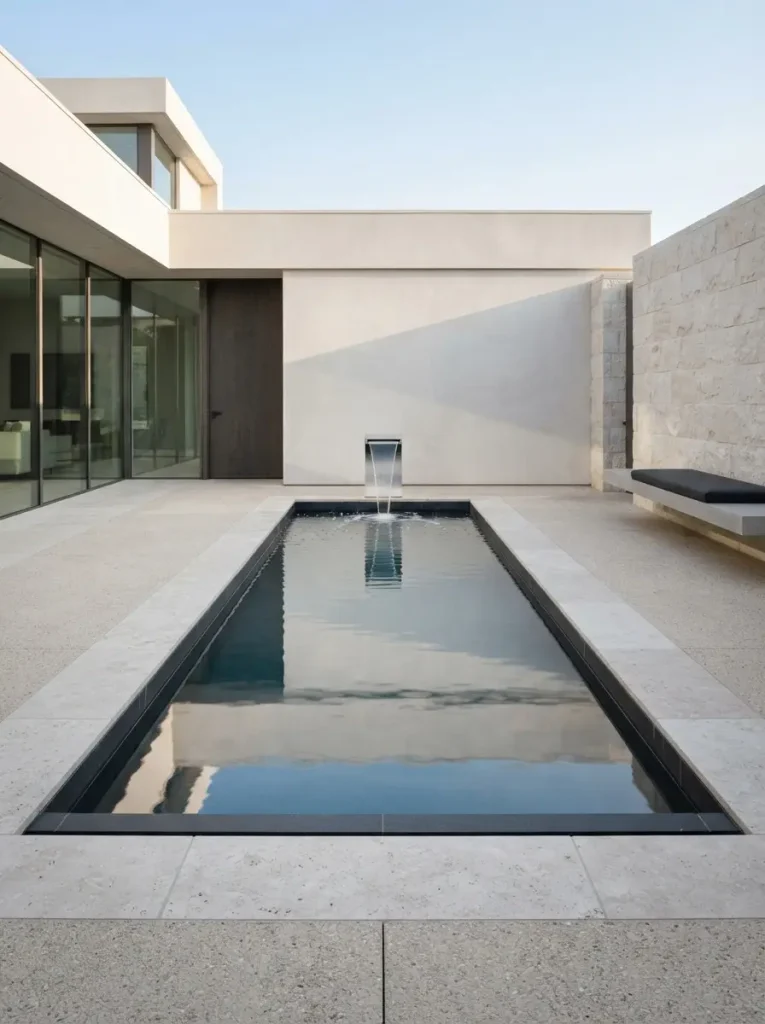
A water feature can bring movement and a calming atmosphere to a plant-free yard. A simple wall-mounted fountain, a rectangular reflecting pool, or a freestanding water bowl can become the main attraction without requiring flower beds or decorative shrubs.
For a contemporary appearance, choose a geometric design with concrete, dark stone, or brushed metal finishes. A small recirculating fountain is often suitable for compact courtyards, while a shallow reflecting pool can make a larger patio feel more luxurious. Consider water circulation, cleaning access, splash control, and child safety before choosing a design.
13. Create a Stepping Stone Walkway

A stepping stone walkway adds structure and direction to an otherwise plain outdoor area. Instead of covering the entire yard with one material, arrange individual concrete or natural stone slabs across a contrasting surface to create a deliberate visual rhythm.
Square stones work well for contemporary homes, while irregular shapes can create a more relaxed, natural appearance. You can use gravel or compacted decorative aggregate between the stones to maintain a plant-free design. Make sure the spacing feels comfortable for walking and that each stone sits firmly on a properly prepared base. This idea works particularly well along side yards, entrances, and narrow passages.
14. Design a Stylish Outdoor Fire Pit Area

A fire pit creates a natural gathering point and gives an outdoor space a cozy atmosphere after sunset. You can build the surrounding landscape with stone paving, gravel, and simple seating rather than relying on plants to make the area inviting.
Choose a fire pit that suits the size of your yard, leaving enough room for chairs and safe movement around the flames. Stone or concrete seating can provide a permanent architectural look, while movable outdoor chairs offer more flexibility. Follow local fire regulations, maintain safe clearances from structures and combustible materials, and consider a gas model if it suits your setting better than a wood-burning option.
15. Add a Decorative Stone Dry Creek Bed

A decorative dry creek bed introduces the appearance of a natural stream without requiring a permanent water feature. It uses carefully arranged stones and gravel to create a flowing line across the landscape, giving an otherwise flat yard more visual movement.
Start by planning the shape of the creek bed, using a gentle curve or a series of subtle bends. Combine several stone sizes to create depth, placing larger rocks along selected edges and smaller pebbles through the center. This design can also help manage runoff when properly engineered for the site’s drainage needs. Avoid directing water toward your home’s foundation or neighboring properties.
16. Build a Decorative Brick Patio

Brick paving brings warmth, texture, and timeless character to an outdoor space. Its reddish, terracotta, or muted brown tones can soften the appearance of concrete-heavy landscapes while maintaining a completely plant-free layout.
For a classic look, arrange the bricks in a herringbone pattern. Running bond layouts feel simpler and more understated, while basket-weave patterns add traditional charm. You can use brick paving for a small front courtyard, a backyard seating area, or a walkway leading to the entrance. Choose suitable exterior paving bricks and install them over a stable base with appropriate drainage to reduce shifting and uneven surfaces.
17. Install Decorative Landscape Lighting

Outdoor lighting can transform a plain yard into an attractive space after dark. Instead of using plants as the main visual feature, use light and shadow to highlight walls, paving patterns, architectural details, and outdoor seating.
Wall sconces create a welcoming glow near entrances, while low-level path lights improve visibility along walkways. Recessed lights can emphasize steps or the edges of a patio. For a modern appearance, choose fixtures with simple shapes and a consistent finish. Use outdoor-rated equipment, appropriate electrical protection, and professional installation where required. Position lights carefully to reduce glare and avoid shining directly into neighboring windows.
18. Create a Minimalist Rock Garden Without Plants
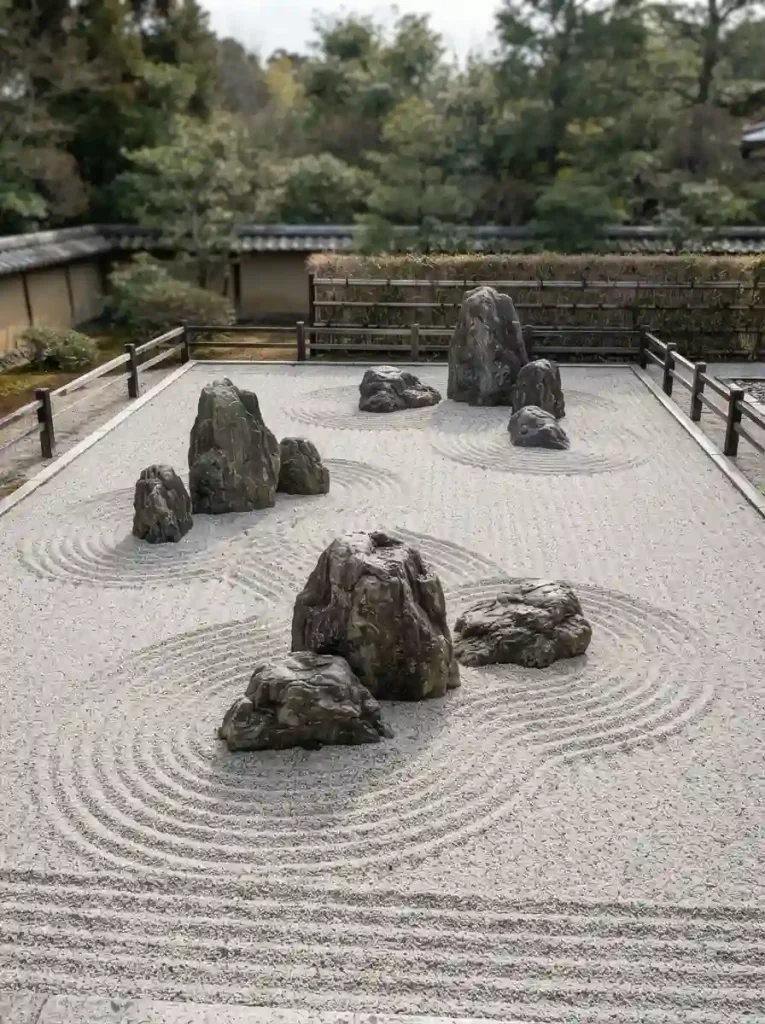
A minimalist rock garden can create an artistic landscape using only stones, gravel, and carefully planned open space. Rather than filling the yard with decorative objects, focus on a few well-positioned rocks that differ in size, shape, and texture.
Use a restrained palette of neutral gravel and larger natural stones to create contrast without making the arrangement look crowded. A circular gravel pattern or a series of curved lines can add a sense of movement. This style works particularly well in compact courtyards and modern homes where a simple, uncluttered design is preferred. Keep the gravel contained with suitable edging for easier maintenance.
19. Add a Built-In Outdoor Bench

A built-in bench can make an empty yard feel intentional without taking up space with bulky furniture. It also creates a permanent seating feature that can be designed to match the paving, walls, or other architectural elements.
Consider a concrete bench for a modern courtyard, a stone bench for a traditional exterior, or a timber-topped design for a warmer appearance. A bench along the boundary wall can help organize a narrow space, while an L-shaped version works well around a corner seating area. Add weather-resistant cushions if you want extra comfort, and make sure the seat height and depth are suitable for everyday use.
20. Design a Stylish Gravel Driveway

A gravel driveway offers a practical alternative to a traditional lawn or heavily paved front yard. With the right aggregate, edging, and layout, it can look neat and sophisticated while providing space for vehicle access and parking.
Choose gravel that complements your home’s exterior, such as warm beige for a light-colored facade or charcoal for a contemporary property. Strong borders made from brick, stone, or concrete help keep the aggregate in place and define the driveway’s shape. For areas with frequent vehicle traffic, use a properly prepared base and suitable gravel size. Consider drainage, accessibility, dust control, and occasional replenishment when planning long-term maintenance.
21. Create a Multi-Level Stone Terrace
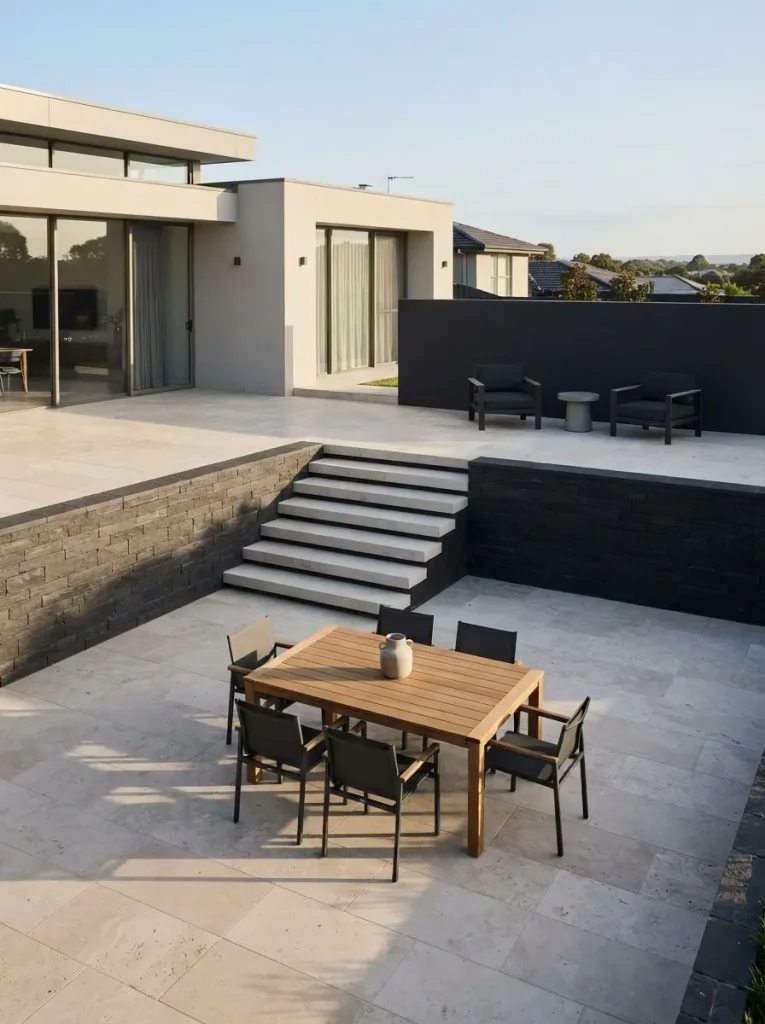
A multi-level stone terrace adds depth and visual interest to a yard with a slope or a large open surface. Different paving heights can define separate areas for dining, lounging, and walking without needing planting beds to divide the space.
Use broad stone steps to connect the levels, and choose complementary materials so the design feels cohesive. For example, pale limestone paving can pair beautifully with darker retaining walls and understated metal railings. Properly designed retaining structures, drainage, and foundations are especially important where the ground slopes. For significant changes in elevation, consult a qualified professional to ensure the terrace is stable and safe.
22. Build a Modern Outdoor Lounge With Decorative Screens

Decorative screens are an effective way to give a plain outdoor space privacy, structure, and personality. Metal panels with geometric cutouts, horizontal timber slats, or patterned concrete blocks can create an attractive backdrop without requiring climbing plants or living walls.
Arrange a compact lounge area in front of the screen using weather-resistant chairs, a low coffee table, and a neutral outdoor rug designed for exterior use. Repeating the screen’s color in the furniture or lighting creates a coordinated appearance. This idea works particularly well for small backyards, apartment terraces, and enclosed courtyards where privacy matters. Make sure the screens are securely installed and suitable for local wind conditions.
Final Thoughts
Landscaping without plants can be just as attractive as a traditional garden when you pay attention to materials, shapes, textures, and lighting. From decorative gravel and modern paving to architectural walls, water features, and comfortable outdoor seating, there are many ways to create a yard that feels complete without depending on greenery.
The best approach is to choose ideas that suit your available space, home’s architectural style, and maintenance preferences. You don’t need to incorporate all 22 features to make a difference. Start with one or two elements, such as a well-designed patio and attractive outdoor lighting, then build the rest of the landscape around them.
With thoughtful planning and durable materials, you can create a beautiful, functional outdoor space that stays stylish throughout the year.