
20 Smart Landscaping Without Using Mulch Ideas to Try
Inside: Twenty practical ways to design a beautiful, weed-resistant yard without a single bag of mulch.
Mulch is the default answer for bare soil, but it is far from the only one. It needs topping up every year, it can wash away in heavy rain, and in some gardens it holds too much moisture around plant crowns. If any of that sounds familiar, you have plenty of better options.
The ideas below combine living plants, smart hardscaping, and a few unexpected materials. Some suit sunny, dry corners, and others shine in damp shade. Pick the ones that fit your space, and you will spend more time enjoying your yard and less time hauling bark.
1. Plant so densely the soil disappears

The simplest mulch replacement is a planting scheme that never leaves the soil exposed. When foliage overlaps, it shades the ground, slows evaporation, and leaves weed seedlings little light to germinate.
Group plants by their mature width rather than their nursery-pot size, and layer a tall back row, a medium middle, and a low front edge. Coneflower, salvia, and catmint knit together quickly and keep bees busy all summer.
Pro Tip:
Expect to weed by hand for the first season. Once the canopy closes, the work drops off sharply.
2. Spread a sedum carpet

Low-growing sedums behave like living mats. Their fleshy leaves store water, so they stay tidy through dry spells and need almost no care once rooted.
Varieties like ‘Angelina’ (golden), ‘Dragon’s Blood’ (burgundy), and ‘Blue Spruce’ (blue-green) mix well for a patchwork effect. Most are hardy across a wide range of climates, but check the tag for your zone. They also work well between flat stones on sunny slopes where grass struggles.
Pro Tip:
Sedum cuttings root easily. Break off pieces and press them into loose soil to fill gaps for free.
3. Lay decomposed granite

Decomposed granite (often called DG) is crushed stone with fine particles that pack down into a firm, natural-looking surface. It suits dry-climate gardens beautifully and pairs well with lavender, agave, and ornamental sage.
Spread a layer about 2 to 3 inches deep over compacted soil, then wet and compact it again so it sets. Steel or stone edging keeps it from creeping into planting beds.
Pro Tip:
Choose a warm tan or rust tone that echoes your house’s trim, so the garden feels like part of the architecture.
4. Swap bare soil for micro-clover

Micro-clover is a smaller, tidier cousin of white clover. It stays low, stays green through most of the season, and feeds nearby plants because clover pulls nitrogen from the air into the soil.
Sow it between stepping stones or around the base of shrubs and fruit trees. It handles light foot traffic, and its tiny blooms are a favorite of pollinators.
Pro Tip:
Sow in early spring or early fall, and keep the seedbed lightly moist until the plants are established.
5. Let creeping Jenny spill over edges

Golden creeping Jenny brings a splash of chartreuse that brightens even the dullest corner. It trails over walls, borders, and container edges, and hides bare soil fast.
It loves moisture and does well in sun or part shade. Pair it with dark purple heuchera or deep green hostas for striking contrast.
Pro Tip:
Creeping Jenny can spread aggressively and is considered invasive in some regions. Check local guidance, and keep it contained with firm edging.
6. Build with permeable pavers

Permeable pavers let rainwater soak straight through the gaps instead of running off, so they handle drainage and weed control at once. They make a clean surface for seating areas, driveways, and garden walkways.
Leave the joints a little wider than usual and fill them with fine gravel or a low groundcover for a softer finish. Start with a properly compacted base, since a solid foundation is what keeps pavers level for years.
Pro Tip:
A staggered brick-style layout hides small shifts better than a rigid grid.
7. Create a pebble mosaic

A pebble mosaic turns a small patch of ground into a feature. Sort river stones by color, then set them in spirals, waves, or simple geometric shapes inside a mortar or sand bed.
It is a great weekend project for a spot where plants will not grow, like the area under a bench or by a back door. Dampen the stones to see their true colors before you set them.
Pro Tip:
Sketch your pattern on paper first, then chalk the outline directly onto the ground.
8. Fill dry shade with barrenwort

Dry shade under mature trees is one of the hardest spots to plant. Barrenwort (Epimedium) copes well once established, with heart-shaped leaves that often blush bronze in spring and dainty spurred flowers.
It spreads slowly into a dense mat that blocks most weeds. Plant it about a foot apart and water well during its first year.
Pro Tip:
Cut back old foliage in late winter so the new flowers and fresh leaves show off.
9. Pave a courtyard with cobble setts

Granite cobble setts are small, durable blocks that give a space an old-world, village-lane look. They shrug off weather, resist weeds when laid on a good base, and develop a lovely patina with age.
They work especially well for compact courtyards and entryways. Pair them with terracotta pots of rosemary or thyme and a climbing vine on the wall for a relaxed European feel.
Pro Tip:
Lay them in a fan or arc pattern for extra character, and use a tight joint to keep weeds out.
10. Terrace a slope with a dry-stacked stone wall

Slopes are where mulch washes away first. A low dry-stacked stone wall breaks the grade into level steps, holds the soil in place, and gives you pockets for trailing plants like rock cress, alyssum, and dianthus.
Tilt each course slightly back into the hill for stability, and use free-draining gravel behind the wall. Keep walls low, and check local building rules before going much higher than about 3 feet, since taller walls often need engineered support.
Pro Tip:
Tuck small plants into gaps as you build, since they root much more easily than if added afterward.
11. Tuck Corsican mint between stepping stones

Corsican mint is a tiny, creeping plant that forms a soft green mat only an inch or so tall. When you step on it, it releases a fresh, minty scent, which makes it a lovely choice for pathways.
It likes consistent moisture and a little afternoon shade, so it suits spots near a patio or a dripping tap. Tuck small divisions into the gaps between stones and press them down firmly.
Pro Tip:
It struggles in hot, dry sun, so save it for the cooler side of the yard.
12. Grow sempervivum in stone troughs

Hens-and-chicks look like little rosettes carved from jade. They need very little soil, store their own water, and multiply by sending out baby offsets, so a single trough fills in surprisingly quickly.
Use an old stone trough, a salvaged sink, or even a shallow concrete planter. Fill it with a gritty, fast-draining mix, because soggy roots are the one thing these plants hate.
Pro Tip:
Mix several colors, such as green, plum, and silvery gray, for a tapestry effect.
13. Build a herb spiral

A herb spiral stacks a garden bed into a rising coil of stone or brick. It creates different microclimates in a tiny footprint: sun-loving, dry-soil herbs such as rosemary and thyme sit at the top, while parsley, chives, and mint enjoy moister soil at the bottom.
A base of about 5 feet across and up to 3 feet tall works well for most households. Place it near your kitchen door, and you will use it daily.
Pro Tip:
Plant mint in a buried pot at the base, so it cannot take over the spiral.
14. Group containers on a terrace

Sometimes the best answer to bare ground is to cover it with beautiful pots. Cluster containers of different heights and sizes on a patio or paved area to make a layered mini-garden that you can rearrange any time.
Odd numbers, like three or five, tend to look the most natural. Combine a tall “thriller” plant, a mounding “filler,” and a trailing “spiller” in each pot for a full, balanced look.
Pro Tip:
Make sure every pot has drainage holes, and raise heavy containers on small feet so water can escape.
15. Try a crushed lava rock bed

Lava rock is lightweight, porous, and comes in deep red, charcoal, and near-black shades that make green foliage pop. It drains quickly, so it suits succulents, cacti, and other plants that dislike wet feet.
Spread it about 2 to 3 inches deep around established plants. Because it is light, it is also much easier to carry and spread than heavier stone.
Pro Tip:
Dark rock absorbs heat, so keep it a few inches from delicate stems and young plants.
16. Train espalier fruit trees against a wall

An espalier trains fruit trees, usually apples or pears, to grow flat against a wall or fence along horizontal wires. It turns a blank wall into a productive feature while using almost no ground space.
Set wires roughly 12 to 18 inches apart, then tie in branches horizontally as they grow. A sunny, sheltered wall helps fruit ripen and gives the tree a head start.
Pro Tip:
Prune lightly through the growing season and tie branches loosely to avoid cutting into the bark.
17. Dig a rain garden with native sedges

A rain garden is a shallow, planted dip that collects runoff from roofs and paving and lets it soak in slowly. Deep-rooted natives, like sedges, blue flag iris, and switchgrass, hold the soil in place and cope with both wet and dry spells.
Aim for a basin about 4 to 8 inches deep, and site it at least 10 feet from your house foundation. It solves a drainage problem while creating a feature, with no need for mulch.
Pro Tip:
Check how quickly water drains after a heavy rain. If it stays more than a day or two, the spot may need adjusting.
18. Walk on a Roman chamomile path

Roman chamomile makes a fragrant, apple-scented carpet that tolerates light foot traffic. In summer it dots itself with small, daisy-like flowers, and it stays pleasantly low and tidy.
It prefers full sun and decent drainage. Plant plugs about 6 to 8 inches apart, water them in, and they will knit together over the season.
Pro Tip:
Choose a non-flowering variety such as ‘Treneague’ if you want a neat, flower-free walking surface.
19. Edge beds with alpine strawberries
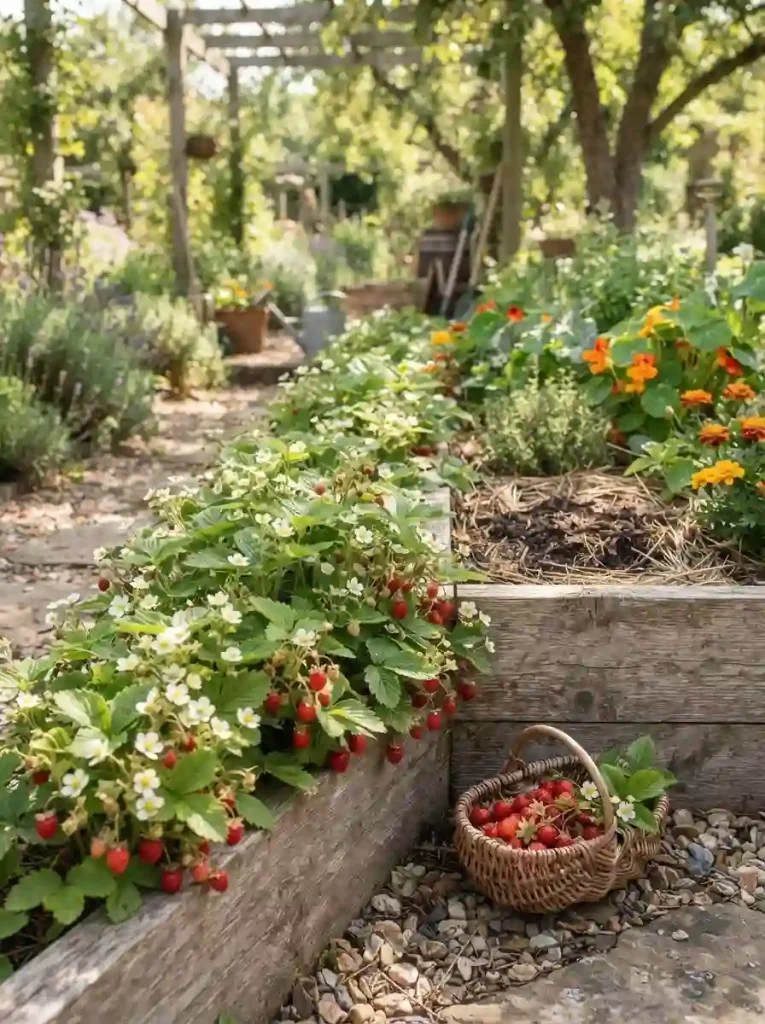
Alpine strawberries form neat, clumping mounds of toothed green leaves and produce small, intensely flavored berries from early summer into fall. They make a pretty, edible border that keeps soil shaded.
Many varieties do not send out runners, so they stay where you plant them. They handle partial shade, which makes them useful along north-facing beds.
Pro Tip:
Plant them about 8 to 10 inches apart, and snip off any old leaves in spring to refresh the clump.
20. Create a boulder and fern vignette

A few well-placed boulders can anchor an entire corner of the garden. Bury about a third of each stone so it looks like it has always been there, and group them in odd numbers for a natural effect.
Plant ferns, such as lady fern or Japanese painted fern, in the cool pockets between them. The contrast between hard stone and soft, feathery fronds feels calm and timeless.
Pro Tip:
Use stones of the same rock type throughout, because mixing different kinds can look cluttered.
Final Thoughts
Landscaping without mulch is less about giving something up and more about choosing materials that work harder. Living groundcovers, durable hardscaping, and smart planting can control weeds, hold moisture, and add character all at once.
You do not have to try everything on this list. Start with one or two ideas that suit your light, soil, and climate, and expand from there. A small, well-chosen change often does more for a yard than a big, rushed one.
Frequently Asked Questions
What can I use instead of mulch to stop weeds?
Dense groundcover plants, crushed stone, decomposed granite, pavers, and tightly layered perennial planting all help suppress weeds. The best option depends on your sun, soil, and how much foot traffic the area gets.
Is landscaping without mulch cheaper?
It can be. Plants like sedum, creeping herbs, and alpine strawberries spread on their own and can be divided for free. Hardscaping costs more upfront but needs little yearly upkeep.
Will bare soil harm my plants?
Exposed soil dries out faster, erodes more easily, and invites weeds. That is why every idea here covers the ground with something, whether plants or stone.
Can I use these ideas in a small yard?
Yes. Troughs, herb spirals, container groupings, and pebble mosaics are especially well suited to compact spaces.
How do I choose the right mulch alternative for my climate?
Match the material to your conditions. Drought-tolerant plants and decomposed granite suit hot, dry areas, while moisture-loving groundcovers and rain gardens suit wetter ones. Your local extension office can recommend plants that do well in your region.