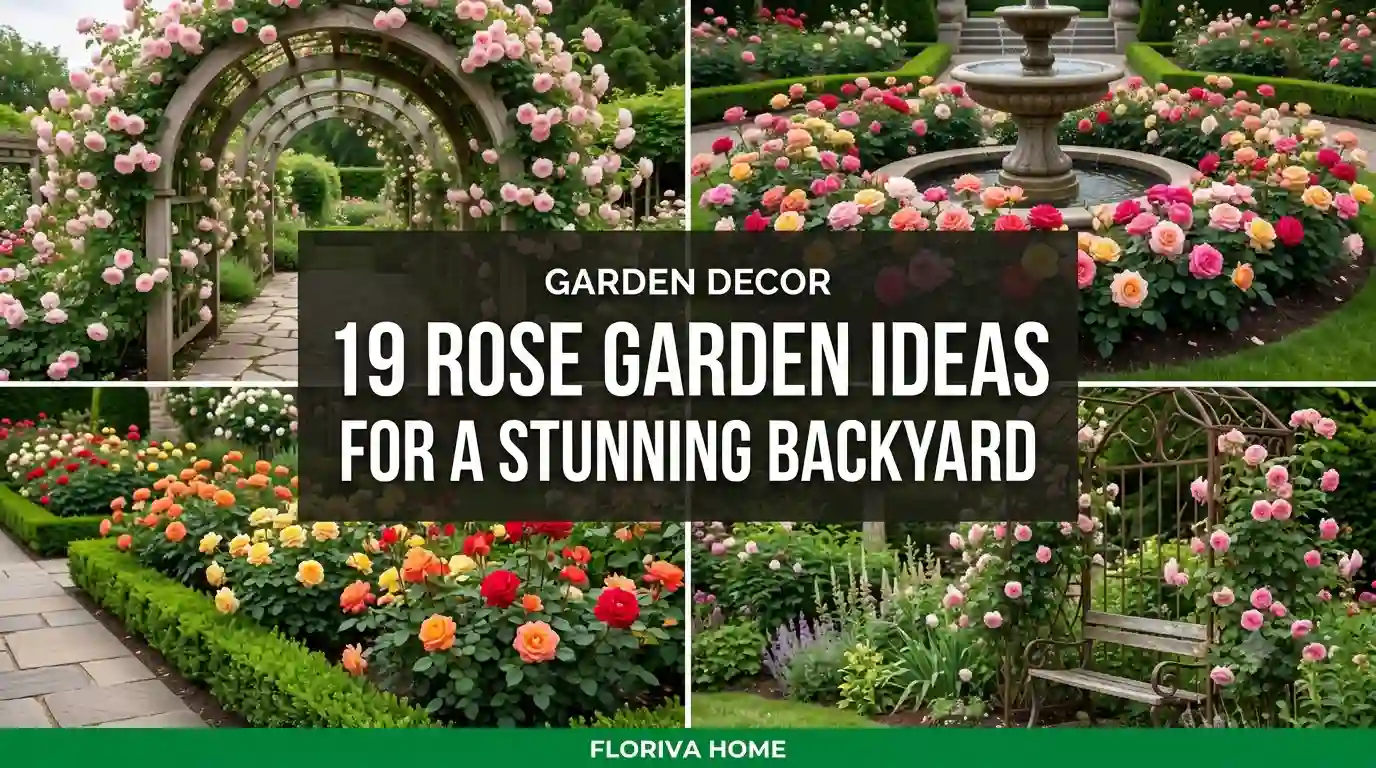
19 Rose Garden Ideas for a Stunning Backyard
If you want to give your backyard a romantic and colorful upgrade, roses are one of the easiest plants to build a garden around. Their flowers bring texture, fragrance, and seasonal color while working with everything from casual cottage gardens to more polished landscapes.
You don’t need a huge yard to create a beautiful rose garden. With the right layout, companion plants, containers, and garden features, even a modest outdoor space can feel special.
These 19 rose garden ideas offer different ways to use roses throughout your backyard. From layered borders to creative containers and cozy garden corners, you can choose an approach that fits your space, style, and gardening routine.
1. Build a layered rose border along the lawn
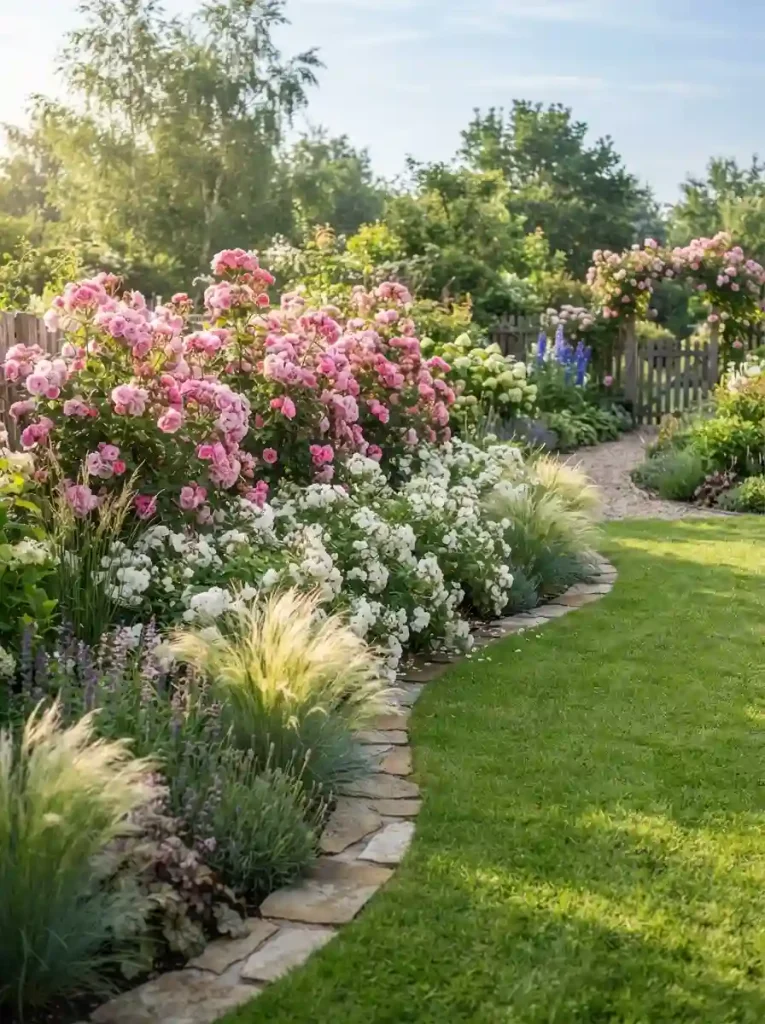
A rose border can turn an ordinary lawn into a colorful garden scene. Instead of placing roses randomly around the yard, create a defined planting strip along one or more edges of the grass.
Use taller rose varieties toward the back and shorter varieties toward the front. This creates layers that make the border look fuller without making the garden feel crowded.
You can soften the transition between roses and lawn with low-growing plants such as creeping thyme, alyssum, or compact ornamental grasses. Their different textures help the roses stand out.
Leave enough room between plants for air circulation and future growth. A well-spaced border is easier to prune, water, and maintain throughout the growing season.
Expert Tip:
Choose rose varieties with different bloom periods when possible. A mixture of repeat-blooming and seasonal roses can help your border maintain interest for longer.
2. Create a circular rose island in the middle of the yard
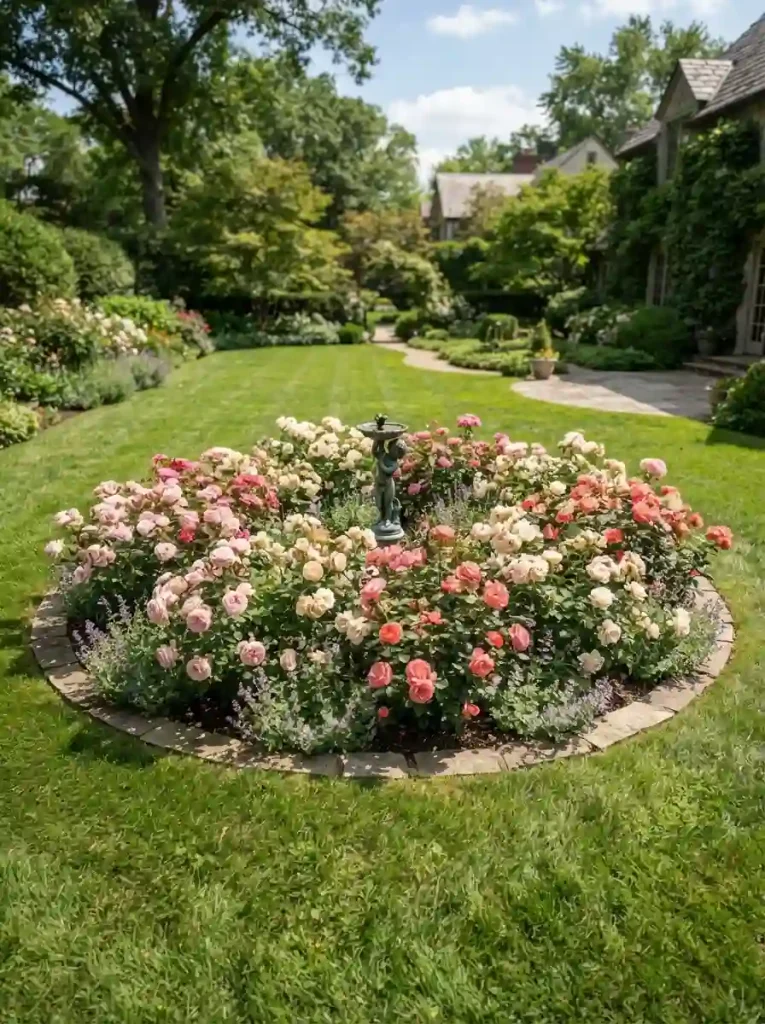
A circular rose island can become an eye-catching centerpiece when your backyard has an open area of lawn. Instead of placing every plant against a wall or fence, bring the flowers into the center of the landscape.
Start with a round planting bed and arrange roses at measured intervals around the shape. You can place a small ornamental tree, decorative stone, or garden sculpture in the middle if you want an additional focal point.
Keep the outer edge neat with bricks, stone, or a simple metal border. This gives the planting area a finished appearance and makes mowing around it easier.
Choose roses in two or three complementary shades rather than using too many colors. A controlled palette will make the circular design feel intentional.
Expert Tip:
Leave a comfortable mowing gap between the rose island and surrounding lawn. This small detail can make regular yard maintenance much easier.
3. Frame a backyard window with flowering roses
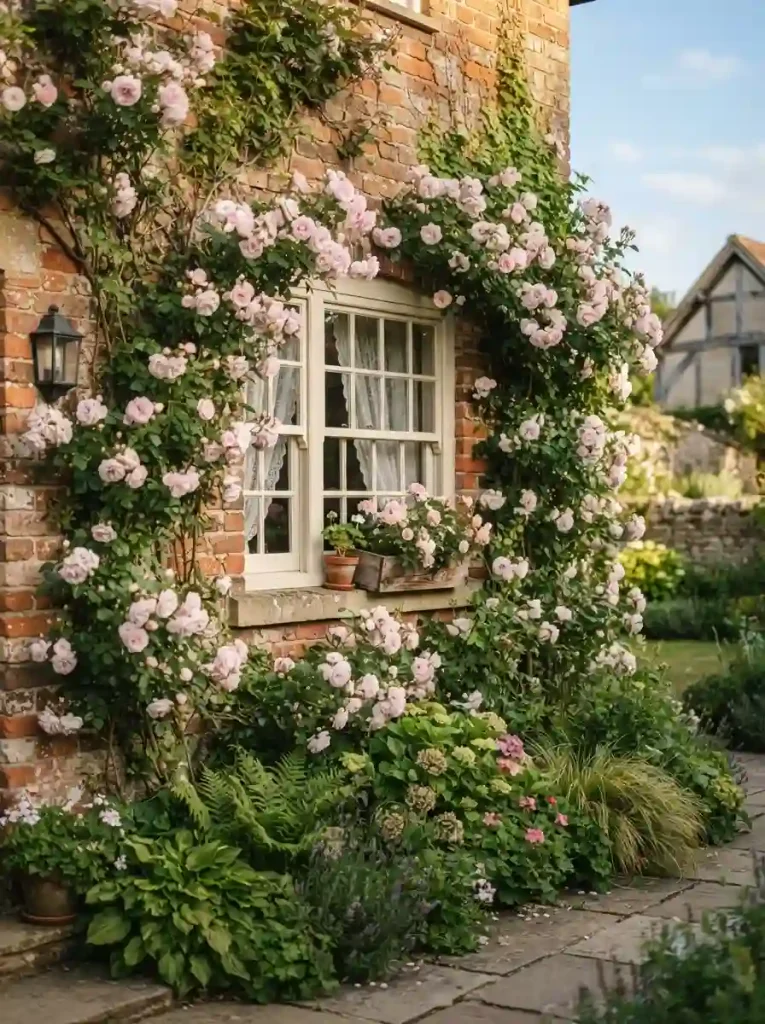
Roses can make an ordinary backyard-facing window feel like part of the garden. Plant compact rose bushes beneath and beside a window to create a naturally framed view from both inside and outside.
Choose varieties that stay manageable in height so they don’t completely cover the glass. The flowers can provide color around the frame while still allowing plenty of natural light into the room.
Add low-growing foliage plants underneath the roses to create a layered appearance. Dark green leaves can provide a beautiful backdrop for pale or brightly colored blooms.
This approach works especially well around kitchen, bedroom, or living-room windows that overlook the backyard. It connects the indoor and outdoor spaces without requiring major landscaping changes.
Expert Tip:
Check the mature size of your roses before planting them near windows. Keeping branches clear of the glass will make cleaning and maintenance much easier.
4. Pair roses with ornamental grasses for modern texture
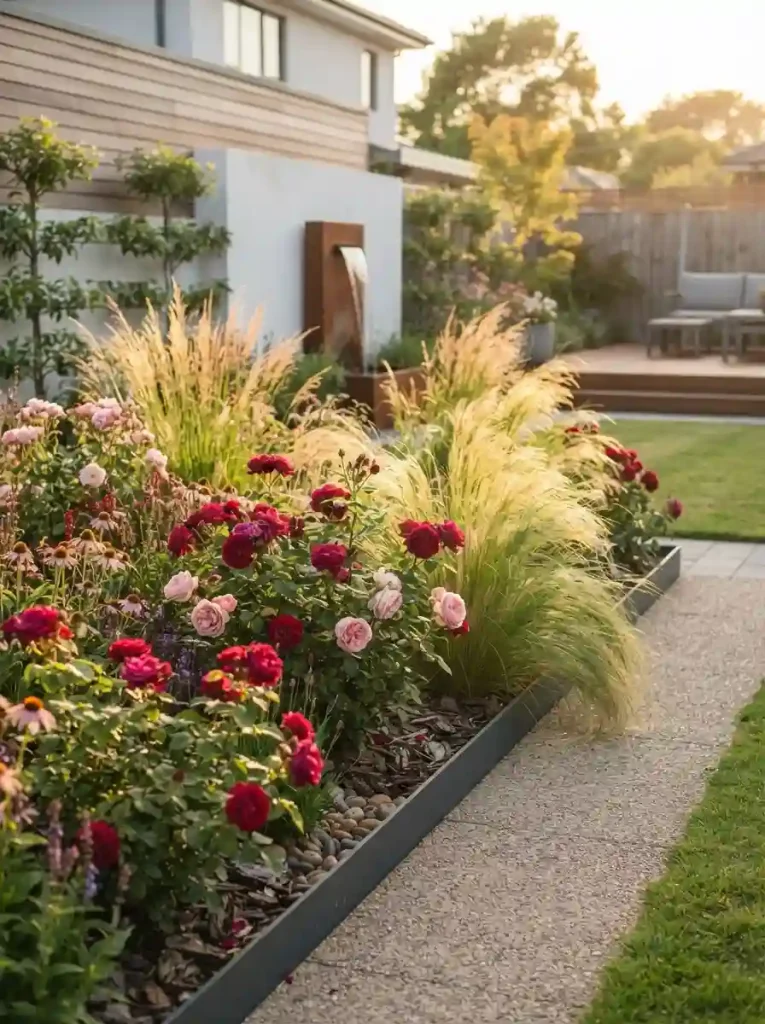
Roses don’t have to create a traditional flower garden. Combining them with ornamental grasses can give your backyard a softer, contemporary appearance while adding movement and texture.
Plant roses in loose groups and place airy grasses between or behind them. The fine blades contrast beautifully with the rounded rose flowers and can make the planting feel less formal.
Choose grasses that suit your climate and available sunlight. Their movement in the breeze can also make the garden feel more dynamic, especially when the roses are between major flowering periods.
This combination works particularly well along fences, patios, or modern garden paths where you want a relaxed but carefully designed landscape.
Expert Tip:
Keep grasses from completely covering the roses. Position them so each plant has enough space and the rose flowers remain visible from nearby viewpoints.
5. Turn a small patio corner into a rose-filled retreat
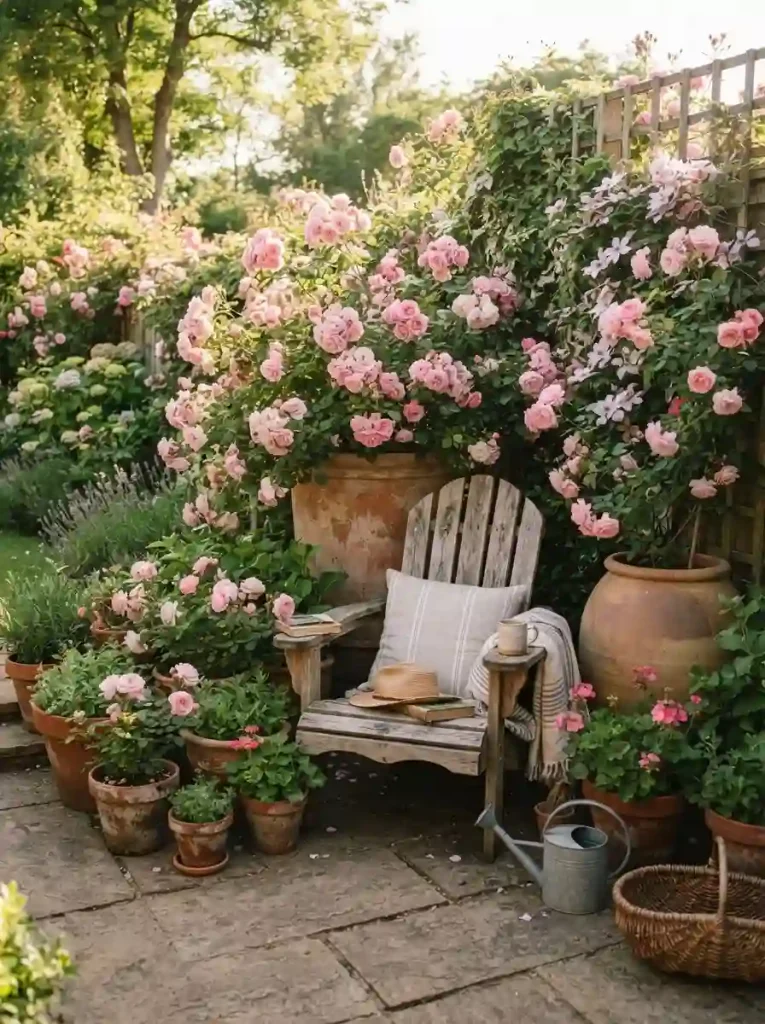
Even a small backyard patio can become a rose garden with thoughtful container placement. Use several pots at different heights to bring flowering plants around a seating area without taking over the floor space.
Large containers can hold substantial rose bushes, while smaller pots can be grouped around them with herbs or low-growing flowers. Choose containers that complement your patio rather than making every pot identical.
Place the tallest roses behind chairs or along the outer edge of the patio. This can create a soft green-and-flower backdrop while leaving the center open for movement.
The best part of a container garden is flexibility. You can rearrange pots as your backyard changes or move them to improve sunlight exposure.
Expert Tip:
Always choose containers with drainage holes and use a quality potting mix. Roses dislike sitting in constantly saturated soil.
6. Design a soft white rose moon garden
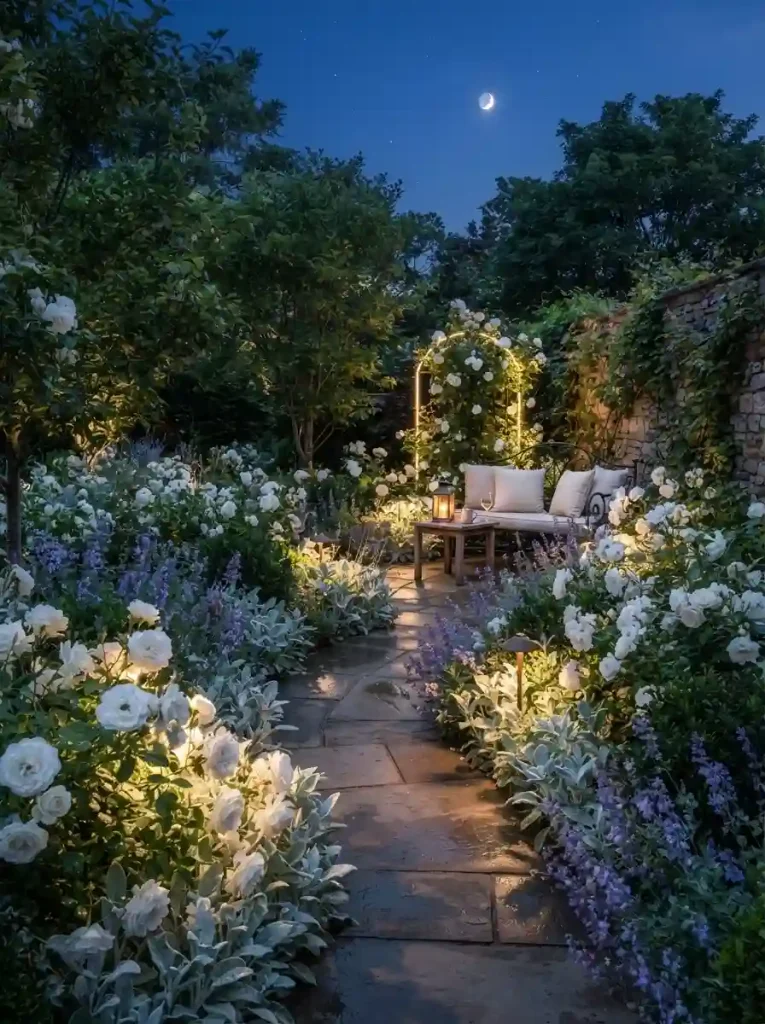
A white rose garden can create a peaceful atmosphere that feels especially beautiful in the evening. Choose pale or white roses and surround them with plants that have silvery, blue-green, or deep green foliage.
The lighter flowers stand out as daylight fades, making the garden feel calm and luminous. Add subtle lighting along nearby paths if you want to enjoy the space after sunset.
Keep the color palette restrained by using white, cream, silver, and soft green. This gives the garden a sophisticated appearance without requiring complicated landscaping.
A white rose garden can work beside a patio, around a seating area, or in a quiet corner where you want a relaxing view.
Expert Tip:
Light-colored flowers can look especially striking against dark foliage. Use plants with contrasting leaves to make white roses visually stronger.
7. Plant roses in a cottage-style mixed border
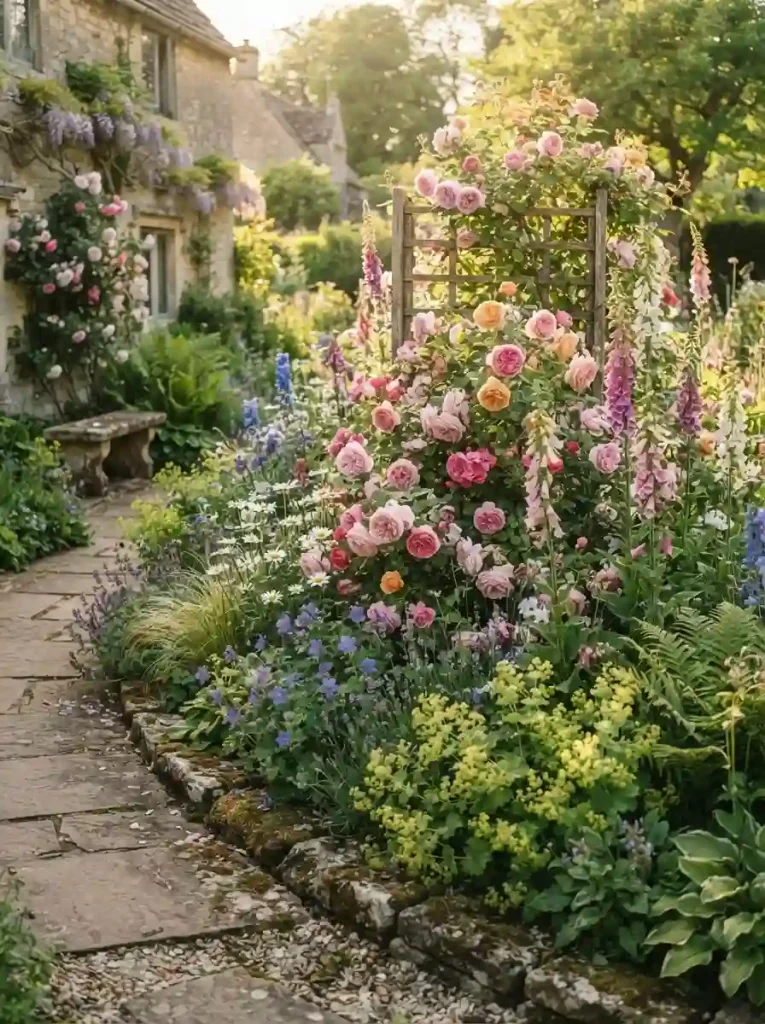
For a relaxed and abundant look, combine roses with a variety of flowering plants instead of creating a rose-only bed. The goal is to make the planting feel naturally full rather than perfectly arranged.
Use roses as the main structure and fill spaces around them with flowers of different heights, shapes, and bloom periods. Plants such as daisies, foxgloves, yarrow, or hardy geraniums can create a casual cottage-garden effect.
Avoid planting everything in straight lines. Slightly irregular groupings often look more natural and allow the garden to develop a charming, lived-in character.
This style is ideal if you enjoy gardens that feel colorful, abundant, and slightly informal rather than highly symmetrical.
Expert Tip:
Repeat a few companion plants throughout the border. Repetition creates visual consistency even when the planting itself looks loose and natural.
8. Add a rose border around a backyard patio
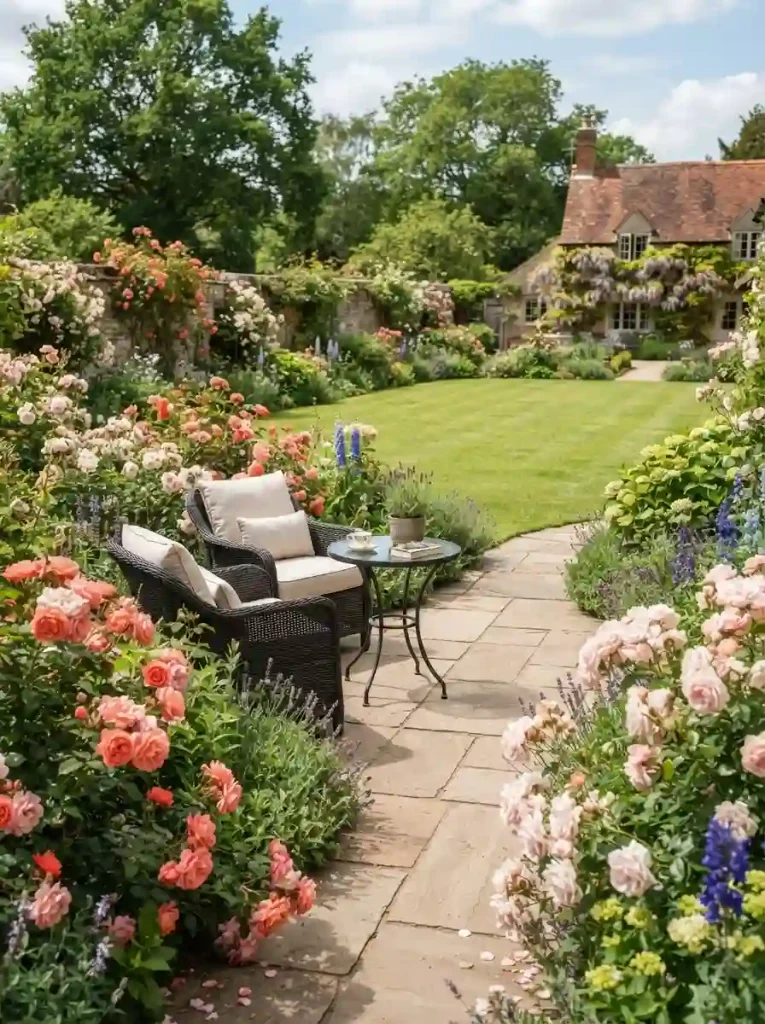
A patio surrounded by roses can feel like an outdoor room without requiring a permanent enclosure. Plant roses along the patio perimeter to soften hard surfaces and create a colorful transition between paving and lawn.
Use taller roses at the back corners and shorter varieties along the sides. This creates a natural frame while keeping the main seating area open.
If your patio has neutral-colored paving, roses can introduce warmth and personality. Repeating the same flower colors on different sides of the patio will also make the space feel connected.
Leave enough space around seating, pathways, and doors so the plants don’t interfere with everyday use as they mature.
Expert Tip:
Think about mature plant width, not just the size of the roses when you buy them. Proper spacing prevents the patio border from becoming overcrowded later.
9. Use raised beds to give your rose garden structure
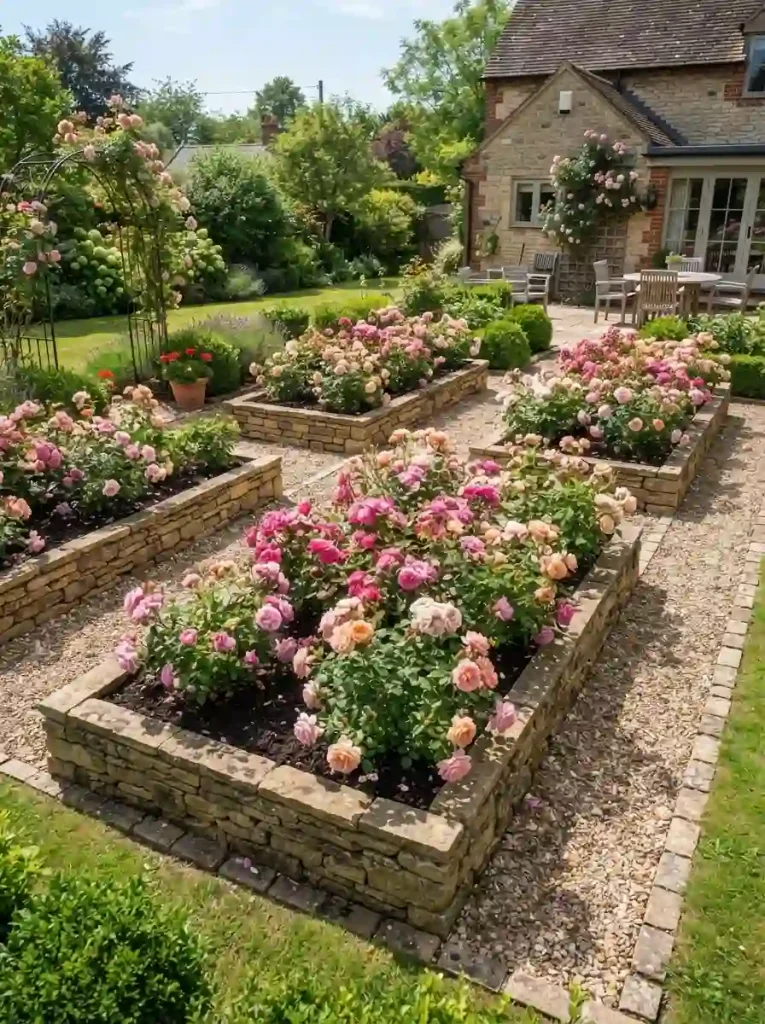
Raised beds can make a rose garden look organized while giving you more control over the planting area. They are particularly useful when your backyard soil is difficult to work with or drains poorly.
Build beds from durable materials such as stone, brick, or weather-resistant timber. Keep the beds wide enough for the roses to develop without forcing you to step into the planting area.
You can dedicate one raised bed to roses or create several smaller beds with different varieties. Adding a contrasting border around each bed makes the overall garden feel more structured.
Raised planting areas can also make roses easier to see from patios and seating areas, especially in larger backyards.
Expert Tip:
Make sure raised beds have adequate drainage before planting. Good soil structure and drainage are just as important as choosing attractive rose varieties.
10. Create a rose-and-herb garden near the kitchen
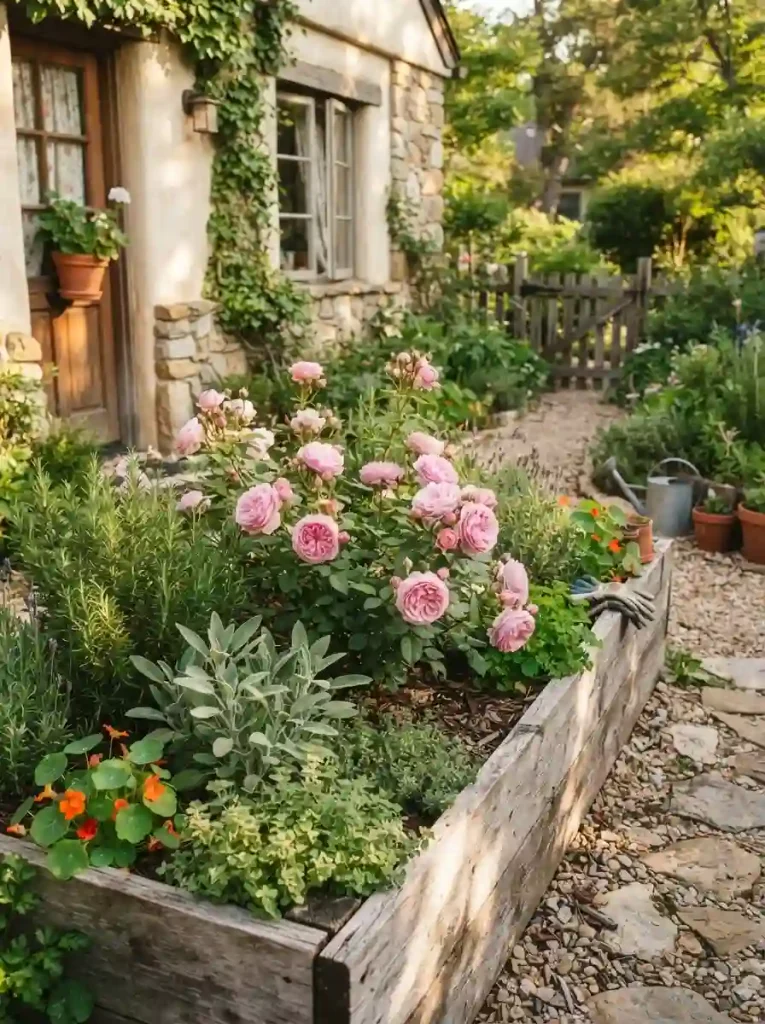
If your backyard is close to the kitchen, combine roses with useful herbs to create a garden that is both decorative and practical. The contrast between colorful flowers and fragrant green herbs can make a small planting area especially appealing.
Place roses toward the back or corners and use herbs such as thyme, sage, oregano, or rosemary along the front edges. Their foliage provides texture while keeping the lower part of the garden visually interesting.
A mixed planting like this can also make a kitchen garden feel less utilitarian. Instead of looking like a separate vegetable area, it becomes an attractive part of the backyard landscape.
Choose plants with similar sunlight and watering requirements so the entire bed is easier to care for.
Expert Tip:
Keep vigorous herbs from spreading into the rose root zone. Give each plant enough room so harvesting herbs doesn’t disturb your roses.
11. Grow climbing roses on a garden trellis
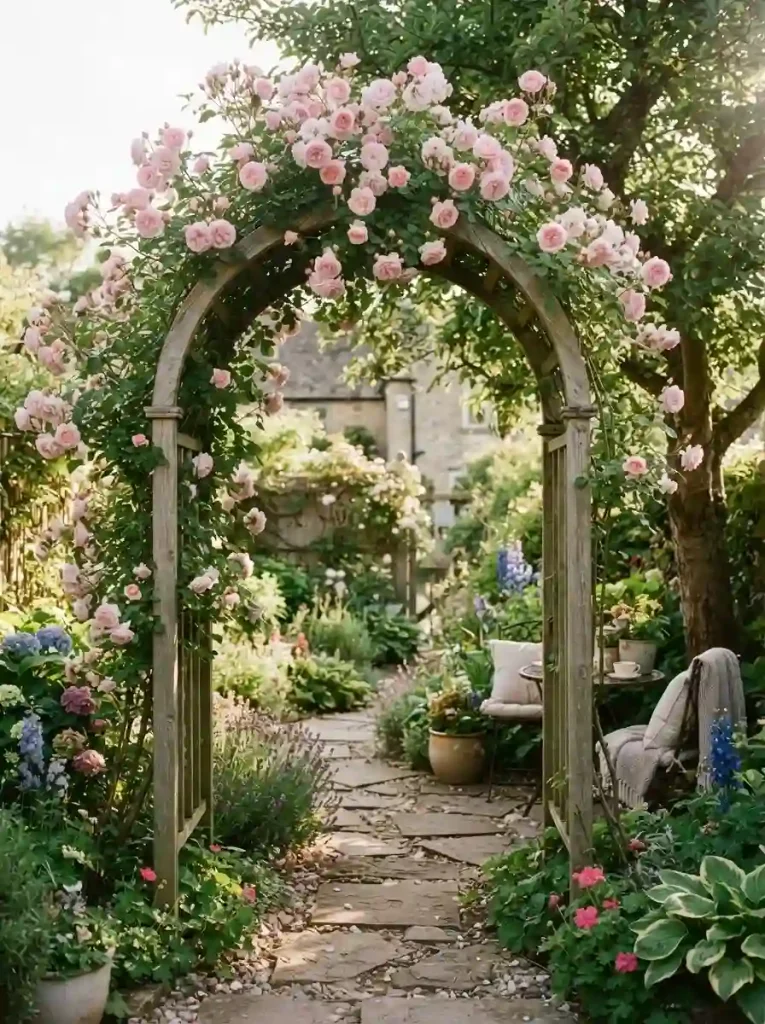
Climbing roses are an excellent way to add height when you don’t have much ground space. A sturdy trellis can turn a plain fence, wall, or empty garden corner into a vertical display covered with flowers.
Choose a support that is strong enough to handle mature growth and install it before the rose becomes established. As the stems grow, gently guide them across the structure rather than allowing them to form one dense upright column.
A climbing rose can also help define different areas of a backyard. Use one near a seating area to create a romantic backdrop or place it beside a pathway to give the entrance more character.
Expert Tip:
Don’t attach growing stems too tightly to the trellis. Leave a little flexibility so the plant can expand naturally as it matures.
12. Make a romantic rose arch over a pathway
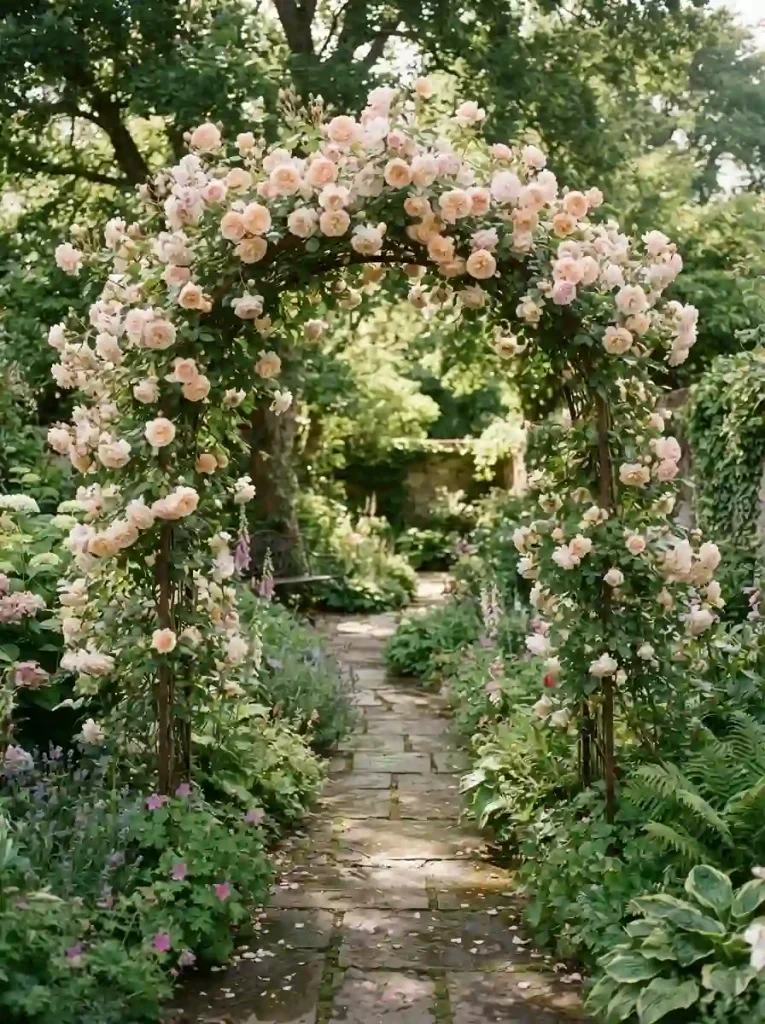
A rose-covered arch can turn a simple garden path into a memorable focal point. Position the arch where visitors naturally walk through the garden, then train climbing roses upward and across the top.
For a classic appearance, use one rose color throughout the arch. For something more playful, combine two compatible shades that bloom at similar times.
The arch doesn’t need to be enormous. Even a modest structure can create a strong vertical feature while making a pathway feel more secluded and inviting.
Consider the view from both sides when choosing its location. A well-positioned arch can become a beautiful focal point from the patio, house, or lawn.
Expert Tip:
Use a sturdy arch designed for climbing plants. Mature rose growth can become surprisingly heavy, particularly after rain.
13. Add roses around a backyard seating nook
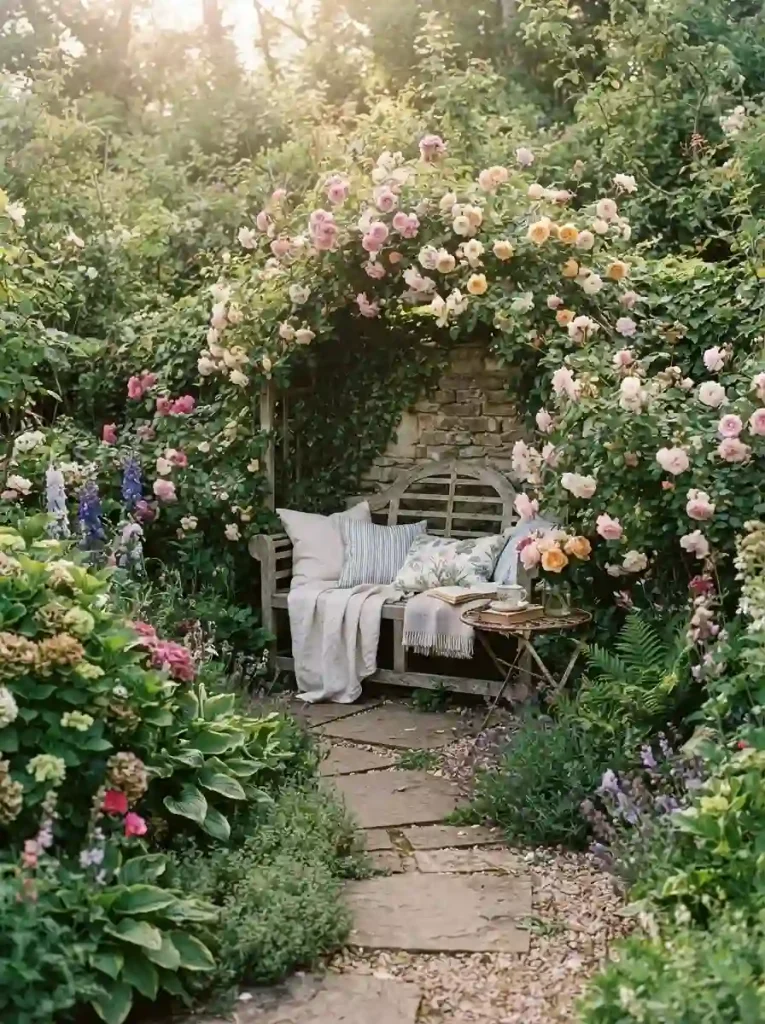
Create a peaceful outdoor retreat by surrounding a small seating area with roses. A bench, bistro table, or pair of garden chairs can become much more inviting when framed by flowering plants.
Plant roses behind the seating area to form a colorful backdrop and use shorter companion plants around the sides. This creates a sense of enclosure without making the space feel closed in.
For a particularly relaxing atmosphere, choose fragrant rose varieties and position the seating where you can enjoy their scent. A nearby path or small stone border can complete the design.
The result is a garden corner that encourages you to slow down, read, enjoy a drink, or simply spend time outdoors.
Expert Tip:
If fragrance is important to you, research the scent strength of individual cultivars before buying. Not every rose has a strong fragrance.
14. Combine roses with lavender for color and texture
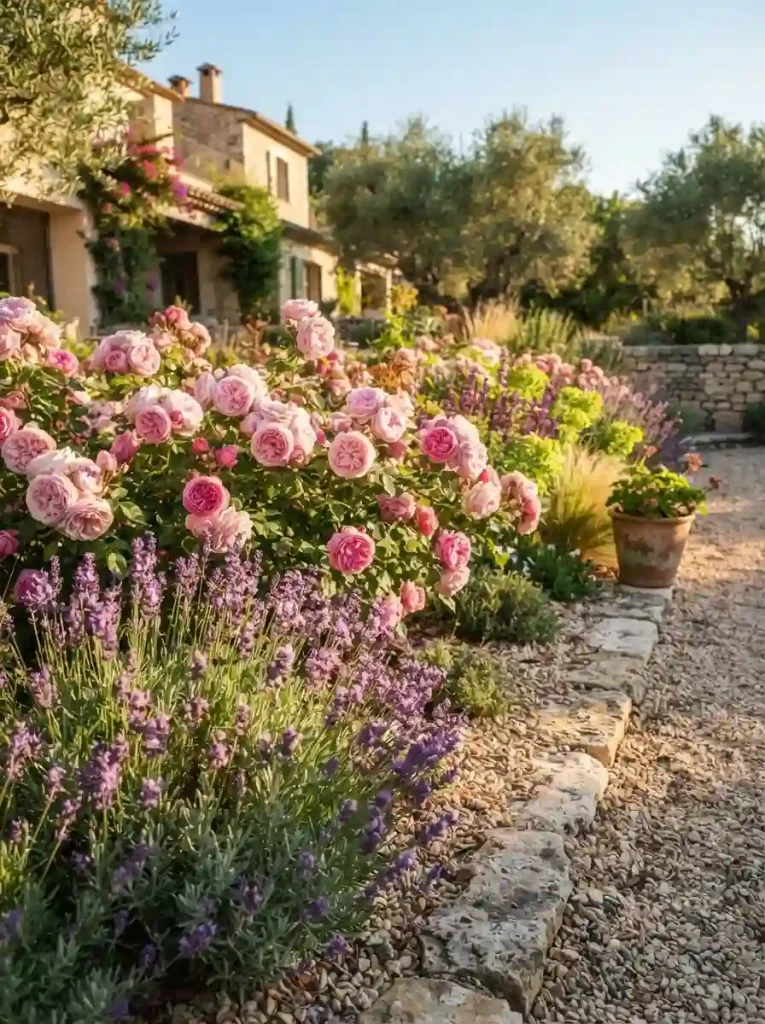
Lavender and roses make a classic garden pairing because their forms are so different. Rounded rose flowers contrast with lavender’s narrow flower spikes, creating a planting bed with more visual variety.
Use lavender along the front edge of a rose bed or plant small groups between larger rose bushes. Purple-blue flowers can create a beautiful contrast against pink, white, cream, or red roses.
This combination works particularly well in sunny areas where both plants can receive plenty of light. Avoid overcrowding them, since good air circulation is important for healthy growth.
The result is a garden that feels colorful but still cohesive, especially when repeated along a border or pathway.
Expert Tip:
Pay attention to drainage when combining these plants. Lavender generally prefers drier, sharply drained conditions, so avoid placing it where irrigation leaves the soil constantly wet.
15. Grow roses in decorative containers
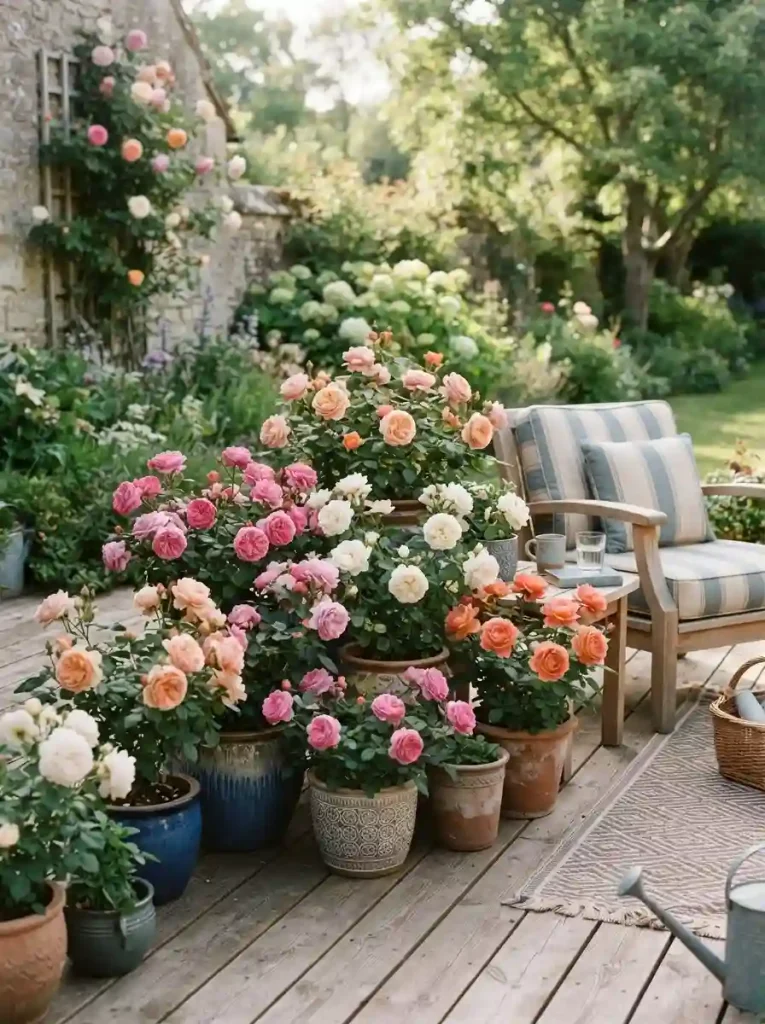
Container-grown roses are perfect when you want flowers on a patio, deck, balcony-style backyard area, or another location where traditional beds aren’t practical.
Choose large, sturdy containers that provide enough room for the rose’s root system. Grouping containers in different sizes can create a layered display without permanently changing the landscape.
You can also use containers to experiment with colors. Try one pot with a soft pink rose, another with a white variety, and smaller containers filled with complementary flowers or foliage.
Because containers can be moved, they give you greater flexibility when sunlight or the appearance of your outdoor space changes.
Expert Tip:
Large containers generally provide a more stable growing environment than very small pots. Make sure every container drains freely and doesn’t collect standing water.
16. Create a rose-lined garden walkway
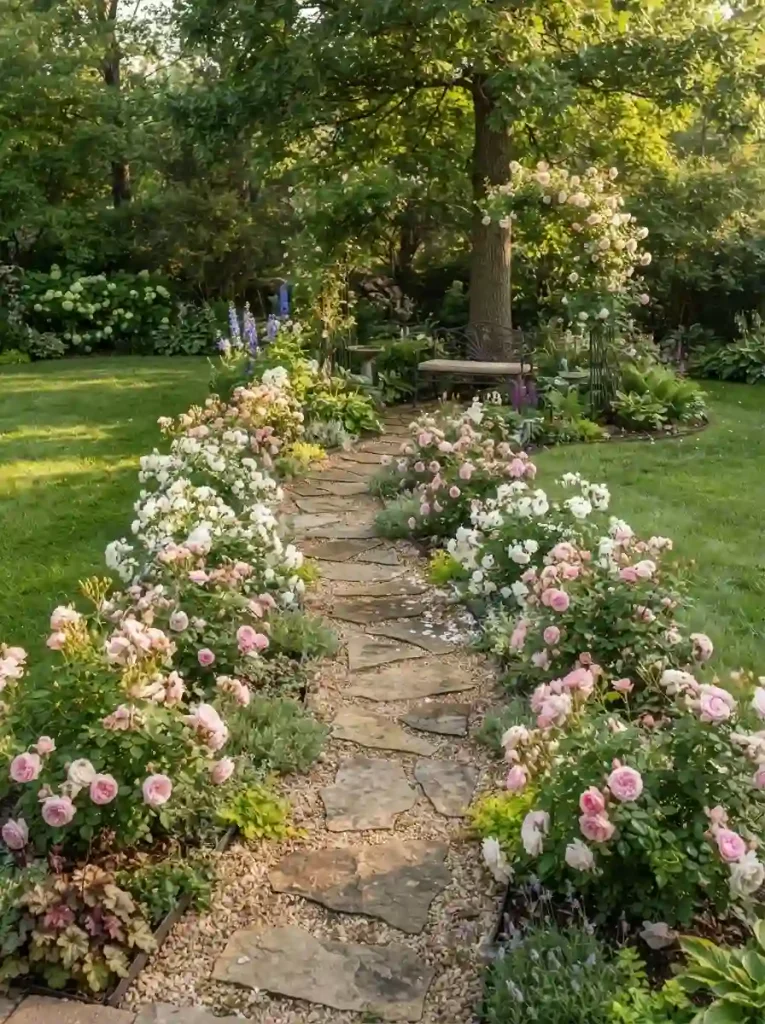
A walkway becomes much more attractive when roses guide the eye toward a destination. Plant rose bushes at intervals along both sides of a path, leaving enough space for comfortable walking.
You can create a formal appearance with matching varieties on either side or use different flowers for a more relaxed garden style. Low edging plants can fill the gaps between the roses and pathway.
Think about where the walkway leads. A rose-lined path becomes especially effective when it directs attention toward a bench, patio, gate, fountain, or another garden feature.
Repeat colors along the route rather than introducing a completely different shade at every planting point.
Expert Tip:
Keep rose branches away from the main walking area. A beautiful path should still be comfortable and safe to use as the plants mature.
17. Add roses around a pergola
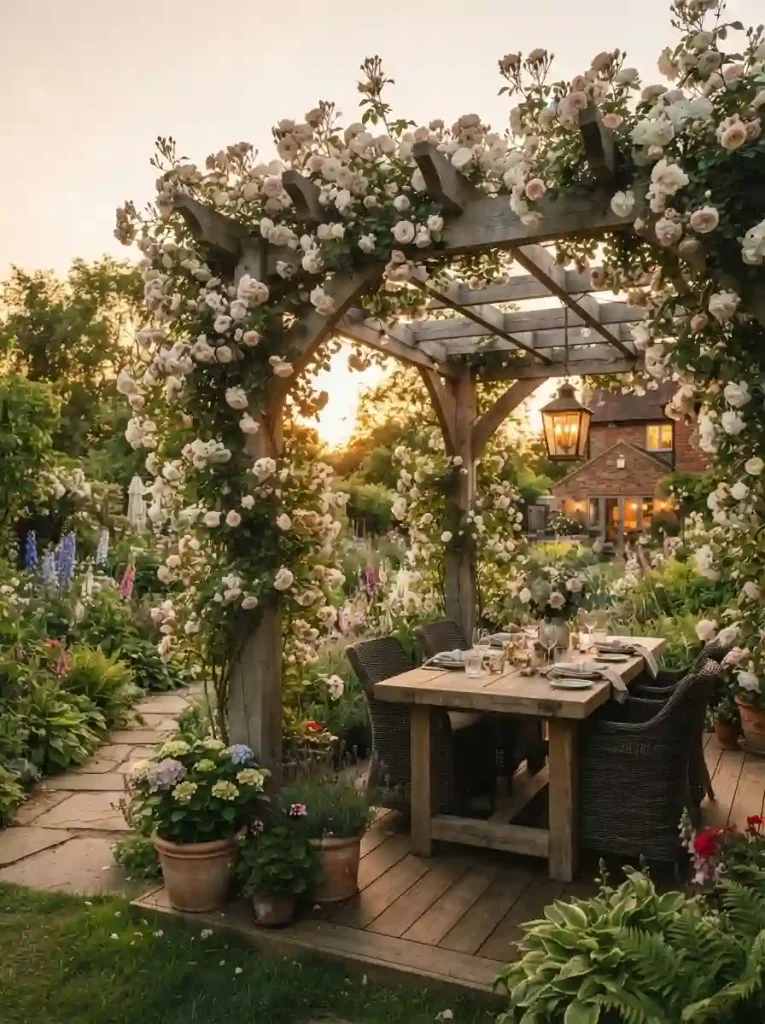
A pergola can become a dramatic backyard feature when climbing roses are trained around its posts and upper framework. The structure provides support while the roses soften its architectural lines.
Place climbing roses near the strongest vertical supports and guide new growth across the framework as it develops. Over time, the flowers can create a partially enclosed outdoor room.
Add seating beneath the pergola to turn it into a destination rather than simply a decorative structure. Outdoor curtains, potted plants, or subtle lighting can enhance the space without competing with the roses.
This design works particularly well for entertaining areas where you want a combination of shade, greenery, and flowers.
Expert Tip:
Check the pergola’s construction before training roses onto it. The support should be secure and capable of carrying mature plant growth.
18. Create a colorful rose-and-perennial border
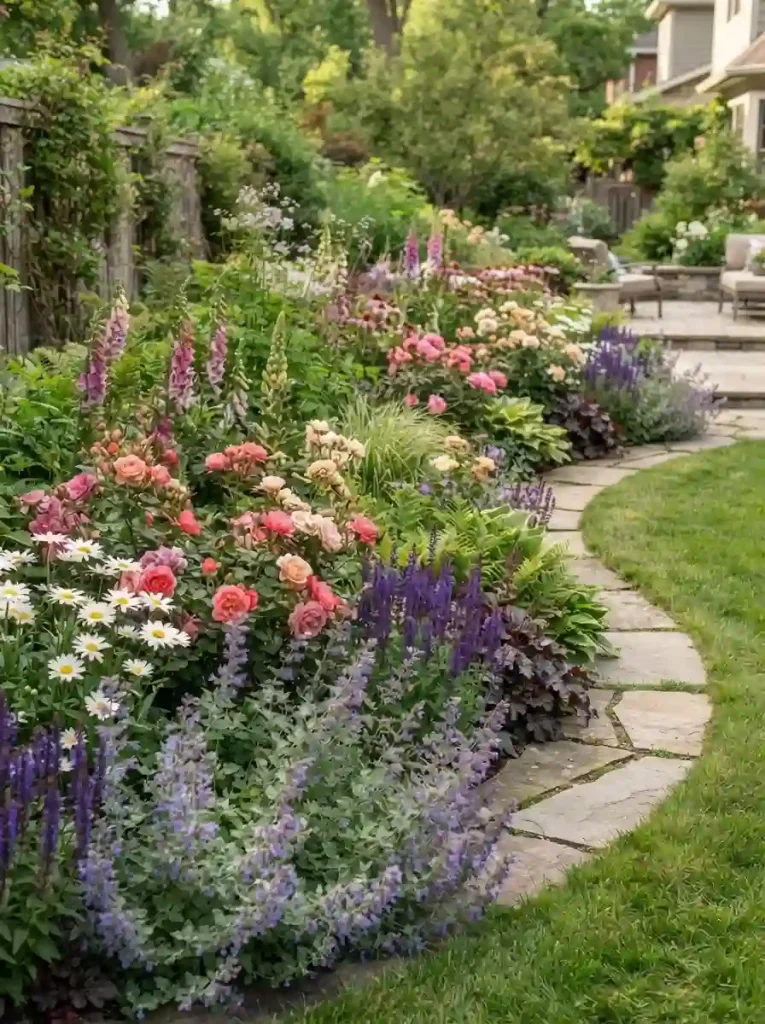
For a garden that changes throughout the seasons, combine roses with long-lasting perennial plants. Roses can provide the main flowering display while perennials add color and foliage before, between, and after major rose blooms.
Arrange plants according to mature height, placing taller varieties toward the back and shorter plants near the front. Repeating a few perennial varieties throughout the border will keep the design visually connected.
Consider different leaf shapes as well as flower colors. Foliage can remain attractive even when individual plants are not flowering, giving the garden a stronger overall structure.
This approach is especially useful if you want your backyard to look interesting beyond the peak rose season.
Expert Tip:
Choose companion plants based on similar light, moisture, and soil preferences. A beautiful combination is much easier to maintain when the plants have compatible growing requirements.
19. Create a cozy rose garden around a small fountain
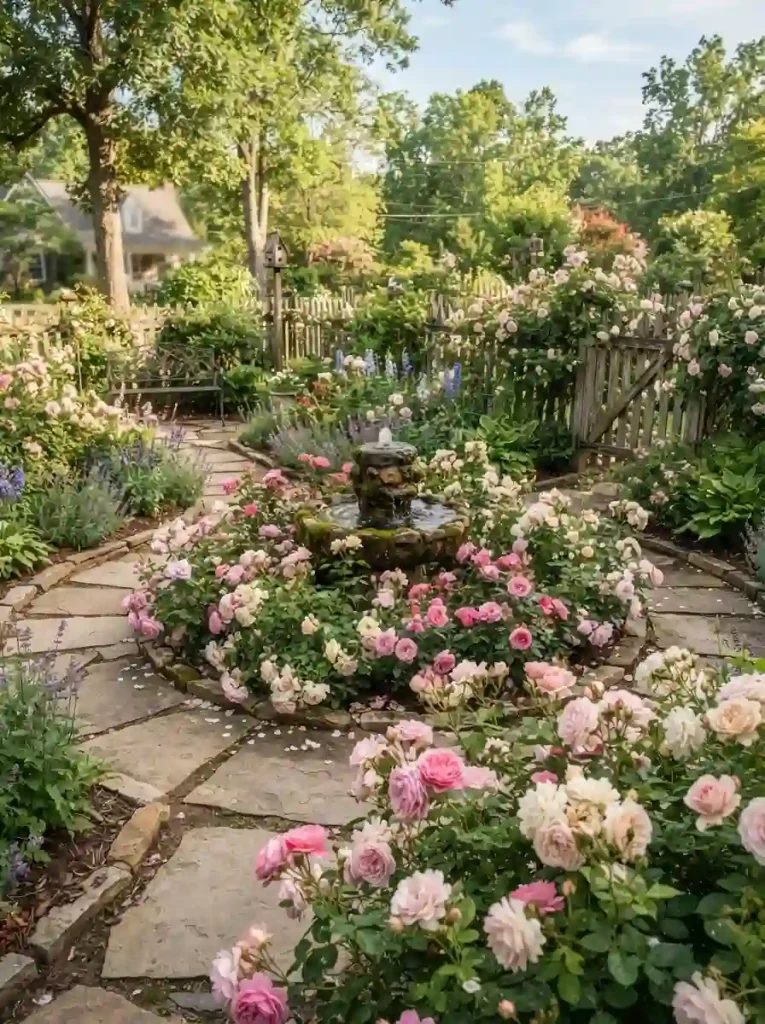
A small fountain can give a rose garden an elegant focal point while adding the relaxing sound of moving water. Surround the fountain with roses arranged in a loose circular or semicircular planting design.
Use plants of different heights so the fountain remains visible from several viewpoints. Low-growing flowers and foliage can soften the base while larger roses provide color farther behind.
Choose a fountain style that complements your backyard. Stone works beautifully in traditional gardens, while simple geometric designs can suit contemporary landscapes.
Add a nearby bench or a few stepping stones to make the fountain area feel like a destination rather than an isolated decoration.
Expert Tip:
Leave sufficient clearance around the fountain for cleaning and maintenance. Avoid allowing dense rose growth to block access to the pump or water basin.
Tips for Creating a Healthy Rose Garden
Beautiful rose gardens begin with the right growing conditions. Before planting, observe your backyard throughout the day and identify areas that receive plenty of direct sunlight.
Most roses perform best when they receive several hours of sunlight and are planted in soil with good drainage. Avoid squeezing too many bushes into one bed simply to create an instantly full appearance. Plants need room for mature growth and airflow.
Water deeply when needed rather than relying only on frequent, shallow watering. Watering at the soil level also helps keep the foliage drier.
Regular pruning, removing spent flowers when appropriate, and watching for signs of pests or disease can help roses remain attractive throughout the season.
How to Choose the Right Rose for Your Backyard
Think about your available space before choosing a rose variety. A compact rose may be better for a patio container, while a vigorous climber can be useful for a trellis or pergola.
Color matters, but it shouldn’t be the only consideration. Look at mature height, mature width, flowering habit, fragrance, disease resistance, and your local growing conditions.
For a low-maintenance landscape, prioritize varieties known to perform well in your climate and match them with plants that have similar care requirements.
It’s also helpful to think about how the roses will look when they are not flowering. Healthy foliage and attractive plant structure can keep the garden appealing between bloom cycles.
Simple Rose Garden Maintenance Checklist
• Water according to weather, soil conditions, and the needs of your rose variety.
• Keep the soil around plants free from excessive weeds and competing growth.
• Remove damaged or unhealthy plant material promptly.
• Prune according to the requirements of your specific rose type.
• Give mature plants enough space for good airflow.
• Feed roses according to the recommended schedule for your growing conditions.
• Inspect plants regularly for insects, discoloration, or unusual growth.
• Refresh mulch when necessary while keeping it away from direct contact with the stems.
• Support climbing roses and guide new growth as needed.
• Clean up fallen leaves and garden debris when appropriate.
Final Thoughts
A beautiful rose garden doesn’t have to follow one particular design. You can create a structured border, fill containers on a patio, train roses over an arch, or build a peaceful seating nook surrounded by fragrant blooms.
The best design is one that works with your backyard’s sunlight, available space, soil, and the amount of maintenance you’re comfortable doing.
Start with one strong idea rather than trying to transform everything at once. A well-planned rose border or small flowering corner can become the foundation for a much larger garden over time.
With thoughtful plant choices and enough room for each rose to mature, your backyard can become a colorful, welcoming space that looks beautiful season after season.