
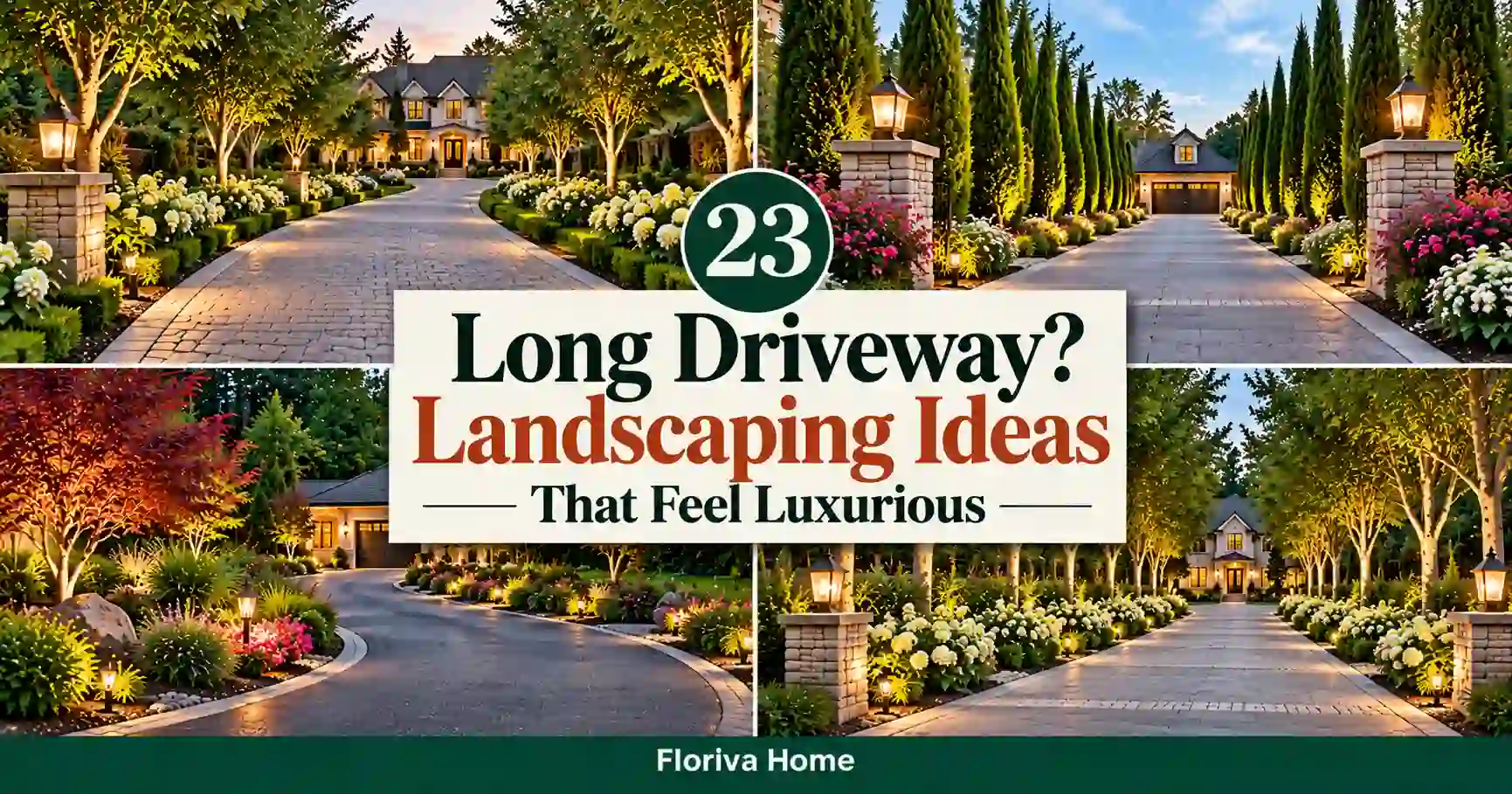
Long Driveway? 23 Landscaping Ideas That Feel Luxurious
Inside: 23 elegant long driveway landscaping ideas that add drama, privacy, and real curb appeal, whatever your budget or climate.
A long driveway is one of the best design opportunities a home can have. Most people get a few seconds of approach. You get a whole scene, and every bend and border becomes part of the first impression.
Luxury isn’t about spending more. It’s about planning the journey so every stretch feels intentional.
Below you’ll find ideas for structure, planting, lighting, and finishing touches. Pick two or three that suit your home, and the whole driveway starts to feel designed.
1. Plant a tree-lined allée
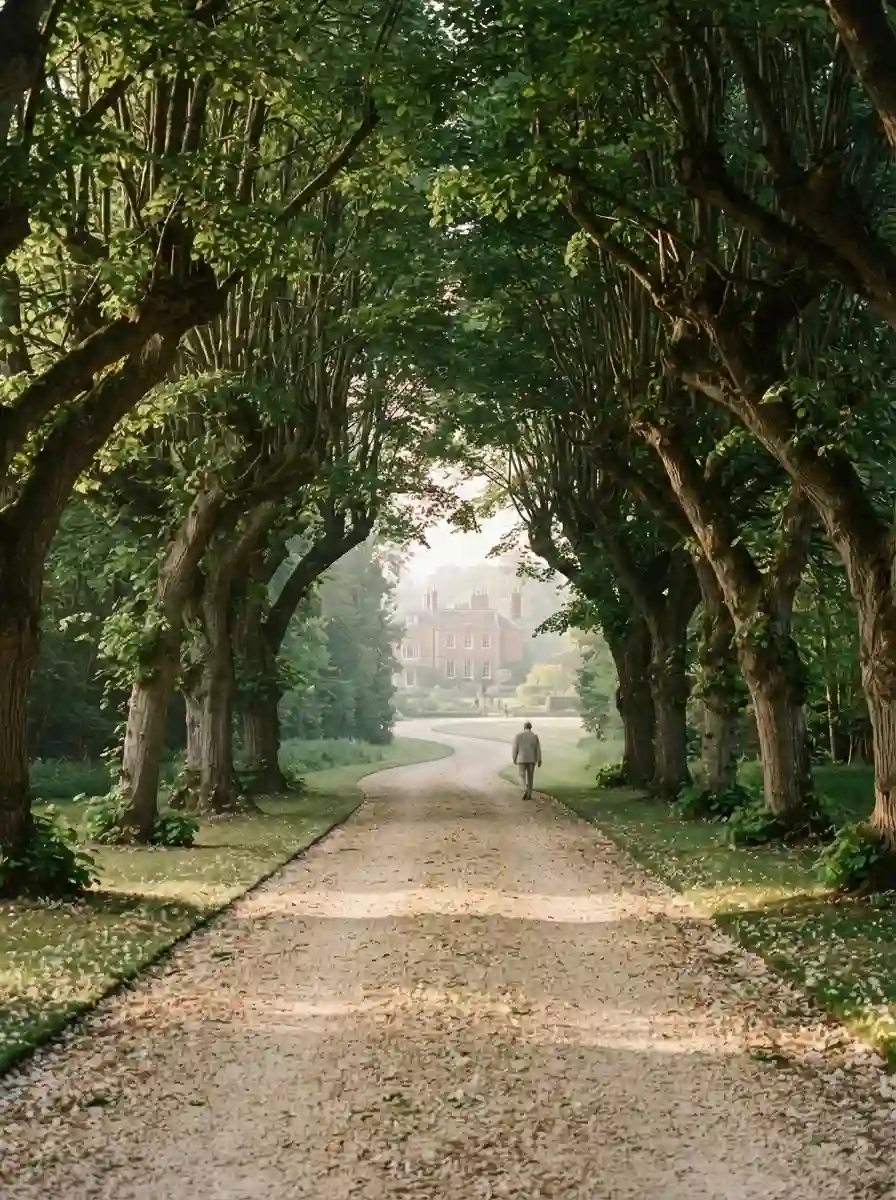
Nothing says “estate” like a row of matching trees on both sides of the drive. The repetition creates rhythm, and the canopy turns an ordinary approach into a green corridor.
Pick a tree that suits your space. Lindens, hornbeams, and columnar oaks all work, but always check the mature width and root habit. Roots and pavement don’t always get along.
Pro Tip:
Plant trees well back from the pavement edge, and space them evenly so the rhythm holds as they mature.
2. Frame the entrance with stone gate pillars
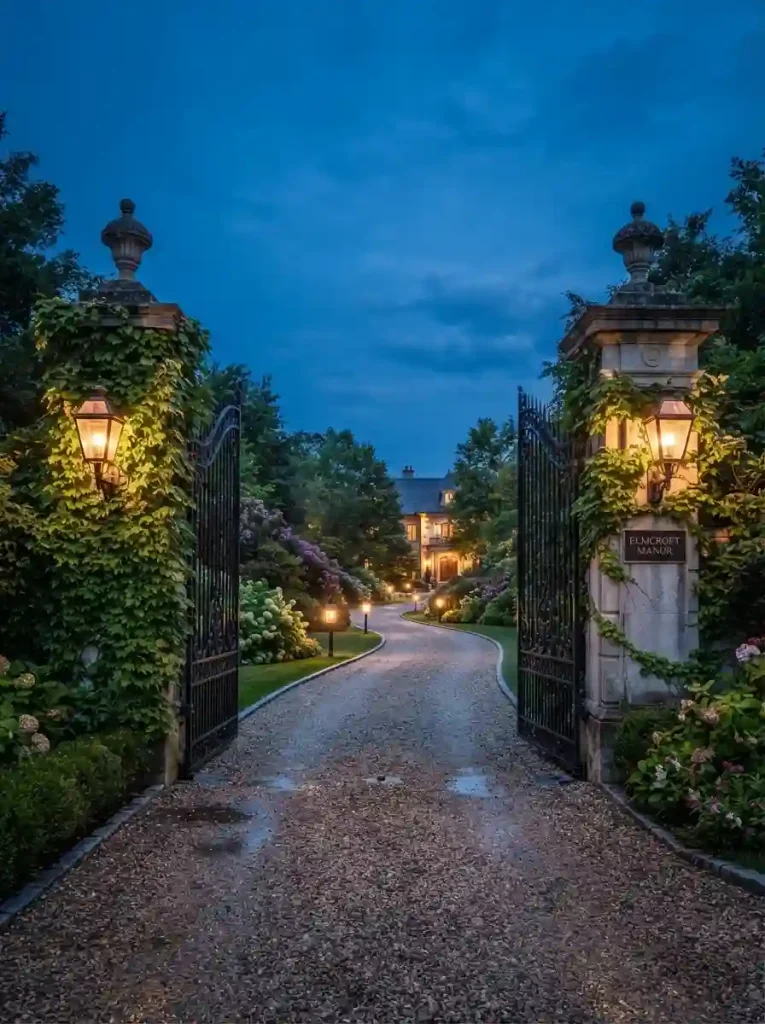
Pillars announce arrival before a single plant is noticed. They give the driveway a clear starting point and make even a modest gate look considered.
Use a stone or brick that echoes your house. Capping the pillars with lanterns or simple caps adds a finished, custom look. Let a climber like ivy or climbing hydrangea soften the edges over time.
Pro Tip:
Mirror one material from your home, such as the chimney stone or foundation brick, so the entrance feels connected.
3. Trace the edges with clipped hedges
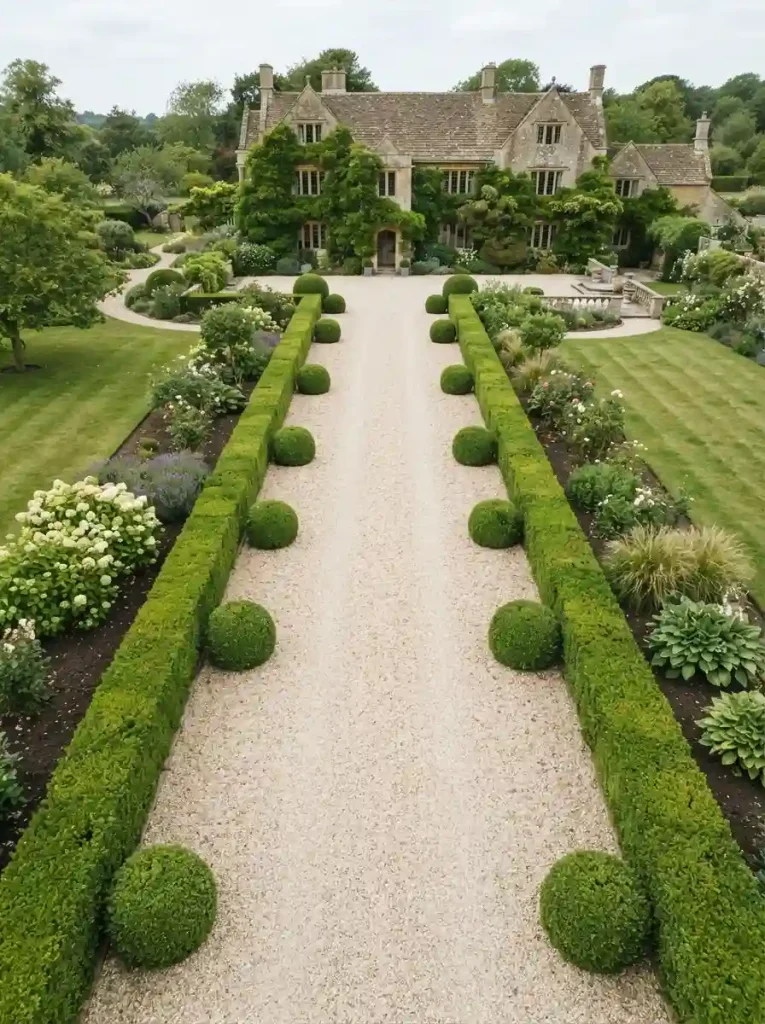
Low, neat hedges act like a tailored border. They guide the eye along the drive and give the whole space a formal, polished feel, even when the surroundings are relaxed.
Boxwood is the classic choice, but it can struggle with blight and boxwood moth in some regions. Yew, Japanese holly, or dwarf privet are good alternatives that clip just as cleanly.
Pro Tip:
Add a round or cone-shaped topiary every few yards as punctuation. It breaks up a long line of hedge.
4. Light the trees, not just the path
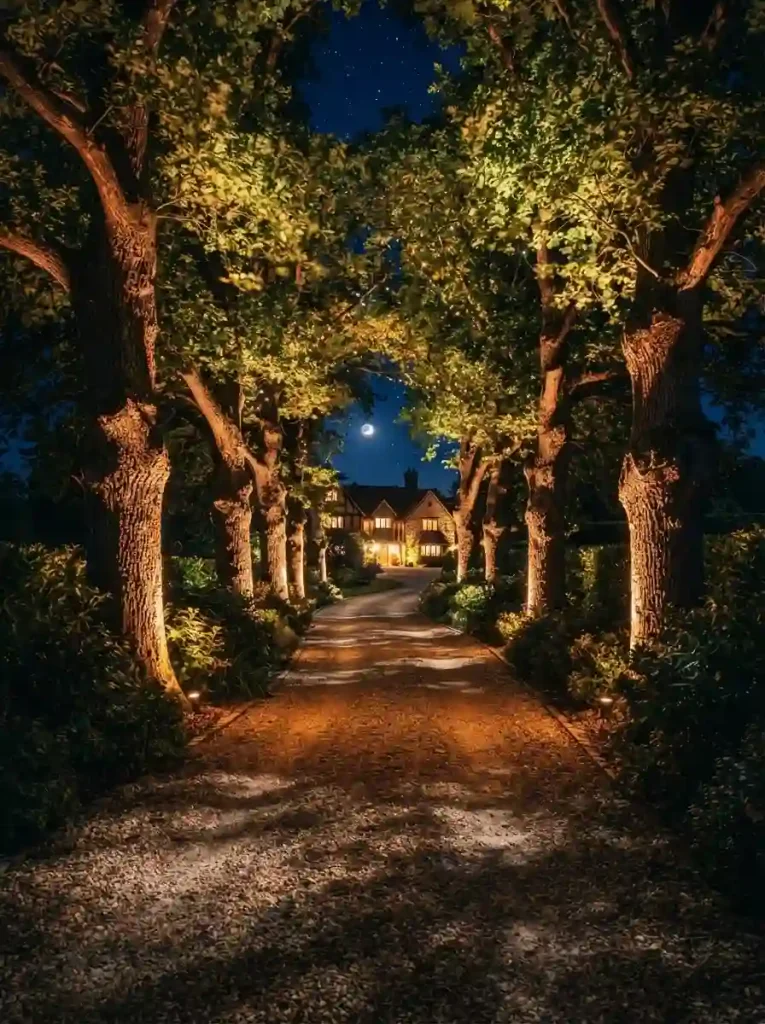
Rows of small path lights can look like an airport runway. Lighting the trees instead gives a softer, more expensive effect. Uplights at the base of trunks create glowing columns and a sense of depth.
Choose warm bulbs, typically around 2700K, and keep the fixtures low-profile and hidden. A low-voltage system is safer to install and easier to adjust as plants grow.
Pro Tip:
Light only some trees. Pockets of darkness between lit areas make the scene feel more dramatic.
5. Build a motor court with a sculptural centerpiece
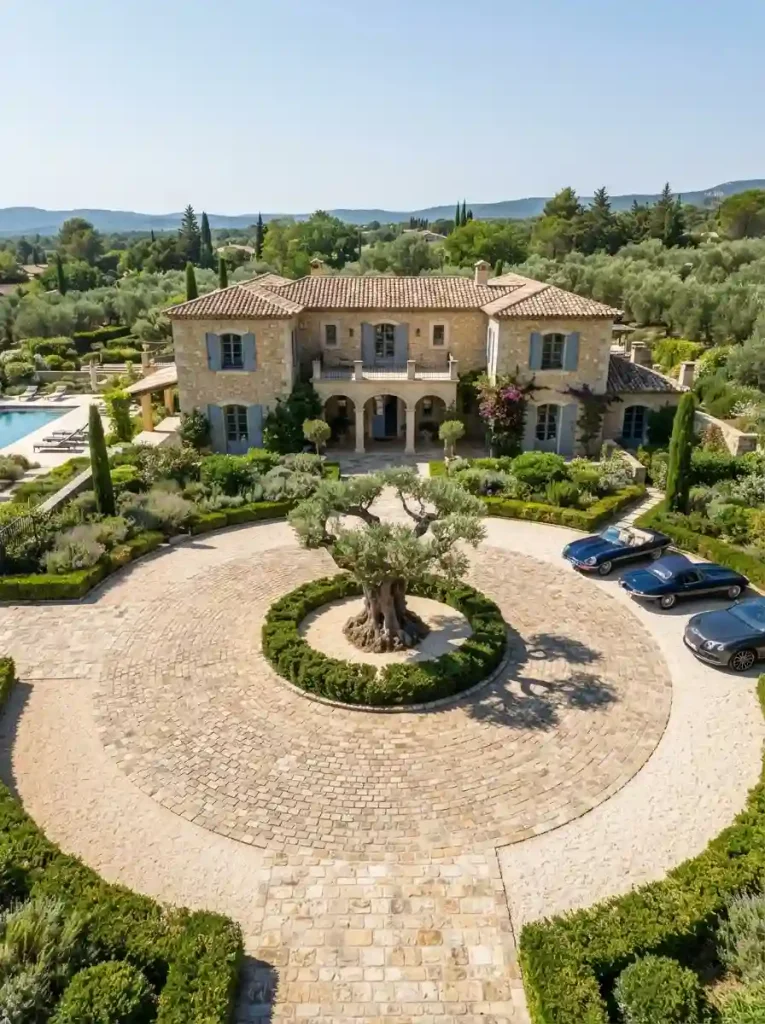
If your driveway ends near the house, a round turnaround makes the finale feel grand. It gives cars somewhere to turn and gives you a stage for a focal point.
Place one striking plant in the center, such as an olive, a multi-stem birch, or a clipped evergreen. Keep the surrounding bed simple, so the centerpiece does the talking.
Pro Tip:
Keep the turning radius generous. A beautiful circle that’s hard to navigate quickly becomes a frustration.
6. Plant drifts of scented flowers
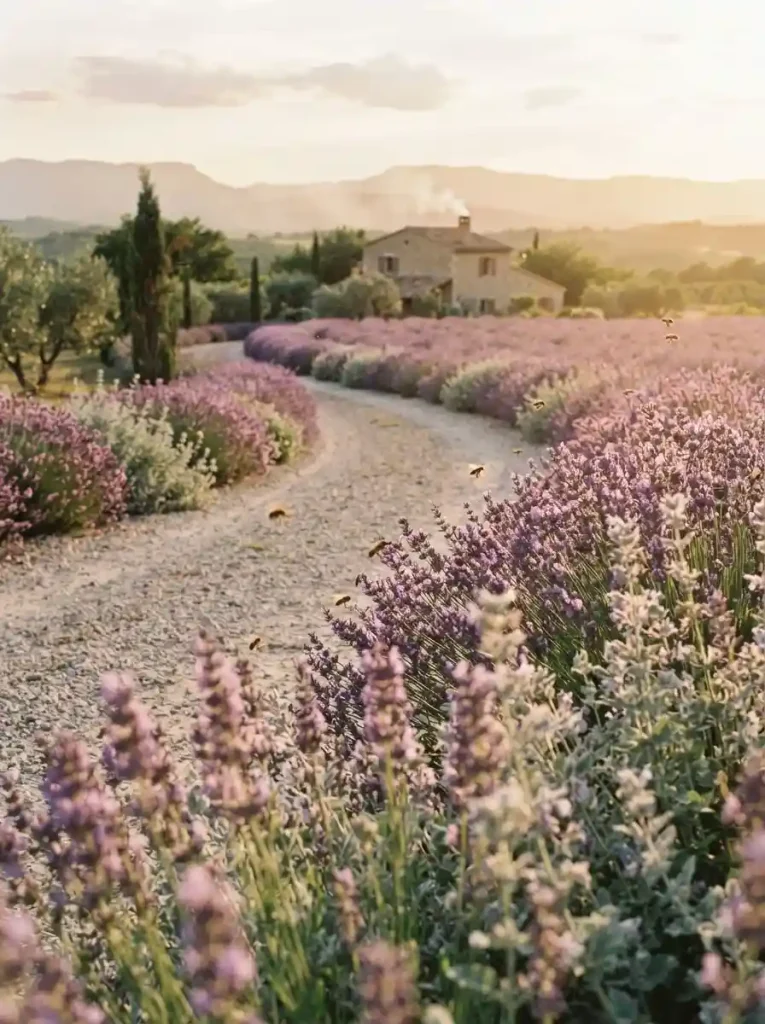
Luxury is also about how a place smells. Lavender, catmint, and sage release fragrance when brushed by passing cars and walkers, which makes the approach memorable.
Use large, repeated groups rather than single plants. Big sweeps of one color look intentional and calm. Both lavender and catmint like full sun and well-drained soil, and many varieties are hardy through roughly zones 5 to 8.
Pro Tip:
Repeat the same plant at several points along the drive. Repetition ties a long space together.
7. Add a dry-stacked stone retaining wall
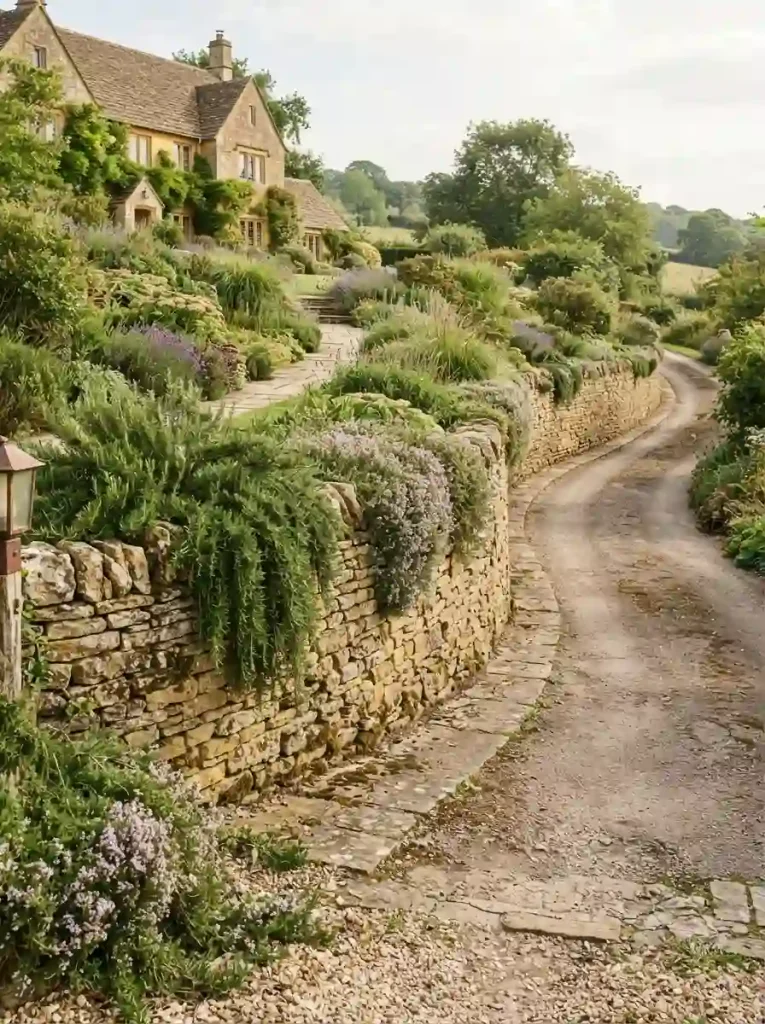
If your driveway runs along a slope, a stone wall solves a practical problem and looks beautiful doing it. It holds back soil, and the texture adds instant age and character.
Plant trailing herbs or alyssum to spill over the top and tuck small plants into the gaps. Taller walls, often anything over about four feet, may need engineering and a permit, so check your local rules first.
Pro Tip:
Use local stone where you can. It matches the surroundings and usually costs less to transport.
8. Layer your planting beds in three tiers
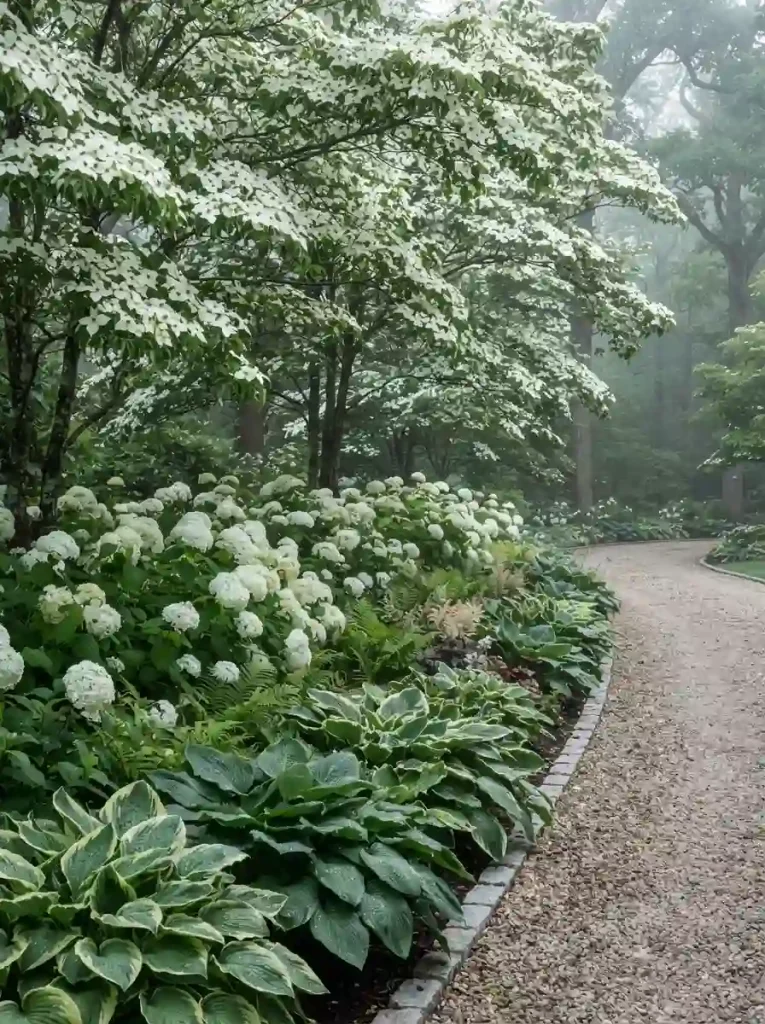
A single row of shrubs looks flat. Layering trees at the back, shrubs in the middle, and low perennials at the front gives the border depth and a full, established look.
Stick to a limited palette. White, green, and one accent color feels calm and expensive, while too many colors can look busy over a long distance.
Pro Tip:
Make the beds at least four to six feet deep. Narrow strips never look lush.
9. Let a wildflower meadow run alongside the drive
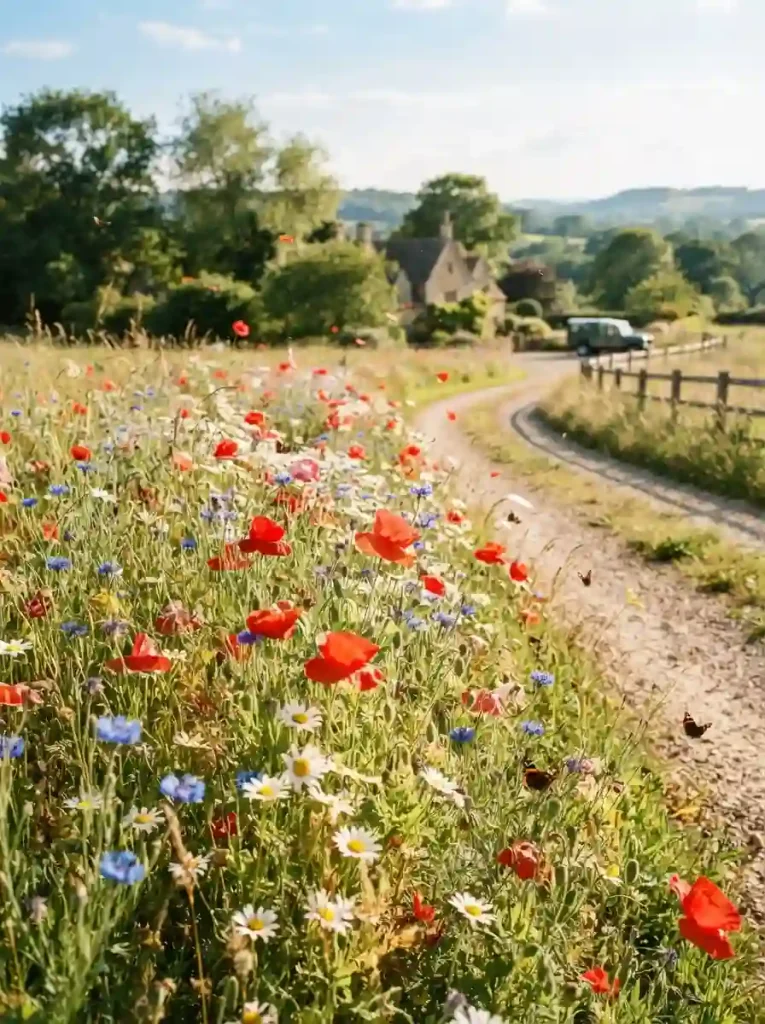
Not every luxurious driveway is formal. A flowing meadow gives a relaxed, high-end country feel, and it’s a great way to handle large areas without constant mowing.
Choose a seed mix suited to your region, ideally including native species. Mow a neat strip beside the pavement so the meadow looks planned, then cut the whole area once a year after the plants set seed.
Pro Tip:
A clean mown edge is the secret. It tells the eye that the wildness is deliberate.
10. Give the bend a showpiece tree
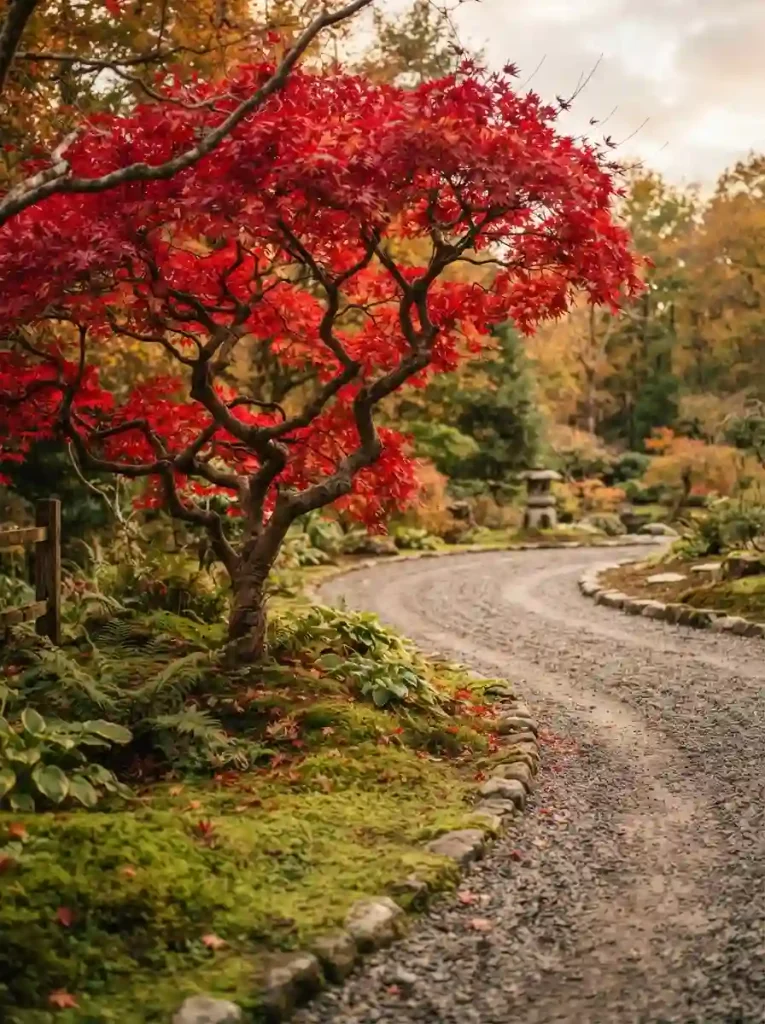
Bends are natural stages for a single standout plant. A specimen tree there adds a surprise moment and gives drivers something to look forward to.
Japanese maple, magnolia, or a crabapple would all work well. Underplant with moss, ferns, or low groundcover so the base looks as good as the canopy.
Pro Tip:
Check the tree’s sun and wind needs. A Japanese maple, for instance, often appreciates some afternoon shade in hot climates.
11. Line the drive with cast-stone urns
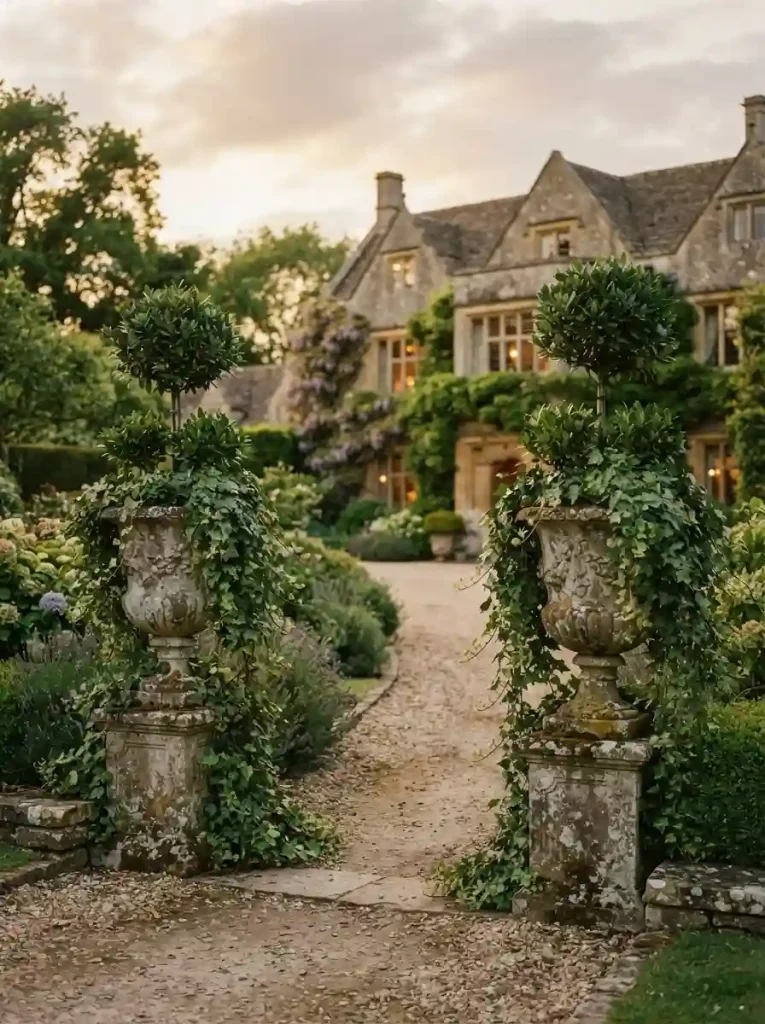
Large urns in matching pairs bring a classical touch. They work well at gates, at turning points, and wherever the driveway meets the house.
Go big. Small pots disappear along a long drive, so choose oversized containers and fill them generously. Make sure each one has drainage, and check that the material can handle freezing winters.
Pro Tip:
Rotate the plantings by season, such as tulips in spring and evergreens or grasses in winter, so the urns never look empty.
12. Add post-and-rail fencing with climbing roses
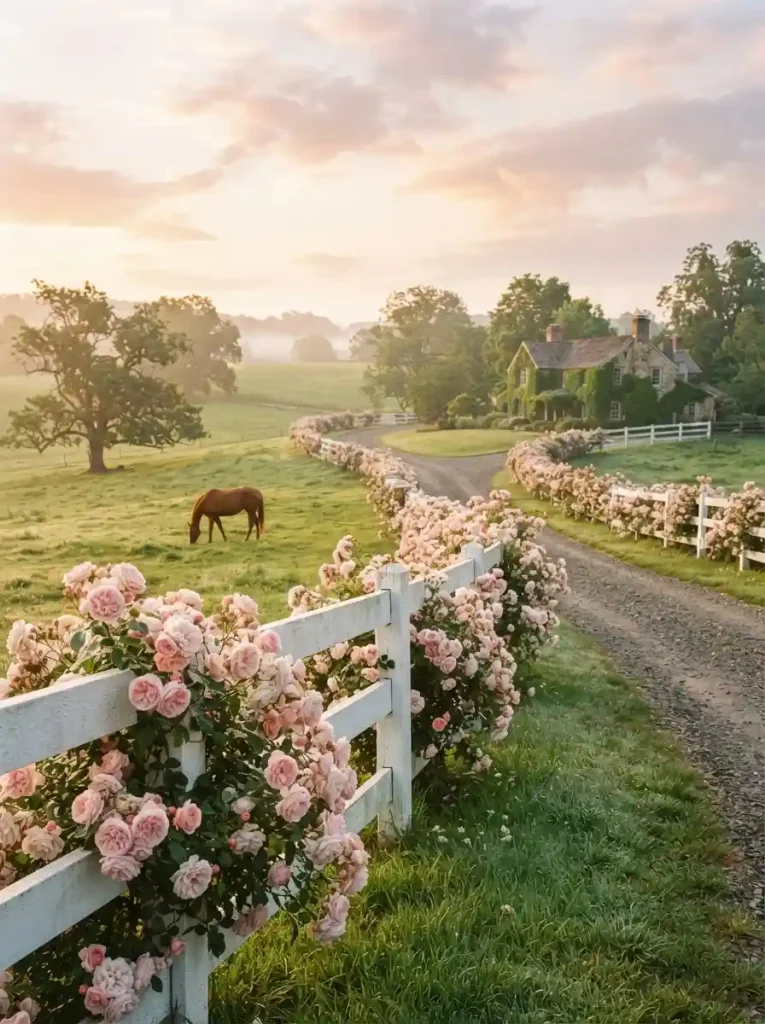
A simple painted fence gives a long driveway a clear edge and a timeless, countryside look. Add climbing roses and it becomes a feature in its own right.
Choose repeat-blooming, disease-resistant roses so the show lasts through the season. Tie the canes loosely along the rails and prune in late winter to keep things tidy.
Pro Tip:
Pick a fence height that suits your property. Shorter rails look traditional, while taller ones add privacy.
13. Carry the drive over a stone bridge
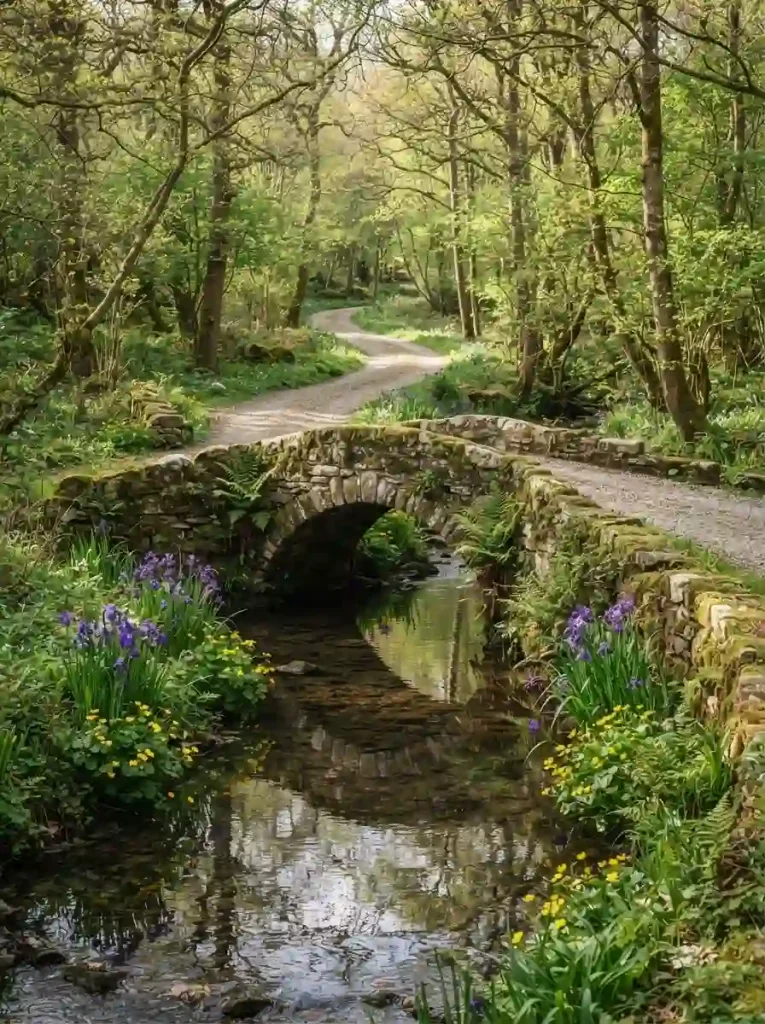
If a stream, ditch, or low swale crosses your driveway, treat it as a gift. A small arched bridge in natural stone turns a drainage problem into the most memorable moment on the approach.
Plant the banks with moisture-loving perennials, such as iris, astilbe, and sedges. They soften the stonework and help hold the soil in place.
Pro Tip:
Crossings like this usually involve drainage rules and structural loads. Talk to a local engineer or your municipality before you build.
14. Train espaliered fruit trees along a wall
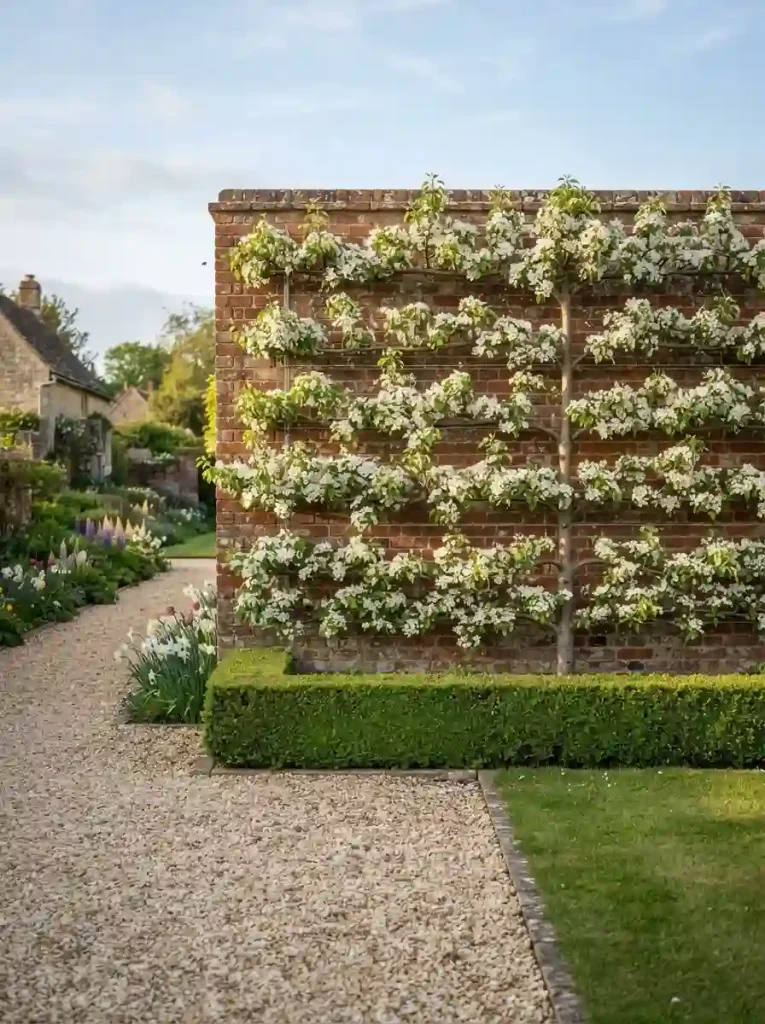
Espalier is the old estate technique of training branches flat against a wall or wires. It looks sculptural all year and adds blossom, fruit, and a little history to a driveway edge.
Dwarf apples and pears are the easiest to start with. Give them a sunny wall, sturdy support wires, and regular pruning to hold the shape.
Pro Tip:
Buy trees that are already partly trained. It saves a few years of waiting.
15. Screen with layered evergreens
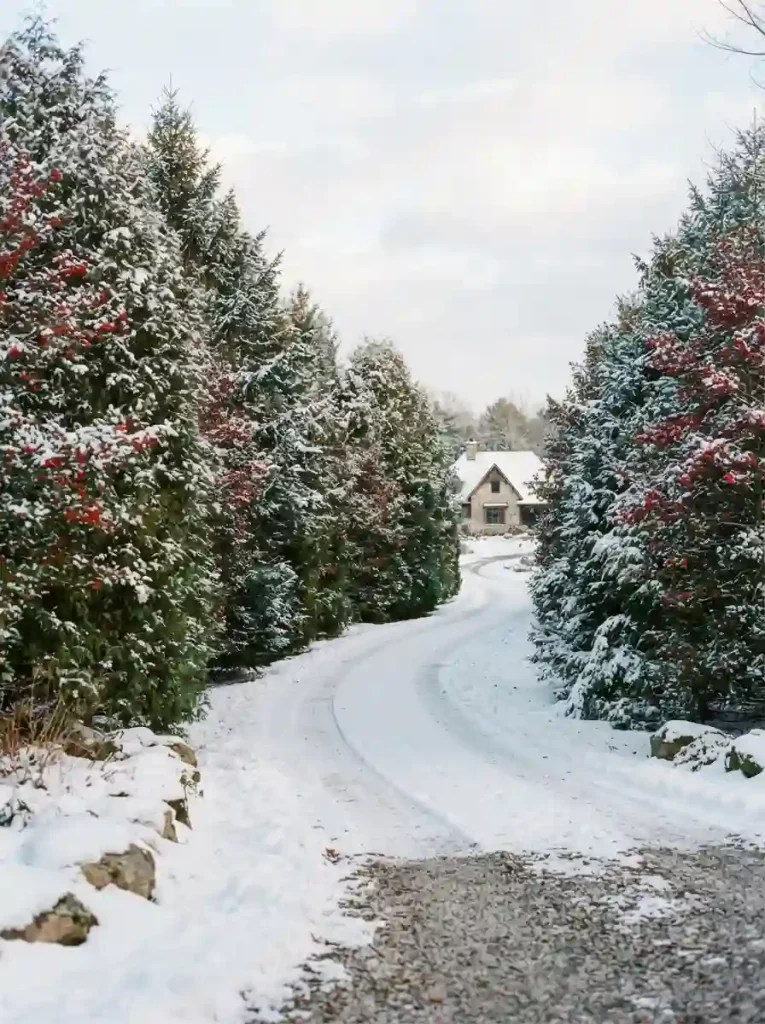
A long driveway often runs close to a boundary or a busy road. Evergreens create privacy and keep the drive looking full and elegant, even in the dead of winter.
Mix heights and textures instead of planting one solid wall. Tall conifers at the back, with broadleaf evergreens like holly in front, look more natural and more expensive.
Pro Tip:
Check whether deer are common in your area. Some evergreens, such as arborvitae, are favorite snacks and may need protection.
16. Naturalize spring bulbs under the trees
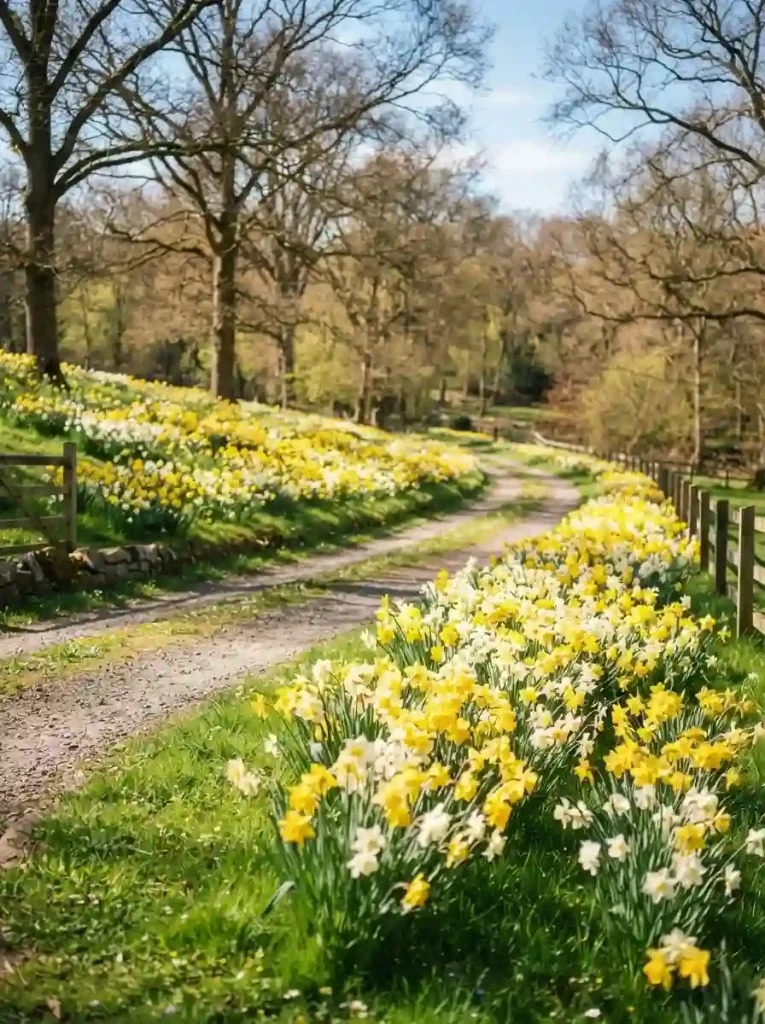
Few things feel more generous than a driveway edge covered in daffodils. Bulbs are inexpensive, return every year, and look best planted by the hundreds.
Plant them in fall, in loose drifts rather than rows. After blooming, let the foliage fade naturally for about six weeks so the bulbs can store energy for next year.
Pro Tip:
Squirrels and voles generally leave daffodils alone, which makes them a safe pick wherever those critters are a problem.
17. Go resort-style with palms and agave
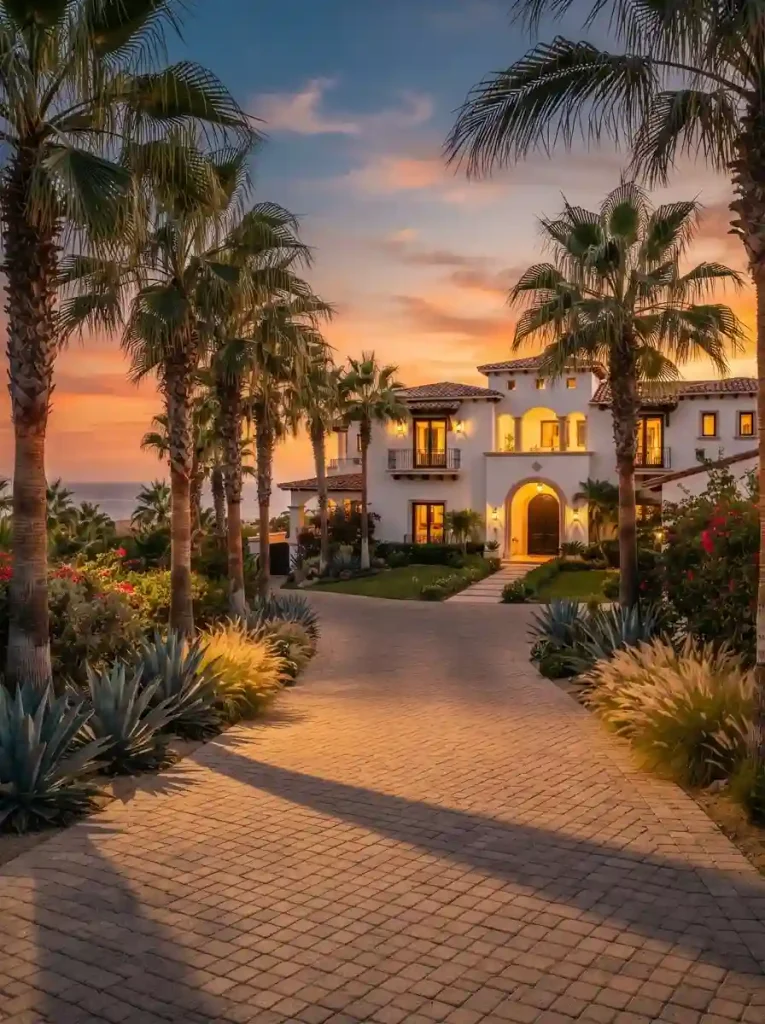
In hot, dry regions, the luxury look is different. Palms, agave, and sculptural succulents bring a resort feel and handle heat and drought with ease.
Keep the palette simple. A few bold plants repeated along the drive feel calmer and more upscale than a collection of many different species.
Pro Tip:
Set spiky plants like agave back from the pavement edge, so people and car doors don’t brush against them.
18. Mark the entrance with a contrasting apron
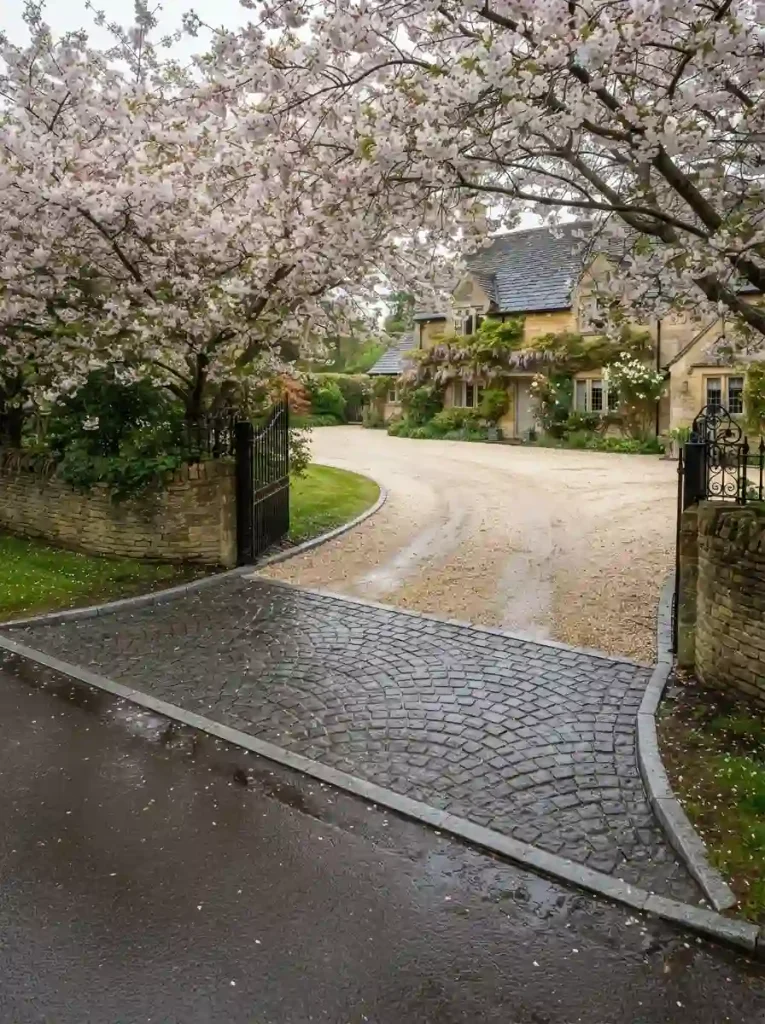
The place where your driveway meets the road sets the tone. A short stretch of different paving, such as granite setts, brick, or stone pavers, clearly marks the start of your property.
Keep the pattern simple and the colors restrained. The contrast should feel like a signature, not a competition with your house.
Pro Tip:
Aprons near the road are often regulated. Confirm local rules for materials and width before you start.
19. Tuck in a bench for a pause point
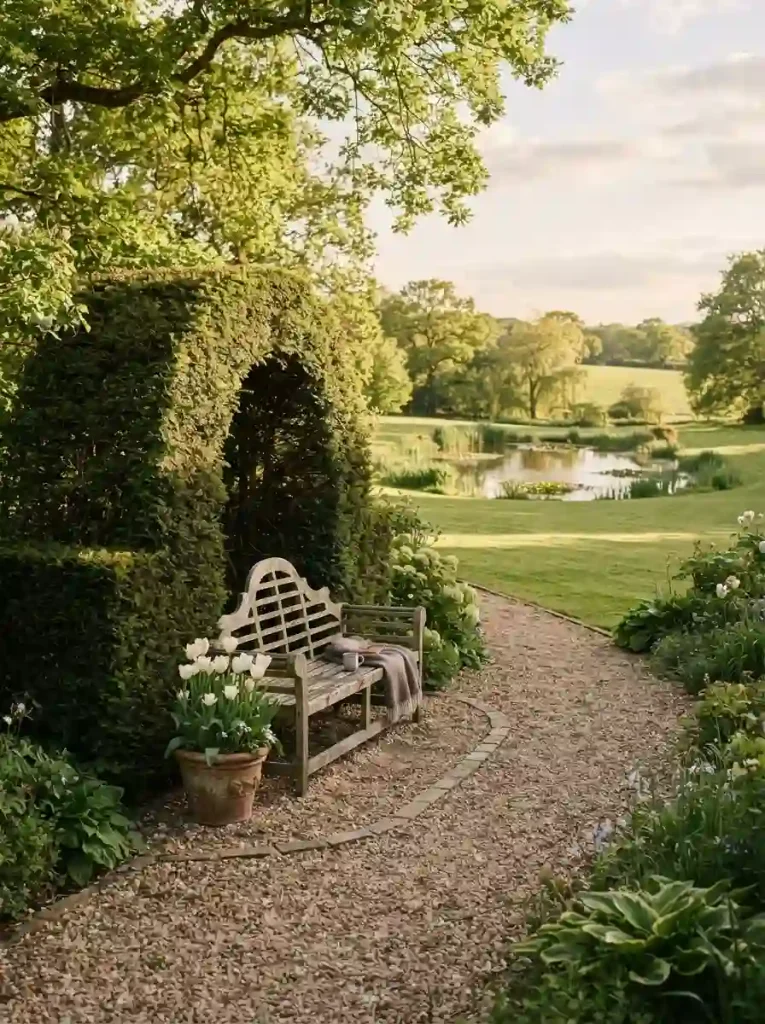
On a very long drive, a bench halfway along is a charming surprise. It gives walkers a place to rest and gives the landscape a place to be enjoyed.
Carve a small alcove into a hedge or shrub bed, and set the bench on a firm gravel or stone base. Aim it at the best view on your property.
Pro Tip:
Choose a durable material like teak or cast stone that can stay outdoors year-round.
20. Build a mailbox pier worthy of the house
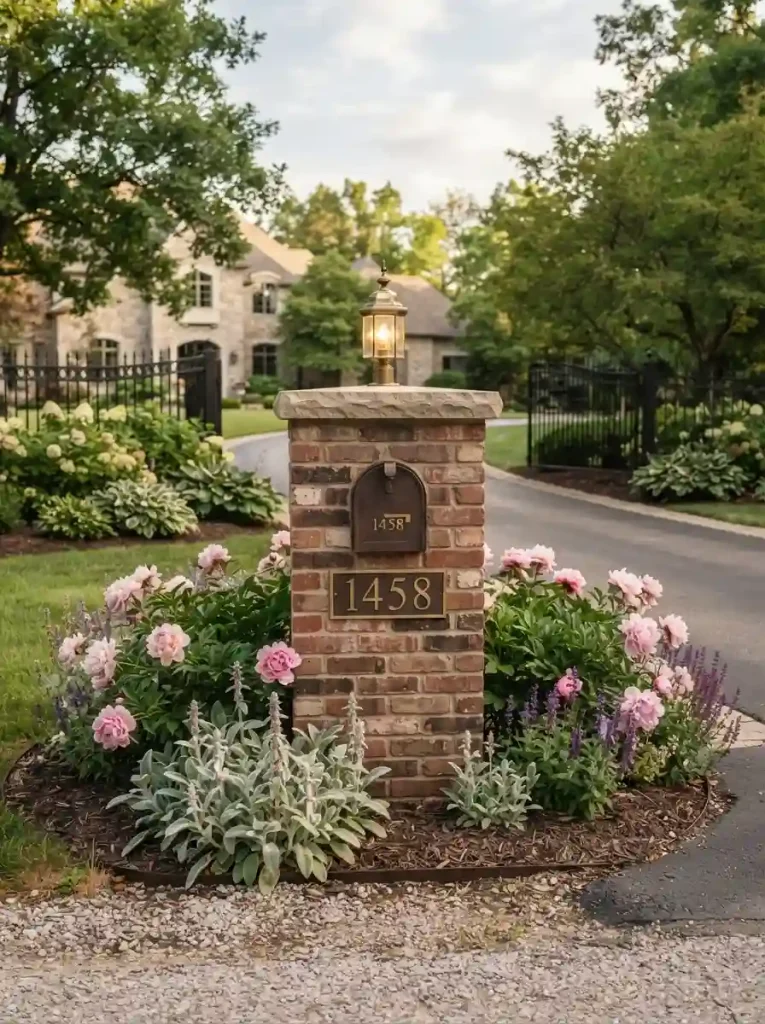
The mailbox is often the first thing visitors see, so it deserves attention. A solid brick or stone pier with a neat cap and quality house numbers makes a quiet statement.
Plant a small bed around the base with soft, low-care perennials. A little lamp or discreet light makes it welcoming after dark.
Pro Tip:
Follow postal guidelines for box height and distance from the road, so deliveries aren’t a problem.
21. Define edges with weathering steel
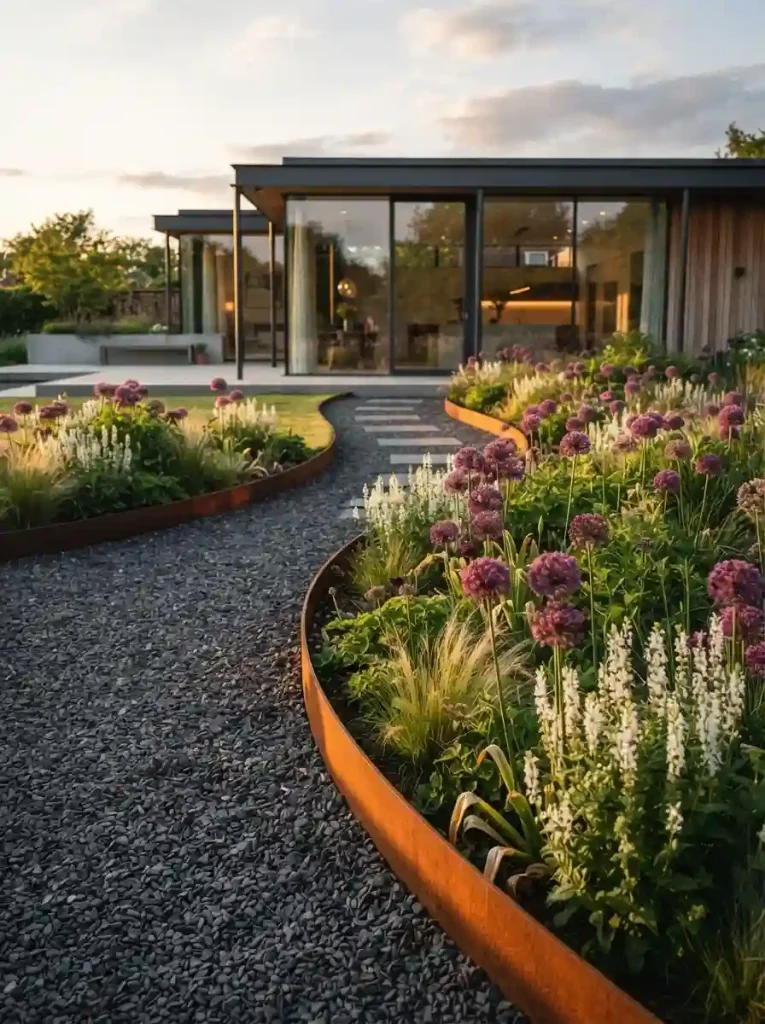
For a contemporary home, thin steel edging gives clean lines and a custom look. The warm rust patina looks wonderful against green plants and gray gravel.
Use gentle, sweeping curves for a flowing feel. Pair the steel with simple planting and a restrained palette so the lines stay the star.
Pro Tip:
New weathering steel can leave rust runoff in the early months. Keep it away from pale paving until the patina settles.
22. Choose a stabilized gravel surface
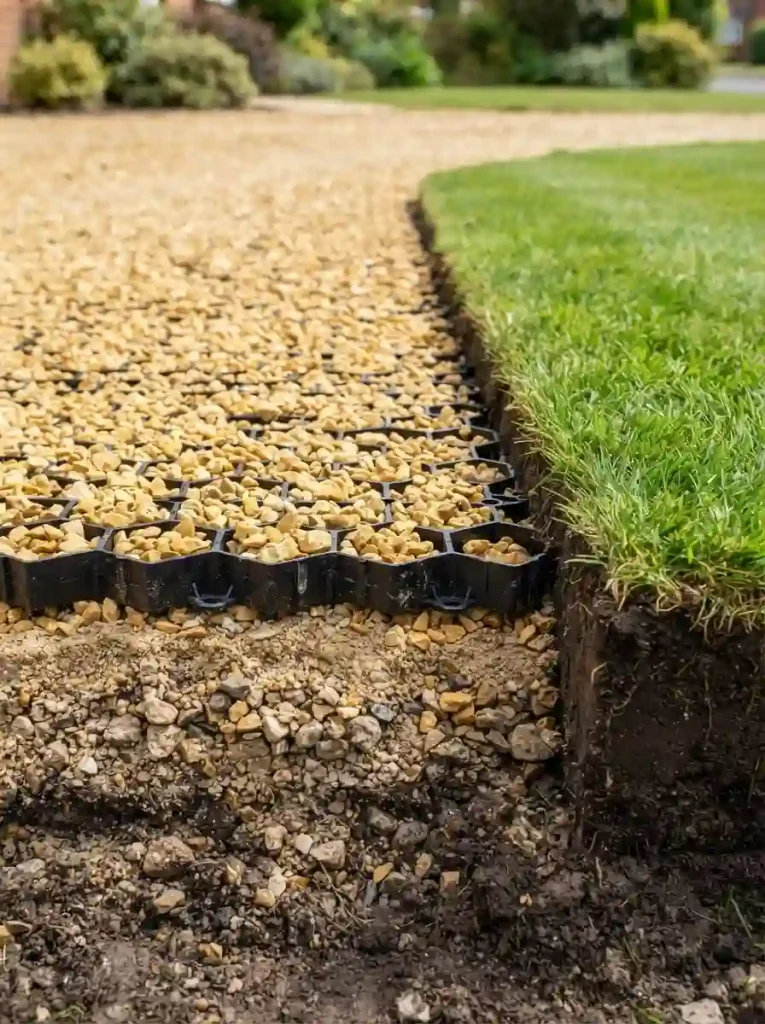
Gravel looks beautiful, but loose stone can rut, scatter, and sink. Plastic or recycled grid systems lock the stones in place and give you a firm, tidy surface that still looks natural.
The base matters as much as the top layer. A well-compacted, properly drained sub-base keeps the drive looking sharp for years.
Pro Tip:
Choose a gravel color that contrasts gently with your plants. Warm tones usually flatter green foliage.
23. Plan for all four seasons
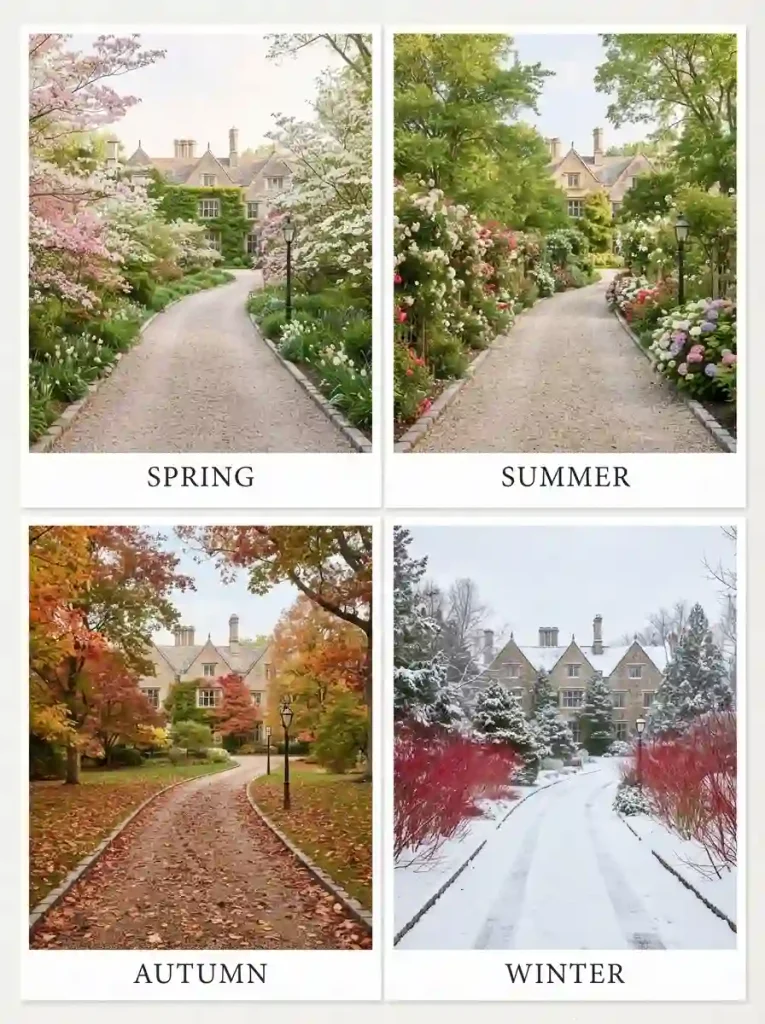
The most luxurious driveways don’t peak for two weeks and then fade. They have something worth looking at in every month.
Combine spring blossom, summer perennials, autumn color, and winter structure, such as red-twig dogwood, evergreens, or seed heads. Sketch the seasons on paper first, and fill any gaps.
Pro Tip:
Walk the driveway in different seasons and take photos. They show you where the landscape feels empty.
Final Thoughts
A long driveway gives you room to tell a story. Start with the entrance and the bend, then add the details that match your home, climate, and budget.
You don’t need all 23 ideas. Two or three well-chosen ones, repeated with care, will do far more than a dozen scattered ones. Take your time, and let the landscape grow into its role.
Frequently Asked Questions
How do I landscape a long driveway on a budget?
Focus first on the entrance and any bends, where the impact is greatest. Use mass plantings of low-cost perennials and bulbs, add mulch, and expand section by section over a few seasons.
What are the best plants for lining a long driveway?
It depends on your climate and light, but repeated plantings of shrubs, grasses, and perennials work well. Choose hardy, low-maintenance varieties and repeat them along the length for a cohesive look.
How wide should planting beds be beside a driveway?
Beds of at least four to six feet deep give you room to layer plants. Narrow strips tend to look sparse and are harder to maintain.
Should I hire a professional?
For structural elements like bridges, retaining walls, and drainage, yes. For planting and lighting, many homeowners do well on their own with careful planning.