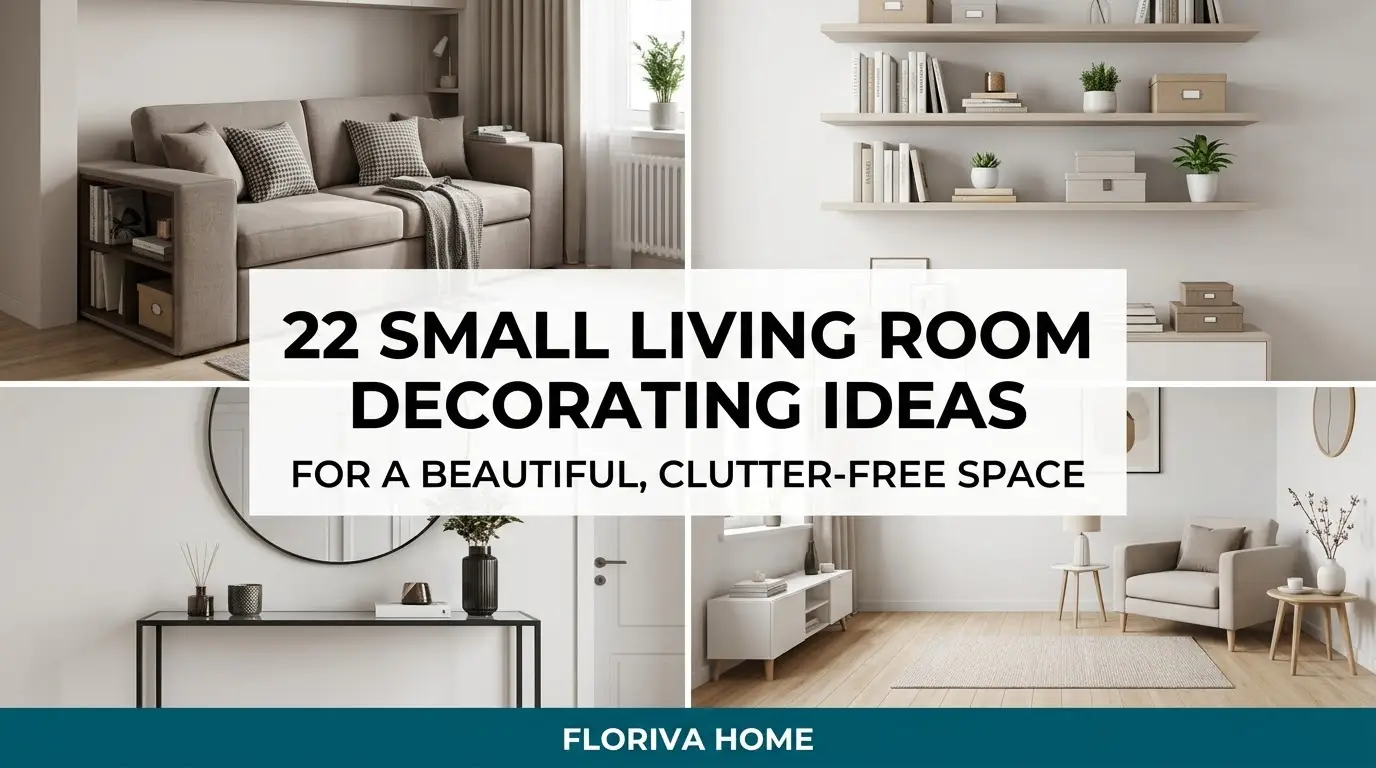
22 Small Living Room Decorating Ideas for a Beautiful, Clutter-Free Space
Small living rooms can be surprisingly difficult to decorate.
You want them to feel cozy, but not crowded. Stylish, but not overdone. And somehow, every extra chair, basket, pillow, or little decorative object seems to make the room feel smaller.
The good news? You don’t need a huge living room to create a beautiful space.
The trick is choosing pieces that earn their place, using the walls intelligently, and leaving enough visual breathing room around your furniture.
Whether you’re decorating a tiny apartment, a narrow lounge, or simply trying to make a compact family room feel more organized, these small living room decorating ideas can help you create a space that feels comfortable, intentional, and easy to live in.
Let’s make that little room work harder. ✨
1. Choose a compact sofa with a clean silhouette
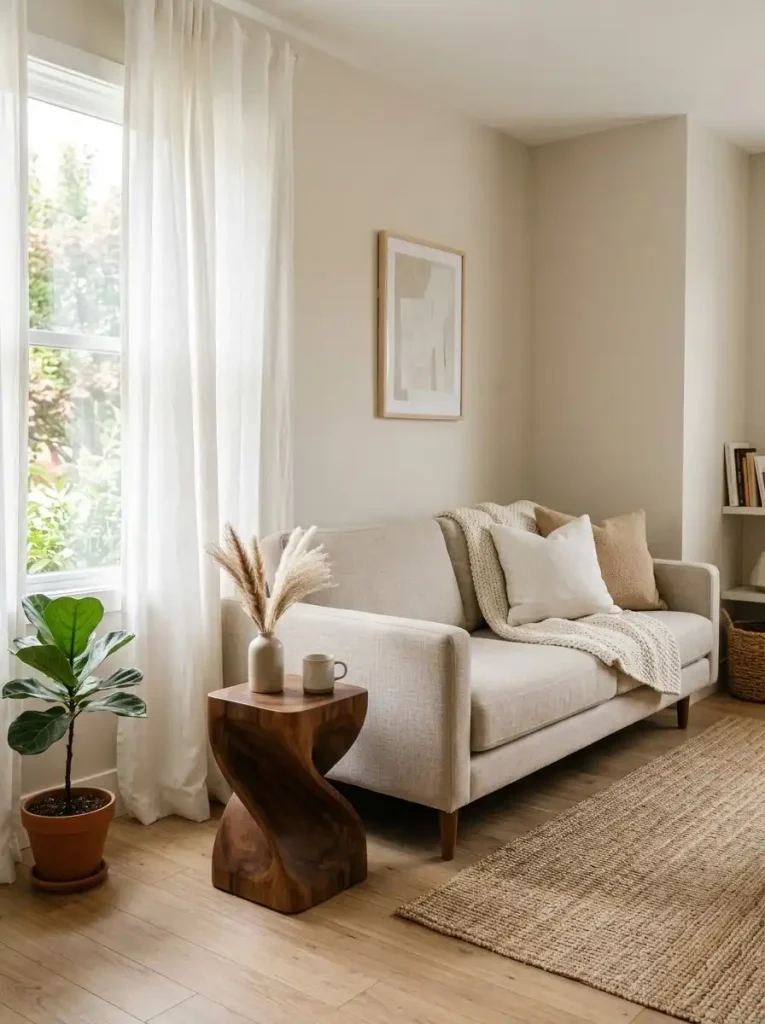
Your sofa usually takes up more visual space than anything else in the living room, so it’s a smart place to start.
Instead of choosing the largest sofa that technically fits, look for one with a streamlined shape, moderate depth, and simple arms.
A compact sofa can still be incredibly comfortable. The difference is that it doesn’t visually dominate every inch of the room.
For a softer appearance, try warm beige, oatmeal, light taupe, or another gentle neutral. If you love color, a muted green or dusty blue can also work beautifully without making the room feel chaotic.
What to look for
- Moderate seat depth
- Narrow or streamlined arms
- Simple upholstery
- Proportions that leave walking space
- A shape that doesn’t overwhelm nearby furniture
The goal isn’t simply finding a “small sofa.”
It’s finding a sofa that makes the entire room feel proportionate.
2. Replace a bulky coffee table with a nesting-table set
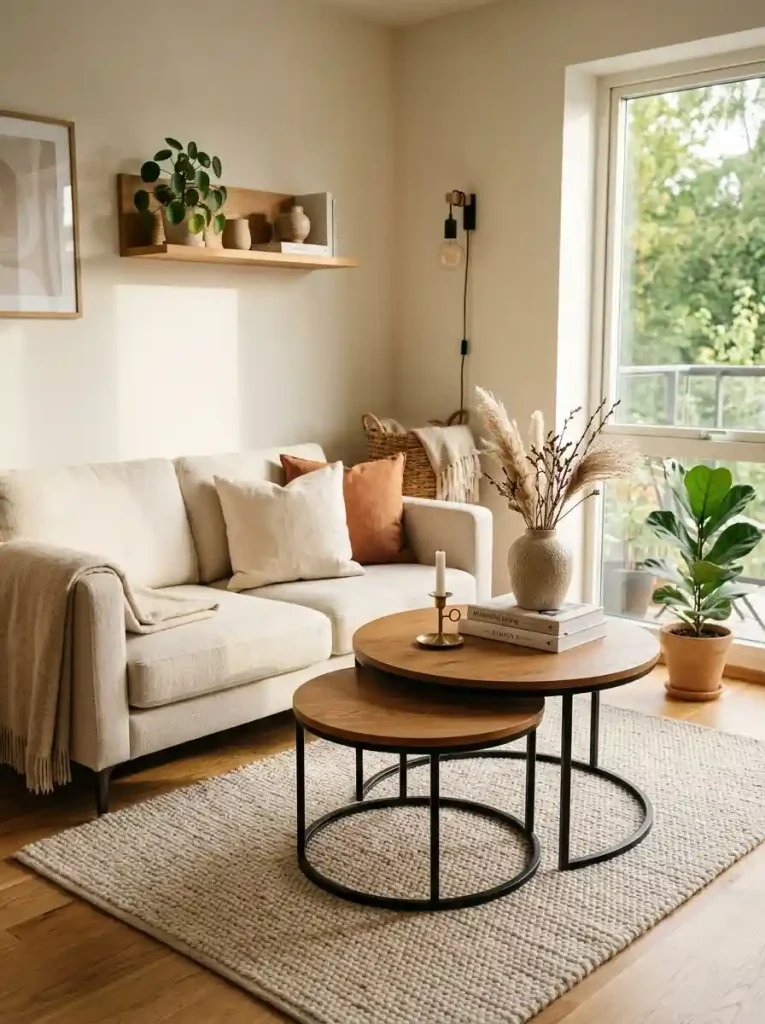
A traditional rectangular coffee table can consume valuable floor space in a small living room.
Nesting tables offer a clever alternative.
You can separate them when you need extra surfaces for drinks, snacks, or guests, then slide the smaller table underneath when you want more open floor space.
Choose tables with slim legs and rounded or softly curved edges if your room is especially tight. Curved shapes make movement around the furniture feel less awkward.
Small-space trick
Don’t automatically center every table in the room.
Position your largest table where it is most useful, then keep the smaller one nearby so it can be pulled out whenever needed.
Flexible furniture is often more valuable than oversized furniture.
3. Turn one wall into a built-in storage moment
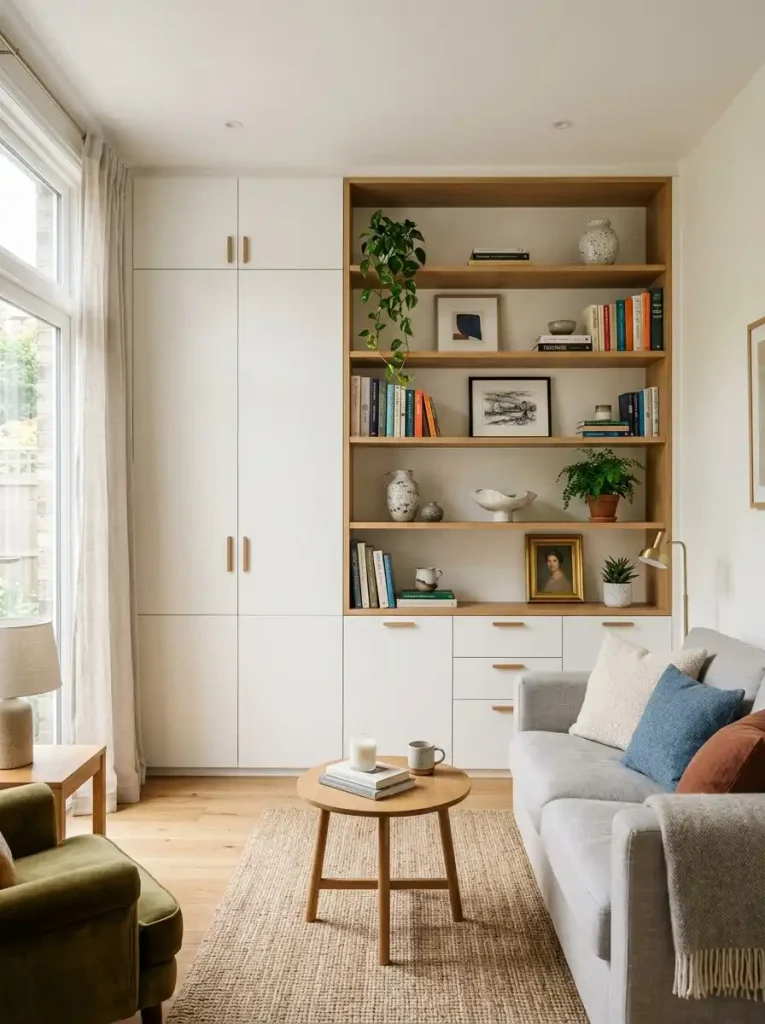
Small living rooms often lack storage, which means everyday objects quickly end up on chairs, floors, and tables.
Instead of adding another freestanding cabinet, consider using one wall for vertical storage.
A narrow combination of closed cabinets and open shelving can hide less attractive belongings while giving you room to display a few favorite pieces.
The important part is balance.
Use closed storage for things you don’t want visible and reserve open shelves for objects that actually contribute to the room’s style.
Keep it visually calm
Try grouping similar items together instead of scattering everything across the shelves.
A few books, a small vase, framed artwork, and one plant can be enough.
More storage doesn’t have to mean more visual clutter.
4. Let your curtains start close to the ceiling
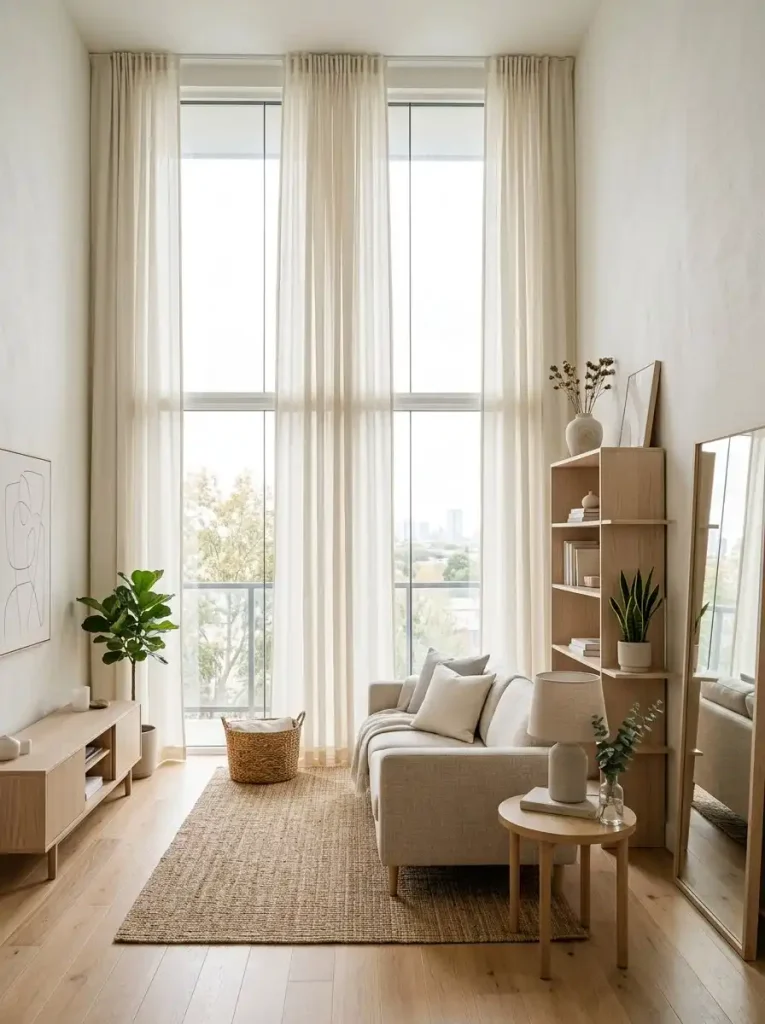
Here’s a surprisingly simple trick that can change the proportions of a small living room.
Hang curtains higher than the actual window frame.
Mounting the curtain rod closer to the ceiling draws the eye upward and creates the impression of taller walls. Let the fabric fall all the way toward the floor for an elegant, continuous line.
Choose lightweight curtains rather than heavy, bulky fabric.
Sheer linen-look panels are especially useful when you want natural light to remain part of the room.
My favorite combination
Warm white walls + soft ivory curtains + natural wood + one muted accent color.
It feels bright without becoming cold.
5. Use a round dining-style table as your coffee table
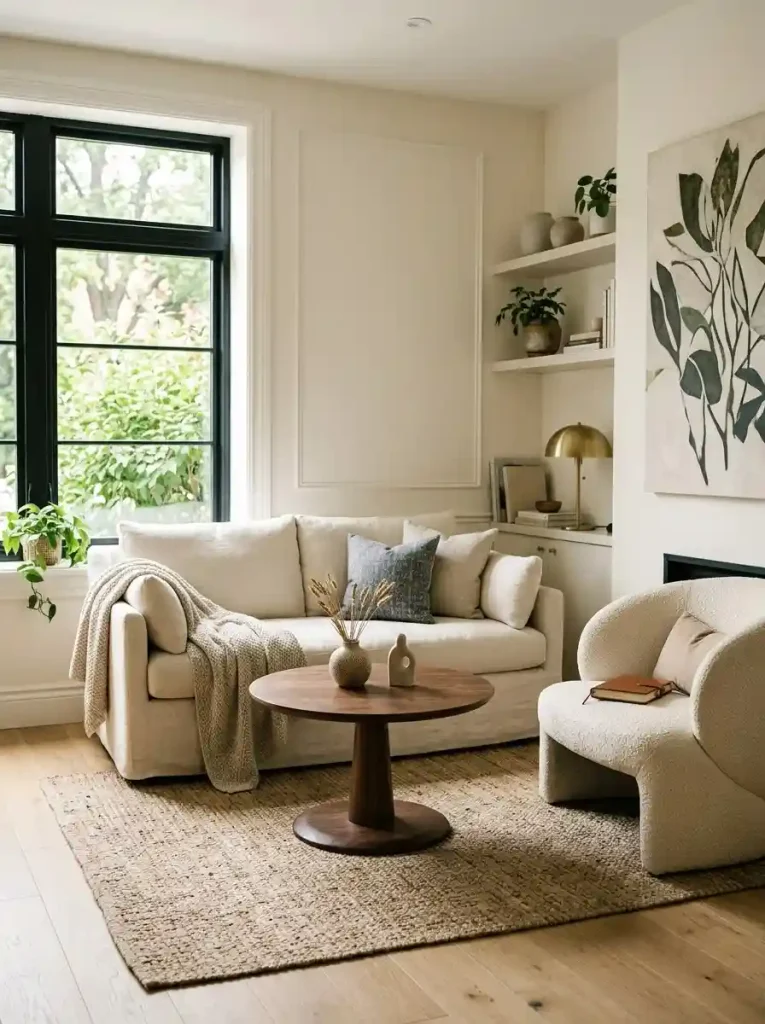
If your living room is short on space, rethink what a coffee table has to be.
A small round pedestal table can provide the same everyday function while making the surrounding floor easier to navigate.
Without sharp corners, it is also easier to move around in rooms where the sofa, doorway, and television area are close together.
Look for a design with a narrow base rather than a wide four-legged frame.
Why it helps
Round furniture can soften a room filled with straight lines while giving you a little more freedom when arranging seating.
And if you choose a lightweight piece, moving it when you need additional floor space becomes effortless.
6. Create hidden storage inside the seating area
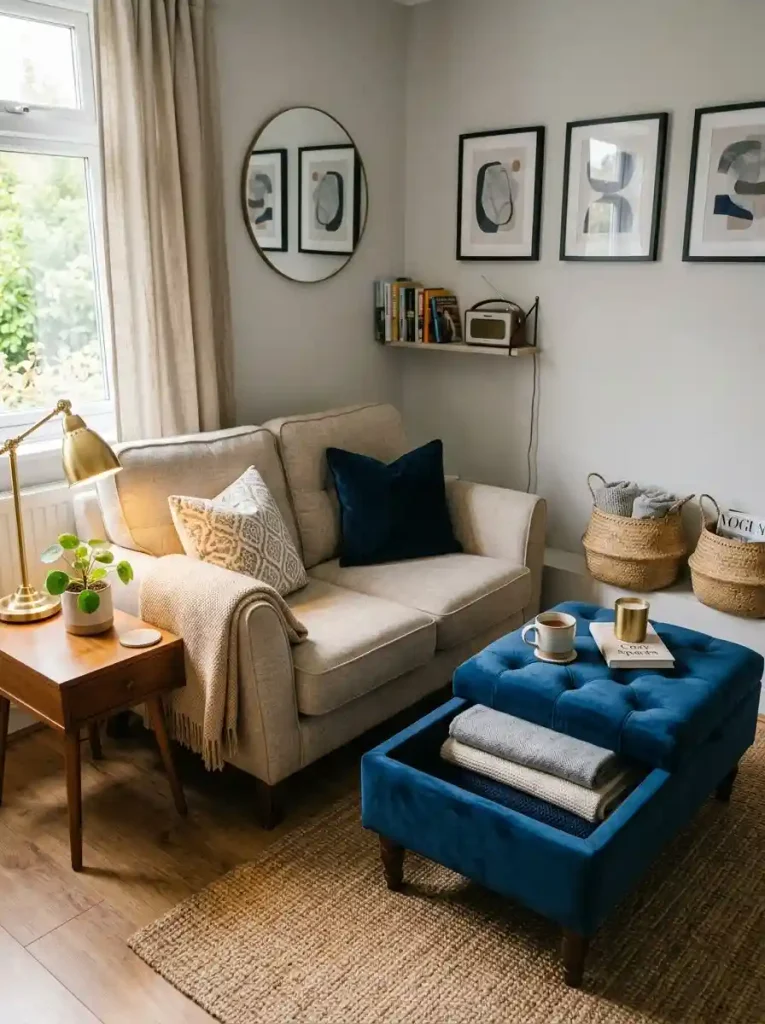
Clutter is one of the fastest ways to make a small living room feel even smaller.
That’s why storage doesn’t always need to look like storage.
Choose an upholstered ottoman with a lift-up top, a bench with internal compartments, or a sofa with built-in drawers if your layout allows it.
These pieces give you somewhere to hide blankets, board games, remotes, magazines, and other everyday items.
Storage rule
Keep frequently used items within easy reach.
Store seasonal or rarely used belongings somewhere less accessible.
That way, your living room stays tidy without turning everyday life into a constant organizing project.
7. Decorate one corner with a tall plant
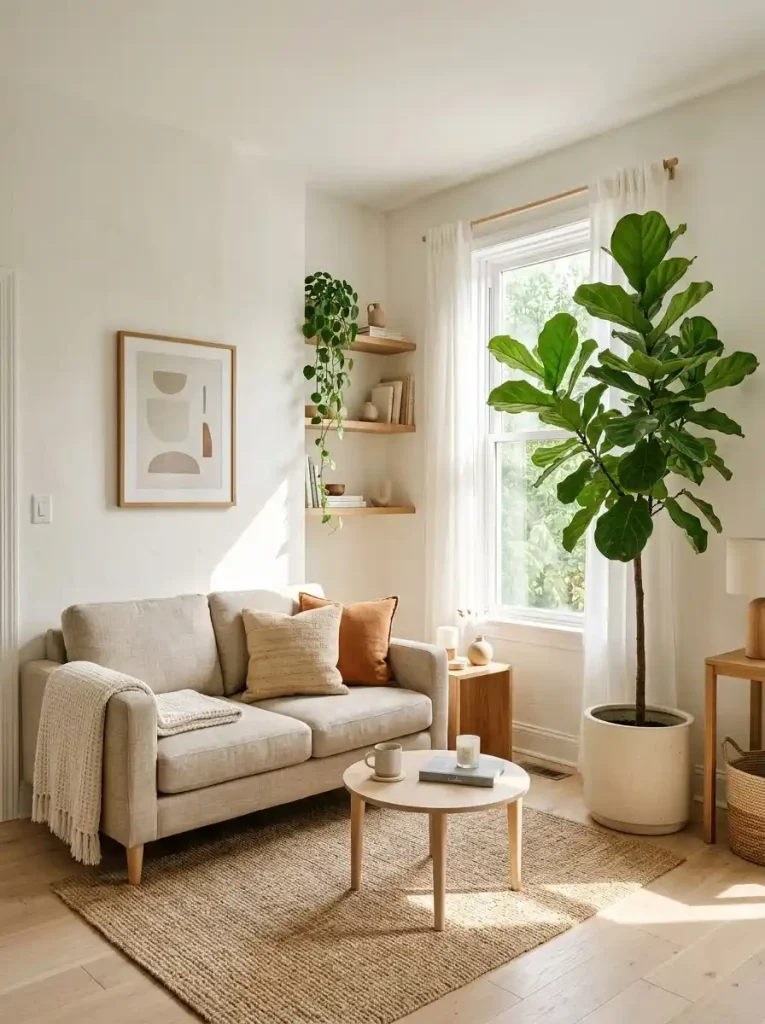
A small living room doesn’t need decorative objects covering every surface.
Sometimes one large, vertical element is much more effective.
A tall indoor plant can fill an empty corner, introduce natural texture, and draw the eye upward without taking over the room.
Choose a plant with an airy shape rather than extremely dense foliage if your space already feels crowded.
A simple planter also keeps the look polished.
Easy placement idea
Try putting the plant beside a window, next to the sofa, or in an otherwise awkward corner that doesn’t have enough room for a cabinet.
It gives the corner a purpose without making it feel packed.
8. Choose a wall color that reflects natural light
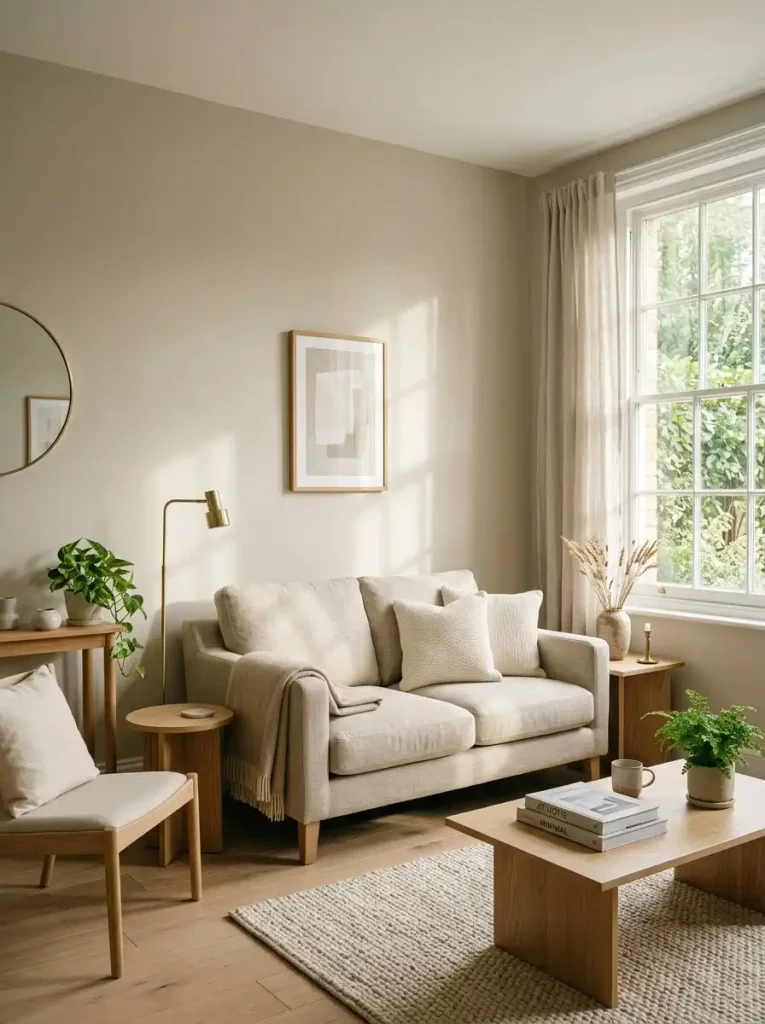
Color can dramatically affect how a small living room feels.
You don’t have to paint everything bright white, but extremely dark or heavily saturated walls can make an already compact space feel enclosed.
Instead, consider soft shades such as warm white, pale greige, muted sage, creamy beige, or very light blue.
These colors can reflect available daylight while still giving the room personality.
Don’t forget the undertone
A cool white can feel crisp and modern, while a warm white can make the same room feel softer and more inviting.
Test a sample on the wall before committing.
Natural light changes throughout the day, and a color that looks perfect in the morning may look completely different at night.
9. Use one oversized floor-to-ceiling visual element
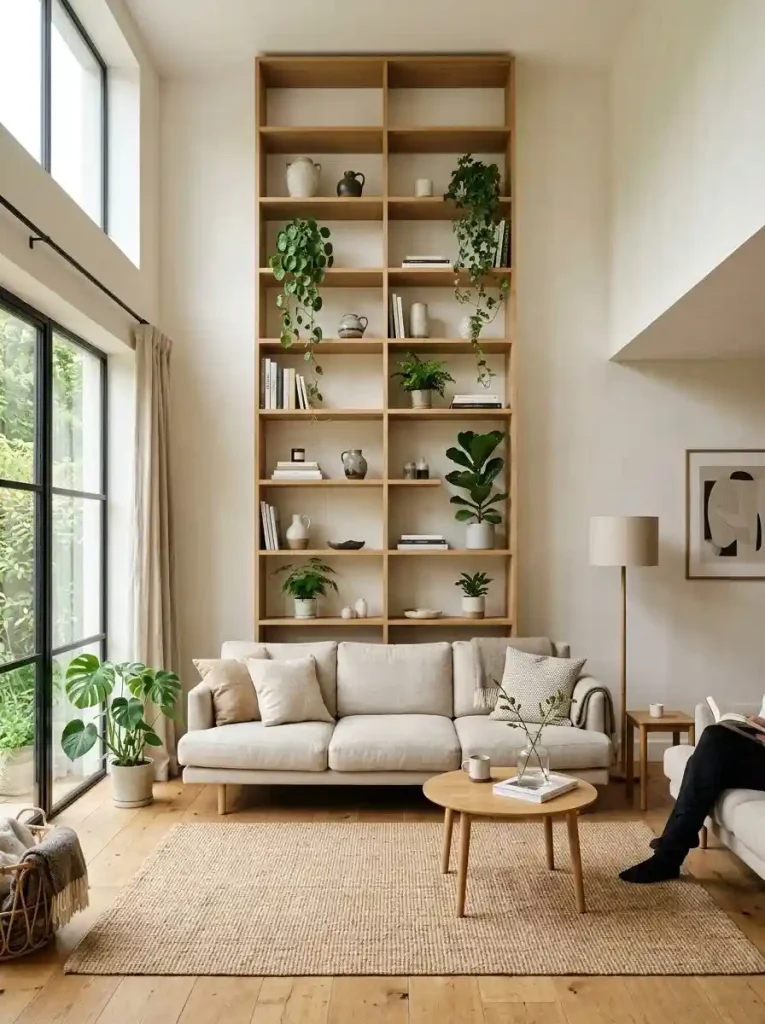
Small rooms can actually benefit from something visually tall.
Instead of filling the walls with several small decorative pieces, try one strong vertical element such as a tall bookcase, narrow artwork, sculptural mirror, or floor-to-ceiling shelving.
The vertical shape encourages the eye to travel upward rather than stopping at furniture height.
This is particularly helpful when your living room has low furniture and limited floor space.
Keep the bottom simple
Don’t fill every shelf or section.
Leaving some open space around the taller feature prevents it from becoming another source of visual clutter.
Think vertical impact, not maximum decoration.
10. Pick a single accent color and repeat it
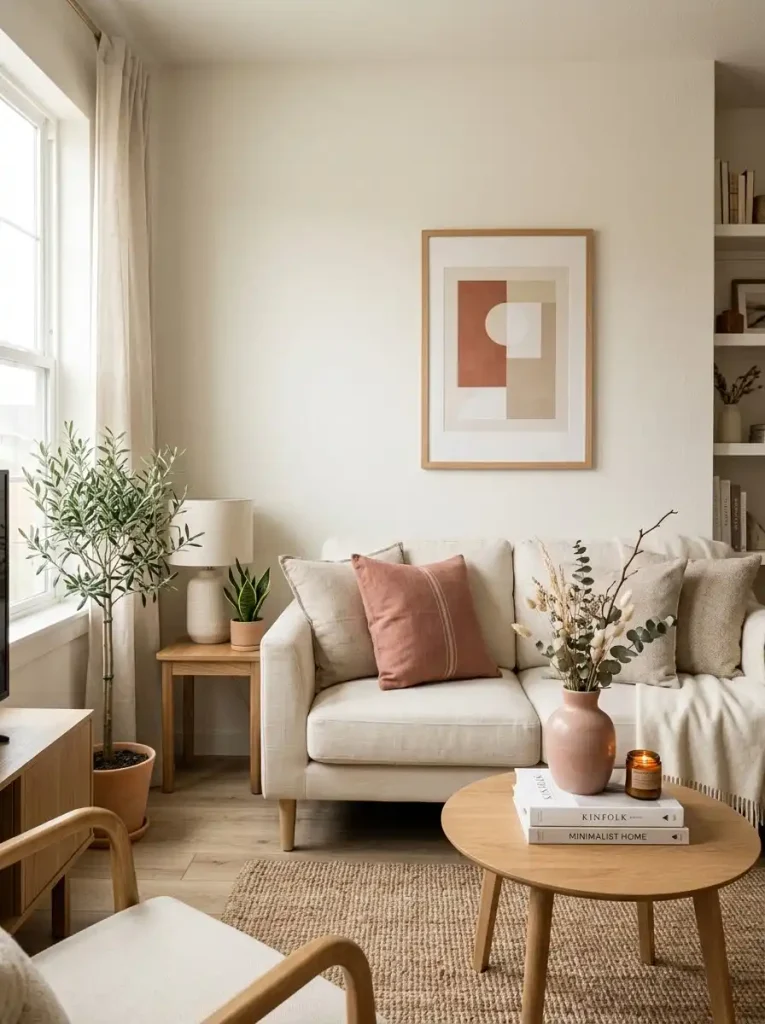
You don’t need a completely neutral living room to make it feel spacious.
The key is controlling how many colors compete for attention.
Choose one accent shade and repeat it in small doses throughout the room.
For example, muted terracotta might appear in a cushion, ceramic vase, and artwork. Deep olive could appear in a plant pot, throw, and small decorative object.
Try the 3-point method
Use your accent color in roughly three different areas of the room.
This creates connection without turning the entire space into one color.
It’s a simple way to make mismatched furniture feel more intentional.
11. Leave some surfaces intentionally empty
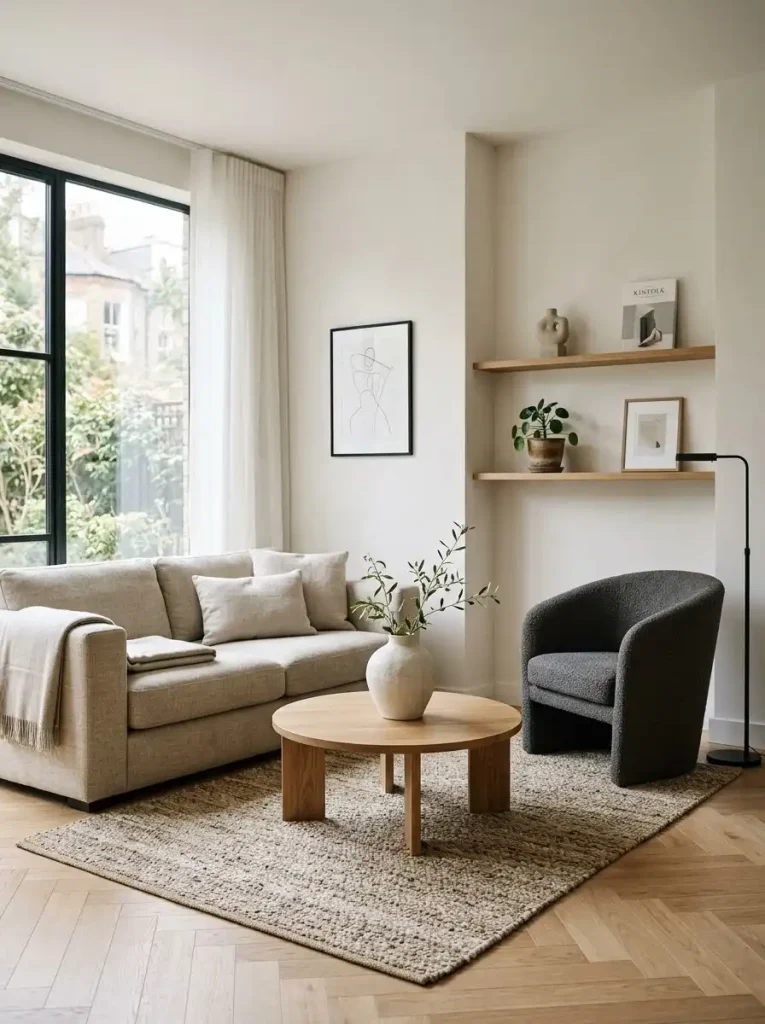
This might be the easiest decorating idea on the entire list.
You don’t have to decorate every shelf, tabletop, windowsill, or corner.
In fact, empty space is part of good small-room design.
If your coffee table already has a tray and vase, you may not need three more objects beside them. If your shelves have books and artwork, leave one section open.
The editing test
Look around the room and remove one decorative object from each major surface.
Then step back.
If the room suddenly feels calmer, you’ve discovered something important: the empty space was doing some of the decorating for you.
A clutter-free room isn’t necessarily an undecorated room.
It’s a room where every visible item has a reason to be there.
12. Mount the television on the wall
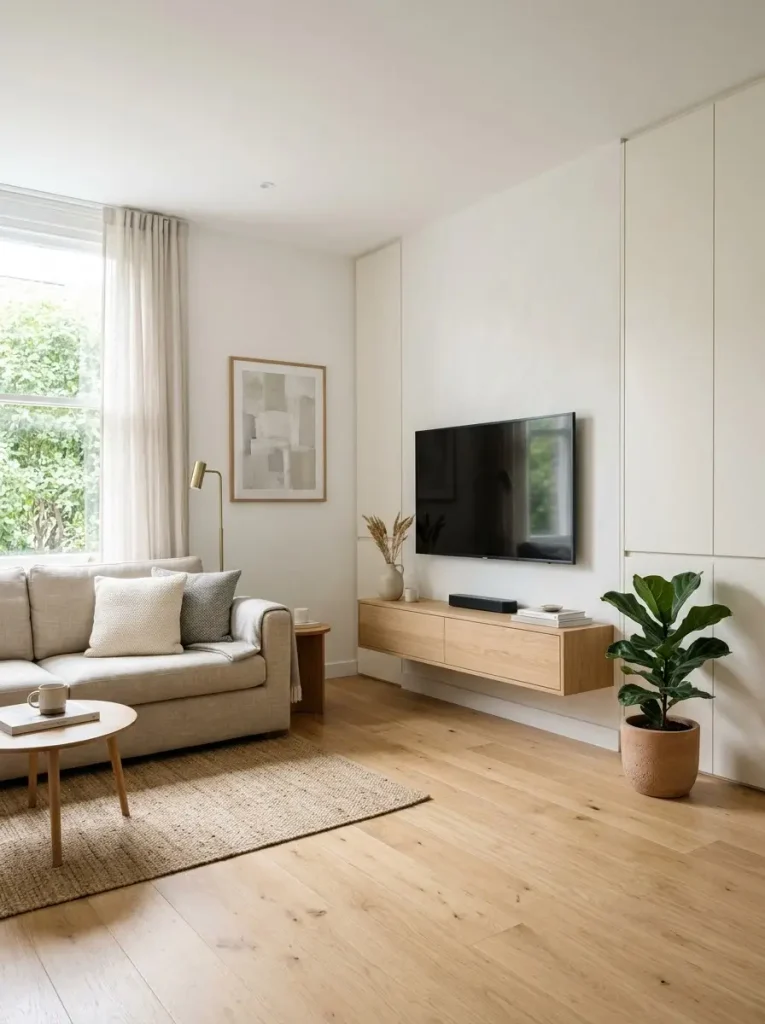
When floor space is limited, every piece of furniture matters.
A bulky television stand can take up several valuable inches while creating another surface that eventually collects clutter. Wall-mounting the TV can give the room a cleaner appearance and free up the area underneath.
If you don’t need a cabinet below it, leave the wall open. If you do need storage, choose a slim floating console rather than a deep entertainment unit.
Make the TV wall feel intentional
You can balance the screen with a small plant, artwork, or a few carefully selected decorative objects nearby.
Just avoid turning the area around the television into a display wall.
The simpler it is, the more spacious the room will feel.
13. Try a wall-mounted lighting fixture
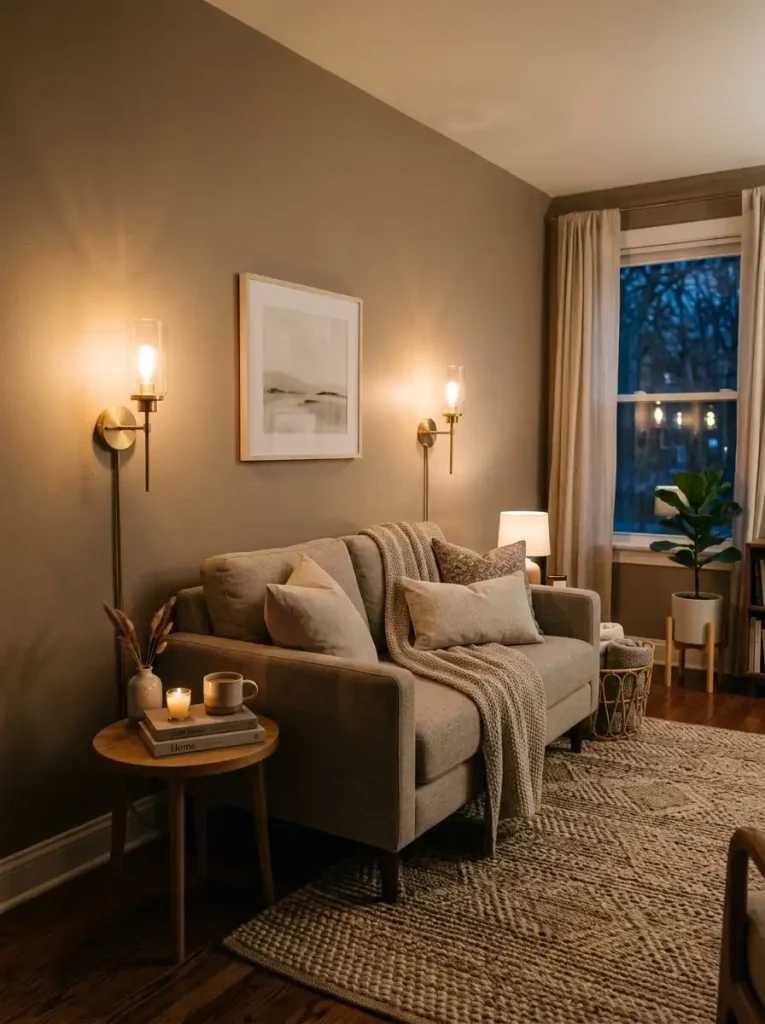
Floor and table lamps are useful, but they can consume surprisingly valuable space in a compact room.
Wall-mounted sconces provide illumination without taking up floor or tabletop real estate.
Place them beside artwork, near the sofa, or on either side of a reading chair.
Choose fixtures that complement your existing decor rather than competing with it.
A small lighting upgrade
If your room has only one ceiling fixture, adding wall lighting can create several layers of illumination.
Use the ceiling light for general brightness, then rely on sconces or smaller lamps when you want a softer evening atmosphere.
Good lighting can make a small room feel considerably more welcoming.
14. Use a mirror to bounce light around the room
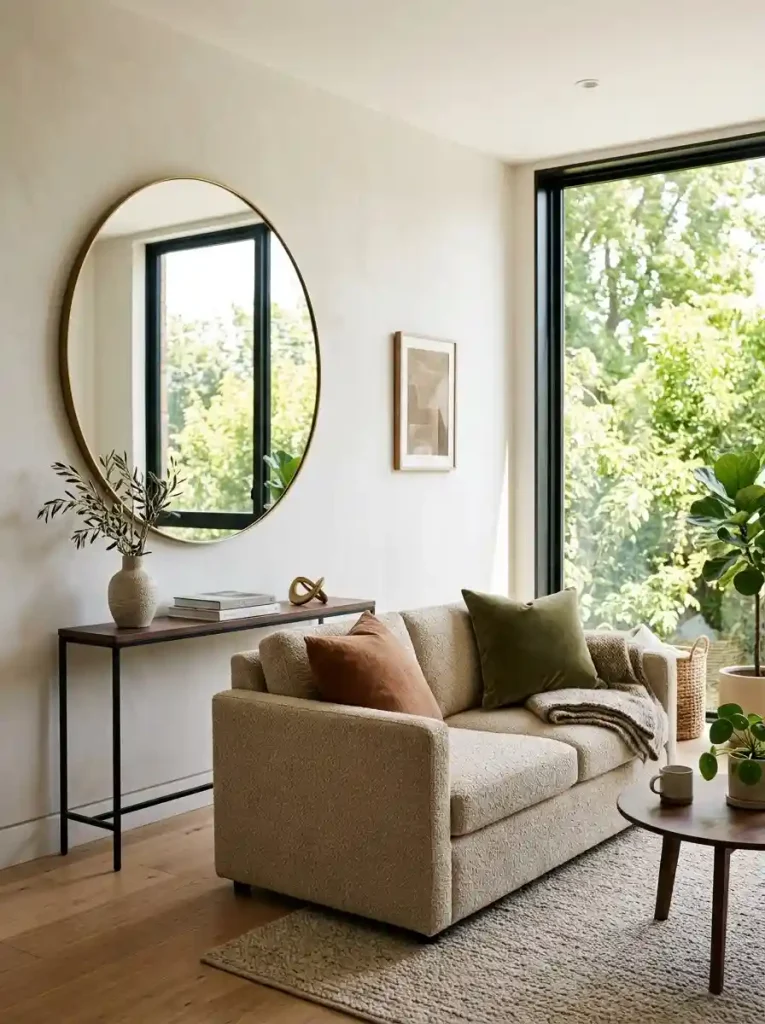
Mirrors are a classic small-space decorating trick for a reason.
A strategically placed mirror can reflect daylight, visually extend the room, and make a dark corner feel brighter.
Instead of scattering several small mirrors around the room, consider one larger piece.
A generously sized mirror above a console or opposite a window can become both decoration and a useful visual tool.
Placement matters
Before hanging it, look at what the mirror will reflect.
You want it to capture something attractive such as a window, artwork, greenery, or an interesting architectural feature.
Reflecting a messy storage area won’t make the room feel better!
15. Select furniture that can serve two purposes
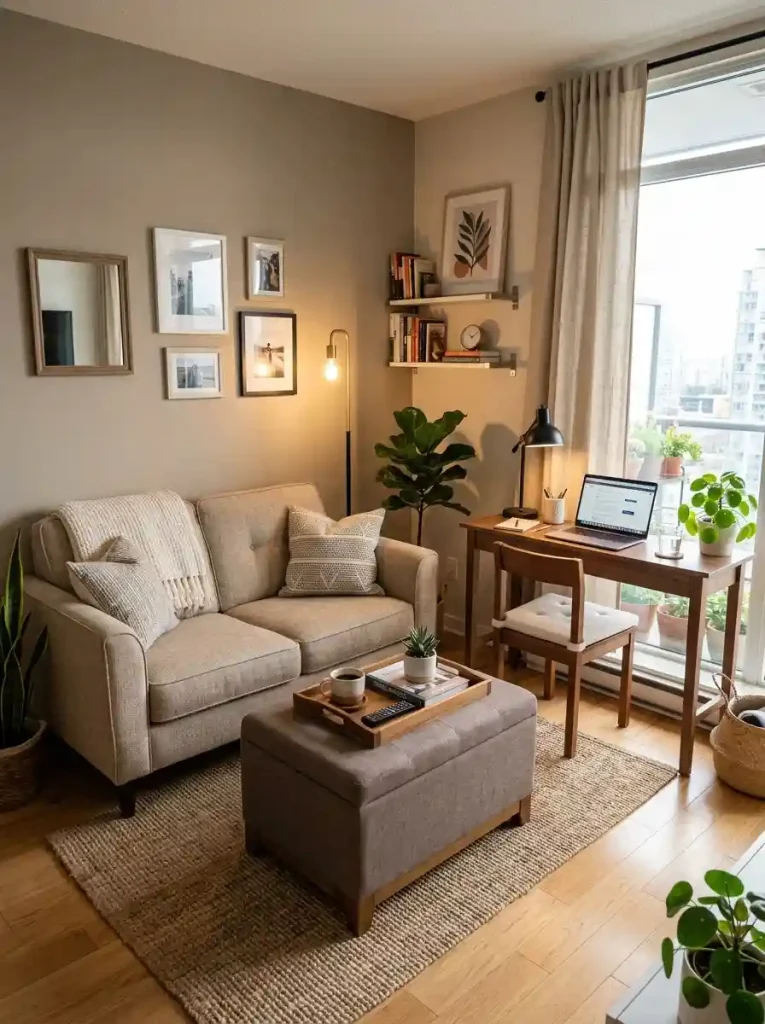
In a small living room, multifunctional furniture is incredibly valuable.
A storage ottoman can work as a footrest, extra seat, coffee table, and hidden storage. A narrow console can function as a workspace. A compact bench can provide seating while storing blankets underneath.
Think about how many jobs each piece can perform.
Ask this before buying
“Can this piece solve more than one problem?”
If the answer is yes, it may deserve the space.
This approach helps prevent the room from becoming crowded with furniture that only performs one very specific function.
16. Use a large rug instead of several small rugs
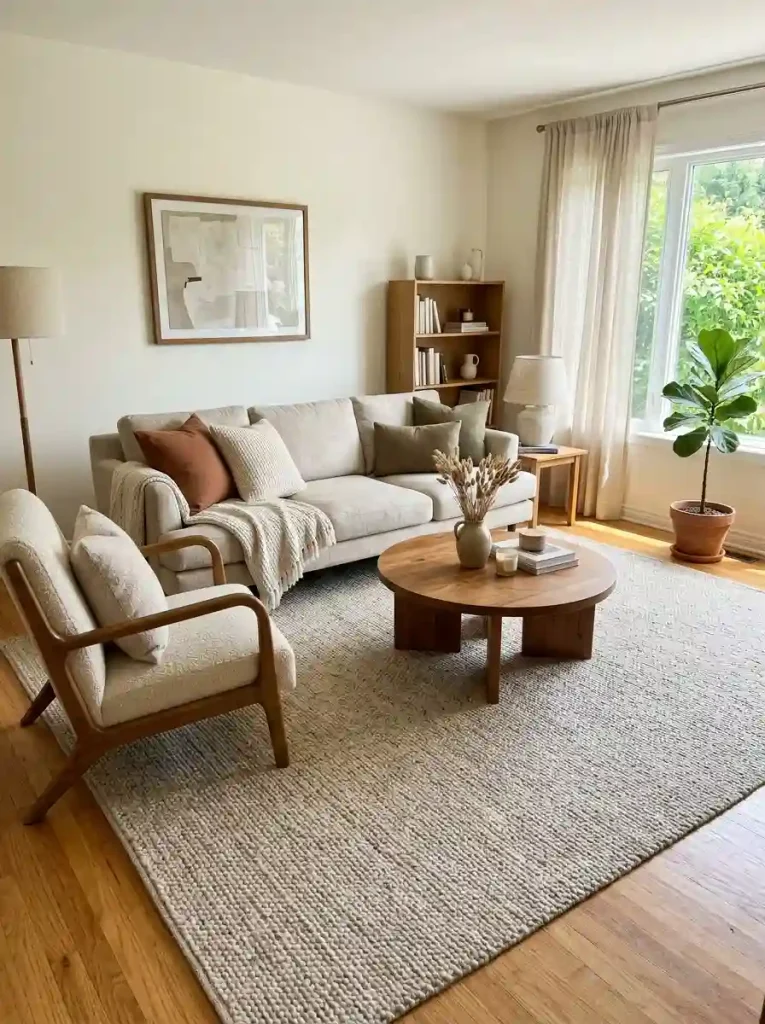
It may seem logical to use a tiny rug because the room is tiny.
But several small rugs can actually break the floor into disconnected sections and make the space appear busier.
A single appropriately sized rug can visually connect the sofa, chairs, and coffee table into one cohesive seating area.
Don’t worry if the rug extends beyond some of the furniture.
That’s often exactly what helps the room feel unified.
Simple guideline
Aim for the front legs of your major seating pieces to sit comfortably on the rug.
This creates a defined zone without requiring every inch of flooring to be covered.
17. Keep furniture slightly away from the walls
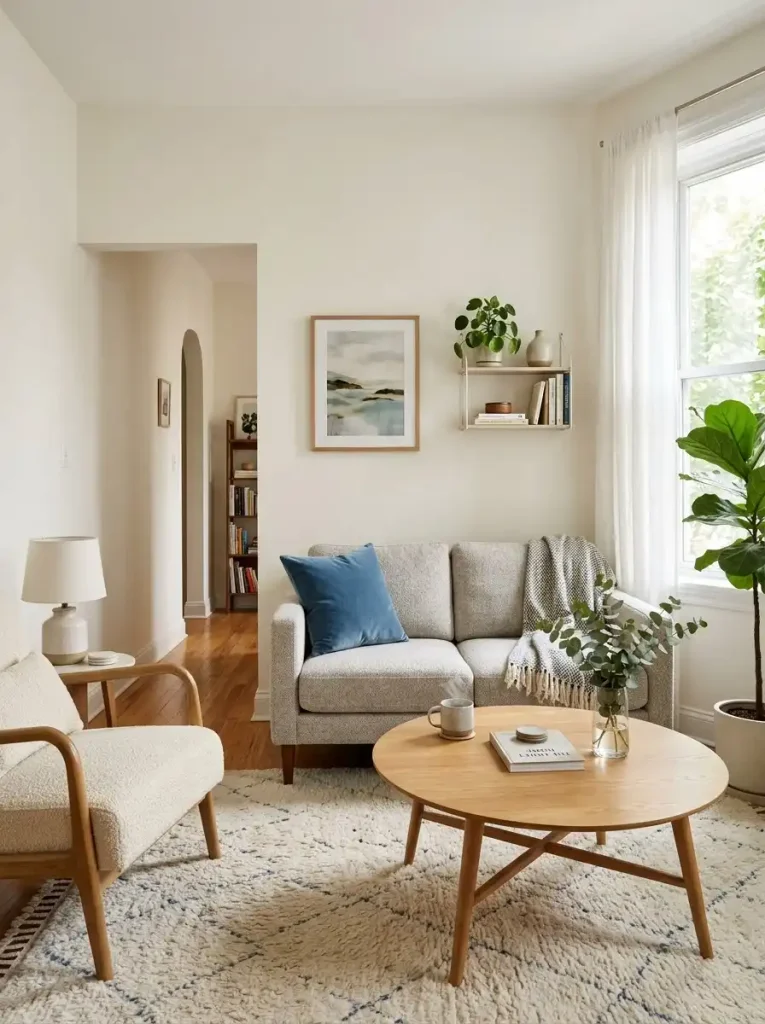
Pushing every piece of furniture directly against the wall may seem like the best way to create space.
Sometimes it is—but not always.
If the layout allows it, pulling a sofa a few inches away from the wall can create a more intentional seating arrangement and improve circulation.
You don’t need a large gap.
Even a small amount of breathing room can make the furniture feel less cramped.
Focus on pathways
Make sure there is a comfortable route between the entrance, seating, and other important areas.
A small room feels much larger when you can move through it naturally.
Good furniture placement is often more important than having fewer pieces.
18. Add floating shelves instead of another cabinet
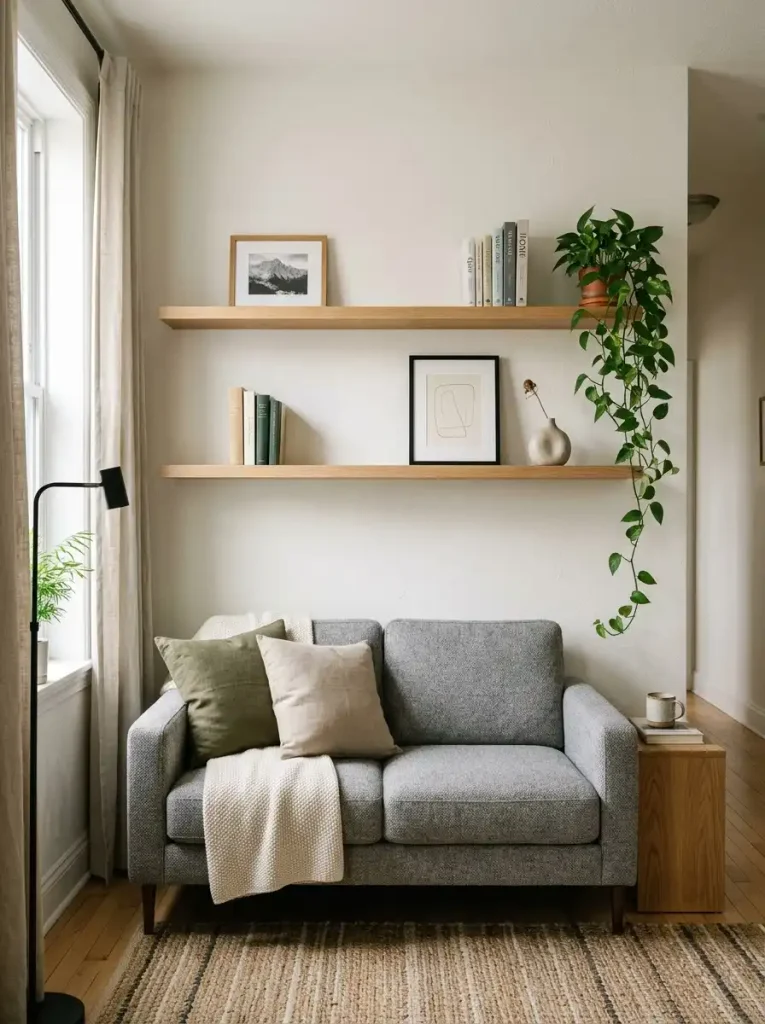
When floor space is precious, look upward.
Floating shelves can give you room for books, artwork, plants, and small decorative objects without adding another piece of furniture to the floor.
They’re particularly useful above a desk, beside a television, or on an otherwise unused wall.
Don’t overcrowd them
A common mistake is treating shelves like storage bins.
Instead, leave gaps between groups of objects.
Mix horizontal books with vertical frames, then add one or two pieces of natural texture such as a small plant or woven object.
The negative space is just as important as the items themselves.
19. Bring in texture instead of extra decoration
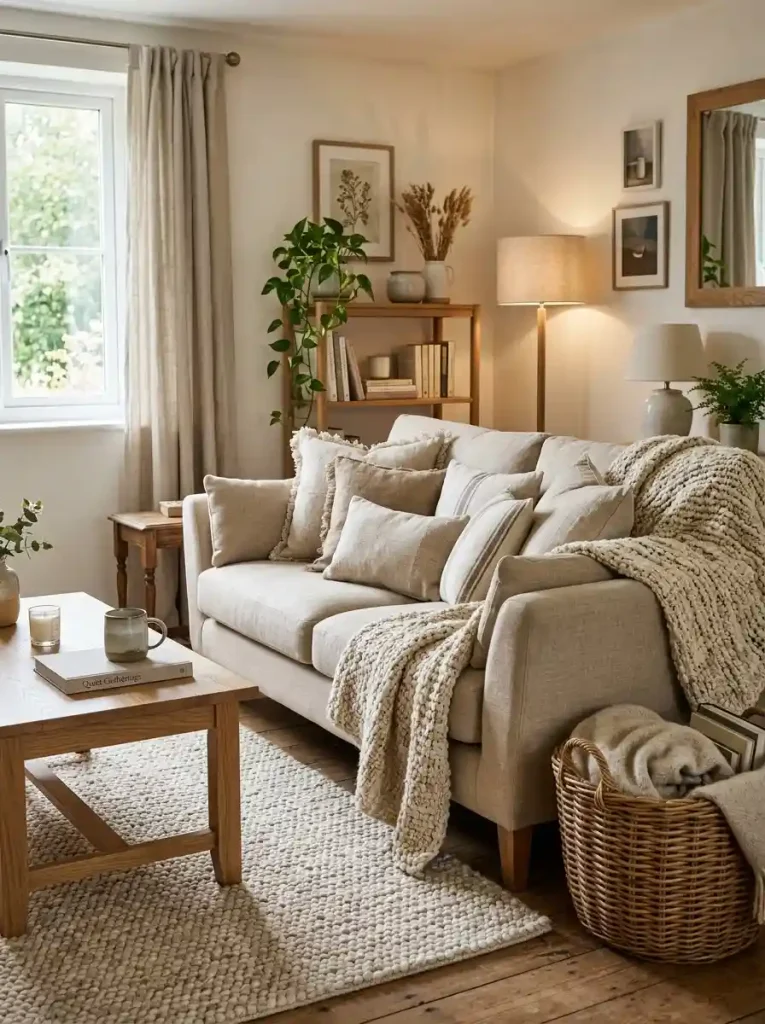
A small living room can feel flat if everything has the same smooth finish.
But adding more decorative objects isn’t necessarily the answer.
Instead, introduce texture through textiles and natural materials.
Think chunky knit throws, linen cushions, woven baskets, boucle upholstery, textured rugs, wood grain, or handmade ceramics.
These details create visual interest without requiring lots of objects.
A useful combination
Try mixing three or four textures while keeping the color palette relatively restrained.
For example:
- Linen
- Woven fiber
- Natural wood
- Soft wool
The room can feel layered and cozy without looking overloaded.
20. Create a tiny reading corner
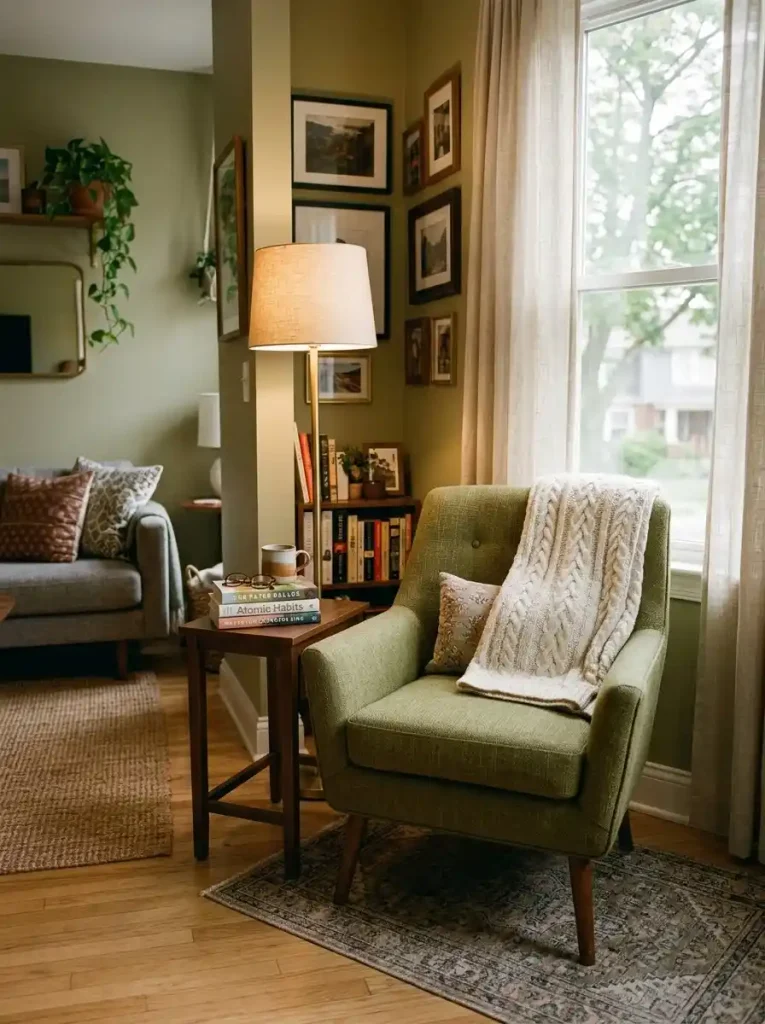
You don’t need an entire room for a reading nook.
A small unused corner can become a comfortable destination with just a few carefully selected pieces.
Start with a compact armchair, then add a slim floor lamp and a small side table.
If space is extremely limited, choose a chair with a narrow footprint and avoid oversized lounge furniture.
Make the corner feel connected
Repeat one material or color from the main seating area.
For example, if your sofa has beige upholstery, choose a chair in a similar neutral family.
That way, the reading corner feels like part of the living room rather than a separate little island.
21. Use baskets to control everyday clutter
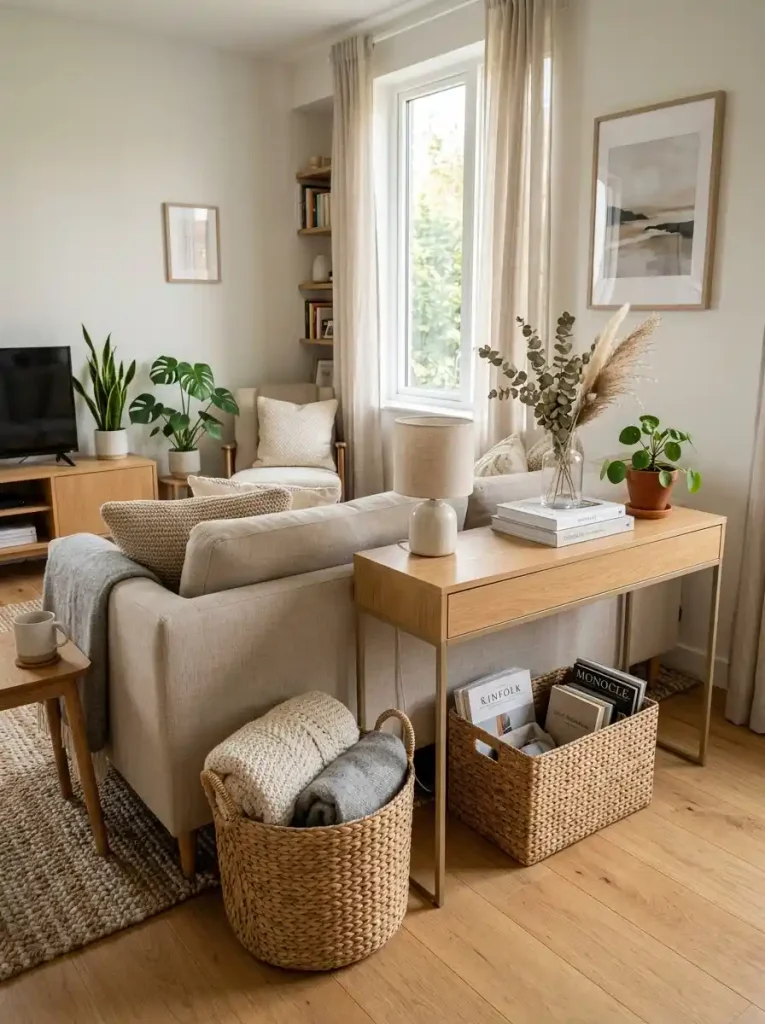
Even the most carefully decorated living room will accumulate things.
Blankets, children’s items, magazines, chargers, remotes, and miscellaneous objects all need somewhere to go.
Decorative baskets offer an easy solution because they can look attractive while hiding everyday mess.
Place one beside the sofa for throws or underneath a console for less frequently used items.
Keep the system simple
Don’t create complicated storage rules that nobody follows.
Give common clutter a convenient home.
When putting something away takes only a few seconds, the room is much more likely to stay tidy.
22. Keep the final layer of decor deliberately simple
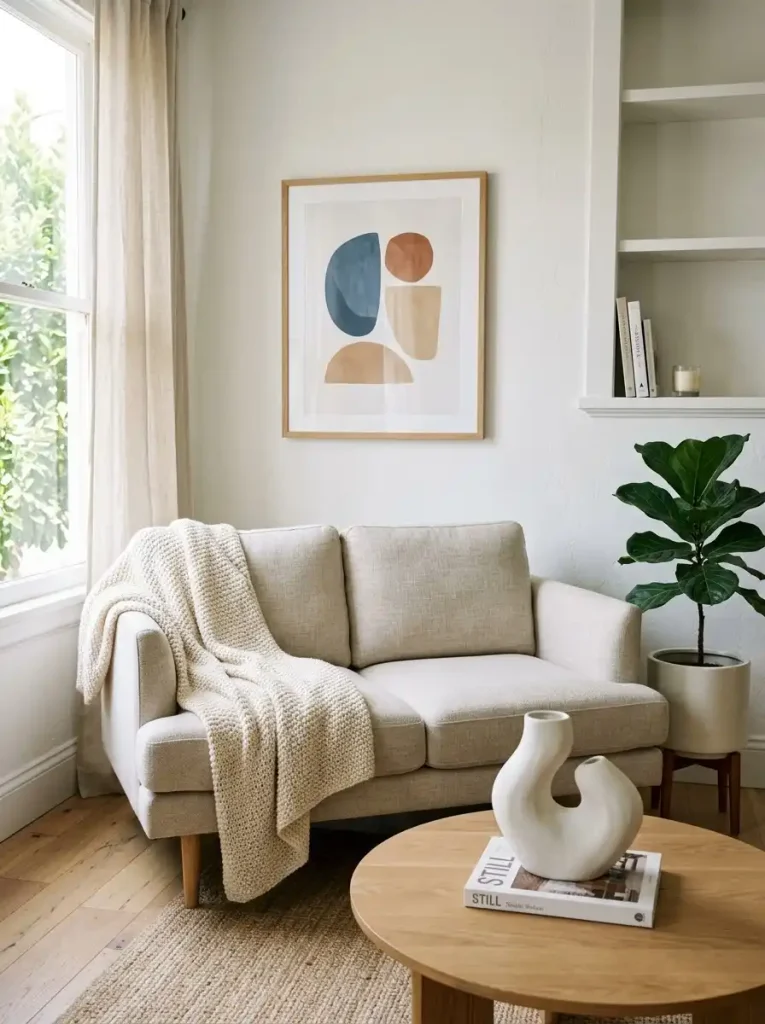
Once the furniture is arranged, storage is handled, and lighting is working, it’s tempting to keep adding accessories.
Resist that temptation.
A small living room often looks its best when the final decorative layer is restrained.
Choose a few pieces that genuinely add personality: a favorite artwork, an interesting ceramic, a plant, a beautiful throw, or a meaningful object.
Then stop.
Think “edited,” not “empty”
The goal isn’t to remove everything that makes your room personal.
It’s to make sure your favorite details have enough space around them to be noticed.
That is what turns a small living room from crowded into curated.
Practical Small Living Room Checklist
Before you consider your decorating project finished, walk through the room with this quick checklist.
Furniture
- Is every furniture piece useful?
- Can you walk comfortably between major areas?
- Does the sofa fit the room proportionally?
- Are bulky pieces blocking windows or pathways?
Storage
- Does everyday clutter have a designated home?
- Can some storage move vertically?
- Are frequently used items easy to access?
- Are open shelves being overfilled?
Color
- Is your main color palette relatively consistent?
- Do your accent colors repeat naturally?
- Does the wall color work with the room’s natural light?
Decoration
- Does every decorative object need to stay?
- Are some surfaces intentionally empty?
- Is there enough negative space around larger pieces?
Lighting
- Do you have more than one source of light?
- Could a wall fixture free up valuable floor space?
- Does the room feel comfortable at night as well as during the day?
A few minutes of editing can make just as much difference as buying something new.
Small Living Room Decorating Mistakes to Avoid
Even good decorating ideas can work against you when they’re used incorrectly.
Here are some common mistakes worth watching for.
Buying furniture based only on measurements
A sofa may technically fit between two walls but still feel enormous once it’s inside the room.
Always consider visual weight, arm thickness, depth, leg style, and surrounding clearance—not just width.
Using too many tiny decorative objects
Lots of small accessories can create visual noise.
A few larger, intentional pieces often look more sophisticated.
Blocking natural light
Tall cabinets, heavy curtains, or oversized furniture positioned in front of windows can make a compact room feel darker.
Whenever possible, protect your natural light sources.
Choosing storage without considering access
A beautiful cabinet isn’t helpful if opening it requires moving the coffee table every time.
Storage should make everyday life easier.
Filling every empty corner
An empty corner isn’t automatically a decorating problem.
Sometimes that open area gives the entire room the breathing space it needs.
How to Make a Small Living Room Feel Bigger Without Remodeling
You don’t need to knock down walls to change the atmosphere of a compact room.
Start with the easiest improvements.
1. Clear unnecessary clutter.
Before buying anything, remove objects you no longer use.
2. Improve the furniture layout.
Create obvious pathways and avoid blocking windows.
3. Use vertical space.
Shelves, tall plants, curtains, and artwork can draw attention upward.
4. Add reflective surfaces.
A well-positioned mirror can help distribute light.
5. Simplify the color palette.
A few coordinated shades usually feel calmer than many competing colors.
6. Layer your lighting.
Use overhead, wall, and accent lighting to make the room feel more dimensional.
7. Keep visible storage curated.
Open shelving should display your best pieces, while less attractive belongings stay hidden.
These changes are inexpensive compared with a renovation, but they can dramatically improve how a small living room functions.
Final Thoughts
A small living room doesn’t have to feel like a decorating limitation.
In many cases, having less space simply forces you to become more intentional.
Choose furniture according to proportion rather than impulse. Give everyday items a home. Use walls and vertical space wisely. Let natural light move through the room. And most importantly, don’t confuse “more decoration” with “better decoration.”
The most successful small living rooms usually aren’t packed with clever tricks.
They’re carefully edited spaces where furniture, storage, lighting, color, and personal details work together.
So before you buy another decorative piece, take a step back and ask yourself:
What does this room actually need?
Sometimes the answer is a new piece of furniture.
And sometimes it’s simply a little more breathing room.
Frequently Asked Questions
How do I decorate a very small living room?
Start with the furniture layout before adding accessories. Choose appropriately scaled seating, maintain clear walking paths, use vertical storage, and keep the color palette coordinated. Multifunctional furniture can also help you get more use from limited floor space.
What colors make a small living room look bigger?
Light and softly muted colors can help reflect available light and create an airy atmosphere. Warm whites, pale beige, light greige, soft sage, and muted blue are all options worth considering.
Should a small living room have a coffee table?
Not necessarily. A nesting-table set, small round table, storage ottoman, or even a narrow side table can provide useful surface space while preserving more room for movement.
How can I make a small living room less cluttered?
Give frequently used items a dedicated storage location, use baskets and closed cabinets for everyday clutter, and avoid filling every available surface with accessories. Regular editing is just as important as adding storage.
Is a large rug suitable for a small living room?
Yes. A properly sized rug can actually make the seating area feel more unified. Rather than using several tiny rugs, one larger rug can visually connect the furniture and create a stronger sense of cohesion.
How can I add storage without making my living room feel crowded?
Use vertical and hidden storage. Floating shelves, wall-mounted cabinets, storage ottomans, built-in units, and baskets can provide useful storage while keeping the floor relatively open.
Should furniture touch the walls in a small room?
Not always. Depending on the layout, pulling furniture slightly away from a wall can improve circulation and create a more intentional seating arrangement. The important thing is maintaining comfortable pathways.
How many decorative items should I put in a small living room?
There isn’t a fixed number. Instead, focus on visual balance. Keep the pieces you genuinely like and remove anything that makes surfaces or shelves feel crowded. A small number of well-chosen objects can have more impact than many small accessories.
What is the most important rule for decorating a small living room?
Prioritize function and proportion. Every major item should fit the room physically and visually while serving a useful purpose. Once those basics are right, decoration becomes much easier.