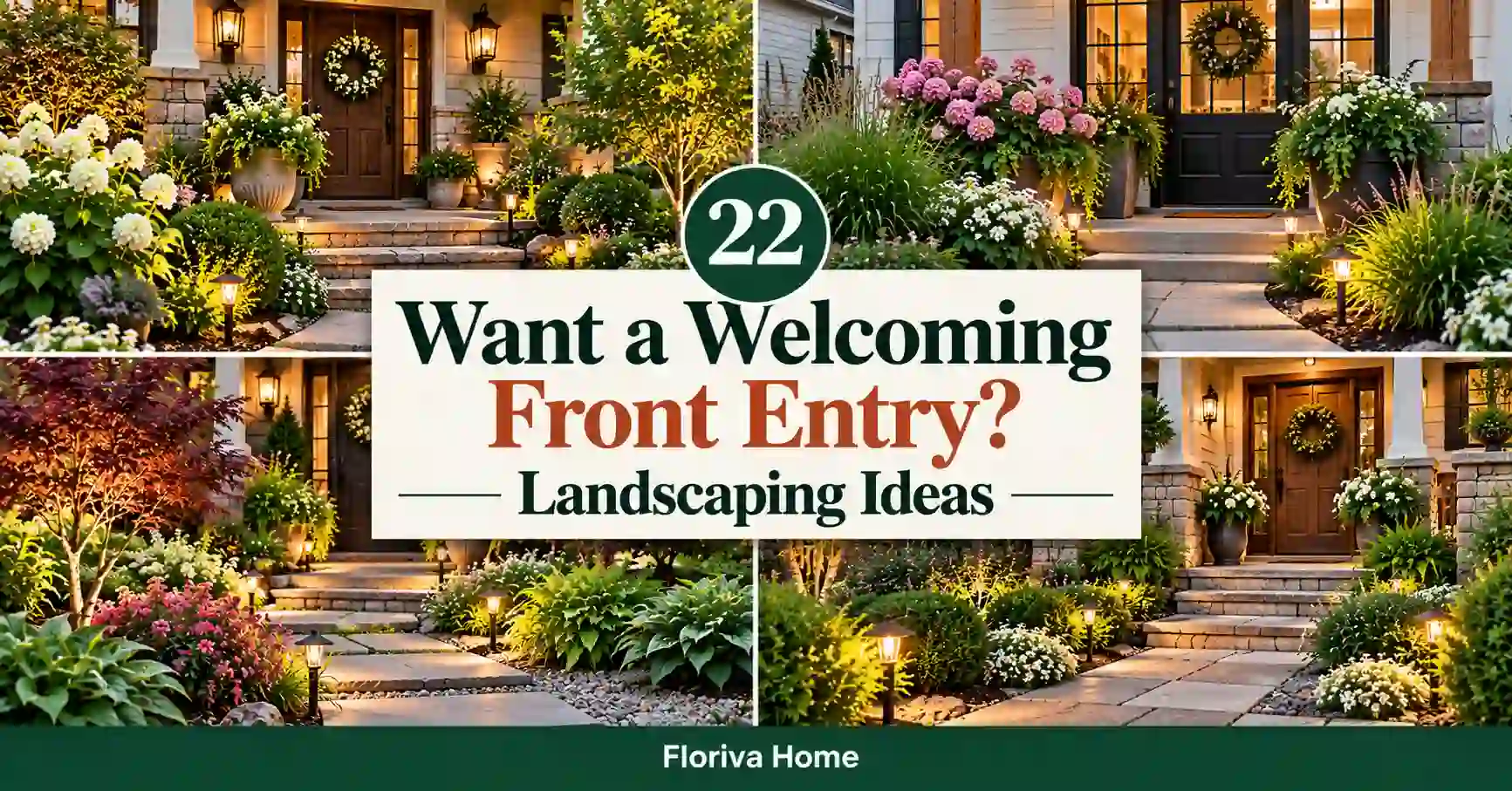
Want a Welcoming Front Entry? 22 Landscaping Ideas
Think about the last time you walked up to a house and felt instantly at ease. Chances were it wasn’t one big feature. It was the path that curved toward the door, the soft glow near the steps, and plants that looked like they belonged there. A welcoming front entry is built from small, thoughtful choices that add up to a feeling.
You don’t need a full yard makeover to get there. Whether you have a narrow stoop, a long walkway, or a wide porch, these 22 front entry landscaping ideas will help you create an approach that looks polished and suits the way you live. Mix a few, borrow what fits, and make it your own.
Before You Plant: 3 Quick Checks
- Watch the sun. Spend a day noting how many hours of direct light your entry gets. Most plant tags are based on this, and it’s the number one reason entry plantings fail.
- Think in scale. Your entry should feel proportional to the house. Bigger homes can handle bolder, larger plants, while smaller homes look best with fewer, well-chosen pieces.
- Be honest about upkeep. A stunning entry that needs daily attention won’t stay stunning. Pick ideas that match the time you actually have.
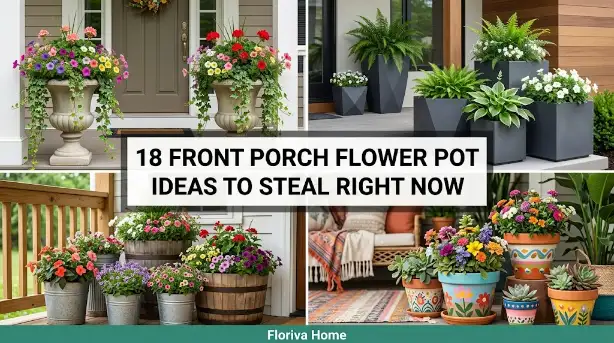
1. Spiral Topiaries in Matching Urns
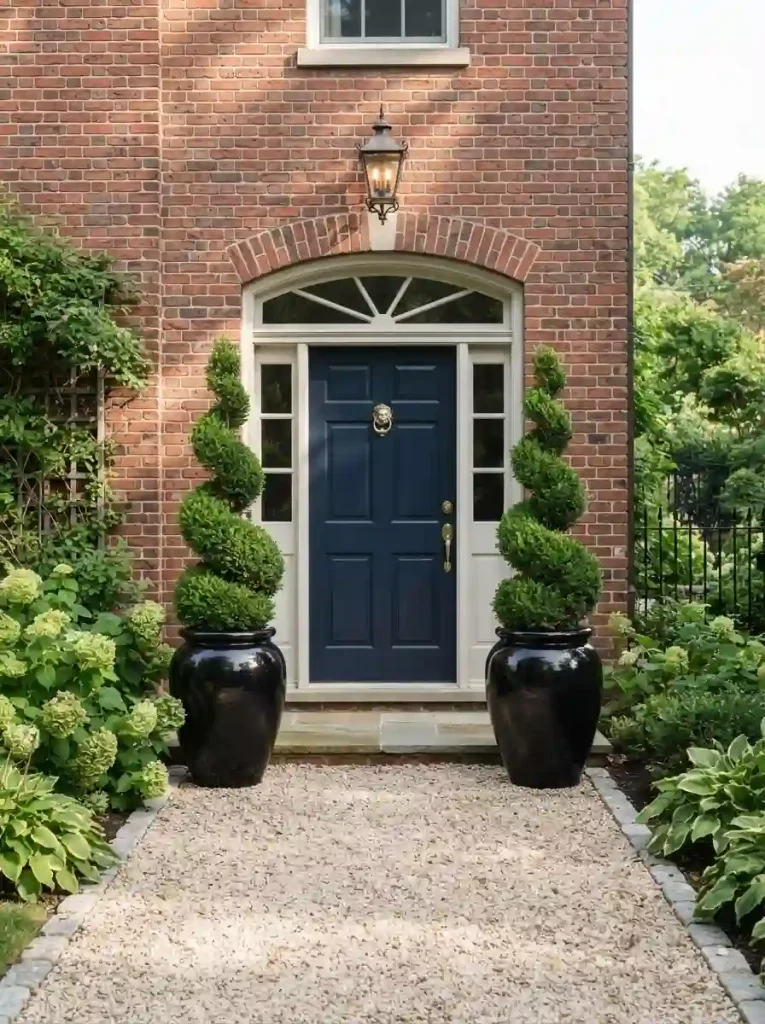
Few things say “welcome” like a pair of sculpted evergreens beside the door. Spiral topiaries in classic urns bring structure and a bit of formality, and they look good in every season because the foliage stays green through winter.
Growing them in containers keeps their size under control and lets you swap them out if your tastes change. If you live somewhere with hard freezes, choose frost-proof pots so they don’t crack.
Pro Tip:
Pick pots that feel substantial. A topiary in a pot that’s too small looks top-heavy and dries out much faster.
2. Ornamental Grass Drifts Along the Walkway
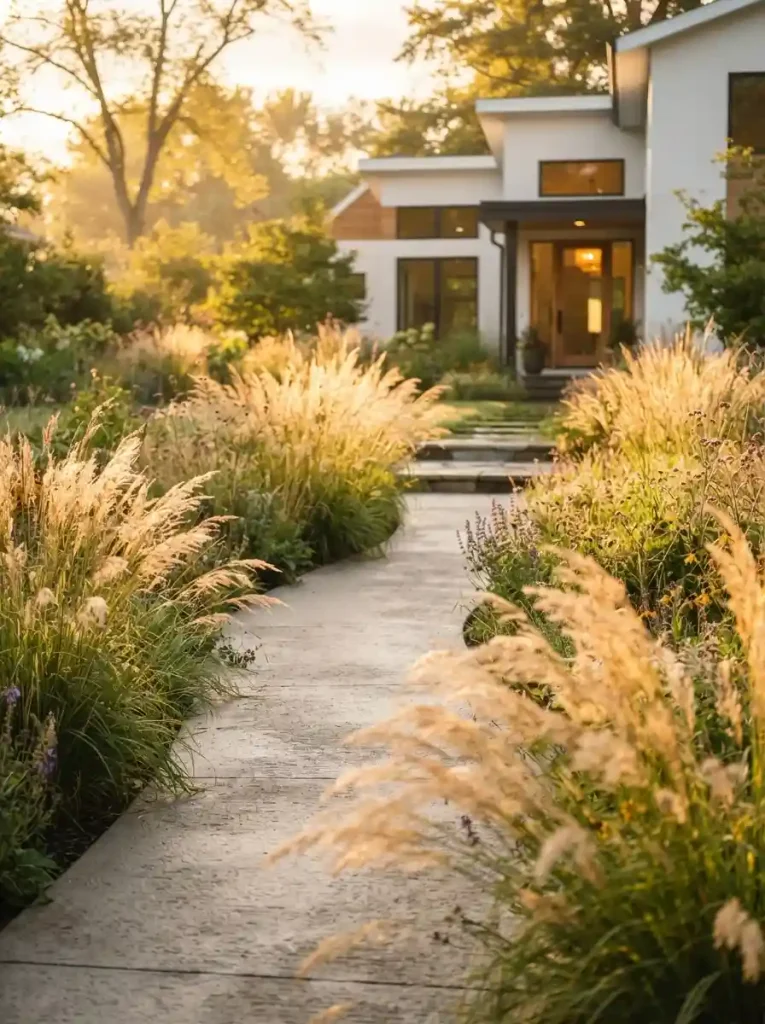
If your walkway feels stiff or boxy, ornamental grasses are a great fix. Their feathery plumes move with the slightest breeze and soften hard edges. Feather reed grass, little bluestem, and fountain grass are all popular choices, depending on your climate.
Plant them in groups of three or five rather than single clumps. Drifts look more natural and create a rhythm that pulls the eye toward the door.
Pro Tip:
Check each grass’s mature width and plant it that far back from the path edge, so it doesn’t flop across the walkway in late summer.
3. Hydrangea Cloud Beside the Steps
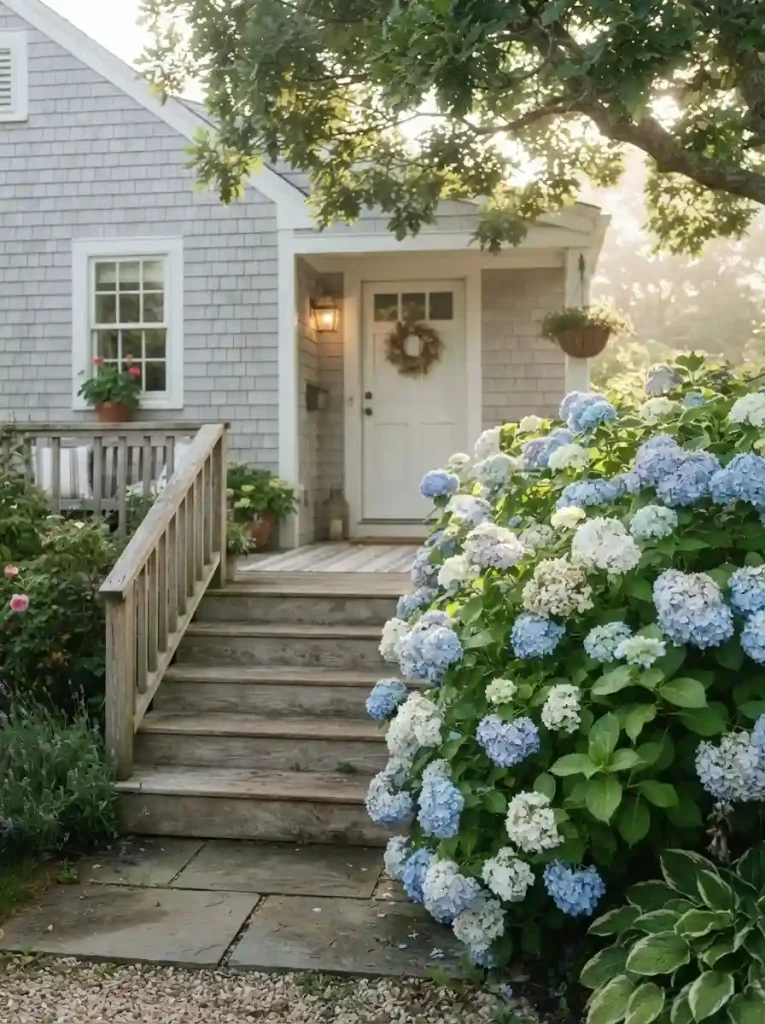
Big, generous hydrangea blooms make an entry feel lush and a little romantic. Planted on either side of porch steps, they act like a living bouquet that greets everyone who arrives.
Most hydrangeas like morning sun and afternoon shade, which suits many entryways. Panicle types, such as ‘Limelight’, tolerate more sun and are a reliable pick for brighter spots.
Pro Tip:
Identify your hydrangea type before you prune. Panicle and smooth hydrangeas bloom on new growth, while many bigleaf types bloom on older stems, so a hard cut at the wrong time can cost you flowers.
4. Window Boxes Under Front Windows
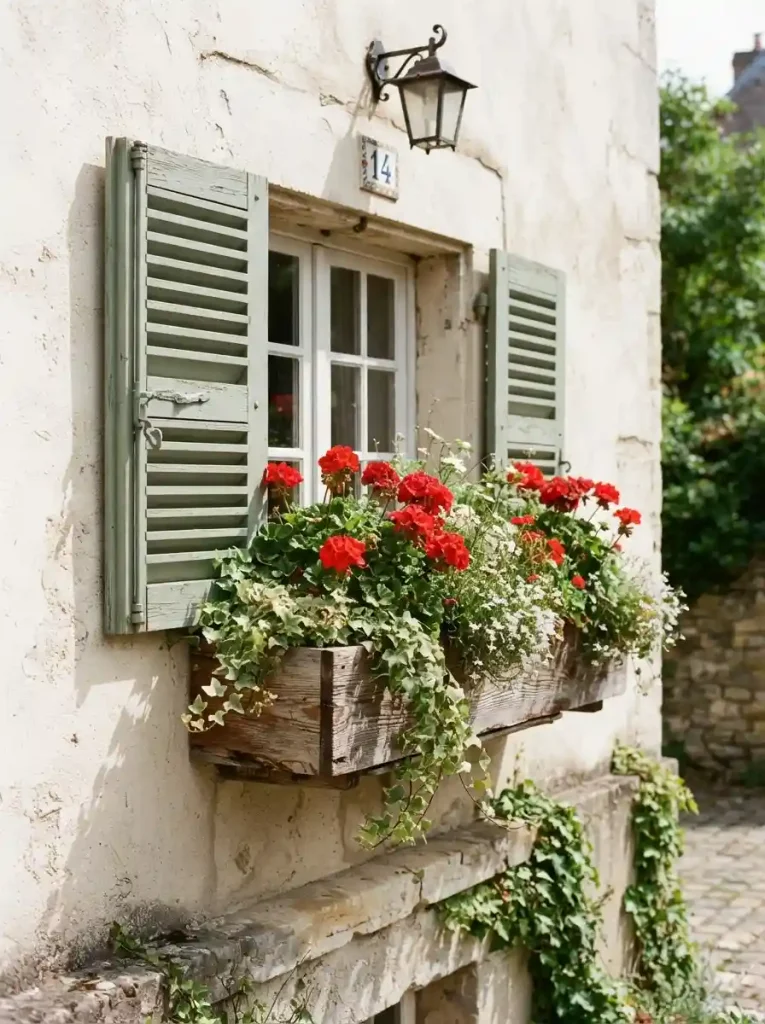
Window boxes extend your entry’s charm beyond the door itself. They add color at eye level, frame the windows, and make even a plain facade feel cared for.
Combine three kinds of plants for the fullest look: something upright, something mounding, and something that trails over the edge. Geraniums, trailing ivy, and lobelia make a classic, dependable trio.
Pro Tip:
Boxes dry out quickly in summer heat, so choose ones with drainage holes and plan on frequent watering. Painting the box to match your trim helps it blend in with the house.
5. Uplighting a Specimen Tree
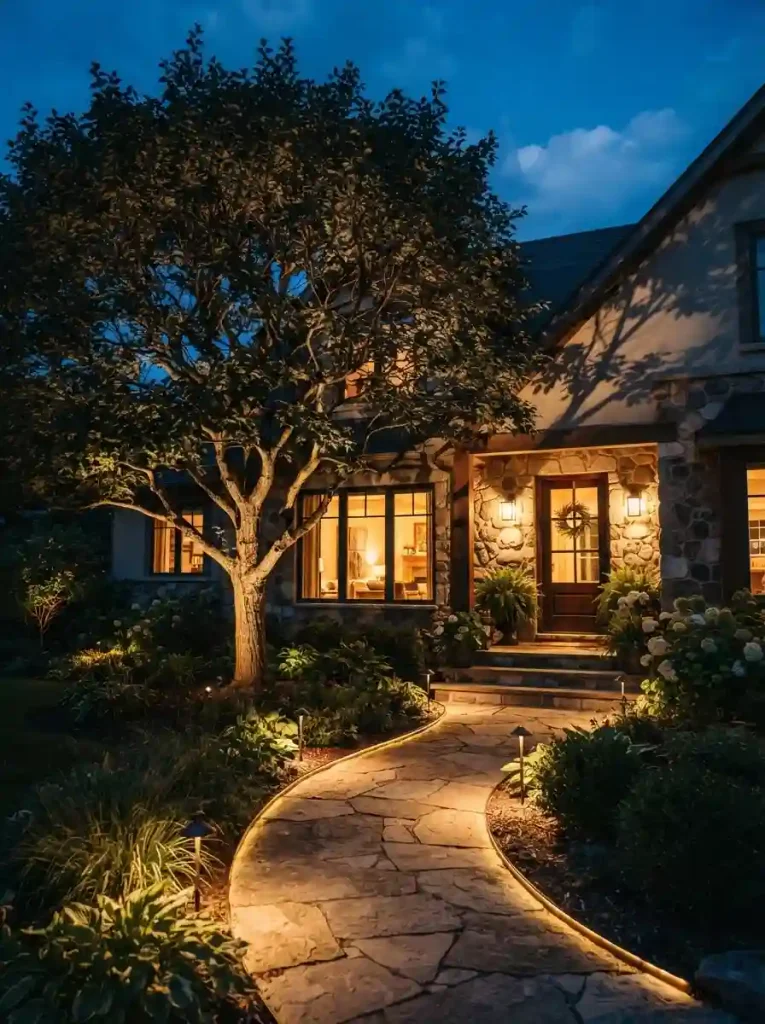
Your entry shouldn’t disappear after sunset. Placing a couple of low-voltage spotlights at the base of a tree and aiming them upward creates a glowing canopy and dramatic shadows on your walls. It also makes the approach safer and feels like a warm invitation after dark.
Low-voltage LED kits are beginner-friendly and don’t need an electrician for most setups.
Pro Tip:
Choose warm white bulbs (around 2700K) for a cozy glow, and tuck the fixtures behind a shrub or a little mulch so you see the light, not the lamp.
6. Dry Creek Bed with River Rock
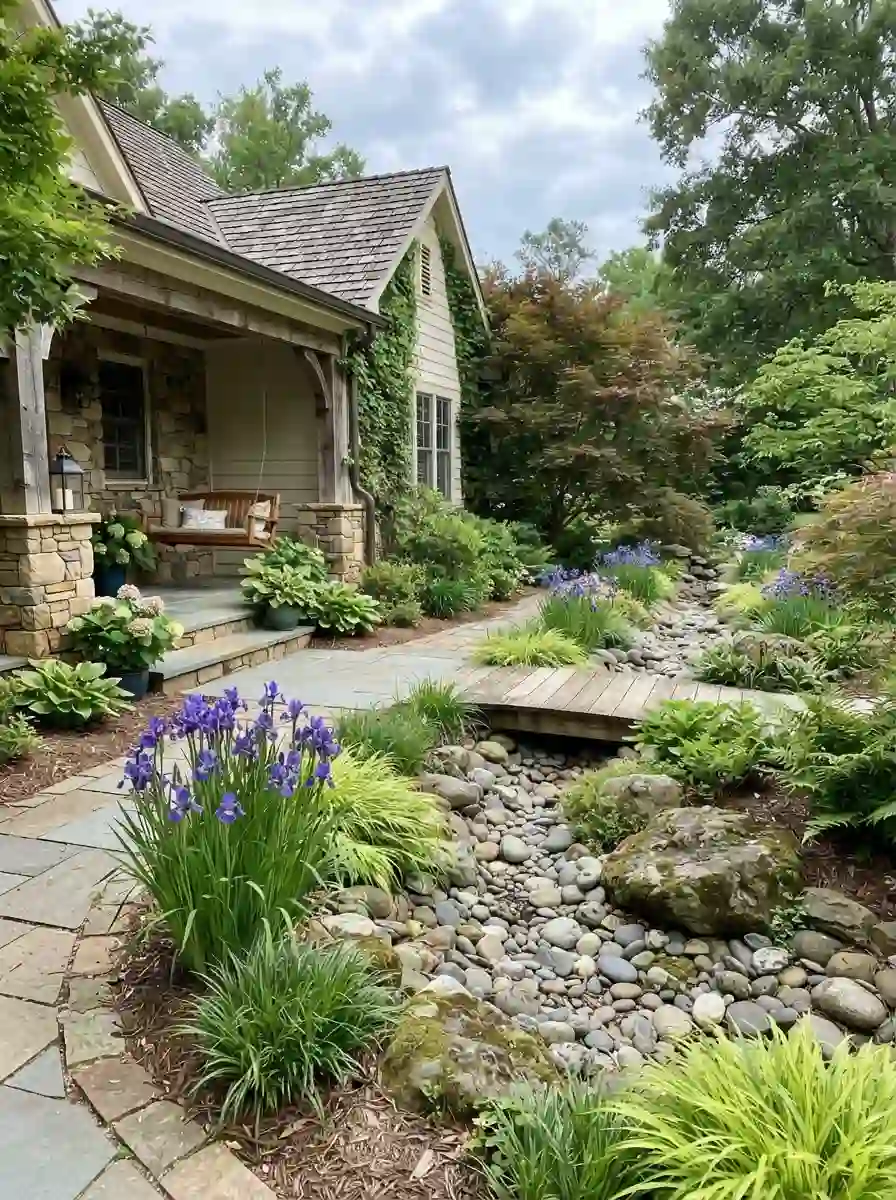
A dry creek bed is part design feature, part problem solver. It can channel runoff from a downspout away from your foundation while adding a winding, natural-looking element to the entry.
Mix stone sizes, from fist-sized rocks to larger boulders, and let the bed curve gently rather than run straight. Plant moisture-loving perennials like irises and sedges along the banks so it looks like it has always been there.
Pro Tip:
Make sure the bed slopes away from your house, and lay landscape fabric underneath to keep weeds from pushing through the stones.
7. Large Pavers with Creeping Thyme Joints
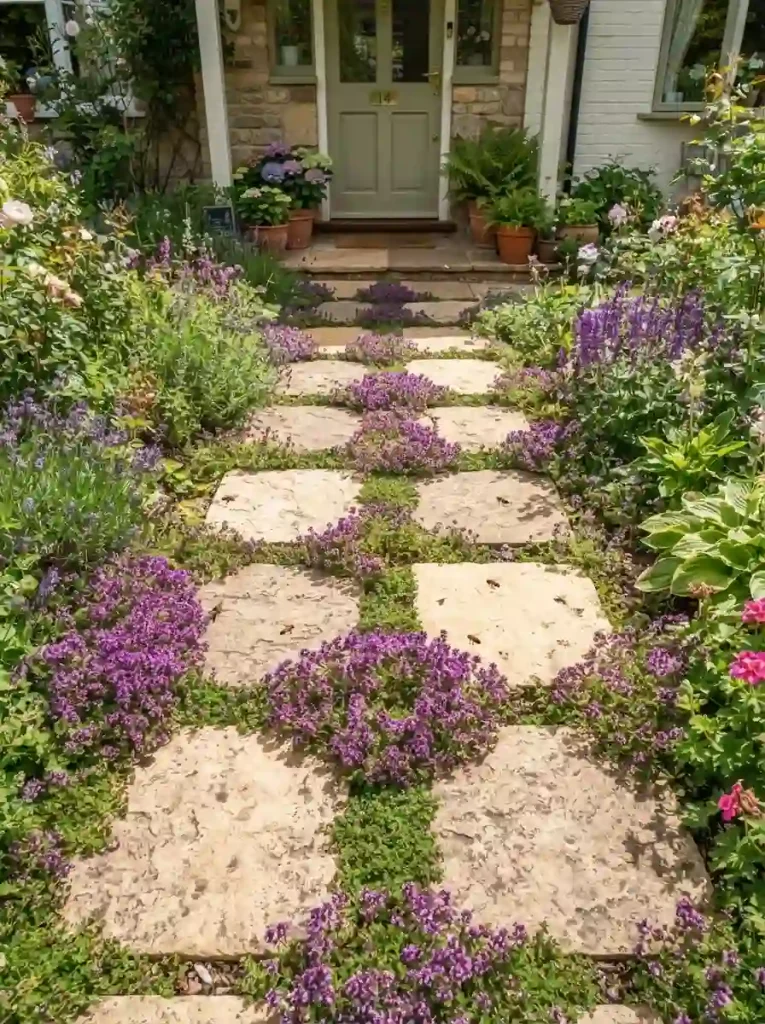
Instead of tightly packed pavers, leave generous gaps between large square slabs and fill them with a low-growing, fragrant groundcover. Creeping thyme is a favorite because it tolerates light foot traffic, releases a lovely scent when stepped on, and blooms in tiny purple flowers that bees adore.
The result looks relaxed and designed at the same time, and it helps rainwater soak into the ground rather than run off.
Pro Tip:
Thyme needs full sun and well-drained soil. For shadier paths, swap in a moss or a shade-tolerant groundcover.
8. Espaliered Fruit Tree on the Entry Wall
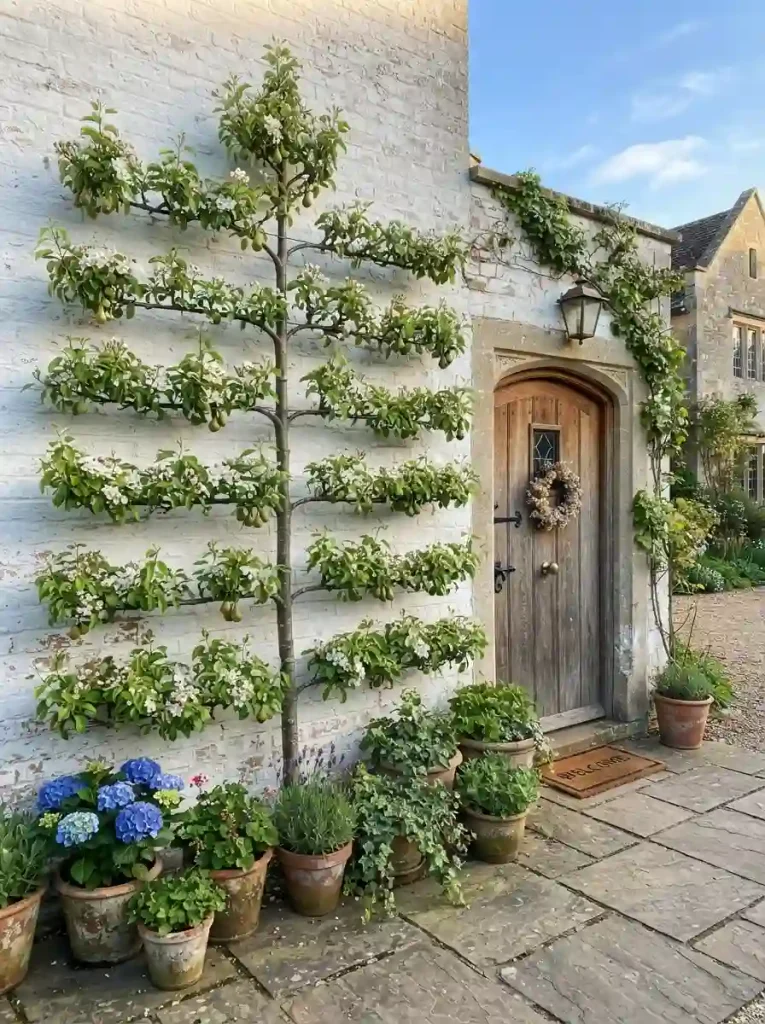
An espalier is a tree trained to grow flat against a wall or along wires. It’s a clever choice for narrow entries where a regular tree would crowd the walkway. You get spring blossoms, a sculptural winter silhouette, and even a small harvest of apples or pears.
It’s a slow, rewarding project that looks quietly impressive and gives your entry a timeless, old-world feel.
Pro Tip:
Choose a dwarf or semi-dwarf variety and leave a few inches between the wires and the wall so air can circulate. Aim for a spot with at least six hours of sun.
9. Fern and Moss Shade Nook
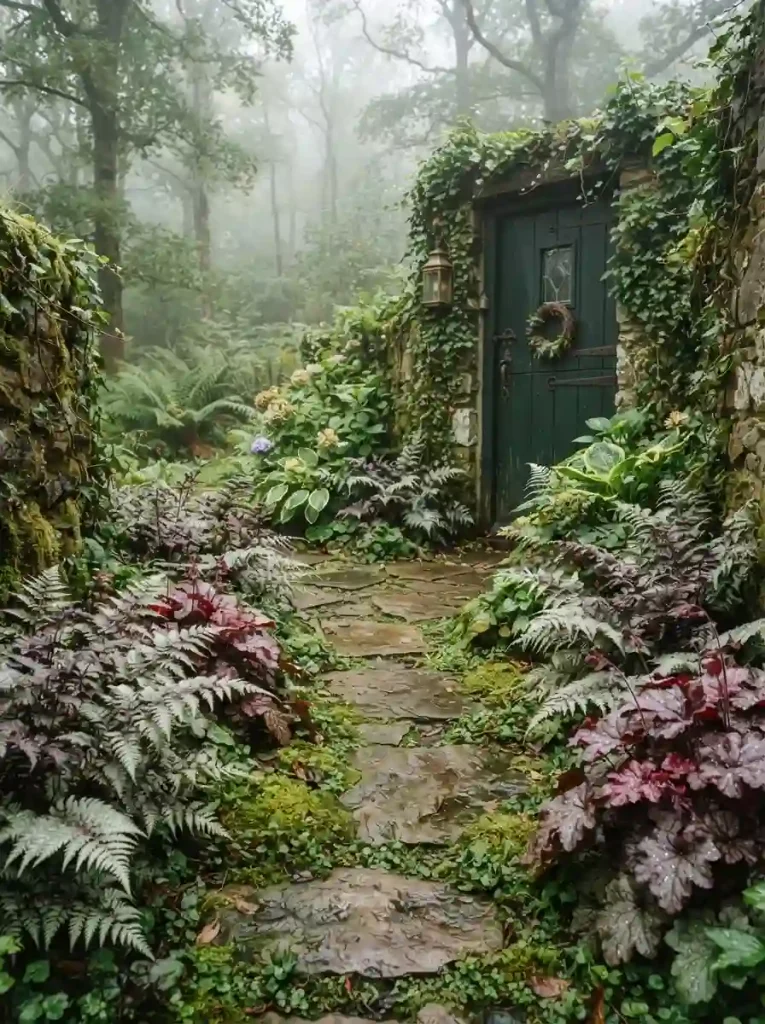
A shady, north-facing entry isn’t a handicap. It’s a chance to create a cool, woodland-inspired corner. Painted ferns, autumn ferns, and silvery heuchera bring layers of texture, while moss tucked between irregular flagstones adds a soft, storybook feel.
The mood is calm and green, a refreshing change from the usual bright flower beds.
Pro Tip:
Mix compost into the soil and keep it evenly moist. Shade plants rarely struggle from too little light, but they do suffer when the ground dries out completely.
10. Corten Steel Raised Planter
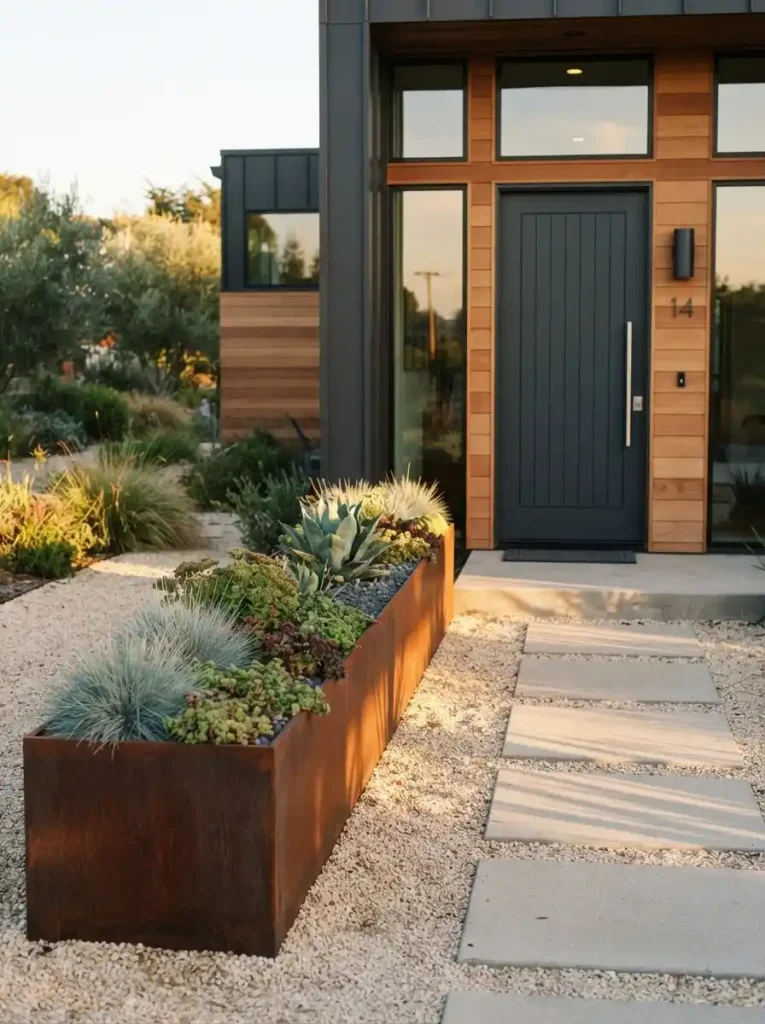
For modern homes, a long raised planter made of Corten (weathering) steel adds clean lines and a warm, rust-toned color that pairs beautifully with greenery. Fill it with plants that echo the minimalist style, such as blue fescue, sedum, or agave in warmer regions.
It works especially well against charcoal, white, or natural wood doors, where the earthy orange tone stands out.
Pro Tip:
Fresh Corten can leave rust runoff that stains pale concrete or pavers while the patina develops. Set it on gravel or add a barrier underneath at first.
11. Cottage-Style Layered Border
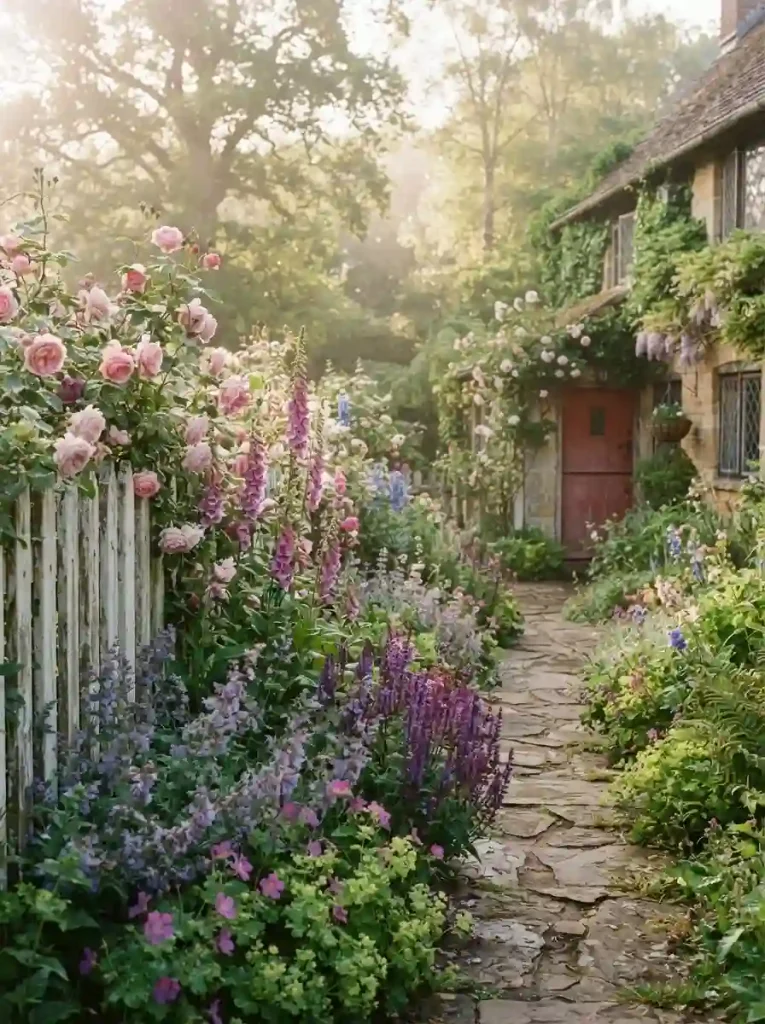
If you love a softer, more abundant look, a cottage border is hard to beat. Layer tall foxgloves and salvia at the back, roses and catmint in the middle, and low spreaders at the front. The slightly wild, overflowing effect feels generous and instantly friendly.
Cottage borders are especially lovely when they flank a winding path or a picket fence leading to the door.
Pro Tip:
Repeat the same few plants in two or three spots so the border feels cohesive rather than chaotic, and keep your walkway at least 36 inches wide so plants never crowd visitors.
12. Bubbling Urn Fountain
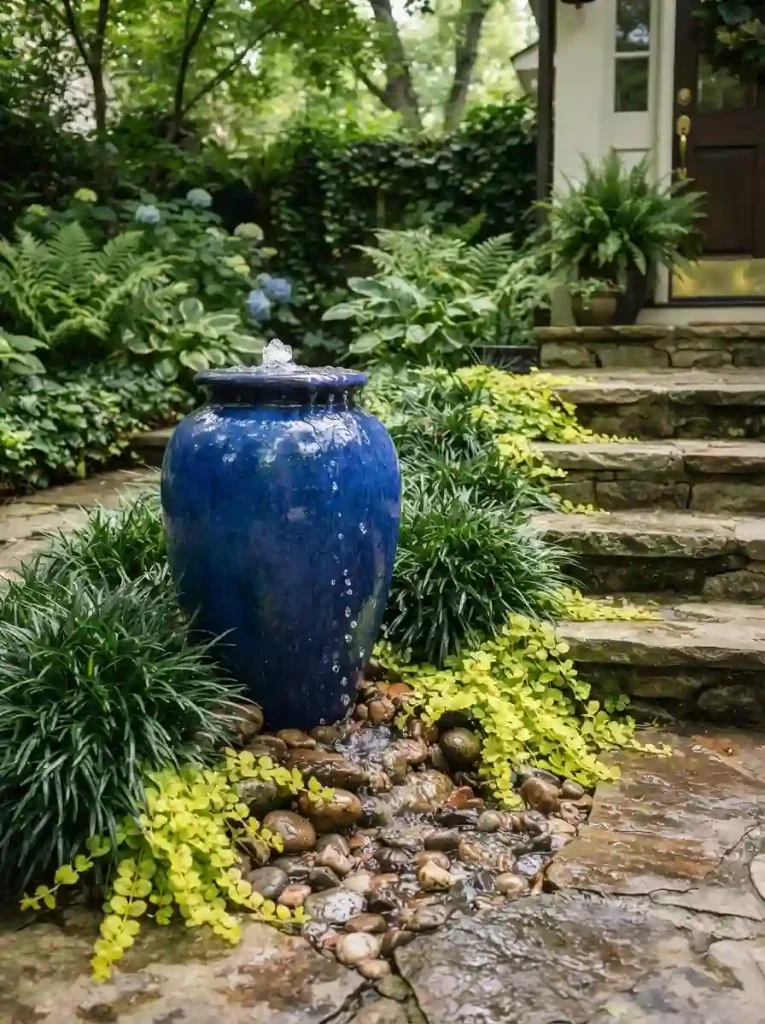
Water adds something a planting can’t: sound. A small bubbling urn fountain near the entry gives you a gentle trickle that softens street noise and makes arriving feel like stepping into a retreat. These self-contained fountains hide the reservoir underground, so you see only the glossy, overflowing vessel.
Surround the base with low plants, like creeping Jenny or dwarf mondo grass, so it looks like part of the garden.
Pro Tip:
Place it near an outdoor outlet, and top off the reservoir weekly in hot weather, since evaporation is faster than most people expect.
13. Fragrant Evening Garden
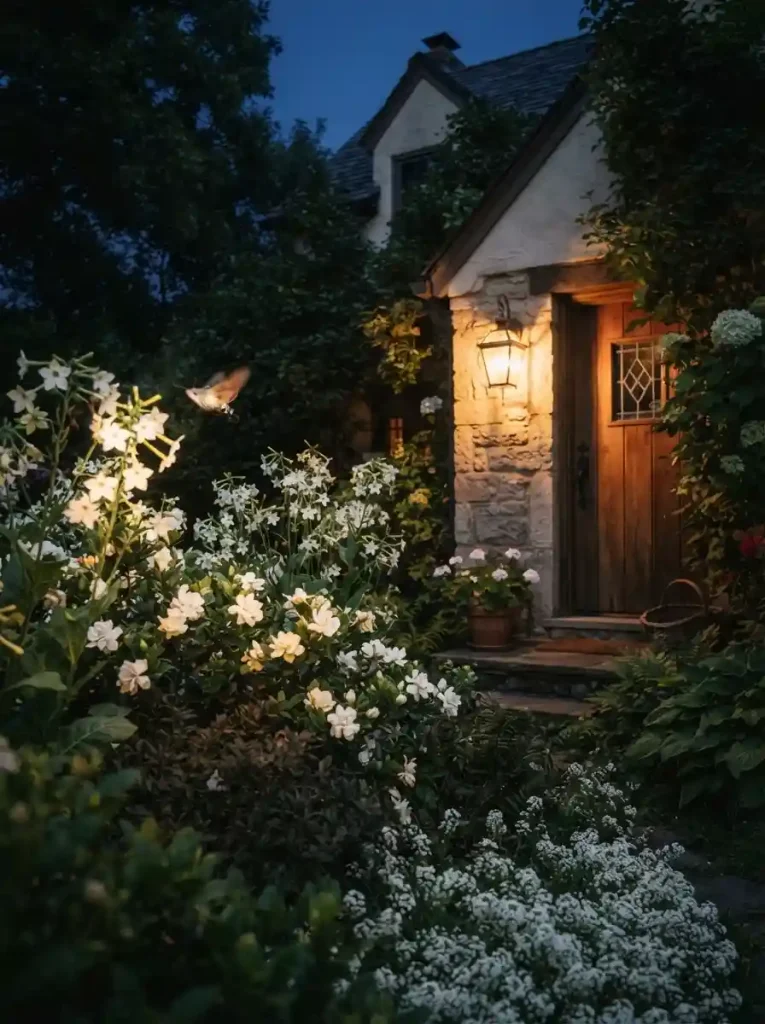
Entries are often most visited at dusk, so plan for the nose as well as the eyes. Gardenias, flowering tobacco (nicotiana), and sweet alyssum release their strongest scent as the day cools, so every arrival feels like a small treat.
Group scented plants close to the door, where people pause to knock or fish out their keys, and they’ll get the most enjoyment from them.
Pro Tip:
Pick plants rated for your zone, and keep strongly scented varieties out of tight, wind-sheltered corners where the fragrance can feel overwhelming.
14. Mailbox-to-Door Planting Flow
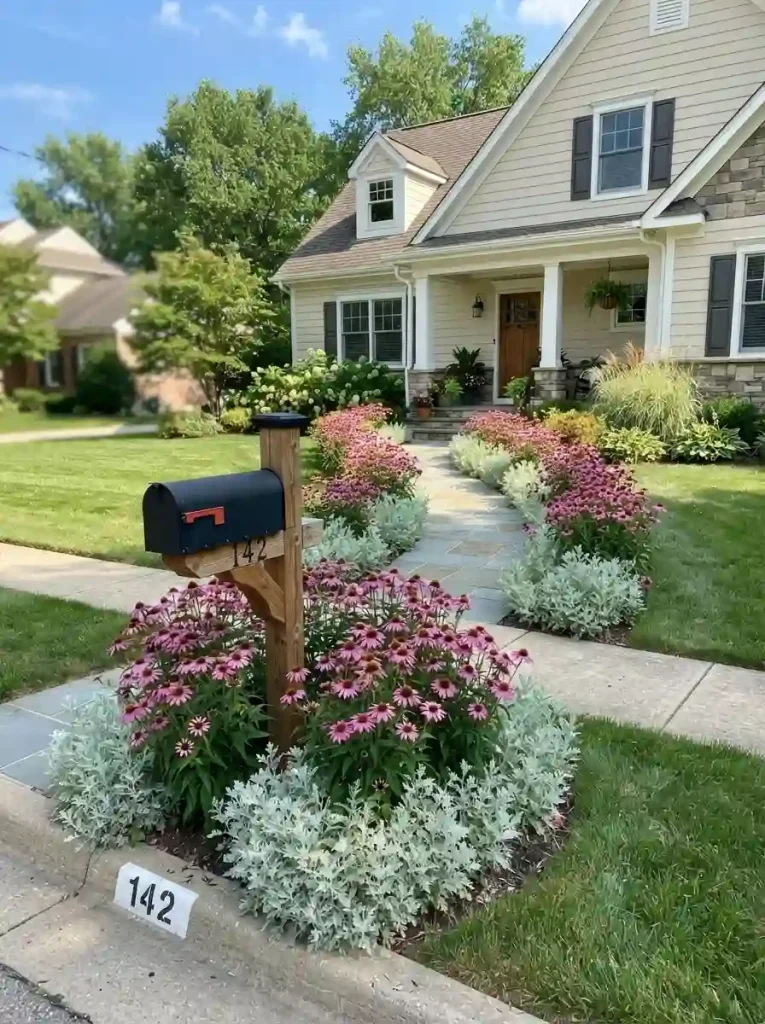
Curb appeal doesn’t begin at your door, it begins at the street. Tie everything together by repeating a few plants from the mailbox, along the walkway, and up to the porch. This continuity makes the entire approach feel planned, even if the plantings are simple.
Start with a small, tidy bed around the mailbox post, then echo the same colors and textures in the beds near the steps.
Pro Tip:
Limit yourself to three or four plant types for the whole route. Repetition is what makes a design look intentional.
15. Plantings That Echo the Door Color
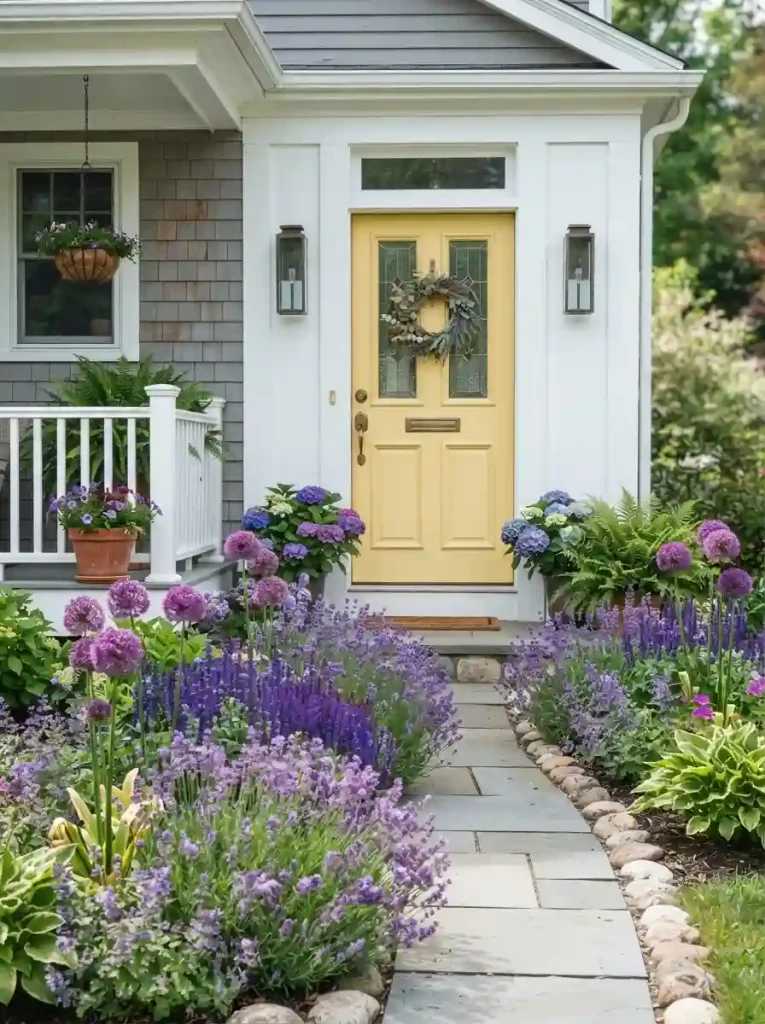
Your front door is the natural focal point, so let your plants play off it. A butter-yellow door pairs beautifully with purple lavender and blue salvia. A deep red door looks striking beside silvery foliage and white blooms. A navy door glows next to coral or orange flowers.
You don’t need to match exactly. A complementary color nearby is often more eye-catching.
Pro Tip:
Hold paint swatches next to the plants at the garden center before you buy. Colors can look very different outdoors.
16. Dwarf Citrus or Olive in Terracotta
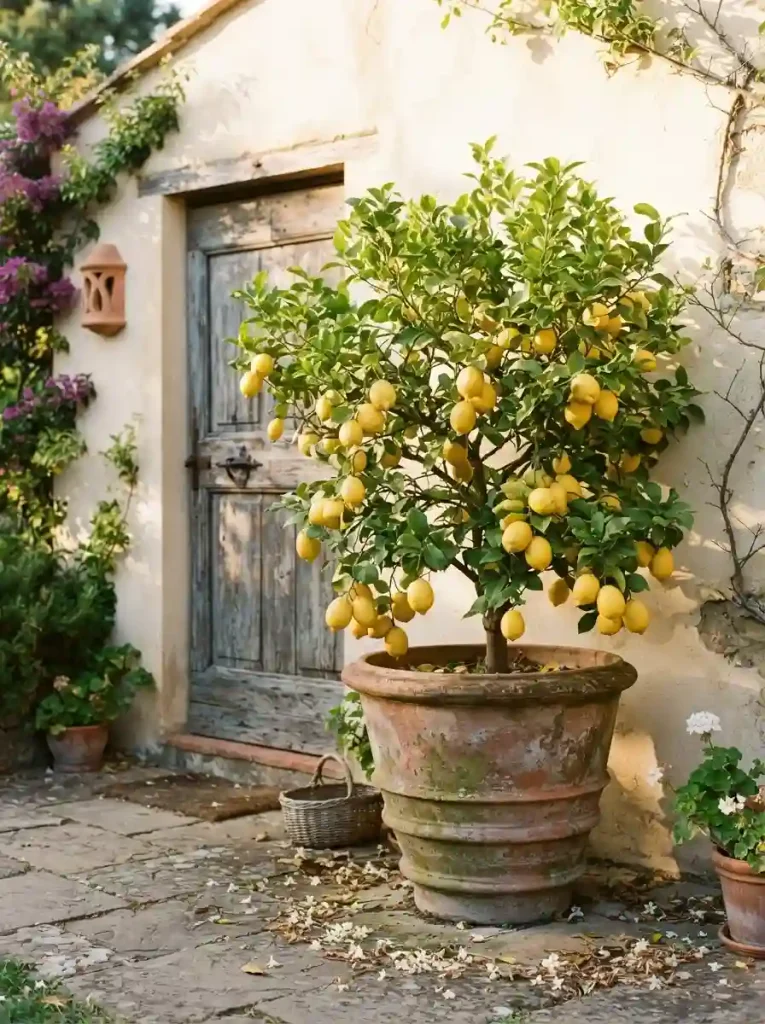
A single potted fruit tree can anchor an entry beautifully. Dwarf lemons or kumquats offer glossy leaves, fragrant blossoms, and bright fruit, while a small olive tree brings silvery, Mediterranean elegance. Terracotta’s warm color suits both.
In cold regions, treat them as seasonal: enjoy them outdoors in warm months and bring them inside before the first frost.
Pro Tip:
Use a pot with excellent drainage and a gritty, fast-draining potting mix. Soggy roots are the most common reason container citrus struggles.
17. Gravel Courtyard Entry
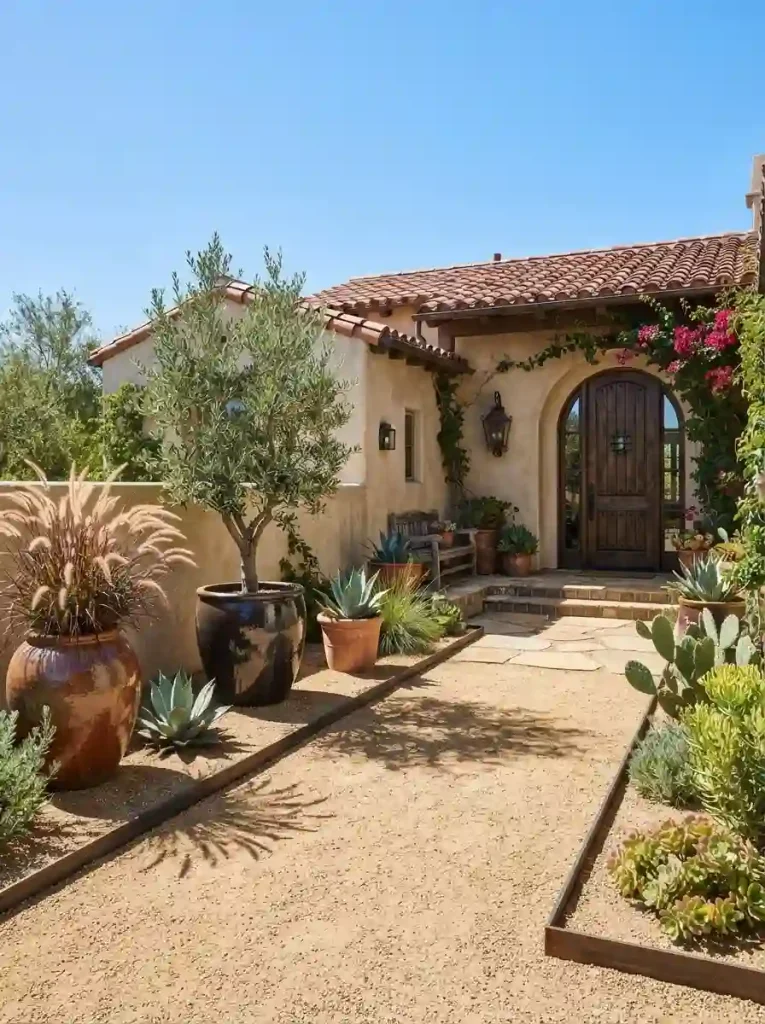
For homes with limited lawn or a dry climate, a small gravel courtyard in front of the door is both stylish and practical. Crushed stone is easy on the budget, drains well, and makes a satisfying crunch that announces visitors.
Define the space with a few large containers, one or two statement shrubs, and a neat edge to keep the gravel in place.
Pro Tip:
Lay landscape fabric beneath the gravel and use steel or stone edging. This cuts down on weeds and keeps stones from drifting into beds.
18. Hanging Baskets and a Porch Swing Nook
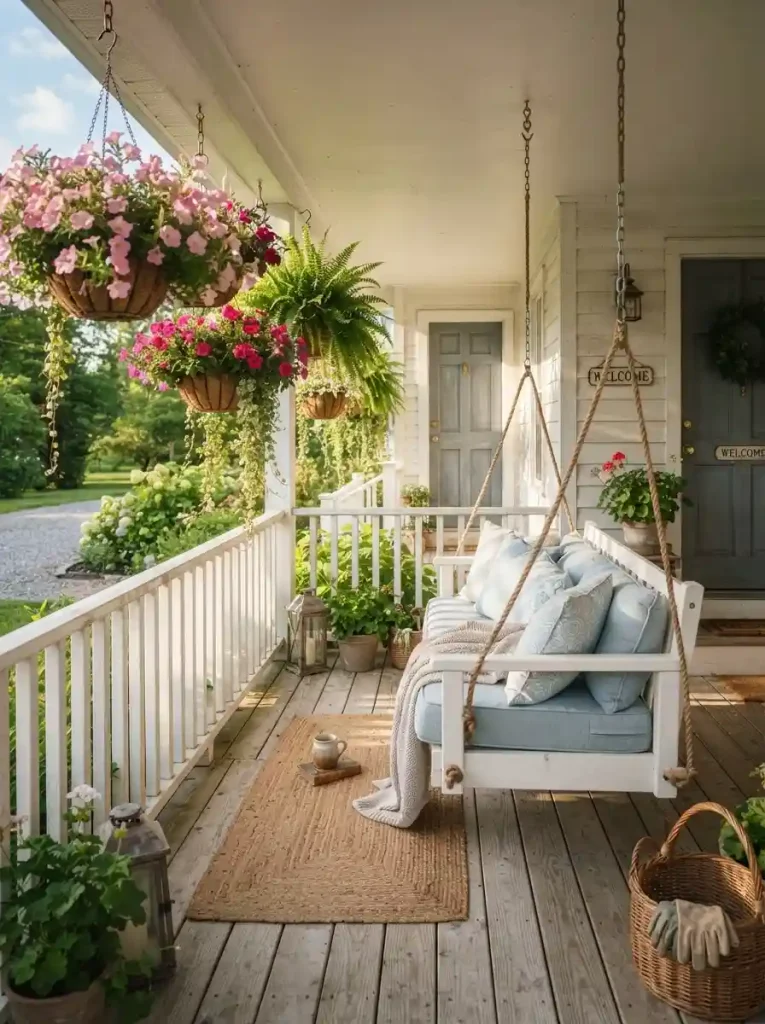
Landscaping isn’t only about what’s in the ground. On a covered porch, layers of hanging baskets create a canopy of color, and a swing or a pair of chairs turns the entry into a place to linger rather than just pass through.
Trailing petunias, fuchsias, and ferns all look great, and you can swap them seasonally with very little effort.
Pro Tip:
Hang baskets at staggered heights, and install a hook rated for the weight. A wet, full basket can weigh much more than you’d guess.
19. Planted Stone Steps
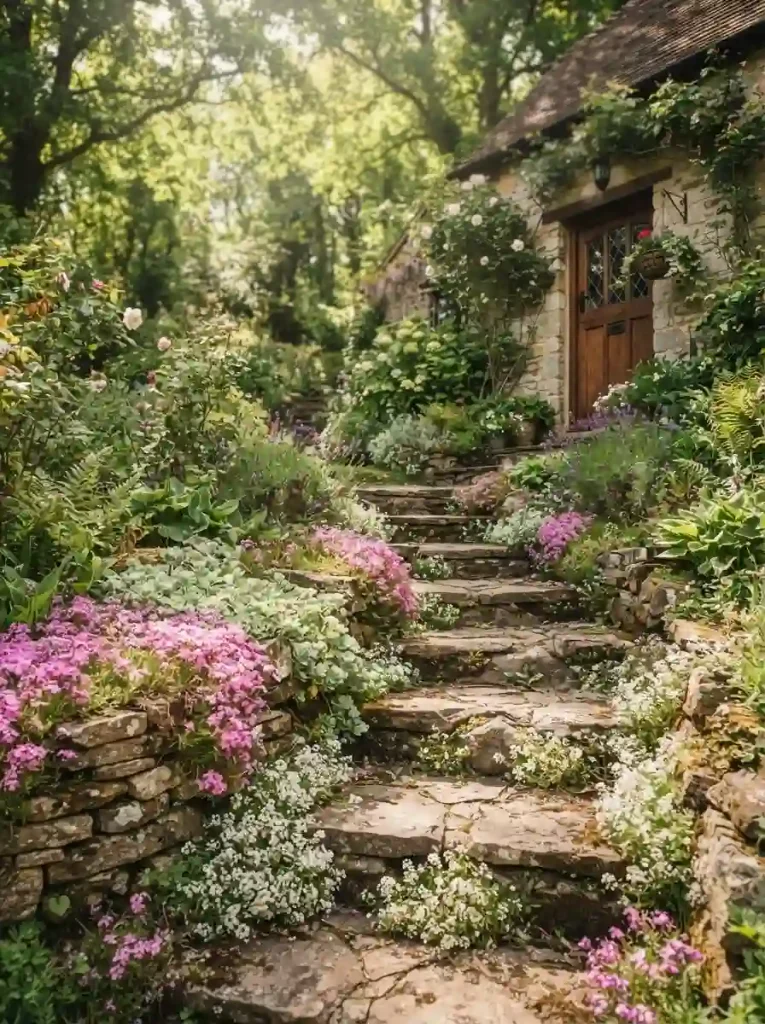
Instead of treating steps as purely functional, tuck small plants into the gaps and edges. Creeping phlox, sedum, and alyssum spill softly over stone and break up the hard geometry, giving the whole entry a lived-in, storybook appearance.
This works especially well on sloped yards, where steps are a major visual feature.
Pro Tip:
Choose low, tough plants that can handle the occasional footstep, and leave enough clear space on each tread so people aren’t tempted to trample them.
20. Pollinator Container Cluster
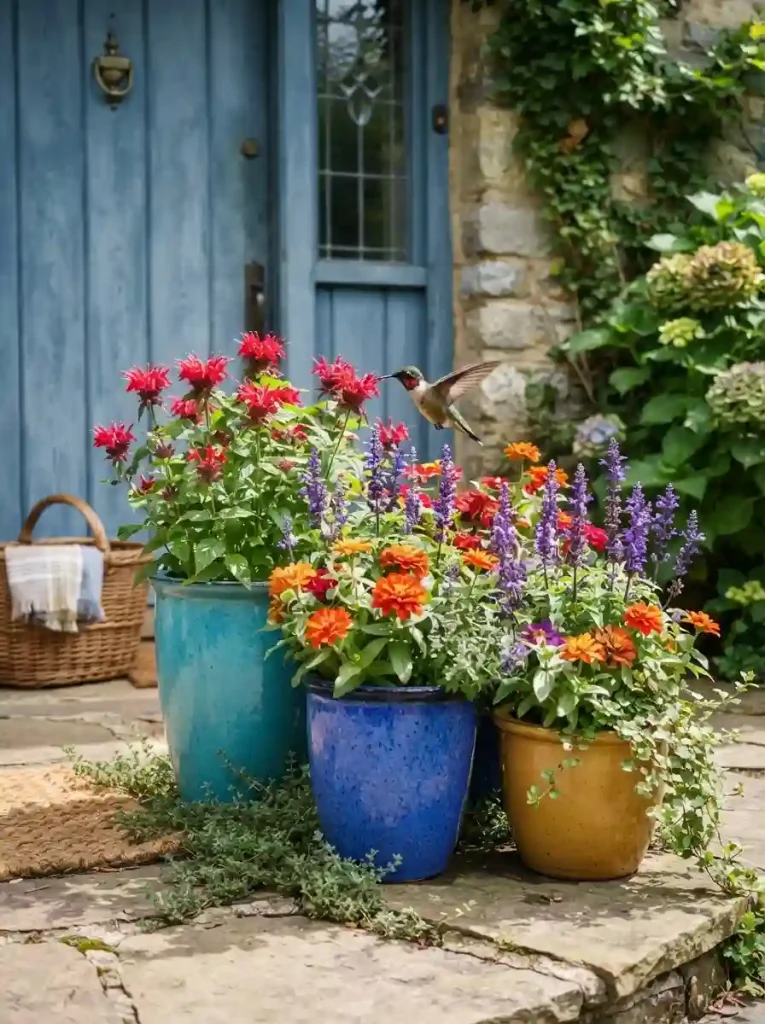
A group of pots near the door can double as a mini wildlife habitat. Bee balm, salvia, zinnias, and lantana draw hummingbirds and butterflies, so a quick trip to the mailbox becomes a bit of garden theater.
Clustering containers of different heights makes the display look fuller and more deliberate than a single lonely pot.
Pro Tip:
Mix at least one plant that blooms early with one that blooms late, so there’s something for pollinators from spring through fall.
21. Dwarf Conifers in a Mulched Bed
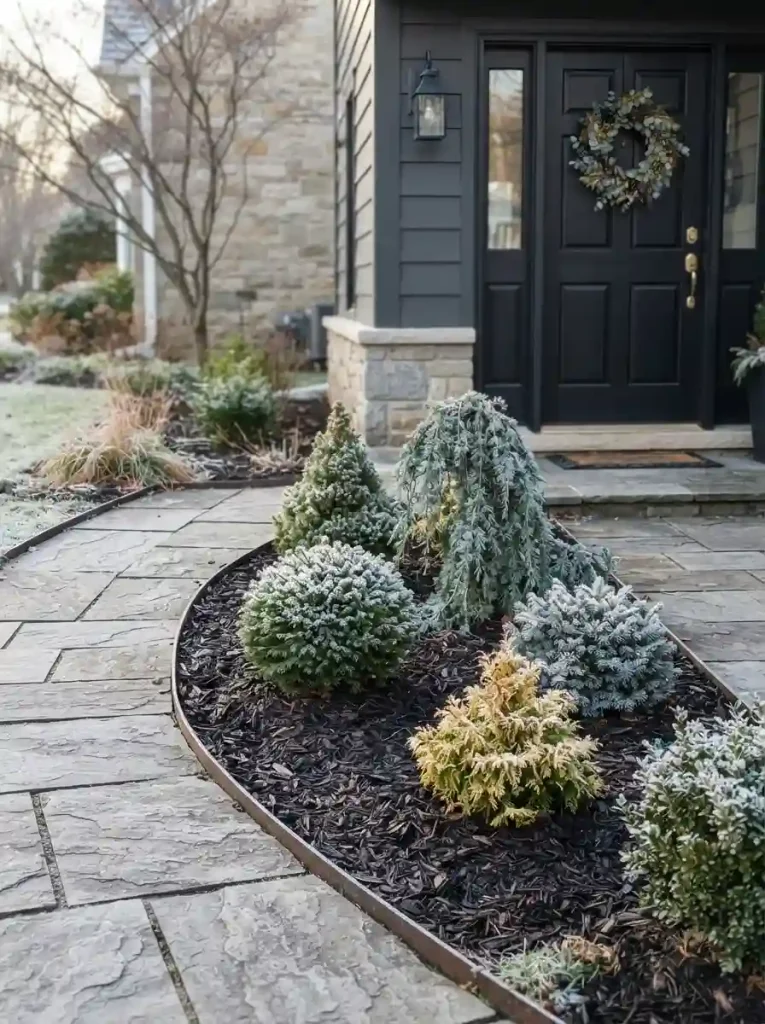
If you want year-round interest with minimal fuss, dwarf conifers are hard to beat. Their shapes range from globes and cones to weeping forms, and their colors run from deep green to gold and blue-gray. Placed in a clean, mulched bed, they look sculptural in every season.
This is a smart option for busy households, or for entries that you want to look good even in winter.
Pro Tip:
Check the mature size on the plant tag before you buy. Some “dwarf” conifers still reach several feet over time.
22. Gated Entry with a Flowering Hedge
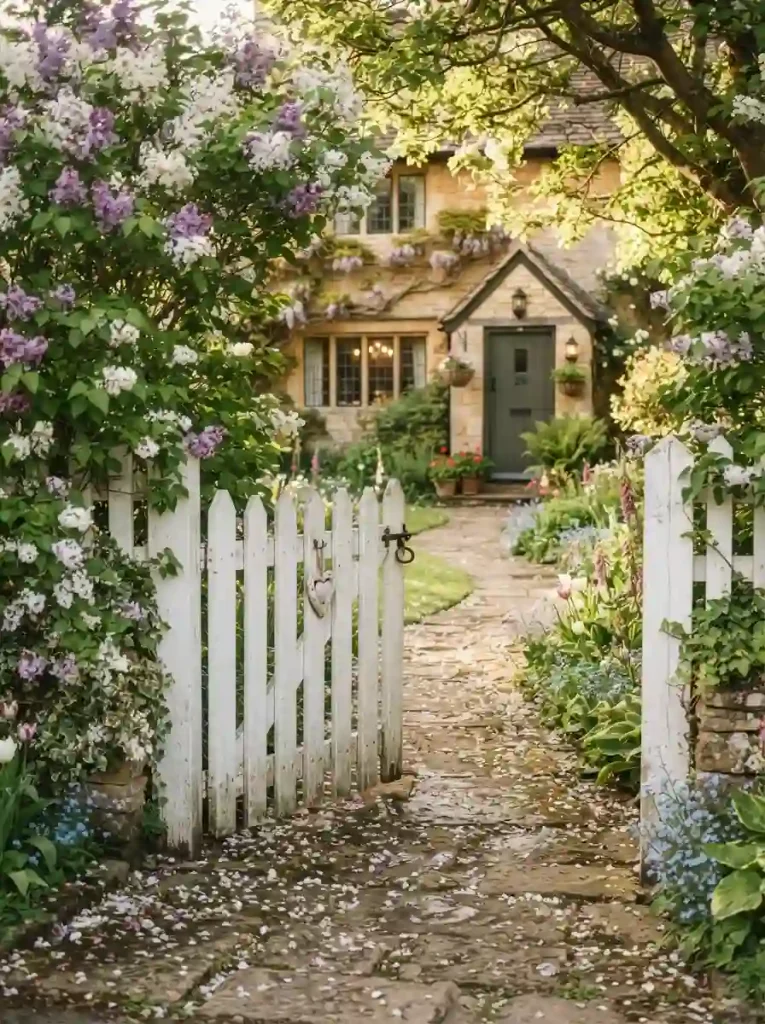
Finish the approach with a sense of arrival. A low gate set into a flowering hedge, such as viburnum or lilac, creates a threshold that feels private and special, without blocking the view of your home. It’s also a great way to separate the sidewalk from your garden.
Keep the gate simple and in harmony with your home’s style, whether it’s weathered wood, black iron, or painted white.
Pro Tip:
Leave the gate at least 36 inches wide so deliveries, strollers, and wheelbarrows pass through easily, and trim the hedge after it flowers to keep its shape.
Frequently Asked Questions
What is the best low-maintenance plant for a front entry?
Ornamental grasses, dwarf conifers, and sedum are all dependable choices. Whatever you choose, pick plants suited to your sun exposure and climate zone, since that matters more than the plant itself.
How can I make a small front entry feel welcoming?
Focus on vertical and layered elements: tall planters, window boxes, hanging baskets, and good lighting. These add impact without taking up much floor space.
What lighting works best for entry landscaping?
Low-voltage LED path lights and warm white uplighting on a tree or wall are easy to install and create a soft, safe glow.
Should my front entry plants match my house style?
They should complement it. Formal homes suit clipped topiaries and symmetrical planters, while cottages and farmhouses look best with looser, overflowing plantings.
How much does it cost to landscape a front entry?
It depends on scope. Container plantings, window boxes, and a few shrubs can be done inexpensively over a weekend, while pavers, retaining features, and lighting systems cost more. Local nurseries and landscapers can give accurate quotes for your area.
Final Thoughts
A welcoming front entry isn’t about perfection. It’s about creating a path and a mood that make people, including you, feel glad to arrive. Start with one or two ideas from this list that fit your space and your schedule, then build on them as you go. A pair of pots, a soft light, or a splash of color can change the whole feel of your home.
Which idea will you try first?