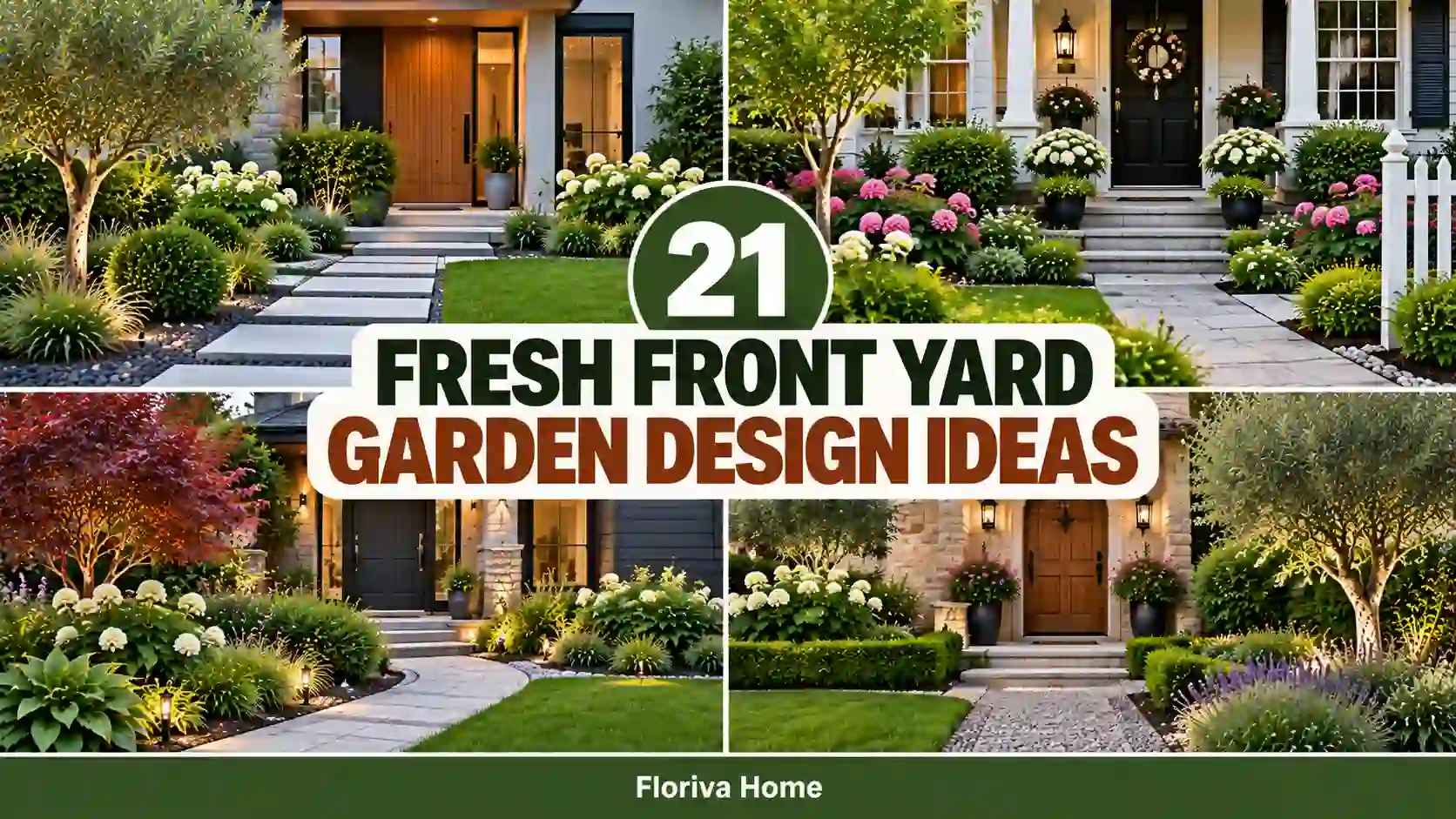
21 Fresh Front Yard Garden Design Ideas to Explore
Your front yard can do much more than frame the entrance to your home. With the right plants, pathways, textures, and focal points, even an ordinary patch of lawn can become a welcoming garden that adds personality and curb appeal.
You don’t need a huge space or an elaborate landscaping budget to create something beautiful. A thoughtfully designed planting bed, a few statement plants, or a creative border can completely change how your home looks from the street.
Whether you prefer a colorful cottage-style garden, a clean modern landscape, or something soft and natural, these front yard garden design ideas can help you find a look that fits your home and your gardening style.
1. Frame the Front Walkway With Layered Flower Beds
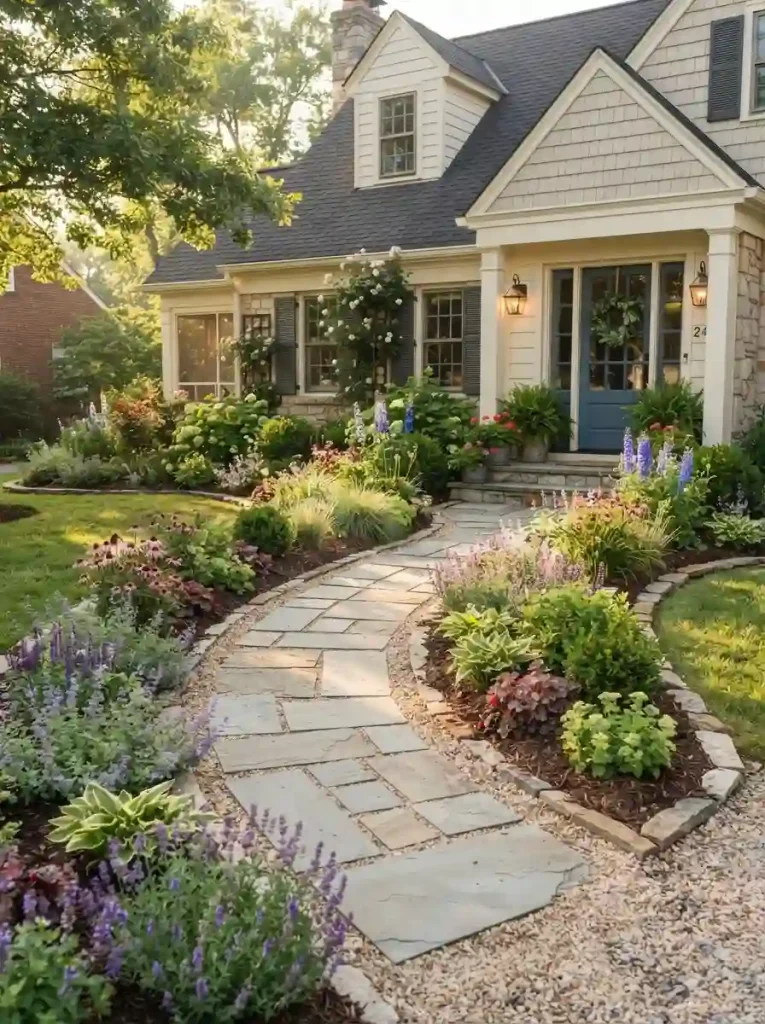
A front walkway becomes much more inviting when plants gradually frame both sides instead of stopping at a plain lawn. Combine low flowers near the path with medium-height plants behind them and a few taller accents toward the house.
This layered approach gives the garden depth without making the entrance feel crowded. Choose plants with different bloom periods so the planting bed continues to look interesting as the seasons change.
Expert Tip:
Keep the lowest plants closest to the walkway so they don’t spill over and make the path difficult to use.
2. Create a Small Flower Island Around a Feature Tree
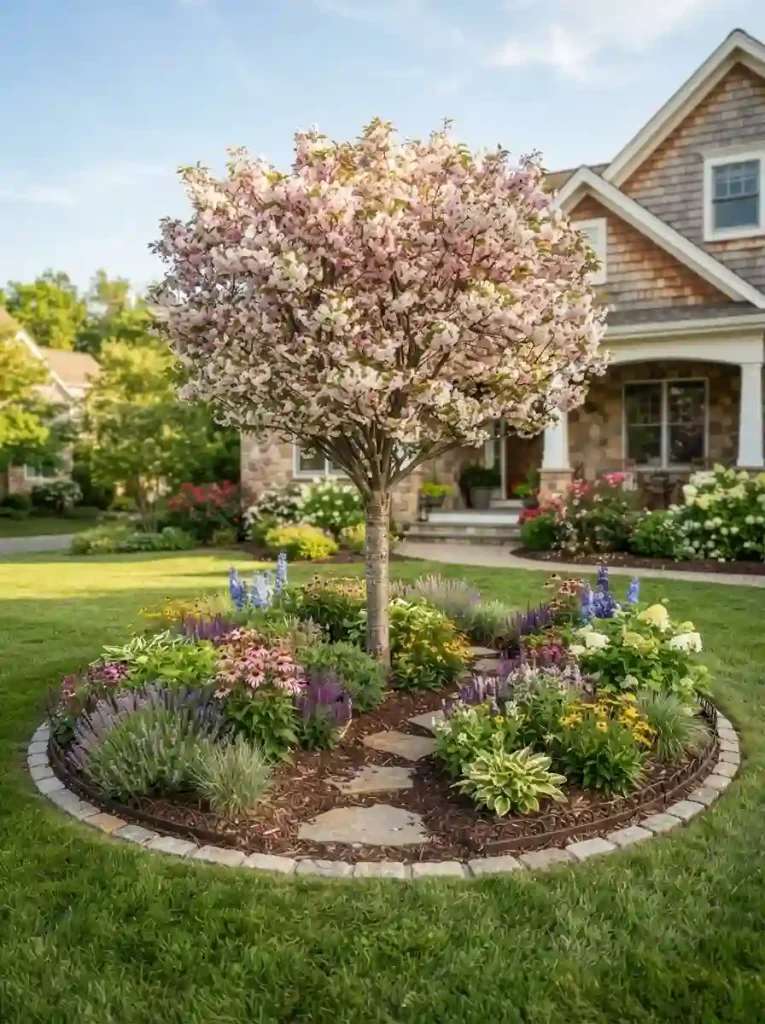
If your front yard already has a mature tree, let it become the centerpiece instead of treating it as an isolated lawn feature.
Create a generous planting circle around the trunk using flowers, ground covers, and compact shrubs. The tree provides height while the plants underneath bring color and texture closer to eye level.
Avoid filling the entire area with plants. Leaving a little breathing room around the trunk creates a cleaner appearance and makes maintenance easier.
Expert Tip:
Keep mulch and soil away from direct contact with the trunk to help protect the tree.
3. Mix Ornamental Grasses With Flowering Perennials
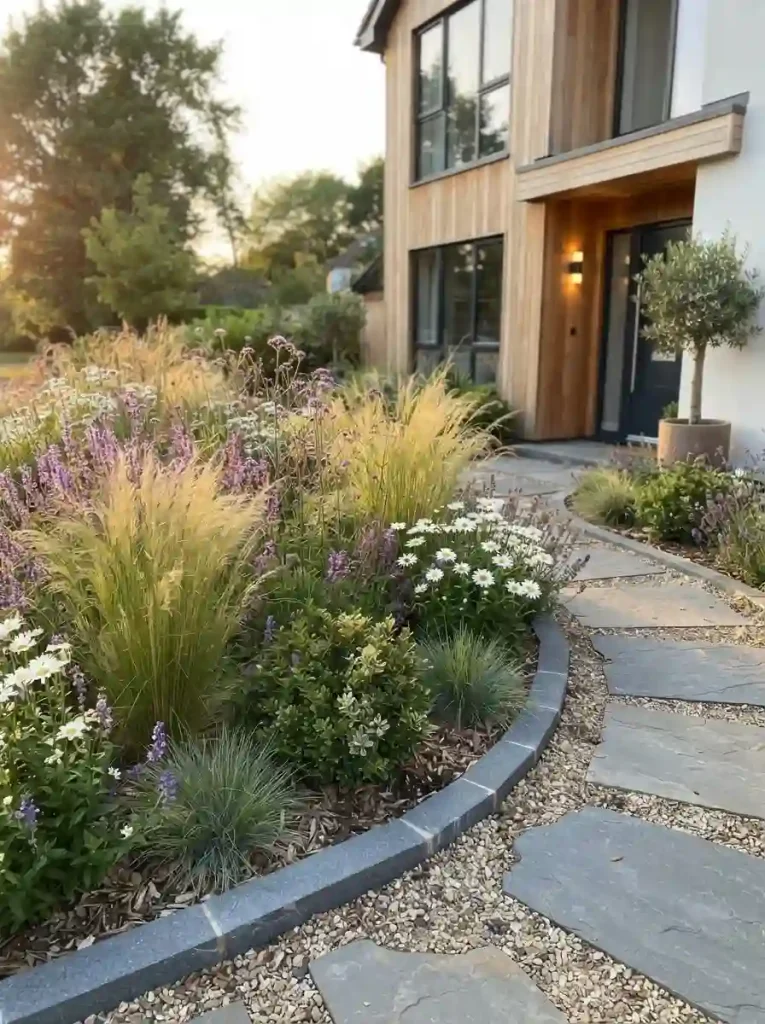
Ornamental grasses can give a front garden movement and structure while flowering perennials add seasonal color. Together, they create a relaxed planting scheme that looks fuller without requiring dozens of different plant varieties.
Try grouping several plants of the same type rather than placing every plant individually. Repetition makes the garden feel intentional and helps connect separate planting areas.
Choose grass varieties appropriate for your climate and available sunlight, since mature size can vary considerably.
Expert Tip:
Place taller grasses toward the back of the bed and shorter flowering plants toward the front for a natural layered effect.
4. Turn a Narrow Side Strip Into a Front-Yard Garden
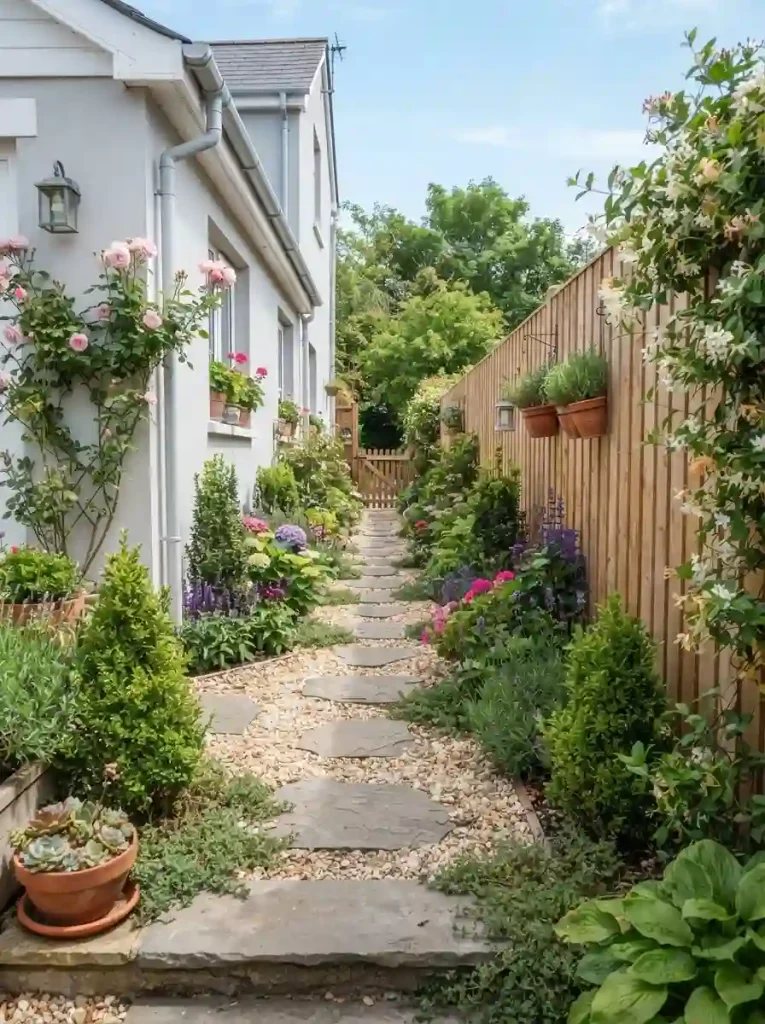
That narrow strip between your driveway, house, and property line doesn’t have to remain an awkward patch of unused ground.
Use slim shrubs, compact flowers, ground covers, and decorative gravel to turn it into a purposeful planting zone. A narrow stepping-stone path can also make the area practical while giving the garden more visual interest.
The key is choosing plants that stay proportional to the available width.
Expert Tip:
Measure the mature spread of every plant before buying it. A plant that looks small at the nursery may eventually overwhelm a narrow border.
5. Add a Statement Planter Beside the Entry
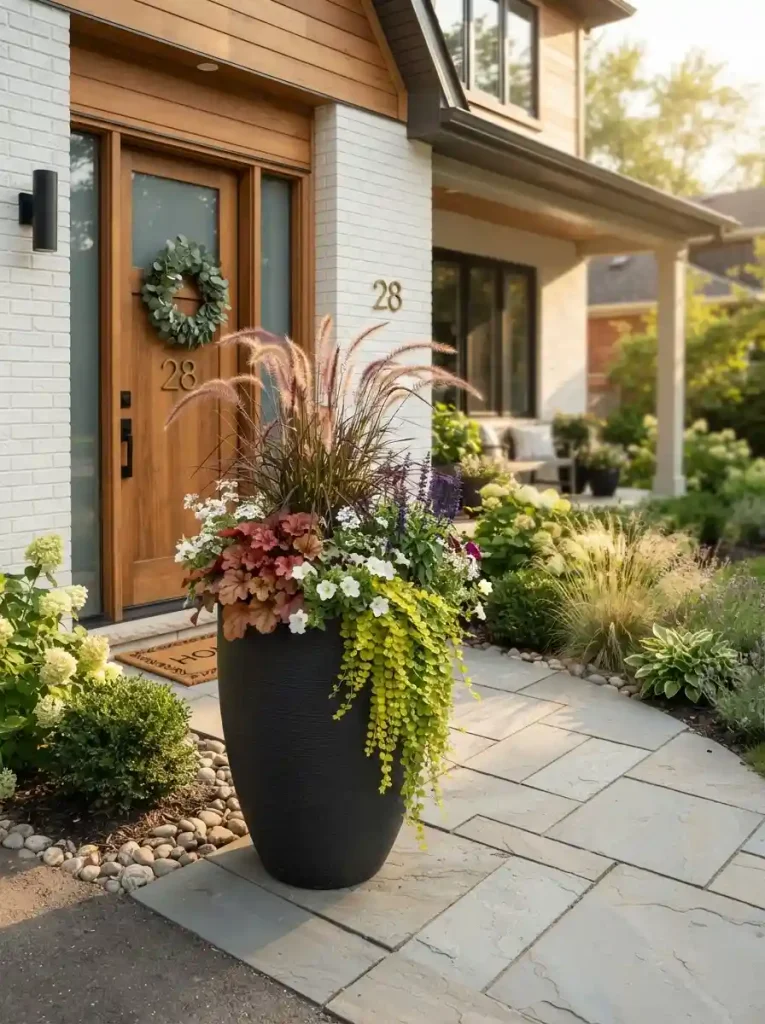
Sometimes one strong container can make a bigger impact than an entire collection of small pots.
Place a large planter beside the front door or at the beginning of the walkway. Fill it with a combination of upright foliage, colorful flowers, and something that gently trails over the edge.
Choose a container that complements the architecture of your home. A simple oversized pot can work beautifully with modern homes, while textured ceramic or aged finishes can suit more traditional properties.
Expert Tip:
Use a container with proper drainage and select plants with similar sunlight and watering requirements.
6. Design a Curved Border Instead of a Straight Planting Bed
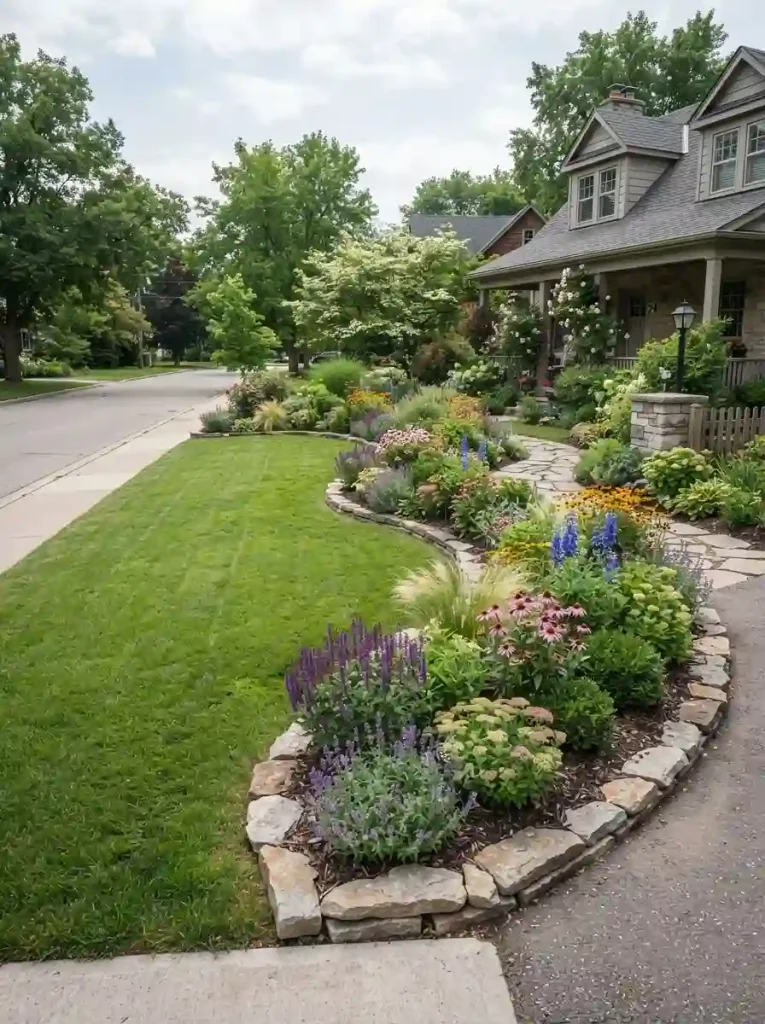
Straight planting beds can look neat, but a gentle curve can make a front yard feel softer and more dynamic.
Mark the proposed border with a garden hose before digging. This makes it easy to experiment with different shapes until the curve works naturally with your home and walkway.
Fill the bed with repeating groups of plants rather than creating a random collection. The result will feel cohesive while still having plenty of seasonal variety.
Expert Tip:
Avoid creating overly complicated curves. One or two broad sweeps usually look more polished than many small bends.
7. Use Evergreen Shrubs for Year-Round Structure
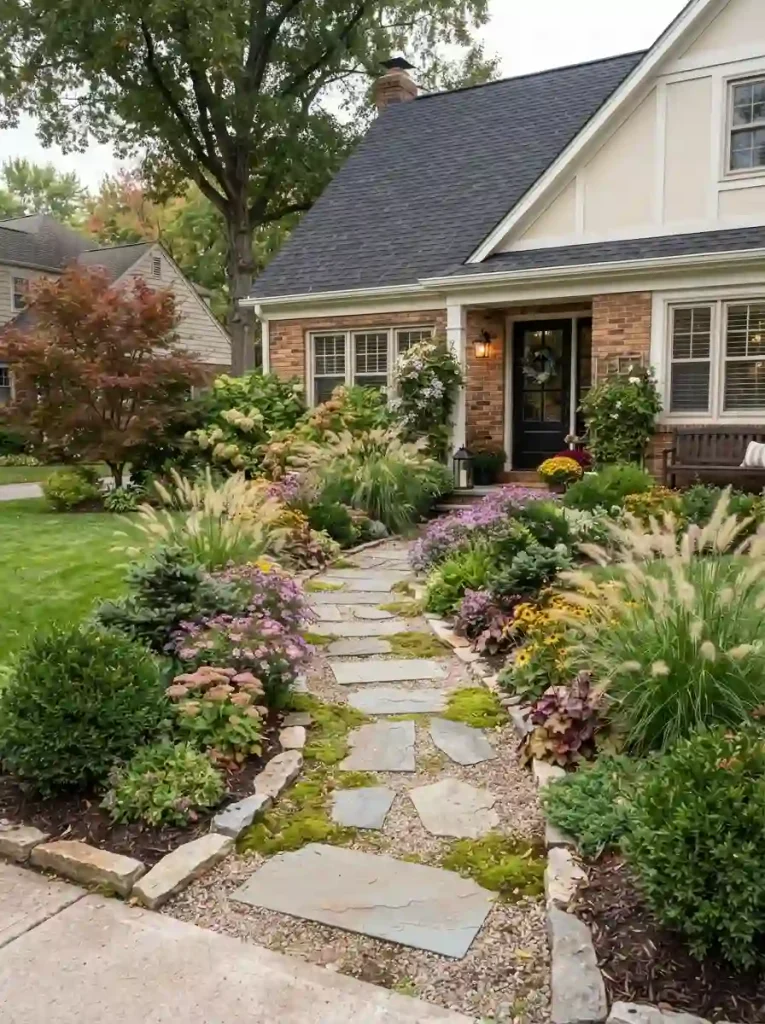
Flowers may steal attention when they bloom, but evergreen shrubs provide the visual framework that keeps a garden attractive during quieter seasons.
Use compact evergreens near the house, along pathways, or at the corners of planting beds. Their consistent foliage can also provide a useful backdrop for brighter seasonal flowers.
Mix different shapes rather than planting every shrub in an identical row. Rounded, upright, and spreading forms can create more visual depth.
Expert Tip:
Check the mature width of shrubs before planting them close to windows or walkways.
8. Create a Pollinator-Friendly Front Garden
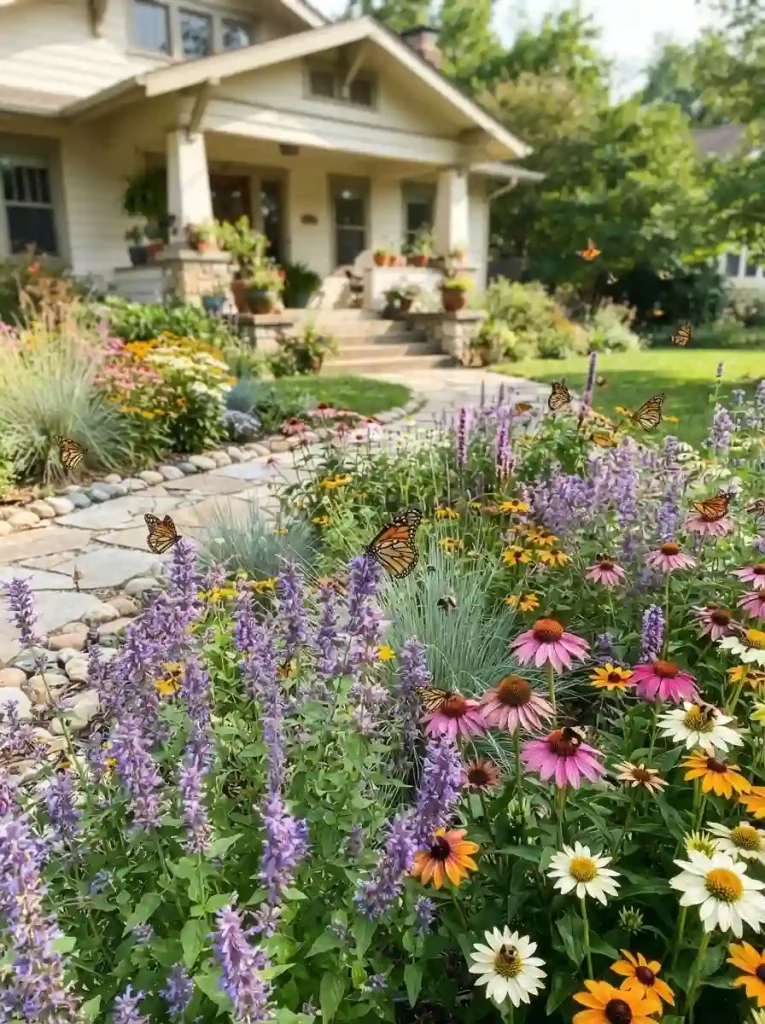
A front garden can be beautiful while also providing valuable habitat for pollinators.
Choose flowering plants that offer nectar across different parts of the growing season. Include a mixture of flower shapes, heights, and bloom times rather than relying on one type of plant.
Native plants are especially useful because they are generally adapted to local growing conditions and can support local wildlife.
You can still keep the garden visually tidy by repeating plant groups and defining the planting area with a clear edge.
Expert Tip:
Avoid using broad-spectrum pesticides around flowering plants when possible, especially when bees and butterflies are actively visiting them.
9. Replace Part of the Lawn With a Low-Growing Garden
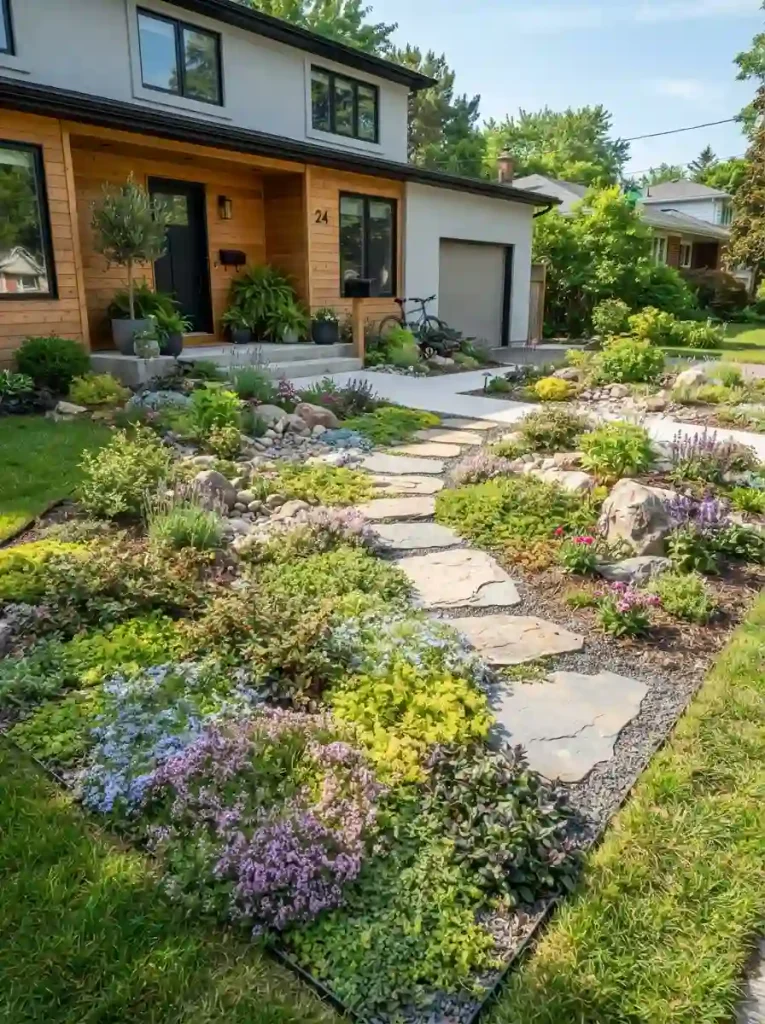
A large expanse of grass can be attractive, but replacing a portion of it with low-growing plants can make your front yard more interesting and potentially reduce mowing.
Choose plants suited to your sunlight, soil, and climate. Ground covers can soften the edges of paths while low flowering plants can create seasonal color without reaching the height of traditional shrubs.
Keep some open lawn if you like the classic appearance. The contrast between green grass and planted areas can actually make both look more intentional.
Expert Tip:
Start with a small section first so you can see how the chosen plants perform before expanding the design.
10. Add Natural Stone Edging Around Garden Beds
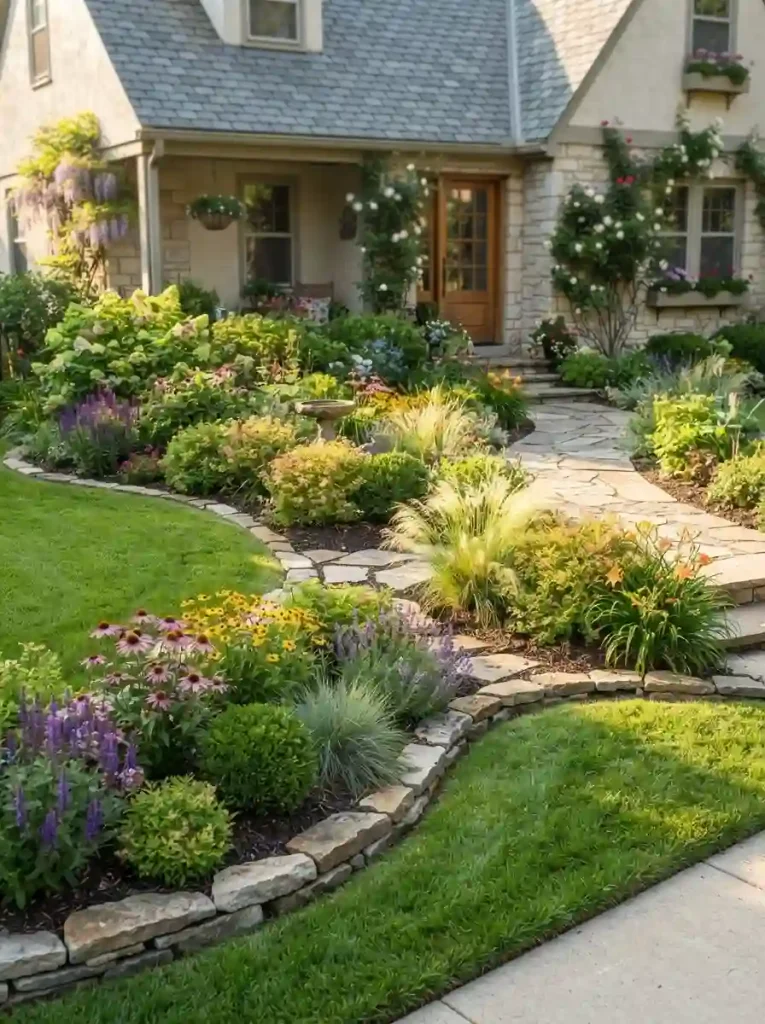
A garden bed can instantly look more finished when its boundary is clearly defined.
Natural stones can create a relaxed transition between lawn and planting areas while adding texture that doesn’t depend on flowers being in bloom. Arrange stones with slight variation rather than making the border look perfectly manufactured.
Stone edging also makes mowing and trimming easier because it visually separates the lawn from the garden.
Expert Tip:
Partially set larger stones into the soil so the border feels stable and naturally integrated with the landscape.
11. Build a Cottage-Style Front Garden With Informal Planting
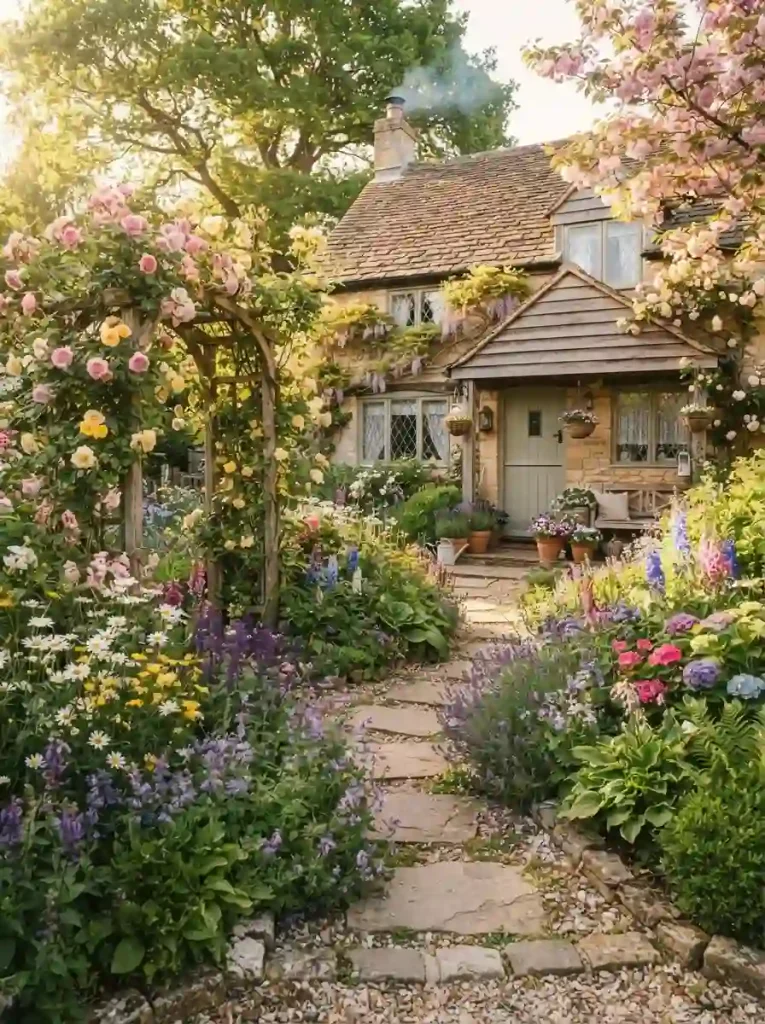
If you love gardens that feel abundant and welcoming, try a relaxed cottage-inspired planting scheme.
Combine flowering perennials, small shrubs, herbs, and graceful foliage plants in informal groups. Instead of arranging everything in rigid rows, allow different heights and textures to overlap naturally.
A cottage-style garden works especially well around traditional homes, porches, and older architectural details. Add a simple path through the planting to make the garden feel connected to the entrance.
Expert Tip:
Repeat a few favorite flowers throughout the bed so the abundance feels intentional rather than chaotic.
12. Give the Front Porch a Green Backdrop
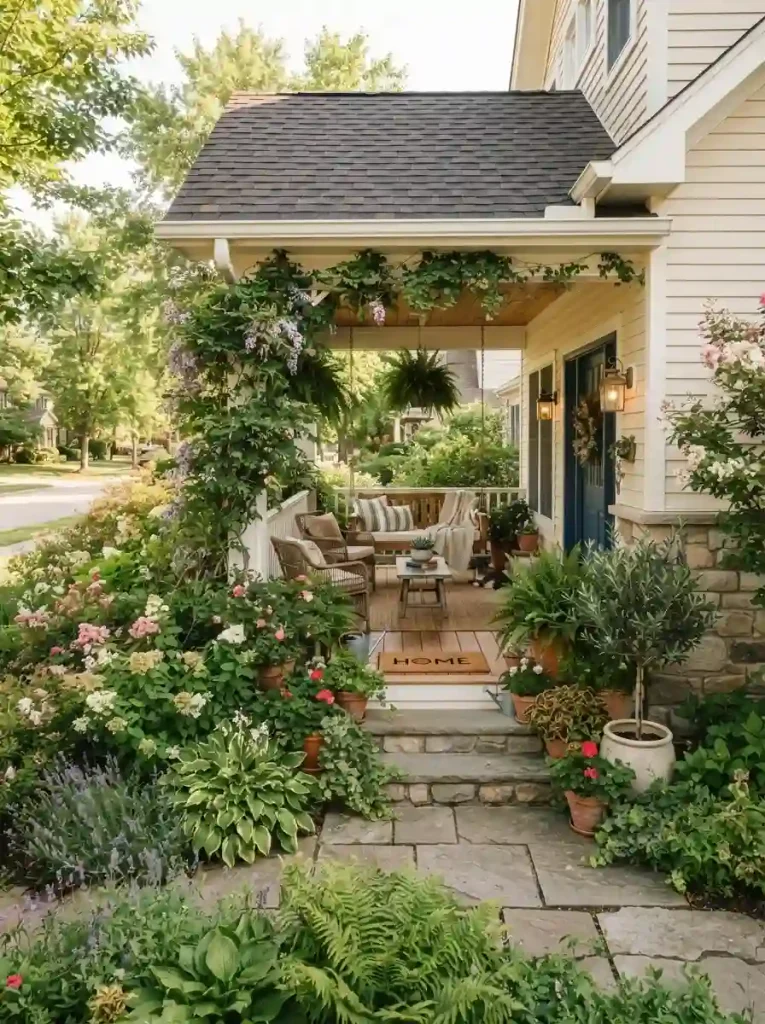
Your front porch can become a stronger part of the landscape when the garden visually connects with it.
Plant medium-height shrubs or flowering plants around the porch edges to soften hard architectural lines. Containers can add additional greenery without requiring permanent planting.
For a particularly cohesive appearance, repeat one or two plants from the front garden near the doorway. This creates a visual connection between the landscape and the home.
Expert Tip:
Keep plants around the entrance low enough to preserve a clear view of the doorway and house numbers.
13. Make a Gravel Garden With Sculptural Plants
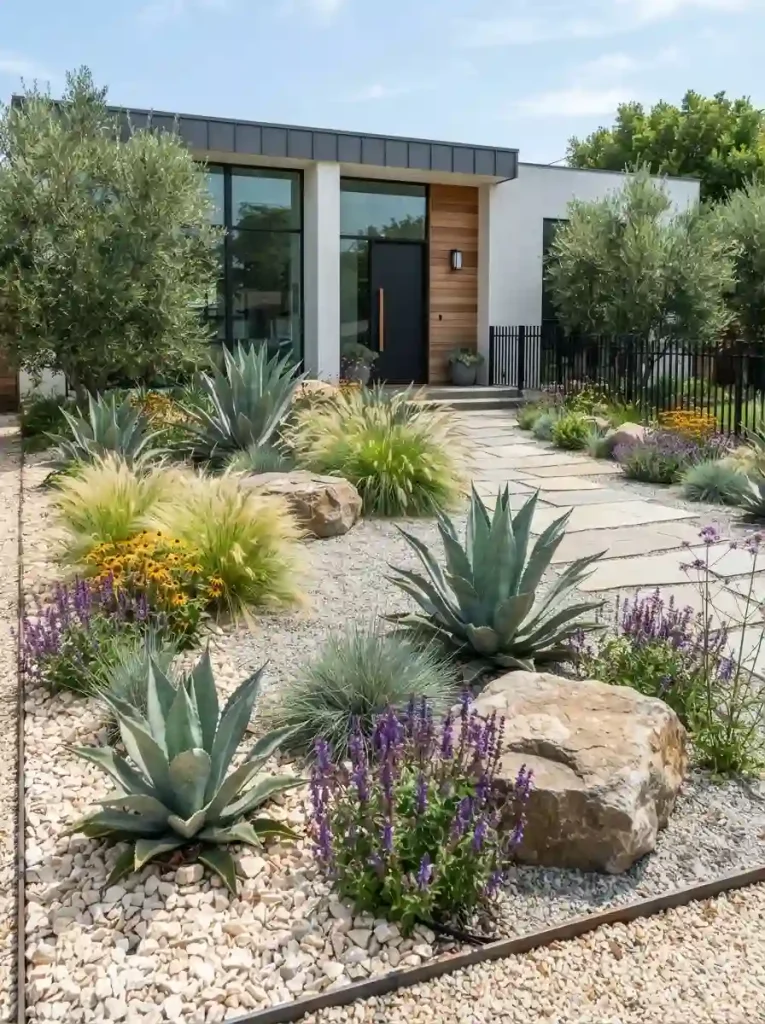
For a contemporary and relatively low-maintenance look, consider replacing part of a traditional planting bed with decorative gravel.
Use gravel as the foundation and add plants with strong architectural forms. Grasses, succulents, drought-tolerant perennials, and compact shrubs can provide contrast against the small stones.
Large rocks or a few carefully positioned boulders can add another layer of natural texture without making the space feel overly decorated.
Expert Tip:
Install a suitable landscape fabric or prepare the soil properly beneath the gravel to help manage unwanted weeds.
14. Highlight the House Corners With Matching Plant Groups
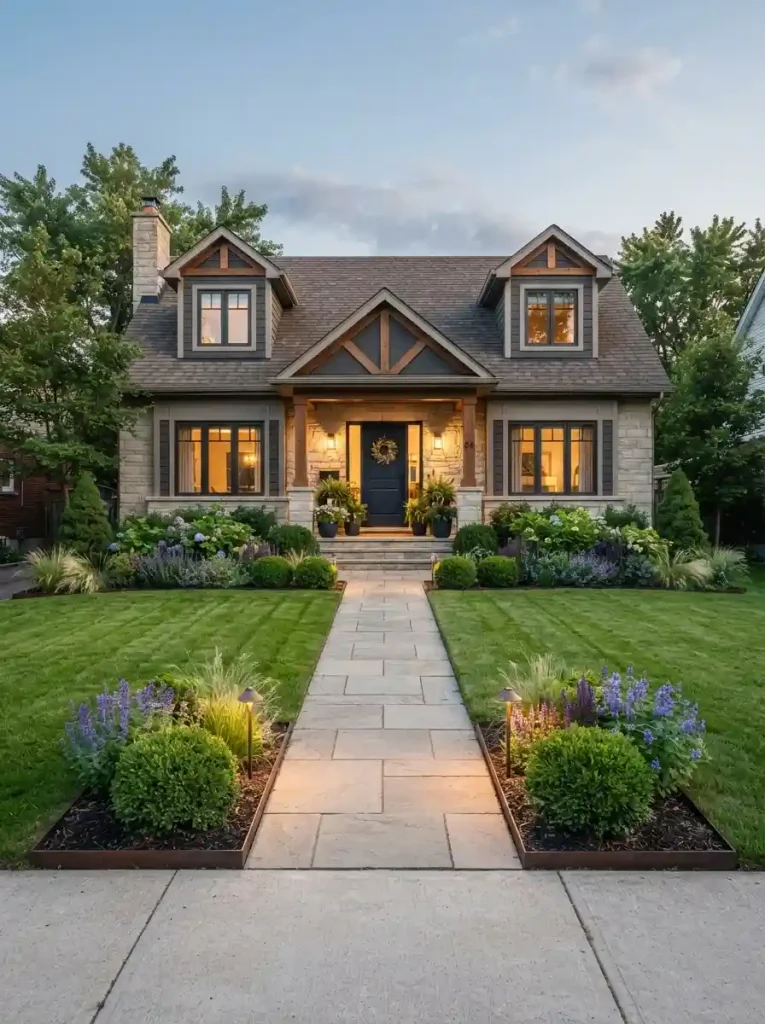
The corners of your house can become natural anchor points for the entire front-yard design.
Try planting matching groups of shrubs or small trees near opposite corners. The symmetry helps frame the house and creates a more established appearance even when the rest of the garden remains informal.
You don’t necessarily need identical plants. Similar shapes, colors, or heights can create enough repetition to make the composition feel balanced.
Expert Tip:
Leave adequate space between mature plants and the house so airflow and maintenance remain manageable.
15. Add a Small Raised Garden Bed Near the Entrance
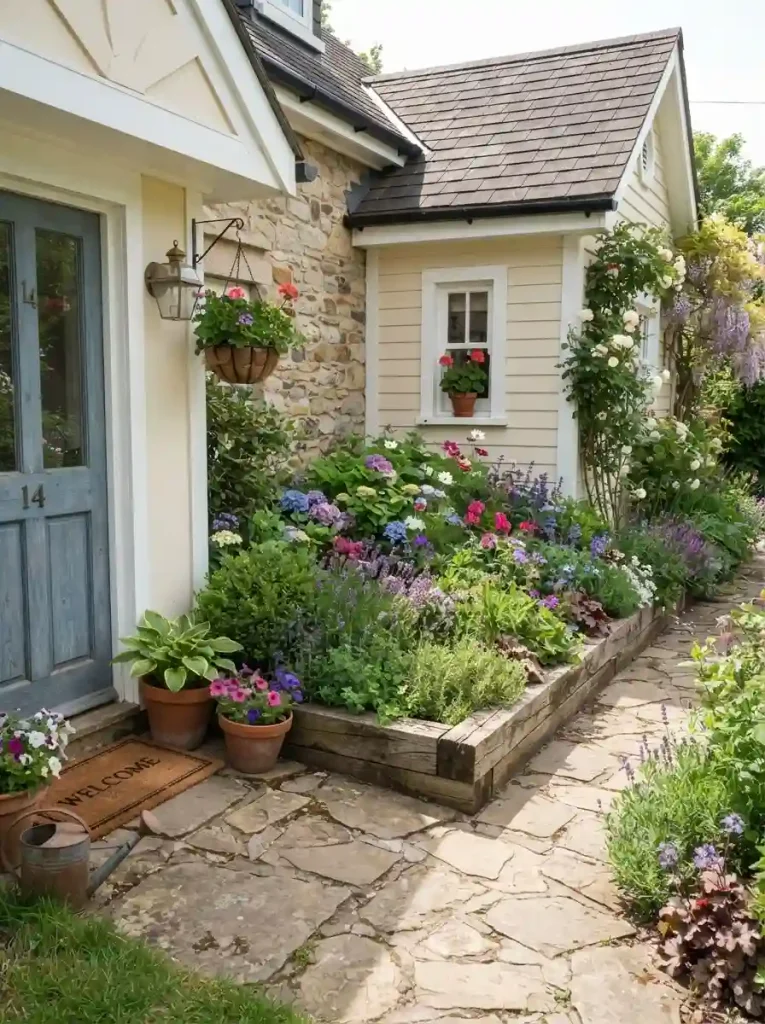
A small raised bed can add dimension to a flat front yard while giving you greater control over the planting area.
Use timber, stone, brick, or another material that complements your home’s exterior. Keep the structure relatively low so it looks like part of the landscape rather than an oversized feature.
Fill it with a combination of foliage plants and flowers to keep the display attractive even when individual blooms fade.
Expert Tip:
Match the raised bed material to existing details such as brickwork, stone paths, fencing, or porch finishes.
16. Create a Front Yard With Native Plants
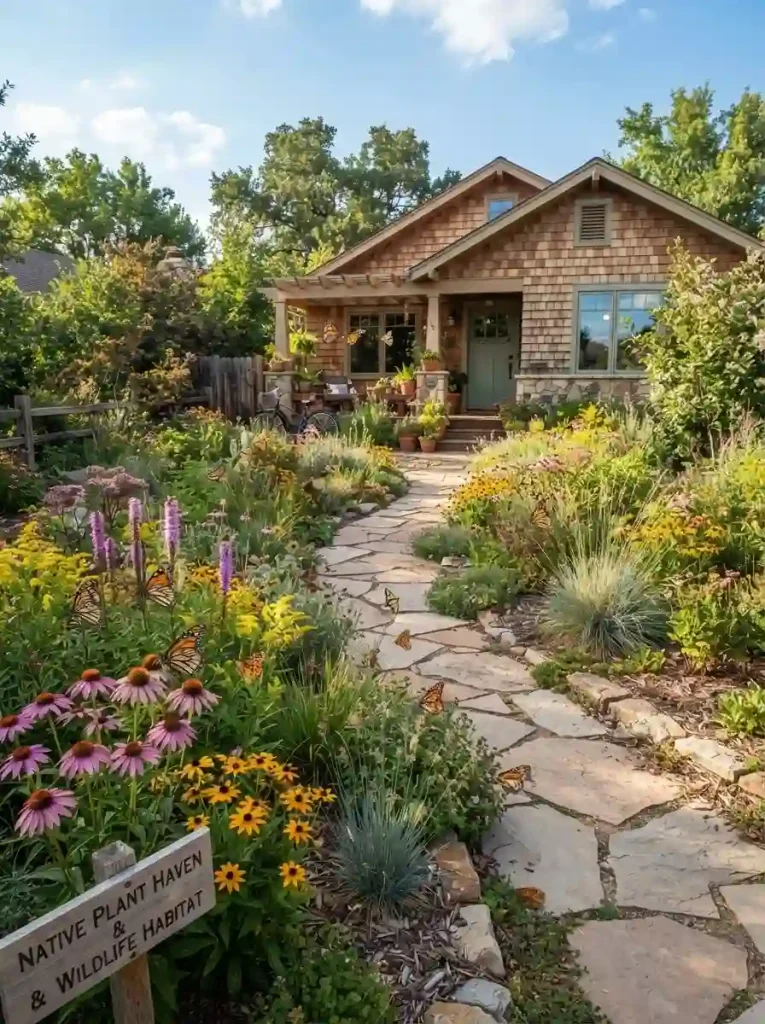
A native plant garden can give your front yard a more natural character while helping you work with the conditions already present in your landscape.
Select species that naturally thrive in your region and group them according to their preferred light and moisture conditions. A mix of grasses, flowering plants, and shrubs can create a layered appearance throughout the seasons.
You can keep the design visually organized by giving the planting bed a defined edge and repeating larger plant groups.
Expert Tip:
Research local native species through reputable botanical gardens, native-plant organizations, or local extension resources before purchasing plants.
17. Combine Brick Paths With Soft Garden Planting
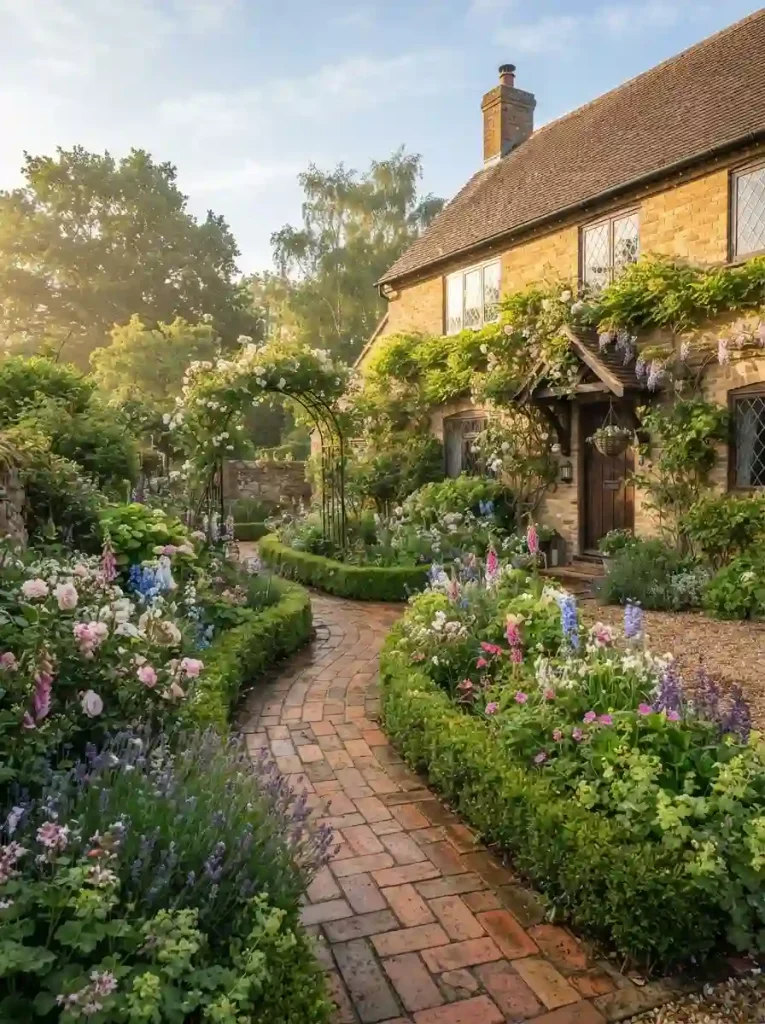
Hardscape materials can add just as much personality as plants.
A brick walkway brings warmth and traditional character, especially when surrounded by relaxed planting. Allow flowers and foliage to soften the edges without completely covering the walking surface.
For a more contemporary home, use a simpler brick layout with restrained planting. For traditional architecture, an informal border can create a charming garden-path effect.
Expert Tip:
Choose a path width that allows comfortable walking while leaving enough room for plants to mature without obstructing it.
18. Use Flowering Shrubs as Seasonal Focal Points
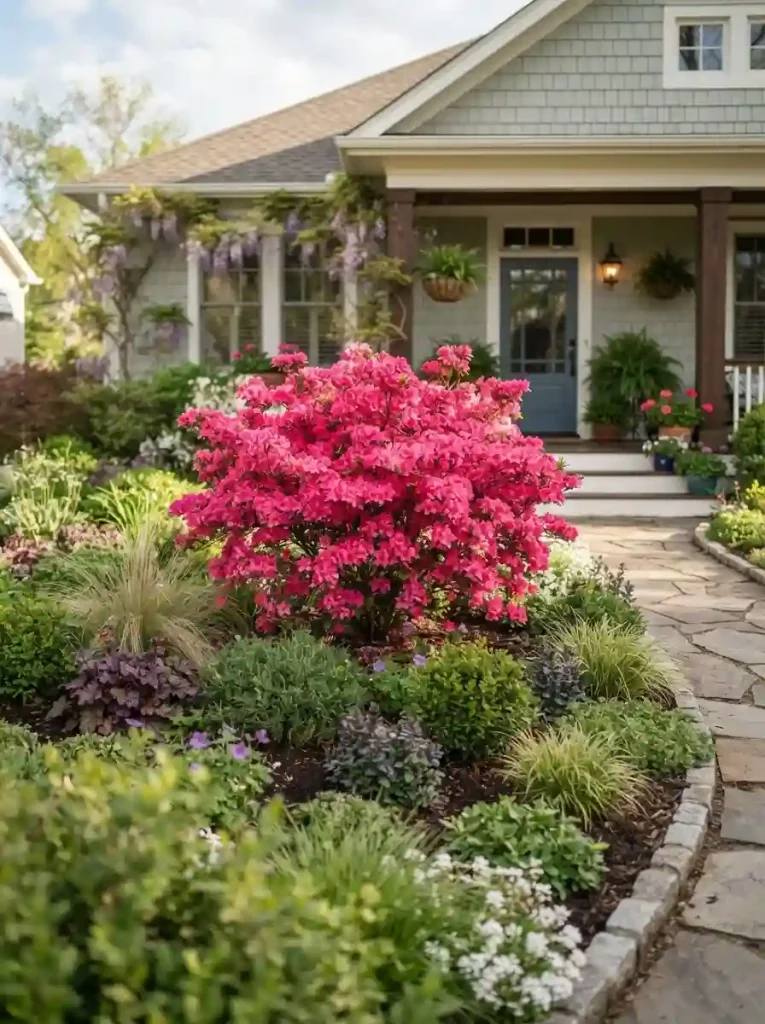
Instead of scattering flowers throughout every corner, consider giving one flowering shrub a starring role.
A mature flowering shrub can provide a dramatic seasonal display while also adding height and structure. Surround it with quieter foliage plants so the focal point remains visually important.
Choose a shrub whose mature size suits the space. The goal is to create a feature that looks impressive without eventually blocking windows or dominating the entrance.
Expert Tip:
Think about what the shrub will look like after flowering. Attractive foliage, berries, bark, or structure can keep it useful beyond its main bloom period.
19. Design a Layered Garden Along the Driveway
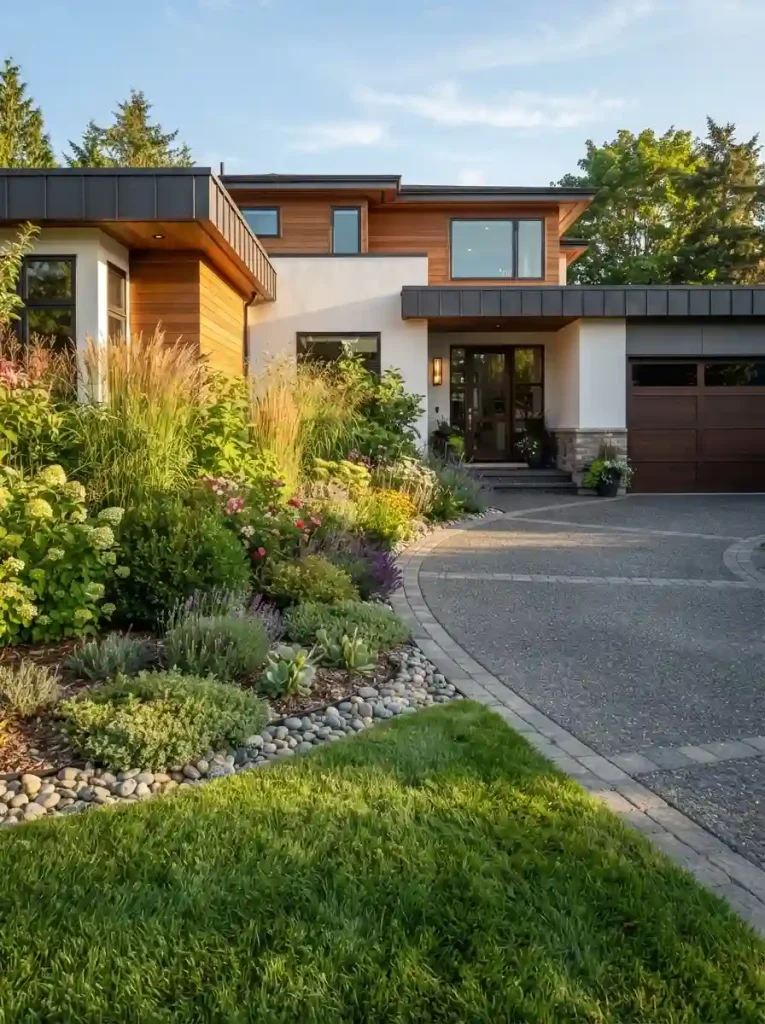
Driveways often create large, visually hard edges in front yards. Planting alongside them can soften the transition between pavement and landscape.
Start with low-growing plants nearest the driveway, then gradually increase plant height farther away. This creates a natural progression while keeping visibility open for vehicles.
Repeating groups of three, five, or more plants can make the border feel fuller and more professionally designed.
Expert Tip:
Keep plants away from areas where car doors, tires, drainage, or pedestrian movement could damage them.
20. Add a Small Water Feature as a Focal Point
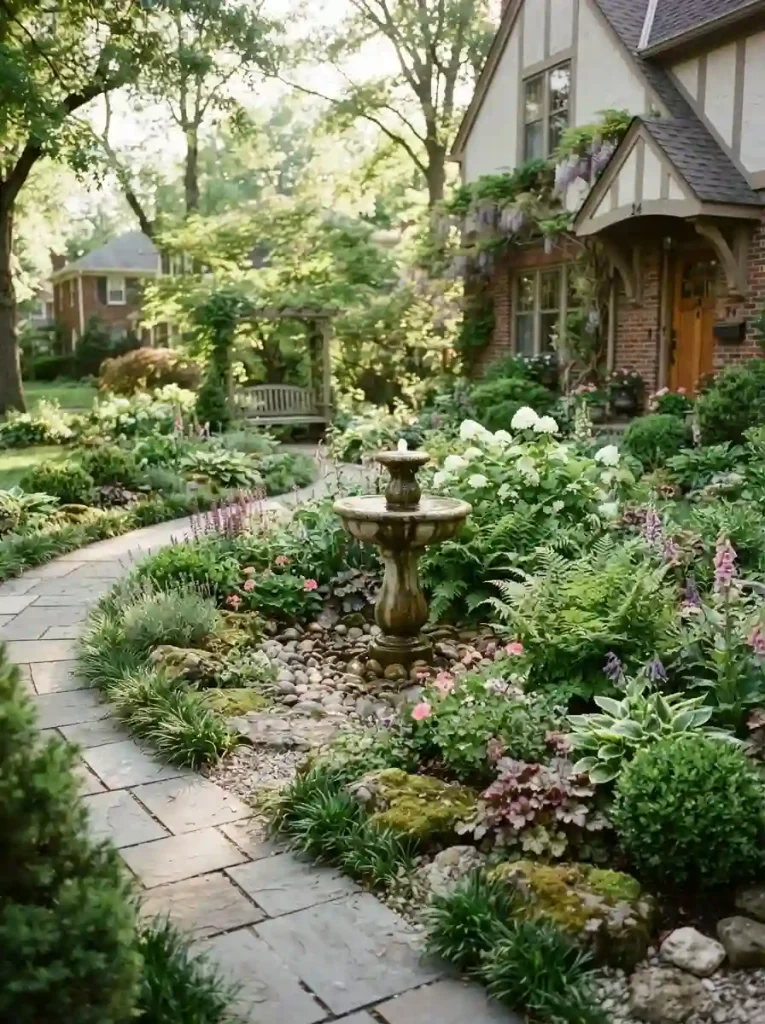
A small water feature can introduce sound and movement into an otherwise static front garden.
You don’t need a large pond. A compact fountain, bubbling urn, or simple recirculating feature can create a focal point near the entrance or within a planting bed.
Surround the feature with plants that complement its scale rather than hiding it completely. Natural stone, gravel, and foliage can help integrate it into the landscape.
Expert Tip:
Position the feature where it can be enjoyed from the porch or entry rather than placing it somewhere that is barely visible.
21. Create a Modern Front Garden With Repeated Shapes
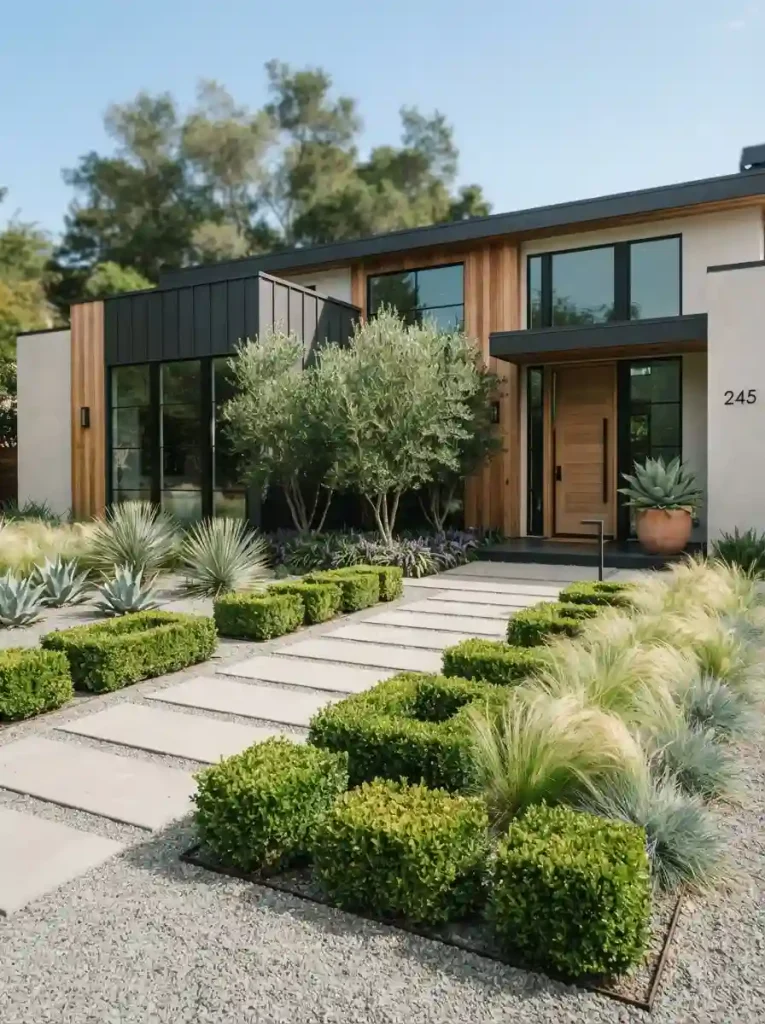
A modern front yard doesn’t have to be completely bare or dominated by concrete.
Create visual order by repeating shapes throughout the garden. Rounded shrubs, rectangular planting beds, linear paths, and carefully spaced plants can give the landscape a contemporary appearance.
Limit the number of plant varieties and concentrate on strong foliage, texture, and form. A restrained planting palette often makes modern landscaping look more intentional.
Expert Tip:
Repeat the same geometric idea in at least two or three areas of the yard to create a unified design rather than a collection of unrelated features.
Practical Tips for Planning Your Front Yard Garden
Study the Sunlight
Watch how sunlight moves across the front yard during the day. Some areas may receive full sun while others remain shaded by the house, trees, or neighboring structures.
Choose plants according to those conditions rather than choosing plants first and trying to make the yard accommodate them.
Consider Mature Plant Size
One of the most common landscaping mistakes is planting based on the size of a plant at the garden center.
Look at its expected mature height and width. This is particularly important near windows, paths, driveways, utility equipment, and the foundation.
Repeat Plants for a Cohesive Look
You don’t need dozens of plant varieties to create an interesting garden.
Repeating the same flowers, shrubs, grasses, or foliage plants in different sections can make the entire front yard feel connected.
Think About Every Season
A front garden shouldn’t depend entirely on spring or summer flowers.
Combine evergreen foliage, ornamental grasses, interesting branches, seed heads, berries, and plants with different bloom periods to create seasonal interest.
Keep Maintenance Realistic
Consider how much time you actually want to spend watering, pruning, weeding, deadheading, and dividing plants.
A simpler planting plan that you can consistently maintain will usually look better than an elaborate garden that quickly becomes difficult to manage.
Simple Front Yard Garden Planning Checklist
- Measure the available planting areas.
- Identify full-sun, partial-shade, and shaded locations.
- Check the soil and drainage.
- Note existing trees and permanent landscape features.
- Determine how much lawn you want to keep.
- Choose a general design style.
- Select plants based on mature size.
- Include a mixture of heights and textures.
- Repeat key plants throughout the yard.
- Plan clear walking routes.
- Keep driveways and entrances unobstructed.
- Consider seasonal interest.
- Choose edging or hardscape materials that complement the home.
- Estimate watering and maintenance requirements.
- Start with one manageable section if you’re unsure about the full design.
Final Thoughts
A memorable front yard doesn’t have to be complicated. The strongest garden designs usually come from combining a few thoughtful elements—appropriate plants, defined borders, attractive pathways, varied textures, and one or two memorable focal points.
Whether you transform a narrow planting strip, surround an existing tree with flowers, introduce native plants, or create a polished modern garden, the most important thing is to design around your home’s architecture and the conditions of your property.
Start small if necessary. Once you discover which plants thrive and which design elements you enjoy maintaining, you can gradually expand the garden.
With a little planning, your front yard can become more than curb appeal—it can become a welcoming outdoor space that feels like a natural extension of your home.
Frequently Asked Questions
What is the easiest way to improve a front yard garden?
Start by defining the planting areas and improving the entry pathway. Adding a few well-chosen shrubs, seasonal flowers, and an attractive edge can make a noticeable difference without requiring a complete landscape renovation.
How do I make a small front yard look more attractive?
Use vertical and layered planting rather than filling the entire area with low plants. Small trees, upright grasses, compact shrubs, containers, and clearly defined pathways can create depth without requiring much ground space.
What plants are best for a front yard?
The best plants depend on your local climate, soil, sunlight, drainage, and available space. Native and well-adapted plants are often excellent choices because they can be better suited to local growing conditions.
Should I remove all the grass from my front yard?
Not necessarily. You can keep a portion of the lawn and replace only the least useful areas with garden beds. Combining lawn with strategically placed planting areas can create a balanced and attractive landscape.
How can I make my front garden easier to maintain?
Choose plants suited to your growing conditions, group plants with similar watering needs, use mulch where appropriate, keep paths accessible, and avoid overcrowding plants. Designing for mature plant size also reduces future pruning and relocation work.