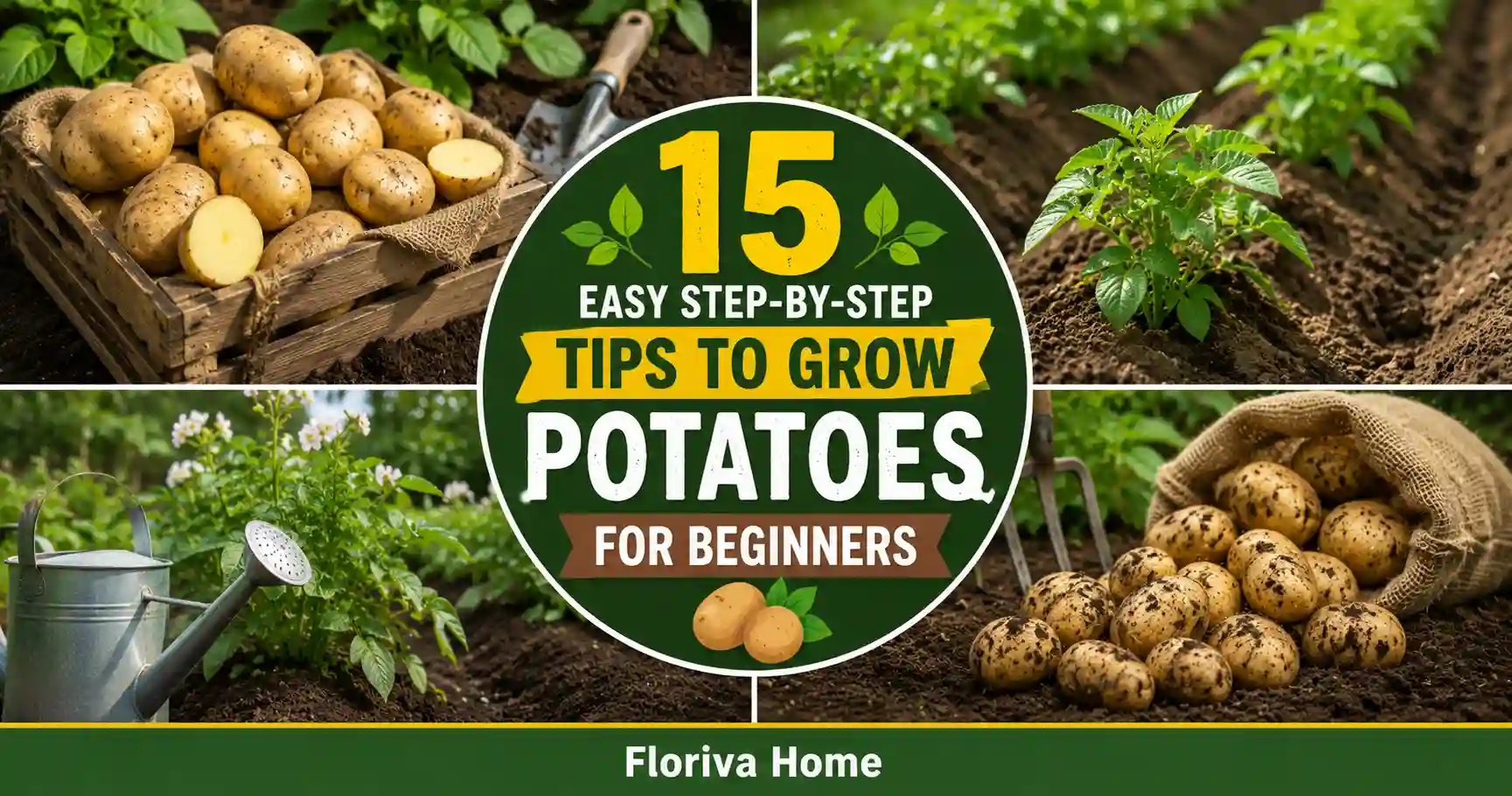
15 Easy Step-by-Step Tips to Grow Potatoes for Beginners
Growing potatoes at home is one of the very easiest ways to start a productive garden, even if you are new to growing food. With a few healthy seed potatoes, loose soil, regular watering, and plenty of sunlight, you can enjoy a rewarding potato harvest in a garden bed or container.
These simple potato-growing tips will walk you through each important step, from choosing planting material to caring for young potato plants. Save these beginner-friendly ideas and discover how satisfying potato gardening can be.
How long does it take to grow potatoes?
Most potatoes take about 60 to 120 days to mature, depending on the variety and growing conditions. Early varieties are usually ready sooner, while maincrop potatoes need more time. Watch for yellowing and dying foliage as a helpful sign that mature potatoes are getting close to harvest.
1. Choose Strong Seed Potatoes
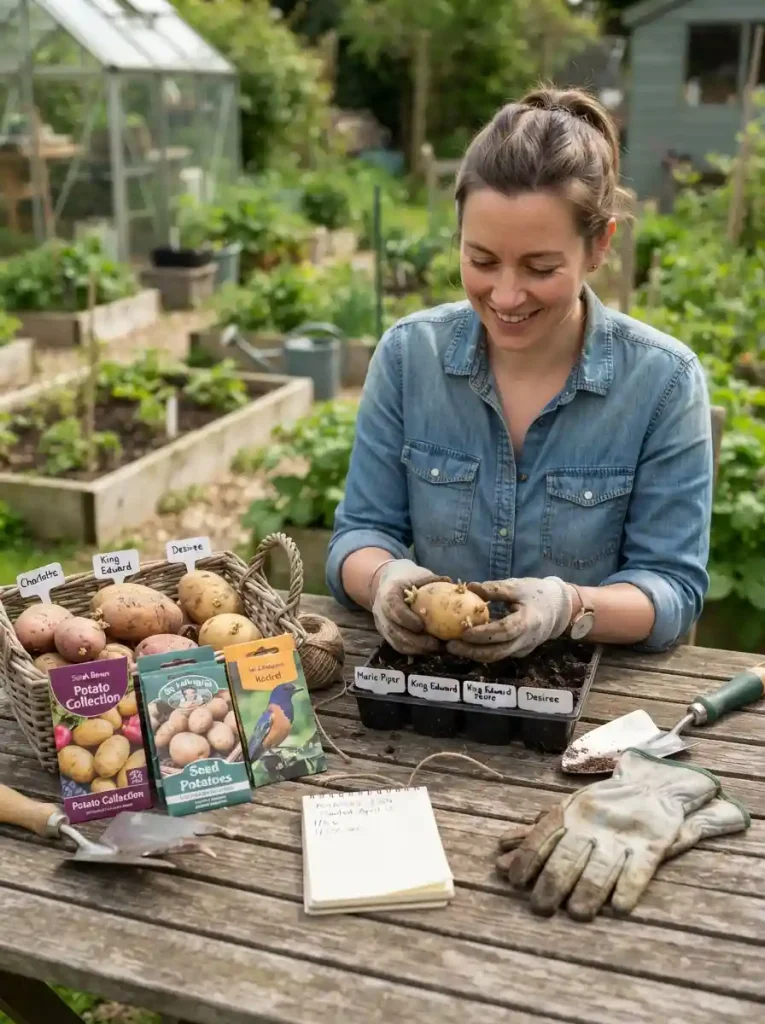
Healthy certified seed potatoes give your crop a reliable start. Choose firm tubers with several visible eyes and no soft spots, mold, or major damage. Buy from a trusted garden supplier when possible, because good planting material helps beginners avoid unnecessary problems later.
Pick varieties suited to your climate and preferred harvest. Early potatoes mature sooner, while maincrop types can produce larger tubers and store longer. If you are unsure, ask a local garden center for a variety that performs well in your area and season.
2. Pick a Sunny Growing Spot
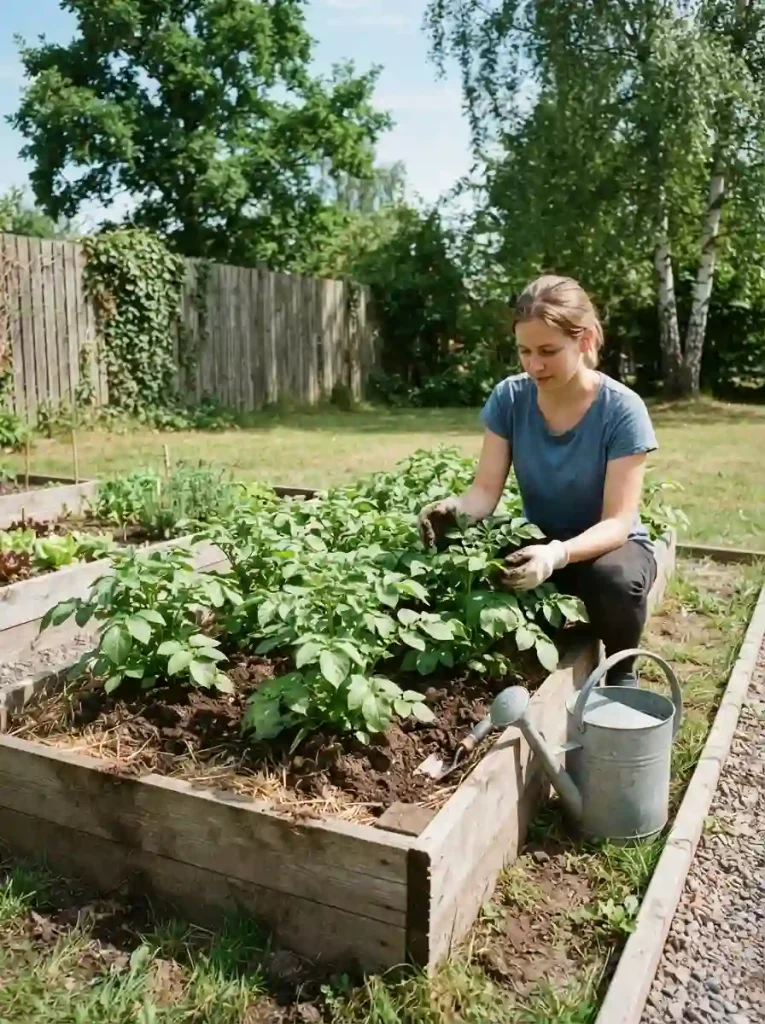
Potatoes grow best where they receive plenty of direct sunlight during the day. Choose a garden bed or container location that gets at least six hours of sun, with easy access to water. Avoid places where trees, walls, or buildings create long periods of shade.
Good sunlight supports leafy potato plants and helps them develop healthy underground tubers. Before planting, watch your chosen area through the day to notice changing shadows. A bright, open position is usually a simple improvement that makes potato gardening easier for beginners.
3. Prepare Loose, Well-Drained Soil
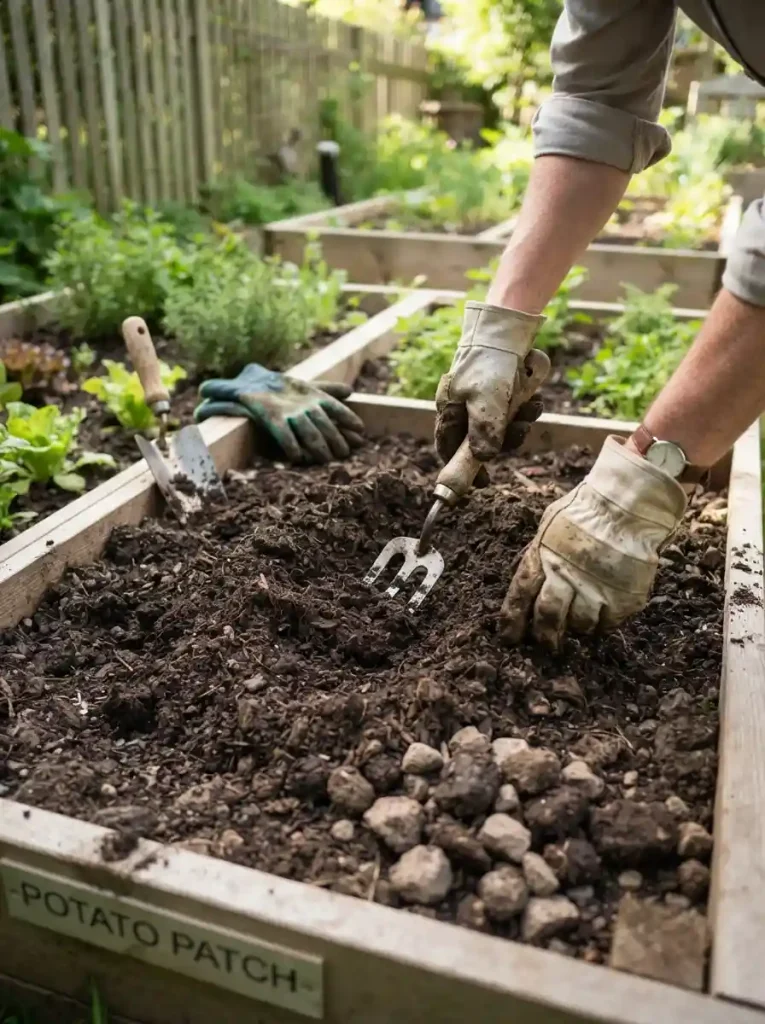
Potatoes need loose soil because their tubers develop underground and expand as they grow. Dig the planting area deeply, remove large stones, and break up hard clumps. Aim for crumbly soil that drains excess water while still holding enough moisture around developing roots.
Mix in mature compost before planting to improve soil structure and fertility. Avoid heavy, compacted ground that stays soggy after watering. If your garden soil is difficult to loosen, a raised bed or container filled with quality potting mix can make potato gardening much simpler.
4. Prepare Seed Potatoes Properly
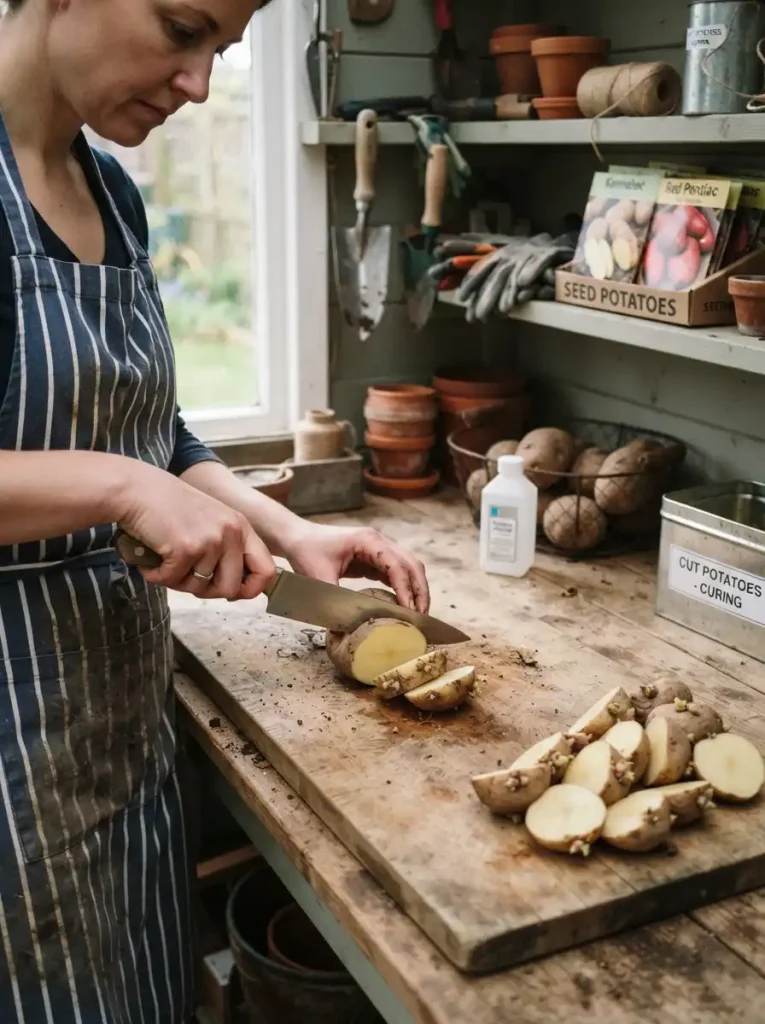
Small seed potatoes can usually be planted whole, but larger ones can be cut into pieces. Make sure each piece has at least one or two healthy eyes, because eyes produce new shoots. Use a clean, sharp knife and avoid planting pieces that look damaged.
After cutting, allow the pieces to dry for a short time in a cool, airy place so the cut surfaces can firm slightly. Handle them gently afterward. This simple preparation can help reduce handling damage and gives each planted piece a clear chance to sprout.
5. Plant at the Right Depth and Spacing
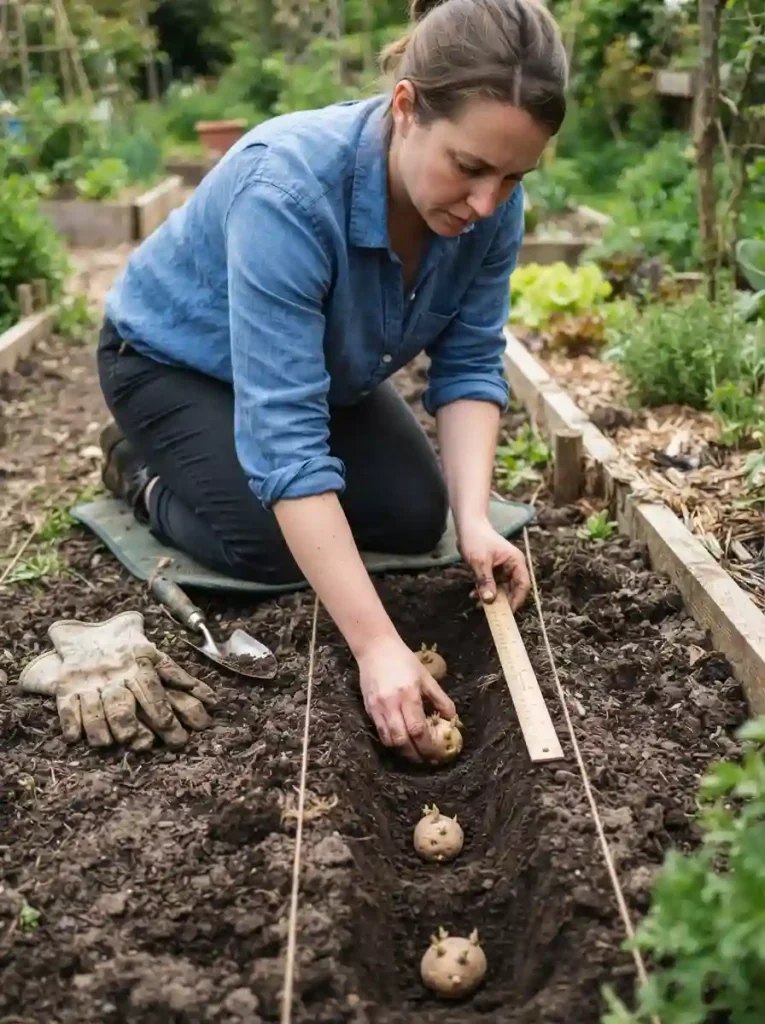
Plant seed potatoes in prepared soil about three to five inches deep, depending on variety and soil conditions. Place the eyes facing upward, then cover them gently with soil. Leave enough space between pieces so developing plants have room to grow without crowding.
About twelve inches between seed pieces works well for many home gardens, with wider spacing useful for larger varieties. Rows should also have room for hilling later. Mark your planting spots before digging to keep spacing even and make future care easier.
6. Try Containers for Small Spaces
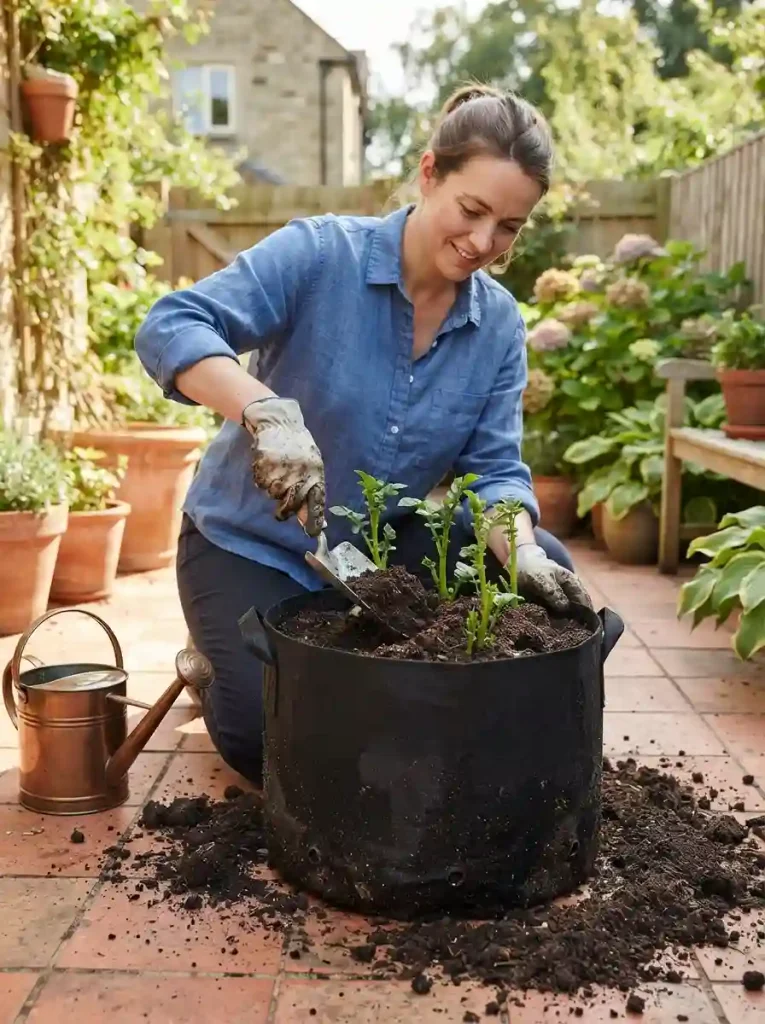
Container potatoes are a practical option when you have limited garden space. Choose a deep container with drainage holes, such as a large grow bag or sturdy planter. Fill it with quality growing mix, leaving enough room to add more soil as potato plants grow.
Plant a few seed potatoes rather than overcrowding the container, then place it somewhere sunny. Containers warm and dry faster than garden beds, so check moisture regularly. This method is especially useful for beginners who want to try growing potatoes at home on a patio.
7. Water Consistently Without Overwatering
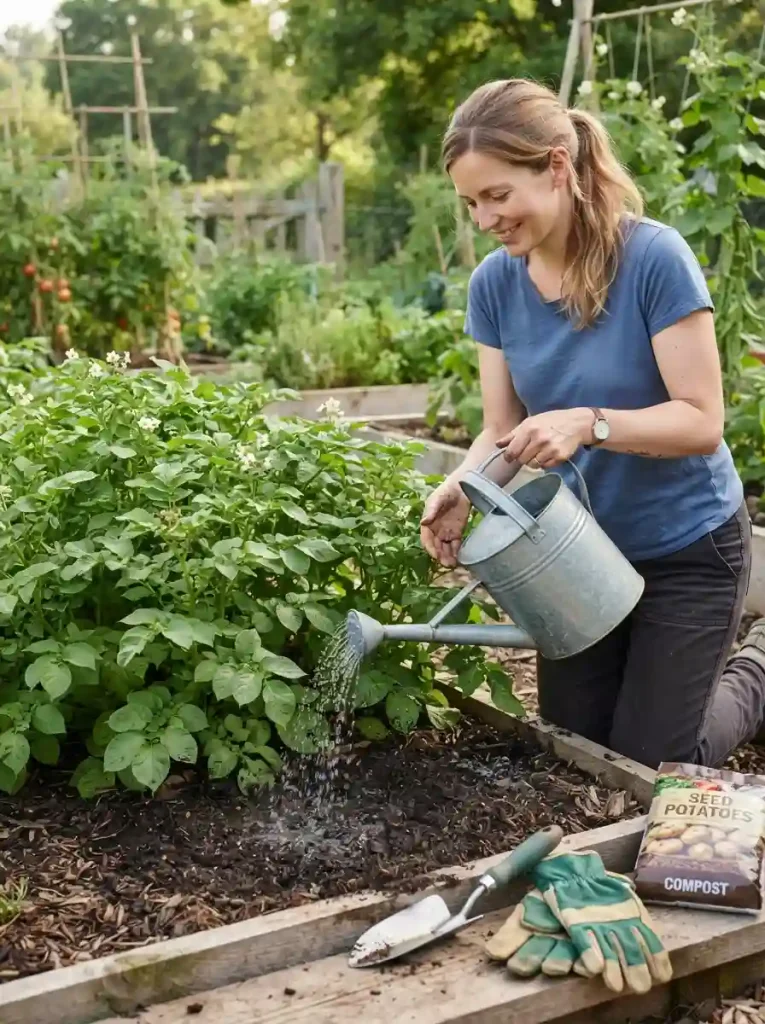
Keep potato soil evenly moist, especially after planting and while tubers are forming. Water deeply when the surface begins to dry instead of giving plants frequent shallow sprinkles. Morning watering is helpful because foliage can dry during the day, reducing prolonged wetness.
Check containers more often because they can lose moisture quickly in warm weather. Avoid constantly soggy soil, which can encourage rot and unhealthy roots. During dry periods, give plants a thorough drink, then let excess water drain before watering again when needed regularly.
8. Give Plants Plenty of Sunlight
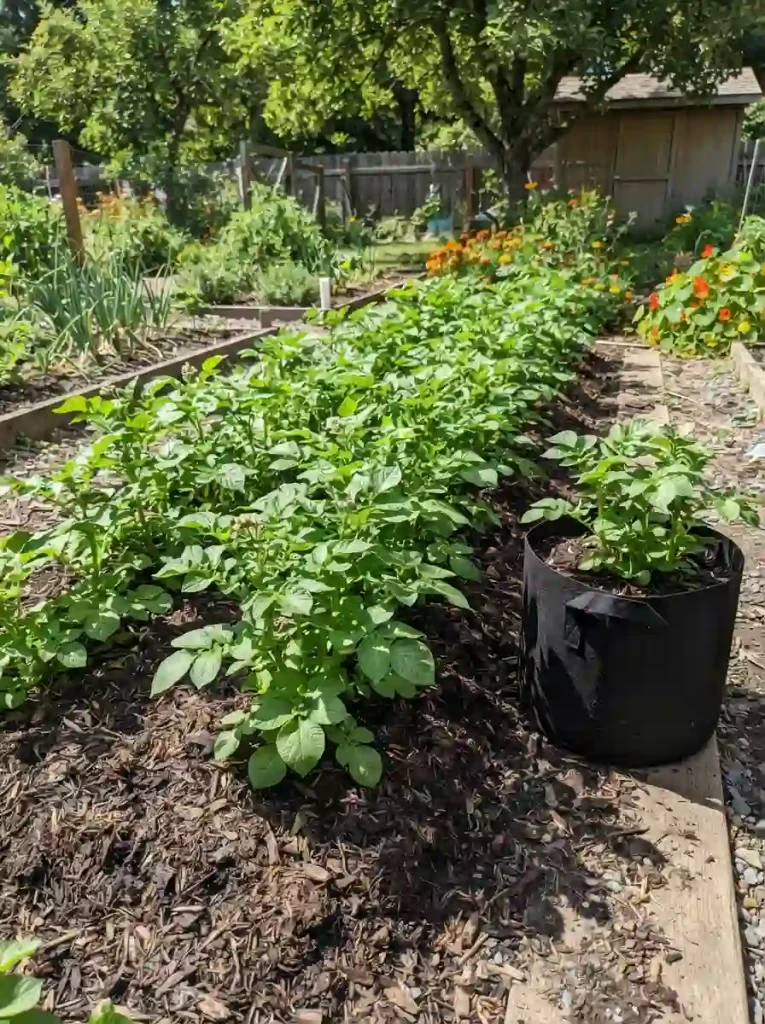
Once potato shoots emerge, keep them in a bright position where they can receive strong daily sunlight. Sunlight helps plants build energy through healthy leaves, supporting the underground tubers that you will eventually harvest. Watch for new shade as nearby plants become taller.
If growing potatoes in containers, rotate or reposition them when practical so plants receive balanced light. Avoid moving containers unnecessarily once plants become large. Consistent sunlight, combined with suitable soil and water, gives beginners a strong foundation for healthy potato growth overall.
9. Hill Soil Around Growing Potato Plants
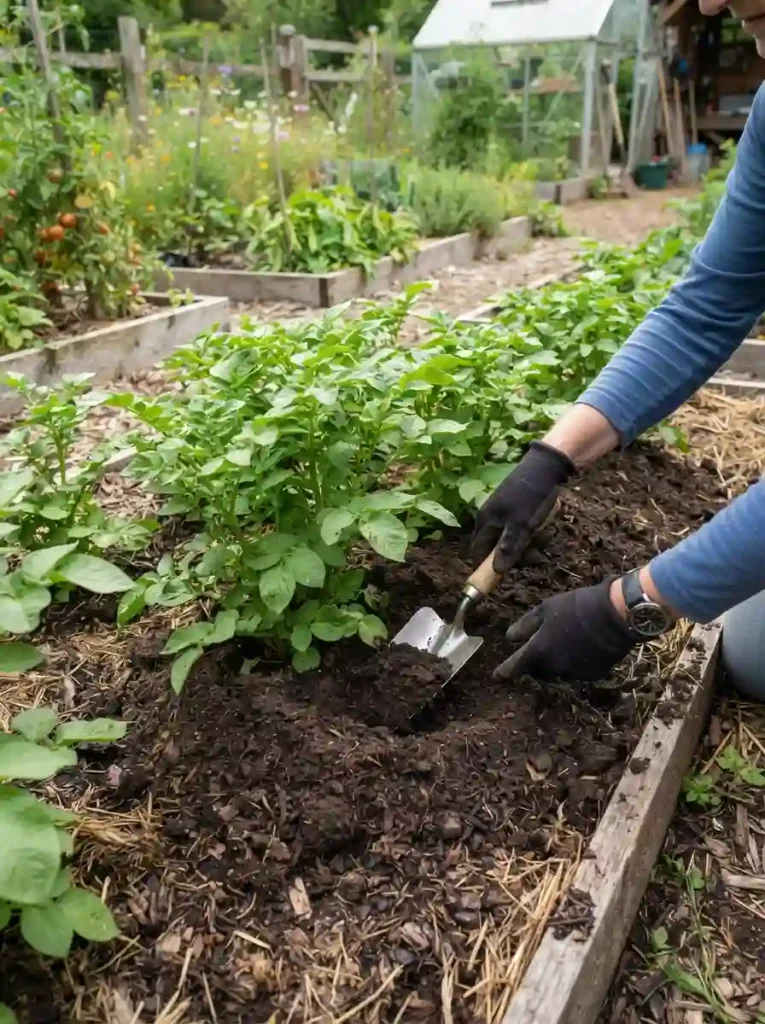
Add soil around potato stems as they grow. When shoots reach about six to eight inches tall, gently mound several inches of loose soil around lower stems, leaving top leaves exposed. This hilling protects developing tubers from sunlight and encourages more underground space for growth.
Repeat hilling as plants continue growing, especially when tubers begin becoming visible near the surface. Cover exposed potatoes promptly because sunlight can turn them green. Use loose soil or compost rather than packing it tightly, allowing developing tubers to expand comfortably beneath the plant.
10. Feed Potatoes Without Overfertilizing
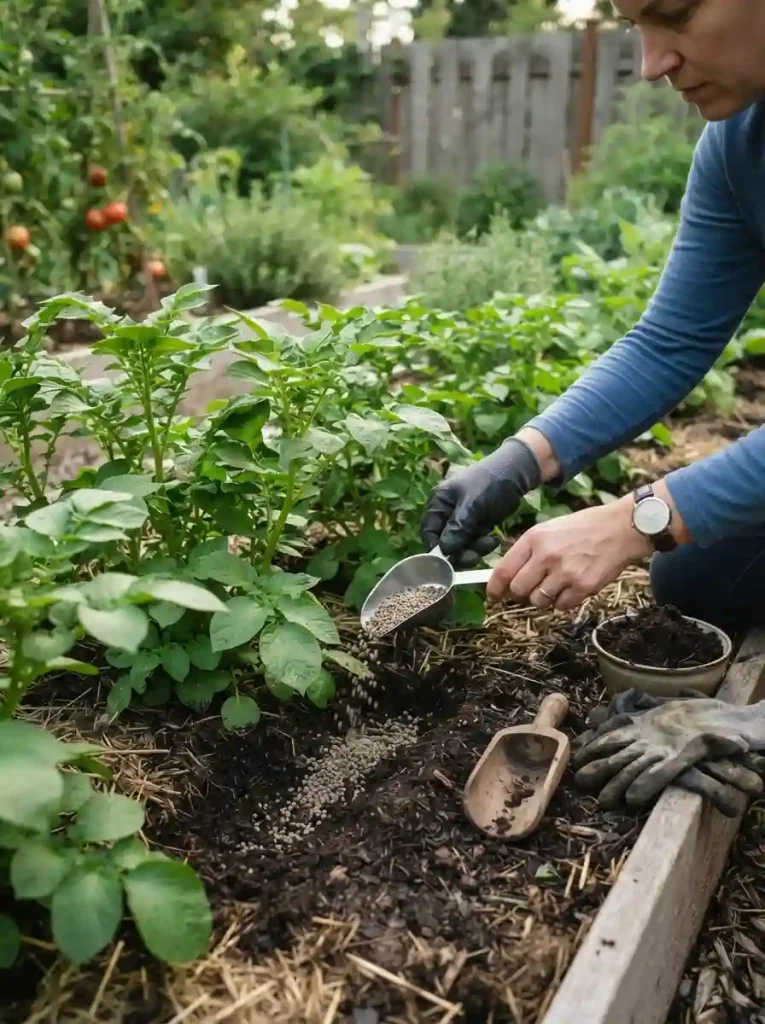
Potatoes appreciate steady nutrition, but they do not need excessive fertilizer. Before planting, incorporate mature compost into the soil, then consider a balanced vegetable fertilizer if your soil is poor. Follow the package directions carefully rather than adding extra, which can encourage leafy growth.
Feed plants according to their growth stage and soil needs, keeping fertilizer away from direct contact with stems. Too much nitrogen may produce lush foliage without supporting a strong harvest. Healthy soil, adequate sunlight, and consistent moisture usually matter more than frequent feeding for beginners.
11. Keep Weeds Under Control
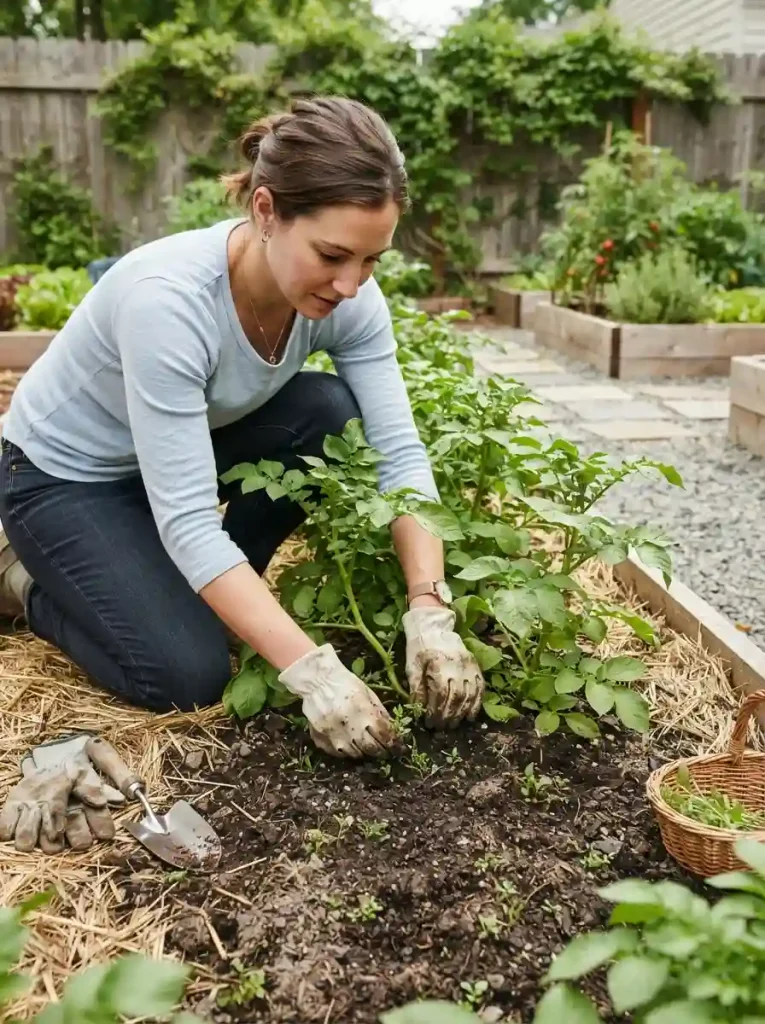
Weeds compete with potato plants for water, nutrients, and growing space, so remove them early. Check the bed regularly and gently pull small weeds by hand before their roots become established. Take care around potato stems, where aggressive digging can disturb shallow roots.
Adding a light layer of suitable mulch can help slow new weed growth while keeping soil moisture more consistent. Keep mulch slightly away from plant stems and avoid thick, wet layers. Regular maintenance takes only a few minutes and keeps potato beds easier to manage.
12. Watch for Common Potato Problems
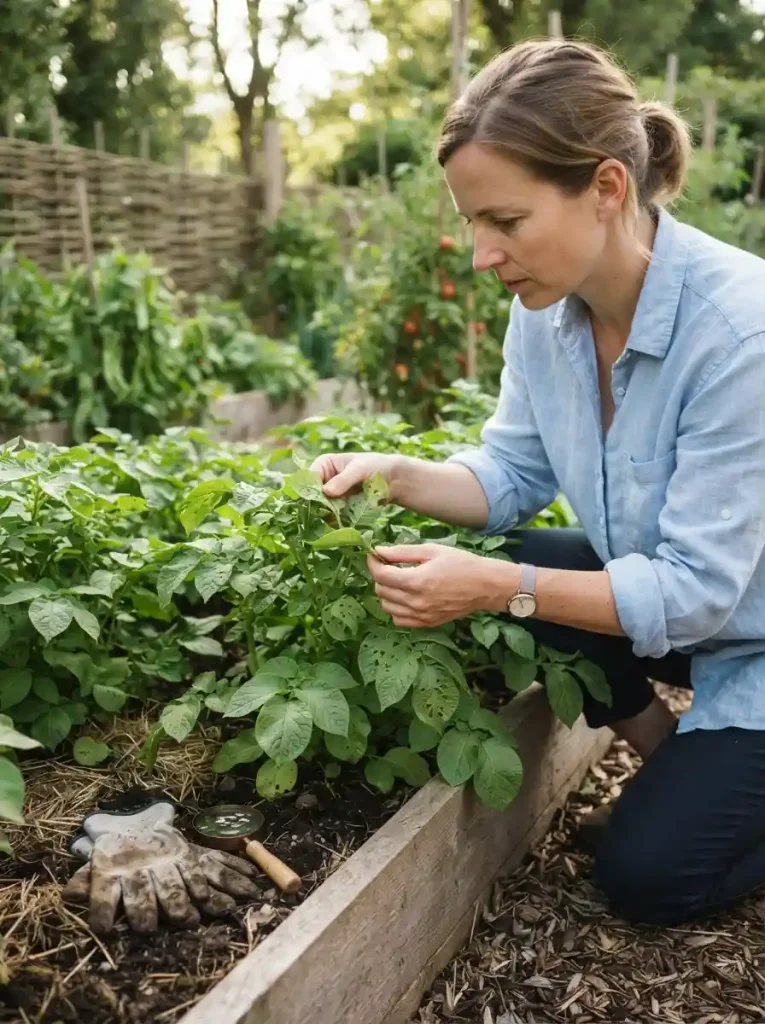
Inspect potato plants regularly for yellowing leaves, unusual spots, holes, wilting, or visible insects. Early observation helps you notice problems before they spread throughout the crop. Look underneath leaves and around stems because some pests can be easy to miss during a quick garden check.
If you notice a problem, identify it before choosing a treatment. Remove badly damaged leaves when appropriate and improve airflow by avoiding crowded growth. Keep watering consistent and avoid wetting foliage unnecessarily. For serious infestations or disease symptoms, seek advice from a local gardening expert.
13. Learn When Potatoes Are Ready
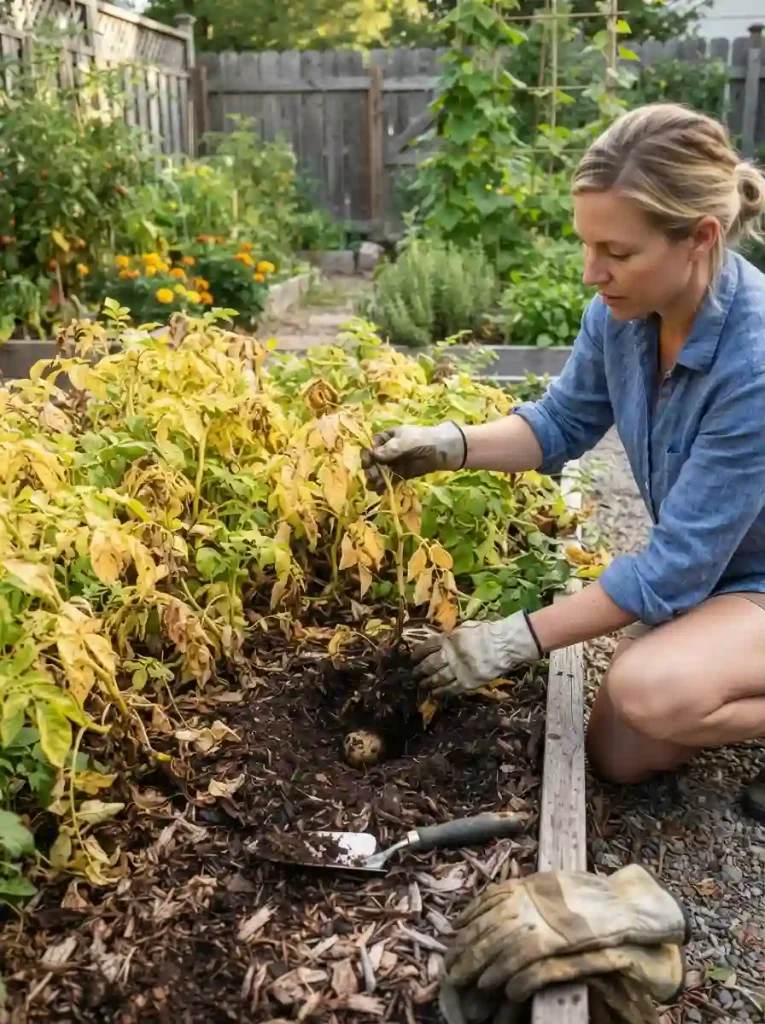
Potatoes are ready at different times depending on variety and whether you want small new potatoes or mature tubers. For mature potatoes, wait until the plants naturally begin yellowing and dying back. This visible change is a useful beginner signal that underground tubers are nearing harvest.
Before digging the entire crop, carefully uncover one area and check the tuber size. If potatoes have reached the size you want and skins feel firm, harvesting can begin. Avoid rushing simply because flowers appear, since flowering alone does not reliably indicate full maturity.
14. Harvest Potatoes Carefully
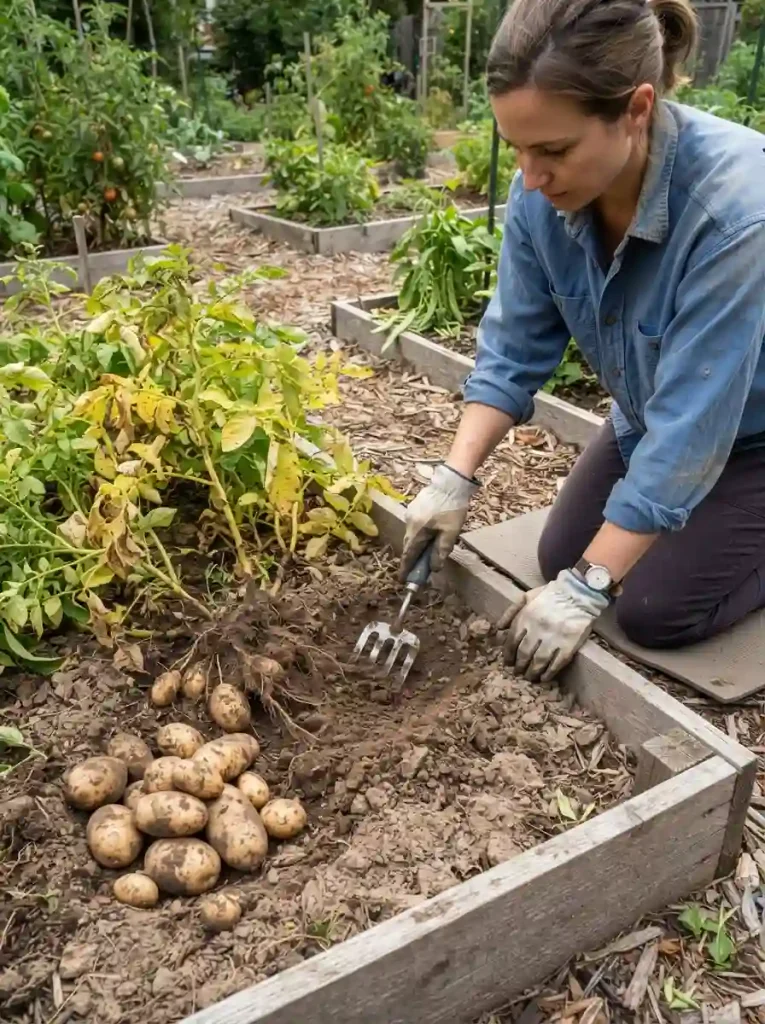
Choose a dry day for harvesting whenever possible, then loosen the soil around each plant with a garden fork. Keep the fork a little away from the main stem to reduce the chance of piercing potatoes. Lift the plant gently and search through surrounding soil by hand.
Handle freshly harvested potatoes carefully because bruises and cuts can shorten storage life. Shake off loose soil without scrubbing the skins aggressively, then place potatoes somewhere cool, dry, dark, and well ventilated for curing. Let damaged tubers remain separate so they can be used first.
15. Store Freshly Harvested Potatoes Properly
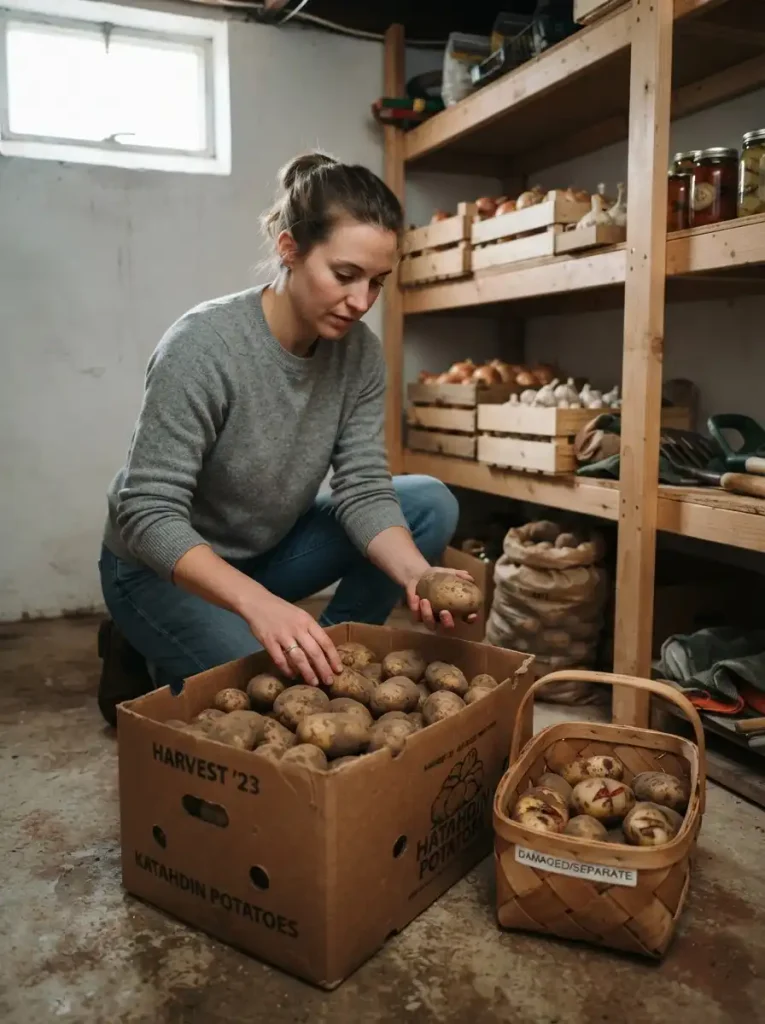
After harvesting, store healthy potatoes in a cool, dark, dry place with good airflow. A breathable sack, cardboard box, or suitable storage container works better than sealed plastic. Keep potatoes away from direct light, because exposure can cause green areas and affect their quality.
Check stored potatoes regularly and remove any that become soft, rotten, or badly damaged. Do not wash potatoes before long-term storage because extra moisture can encourage spoilage. Keep them away from onions when possible, and use older potatoes first to reduce unnecessary waste.
Conclusion
Growing potatoes at home can be simple, rewarding, and surprisingly beginner-friendly when you take each step one at a time. From choosing healthy seed potatoes and preparing good soil to watering, hilling, harvesting, and storing your crop, consistent care makes a real difference.
Whether you use a garden bed or container potatoes, these practical gardening tips can help you build confidence and enjoy fresh results. Start with one planting area, save this guide for later, and discover how satisfying growing your own potatoes can become.