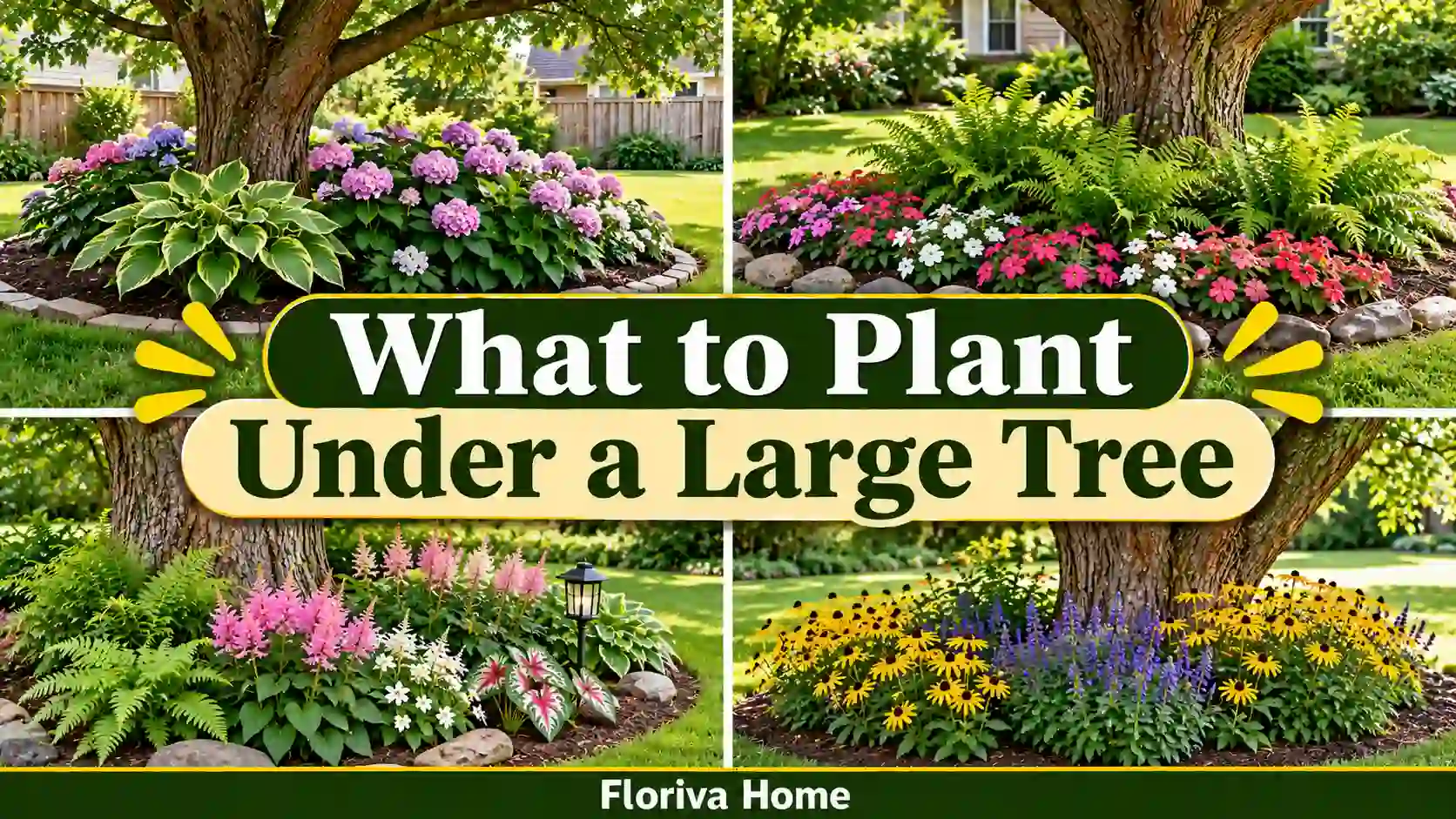
What to Plant Under a Large Tree
Staring at bare, patchy soil under your big tree and wondering what to plant under a large tree that will actually survive? You’re not alone, and it is not your fault. Shade and thirsty roots make this spot one of the toughest in any yard.
I’ve noticed that most people try sun-loving flowers first, then watch them struggle and give up. The good news is that the right plants and a gentle planting method turn this spot into a lush, easy-care garden bed.
In this guide, you will learn how to read your spot, prepare the soil safely, choose the best plants, and avoid common mistakes. By the end, you will be ready to plant with confidence.
Why Planting Under a Large Tree Is So Tricky
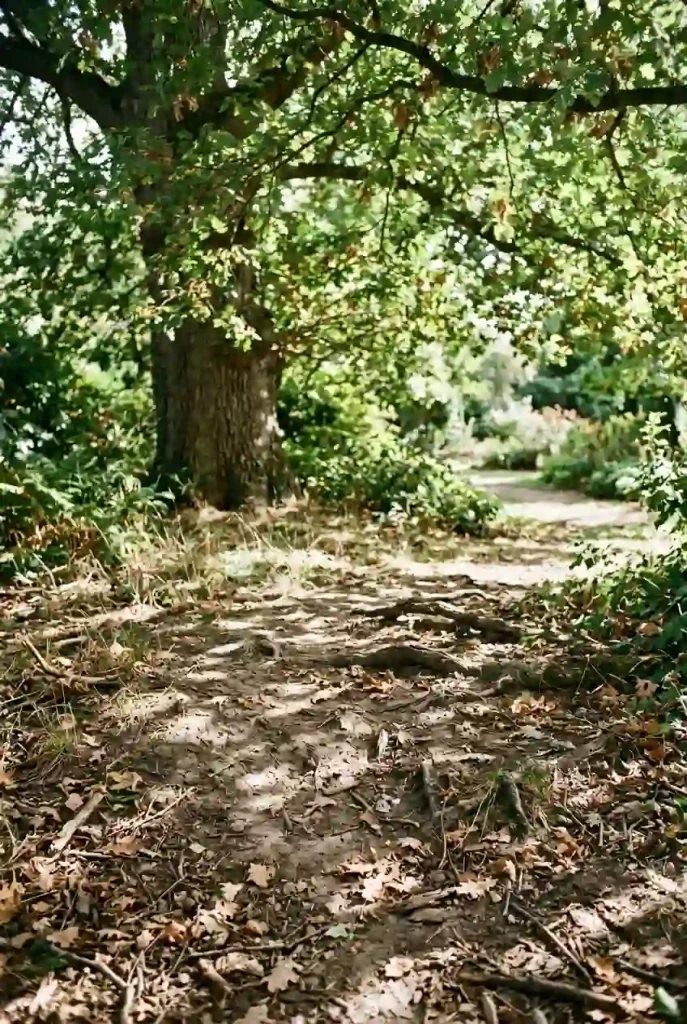
Knowing what to plant under a large tree starts with understanding why the spot is so hard. The canopy blocks sunlight, and the roots pull most of the water and nutrients from the soil. Plants that thrive in an open bed often fade here within weeks.
I’ve noticed that most beginners blame themselves when new plants struggle, but the spot is usually the problem. Rain rarely reaches the ground beneath thick leaves, so the soil stays dry even after a storm. Once you know these three hurdles, you can choose plants built for them.
Check Your Spot Before You Buy Anything
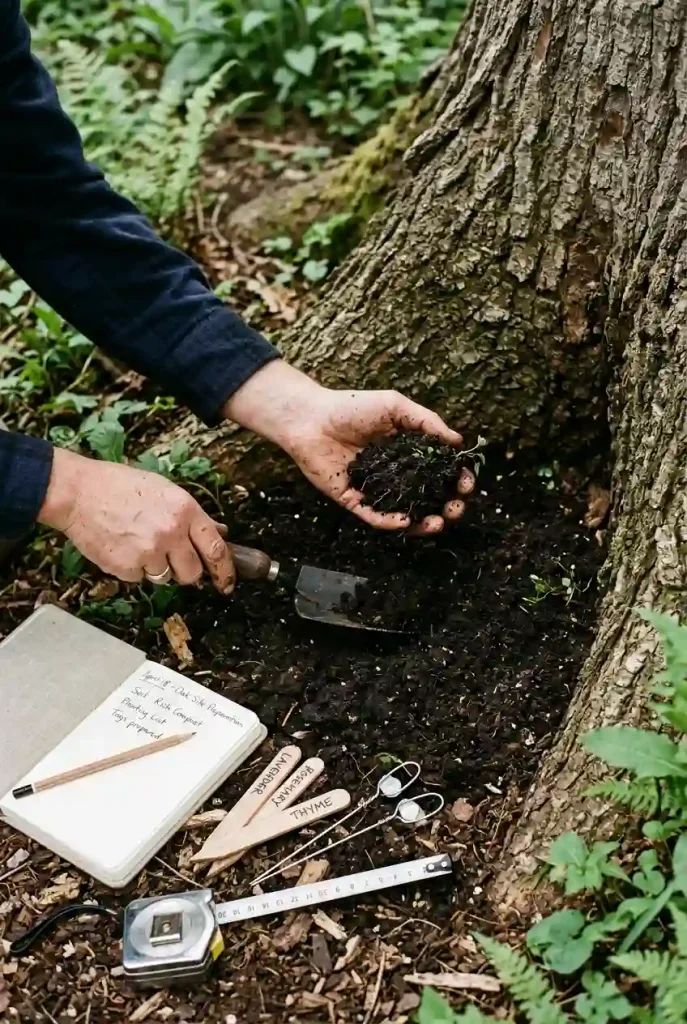
A quick check saves you from buying plants that will not survive. Spend ten minutes studying the space before you shop. Plant labels only help when you know what your spot actually offers, so these four checks will guide every choice you make later.
- Watch the light. Visit the spot in the morning, at noon, and in the late afternoon to see whether the shade is light and dappled or deep and constant.
- Test the soil. Dig a small hole and squeeze a handful of soil. If it crumbles right away it is dry, and if it forms a tight ball it may drain slowly.
- Look for roots. Note where thick roots rise to the surface, because you will plant in the gaps between them and never cut the large ones.
- Find your climate zone. Look up your hardiness zone or local equivalent, then match it to the zone listed on each plant tag before you buy.
How to Prepare the Ground Without Hurting the Tree
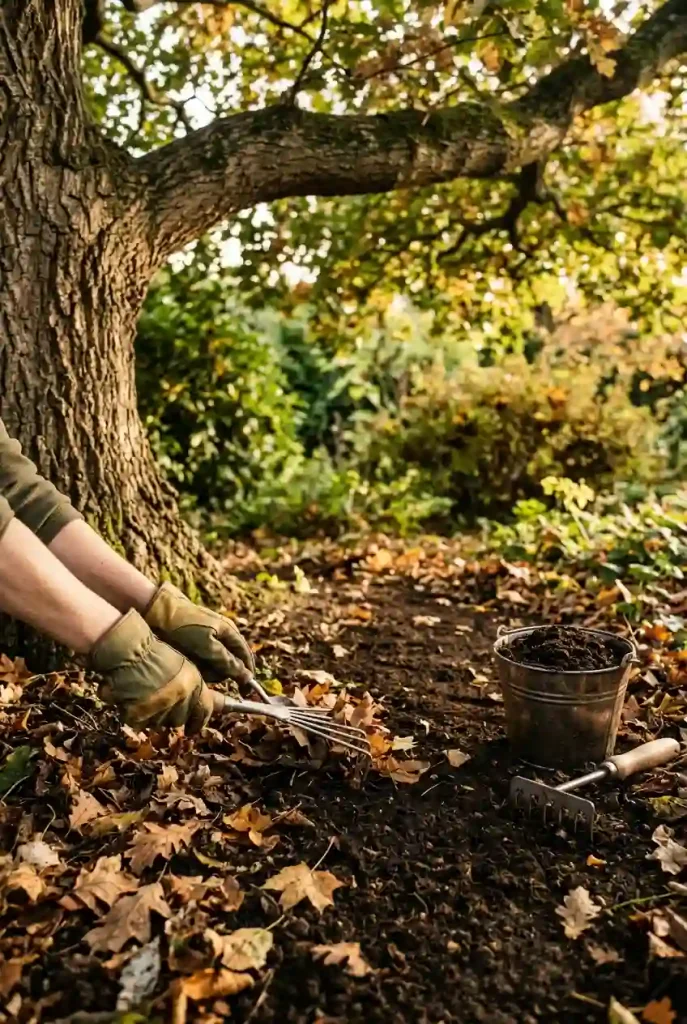
Quick Tip: Never dig deeper than a few inches near the trunk. The roots that feed the tree often sit just below the surface, and cutting them can stress or weaken it. Work with a hand trowel instead of a shovel.
Start by raking away fallen leaves, sticks, and weeds with a light hand rake. Then spread a thin layer of compost, about one to two inches, over the soil. This gentle approach improves soil within one season without disturbing a single root. Do this a few days before planting so everything settles.
Best Shade Perennials and Foliage Plants
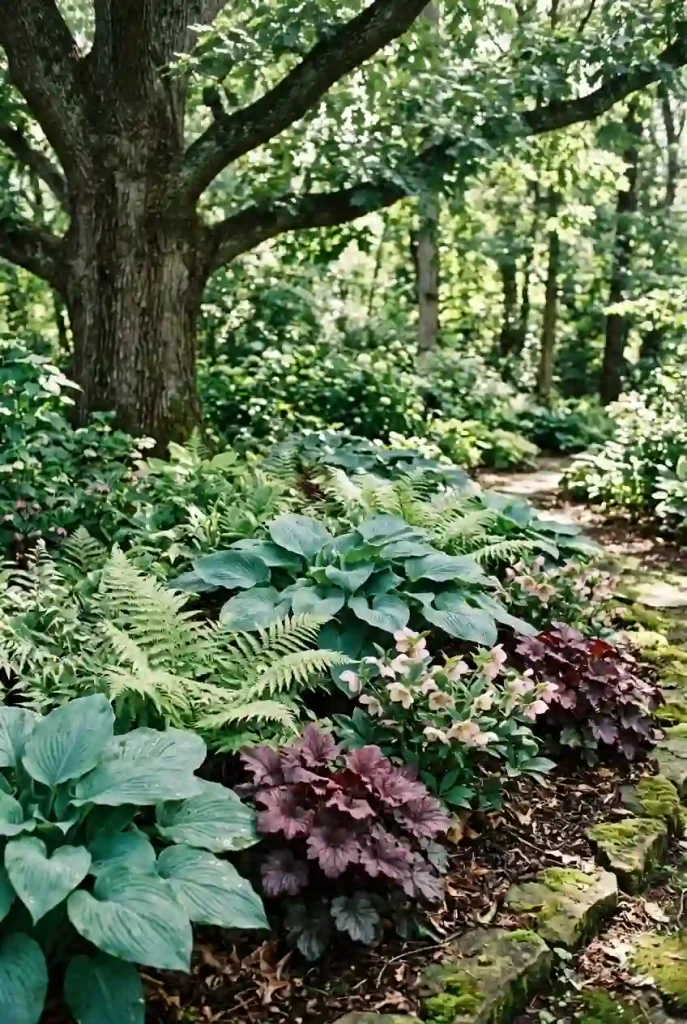
Common Mistake: Many beginners fill the space with flowering sun lovers because they look cheerful at the garden center. Within a season, the plants stretch, droop, and stop blooming. Shade simply gives them too little light to keep going.
The Fix: Choose plants labeled for part shade or full shade, and lean on leaf color and texture for beauty. Hostas, ferns, hellebores, and heuchera all handle low light and compete with tree roots better than most flowering plants.
Hostas bring big, bold leaves, while ferns add soft, feathery texture. Hellebores flower in late winter when little else does, and heuchera offers leaves in burgundy, lime, and amber. Mixing two or three of these gives the bed layers and color without needing much sunlight at all.
Best Ground Covers for Dry Shade
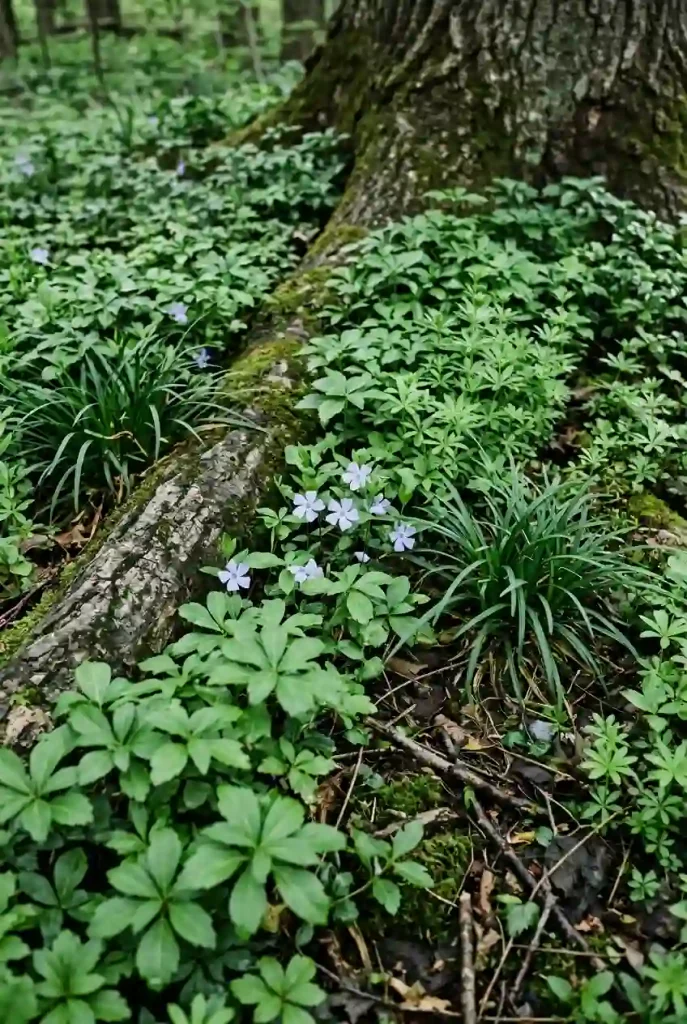
What You Need:
- Pachysandra: A glossy evergreen that spreads steadily and blocks weeds.
- Vinca: Trailing stems and small blue flowers that tolerate dry shade well.
- Sweet woodruff: Delicate, star-shaped leaves and tiny white spring flowers that form a soft carpet.
- Lilyturf: Tough, grassy clumps that handle dry soil and heavy root competition.
- Small starter plants or plugs: They cost less and settle in more easily between roots than large pots.
Ground covers do the quiet work of filling bare soil so weeds have no room to grow. Start with small plugs spaced about a foot apart and give them a season to join up. Check your local invasive plant list first, since vinca spreads aggressively in some areas.
Best Shrubs and Spring Bulbs for Under a Tree
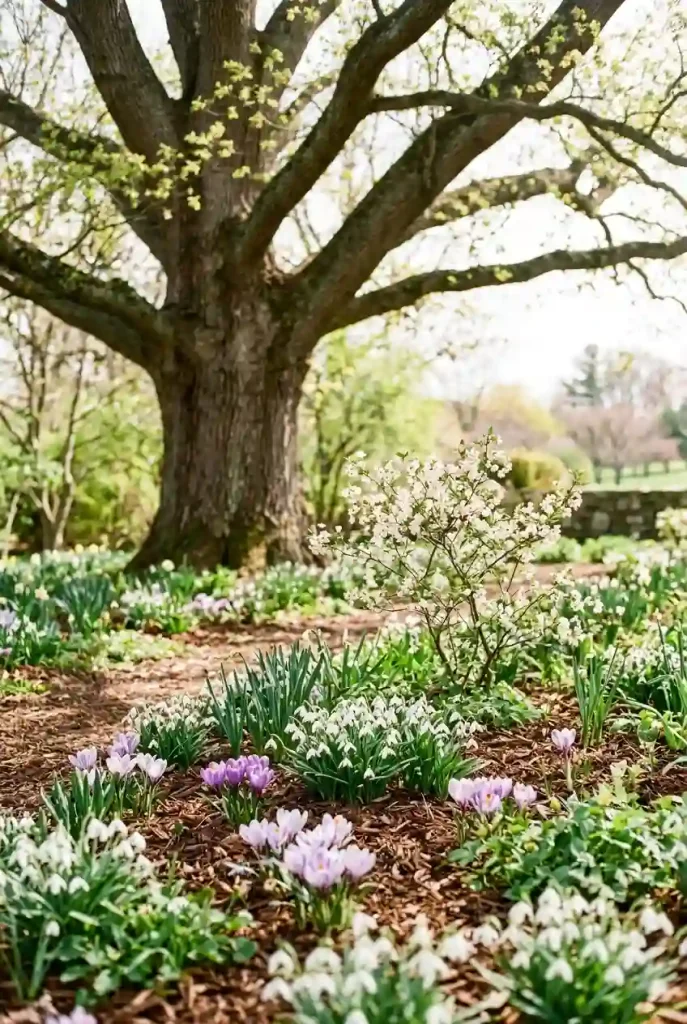
Before: The space under your tree looks flat, with everything at the same low level and bare soil showing in spring. Nothing draws the eye, so people walk past without noticing it.
After: A compact shrub, such as an oakleaf hydrangea or boxwood, gives the bed height and shape. Bulbs like snowdrops, crocus, and daffodils push up before the tree leafs out, bringing color to early spring when sunlight still reaches the ground.
Plant bulbs in fall, in small clusters of five to seven, tucked between roots instead of forced through them. Because they bloom before the leaves return, they escape the worst of the shade and root competition. Pick shrubs that stay under four feet so they never compete hard with the tree.
How to Plant Under a Tree Step by Step
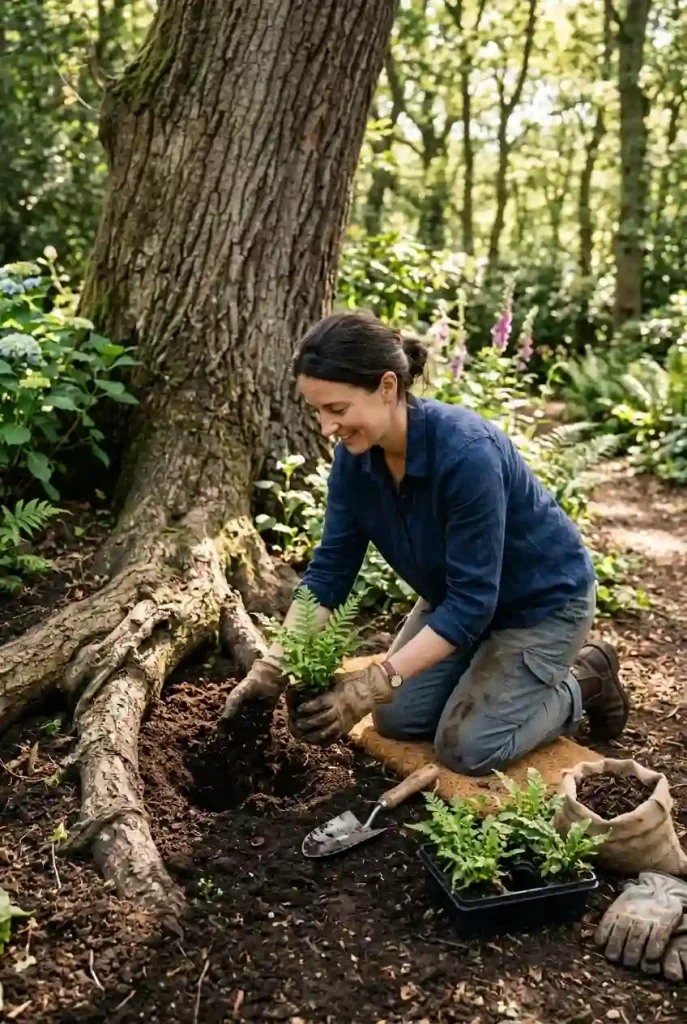
Do This:
- Choose small starter plants, since they need smaller holes and settle in faster.
- Dig each hole by hand in the gaps between roots, and stop when you hit a thick one.
- Space plants as far apart as the tag recommends so they have room to spread.
- Water every plant deeply right after planting.
Avoid This:
- Do not cut any large root to make space, because moving the hole is always safer.
- Do not pile more than an inch or two of extra soil over the tree’s roots.
- Do not plant tight against the trunk.
- Do not set plants deeper than they sat in their pots.
Work in the cooler morning or on a cloudy day so new plants face less stress. After planting, spread two inches of mulch around them, keeping it a few inches back from the trunk and from each stem. I’ve found this habit helps new plants hold up through their first dry spell.
How to Water and Care for Your Plants
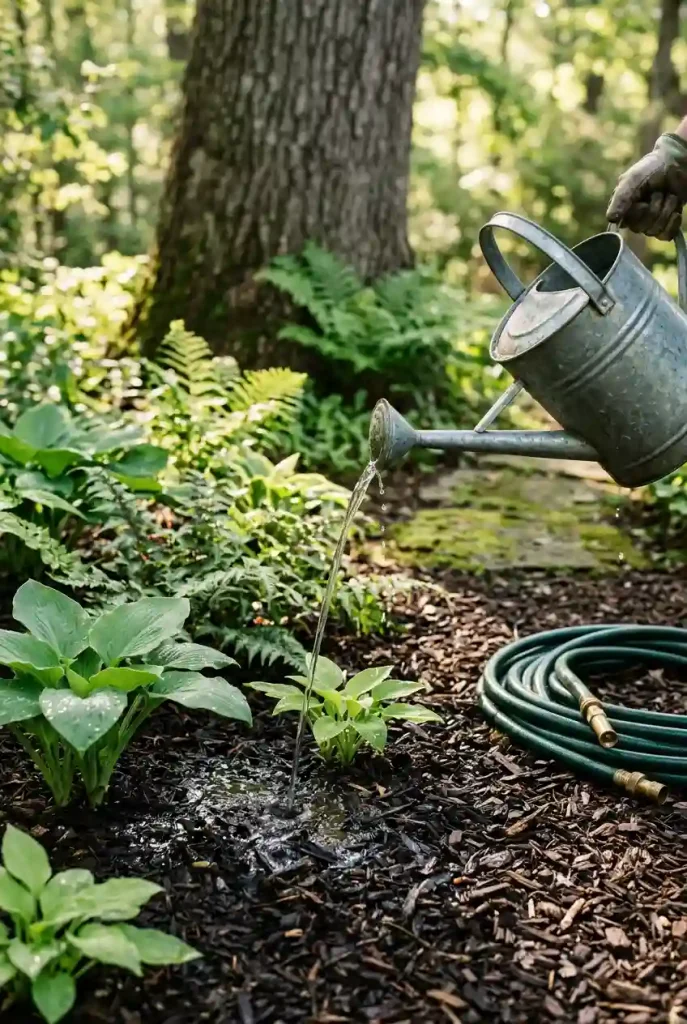
Time Needed: About 10 minutes a week during the first season
Tools Required: Watering can or hose, compost, and mulch
Pro Tip: Water deeply once or twice a week instead of a little every day
Result: Strong roots that need less water each year
New plants under trees compete with thirsty roots, so they need steady water until they settle in. Soak the soil slowly so it reaches deep, then let the top inch dry out. Add a light feeding of compost in spring and refresh the mulch each fall.
Common Mistakes to Avoid
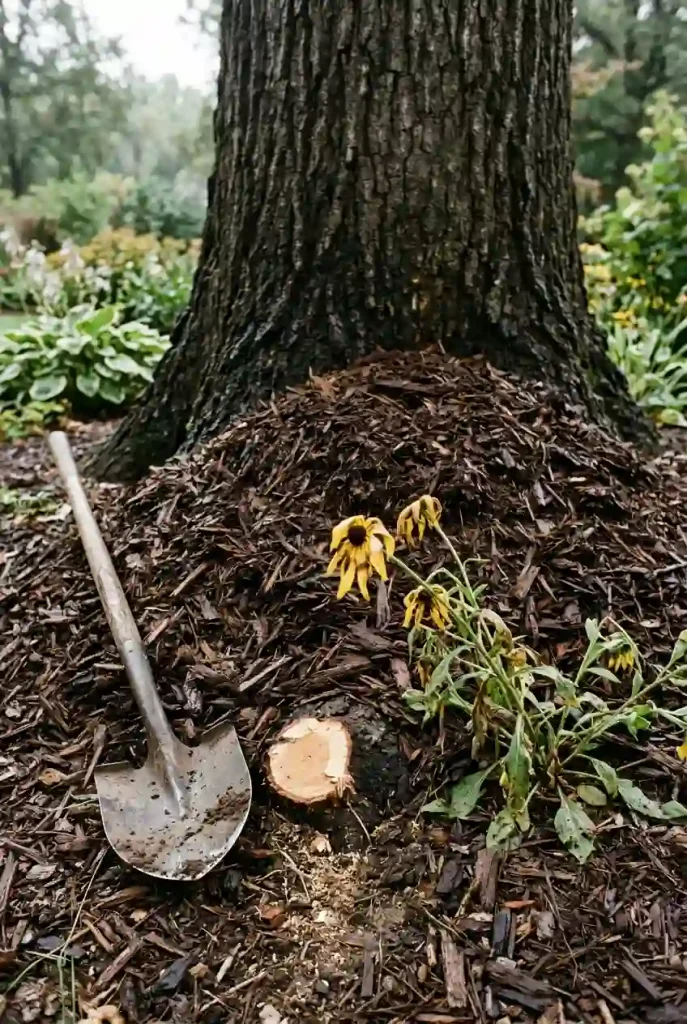
Most problems under trees come from a few repeated habits. The biggest one is piling mulch against the trunk like a volcano, which traps moisture and invites rot and pests. Keep mulch flat, about two inches deep, and a few inches away from the bark.
Another common slip is cutting big roots to make a planting hole, which can weaken the whole tree. Choosing sun-loving flowers is just as costly, since they fade in shade. And skipping water in the first summer undoes weeks of careful planting. Fix these three and most beds thrive.
What to Expect in the First Year and Final Tips
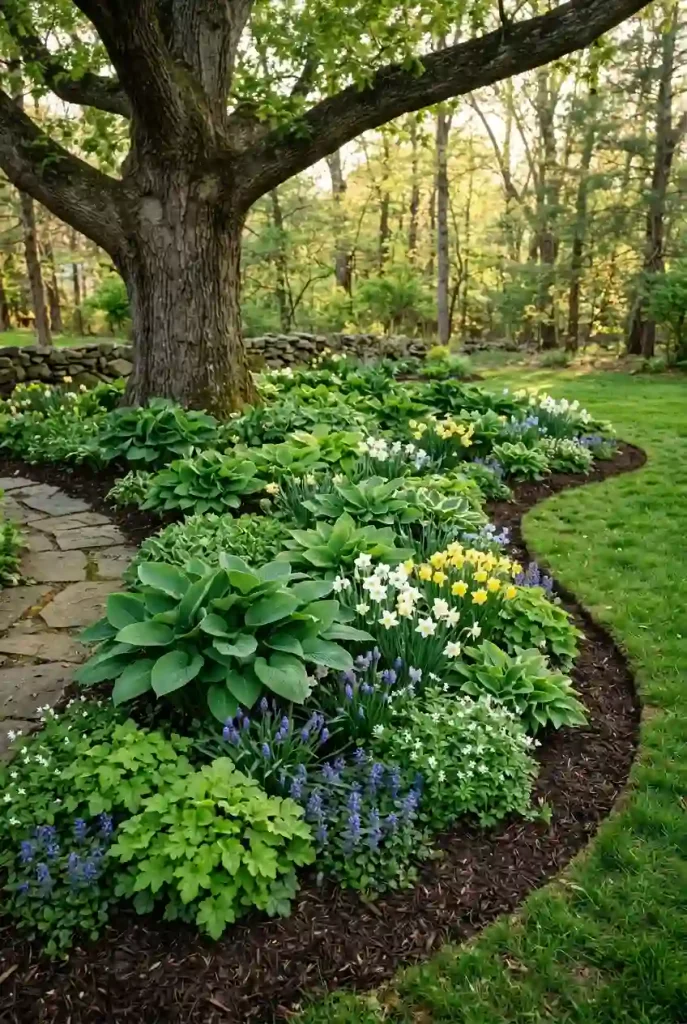
Patience pays off here. Plants under trees grow more slowly than those in open beds, so the first year is about building roots. Knowing what normal progress looks like keeps you from giving up too early, and these final tips will help you stay on track.
- Expect slow growth in year one. Most plants will look modest while they settle in, then fill out noticeably in the second season.
- Check moisture weekly through the first summer. Push a finger into the soil and water if the top inch feels dry.
- Add plants gradually. In my experience, filling gaps each fall or spring costs less and works better than planting the whole bed at once.
- Rake leaves gently in autumn. Clear heavy piles so they do not smother small plants, but leave a thin layer to enrich the soil.
Plants to Avoid Under a Large Tree
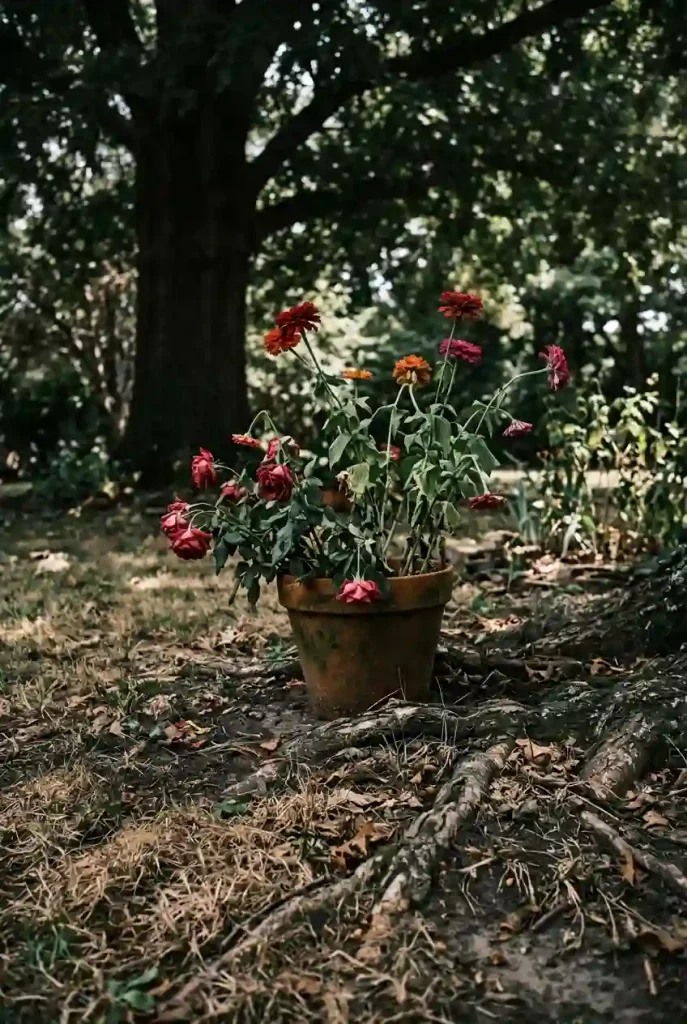
Quick Tip: If a plant tag says full sun, leave it on the shelf. Even tough plants struggle when roots and shade work against them. Look for the words part shade, full shade, or dry shade before you buy.
Skip roses, tomatoes, most annual flowers, and sun-loving herbs, since they need hours of direct light. Thirsty lawn grass also loses the fight against tree roots and leaves bare, muddy patches. Even shade lawn mixes need extra water under a big tree. Ground covers and shade perennials are a smarter use of your money.
Easy Design Ideas to Make the Area Look Finished
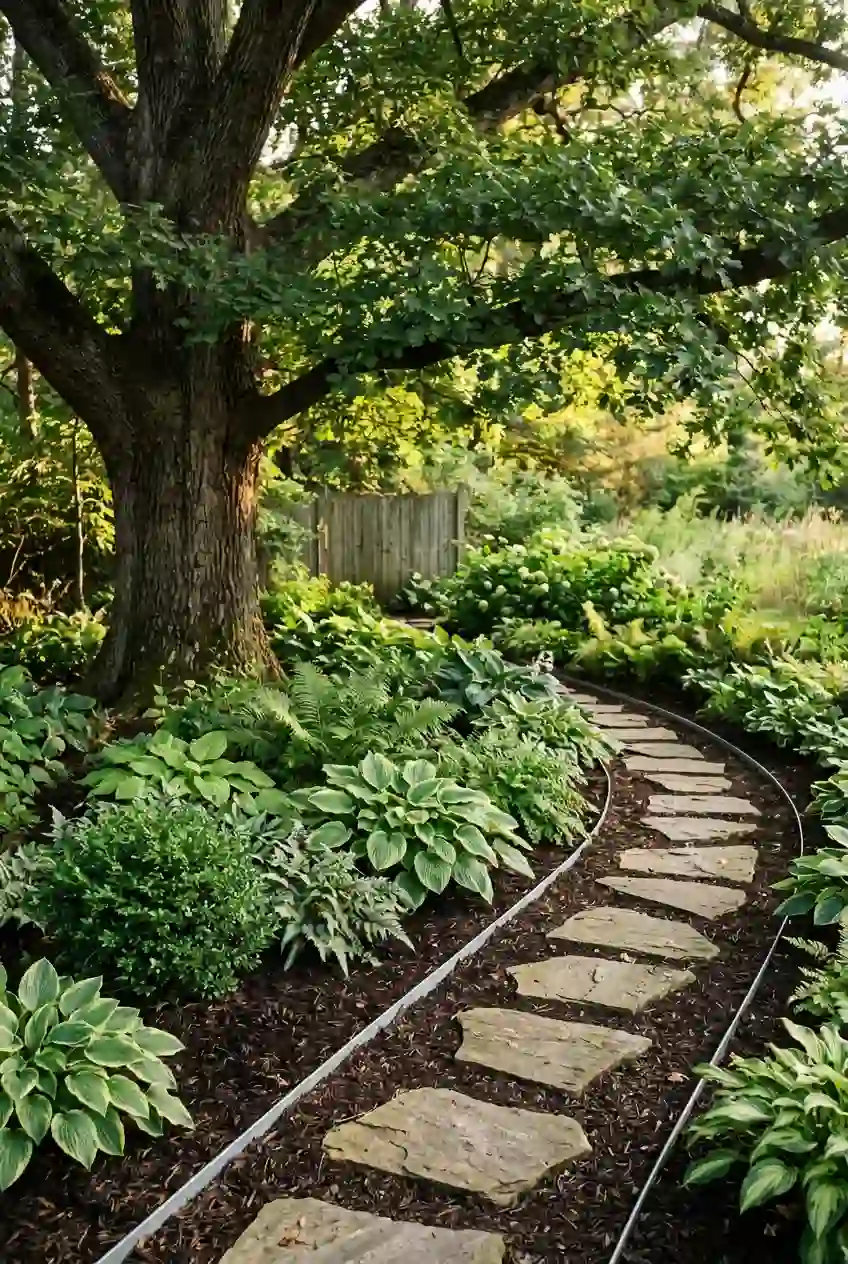
Common Mistake: Beginners often scatter plants evenly across the bed, which makes the space look random. Everything ends up the same height, so the eye has nowhere to land. Bare, ragged edges make the whole area look unfinished.
The Fix: Layer your plants with taller shrubs in the back, medium perennials in the middle, and low ground covers along the front. Then define the border with a clean curved edge and add a few stepping stones so the bed looks planned.
Repeat the same two or three plants in groups of three to give the bed a calm, designed look. Echoing one leaf color, such as silver or burgundy, ties everything together. Finish with a crisp edge cut gently with a spade, taking care to stay clear of large roots.
Frequently Asked Questions
Will grass grow under a large tree?
Usually not well. Dense shade and root competition leave grass thin and patchy, so ground covers are a more reliable choice. If you want a lawn, pick a shade mix and plan on extra watering.
Is it safe to plant near tree roots?
Yes, as long as you dig by hand and place plants in the gaps between roots. Never cut a large root to make space.
How close can I plant to the trunk?
Start at least two to three feet away, and go farther for very wide trunks. This keeps the base of the tree dry and healthy.
When is the best time to plant?
Early fall or early spring works best. Cool, moist soil gives new plants time to settle before summer heat or winter frost.
Choosing what to plant under a large tree gets easier once you match each plant to your light, soil, and roots. Start small, water steadily, and add more each season. Your first bed will teach you what your spot likes best, and the next one will be even easier.
CONCLUSION
You now have everything you need to turn that shady, root-filled corner into a beautiful bed. Knowing what to plant under a large tree, and how to plant it gently, takes the guesswork out of every step.
Save this article on Pinterest so you can come back to it when you head to the garden center. Try one or two ideas this weekend, and share it with a friend who is stuck with a bare patch under their own tree.
I’ve seen how choosing the right plants can completely shift the result. Start small, stay patient, and watch your shady spot come to life.