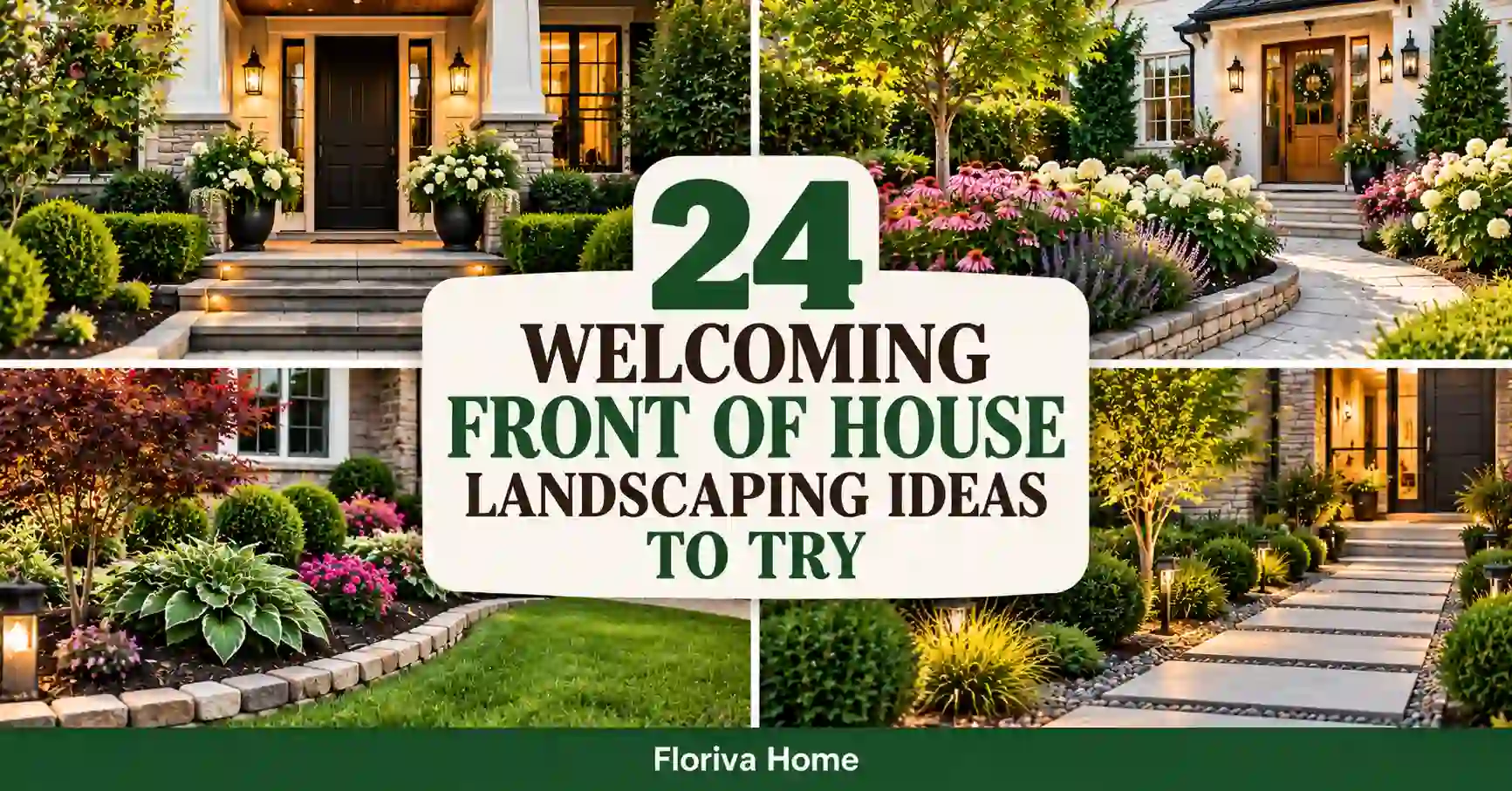
24 Welcoming Front of House Landscaping Ideas to Try
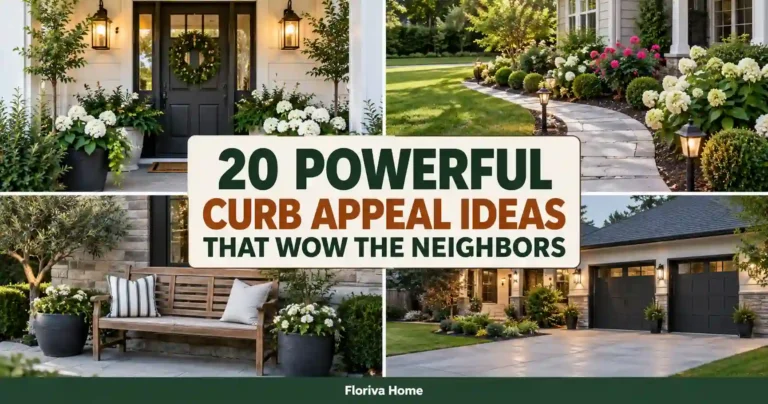
Your front yard is one of the first things people notice when they arrive at your home, so even a few thoughtful landscaping changes can make a big difference.
You don’t need a huge lawn, an expensive makeover, or a complicated planting plan to create a welcoming entrance. The right combination of greenery, flowers, pathways, containers, and simple architectural details can make your home feel much more inviting.
Whether your style is classic, cottage-inspired, modern, or relaxed and natural, there are plenty of ways to give the front of your house more personality.
Before you start digging, take a moment to look at how your entrance works throughout the day. Notice how much sunlight reaches the planting areas, where rainwater collects, how people naturally approach your front door, and how much maintenance you realistically want to handle.
Think about the mature size of every plant before putting it in the ground. A shrub that looks perfectly small at the garden center can eventually cover windows, crowd walkways, or hide architectural details.
It also helps to choose materials that complement your home. Warm brick, natural stone, gravel, timber, and simple concrete can all work beautifully when they repeat colors or textures already found on the house.
With that in mind, let’s look at some welcoming front of house landscaping ideas you can adapt to your own space.
1. Frame the Front Door With Layered Planting
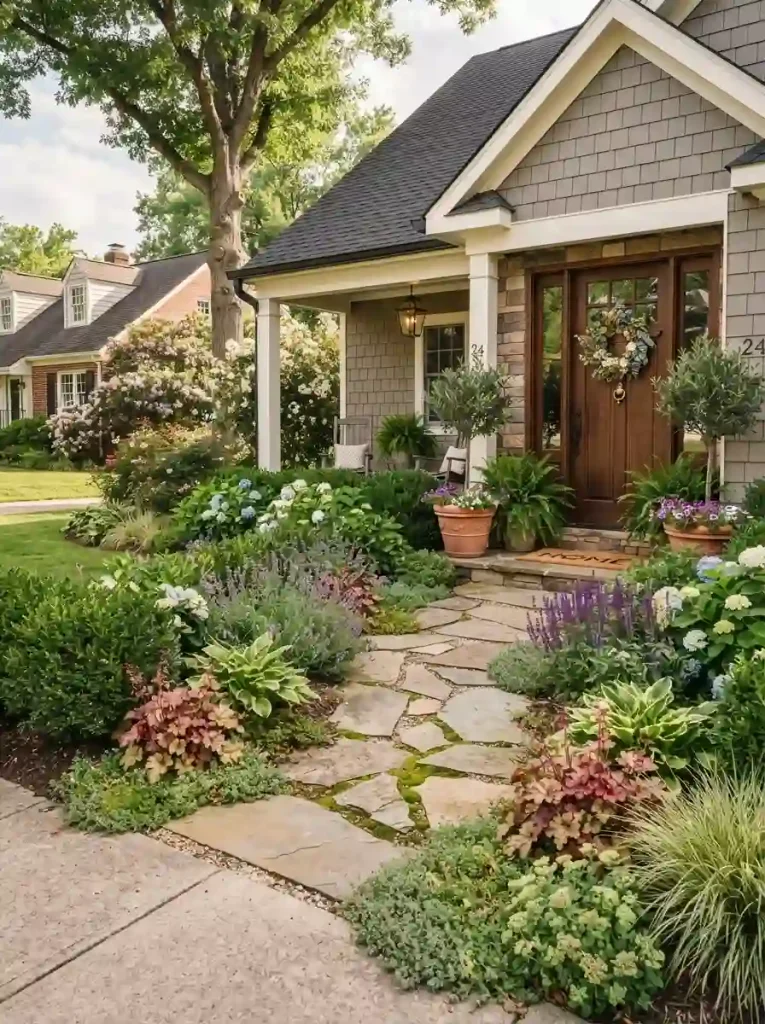
A simple way to make your entrance feel more inviting is to frame the front door with layers of greenery. Instead of planting one type of shrub in a straight row, combine plants with different heights, textures, and shapes.
Place taller evergreen shrubs farther from the doorway and use medium-sized flowering plants closer to the path. Low-growing groundcovers can soften the edges and make the whole arrangement feel connected.
Keep enough space around the door so the entrance remains open and easy to approach. The goal is to guide attention toward the front door rather than hide it behind an oversized planting bed.
Choose plants that suit the amount of sunlight your entrance receives. A shaded doorway will need a different planting combination than a bright, south-facing entry.
Expert Tip:
Keep the tallest plants away from the immediate doorway and windows. Layering from tall to short creates depth without making the entrance feel crowded.
2. Create a Curved Flower Border Along the Walkway
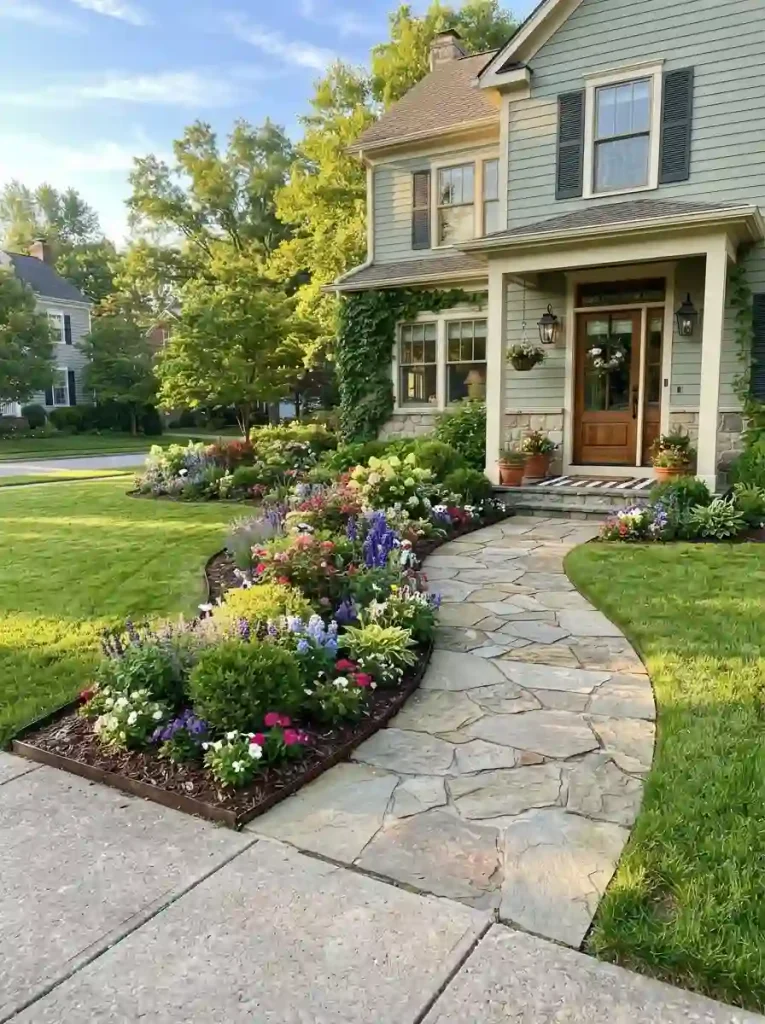
Straight planting beds can look neat, but a gently curved flower border can make a front yard feel softer and more natural.
Use the curve to follow the shape of your walkway rather than creating an unrelated line across the lawn. Fill the border with a mixture of seasonal flowers, compact shrubs, and foliage plants.
Repeating a few favorite plants throughout the bed helps the design feel intentional. You can then add smaller accents between them for extra color and texture.
Curved borders are especially useful when the front yard feels too boxy. They visually break up large areas of lawn while creating a more relaxed transition between the grass and planting beds.
Leave a narrow maintenance edge between the flowers and lawn if possible. It makes mowing and trimming much easier.
Expert Tip:
Draw the proposed curve with a garden hose before digging. You can easily adjust the shape until it looks balanced from the street.
3. Add Large Planters Beside the Entryway
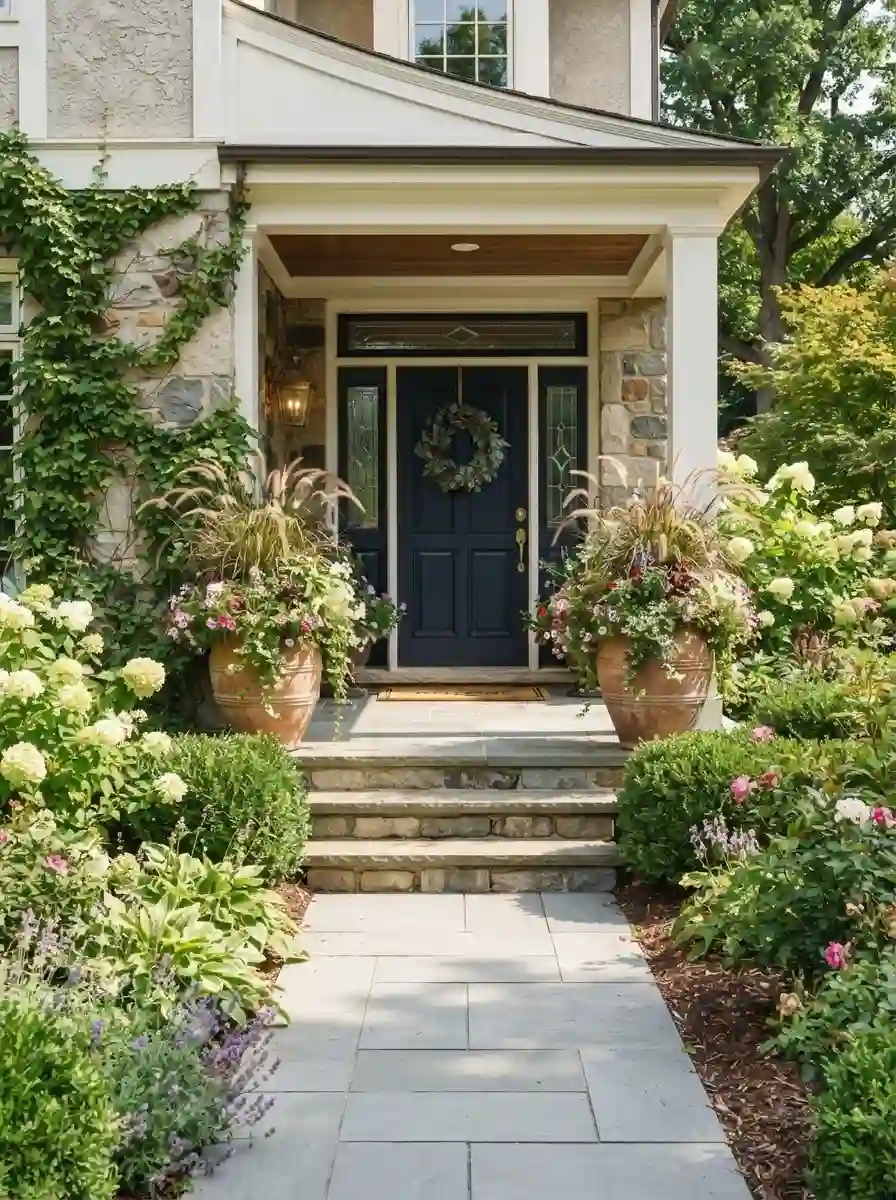
Large containers can instantly give a front entrance more structure without requiring a major landscaping project.
Place matching or coordinating planters on either side of the front door for a balanced appearance. If your house has a more relaxed style, try slightly different containers that share similar colors or materials.
Fill them with plants that complement the rest of your yard. Evergreen foliage provides dependable structure, while seasonal flowers can add color that changes throughout the year.
You can also use tall plants in narrow containers when space around the doorway is limited. This creates height without taking up too much walking space.
Choose containers with drainage holes and avoid placing them where they block the door swing or narrow the walkway.
Expert Tip:
Pick planters that are visually substantial enough to suit the scale of your house. Tiny pots can disappear beside a large entryway.
4. Line the Walkway With Low-Growing Plants
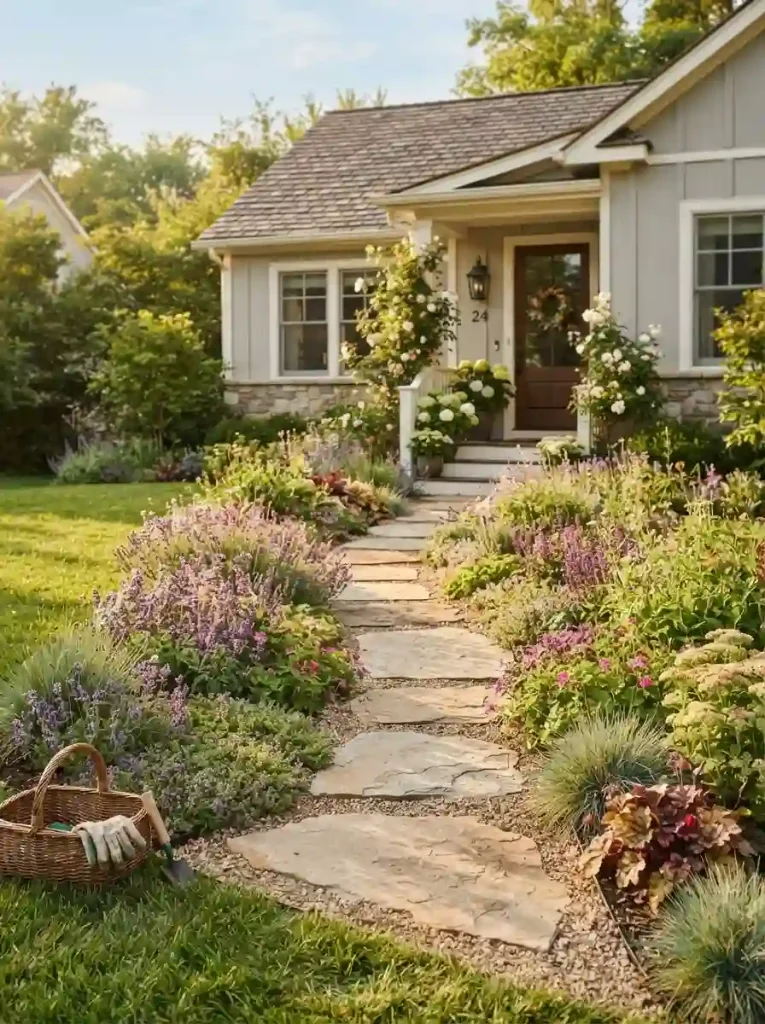
A front walkway becomes much more inviting when its edges transition naturally into the surrounding landscape.
Low-growing plants are ideal because they define the path without creating a visual barrier. Try compact evergreen groundcovers, small flowering perennials, or tidy ornamental grasses depending on your climate and design style.
Plant them in repeated groups rather than scattering individual specimens randomly. Repetition creates rhythm and helps the walkway feel like an intentional part of the landscape.
For a softer cottage look, allow some plants to spill slightly toward the path. For a cleaner modern appearance, maintain crisp edges and use plants with predictable growth habits.
Avoid varieties that quickly spread across the walking surface. You want the plants to frame the path, not compete with it.
Expert Tip:
Keep low plants slightly back from the walkway edge while they establish. This gives pedestrians comfortable space and reduces trimming later.
5. Use Ornamental Grasses for Soft Texture
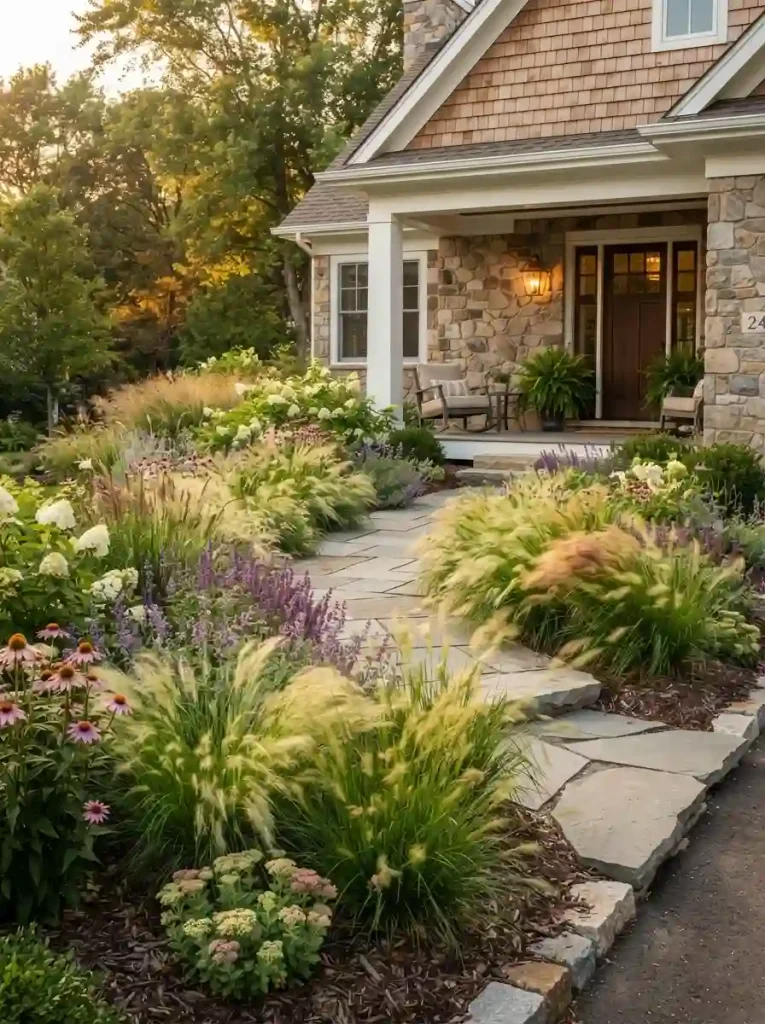
Ornamental grasses can bring movement and texture to an otherwise ordinary front yard. Their fine foliage catches the breeze and adds a relaxed quality without requiring a large collection of flowers.
Use compact varieties along paths or around foundation beds. Taller grasses can work farther from the house where they can provide height without overwhelming windows or doors.
Mix grasses with shrubs, flowering perennials, or stone edging for contrast. Their narrow leaves also create a useful textural difference beside broad-leaved plants.
Many grasses remain attractive beyond their main growing season, giving the front yard interest when other plants have finished flowering.
Before planting, check the mature size and local growing conditions. Some grasses spread aggressively, while others stay neatly clumped.
Expert Tip:
Group several plants together instead of using isolated clumps. Repeated grasses create a stronger visual rhythm across the front yard.
6. Build a Simple Stone Edging Border
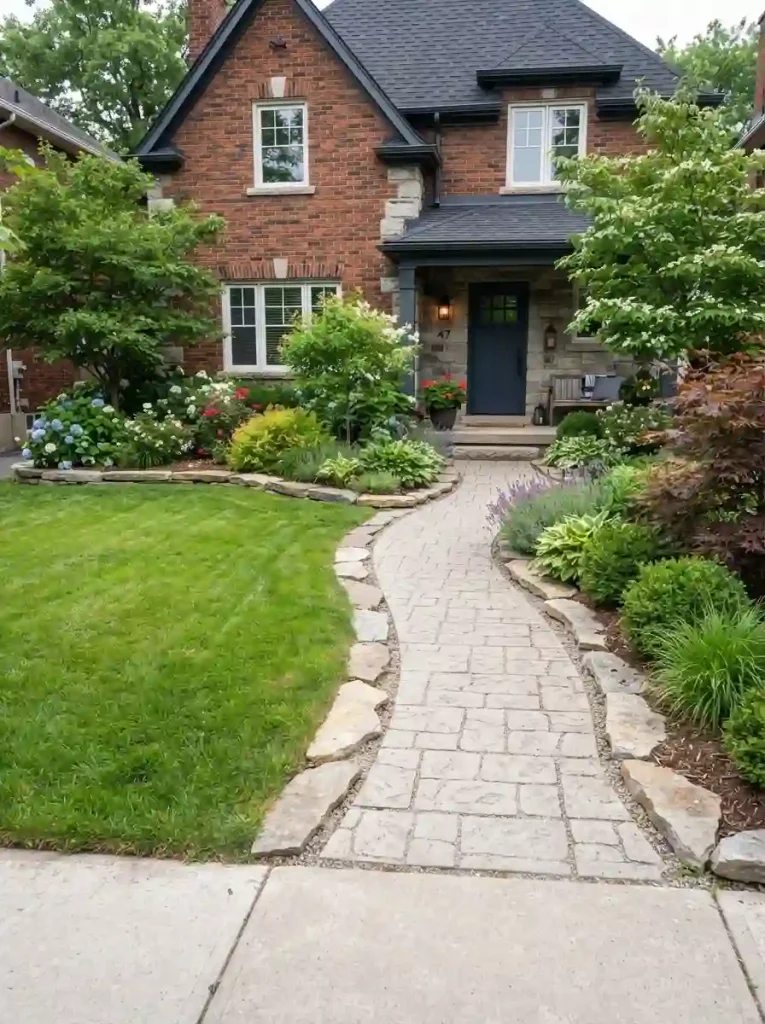
Stone edging is an easy way to give planting beds a finished appearance while visually separating them from the lawn.
You can use natural stones for an informal garden or choose evenly shaped blocks for a cleaner contemporary look. The important part is keeping the edging consistent with the character of the house.
Place the stones around flower beds, shrubs, or small trees to create clear boundaries. This can make an otherwise simple landscape look more organized.
Stone edging can also help define mulch or gravel areas and reduce the amount of lawn creeping into planting beds.
Keep the border low enough that it doesn’t become a trip hazard. If you use heavier stones, position them securely and create a stable base.
Expert Tip:
Lay out all your stones before setting them permanently. Rearranging them first makes it easier to create a natural-looking line.
7. Plant a Small Flowering Tree Near the Entrance
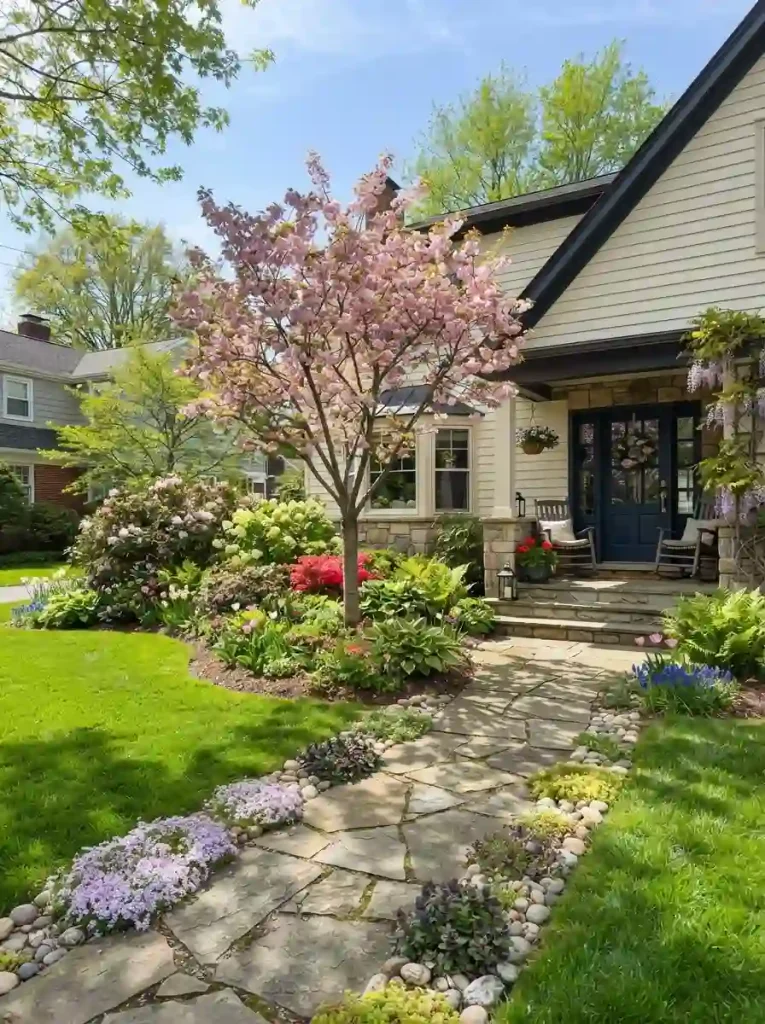
A flowering tree can become a beautiful focal point without taking over the entire front yard.
Choose a variety that stays appropriate for the available space and offers seasonal interest through blossoms, foliage, or attractive branching. Position it where it enhances the house rather than blocking important architectural features.
A small tree near the walkway can also create a gentle transition between the open lawn and the front entrance. Underplanting around its base with low flowers or groundcovers makes the tree feel connected to the rest of the landscape.
Remember that the tree you buy today will become much larger. Check its mature height and spread before planting.
Expert Tip:
Keep adequate distance from foundations, overhead utilities, and walkways. Planning for mature growth prevents expensive problems later.
8. Add a Welcoming Bench Near the Front Walk
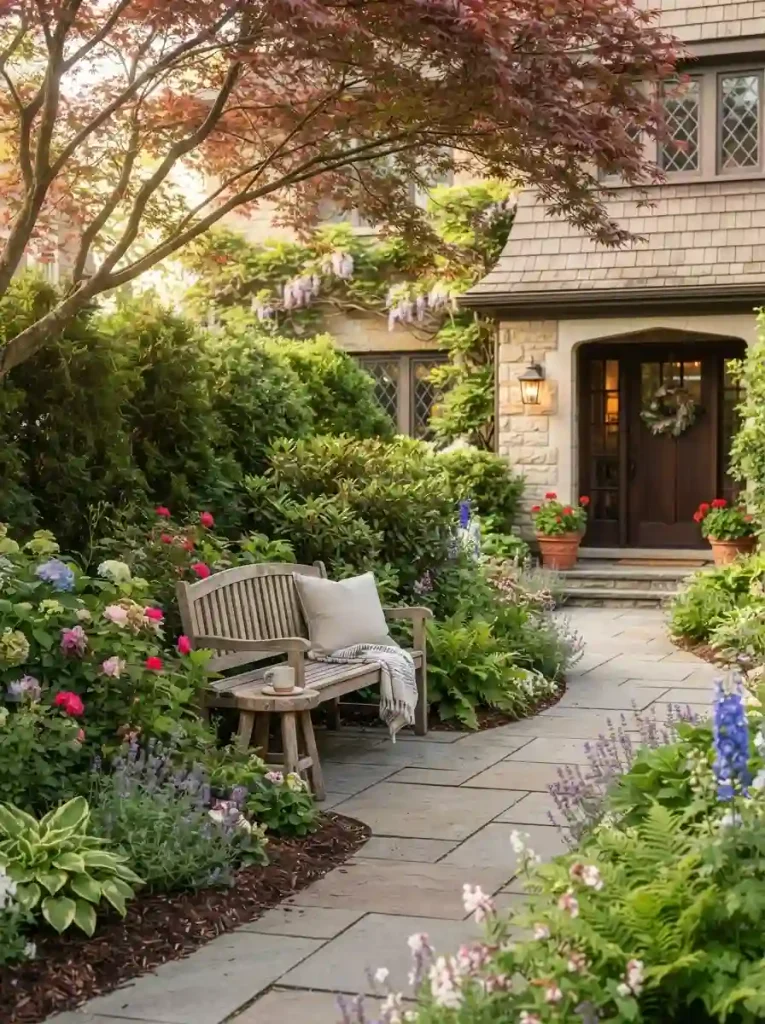
A small bench can make a front yard feel more lived-in and welcoming while providing a practical place to sit.
Choose a bench that matches the architectural style of your home. Wood works beautifully with cottage and traditional landscapes, while metal or simple composite designs can suit contemporary spaces.
Place it beside the walkway, beneath a small tree, or near a planting bed rather than directly in the main walking route.
Surrounding the bench with plants can create a cozy little garden moment. A few shrubs behind it and low flowers nearby are often enough to make the area feel intentional.
Keep the seating comfortable and exposed enough to remain practical. You don’t want dense vegetation making the bench difficult to reach.
Expert Tip:
Position the bench where it can be enjoyed without interfering with visitors entering the house. A slightly offset location usually works best.
9. Create a Mulched Foundation Garden
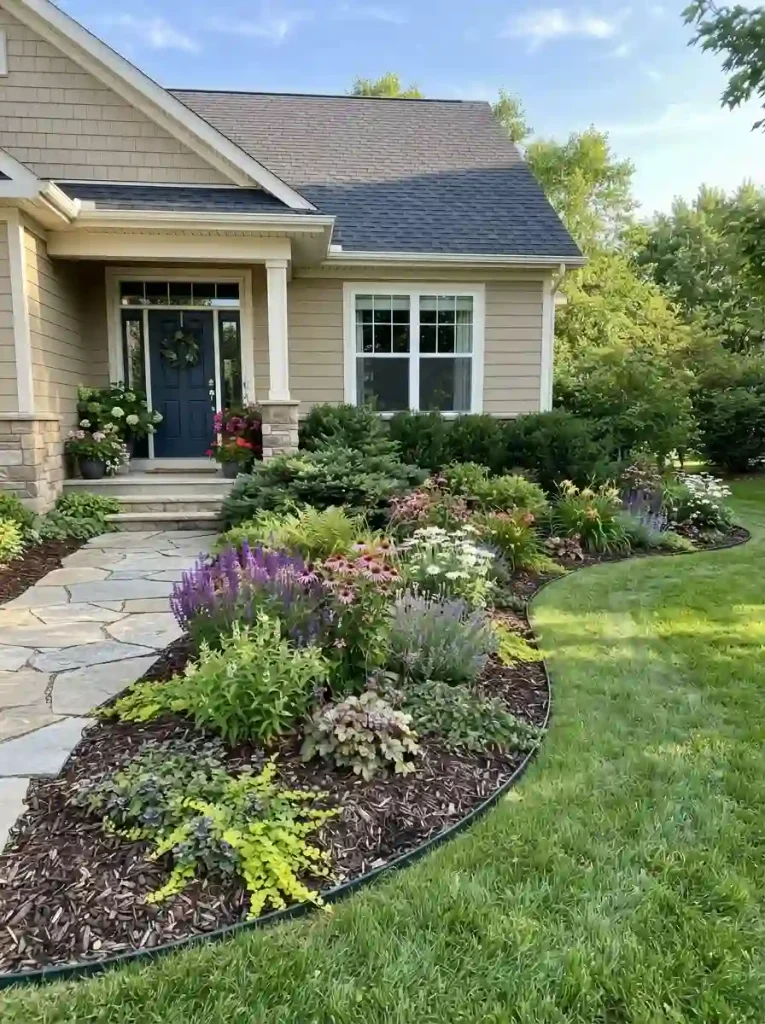
A well-designed foundation garden can make the entire front of your house feel more finished.
Start with a clean planting bed around the base of the home, then combine shrubs, perennials, and groundcovers at different heights. Mulch fills the spaces between plants and gives the area a tidy appearance.
Avoid planting everything in one straight line. Slightly staggered groups create depth and make the landscape look more natural.
Use plants that stay within their mature size so they don’t eventually cover windows, vents, or siding. Evergreen shrubs can provide structure while seasonal flowers add changing color.
A fresh layer of appropriate mulch can also help retain soil moisture and reduce weed growth, although it should not be piled directly against plant stems or the house.
Expert Tip:
Leave breathing room around the foundation and avoid creating a dense wall of shrubs directly against the house.
10. Use Gravel for a Relaxed Front Yard Look
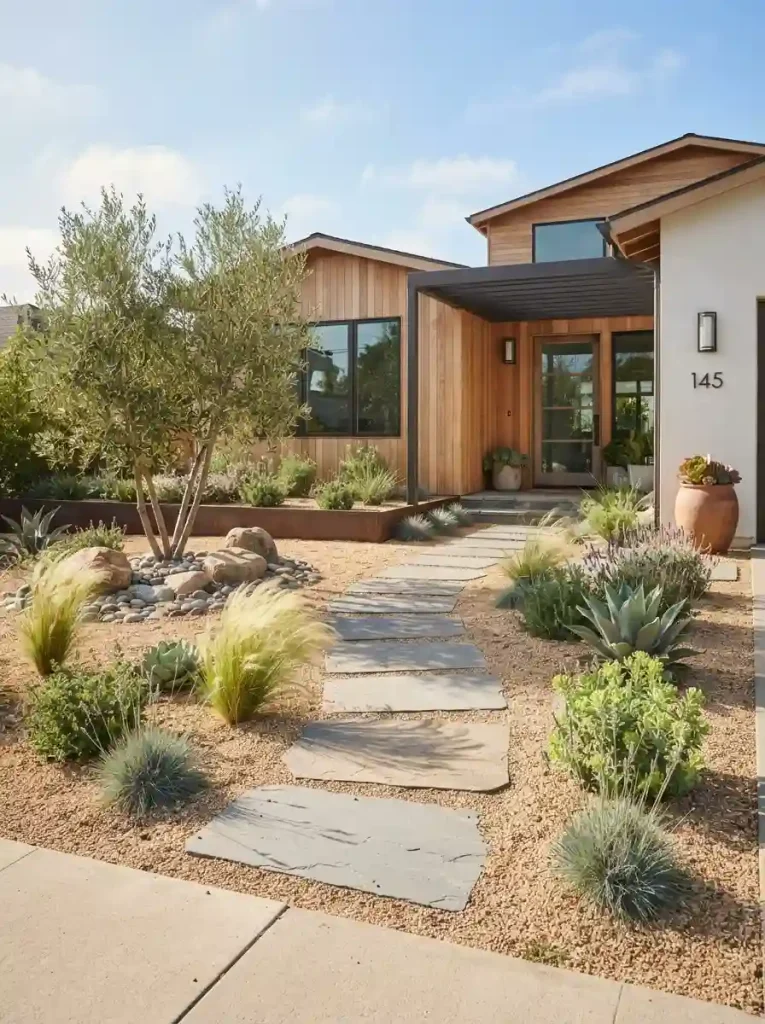
Gravel can be a practical alternative to large areas of lawn or heavily planted beds, especially when you want a relaxed and textural landscape.
Use it to create small garden zones, highlight a pathway, or surround drought-tolerant plants. Combining gravel with larger stones and sculptural plants creates visual interest without needing many decorative elements.
Choose a gravel color that works with the exterior of your house. Warm beige tones can complement brick and earthy materials, while cooler gray gravel can suit modern architecture.
Install a suitable landscape base beneath the gravel where appropriate to reduce weed growth and keep the surface more stable.
Expert Tip:
Use edging around gravel areas so stones stay where you want them instead of gradually spreading into the lawn or walkway.
11. Mix Evergreen Shrubs With Seasonal Flowers
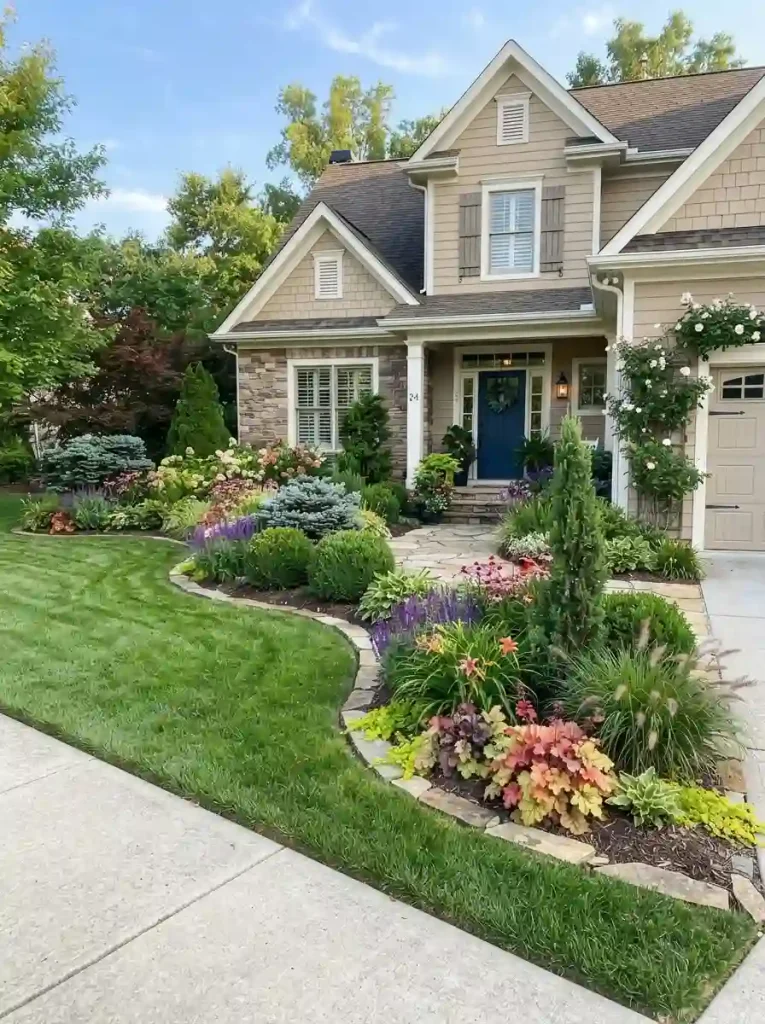
A front yard can look attractive across more of the year when permanent evergreen structure is combined with flowers that change with the seasons.
Evergreen shrubs provide a reliable foundation while annuals and perennials bring fresh color throughout spring and summer. This approach also gives you flexibility because seasonal plants can be changed without redesigning the entire garden.
Place the evergreen plants toward the back or corners of your beds and use flowering plants to create layers in front.
Think beyond flower color and consider leaf shape, plant height, and bloom timing. A landscape with several textures can remain interesting even when only a few plants are flowering.
Expert Tip:
Choose flowering plants with different bloom periods so the front yard doesn’t depend on one short burst of color.
12. Add a Small Decorative Tree in a Lawn Corner
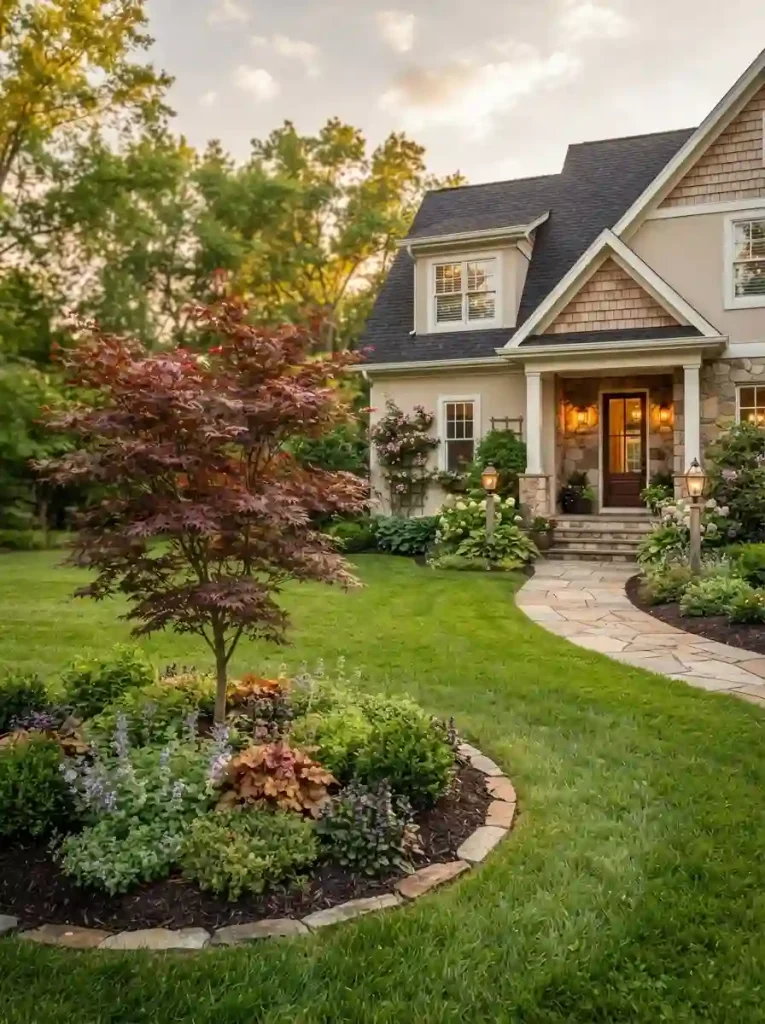
A small ornamental tree can give an open lawn a clear focal point without requiring an elaborate garden design.
Choose a tree with an interesting shape, attractive foliage, or seasonal flowers. Place it slightly away from the center of the lawn so it works as part of the overall composition rather than looking randomly planted.
A simple circular or curved planting bed around the tree can make it feel more intentional. Add low groundcovers, mulch, or a few flowering plants around the base.
This idea works particularly well when the front yard has plenty of open grass but lacks a strong visual anchor.
Just make sure the selected tree is suitable for your local climate and has enough room to develop naturally.
Expert Tip:
View the planting location from inside the house as well as from the street. A tree can become an attractive frame for windows when positioned thoughtfully.
13. Make a Defined Entry Garden
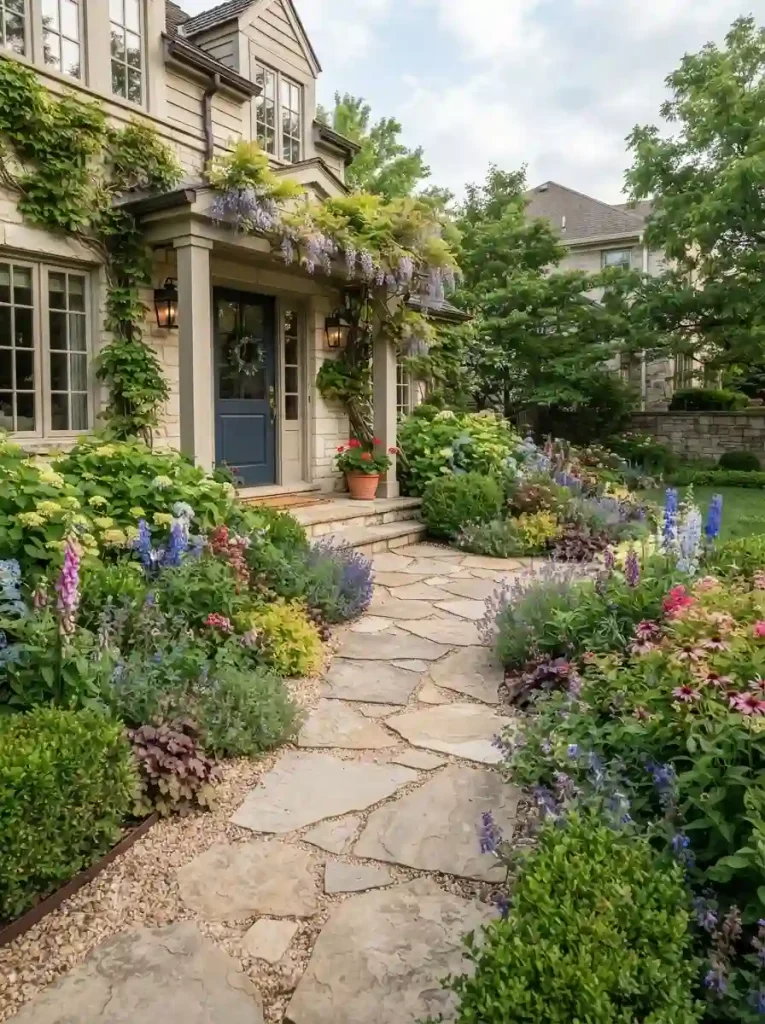
A dedicated entry garden can make the space between the sidewalk and front door feel more intentional. Instead of treating the area as leftover space, give it its own planting arrangement.
Use a combination of medium-height shrubs, flowering plants, and low foliage to create a gentle transition toward the entrance. Keep the center of the walkway open so the route remains obvious and comfortable.
This approach works particularly well for homes with a short front path because the planting can make the entrance feel more substantial without requiring a large yard.
Choose plants that look good from several angles since the garden may be viewed from the street, driveway, and windows.
Expert Tip:
Keep the plants closest to the walkway lower so the entrance remains visually open and easy to navigate.
14. Add Window Box Flowers
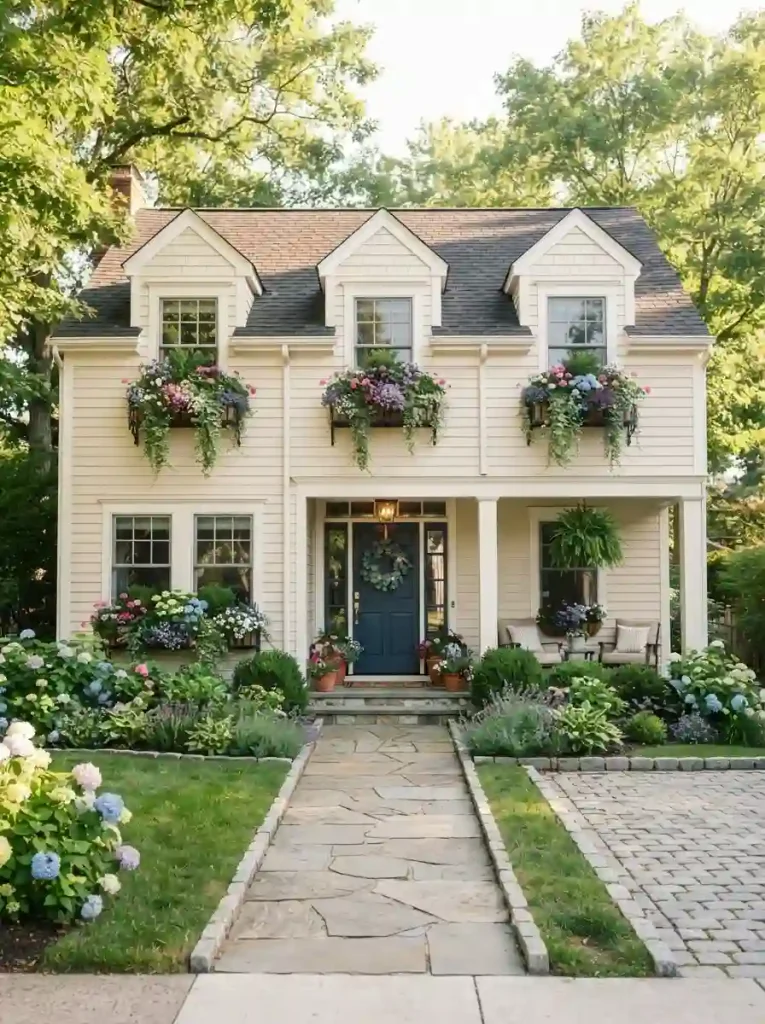
Window boxes are an easy way to bring landscaping upward and connect the house itself with the front garden.
Fill them with trailing flowers, compact foliage plants, or seasonal combinations that complement the colors already used around the property. Repeating a few plant colors throughout the yard can create a cohesive appearance.
Window boxes are especially useful for homes with limited ground space. They add greenery without taking away valuable walking or parking areas.
Make sure the boxes are securely installed and have proper drainage. Choose plants according to the amount of sunlight each window receives.
Expert Tip:
Keep the window boxes visually connected to the ground-level landscaping by repeating at least one flower or foliage color below.
15. Use a Repeating Plant Pattern
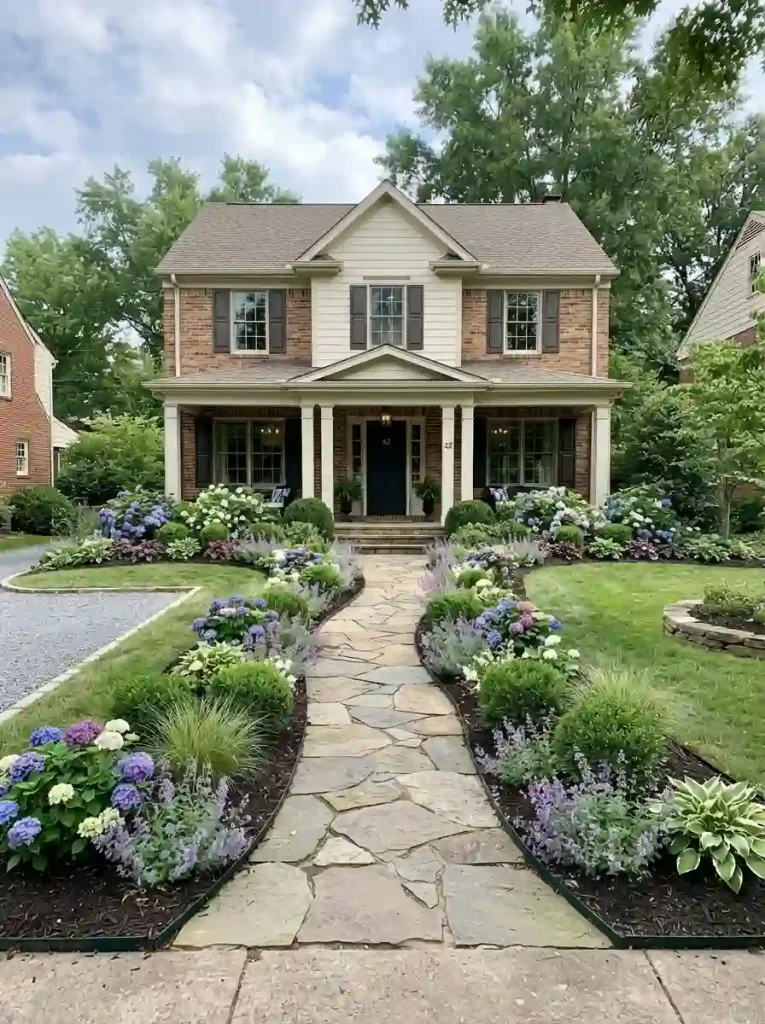
One of the easiest ways to make a front landscape look professionally planned is to repeat selected plants throughout the garden.
Instead of choosing a different plant for every small section, select a few varieties and use them in several locations. Repetition creates visual connections between the entrance, walkway, foundation beds, and lawn.
You can repeat colors, foliage shapes, or plant forms rather than using exactly the same species everywhere.
This approach is especially helpful when the yard contains several separate planting areas. Repeated elements make those spaces feel like parts of one overall design.
Expert Tip:
Choose two or three plants as recurring elements and use different companion plants around them for variety.
16. Create a Layered Cottage-Style Garden
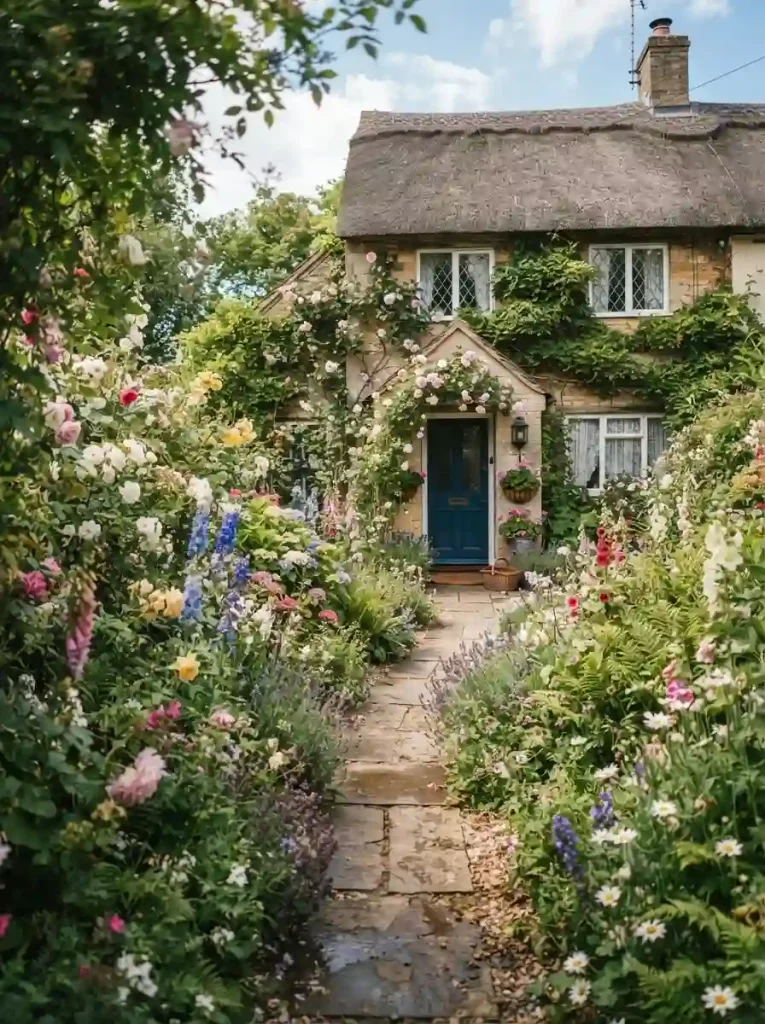
A cottage-style front garden can give your home a relaxed and welcoming personality. The look comes from combining flowers, foliage, and informal planting rather than relying on perfectly symmetrical rows.
Use plants of different heights throughout the bed, with taller flowers toward the back and smaller varieties near the walkway.
Allow some plants to grow naturally into one another while keeping the path and entrance clear. The result should feel abundant without becoming neglected.
Choose a mixture of flowering times so the garden continues changing throughout the growing season.
Expert Tip:
Keep the hardscape simple. A straightforward path allows the colorful planting to become the main feature.
17. Add a Vertical Trellis Near the Entrance
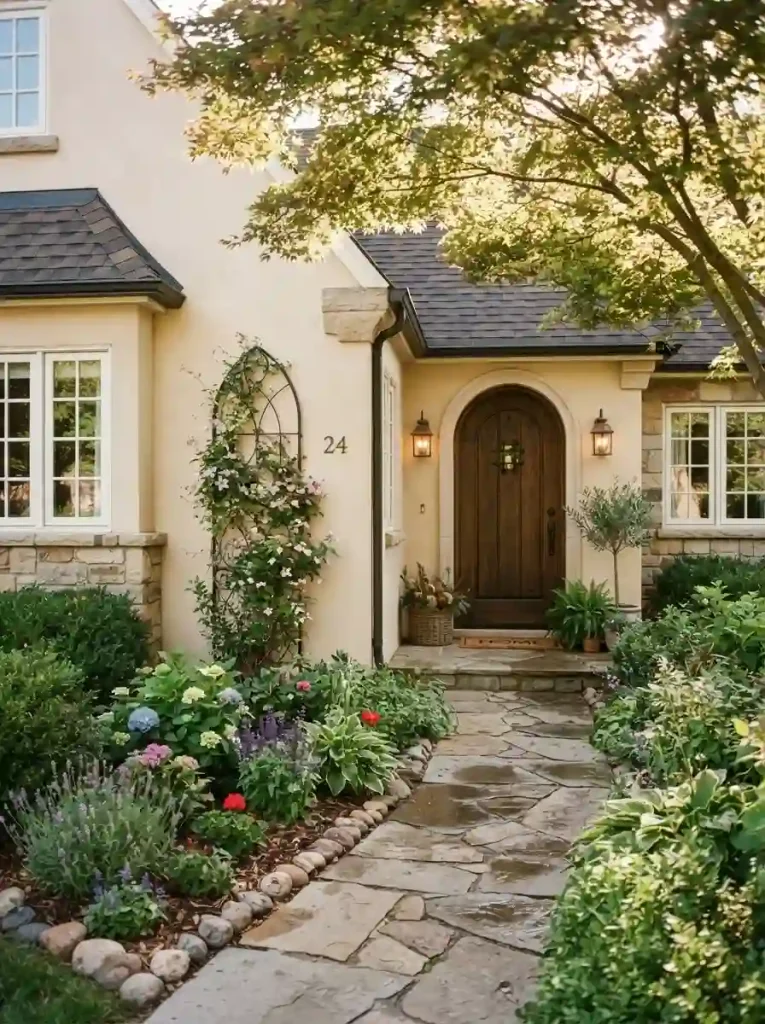
A trellis can introduce height and architectural interest without requiring a large tree or extensive planting bed.
Place a compact trellis beside the front entrance, against an appropriate wall, or near a porch column. Add a suitable climbing plant to soften the structure as it grows.
This idea is useful when your front yard is narrow because vertical gardening uses upward space instead of taking over the ground.
Choose a trellis material that complements your home’s exterior. Painted wood, natural timber, or simple metal can each create a different effect.
Expert Tip:
Check how large the climbing plant becomes before choosing it. Some vines can quickly overwhelm a small trellis or require regular pruning.
18. Design a Small Rock Garden
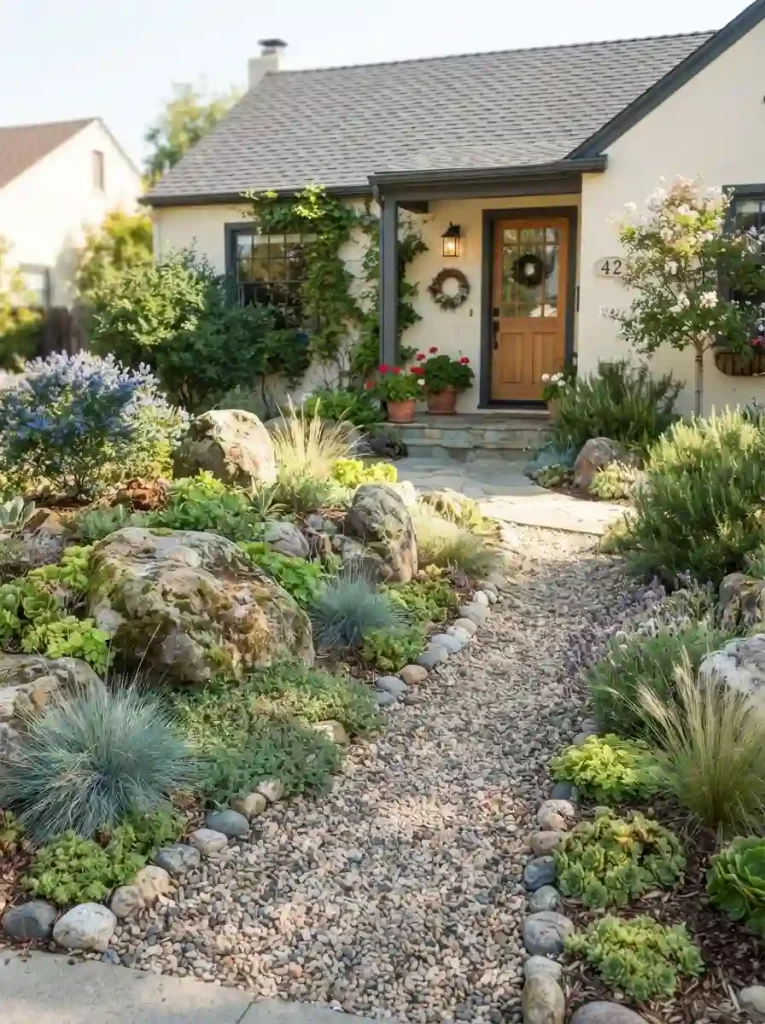
A compact rock garden can add texture and character to an otherwise ordinary front yard.
Choose a few substantial rocks rather than filling the entire area with small stones. Arrange them naturally and surround them with drought-tolerant plants, compact grasses, or low-growing succulents where suitable.
This style can work particularly well in sunny locations where traditional lawn requires more maintenance.
Use rocks that look appropriate for the surrounding landscape and avoid creating an arrangement that feels overly symmetrical.
Expert Tip:
Partially bury larger rocks so they look naturally settled into the landscape rather than simply placed on top of the soil.
19. Highlight the Front Steps With Plants
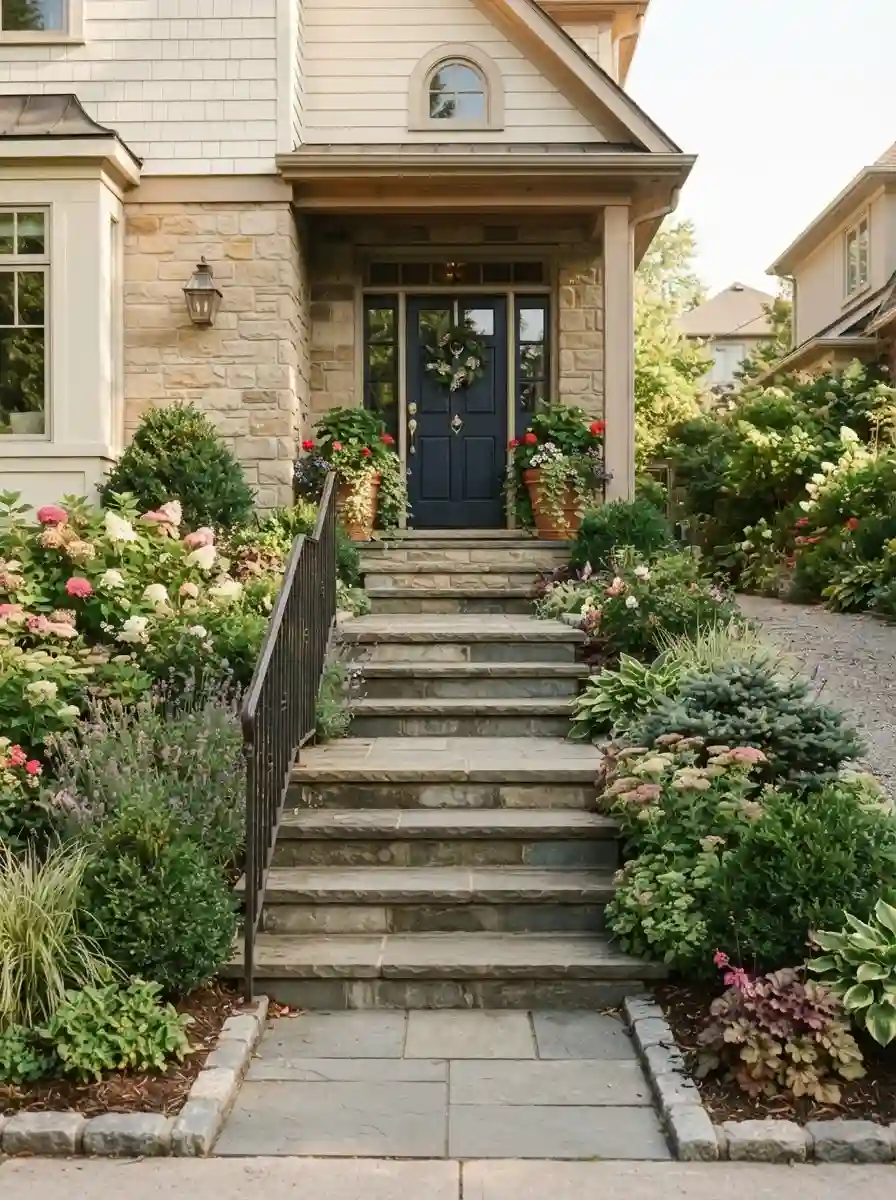
Front steps naturally draw attention because they lead directly toward the entrance. Use that architectural feature as an opportunity to add greenery.
Place plants along the sides of the steps rather than directly in the walking area. Tall narrow planters, low shrubs, or small flowering clusters can help visually frame the staircase.
For a wider set of steps, you can use matching containers at selected levels. For smaller steps, keep the arrangement simple so the entrance doesn’t feel crowded.
The plants should enhance the steps without creating slippery leaves, blocking handrails, or reducing the usable width.
Expert Tip:
Think about safety before decoration. Keep stair treads, railings, and the main walking route completely unobstructed.
20. Use a Low Hedge to Define the Property
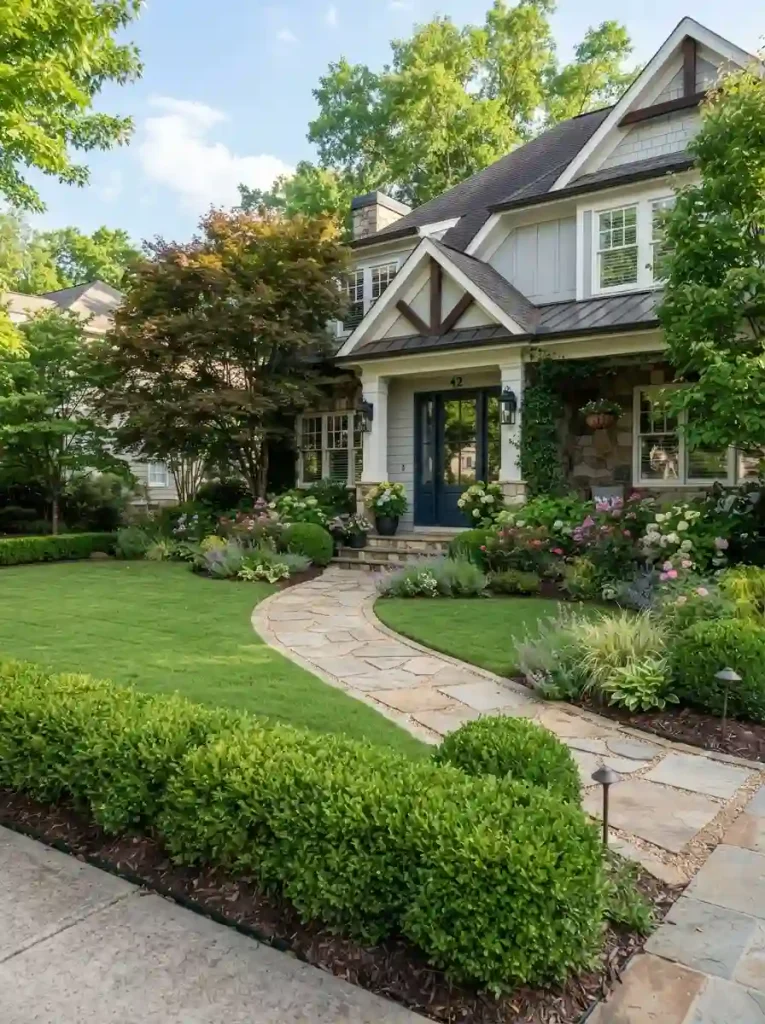
A low hedge can give the front yard a sense of structure while maintaining an open connection between the house and street.
Choose compact shrubs that respond well to trimming if you want a formal appearance. For a softer look, select plants that naturally maintain a rounded or low-growing shape.
Use the hedge to outline a driveway, separate lawn from a walkway, or define the front garden without creating a tall visual barrier.
Keep the hedge low enough that it doesn’t hide the house or interfere with visibility around driveways and entrances.
Expert Tip:
A low hedge works best when it has a clear purpose. Use it to define an edge or space rather than placing it everywhere.
21. Add Lighting Along the Front Path
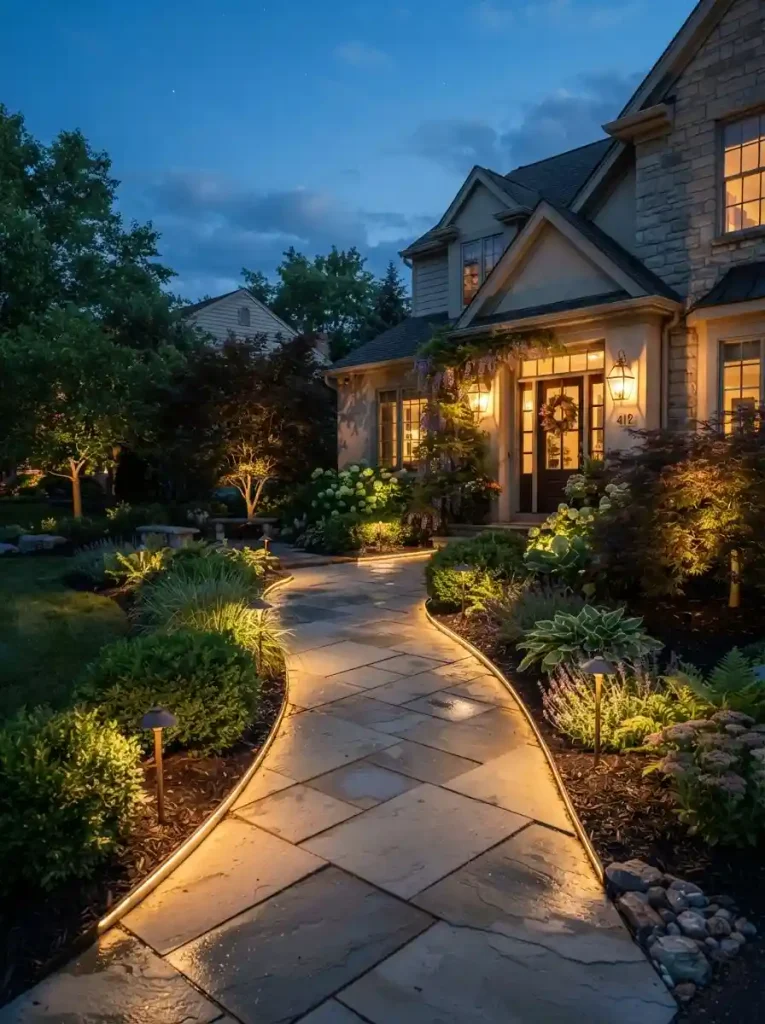
Landscape lighting can make a front entrance feel welcoming after sunset while helping visitors see the route toward the door.
Small pathway lights can be spaced along walkways or around planting beds. Choose fixtures that complement the home’s architecture rather than becoming the main attraction.
Warm, subtle illumination can highlight plants, steps, stone borders, or interesting architectural details.
Avoid installing too many lights close together. A few strategically placed fixtures often create a more comfortable atmosphere than an overly bright pathway.
Expert Tip:
Position lights so they illuminate the walking surface without shining directly into windows or creating glare for visitors.
22. Create a Pollinator-Friendly Front Garden
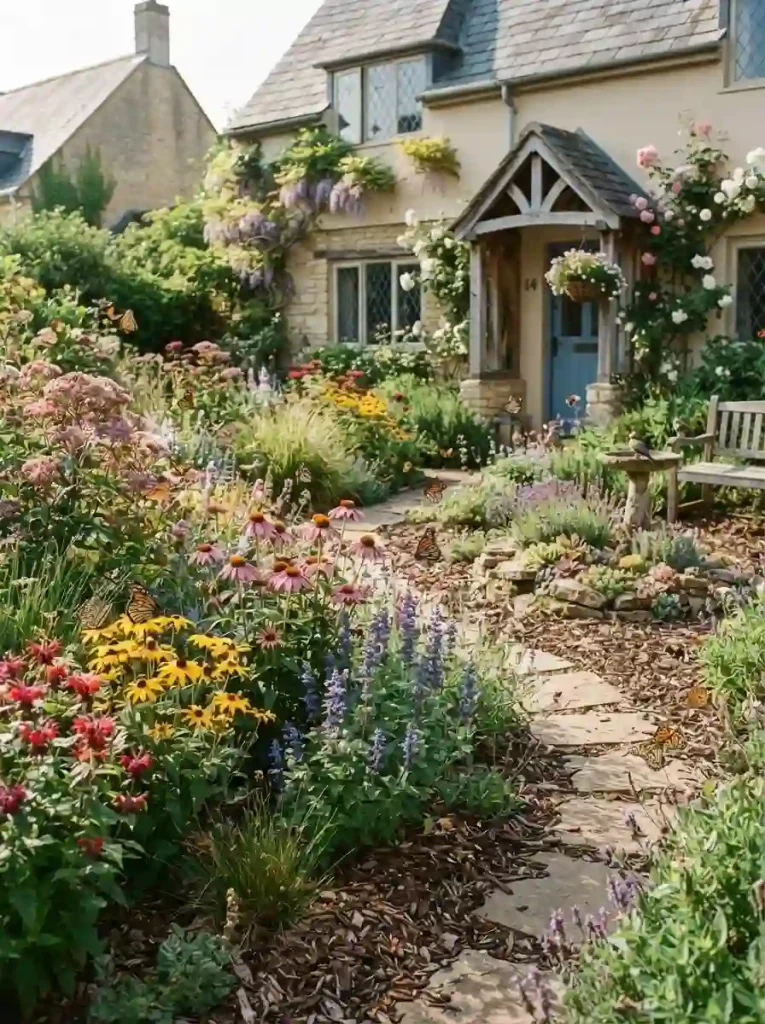
A pollinator-friendly garden can combine beauty with a practical purpose by providing flowers and habitat for beneficial insects.
Choose a range of flowering plants that bloom at different times rather than relying on one short flowering period. Include different flower shapes and plant heights to create a varied garden.
A small water source, natural shelter, and reduced lawn area can further support garden wildlife where appropriate.
Avoid treating every insect as a problem. Many visiting insects are valuable parts of a healthy garden ecosystem.
Expert Tip:
Select flowering plants suited to your local region and growing conditions. Native or well-adapted varieties often require less intensive care.
23. Combine Pavers With Groundcover
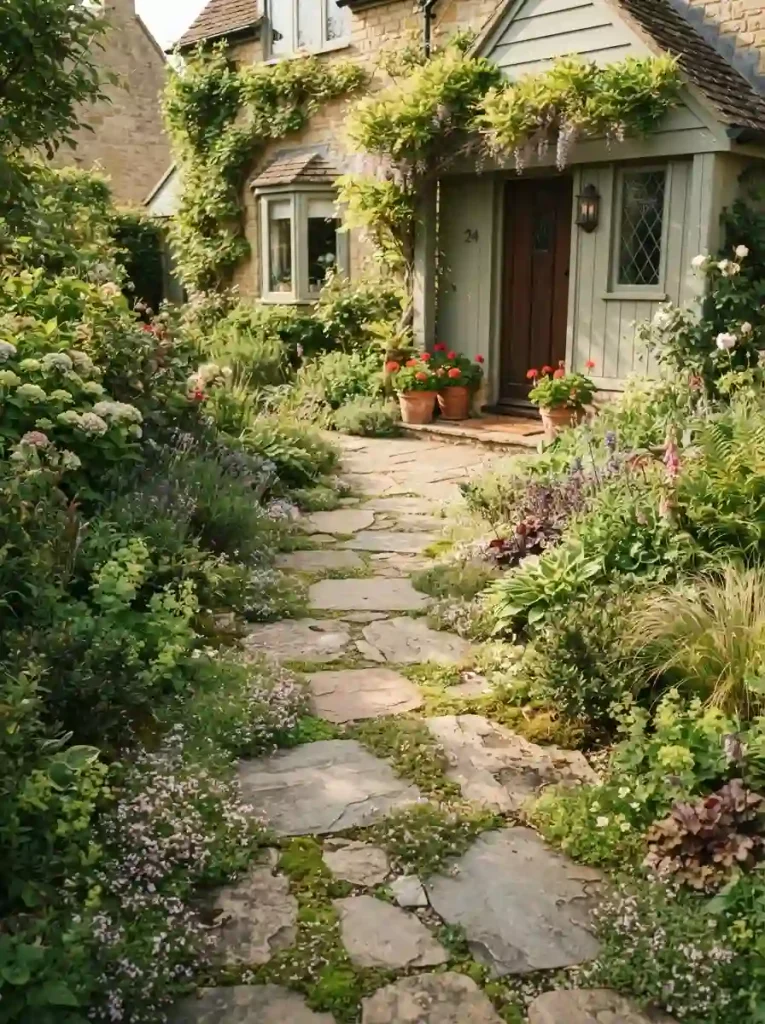
Pavers and groundcover can create a polished walkway while giving the hardscape a softer garden appearance.
Leave intentional spaces between selected pavers and fill them with a suitable low-growing groundcover. This creates a gentle transition between stone and planting rather than a completely hard surface.
The technique can work especially well in informal gardens and smaller entry paths. Choose groundcover that can tolerate the amount of foot traffic the area receives.
Make sure the pavers remain stable and level. The walking surface should always take priority over the decorative effect.
Expert Tip:
Use larger pavers for the main walking surface and keep planted gaps modest enough that they don’t become difficult to navigate.
24. Finish With a Simple Seasonal Front Garden
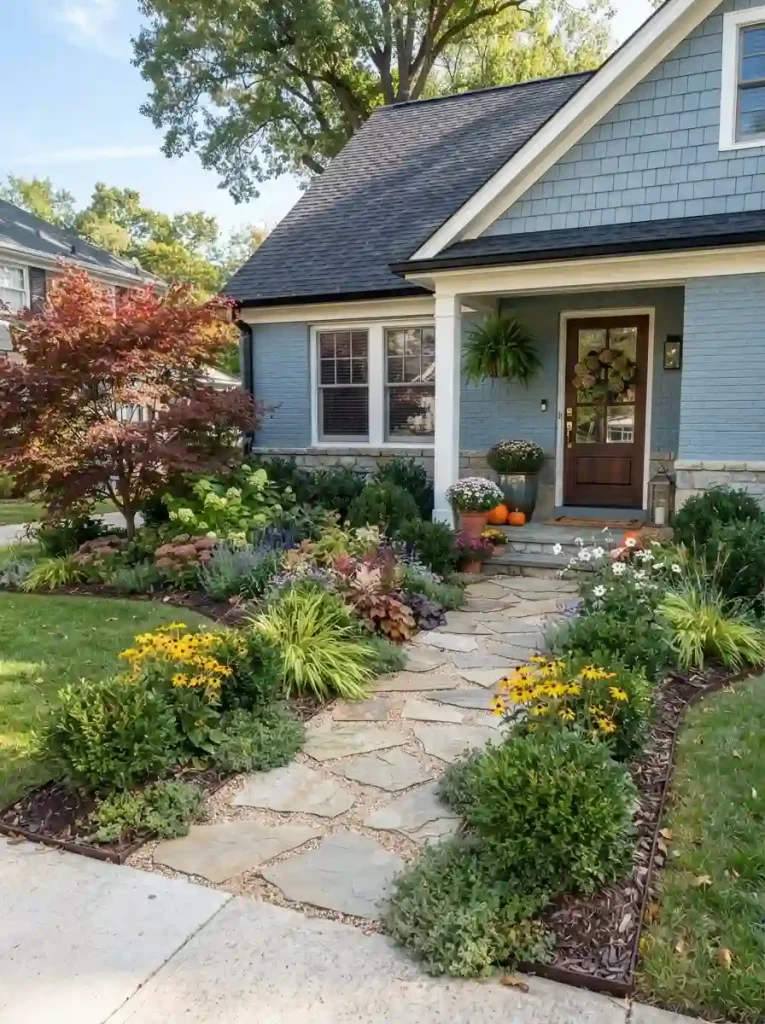
You don’t need to completely redesign your front yard every season. A few carefully selected seasonal updates can keep the entrance looking fresh throughout the year.
Start with permanent elements such as shrubs, trees, pathways, and structural planting. Then introduce seasonal flowers, containers, or small decorative touches that can be changed as the weather shifts.
Spring might bring fresh blooms, summer can emphasize lush foliage, autumn can introduce warm-toned plants, and winter can rely more heavily on evergreen structure and attractive branches.
Keeping the seasonal additions limited makes maintenance easier and prevents the front yard from feeling visually cluttered.
Expert Tip:
Build your design around plants and materials that provide year-round structure, then use seasonal color as an accent rather than the entire foundation.
Final Thoughts
A welcoming front yard doesn’t have to be complicated. The most successful landscapes usually combine a few practical elements that work together: a clear entrance, attractive planting, appropriate scale, useful pathways, and details that complement the house.
Start with the areas visitors notice first, such as the front door and walkway. From there, add layers of plants, seasonal color, texture, or simple hardscape features according to the space you have available.
Before buying plants, always consider sunlight, drainage, mature size, local climate, and maintenance requirements. A beautiful landscape is much easier to enjoy when the plants are suited to their environment.
Most importantly, don’t feel pressured to complete everything at once. A front yard can evolve gradually. Begin with one planting bed, improve the entrance, add a few containers, or redefine the walkway, then build from there.
With thoughtful planning, even a small front yard can become a warm and memorable introduction to your home.