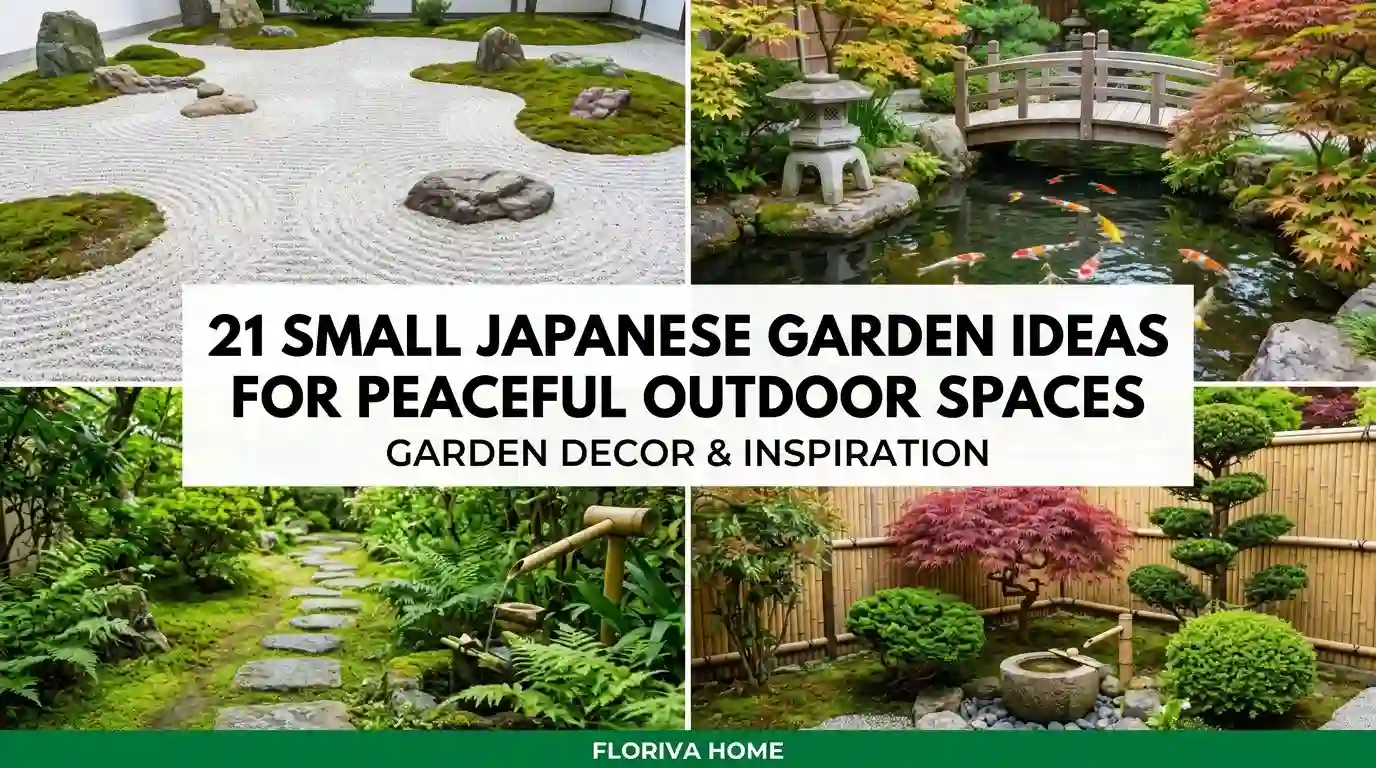
21 Small Japanese Garden Ideas for Peaceful Outdoor Spaces
Creating a peaceful Japanese-inspired garden does not require a large backyard. Even a narrow courtyard, compact patio, side passage, or tiny outdoor corner can become a calming retreat when the design is intentional.
The secret is not adding more features. It is choosing a few natural elements and giving each one enough room to breathe. Texture, proportion, greenery, stone, wood, and carefully framed views can make a small outdoor space feel both beautiful and relaxing.
If you are looking for small Japanese garden ideas that work in realistic spaces, these 21 designs can help you create an outdoor retreat that feels simple, balanced, and connected to nature.
1. Create a Tiny Forest-Style Corner
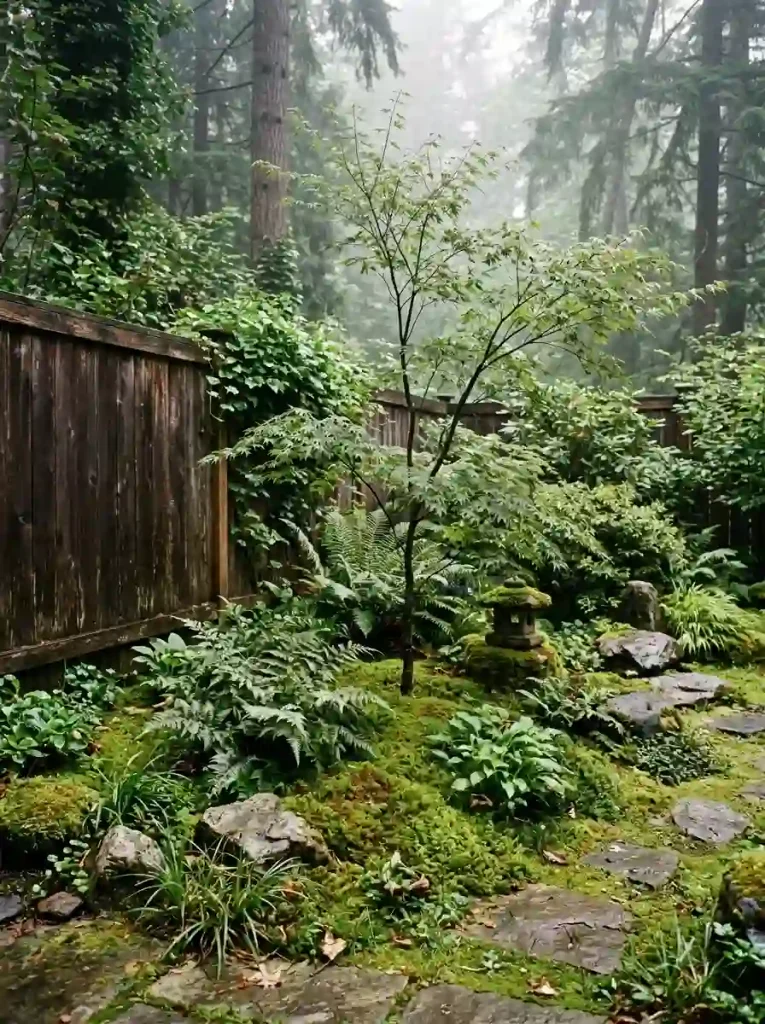
A small cluster of trees and layered greenery can give even a compact garden the feeling of stepping into a miniature woodland.
Instead of spreading plants evenly across the entire space, concentrate them in one corner. Combine a slender tree with medium-height shrubs and low groundcover to create several visual levels.
Leave the opposite side more open. This contrast between dense planting and empty space makes the garden feel larger while giving the planting area a natural, established appearance.
Expert Tip:
Choose plants with different leaf shapes and heights rather than filling the corner with too many varieties. A limited palette will keep the composition calm.
2. Build a Minimalist Stone Composition
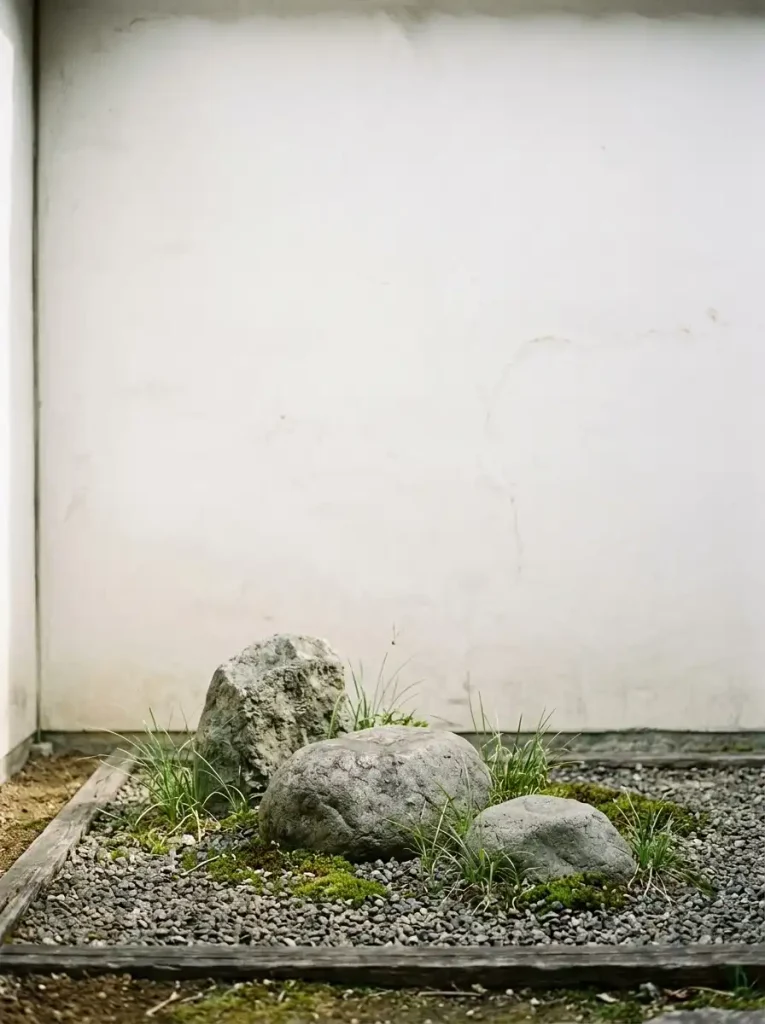
A carefully arranged group of stones can become the main feature of a small Japanese garden without taking up much physical space.
Select several stones with different shapes and sizes, then position them as a deliberate composition rather than scattering them randomly. Surround the arrangement with moss, low plants, or a simple ground surface.
The beauty comes from restraint. You do not need dozens of rocks to make the feature noticeable.
Expert Tip:
Before permanently positioning the stones, move them around from several viewing angles. The arrangement should look balanced from the main place where you will see the garden.
3. Turn a Corner Into a Bamboo Retreat
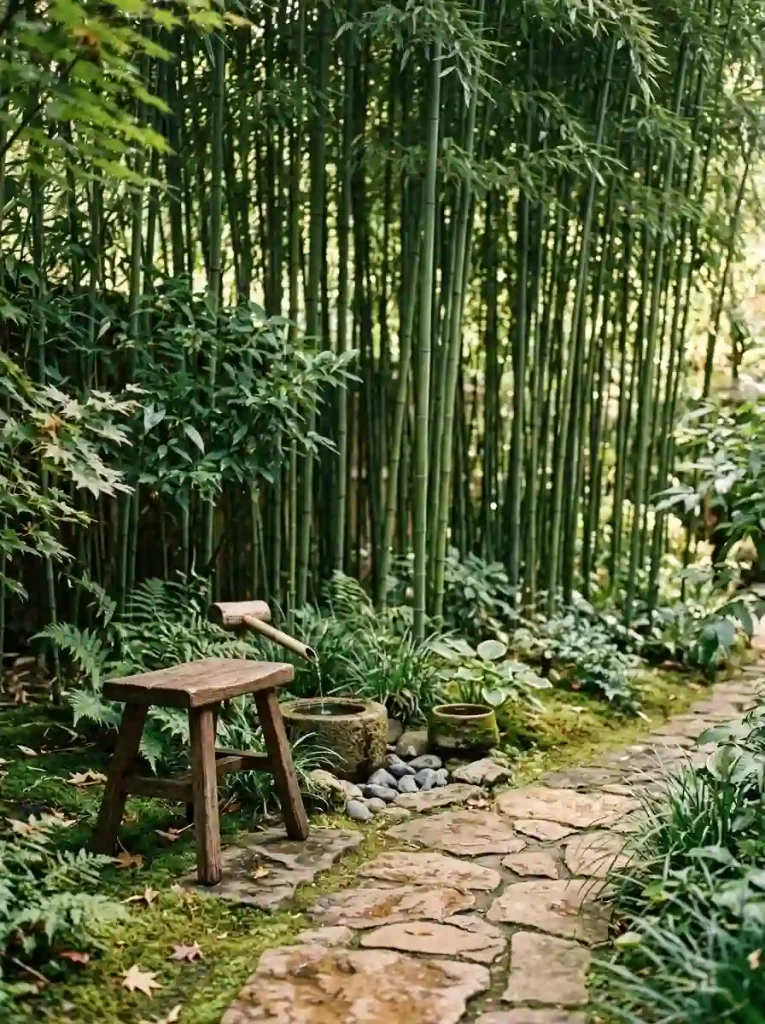
Bamboo can quickly transform an exposed corner into a more private and enclosed garden space.
Use a small group of bamboo or a slim bamboo screen along one boundary rather than covering every wall. Add low greenery at its base and perhaps a simple wooden seat facing into the garden.
The vertical lines of bamboo naturally draw the eye upward, which can make a small outdoor area feel taller.
Expert Tip:
Keep bamboo under control with regular maintenance and choose a suitable variety for your climate and available space.
4. Design a Window-Facing Garden Scene
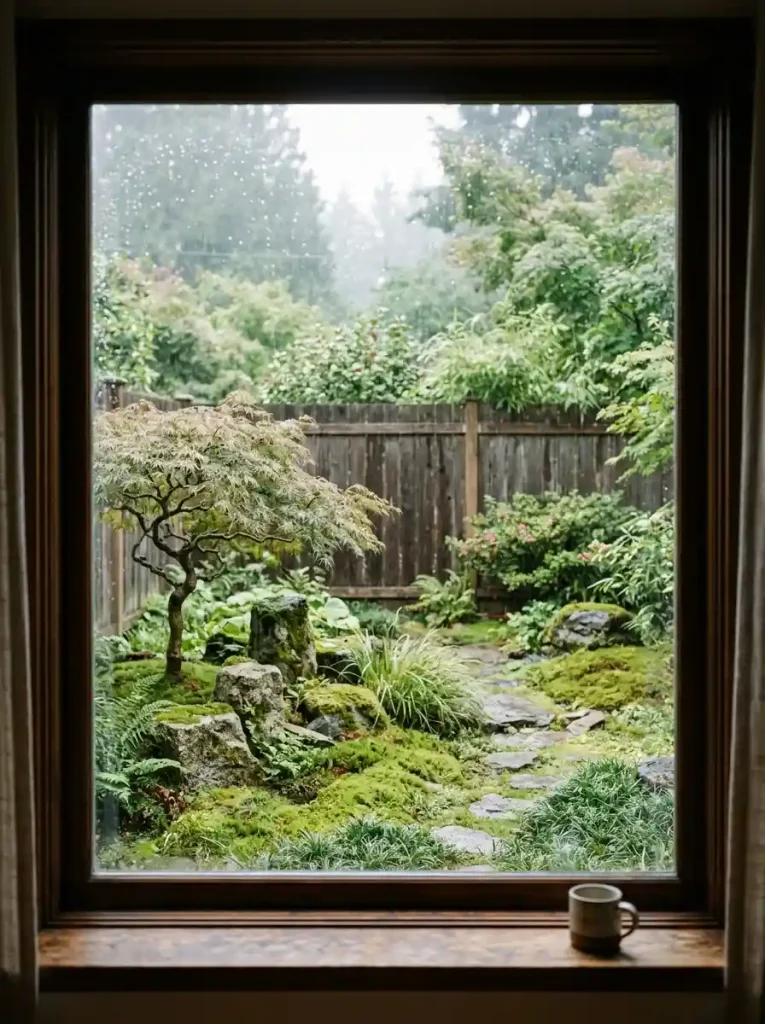
A tiny garden does not need to be designed primarily for walking through it. Sometimes the best approach is to create a beautiful scene that can be enjoyed from inside the house.
Choose a frequently viewed window and place a carefully selected focal element outside it. This might be a small tree, sculptural shrub, stone arrangement, or textured planter.
Keep the composition relatively low so the view remains open.
Expert Tip:
Look at the garden from indoors before making final planting decisions. The most attractive outdoor arrangement may be the one that looks best through your favorite window.
5. Add a Narrow Stone Terrace
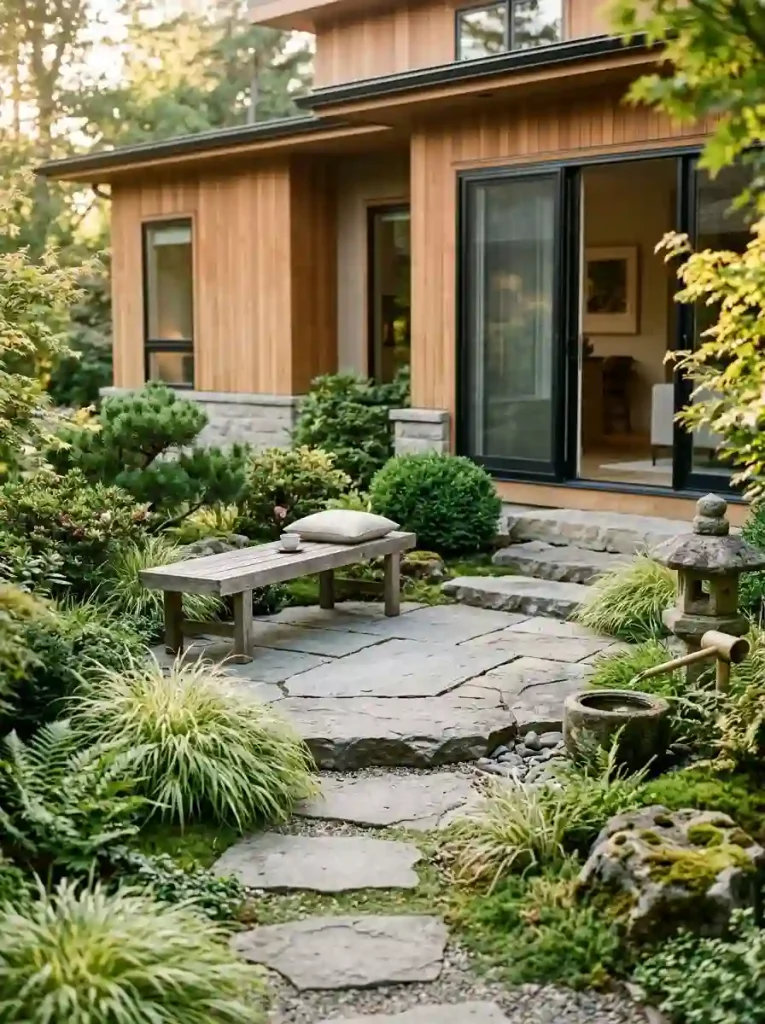
A small stone terrace can establish a clear outdoor zone without requiring a large lawn or complicated landscaping.
Use a few large-format natural stones or understated pavers to create a compact sitting surface. Keep the surrounding planting slightly softer and more irregular to contrast with the defined terrace.
A low bench or floor cushion can turn the area into a quiet place for morning coffee or evening relaxation.
Expert Tip:
Choose paving that complements your existing architecture. Matching the tones of the house and garden will make the outdoor area feel more connected.
6. Create a Hidden Garden Entrance
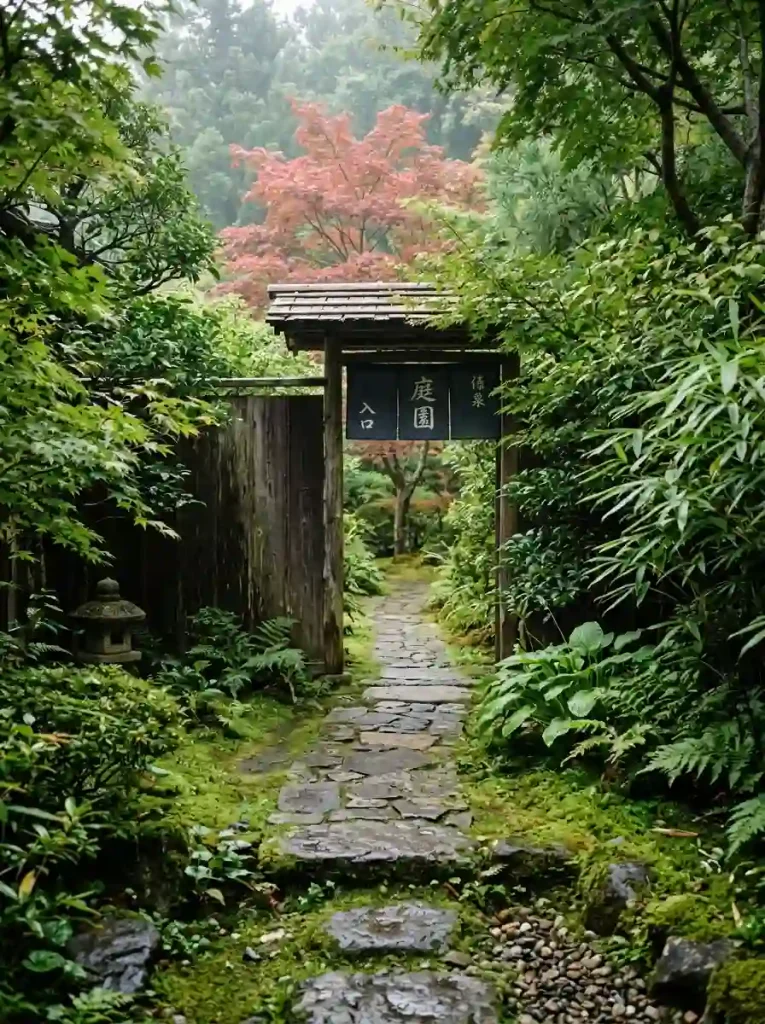
A partially concealed entrance can make a tiny garden feel like a destination rather than simply another part of the yard.
Use a narrow opening between plants, timber screens, or simple architectural elements. The entrance does not have to be elaborate; even a subtle transition can create a sense of discovery.
Place the most interesting garden feature slightly beyond the entrance so visitors see it gradually.
Expert Tip:
Avoid revealing the entire garden immediately. A partially hidden view can create depth and encourage people to explore the space.
7. Use a Single Sculptural Shrub
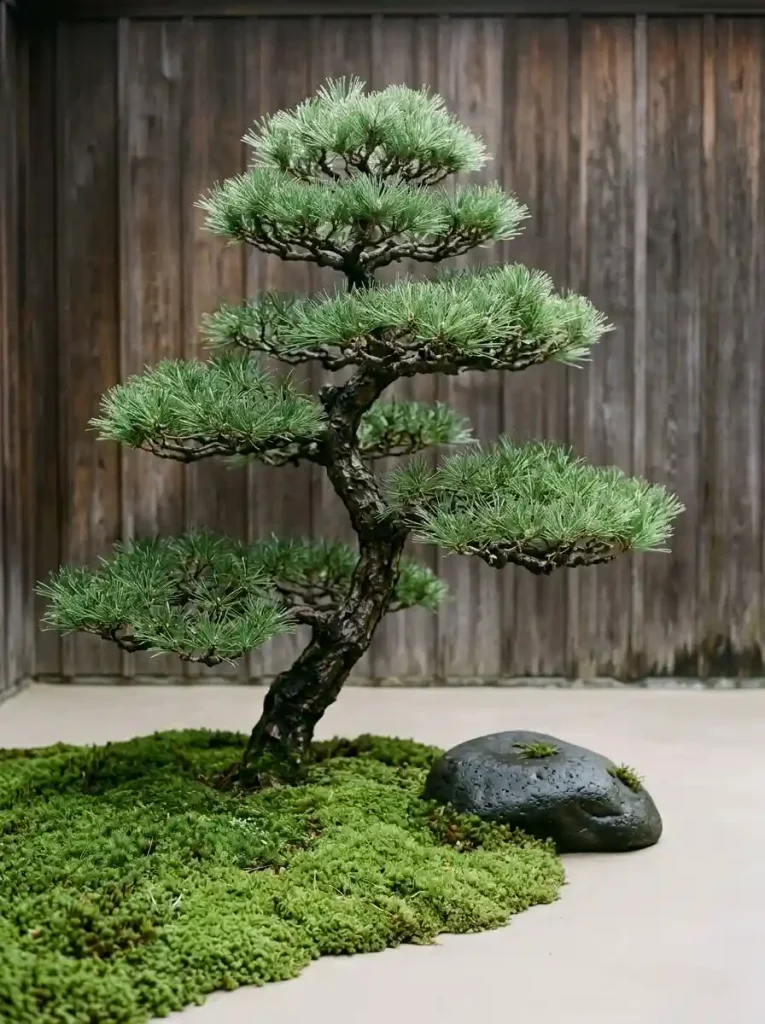
When space is extremely limited, one beautifully shaped shrub can provide enough visual structure on its own.
Choose a compact evergreen or naturally architectural plant and give it a prominent position. Surround it with simple groundcover and one or two complementary stones.
The goal is to let the plant’s shape become part of the garden’s architecture.
Expert Tip:
Prune selectively rather than constantly trimming every branch. Preserve the plant’s natural character while controlling its size.
8. Make a Tiny Rain Garden
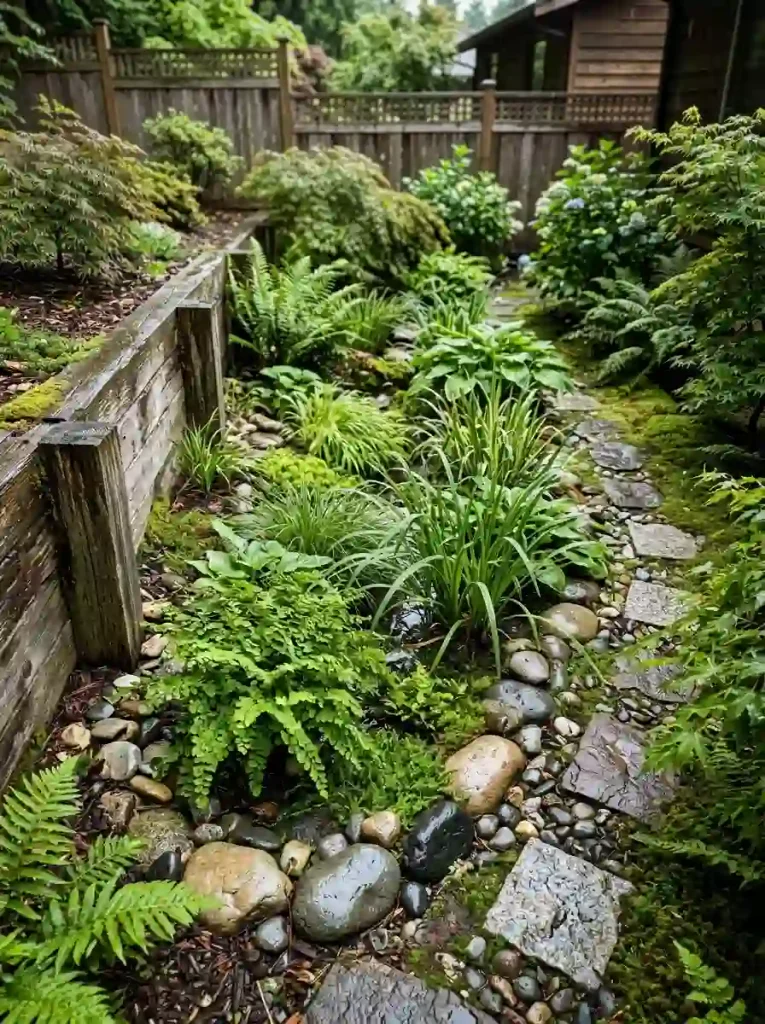
A small rain-friendly planting area can combine practical landscaping with a natural Japanese-inspired appearance.
Use moisture-tolerant plants in a shallow planting zone where rainwater naturally collects. Add a few rounded stones to create structure and allow the planting to remain slightly informal.
This can be especially useful in compact yards where managing runoff is already a concern.
Expert Tip:
Choose plants suited to your local rainfall and drainage conditions. The planting should tolerate periods of moisture without remaining waterlogged continuously.
9. Create a Mossy Stairway
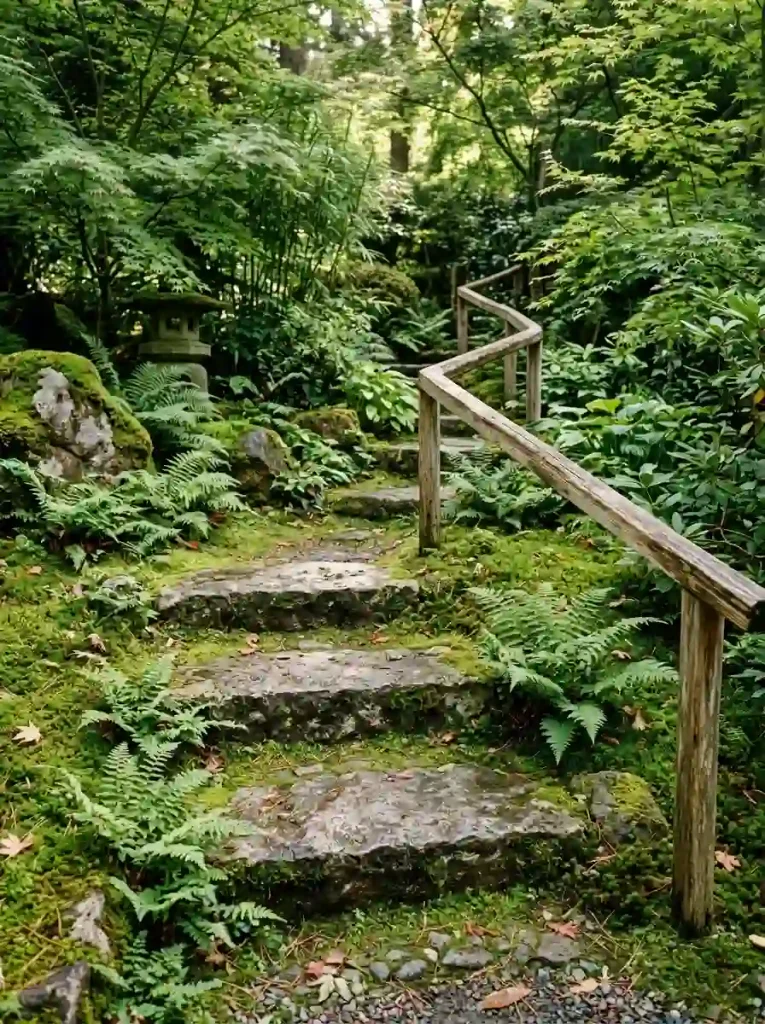
If your garden has a small change in elevation, turn the steps into part of the landscape instead of treating them as a purely functional feature.
Natural stone steps surrounded by low greenery can create a gentle transition between different areas of the garden. Allow moss or groundcover to soften the edges without blocking the walking surface.
The result can feel much more integrated than a conventional staircase.
Expert Tip:
Keep walking surfaces stable and free of excessive moss or moisture. Beauty should never compromise safe access.
10. Add a Floating Wooden Bench
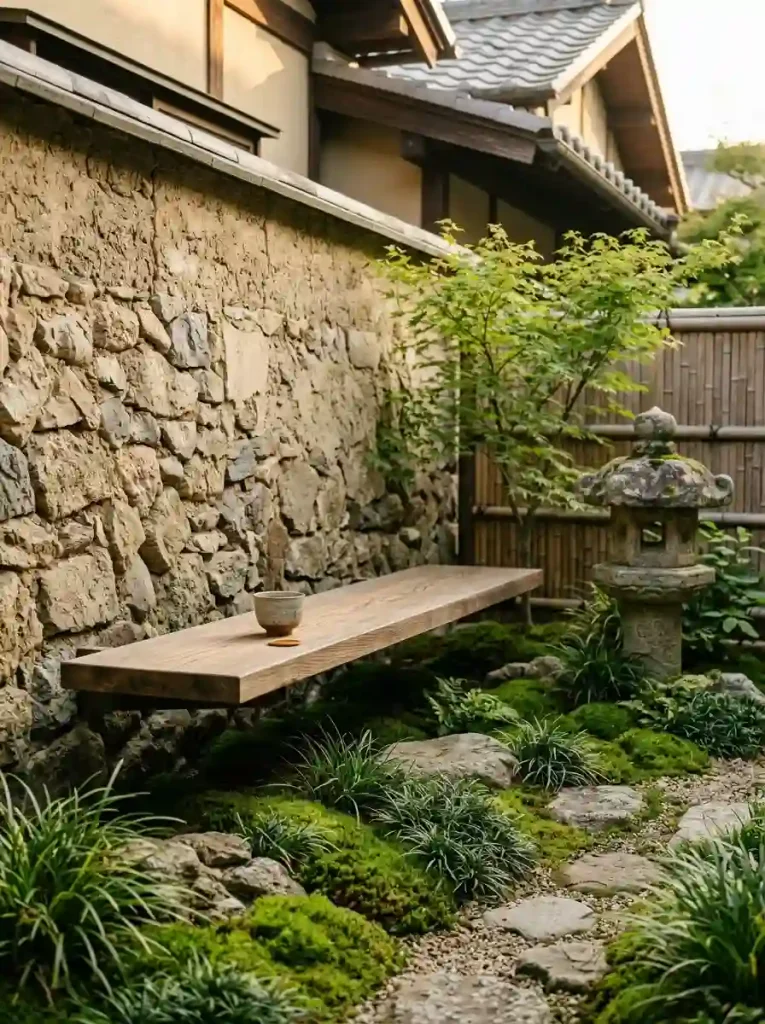
A simple bench can provide both function and visual balance in a small garden.
Instead of using bulky outdoor furniture, install or position a narrow wooden bench along a wall or boundary. This leaves most of the floor open while providing a comfortable place to sit.
Choose a natural finish that will age gracefully alongside stone and greenery.
Expert Tip:
Place the bench where you can look toward the garden’s focal point rather than simply facing a blank wall.
11. Frame an Outdoor View With Plants
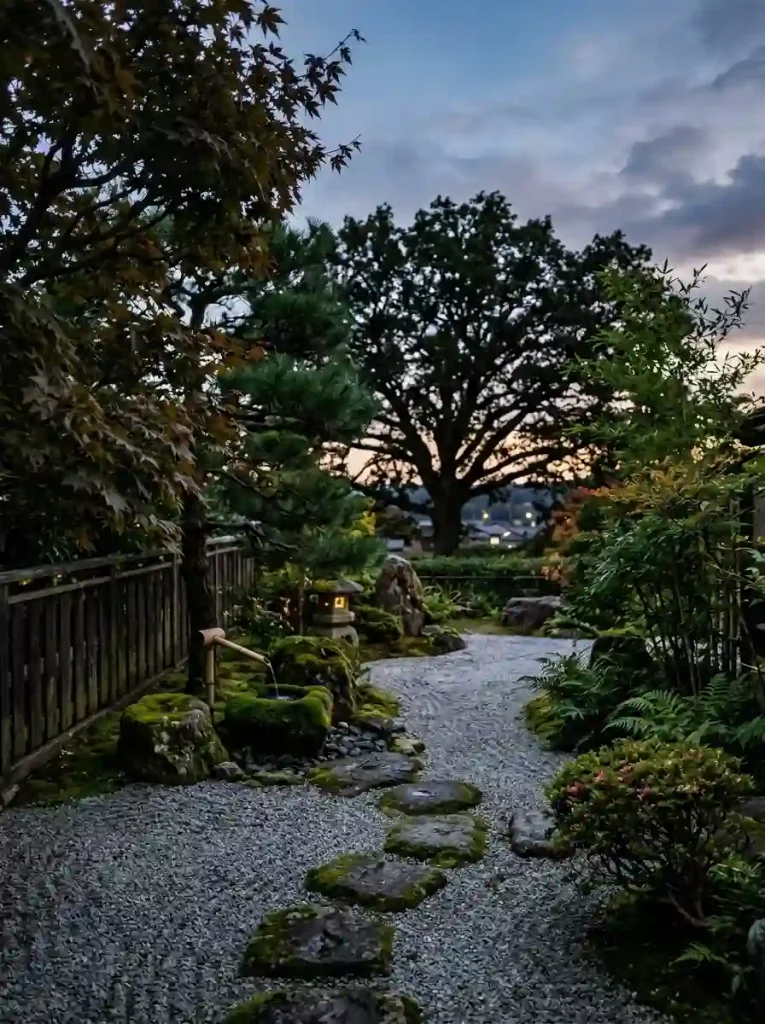
A small garden can borrow visual depth from what lies beyond its boundaries. Instead of trying to hide every outside view, selectively frame an attractive tree, skyline, neighboring greenery, or distant landscape.
Use plants on the sides of the garden to create a natural visual frame while keeping the center relatively open.
This technique can make the garden appear to continue beyond its physical limits.
Expert Tip:
Frame only views that genuinely improve the garden. An unattractive outside feature should be screened rather than deliberately highlighted.
12. Create a Layered Gravel Courtyard
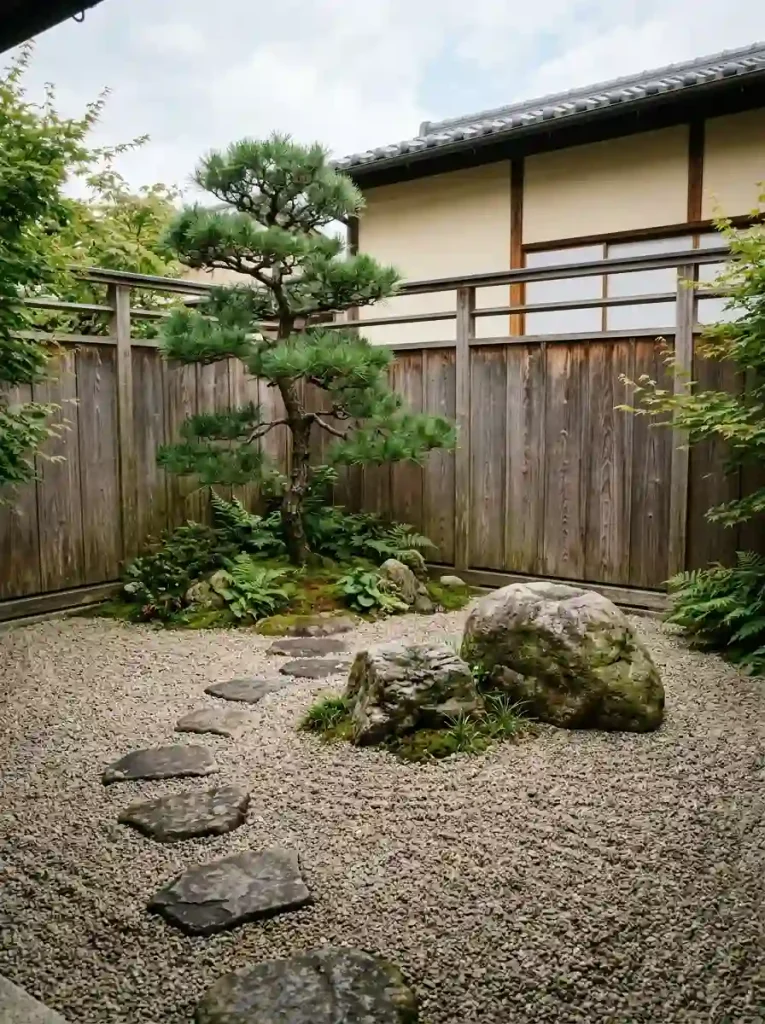
A compact gravel courtyard can give your outdoor space a clean, spacious foundation. Instead of covering the entire area with planting, use gravel as the visual base and introduce only a few carefully positioned natural elements.
Place one sculptural plant toward the back, a couple of stones toward the side, and perhaps a narrow timber feature along the boundary. The open surface helps each element stand out.
This approach is particularly effective for patios and enclosed courtyards where there is little room for extensive planting.
Expert Tip:
Choose a gravel size that is comfortable and practical for your space. Smaller areas usually benefit from a consistent texture rather than several competing materials.
13. Add a Small Stone Water Bowl
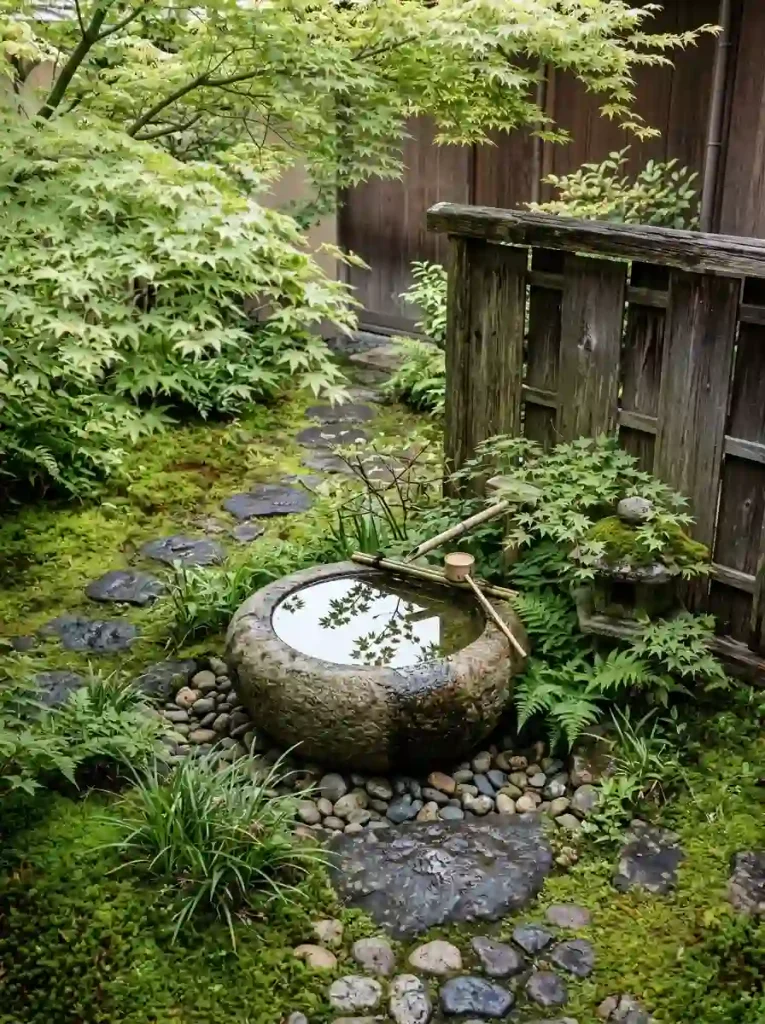
A full pond is not necessary to introduce water into a tiny garden. A shallow stone bowl can provide a subtle reflective surface while occupying very little space.
Place it near a planting bed or beneath a small tree so leaves and branches can reflect across the water. A few surrounding pebbles can visually connect the bowl with the rest of the landscape.
The feature can be especially effective in a courtyard where every square foot matters.
Expert Tip:
Position the bowl where falling leaves and debris can be easily removed. A small water feature looks best when its surface remains clean and calm.
14. Grow Ferns Along a Shady Wall
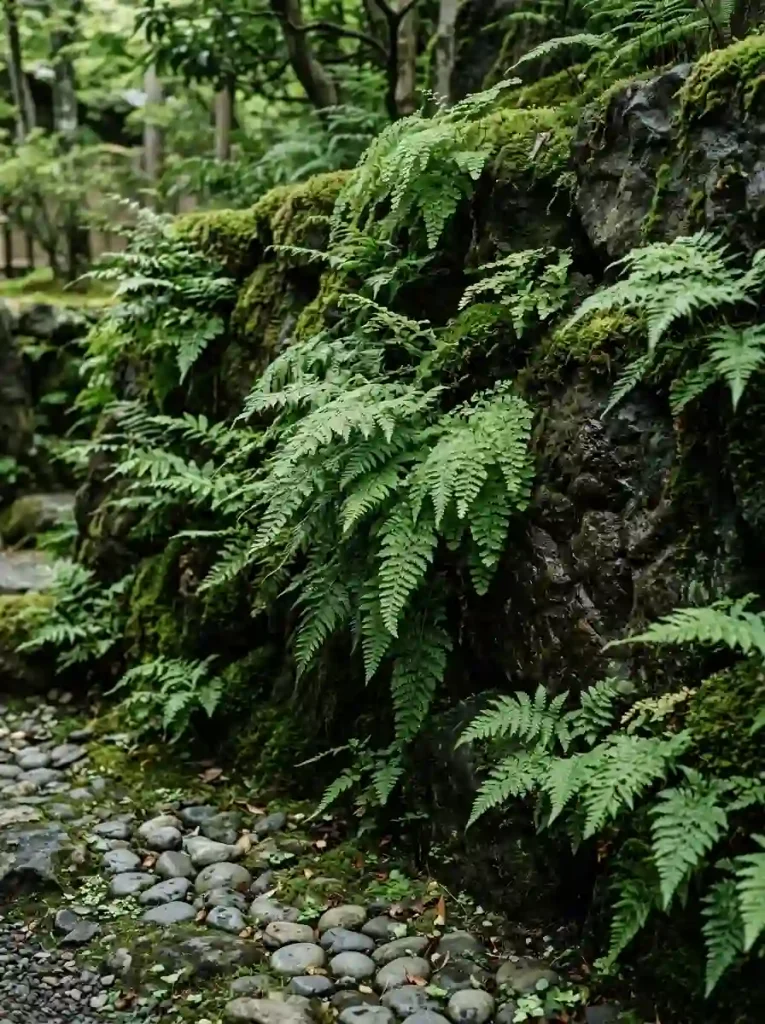
A shaded wall can become one of the most attractive parts of a small Japanese garden when it is softened with textured greenery.
Ferns are particularly useful for creating a lush appearance in areas that receive filtered or limited sunlight. Combine several foliage textures while keeping the planting palette mostly green.
The vertical wall provides structure, while the loose fern fronds create a softer transition between architecture and garden.
Expert Tip:
Check the moisture requirements of your chosen ferns before planting. Shade does not always mean the soil stays consistently moist.
15. Use a Compact Evergreen Hedge
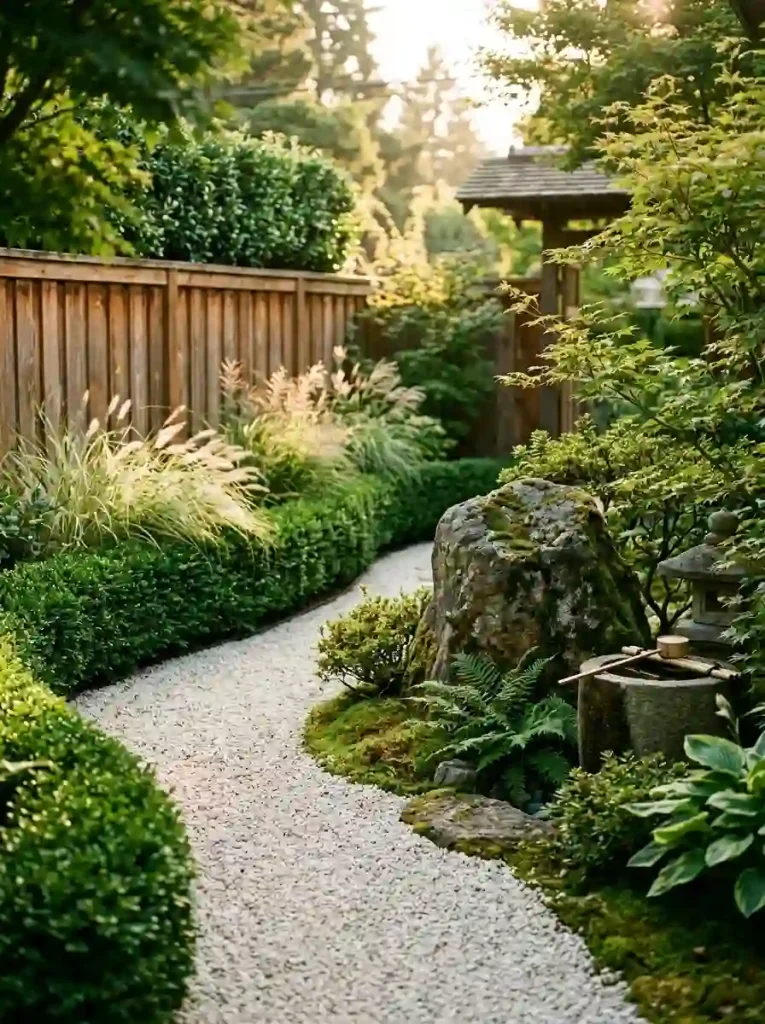
A small evergreen hedge can define the boundaries of your garden without making the space feel enclosed by a solid wall.
Choose a naturally compact variety and keep the hedge relatively low. Its clean shape can provide a structured background for softer grasses, stones, and seasonal plants.
This is particularly useful when you want a small garden to look tidy throughout the year.
Expert Tip:
Think about the mature width of the hedge before planting. In a small garden, a plant that eventually becomes too wide can quickly consume valuable space.
16. Design a Tiny Tea-Viewing Nook
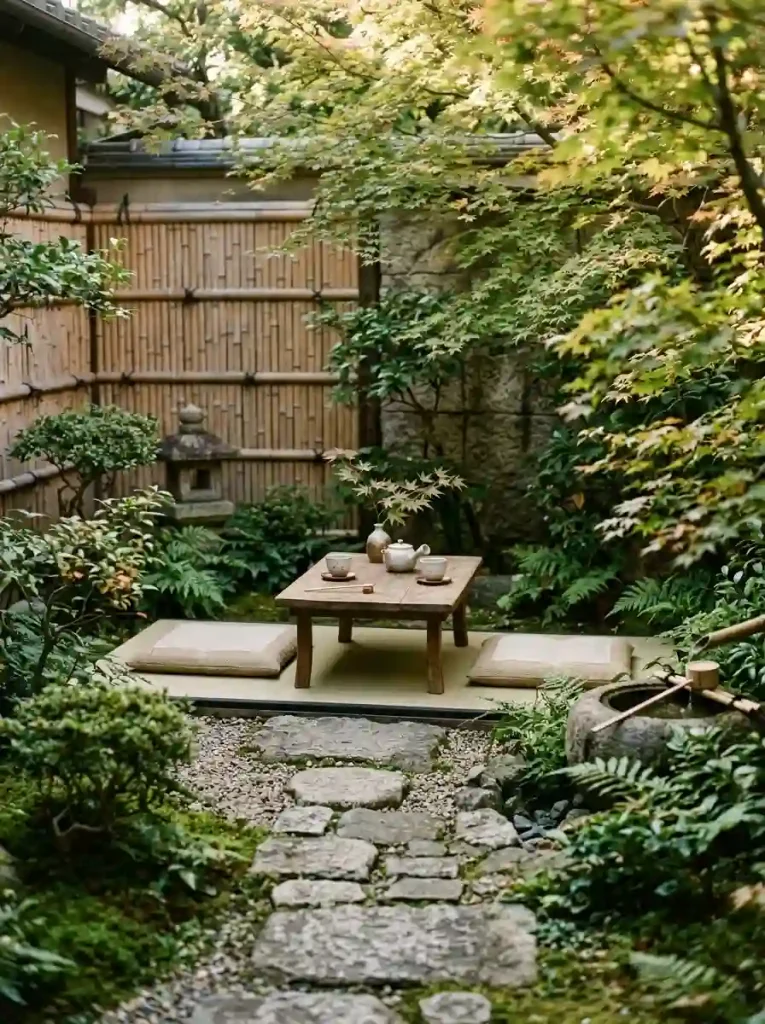
You can create a peaceful tea-inspired corner without building a full traditional tea garden.
Choose a quiet section of the garden and add a low wooden table with one or two simple seats. Surround the area with greenery but keep enough open space around the furniture to avoid a crowded appearance.
A narrow path leading toward the nook can make the space feel like a small destination.
Expert Tip:
Keep the furniture visually simple. Natural wood and neutral fabrics generally integrate more easily with greenery and stone than highly decorative outdoor furniture.
17. Introduce a Simple Stone Threshold
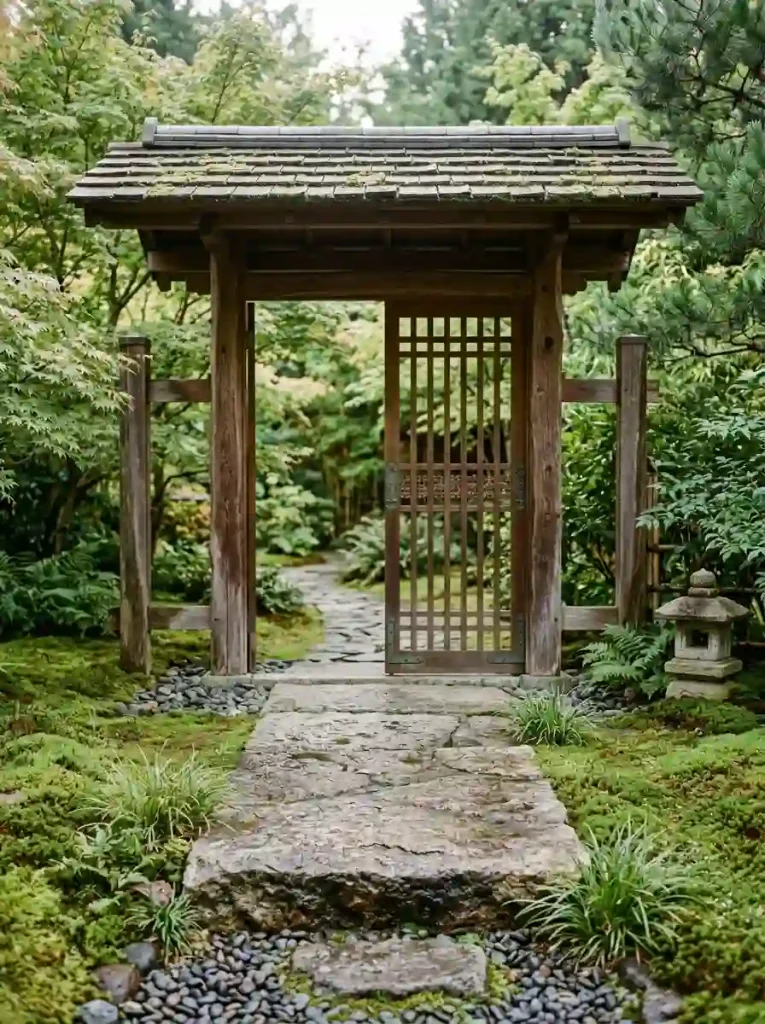
A single change in material can make a tiny garden feel thoughtfully designed. Use a broad natural stone as a threshold between the house, patio, or pathway and the garden itself.
The stone creates a subtle visual pause before entering the planted area. Pair it with low greenery on either side and keep the surrounding design uncluttered.
This is a particularly useful idea when your garden has no room for a large entrance structure.
Expert Tip:
Select a stone large enough to feel intentional but proportionate to the space. Its natural texture should be part of the design.
18. Create a Vertical Garden With Timber Slats
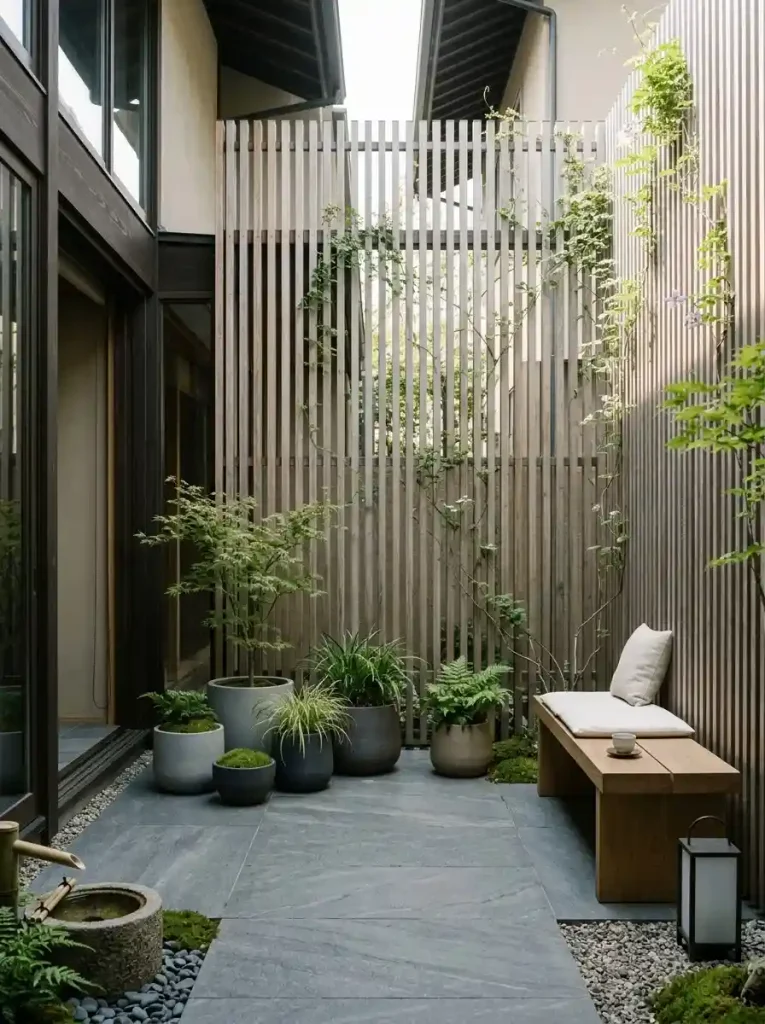
When floor space is extremely limited, move some of your greenery upward.
Install narrow vertical timber slats against a wall and use them as a backdrop for carefully selected climbing plants or hanging containers. Keep the arrangement restrained so it feels like part of the architecture rather than a collection of pots.
The vertical lines can also make a compact courtyard appear taller.
Expert Tip:
Leave some timber visible between the plants. The contrast between wood and foliage creates depth and prevents the wall from becoming visually overwhelming.
19. Add a Curved Timber Screen
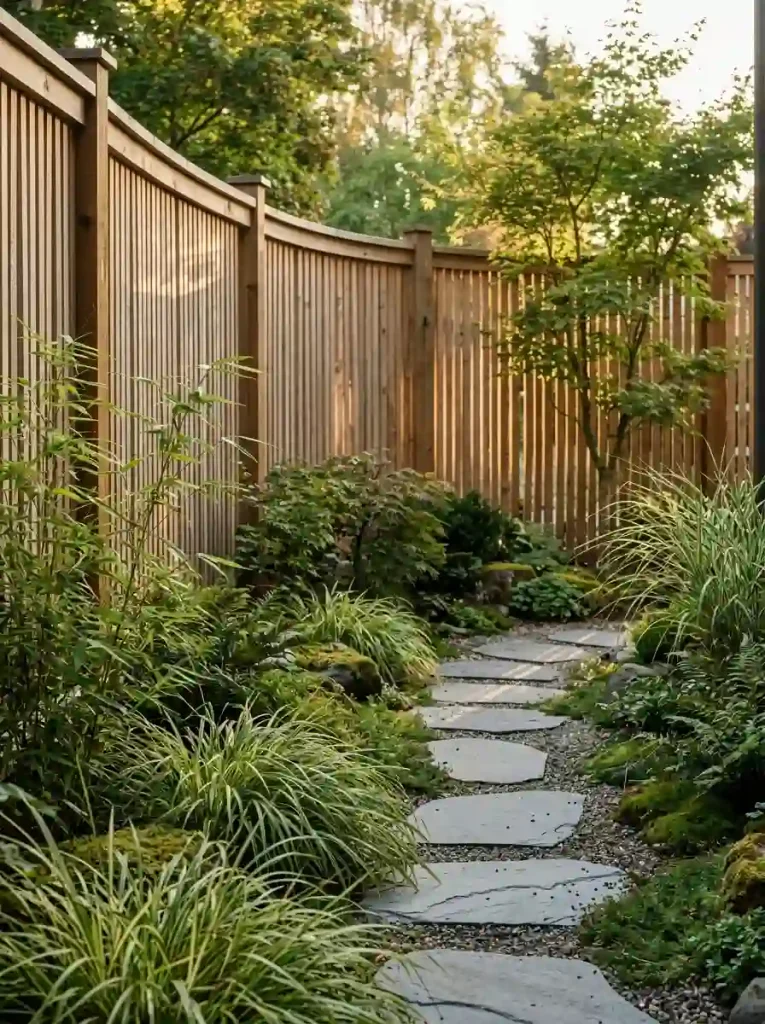
A slightly curved screen can soften the hard geometry of a small backyard while creating privacy.
Instead of building a completely solid barrier, leave narrow gaps between the timber pieces so light can pass through. Position plants in front of the screen to create additional layers.
The result is a boundary that feels lighter and more organic than a conventional fence.
Expert Tip:
Use the screen to hide only the areas that need privacy. Keeping part of the garden visually open can make the entire space feel larger.
20. Create a Tiny Evening Garden
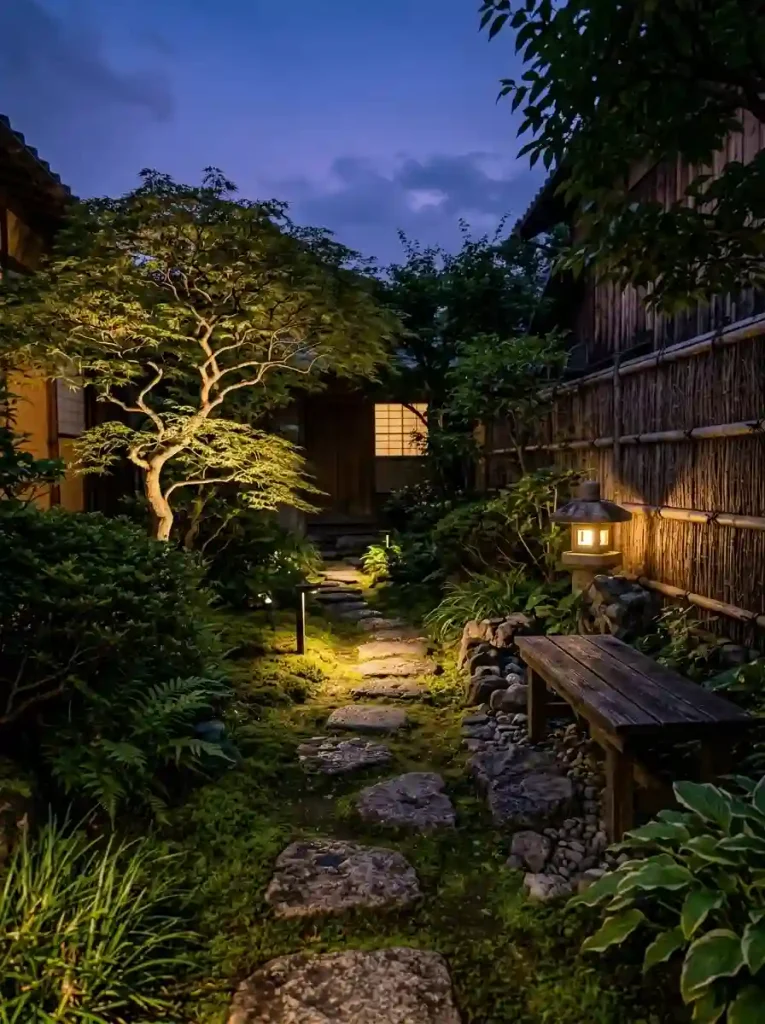
A Japanese-inspired garden can feel completely different after sunset. Instead of using bright outdoor lighting everywhere, introduce a few subtle sources of warm illumination.
Highlight a tree, stone feature, pathway edge, or seating area with soft low-level lighting. Keep most of the garden in gentle shadow so the illuminated features become more atmospheric.
This approach can turn a small outdoor area into a relaxing evening retreat.
Expert Tip:
Avoid excessive brightness. Soft, strategically placed lighting usually creates a more peaceful atmosphere than illuminating the entire garden equally.
21. Create a Quiet Meditation Corner
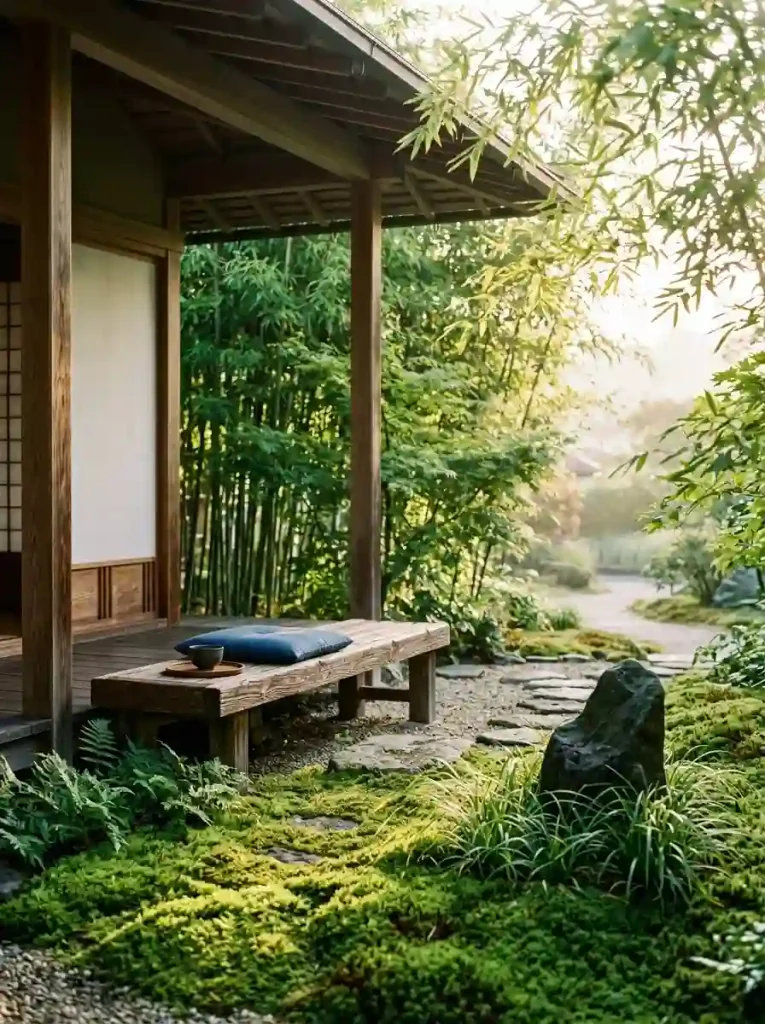
A final seating area can give your garden a clear purpose: somewhere to slow down and disconnect.
Choose the quietest part of the space and keep the design extremely simple. A low bench, floor cushion, or small wooden platform may be enough. Surround it with soft greenery and position it toward the garden’s most peaceful view.
Avoid adding too many decorative objects. The atmosphere should come from the surroundings rather than the furniture.
Expert Tip:
Design the corner around your actual routine. If you enjoy morning tea, reading, or quiet reflection, position the seat where you will naturally want to spend time.
How to Make a Small Japanese Garden Feel Larger
A small garden can feel surprisingly spacious when the design avoids visual clutter.
Instead of trying to fill every empty section, deliberately leave some areas open. This creates negative space, allowing the eye to move naturally through the garden.
The following strategies can help:
- Use vertical planting along boundaries.
- Keep the center relatively open.
- Choose one dominant focal point.
- Repeat the same stone or timber material.
- Use different plant heights to create depth.
- Hide part of the garden behind foliage or screens.
- Frame attractive views beyond the garden.
- Avoid collecting too many decorative features.
The goal is not to make the garden look empty. It is to make every element feel intentional.
Best Plants for Small Japanese Gardens
When choosing plants for a small Japanese garden, appearance is only one consideration. Mature size, sunlight, drainage, climate, and maintenance requirements are equally important.
Compact Trees
A small ornamental tree can provide height and seasonal interest without overwhelming the garden. Always check its mature dimensions before planting.
Evergreen Shrubs
Evergreens provide structure throughout the year and can form useful borders or backgrounds.
Ferns
Ferns work beautifully in suitable shaded locations, adding fine texture and a lush woodland feeling.
Ornamental Grasses
Fine grasses introduce movement and softness while taking up relatively little visual space.
Groundcovers
Low-growing plants can soften stone edges and create transitions between hardscape and larger planting.
Bamboo
Bamboo can provide strong vertical structure and privacy, but select an appropriate species and manage its spread according to local growing conditions.
Expert Tip: Don’t select plants solely because they are associated with Japanese gardens. A plant that thrives naturally in your conditions will create a healthier and more convincing landscape.
Small Japanese Garden Design Tips for Beginners
If you’re starting from scratch, avoid buying plants and decorations before deciding how the garden will function.
Begin with the space itself.
1. Decide how you will use the garden
Will it be viewed from indoors, used for seating, walked through, or simply enjoyed as a landscape?
2. Select one focal point
Choose the feature that should attract attention first.
3. Establish the background
A timber screen, wall, hedge, or bamboo feature can provide structure.
4. Add the main hardscape
Introduce your pathway, stones, terrace, or other foundational material.
5. Add plants gradually
Work from larger structural plants toward smaller groundcover.
6. Protect the empty space
Don’t immediately fill every remaining gap. The open areas are an important part of the design.
7. View the garden from different positions
Check it from the house, entrance, seating area, and pathway. A composition that looks good from one angle may need adjustment from another.
Final Thoughts
You don’t need a large property to create a peaceful Japanese-inspired outdoor space.
A tiny courtyard can become a woodland retreat. A narrow side yard can become a quiet pathway. Even a small patio can provide enough room for a stone feature, carefully chosen plant, and comfortable place to sit.
The most important principle is intentional simplicity.
Choose fewer elements, give them room, and pay attention to how stone, greenery, timber, water, texture, and empty space work together. Instead of attempting to reproduce an entire landscape, create a small outdoor scene that gives you a reason to slow down.
Whether you choose a miniature water bowl, layered greenery, a timber screen, a meditation seat, or a simple stone composition, start small and build the garden around what matters most to you.
A peaceful garden is not created by how many features you add. It is created by how thoughtfully you arrange the ones you keep.
Frequently Asked Questions
What is the easiest Japanese garden idea for a small space?
A simple stone-and-plant composition is one of the easiest approaches. You can use a few natural stones, one attractive plant, and a restrained ground surface without needing major construction.
Can I create a Japanese garden in a tiny courtyard?
Yes. Courtyards are particularly suitable for compact Japanese-inspired designs because the surrounding walls can provide a natural sense of enclosure. Focus on scale, negative space, and a limited number of materials.
Do I need a pond for a Japanese garden?
No. Water is optional. A shallow stone bowl, reflective container, or dry landscape can provide a similar visual sense of calm while requiring considerably less space.
What should be the focal point of a small Japanese garden?
The focal point can be a small tree, sculptural shrub, stone arrangement, water feature, seating area, or architectural element. Choose something proportionate to the garden and give it enough surrounding space to stand out.
How do I make my small garden look less crowded?
Reduce the number of unrelated elements and create deliberate open areas. Repeating materials and limiting your plant palette can also make the design feel more cohesive.
Are Japanese gardens difficult to maintain?
They can be relatively manageable when designed appropriately. Choose plants suited to your climate, control fast-growing species, keep pathways clear, and maintain hardscape features regularly.
Can I create a Japanese garden without expensive materials?
Absolutely. Natural stones, timber, simple containers, suitable plants, and carefully maintained groundcover can create a beautiful result without requiring elaborate structures.
How much space do I need for a Japanese garden?
There is no fixed minimum size. Even a very small corner can use Japanese-inspired principles such as simplicity, asymmetry, natural materials, framing, and intentional empty space.