
22 Hardy Evergreen Shrubs for Color in Every Season
Evergreen shrubs are one of the easiest ways to keep a garden looking lively throughout the year. Even when flowers fade and trees lose their leaves, these dependable plants bring texture, greenery, and beautiful foliage colors to outdoor spaces.
Some varieties offer glossy leaves, golden edges, deep burgundy tones, or silvery-blue foliage. Others produce fragrant flowers, bright berries, or colorful new growth that changes with the seasons.
Whether you’re landscaping a front yard, filling garden borders, creating privacy, or adding color to a small backyard, these hardy evergreen shrubs can help your garden look beautiful in every season.
1. Boxwood for Classic Green Garden Borders
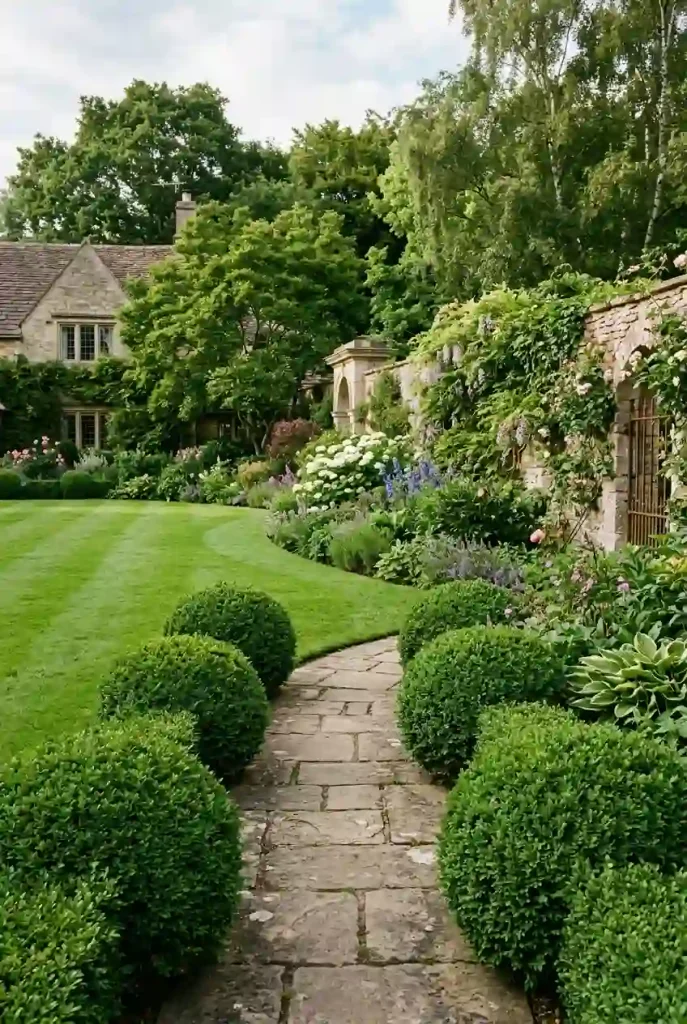
Boxwood is a timeless evergreen shrub that brings a clean, organized appearance to almost any garden. Its small, dense leaves stay green throughout the year, making it especially useful for borders, foundation planting, and formal garden designs.
You can grow boxwood as a low hedge, shape it into rounded forms, or use individual shrubs to frame pathways and entrances. Compact varieties work particularly well in smaller gardens where you want structure without taking up too much space.
Boxwood grows best in well-drained soil and generally tolerates partial shade. Regular watering during its first growing season helps establish strong roots, while occasional trimming keeps the foliage neat.
2. Japanese Holly for Glossy Foliage and Compact Growth

Japanese holly is an excellent alternative for gardeners who enjoy the appearance of boxwood but want to try something different. Its small, glossy leaves create a dense, attractive texture that works beautifully in formal borders and low hedges.
Many varieties have naturally compact growth habits, making them suitable for foundation beds, decorative planting around patios, and small garden spaces. Their dark green foliage provides a steady backdrop for colorful flowers and seasonal plants.
Japanese holly prefers well-drained soil and can grow in full sun or partial shade. Its mature size depends on the cultivar, so check the plant label before choosing a location.
3. Golden Euonymus for Bright Yellow-Green Foliage

Golden euonymus brings an instant splash of brightness to gardens with its yellow-and-green variegated leaves. The cheerful foliage stands out against darker evergreen plants and creates visual interest even when the garden isn’t filled with flowers.
This shrub is useful for foundation planting, mixed borders, privacy hedges, and decorative garden corners. Its colorful foliage makes it especially attractive near darker walls, wooden fences, or shaded areas that need a little extra brightness.
Golden euonymus generally grows well in sunny or partially shaded locations. More sunlight often helps its golden coloring stand out, although protection from harsh conditions may be helpful in some climates.
4. Blue Star Juniper for Cool Blue Color
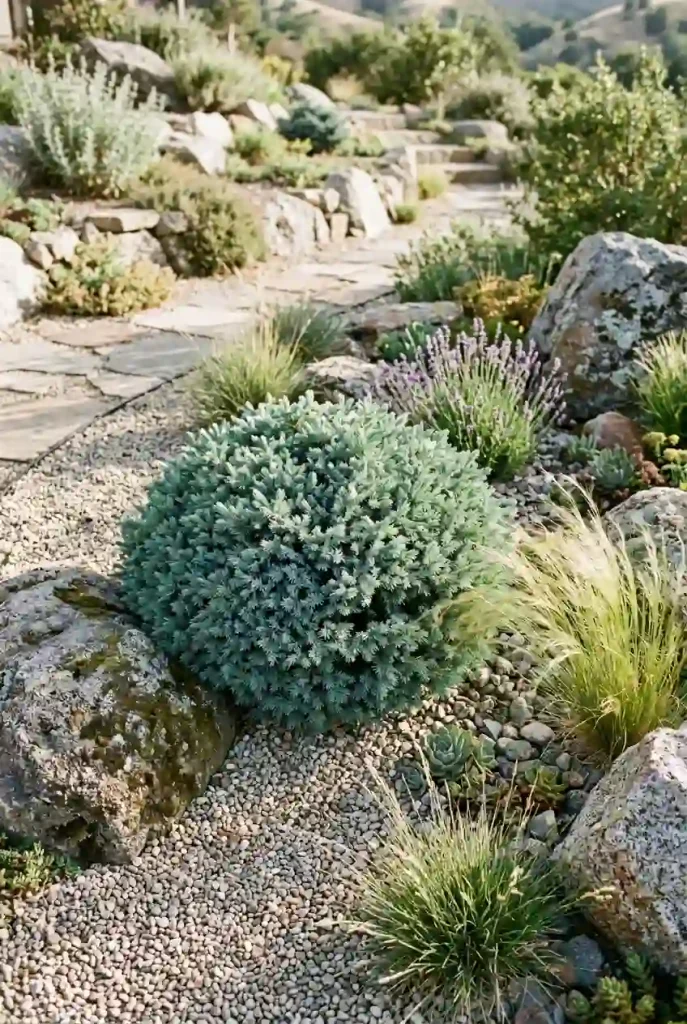
Blue Star juniper is a compact evergreen shrub known for its striking silvery-blue needles. Unlike traditional green shrubs, its cool-toned foliage adds contrast and makes garden beds feel more colorful without relying on flowers.
Its rounded shape works beautifully in rock gardens, gravel landscapes, sunny borders, and decorative containers. You can combine it with golden ornamental grasses, purple flowers, or green groundcovers to create a balanced planting arrangement.
Blue Star juniper prefers full sun and soil that drains well. Once established, it is generally drought-tolerant and requires little pruning, making it a useful choice for low-maintenance landscapes.
5. Pieris Japonica for Colorful Spring Growth

Pieris japonica is a beautiful evergreen shrub that offers more than just green foliage. Its new leaves often emerge in shades of red, bronze, or pink before gradually turning green, creating a colorful display that changes as the growing season progresses.
In spring, many varieties produce delicate clusters of white or pink bell-shaped flowers that hang beneath the foliage. These blooms give the shrub a soft, elegant appearance and make it a lovely addition to woodland-style gardens.
Pieris generally prefers acidic, well-drained soil and partial shade. It is particularly attractive when planted alongside rhododendrons, azaleas, and other plants that enjoy similar growing conditions.
6. Mahonia for Winter Flowers and Golden Color

Mahonia is a standout evergreen shrub when the garden needs color during colder months. Its bold, spiky leaves add architectural texture, while many varieties produce bright yellow flowers during late fall or winter.
After flowering, some mahonias develop decorative blue-purple berries that provide another seasonal feature. The combination of foliage, flowers, and fruit makes this shrub valuable for gardens that feel quiet during winter.
Mahonia works well in woodland borders, shaded corners, and mixed shrub beds. Many varieties tolerate partial or full shade, although their growth and flowering performance can vary depending on the cultivar and climate.
7. Camellia for Glossy Leaves and Beautiful Blooms

Camellias are loved for their glossy evergreen foliage and stunning flowers that appear during cooler months or early spring, depending on the variety. Their blooms can be white, pink, red, or even beautifully patterned.
The flowers often look almost rose-like, making camellias a wonderful choice for gardeners who want seasonal color while maintaining greenery throughout the rest of the year. Their attractive leaves also help them look appealing after the flowers have finished.
Camellias generally prefer acidic soil, consistent moisture, and protection from harsh afternoon sun. Plant them near sheltered garden areas where they can grow without exposure to extreme heat or strong winds.
8. Leucothoe for Burgundy Winter Foliage

Leucothoe is a lovely evergreen shrub for gardeners who enjoy foliage that changes color throughout the year. Many varieties begin with green leaves and develop shades of bronze, purple, burgundy, or red as temperatures cool.
Its gently arching branches give the shrub a relaxed appearance, making it a great addition to woodland gardens, shaded borders, and natural-looking landscapes. The foliage creates beautiful contrast when planted near plants with bright green or silver leaves.
Leucothoe usually prefers moist, acidic soil and partial shade. It can be particularly useful in spaces where other colorful shrubs struggle with limited sunlight.
9. Nandina for Red Seasonal Foliage

Nandina, often called heavenly bamboo, is a versatile shrub that adds colorful foliage to garden beds. Its delicate-looking leaves can shift from green to red, orange, or burgundy depending on the variety and season.
Compact varieties are especially useful for small garden borders, containers, and decorative planting around entrances. Their upright growth creates visual interest without making the landscape feel overly crowded.
Some varieties also produce clusters of berries, adding another decorative feature. Choose berry-producing cultivars carefully, particularly in regions where the plant may become invasive or where berries pose concerns for wildlife.
10. Rhododendron for Bold Flowers and Evergreen Texture
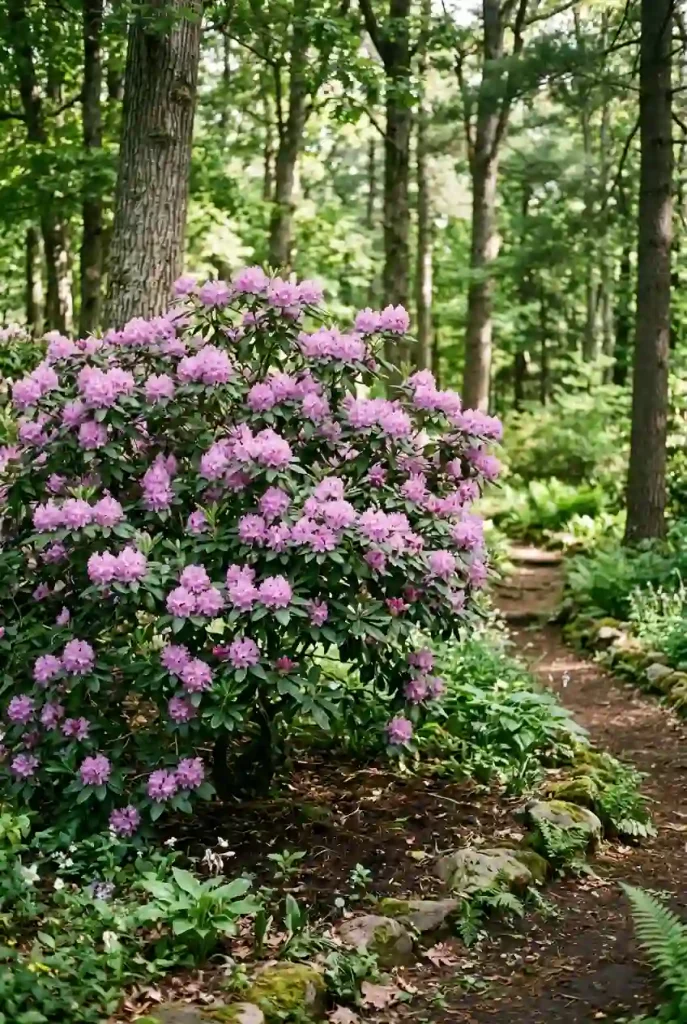
Rhododendrons bring impressive flower color to gardens while maintaining attractive evergreen foliage. Their large flower clusters can create a dramatic display in shades of pink, purple, red, white, and lavender.
Even outside their flowering season, the broad leaves provide structure and fill garden beds with lush greenery. Larger varieties can become focal points, while compact cultivars are suitable for smaller landscapes and foundation planting.
Rhododendrons usually prefer acidic soil, good drainage, and filtered sunlight or partial shade. Their roots are relatively shallow, so a layer of mulch can help keep the soil cool and moist.
11. Photinia for Bright Red New Leaves

Photinia is one of the most eye-catching evergreen shrubs because of its bright red new growth. Young leaves emerge in vivid shades of red before gradually maturing into glossy green foliage, creating a striking contrast throughout the growing season.
This shrub is often used for privacy hedges, boundary planting, and large garden borders. Its upright growth habit makes it useful when you want to create a colorful screen without sacrificing the appearance of a landscaped garden.
Photinia grows best in a sunny or partially shaded location with well-drained soil. Good air circulation is important because crowded plants may become more susceptible to leaf diseases.
12. Skimmia for Fragrant Flowers and Colorful Buds
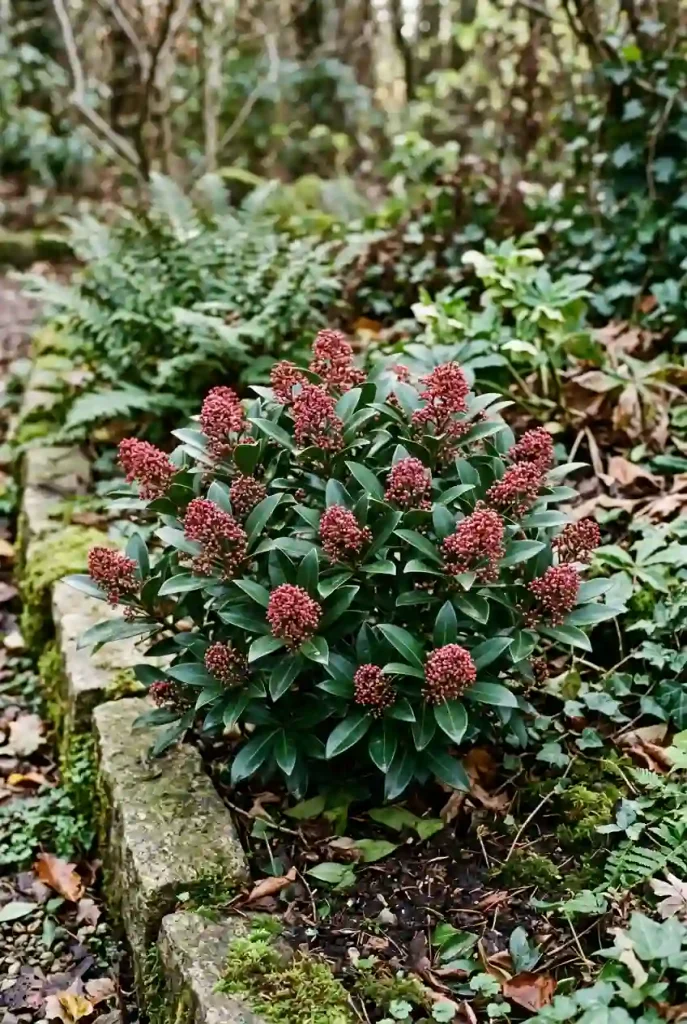
Skimmia is a compact evergreen shrub that adds subtle beauty to gardens throughout the year. Its dark green leaves create a rich backdrop for decorative flower buds, which often appear during fall and remain attractive through winter.
Depending on the variety, skimmia produces fragrant white flowers in spring and colorful red berries on female plants when a suitable male plant is nearby. These seasonal features make it especially valuable for shaded garden areas.
Skimmia is an excellent choice for containers, woodland borders, and planting beneath larger trees. It generally prefers acidic soil, partial shade, and protection from strong afternoon sunlight.
13. Dwarf Alberta Spruce for Year-Round Structure
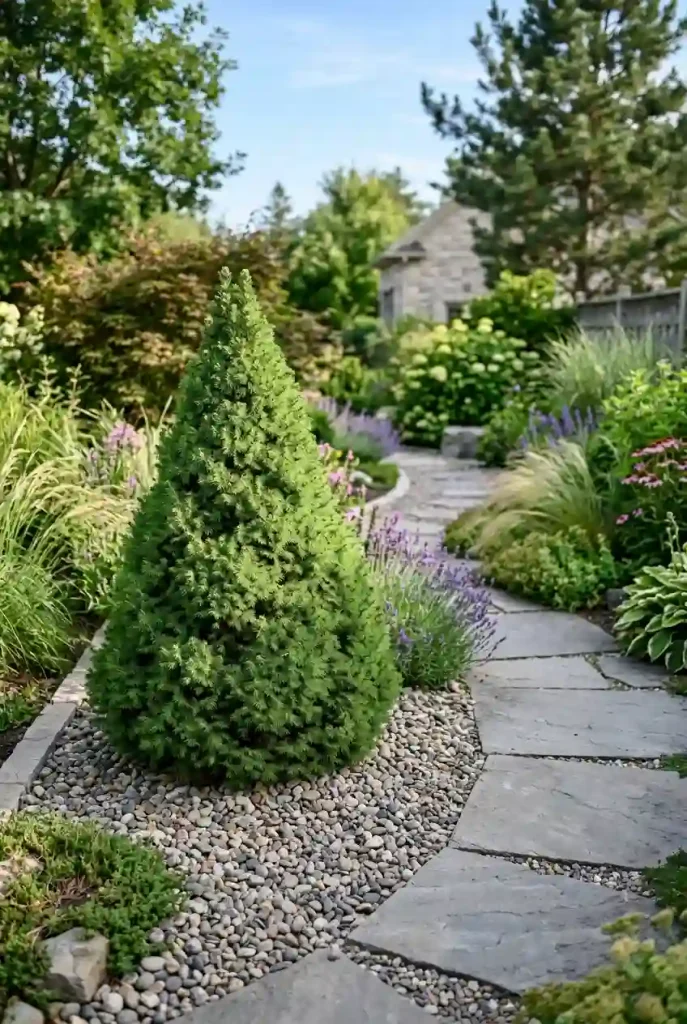
Dwarf Alberta spruce is a slow-growing evergreen shrub with a naturally cone-shaped appearance. Its dense green needles create a tidy silhouette that remains attractive throughout the year, making it a useful plant for formal landscapes and smaller gardens.
Because it grows slowly and maintains a compact shape, this spruce works well near entrances, along pathways, and in decorative containers. Its symmetrical appearance can add a sense of balance to garden designs.
Dwarf Alberta spruce prefers sunny locations and well-drained soil. Avoid planting it in areas with poor air circulation or excessive heat, as these conditions may affect its health.
14. Oregon Grape for Spiky Leaves and Yellow Flowers

Oregon grape is a hardy evergreen shrub with bold, holly-like leaves that add texture to garden landscapes. Its foliage may turn reddish or bronze during colder months, providing extra seasonal interest.
In spring, the shrub produces cheerful yellow flower clusters that attract pollinators. Later, blue-purple berries develop, giving the plant another decorative feature and adding interest to natural garden settings.
Oregon grape is particularly useful for woodland gardens, shaded borders, and areas where you need a resilient shrub. It can tolerate a range of conditions, although it generally performs best in well-drained soil.
15. Gardenia for Fragrant White Flowers

Gardenia is a beautiful evergreen shrub that combines glossy green foliage with creamy white flowers and an unforgettable fragrance. Its flowers can make a garden feel fresh, elegant, and inviting during the warmer months.
The dark leaves remain attractive when the flowers are not present, making gardenia a valuable plant for year-round landscaping in suitable climates. It works well near patios, entrances, and seating areas where its fragrance can be enjoyed.
Gardenia prefers warm conditions, acidic soil, consistent moisture, and good drainage. In cooler regions, it may need winter protection or container growing so it can be moved to a sheltered location.
16. Viburnum for Flowers, Berries, and Dense Greenery

Some viburnum varieties are evergreen and provide a combination of attractive foliage, seasonal flowers, and decorative berries. Viburnum tinus, for example, is valued for its dark green leaves and clusters of pinkish buds that open into white flowers.
The flowers may appear during winter or early spring, depending on the climate. After flowering, some plants develop blue-black berries that add another layer of seasonal interest.
Evergreen viburnums can be grown as screening plants, mixed borders, or standalone garden shrubs. They generally tolerate a range of soil conditions and can grow in full sun or partial shade.
17. Lavender for Silver Foliage and Purple Flowers

Lavender is a wonderful choice for gardeners who want colorful flowers, aromatic foliage, and a Mediterranean-inspired landscape. Its silvery-green leaves remain attractive for much of the year, while purple flower spikes create a beautiful summer display.
Although lavender is often treated as a perennial, many varieties maintain woody, evergreen-like foliage in mild climates. It is particularly useful for sunny borders, pathways, rock gardens, and decorative containers.
Lavender thrives in full sun and well-drained soil. Avoid overly wet conditions, especially during winter, because excessive moisture can cause root problems.
18. Heather for Colorful Winter Gardens

Heather is a low-growing evergreen shrub that can bring color to gardens when many other plants look dormant. Depending on the variety, its foliage may be green, gold, bronze, or reddish, while its tiny flowers appear in shades of pink, purple, and white.
Heathers are especially useful for filling garden borders, creating colorful ground-level planting, and adding texture to rock gardens. Different varieties can be combined to create a display that changes throughout the year.
Most heathers prefer acidic, well-drained soil and sunny locations. Choosing varieties suited to your local climate will help maintain healthy foliage and reliable flowering.
19. Holly for Glossy Leaves and Winter Berries

Holly is a classic evergreen shrub that adds festive color and structure to winter landscapes. Its glossy leaves are often edged with sharp points, while female plants can produce bright red berries that stand out beautifully against green foliage.
The berries make holly particularly attractive during the colder months when gardens need extra visual interest. Its dense growth also makes it suitable for privacy screens, hedges, and wildlife-friendly landscapes.
Holly varieties differ in size, leaf shape, and berry production. Some require a nearby male plant for pollination, so check the variety before planting if berries are an important feature.
20. Rosemary for Aromatic Evergreen Foliage
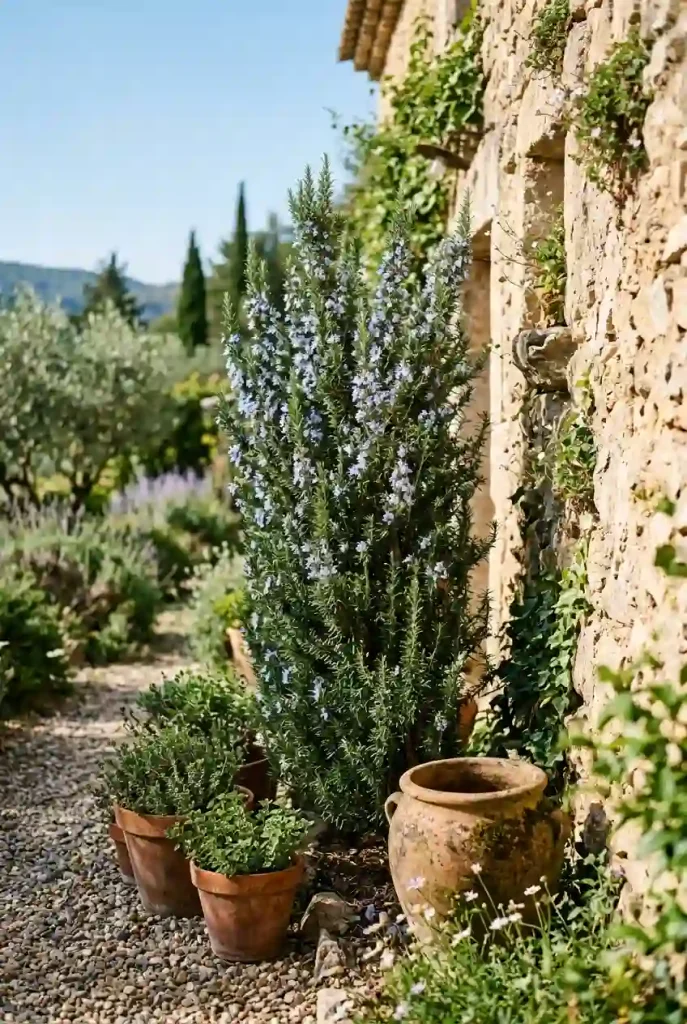
Rosemary is a useful evergreen shrub that combines attractive foliage with practical benefits. Its narrow, aromatic leaves create a textured appearance, and its small blue or purple flowers add seasonal color.
This plant is especially suitable for Mediterranean-style gardens, sunny borders, herb gardens, and containers. Upright varieties can create a small hedge, while spreading varieties work well along walls and garden edges.
Rosemary prefers full sun, well-drained soil, and moderate watering. In colder climates, some varieties may require protection during winter, so choose a cultivar suited to your local growing conditions.
21. Aucuba for Bold Spotted Foliage

Aucuba is a dependable evergreen shrub for shaded garden areas where colorful foliage can make a big difference. Many varieties feature large green leaves covered with golden-yellow spots, creating a bright and unusual appearance.
Its bold foliage remains attractive throughout the year and can help brighten spaces beneath trees, along shaded walls, or beside buildings. Female plants may also produce red berries when pollinated by a male plant.
Aucuba is known for tolerating shade and a variety of growing conditions. It is particularly useful when you need an evergreen shrub that can handle less sunny locations.
22. Escallonia for Colorful Flowers and Evergreen Hedges

Escallonia is a versatile evergreen shrub that provides dense foliage and attractive flowers during the warmer months. Depending on the variety, its blooms may be pink, red, or white, creating a colorful display against glossy green leaves.
Its bushy growth makes it a popular choice for hedges, coastal gardens, privacy screens, and mixed landscape borders. Escallonia can also be trimmed to maintain a tidy shape without losing its natural appeal.
Many varieties tolerate wind and coastal conditions, making them useful in exposed landscapes. They generally prefer sunny locations and well-drained soil for the best growth and flowering.
How to Choose the Best Evergreen Shrubs for Your Garden
Before planting evergreen shrubs, consider your garden’s sunlight, soil, climate, and available space. A shrub that thrives in one location may struggle in another, so choosing varieties suited to your conditions is important.
Consider sunlight
Some shrubs, such as lavender, rosemary, and juniper, prefer sunny locations. Others, including aucuba, skimmia, and leucothoe, perform better in partial or shaded areas.
Check mature size
Always check the shrub’s expected mature height and width. This helps prevent overcrowding and reduces the amount of pruning required later.
Choose complementary colors
Mix shrubs with different foliage colors to create visual interest. Dark green plants look beautiful alongside golden foliage, silver-blue shrubs, and plants with burgundy or red seasonal leaves.
Think about seasonal interest
Choose a combination of plants that offer different features throughout the year. Some may produce winter berries, others spring flowers, colorful new leaves, or summer blooms.
Prepare the soil properly
Healthy soil supports strong root development. Improve drainage where necessary, add organic matter when appropriate, and check whether your selected shrubs prefer acidic, neutral, or alkaline soil.
Final Thoughts
Hardy evergreen shrubs are a wonderful way to create a garden that looks attractive in every season. Their dependable foliage provides structure during winter, while flowers, berries, and colorful new growth bring additional beauty throughout the year.
By combining shrubs with different leaf colors, shapes, textures, and flowering periods, you can create a landscape that remains interesting even when the weather changes.
Whether you prefer a formal garden with neatly trimmed boxwood, a colorful border filled with golden and burgundy foliage, or a natural woodland landscape with flowering shrubs, there is an evergreen variety to suit almost every garden.
The best approach is to select plants that match your climate, available sunlight, soil conditions, and maintenance preferences. With the right combination, your garden can remain vibrant, welcoming, and full of color throughout the year.