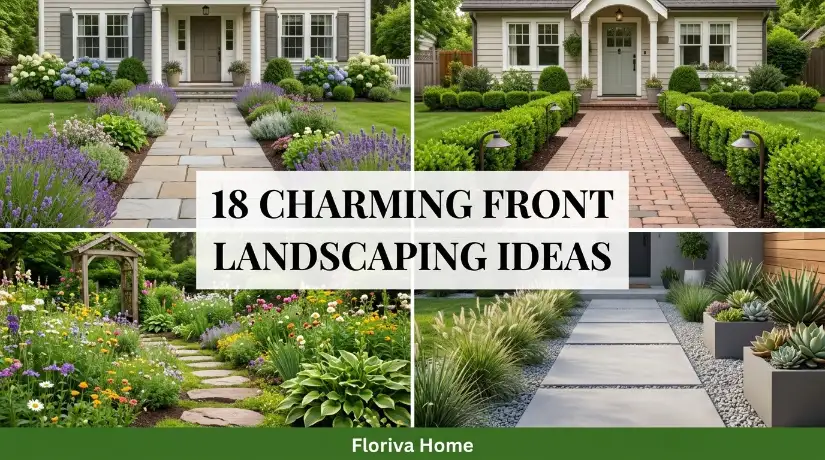
18 Charming Front Walkway Landscaping Ideas
A beautiful front walkway can turn an entrance into a welcoming outdoor space that feels polished, personal, and inviting. The right planting, paving, and border details can boost curb appeal while making the journey to your door more memorable.
These front walkway landscaping ideas blend practical layouts with eye-catching textures, colors, and greenery for every style of home. From relaxed cottage paths to sleek modern designs, you’ll find plenty of inspiration for creating a front entrance that feels connected to your yard and uniquely yours.
What should I plant around a front walkway?
Good plants for walkway landscaping include lavender, ornamental grasses, boxwood, ferns, hostas, native wildflowers, evergreen shrubs, and low-growing flowering plants. The best choice depends on your sunlight, soil, climate, and maintenance preferences. Always consider mature plant size so growth does not block the walking path.
1: Stone Path Framed by Lavender
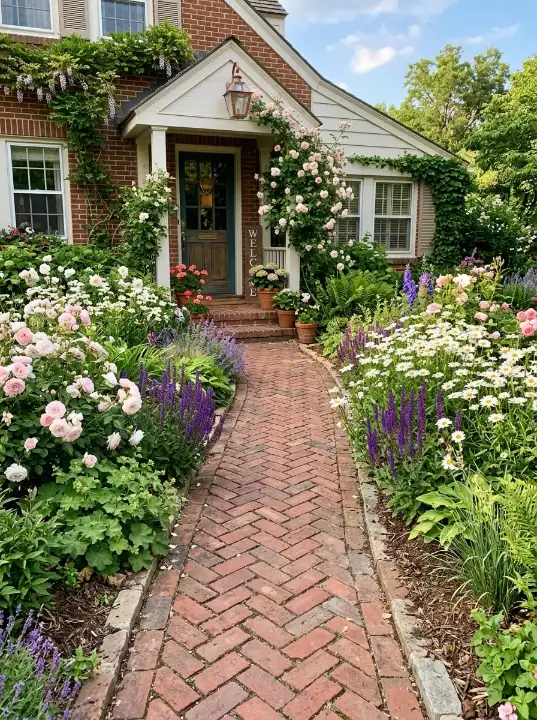
An irregular stone walkway feels instantly welcoming when lavender softens its edges with color and texture. The combination creates a relaxed transition from the sidewalk to your door while giving the front yard a polished, cottage-inspired appearance that photographs beautifully for curb appeal.
Choose compact lavender varieties that suit your climate, then leave enough space between plants for airflow and mature growth. Use pale gravel or mulch between clumps to keep edges neat. Sweep stones occasionally and trim faded flower stems to preserve the walkway’s tidy shape.
2: Brick Walkway with Cottage Blooms
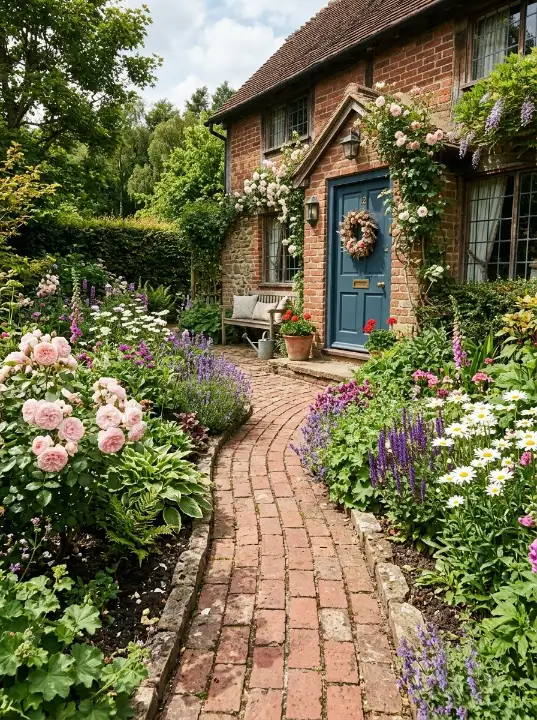
Red brick brings timeless character to a front entrance, especially when surrounded by relaxed cottage planting. Loose clusters of roses, daisies, and salvia make the path feel established rather than overly formal, creating an inviting route that adds color and personality to the facade.
Keep taller flowers toward the back of each planting bed so the brick path remains visually open. Add compost yearly to support generous blooms, and deadhead spent flowers during the growing season. Repeating a few favorite plants along both sides keeps the walkway feeling connected.
3: Stepping Stones Through Lush Greenery
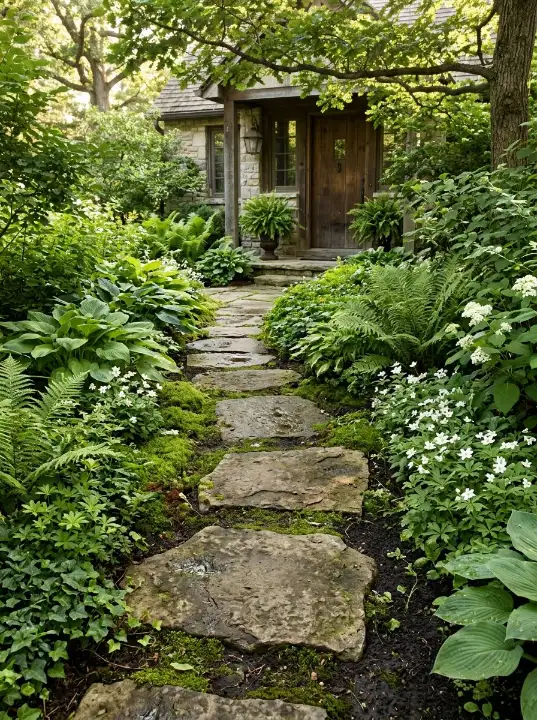
Stepping stones create a relaxed garden journey while allowing lush planting to become the star. Ferns, hostas, and groundcover soften hard edges, making this front path landscaping idea especially appealing for shaded yards that benefit from a cooler, woodland-inspired mood.
Choose stones with naturally varied shapes, but keep their surfaces stable and level for comfortable walking. Group shade-loving plants in layers rather than placing everything evenly. Remove leaves and thin fast-spreading groundcover before it reaches the stepping surfaces, checking the path each season for safe footing.
4: Sleek Concrete with Ornamental Grasses
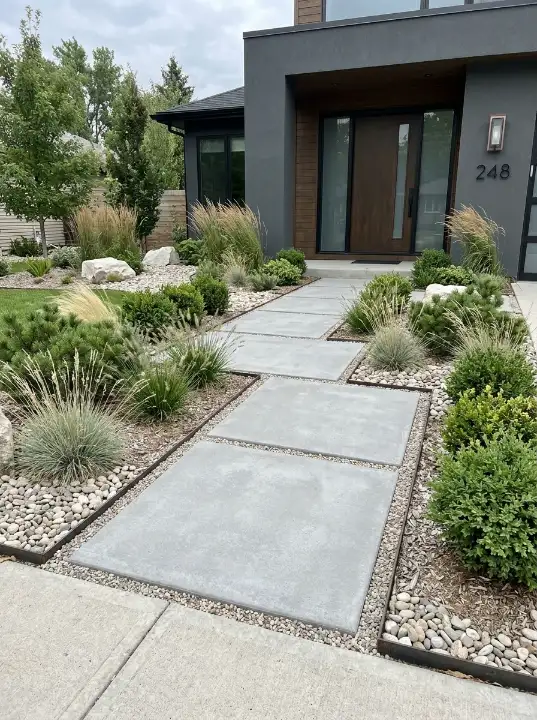
Large concrete slabs give a front walkway a clean architectural presence without making the landscape feel cold. Ornamental grasses add movement and softness, while restrained colors keep the design sophisticated. This approach works particularly well with modern homes and simple, geometric front elevations.
Use evenly spaced slabs with comfortable walking gaps, then fill joints with small gravel for a finished appearance. Select grasses suited to your sunlight and rainfall conditions. Cut them back at the appropriate seasonal time, and keep nearby shrubs lightly shaped so the walkway retains its crisp lines.
5: Curved Gravel Path with Soft Grasses
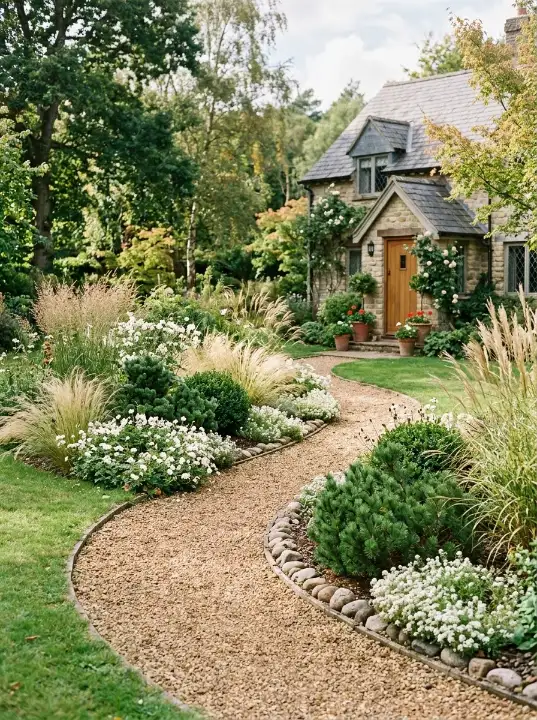
A curved gravel path can make a compact yard feel more spacious because it guides the eye toward the entrance. Airy grasses and low flowering groundcover create movement around the route, giving this walkway landscaping idea a natural look that feels welcoming rather than rigid.
Install a stable compacted base beneath the gravel and use a subtle edge to keep stones contained. Choose drought-tolerant grasses where summers are dry, and refresh thin gravel areas as needed. Occasional edging and light weeding will help the curved path maintain its graceful shape.
6: Pavers with Low Boxwood Hedges
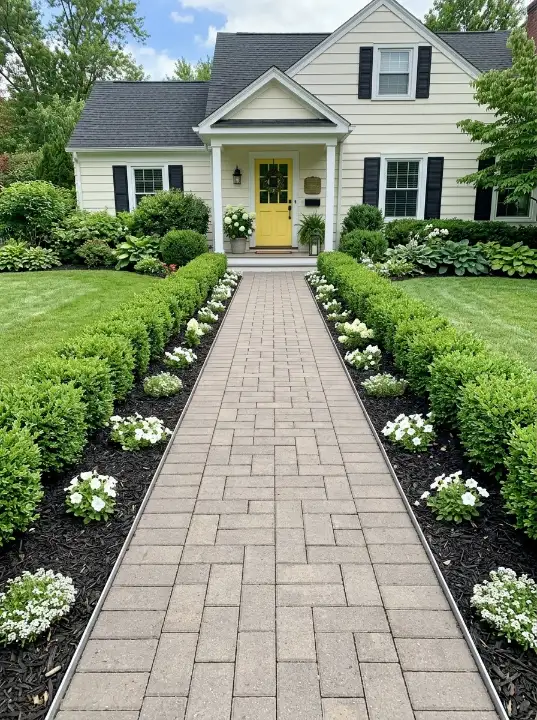
Low boxwood hedges instantly give paver paths a tailored appearance. Their evergreen structure keeps the front entrance attractive throughout much of the year, while small white flowers add seasonal brightness. The symmetrical layout feels orderly and works beautifully with traditional or transitional homes.
Choose durable pavers with a subtle color variation to avoid a flat appearance. Plant boxwoods with enough spacing for mature size, then prune lightly to maintain a low border. Keep mulch away from stems, and replace tired annual flowers seasonally for a consistently fresh entrance.
7: Flagstone Path with Native Plants
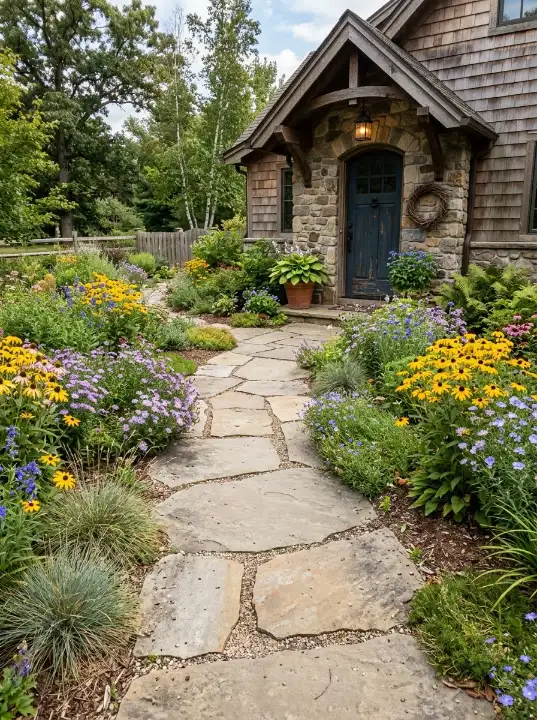
Native plants can make a flagstone walkway feel connected to the surrounding landscape instead of looking overly designed. Their varied heights and seasonal flowers add interest along the path, while irregular stones bring natural texture and a welcoming character to the front entrance.
Select native species that naturally thrive in your soil, sunlight, and local rainfall. Set flagstones firmly and keep planting pockets broad enough for mature roots. Once established, many native plants need less supplemental watering, although occasional pruning and seasonal cleanup will keep the route accessible.
8: Layered Narrow Walkway Garden
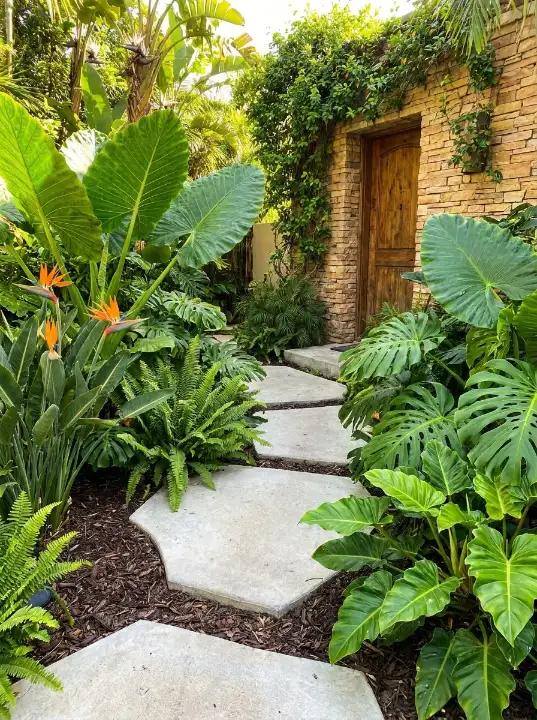
Layered planting makes a narrow walkway feel abundant without sacrificing a clear walking route. Low groundcover anchors the edges, medium flowers provide seasonal color, and taller shrubs create depth. The result is a compact front garden that feels thoughtfully designed and full of texture.
Keep the lowest plants closest to the paving and place taller shrubs farther from the path. Measure mature widths before planting so the garden does not become cramped. Use mulch to reduce weeds, and divide vigorous perennials when they begin spilling into the walkway.
9: Wood and Stone Woodland Entry
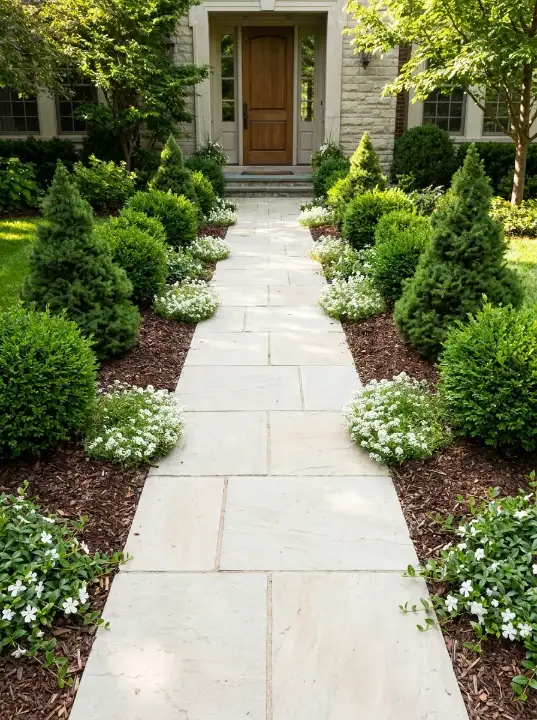
Wood edging and natural stone create a warm, rustic combination that suits homes surrounded by mature trees or relaxed gardens. Ferns and moss soften the materials, while evergreen plants provide structure. Together, these elements create a quiet path that feels tucked naturally into the landscape.
Use rot-resistant timber or a suitable outdoor treatment for longer service life. Secure edging firmly so soil stays contained, and choose plants that tolerate the shade conditions. Keep moss and fallen debris from becoming slippery on stones, especially in damp areas or rainy seasons.
10: Mediterranean Walkway with Herbs
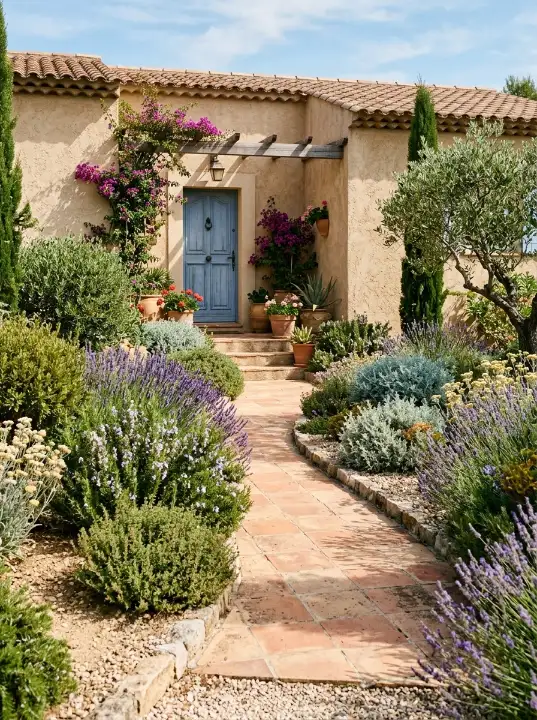
Terracotta paving and fragrant herbs bring relaxed Mediterranean character to a front entrance. Rosemary, lavender, and thyme add texture while keeping the planting palette restrained. Warm tile tones paired with silvery foliage create a sunny, welcoming path that feels vacation-inspired without becoming overly elaborate.
Choose herbs that tolerate your local heat and drainage conditions, and place them where they receive enough sunlight. Use gravel around plants to improve drainage and reduce weeds. Sweep tile surfaces regularly, trim rosemary after flowering, and keep vigorous herbs from narrowing the walking route.
11: Tropical Front Path with Bold Foliage
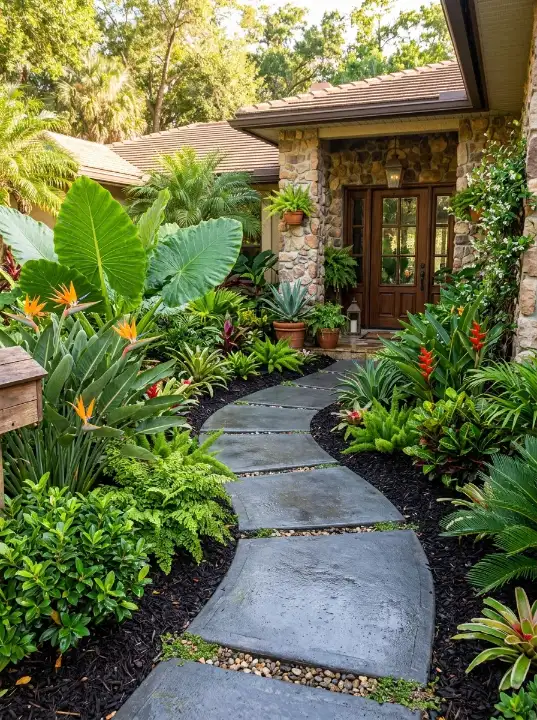
Bold foliage can transform an ordinary front path into a lush tropical-style entrance. Broad leaves create dramatic texture, while layered greenery makes the walkway feel immersive. This look works especially well in warm climates where moisture-loving plants can thrive naturally around the front entry.
Group plants according to their water and sunlight needs, keeping broad leaves away from the walking surface. Use moisture-retaining mulch where appropriate, but maintain clear drainage around paving. Remove damaged leaves regularly, and protect tender plants from cold weather if your climate requires seasonal care.
12: Evergreen Border for Year-Round Structure
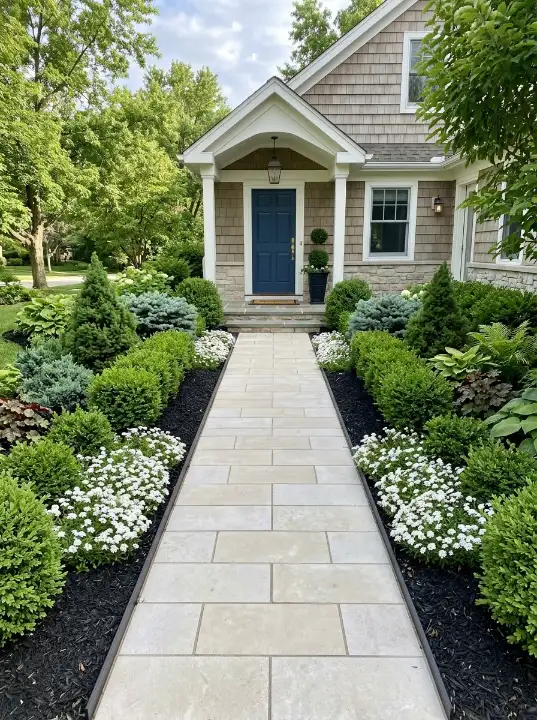
Evergreen planting gives a front walkway dependable structure through changing seasons. Compact shrubs and dwarf conifers keep the route visually defined, while small white flowers add softness without competing with the greenery. This design creates polished curb appeal with relatively restrained seasonal upkeep.
Check mature shrub sizes before planting so branches do not eventually crowd the path. Use bark mulch to conserve moisture and reduce weeds, leaving a small gap around plant stems. Trim only when needed to preserve natural shapes, and replace sparse groundcover during suitable seasons.
13: Seasonal Flower Ribbon Walkway
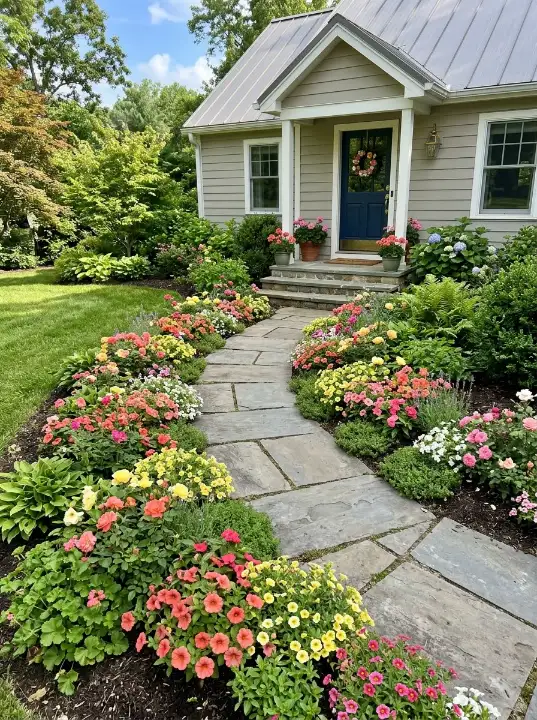
A ribbon of seasonal flowers brings changing color to the front entrance and makes a simple path feel special. Repeated blooms create visual rhythm without requiring a complicated layout, while the mix of warm and soft colors gives the walkway a cheerful, Pinterest-friendly personality.
Choose flowers with overlapping bloom periods so the border does not become bare between seasons. Keep taller varieties behind shorter edging plants, and deadhead regularly to encourage continued flowering. Replace tired annuals when needed, while using dependable perennials as lasting framework for your colorful border.
14: Rustic Stone Path with Wildflowers
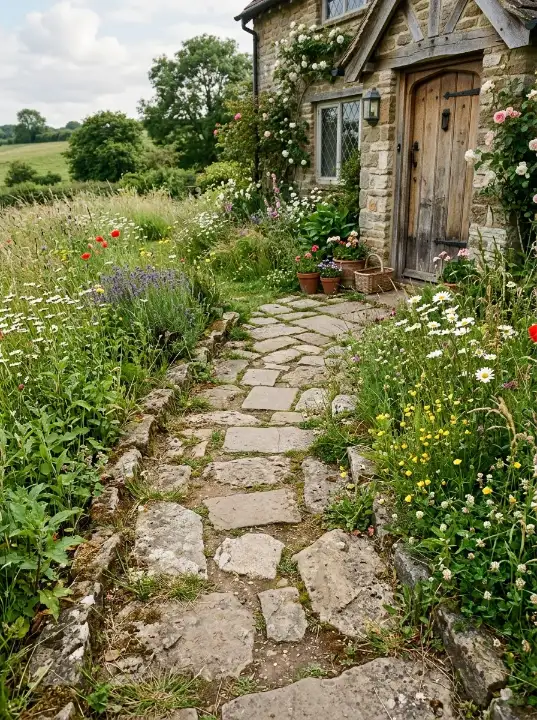
Uneven stone and meadow-style planting give a front walkway an easygoing countryside character. Wildflowers soften the hard surfaces, while grasses add movement around the path. This approach is ideal for homeowners who prefer natural-looking curb appeal over tightly clipped, highly formal landscaping.
Set larger stones securely and check their walking surfaces for wobbling before planting around them. Choose wildflowers suited to your region, then allow natural variation rather than forcing spacing. Cut back growth selectively after flowering, keeping the path edges open and visible year-round.
15: Symmetrical Formal Entry Walk
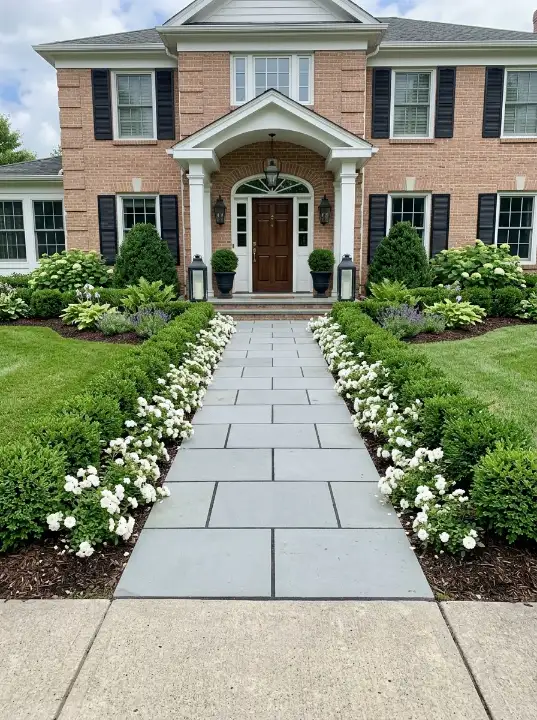
Symmetry gives a front walkway a strong sense of order. Matching shrubs and balanced flower borders guide attention toward the doorway, while straight paving reinforces the architecture. This formal approach works particularly well with traditional homes, colonial facades, and entrances featuring strong geometric lines.
Measure both planting beds well before installation so their widths and plant spacing match. Choose slow-growing evergreens when possible to reduce pruning. Keep paving joints clean, refresh mulch seasonally, and replace flowering plants in matching colors so the balanced appearance remains consistent.
16: Pebble Path with Silver Foliage
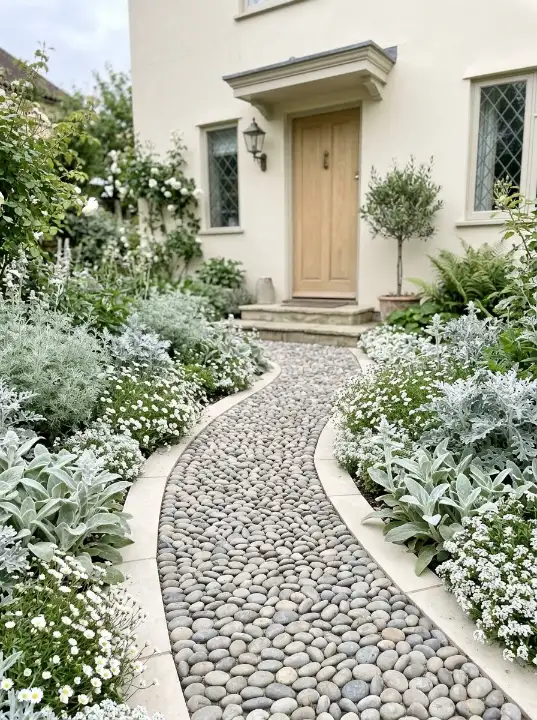
Silver foliage creates a sophisticated color story that makes a pebble path feel calm and refined. Dusty miller, lamb’s ear, and artemisia bring varied leaf shapes while white flowers provide delicate contrast. The muted palette suits homes with neutral exteriors and understated curb appeal.
Use compacted gravel beneath the pebbles so the walking surface stays stable and comfortable. Choose silver plants suited to your drainage and sunlight conditions, avoiding overly wet locations. Trim spreading foliage before it reaches the path, and top up displaced pebbles after heavy rain.
17: Low Flowering Border with Curved Pavers
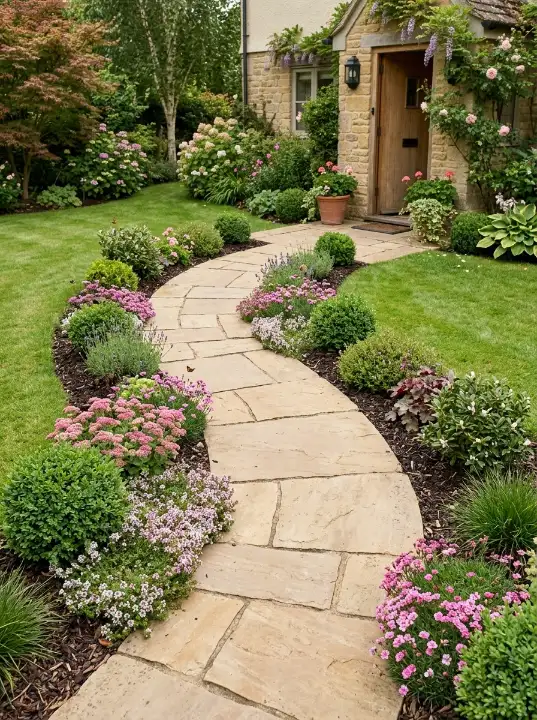
Curved pavers can soften a boxy front yard and create a more natural approach to the door. Low flowering plants keep the route open while adding a gentle wash of color. Rounded planting edges make this design feel relaxed, approachable, and connected to the lawn.
Use flexible edging to define the curve before installing pavers, checking the route from several viewpoints. Select low-growing flowers that tolerate footpath conditions and your available sunlight. Refresh mulch as needed, trim plants that spread onto the paving, and keep the curve visually clean.
18: Desert-Inspired Front Walkway
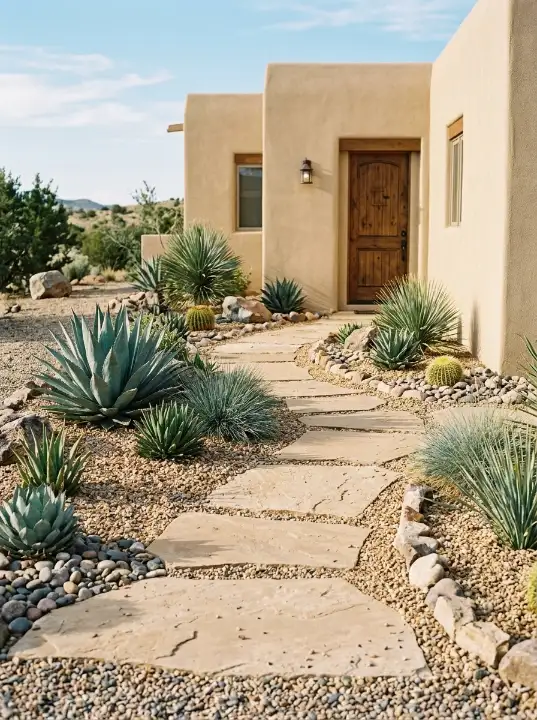
Desert-inspired landscaping can make a front entrance striking without relying on dense planting. Sculptural succulents and agave provide strong shapes, while gravel and sandy stones reinforce the dry-climate character. The restrained palette creates modern curb appeal and suits homes with warm, earthy exterior finishes.
Choose plants according to local frost, heat, and drainage conditions when using agave or tender succulents. Use fast-draining soil around plant roots and keep gravel surfaces tidy. Remove damaged leaves carefully, and avoid placing sharp plants where visitors naturally step or turn near the path.
Conclusion
A thoughtfully designed walkway does more than guide guests to your door; it shapes the first impression of your home. The best front walkway landscaping ideas balance beauty, function, and maintenance while complementing your architecture and yard. Whether you prefer colorful flowers, structured evergreens, natural stone, or modern paving, choose materials and plants that suit your climate and routine.
With careful planning, even a simple path can become a memorable curb appeal feature. Pick your favorite look, personalize it, and start transforming your entrance today.