
21 Genius Cucumber Trellis Ideas for Bigger Harvests
Cucumbers can quickly take over a garden when their vines spread across the ground. A well-planned trellis gives them room to climb, keeps growing fruit easier to find, and frees up valuable space for other vegetables. Whether you have a raised bed, a small backyard, or a few containers on your patio, there are plenty of ways to grow cucumbers vertically. These 21 cucumber trellis ideas combine practical support, creative designs, and budget-friendly materials to help you make the most of your growing space.
Why Use a Trellis for Growing Cucumbers?
Growing cucumbers vertically can make everyday garden care much easier. Instead of searching through sprawling leaves, you can see developing fruit, check plants for pests, and harvest without stepping around tangled vines.
A good trellis also improves airflow around the foliage and helps keep cucumbers away from damp soil. While a trellis cannot guarantee a bigger harvest on its own, pairing vertical support with suitable sunlight, regular watering, healthy soil, and proper plant spacing can help your cucumber plants thrive.
The best part? You do not need an expensive garden structure. A few wooden poles, a sturdy wire panel, or materials you already have at home may be enough to create a useful cucumber support system.
21 Genius Cucumber Trellis Ideas for Bigger Harvests
1. Wooden A-Frame Cucumber Trellis
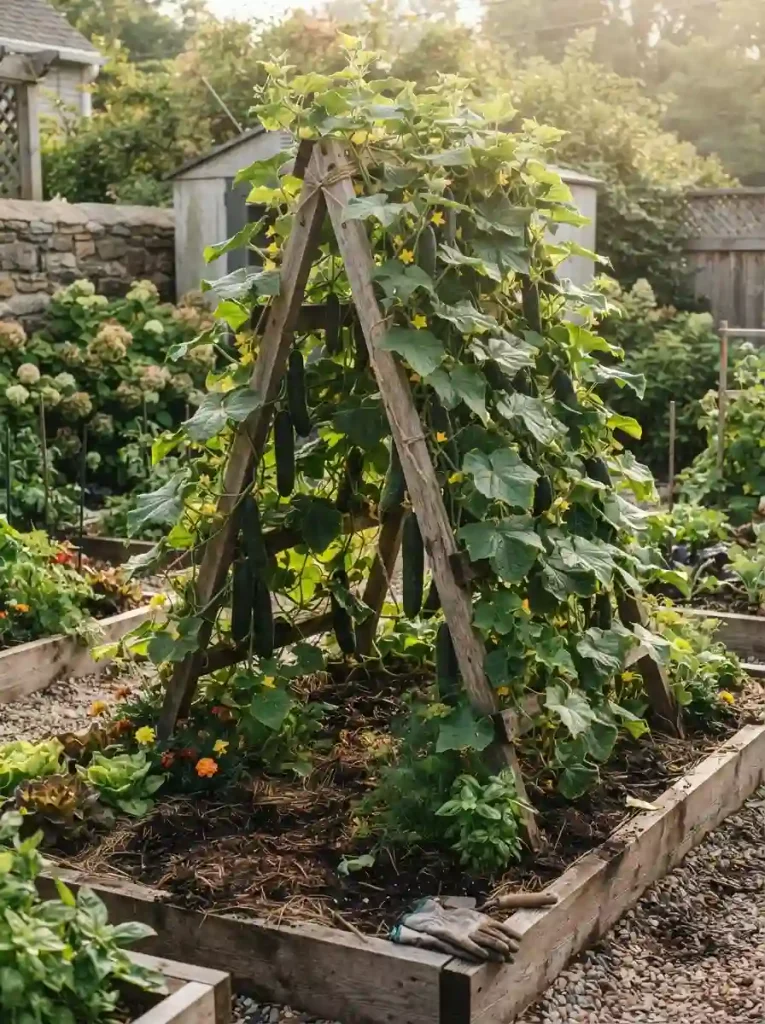
A wooden A-frame trellis is a practical choice for gardeners who want plenty of climbing space without building a permanent structure. Two sloping frames meet at the top, creating an inverted V that allows cucumber vines to grow on both sides.
You can build the frame from untreated, rot-resistant lumber and attach wooden crosspieces or sturdy garden mesh for the vines to grip. Place it over a garden bed or across a planting row, leaving enough room underneath for air to circulate.
One advantage of this design is its accessibility. Cucumbers can hang through the open framework, making them easier to spot and pick. It also uses the garden’s vertical space while leaving room for other crops nearby.
Gardening tip:
Secure the legs against slipping apart, and anchor the structure before the vines become heavy. Choose a height that suits your cucumber variety and allows you to reach the upper growth comfortably.
2. DIY PVC Pipe Cucumber Trellis
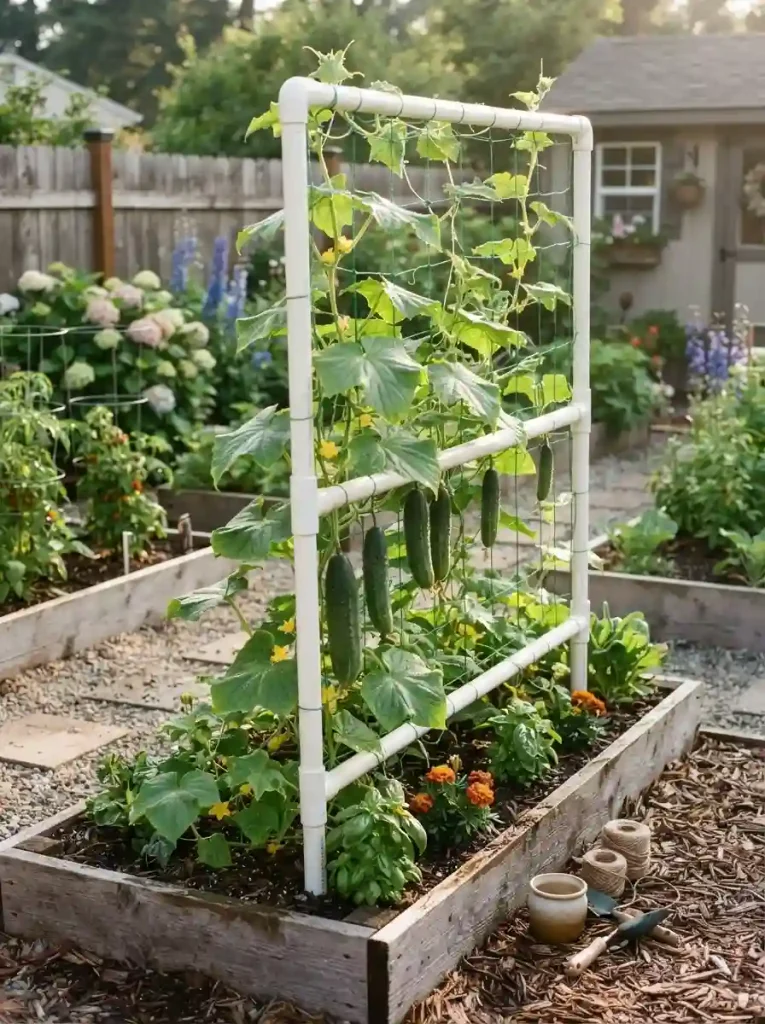
If you prefer a lightweight structure that is easy to assemble, consider a PVC pipe cucumber trellis. PVC pipes and compatible connectors can form a rectangular frame or a freestanding A-frame without requiring complicated woodworking.
Stretch suitable garden netting or strong vertical strings across the frame, giving the cucumber tendrils multiple points to grab. This design works well in backyard plots and raised beds where you want a simple support that can be dismantled between growing seasons.
Before assembling it, check that the pipe diameter, connectors, and overall dimensions are suitable for the size of your plants. Lightweight frames can become unstable when covered with foliage, especially in windy weather, so use proper ground anchors or secure the frame to a sturdy bed.
Gardening tip:
Install the netting before planting and test the frame for wobbling. If the trellis will stay outdoors for an entire season, use materials rated for outdoor exposure.
3. Repurposed Wooden Ladder Trellis
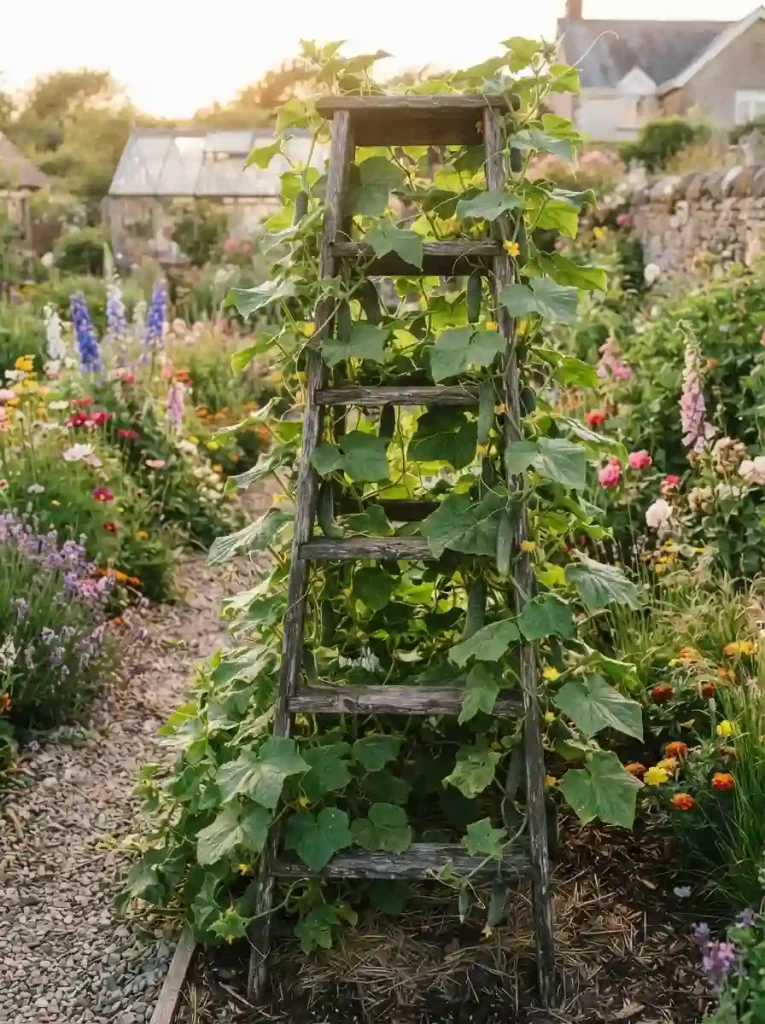
An old wooden ladder can become an attractive cucumber support with very little construction work. Its existing rungs provide convenient places for vines to climb, while the open design makes it easy to inspect leaves and locate ripe cucumbers.
Choose a ladder that is no longer needed for climbing and inspect it carefully for rot, loose joints, and splintered wood. Position it securely in the garden, or fasten it to a stable support so it cannot tip when wind catches the foliage.
This idea suits cottage gardens, informal vegetable patches, and gardeners who enjoy reusing materials rather than buying new equipment. You can leave the wood natural for a rustic appearance or paint it with an outdoor finish appropriate for garden use.
Gardening tip:
Guide young vines toward the rungs with soft plant ties. Do not rely on an unstable ladder simply because it looks sturdy when empty.
4. Wire Mesh Panel Trellis
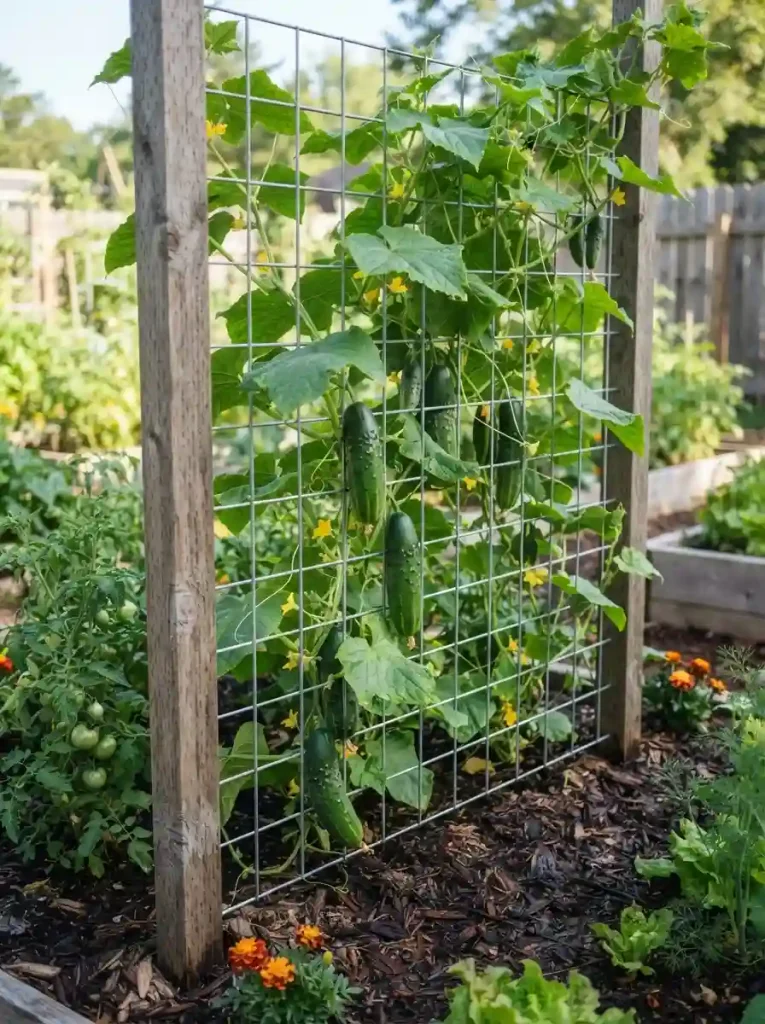
A wire mesh panel creates a broad, dependable climbing surface for cucumber vines. It is especially useful when you want a straightforward design that can support several plants along a single row.
Attach a suitable galvanized or coated mesh panel to firmly anchored posts. Select openings large enough for tendrils to pass through, but make sure the wire is strong enough to resist bending under the weight of mature vines and fruit.
This trellis is easy to inspect from either side and allows sunlight to reach much of the foliage. Depending on the panel size, it can fit a raised bed, an in-ground vegetable patch, or a dedicated cucumber row.
Gardening tip:
Keep the mesh taut and support its edges properly. A loosely attached panel may bend or pull away from its posts as the cucumber plants mature.
5. Bamboo Teepee Trellis
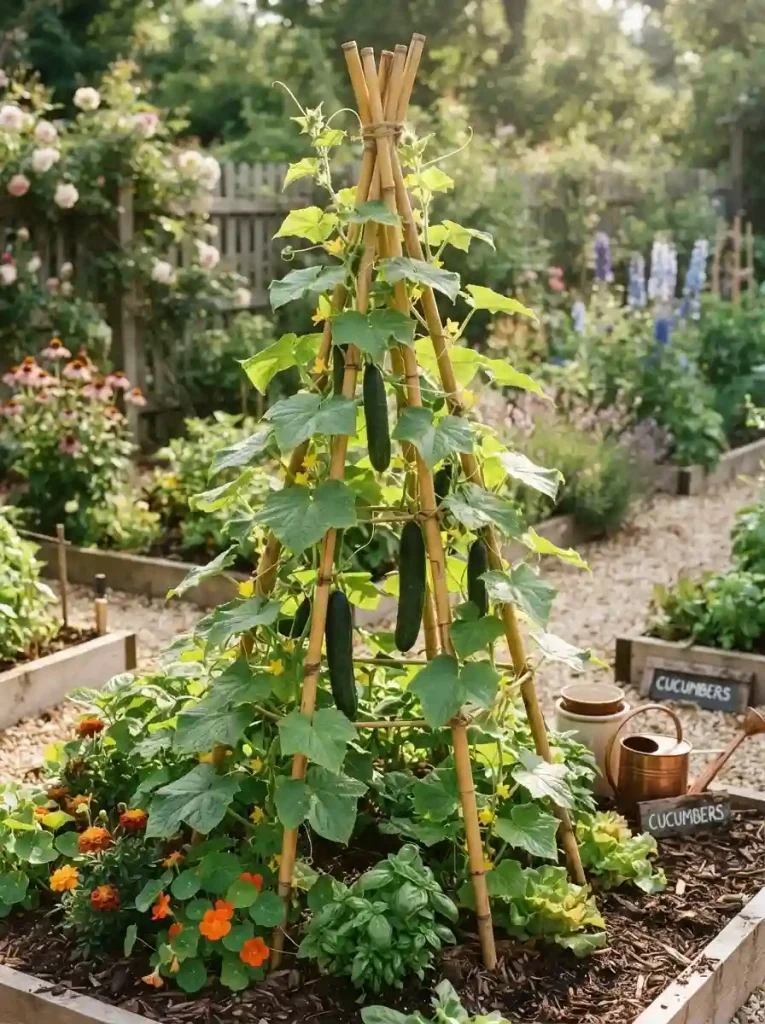
A bamboo teepee adds height without taking up much ground space. Arrange several long bamboo poles in a circle, bring their tops together, and tie them securely to create a cone-shaped structure.
The sloping poles give cucumber vines a natural route upward. You can also connect the poles with horizontal rings of garden twine, creating extra support where tendrils need something to grip.
This design is useful for small vegetable gardens, compact raised beds, and informal backyard planting areas. It can also serve as a focal point among shorter crops, although you should leave enough space around the base for watering and harvesting.
Gardening tip:
Choose straight, sturdy poles and push their lower ends firmly into the soil. A teepee that is too narrow at the base may wobble as the plants grow, so allow the legs to spread far enough to create a stable footprint.
6. Horizontal Clothesline Trellis
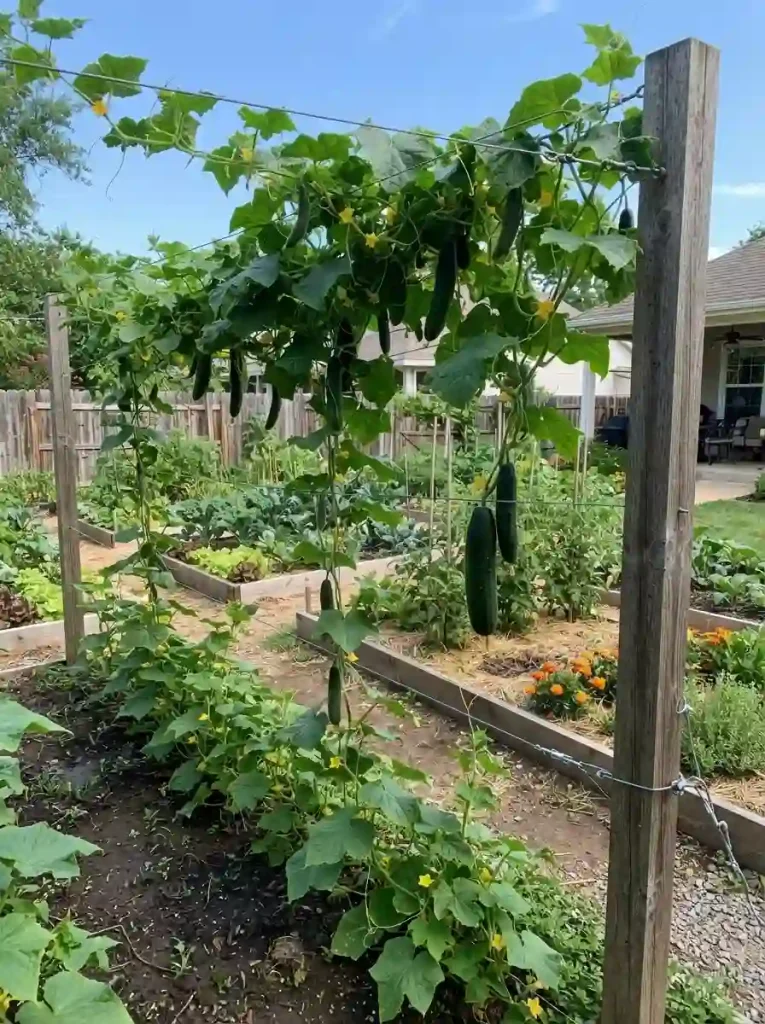
A clothesline-style trellis offers a simple way to support cucumbers when you have two sturdy posts and a supply of outdoor-rated line. Stretch the lines between the posts in several horizontal rows, spacing them so growing vines can reach the next level.
You can also combine horizontal lines with vertical strings to create a loose grid. This arrangement works well for gardeners who want an adjustable support system without constructing a large wooden frame.
The main consideration is tension. Lines that sag too much may allow vines to bunch together, while thin or weak cord can break under the combined weight of plants and fruit. Choose a suitable line and secure each end with reliable fasteners.
Gardening tip:
Check the lines after heavy rain or windy weather. Train young vines along the support gradually rather than pulling established stems into position.
7. Reclaimed Pallet Trellis
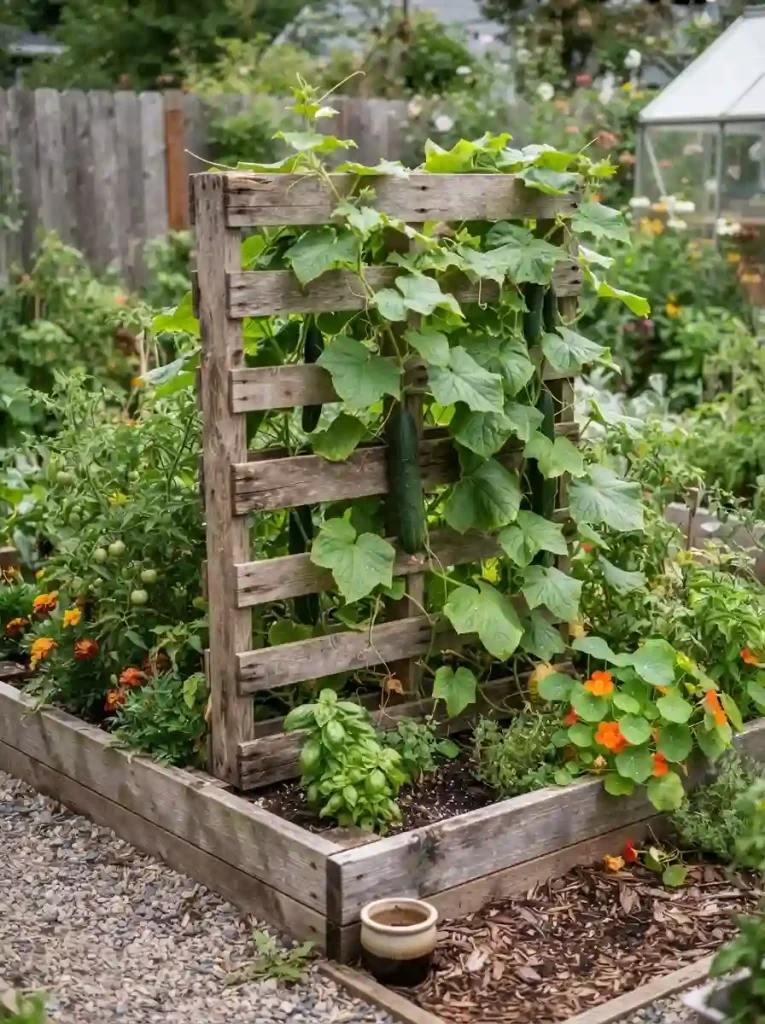
A reclaimed wooden pallet can provide an inexpensive climbing surface for cucumbers. Its existing boards create gaps where tendrils may find support, making it a convenient option for gardeners who want to reuse suitable materials.
Choose a clean pallet with solid boards and no signs of chemical contamination, oil spills, or decay. Check any treatment markings and avoid pallets with uncertain histories, especially when growing food crops. Secure the pallet upright to strong stakes or a stable frame rather than leaving it balanced loosely against the ground.
This arrangement works best when the openings allow you to reach the vines and harvest fruit without damaging the plant. If the boards are too close together, add a separate mesh layer or choose another support design.
Gardening tip:
Inspect the pallet before use and reinforce it where necessary. A weathered pallet is not automatically safe or strong enough to support a mature cucumber crop.
8. Bamboo Grid Trellis
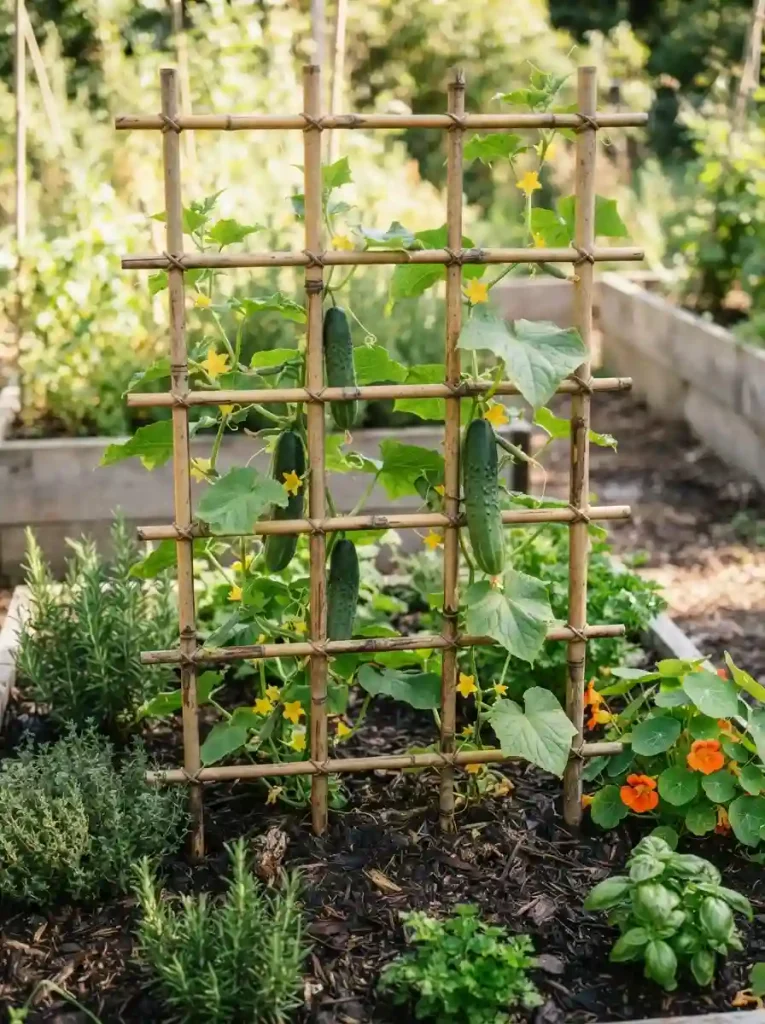
For a more organized alternative to the teepee, create a flat bamboo grid. Lay bamboo poles vertically and horizontally, then fasten their intersections with weather-resistant ties to form a lattice-like climbing surface.
Stand the grid upright against secure posts or attach it to a suitable garden frame. The open pattern gives tendrils plenty of places to attach while allowing you to see the plants from the front.
Bamboo is relatively lightweight, making the grid convenient for seasonal gardens. However, thinner poles may flex when vines become dense, so select appropriate diameters and add reinforcement if you plan to grow several plants along the same panel.
Gardening tip:
Build the grid before planting and anchor it firmly. Leave enough room between the cucumber vines to prevent foliage from forming one crowded mass.
9. Freestanding Metal Frame Trellis
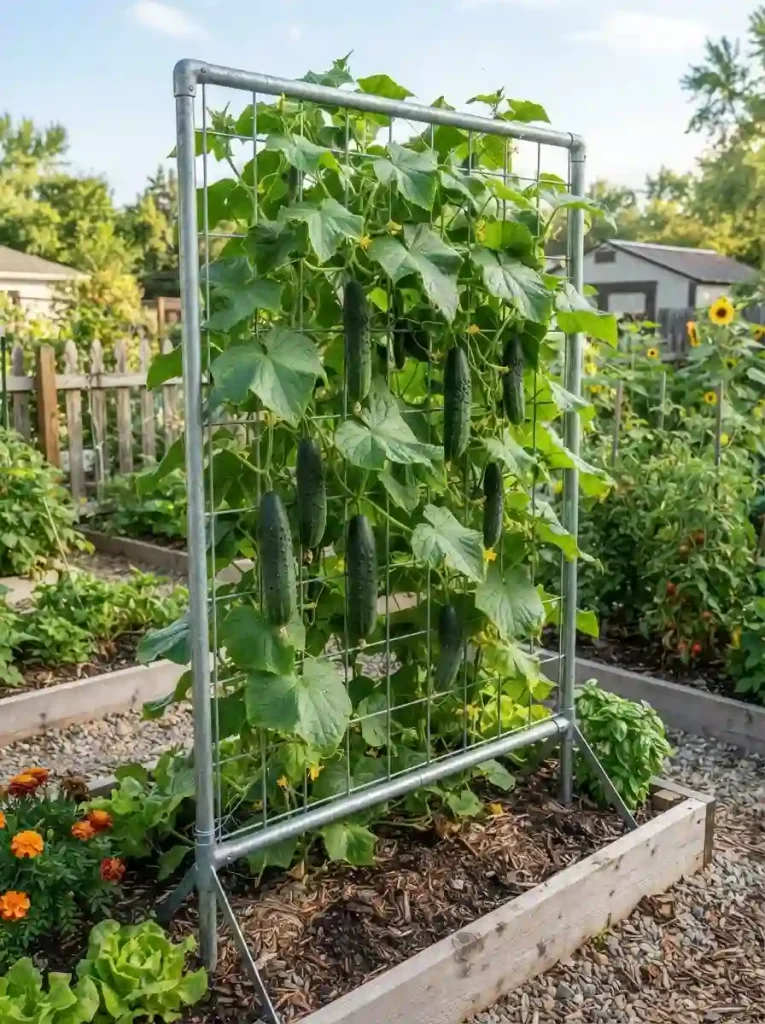
A freestanding metal frame is a useful option if you want a durable support that can remain in place for several growing seasons. A rectangular steel frame fitted with appropriate wire mesh provides a broad surface for cucumber vines without requiring a solid wall behind it.
Choose a frame made from weather-resistant material, such as properly galvanized metal, and anchor its legs securely. The structure should remain stable when exposed to wind and when its surface is covered with mature foliage.
Metal frames work well in larger vegetable gardens, along planting rows, and beside raised beds with enough room for access. Their open design allows you to check both sides of the vines and harvest fruit without reaching through dense growth.
Gardening tip:
Match the mesh strength to the expected crop load. If the frame rocks when pushed gently, improve its anchoring before allowing vines to climb.
10. Vertical Twine and Post Trellis
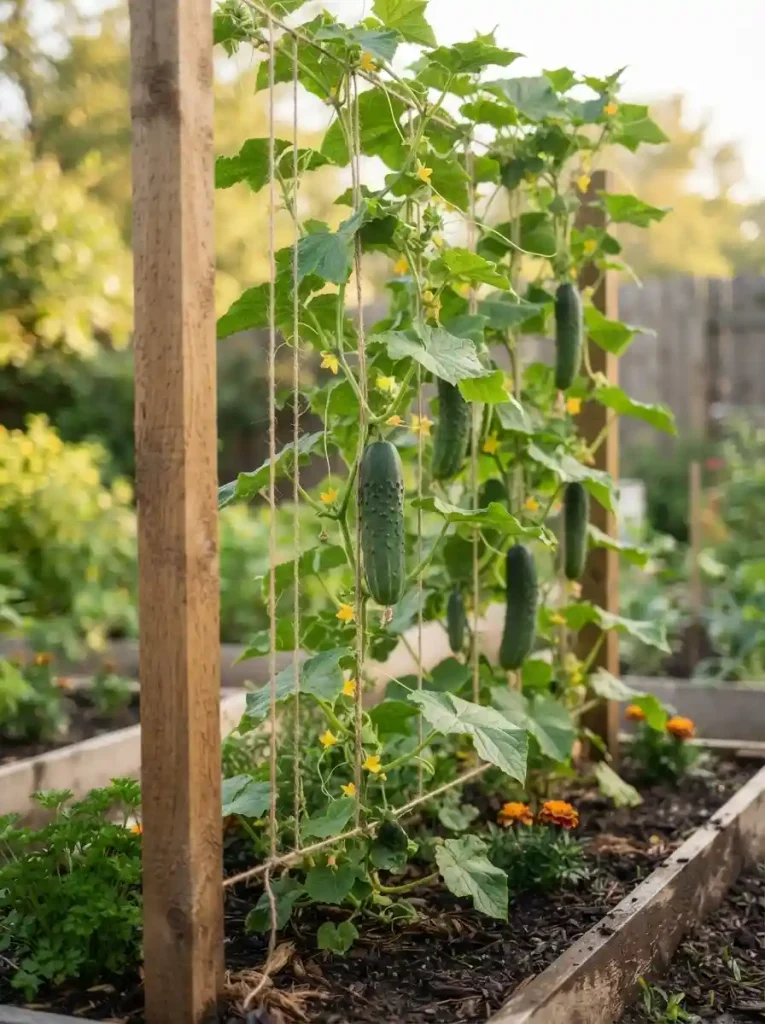
A vertical twine trellis is one of the simplest ways to encourage cucumbers to grow upward. Install two or more sturdy posts along the planting row, then attach strong garden twine from a secure upper support down toward each plant.
The vertical strings provide a climbing route without taking up much space. You can create one string per plant or add several lines between posts to accommodate a longer row. Use outdoor-suitable twine that can handle moisture and the weight of growing vines.
This system is particularly useful for gardeners who prefer a minimalist setup or want to make the most of a narrow vegetable bed. It is also easy to replace individual strings when they become worn.
Gardening tip:
Tie stems loosely with soft plant ties when necessary, and check the twine regularly for fraying. Train vines early so you do not have to untangle them later.
11. Cattle Panel Arch Trellis
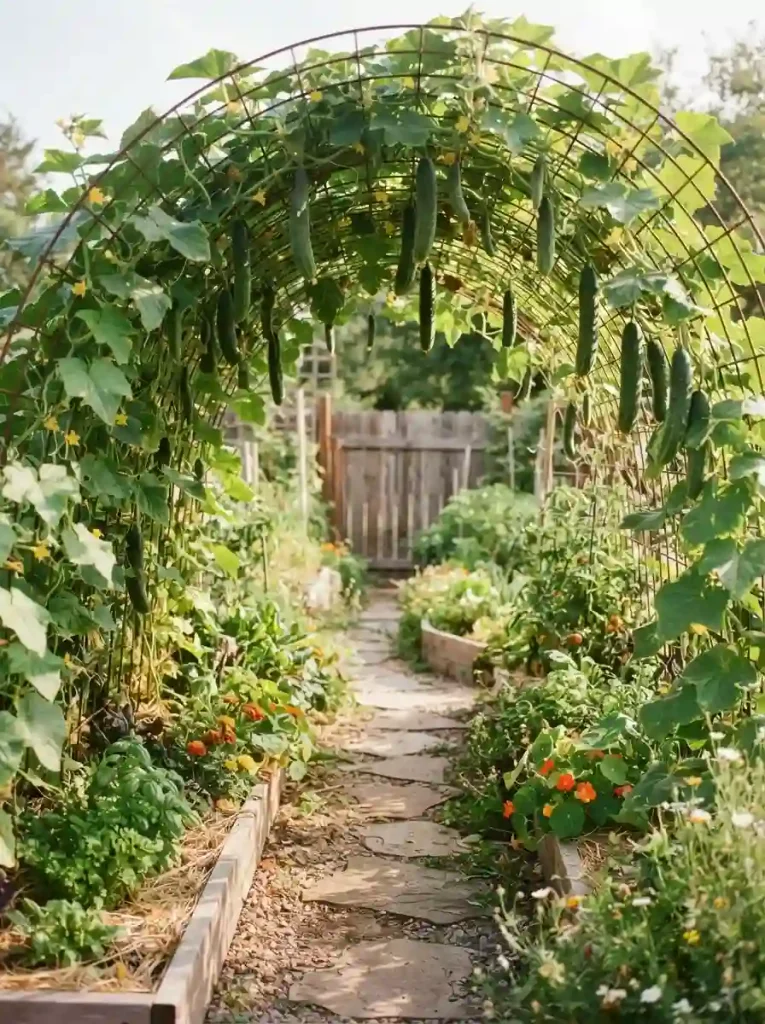
A cattle panel arch creates a striking garden walkway while giving cucumber vines a large surface to climb. Bend a sturdy, appropriately sized livestock panel into an arch and secure both sides firmly along the planting beds. The curved structure creates growing space above the path without using much additional ground area.
As the vines spread across the arch, cucumbers can hang beneath the foliage, making them easier to spot from the walkway. This setup is particularly useful for gardeners with long planting rows who want to combine vertical growing with an attractive garden feature.
Choose a strong panel that can maintain its shape under the weight of mature plants. Anchor the edges deeply and make sure the arch has enough clearance for comfortable movement underneath.
Gardening tip:
Plant cucumbers along both sides of the arch if space and sunlight allow. Check the developing fruit regularly so you can harvest before cucumbers become oversized.
12. Raised Bed Corner Trellis
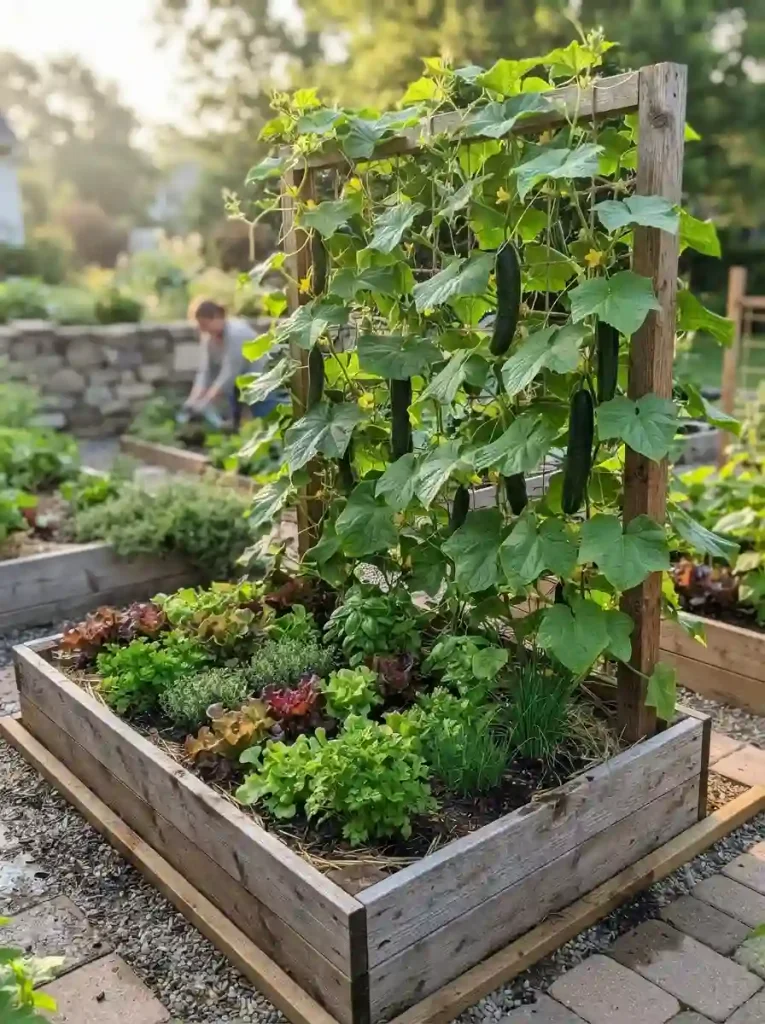
A corner trellis makes excellent use of an often-overlooked area in a raised garden bed. Instead of spreading cucumber vines across the planting surface, position a vertical support in one corner and direct the plants upward.
You can construct the trellis using wooden stakes, a small wire panel, or a framed garden net. Attach it securely to the bed structure or use separate anchors that extend into the ground. The support should be tall enough for the chosen cucumber variety while leaving convenient access to the rest of the bed.
This design is especially useful for small gardens where every inch of planting space matters. By growing cucumbers vertically in one corner, you may have more room for lettuce, herbs, radishes, or other compatible crops.
Gardening tip:
Place the trellis where it will not block your main watering and harvesting route. Train the vines along the frame instead of letting them spread across neighboring vegetables.
13. Repurposed Wire Shelf Trellis
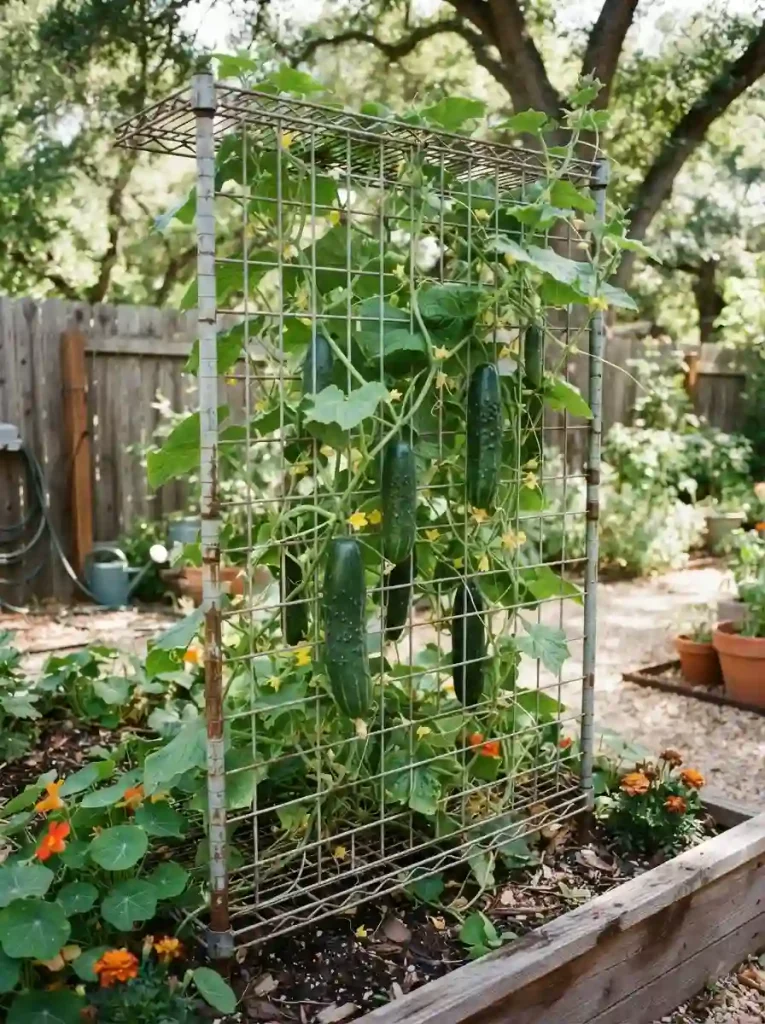
An old wire storage shelf can become a practical cucumber trellis when it is clean, sturdy, and suitable for outdoor use. Its open grid provides multiple attachment points for tendrils, and the existing structure can save you the effort of building a new frame.
Position the shelf vertically and secure it to strong posts or a stable garden structure. Check that the wires and joints can handle outdoor exposure and the increasing weight of the plants. Shelving units designed for indoor use may rust or weaken in wet conditions, so choose materials carefully.
This idea works well for gardeners who already have unused shelving and want to reduce waste. A narrow shelf frame can fit beside a raised bed or along a small vegetable row.
Gardening tip:
Test the structure before planting and reinforce weak joints. If the grid openings are too wide for young vines, attach garden twine to create additional climbing points.
14. Wooden Fence Cucumber Trellis
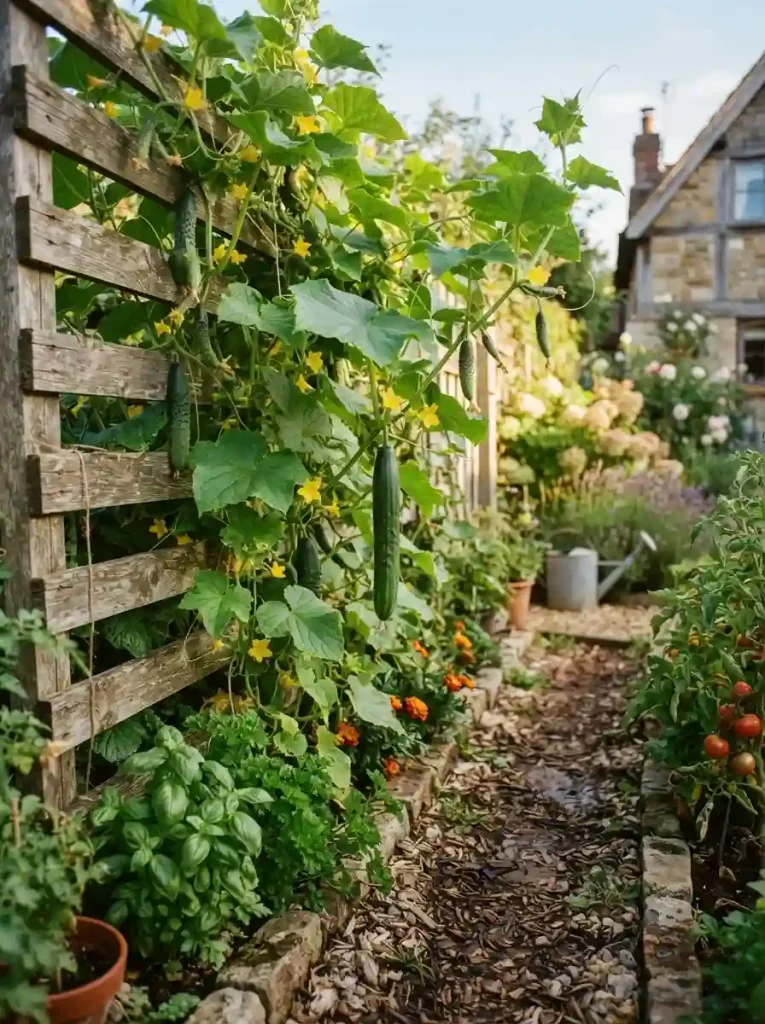
A sturdy garden fence can double as a cucumber trellis, making it a convenient choice for gardeners who already have a suitable boundary structure. Instead of installing a separate frame, use the existing fence to guide cucumber vines upward.
Wooden fences with open slats may offer enough grip for climbing stems, while solid fences can be fitted with garden netting or vertical strings. Leave enough space between the vines and the fence for airflow, and avoid fastening plants so tightly that their stems become damaged.
This arrangement works well along the edge of a vegetable garden, where cucumbers can grow without occupying the center of the planting area. However, consider the fence’s height and the amount of sunlight it receives before choosing this location.
Gardening tip:
Use soft ties to guide the first stems toward the support. Check behind dense foliage regularly for hidden cucumbers and signs of pests.
15. Obelisk Garden Trellis
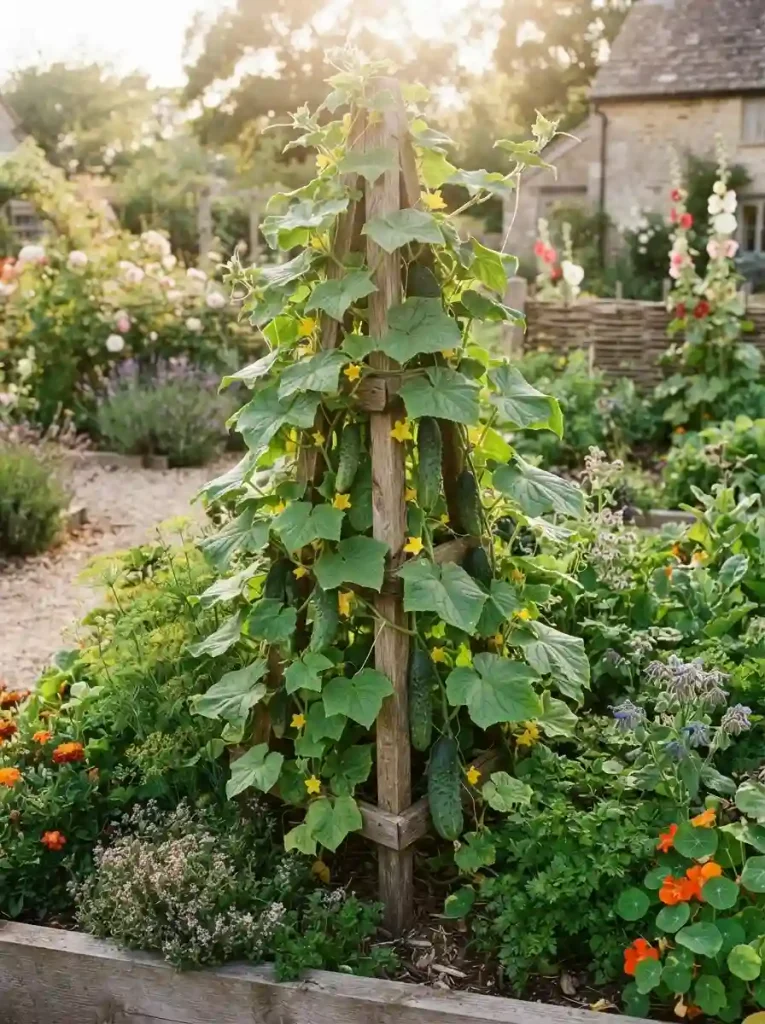
A garden obelisk brings a decorative touch to a productive vegetable patch. This tall, tapered structure usually has four or more legs connected by horizontal crosspieces, creating several climbing routes for cucumber vines.
You can build one from wooden strips, bamboo poles, or a suitable metal garden frame. Position it securely in the soil and plant cucumbers around the base, spacing them so the vines have room to climb without becoming overcrowded.
An obelisk works particularly well in a small garden where you want a vertical focal point. Its shape can also make harvesting convenient because cucumbers may develop at different heights around the structure.
Gardening tip:
Choose a design with enough horizontal supports for tendrils to grip. A decorative obelisk with widely spaced bars may need additional garden twine or mesh to help young vines establish themselves.
16. Garden Netting Between Wooden Posts
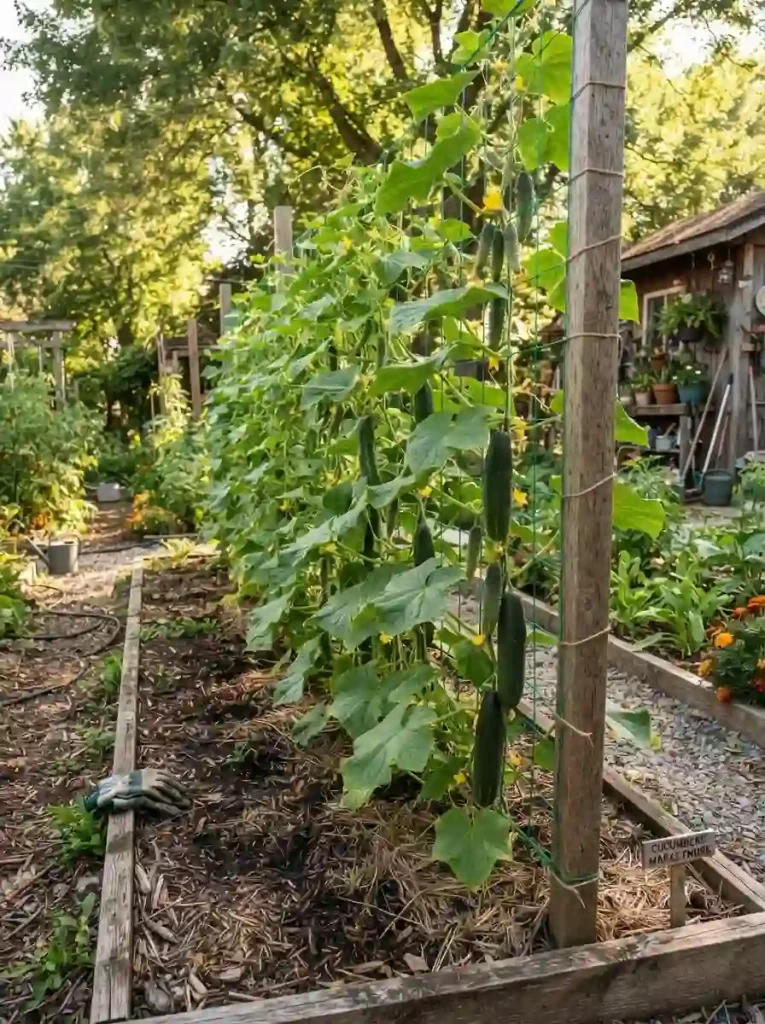
Garden netting offers a flexible way to support several cucumber plants along a planting row. Install sturdy wooden posts at suitable intervals and stretch strong, weather-resistant netting between them to form a broad vertical climbing surface.
The mesh gives cucumber tendrils plenty of opportunities to attach, allowing vines to spread across the support instead of becoming tangled on the ground. This approach can work in traditional vegetable plots, long raised beds, and backyard gardens where multiple plants grow together.
Select netting with openings large enough for tendrils to reach through but manageable enough to support young growth. The posts must be anchored properly, and the netting should remain taut as the vines become heavier.
Gardening tip:
Install the netting before cucumber vines begin spreading. It is much easier to guide young growth onto the mesh than to lift mature, intertwined stems.
17. Balcony Railing Cucumber Trellis

You do not need a large backyard to grow cucumbers vertically. A balcony railing can provide a useful support point for a container-grown cucumber plant, especially when paired with a separate trellis or mesh panel.
Choose a container large enough for the selected variety and make sure it has adequate drainage. Secure the climbing support to a stable, suitable point without obstructing the railing or creating a hazard for people below. Avoid attaching heavy planters or trellises to railings that are not designed to carry the load.
Compact cucumber varieties are often easier to manage in containers, although their exact space and support requirements depend on the cultivar. Place the pot where the plant receives sufficient sunlight and can be watered conveniently.
Gardening tip:
Check container moisture frequently and provide a strong support before the vines become heavy. Make sure no part of the structure can fall or extend dangerously beyond the balcony.
18. Recycled Garden Gate Trellis
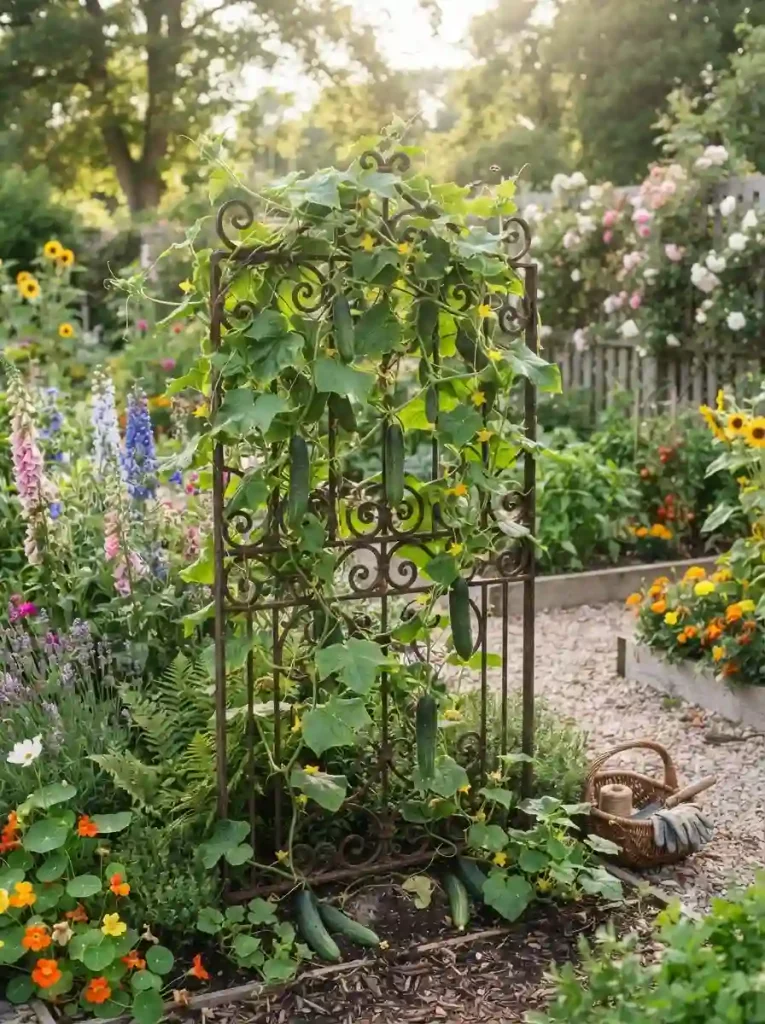
An unused garden gate can become an attractive cucumber support when its frame and joints remain sturdy. The open design gives vines plenty of room to climb, while the gate’s shape can add character to a vegetable garden.
Inspect the gate carefully for rust, rot, loose hinges, and old paint that may not be appropriate around edible crops. Secure it between strong posts or fasten it to a reliable frame. If the gate has large openings, add suitable garden mesh or twine to create extra support for young tendrils.
This approach is useful for gardeners who enjoy repurposing old materials and creating distinctive garden features. Position the gate where it receives enough sunlight and where both sides can be reached for harvesting.
Gardening tip:
Remove or safely cover sharp metal edges before planting. Guide vines through the openings while they are young, leaving enough room to pick the cucumbers without pulling the stems.
19. Lean-To Wall Trellis
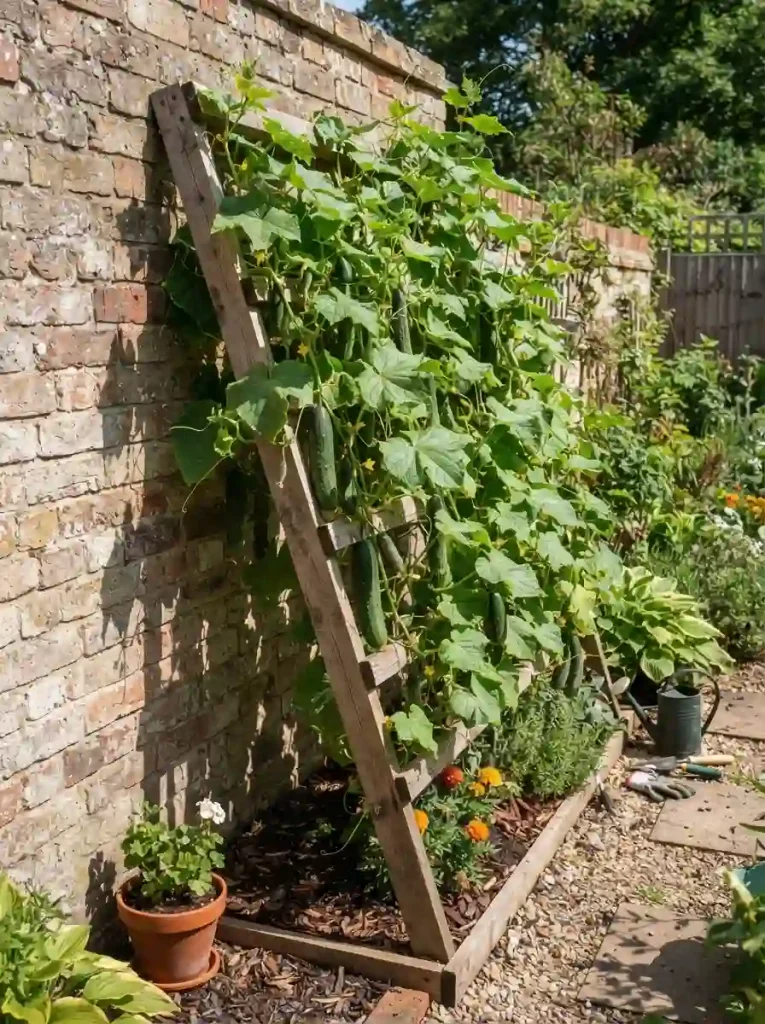
A lean-to trellis is designed to rest at an angle against a suitable wall or other secure support. Its sloping surface provides room for cucumber vines to climb while allowing the structure to occupy less ground space than some freestanding designs.
Build the frame from suitable wood or metal and attach garden mesh across its surface. Make sure the wall and fixings can safely support the arrangement, and leave enough space behind the frame for airflow and maintenance.
This design can suit a small backyard, a narrow planting strip, or a sunny garden wall. However, not every wall receives enough direct light for healthy cucumber growth, and a hot masonry surface may increase heat stress in some conditions.
Gardening tip:
Avoid trapping vines tightly between the wall and trellis. Keep the support secure and leave room to inspect the foliage from both sides whenever possible.
20. Foldable Wooden Lattice Trellis
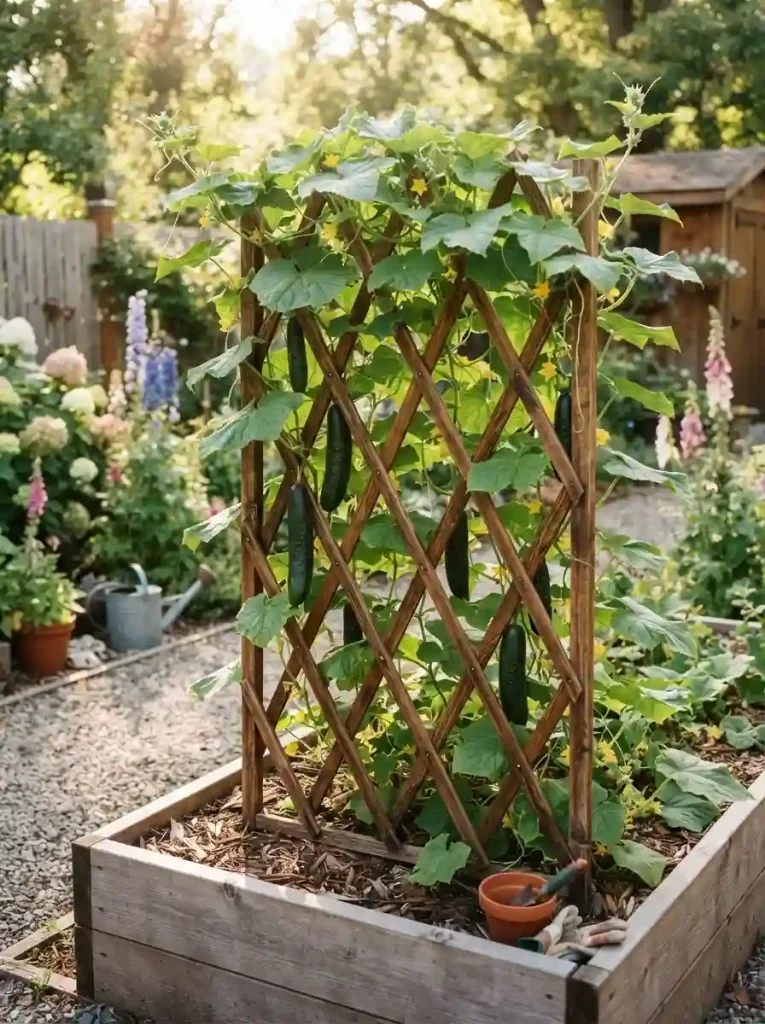
A foldable wooden lattice trellis is a useful choice for gardeners who want a climbing support that can be stored more easily between growing seasons. Its crisscross pattern offers many attachment points, helping cucumber vines spread across a broad surface.
Choose a well-constructed lattice panel with strong joints and weather-resistant materials. Set it up with a secure base or reliable anchors, because a lightweight folding frame can tip over when the foliage catches the wind.
This style works well in smaller vegetable gardens and can be positioned beside a raised bed or a row of containers. Its open pattern allows sunlight to reach much of the foliage and makes it relatively easy to inspect the plants.
Gardening tip:
Reinforce the base before the vines become dense. If the lattice openings are too large for young tendrils, add a few vertical strings for easier climbing.
21. Pergola-Style Cucumber Trellis
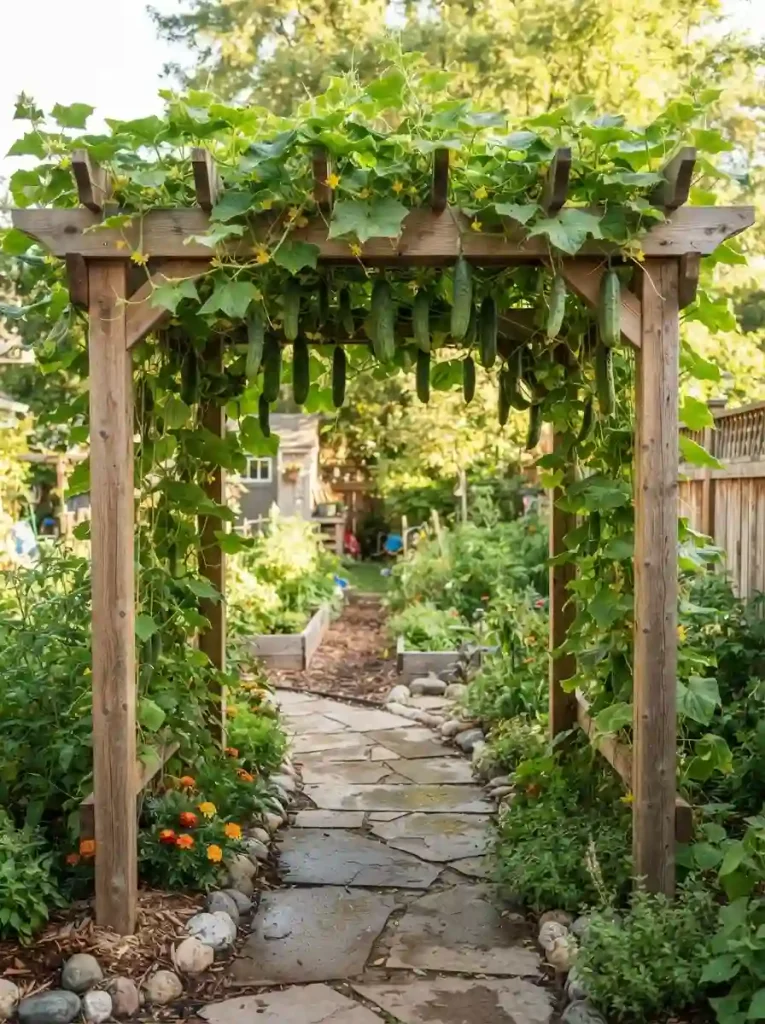
A small pergola-style trellis lets cucumber vines grow across an overhead framework, creating a productive feature for a larger garden. Vertical posts support a top grid of beams or sturdy wires, giving vines a surface to spread across as they mature.
This design can be especially appealing when you want to combine vegetable growing with a garden seating area or pathway. However, cucumbers growing overhead require careful planning because fruit may be difficult to reach, and the framework must be strong enough to support the mature crop.
Choose a compact structure designed for garden use and anchor it securely. Plant cucumbers near the base of the posts, then guide the vines upward with soft ties until they reach the overhead supports.
Gardening tip:
Choose a framework that allows you to reach the fruit safely from the ground or a stable platform. Harvest regularly and check overhead growth for hidden cucumbers.
How to Choose the Best Cucumber Trellis
The right cucumber trellis depends on your available space, budget, cucumber variety, and the materials you already own.
| Your garden situation | Suitable trellis options |
| Small raised bed | Corner trellis, bamboo grid, or vertical twine |
| Limited budget | Bamboo teepee, reclaimed pallet, or repurposed ladder |
| Several cucumber plants | Wire mesh panel, garden netting, or cattle panel arch |
| Balcony or patio | Container trellis or secure railing-side support |
| Decorative vegetable garden | Wooden obelisk, garden gate, or pergola |
| Seasonal garden setup | Foldable lattice or removable PVC frame |
Before building your trellis, consider the mature size of your cucumber variety. Some compact varieties need less climbing space, while vigorous vining cucumbers may require a taller, stronger support.
Also consider the location of the structure. Cucumbers generally grow best with plenty of sunlight, consistent moisture, fertile soil, and good drainage. A well-built trellis cannot compensate for poor growing conditions, but it can make a healthy crop easier to manage.
Tips for Growing Cucumbers Vertically
- Install the support early: Set up the trellis before the vines become long and tangled. This reduces the risk of damaging stems during installation.
- Guide young vines gently: Direct growing stems toward the mesh, string, or poles. Use soft plant ties when necessary, and avoid tying stems tightly.
- Water consistently: Cucumbers need regular moisture, particularly during flowering and fruit development. Water near the soil rather than repeatedly wetting the foliage.
- Feed the plants appropriately: Start with fertile soil and use a suitable fertilizer when needed. Avoid excessive nitrogen, which can encourage leafy growth at the expense of fruit production.
- Give plants enough room: Follow the spacing recommendations for your cucumber variety. Overcrowding can reduce airflow and make harvesting more difficult.
- Harvest frequently: Pick cucumbers when they reach the appropriate size for their variety. Regular harvesting helps prevent oversized fruit from being overlooked.
- Inspect plants regularly: Look for pests, damaged leaves, and signs of disease. Early attention makes problems easier to manage.
- Secure the trellis: Check posts, ties, and joints throughout the growing season, especially after strong winds or heavy rain.
Frequently Asked Questions
Do cucumbers grow better on a trellis?
Many vining cucumber varieties grow well on a trellis because vertical support keeps the vines organized, improves access to the fruit, and can help airflow around the foliage. However, a trellis does not automatically guarantee a bigger harvest. Sunlight, watering, soil fertility, plant health, and variety all matter.
How tall should a cucumber trellis be?
A height of approximately 5 to 7 feet is a useful starting point for many vining cucumber varieties. Some varieties need less space, while particularly vigorous plants may benefit from taller supports. Check the seed packet or supplier’s growing guidance before building your structure.
What is the cheapest way to make a cucumber trellis?
A bamboo teepee, simple wooden stakes with twine, or a suitable repurposed ladder can be inexpensive options. The final cost depends on the materials you already have and whether you need additional anchors, fasteners, or netting. Always prioritize stability over appearance.
Can cucumbers grow vertically in pots?
Yes. Many vining cucumbers can grow in containers when provided with adequate root space, drainage, sunlight, water, and a sturdy climbing support. Choose a container and cucumber variety suited to each other, and secure the trellis so it cannot tip over.
Should I tie cucumber vines to the trellis?
You can gently guide young vines toward the support and use soft ties if needed. Many cucumber plants climb naturally using tendrils, but some may need occasional assistance. Avoid tight ties that could cut into growing stems.
Is a metal or wooden cucumber trellis better?
Both can work well. Metal mesh can provide a durable, open climbing surface, while wood is versatile and often easy to customize. The better option depends on the quality of the materials, weather exposure, available budget, and how securely the structure can be installed.
How can I keep cucumbers from falling off a trellis?
Use a frame that is strong enough for mature vines, anchor it securely, and check fasteners throughout the season. Train the vines gradually and avoid overloading weak supports. If a particular cucumber variety produces heavy fruit, select a trellis designed to carry that load.
Final Thoughts
A cucumber trellis can turn a sprawling vegetable patch into a more organized and manageable garden. From simple bamboo structures and vertical twine to cattle panel arches and decorative wooden frames, there is an option for nearly every growing space and budget.
Start with a design that suits your cucumber variety, install it securely, and guide the vines as they grow. Combine your chosen support with healthy soil, consistent watering, suitable sunlight, and regular harvesting to give your plants the conditions they need to thrive.
You do not have to build the most elaborate structure to enjoy the benefits of vertical gardening. Even a simple, well-anchored trellis can make it easier to care for your cucumbers, find developing fruit, and make better use of your garden space.