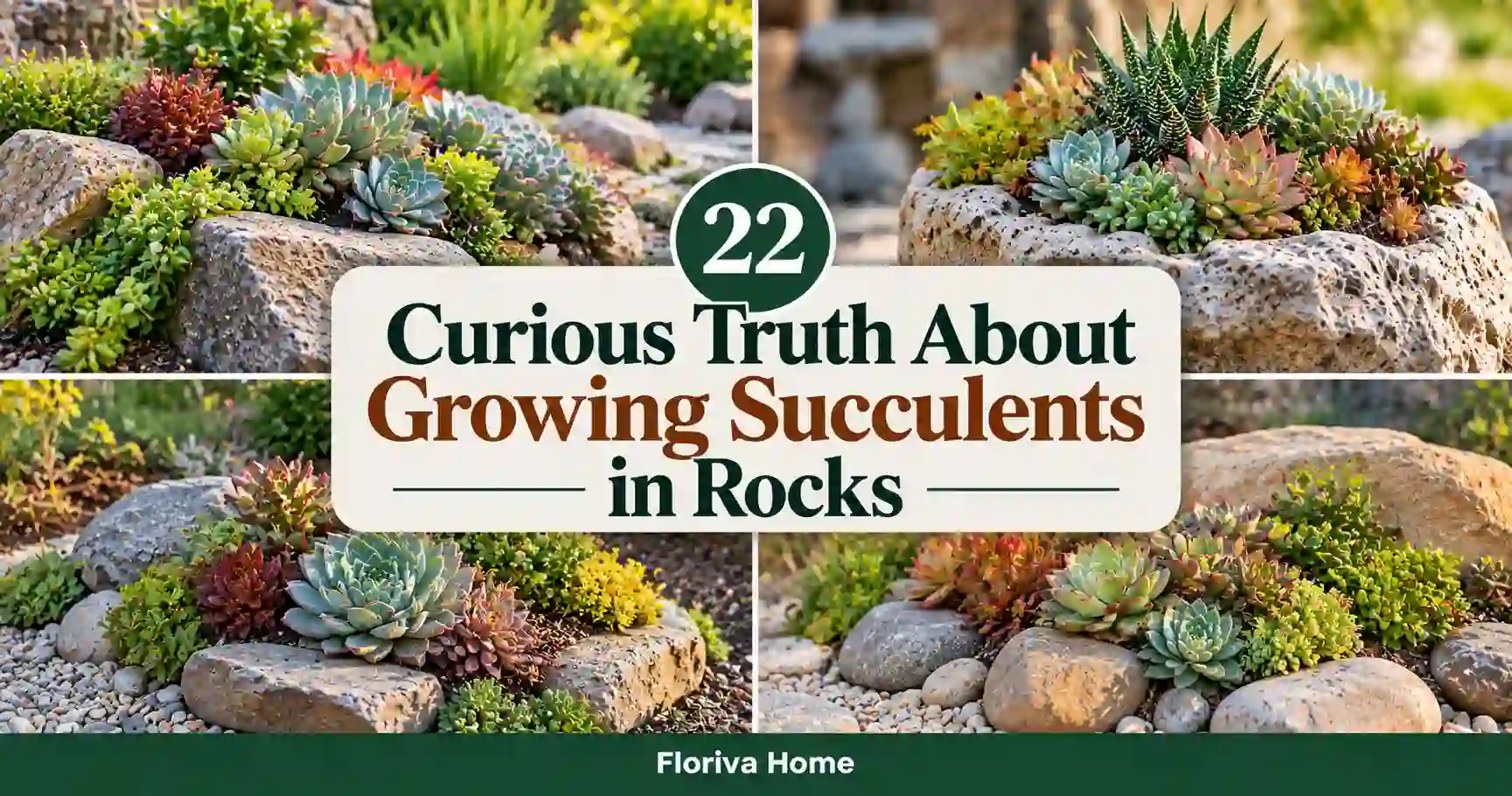
22 Curious Truths About Growing Succulents in Rocks
Scroll through any plant feed and you’ll see succulents perched in bowls of pebbles, tucked into stone walls, or sprouting from cracks in boulders. It looks effortless, so it’s natural to wonder whether you can skip the soil entirely.
The real answer is more interesting than a simple yes or no. Rocks can play a starring role in your succulent display, but only if you understand what the plant needs underneath. Here are 22 truths that will help you build a display that looks great and stays healthy.
Choosing Rocks, Grit, and Plants That Actually Work Together
Rocks work as a partner to soil, not a replacement for it, so start with the mix underneath. A good succulent blend is mostly mineral already: pumice, lava rock, crushed granite, or coarse sand blended through a little soil gives roots anchorage, air, and drainage at the same time. What does not work is a layer of rocks at the bottom of the pot — it does not fix drainage and can actually hold water closer to the roots.
Choose surface rock with the light in mind. Dark rocks soak up heat and can stress roots and leaves in hot, sunny spots, while light-coloured stones bounce light back up into the plant and keep the surface cooler. A top dressing of pumice, lava rock, or natural gravel also keeps lower leaves dry and clean, which matters for rosette shapes.
Finally, match the plant to the setting. Hardy succulents such as sempervivum, hardy sedum, and ice plant (delosperma) are the ones that love rocky outdoor gardens, slopes, and raised beds. Tender rosettes are happier in pots of gritty mix where a rock top dressing finishes the display and watering stays under your control.
1. Succulents Can’t Thrive on Bare Rocks Alone
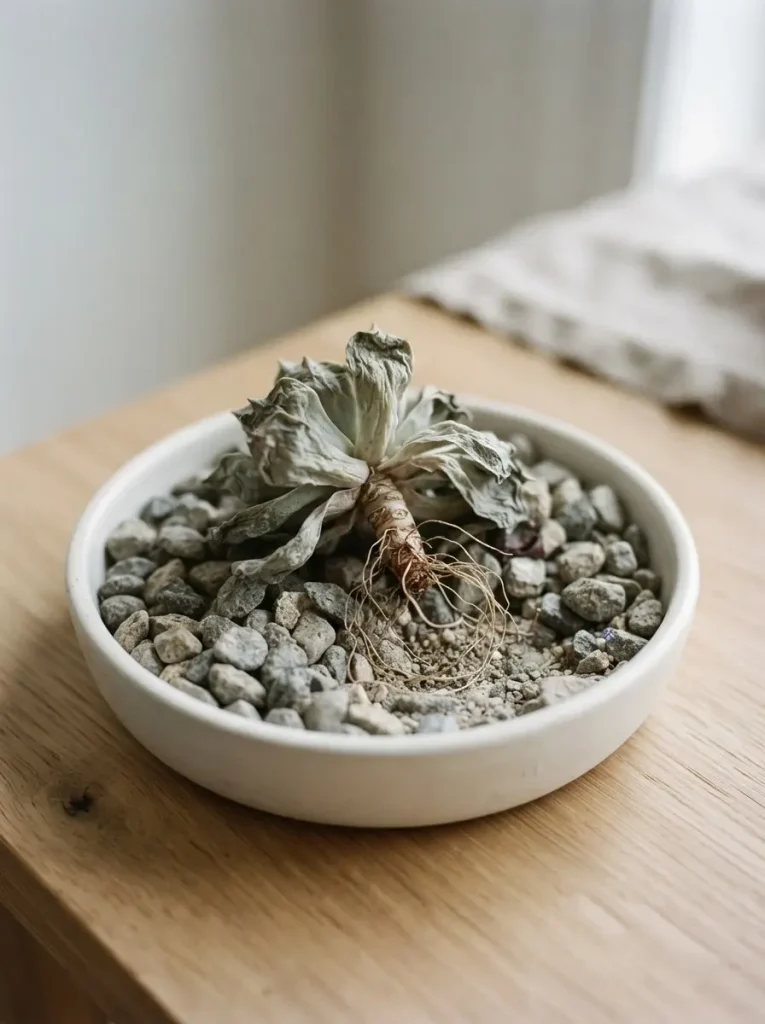
Rocks give a plant nothing to eat. They hold no organic matter, supply almost no minerals, and release moisture too quickly for roots to use it well. A succulent in plain stones can look fine for a while, but over months it stalls, shrinks, and eventually fades. Think of rocks as the décor and soil as the groceries.
2. They Can Survive for a Surprisingly Long Time Without Soil
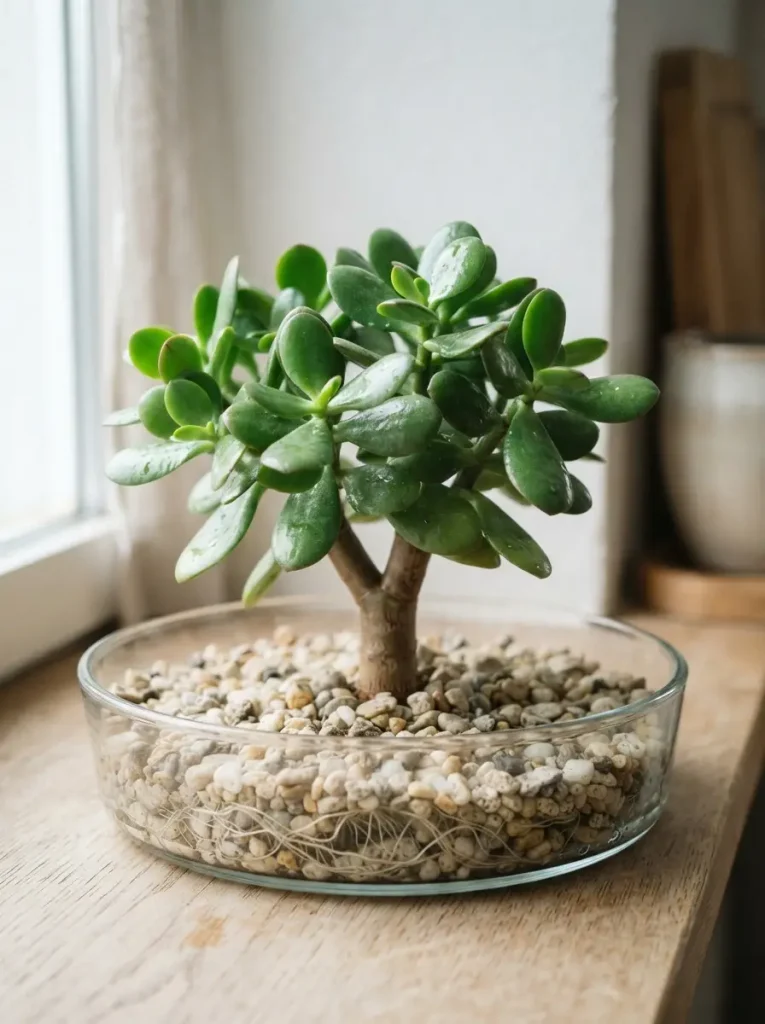
Succulents carry their own water reserves in thick leaves and stems, so they can coast for weeks or even months in a pebble-only setup. That’s why a rock bowl often looks perfectly happy at first. Survival and thriving are different things, though. Once those stored reserves run low, the plant has nothing to replace them with.
3. Rocks Work Best as a Partner to Soil
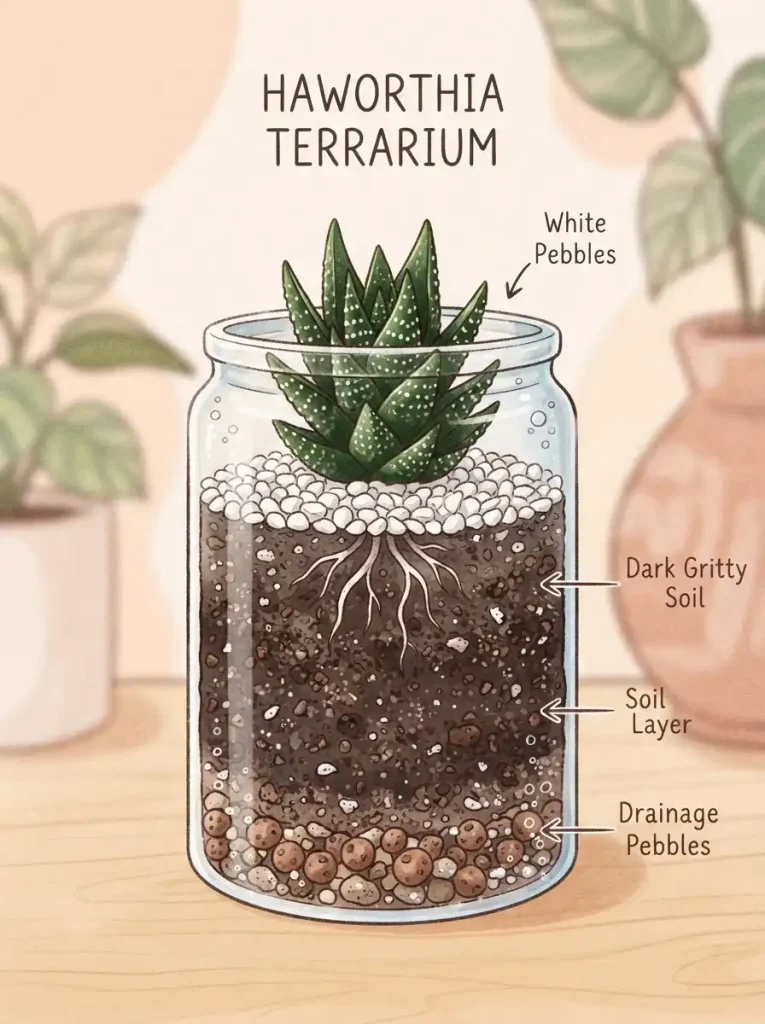
The winning formula is soil below and rocks above. A gritty, well-draining mix feeds and anchors the roots, while the stones add the look you love. You get the clean, sculptural style of a rock garden without starving the plant. Most healthy “rock” displays you admire are actually built exactly this way.
4. In the Wild, Succulents Grow in Rock Crevices, Not on Bare Stone
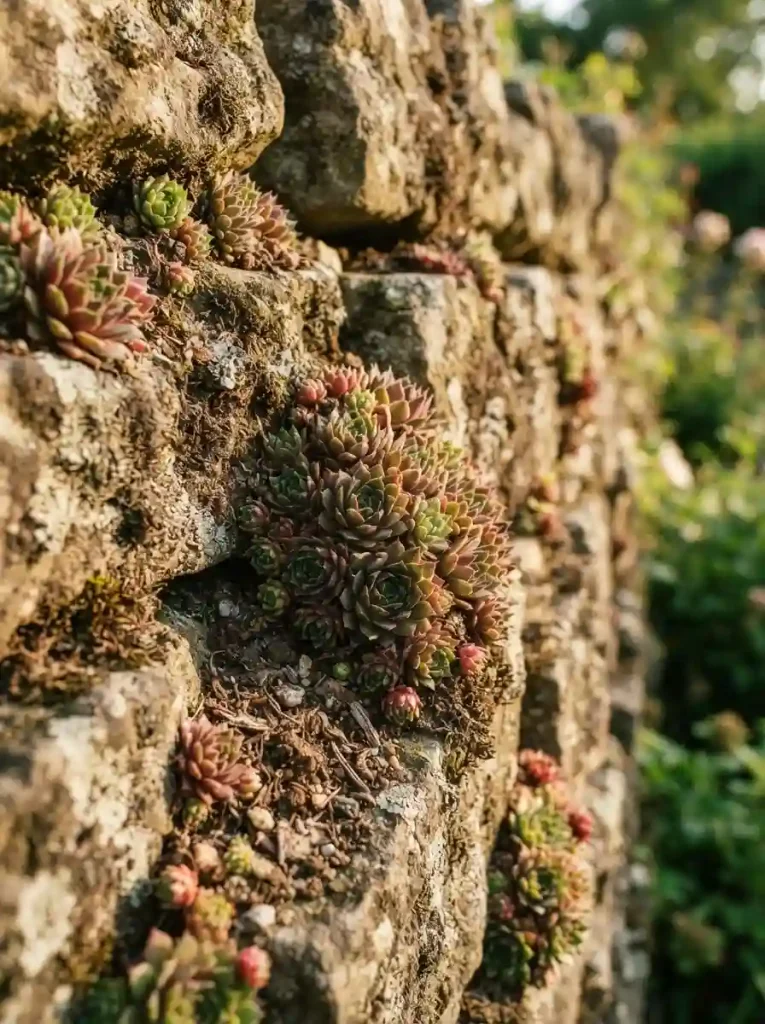
Look closely at a cliff-side succulent and you’ll find it rooted in a pocket of crumbled stone, grit, and trapped dust. Over time wind and rain collect tiny amounts of organic debris in those cracks. So the plants really are growing “in rocks,” but with a thin, nutrient-bearing fill that your pot needs to mimic.
5. Roots Need Anchorage and Air at the Same Time
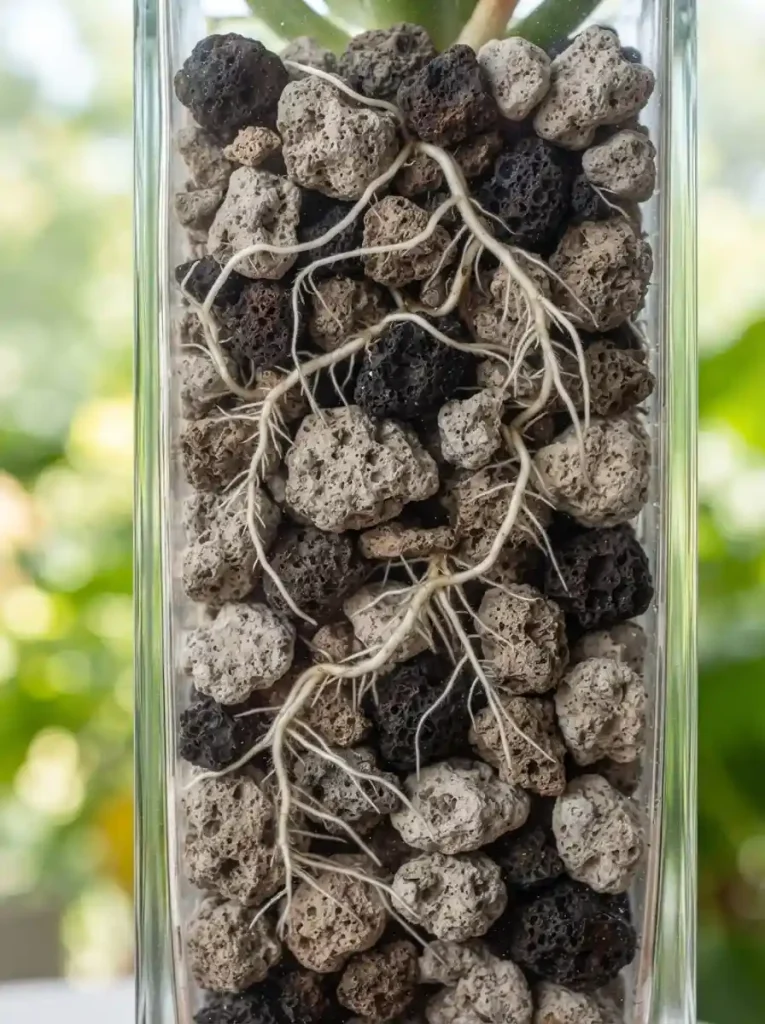
Succulent roots want to grip something firm, and they also need oxygen. Chunky particles give both: they lock the plant in place while leaving open air spaces between pieces. That’s why coarse mixes outperform fine, dusty ones. Bare rocks give air but weak grip, while dense soil gives grip but little air.
6. Rocks Can’t Hold Nutrients
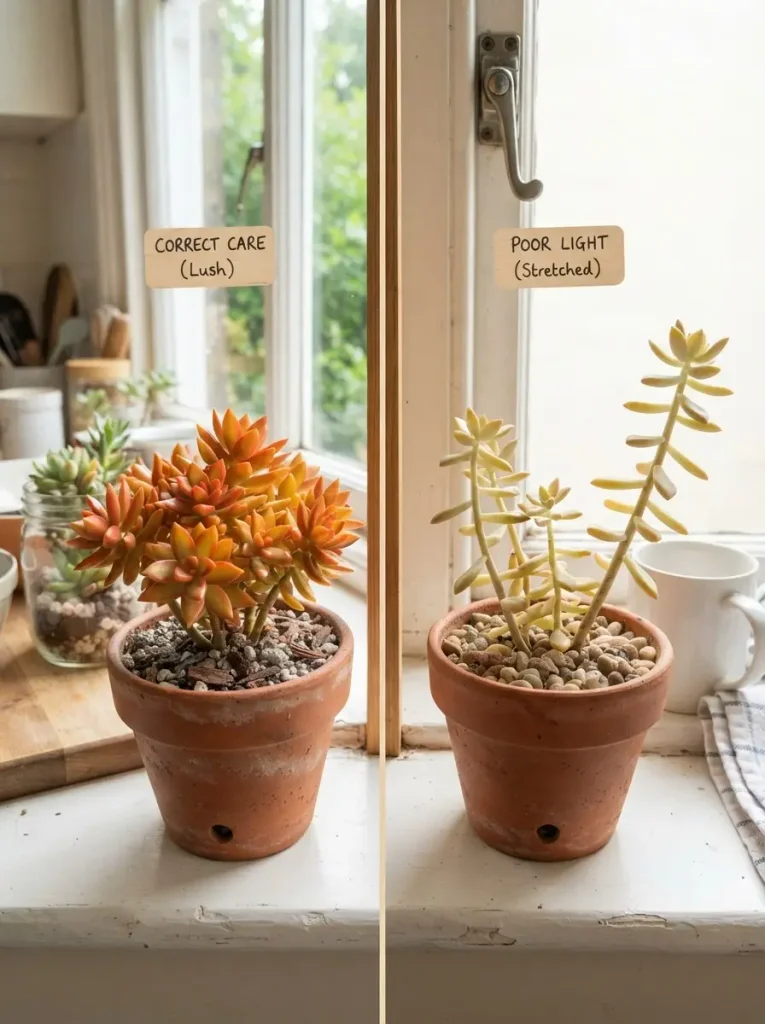
Even rough, porous stones barely store the minerals plants rely on. Water simply passes straight through and carries off whatever little is there. In soil, particles and organic matter hold nutrients so roots can sip them over time. Without that reservoir, growth slows, colors dull, and new leaves come in small.
7. A Good Succulent Mix Is Mostly Rock Anyway
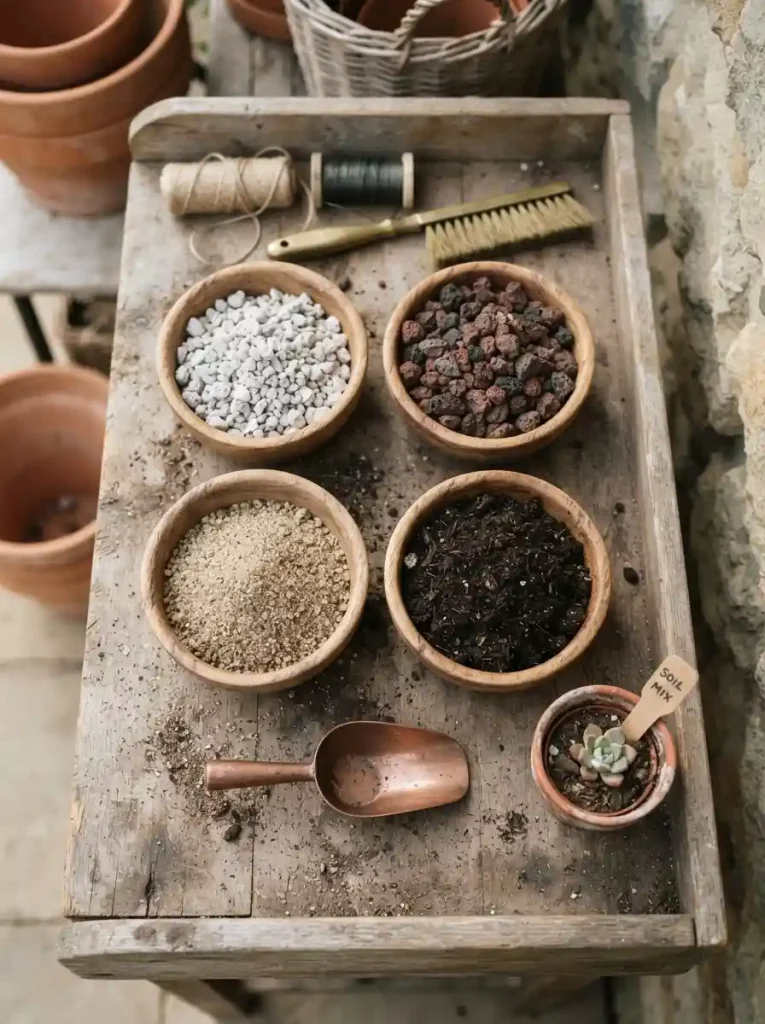
Many gardeners are surprised to learn that a quality succulent mix is often more than half mineral grit. Pumice, lava rock, coarse sand, and crushed granite make up the bulk, with a smaller share of potting soil or compost for nutrients. So you’re not choosing between rocks and soil. You’re choosing the right ratio.
8. A Rock Layer at the Bottom of the Pot Doesn’t Fix Drainage
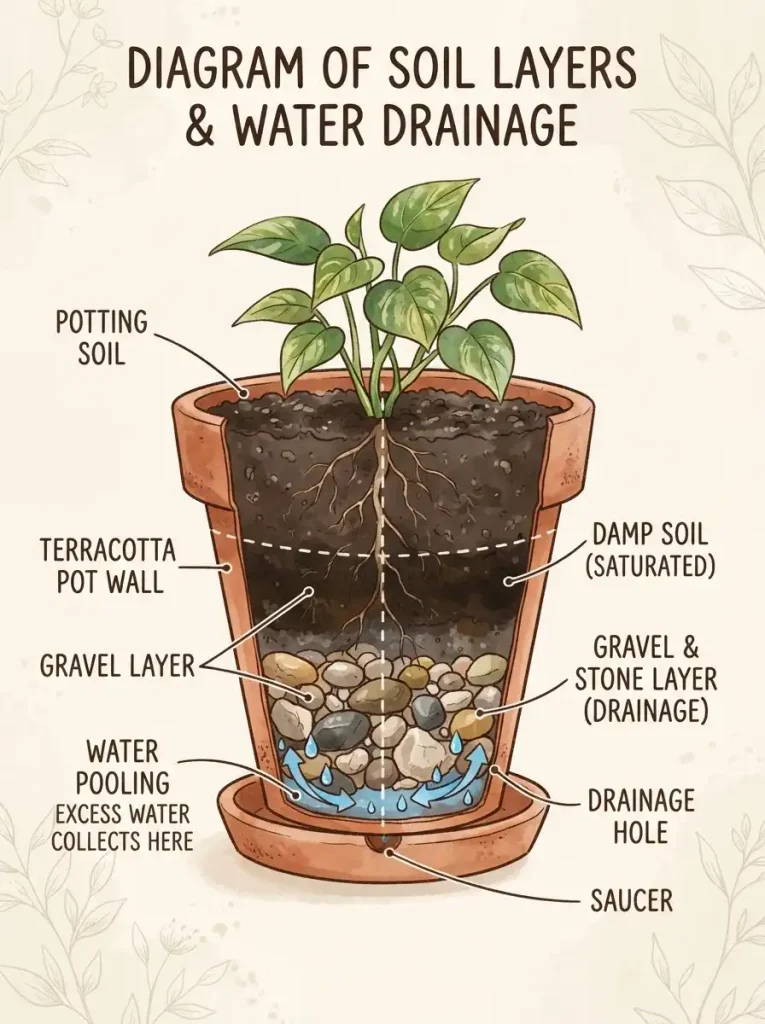
It’s a popular tip, but it backfires. Water tends to pause at the boundary where fine soil meets coarse stones, forming a soggy zone right above the rocks. That wet band sits closer to the roots than it would in a uniform mix. A pot with a drainage hole and gritty soil all the way down works far better.
9. Top Dressing Helps Keep Leaves Dry and Clean
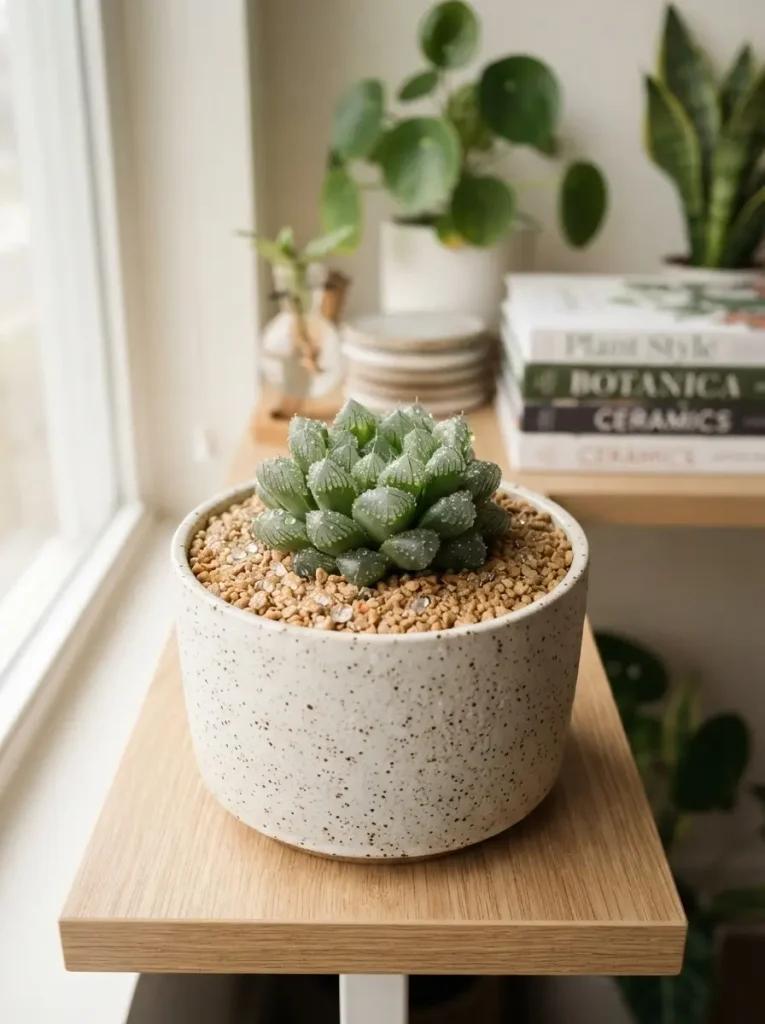
A thin layer of pebbles or fine gravel across the soil surface acts like a little shield. It keeps lower leaves off damp earth, reduces splashing during watering, and slows weed seeds from settling in. It also gives the whole pot a polished, finished look that makes your plants stand out.
10. Clay Pebbles Can Work, but Only with a Feeding Plan
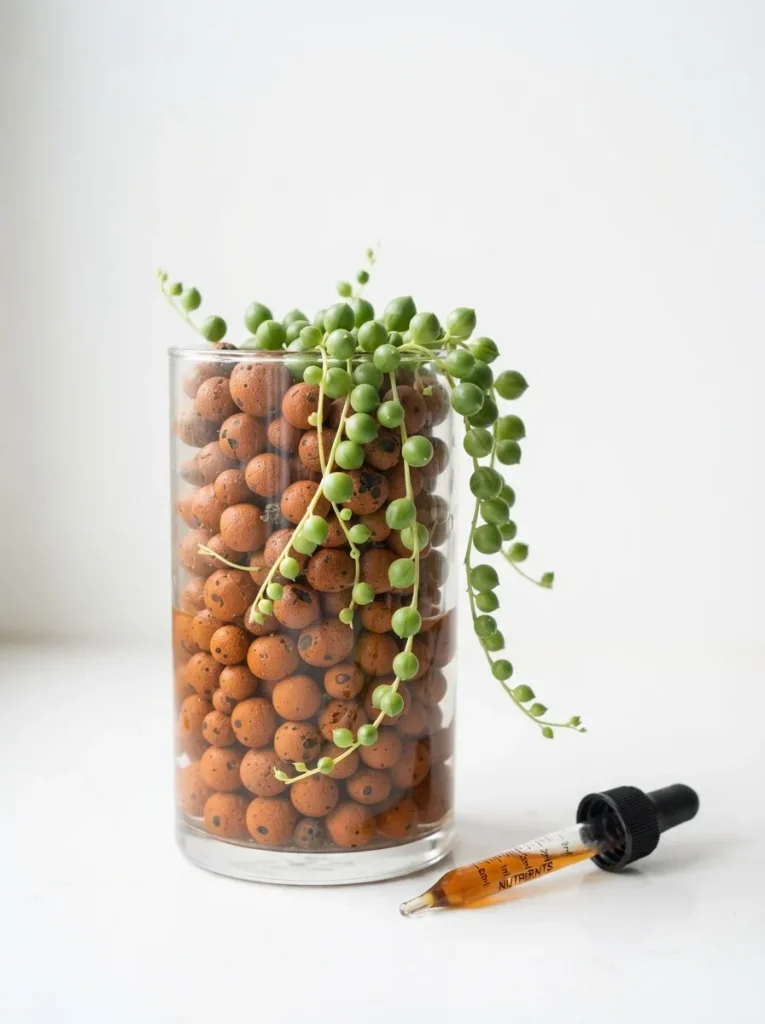
Expanded clay pebbles are lightweight, porous, and clean, which is why some growers use them in semi-hydroponic setups. They can support succulents when paired with diluted nutrient solution and careful watering. Without that regular feeding, they’re no better than any other rock, and the plant will slowly run out of fuel.
11. Rocks Make a Clean, Dry Surface for Callusing Cuttings
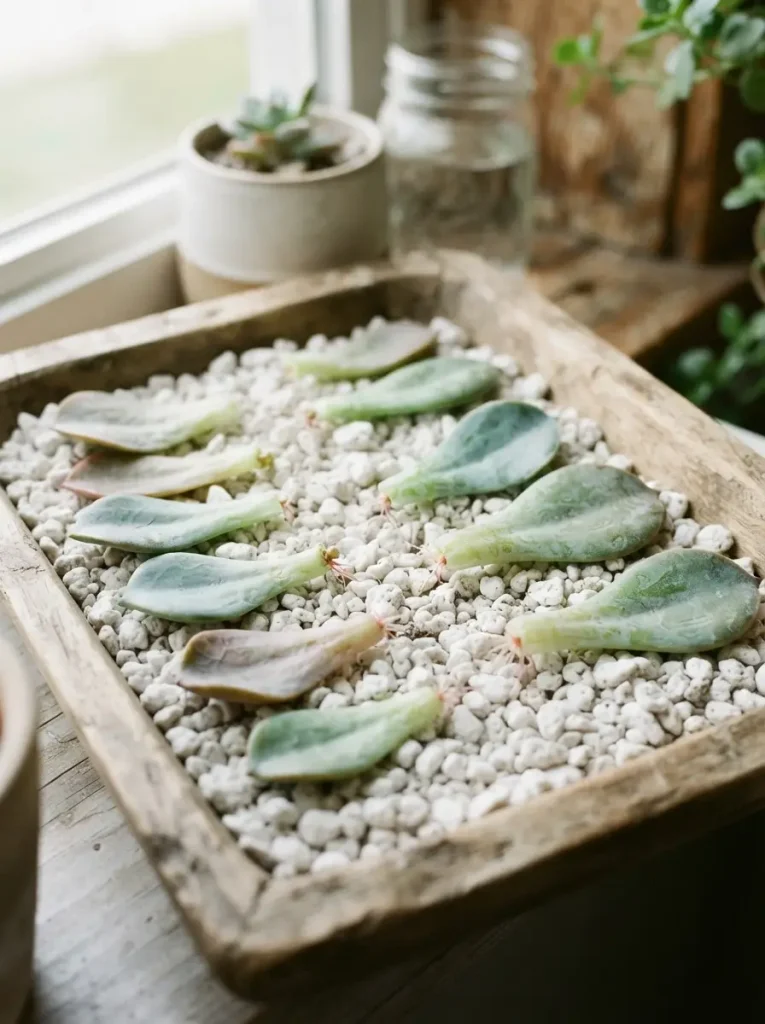
When you snip a leaf or stem, it needs a few days to dry and form a protective seal before rooting. Resting it on a layer of clean, dry pebbles keeps the cut end off damp surfaces and lets air circulate. Once it calluses, move it to gritty soil to grow roots.
12. Not All Rocks Behave the Same Way
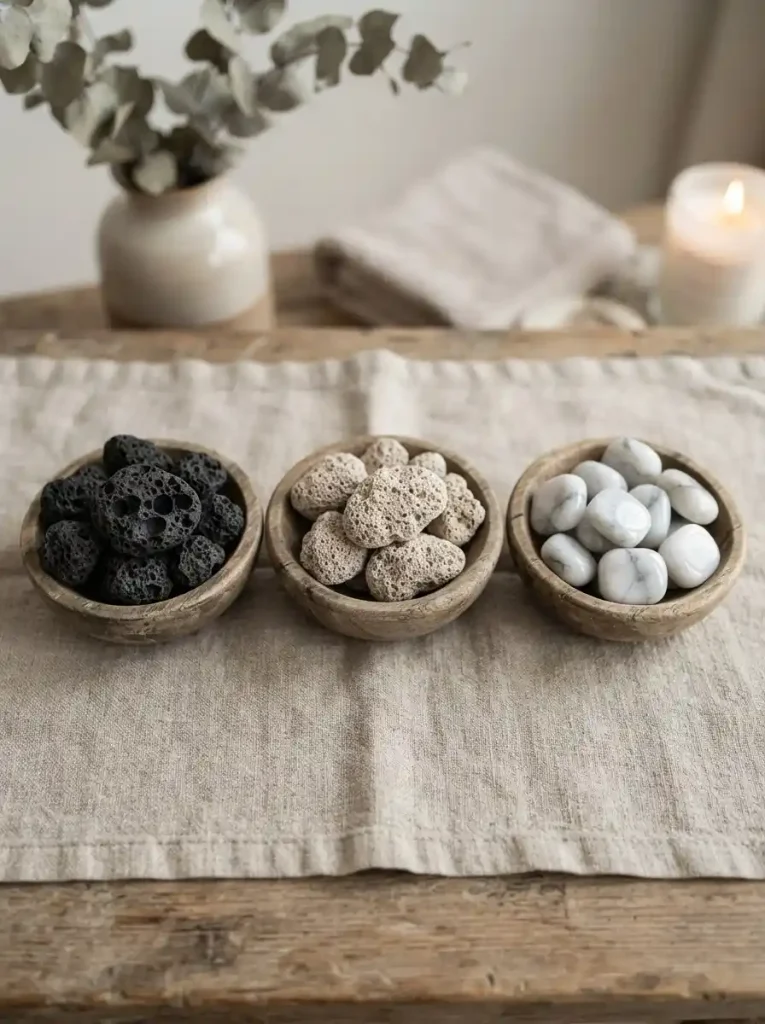
Porous stones like lava rock and pumice breathe, shed water quickly, and even hold a little moisture inside their pores. Smooth, glassy, or sealed polished stones do the opposite and can trap dampness against the soil surface. Choose natural, unsealed, rough-textured rocks whenever your plant will sit on top of them.
13. Dark Rocks Soak Up Heat
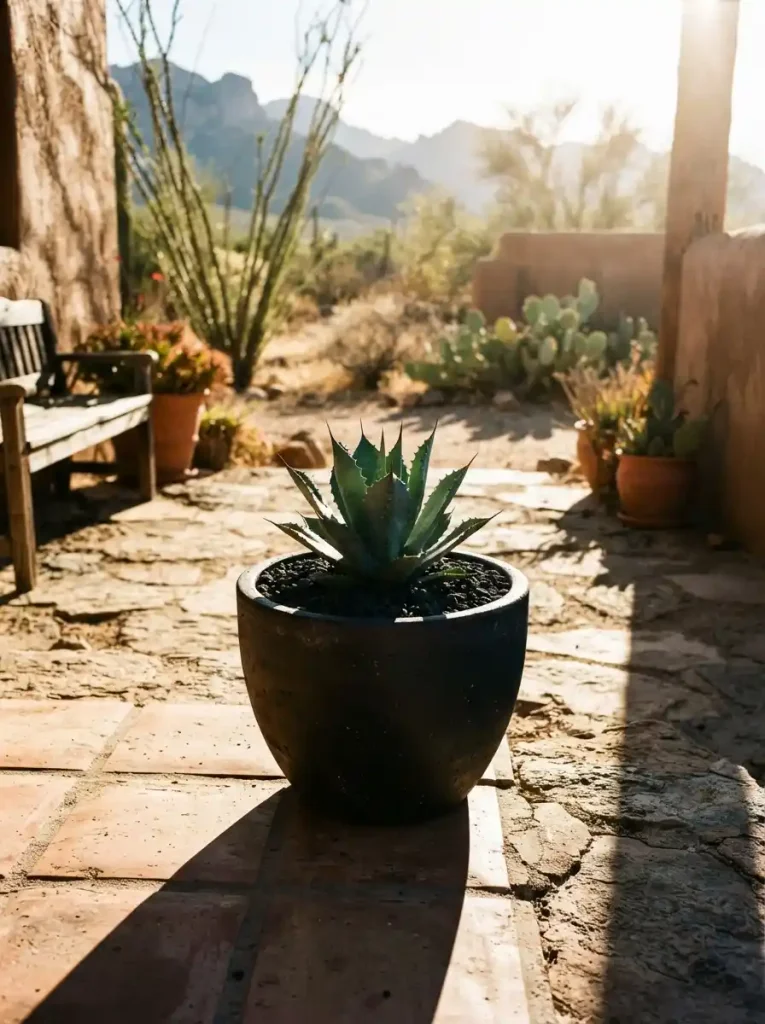
Black basalt and dark gravel look dramatic, but they absorb sunlight and radiate it back. In a hot, sunny spot that extra warmth can scorch tender leaves and stress shallow roots. If your pot sits in strong afternoon sun, lean toward medium or lighter tones, or keep dark stones for shadier corners.
14. Light-Colored Stones Bounce Light Back to the Plant
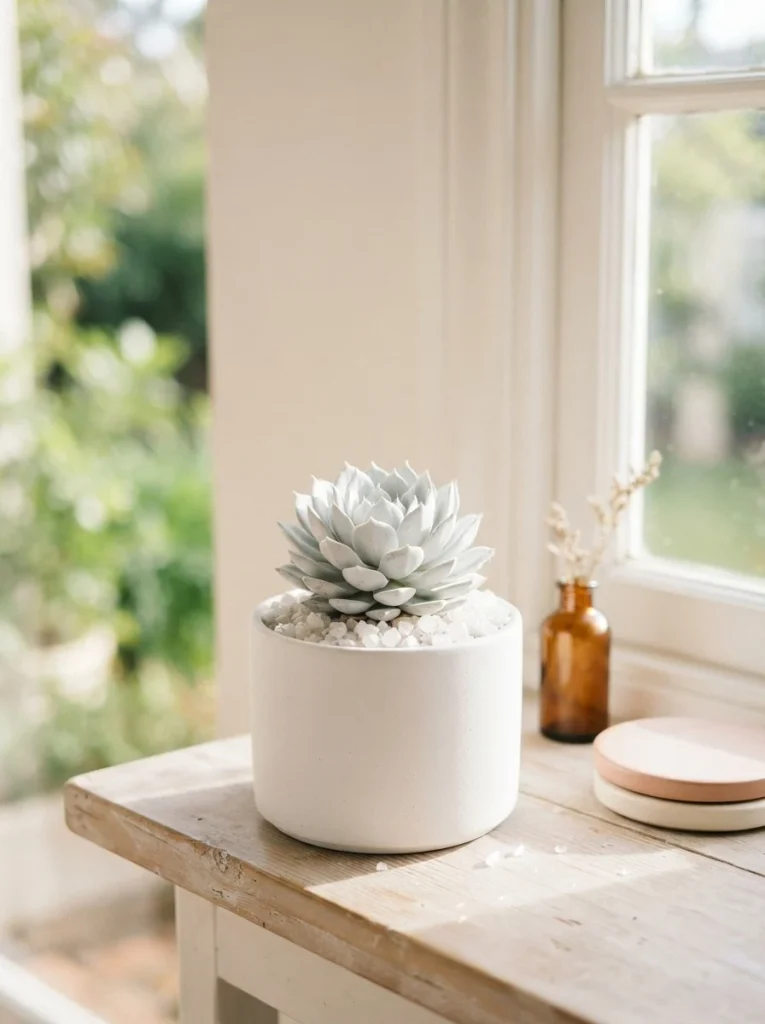
White quartz, pale limestone chips, and cream-colored pebbles reflect sunlight upward toward the undersides of leaves. This can brighten a plant’s overall look, especially on a window ledge where light comes from one direction. It also keeps the surface cooler than dark stone, which is useful in warm climates.
15. Hardy Succulents Love Rocky Outdoor Gardens
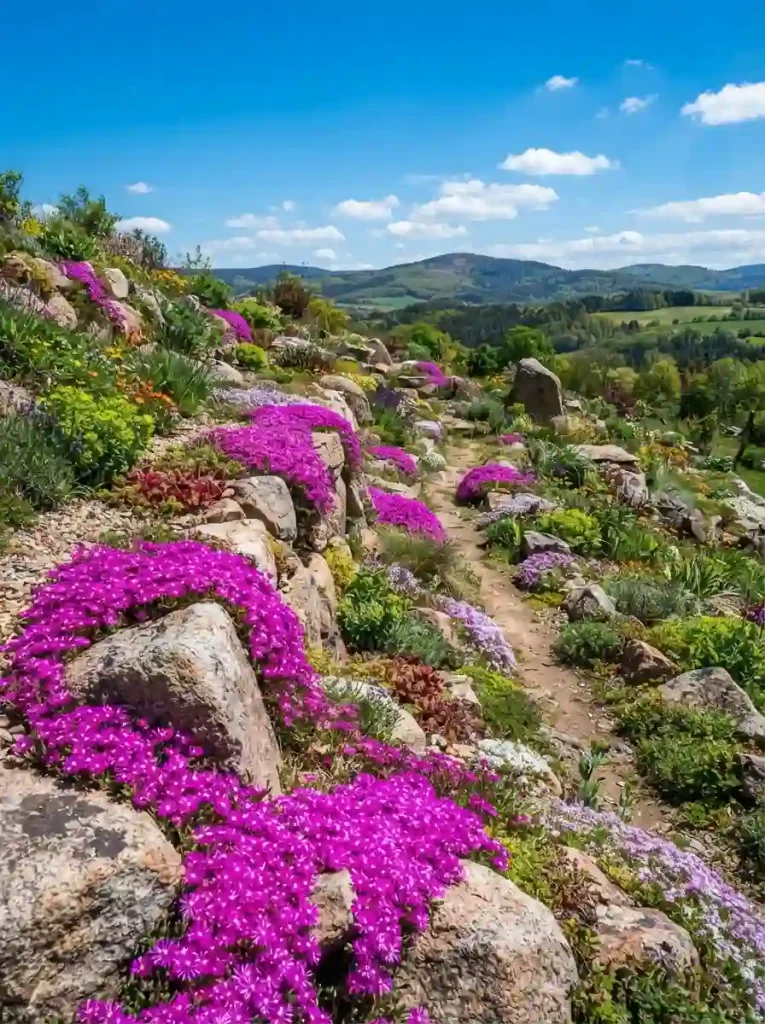
If you want plants that truly settle into stone, choose cold-tolerant types such as sempervivum, hardy sedum, and ice plant (delosperma). They tolerate lean, gritty ground, and they spread through gaps between rocks to form living mats. Always check your hardiness zone before planting, since many popular succulents can’t handle freezing winters.
16. Slopes and Raised Rocky Beds Drain Beautifully
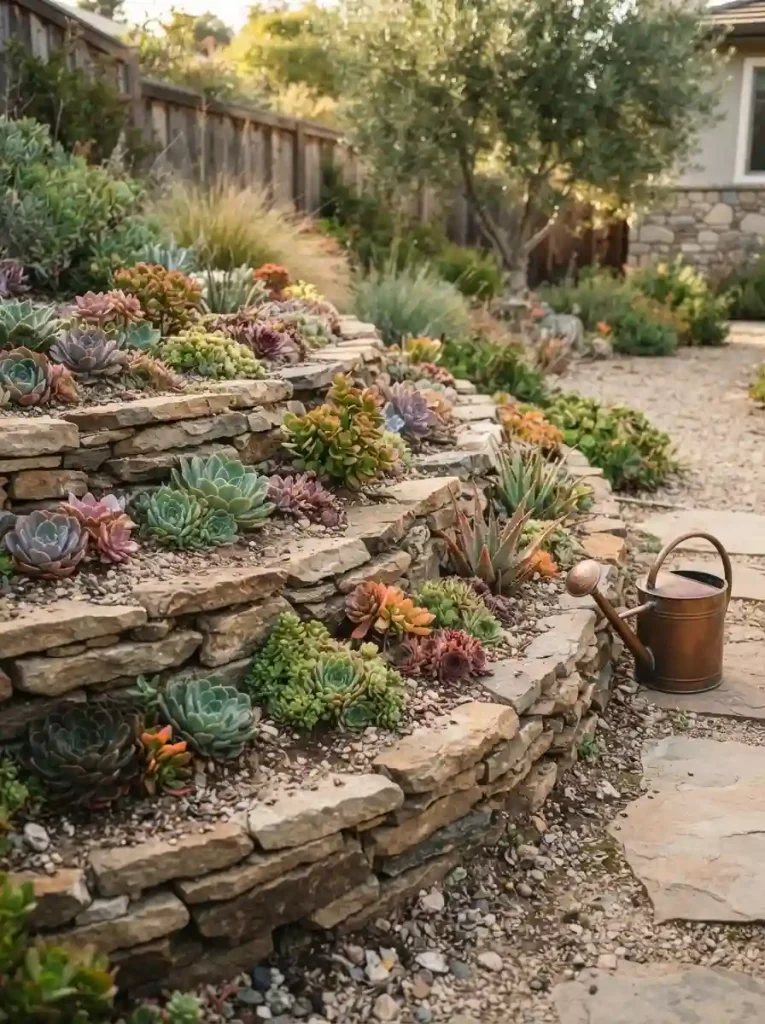
Gravity does half the work on a hillside. Water runs off or through the soil instead of settling around the roots, which is exactly what succulents want. If your yard is flat and heavy, build a raised mound or berm with gritty soil and set rocks into it so the planting sits above the damp ground.
17. Rock-Filled Terrariums Need Extra Caution
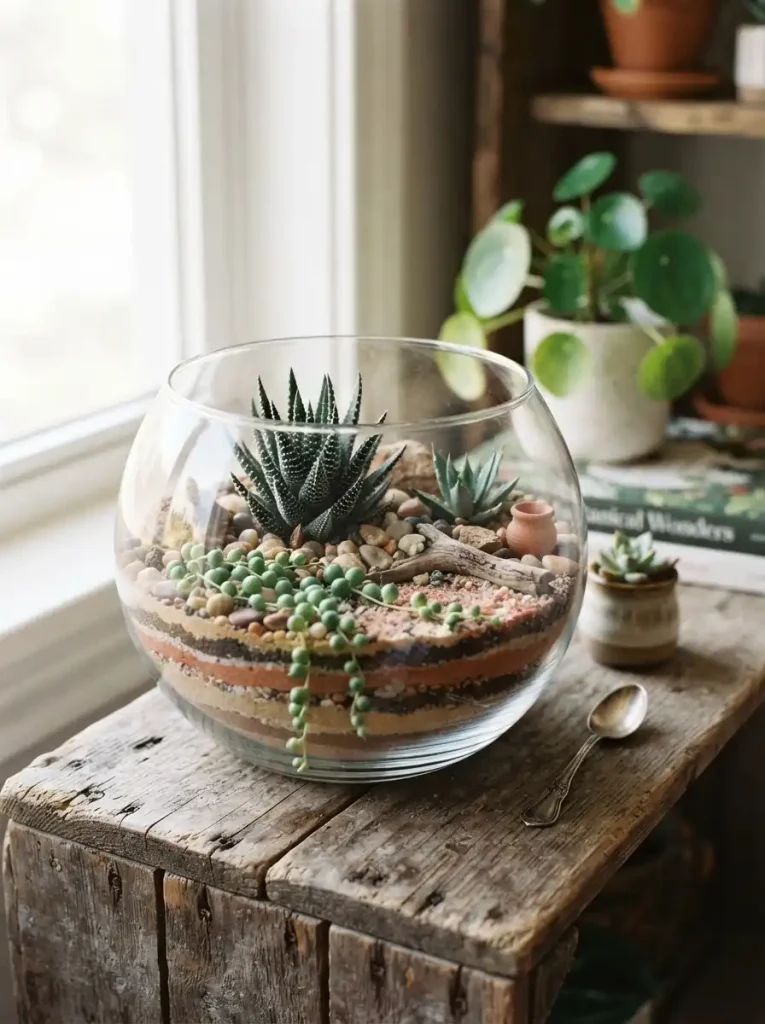
Glass containers hold humidity and rarely have drainage holes, which is the opposite of what most succulents enjoy. If you love the terrarium look, choose a wide, open-topped vessel, use a gritty mix, and water with a small spoon rather than a splash. Keep it in bright light, but away from harsh midday sun that can overheat the glass.
18. Rocks Don’t Make Up for a Missing Drainage Hole
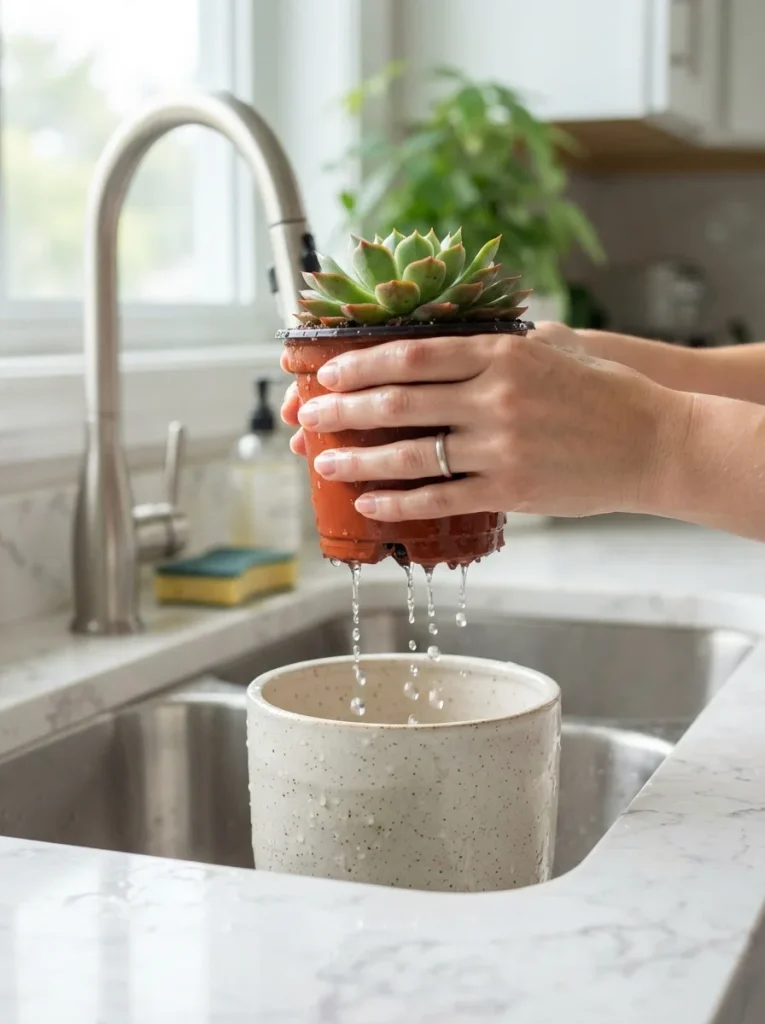
A layer of stones can’t carry water out of a sealed pot. If your decorative container has no hole, the safest approach is to keep the succulent in a smaller nursery pot that does, then drop it inside. Pull it out to water, let it drain fully, and return it once it stops dripping.
19. A Pebble Top Layer Can Hide How Wet the Soil Really Is
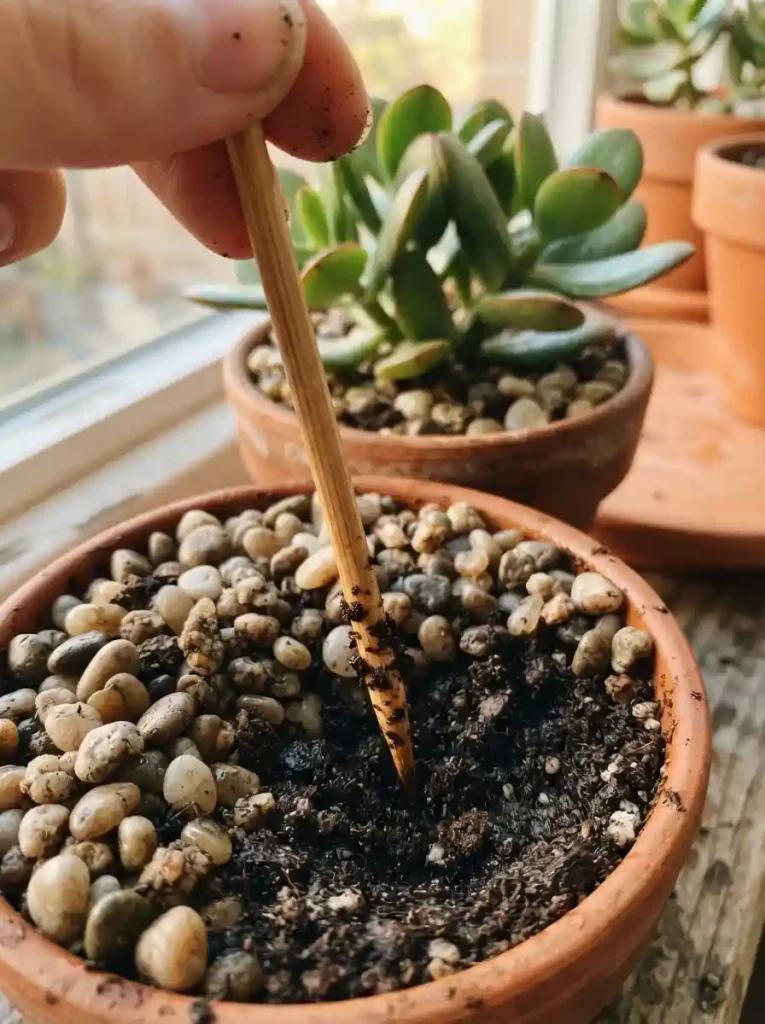
A neat surface looks dry even when the soil beneath is still damp, which leads many beginners to water too often. Before you water, push a wooden skewer or your finger a few inches into the mix. If it comes out cool or carries soil, wait a few more days.
20. Pebbles Can Shelter Unwelcome Pests
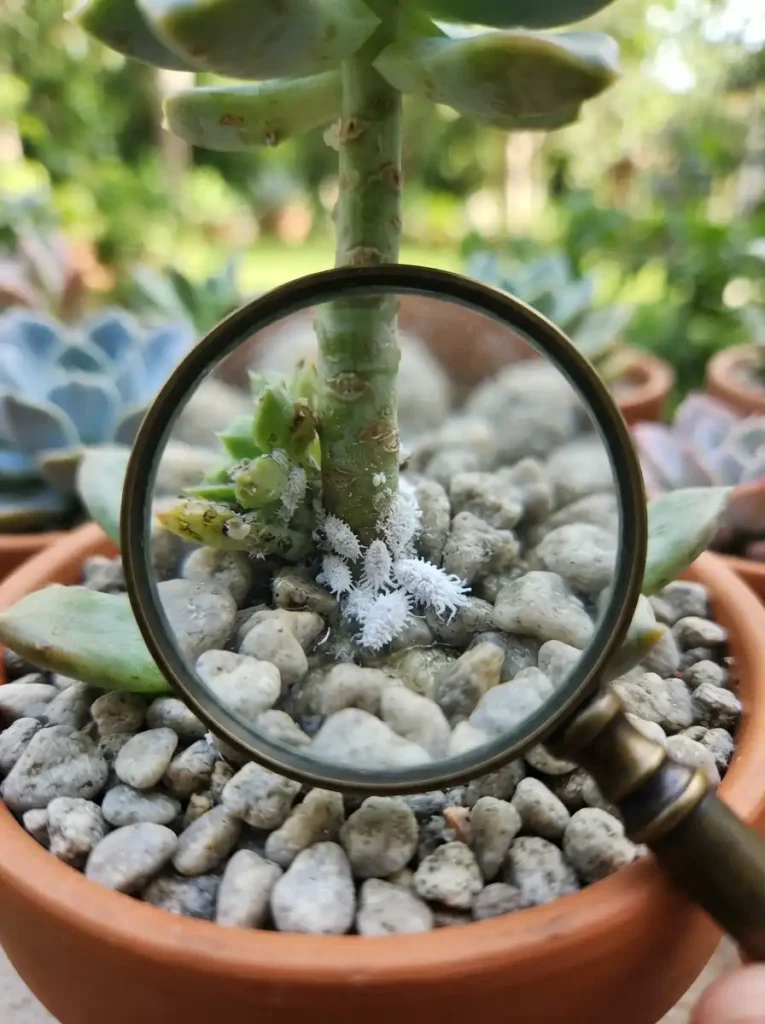
Tiny gaps between stones create shady, protected spots where mealybugs and other hitchhikers hide. They’re easy to miss against light-colored rock. Lift a few pebbles every couple of weeks and inspect the soil line, and treat any cottony white patches early before they spread to the leaves.
21. Rock Surfaces Need an Occasional Cleaning
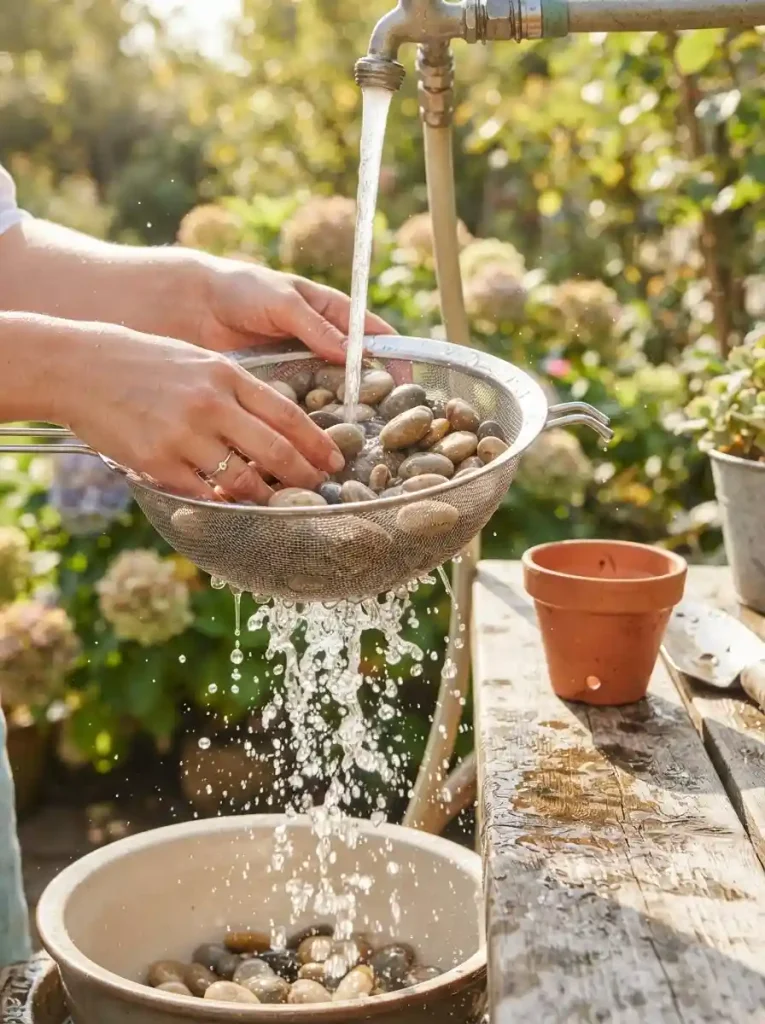
Over time, pebbles gather dust, algae, and white mineral crusts from hard water. That film can make the surface hold moisture and look tired. Every few months, scoop the stones into a sieve, rinse them well, let them dry in the sun, and place them back around the plant.
22. The Best Displays Mix Sizes, Colors, and Textures
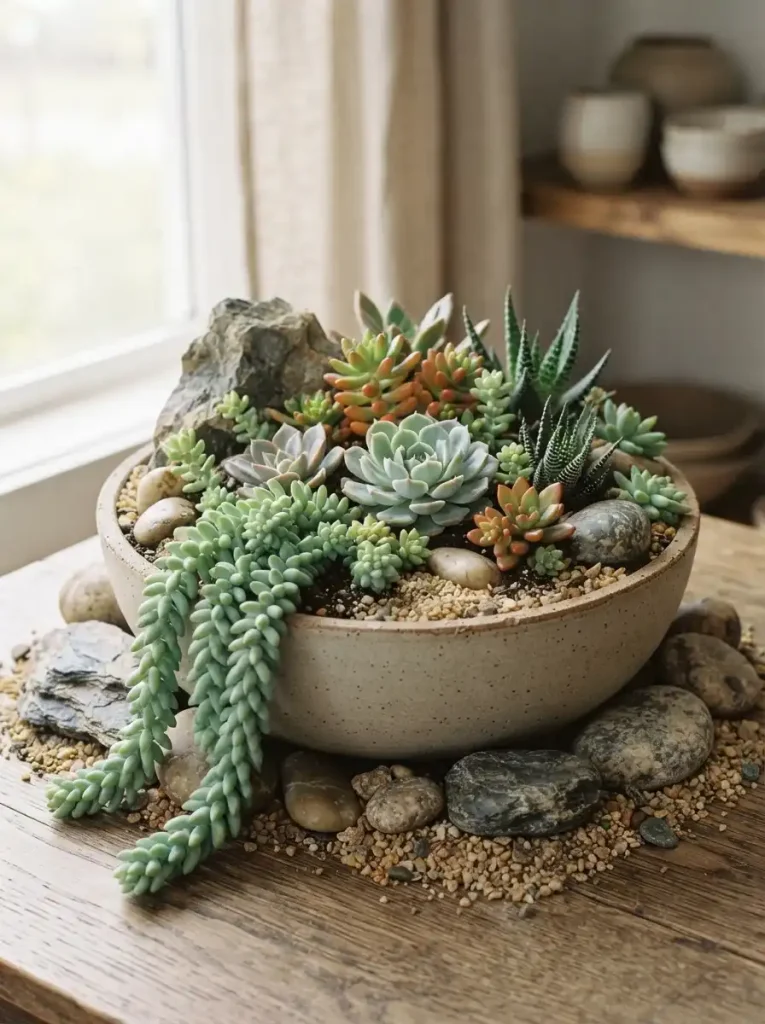
The most eye-catching rock and succulent arrangements use more than one stone. Pair a few larger focal rocks with medium pebbles and a fine gravel finish, then repeat one color to tie everything together. Group plants with similar water needs, and let cascading varieties soften the hard edges.
Final Thoughts
So can succulents grow in rocks? Yes, as long as there’s a gritty, nutrient-bearing medium supporting the roots. Rocks make a stunning surface, a smart drainage partner, and a handy place to callus cuttings, but they can’t do the job of soil alone. Pick the right stones, keep watering measured, and your display will look good and stay healthy for years.
Caring for Succulents in Rocks Through the Year
Spring. This is repotting and refreshing season. Lift tired top dressing, check what the soil underneath is really doing, and replace soggy or compacted mix with fresh gritty soil all the way down. Move plants gradually into stronger light so soft winter growth does not scorch.
Summer. Water deeply only when the mix has dried, and check below the pebble top layer first, since it can hide how wet the soil really is. In very hot spells, dark rocks can overheat a shallow pot, so a little afternoon shade protects roots.
Fall. Ease off watering as growth slows. Bring tender plants and clay-pebble (LECA) setups indoors before cold nights, and remember that clay pebbles hold no nutrients, so those plants need a consistent dilute feeding plan during the growing season.
Winter. Hardy sempervivum, sedum, and ice plant in outdoor rock beds mostly need drainage, not coddling — cold and wet together do the damage, not cold alone. Brush snow off rosettes and keep fallen leaves from matting over them.
Displays need light maintenance too. Spring is a natural time to snip cuttings, let them callus on a dry rock surface, and tuck them into gaps. Once or twice a year, brush debris out from between stones and rinse the surface — dust and fallen leaves hold moisture against stems and hide mealybugs. When roots circle the pot or the mix has shrunk away from the edges, repot one size up into fresh grit rather than simply topping up the rocks.
Common mistakes: planting in a pot with no drainage hole and hoping rocks compensate, watering on a calendar instead of checking moisture, letting pests shelter unnoticed under pebbles, skipping the occasional rinse that keeps rock surfaces free of dust and algae, and expecting any succulent to live indefinitely on bare stone with no feeding at all.
Frequently Asked Questions
Can I grow succulents in just pebbles with water?
Short term, yes, especially for cuttings. Long term, the plant will weaken without nutrients and a proper growing medium.
Do succulents need a layer of rocks at the bottom of the pot?
No. It doesn’t improve drainage and can create a soggy zone. Use gritty soil throughout and a pot with a drainage hole.
What kind of rocks are best on top of succulent soil?
Rough, unsealed stones such as pumice, lava rock, or natural gravel, in a color that suits your light and climate.
How often should I water succulents with a rock top layer?
Water only when the soil several inches down is completely dry, then soak thoroughly and let it drain.
What size grit or gravel is best in succulent soil?
Small, irregular particles roughly the size of coarse sand to a pea work best, because they keep air pockets open between waterings. Pumice, crushed granite, and fine lava rock are all good choices. Avoid powdery sand, which packs down and holds water, and avoid large decorative stones mixed through the soil — save those for the surface. A mix that is mostly mineral grit with a little soil suits most succulents well.
Can succulents in rocks survive winter outdoors?
The hardy ones can, provided drainage is excellent. Sempervivum, hardy sedum, and ice plant (delosperma) are built for rocky outdoor gardens and tolerate serious cold in many US regions. What kills them is sitting in wet, frozen soil, so slopes, raised beds, and gritty ground matter more than extra warmth. Tender types such as most echeveria still need to come indoors before frost.
How do you feed succulents growing in a mostly rock mix?
Rocks and grit hold almost no nutrients, so the small amount of soil in the mix runs out quickly. During the growing season, water with a diluted, balanced fertiliser every few weeks, and always on already-damp soil to protect roots. Plants grown in clay pebbles with no soil at all depend entirely on this routine. Ease off in fall and stop in winter, when most succulents rest.
Can I use river rocks or beach pebbles from outside on my succulents?
Yes, with a rinse first. Stones collected outdoors can carry soil, algae, pests, and — with beach pebbles — salt that harms roots. Scrub them, soak them in clean water, and let them dry before using them as a top dressing. Smooth, rounded river rocks shed water nicely over the soil surface, but keep them as a surface layer rather than a growing medium on their own.